

Silk backless wedding dress ideas work best when the low back, underlayers, hair, steaming plan, and photo angles are decided together. The most beautiful version feels fluid from the front, clean from behind, and calm enough for sitting, hugging, walking, and dinner.
A silk backless gown has a quiet kind of confidence. It feels special without heavy sparkle or a dramatic skirt. The fabric catches light, the open back becomes the focal point, and every tiny choice around lift, seams, posture, and hair affects how effortless the dress feels.

Recommended Wedding Products


You Might Also Like These Blog Posts
- Dainty Wedding Dress Ideas That Still Feel Like a Moment
- 1980 Wedding Dress Ideas With Drama That Still Breathes
- Square Neck A Line Wedding Dress Ideas With Poise
- Mermaid Drape Wedding Dress Ideas for Soft Sculpted Drama
- High Neckline Wedding Dress Ideas for Quiet Drama
- Trouser Suit Wedding Dress Ideas for the Bride Who Means It
Silk Backless Wedding Dress Ideas
The strongest silk backless wedding dress ideas begin with construction, not exposure. Silk is fluid, luminous, and honest. It shows the line of a seam, the edge of an underlayer, and the slightest pull across the hip or lower back.
Look at each gown from behind in daylight, in soft indoor light, and with flash. Then sit, bend, hug, and walk with the actual shoes. A low back that looks serene in a mirror still has to stay smooth through a ceremony, portraits, dinner, and a small reception room where guests see the dress up close.
A Bias-Cut Silk Slip Dress With a Low Open Back
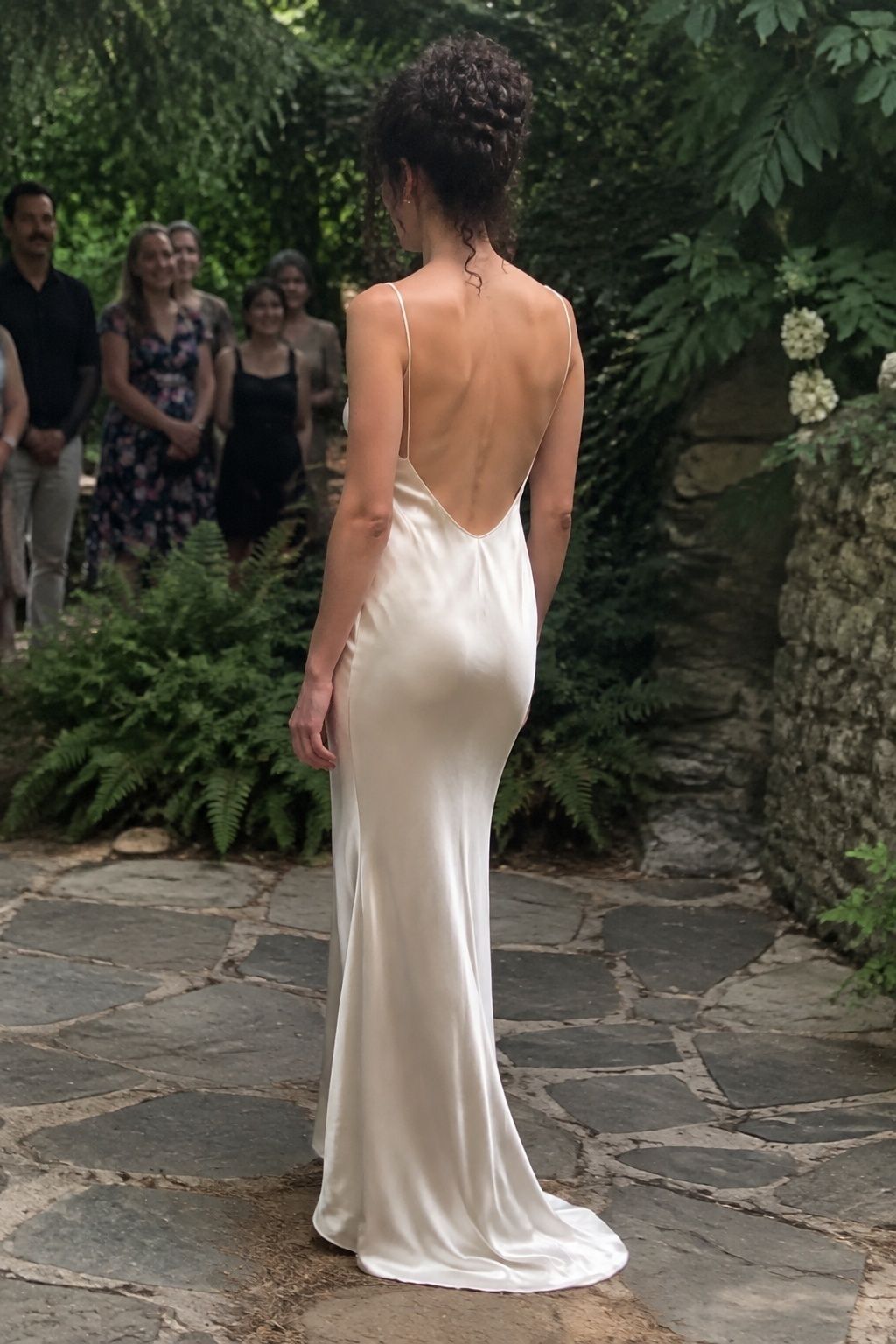
A bias-cut silk slip is the classic quiet version of a backless bridal gown. The fabric falls close to the body without heavy structure, so the open back feels relaxed instead of theatrical.
This style depends on precise underlayers. Test adhesive cups, smooth briefs, and any tape before alterations. The best slip dress looks simple because the hidden layers are doing their work invisibly.
A Cowl-Back Silk Gown for Softer Movement
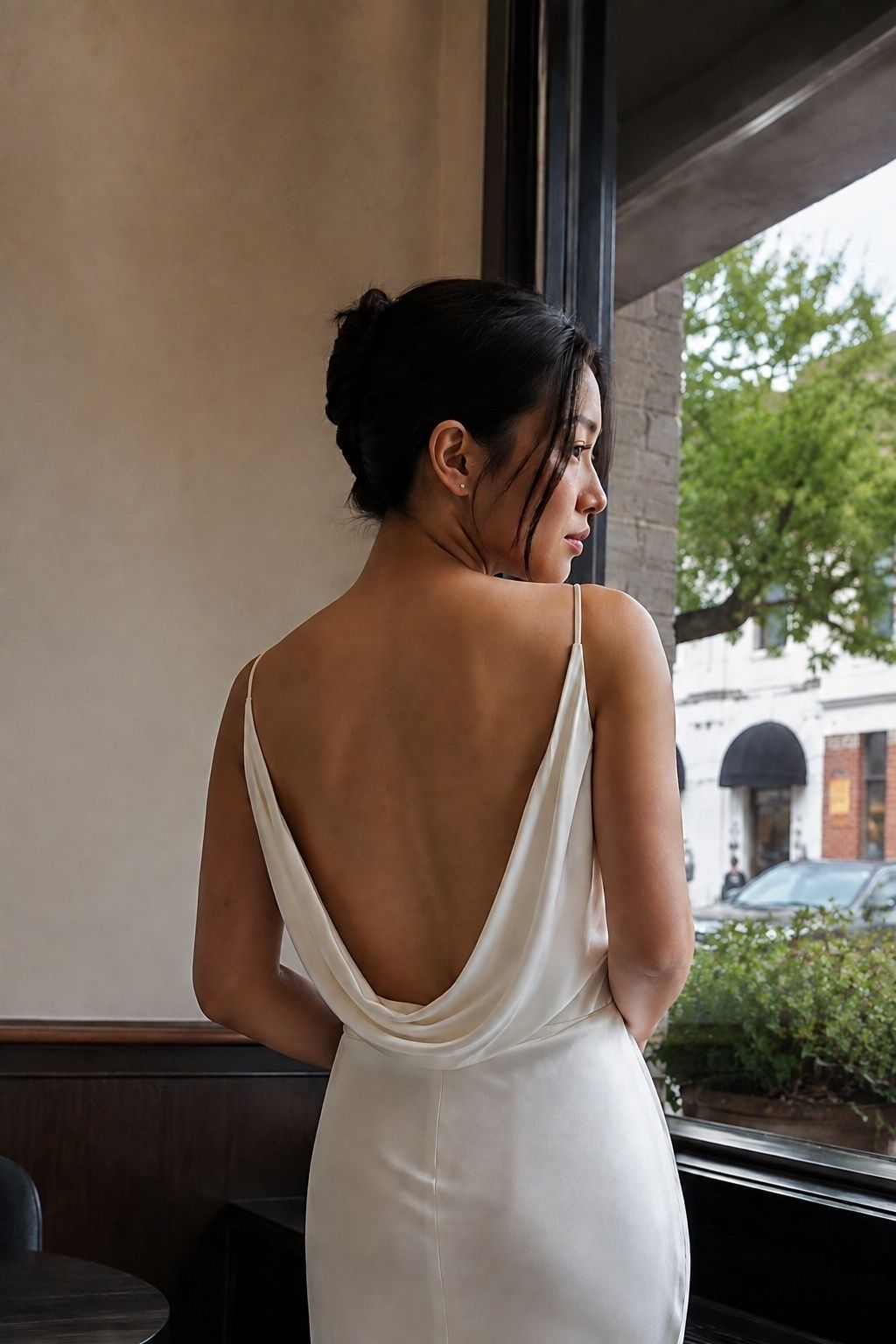
A cowl back gives silk natural movement and a little forgiveness. The drape softens the spine line and creates a fluid fold that photographs beautifully from the aisle, the first look, and seated dinner moments.
Check where the cowl lands when you stand straight and when you relax. If it slips too low, feels heavy, or gaps at the side, a tailor is often able to adjust the weight, strap length, or attachment point.
A High-Neck Silk Dress With a Bare Back

A high neckline with an open back feels polished from the front and striking from behind. It is a graceful choice for a city hall ceremony, restaurant reception, gallery wedding, or any setting where clean lines feel more powerful than volume.
Since the neckline carries structure, make sure the back opening does not pull at the neck. You want the gown to skim the shoulders and lie flat at the waist without tugging upward.
A Silk Halter Gown With a Deep V Back
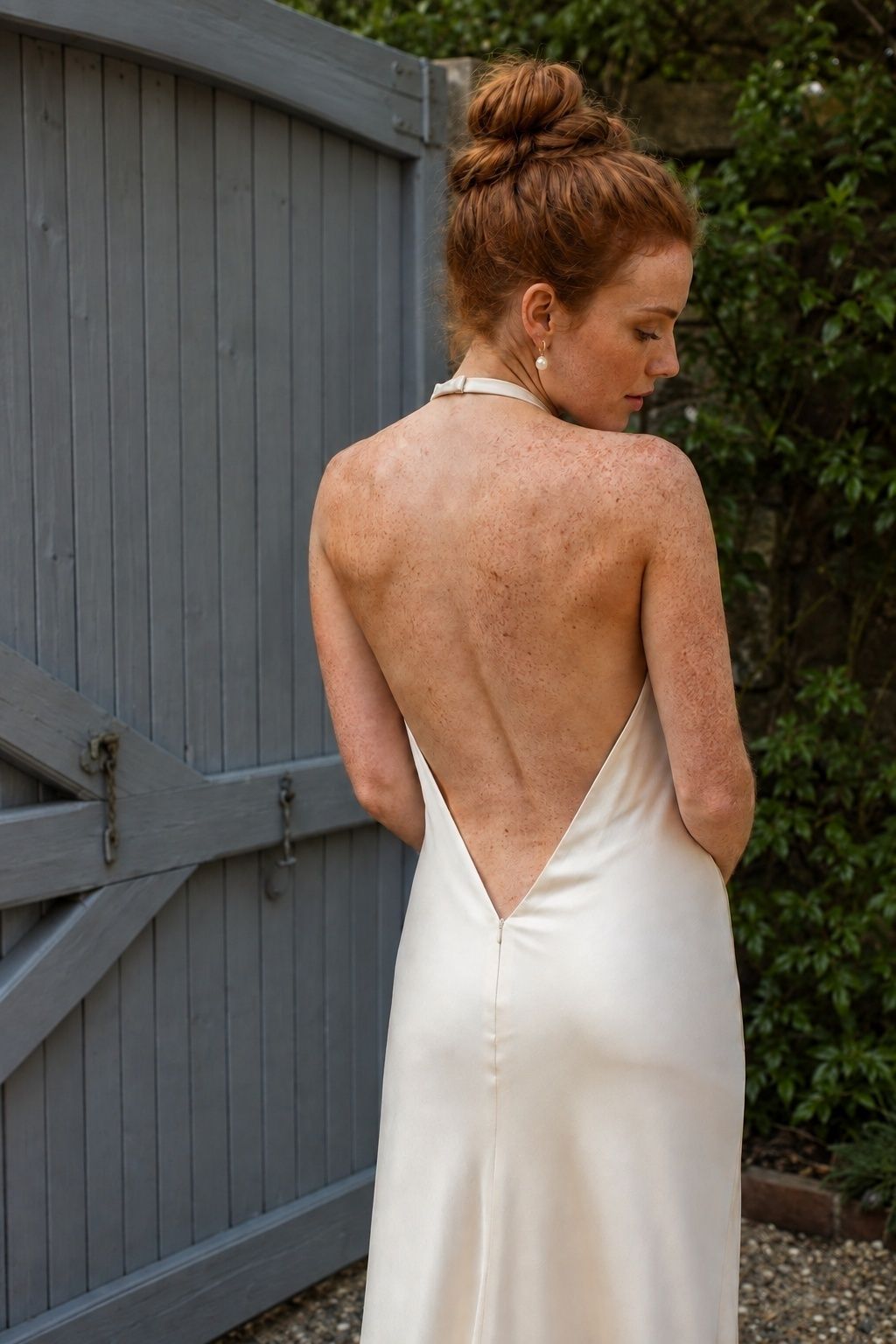
A halter front gives a backless silk dress a secure upper line. The deep V behind adds drama, while the neck tie or band keeps the bodice feeling intentional.
Watch the pressure at the neck during fittings. A silk halter works best with balance between front coverage and back openness, especially if the ceremony, dinner, and portraits all happen in the same dress.
A Square-Front Dress With a Low Scooped Back
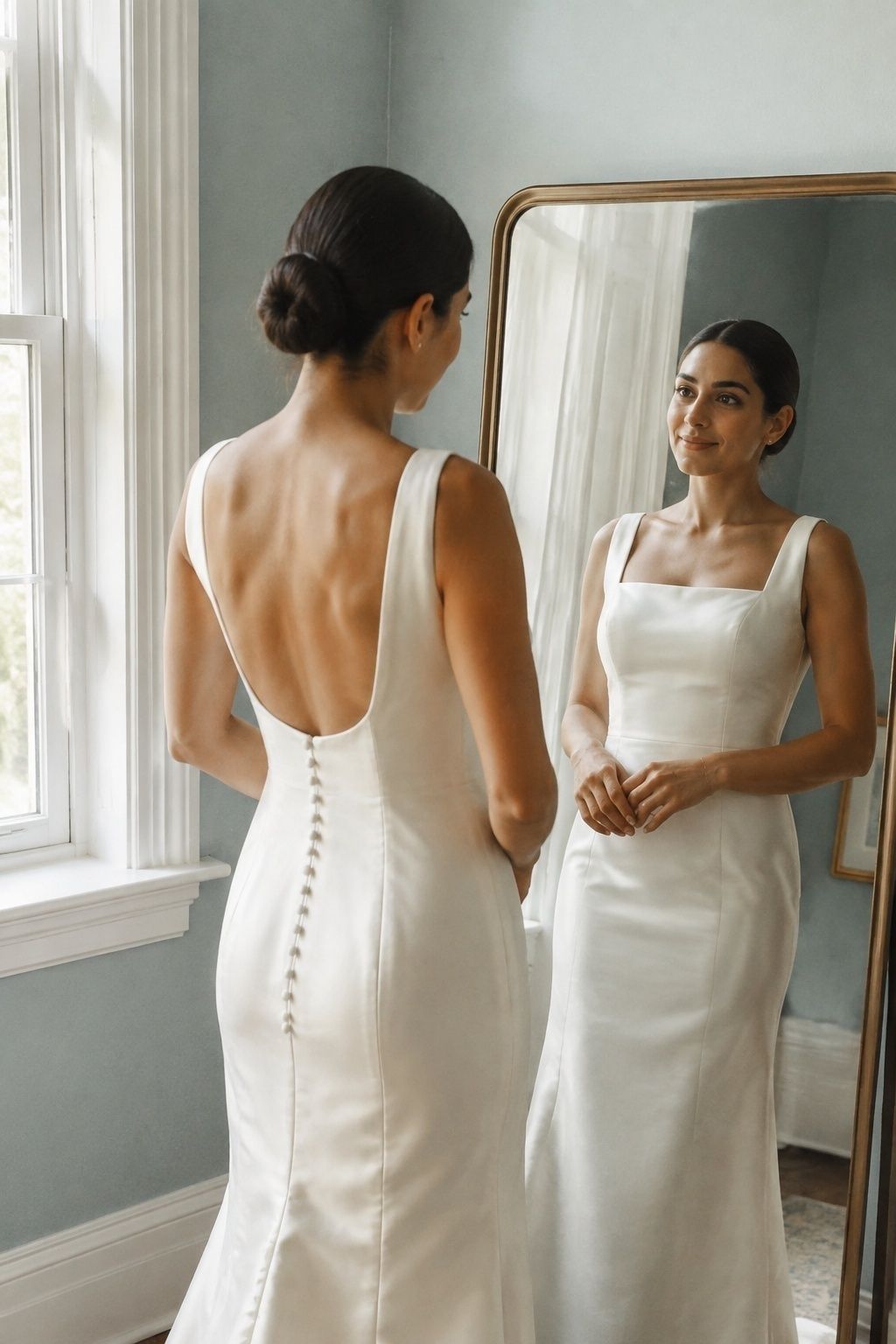
A square front keeps the gown fresh and composed, while a low scoop behind gives the bridal moment its softness. This pairing works well for brides who want a clean front view and a memorable exit photo.
Ask for the scoop to sit where it flatters your waist, not just where the sample dress happens to fall. A tiny change in depth often improves posture, bra options, and the way the silk lies across the lower back.
A Silk Gown With Fine Back Straps

Fine straps give a backless dress a delicate architectural line. They frame the shoulders and back without adding lace, beading, or heavy trim.
Adjust straps with real posture, not while standing stiffly. Practice turning, hugging, and lifting a glass. If one strap drifts or digs, it will keep asking for attention all night.
A Backless Silk Dress With Pearl Buttons at the Waist
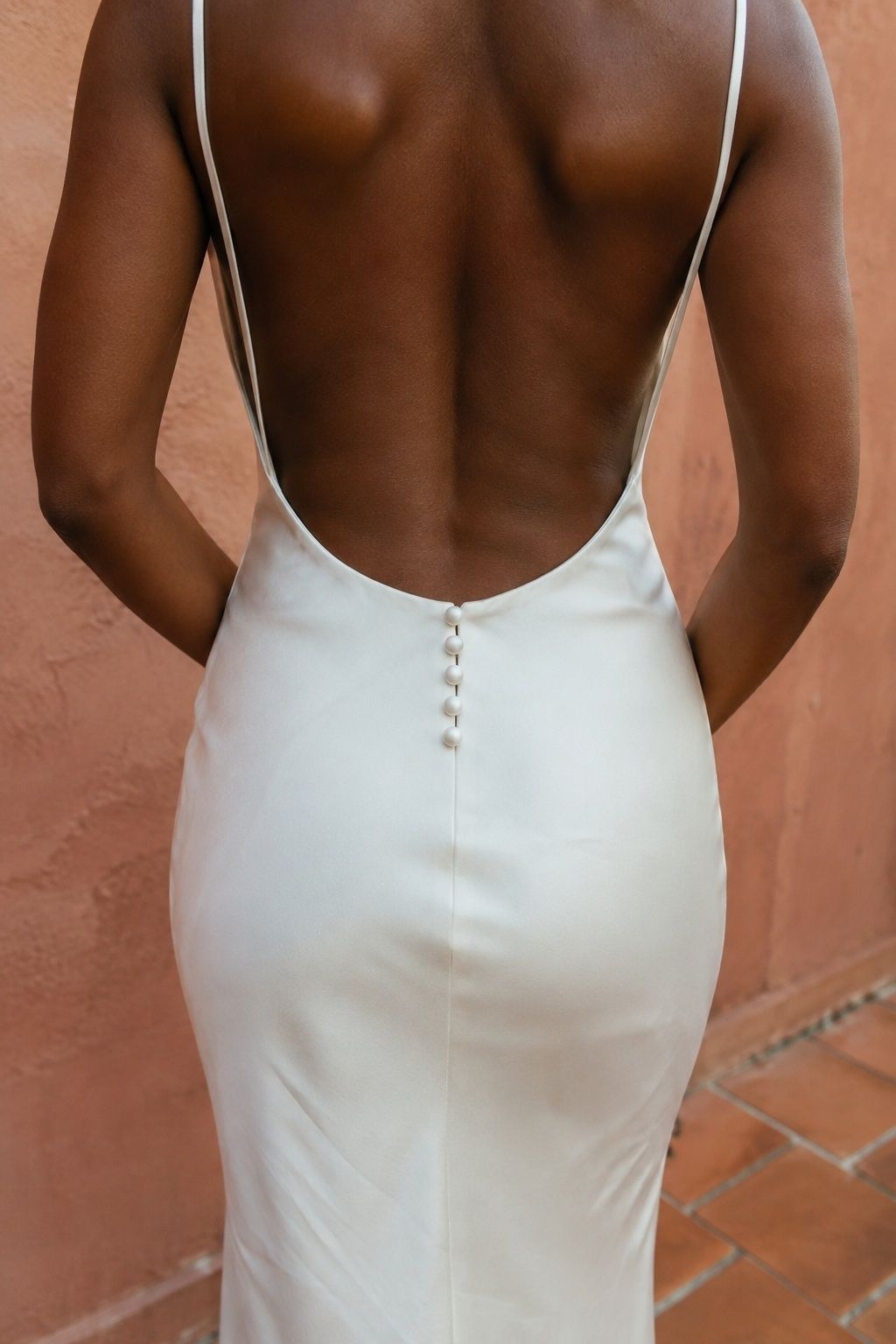
Pearl buttons at the waist give a backless silk gown a small traditional accent. They make the open back feel finished, especially when the rest of the dress stays very minimal.
Keep the buttons light and flat enough that they do not pull the silk. Heavy closures sometimes distort the waistline, which is more noticeable on a simple fabric than on lace or beading.
A Long-Sleeve Silk Dress With an Open Back
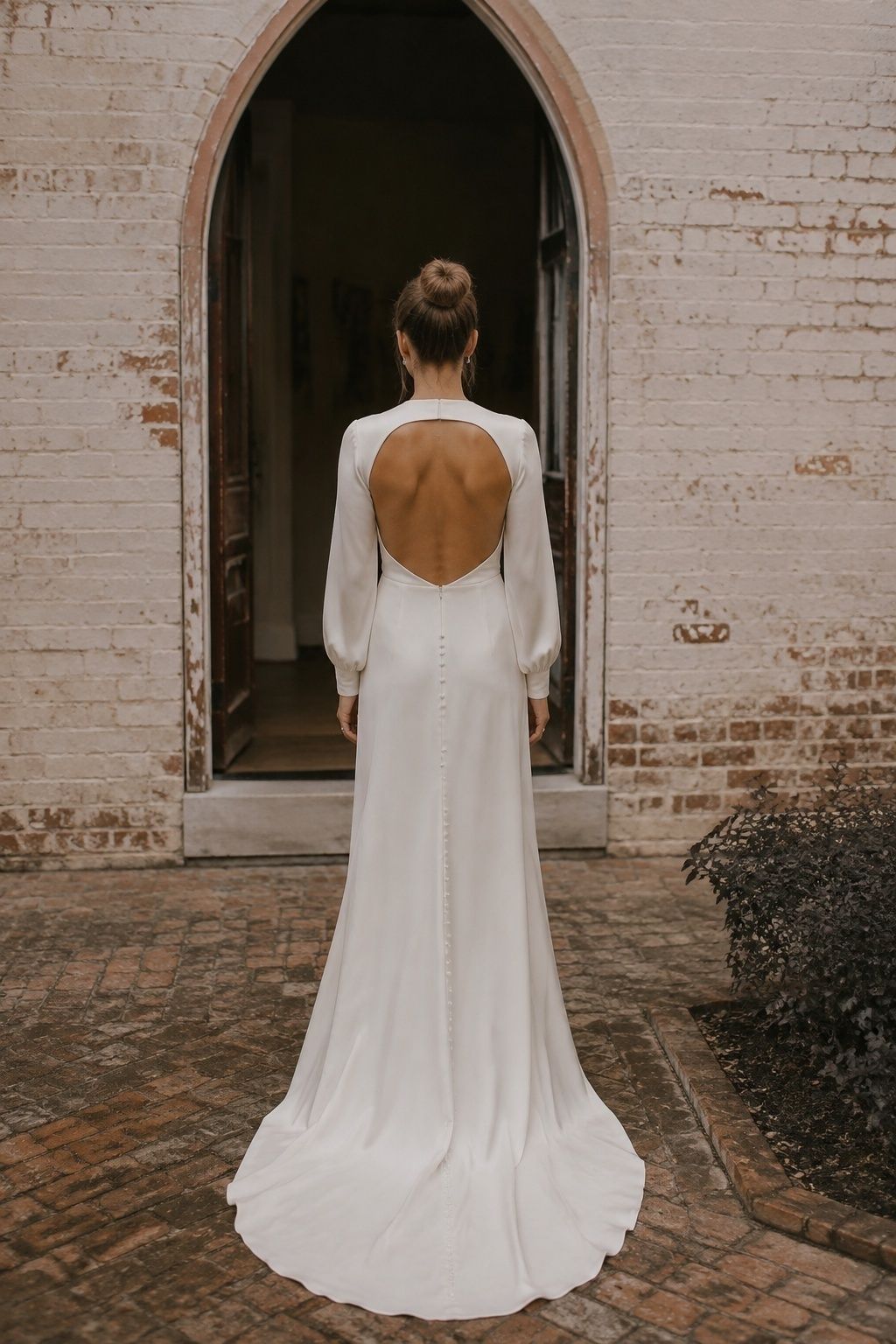
Long sleeves make a backless silk dress feel composed and intimate. The coverage in front balances the exposed back, giving the gown a graceful contrast for cooler months, candlelit dinners, or chapel ceremonies.
Move your arms during alterations. Silk sleeves that look smooth while still sometimes tighten across the shoulder blades when you hug someone, hold flowers, or sit for dinner.
A Silk Dress With a Back Bow or Soft Tie
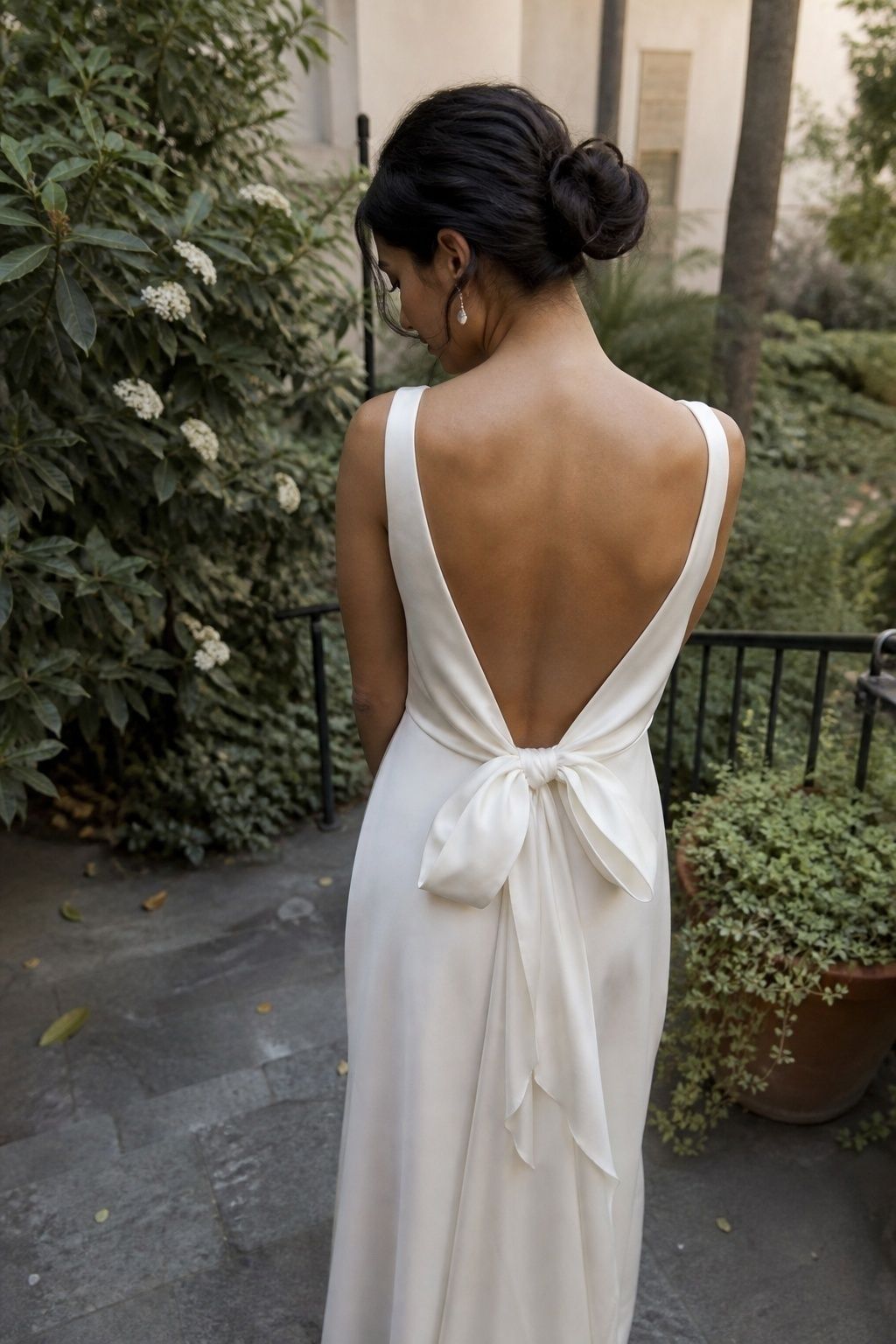
A back bow adds romance without losing the clean feeling of silk. A slim tie feels modern, while a wider soft bow gives the dress a sweeter bridal finish.
Place the bow where it does not hide the part of the back you love most. It also has to sit comfortably under a cape, veil, jacket, or car seat if your timeline includes travel between locations.
A Backless Silk Gown With a Detachable Cape
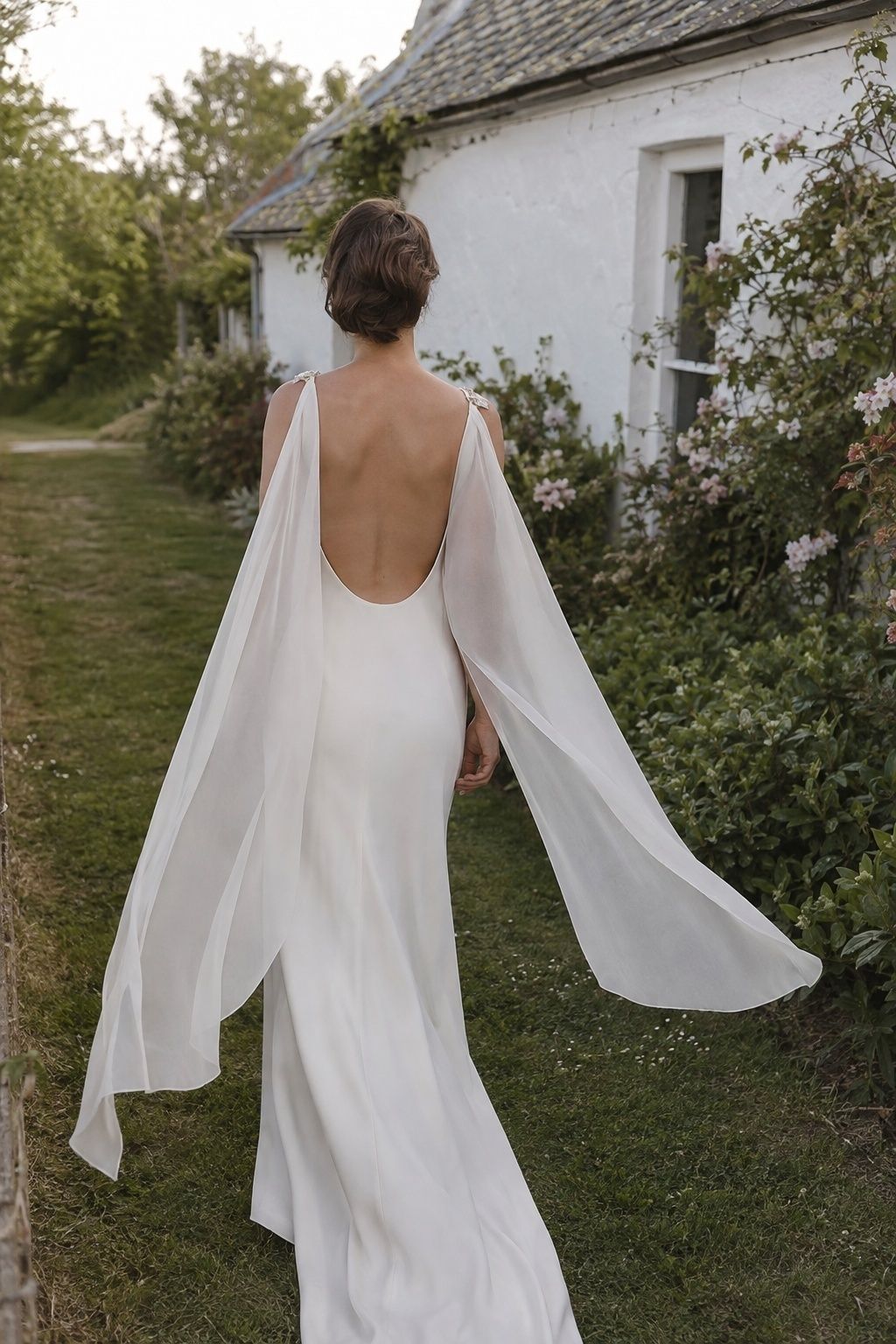
A detachable cape lets a backless gown shift from ceremony softness to reception ease. Sheer tulle, silk chiffon, or organza adds coverage for vows, then comes off when the dress is ready to stand on its own.
Test the cape attachment before the final fitting. It has to sit cleanly around the shoulders without dragging the straps, wrinkling the neckline, or hiding the low-back shape in every photo.
A Backless Silk Dress With a Short Veil
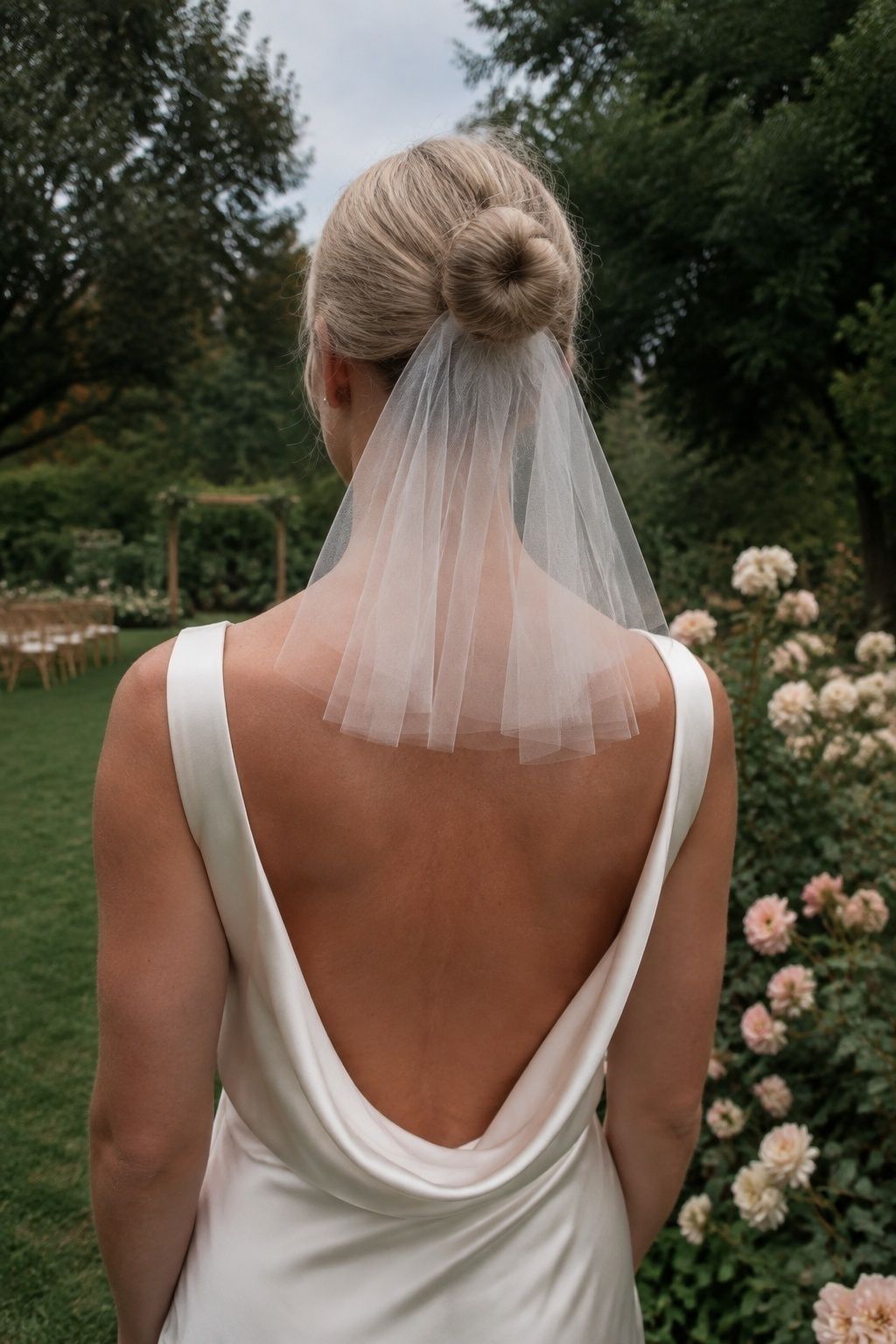
A short veil keeps the back visible while still giving the ceremony a bridal finish. It is especially lovely with simple silk because it adds softness without covering the focal point.
Try the veil with your photographer in mind. A veil that ends above the back opening shows the dress clearly, while a longer veil sometimes blurs the low-back line unless it is very sheer.
A Silk Gown With Hair Pinned Above the Backline
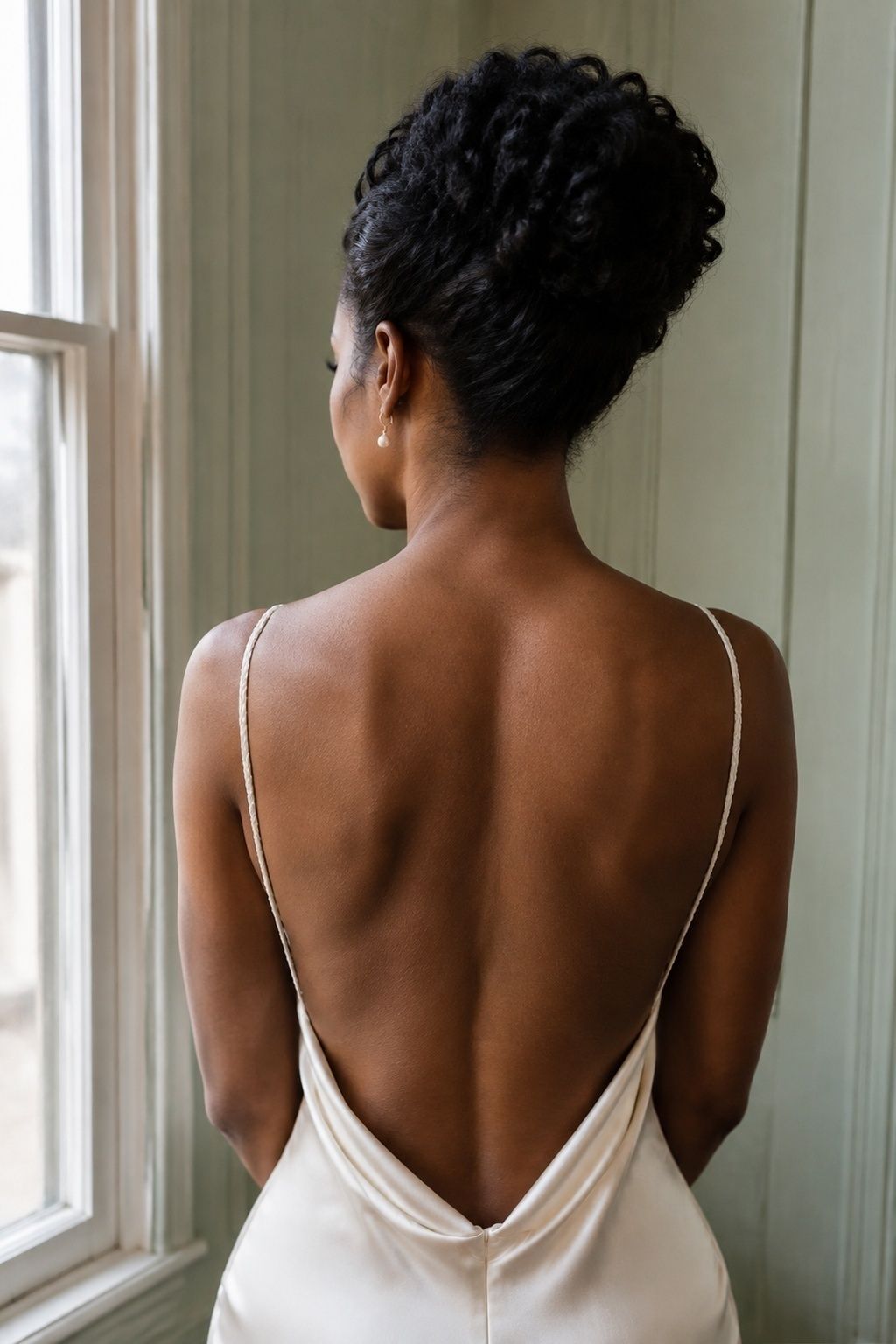
Hair placement changes the whole feeling of a backless dress. A low bun covers the upper back, while a higher twist, soft updo, tucked waves, or one-shoulder style leaves the dress visible.
Bring dress photos to the hair trial and ask for back-view phone shots. The goal is not just pretty hair from the front. It is a complete line from neckline to waist.
A Minimal Silk Gown for an Intimate Wedding Dinner
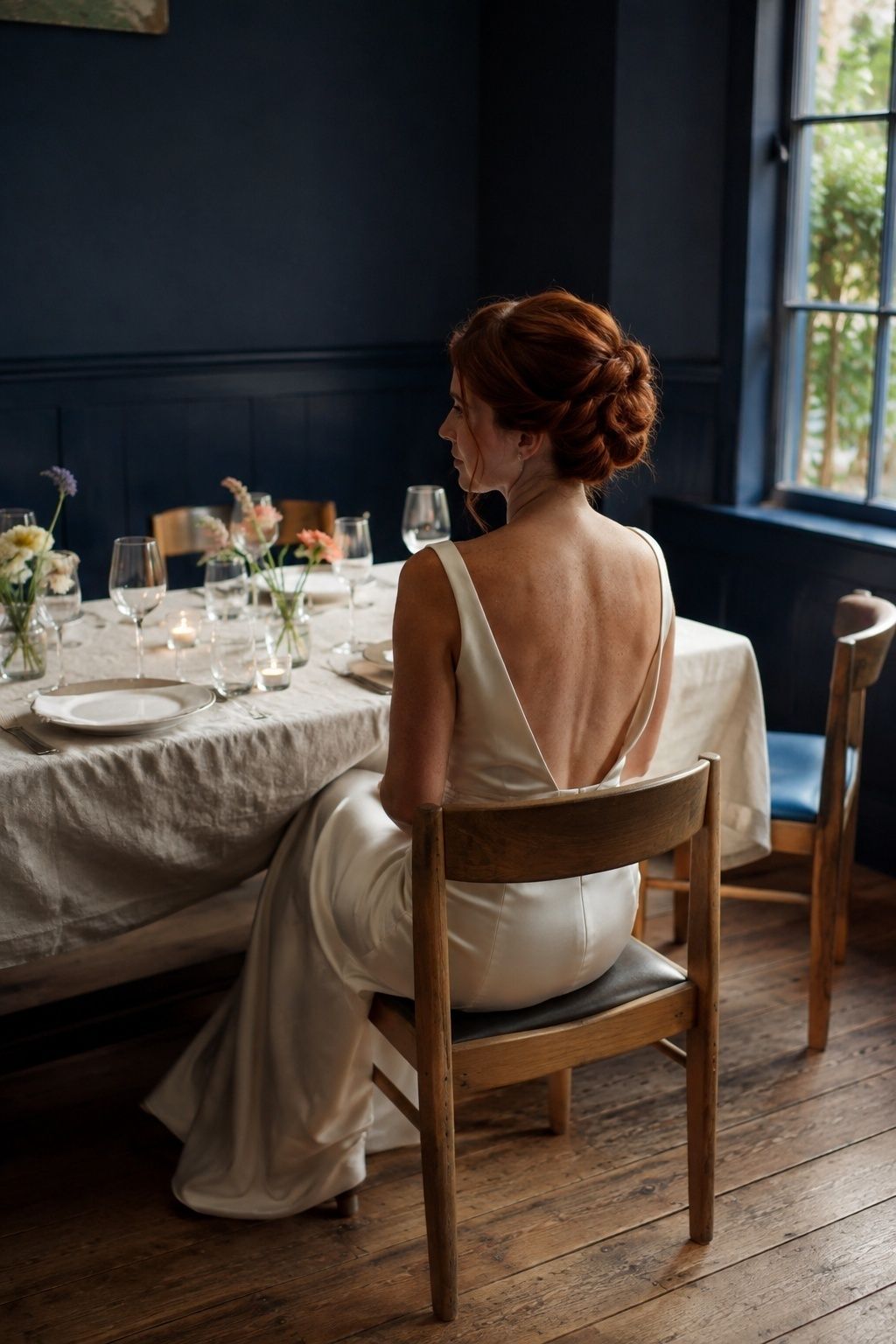
For an intimate dinner wedding, a minimal silk backless dress often feels more memorable than a heavily decorated gown. The simplicity suits close tables, candlelight, handwritten menus, and small rooms where texture matters.
Plan the chair, coat, and bustle details carefully. Silk wrinkles easily, so the practical details around sitting and moving are part of the look, not an afterthought.
A Back-Focused Portrait Dress With Clean Accessories
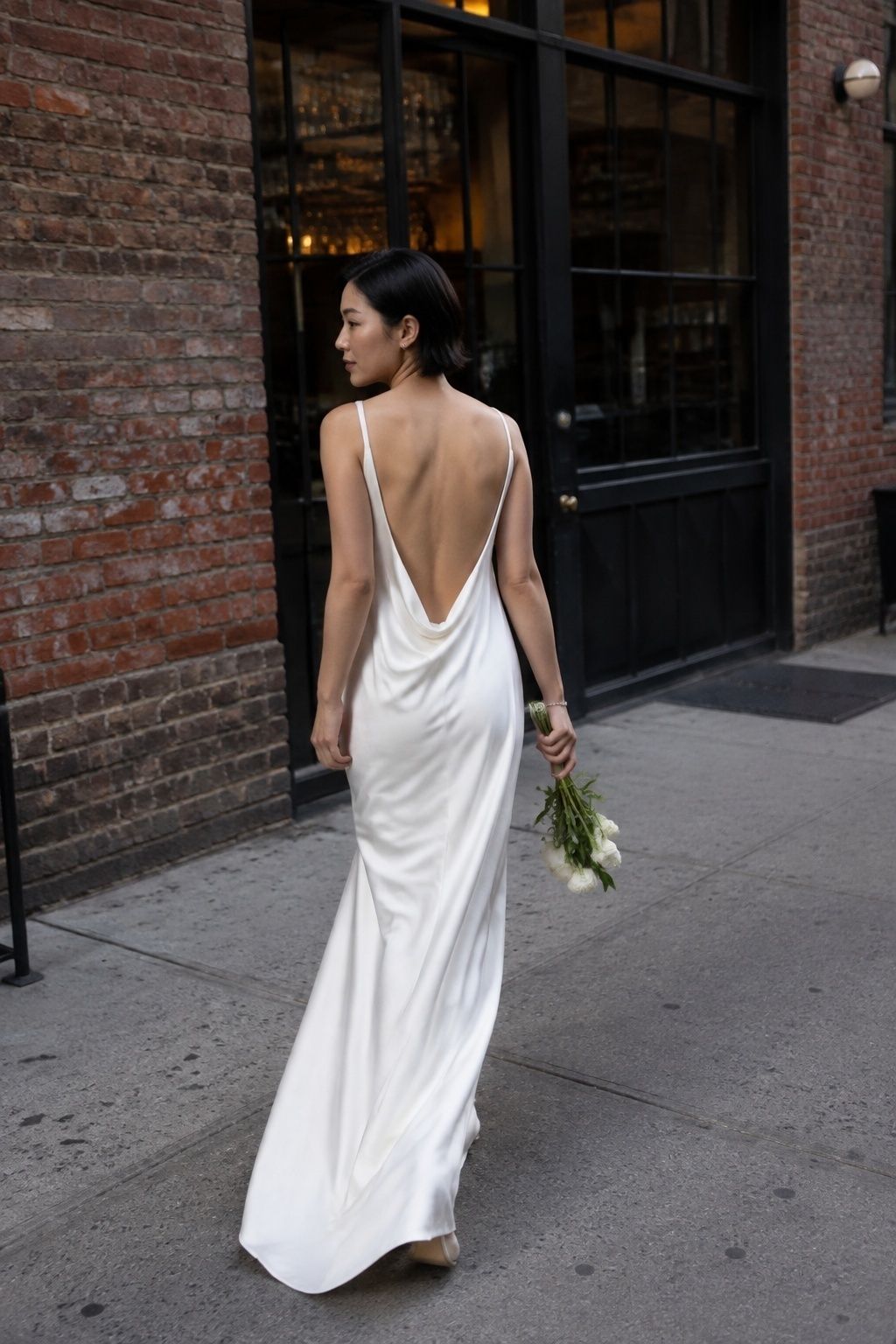
If the back is the main design moment, keep accessories quiet. Small earrings, a low-profile bracelet, barely-there shoes, and a bouquet held lower let the dress lead.
Build a portrait list around the gown. Ask for photos from behind while walking, turning, sitting at dinner, holding hands, and leaving the ceremony so the dress is captured in motion.
Fit Details That Matter Most
Test Adhesive Layers Before Alterations
Adhesive cups, lift tape, and side tape deserve a trial before the gown is altered. Wear them for several hours, move around, and check the edges under silk in different light.
Choose Underlayers That Disappear Under Silk
Silk reveals texture quickly. Smooth, low-rise, raw-edge, or custom underlayers often work better than anything with seams, lace, elastic ridges, or a waistband that crosses the open back.
Steam Early and Protect the Dress Before Photos
Give silk time after steaming so the fabric settles. Hang the gown where it has air around it, avoid crowded garment bags once dressed, and assign someone clean hands for tiny wrinkle checks before portraits.
Take Back-View Fitting Photos Every Time
Back-view photos reveal gaping, strap tension, underlayer edges, and wrinkles that are easy to miss in a mirror. Take them at every fitting from straight behind, three-quarter angles, and seated if your reception includes dinner.
FAQ
What Do You Wear Under a Silk Backless Wedding Dress?
Most brides use some mix of adhesive cups, lift tape, fashion tape, seamless briefs, or custom sewn-in structure. Test everything under the dress before final alterations because silk shows edges, seams, and tension quickly.
Are Silk Backless Wedding Dresses Practical for Small Weddings?
Yes, they are often very practical for small weddings when the fit is secure and the fabric plan is realistic. The dress feels special without a huge skirt, but wrinkles, sitting, and underlayers call for early attention.
How Do You Keep a Backless Wedding Dress Secure?
Security comes from the right size, precise straps, hidden structure, and tested adhesive layers. During fittings, hug, sit, walk, lift your arms, and twist gently so the gown is checked for real wedding movement.
What Hairstyle Looks Best With a Backless Silk Gown?
Updos, tucked waves, high twists, soft ponytails, and one-shoulder styles all work well because they leave the backline visible. Take back-view photos at the hair trial so the hairstyle complements the dress from behind.
Does Silk Wrinkle Too Much for a Wedding Dress?
Silk does wrinkle, but the right steaming plan makes it manageable. Steam early, hang the dress carefully, avoid tight car rides after dressing when possible, and accept a little natural movement in the fabric.
Which Photos Work Best in a Backless Dress?
Ask for walking-away portraits, over-the-shoulder images, aisle exits, seated dinner moments, veil movement, and three-quarter back angles. These views show the open back, the silk, and the way the dress moves in real light.
Final Thoughts
A silk backless wedding dress feels confident when every quiet detail is settled before the wedding day. Choose the shape you love, then test the underlayers, hair, steaming, straps, and back photos until the gown feels steady from every angle.
Let the open back stay visible while the rest of the styling remains soft.
Last update on 2026-10-03 / Affiliate links / Images from Amazon Product Advertising API