

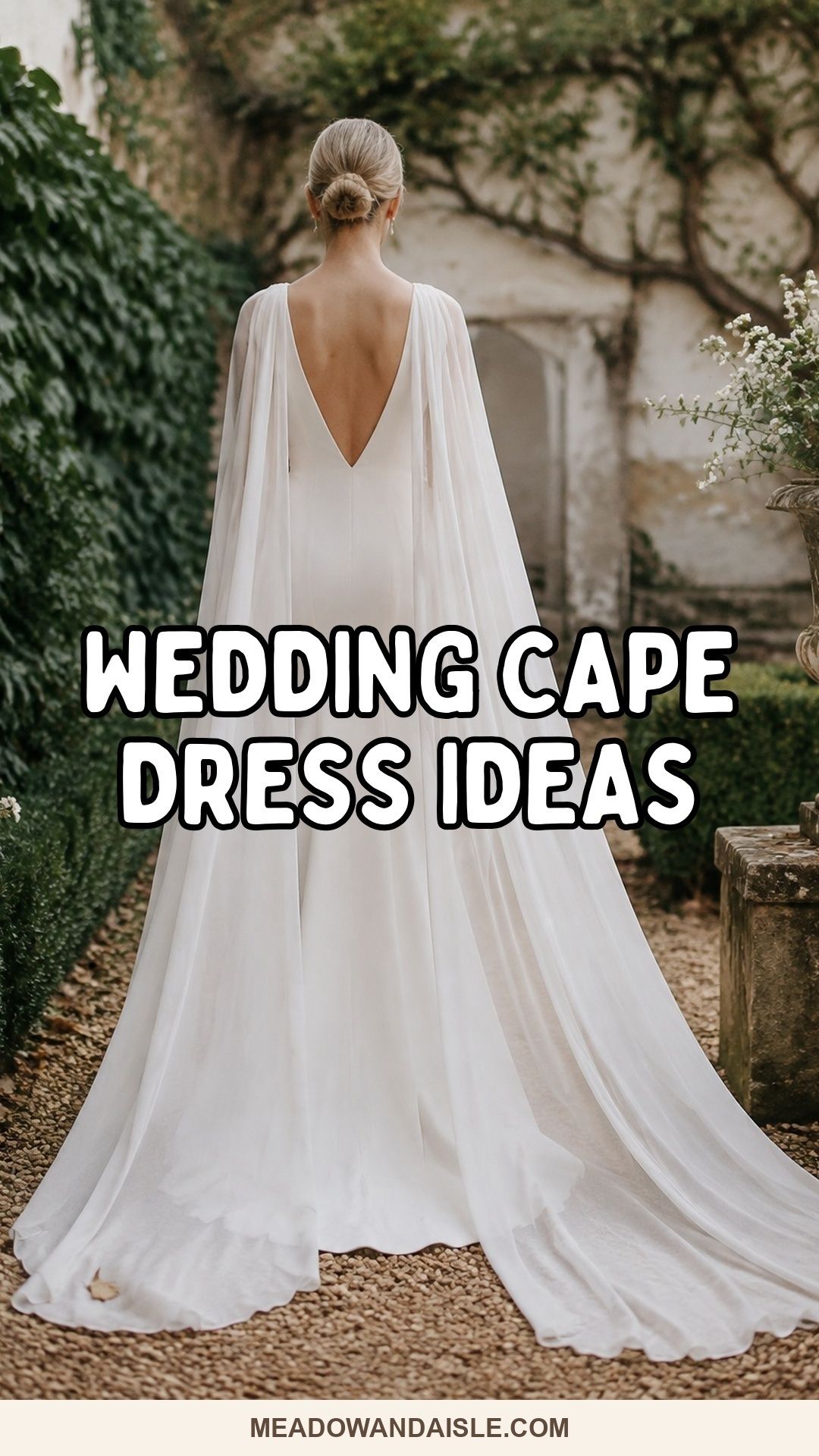
Wedding cape dress ideas work best when the cape is chosen for movement, attachment, fabric weight, aisle space, and removal, so the ceremony looks cinematic while the reception still feels comfortable and practical.
A wedding cape dress gives the aisle moment a little theater without needing a cathedral veil or heavy train. It frames the shoulders, floats behind a simple gown, softens a structured dress, or creates a second look with one removable layer.
For a small wedding, the cape matters even more because guests are close enough to notice how it moves. The right one feels intentional from vows to dinner: beautiful in motion, easy to manage in tight rooms, and simple to remove when hugs, chairs, and dancing begin.
Recommended Wedding Products


You Might Also Like These Blog Posts
- Cape Veil Wedding Ideas for a Soft Veil Alternative
- Cape Town Honeymoon Ideas for a Soft Landing After the Wedding
- Dainty Wedding Dress Ideas That Still Feel Like a Moment
- Wedding Dress With Bolero Ideas for Coverage That Feels Chosen
- 1980 Wedding Dress Ideas With Drama That Still Breathes
- Cinematic Wedding Photography Ideas for Movie-Still Moments
Wedding Cape Dress Ideas
Wedding cape dress ideas start with one question: what role does the cape have with the dress? Some capes replace a veil, others add shoulder coverage, others create a grand entrance, and others give a plain gown more personality without adding beadwork or lace everywhere.
The strongest cape looks are not only pretty standing still. They are planned around fabric weight, the way the cape attaches, the width of the aisle, the shape of the gown underneath, and what happens when the ceremony ends.
Sheer Tulle Cape Over a Clean Column Dress

A sheer tulle cape is the softest way to add drama to a simple column dress. The gown stays clean and close to the body, while the cape gives the aisle a floating outline that photographs beautifully from behind.
This works especially well for chapel ceremonies, gallery vows, restaurant weddings, and candlelit rooms where the dress needs movement but not extra volume. Keep the tulle fine and light so it does not pull at the shoulders or flatten after steaming.
Detachable Cape for a Ceremony-to-Reception Change
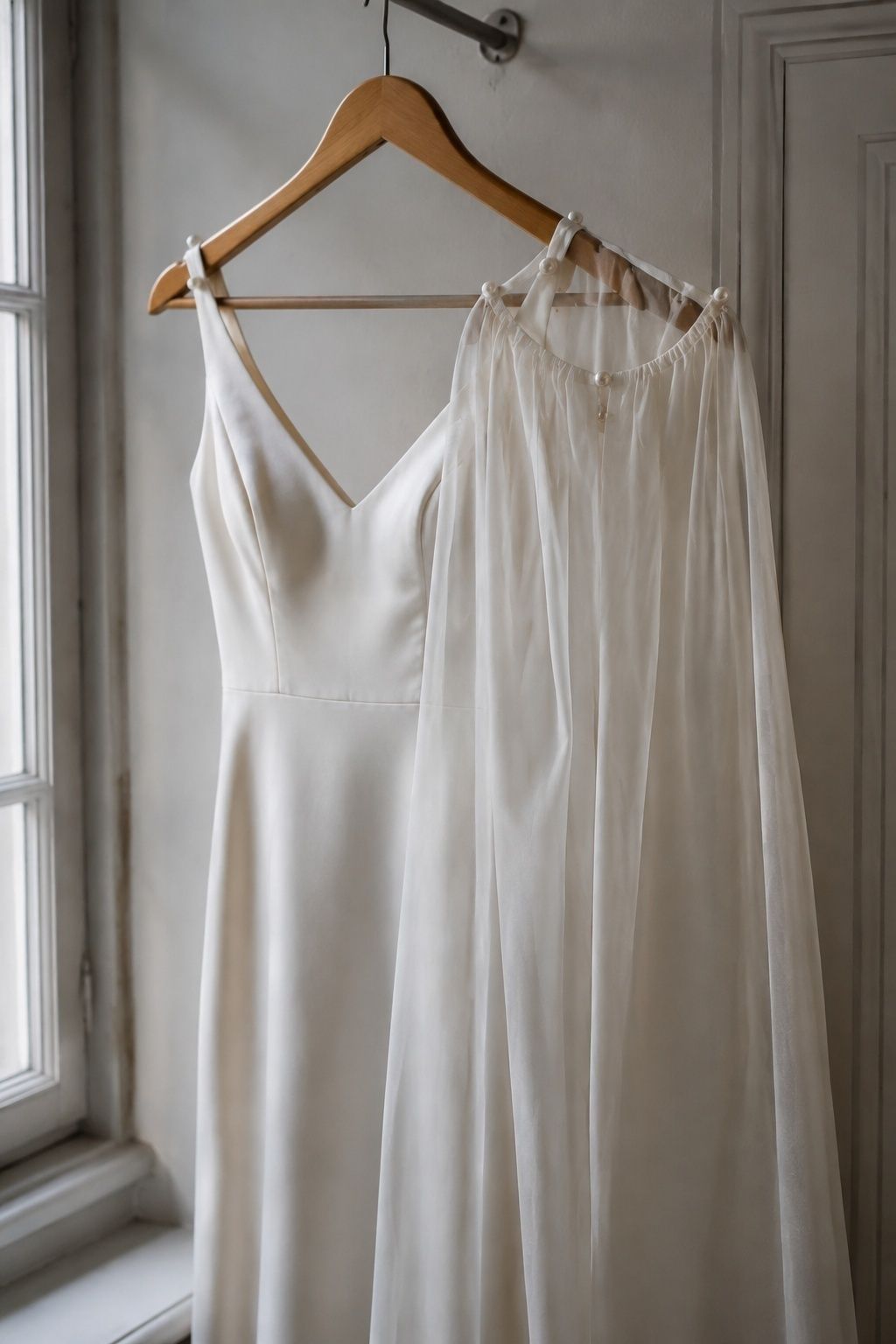
A detachable cape is the most practical choice when the ceremony outfit needs grandeur and the reception outfit needs ease. Buttons, tiny hooks, snaps, or hidden loops let the cape come off before dinner without asking for a full outfit change.
Test the attachment points during fittings. The cape needs secure hold while walking, turning, hugging, and sitting for portraits, plus a clean release without tugging at fragile lace, illusion mesh, or shoulder straps.
Pearl-Trim Cape With a Minimal Satin Gown
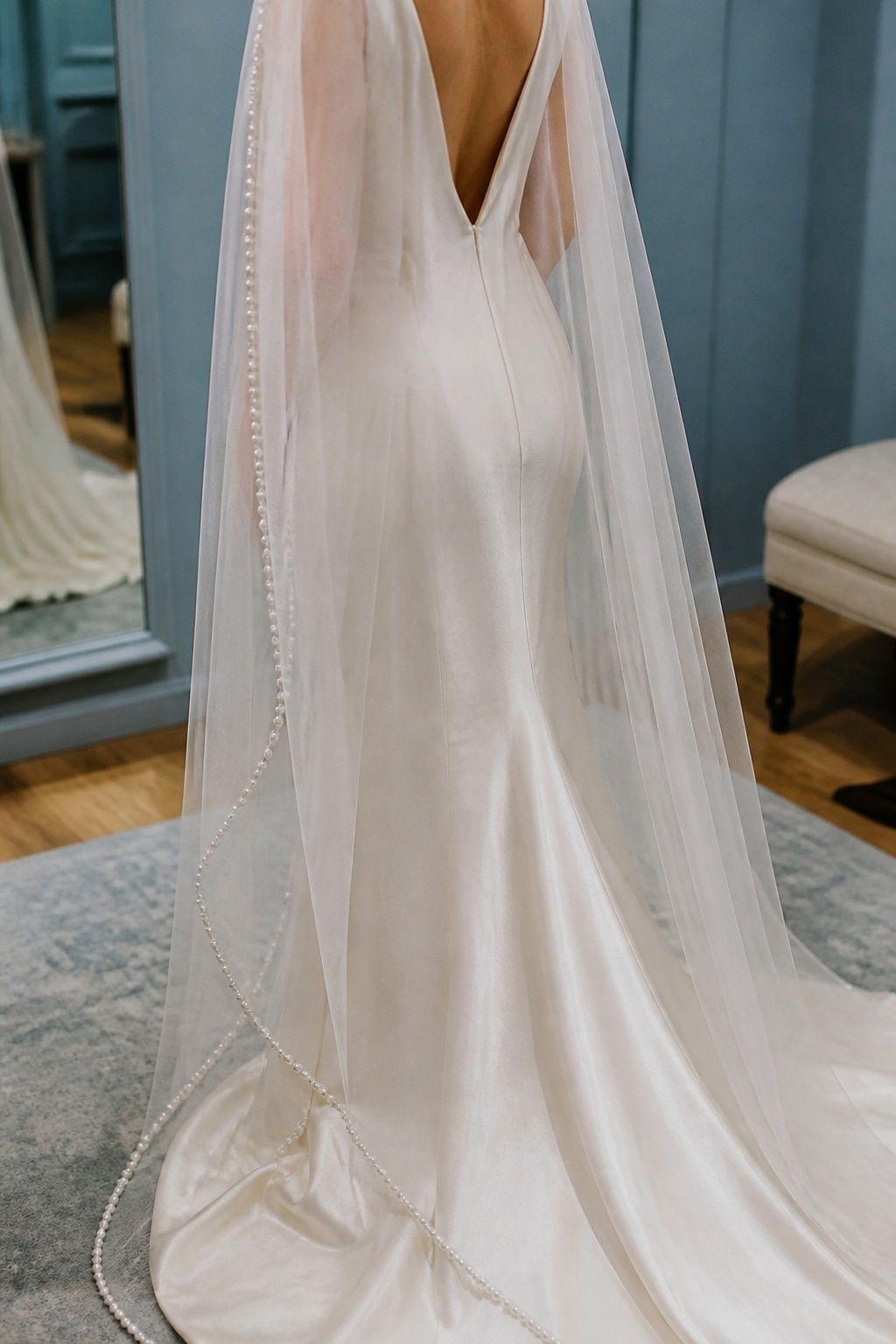
A pearl-trim cape gives a minimal satin gown a bridal finish without covering the whole dress in embellishment. The pearls catch light around the edge, so the back view feels special even when the front of the gown stays simple.
Keep weight in mind. A pearl border gets heavy, especially on a long cape. Ask the seamstress to check whether the shoulders, neckline, or straps need reinforcement before the final fitting.
Capelet for a Short Dress or City Hall Look

A capelet gives a short dress, suit dress, or city hall outfit instant occasion without overwhelming the silhouette. It covers the shoulders, frames the face, and adds a polished layer that feels right for courthouse steps or a tiny lunch reception.
The length matters. A capelet that ends around the upper arm feels sweet and vintage, while one that reaches the elbow looks more formal. Avoid a length that stops at the widest part of the bodice unless that line is intentional.
Cape Sleeves on a Fitted Crepe Dress

Cape sleeves are ideal for brides who want movement without managing a separate layer. The fabric falls from the shoulders or upper arms, creating a soft winged line while the dress remains fitted through the waist and hips.
This style is easier in compact venues than a floor-length cape because the fabric stays closer to the body. Check arm movement before committing, especially for bouquet holding, signing papers, hugging family, and reaching across a dinner table.
Lace Cape Over a Plain Strapless Gown

A lace cape makes a plain strapless gown feel romantic without changing the dress itself. It adds pattern around the shoulders and back, especially when the bodice feels too bare for the ceremony.
Match lace carefully. The cape does not need to be identical to the dress, but it needs the same level of delicacy. Heavy corded lace over fine satin feels bulky, while airy lace over a smooth gown looks intentional.
Structured Crepe Cape for a Modern Bridal Suit
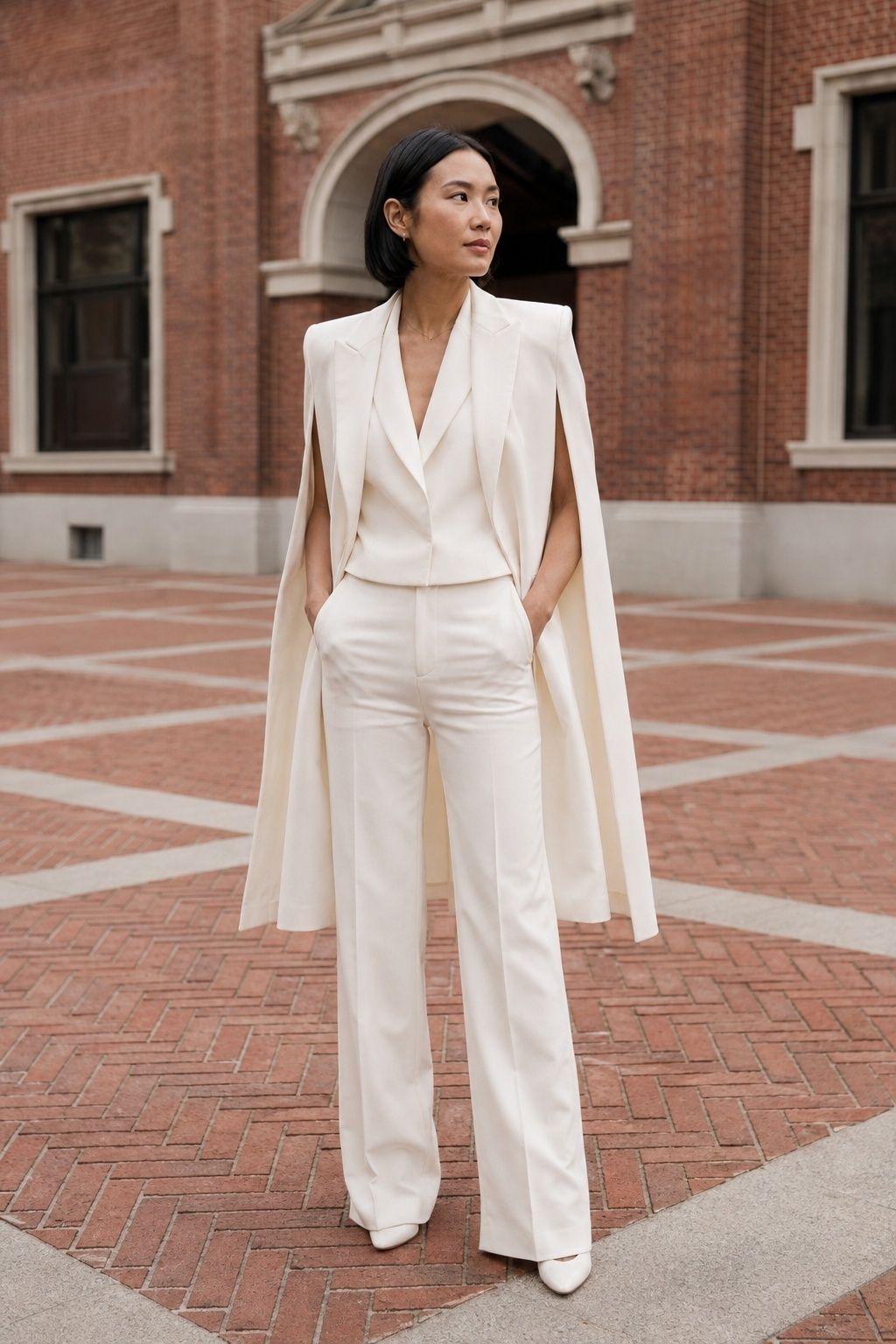
A structured crepe cape gives a bridal suit or tailored jumpsuit a powerful ceremony shape. It brings the drama of a train without softening the outfit too much, so the look stays crisp, modern, and architectural.
Ask the tailor to balance shoulder width and cape length together. If the cape is broad and long, the suit underneath needs clean lines. If the suit already has strong lapels or wide trousers, a narrower cape usually feels sharper.
Cathedral Cape for a Narrow Indoor Aisle
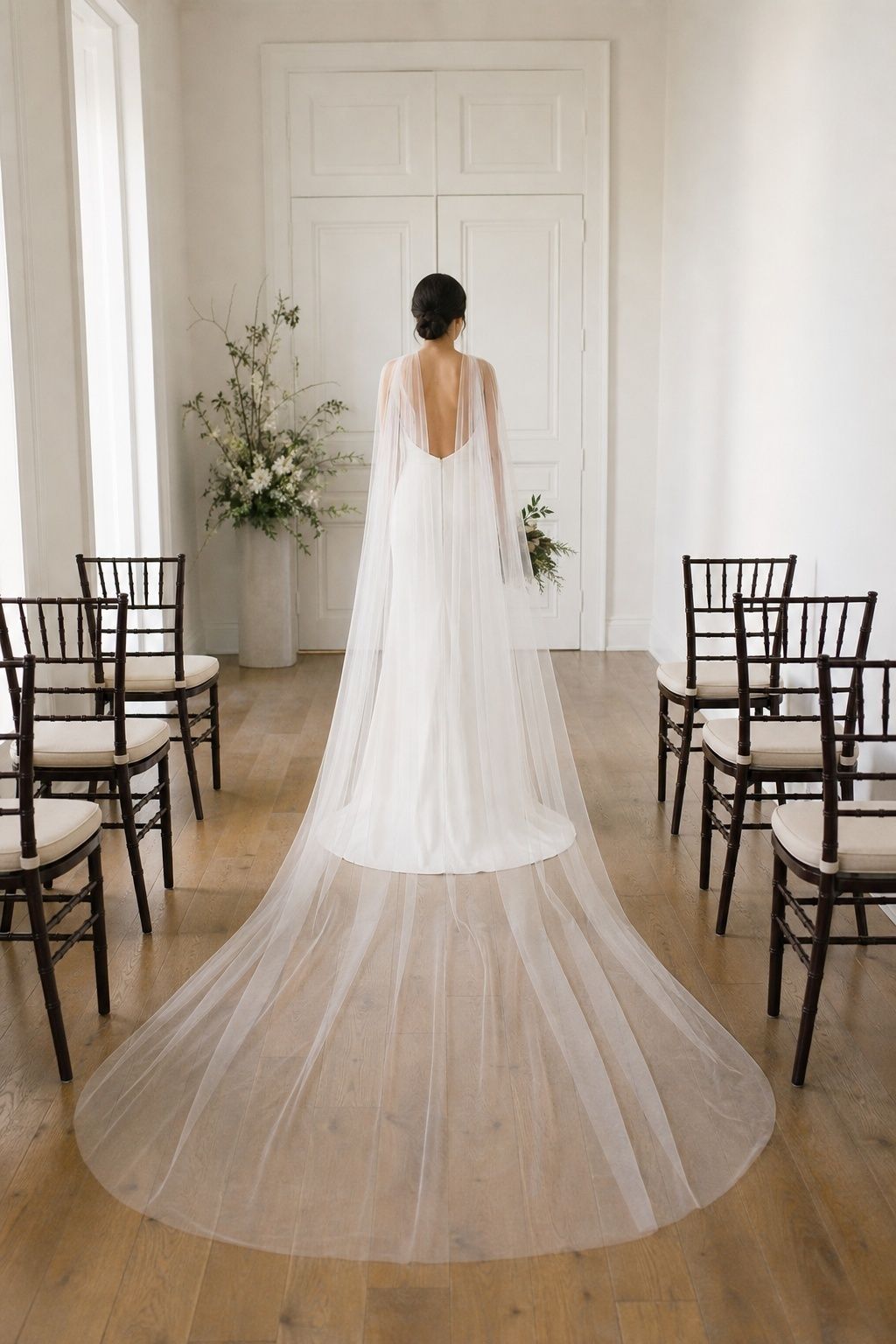
A cathedral cape creates the most cinematic walk, but it needs planning in a narrow aisle. Long fabric needs to skim behind the dress, not sweep candles, chair legs, florals, or guests sitting close to the walkway.
Measure the aisle before falling for the longest option. In small venues, a slim cathedral cape often looks more elegant than a very wide one because it creates length without demanding extra floor space.
Short Cape With a Tea-Length Wedding Dress

A short cape suits a tea-length dress because both layers feel playful and intentional. The cape adds ceremony polish while the shorter skirt keeps the outfit light enough for stairs, sidewalk portraits, and dinner movement.
Choose a cape that ends above the waist or around the hip rather than exactly at the skirt hem. A little separation keeps the look from turning boxy and lets the dress shape stay visible.
Embroidered Cape With a Simple Slip Dress

An embroidered cape turns a simple slip dress into a personal wedding look. Floral threadwork, tiny stars, initials, or tonal vines add texture while the slip underneath stays sleek and comfortable.
Keep the base dress unfussy. Embroidery needs space around it, especially in a small ceremony where guests will see the detail closely. A clean neckline and minimal jewelry let the cape carry the softness.
Cape Dress With a Dramatic Back View

A cape dress is made for the back view. It gives the photographer a clear moment during the processional, vows, recessional, and portraits from behind, especially when the cape starts at the shoulders and falls in one clean line.
Think about hair and jewelry from the back as well as the front. A low bun, tucked waves, or clean earrings keep the cape visible, while long loose hair hides the attachment points and softens the intended shape.
Veil and Cape Together for Layered Drama
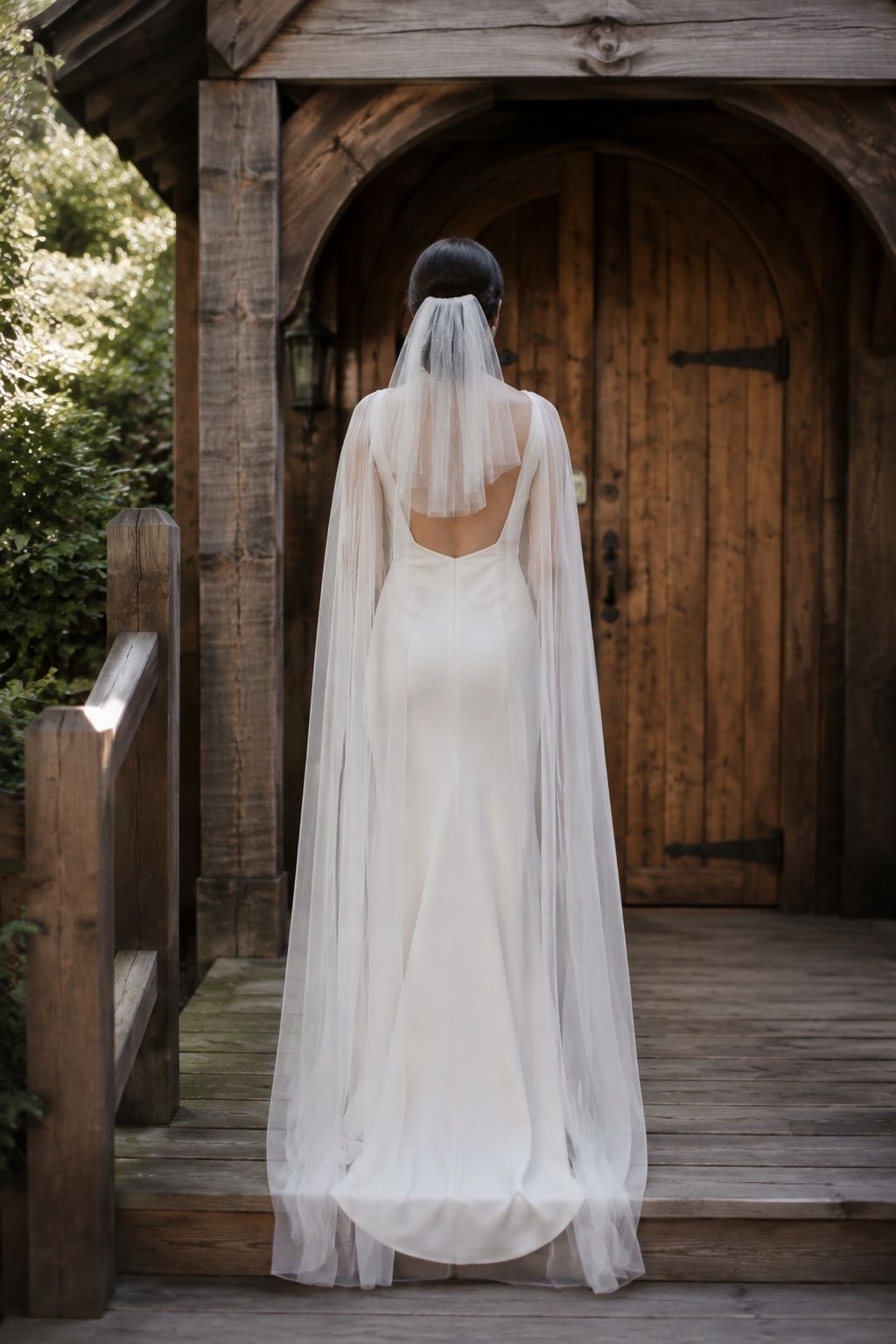
A veil and cape pair well when each layer has a different role. A short veil adds face-framing ceremony tradition, while the cape creates length and movement behind the dress.
Avoid two long layers competing for the same space. If the cape is floor length, choose a birdcage, blusher, shoulder veil, or no veil. If the veil is cathedral length, keep the cape shorter or sheer enough to avoid a heavy stack of fabric.
Warm Velvet Cape for a Winter Micro Wedding
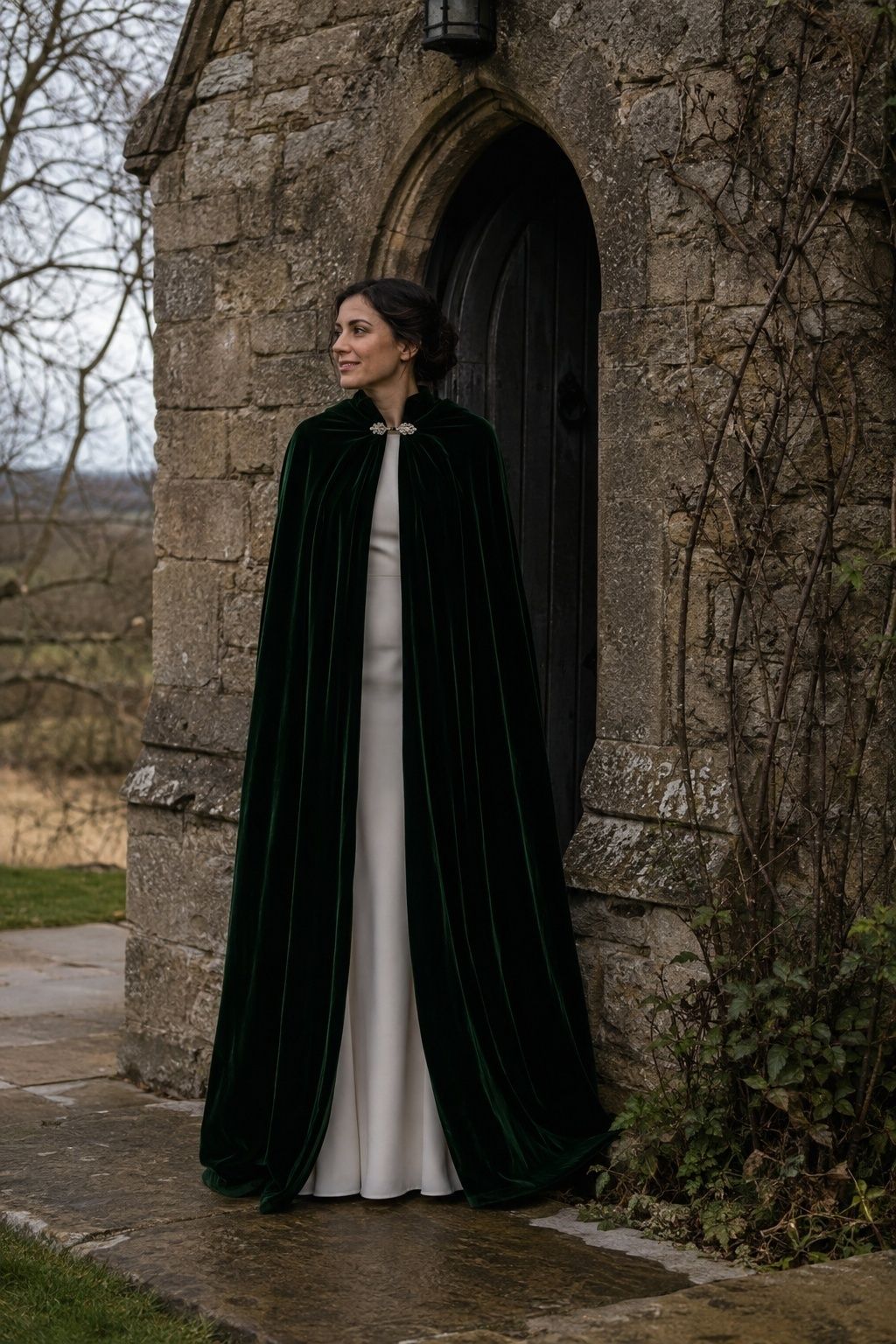
A velvet cape brings warmth and old-world drama to a winter micro wedding. Ivory, champagne, soft taupe, or even deep green look beautiful over a simple gown when the ceremony includes chilly steps, a stone chapel, or evening portraits.
Velvet is heavier than tulle or organza, so the cape needs a strong closure and a dress that suits the visual weight. Keep the hem controlled so it does not drag through wet pavement or collect debris outside.
Organza Cape for Light Volume Without Bulk
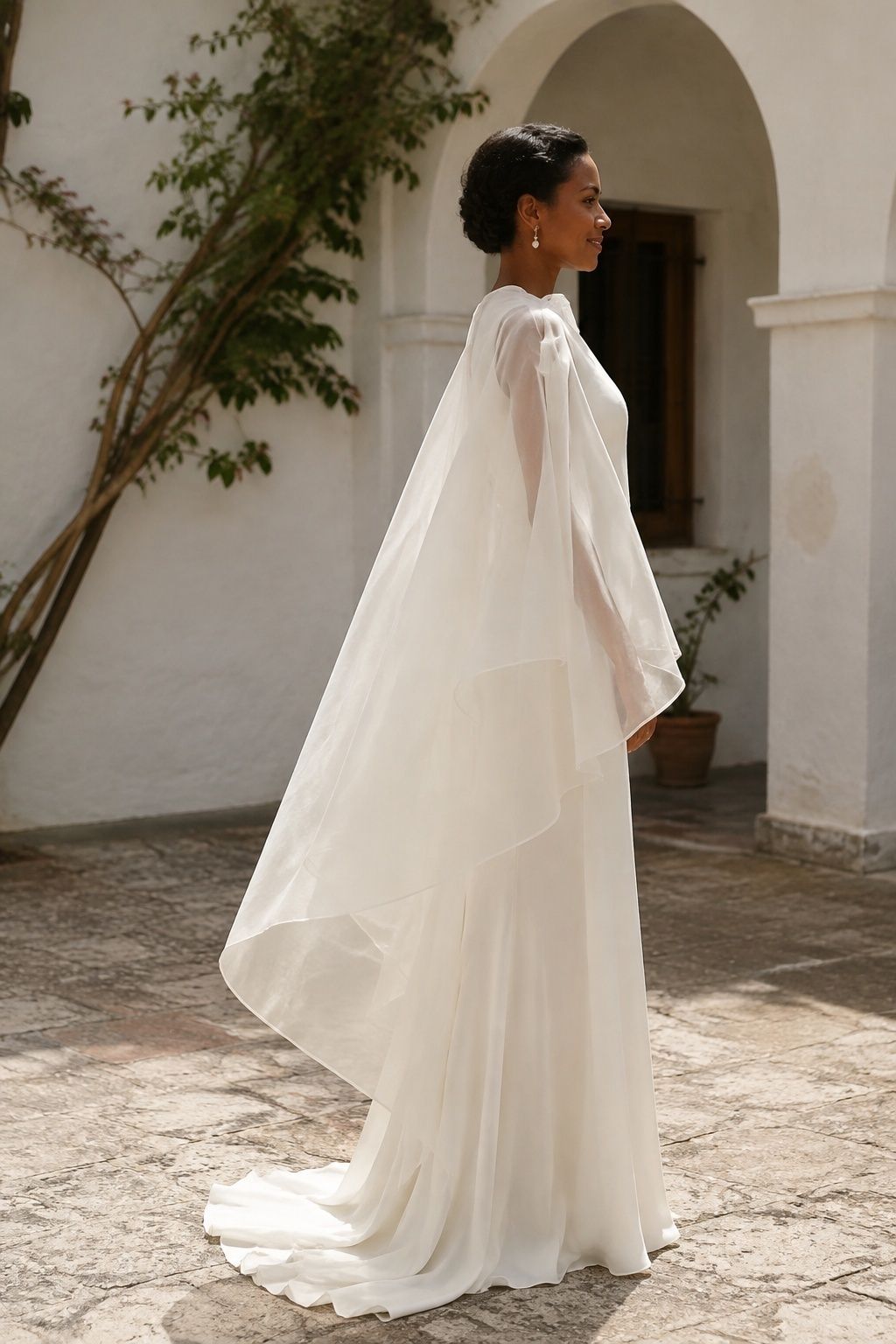
Organza gives a cape gentle body without the density of satin or velvet. It holds a soft shape in photos, which makes it lovely for brides who want the cape to be visible without feeling heavy.
This fabric works best when steamed well and handled carefully. It creases, especially in a car or small dressing room, so hang it early and assign one trusted attendant to arrange it before the aisle walk.
Satin Cape With a Ball Gown Silhouette
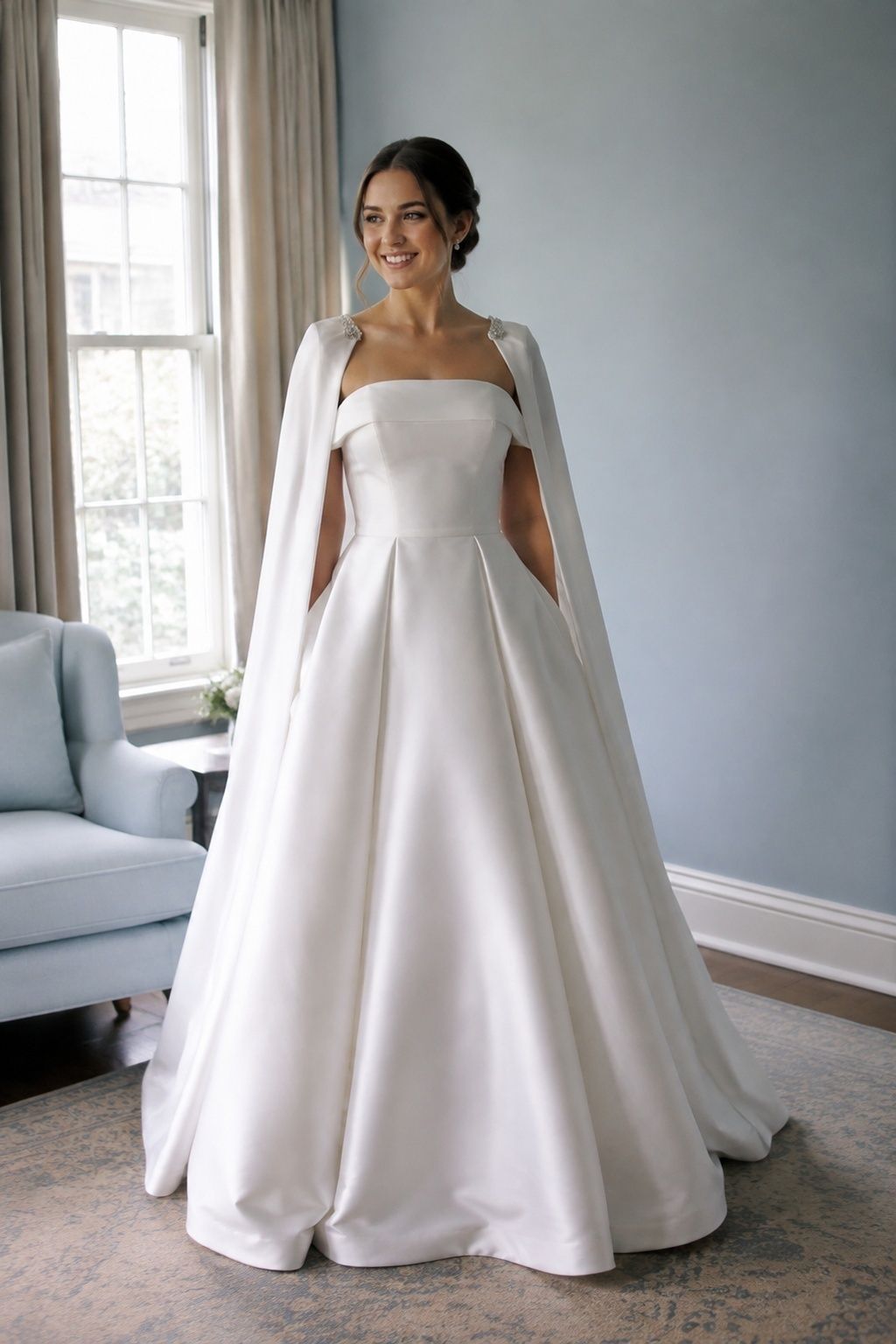
A satin cape over a ball gown is a formal choice that needs restraint. The skirt already has volume, so the cape needs either a narrow, clean shape or attachment high enough to create one graceful line from shoulder to train.
Try the full outfit in the actual walking shoes. Heavy satin plus a full skirt changes pace, posture, and turning room. If the venue is intimate, ask whether a lighter cape fabric gives the same ceremony feeling with less effort.
Beaded Cape for an Evening Restaurant Wedding
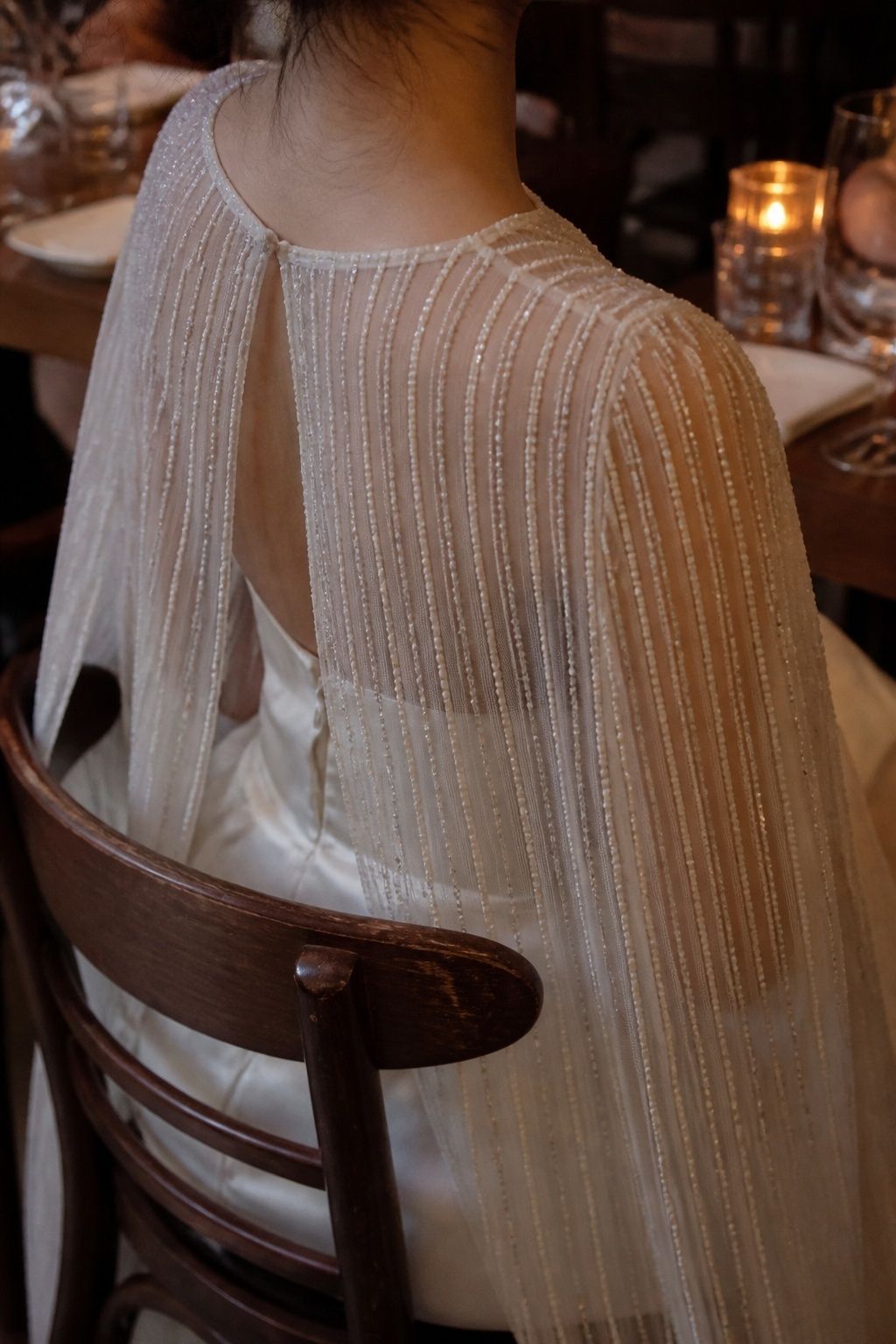
A beaded cape looks luminous in a candlelit restaurant wedding. It catches light at the shoulders and back, making a simple gown feel special in seated portraits and close greetings.
Weight is the deciding factor. Bead weight pulls backward, stretches mesh, or irritates bare skin. Wear the cape for more than a few minutes during fittings, and practice sitting in the reception chair before calling it comfortable.
Cape Attached at the Shoulders
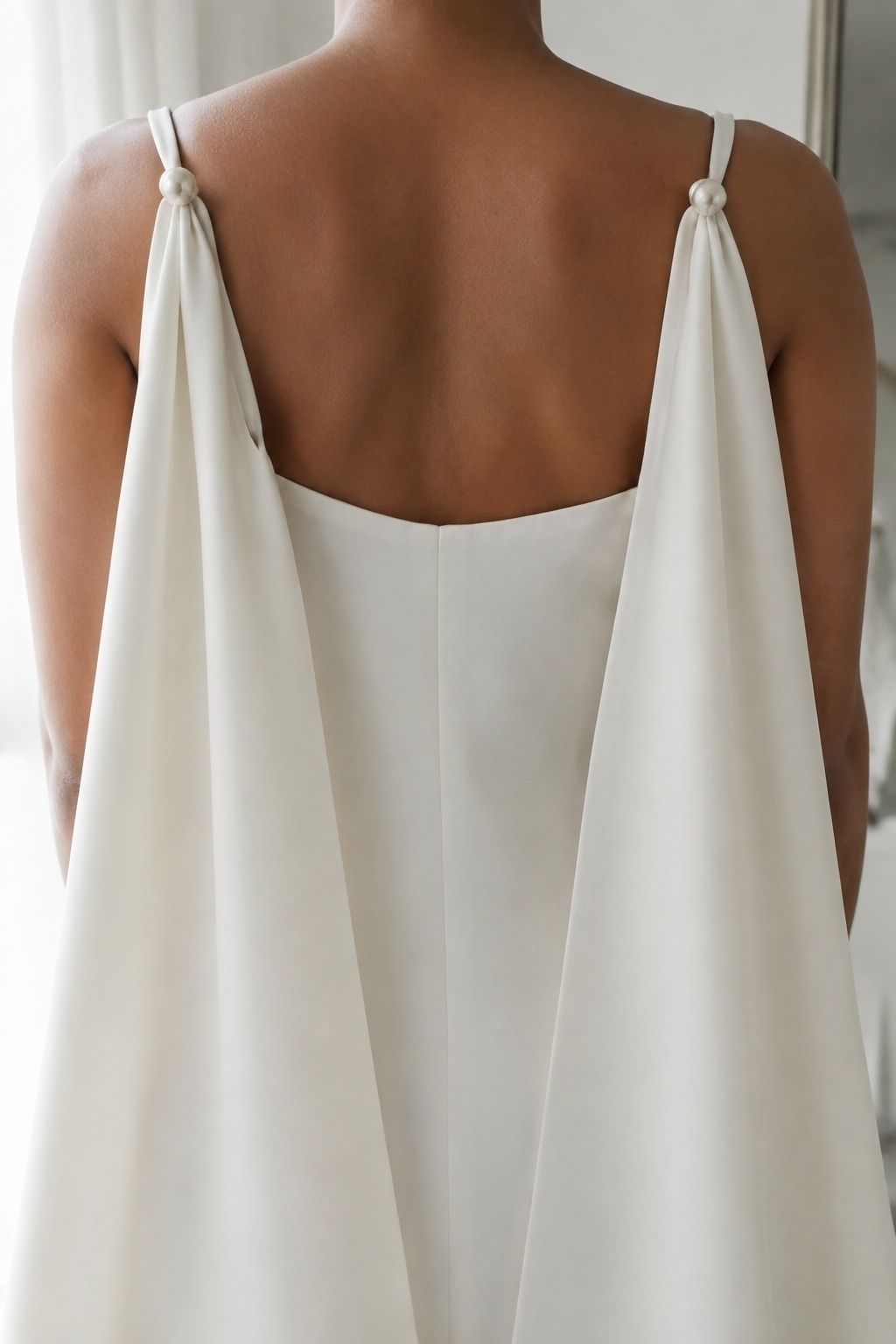
Shoulder attachment gives a cape the classic bridal sweep. It works well with straps, sleeves, off-the-shoulder gowns, and tailored bodices because the fabric begins high and moves naturally with the body.
Look closely at the hardware. Tiny buttons feel romantic, but hidden hooks, loops, or snaps often look cleaner if the cape needs to come off quickly. The attachment needs to look finished even after the cape is removed.
Cape Attached at the Neckline or Collar
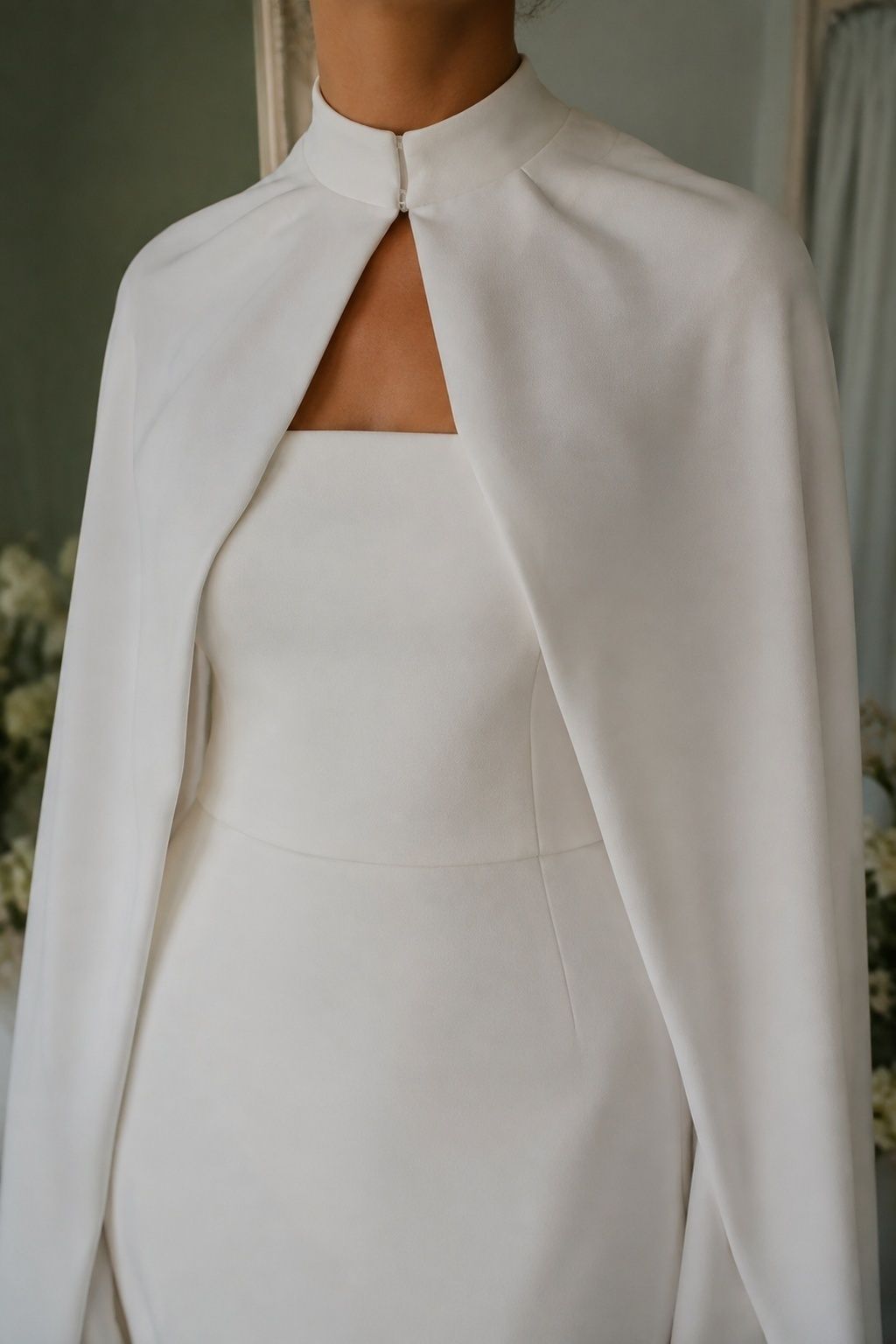
A neckline or collar attachment creates a regal shape, especially on high-neck gowns, halter styles, and minimalist dresses. The cape feels like part of the bodice rather than an accessory added afterward.
This placement needs comfort testing. Anything around the neck needs easy breathing, turning, eating, and hugging. If the closure presses or shifts during a fitting, it will feel worse during a full ceremony.
Cape With a Slit Gown for Movement
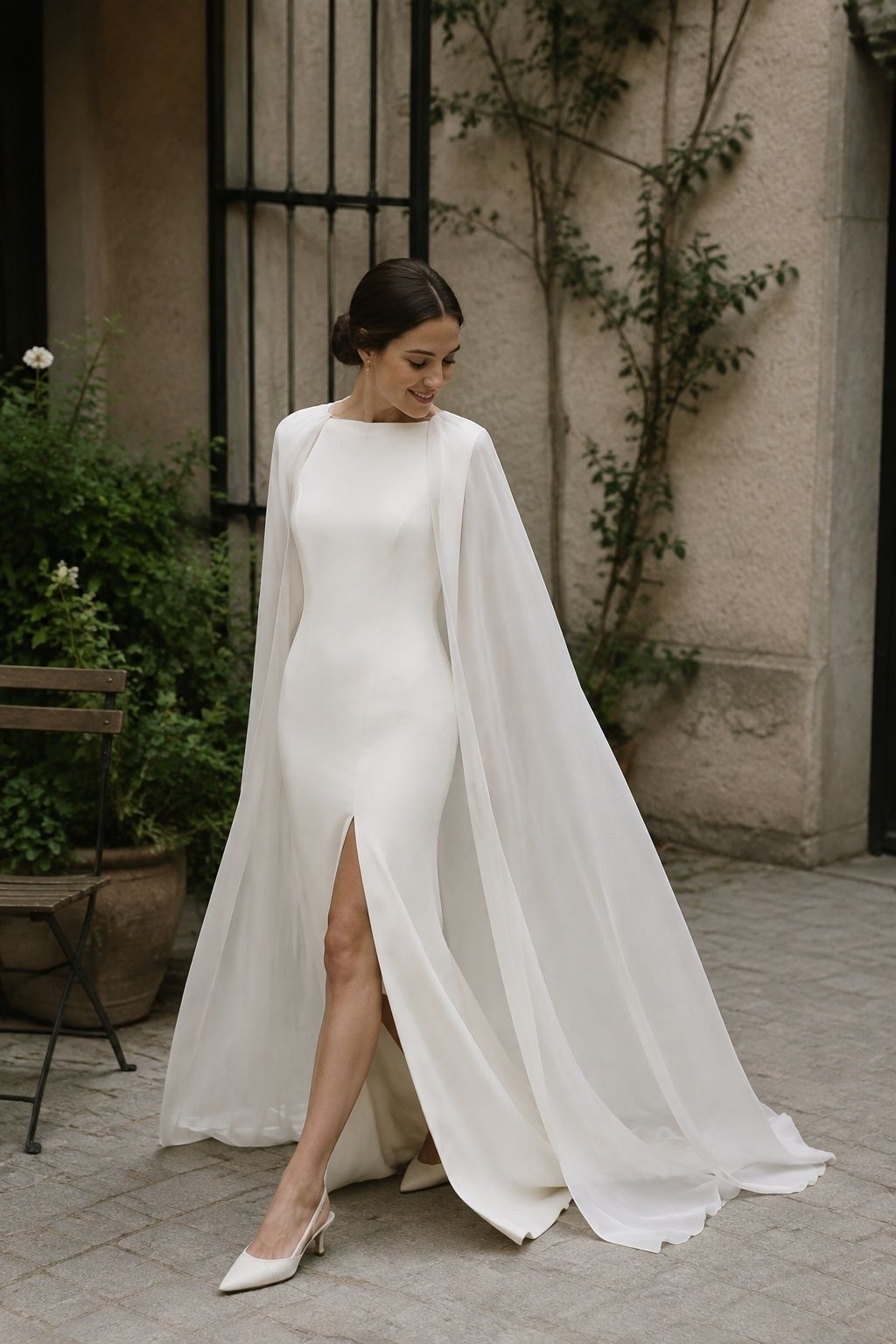
A slit gown gives a long cape more movement because the dress underneath has its own sense of ease. The leg reveal keeps the silhouette from feeling too covered, while the cape adds softness from the back.
Balance the drama. A high slit, long cape, strong heel, and bold earrings becomes a lot at once. Choose one main focal point and let the others balance it with cleaner lines.
How to Choose the Right Cape Length
Cape length follows the venue, dress, and plan for movement. Shoulder-length capes feel sweet and easy. Waist-length and hip-length capes add coverage. Floor-length capes create ceremony drama. Cathedral capes need the most space and attention.
In a small venue, less width is often better than less length. A narrow long cape still feels cinematic, while a wide cape catches on chairs or hides the dress from guests seated close by.
What to Check Before Buying a Bridal Cape
Before buying a bridal cape, check fabric weight, edge finish, attachment hardware, neckline compatibility, steaming needs, and the way it looks from behind. Bring photos of the dress from every angle so the cape does not solve one problem and create another.
Also check removal. A trusted attendant needs to take the cape off without disturbing hair, makeup, earrings, or the dress closure. Practice once before the wedding day so the reception transition feels calm.
Small-Venue Practicality Checks
Small and intimate venues make capes feel magical, but they also reveal practical issues quickly. Check aisle width, chair spacing, staircases, candle placement, bathroom access, coat hooks, dinner chairs, and the route from ceremony to portraits.
If the cape is long, assign one trusted person to arrange it before the walk and lift it after the recessional. That one simple role protects the fabric and keeps the couple from managing a dramatic layer in the middle of the celebration.
FAQ
Are wedding cape dresses practical?
Yes, wedding cape dresses feel practical when the cape is light enough to move, attached securely, and easy to remove before dinner or dancing. Detachable capes, capelets, and cape sleeves are often easier than very long heavy capes.
What dress silhouette works best with a bridal cape?
Clean silhouettes usually work best with a bridal cape. Column gowns, fitted crepe dresses, satin slips, strapless gowns, tailored suits, and simple ball gowns give the cape room to create movement without competing with too many dress details.
Can a bridal cape replace a veil?
Yes, a bridal cape replaces a veil if the cape gives the ceremony enough softness, length, or tradition for your taste. Many capes create the same trailing effect as a veil while keeping the head and face uncovered.
Should I wear a veil with a wedding cape dress?
Wear a veil with a wedding cape dress, but the two layers need different roles rather than fighting for the same role. A short veil with a long cape often looks cleaner than a cathedral veil stacked over a cathedral cape.
What fabric is best for a wedding cape?
Tulle, organza, chiffon, lace, crepe, satin, velvet, and beaded mesh all suit wedding capes. Choose sheer fabrics for softness, crepe or satin for structure, velvet for warmth, and beading only when the dress and shoulders suit the weight.
How do you remove a detachable bridal cape?
A detachable bridal cape is usually removed by releasing hidden hooks, snaps, loops, buttons, or combs at the shoulders, neckline, or back. Practice the removal during fittings so the cape comes off smoothly before the reception.
Final Thoughts
Wedding cape dress ideas are most beautiful when the drama has a practical plan behind it. Choose the cape for the dress, venue, aisle, fabric weight, attachment points, and reception comfort, then let that one moving layer make the ceremony feel unforgettable.
Before the final fitting, rehearse the walk, turn, hug, chair sit, and cape removal so the whole look feels graceful from entrance to dinner.
Last update on 2026-10-03 / Affiliate links / Images from Amazon Product Advertising API