
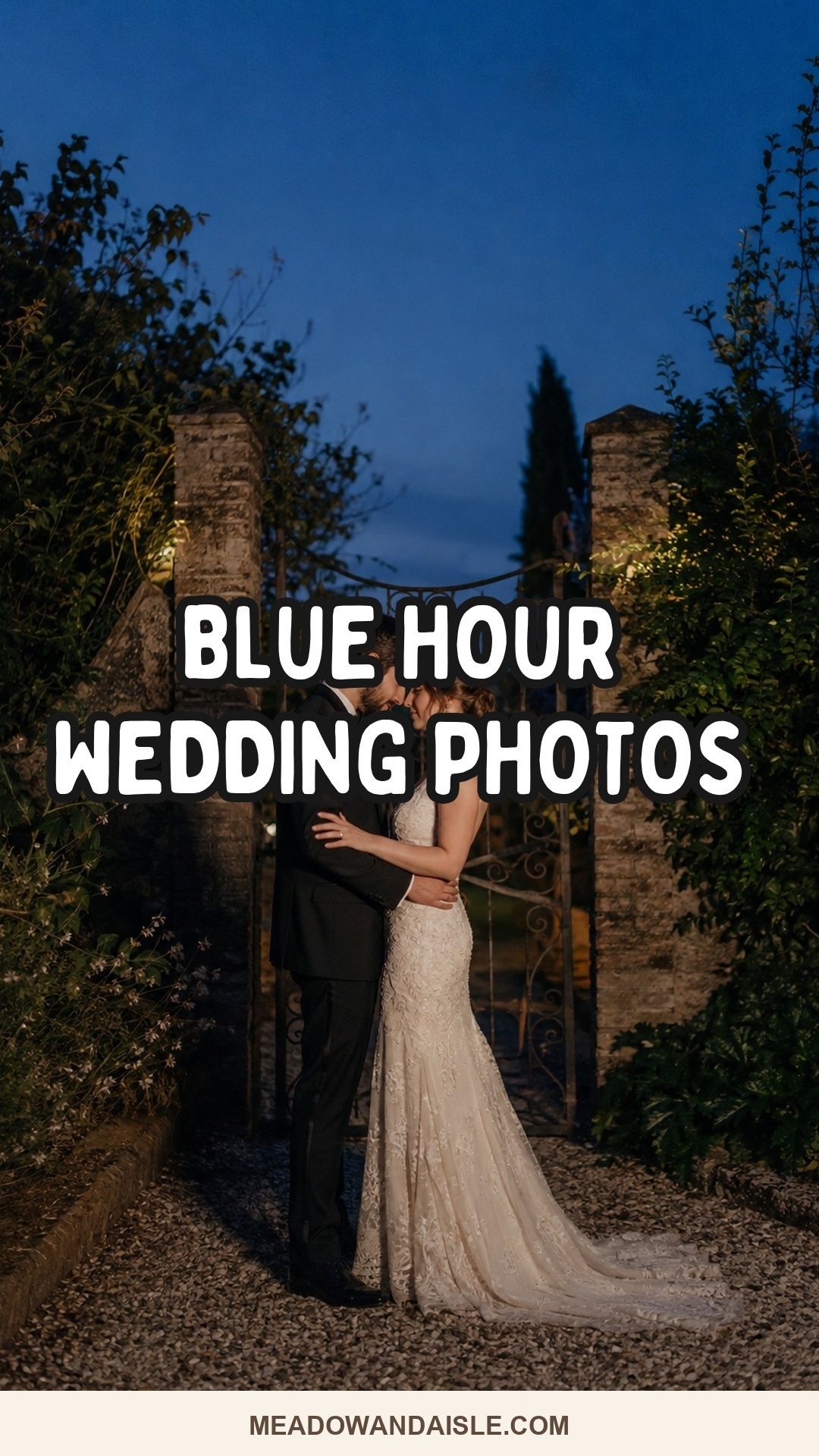
Blue hour wedding photography ideas work best when you plan a short, calm portrait window just after sunset, choose photo spots close to the reception, and tell your photographer, planner, and caterer before the day so the couple can step away for twilight images without interrupting dinner.
Blue hour is brief, which is part of its charm. The sky turns soft navy, venue lights begin to glow, candles look richer, and skin tones can feel romantic instead of washed out. For a small wedding, that timing can be especially forgiving because two people can slip out for 7 to 15 minutes without moving an entire party.
The trick is to decide before the wedding which twilight moments matter most. A balcony portrait, a candlelit dinner table, a waterfront reflection, or one quiet just-us frame may be enough. You do not need to chase every possible photo, only the ones that fit your setting and the way you want the evening to feel.
Recommended Wedding Products
No products found.

No products found.
No products found.
No products found.
You Might Also Like These Blog Posts
- Artsy Wedding Photography Ideas That Still Feel Like You
- Cinematic Wedding Photography Ideas for Movie-Still Moments
- Light and Airy Wedding Photography Ideas That Still Feel Real
- Wedding Photography Mistakes That Steal the Feeling From the Day
- Civil Ceremony Photography Ideas for Proof of a Beautiful Small Day
- July Wedding Photo Ideas for Golden Hour Glow and Shade-Smart Moments
Blue Hour Wedding Photography Ideas For A Twilight Glow
The best blue hour wedding photos usually come from restraint. Instead of leaving the reception for a long second portrait session, treat twilight as one intentional pause. Pick two nearby locations, decide who will cue you, and ask the caterer to hold your plates or delay a toast if the timing lands close to service.
Blue hour changes quickly, so your photographer needs permission to move fast. Walk the route during rehearsal or venue arrival, mark any stairs or grass that could slow you down, and keep a wrap, umbrella, or second shoes nearby if the evening may be cool or damp.
| Blue hour choice | Best for | Planning detail |
|---|---|---|
| 7-minute portrait escape | Small weddings, dinner parties, courthouse receptions | Choose one close spot and one backup |
| 15-minute portrait loop | Venues with courtyard, water, balcony, or garden paths | Tell planner and caterer before dinner timing is finalized |
| Reception-only blue hour | Couples who dislike posed portraits | Photograph candles, glasses, toasts, and guest movement |
| Wide venue exterior | Historic estates, restaurants, rooftops, hotels | Ask when exterior lights turn on |
| Final just-us frame | Intimate weddings that want a quiet ending | Save one private portrait after the last formal event |
Plan Quiet Couple Portraits After Sunset
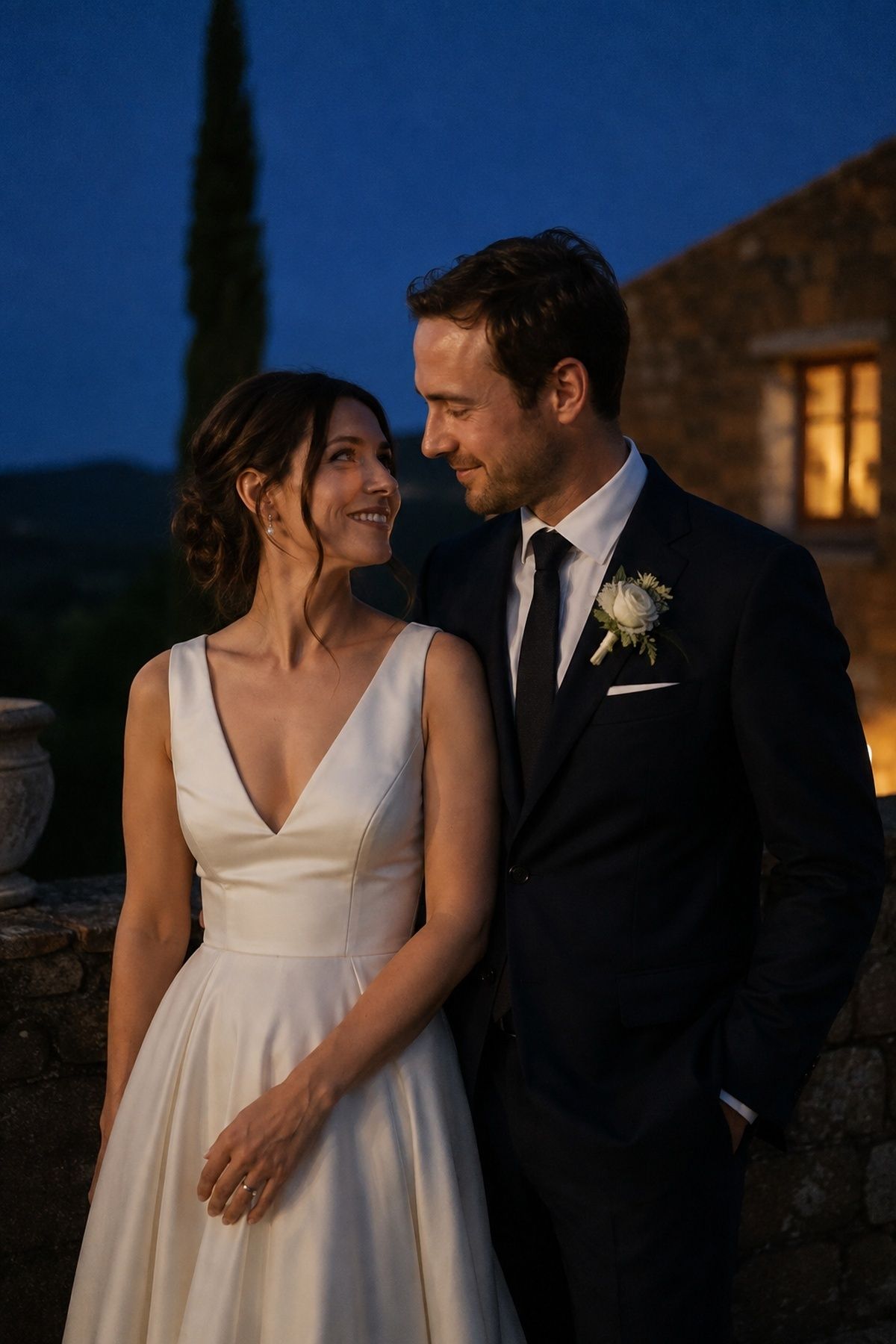
Quiet blue hour wedding portraits are often the reason couples build this window into the timeline. The light is soft, the sky has color, and the pressure of ceremony portraits is already behind you. Ask for gentle direction, close framing, and a few wider images that show the evening around you.
For small weddings, this is often the easiest portrait session of the day. Guests are usually eating, ordering drinks, or settling into dinner, so the couple steps away without a visible gap. For one or two composed frames, ask for clean posture and quiet hands, then return to dinner before the portrait block starts feeling formal.
Use A Courtyard With Warm Venue Lights
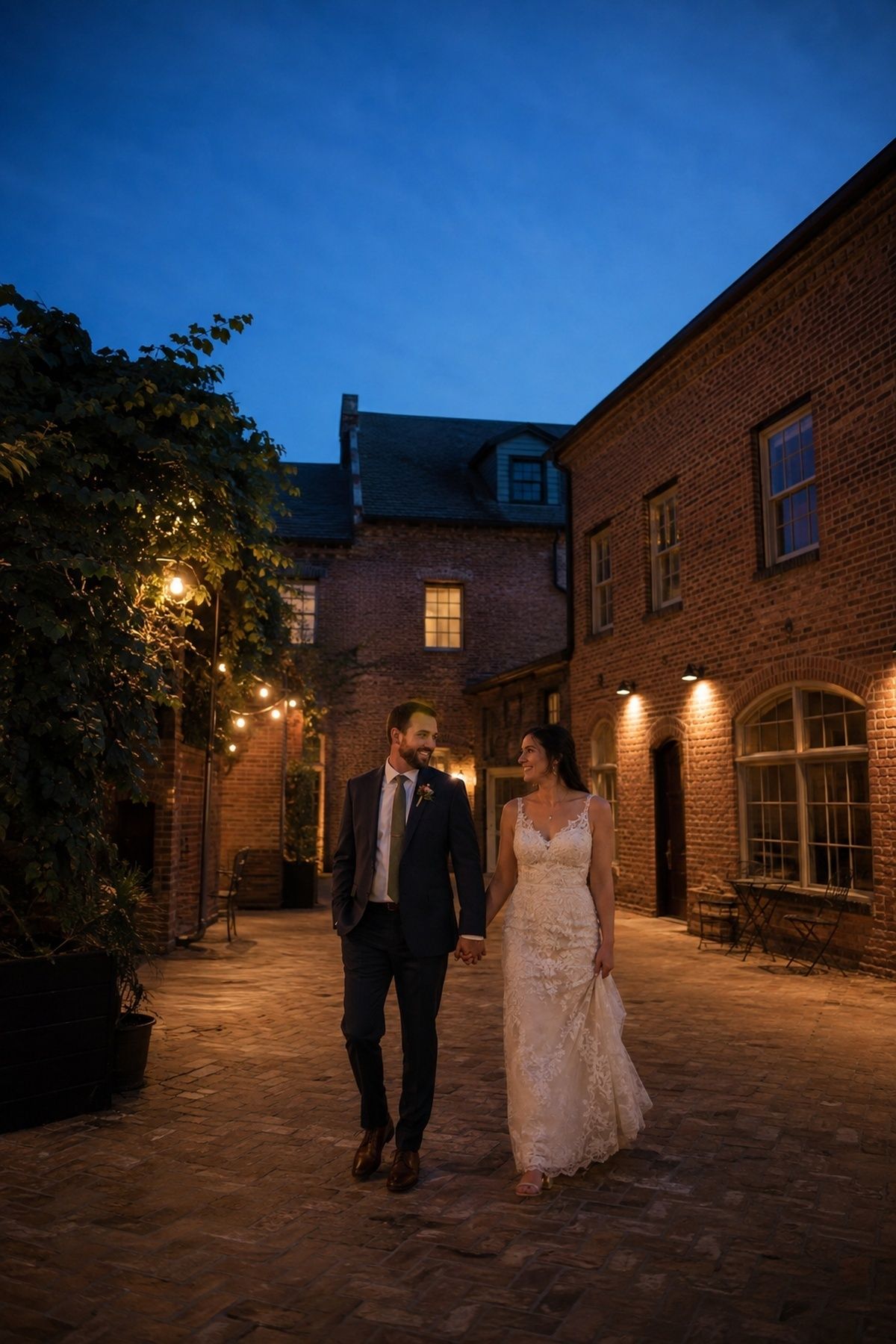
A courtyard works beautifully for cinematic blue hour photos because it gives the camera both cool sky and warm architecture. Lanterns, sconces, windows, and open doors add a glow that holds the couple inside the venue atmosphere instead of leaving them floating in darkness.
Ask the planner when the courtyard lights come on and whether furniture, heaters, or service stations will be in the frame. A five-minute reset before portraits polishes the space without turning it into a production.
Look For Waterfront Reflections
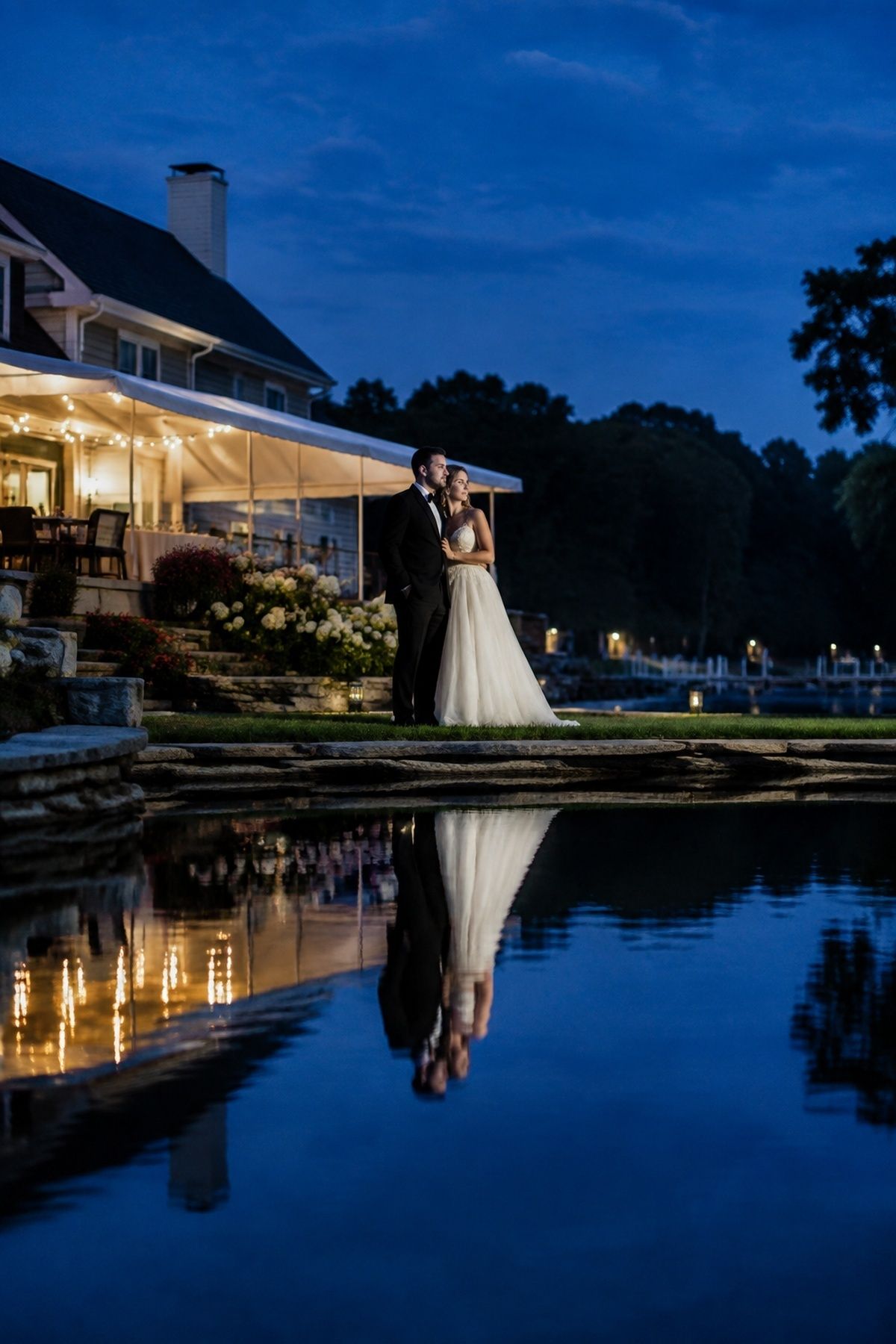
Water makes twilight wedding photos feel layered. A pond, lake, marina, fountain, or even a rain-slick stone path can catch the last blue in the sky and the first gold from venue lights. Stand close enough to the water for reflection, but not so close that movement, wind, or dress fabric becomes stressful.
Waterfront portraits work best when they are nearby. If the path takes more than a few minutes each way, save the location for an earlier session and keep blue hour close to the reception instead.
Step Onto A Balcony Over The Reception
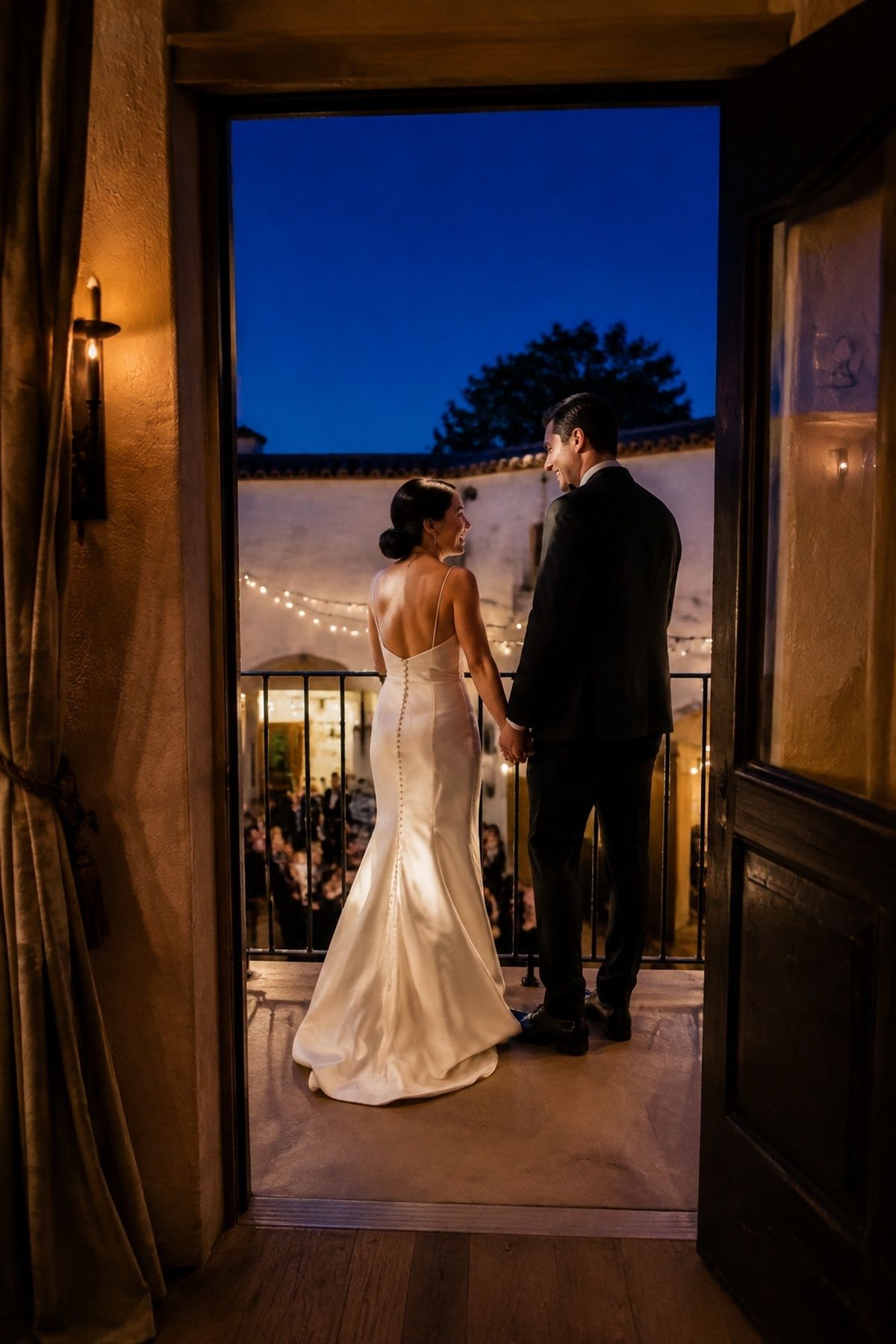
A balcony gives blue hour couple portraits a sense of distance without leaving the party. The couple might look back toward the room, hold hands above the courtyard, or share one private moment while guests continue below.
This is also a good place for wedding photos after sunset because warm reception light glows in the background. If a videographer or content creator is present, secure the still-photo frame first, then give the quick clip moment its own beat afterward.
Walk A Garden Path With Lanterns
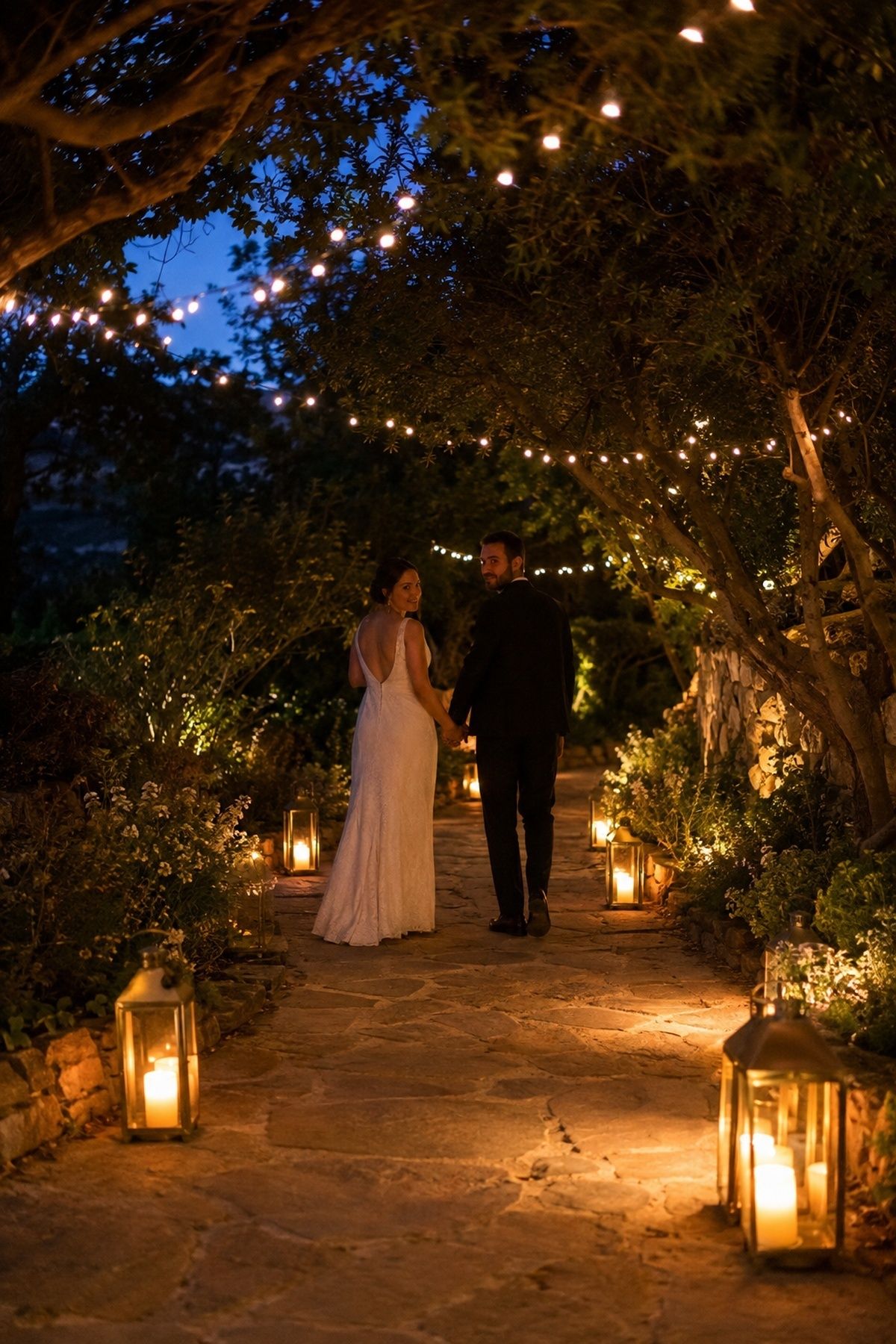
A garden path becomes especially romantic when lanterns, string lights, or rechargeable candles lead the eye through the frame. The couple does not need complicated posing here. Walking slowly, pausing under a tree, or turning back toward the camera can be enough.
Make sure the path is actually walkable in wedding shoes. Blue hour is not the moment to discover loose gravel, soft mud, or an unlit slope. If the garden is central to the venue, place a wrap or clear umbrella near the exit so weather does not steal the portrait window.
Capture The Wide Venue Under Twilight
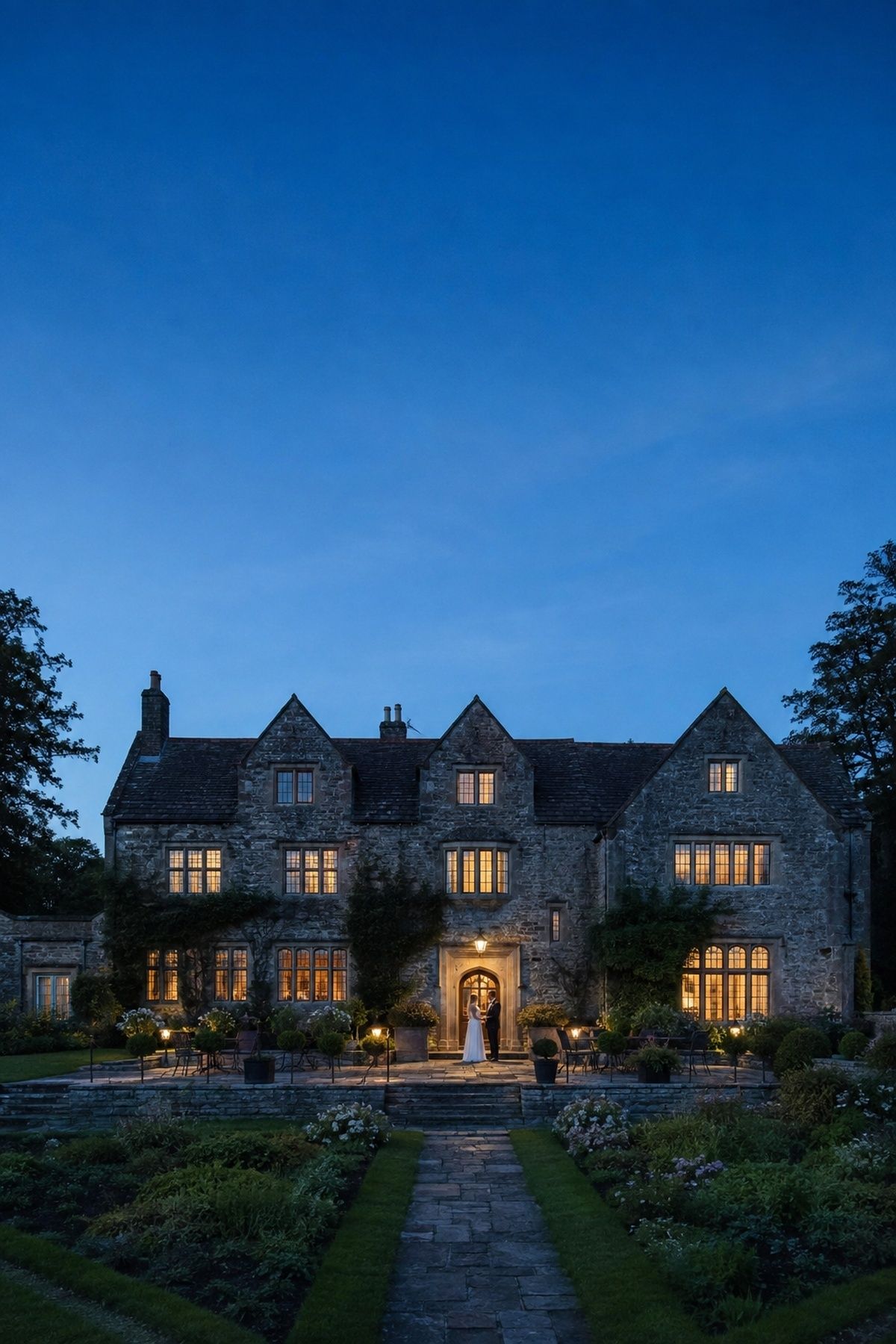
A wide venue photo gives the whole wedding a cinematic sense of place. This works beautifully for estates, chapels, restaurants, barns, hotels, rooftops, and garden venues where the building lights glow against a blue sky. The couple might stand at the entrance, on a terrace, or in a small pool of warm light.
Ask your photographer to scout this before guests arrive. A wide photo often depends on where cars, catering vans, signs, trash bins, and outdoor furniture sit. The frame should feel effortless, but the cleanup may need a quick planner cue.
Photograph The Candlelit Dinner Table
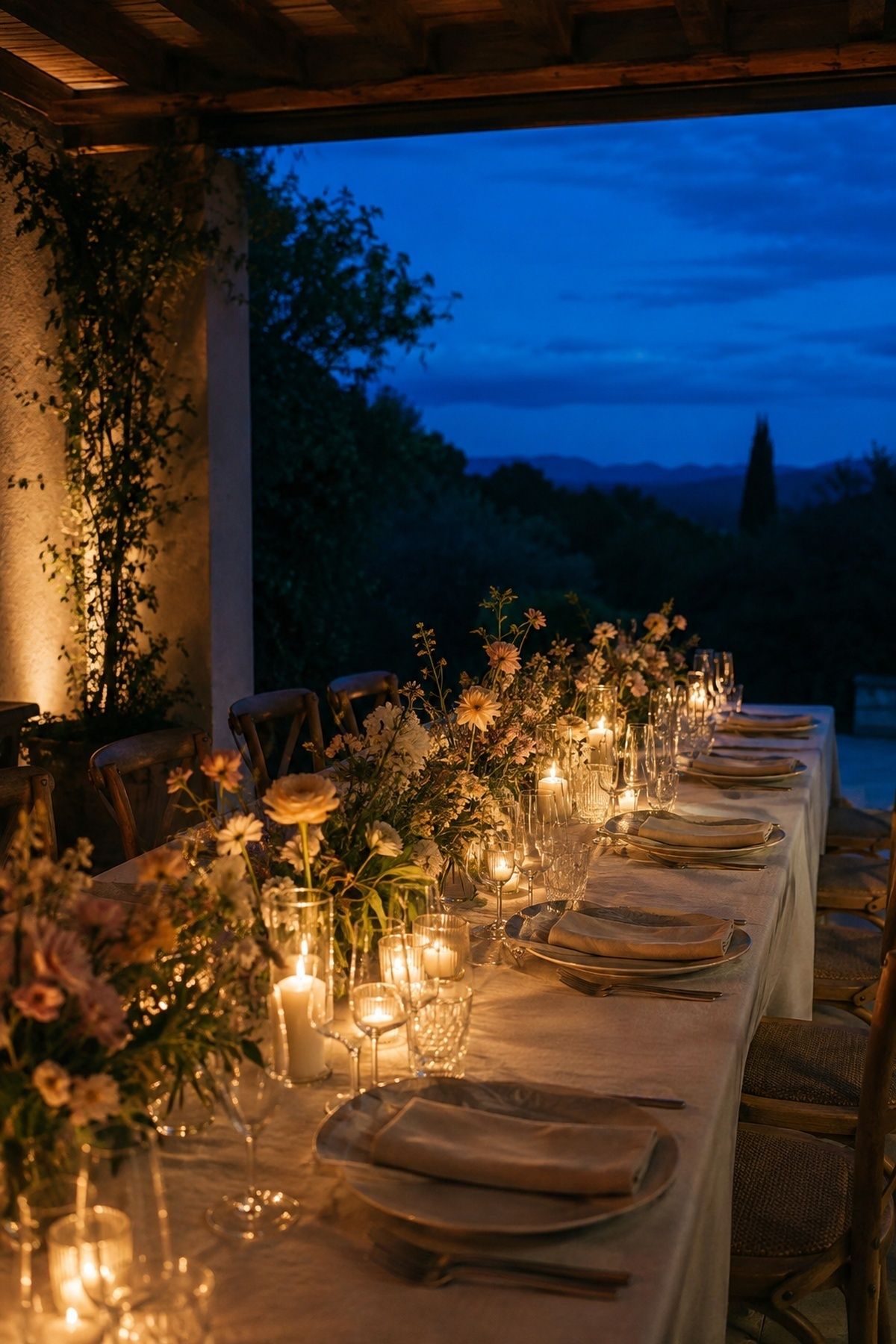
Blue hour reception photos are not only about the couple. A candlelit dinner table at twilight can show why you chose a small wedding in the first place: close faces, low flowers, glowing glassware, and a room that feels personal.
Tell the caterer and planner that you want the table photographed before guests disturb it too much. If dinner begins right as the sky turns blue, the photographer can take thirty seconds for the table, then move the couple outside while the first course is being plated.
Take A First-Dance Step-Out
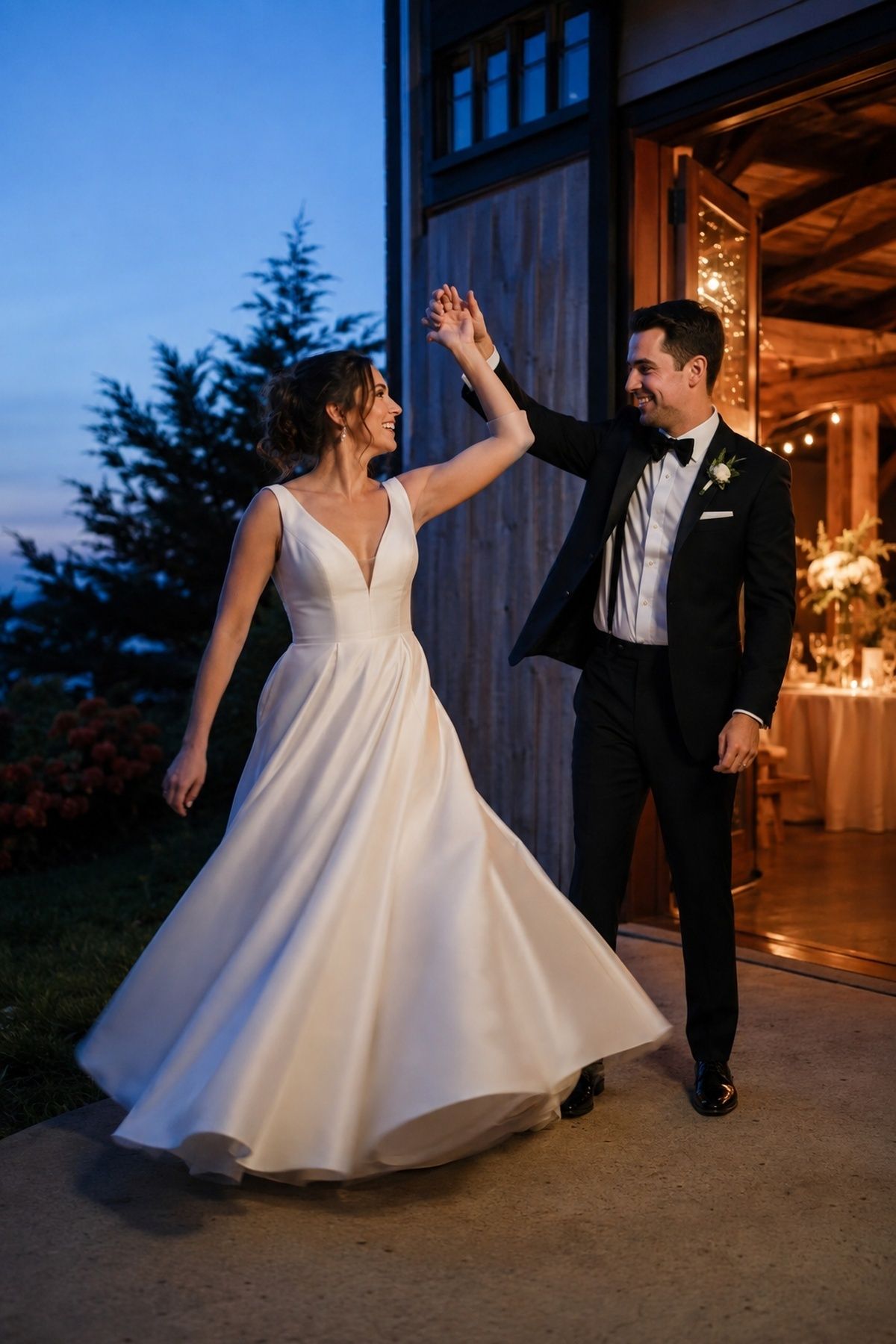
If your first dance happens close to sunset, consider stepping outside immediately after it. The emotion is already high, the couple is moving naturally, and the dress or veil may still have motion from the dance floor.
This is a strong option for couples who want cinematic blue hour photos without a fully posed session. Motion blur, doorway light, and one slow spin outside keep the scene moving while the reception energy continues inside.
Let A Veil Or Cape Catch The Evening Breeze
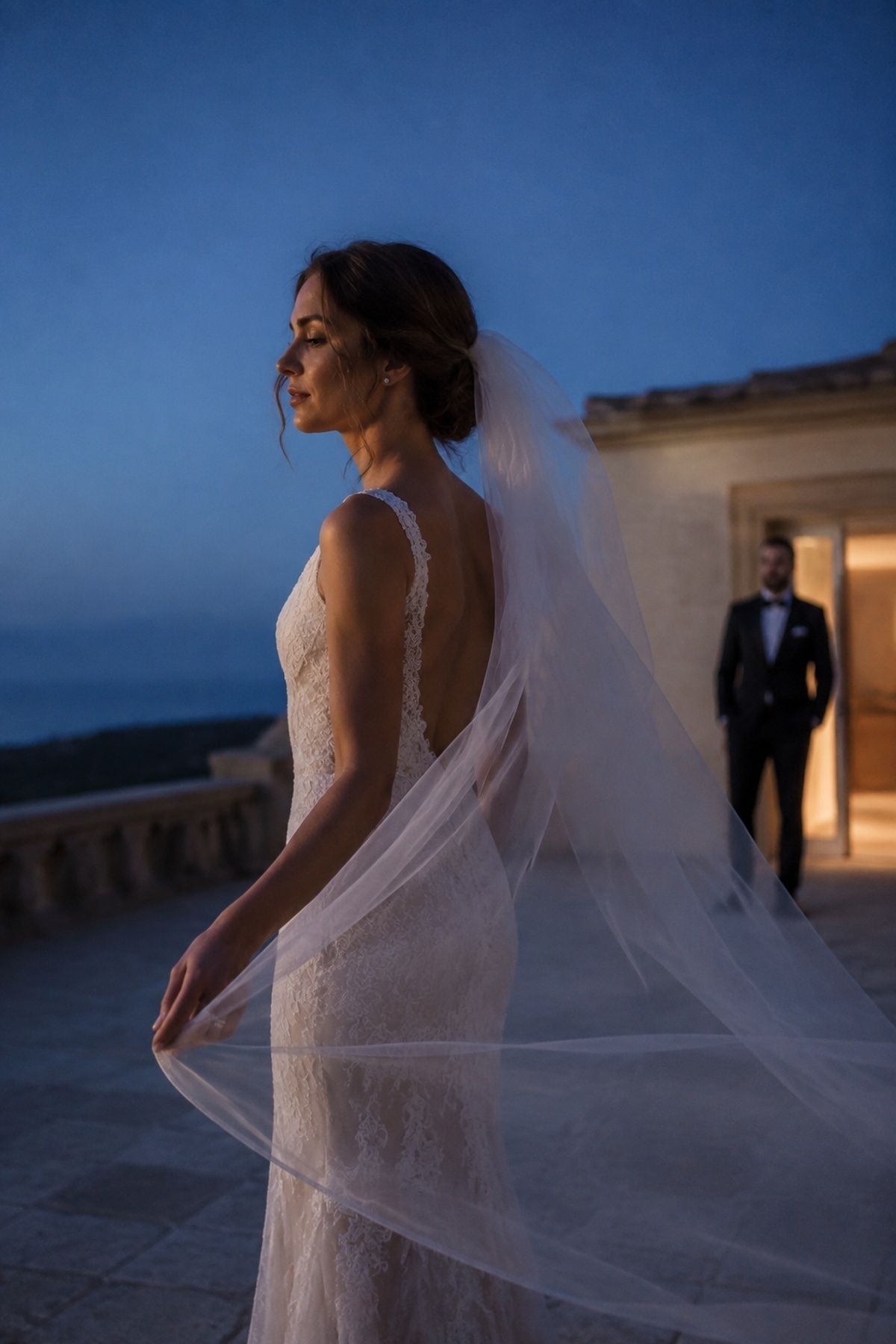
A veil, cape, scarf, or bridal wrap adds movement to blue hour wedding photos, especially when the sky is simple and the venue lights are steady. The look should feel natural, not like the couple is wrestling fabric in the dark.
Keep this idea short. Ask a friend, stylist, or planner to stay close for one adjustment, then step out of the frame. If wind is unpredictable, prioritize the couple’s faces and connection over the perfect sweep of fabric.
Frame The Ceremony Arch As A Silhouette
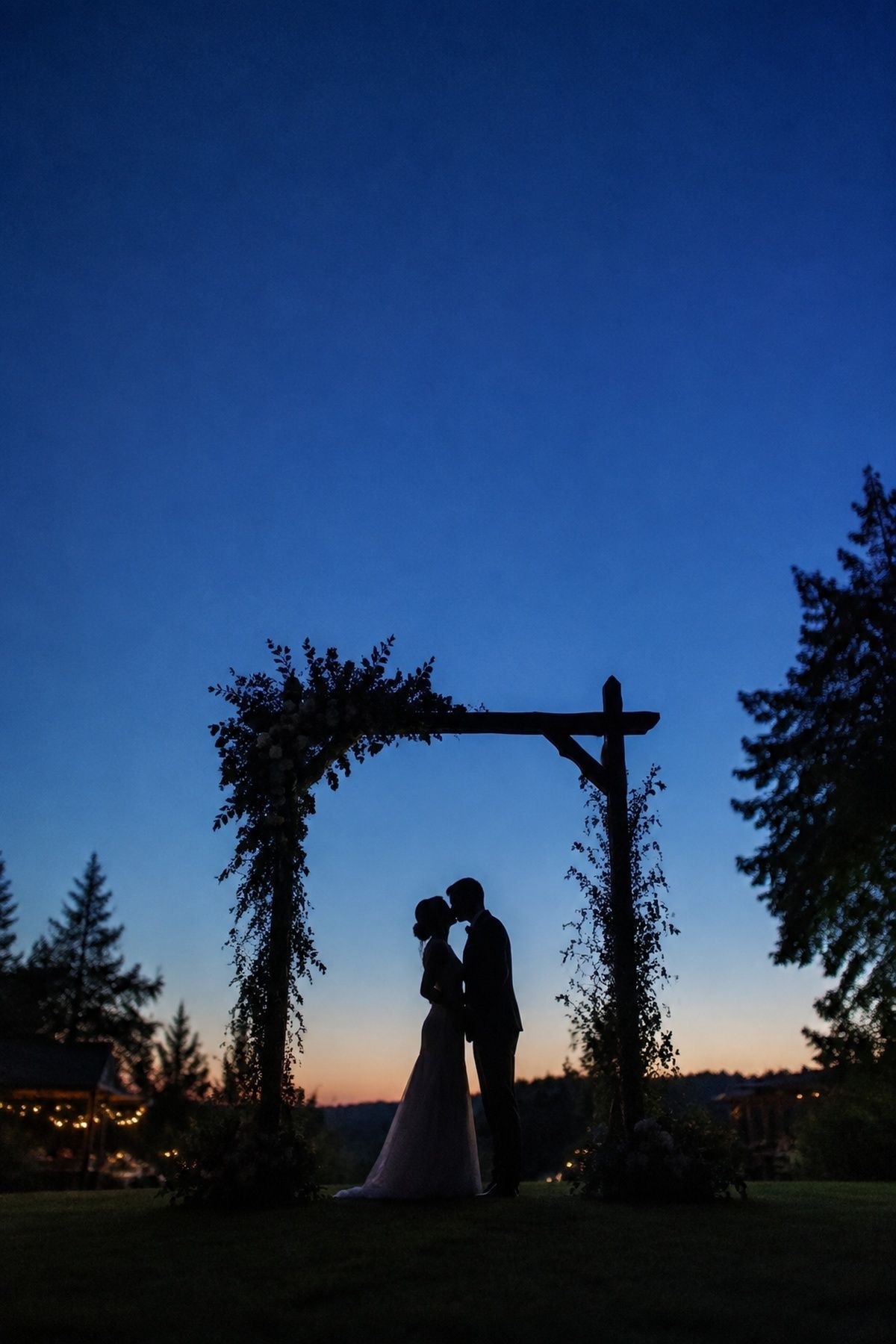
If your ceremony arch is still standing after vows, blue hour can turn it into a beautiful silhouette. This works with floral arches, chuppahs, wooden frames, courtyard doorways, and garden arbors. The couple can stand inside the shape, kiss beneath it, or walk away from it hand in hand.
Ask whether the arch will be moved for cocktail hour or repurposed behind the sweetheart table. If you want this photo, it needs to be part of the breakdown plan, not an afterthought once the florist has already started resetting flowers.
Try A Car-Headlight Or Doorway Portrait
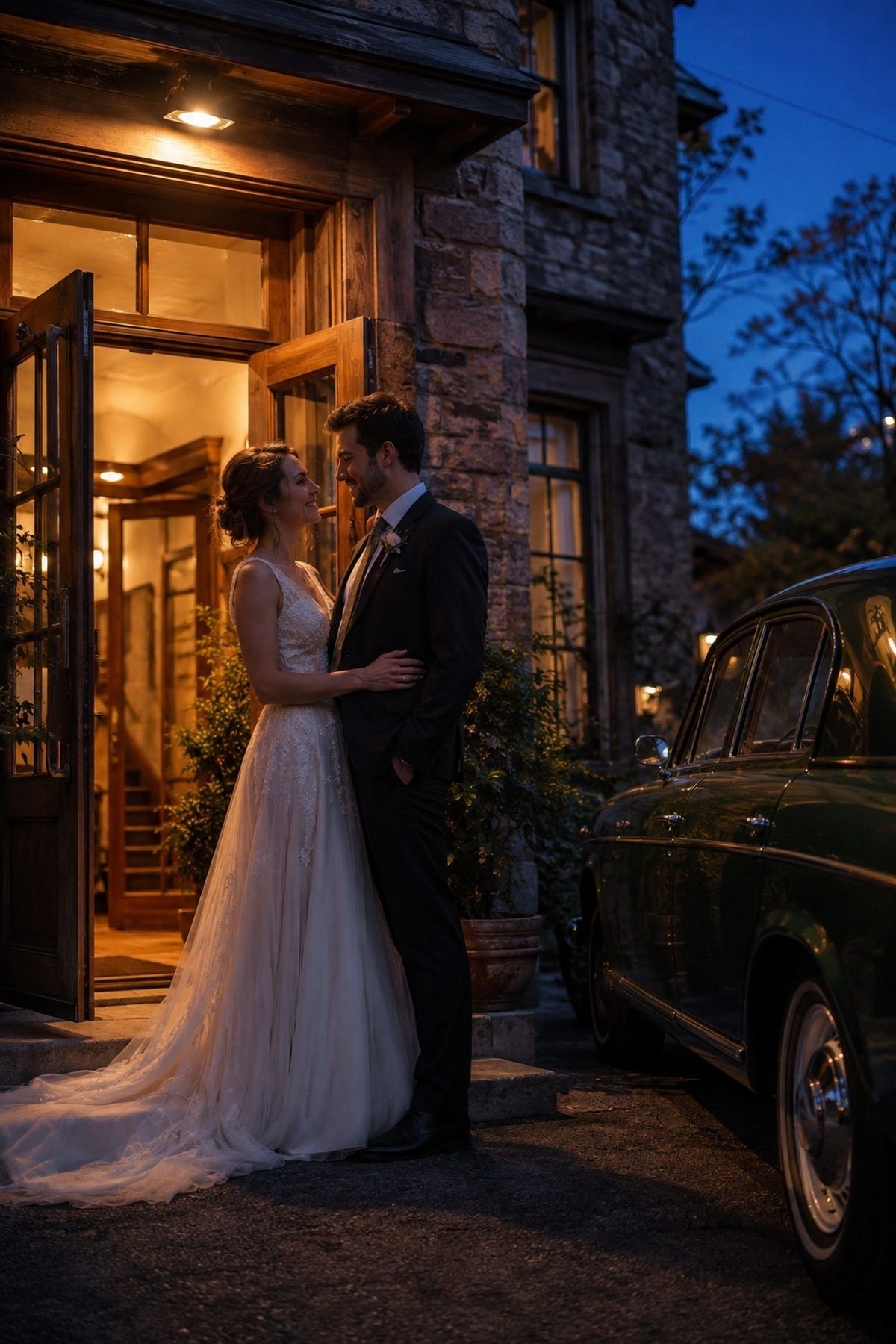
A doorway, vintage car, hotel entrance, or softly lit getaway vehicle gives blue hour wedding portraits a little drama. The key is to use the light as atmosphere, not as a harsh spotlight. Warm light from behind the couple usually feels more flattering than direct light from the front.
For intimate weddings, this works as a lovely transition between dinner and the later party. It also becomes a quiet exit-style portrait even if you are not actually leaving yet.
Use A Rooftop City-Light Photo
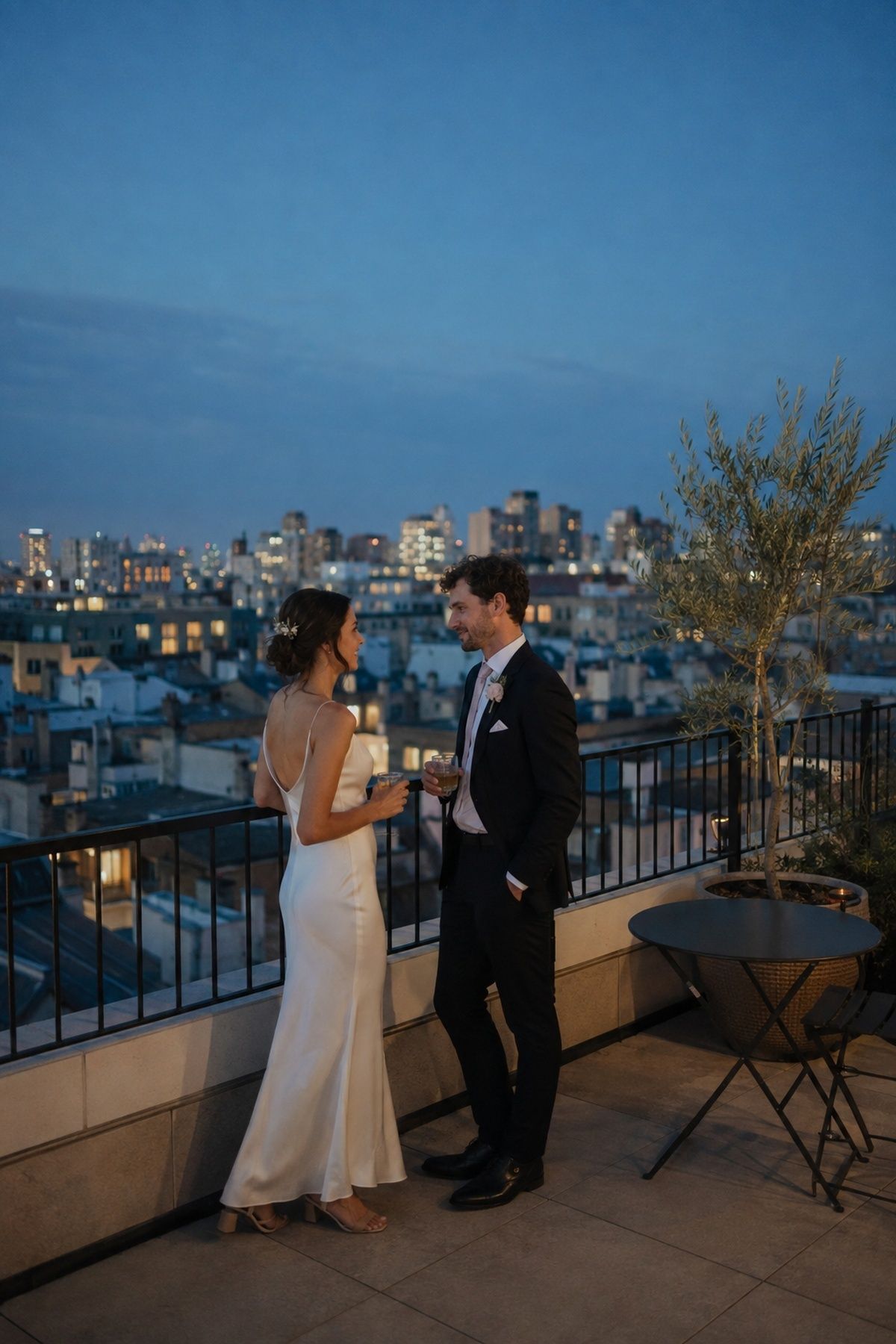
Rooftops and terraces are made for blue hour because the city begins to sparkle while the sky still has detail. The couple can stand against the skyline, sit at a terrace table, or share one quiet frame away from the dining room.
Check access before the wedding day. Rooftops may need permission, elevator timing, staff escorting, or weather backups. Keep a photo permit folder or venue email handy so no one loses the best light while searching for approval.
Save Ring And Bouquet Close-Ups For The Glow
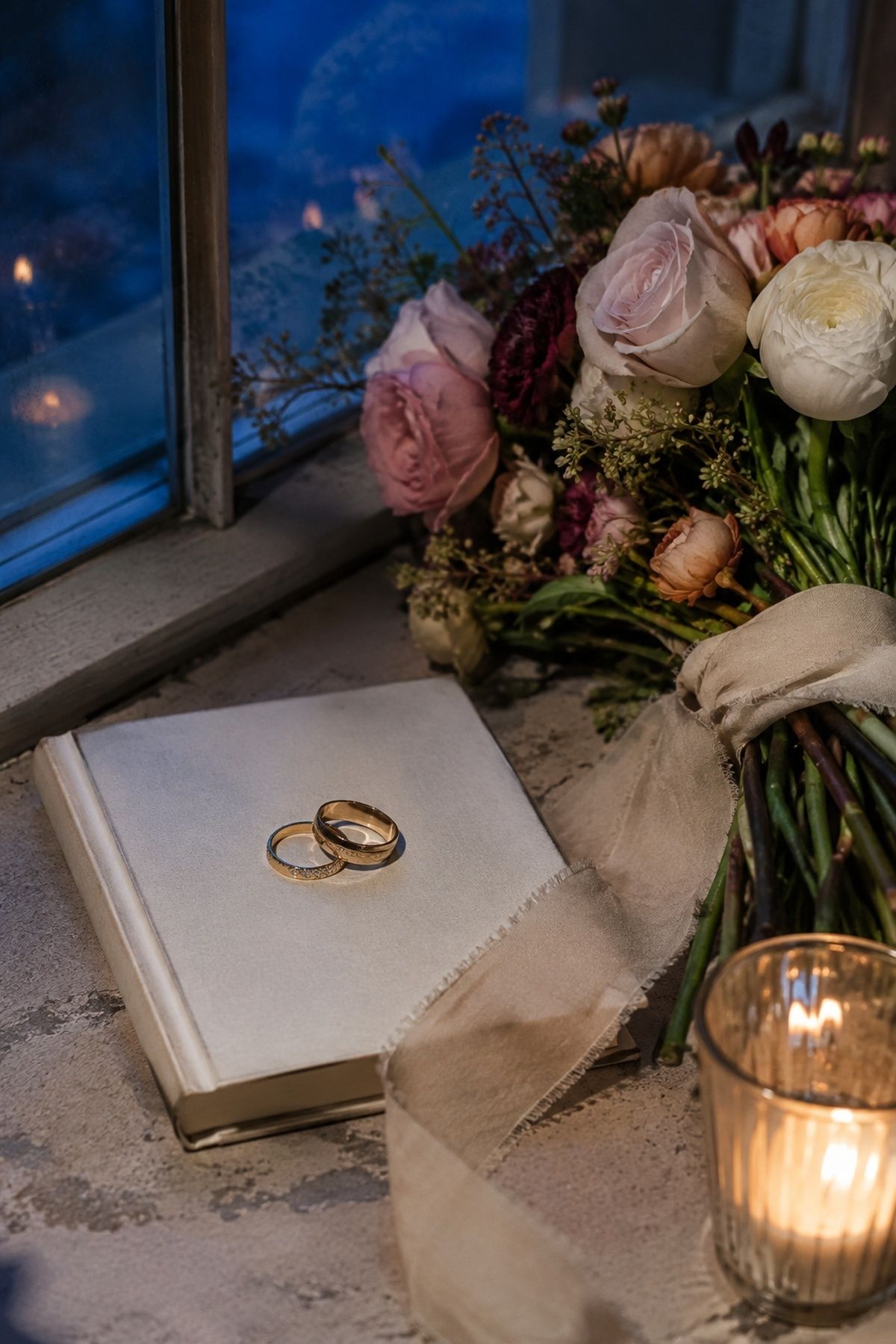
Rings, vow books, bouquet ribbon, embroidered details, shoes, and jewelry look beautiful at twilight when placed by candlelight or window glow. These detail photos are useful when the earlier part of the day felt rushed or the getting-ready room was too cluttered.
Ask your photographer whether they prefer to style details before guests sit down or during a natural dinner pause. A few tactile close-ups deepen the gallery without slowing the evening, especially when the light feels grainy and intimate.
Catch A Small Guest Toast At Twilight
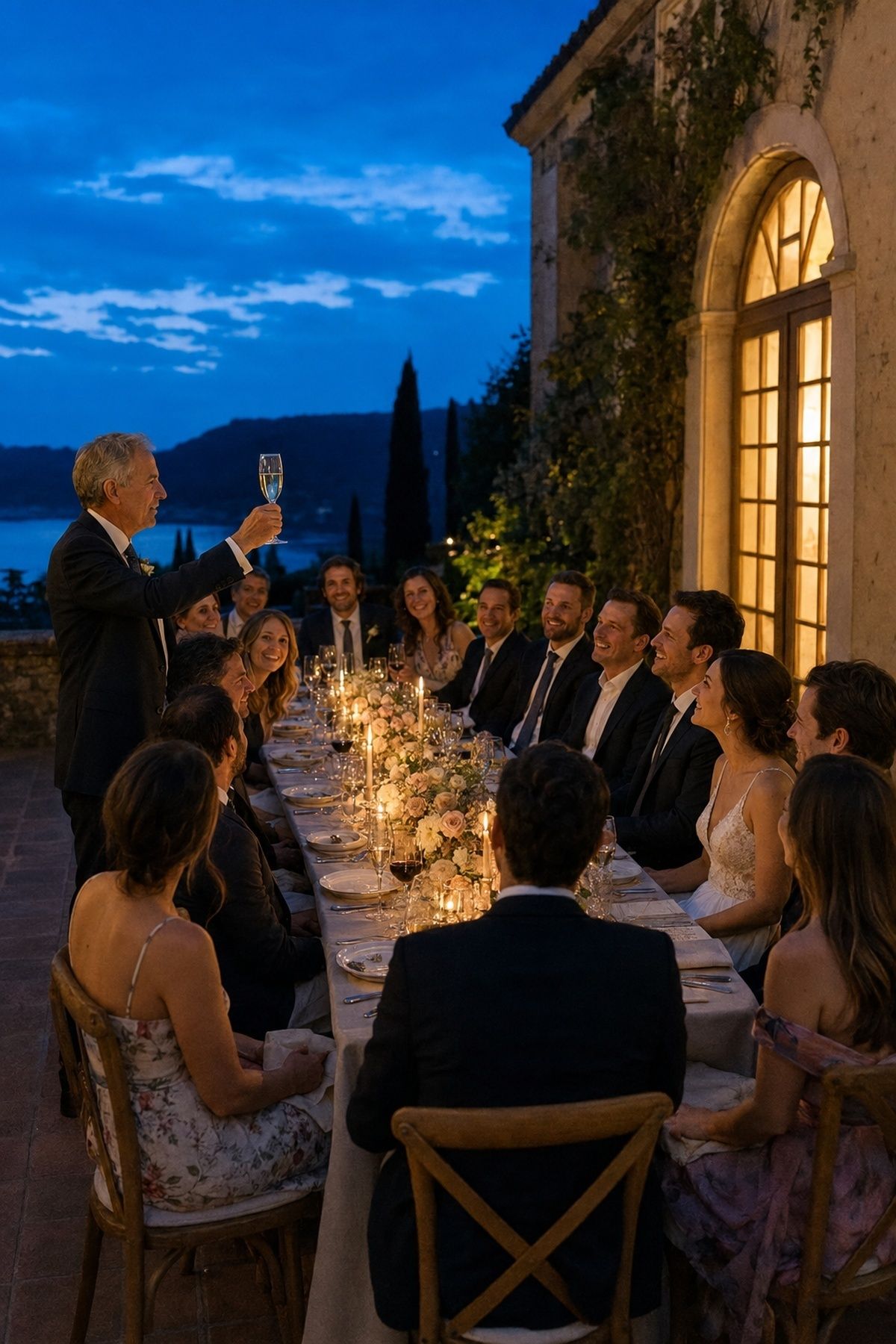
Small guest toasts can be gorgeous during blue hour because everyone is close together and the room begins to glow. A parent raising a glass, a sibling laughing, or a best friend speaking at a single long table can feel more personal than a formal reception stage.
If you want this moment, coordinate the timing carefully. Toasts that happen too early may miss the atmosphere, but toasts that happen too late may push portraits into darkness. In a small wedding, one short welcome toast before the couple steps out can bridge the room and the twilight portrait window.
End With A Final Just-Us Portrait

A final just-us portrait can be the emotional anchor of the night. It does not need to be far from the party. A doorway, garden gate, balcony corner, courtyard wall, or quiet window can hold the whole feeling if the couple is present with each other.
For couples who value real moments over a long shot list, photograph the walk from table to twilight and back again. The strongest frames will come from what is already happening.
Choose Nearby Locations Before The Wedding Day
The strongest blue hour wedding timeline starts with distance. Choose one primary location within a short walk of the reception and one backup location even closer. If the best spot requires a cart, shuttle, elevator, or long staircase, schedule it earlier in the day instead.
Walk the route in the shoes you plan to wear, or at least imagine it honestly. Blue hour is short enough that a missing wrap, difficult bustle, locked door, or muddy shortcut can cost the whole session. Nearby is not boring; nearby is what lets the evening stay relaxed.
Tell Your Planner And Caterer Before Service
Your planner, caterer, photographer, and venue contact should all know that blue hour matters before the final timeline is approved. The caterer may need to hold two plates, the planner may need to cue the couple, and the venue may need to turn on exterior lights earlier than usual.
Make the request specific: ten minutes, one location, one backup, no guest movement unless already planned. That clarity helps everyone protect the photo window without making the reception feel paused around it.
FAQ
What is blue hour wedding photography?
Blue hour wedding photography is the short period after sunset when the sky turns blue instead of black and artificial lights begin to glow. It is especially good for romantic portraits, venue exteriors, candlelit reception details, waterfront reflections, and evening images with a soft cinematic mood.
When should you take blue hour wedding photos?
You should take blue hour wedding photos shortly after sunset, with the exact timing based on your date, location, season, weather, and venue light. Ask your photographer to build the window into the timeline before dinner service, speeches, or first dance are locked.
How long does blue hour last for wedding portraits?
Blue hour often gives couples only a small usable portrait window, so plan for about 7 to 15 focused minutes instead of a long session. The light changes quickly, and the best results usually come from choosing one close location rather than walking around the venue looking for options.
Is blue hour better than golden hour for wedding photos?
Blue hour is not automatically better than golden hour; it creates a different feeling. Golden hour is warmer and brighter, while blue hour is moodier, cooler, and more evening-focused. Many couples use golden hour for soft portraits and blue hour for cinematic venue, candlelight, or after-sunset photos.
What locations work best for blue hour wedding photography?
The best locations for blue hour wedding photography are close to the reception and have some warm light nearby. Courtyards, balconies, garden paths, waterfront edges, rooftops, venue entrances, candlelit tables, and doorways all work well when the couple can reach them quickly.
How do you fit blue hour photos into a small wedding timeline?
Fit blue hour photos into a small wedding timeline by choosing one nearby location, telling the planner and caterer in advance, and placing the portrait window during a natural dinner or reception pause. Small weddings make this easier because the couple can step away briefly without disrupting a large room.
Final Thoughts
Blue hour is less about adding another complicated photo session and more about protecting one beautiful pause. Choose the location before the day, tell the right people, keep the walk short, and decide which twilight images actually matter to you. A few intentional blue hour wedding photos can give a small celebration the glow of a much larger production without taking you away from the people at the table.
Your planner can confirm sunset first, protect dinner service, watch the weather, cue venue lighting, and give your photographer a calm portrait break during blue hour.
Last update on 2026-10-03 / Affiliate links / Images from Amazon Product Advertising API