
The best July wedding photo ideas start with the clock. Put couple portraits in the hour before sunset, move family groups into open shade, and keep every outdoor portrait block to about 20 minutes so nobody is squinting or melting by frame forty.
July gives you long evenings, full gardens and guests who actually want to be outside. It also gives you overhead sun around midday that flattens faces and turns cheekbones into shadow stripes. Most July wedding photo ideas you see on Pinterest assume the light was kind. Yours will look like that only if you plan for it.
My rule is simple: decide where the light will be at each hour, then decide what you want photographed there. Styling comes second. Everything below follows that order, from scouting the venue to the dance floor at dusk, with a section on getting real variety out of a small guest list.
A few things that make July shoots easier
These are the small practical pieces (fans, parasols, heel protectors and the like) that show up again and again in the photo ideas below.


When is the best light for July wedding photos?
The hour before sunset is the best light for July portraits, and blue hour (the 20 to 30 minutes after sunset) is the best light for the first dance. Between late morning and mid afternoon the sun sits high, so anything outdoors in that window needs shade.
Look up the sunset time for your exact date and location, then build the photo plan backwards from it. In much of the US and Europe, July sunsets land somewhere between about 8:00 and 9:30 pm, which means golden hour can fall right in the middle of dinner. Decide early whether you’ll step out between courses.
| Time of day | What the light does | What to photograph |
|---|---|---|
| Late morning | Bright but still angled | Getting ready by windows, details, first look in shade |
| Midday to mid afternoon | Hard and overhead | Family groups in open shade, indoor portraits, ceremony under cover |
| Hour before sunset | Low, warm, flattering | Couple portraits, walking shots, backlit veil frames |
| Blue hour | Soft, cool sky with venue lights | First dance, tent exteriors, string lights |
Walk the venue at portrait time before you lock the timeline
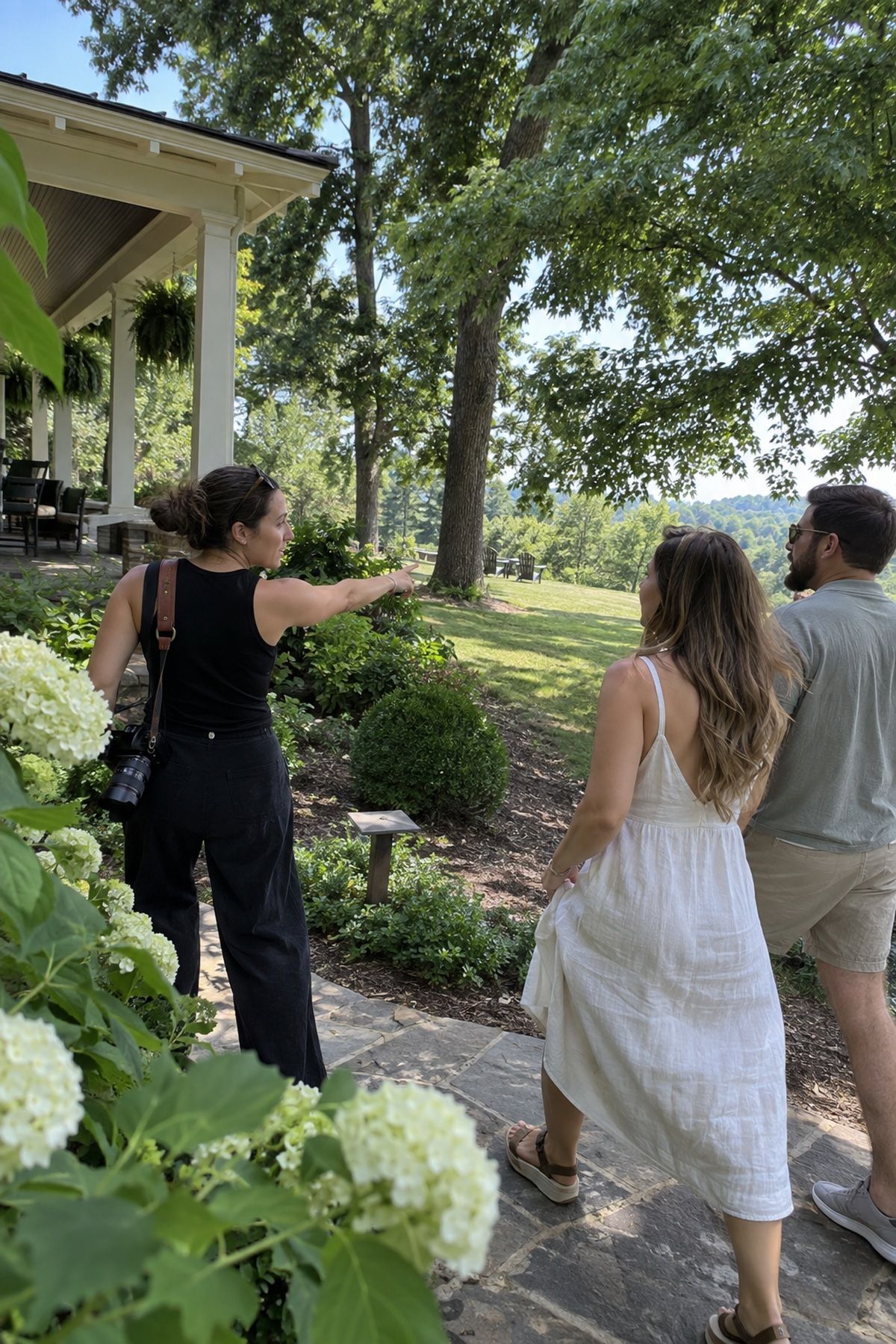
Visit at the same hour your portraits will happen and note every porch, tree line, awning, tent edge and window corner. Five minutes of walking tells your photographer more than a mood board ever will.
You’re hunting for open shade, not dark corners. The best spots have the subject in shadow with open sky in front of them, so faces stay bright without anyone squinting. Send your photographer a few phone photos of the spots you find.
Protect a short golden-hour session
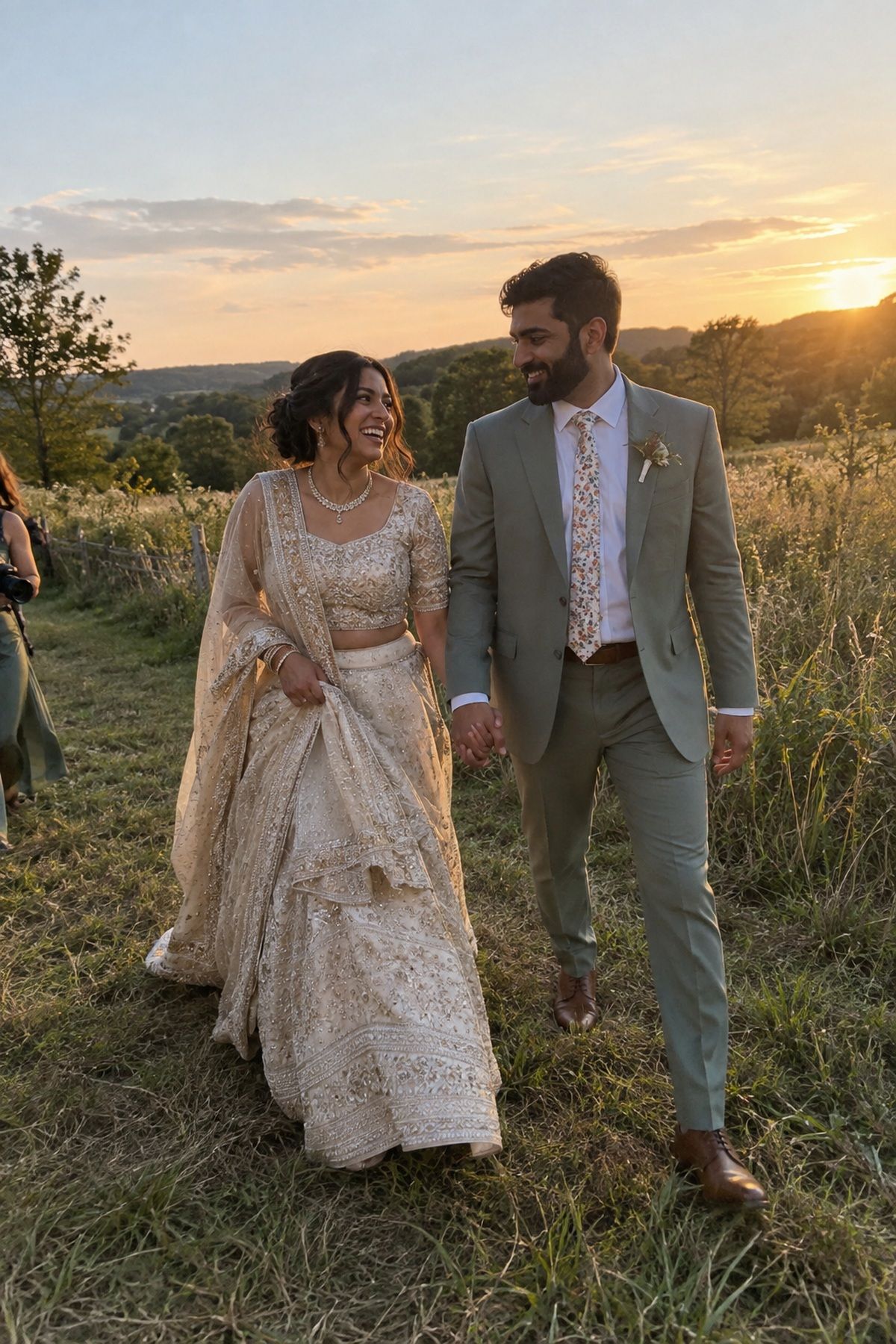
Golden hour is usually the cleanest portrait window of a July wedding day, so guard it. Twenty focused minutes beats an hour of wandering. Ask for walking shots, a seated frame, hands and rings, and two or three wide images with the low sun behind you.
Tell your coordinator the exact window and who needs to know (usually just the DJ or whoever is running dinner). For a deeper look at building the whole day around it, my sunset summer wedding timeline guide walks through the hour-by-hour version.
How do you take good wedding photos in harsh July sun?
You move people into open shade, turn faces away from the overhead sun, and save the long sessions for later. Midday photos don’t need to disappear from the plan; they just need a roof, a tree or a parasol.
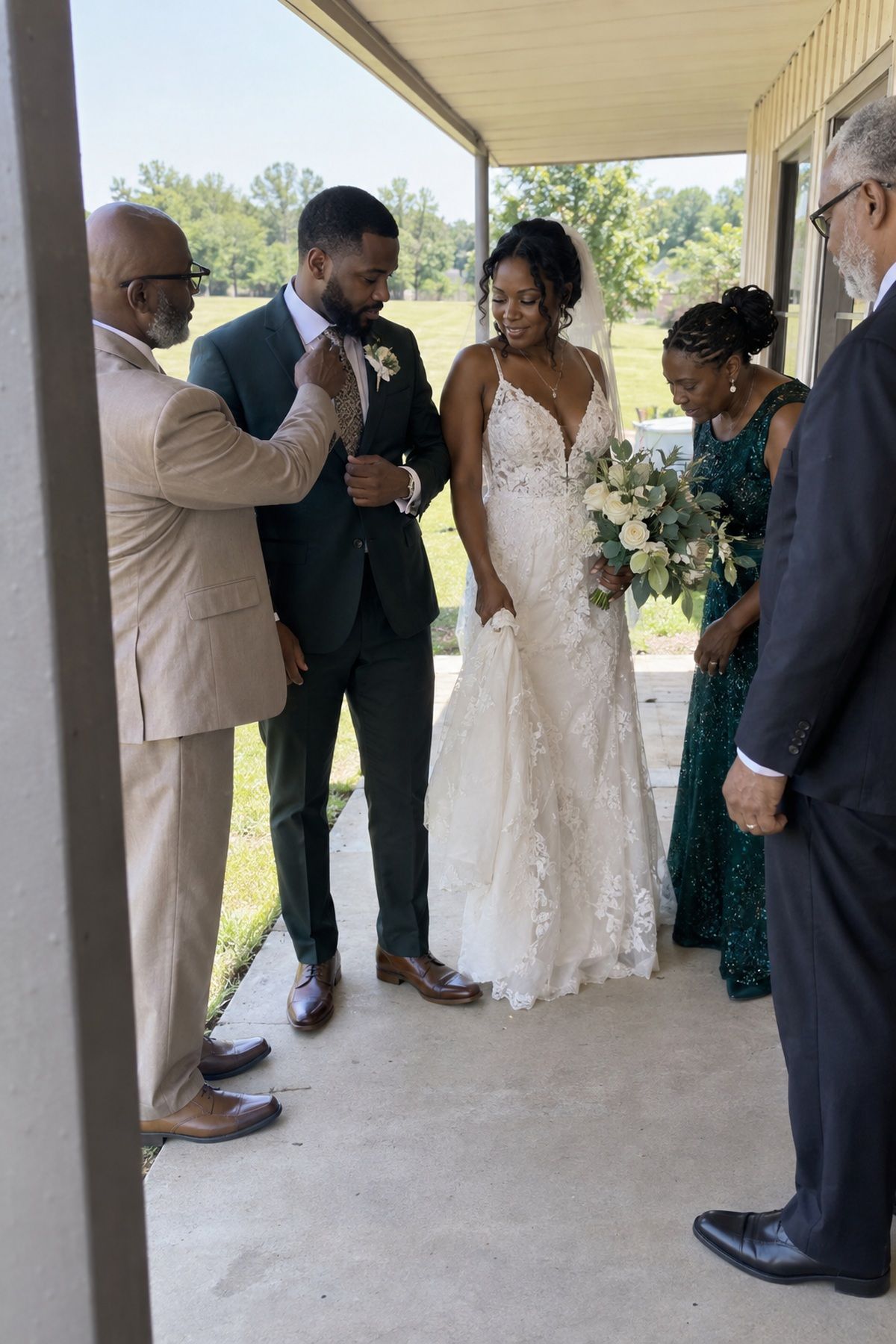
Family formals are the usual midday problem because they happen right after the ceremony. Put them under a big tree, a portico, a covered walkway or the shady side of the building. If the venue has no natural cover, bring it: a sailcloth edge or a few parasols. My outdoor summer wedding shade ideas cover the rental side of that if you’re starting from an open lawn.
A shot list helps here more than anywhere else. Keep family combinations to 8 to 12 groupings, biggest group first, and hand the list to one loud cousin who knows everyone.
Use the sun behind you for veils and fabric
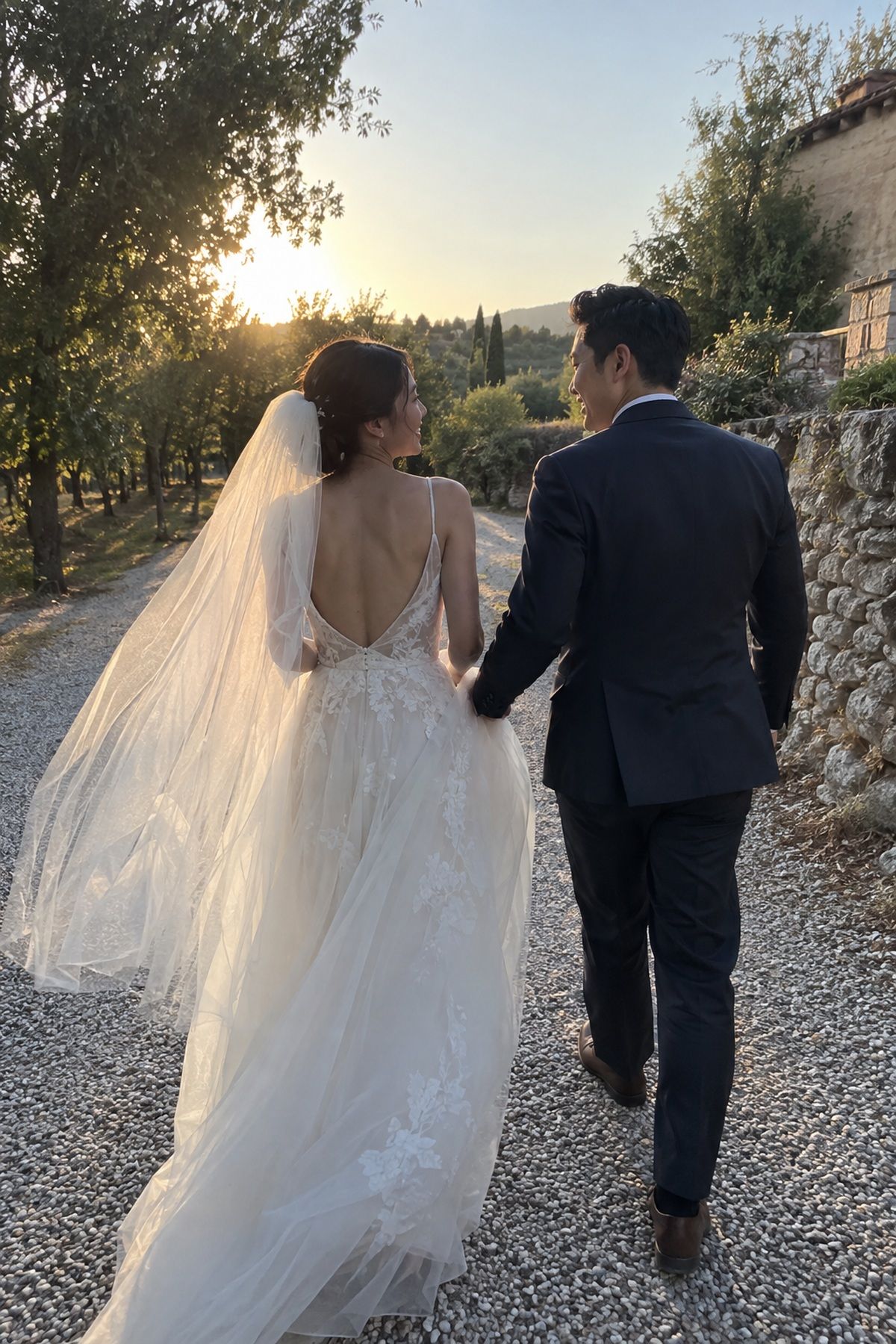
Backlight is the trick for bright days. With the sun behind the couple, veils, chiffon, sleeves and bouquet ribbons get a glowing outline while faces stay in their own shadow. Ask for a few frames walking away from the sun, then a few closer images with the bouquet held on the shaded side.
July portrait ideas that look relaxed
The portraits that age best come from movement and real reactions. Give people something to do (walk, turn, sit, whisper something rude) and the stiffness disappears.
First look under trees
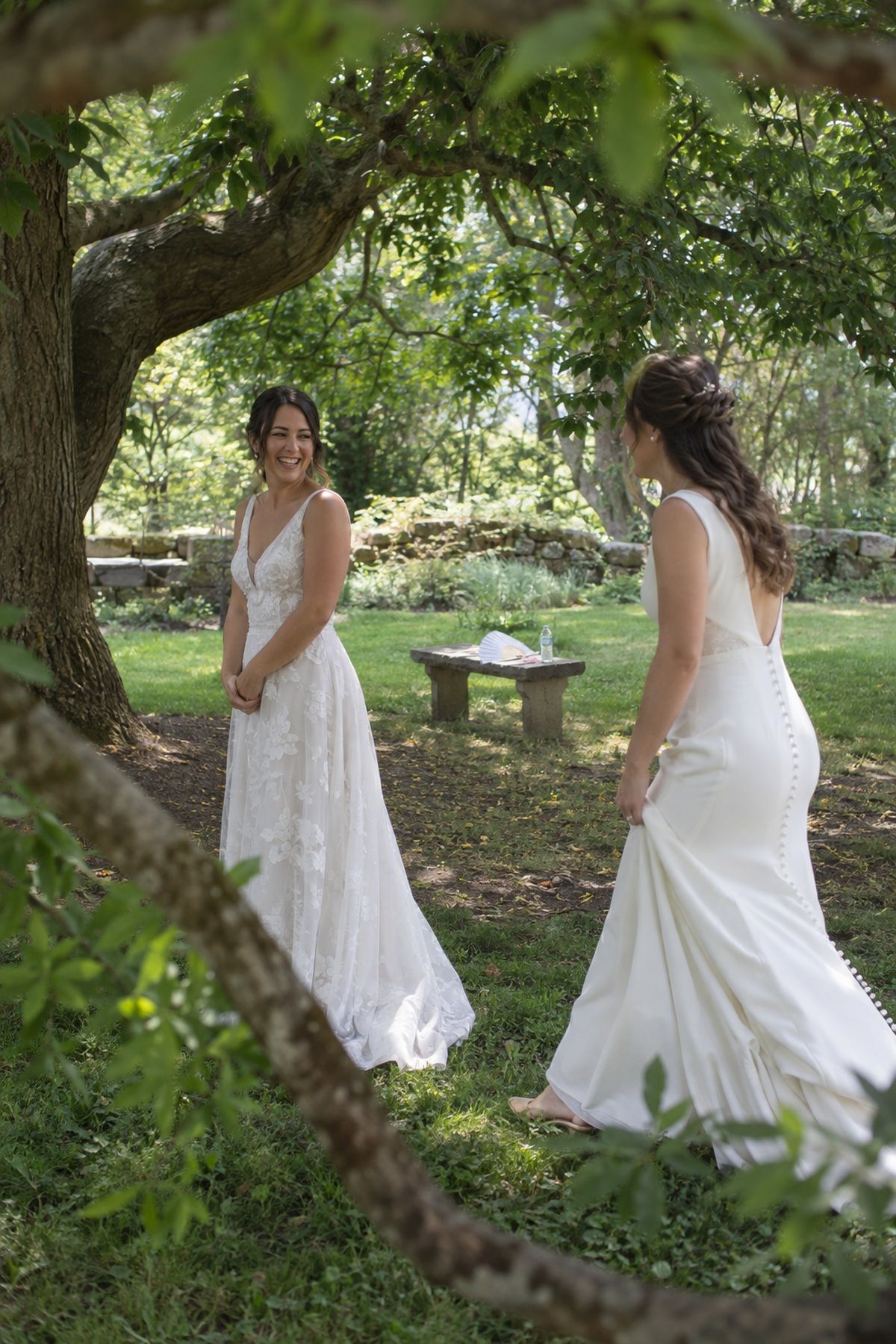
A tree canopy gives a first look privacy and soft light at the same time. Pick a spot with room for the photographer to circle you, keep the choreography to “one turns, one walks in,” and keep water and a fan nearby but out of frame until the moment is over.
Walking portraits on a path
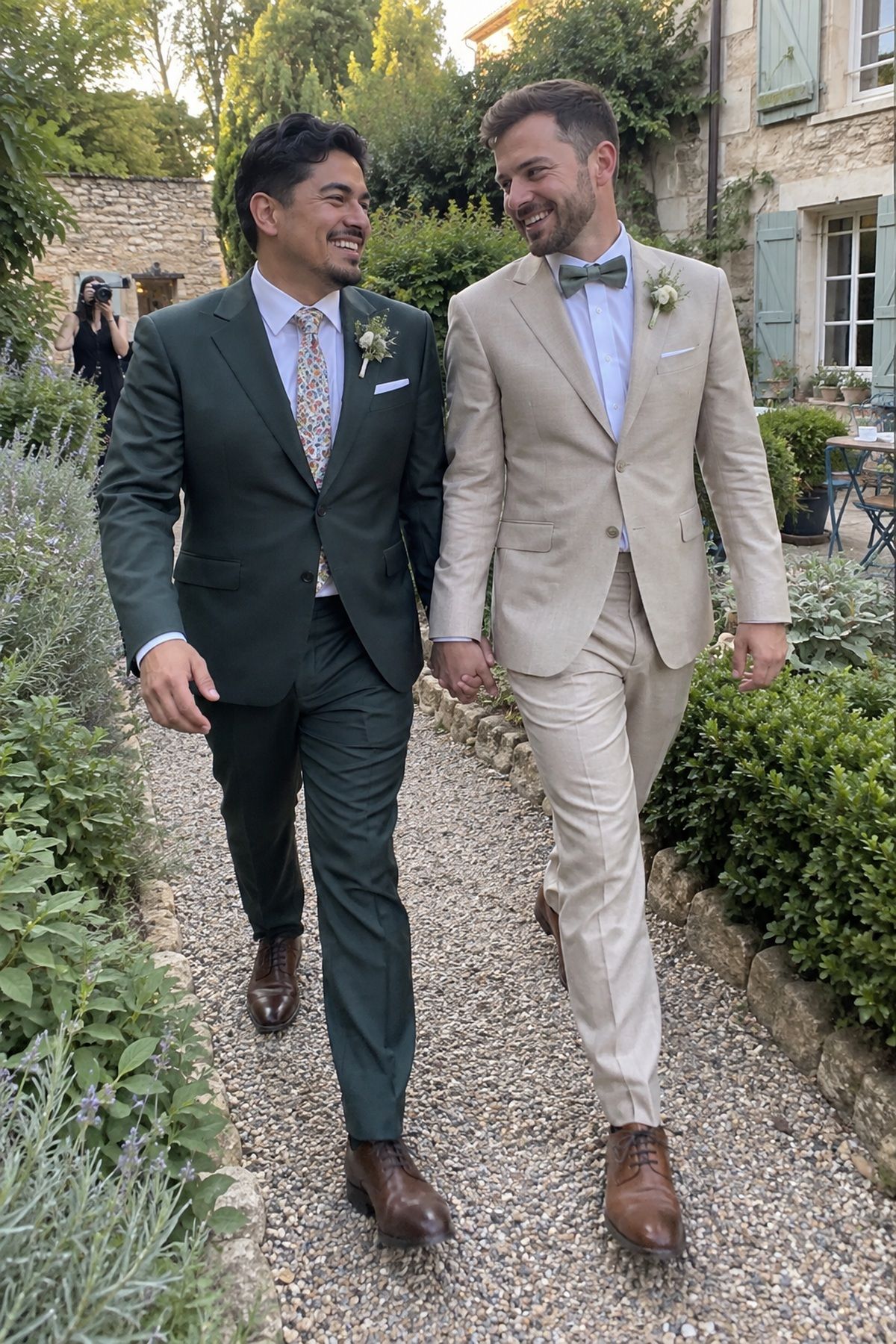
Walking shots loosen posture fast. A garden path, gravel drive, vineyard row or shaded sidewalk is enough. Ask for three distances: wide frames that show the place, middle frames with linked hands, and close frames of faces turning toward each other.
Parasols on an open lawn
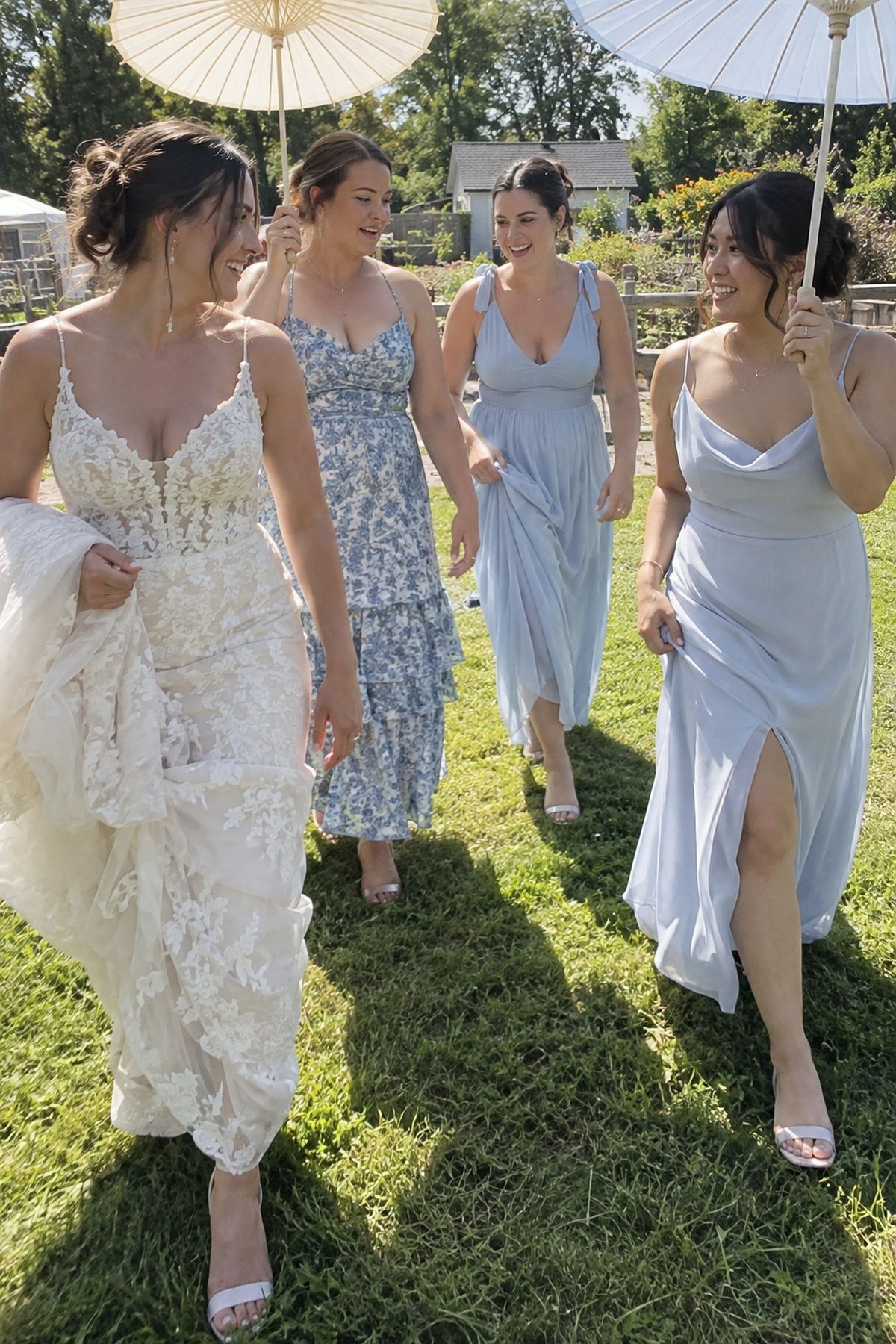
Parasols photograph well when they match the outfits instead of looking like emergency gear. Natural cotton, white, tan or a pale color works. One parasol over the couple, or a matching row for the wedding party, reads cleaner than five different patterns.
Water, but not too much of it
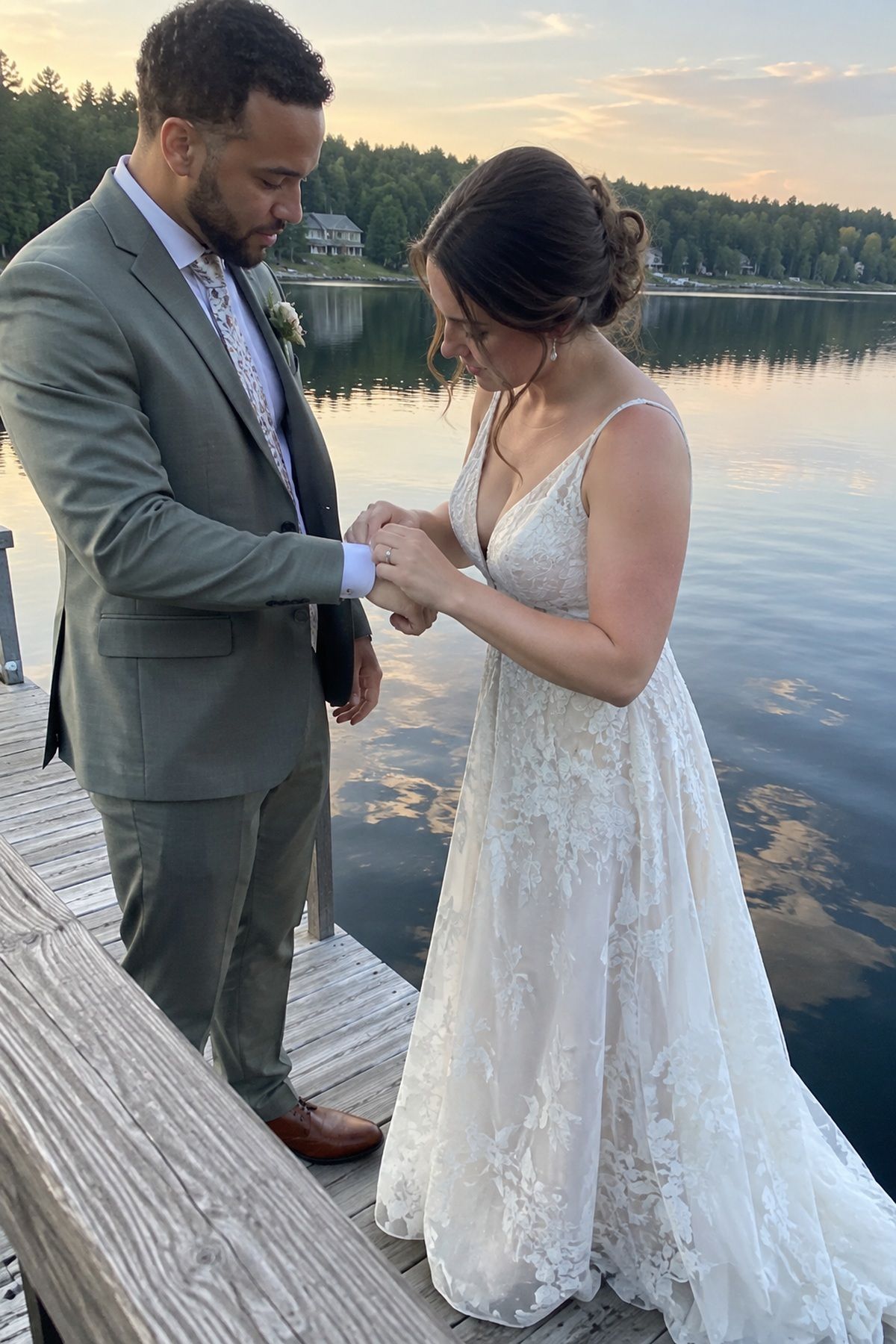
If there’s a dock, pool edge or lake path, use it for a few frames with the water behind or beside you. The reflected light brightens faces. Keep it to a handful of shots so the gallery still looks like a wedding and not a resort brochure.
A cool indoor break

Plan one indoor portrait pocket: a library, a window seat, a hallway mirror. It gives everyone ten minutes out of the heat, a chance to fix hair and blot, and a completely different look in the gallery. Window light is very forgiving.
Ceremony and cocktail hour frames for high summer
Shade the guests and the ceremony photos take care of themselves. Faces split by stripes of harsh light are the most common July ceremony problem, and they’re avoidable with chair placement.
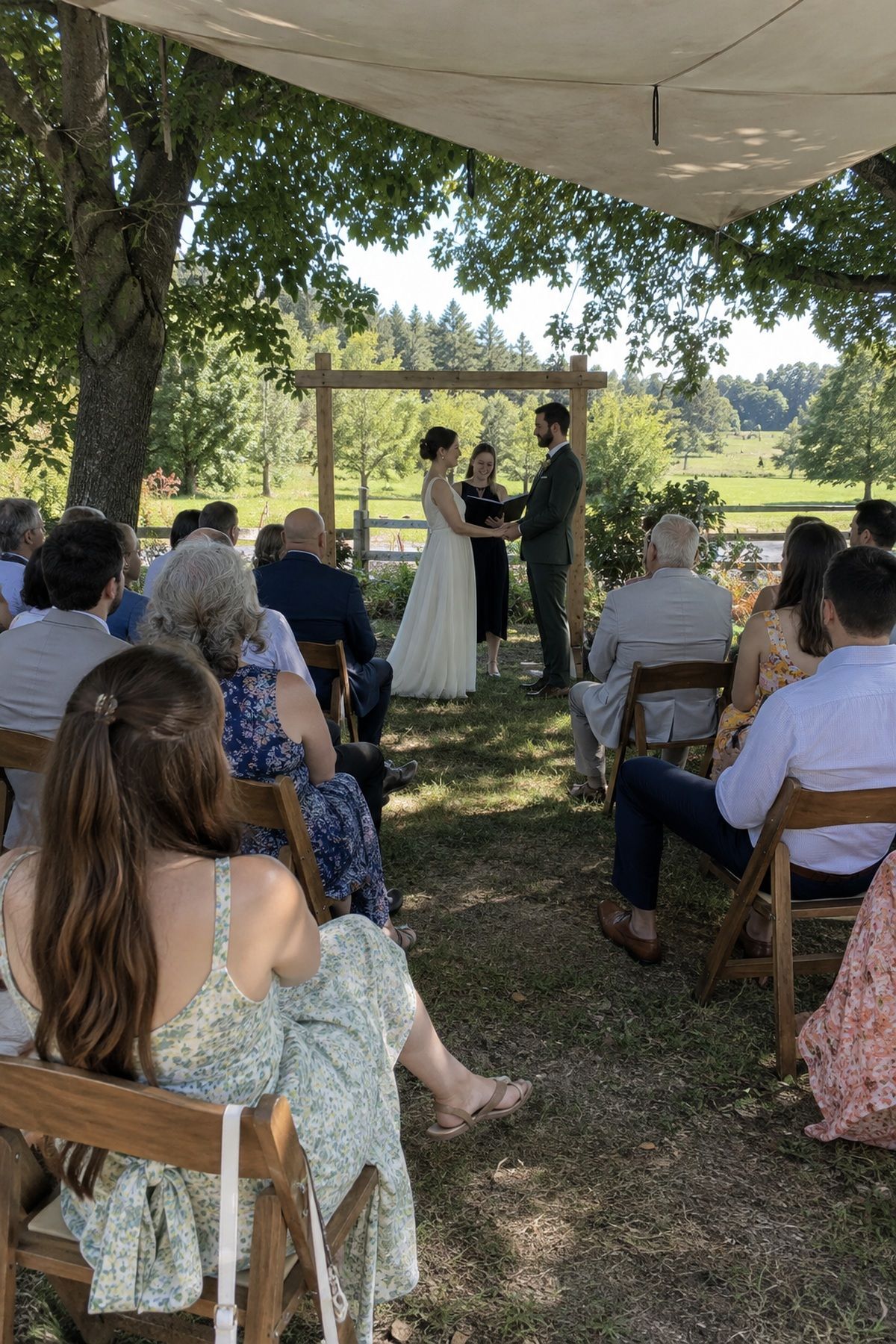
Check the aisle angle once the chairs are actually set, because rentals rarely land exactly where the diagram put them. Ask for three wide shots: one before the processional, one during vows and one on the recessional.
Guest arrival with paper fans
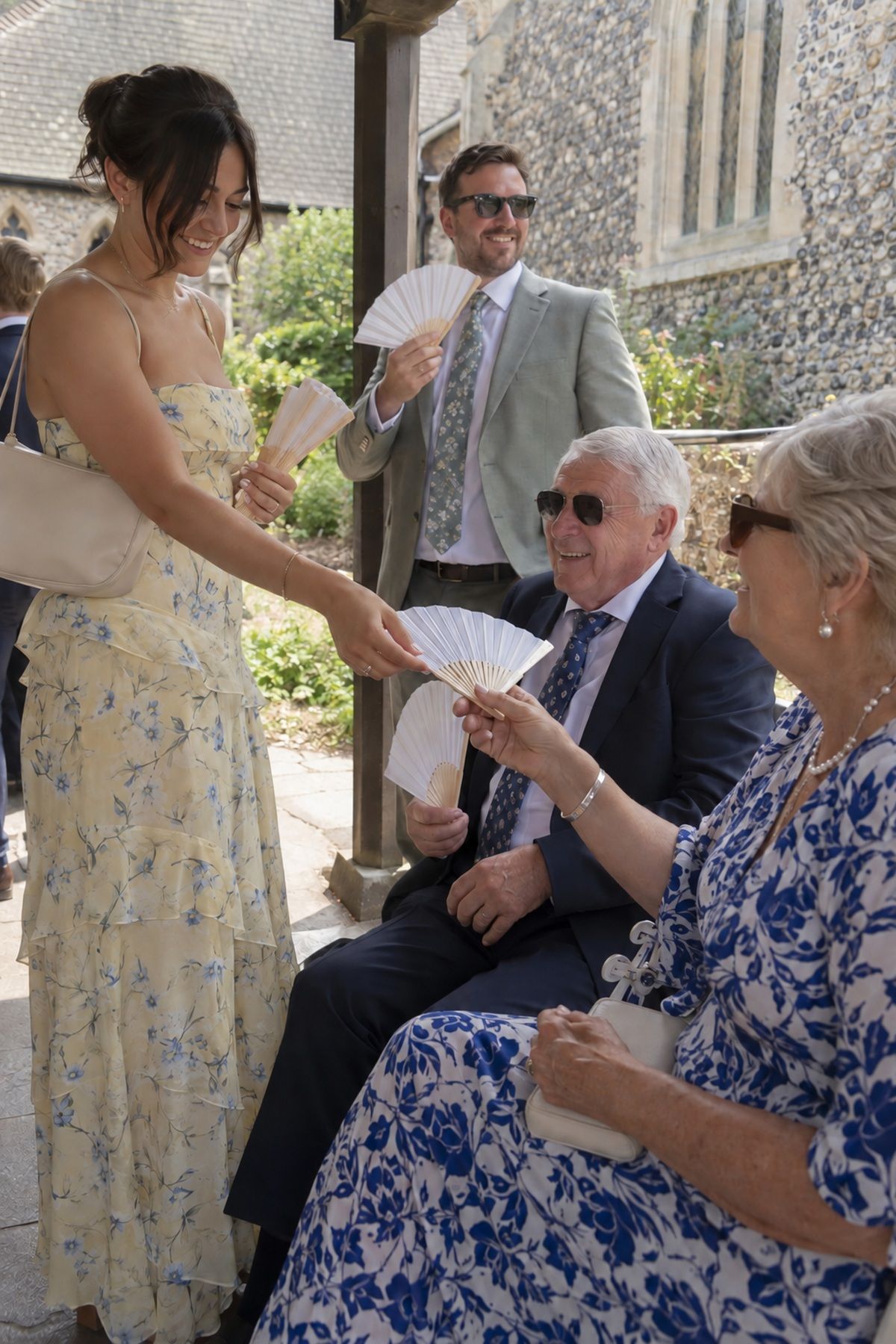
Fans give guests something to do with their hands while they wait, and that’s where the good candids come from: someone fanning their program, a basket being passed down a row, a grandparent laughing under the brim of a hat.
A petal or ribbon exit
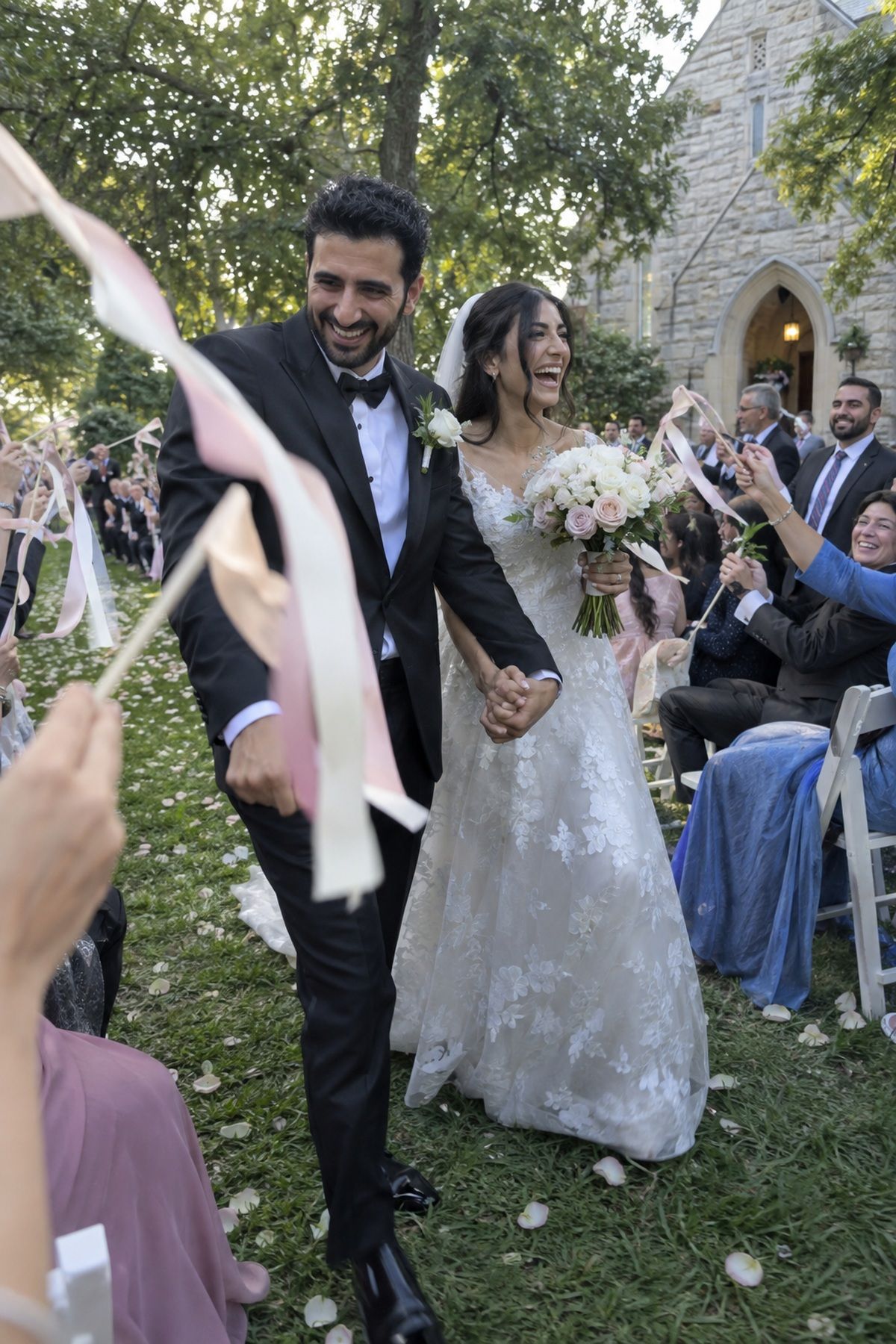
A daylight exit is easy to photograph because everyone’s expression is visible. Hand out lightweight petals or ribbon wands, then ask the couple to stop halfway down the aisle for one kiss. That pause is usually the frame you’ll print.
Cocktail hour under umbrellas
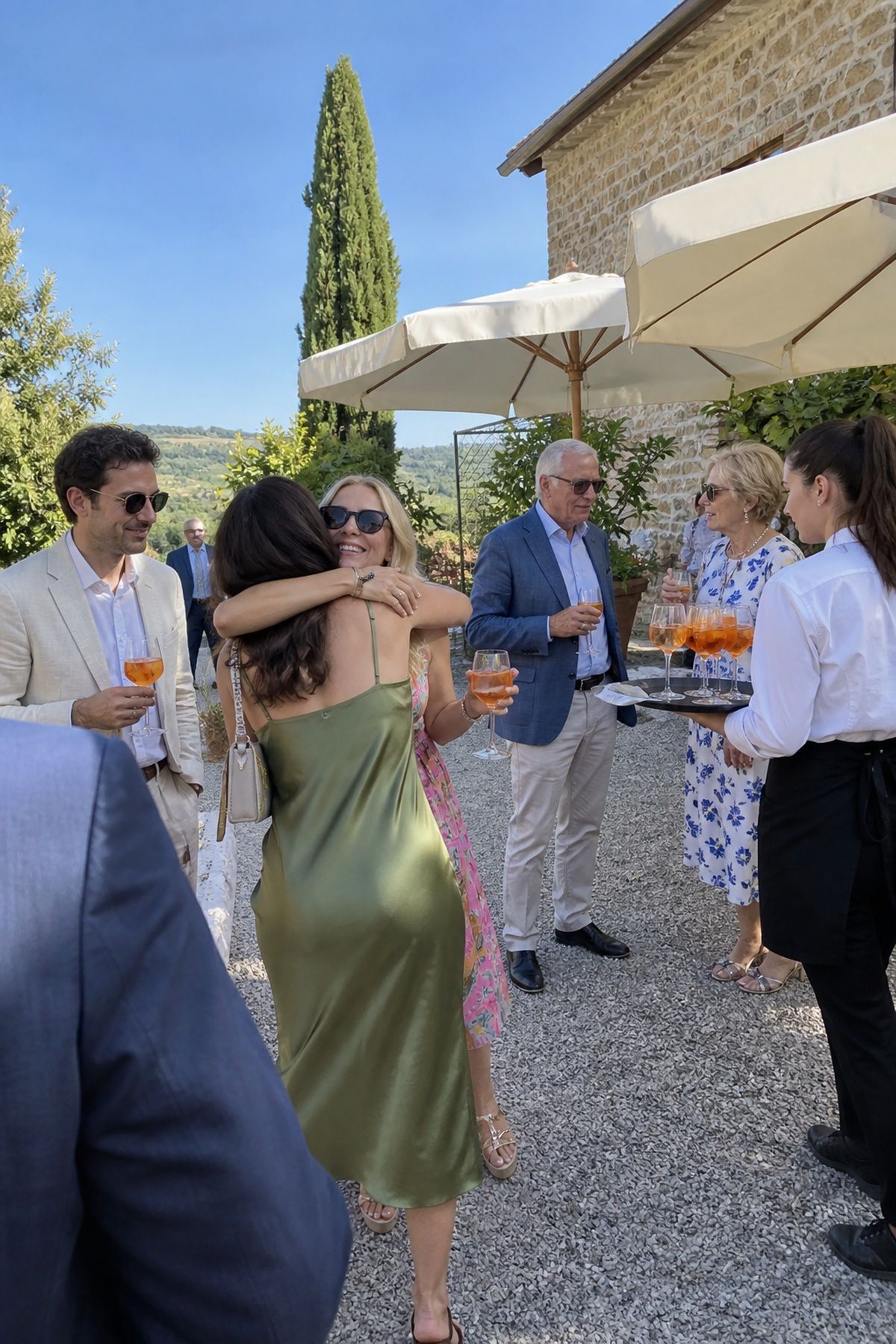
Market umbrellas, pergolas and tent edges keep cocktail hour in workable light. Ask your photographer to stay in those shaded zones and catch trays moving, sunglasses coming off and hugs. With 30 guests, that hour can produce most of your candid guest photos.
Reception photos from dinner to blue hour
Shoot the tables before anyone sits, put the toasts in side light, and start the first dance before the sky goes fully dark.
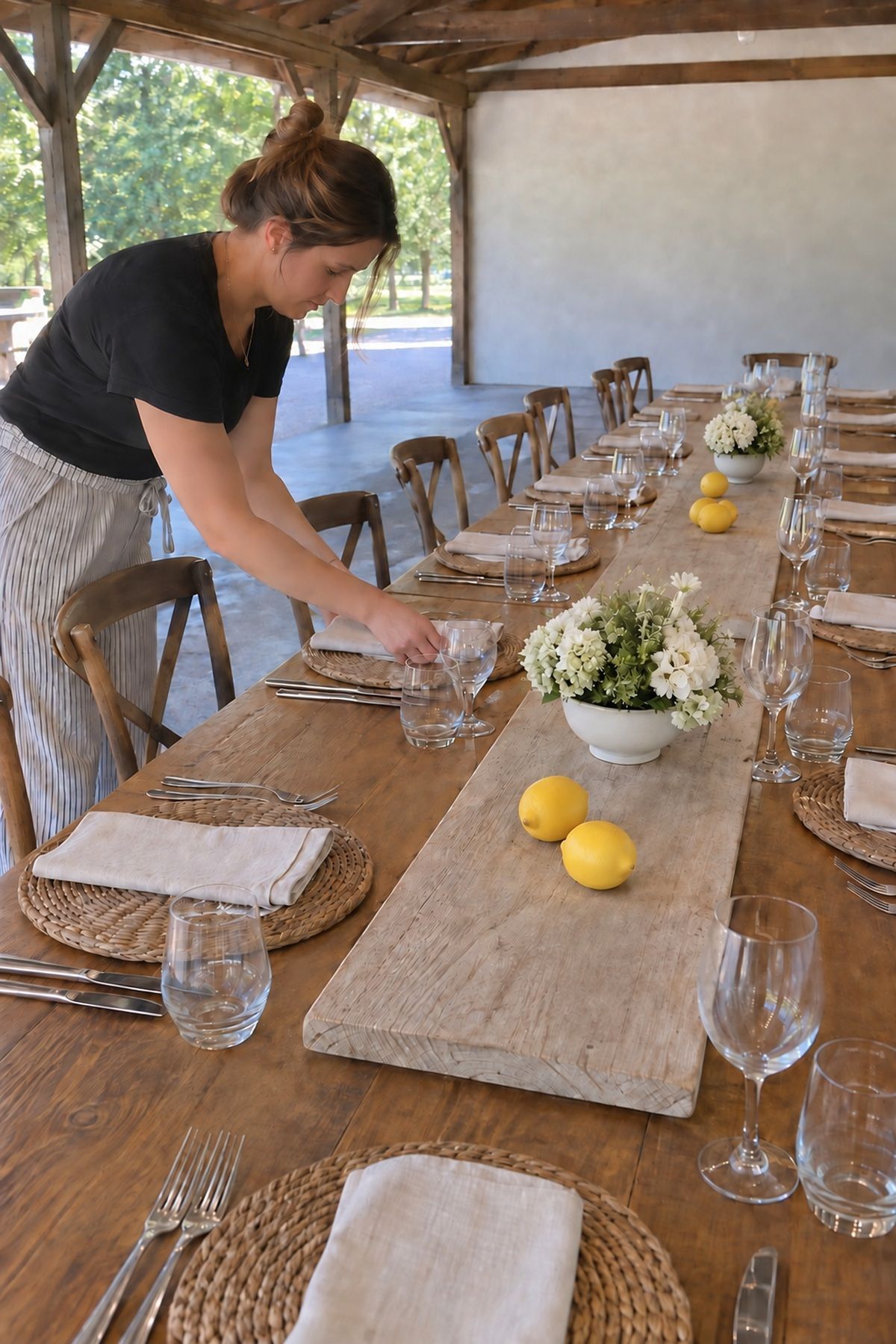
Tables look their best for about ten minutes, right before glasses fill. One overhead shot, one low floral close-up, a place card and one wide room view say more than thirty near-identical flat lays. If you’re still designing the table itself, the July wedding tablescape ideas post covers citrus color and heat-proof flowers.
Sunset toasts
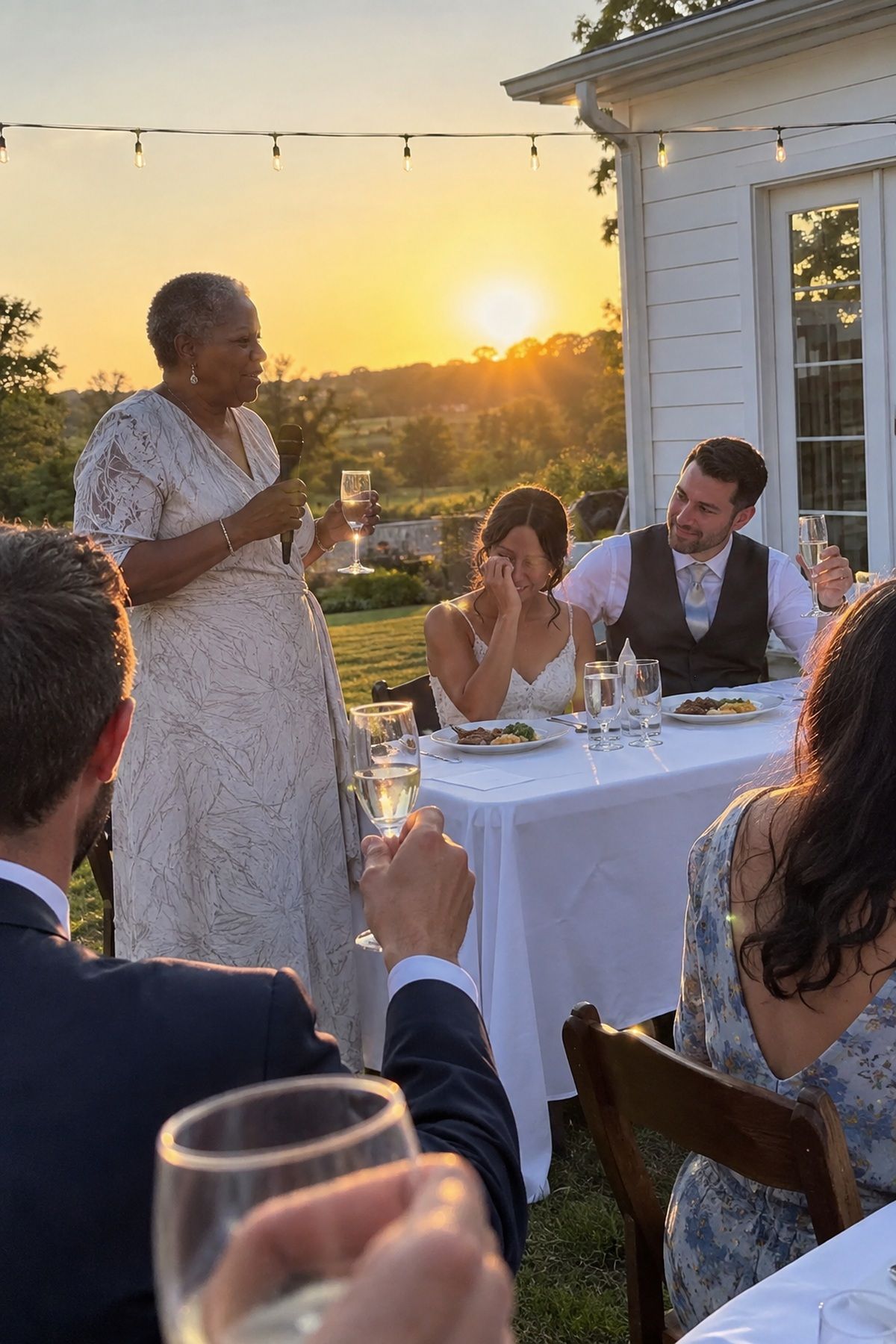
If speeches fall near sunset, seat the couple so the light comes from the side or behind them. You get glowing glassware and edges on faces, plus the speaker and couple in one frame. Ask for reactions as much as the speaker: the sibling crying into a napkin is often the better photo.
First dance at blue hour

Blue hour gives you visible faces against a deep blue sky with the venue lights just coming on. Start the first song while there’s still color in the sky. The Knot has a good explainer on how blue hour photography works if you want to understand the timing before you talk to your photographer. My own blue hour wedding photography ideas go further into poses and setups.
Which July wedding details are worth photographing?
Photograph the details guests actually use, plus anything that moves. In July that usually means ribbons, fans, water stations and the things that save you from the weather.
Bouquet ribbon in the breeze

Long silk or gauze ribbon catches backlight and wind and makes a still bouquet look alive. Keep it long enough to move but short enough not to tangle in grass.
Vow books in window light

Photograph vow books before the ceremony, while the covers are still clean, next to a window with the rings. After the ceremony, ask for one frame of the books held by the couple.
The water and sunscreen station
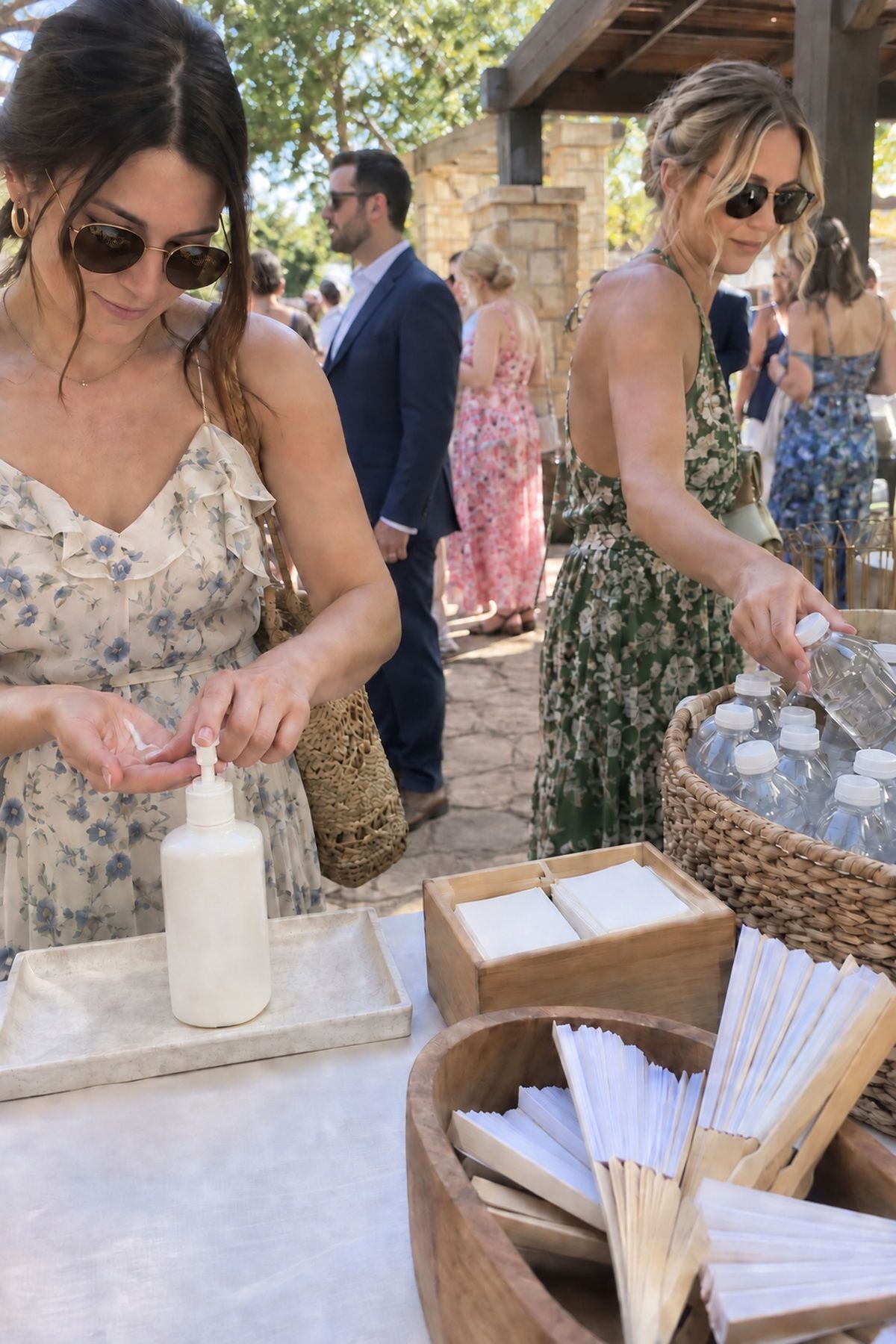
A tray with water, sunscreen, blotting papers and fans is hospitality first and a photo second. Shoot it styled before guests arrive, then again once people are using it. The second shot is the one you’ll keep.
Heel protectors on grass

They’re tiny and unglamorous, and they save your walking shots on lawns and vineyard aisles. Get one close frame of them on the shoes, then forget about them.
Clear umbrellas for a summer storm

July storms arrive fast. Keep a few clear umbrellas near the getting-ready room, the ceremony exit and your portrait spot. Clear ones keep faces visible, and wet pavement reflects light beautifully.
July wedding photo ideas for a small guest list
At a wedding of 10 to 50 people, variety comes from relationships and a few good locations, not from moving around constantly. Leaving a 30-person party for an hour is noticeable in a way it isn’t at 150.
Hand out photo timeline cards
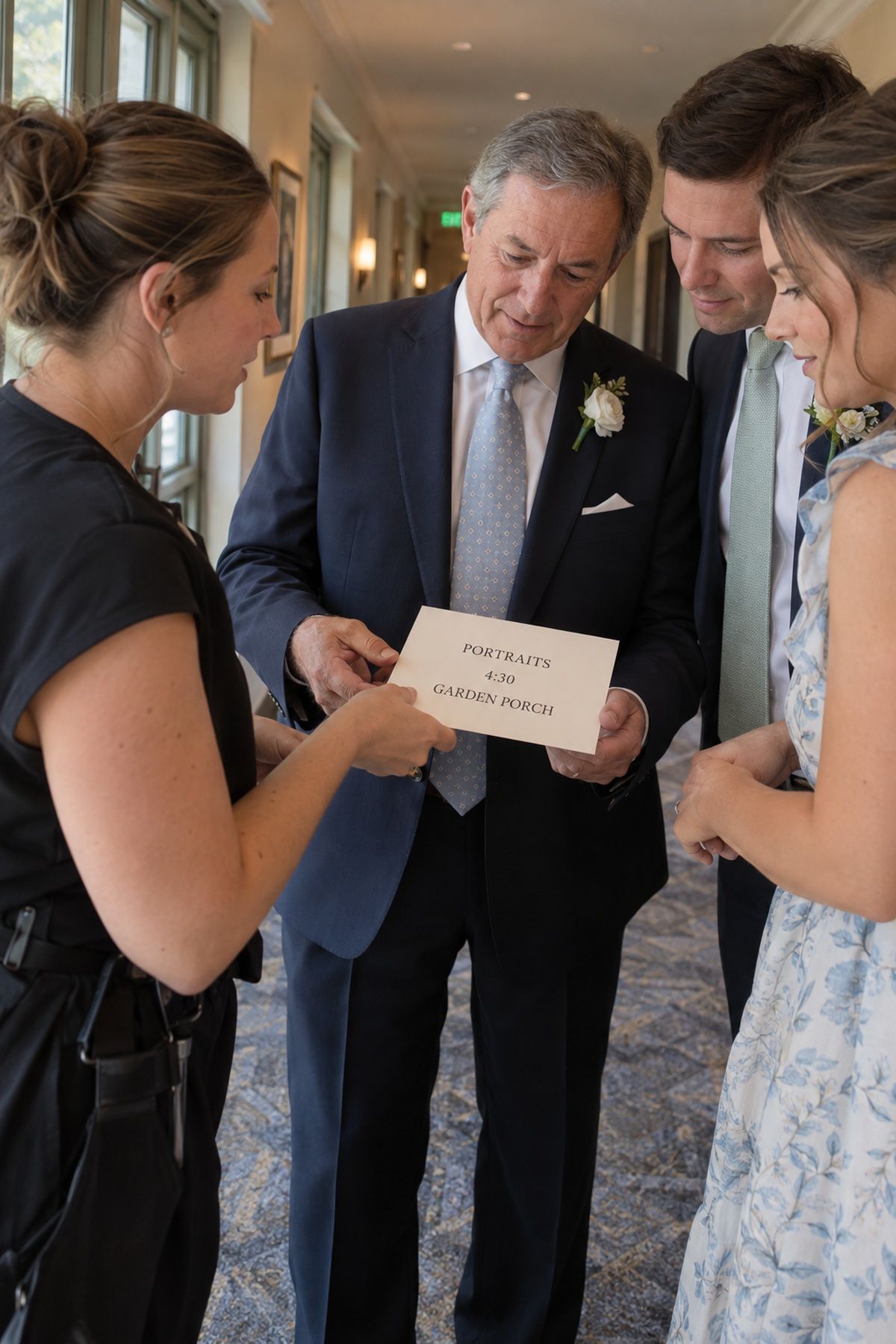
Give each person in a family grouping a card with their portrait time, location and which groups they’re in. It saves you from shouting names across a lawn. Photographer time is expensive (The Knot’s 2026 study puts the average photographer cost at $3,000), so every minute spent searching for an uncle is money you’d rather spend on portraits.
Three locations, not ten
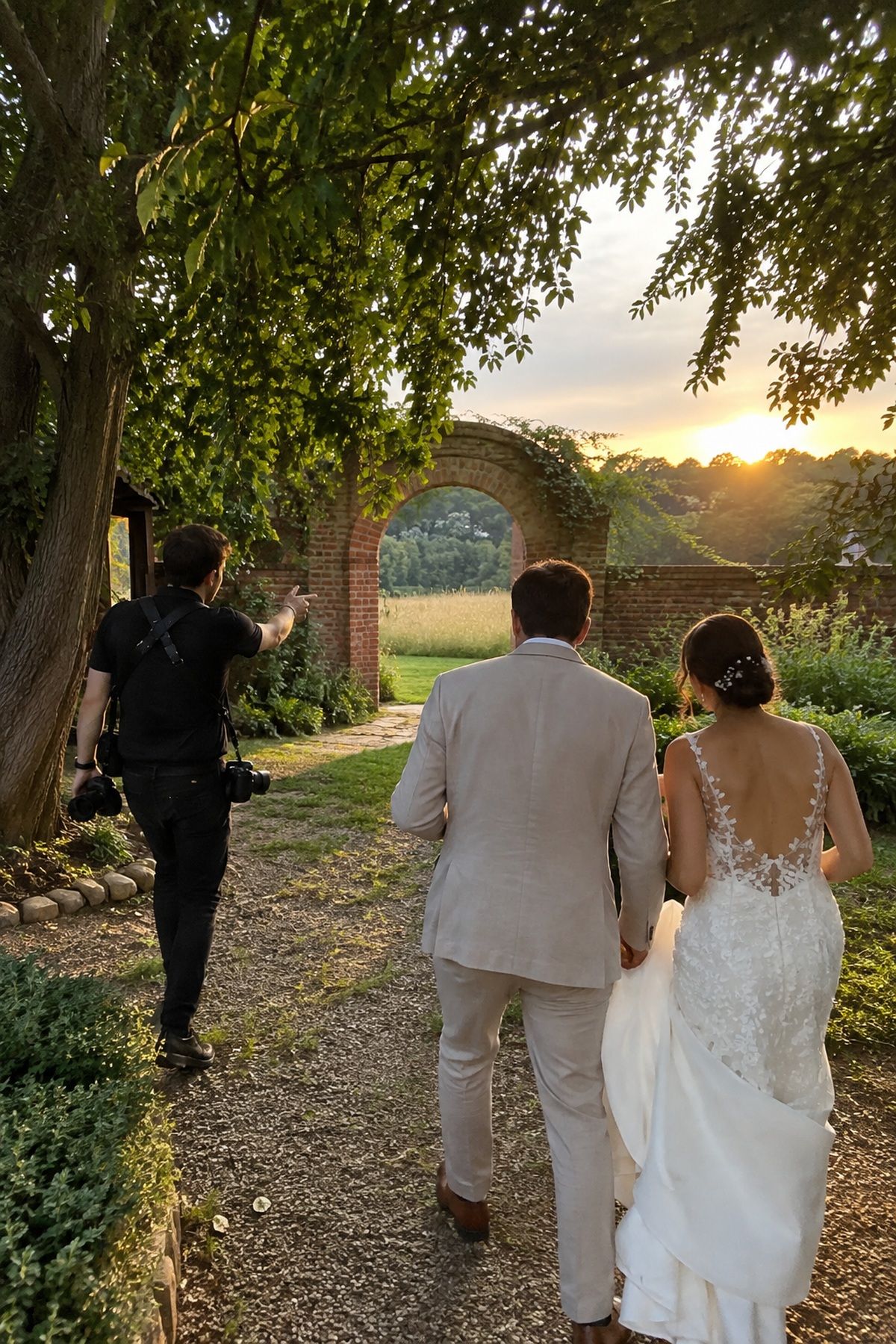
Pick one shaded spot, one spot with architecture, and one open landscape spot for golden hour. That trio covers faces, structure and season, and it keeps you away from your guests for less time.
Conversation clusters

Ask your photographer to work the small groups: grandparents with grandkids, siblings, the friends from university who haven’t seen each other in years. The point isn’t to make the wedding look bigger. It’s to show who was actually there.
One statement detail

One strong seasonal element photographs better than ten scattered ones. A parasol basket, a citrus escort display or a fruit-heavy cake: pick one, give it space, and photograph it wide, close and in use.
Space for unposed family moments
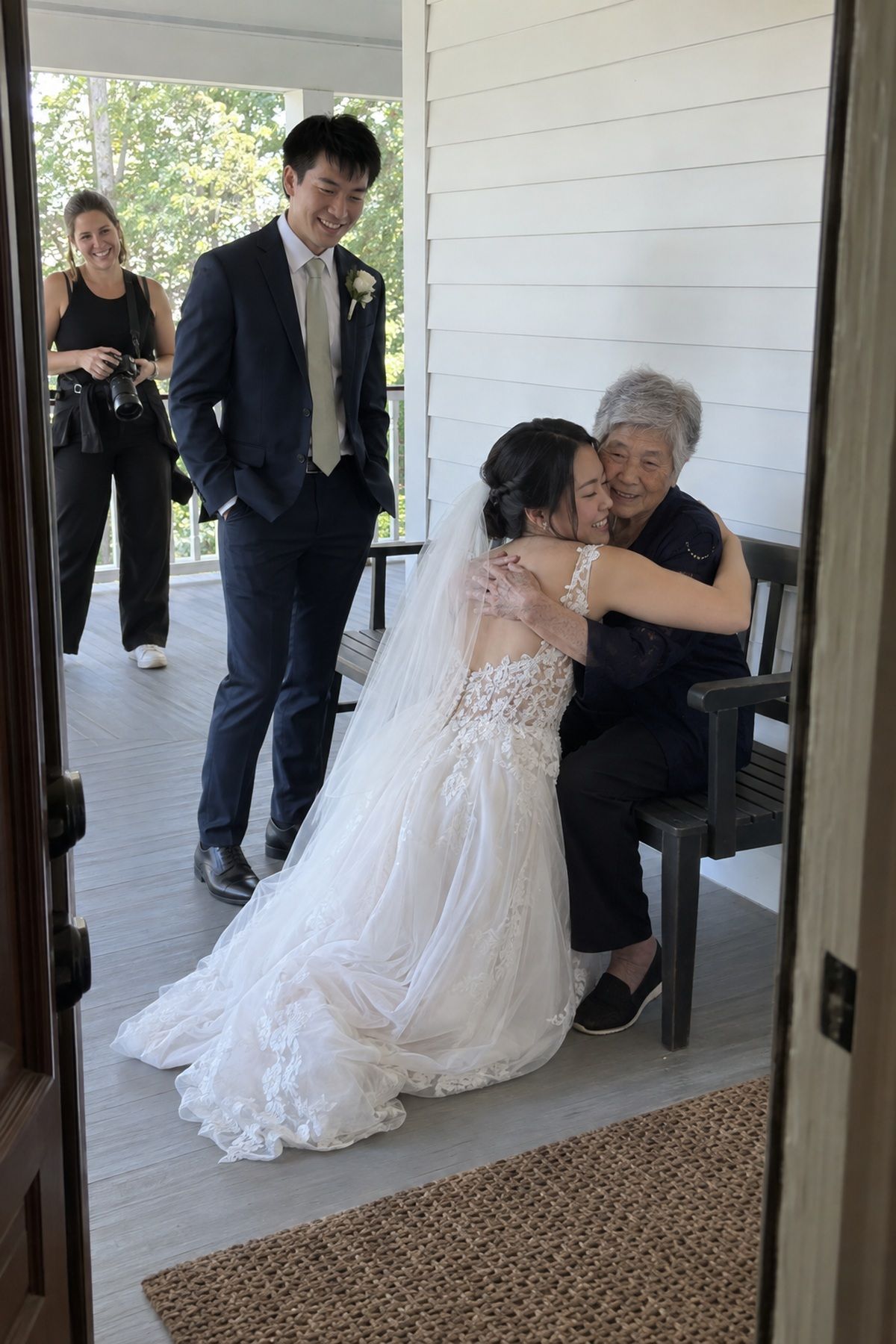
Leave five minutes after formals with nothing scheduled. That’s when parents hug, grandparents sit down with you, and siblings stop performing for the camera. At a small wedding the photographer can stay close enough to catch it. If you’re comparing months, the June wedding photo ideas and August wedding photo ideas posts cover how the light shifts either side of July.
Key takeaways
- Build the photo plan backwards from your sunset time, then add styling.
- Keep couple portraits in the hour before sunset and cap each outdoor block at about 20 minutes.
- Move family formals into open shade and keep the shot list to 8 to 12 groupings.
- Start the first dance at blue hour, while there’s still color in the sky.
- For small weddings, use three portrait locations and spend the saved time with guests.
FAQ
What time is best for July wedding portraits?
The hour before sunset is the best time for July wedding portraits because the light is low, warm and soft on faces. If the timeline needs earlier portraits, shoot formal groups in open shade and keep a short sunset session just for the two of you.
How do you plan wedding photos around harsh July sun?
Plan midday photos in open shade under trees, porches or tents, and turn faces away from the overhead sun. Scout the venue at portrait time, bring parasols for open lawns, and save the longest couple session for the evening.
How long should a July golden hour portrait session be?
About 20 minutes is enough for a July golden hour session. That covers walking shots, a seated frame, details and a few wide images without pulling you away from dinner or your guests for too long.
What July wedding details should be photographed?
Photograph details that guests use or that move: bouquet ribbons, paper fans, parasols, the water and sunscreen station, vow books and clear umbrellas if it rains. Shoot each one styled first, then again in use.
How can a small July wedding get variety in the photos?
Use three portrait locations (one shaded, one architectural, one open landscape), ask for conversation clusters during cocktail hour, and leave a few unscheduled minutes after family formals. Variety at a small wedding comes from relationships more than locations.
The short version
Plan the light, then the pictures. If you know where the shade sits at 2 pm and when the sun drops behind the trees, the rest of these July wedding photo ideas mostly fall into place, and you get to spend the evening with your people instead of chasing a backdrop.
Last update on 2026-10-03 / Affiliate links / Images from Amazon Product Advertising API