

A February outdoor wedding works when only one part happens outside, usually a ceremony of 15 to 20 minutes, and everything else (dinner, speeches, dancing) happens indoors or in a fully heated tent with sidewalls and flooring. Set a weather call time 24 to 48 hours ahead and book the indoor backup as a room you would be happy to use.
The biggest mistake in February outdoor wedding planning is treating the outdoor part as the wedding and the indoor part as the fallback. Flip that. Plan a warm, good-looking indoor day, then add one short outdoor moment on top of it.
Done that way, February gives you things June can’t: early candlelight, bare branches, breath in the air, coats over formalwear. Done the other way, you get forty people stamping their feet through a reading. Here is how to plan for the first version, with small weddings in mind.
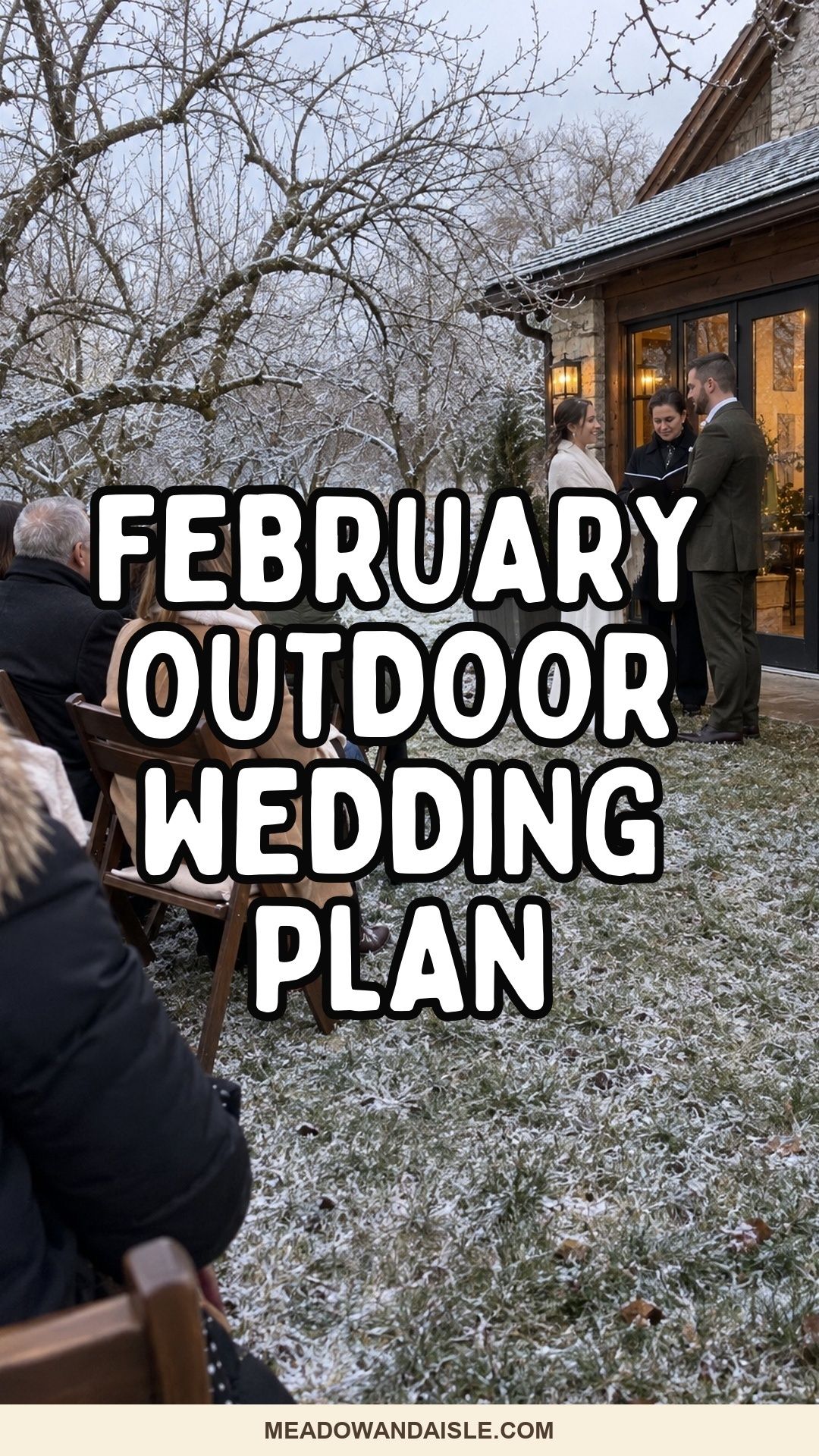
Cold-weather supplies worth having
A few practical things make a big difference to guest comfort in February, from blankets to hand warmers:


How long can guests stay outside in February?
My rule of thumb is 15 to 20 minutes seated outdoors in winter clothes, and less in wind or damp. Build the schedule around that limit and the rest of February outdoor wedding planning falls into place.
Choose one outdoor moment and give it a purpose:
- Vows under bare trees, then straight inside
- A private first look or portraits, with guests arriving later
- A champagne toast on a heated terrace
- A fire pit dessert as a short finale
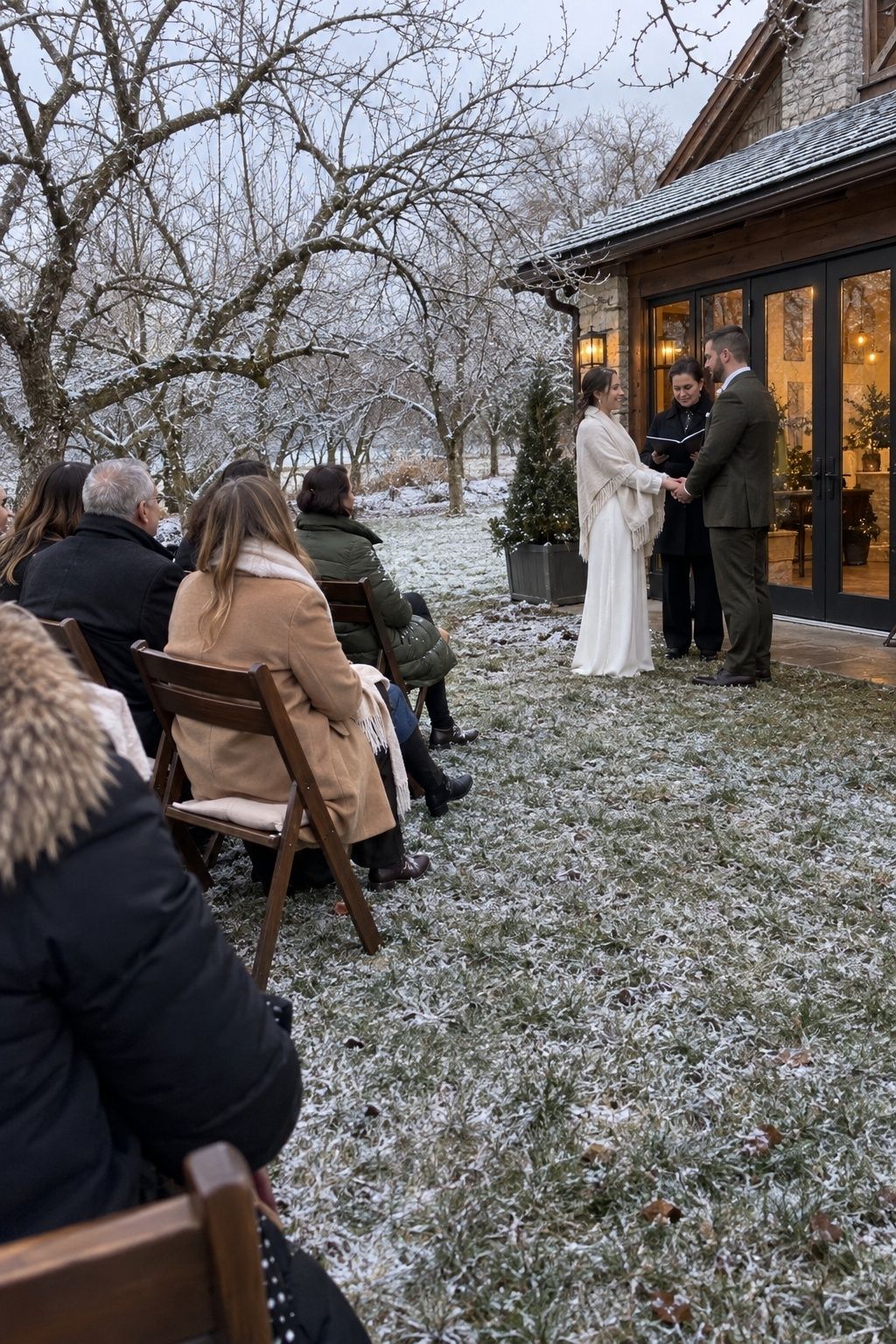
The smaller your guest list, the easier this is. Twenty people can move from ceremony chairs to a dining room in two minutes. Eighty need a plan.
Keep the ceremony short and sheltered
A February ceremony should be brief and well organized. Keep the processional simple, put chairs close together and ask your officiant for a compact service, with readings and rituals trimmed to the ones you care about.
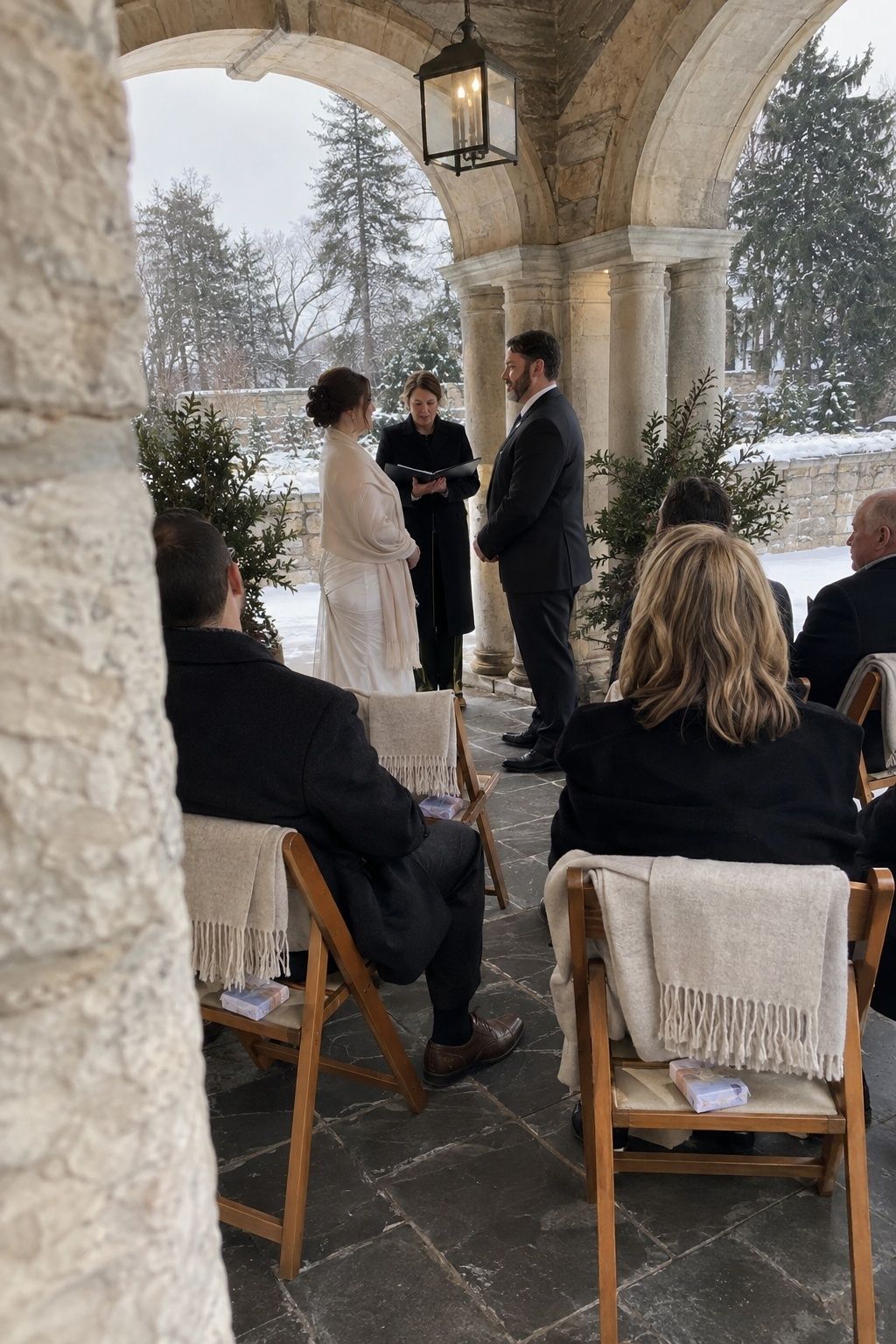
Do not forget the fifteen minutes before the ceremony starts. Guests are already standing outside then, so that waiting area needs heaters, wraps and hand warmers just as much as the ceremony rows do. A portico, porch or covered walk nearby gives everyone a spot to wait out of the wind.
Book an indoor backup you would actually use
Ask the venue exactly where each part of the day moves if you go inside: ceremony, cocktail hour, dinner, bar, music, gifts, coat check and family photos. Then walk the backup space as if it were your first choice.

Check the light, the heat, the entrances, restroom access, sound and where an aisle would go. If the backup room makes you happy, you will stop refreshing the forecast in the last week. If it does not, keep looking or budget for a tent.

Give the backup real design attention. Bring branches, winter greenery, lamps, velvet ribbon and window-facing seating inside. A fireplace does a lot of work. Ideas from these February wedding decor notes carry over well.
Tents and heaters for a February wedding
A tent alone is not a winter plan. For February, a tent needs sidewalls, a raised floor, proper doors, anchoring, permits where your area requires them, lighting, heaters, fuel or power, and a dry entry path.
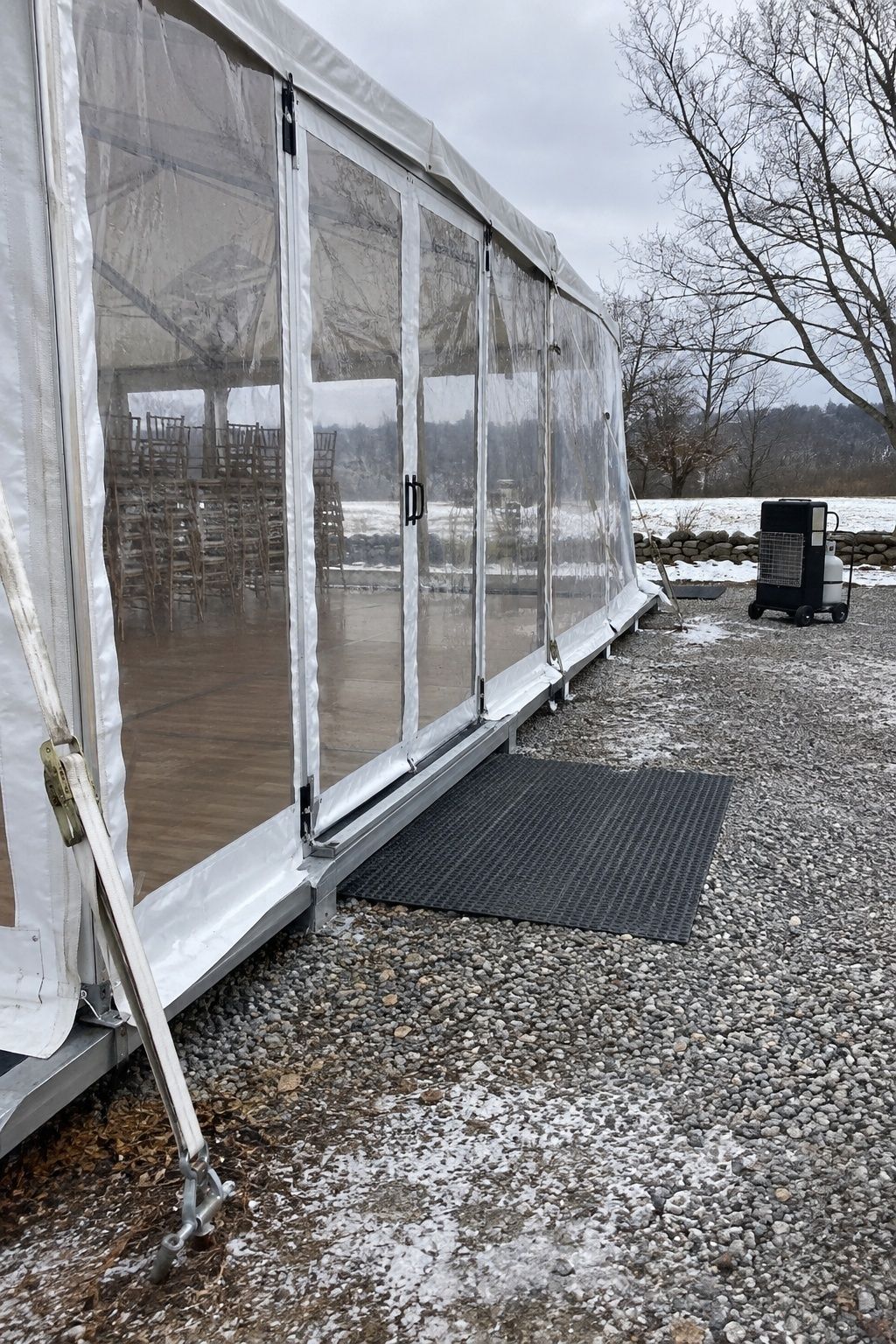
Flooring matters more than people expect, because cold and damp come up from the ground. A canopy over wet grass still leaves hems, heels and anyone with mobility concerns exposed. Book every tent element together from the same rental team so nothing is missing on the day. The Knot’s 2026 Real Weddings Study puts average rental spend at $2,000, and a properly heated winter tent can take a big share of that, so get quotes early.
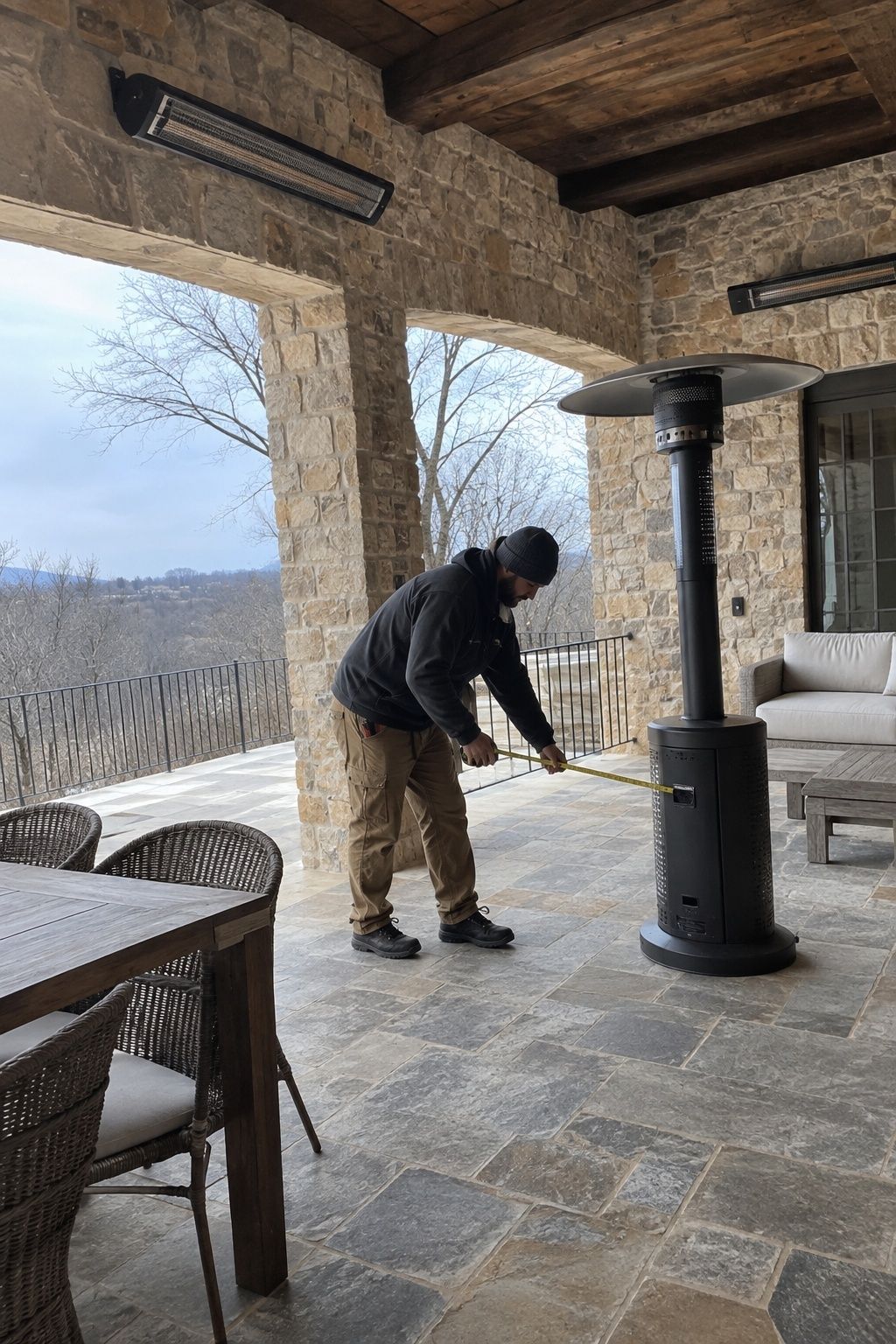
Ask the rental team where heat actually reaches seated guests, how airflow changes when sidewalls close, and where equipment can stand safely. Patio heaters, enclosed tent heaters and fire features all behave differently in wind. Put heat where people pause: ceremony rows, arrival, cocktail seating, coat check, restroom paths and wherever older relatives will wait.
Keep dinner indoors or fully heated
Dinner is when guests sit still, take coats off and listen to speeches, so it belongs indoors or in a tent with real heat, flooring, lighting and wind control.

If the view matters to you, give it to the ceremony, the portraits or a short toast. A warm room with candlelit tables and good food beats a beautiful cold one every time. For a sense of how the room can look, these February wedding tablescape ideas work in a backup space as well as a first choice.
Light every path before sunset
February light disappears early, and cloud makes it earlier. In much of the northern US, sunset falls roughly between 5pm and 6pm in February, so check the exact time for your venue and date.
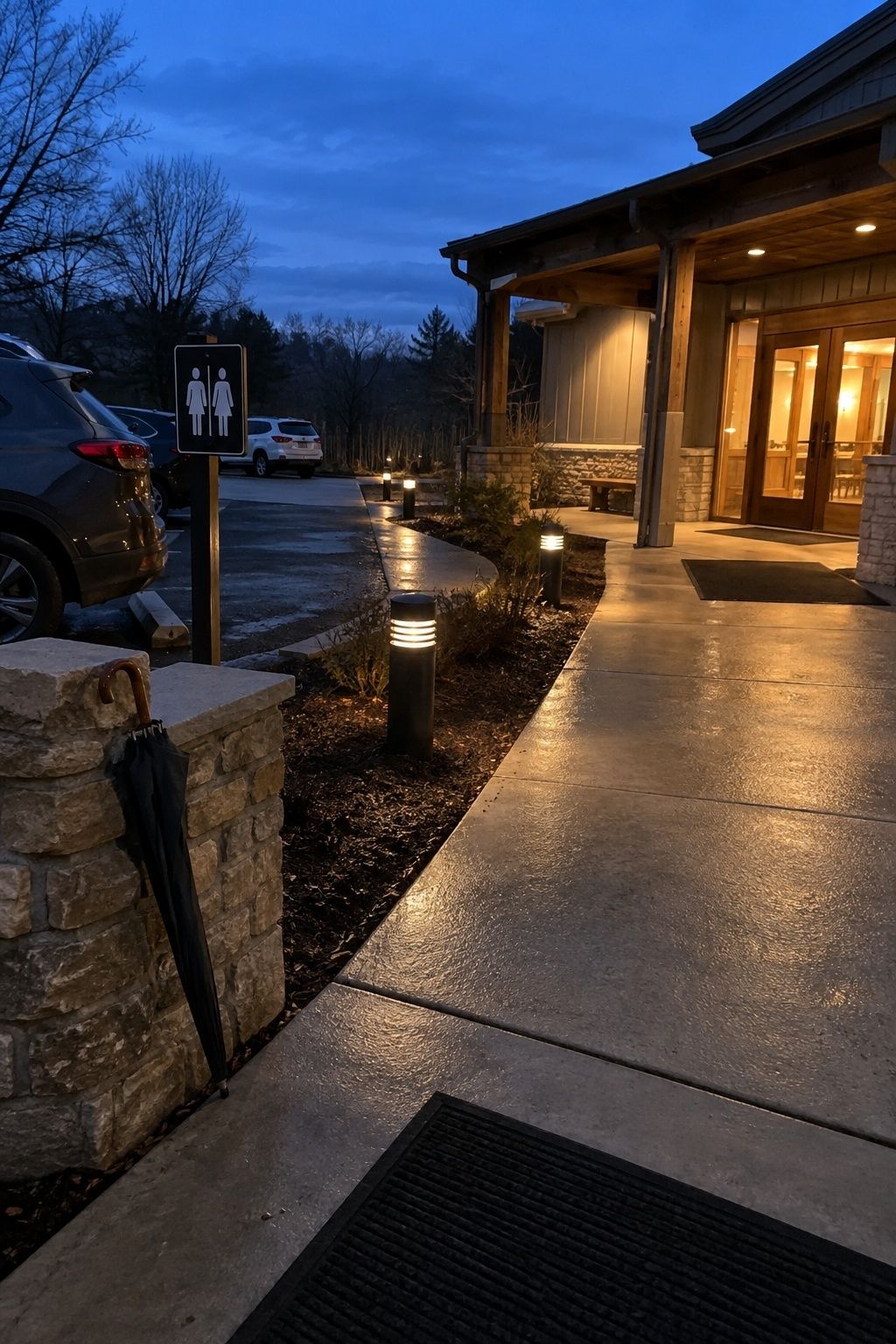
Map every route guests will walk: parking or shuttle drop-off, ceremony, restrooms, coat check, dinner and exits. Light them with lanterns, low path lights, battery candles, bistro strings or doorway lamps. Clear paths keep people moving and keep heels off ice and wet grass.
Here is a simple timeline for a small wedding with a 5:30pm sunset:
| Time | What happens | Where |
|---|---|---|
| 3:30pm | Guests arrive, hot drinks, hand warmers | Covered entry |
| 4:00pm | 15 to 20 minute ceremony | Outdoors, heaters on |
| 4:20pm | Cocktails and family photos | Indoors, short photo breaks outside |
| 4:45pm | Couple portraits in the last light | Outdoors, 10 minutes at a time |
| 5:30pm | Dinner | Indoors or heated tent |
| 8:00pm | Fire pit dessert (optional) | Outdoors, 20 minutes |
Keep guests warm from the moment they arrive
Warmth works best before people get cold. Most of it happens at arrival.

Put hot drinks at the first gathering point: cider, tea, coffee, hot chocolate or mulled wine. From years of running banquet service as a chef, my advice is to keep the drink station sheltered from wind, use insulated urns rather than open pots, and place refills away from the ceremony path so staff are not crossing the aisle with jugs.

Put hand warmers out with the programs or the welcome drinks, not on a favor table guests find after they are already cold. They matter most for older guests, children, musicians and anyone reading vows with bare hands.
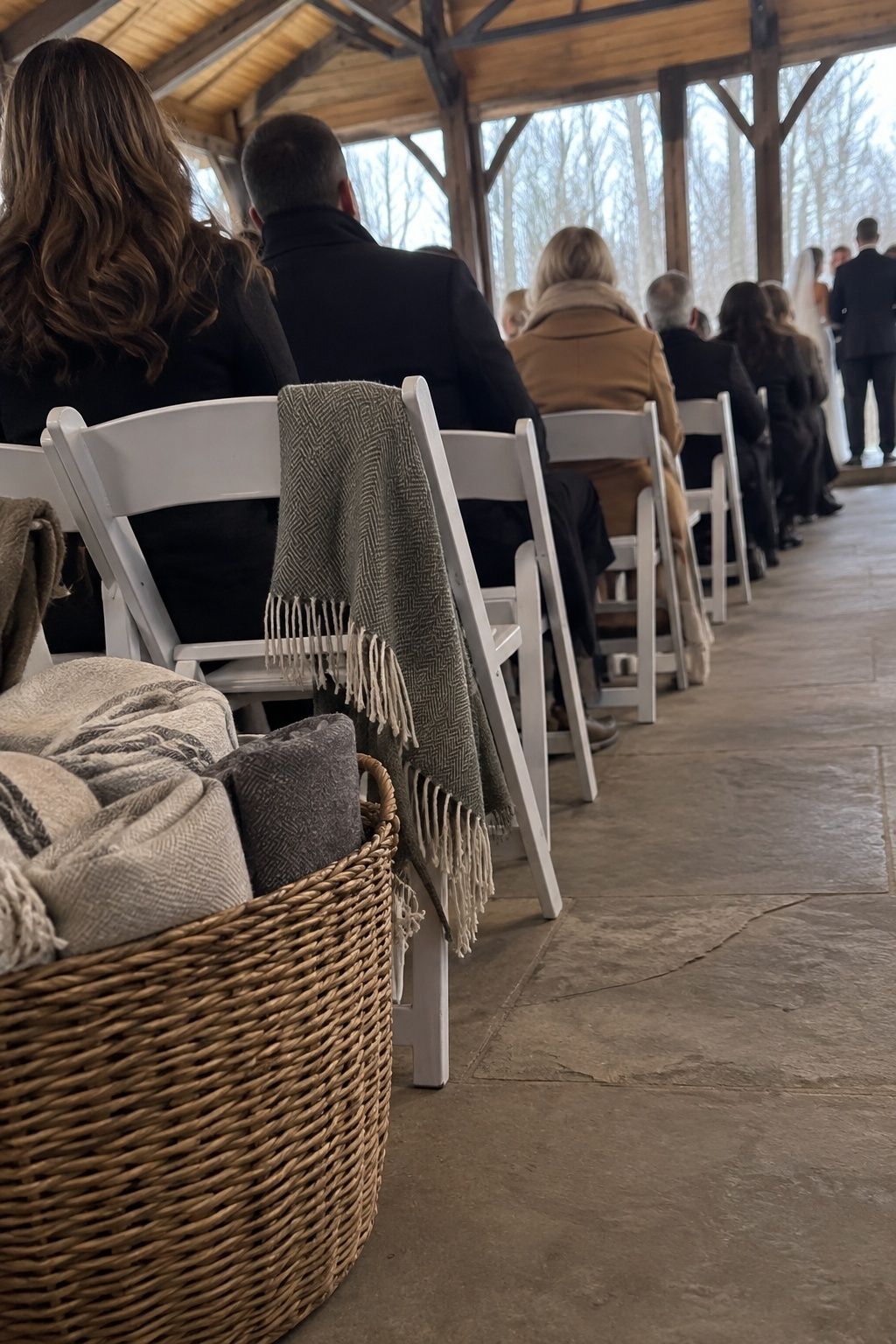
Drape blankets over ceremony chairs or stack them at an outdoor lounge, not in a basket at a crowded entry. Assign one person to refold and move them indoors when the outdoor part ends.
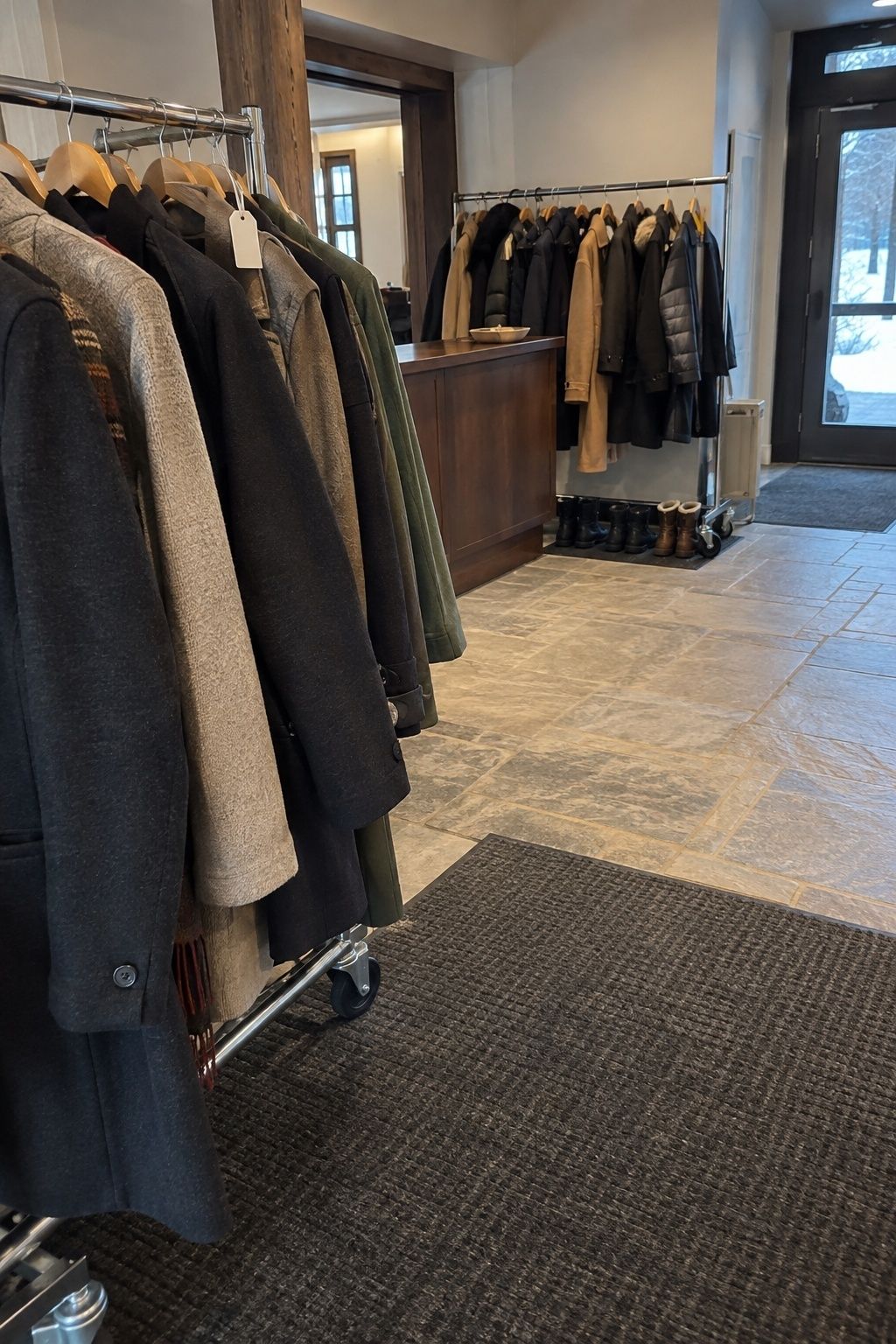
Coat check shapes the floor plan in February. Put it close enough to the door to be obvious but far enough back that arrivals keep moving. Racks, tags and an attendant save everyone a search through identical black wool coats at the end of the night.
Tell guests what to wear
Say exactly which parts are outside and what the ground is like. Something like “Ceremony outdoors on the lawn, about 20 minutes. Dinner indoors. Warm layers and block heels or boots recommended.”
That one line lets guests pick coats, wraps, tights or boots without guessing. Put it on the wedding website and repeat it in a reminder message the week before.
Protect flowers and paper from wind
Ask your florist which arrangements can handle cold and wind and which should stay inside until the last minute. Low vessels, sturdy urns and potted branches hold up better outdoors than tall, delicate arrangements.
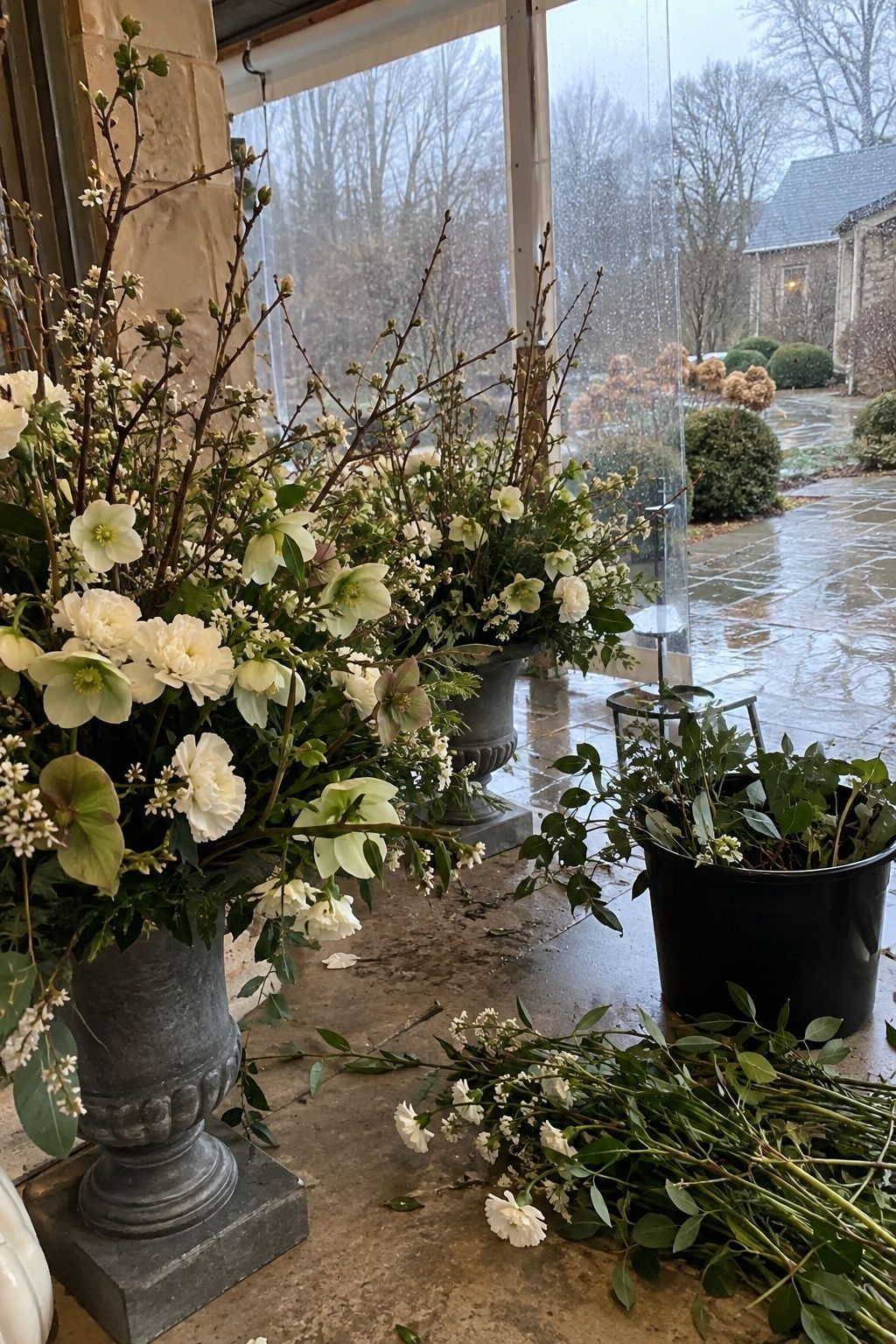
Paper blows away. Use heavier stock, clips, frames, weighted stands or covered trays for menus, programs, escort cards and signs. Keep spare programs indoors until guests arrive. If you are still choosing stems, my guide to February wedding flowers notes which ones are sturdier.

Plan portraits with indoor breaks
Winter portraits look great, but numb hands do not. Build short indoor pauses into the photo schedule before you finalize hair, makeup and transport.
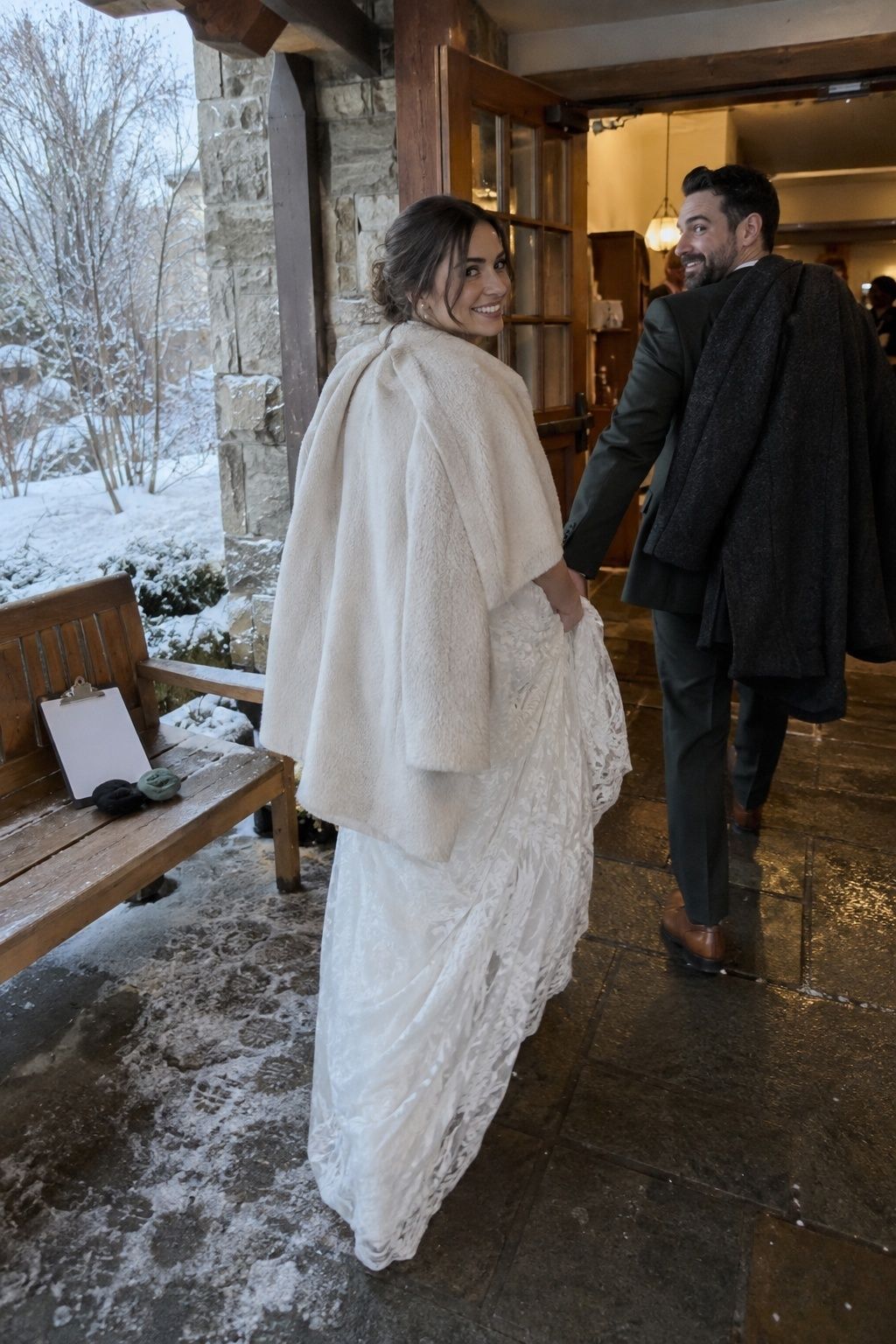
Pick covered photo spots, indoor windows and a warm car or room nearby. Shoot outside in 10-minute stretches and warm up in between. These February wedding photo ideas include several indoor-window setups that save time on cold days.
Make the weather call on time
Name one person to make the weather decision with the venue or planner, so you are not checking radar on your wedding morning. Give them the main layout, the backup layout, vendor deadlines and the guest message.
Then write down a call time. For tents, chairs and floral moves, 24 to 48 hours ahead is usually enough; ask your venue and rental team what they need. Include wind and snow in the decision, not only rain. The winter wedding weather plan guide has a fuller checklist.
Small February outdoor wedding formats that work
If you are not sure which outdoor moment to pick, these four are the most forgiving.
- Outdoor vows, indoor dinner. A short ceremony outside, then straight into a heated room. Simple and the most common.
- Private first look. Just the two of you and a photographer outside, while guests arrive later to a warm interior.
- Heated patio toast. Heaters already on, drinks already poured, a few minutes of winter air between courses.
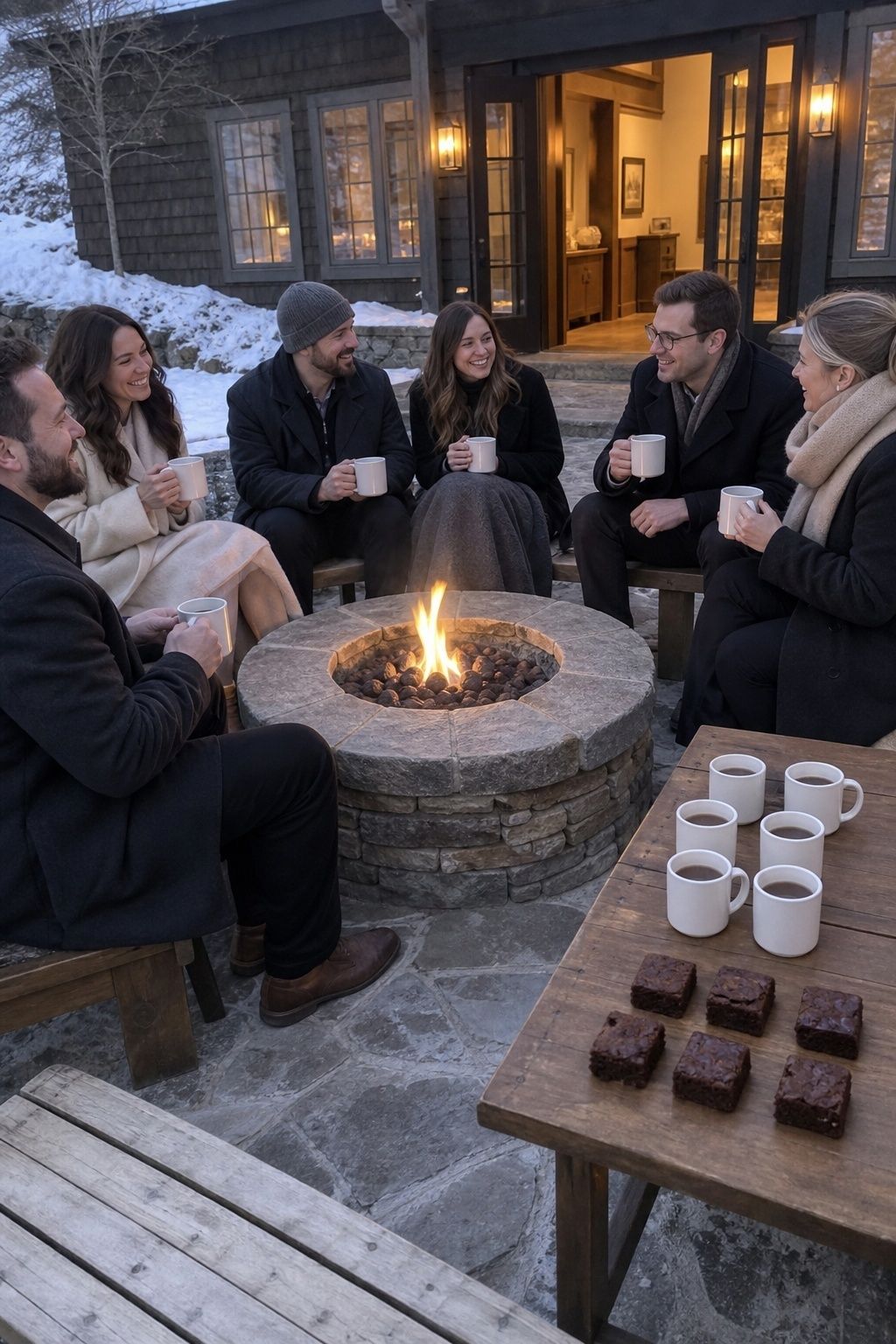
- Fire pit dessert. A planned ending with hot drinks and blankets, then guests drift inside or to their cars.


WeddingWire has a good overview of planning an outdoor winter wedding if you want a second checklist to compare against.
Before you sign the venue contract
- Plan one outdoor moment of 15 to 20 minutes, not a full outdoor day.
- See and like the indoor backup before booking.
- A winter tent needs sidewalls, flooring and real heat; a bare canopy will not do.
- Light every path and know your sunset time.
- Name one weather decision-maker and set a call time.
FAQ
Can you have an outdoor wedding in February?
Yes, you can have an outdoor wedding in February if the outdoor part is short and there is a warm indoor or fully heated backup. Most couples keep the ceremony or portraits outside and hold dinner indoors.
How long should a February outdoor ceremony be?
A February outdoor ceremony should usually last 15 to 20 minutes. Go shorter in wind or damp weather, and add heaters and covered waiting space if there is music or a longer ritual.
Do you need a tent for a February outdoor wedding?
You need a tent for a February outdoor wedding only if dinner, cocktails or the bar will be outside without an indoor backup. A winter tent should have sidewalls, flooring, heaters, lighting and a dry entrance.
How do you keep guests warm at a February outdoor wedding?
Keep guests warm with a short ceremony, heaters in waiting areas, blankets on chairs, hand warmers and hot drinks at arrival, and clear dress guidance. Move everyone indoors before they start to feel the cold.
What should guests wear to a February outdoor wedding?
Guests should wear formal clothes with warm layers: coats, wraps, tights, insulated suits and block heels or boots that work on grass, gravel or snow. Tell them which parts of the day are outdoors so they can plan.
The bottom line
February outdoor wedding planning comes down to keeping people warm first and treating the view as a bonus. Plan a warm indoor day, choose one short outdoor moment, light the paths, and decide on the weather before the weather decides for you. If your date might slip into early spring, the March outdoor wedding planning guide covers the next set of forecasts.
Last update on 2026-10-05 / Affiliate links / Images from Amazon Product Advertising API