

The most reliable winter wedding bouquet ideas start with flowers that are in season from December to February: anemones, ranunculus, amaryllis, hellebores, tulips and roses, with evergreen, eucalyptus or dusty miller for texture. Pick one main flower, one green, and one ribbon, and give your florist permission to swap within the same color and shape if a stem isn’t available.
Picture a January ceremony at 3pm. The light is low and blue, everyone is in dark wool, and the bouquet in your hands is the brightest, warmest thing in almost every photo. That’s a lot of work for a bunch of flowers, which is why I’d plan it around what grows well in winter rather than around a summer peony photo you saved two years ago.
Below are winter wedding bouquet ideas grouped by mood, starting with what’s in season, then moving through palettes, sizes for small weddings, and how to brief your florist so the bouquet survives cold portraits and a warm dinner room.

Bouquet extras worth having
A good bouquet stand, ribbon and a preservation plan are small purchases that make a difference on the day and after it.


Which flowers are in season for a winter wedding bouquet?
In the northern hemisphere, the strongest winter bouquet flowers are anemones, ranunculus, amaryllis, hellebores, tulips, and greenhouse roses, plus hardy greens. Peonies, dahlias and garden cosmos are out of season and will be expensive imports if your florist can find them at all.
| Flower | Look | Best for | Note |
|---|---|---|---|
| Anemone | Crisp white petals, dark center | Modern, black and white palettes | Petals close in cold, open in warmth |
| Ranunculus | Layered, soft, romantic | Lace and sleeved dresses | Comes in nearly every color |
| Amaryllis | Large, sculptural | Formal, dramatic bouquets | Three or four blooms can be the whole bouquet |
| Hellebore | Quiet, garden-like | Mauve, plum, green palettes | Needs careful conditioning |
| Tulip | Graceful, late-winter fresh | February weddings | Keeps growing in the vase, so add it last |
| Rose | Classic, sturdy | Any palette | Available year round |
Exact timing depends on where you live, so treat that table as a starting list. Teleflora has a useful guide to seasonal winter flowers, and my winter wedding flowers guide covers centerpieces and ceremony pieces from the same pool. If you’re marrying at the very end of the season, February wedding flowers lists the early spring stems that start appearing.
White and green winter bouquets
White and green says winter without saying Christmas. The trick is texture: silver leaves, dark centers or glossy foliage keep an all-pale bouquet from looking flat.
White roses and evergreen
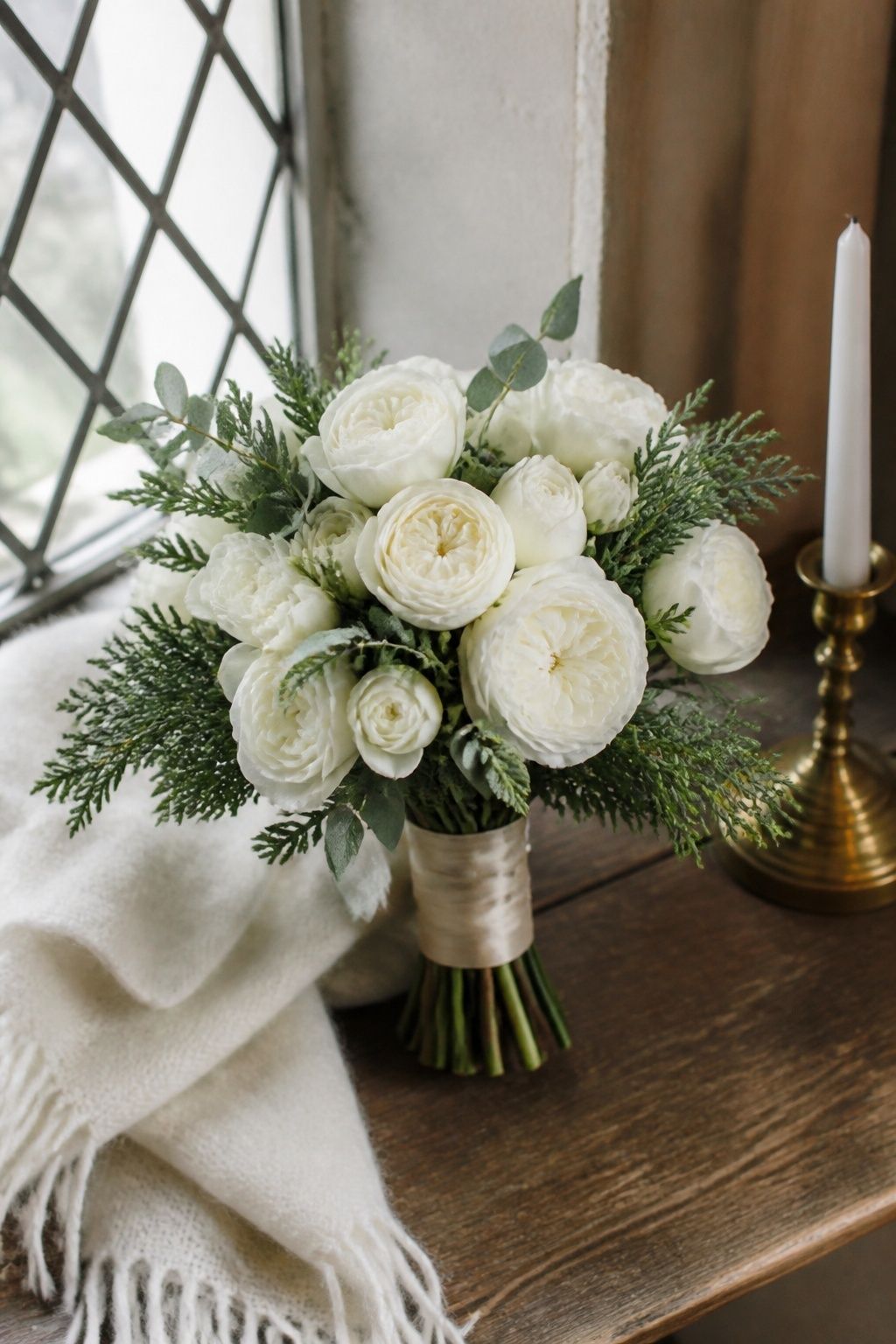
The classic. Ask for a soft white base with small touches of cedar, fir or eucalyptus framing the roses rather than taking over. An ivory or champagne wrap keeps it bridal.
Dusty miller and white blooms

Dusty miller gives you that frosted look without glitter or spray paint. Pair it with white roses, ranunculus or lisianthus and keep the colors narrow so the silver leaves do the seasonal work.
All-green bouquet
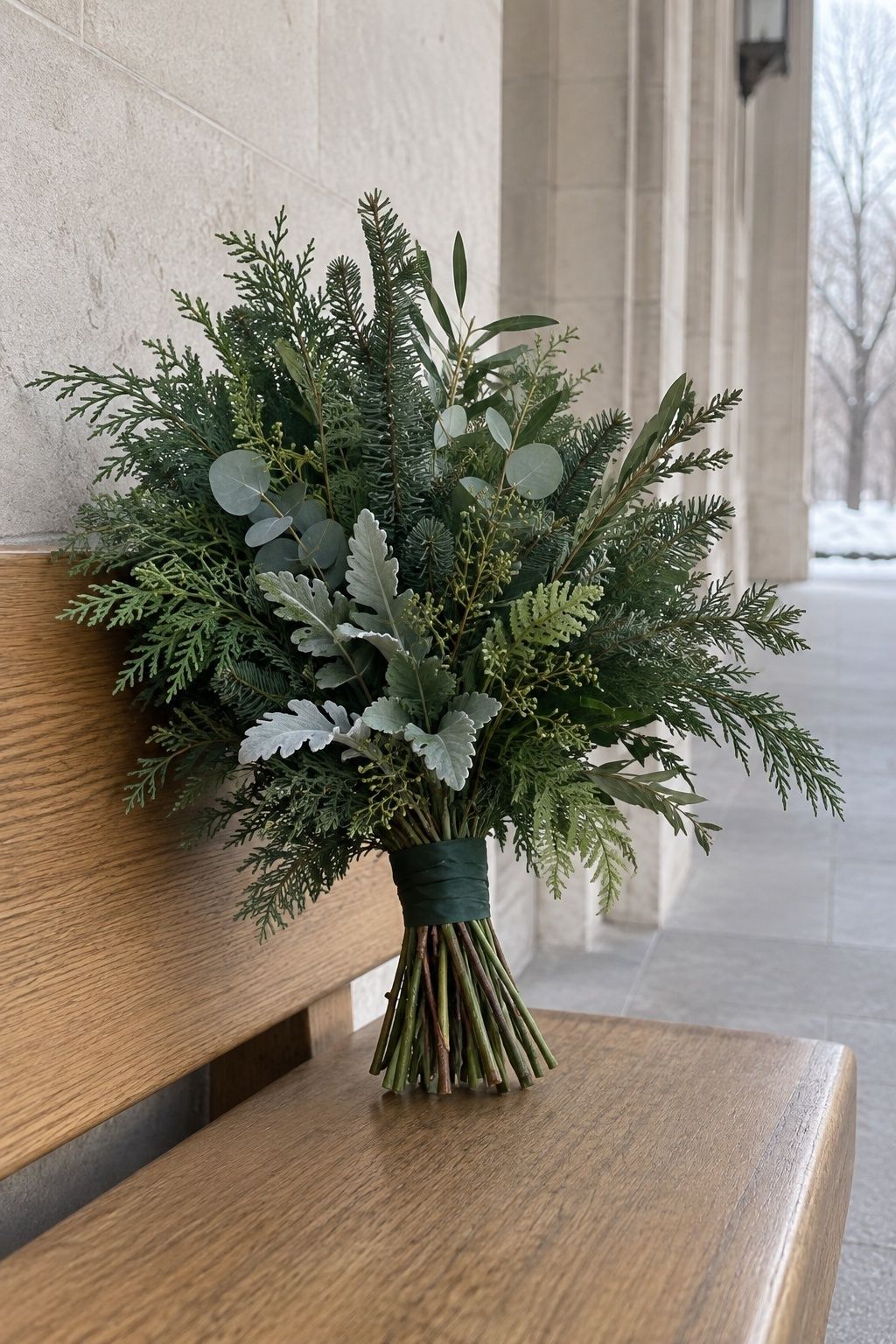
Evergreen, eucalyptus, olive, ferns and dusty miller with no flowers at all. It’s calm and modern, and it costs less. Choose one dominant green and one accent so it has depth in photos.
Anemones with dark centers
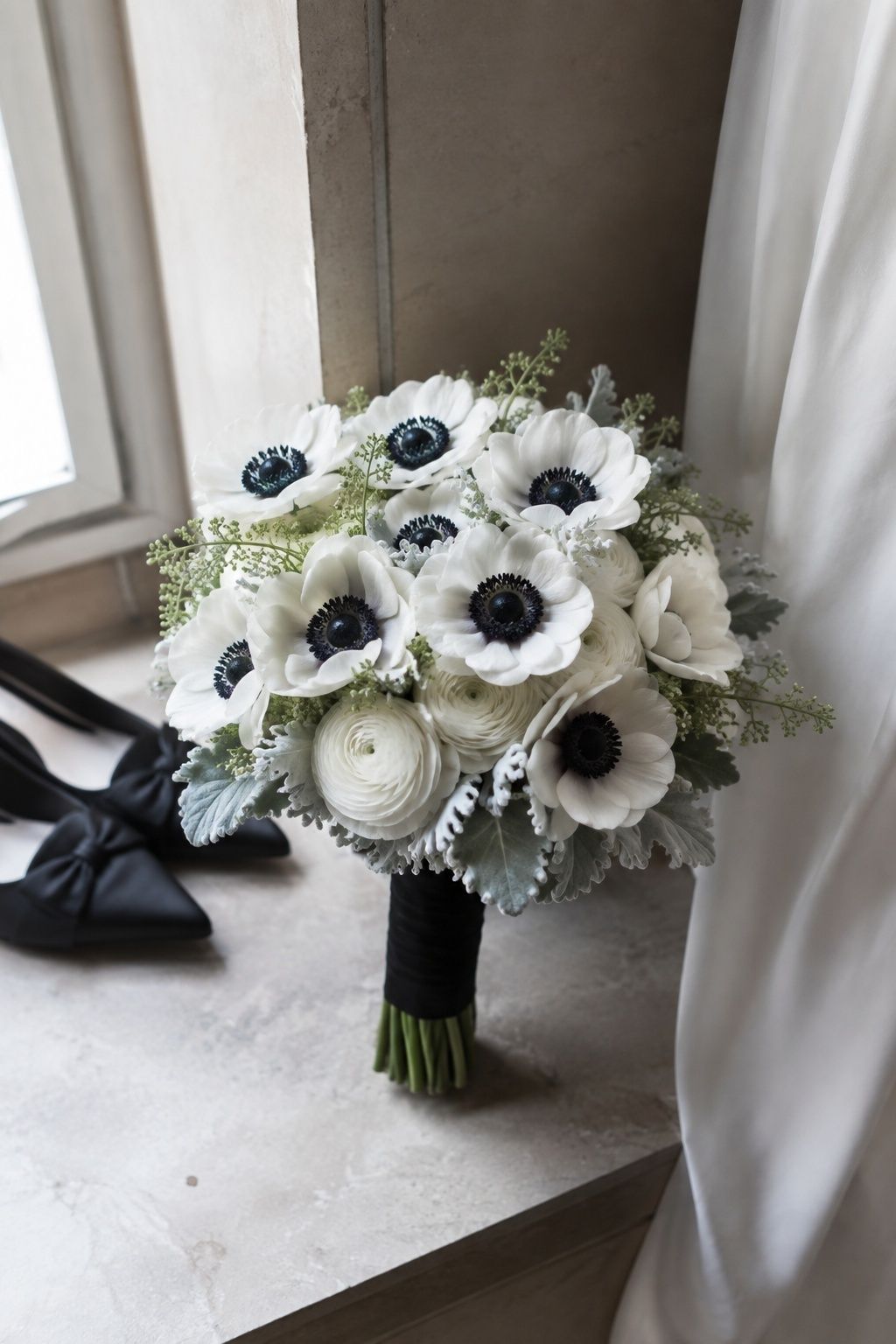
White anemones are graphic and crisp, and the dark eye photographs clearly even in low light. Soften them with white ranunculus or pale greens unless you want a strong black and white look. They suit city venues and simple gowns. One quirk worth knowing: anemone petals tend to close up in the cold and open again in a warm room, so if you want them wide open for portraits, keep the bouquet indoors until the last minute.
Magnolia and evergreen
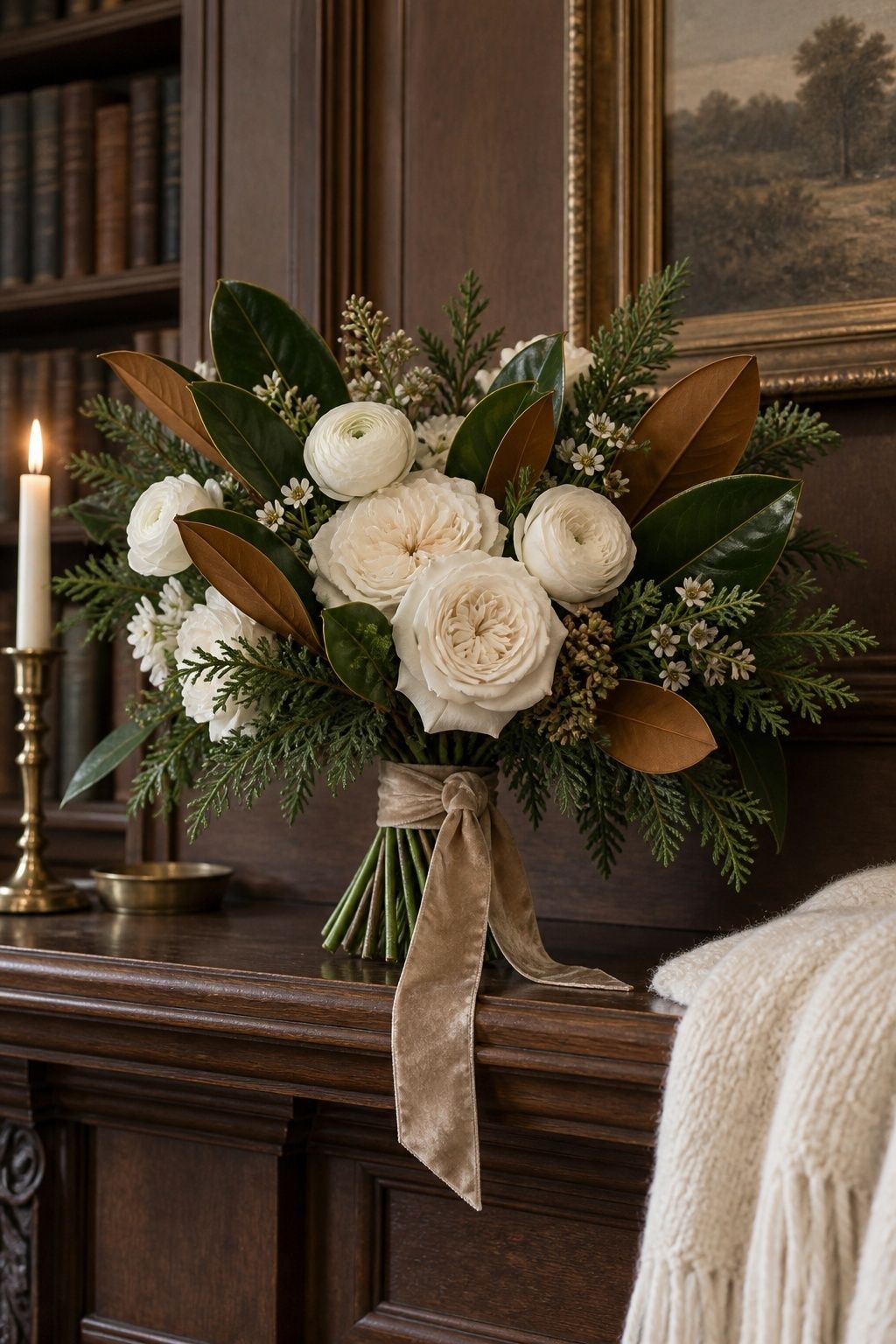
Magnolia leaves have a glossy green front and a warm brown back. Let some of the brown show against ivory roses and you get warmth without any colored flowers. It looks right in historic houses and wood-paneled rooms.
Soft, romantic bouquets
If you want something gentler, ranunculus, hellebores and tulips give you a garden feeling in midwinter.
Ranunculus and eucalyptus
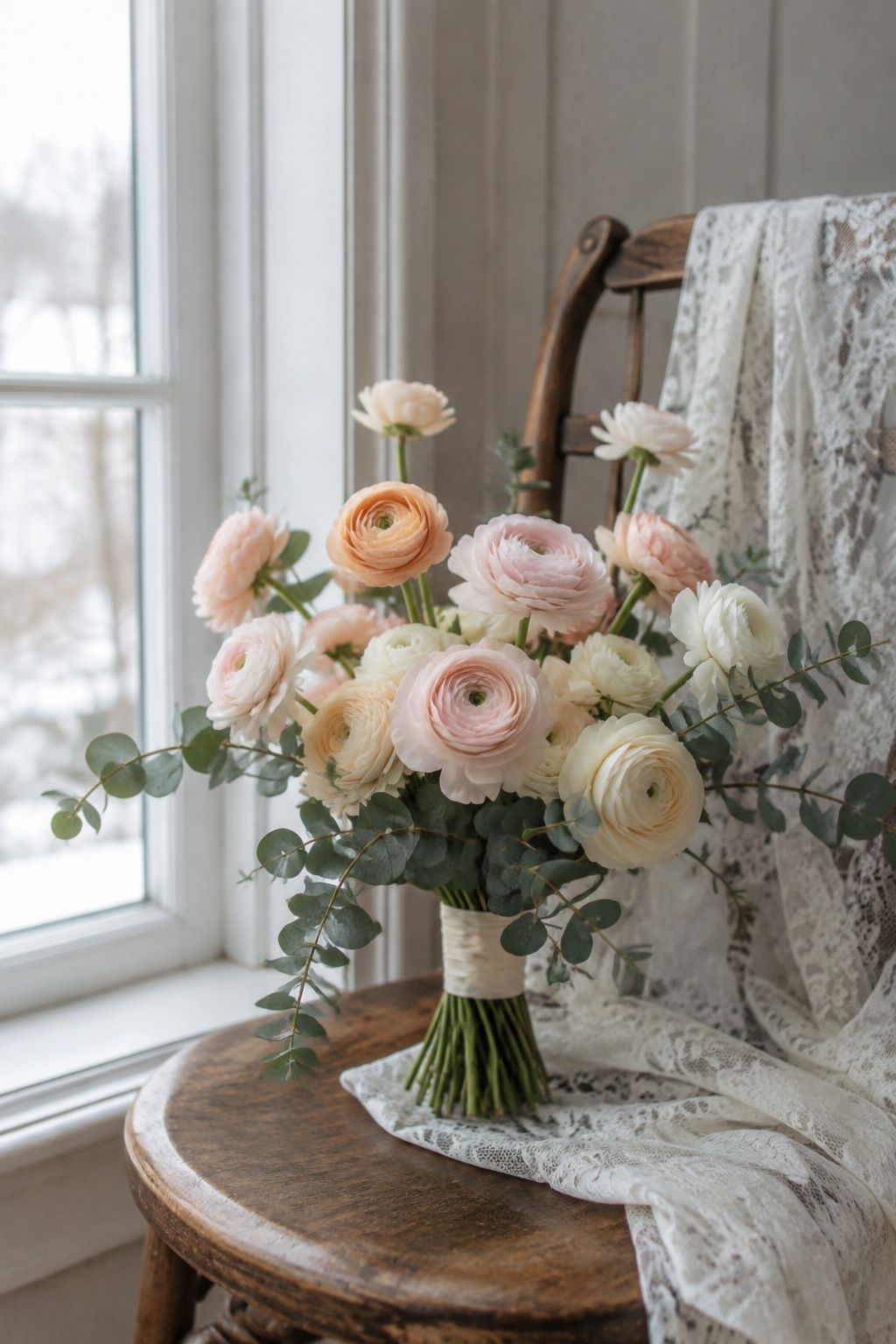
Blush and cream ranunculus with a little trailing eucalyptus. Keep the shape rounded but loose so each bloom has room, and don’t let the eucalyptus cover your hands.
Hellebores and garden roses
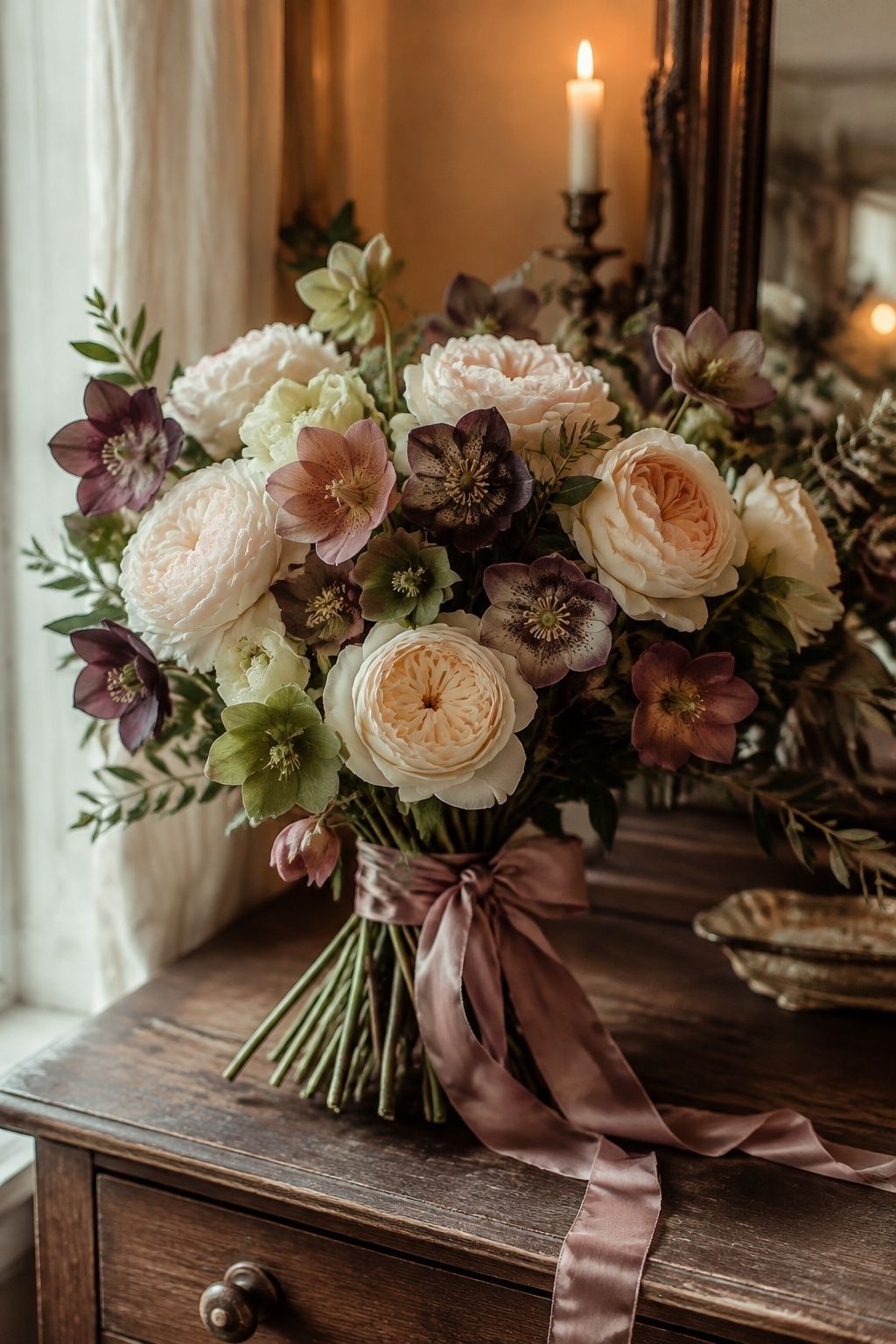
Mauve, plum, cream and green hellebores with garden roses look like a winter garden picked that morning. Hellebores can droop if they’re not conditioned properly, so ask your florist how they’ll prepare them, especially if you’re doing outdoor portraits.
Tulips and ranunculus
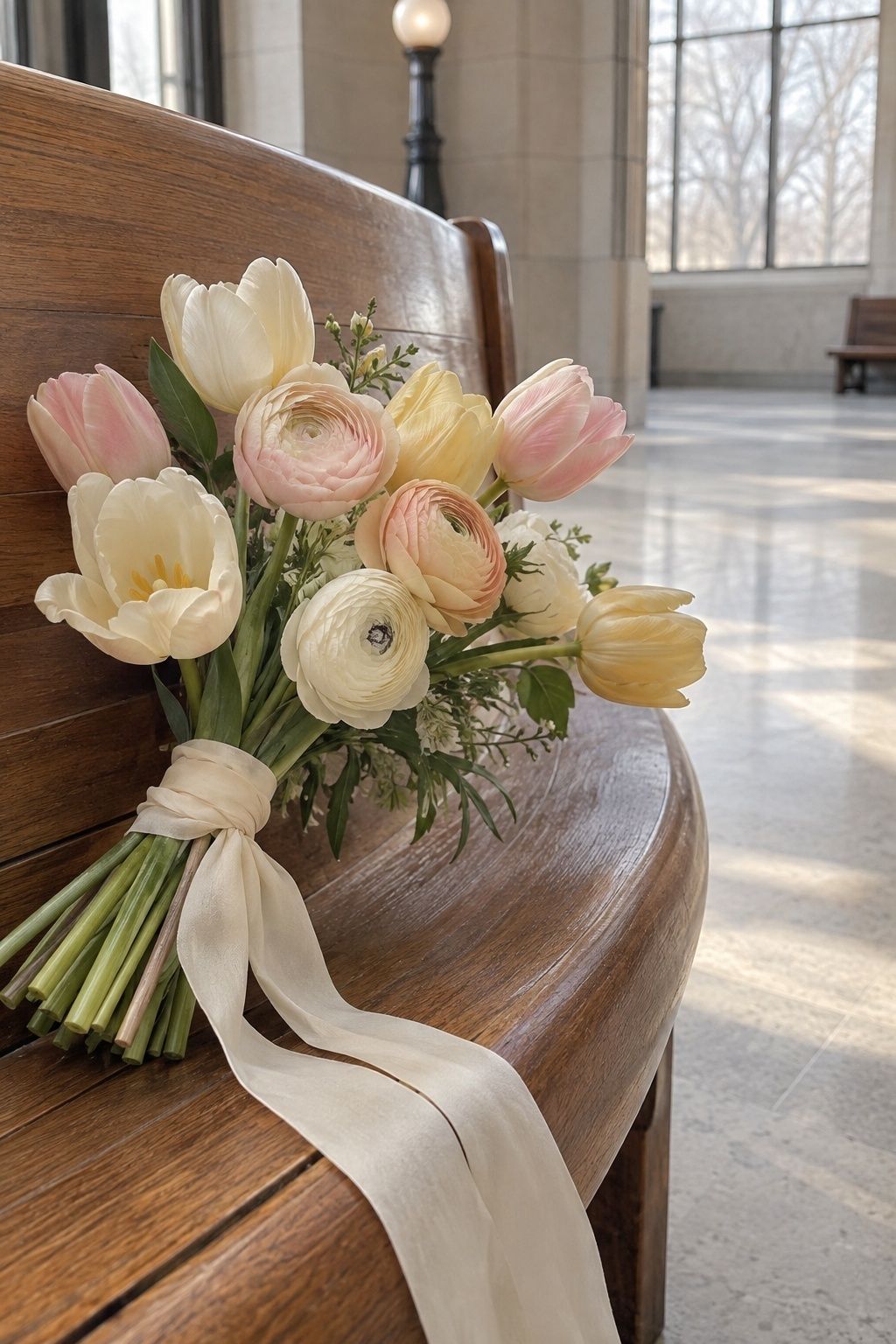
Cream, blush and pale apricot tulips with ranunculus feel like late winter turning toward spring. This suits February weddings and courthouse vows. Tulips keep stretching after cutting, so a good florist will build the bouquet the morning of.
Winter bouquet colors with depth
Deep colors look rich by candlelight, but they need ivory or cream mixed in, or they disappear against dark suits and dim rooms.
Burgundy and ivory
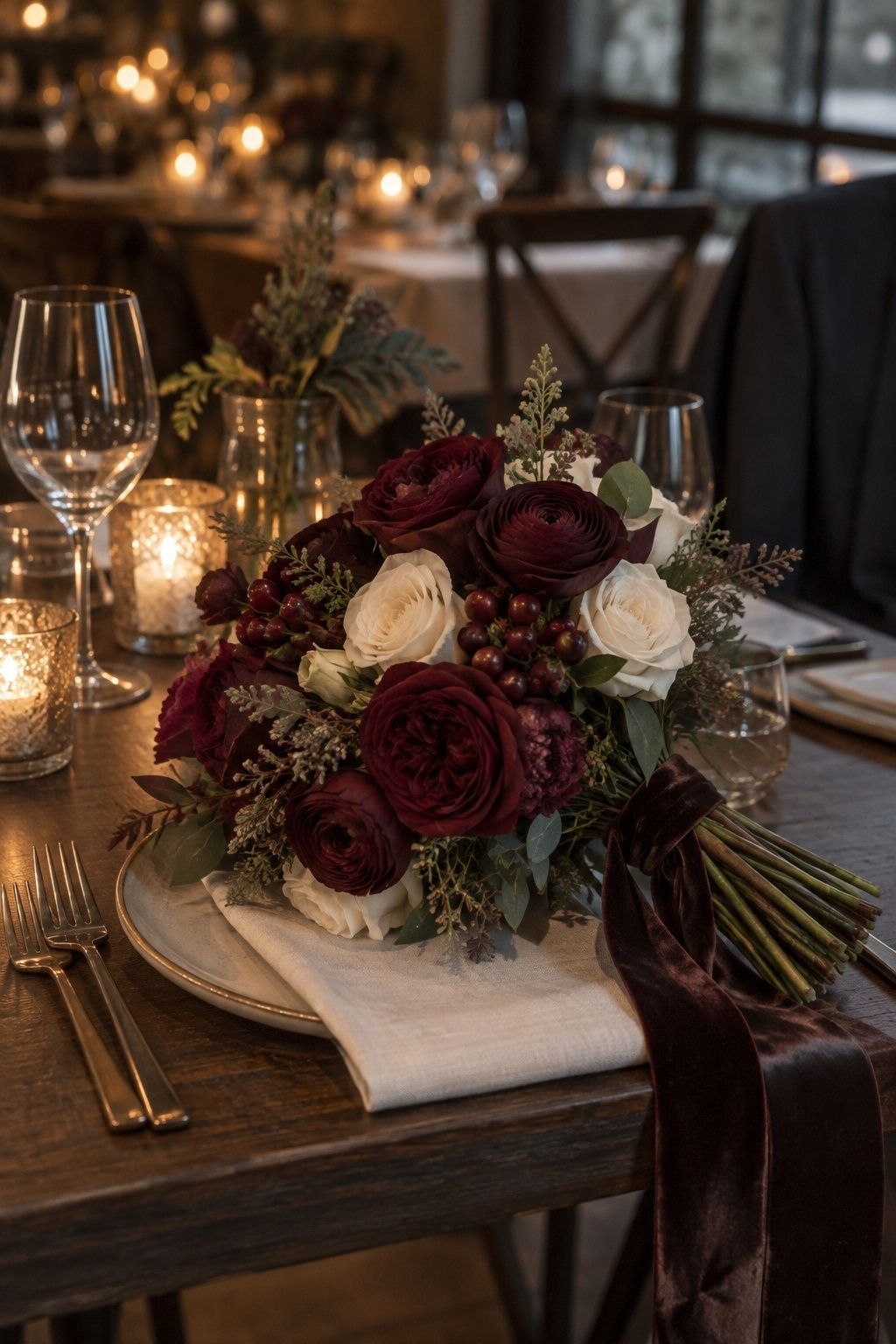
Burgundy ranunculus, wine-colored roses or berries against ivory roses. Keep the red deep and wine-like rather than bright, and finish with burgundy, chocolate or forest velvet ribbon. If you love this palette but are marrying in November, the fall bouquet ideas use similar tones with autumn stems.
Plum and mauve
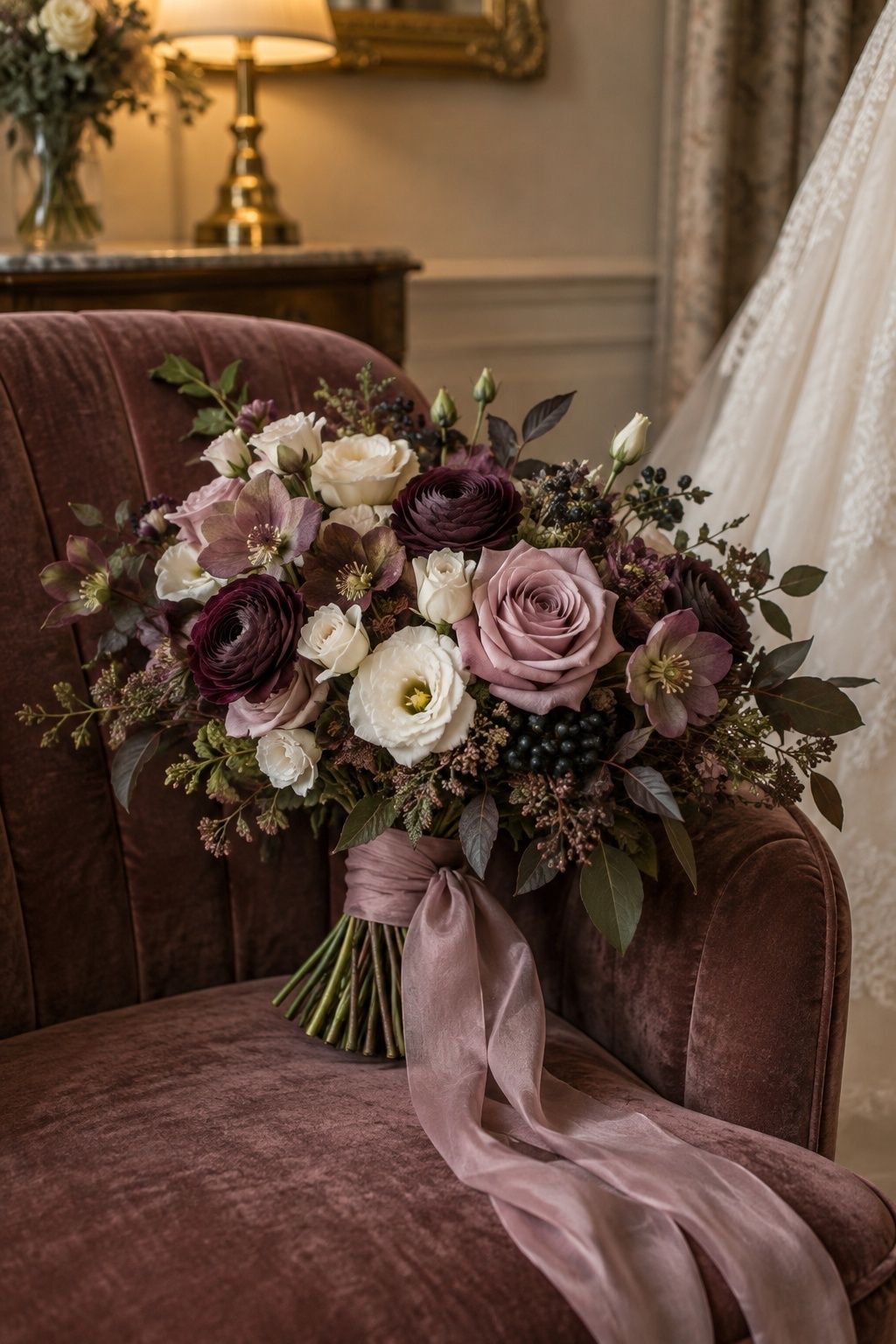
Mauve roses, plum ranunculus, hellebores and scabiosa give romance without red. Add enough cream blooms that the bouquet still reads against a white dress.
Dusty blue

Blue thistle, delphinium and tweedia with white blooms and silver foliage. Mix shades and textures instead of matching one exact blue. If you’re still settling the palette, these January wedding colors pair well with blue.
Berry accents
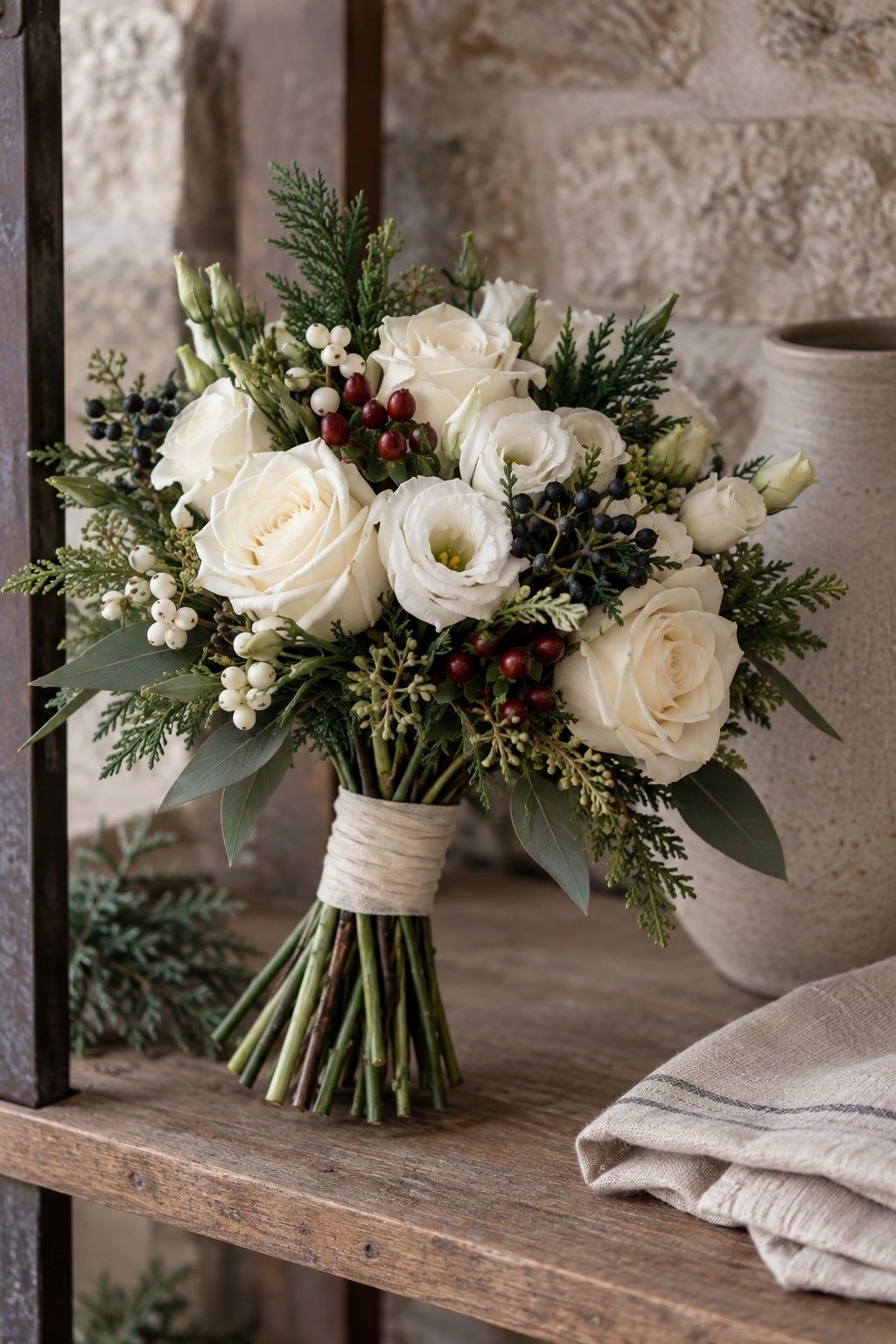
Hypericum, snowberries or privet berries add small points of color. Use a few clusters. Too many and the bouquet starts to look like a centerpiece.
Amaryllis statement
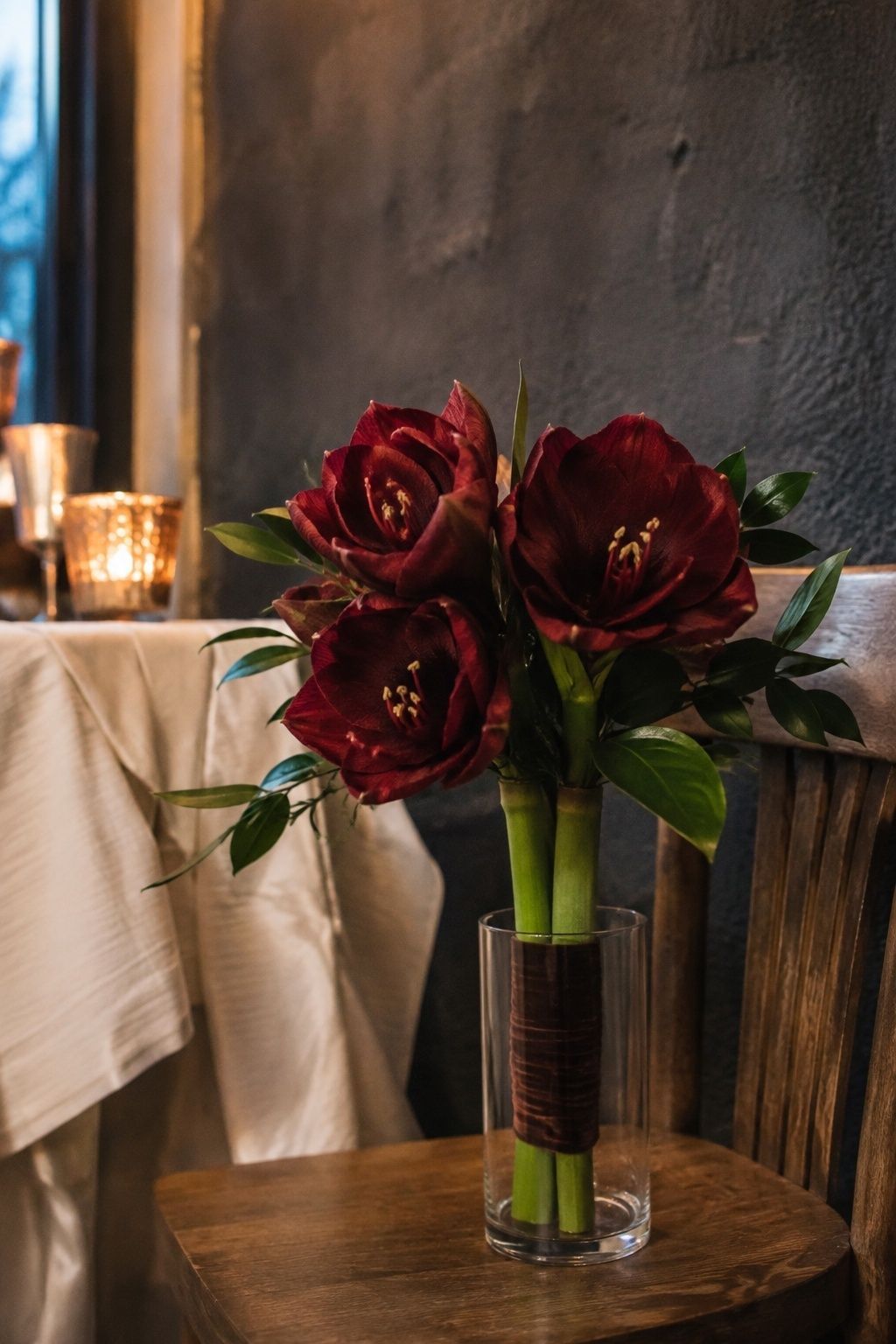
Three or four large amaryllis in white, blush or deep burgundy can carry a bouquet on their own. Keep everything around them simple; they’re heavy, so ask about weight.
Sizes and shapes for small weddings
Match the bouquet to the room. At a courthouse or a dinner for 20, a smaller bouquet looks more considered than a large one.
As a rough guide, a posy is about 20 to 25 centimeters (8 to 10 inches) across, a standard bridal bouquet 25 to 35 centimeters (10 to 14 inches), and a cascade adds length rather than width. Bridesmaids usually carry something a third smaller than the bride.
Size is also where the budget goes. The Knot’s 2026 study puts average florist spending at $2,800, and that covers every arrangement at a wedding of about 117 guests, not one bouquet. At a small wedding, the bridal bouquet is often the single biggest floral piece, so it’s worth putting money there and keeping centerpieces simple. Going from a standard bouquet to a posy, or swapping a few focal flowers for greenery, is the easiest way to bring the cost down without the bouquet looking cheaper.
Small courthouse bouquet
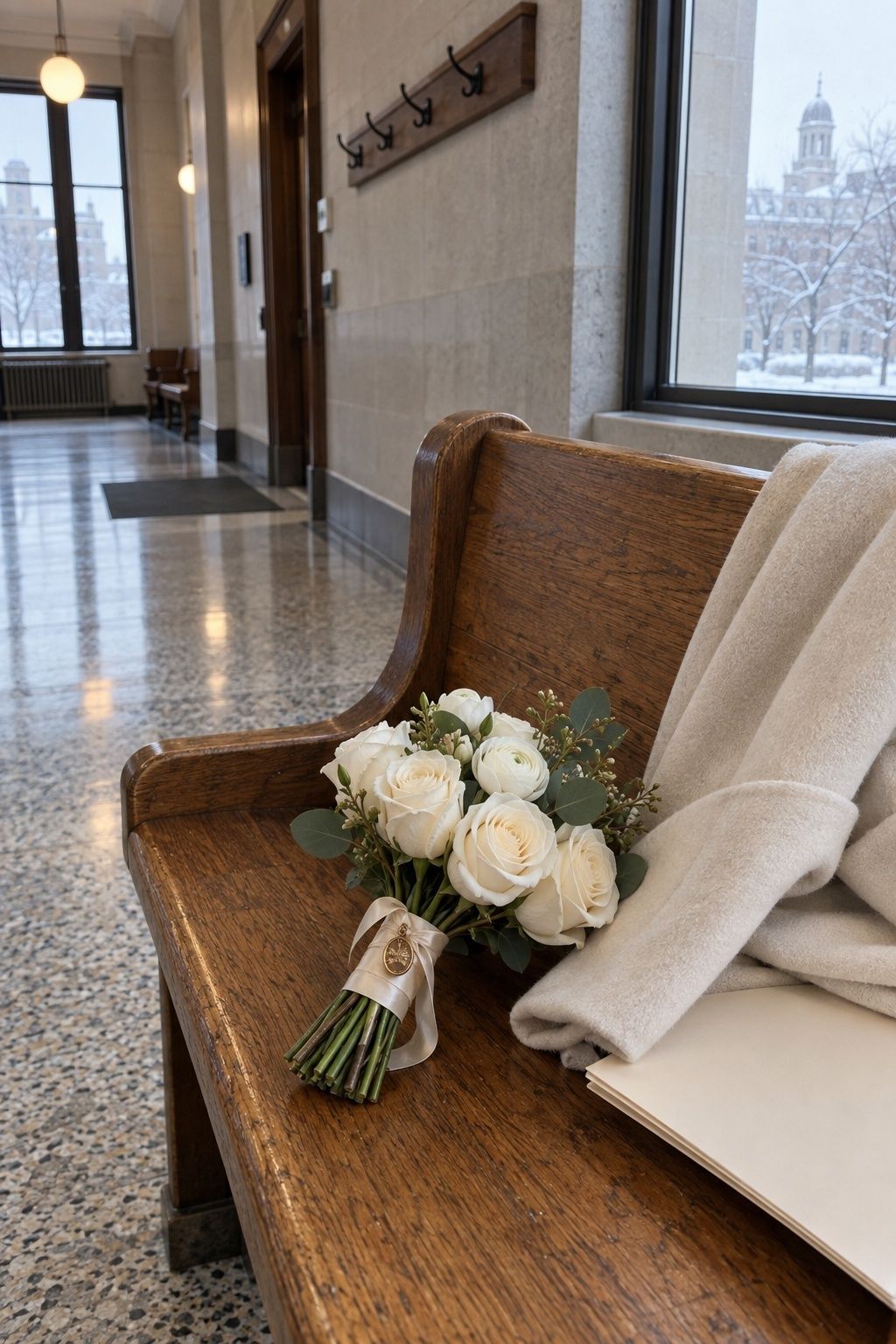
One flower, one green, one meaningful ribbon or charm. A five to seven stem rose bouquet or a ranunculus posy is easy to hold during the signing and still looks complete in close portraits.
White orchid bouquet
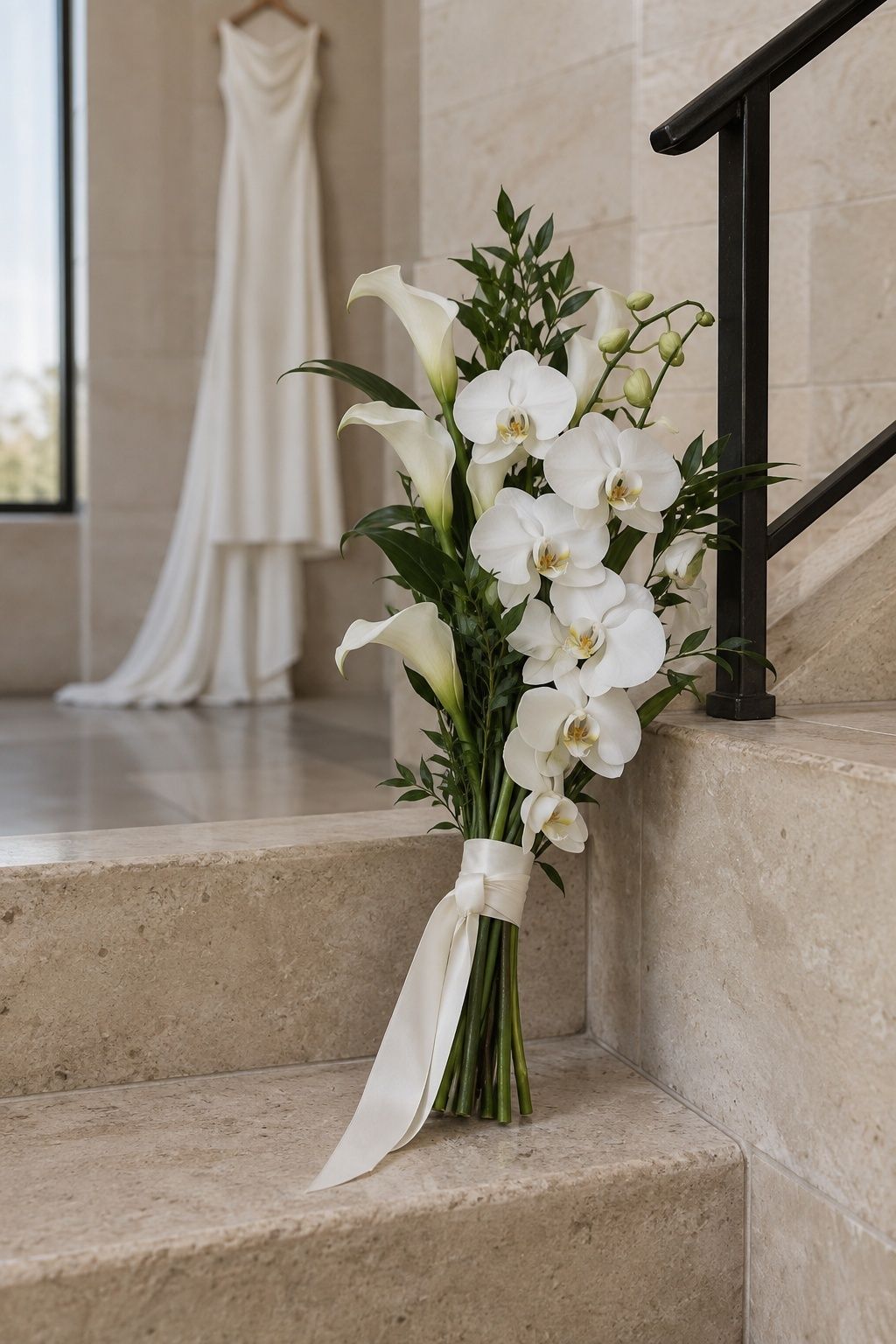
Orchids with a few callas or white roses make a narrow, sculptural shape. It suits a city hall staircase or a gallery ceremony and a simple gown.
Cascading greenery
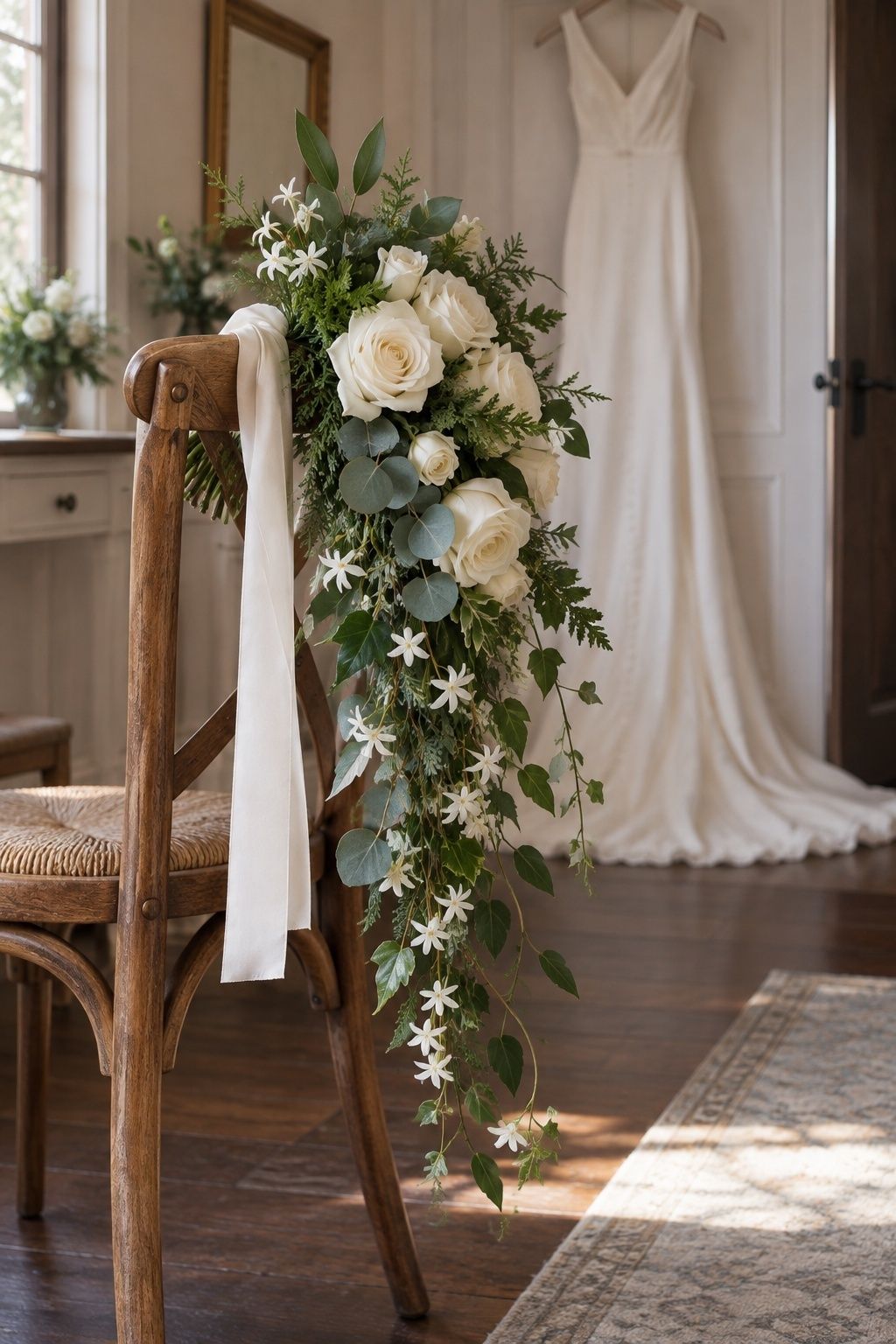
Trailing eucalyptus, jasmine vine or ivy with ivory roses, kept narrow. It lengthens a fitted silhouette. Keep it slim for a small aisle, since a wide cascade brushes every chair you pass.
Finishing the stems
A velvet ribbon is the easiest way to make any bouquet feel like winter, and it costs very little.
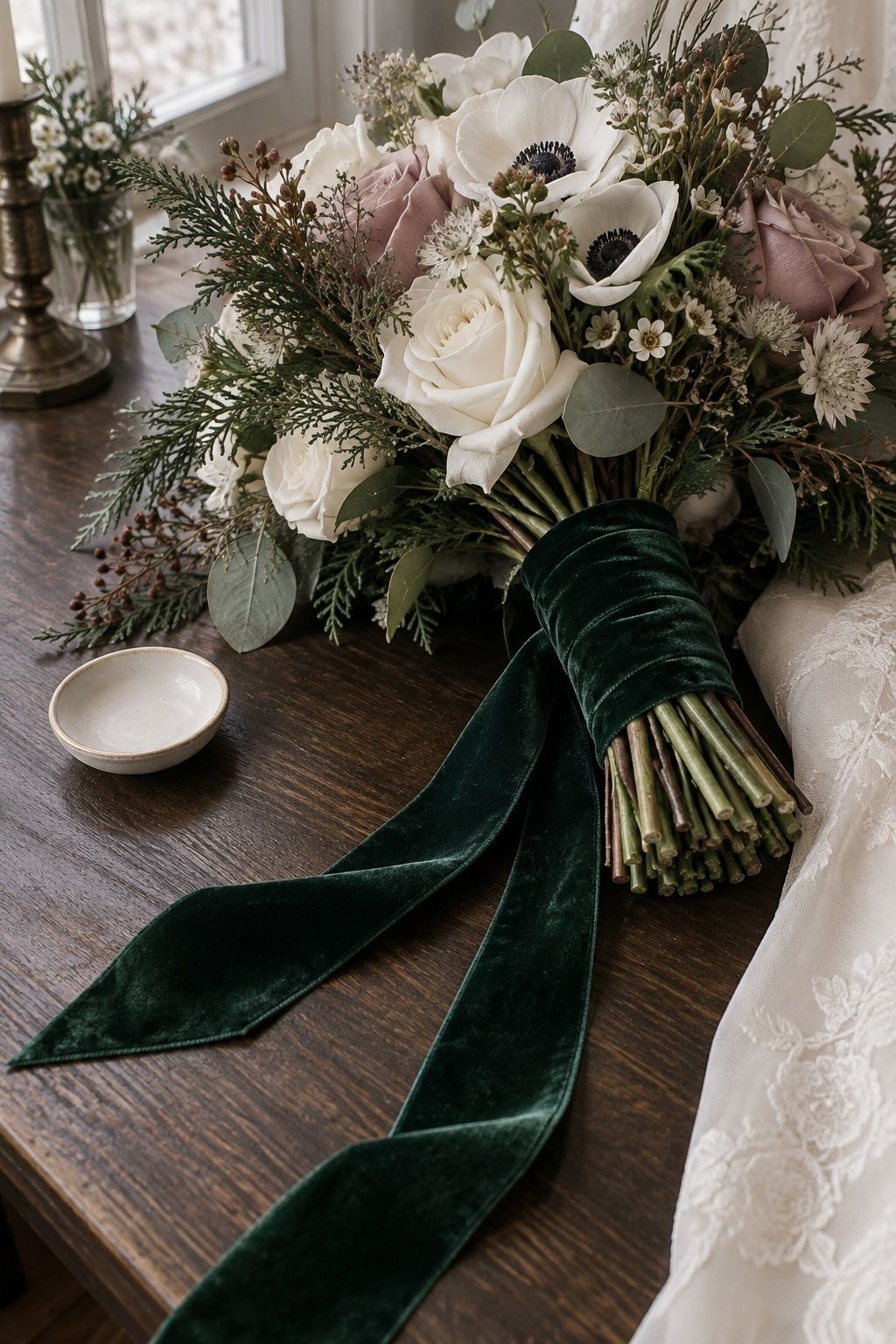
Ivory, champagne, mauve, forest or chocolate velvet all work. Decide the length before the morning: long tails look romantic in still air but twist in the wind outdoors and catch on coats.
How to brief your florist for a winter bouquet
Give your florist the palette, the shape and the size, then let them choose the best stems that week. That flexibility gets you a better bouquet than insisting on one exact flower.
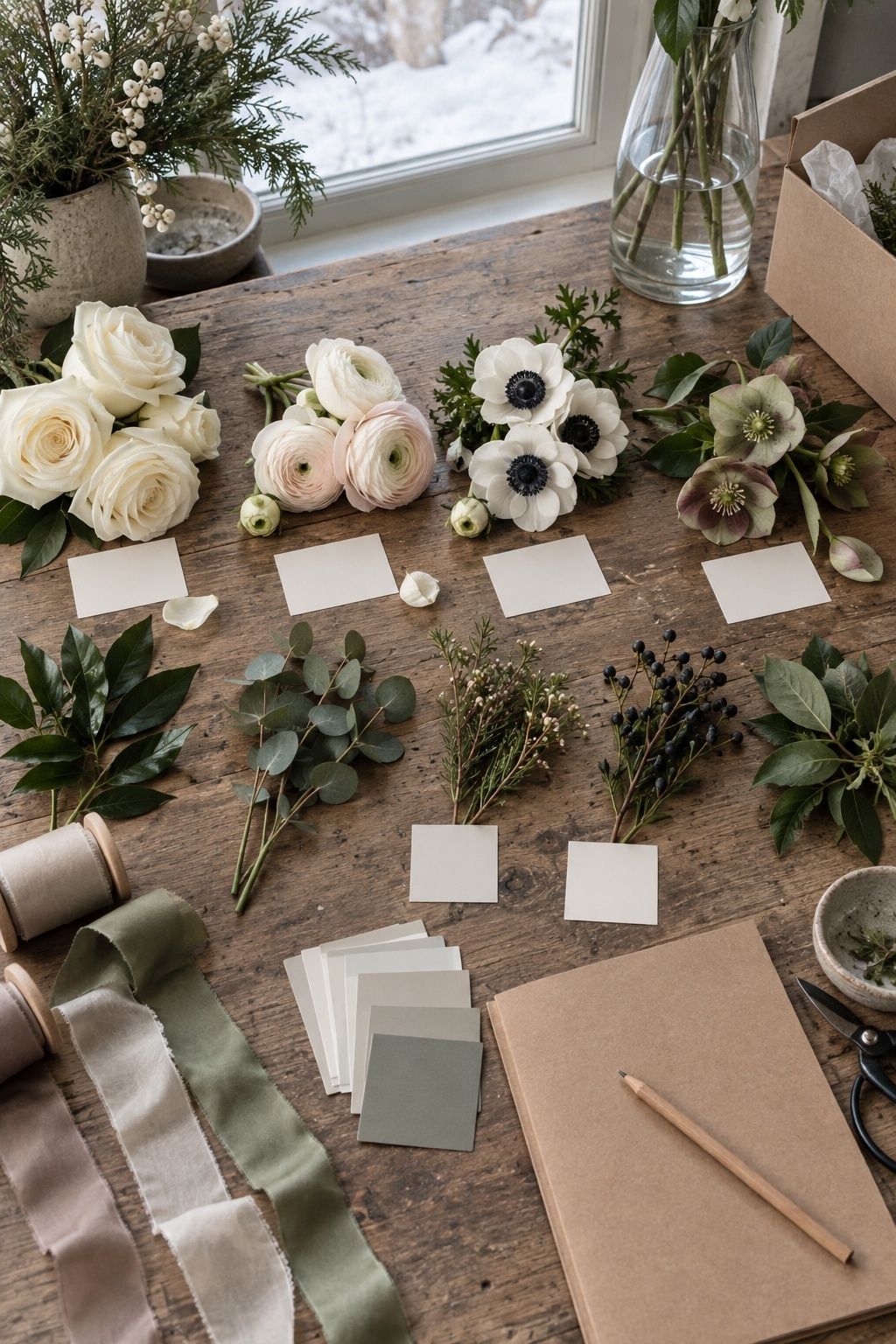
Cover these points in your consultation:
- Your color palette and one or two flowers you love, plus any you dislike.
- Approximate size and how heavy you’re happy to carry.
- Whether you’ll be outside for photos, and for how long.
- How warm the reception room is, since heat wilts flowers faster than cold.
- Ribbon color and length.
- Whether you want to preserve or dry the bouquet afterward.
One practical note: flowers handle cool better than heat, but freezing temperatures will damage them. Don’t leave the bouquet in a car overnight in a frost, and keep it away from heaters and fireplaces during dinner. The Knot’s gallery of winter wedding bouquets is a good place to collect reference photos for your meeting, and my winter photo ideas show how bouquets read in low light.
Key takeaways
- Build around in-season winter flowers: anemones, ranunculus, amaryllis, hellebores, tulips and roses.
- Skip peonies in winter unless you’re happy paying for imports.
- Mix ivory into dark palettes so the bouquet reads in low light.
- Size the bouquet to the room; a posy suits a courthouse.
- Let your florist substitute within the same color and shape.
FAQ
What flowers are best for a winter wedding bouquet?
Anemones, ranunculus, amaryllis, hellebores, tulips and roses are the best winter bouquet flowers, with evergreen, eucalyptus, dusty miller or magnolia leaves for greenery. Your florist can tell you which are strongest in your region that month.
Can I have peonies at a winter wedding?
You can, but they’ll usually be imported, expensive and less reliable in quality. Garden roses or ranunculus give a similar full, ruffled look and are easier to get in winter.
How do I make a winter bouquet look seasonal without looking like Christmas?
Use texture and muted color instead of red and green: silver dusty miller, evergreen tips, magnolia leaves, deep wine or plum tones, and velvet ribbon. Leave out holly and bright red berries.
What size bouquet suits a small winter wedding?
A posy of about 20 to 25 centimeters (8 to 10 inches) across suits a courthouse or a wedding under 30 guests. A standard bouquet of 25 to 35 centimeters works for most other small ceremonies.
Will my bouquet survive cold outdoor portraits?
Yes, a short session in cool or cold air is fine for most winter flowers. Freezing temperatures and heaters are the real risks, so keep portraits to about 15 minutes and store the bouquet somewhere cool, not hot, between photos.
A good place to start
Choose one in-season flower you love, add one green and one ribbon, and build from there. The best winter wedding bouquet ideas are usually the simplest ones done with good stems. When the bouquet is sorted, the winter ceremony decor guide can help you carry the same flowers into the room.
Last update on 2026-10-04 / Affiliate links / Images from Amazon Product Advertising API