

The best January wedding flowers are anemones, hellebores, amaryllis, early ranunculus, roses, orchids, French tulips and paperwhites, backed by cedar, eucalyptus, dusty miller, brunia and berries. For a wedding of 10 to 50 guests, put most of the flower money into the bouquet and one ceremony piece, then keep tables to low compotes and bud vases.
I’ll say it plainly: January wedding flowers are some of my favorites of the year, and the couples who struggle with them are usually trying to make January look like May. Peonies flown in from the other side of the world, sunflowers in a snowstorm. It costs more and it looks wrong in winter light.
Work with the month instead. Winter stems have strong shapes, deep colors and real texture, and in a small room every one of them gets seen. Below are the flowers that are reliable in January, how to use each one, and roughly how many stems a small wedding needs.

A few things that help winter flowers hold up
Cold rooms are kind to flowers, but dry indoor heat and long ceremony days are not. These are the supplies I’d keep on hand for vases, ribbon and last-minute fixes.


What flowers are in season for a January wedding?
January is a short list, but a good one. Roses, orchids and tulips come from greenhouses year round, while anemones, hellebores, amaryllis, paperwhites and early ranunculus hit their winter stride. Greenery is the easy part: cedar, pine and eucalyptus are everywhere.
| Flower | Best use | Colors to ask for |
|---|---|---|
| Anemone | Bouquet focal | White with black center, plum, wine |
| Hellebore | Bouquet face flower | Mauve, smoky green, dusty pink |
| Amaryllis | Ceremony urn, mantel | Red, white, apple blossom |
| Early ranunculus | Bouquet filler, compotes | Butter, rust, burgundy |
| Garden rose | Bouquet and tables | Honey, cinnamon, nude |
| Paperwhite | Entry or bar table | White |
| Orchid | Modern bouquet, cake | White, green, burgundy |
| French tulip | Tall vessels, bud vases | Ivory, blush, plum |
Availability shifts by region and supplier, so treat this as a starting list for your florist. Paperlust keeps a handy seasonal wedding flowers by month chart if you want a second opinion before your consult, and Teleflora has a useful page on winter wedding flowers too.
January wedding flowers that carry a bouquet
A January bouquet needs one or two flowers with a strong face. Pick from this group first, then build everything else around them.
Anemones
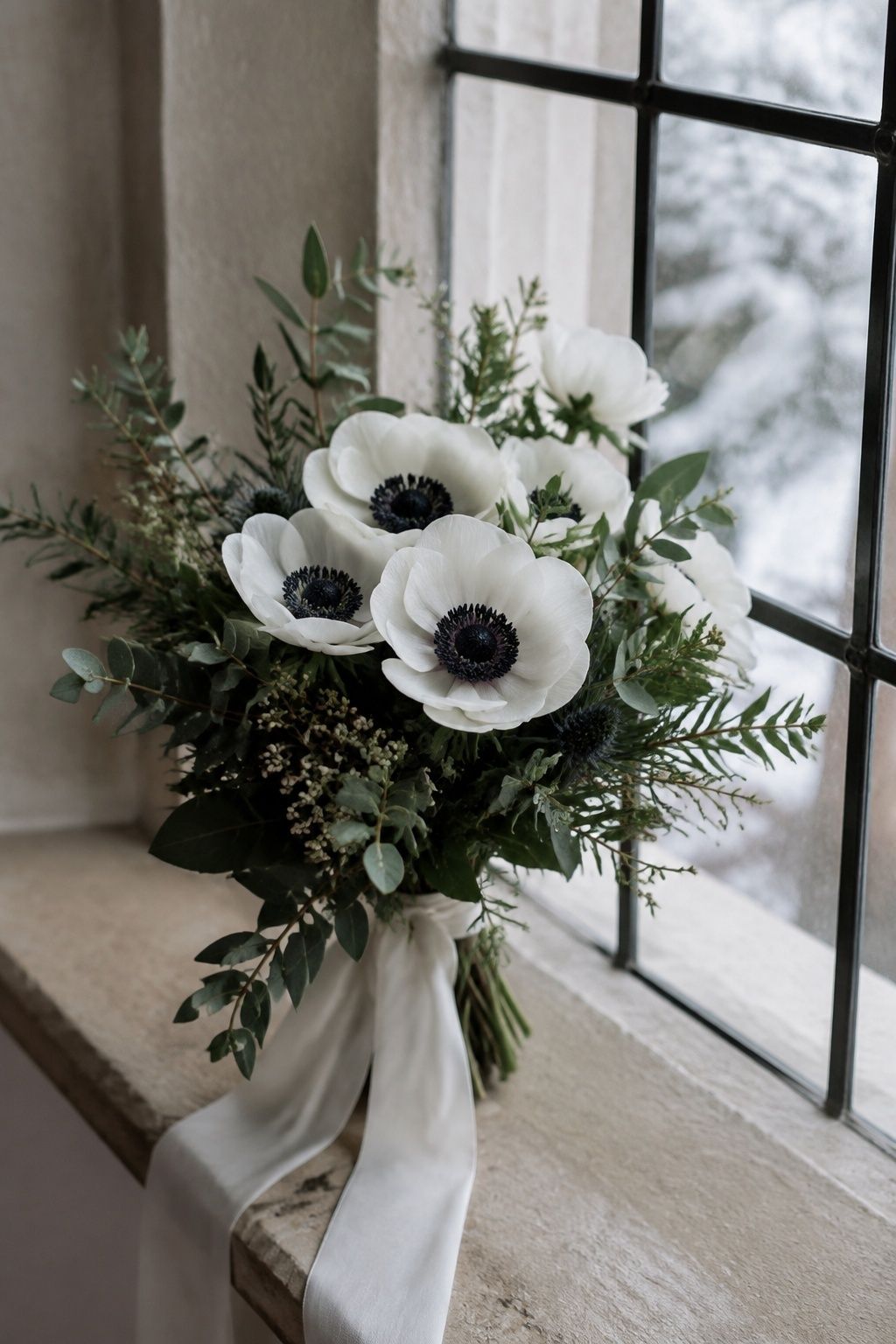
Anemones are the January flower I’d pick if I could only have one. The dark center reads graphic from across a candlelit room, and the papery petals look good up close. A bouquet with five or six anemones in it already has a point of view, which matters when there are only 20 people watching you walk.
Hellebores
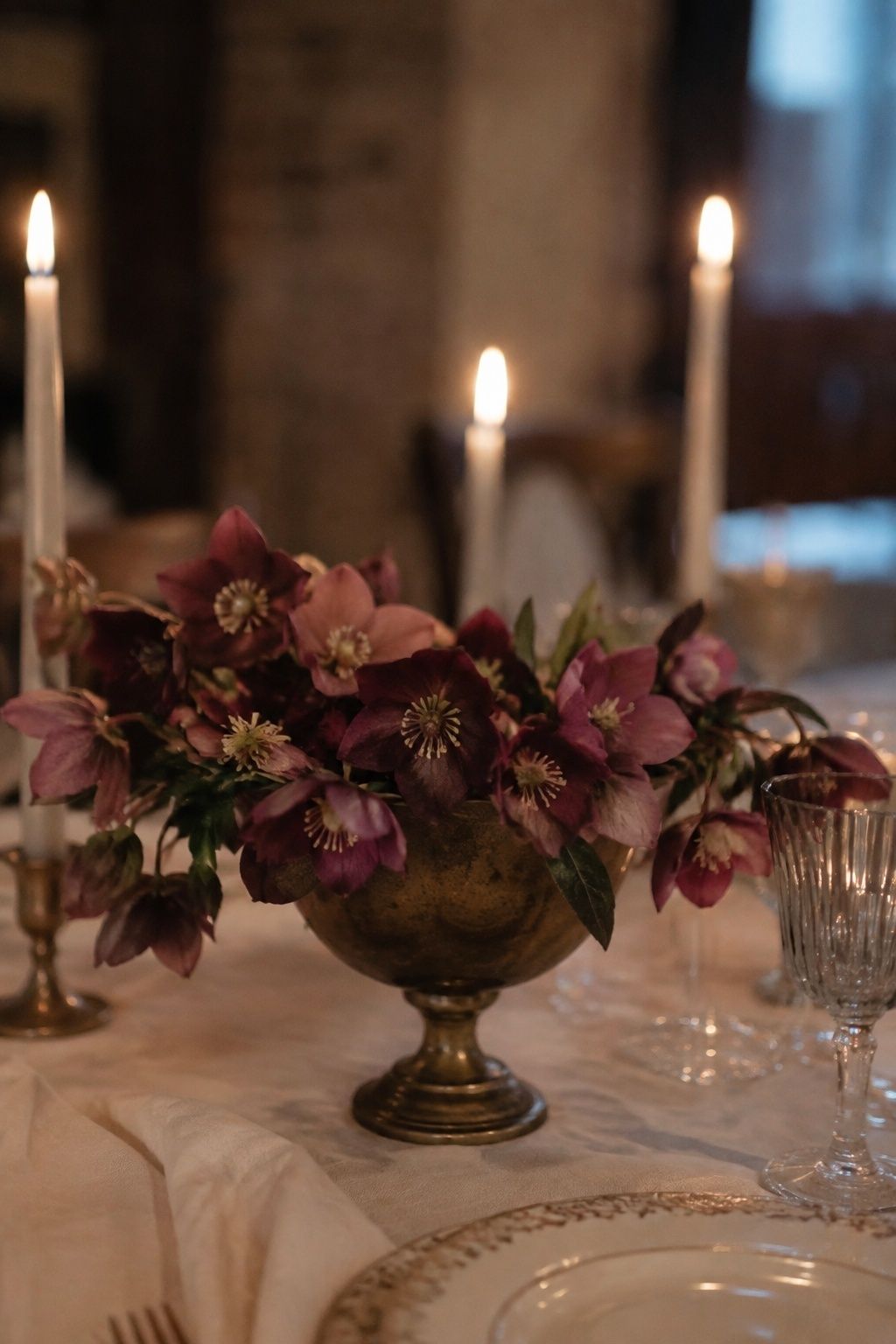
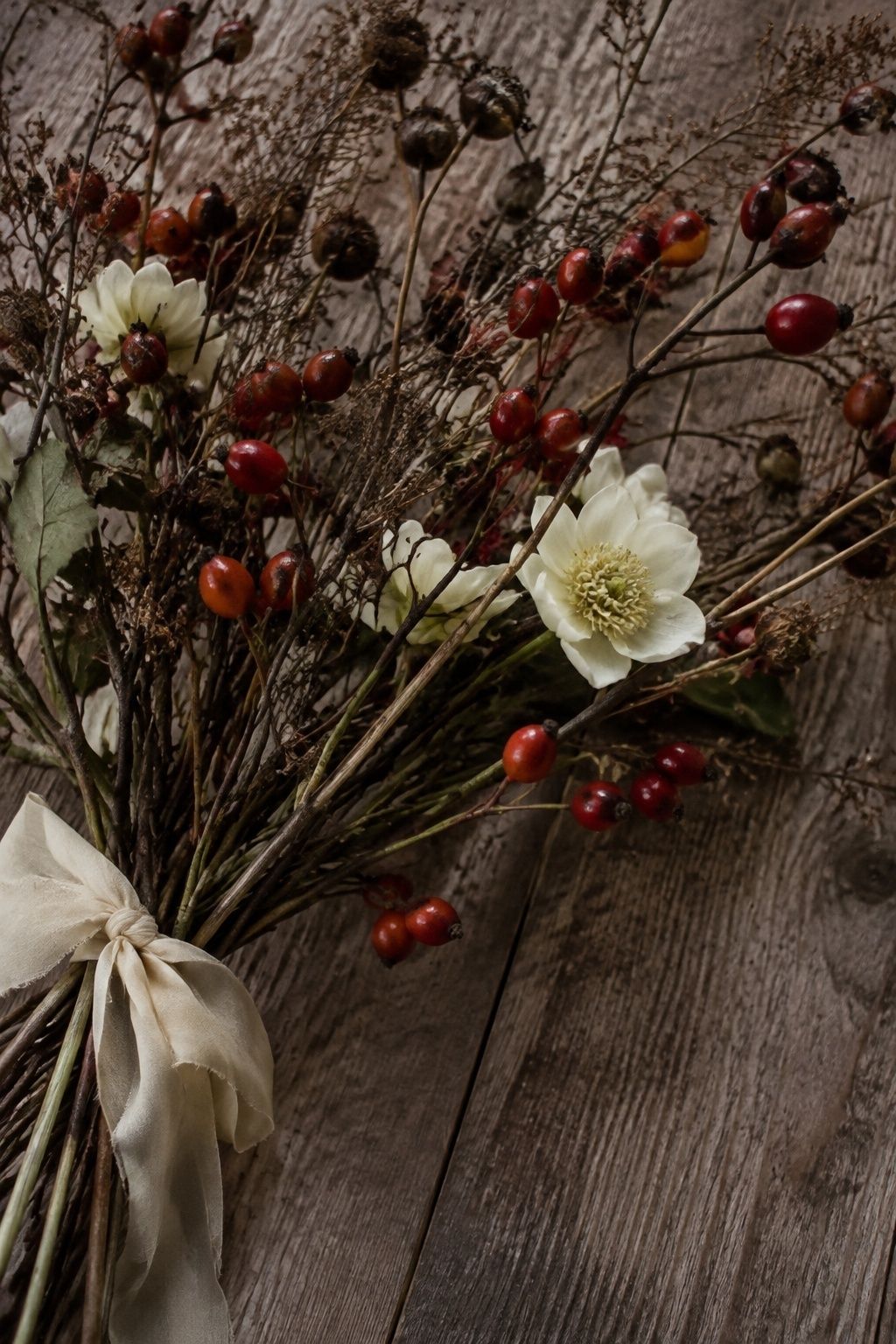
Hellebores are dusky and a little moody, with nodding heads in mauve, green and smoky pink. They work as a face flower in a loose bouquet. Echo their color somewhere else, a velvet ribbon or a mauve napkin, so they look chosen. One warning: they wilt fast if they aren’t conditioned properly, so ask your florist how they prep them.
Amaryllis
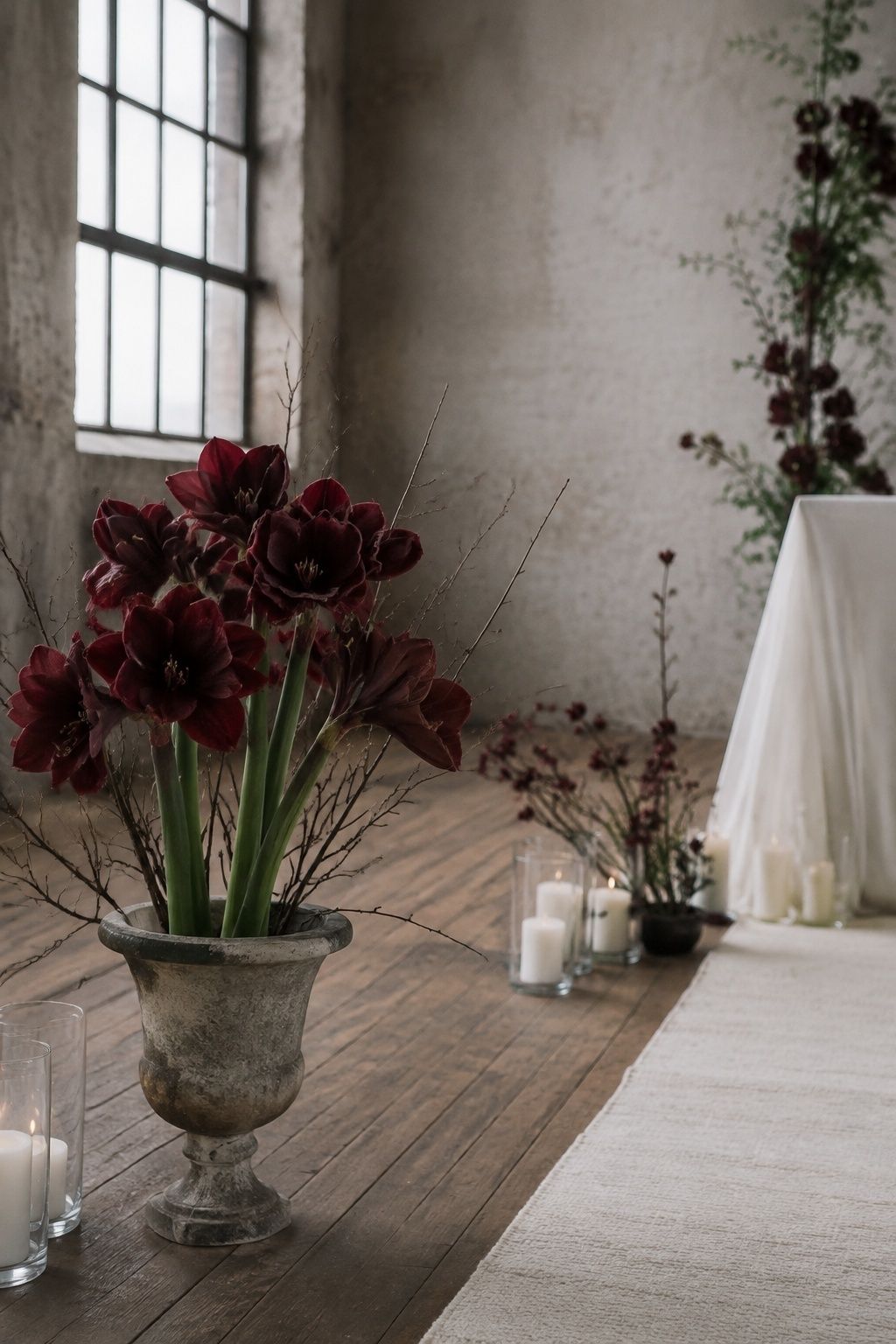
Amaryllis is for when you want one big bloom instead of many small ones. The stems are tall and the flowers are huge, so they suit ceremony urns and mantel arrangements. Three stems of amaryllis with cedar and olive branches can fill a mantel that would otherwise take a dozen roses.
Early ranunculus
Early ranunculus gives you that layered, rose-like softness without dragging the design into spring. Ask for butter, rust, burgundy or plum rather than pastel pink, and mix it with anemones and roses so the petals have something to play against.

Garden roses and white roses
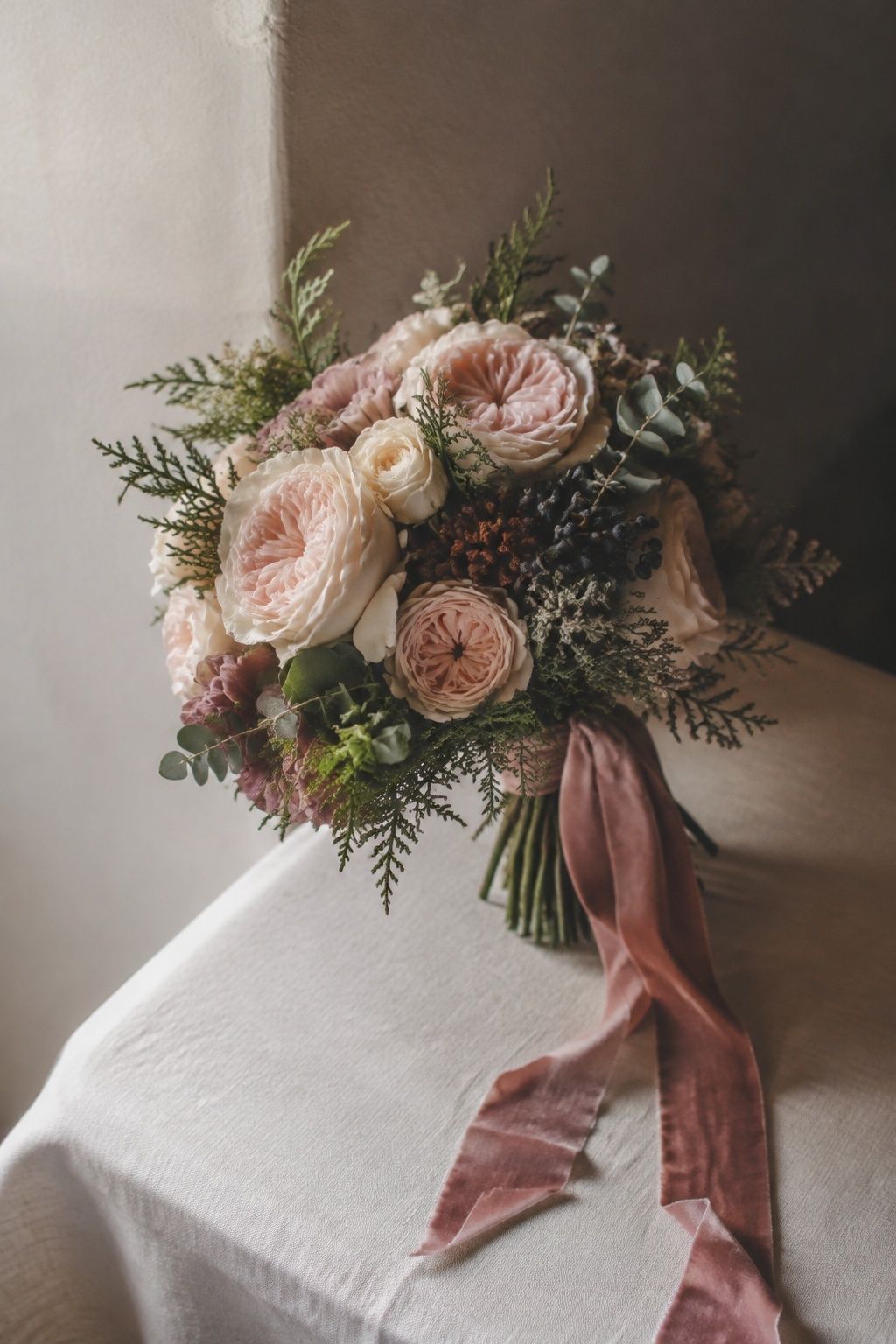
Garden roses are the reliable romantic in January. Ask your florist which varieties are coming in strong that week, and lean toward honey, cinnamon, nude or deep red. Standard white roses are cheaper and easier to source, which makes them a smart base for centerpieces. Let brunia, berries or dusty miller add the texture they lack on their own.
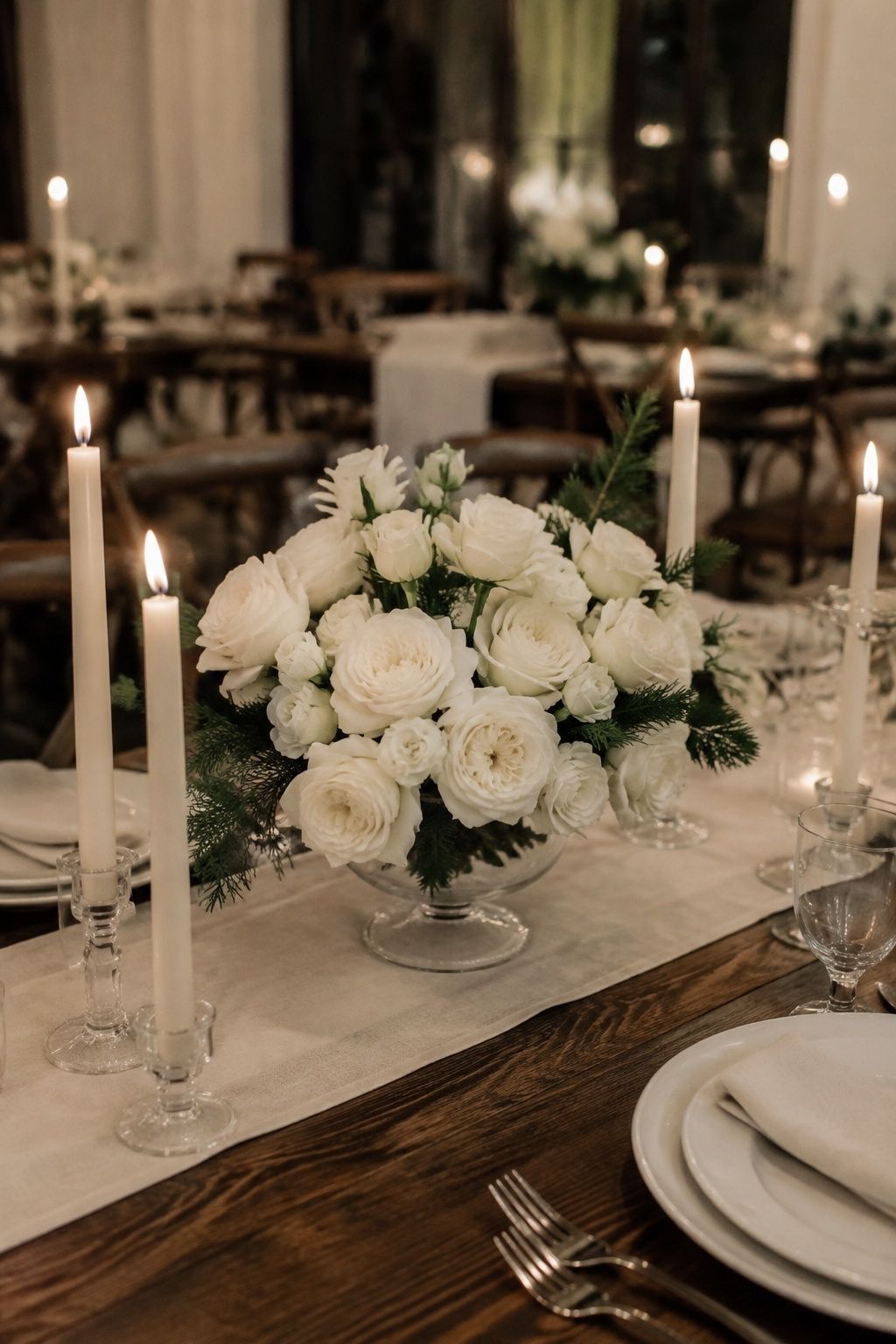
Orchids, tulips and iris for a modern indoor room
If your reception is in a restaurant, hotel or city loft, these three flowers fit the room better than anything foraged. They have clean lines and don’t need much greenery around them.
Orchids
Phalaenopsis and cymbidium orchids look sharp indoors and last for days. A few stems in a bouquet, or a single spray across the cake table, add structure with very little effort. They pair well with black tie styling.
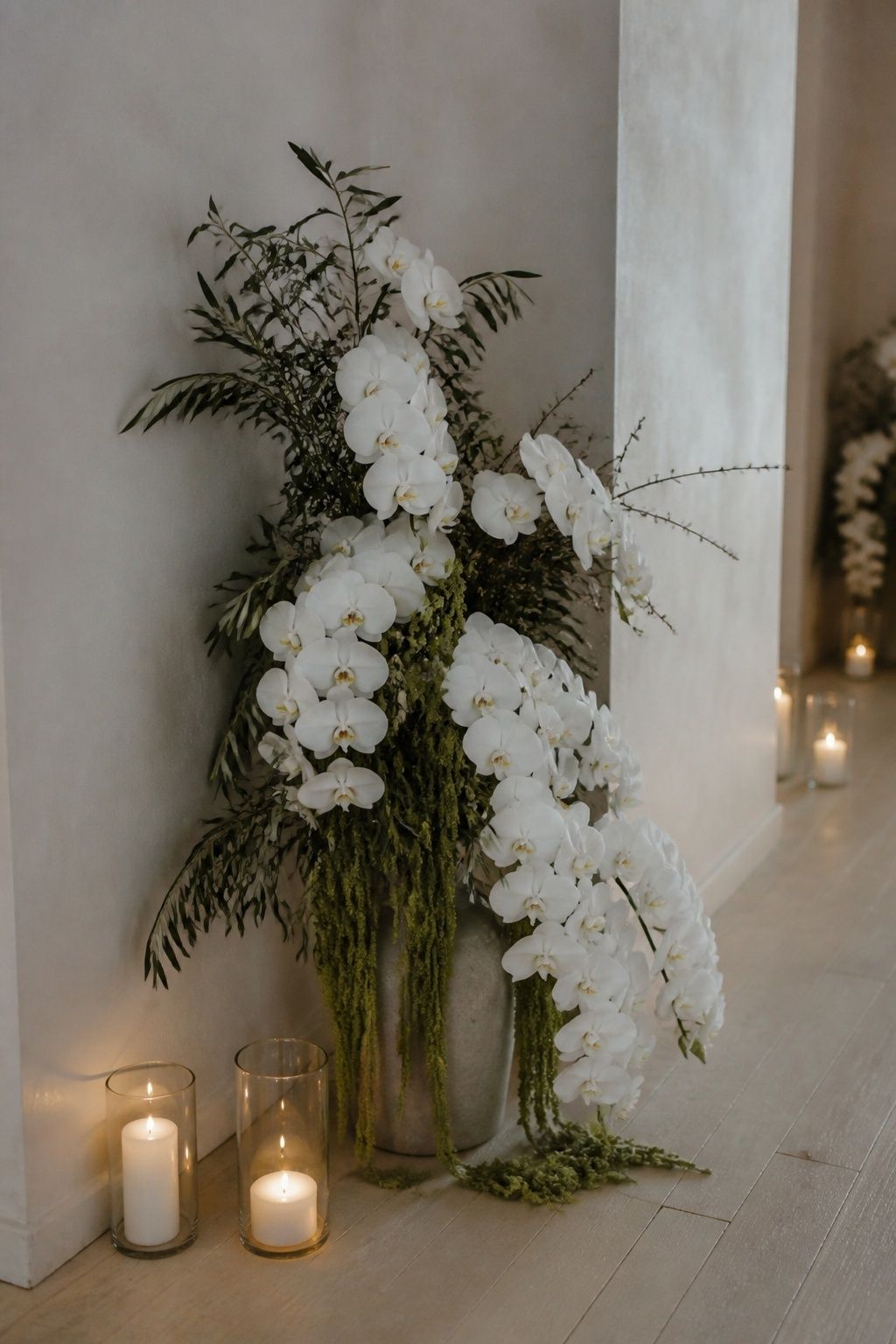
French tulips
French tulips have long stems and a lazy curve, so give them room. Tall ceremony vessels and slim bud vases suit them. Packed tightly into a dense centerpiece, they lose the movement that makes them worth buying.

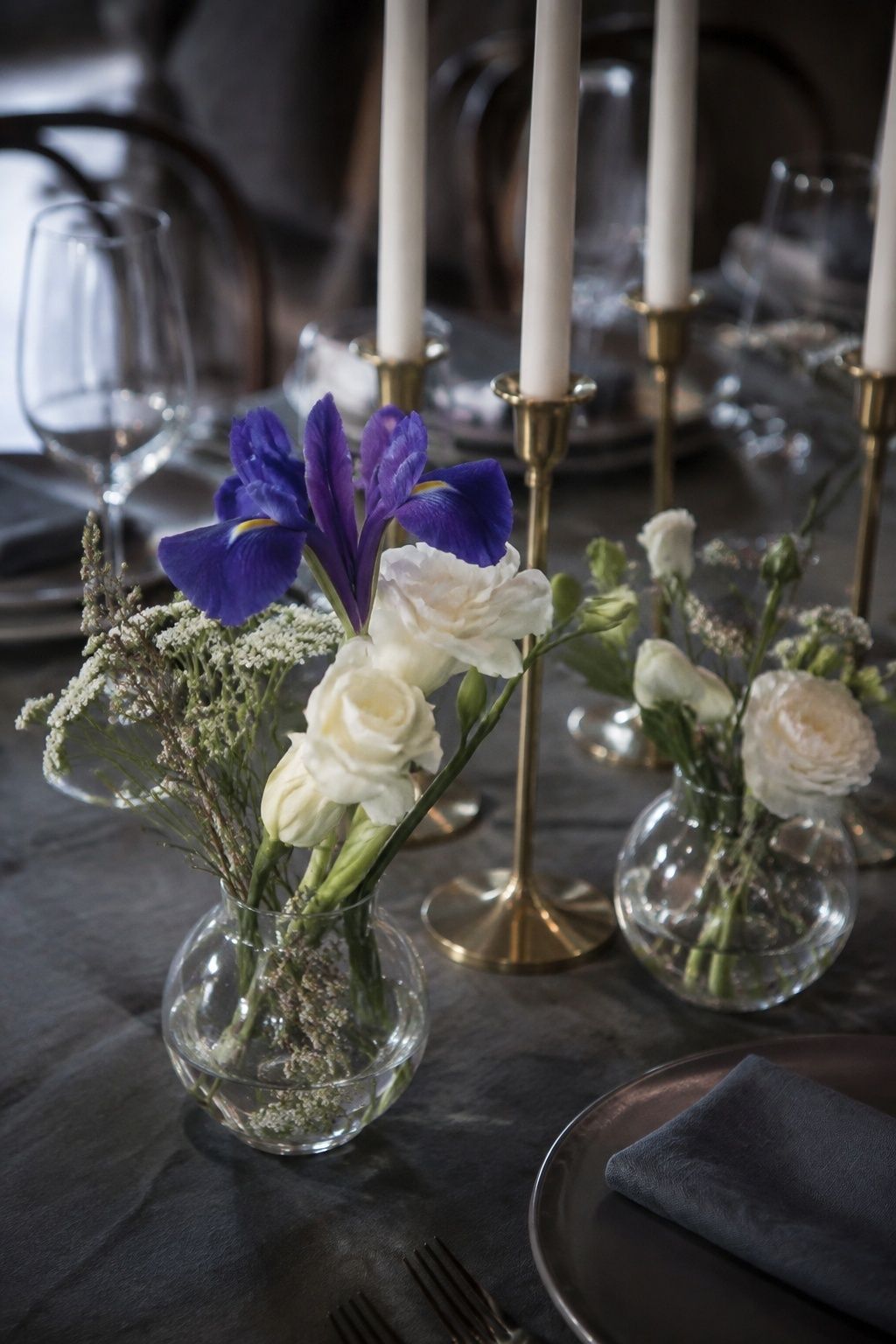
Winter iris
Iris brings a clean purple or blue accent without tipping the palette into sweet. Put it next to ivory roses and hellebores with brass candlesticks and you have enough color for a gray month. If you’re still choosing your palette, my notes on January wedding colors pair well with this list.
Fragrant flowers: lovely in small doses
Paperwhites, gardenias and freesia all smell wonderful, and all three can overpower a small dining room. My rule is fragrance where guests pass through, not where they eat.
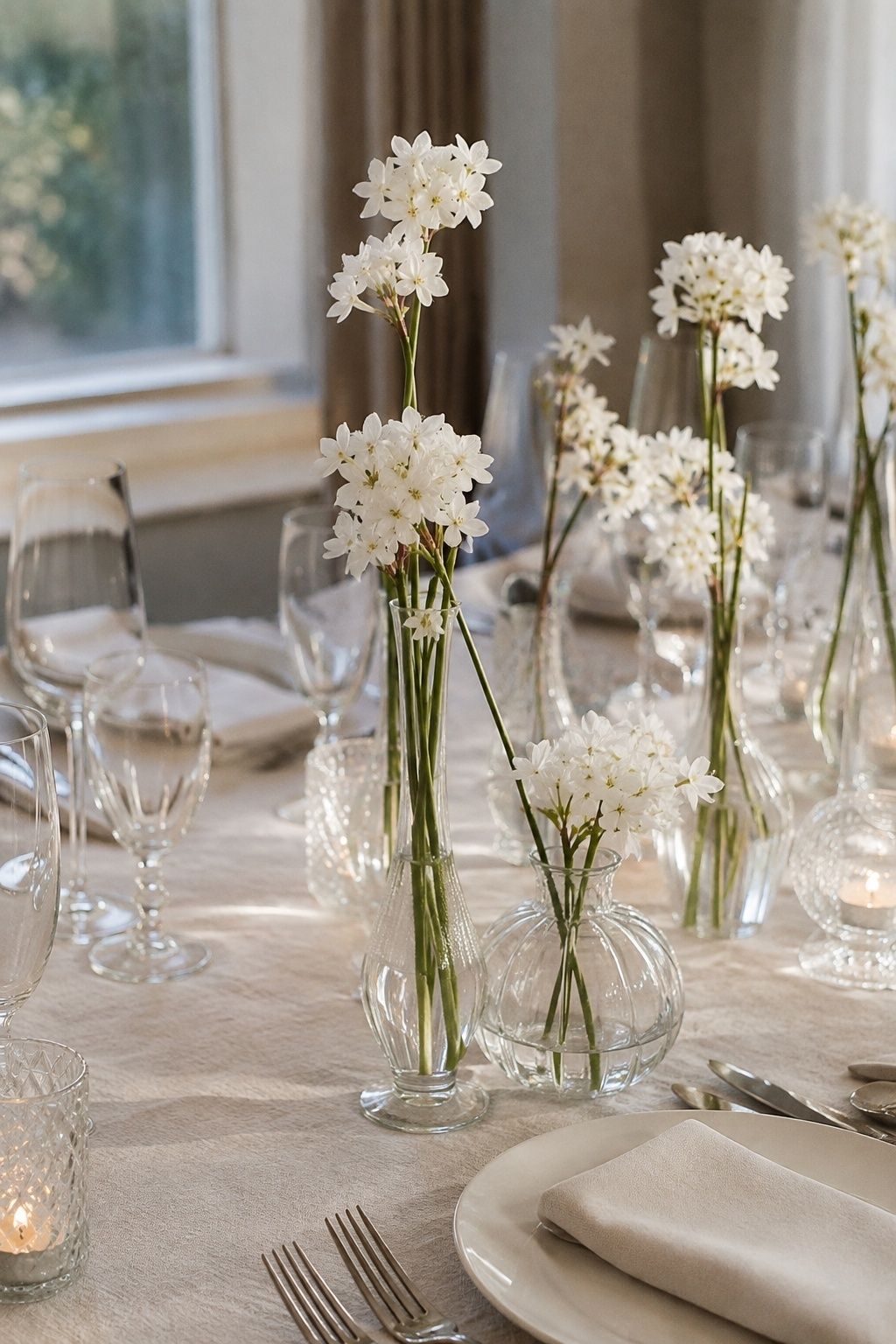
Paperwhites
Paperwhites have tiny star-shaped flowers and a strong, very wintry scent that some people love and some find musky. Put them at the entry table, the bar or a ceremony ledge, where guests catch the scent for a minute and move on.
Gardenias
One gardenia goes a long way. Tuck it into the bouquet, wear it in your hair or set it at the welcome table, and keep dinner tables scent-free with roses and anemones.
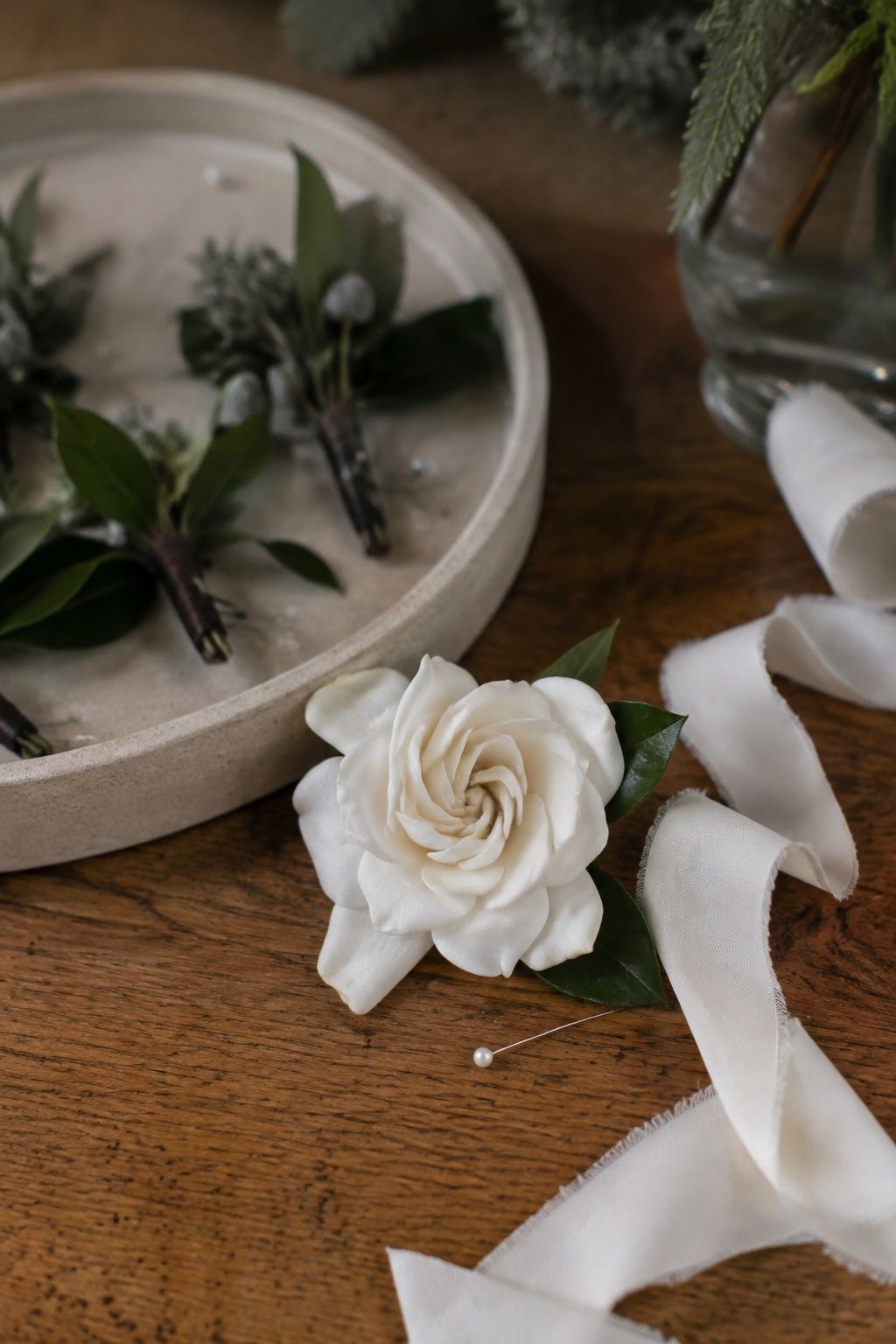
Freesia
Freesia has a delicate line and a noticeable scent, which makes it good for boutonnieres, posies and petite arrangements. Two or three stems per piece is plenty.
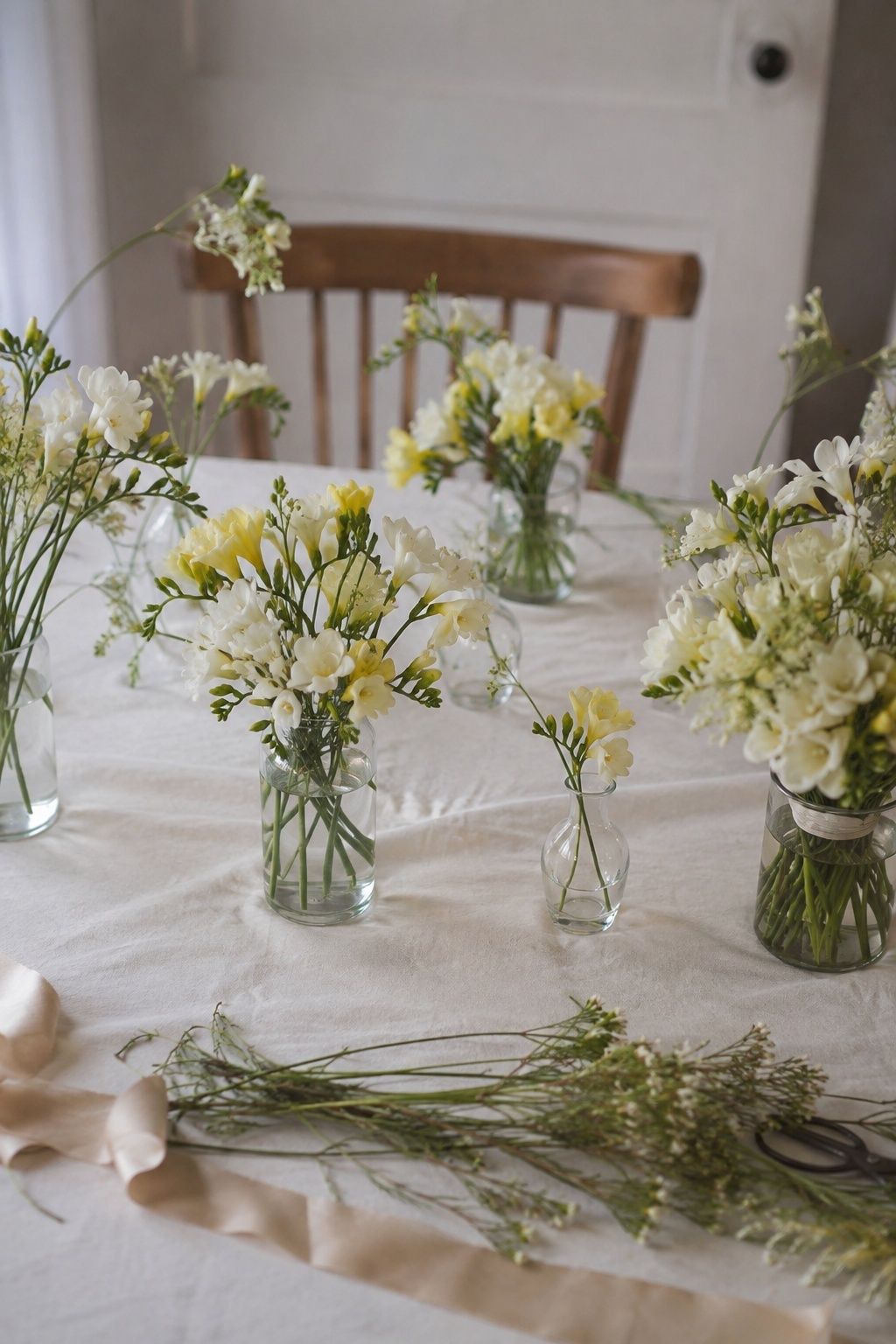
January greenery that does the heavy lifting
Greenery is where a small January wedding can look full without a big flower bill. A long table runner of cedar and eucalyptus with a few blooms tucked in reads more generous than the same money spent on sparse centerpieces.
Eucalyptus
Eucalyptus brings soft silver-green and a gentle drape. It sits easily beside roses, ranunculus and anemones, and it keeps the look wintry without drifting into holiday wreath.
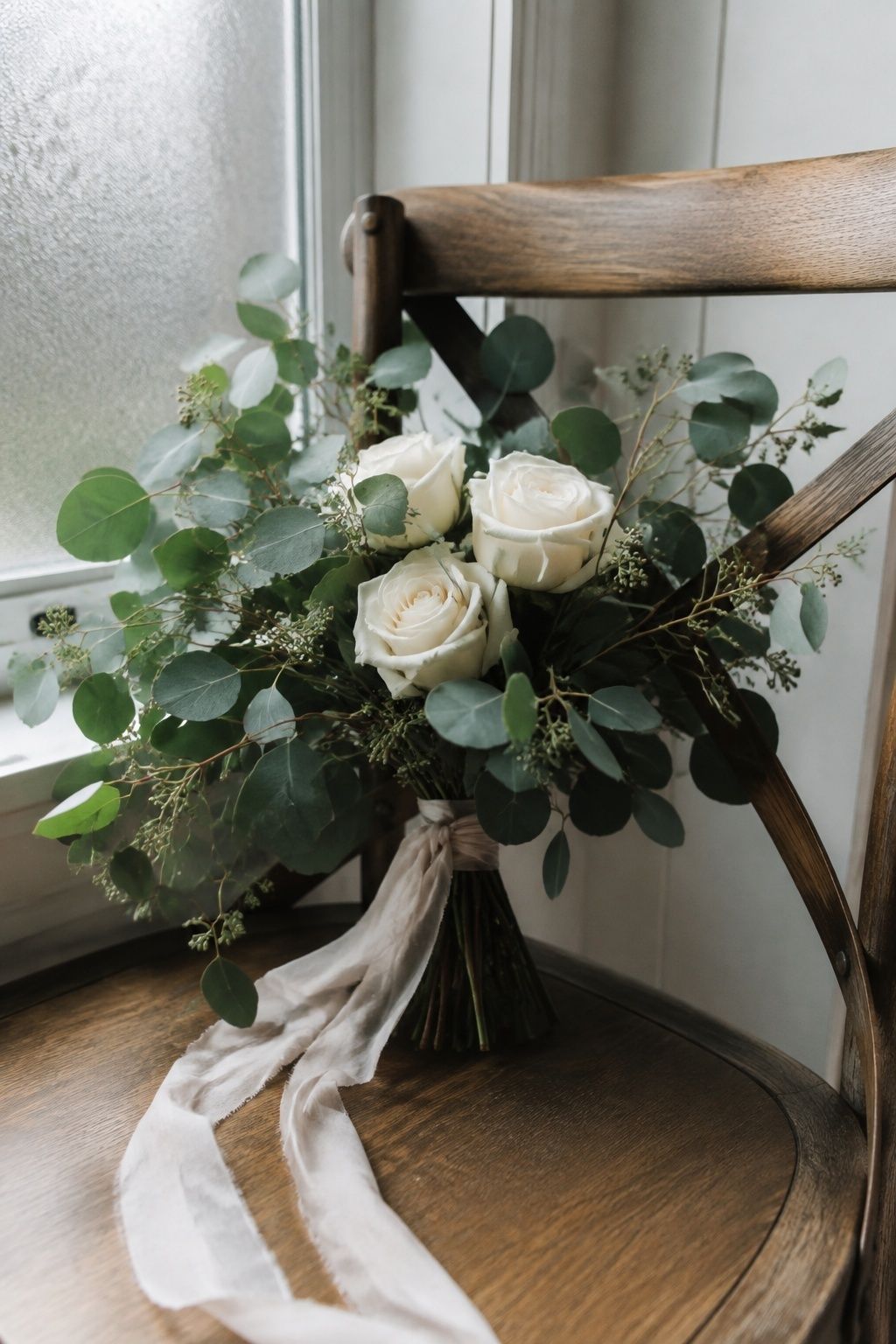
Cedar
Cedar is deeper green and more architectural. It shapes ceremony arches, stair rails and long tables before a single flower goes in. It also holds up well out of water for several hours, which helps on a long day.

Pine
Pine gives a woodland edge, but use it sparingly. Short sprigs with roses, brunia and berries look wintry. Swags of pine with red ribbon look like December, which is fine only if you’re leaning festive on purpose. The December wedding flowers guide covers that holiday direction if you want it.

Dusty miller
Dusty miller has pale, velvety leaves that look frosted. It softens burgundy, plum and charcoal combinations and makes small arrangements look richer without adding flowers.
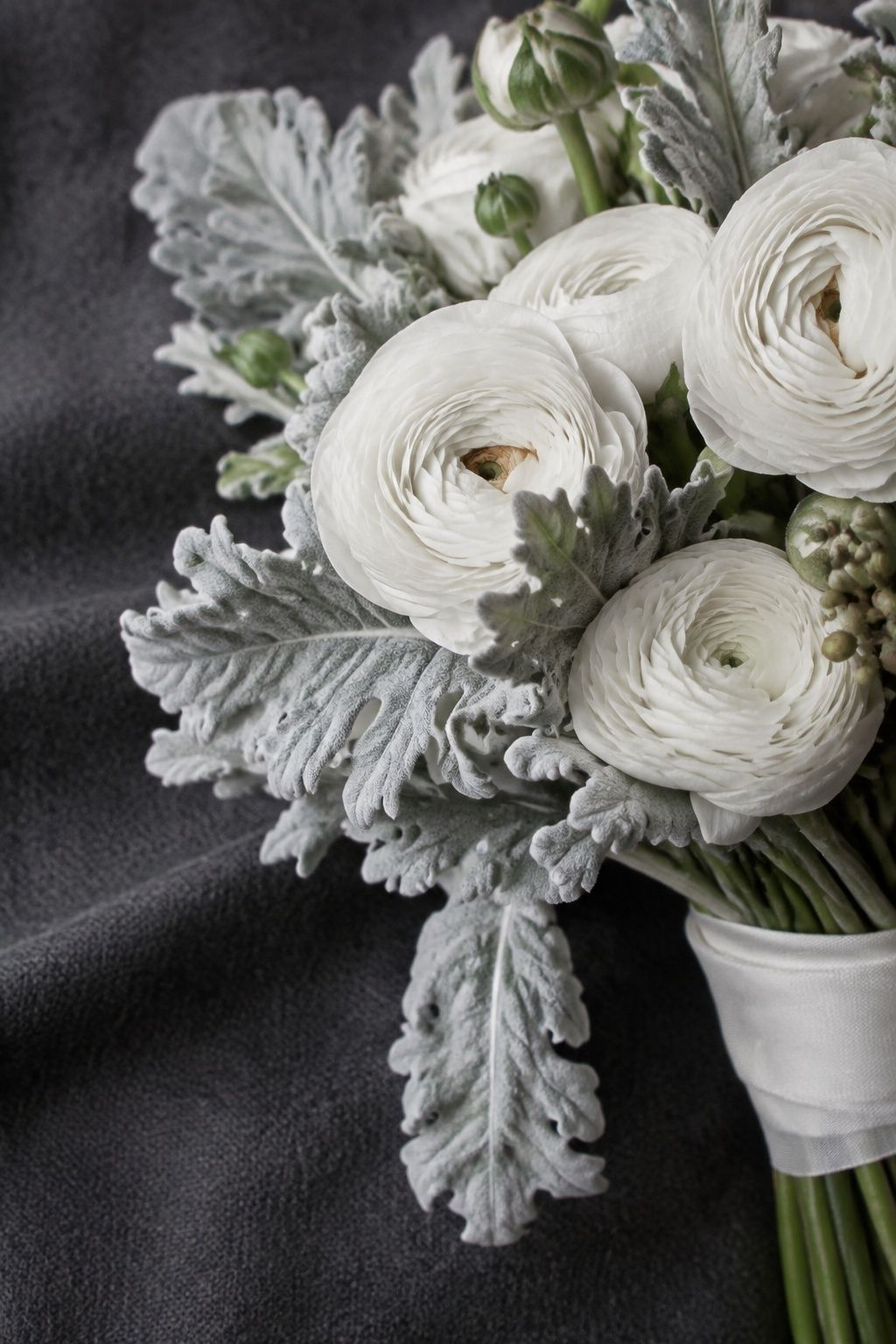
Texture: brunia, berries, seed pods and rose hips
Texture is what stops winter flowers from looking thin. A few round or spiky accents add shadow and dimension where petals alone would read flat.
Brunia and berries
Brunia is a silvery, button-shaped bloom, and berries bring small points of color. Three or four clusters in a low centerpiece make a few roses look like twice as many.

Seed pods and rose hips
Seed pods and rose hips make flowers look gathered rather than ordered from a catalog. They suit bud vases, boutonnieres and a compact bouquet with silk ribbon. If you love this foraged, darker look, brown wedding flowers take it further.
How many stems does a small January wedding need?
Fewer than you think. Small weddings reward concentration: a few excellent stems near the couple, then simple repetition on the tables. These are typical ranges florists work with, and your florist will adjust them to the flowers they actually get.
| Piece | Rough stem count |
|---|---|
| Full bridal bouquet | 25 to 40 stems |
| Petite bouquet or posy | 12 to 20 stems |
| Boutonniere | 2 to 4 stems |
| Bud vase | 1 to 3 stems |
| Low compote centerpiece | 15 to 25 stems plus greenery |
| Ceremony urn | 40 to 60 stems plus branches |
For table flowers, plan by table, not by guest. Ten guests usually means one long table: two low compotes and five bud vases down the middle is plenty. Twenty-five guests is often three tables of eight, so three compotes with a few bud vases each. At 50 guests you might have six tables, and that’s where bud vase clusters with candles start to save real money over six full arrangements. My January tablescape ideas show how to fill the gaps with candles instead of more flowers.
Where should the January wedding flowers budget go?
Spend on what’s held, worn and photographed close up. The bouquet, boutonnieres and the ceremony piece carry the emotional weight; the tables can be simpler.
For a sense of scale, The Knot’s 2026 Real Weddings Study puts the average florist spend at $2,800 for weddings averaging 117 guests. A 30-person dinner needs far fewer centerpieces, so more of your budget can go toward the stems you’ll hold.
- Book the bouquet and personal flowers first and choose the best stems for them.
- Commission one ceremony arrangement big enough to matter.
- Plan for that arrangement to move to the sweetheart table, bar or cake table after the vows.
- Fill reception tables with low compotes, bud vases and plenty of candlelight.
Skip peonies, dahlias and sunflowers in January. They can sometimes be imported, but you pay extra for supply risk and they look out of step with everything else in the room. Garden roses, ranunculus and amaryllis give the same fullness and make sense for the season. For the bigger picture across the colder months, see the full winter wedding flowers guide.
Key takeaways
- Build January wedding flowers around anemones, hellebores, amaryllis, ranunculus and roses.
- Use cedar, eucalyptus and dusty miller to make arrangements look full for less.
- Keep strong scents like paperwhites and gardenias away from dinner tables.
- Plan centerpieces by table count, and lean on bud vases and candles above 25 guests.
- Skip imported peonies and sunflowers; they cost more and fight the season.
FAQ
What flowers are in season for a January wedding?
Anemones, hellebores, amaryllis, paperwhites and early ranunculus are in season in January, along with greenhouse roses, orchids and French tulips. Cedar, pine, eucalyptus, dusty miller, brunia and berries round out the greenery and texture.
Are peonies available for January weddings?
Peonies are sometimes available in January as imports, but they are expensive and supply is unreliable. Garden roses, ranunculus and amaryllis give a similar full, romantic look with less risk.
How do you make January wedding flowers look warm?
Pair ivory or blush flowers with honey, cinnamon, burgundy or plum accents and lots of candlelight. Velvet ribbon, amber glass and brass candlesticks add warmth around the blooms so the arrangement doesn’t look cold.
What are good centerpieces for a small January wedding?
Low ceramic compotes with roses, anemones and cedar are the easiest good centerpiece for a small January wedding. Bud vases with tulips or ranunculus, mixed with taper candles, work well when you have more than three tables.
Are winter wedding flowers cheaper in January?
Winter wedding flowers are not automatically cheaper in January. In-season stems and greenery usually cost less than imported spring flowers, but labor, delivery and design complexity still set most of the final quote.
The short version
Let January be January. Pick two or three focal flowers from the winter list, let greenery and texture fill the space, keep scent off the dinner table, and put your best stems in your hands. Do that, and your January wedding flowers will look like they belong to the day you actually chose.
Last update on 2026-10-04 / Affiliate links / Images from Amazon Product Advertising API