

Brown diamond engagement ring ideas feel most elegant when the stone’s warmth is intentional: choose a clear shade, a metal that flatters it, a setting that lets light move through the diamond, and a lab report that explains whether the color is natural or treated.
A brown diamond can be soft as tea, rich as cognac, or deep enough to feel almost chocolate. The decision is less about chasing a trend and more about choosing a stone that looks alive against your skin, your wedding palette, and the small details your photographer will hold close.
For intimate weddings, that warmth can be beautiful. A brown diamond reads grounded beside linen sleeves, candlelit tables, textured bouquets, and quiet courthouse portraits, but it needs thoughtful contrast so the color feels luminous instead of muddy.
Recommended Wedding Products


No products found.
No products found.
You Might Also Like These Blog Posts
- Chocolate Diamond Engagement Ring Ideas With Rich Quiet Drama
- Champagne Diamond Engagement Ring Ideas With Soft Golden Glow
- 1950s Engagement Ring Ideas With Midcentury Romance
- East West Engagement Ring Ideas for a Classic Stone Turned Sideways
- Kite Cut Engagement Ring Ideas for a Ring That Refuses to Round Off
- Elongated Hexagon Engagement Ring Ideas for Love With Sharp Little Edges
Brown Diamond Engagement Ring Ideas With Warm Earthy Fire
Brown is not one mood. It is a whole color family, and the strongest brown diamond engagement ring ideas start by locating your stone’s shade within that family before you choose prongs, halos, side stones, or a wedding band.
That makes this a parent guide rather than a single-shade roundup. A pale tea-brown diamond asks for different styling than a copper cognac stone, and a deep coffee diamond needs a different light strategy than a soft champagne-brown.
Use the ring as a color decision first. Once the shade is honest, flattering, and documented, the setting becomes much easier to judge.
Name The Brown Family Before You Name The Ring
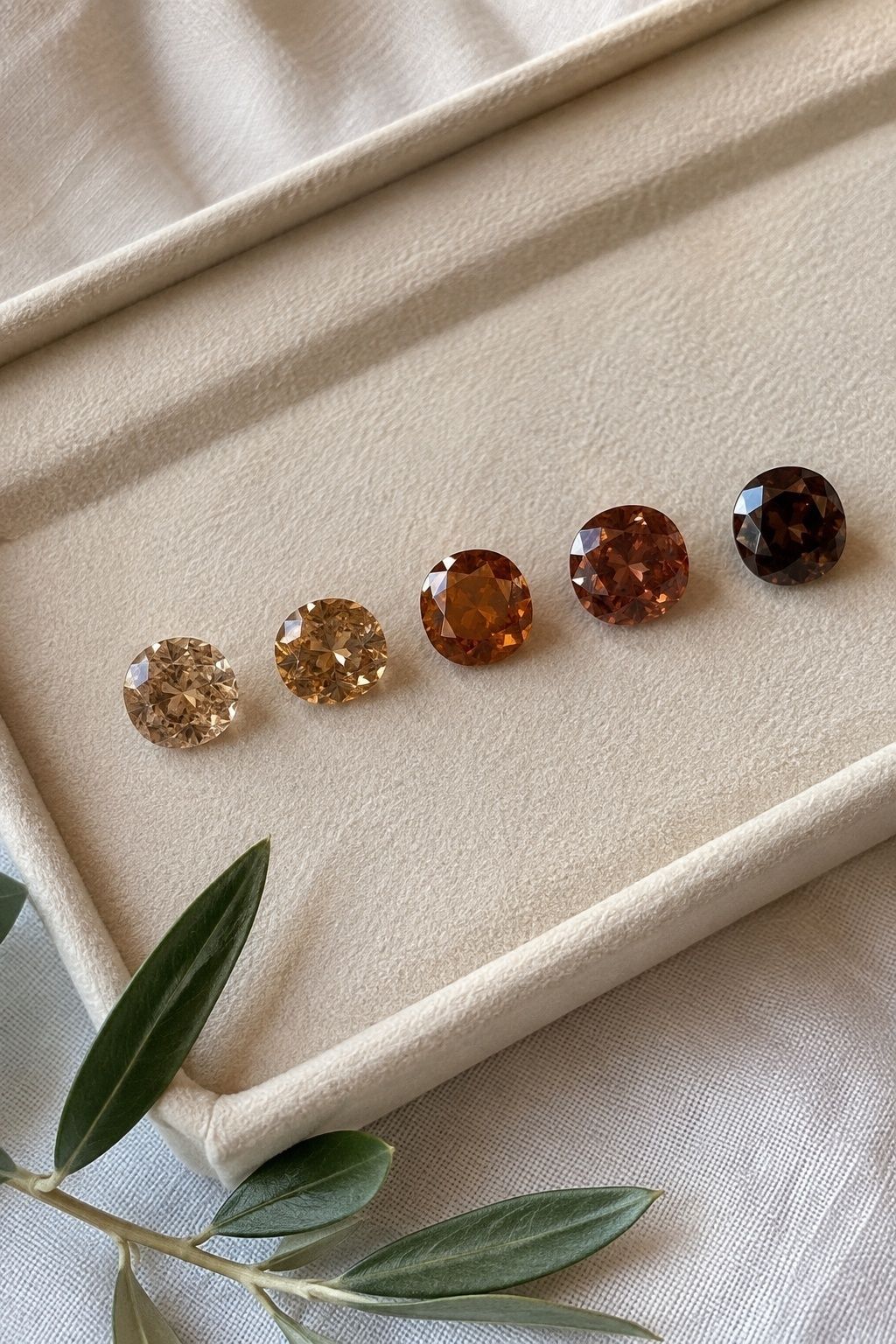
Before discussing a setting, ask the jeweler to describe the diamond in plain color language. Is it pale beige-brown, golden brown, orange-brown, smoky brown, reddish brown, gray-brown, or deep chocolate brown?
Those words are not just pretty labels. They tell you whether yellow gold will add warmth, whether rose gold will over-sweeten the stone, whether platinum will sharpen the outline, and whether white diamond accents will brighten the ring or make the center look darker.
Choose Broad Brown When You Want Range
Choose a broad brown diamond search when you are still open to the whole spectrum. It gives you room to compare pale warmth, cognac richness, and deeper chocolate tones without locking yourself into one retail name too early.
If your eye keeps returning to soft beige-gold stones, narrow the search after you have seen enough options in real light (champagne diamond engagement ring ideas).
If you want deep drama, judge sparkle and undertone before choosing a larger dark stone (chocolate diamond engagement ring ideas).
Treat Brightness And Depth As A Tradeoff
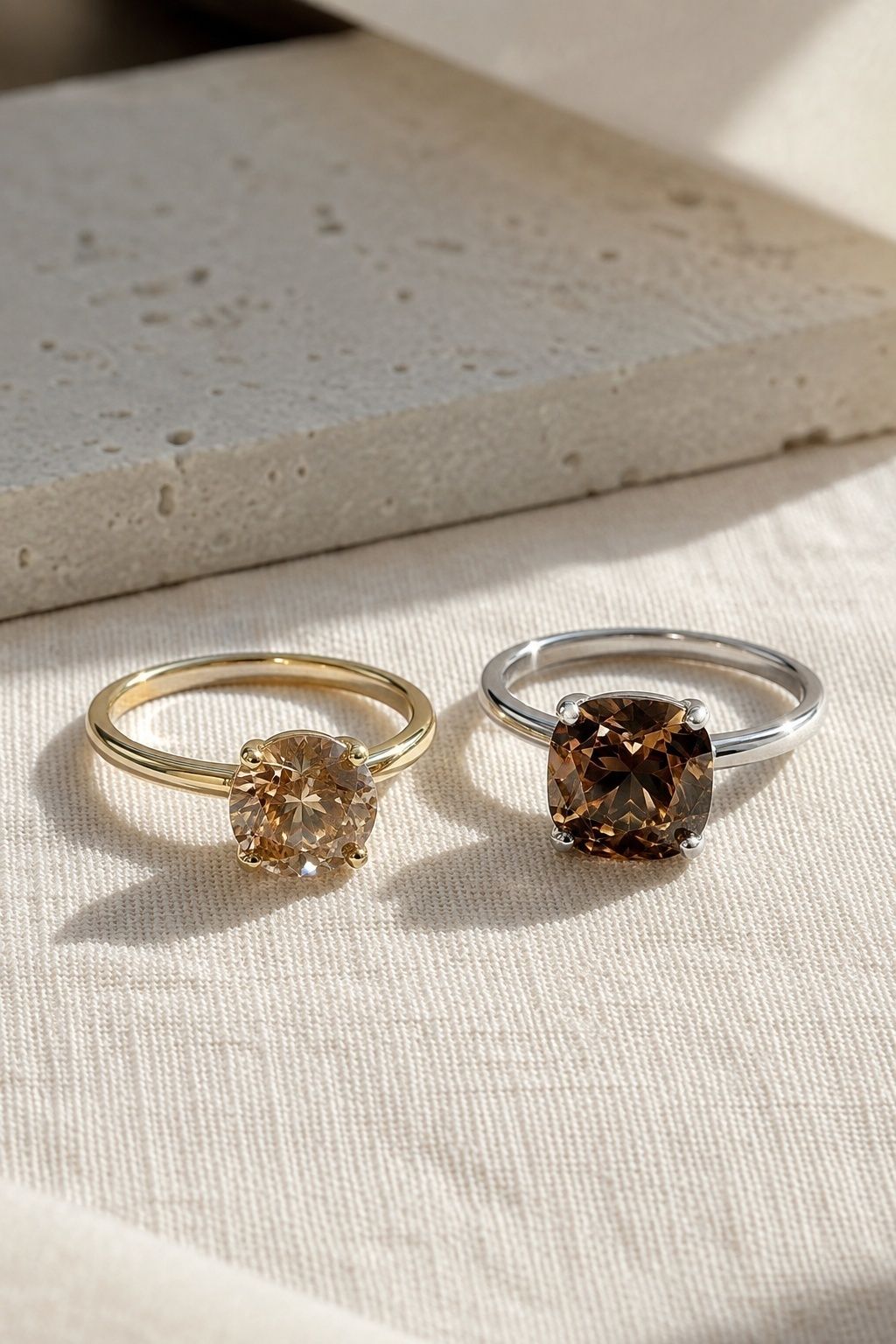
A lighter brown diamond can feel airy, gentle, and easy to wear, but the color may disappear if the setting is too pale or the lighting is too bright. A darker brown diamond can feel rich and memorable, but it needs excellent light return so the center does not photograph as a flat shadow.
Look for movement across the face of the stone. If you turn your hand and see small flashes moving through the brown, the diamond has life; if the surface stays still, a different cut, shallower setting, or brighter accent plan may serve you better.
Separate Natural Color, Treated Color, And Lab-Grown Origin
Brown diamonds can be natural diamonds, lab-grown diamonds, or diamonds whose color has been treated. None of those paths is automatically wrong, but each one should be named clearly before you pay a natural-color price.
Ask for the lab report or written seller documentation before the romance of the color takes over. Treatment disclosure matters because irradiation, annealing, coating, or other color work changes value, care conversations, and resale expectations.
Use Metal And Prongs To Tune The Undertone
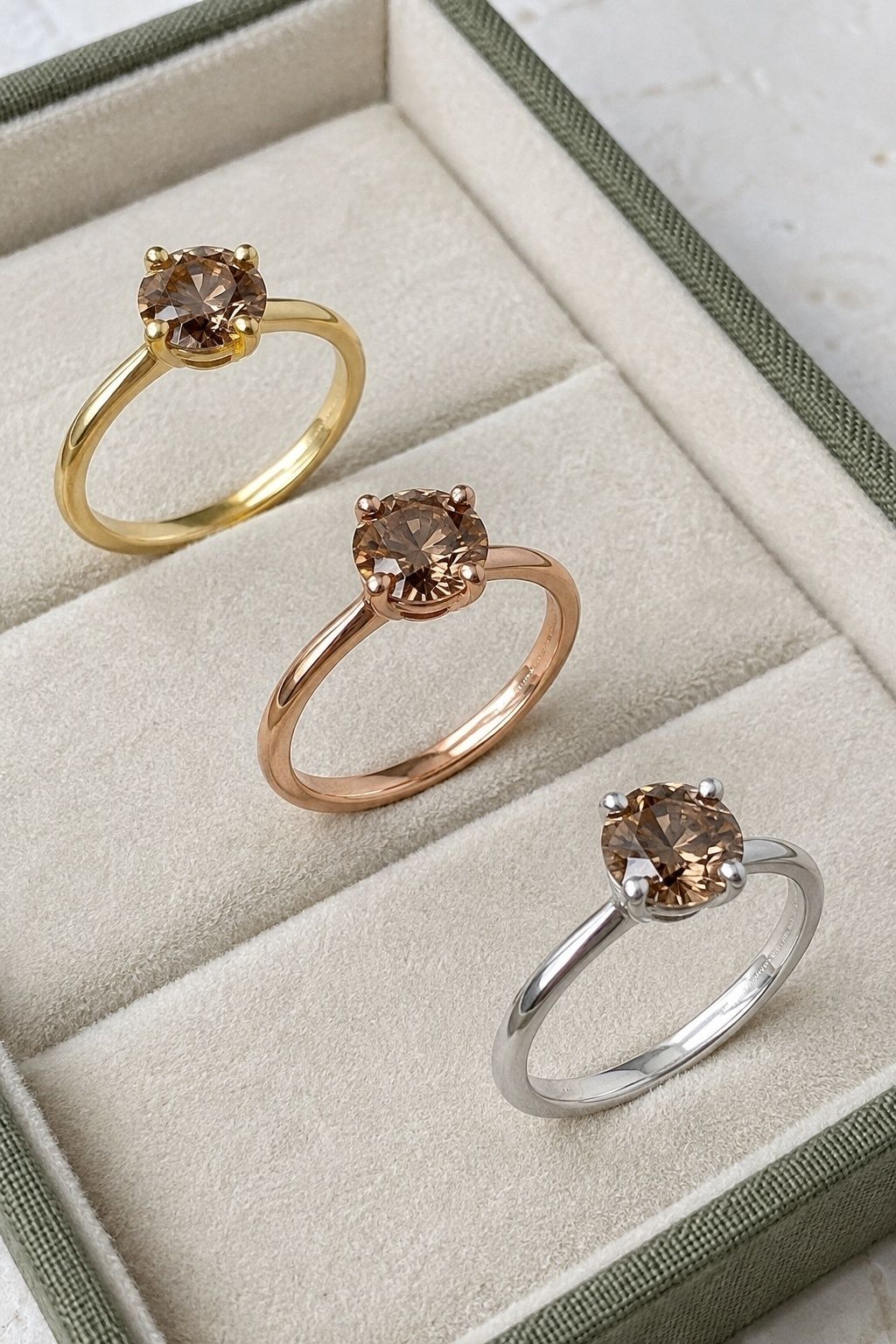
Metal does not merely frame a brown diamond; it changes how the color is perceived. Yellow gold can pull honey from a pale brown stone, rose gold can flatter coppery cognac flashes, and platinum or white gold can make a medium brown center look cleaner and more deliberate.
Prong color is the quiet detail couples forget. White prongs can add crispness around a brown center, while yellow or rose prongs can melt into the stone and make the whole ring feel warmer.
Let White Accents Define The Edge

White diamond accents work best when they define the brown stone instead of trying to fix it. A narrow halo, petite side stones, or tapered baguettes can give the center a bright outline without overwhelming the color.
Keep the accent scale modest if the center is pale, and make it cleaner if the center is deep. The goal is a visible edge, not a ring where the white diamonds become the real focal point.
Pick The Setting By The Problem It Solves

Instead of moving through settings as a checklist, ask what the stone needs. If it needs more light, choose an open basket, lifted prongs, or a setting that keeps metal from crowding the pavilion. If it needs protection, consider a slim bezel or secure low profile.
If it needs softness, cushion corners, milgrain, or engraved shoulders can bring heirloom texture without burying the color. A low, open gallery keeps the center lively while the setting carries the vintage mood (vintage cushion cut engagement ring ideas).
Keep Small-Wedding Detail Photos From Looking Muddy
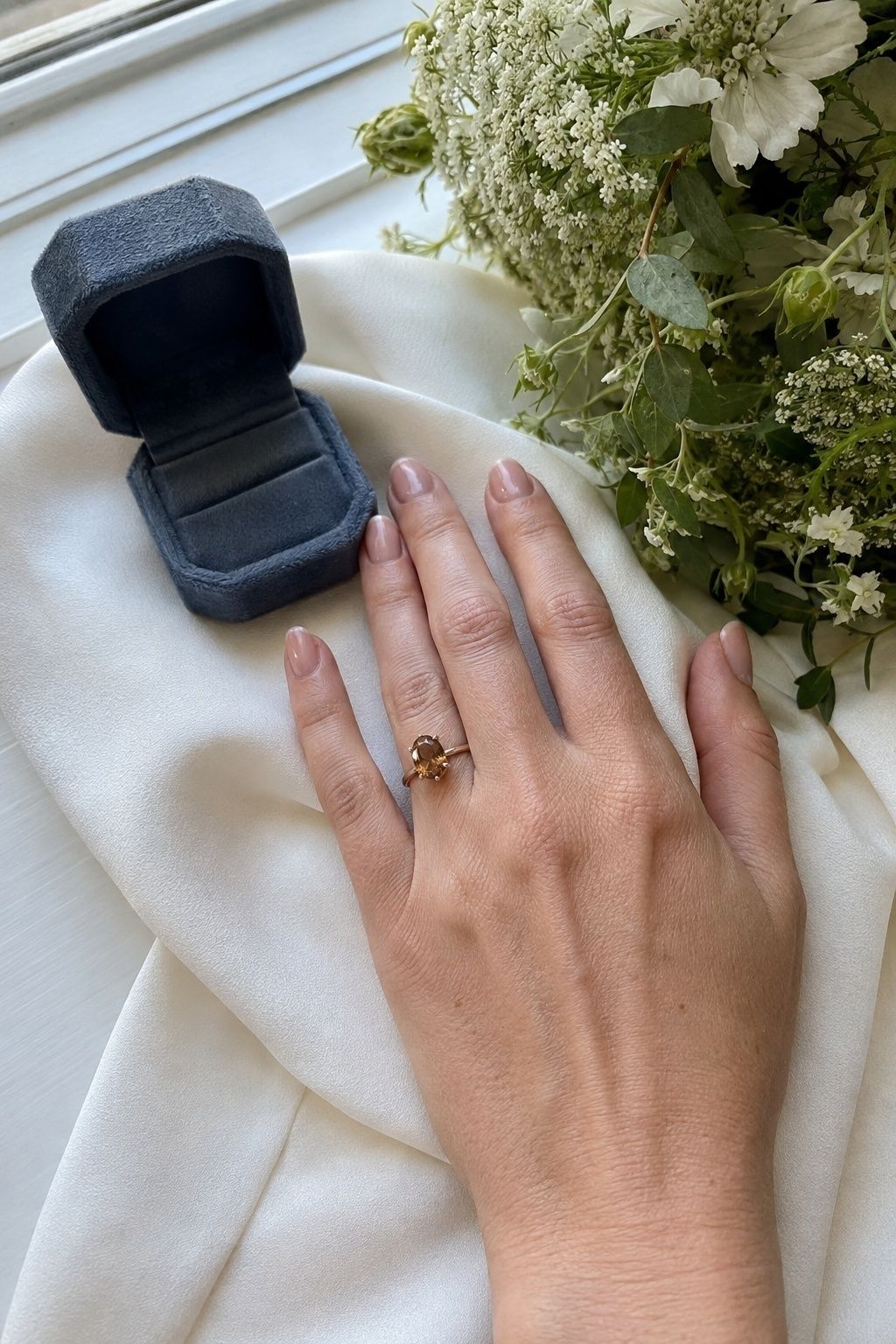
Brown diamonds are gorgeous in intimate wedding photography when the color has contrast around it. Ask for quick phone photos near a window, against your dress fabric, with your bouquet palette, and inside the ring box you plan to use.
Watch the edges of the stone in each photo. If the diamond blends into warm florals, beige velvet, or golden linen, switch the box color, add white accents, or use cooler prongs so the center does not vanish in close-ups.
Decide When Another Warm Stone Says It Better
A brown diamond is not the only way to get warmth. If you want golden color more than diamond identity, a transparent yellow-orange gem may give the sunny feeling more directly (citrine wedding ring ideas).
If you want blush instead of earth, a pink diamond can feel softer against skin and florals without relying on brown depth (pink diamond wedding rings ideas).
If you want a stronger colored center, judge how gold changes the whole ring before committing to a warmer metal (sapphire engagement ring gold ideas).
Jeweler Questions Before A Brown Diamond Is Set
What Does The Report Say About Origin And Treatment?
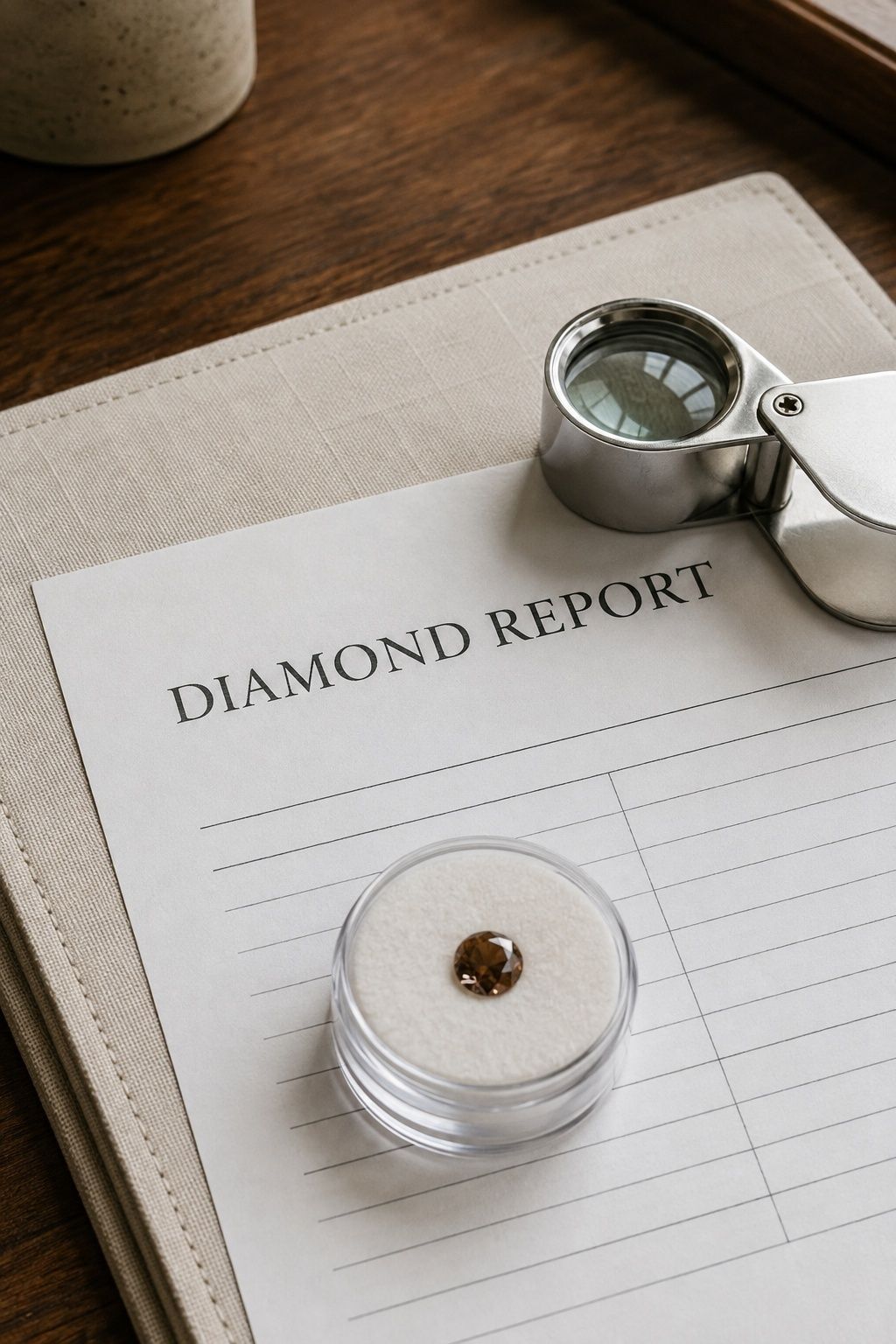
Ask for the origin, growth method, color origin, treatment disclosure, clarity notes, and any durability comments in writing. If the ring is vintage or already mounted, ask how much the jeweler can verify without removing the stone.
The report should match the sales story. A natural-color brown diamond, a treated brown diamond, and a lab-grown brown diamond may all be beautiful, but they should not be priced or described as the same thing.
Will The Setting Keep Light Moving?

Ask where the setting places metal around the stone. Heavy bezels, closed baskets, thick halos, and tall side stones can all change the way brown color reads once the diamond is mounted.
Have the jeweler show you the ring from the side, not only from the top. A beautiful face-up view still needs a secure gallery, accessible cleaning path, and enough openness for the color to breathe.
How Will The Ring Wear After The Wedding?
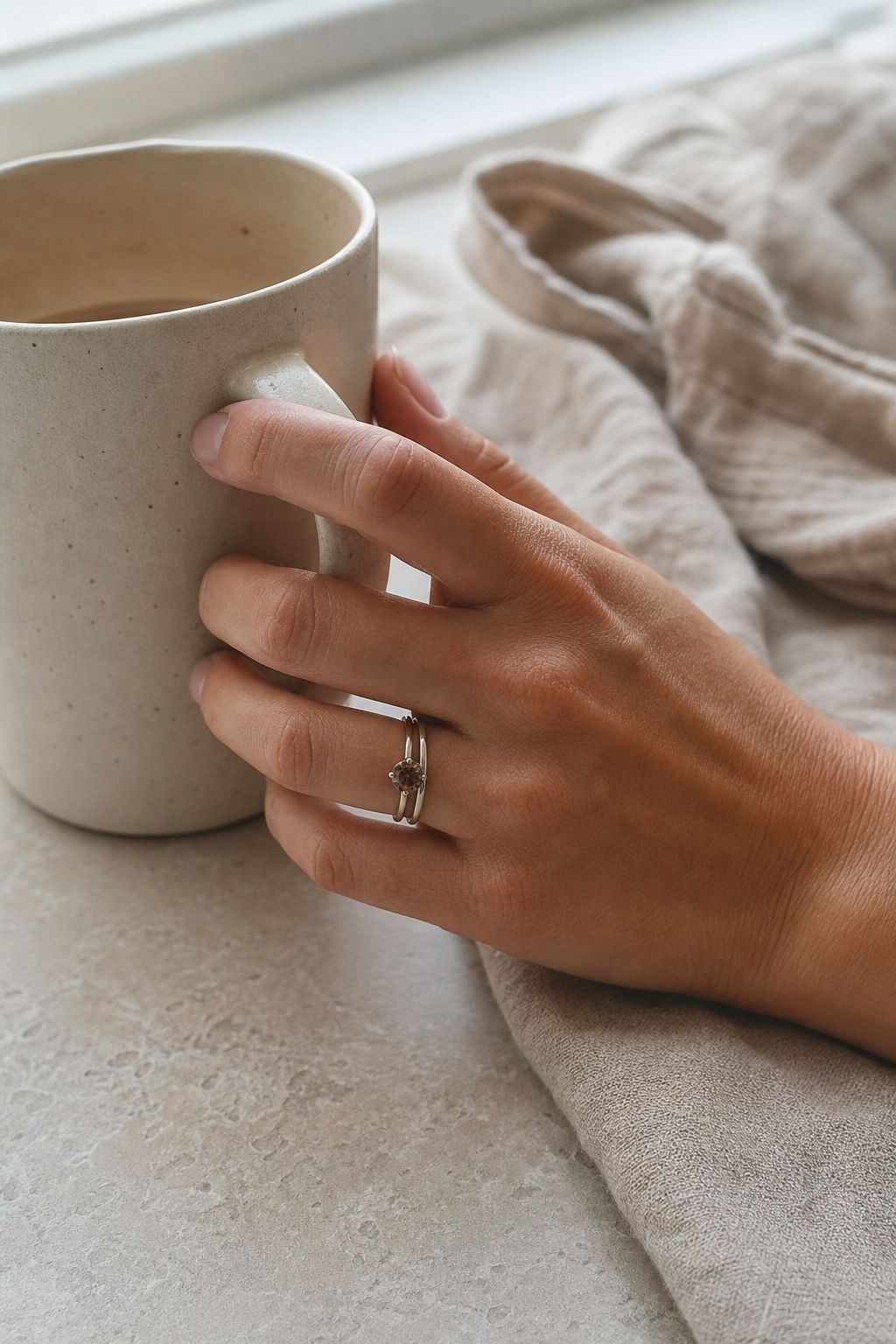
Daily wear is where a brown diamond either becomes a signature or a regret. Check prong height, snag points, wedding-band clearance, resizing limits, cleaning access, and whether the ring still feels comfortable after ten minutes of ordinary hand movement.
Also ask what maintenance will look like. Deep color can hide lint and lotion until the stone suddenly looks sleepy, so a simple cleaning routine matters if you want that warm fire to stay visible.
FAQ
Are brown diamonds good for engagement rings?
Yes, brown diamonds can be good for engagement rings when the stone is well cut, securely set, and chosen for a shade you genuinely love. They are diamonds, so they have the hardness expected for daily wear, but the beauty depends on brightness, tone, saturation, and honest disclosure.
What do brown diamonds mean in engagement rings?
Brown diamonds often suggest warmth, steadiness, individuality, and an earthy kind of luxury. Their meaning is personal rather than fixed, which makes them appealing for couples who want an engagement ring that feels grounded, intimate, and different from a classic white diamond.
Are brown diamonds real diamonds?
Yes, brown diamonds are real diamonds. Their color can occur naturally, appear in lab-grown diamonds, or result from treatment, so ask for a lab report and written treatment disclosure before buying.
What metal looks best with a brown diamond?
Yellow gold often looks best with honey, caramel, and champagne-brown diamonds, while rose gold flatters peachy or cognac tones. Platinum and white gold create cooler contrast, which can make medium or deep brown diamonds look sharper and more modern.
Are brown diamonds cheaper than white diamonds?
Brown diamonds are often cheaper than comparable white diamonds, especially when the color is less rare or has been treated. Price still depends on carat weight, cut, clarity, natural versus treated color, lab report details, and the quality of the setting.
What is the difference between brown, champagne, cognac, and chocolate diamonds?
Brown is the broad color family, while champagne, cognac, and chocolate are common trade descriptions for different looks within that family. Champagne usually means lighter beige or golden brown, cognac suggests richer orange-brown warmth, and chocolate describes deeper brown stones.
Final Thoughts
A brown diamond engagement ring should feel warm on purpose, with a shade that flatters your hand, a setting that keeps the stone lively, and paperwork that makes the value clear. Before you commit, ask your jeweler to compare metal samples, prong colors, accent diamonds, daily-wear profiles, and setting fit on your hand, then choose the design that keeps the diamond bright, secure, and comfortable for every ordinary and extraordinary day (engagement ring setting metals).
Last update on 2026-10-03 / Affiliate links / Images from Amazon Product Advertising API