

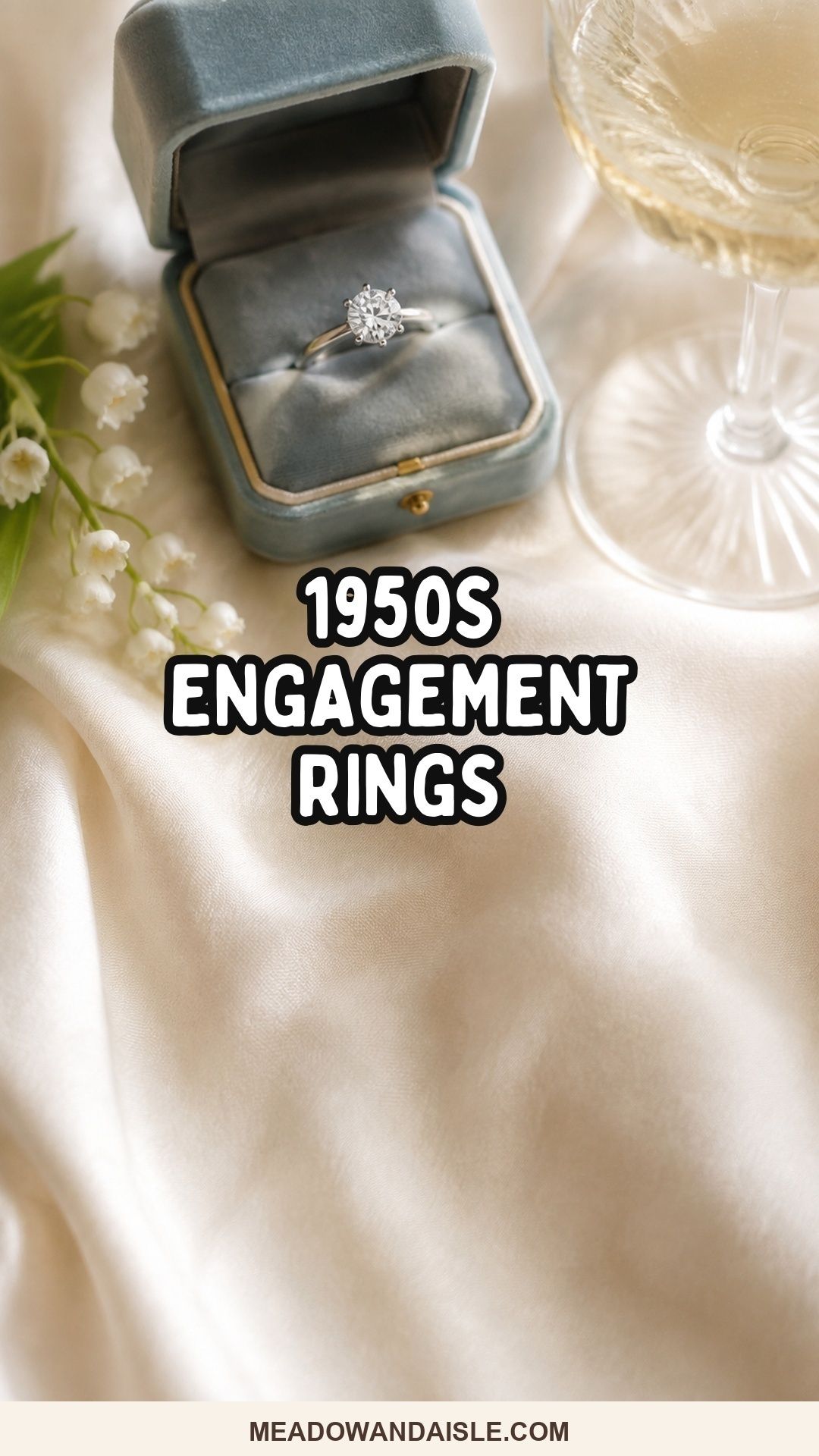
1950s engagement ring ideas are about clean midcentury romance: round brilliant diamonds, slim platinum or white gold settings, marquise and pear shapes, emerald cuts, baguette side stones, braided details, and classic solitaires that feel polished, sentimental, and easy to wear every day.
A 1950s ring has a quieter kind of glamour than many earlier antique styles. It is usually less architectural than Art Deco, less oversized than 1940s retro jewelry, and more focused on a bright center stone held in a graceful, wearable setting.
That makes the decade especially lovely for intimate weddings, where hands are photographed close to vows, champagne glasses, heirloom boxes, and small family tables. The right ring can feel like a private detail with enough romance to carry a whole bridal look.
Recommended Wedding Products


You Might Also Like These Blog Posts
- East West Engagement Ring Ideas for a Classic Stone Turned Sideways
- Kite Cut Engagement Ring Ideas for a Ring That Refuses to Round Off
- Elongated Hexagon Engagement Ring Ideas for Love With Sharp Little Edges
- Champagne Diamond Engagement Ring Ideas With Soft Golden Glow
- Vintage Cushion Cut Engagement Ring Ideas With Heirloom Energy
- Round Engagement Ring Stack Ideas That Feel Classic And Yours
1950s Engagement Ring Ideas For A Soft Midcentury Promise
The most recognizable 1950s engagement ring ideas begin with proportion. The center stone usually leads, the setting supports it without much clutter, and the metal looks bright against the hand. Platinum and white gold were natural fits for that polished mood, especially as round brilliant diamonds became a defining bridal choice.
For small weddings, that restraint feels especially useful. A 1950s ring can hold its own in close photographs without asking the whole outfit to become vintage. It works with a courthouse suit, a tea-length dress, a silk slip, a short veil, or a candlelit restaurant reception because the romance lives in the silhouette rather than heavy ornament.
If your taste leans antique but not ornate, study the decade’s common cues: a round brilliant diamond in a classic solitaire setting, a marquise diamond with slim shoulders, an emerald cut diamond flanked by baguette side stones, a pear shaped diamond with a graceful point, or a braided band that adds texture without turning the ring into a costume piece.
| 1950s detail | What it gives the ring | Best small-wedding mood |
|---|---|---|
| Round brilliant center stone | Bright sparkle and classic bridal clarity | Timeless close-up ring photos |
| Marquise or pear shape | Length, drama, and elegant finger coverage | Romantic but not fussy |
| Emerald cut with baguettes | Calm geometry and tailored shine | Quiet city-hall polish |
| Platinum or white gold | Cool-toned midcentury brightness | Clean heirloom feeling |
| Braided or engraved band | Texture with sentimental detail | Personal without heavy antique weight |
Round Brilliant Solitaire In Platinum
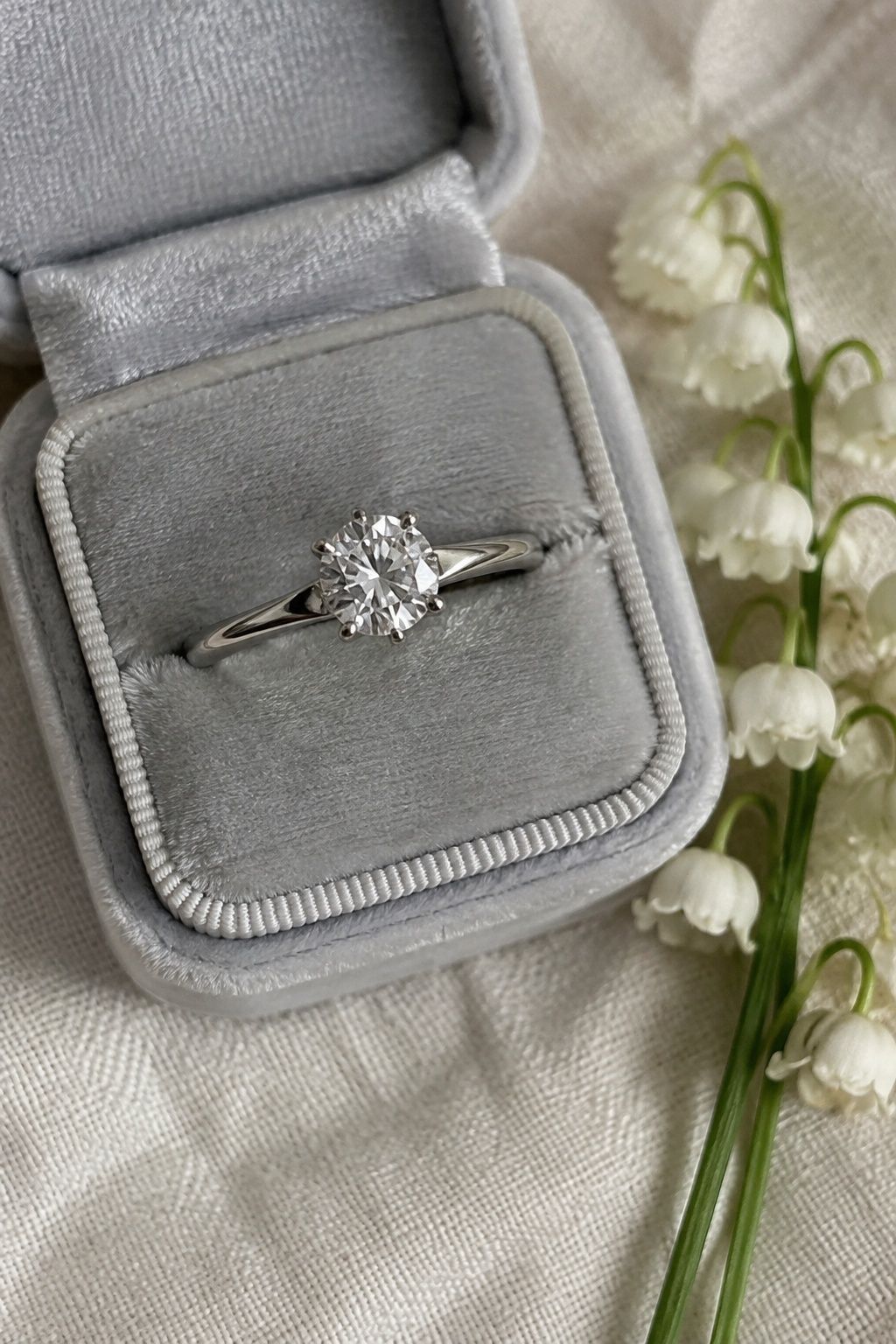
A round brilliant solitaire is the cleanest way into the 1950s look. The cut gives lively sparkle, while a platinum setting keeps the whole ring crisp and bridal. Look for a balanced crown, secure prongs, and a band that feels slender but not fragile.
This is a beautiful choice if you want the ring to age quietly with you. It does not need a large carat weight to feel special, especially when the diamond is bright, well-set, and paired with a polished wedding band.
White Gold Ring With Baguette Side Stones
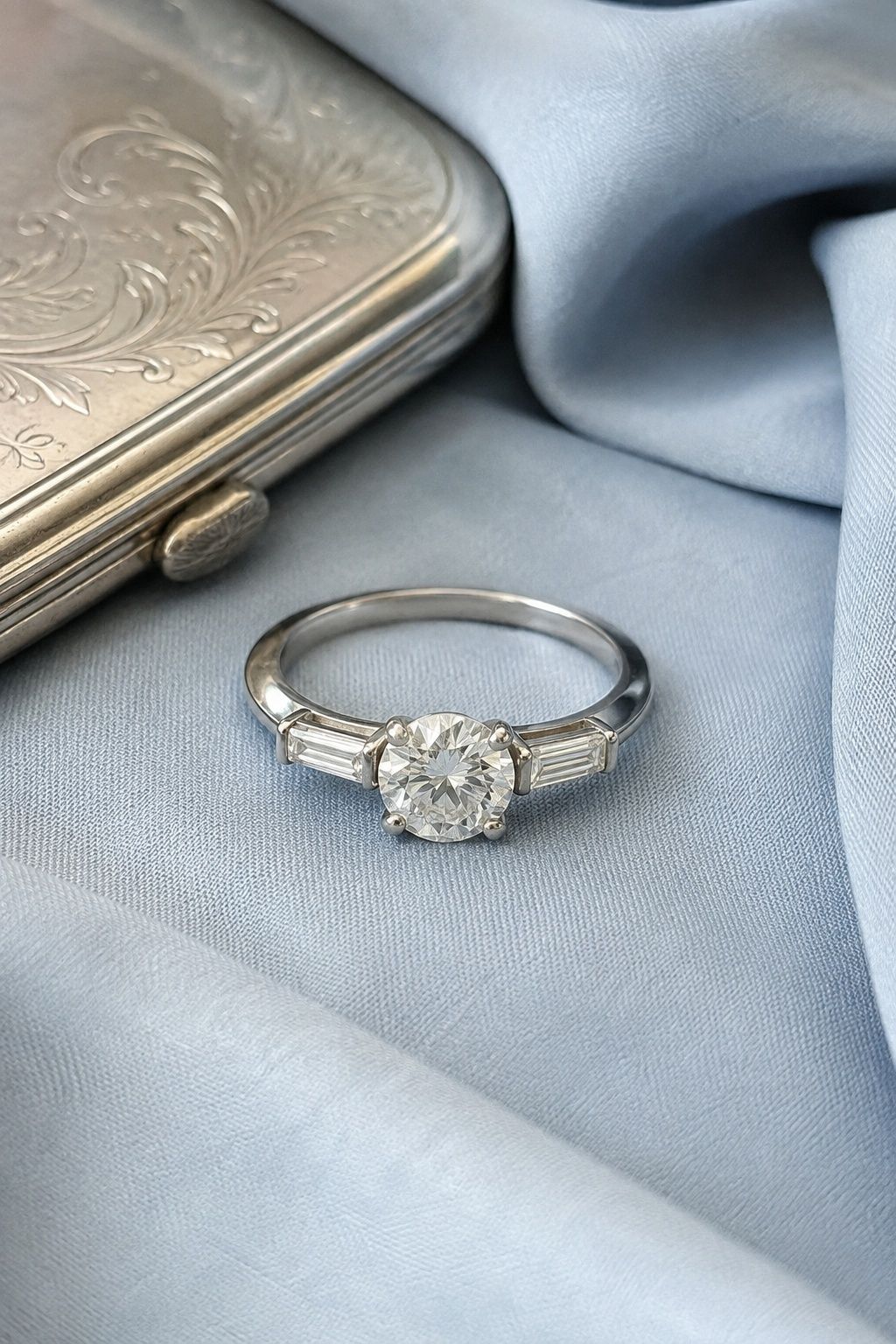
Baguette side stones give a 1950s ring a tailored frame. They stretch the center stone visually, add a little architecture, and keep the hand looking graceful from every angle. The effect is refined rather than busy.
Choose straight baguettes for a cleaner line or tapered baguettes when you want the shoulders to lead the eye inward. Soften the setting with rounded corners and pillow-like facets when vintage cushion cut proportions feel better than sharp geometry.
Marquise Diamond With Slim Shoulders
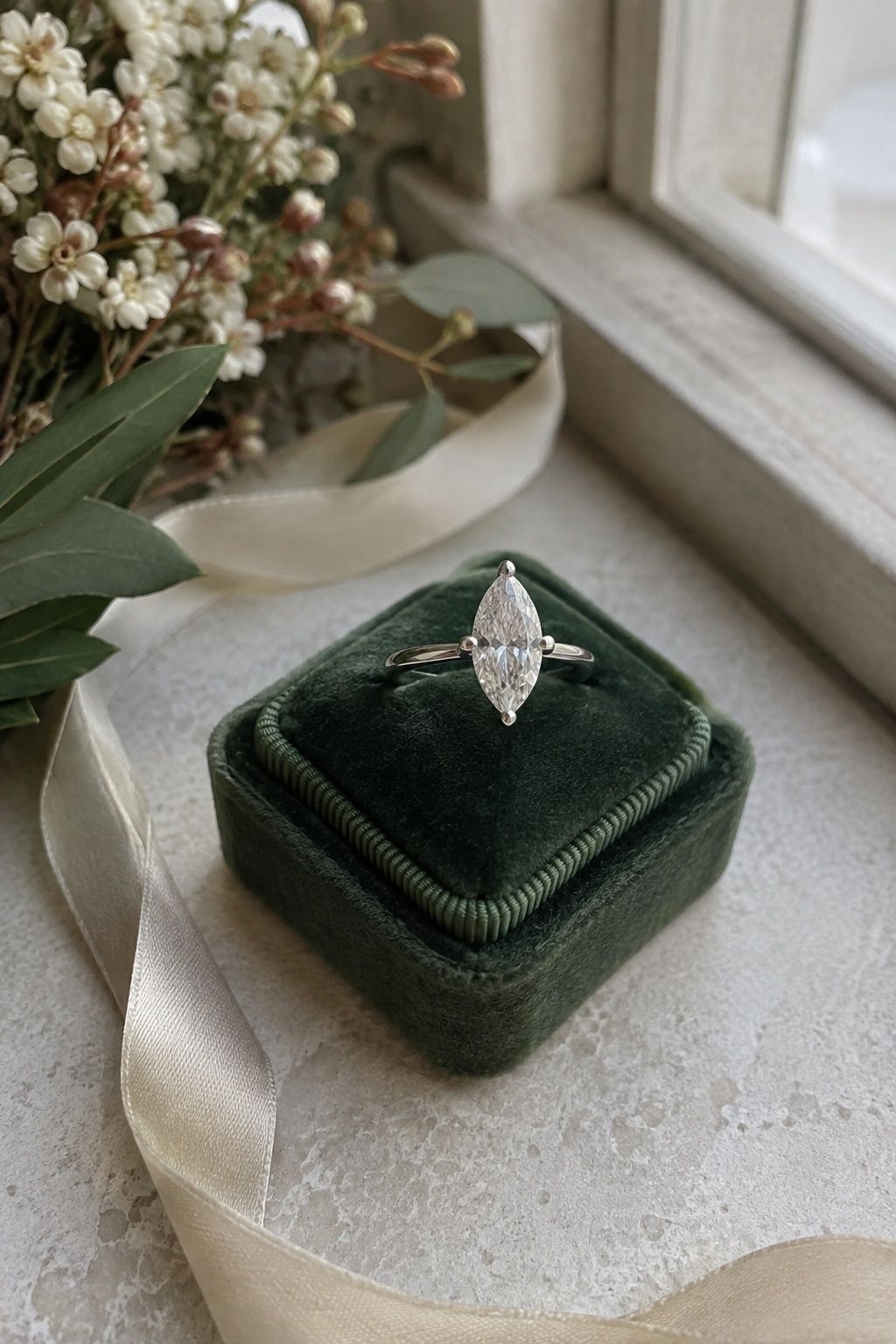
A marquise diamond brings length and a little drama without needing a heavy setting. In a 1950s-inspired ring, the shoulders should feel slim and controlled so the stone remains elegant instead of theatrical.
Try the ring from the side as well as the top. The points need protection, the prongs should feel even, and the stone should not sit so high that it catches every sweater, veil edge, or bouquet ribbon during the wedding weekend.
Emerald Cut Diamond With A Clean Band
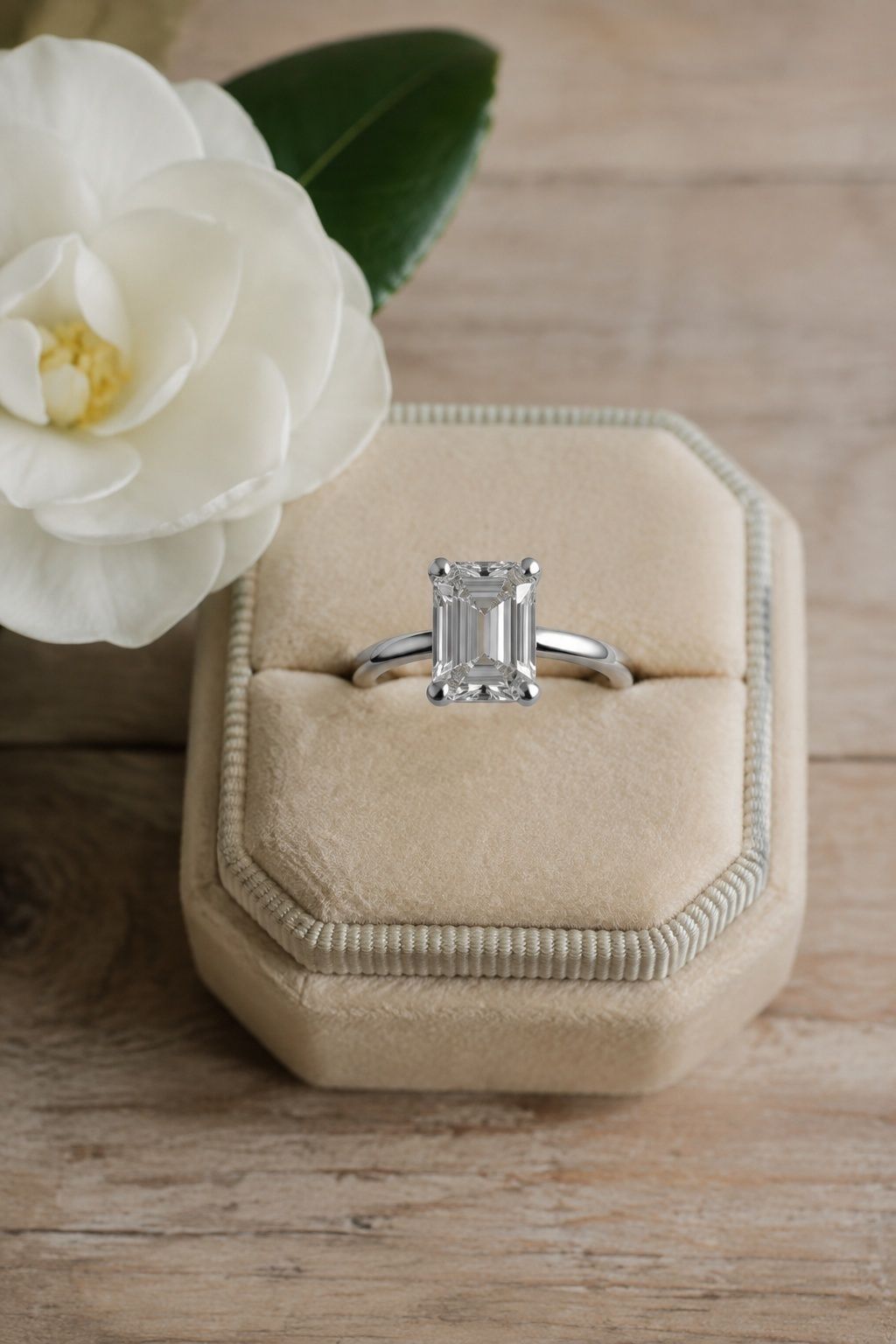
Emerald cuts feel poised in a midcentury setting because their shine is calmer than a brilliant cut. The long facets create flashes instead of constant sparkle, which suits brides who want elegance without a glitter-heavy look.
Because emerald cuts show clarity more openly, inspect the stone carefully in daylight and indoor light. A simple platinum or white gold setting keeps the mood crisp, while a narrow wedding band lets the center stone keep its composure.
Pear Shaped Diamond With A Delicate Point
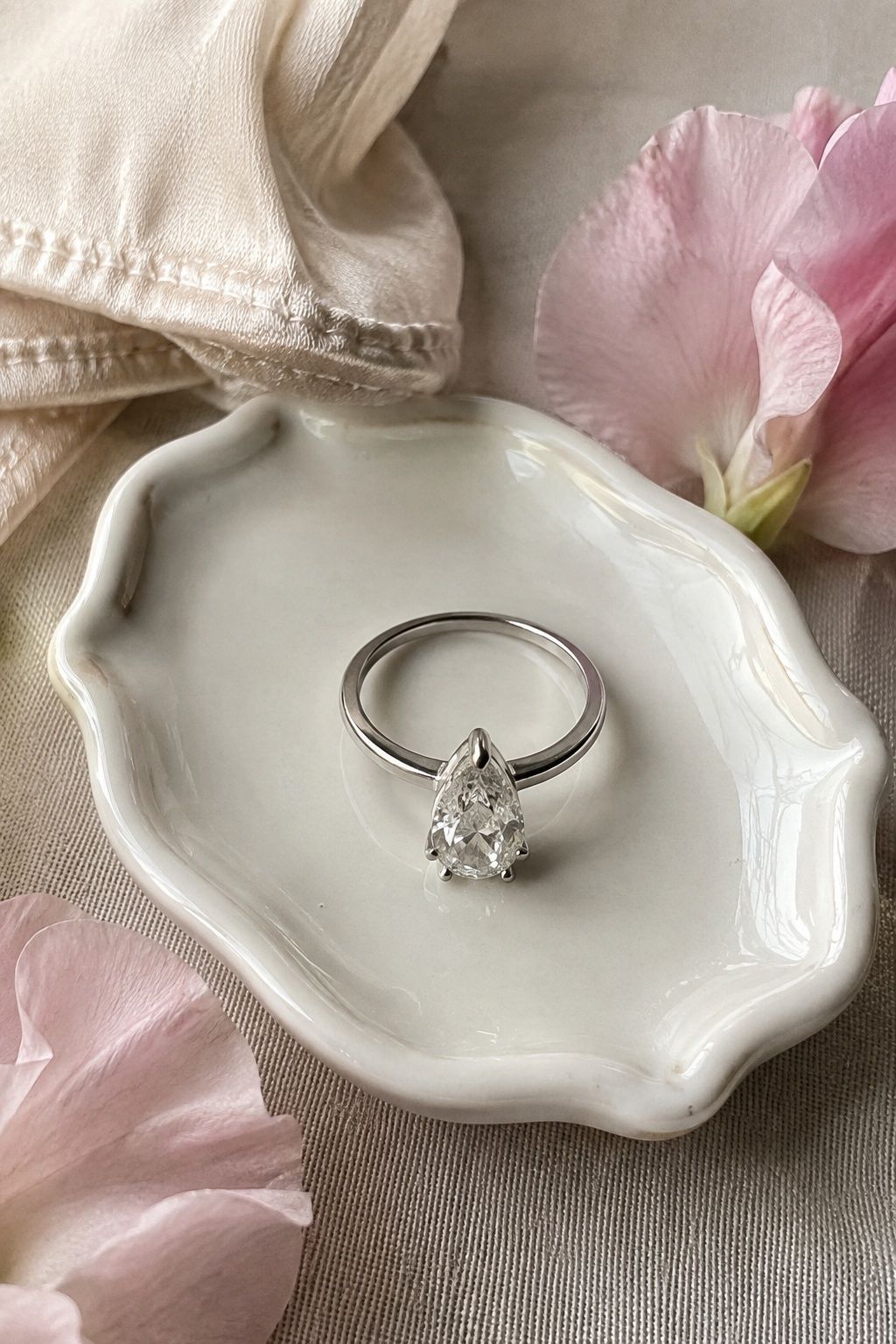
A pear shaped diamond gives a 1950s ring a romantic sweep. It can feel soft, feminine, and a little unexpected, especially when the setting is minimal and the point is protected by a secure prong or small V-tip.
Decide whether you prefer the point facing toward the fingertip or toward the hand. One direction lengthens the finger; the other can feel more antique and intimate. The right choice is the one that looks natural when your hand is relaxed.
Braided Band With A Modest Center Stone
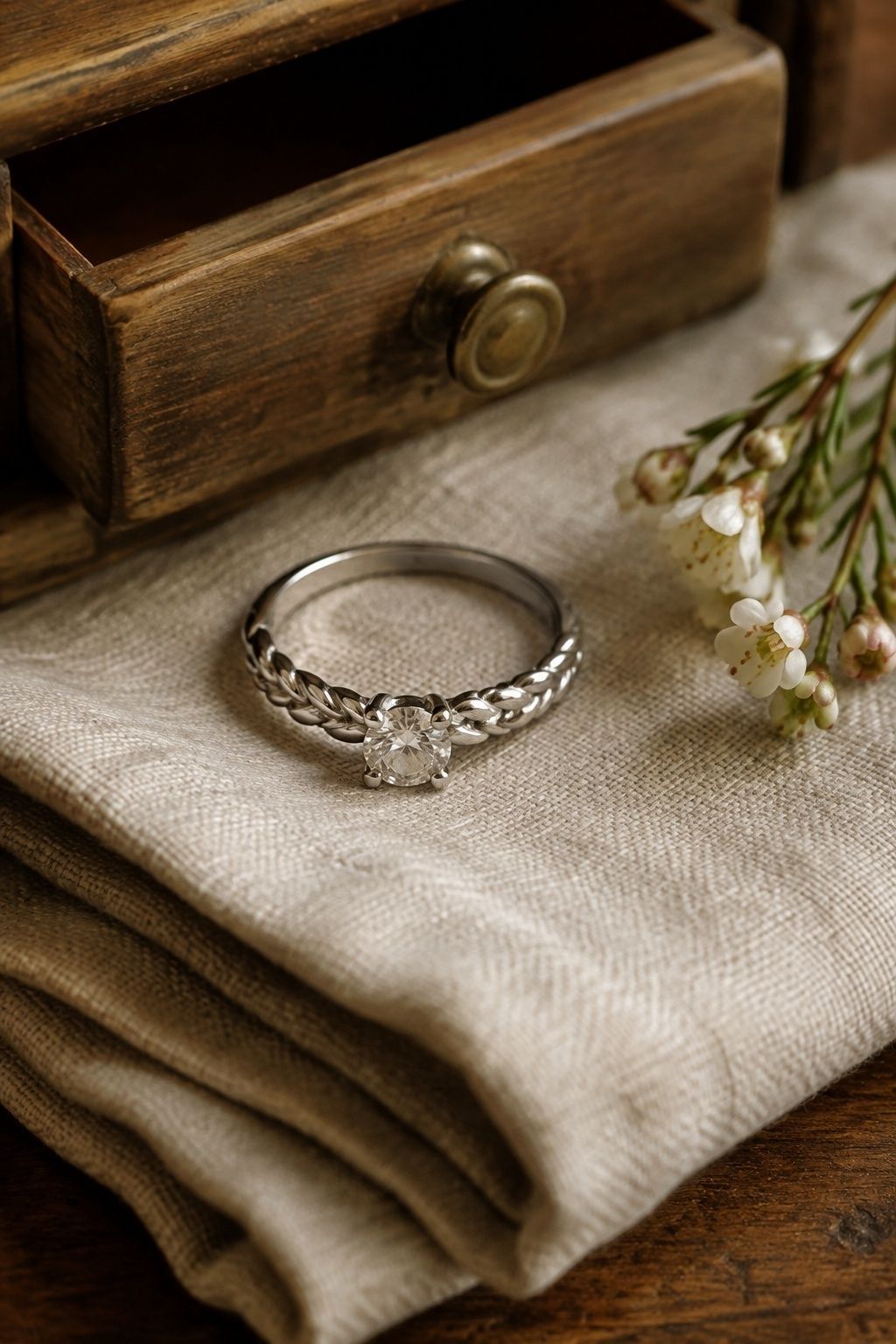
Braided details are a lovely way to bring sentiment into a 1950s engagement ring without adding a halo or heavy carving. The band can look woven, twisted, or gently rope-like, which gives the ring movement while keeping the center stone clear.
This style feels especially right for heirloom-minded couples. It photographs beautifully in close hand shots, but it also feels personal in everyday life, which matters long after the wedding dinner is over.
Classic Solitaire With A Slim Stacking Band
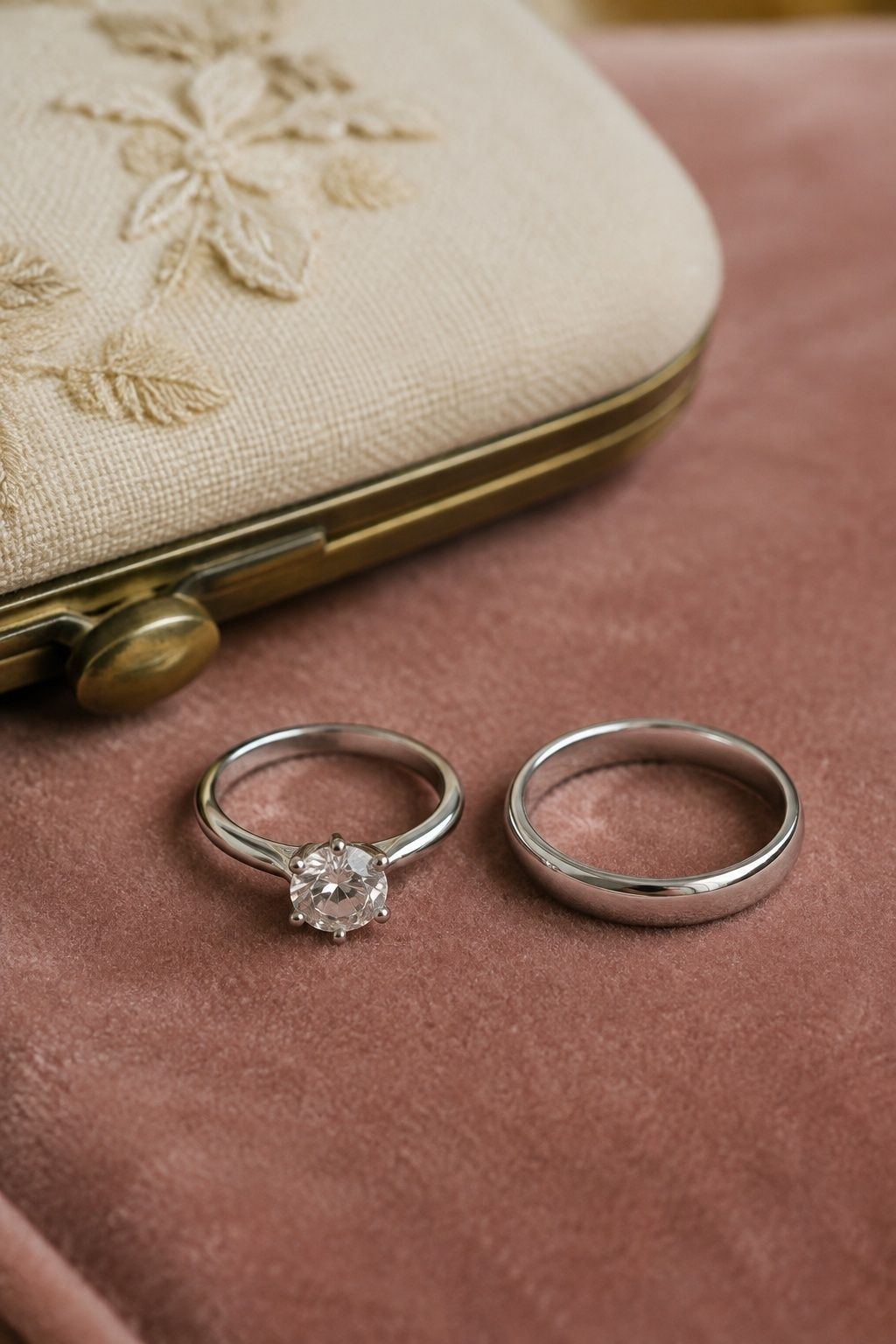
A classic solitaire is practical because almost any wedding band can work beside it. For a 1950s mood, try a slim stacking band in matching platinum or white gold, then check whether the two rings sit comfortably without rubbing the prongs.
Keep the stack low when your engagement ring has a strong silhouette. Leave enough air between bands for daily comfort, then build personality slowly as the unique wedding ring stack feeling develops over anniversaries.
Authentic Vintage Ring With A Fresh Appraisal
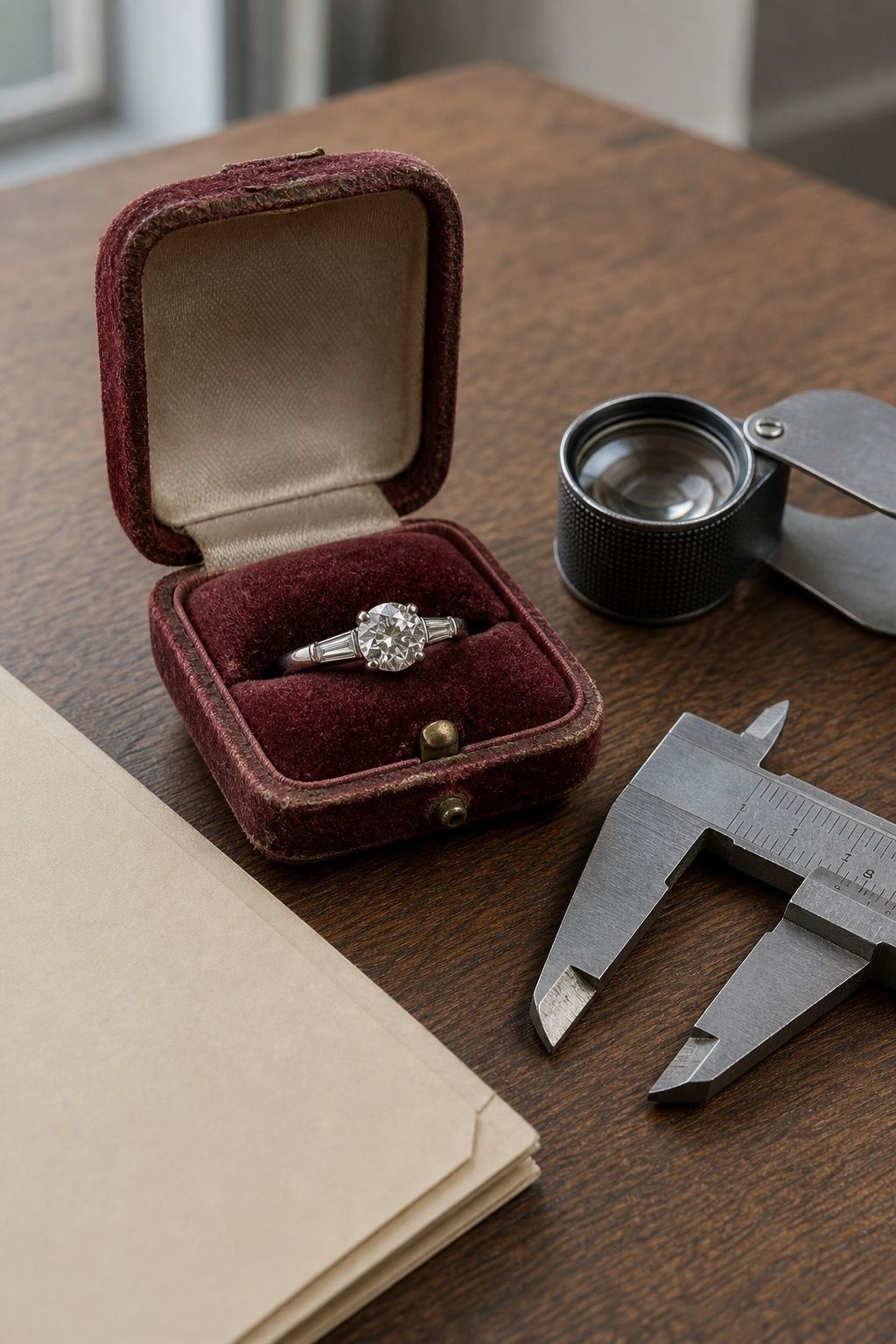
An authentic 1950s vintage engagement ring should come with careful condition notes. Ask about prong wear, metal thinning, past resizing, stone security, and whether any diamonds have been replaced. Beautiful history is still jewelry you have to wear.
Before buying, pay for an appraisal service from someone independent of the seller. The appraisal can confirm diamond details, metal type, repairs, and replacement value for jewelry insurance. It also gives you a calmer starting point if the ring will travel for a destination elopement or honeymoon.
Vintage-Inspired Ring Made For Daily Wear
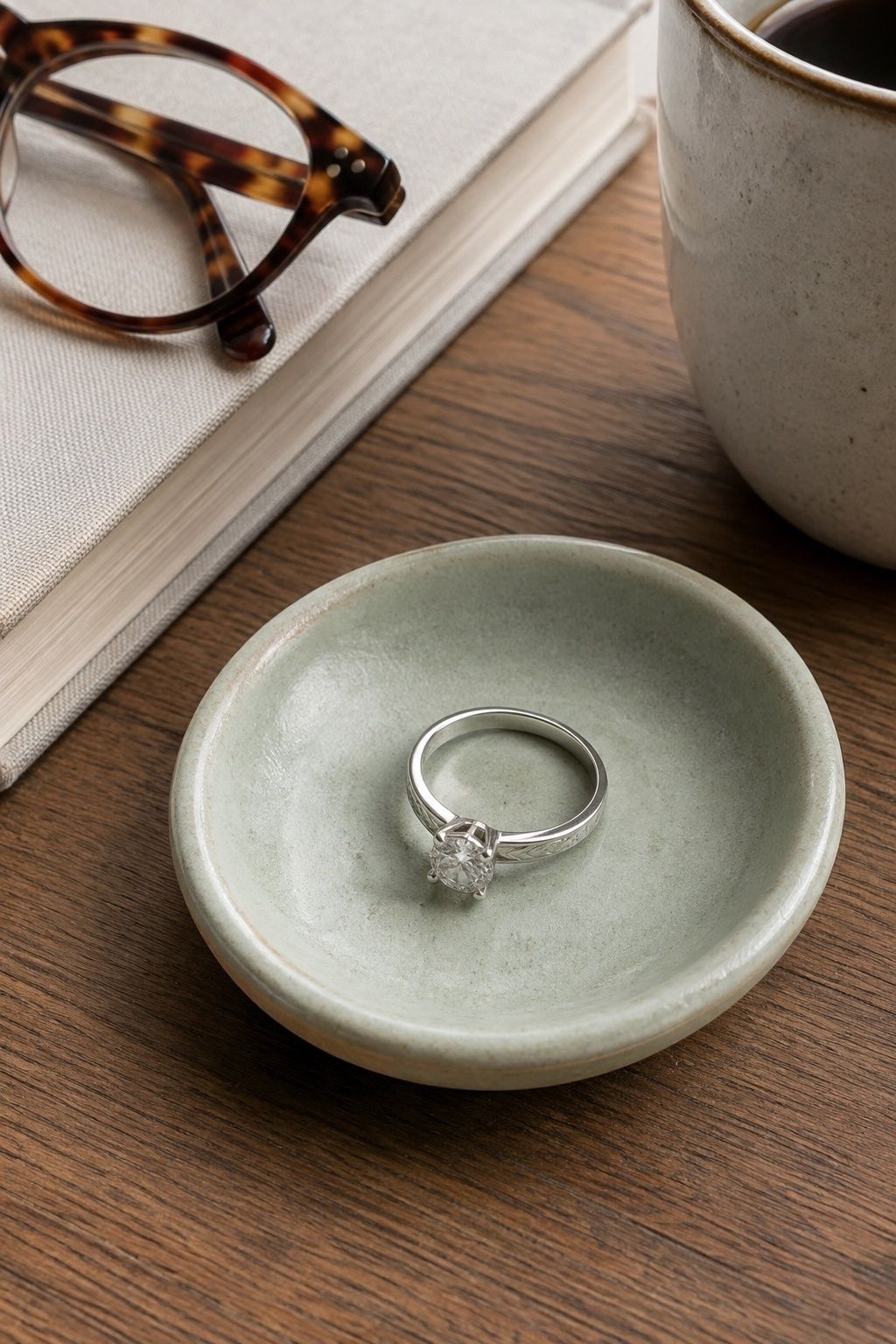
A vintage-inspired ring is often the better choice if you love the 1950s look but want modern durability. You can choose the stone, metal, prong style, band width, and wedding band fit while still keeping the midcentury cues intact.
This route is not less romantic. It simply means the ring borrows the decade’s elegance while being made for your actual life: typing, traveling, cooking, hugging guests, and wearing the same piece through ordinary mornings.
How To Recognize A True 1950s Ring
A 1950s ring usually feels balanced, bright, and wearable. The center stone matters, but the setting does not disappear completely. You may see white gold, platinum, slim shoulders, baguette accents, clean prongs, or textured bands that add a tiny bit of ceremony.
The shape should not look as sharply geometric as many 1920s and 1930s rings. Crisp symmetry, stepped patterns, square frames, and black-and-white contrast usually signal Art Deco; 1920s vintage ring styling feels more angular, while 1950s polish feels softer and more diamond-centered.
It also should not feel as sculptural or oversized as many 1940s retro rings. Retro pieces often have bolder metal movement and a stronger cocktail-jewelry feeling. A 1950s bridal ring tends to feel neater, brighter, and more centered on the diamond.
Check The Stone Shape Before The Story
Stories make vintage rings irresistible, but the shape tells you whether you will actually wear it. Round brilliant, marquise, emerald, and pear shapes all suit the 1950s conversation, but they behave differently on the hand.
A round brilliant is easy and classic. A marquise feels longer and more dramatic. An emerald cut feels quiet and tailored. A pear shape feels romantic and directional. Try each style with your normal clothes, not only with a bridal outfit in mind.
Notice Whether The Ring Feels Bridal Or Costume-Like
The best 1950s engagement ring should still feel like your ring when the wedding is over. If a setting looks magical in a tray but distracting on your hand, it may be more collectible than wearable.
For an intimate wedding, that difference matters because guests will see the ring close up all day. Choose a piece that looks romantic beside your vows and natural when you reach for coffee the next morning.
Choose Side Stones That Support The Center
Baguette side stones are one of the most useful midcentury details because they add polish without stealing attention. A modest center stone often feels more finished beside them, especially in a slim white gold setting.
If you want more sparkle around the center, keep the scale modest. Surrounding stones should stay supportive; vintage cluster engagement ring styling suits the ring only when the fuller outline is the whole point.
Try The Wedding Band Before Committing
Some vintage rings were not designed to sit flush with a modern band. Before you buy, try plain bands, engraved wedding bands, curved bands, and slim stacking bands with the engagement ring on your actual finger.
A tiny gap is not always a problem. It can look graceful and relaxed. The issue is friction: if the band presses against prongs or stones, it may wear the ring over time. Comfort matters as much as the photo.
Protect The Ring Beyond The Wedding Day
Vintage rings deserve a practical plan. Ask the jeweler how often the prongs should be checked, whether the ring can handle daily wear, and whether any previous repairs need monitoring. Then decide when to wear the ring and when to switch to a simpler travel band.
An antique ring box is perfect for flat lays and vow morning photos. A travel ring box is better for the honeymoon, wedding-morning bag, or family dinner where the ring may come on and off. Little routines protect the sentimental piece without making you nervous around it.
Styling A 1950s Engagement Ring For An Intimate Wedding
A 1950s engagement ring does not require a full retro wedding. It pairs beautifully with bias-cut satin, simple crepe, ballet-length veils, pearl studs, silk gloves, low chignons, city hall flowers, and candlelit tables. Let the ring set the tone softly rather than turning the whole day into a theme.
If the ring has an elongated stone, echo the length in small places: a narrow bouquet ribbon, a long veil edge, or a slim champagne coupe. Turn the stone horizontally only for an intentional modern shift; east west engagement ring styling changes the ring’s balance more than a simple band choice.
If your ring has a romantic shape, keep the rest of the hand simple. Edit bracelets, nail art, and charms until the emotional center stays clear; heart shaped wedding ring styling works best when it is the only sentimental motif.
For ring photos, ask your photographer for a few close frames in natural light and a few at the dinner table. Midcentury rings often look best when the image catches both the diamond and the hand around it: holding a glass, touching a menu, closing a vintage clutch, or resting on a partner’s sleeve.
FAQ
What did engagement rings look like in the 1950s?
Engagement rings in the 1950s often looked bright, refined, and wearable. Common details included round brilliant diamonds, platinum or white gold settings, classic solitaires, marquise and pear shapes, emerald cuts, baguette side stones, slim shoulders, braided bands, and modest engraved details. The overall effect was romantic but cleaner than many earlier antique styles.
What diamond cuts were popular in 1950s engagement rings?
Round brilliant diamonds were especially important to the 1950s engagement ring look, but marquise, emerald, pear, and other elongated cuts also suit the era. Baguette side stones were popular for adding tailored shine around a center diamond. The best choice depends on whether you want classic sparkle, calm geometry, or a more dramatic finger-lengthening shape.
Are 1950s engagement rings practical to wear today?
Many 1950s engagement rings are practical to wear today, especially when the setting is low enough, the prongs are secure, and the metal has not thinned too much. Have an independent jeweler inspect the ring before purchase, then plan regular prong checks, jewelry insurance, and a safer travel ring for days when the vintage piece may be at risk.
What is the difference between 1950s and Art Deco engagement rings?
Art Deco engagement rings usually feel more geometric, architectural, and sharply patterned, with strong symmetry and a bolder 1920s or 1930s feeling. 1950s engagement rings tend to look cleaner, brighter, and more centered on the diamond itself. A 1950s ring may still have baguettes or tailored lines, but the mood is usually softer and more wearable.
What wedding band goes with a 1950s engagement ring?
A slim platinum or white gold band is the easiest pairing for many 1950s engagement rings. An engraved wedding band can add sentimental detail, while a curved band may help if the engagement ring has a low setting or side stones. Try the band with the ring before buying so the two pieces do not rub against prongs or diamonds.
How do you buy an authentic 1950s engagement ring?
Buy an authentic 1950s engagement ring by asking for age details, metal information, diamond notes, repair history, resizing history, and close photos of the setting. Work with a reputable vintage jeweler, request an independent appraisal, and have the ring inspected for prong wear, loose stones, and thinning metal before you treat it as an everyday engagement ring.
Final Thoughts
1950s engagement ring ideas feel special because they know how to be romantic without becoming heavy. A bright solitaire, a marquise shape, a pair of baguettes, a slim platinum setting, or a braided band can carry the whole feeling of the decade in one close, personal detail.
Before you choose the final ring, ask how the setting will live through daily wear, resizing, insurance, and a wedding band fitting, then weigh that answer alongside mid-century ring style context so the piece feels beautiful in your ceremony photos and steady in the years after.
Last update on 2026-10-03 / Affiliate links / Images from Amazon Product Advertising API