
Wedding dress men ideas include literal gowns, skirted suits, long tunics, cape layers, and ceremonial hybrids for a man or masculine-presenting partner who wants clothing that feels honest. Begin with comfort, fit, movement, and desired visibility, then choose a silhouette with ease for vows, portraits, dinner, and the tender pauses around the ceremony.
A wedding outfit deserves more room than the old suit-or-dress divide. For some people, a dress feels like the clearest expression of beauty; for others, a dress-adjacent look with tailoring, fluid fabric, or one dramatic layer gives the day its truest shape.
In a small ceremony, that choice feels especially tender because the room is close. The right look gives the wearer ease through hugs, family photos, seated dinner, dancing, and the emotional weight of being seen by cherished guests.
Recommended Wedding Products


You Might Also Like These Blog Posts
- Wedding Dress With Bolero Ideas for Coverage That Feels Chosen
- 1980 Wedding Dress Ideas With Drama That Still Breathes
- Trouser Suit Wedding Dress Ideas for the Bride Who Means It
- Wedding Cape Dress Ideas for a Cinematic Walk Down the Aisle
- Dainty Wedding Dress Ideas That Still Feel Like a Moment
- Mermaid Drape Wedding Dress Ideas for Soft Sculpted Drama
Wedding Dress Men Ideas
The best wedding dress men ideas begin with the person wearing the outfit, rather than any inherited rule about groom style. Notice where the wearer wants softness, where structure feels reassuring, and which details give the day beauty without costume energy.
That range includes a floor-length gown with clean shoulders, a skirt suit with a precise jacket, a longline tunic over trousers, or a cape that gives the ceremony look movement without a full dress. The aim is a wedding look with enough truth in it for the wearer to stand still, breathe, and feel present.
A White Tailored Gown With Clean Shoulders
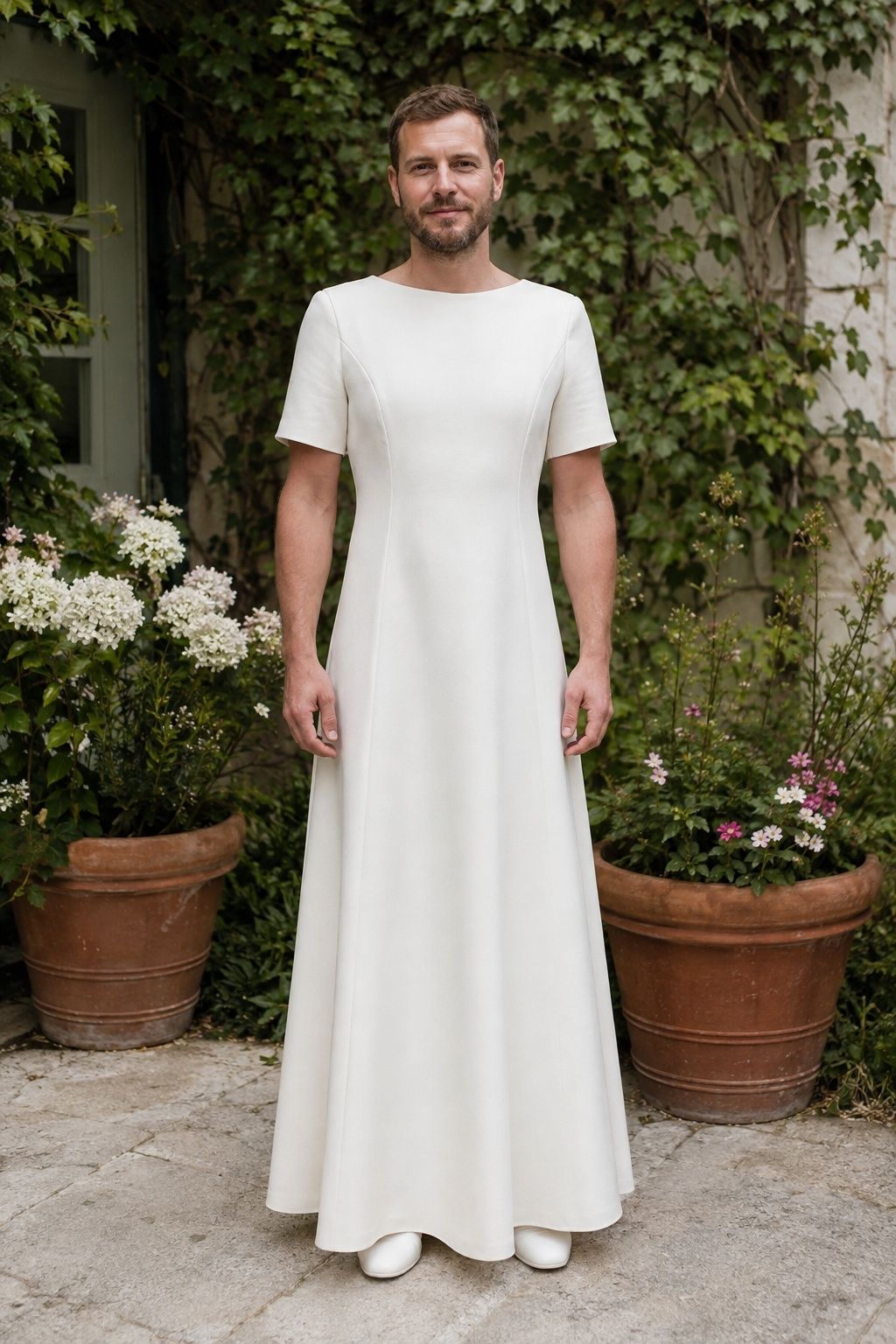
A white tailored gown creates a true wedding-dress moment with a formal, intentional line. Clean shoulders, a stable bodice, and a skirt that falls from the right point on the body turn the look elegant rather than borrowed.
For men or masculine-presenting partners, shoulder fit matters as much as skirt shape. Alterations through the neck, armhole, chest, and waist bring calm to photographs and comfort to vows, especially when bridal size labels feel too limited.
A Longline Tunic Over Slim Trousers
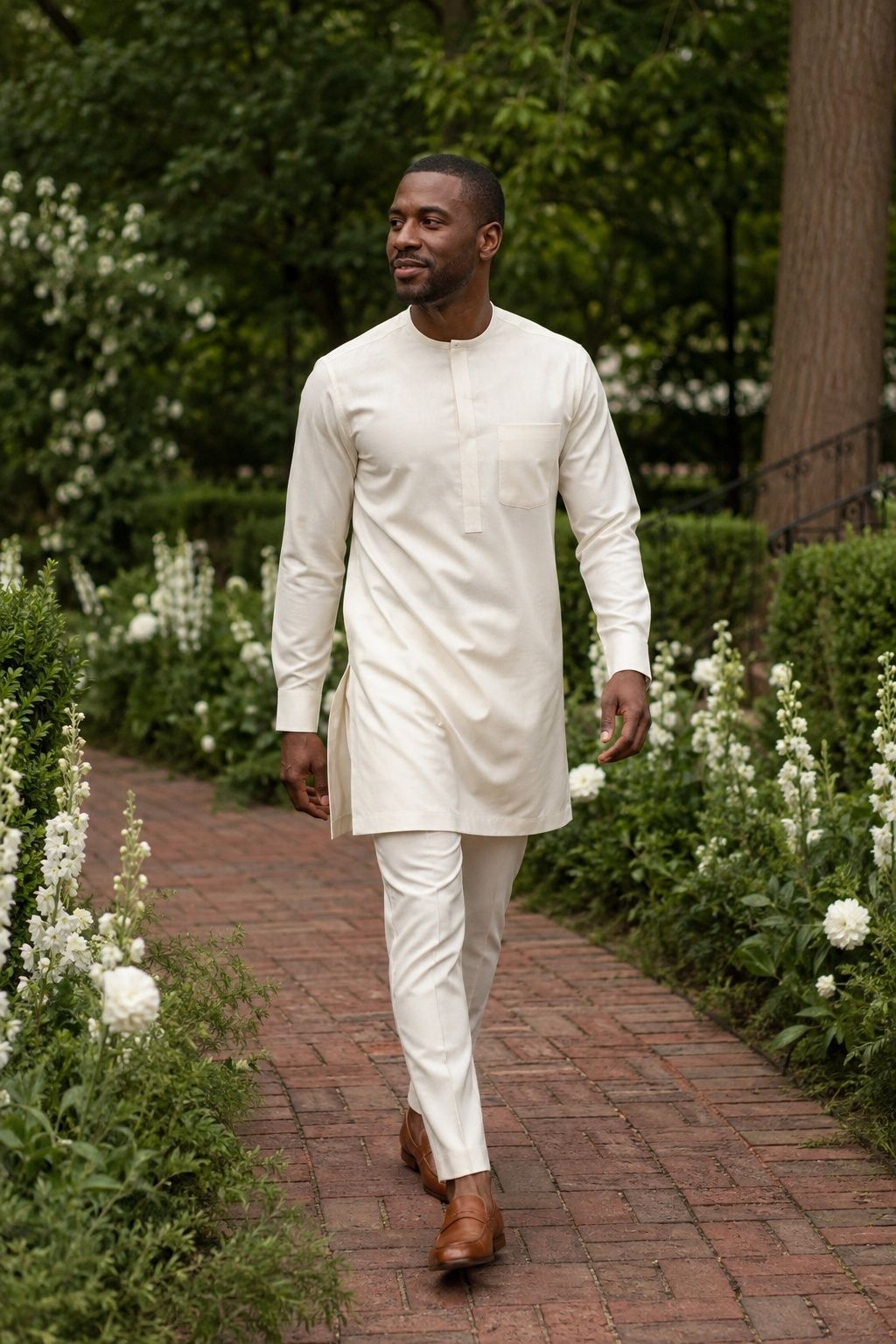
A longline tunic gives dress-like movement without a full skirt. It skims the body, opens at the side, or falls in a straight column over slim trousers, creating a graceful silhouette that still feels grounded.
This is one of the gentlest wedding dress men ideas for someone who wants softness with trouser coverage. Ivory crepe, lightweight wool, silk, or linen each changes the mood, while tailoring keeps the outfit formal enough for vows.
A Skirt Suit With a Structured Jacket
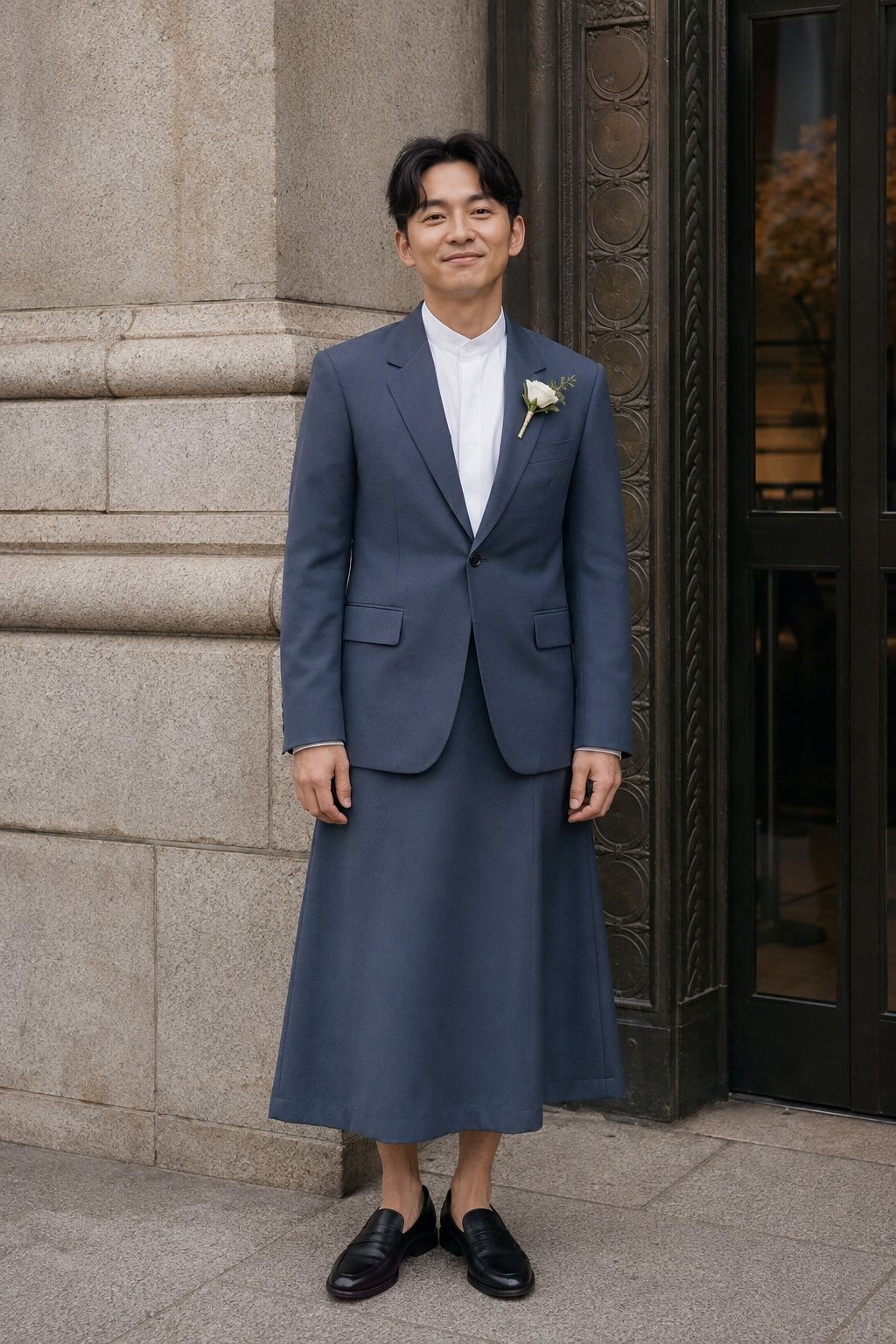
A skirt suit holds masculine and feminine signals in one polished outfit. The jacket gives the look architecture, while the skirt adds movement and a clear sense of ceremony.
For a courthouse wedding, dining-room reception, gallery ceremony, or small city celebration, this route feels especially refined. Keep the jacket fitted enough to define the body, and choose a skirt length that lets the wearer walk, sit, and turn easily for portraits.
A Soft Ivory Robe Coat for Ceremony Vows
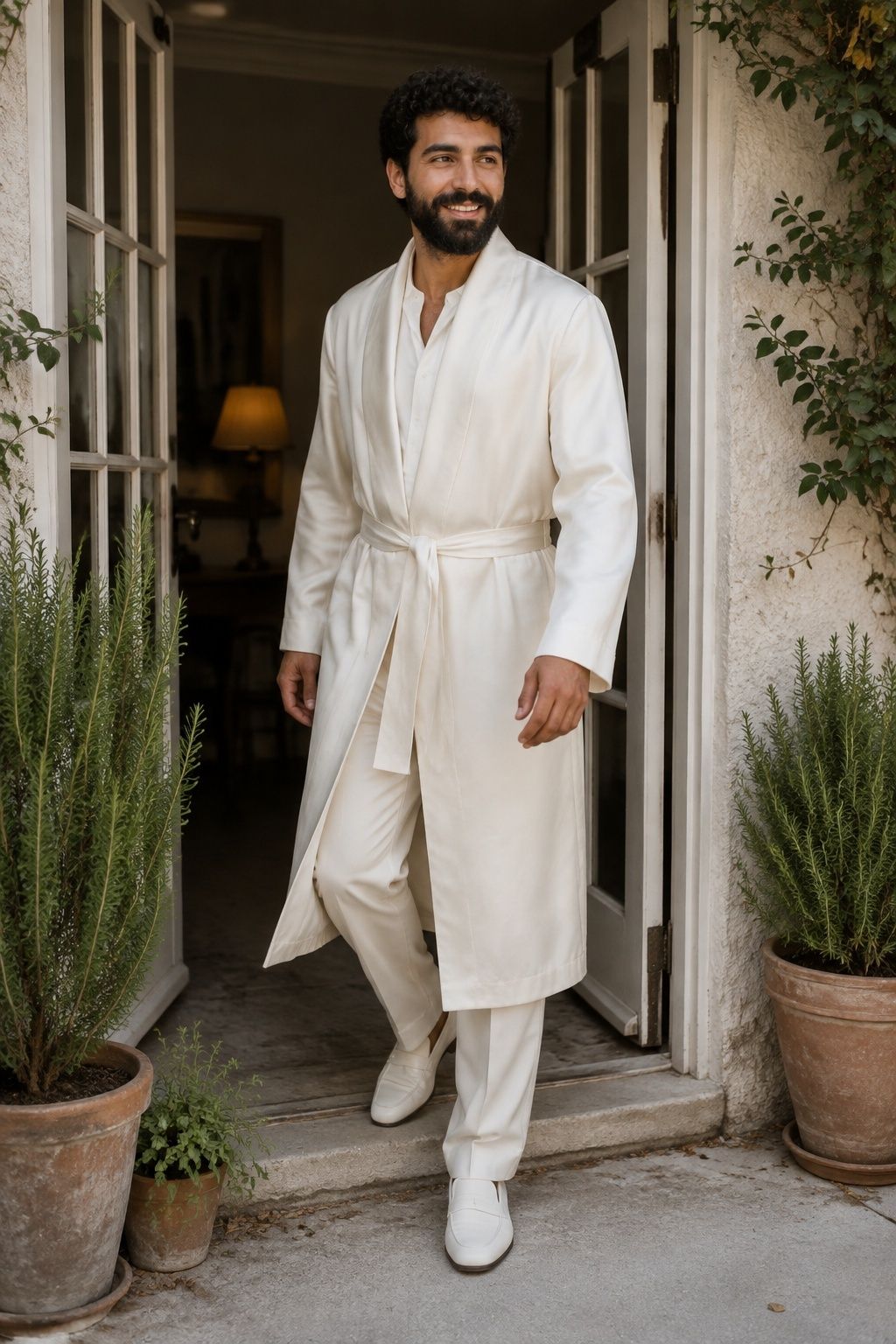
An ivory robe coat suits a ceremony look that feels relaxed, intimate, and quietly dramatic. Worn over trousers, a slip-style layer, a silk shirt, or a tonal base outfit, it gives the effect of a dress without fussy fastenings.
This silhouette feels lovely for home weddings, garden vows, and getting-ready photos because the fabric moves gently around the body. A tie belt, inner button, or hidden closure adds security while greeting guests.
A Lace Shirt With a Full Pleated Skirt
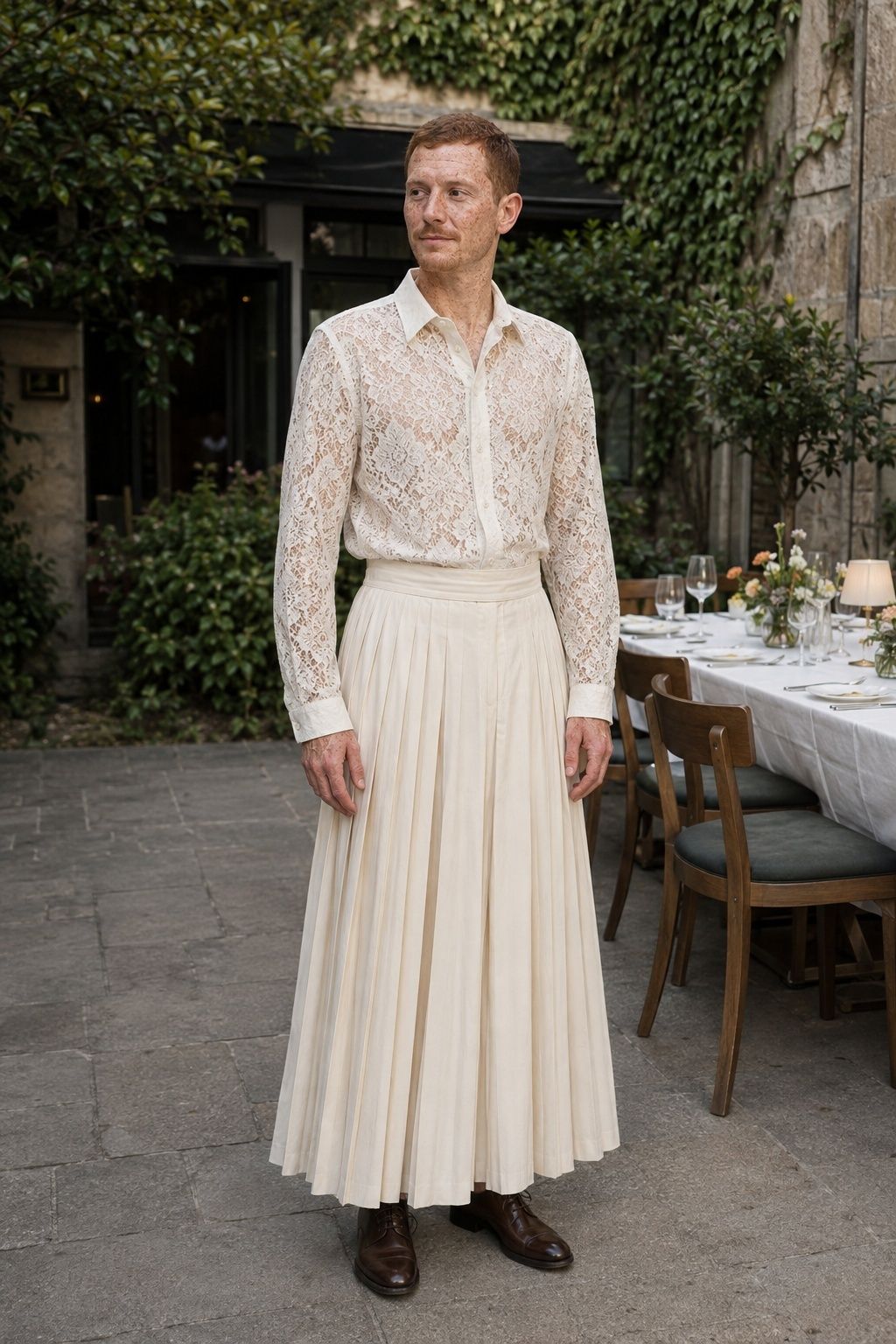
A lace shirt with a full pleated skirt feels romantic without losing strength. The shirt keeps the upper body familiar, while the skirt brings volume, texture, and an unmistakably ceremonial feeling.
Balance is the secret here. If the lace is detailed, keep the skirt fabric clean; if the skirt has dramatic pleats, choose a shirt with simpler lines. The pairing deserves intention from every angle, especially during seated dinner photos where the top half matters most.
A Tuxedo Gown With a Sharp Lapel
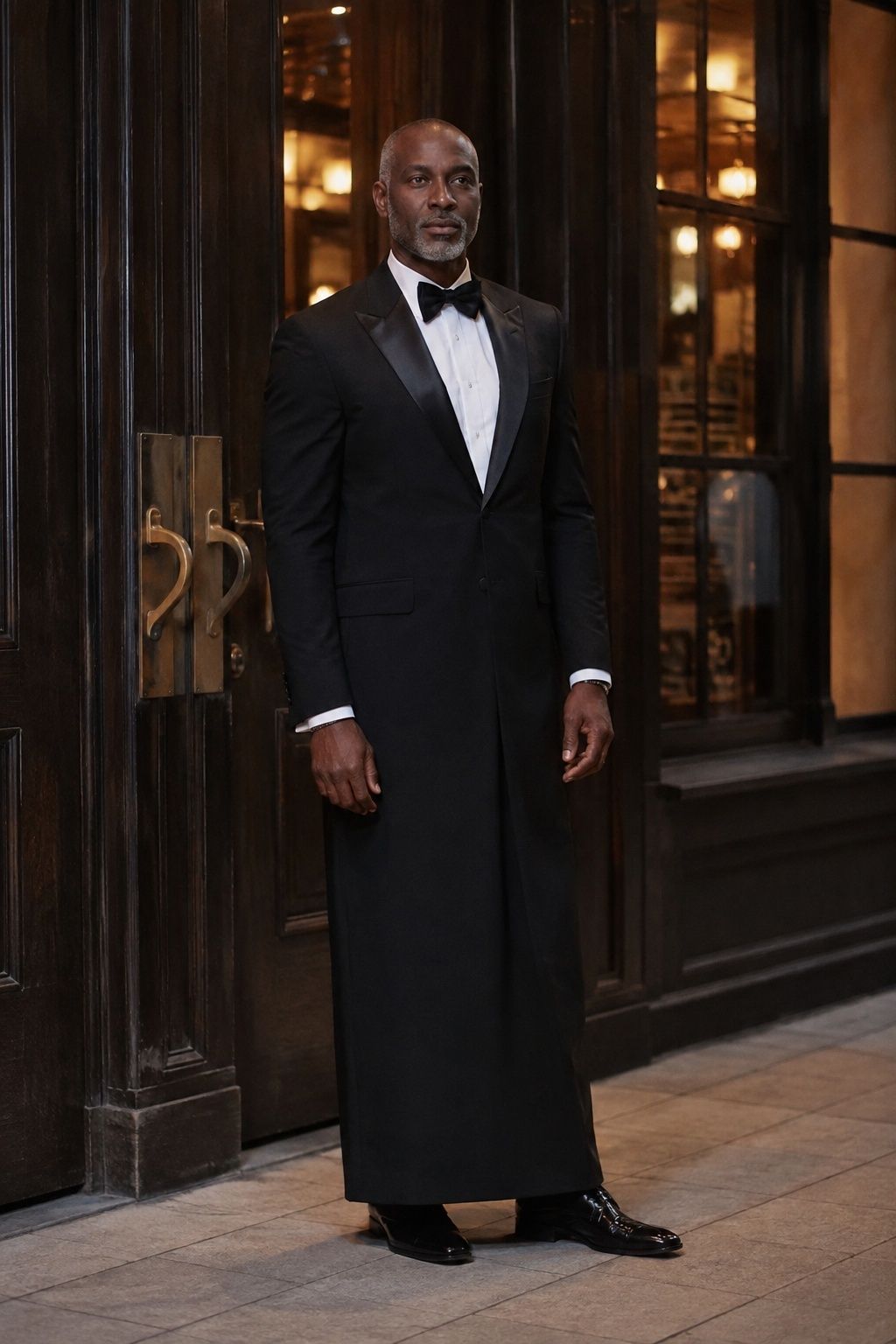
A tuxedo gown blends formal menswear codes with the length and sweep of a dress. A satin lapel, strong shoulder, deep neckline, or column skirt creates confidence without heavy decoration.
This is a strong choice for a wearer who loves black-tie details but not a standard tux. Keep the accessories edited: formal shoes, a slim ring, a polished earring, or one brooch gives enough finish when the silhouette already carries the moment.
A Sherwani-Inspired Dress Silhouette
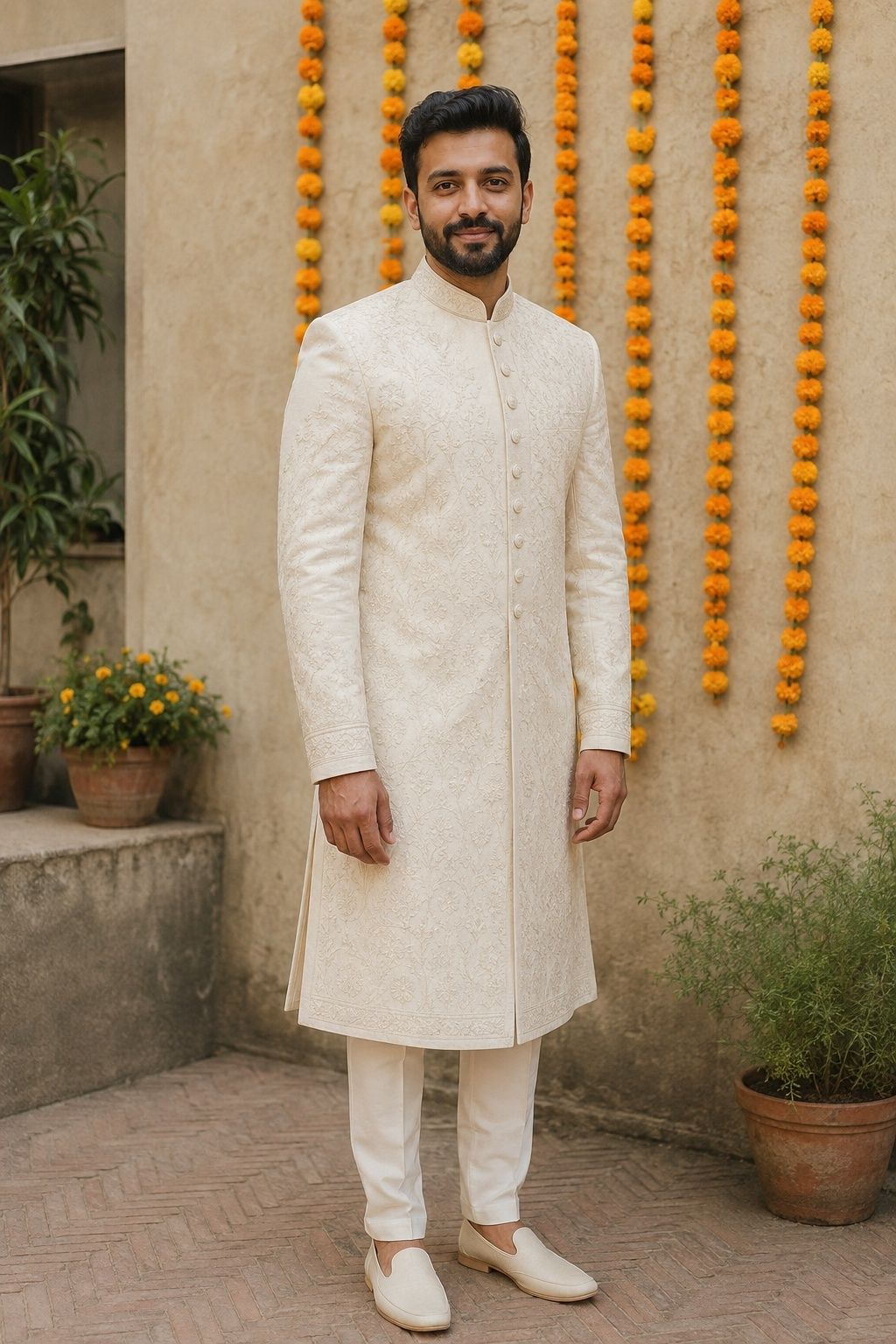
A sherwani-inspired silhouette feels meaningful when it connects to the wearer’s culture, family, or personal history. A long structured jacket, ornate fabric, and ceremonial length create the presence of a dress while honoring a tailored tradition.
Handle cultural details with care. A designer, tailor, or family member who understands the garment brings accuracy to embroidery, closure style, fabric, and styling, especially when those details carry deeper meaning.
A Cape Dress Layered Over Tailored Pants
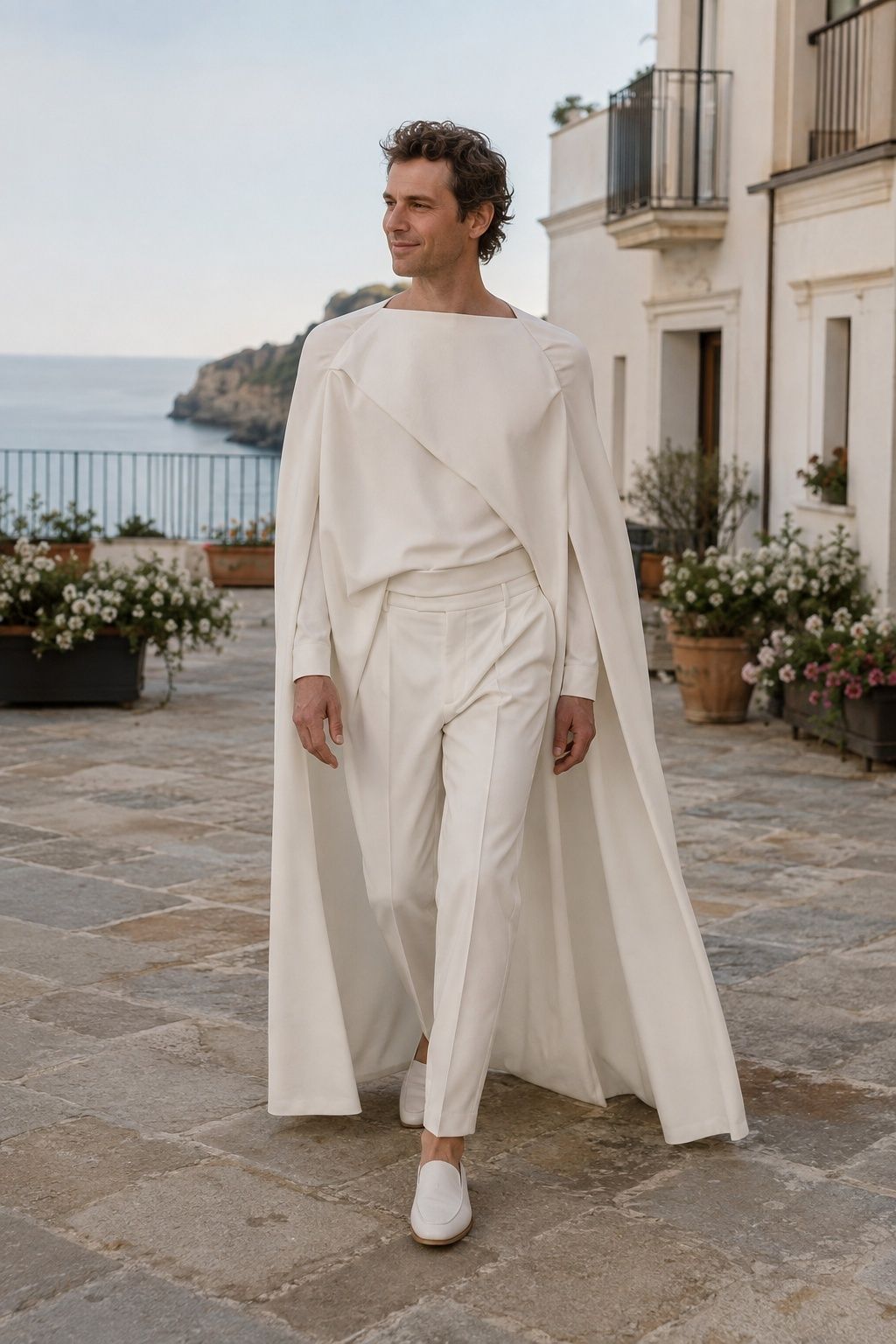
A cape dress gives the wearer one sweeping layer for the ceremony while tailored pants keep the outfit practical. The cape attaches at the shoulders, falls from a high neck, or floats over a simple sleeveless base.
This option photographs beautifully in small ceremonies because movement shows clearly even without a large aisle or ballroom. Test the cape before the wedding day so it stays free of neck pull, chair snags, and portrait awkwardness.
A Satin Column Dress With Minimal Jewellery
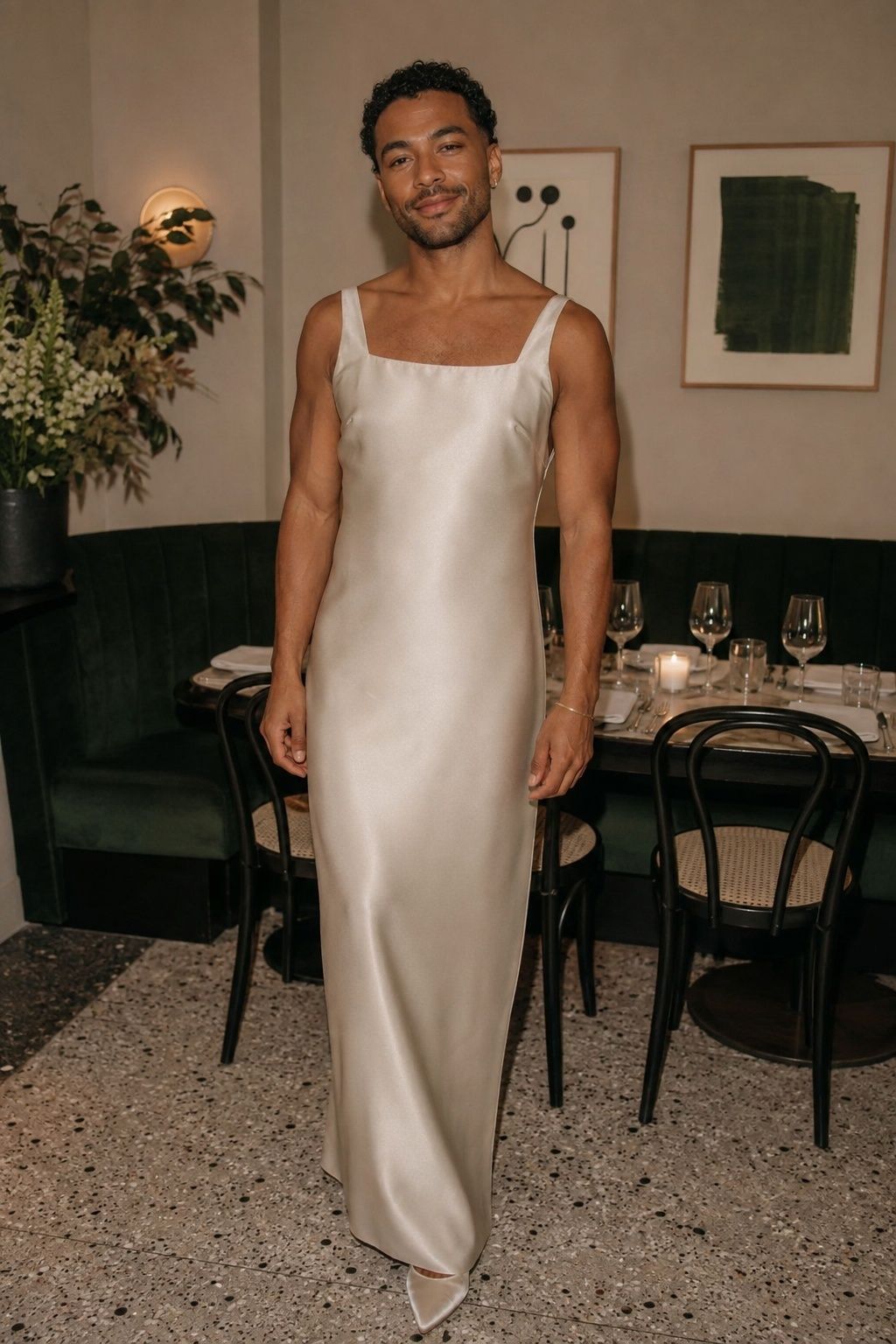
A satin column dress is quiet, direct, and deeply elegant when the fit is right. It needs little extra styling because the fabric, fall, and posture of the wearer do most of the work.
Choose this for a small restaurant wedding, candlelit dinner, civil ceremony, or modern gallery space. Simple silver jewellery, a clean shoe, and a small bouquet or boutonniere alternative finish the outfit without softening its restraint.
A Corset-Style Top With a Flowing Skirt
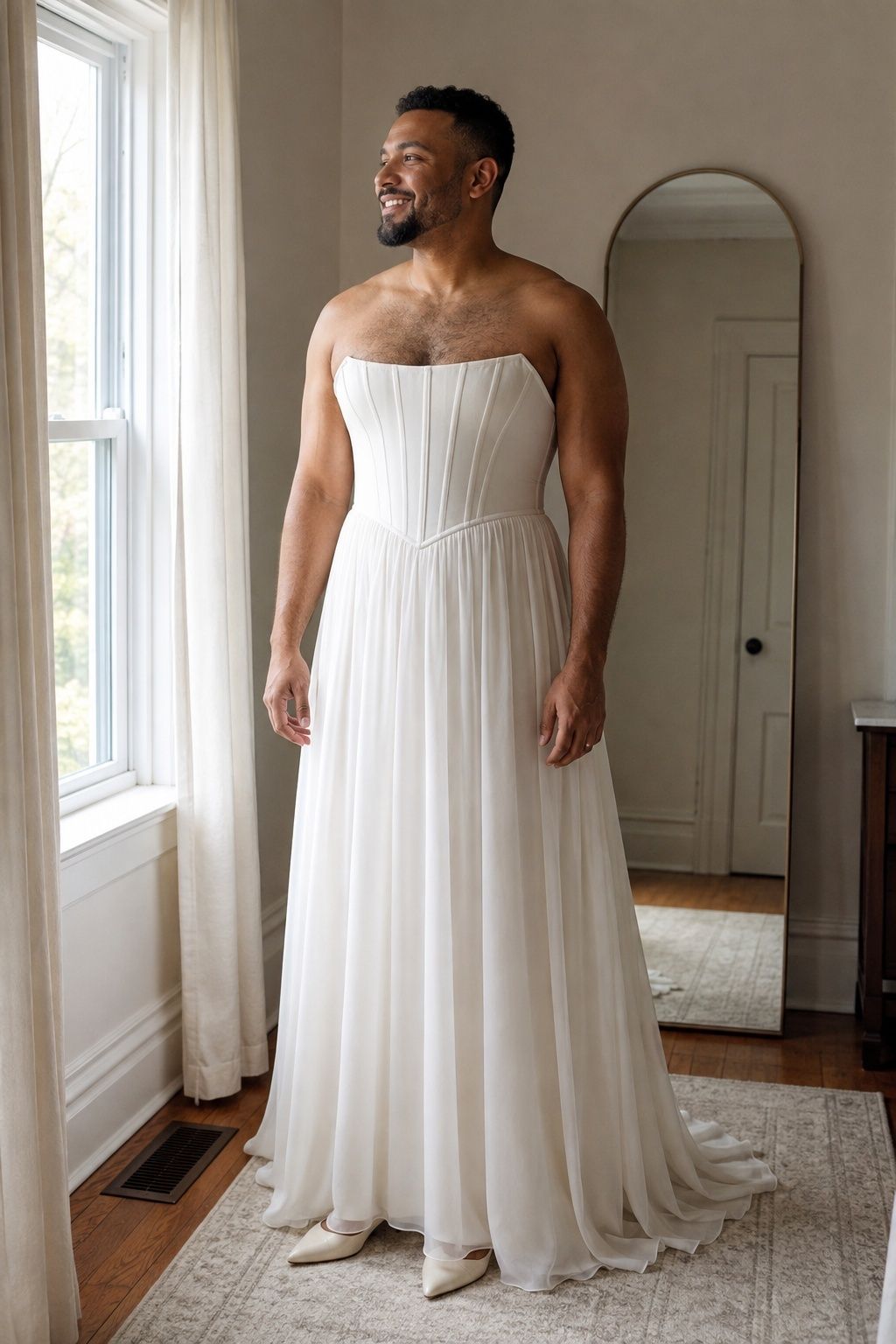
A corset-style top with a flowing skirt gives structure and softness at the same time. The top needs comfortable shaping, steady breathing room, and secure seams rather than rigid costume drama.
During fittings, sit, lift both arms, hug someone, and take a deep breath. If the outfit only feels good while standing still, keep altering it before the wedding day, especially for an intimate celebration with close conversation all evening.
A High-Neck Dress With Masculine Shoes
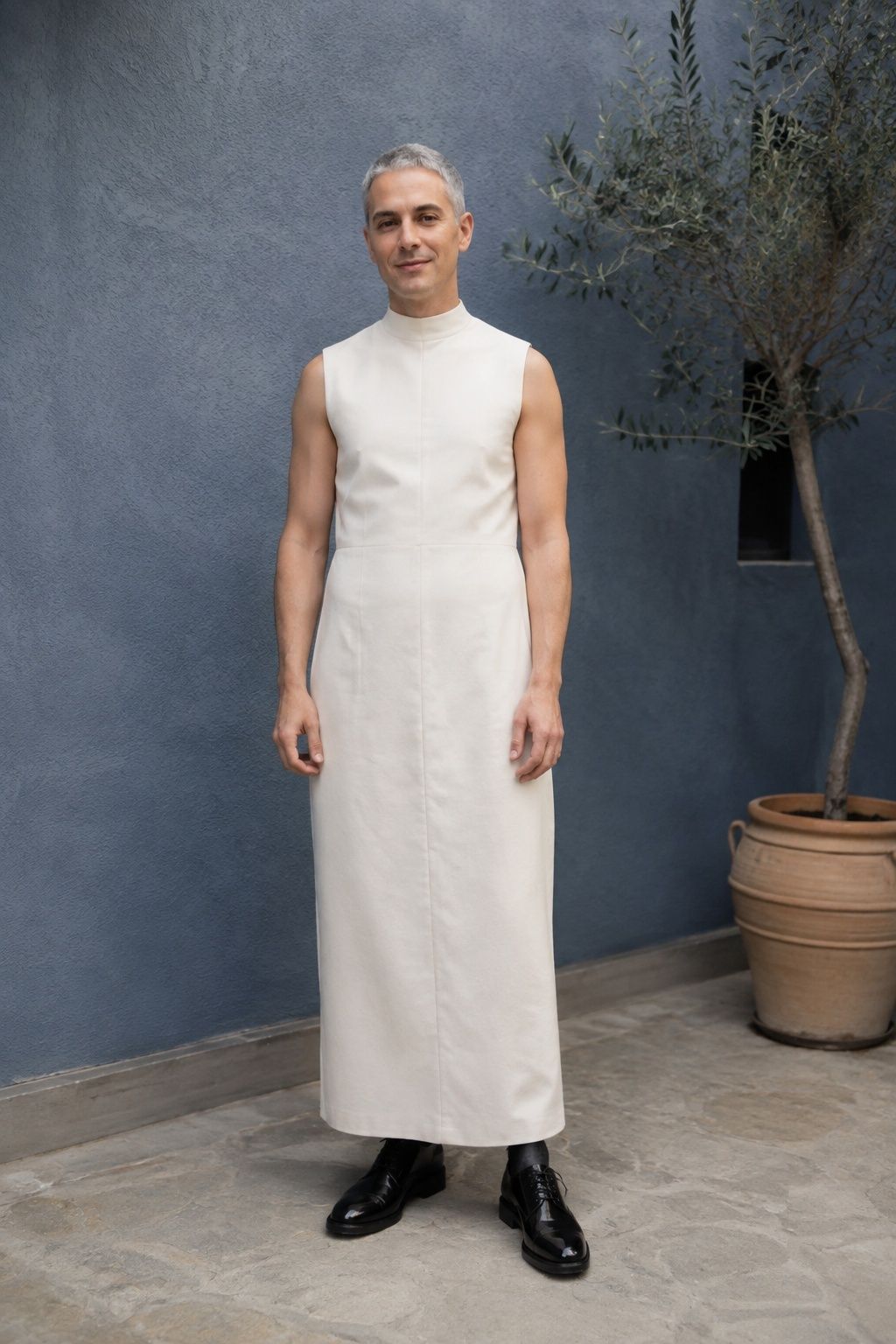
A high-neck dress feels sleek, protective, and ceremonial. Masculine shoes change the balance of the outfit without reducing the dress itself.
Patent loafers, dress boots, monk straps, or clean oxfords add weight at the hem and anchor the wearer. This route suits someone who wants an unmistakable dress with one familiar menswear detail.
A Reception Mini Dress for a Second Look
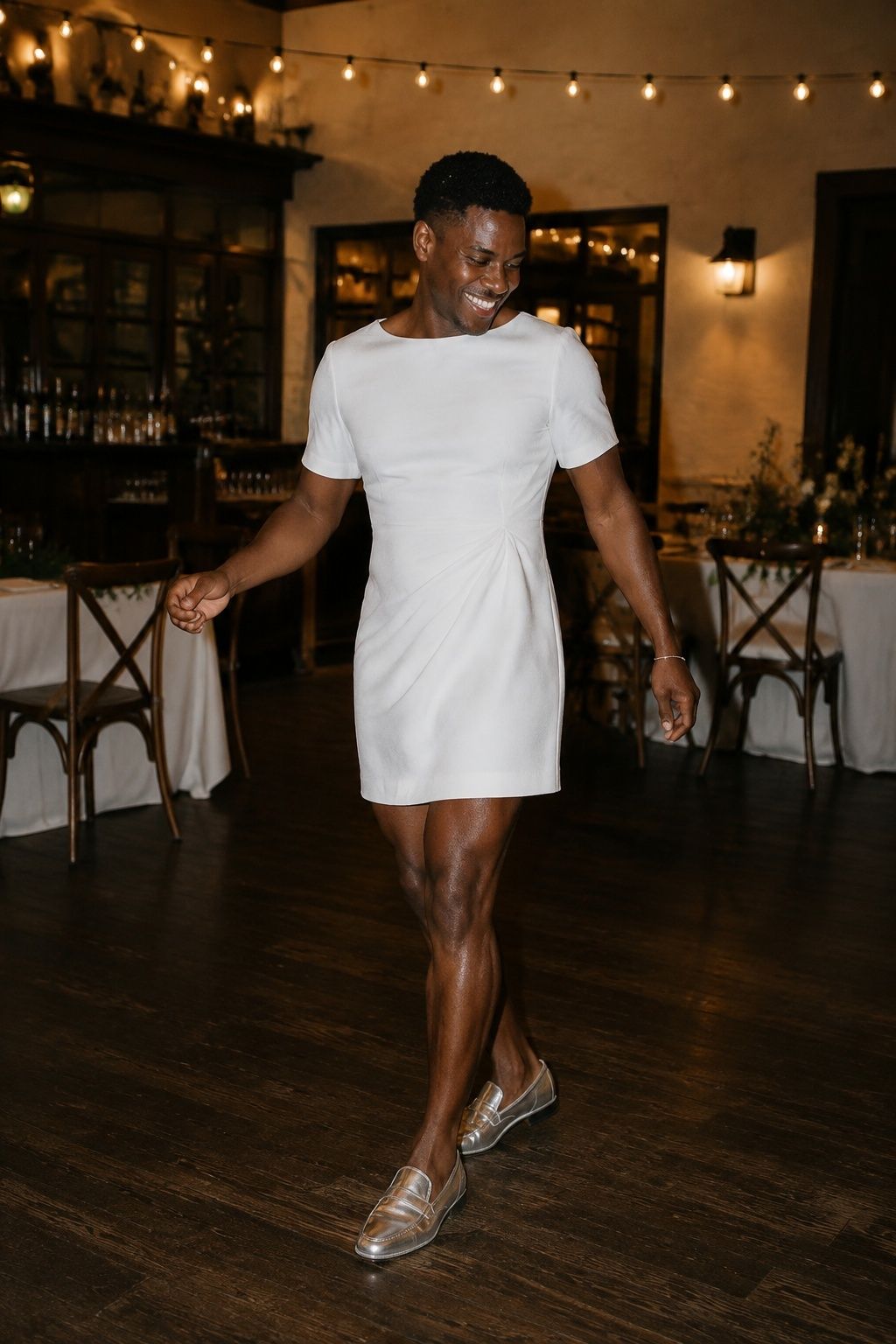
A reception mini dress turns the second look into a joyful shift for dancing, after-party photos, or the moment the formal dinner gives way to music. It lets the wearer explore a more playful side of the idea without loading every feeling into the ceremony outfit.
Keep the change practical. Choose closures the wearer handles easily, shoes with real dance comfort, and a garment bag that keeps the second look crisp until its entrance.
A Romantic Lace Tunic for Garden Vows

A romantic lace tunic feels right for garden vows when it is breathable, soft, and not too precious for grass, stone paths, or warm weather. It pairs naturally with tailored trousers, a narrow skirt, or a tonal underlayer.
Look for lace scale that suits the wearer. Large patterns feel bold and modern, while finer lace looks softer in close-up photos. A tailor adds lining where coverage matters and leaves sheerness only where it feels intentional.
A Black Wedding Dress for an Alt Groom Look
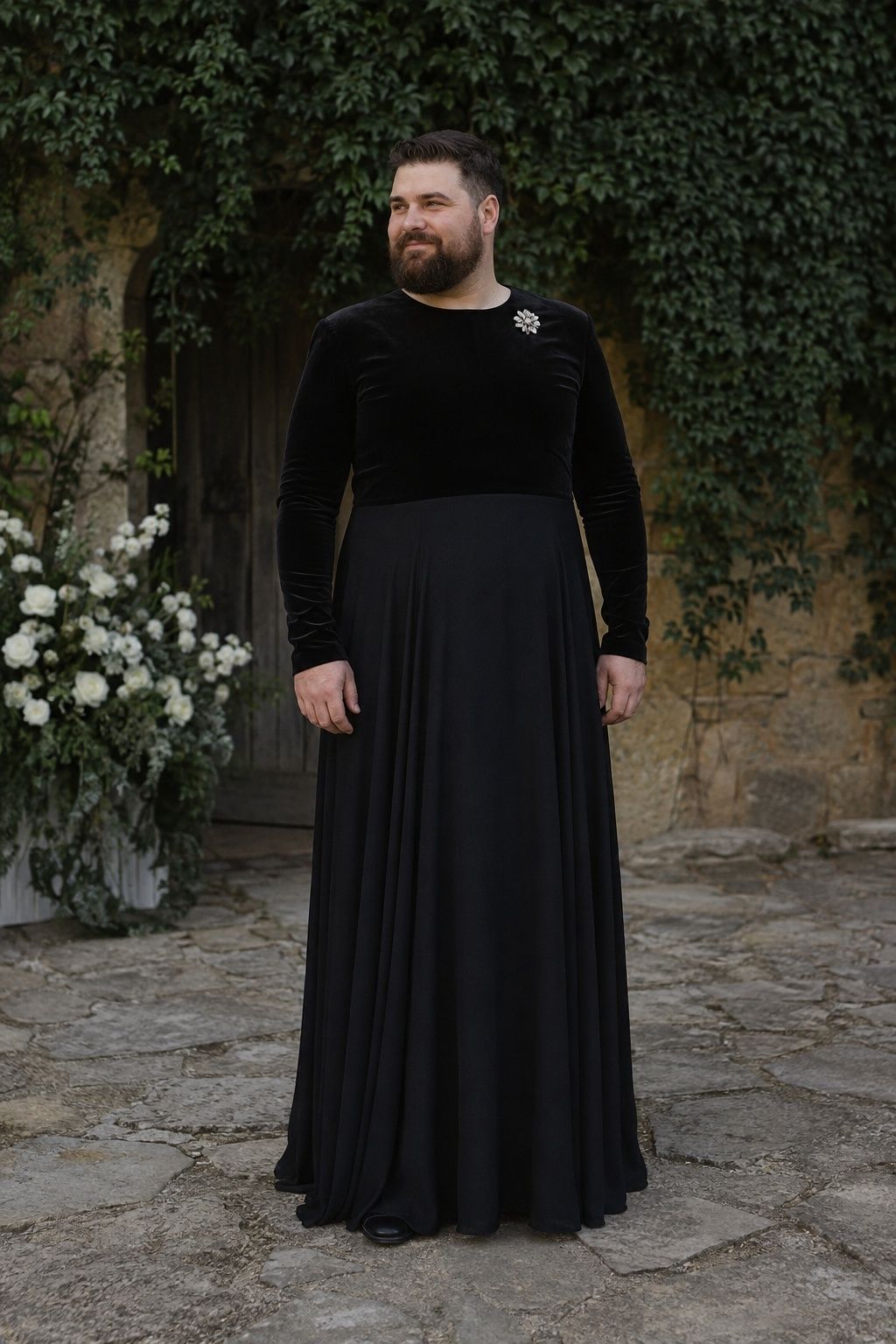
A black wedding dress feels formal, protective, romantic, or dramatic depending on the cut. It suits a wearer who feels at home in dark clothing and wants the wedding look to honor that truth.
For a small ceremony, black feels surprisingly intimate because every texture becomes visible up close: velvet, matte crepe, lace, satin, or wool each tells a different story. Add contrast through flowers, jewellery, shoes, or partner coordination when the photos need a lighter point of focus.
A Custom Hybrid Look Made With a Tailor
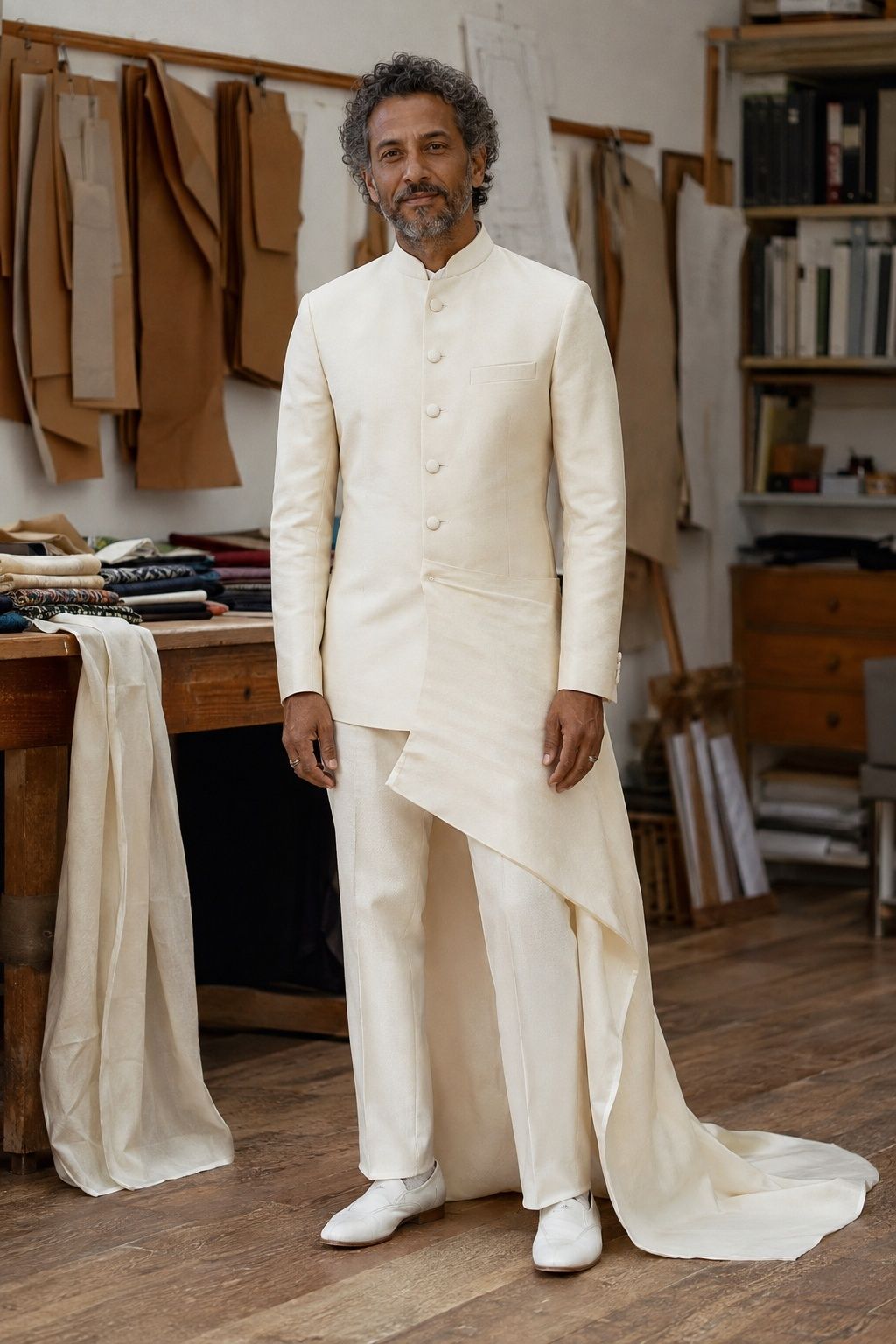
A custom hybrid look often solves the problem that standard bridal sizing and standard menswear both miss. A tailor or designer blends a jacket bodice, gown length, skirt panel, detachable train, tunic shape, or trouser base into one outfit fitted to the body in front of them.
This route takes more time, but it also removes a lot of stress. Bring mood images for feeling rather than copying, and speak plainly about comfort, dysphoria triggers, modesty preferences, family concerns, and desired visibility.
How to Make the Look Wedding-Ready
Start With Fit, Comfort, and Movement
Before choosing fabric or accessories, test the outfit through real wedding movement. The wearer needs ease for vows, seated dinner, family hugs, restroom breaks, uneven ground, and portraits without constant adjusting.
For intimate weddings, comfort is central. With a close guest list, the wearer spends more time in conversation and less time disappearing into a large crowd, so pulling, slipping, overheating, or pinching quickly changes the mood.
Choose Fabric for Venue and Season
Satin and crepe feel polished for indoor ceremonies, while linen, lace, and lighter silk breathe better outdoors. Wool suiting fabric works beautifully for structured skirt suits, robe coats, and tailored hybrid outfits in cooler weather.
Ask how the fabric wrinkles, clings, photographs, and moves under ceremony light. A beautiful hanger moment still needs resilience for travel, getting ready, portraits, dinner chairs, and the emotional warmth of the day.
Coordinate With Your Partner Without Shrinking Your Style
The couple does not need to match exactly. Shared formality, related tones, a repeated metal, echoing flowers, or one repeated fabric texture gives the two looks a graceful conversation.
This matters most in portraits. If one partner wears a romantic gown and the other wears sharp tailoring, the contrast feels beautiful when both looks carry equal intention. Neither person needs to become smaller so the photos feel tidy.
Plan Underlayers and Closures Early
Underlayers are part of the outfit, not an afterthought. Shapewear, slips, compression garments, binders, briefs, socks, garters, fashion tape, and linings all shape the wearer’s steadiness.
Closures matter too. Buttons, zippers, hooks, corset backs, snaps, and hidden ties need a test with the person handling them on the wedding day. A calm getting-ready room changes the whole mood of the morning.
Prepare for Family Conversations With Care
Not every wearer needs a family conversation before the wedding, and not every family has earned one. When the outfit feels surprising to close relatives, decide in advance whether the wearer wants an explanation, an early glimpse, or a simple arrival with trusted people around them.
A small wedding makes reactions feel louder because fewer people share the room. Choose allies for getting ready, portraits, and arrival moments. The day needs a structure that protects the wearer from absorbing everyone else’s feelings.
FAQ
Can men wear wedding dresses?
Yes. A wedding dress for a man includes classic gowns, skirted suits, tunics, cape dresses, and custom hybrid outfits. The strongest choice fits well, feels respectful to the wearer, and suits the ceremony setting.
What wedding dress styles work for men?
Strong shoulder lines, clean columns, long tunics, skirt suits, tuxedo gowns, cape layers, and tailored robe coats often suit men beautifully. Fit matters more than the label. Alterations through the shoulder, chest, waist, hem, and sleeve make the look feel intentional instead of improvised.
How do you style a groom in a dress for a wedding?
Style a groom in a dress by choosing one clear balance point: soft dress with masculine shoes, structured jacket with flowing skirt, minimal gown with strong jewellery, or cape layer over tailored pants. Then coordinate with the partner through color, formality, flowers, or metal tone rather than exact matching.
What are gender-fluid wedding outfit ideas?
Gender-fluid wedding outfit ideas include skirt suits, tuxedo gowns, tunics over trousers, lace shirts with pleated skirts, robe coats, cape dresses, high-neck gowns with dress boots, and custom tailoring that mixes formalwear traditions. The best option lets the wearer choose softness, structure, coverage, and visibility with intention.
How can a man wear a wedding dress for a small ceremony?
For a small ceremony, a man wearing a wedding dress benefits from emotional ease and practical movement. Choose a silhouette made for close hugs, seated dinner, family photos, and limited getting-ready hands. One trusted person for styling and closures keeps the morning steadier.
What shoes and accessories work with a men’s wedding dress look?
Formal loafers, oxfords, dress boots, heeled boots, ivory shoes, slim sandals, brooches, rings, earrings, simple silver jewellery, capes, belts, and small florals all pair with a men’s wedding dress look. Choose accessories that echo the silhouette, especially when lace, volume, shine, or a dramatic neckline already leads the outfit.
Final Thoughts
The right wedding dress for men feels comfortable, ceremonial, and true enough for the wearer to stay fully present. Whether the final choice is a gown, skirt suit, tunic, cape, or custom hybrid look, build it around fit, movement, care, and the recognition that matters most.
Last update on 2026-10-03 / Affiliate links / Images from Amazon Product Advertising API