

Rocky Mountain weddings work best when you split the day in two: a short, simple ceremony outdoors, under the rules of whatever land you’re on, and the decor, the dinner and the warm layers at a lodge, cabin or restaurant close by. Keep the group small, plan for altitude and afternoon storms, and solve transport before invitations go out.
The Rocky Mountain wedding on your Pinterest board probably has rows of chairs on a cliff edge, an arch covered in flowers and a long dinner table under the peaks. The one you can book inside Rocky Mountain National Park allows 10 to 30 people depending on the site, photographer included, for two hours, with no arch, no tables and no floral displays. Those two pictures are very different weddings.
Here are the ideas that make both versions work, sorted into the foundations, guest comfort, the ceremony and dinner, the formats that suit a small group, and the details people forget until they’re standing at 8,000 feet in a light dress. I’ve kept the planning bits honest and short, because the mountains are beautiful enough without anyone pretending the logistics are easy. For a different route, see our destination elopement party when you get home guide.

Recommended Rocky Mountain Wedding Essentials
Wraps, water and a basket of blankets do more for mountain guests than any centerpiece, so start your shopping there.


Recommended blogs to read:
- Cabin Wedding Ideas for a Warm Little Mountain Gathering
- Small Fall Wedding Ideas for a Celebration That Feels Warm From the First Hello
- Small Summer Wedding Ideas for a Warm, Easy, Close-Knit Celebration
- Small Winter Wedding Ideas for a Cozy, Candlelit Celebration
- Small Courthouse Wedding Ideas For A Day That Feels Complete
- Small Spring Wedding Ideas for a Fresh, Rain-Ready Celebration
Rocky Mountain Wedding Ideas for a Scenic, Comfortable Small Celebration
Decide the feeling, the group size, the permits and the backup plan before you fall for a specific view. Those four choices shape everything else on the day.
1. Choose the Mountain Feeling Before Choosing the Exact View

Before you scroll another overlook photo, decide what kind of mountain day you want. A lodge deck with blankets on the chairs, like this one beside a stone doorway, feels sheltered and easy. A trail ceremony at a lake feels wild and private. A ranch feels like a long weekend with friends. Once you know the feeling, the list of possible places gets much shorter, and you stop comparing a national park overlook with a hotel terrace as if they were the same thing. If the lodge-and-fireplace feeling is the one, our cabin wedding ideas go deeper into that style, while a trail ceremony points you toward park permits and a much smaller guest list.
2. Keep the Guest List Small Enough for the Setting
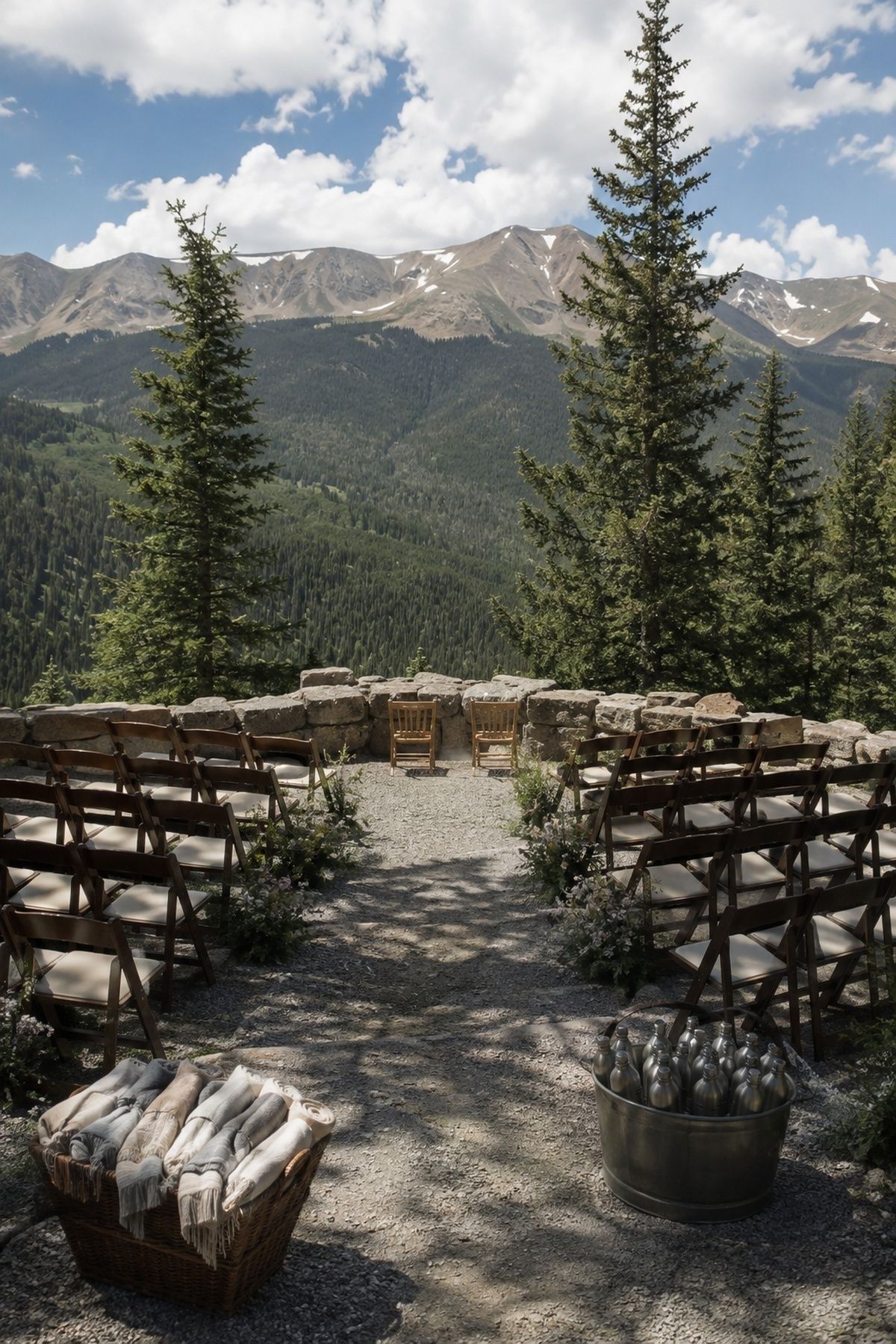
Mountain spots have hard limits. Overlooks run out of parking, trails run out of width and park permits put an exact cap on the headcount, so the setting often picks your guest number for you.
A private overlook like this one, with a stone wall and a curve of about 25 chairs, is a good size for a small wedding. Inside the national park, though, seating is limited to a couple of chairs for people who need them, so that same group would be on their feet for the whole ceremony.
Count everyone who’ll be there, including kids, the officiant and the photographer, and then compare it with the space and the rules. If the number doesn’t fit, choose a bigger venue or a smaller list. Squeezing past the limit never ends well on a narrow mountain path.
3. Treat Permits as Part of the Design

The permit decides more about your ceremony than your decorator does. Rocky Mountain National Park, for example, charges a $300 non-refundable application fee, opens applications a year before the wedding month and limits each ceremony to two hours, including setup and photos. It also rules out arches, tents, tables and flower arrangements, and it caps group size by site, from 10 people at Lily Lake Dock to 30 at the larger meadows.
Read the official Rocky Mountain National Park wedding rules before you design anything, then build the ceremony to fit inside them. Keep the permit, a printed copy of your site and a simple map like this hand-drawn one together, and hand a copy to your photographer, since a ranger may ask to see it.
4. Build a Weather Backup That Still Feels Like the Same Wedding
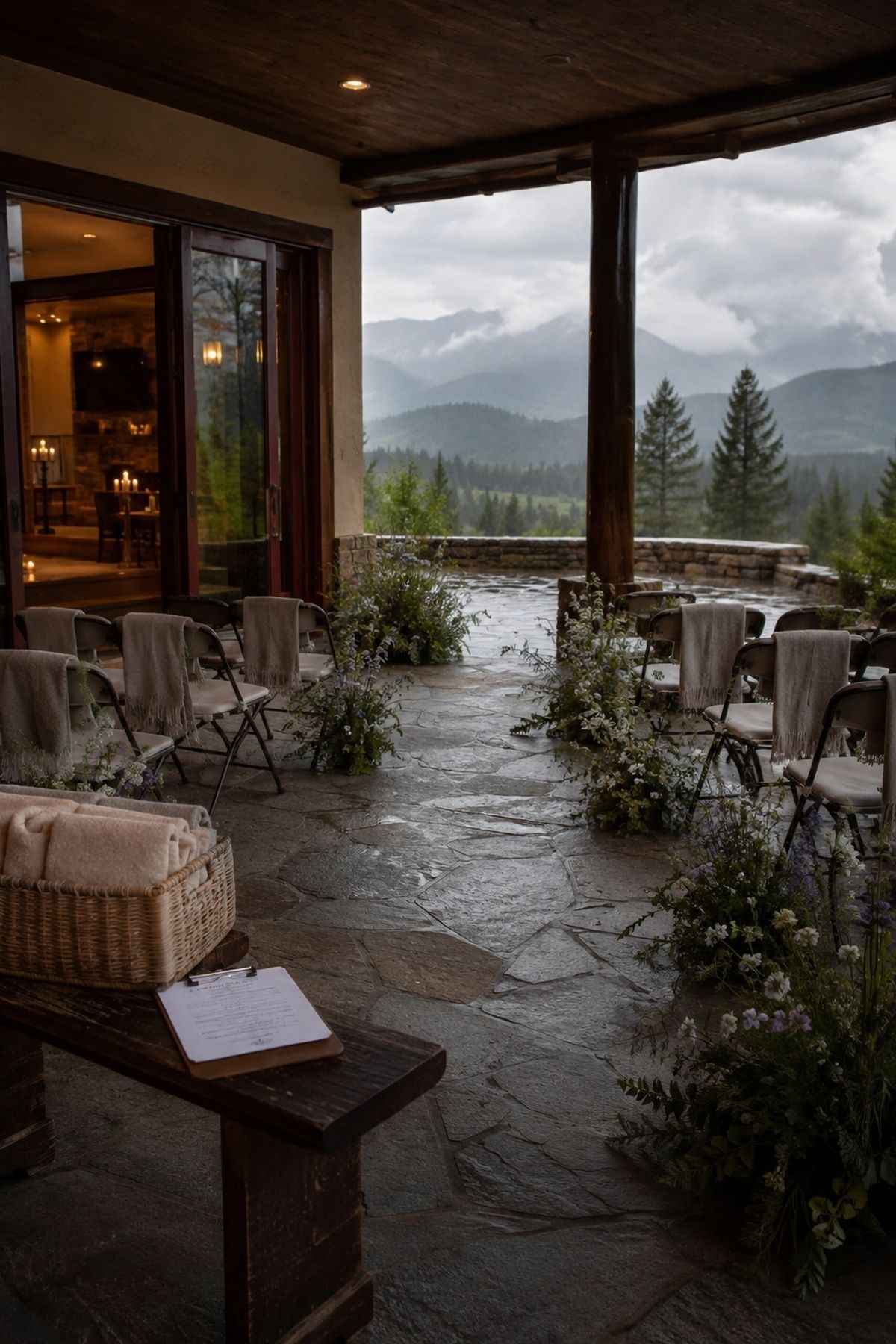
Summer afternoons in the Colorado mountains are known for quick thunderstorms, and snow can show up in almost any month outside midsummer. So the backup plan needs to be real, booked and pretty enough that you’d be happy to use it.
A covered porch like this, with the chairs already set and a basket of blankets by the door, is the ideal kind of backup because it keeps the view. Guests are still outside, still looking at the peaks, just with a roof over their heads.
Decide your call time, maybe three hours before the ceremony, and who makes it. Then tell guests on the wedding website that the location might change, so nobody’s surprised when they’re sent to the porch.
How Do You Keep Mountain Wedding Guests Comfortable?
Plan for thin air, long drives and uneven ground before you plan anything pretty. Comfortable guests stay for dinner, and uncomfortable ones start checking their watches.
5. Plan for Altitude Like a Host, Not a Park Ranger
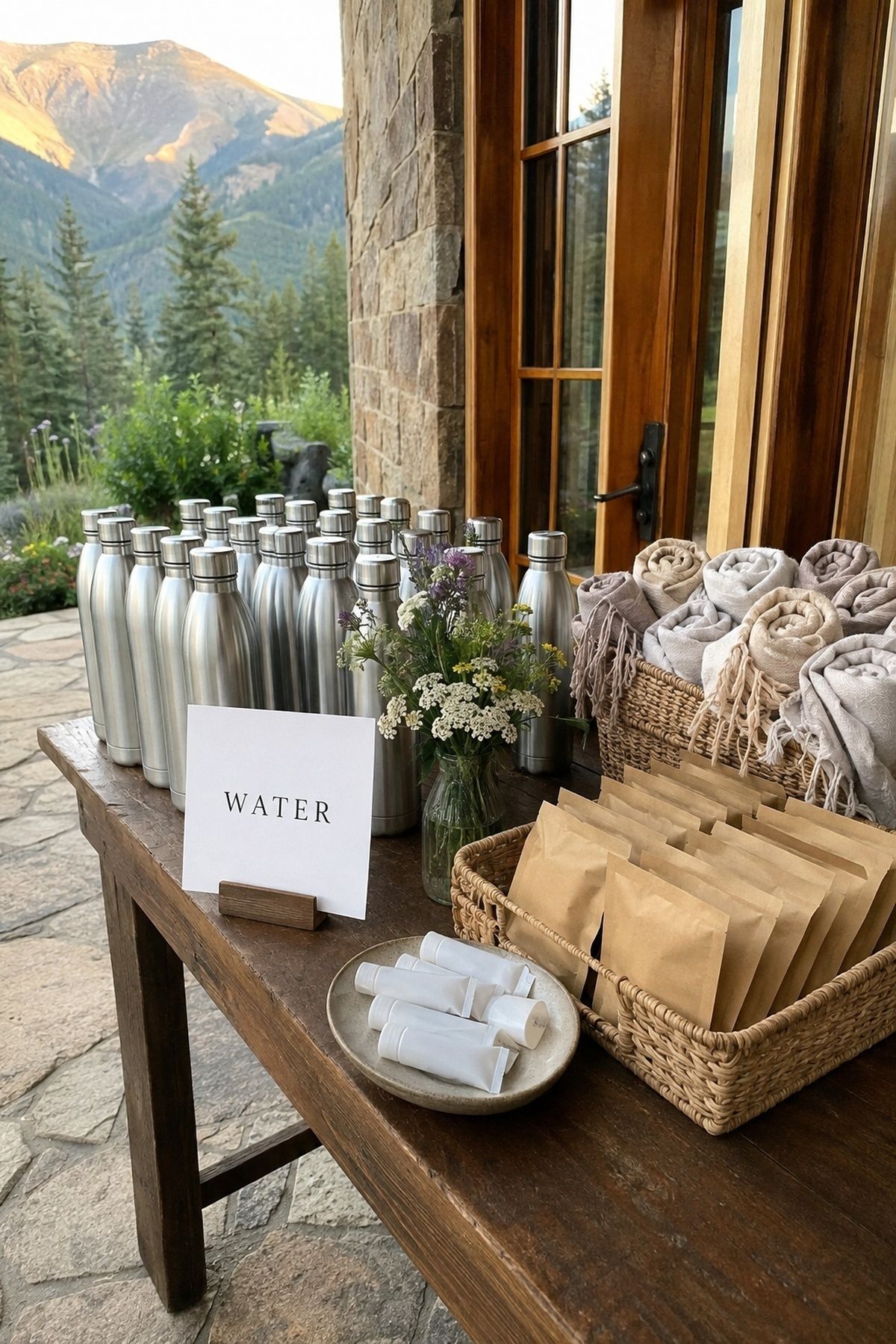
Guests flying in from sea level can feel the altitude on day one, with headaches, short breath and that weird tiredness after a single flight of stairs (coming from flat old Finland, I’d be the one panting on the steps, for sure). You don’t need to lecture anybody about it. You just need to make water easy and the schedule gentle.
A table like this one, with refillable bottles, a clear “Water” sign and rolled blankets in baskets, takes care of most of it. Put it where guests arrive, refill it during cocktail hour and pour plenty of non-alcoholic drinks, since alcohol tends to hit harder up high. Keep the first evening low key too, and save the big night for when people have slept once at elevation. For more ways to keep guests warm, borrow from these cold-weather guest comfort ideas.
6. Solve Transportation Before the Invitation Is Sent

How will forty people get up a mountain road, park and get back down after dark? Answer that before the invitation goes out, because it changes the venue and the budget.
Many mountain sites have tiny parking areas, and park permits limit vehicles too, so a shuttle like this gray van is often the only real answer. It also means nobody drives a winding road after champagne.
Book the shuttle as early as the venue and write the pickup times right on the invitation insert or wedding website. Add a check-in table at the pickup spot with a clipboard and someone holding the list. You’ll find more questions to ask in our small wedding venue checklist.
7. Choose Ceremony Access That Guests Can Actually Manage
That gorgeous spot at the end of a two-mile trail is gorgeous for you and your photographer. For your grandmother, it’s a no.
Walk the route yourself in the shoes you’d wear on the day, then think about the oldest and least mobile person on your list. A ceremony site guests can reach in five minutes on flat ground keeps everyone with you, while a hike splits the group into the ones who made it and the ones waiting in the car. If you love the far-off view, take your portraits there with just the photographer, and hold the vows somewhere everyone can walk to without help.
8. Let the Ceremony Decor Stay Low and Light
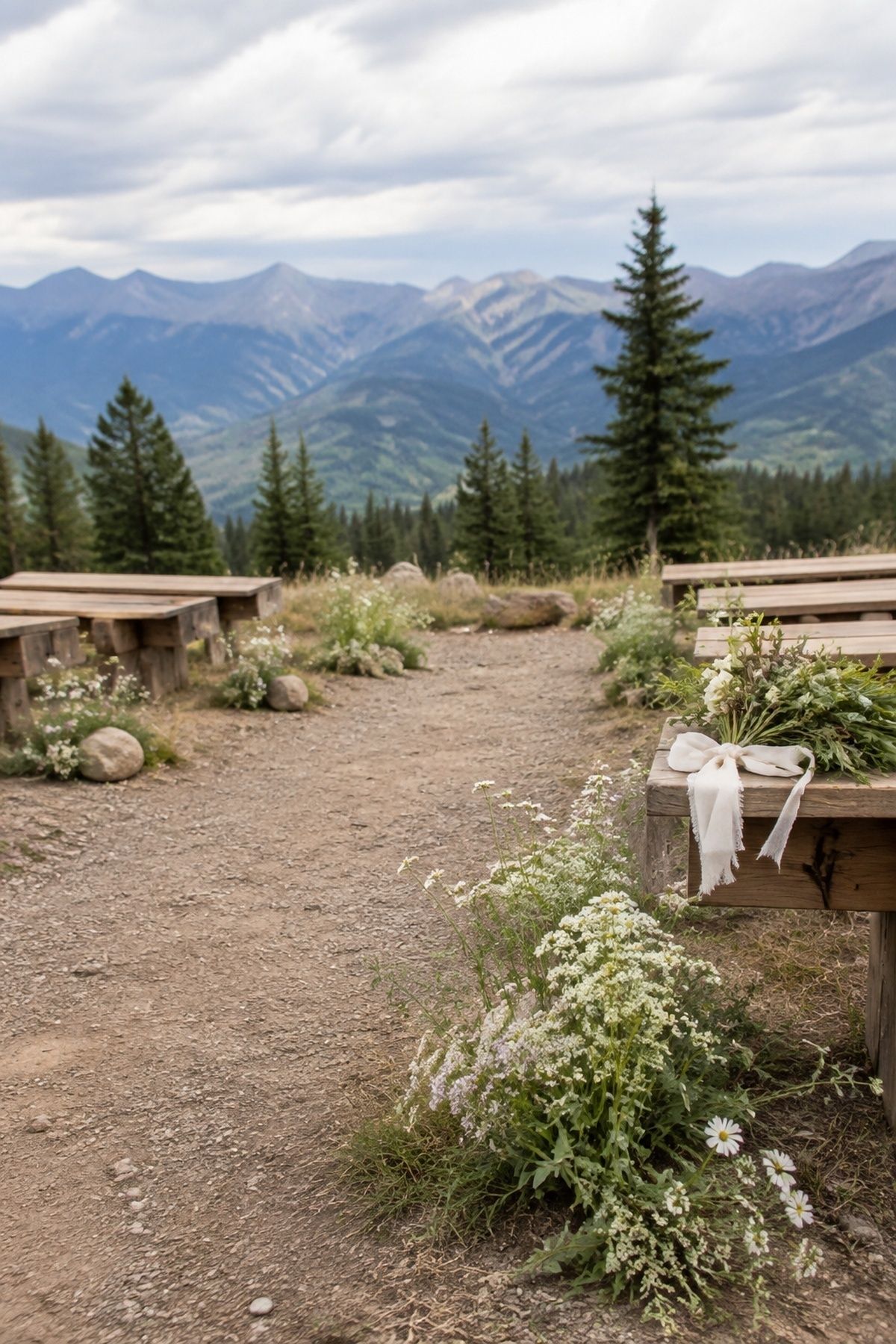
The mountains are the decor. A dirt aisle between log benches with a small bunch of white wildflowers at each end is all a mountain ceremony needs, and anything bigger usually fights with the view.
Light decor also has practical reasons:
- Wind will knock over tall arrangements and topple signs.
- Many public lands ban floral displays and structures entirely.
- Everything you bring up a mountain has to come back down at the end.
Keep ribbons short, tie everything down and plan one person to carry it all out. The bigger flower moment can wait for dinner, indoors, where nothing blows away.
How Do You Plan the Ceremony, Dinner and Stay?
Keep the reception and the lodging close to the ceremony site, and design the tables and photos around the light and the cold. Shorter distances make the whole day feel calmer.
9. Choose a Reception That Keeps the Group Together
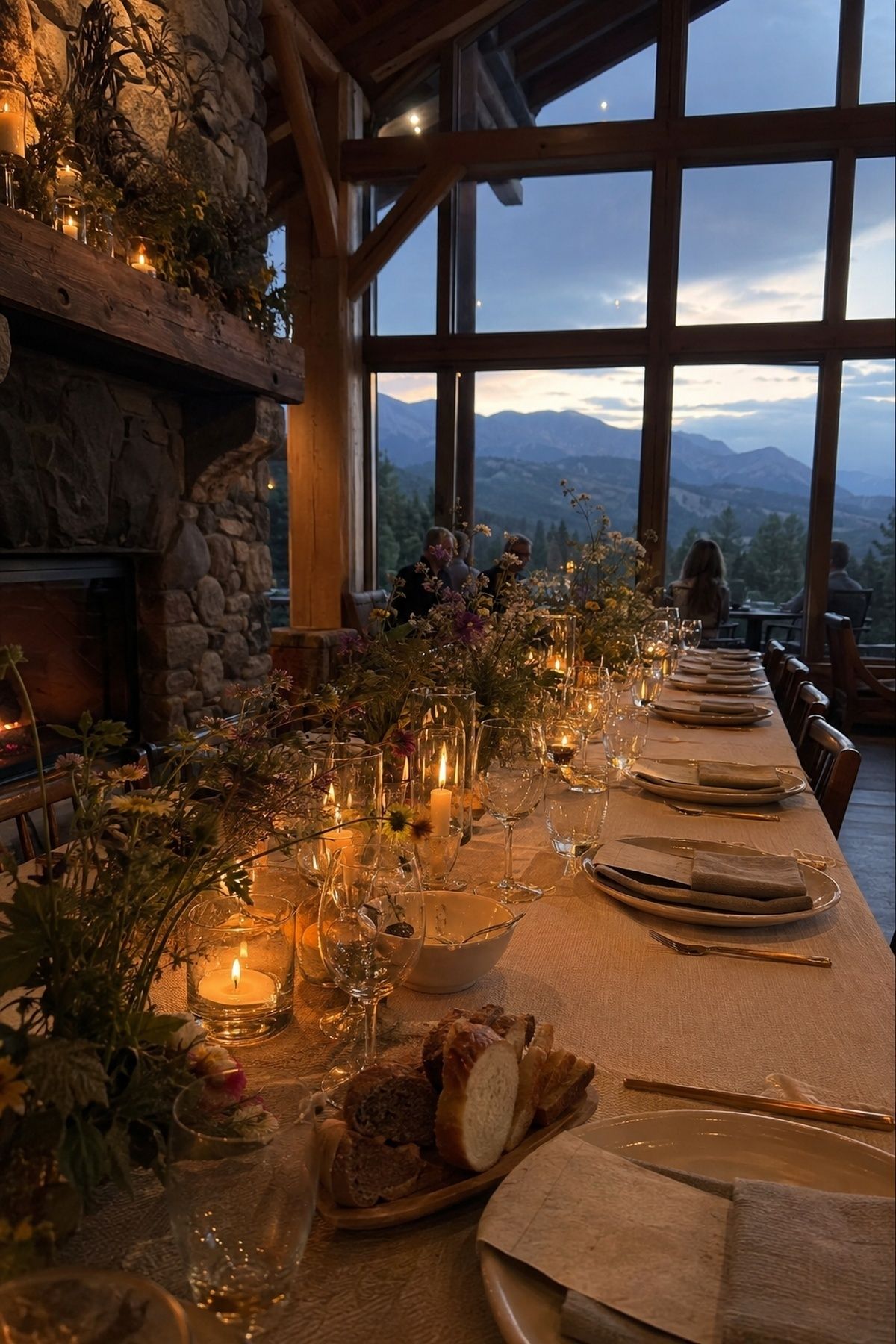
After a ceremony in the wind, a warm room with a long table and a stone fireplace feels like the best idea anyone’s ever had. One long table keeps a small group together in a way separate round tables can’t, and big windows let the mountains stay part of dinner after dark.
Book the reception as close to the ceremony as you can. A twenty-minute drive between them is fine, while an hour of winding road splits the group and tires everyone out before the first toast. For groups under thirty, a lodge or restaurant private dining room is often warmer and cheaper than renting an empty hall and bringing everything in.
10. Use Lodging as Part of the Wedding Flow
Where guests sleep shapes the whole weekend. If everyone stays at the same lodge or in a small cluster of cabins, the welcome drinks, the ceremony, dinner and breakfast all happen within a short walk, and nobody drives at night. Spread guests across three towns and you’ll spend half the wedding answering texts about directions. Ask your venue about room blocks first, then pick nearby rentals for overflow, and put the addresses on the website in one place. This is also where the budget quietly balloons, since mountain lodging books up in peak season, so give guests at least six months of warning and a clear list of options.
11. Style the Tables With Texture Instead of Theme
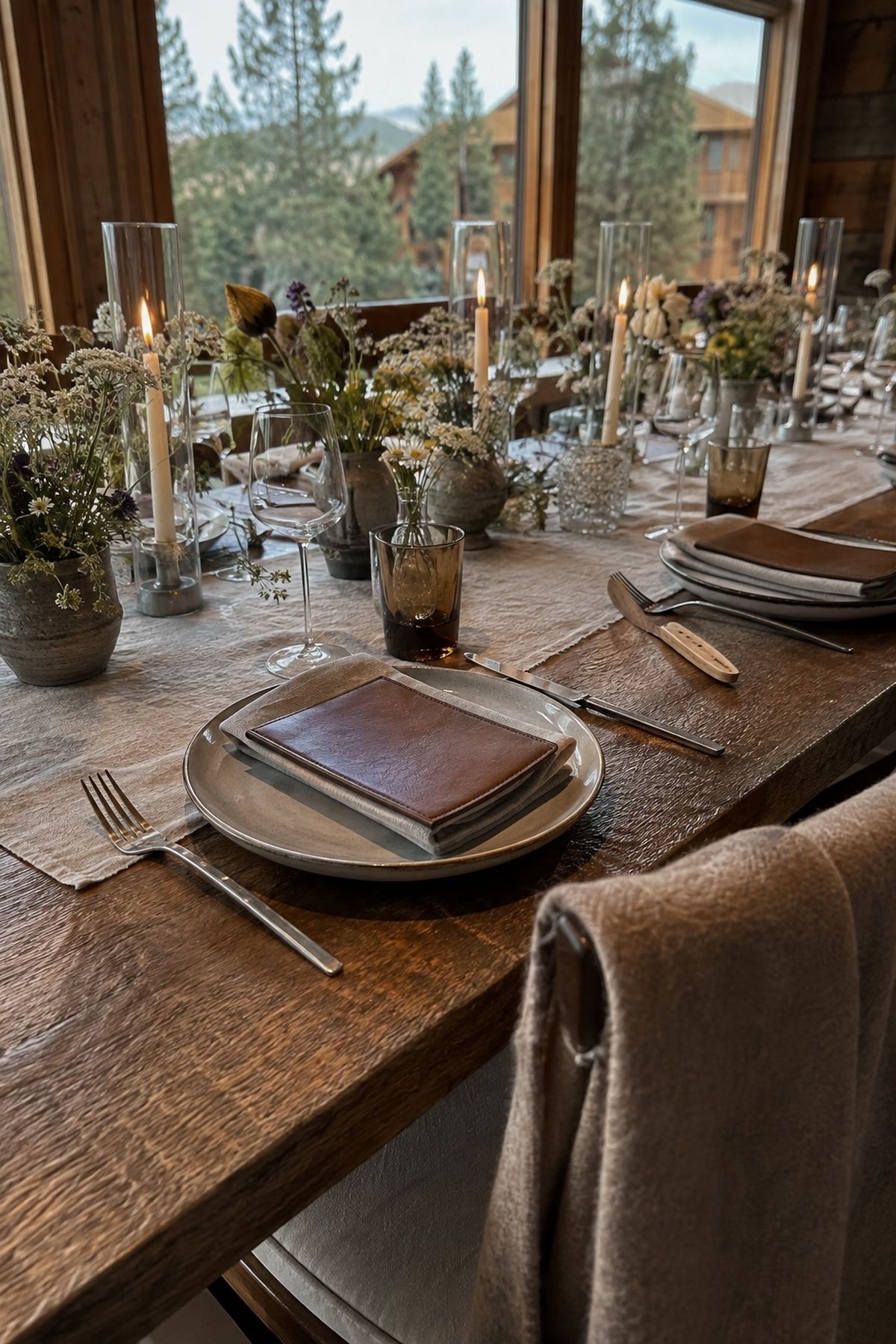
Skip the antler centerpieces. Mountain tables look best when the textures do the talking, like rough wood under stoneware plates and a wool throw over each chair.
Those materials feel like the place without spelling it out, and they photograph warmly in the low light of a lodge. Taper candles in glass sleeves add glow without the risk of an open flame in a draft, and small bud vases of wildflowers keep the table low enough for conversation.
The throw on each chair is my favorite detail here, because it’s decor until about 8 pm and then it’s a blanket. Mountain evenings get cold even in July, so guests will use them.
12. Plan Photos Around Light, Terrain, and Guest Waiting
Mountain light changes fast. Peaks block the sun earlier than you’d expect, so “sunset” in a valley can mean the light is gone an hour before the official time, and the best glow sometimes hits the peaks after your spot is already in shadow. Ask your photographer, ideally a local one, when the light leaves your site. Then plan around the guests, too. Nobody should wait on a cold overlook while you shoot forty portraits, so do family photos first, release everyone to the warm reception and finish the couple shots with just the two of you and your photographer.
13. Make the Wedding Website Do Quiet Heavy Lifting
Your wedding website is where the boring but important stuff lives, so guests aren’t asking you questions on the morning of the wedding. Put these on it, in plain words:
- Shuttle times and the exact pickup spot.
- Altitude and a gentle nudge to drink water.
- A dress note mentioning layers, flat shoes and a warm wrap.
- The weather backup, so a location change isn’t a surprise.
- Phone signal warnings, since some mountain spots have none.
Keep it short and friendly. A guest who reads one page and knows what to bring is a much happier guest.
Which Rocky Mountain Wedding Format Fits Your Group?
An overlook elopement suits two to fifteen people, a lodge works for twenty to fifty, a cabin estate suits a long weekend and a mountain restaurant is the easiest of all. Pick by headcount first and views second.
14. Try a Park Overlook Elopement With Dinner Nearby
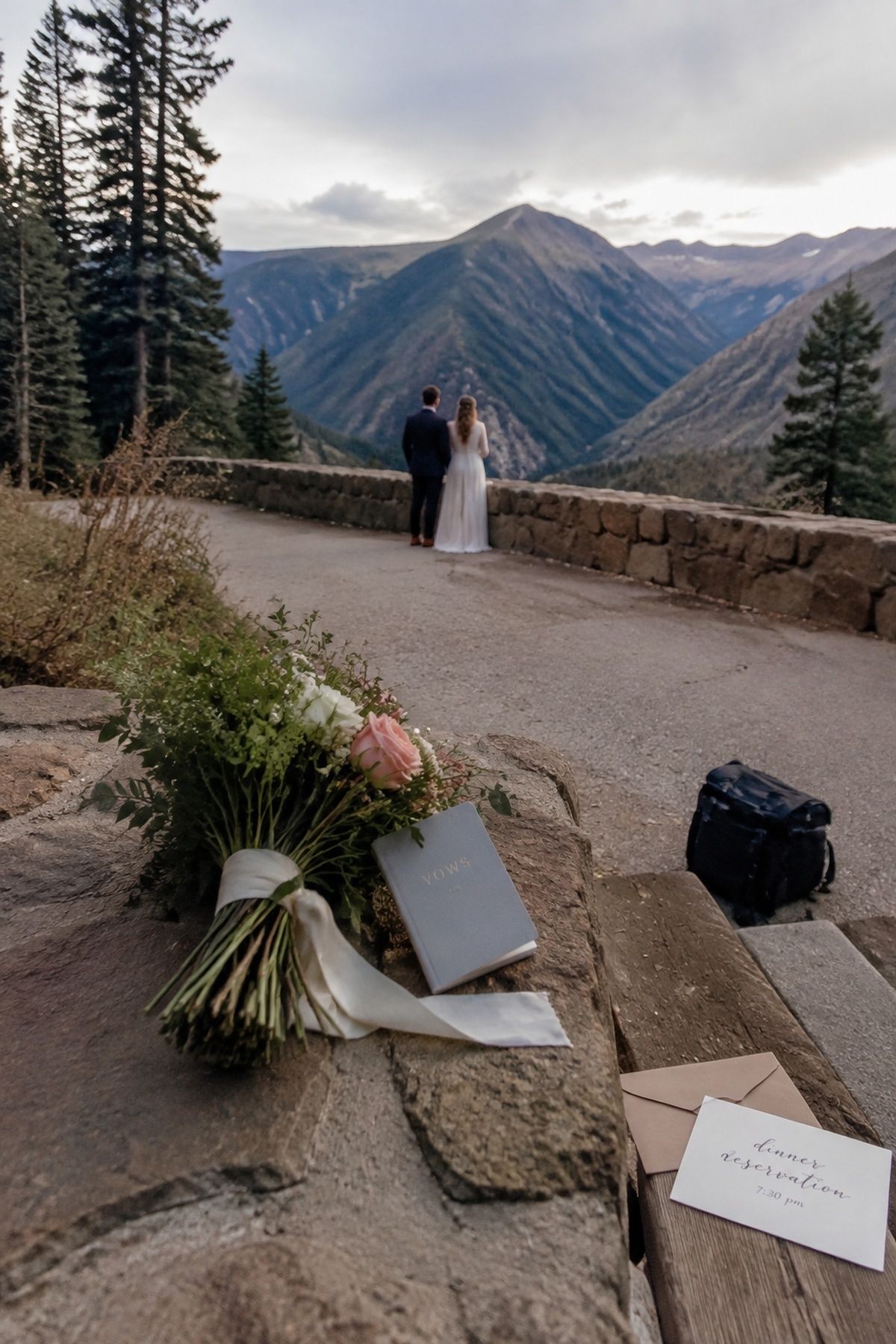
For two people or a very small group, a park overlook elopement is the purest version of a Rocky Mountain wedding. You, the view, an officiant and a photographer, with a bouquet resting on the rock and nothing else to set up.
What makes it feel like a wedding instead of a hike is the dinner afterward. Book a table in town for that evening, with the handful of people who matter, so the day has a warm landing after the cold wind. Check the permit’s group cap and two-hour window, and remember that the park entrance fee still applies to every car.
15. Host a Lodge Micro Wedding With a View and a Fireplace

Lodges are made for micro weddings. You get the view, the fireplace and the kitchen in one building, which removes most of the logistics that make mountain weddings hard.
A lodge with its own kitchen is a big win for a small wedding: hot food arrives hot, the staff know the room and you don’t have to rent a single fork. A long table near the fire, with a small cake on a side table, handles thirty or forty people easily.
Ask how the lodge handles the ceremony if the weather turns, and whether they’ll let you use the deck and the dining room on the same day. For more of this cozy style, see these cabin wedding ideas.
16. Use a Cabin Estate for a Slower Weekend
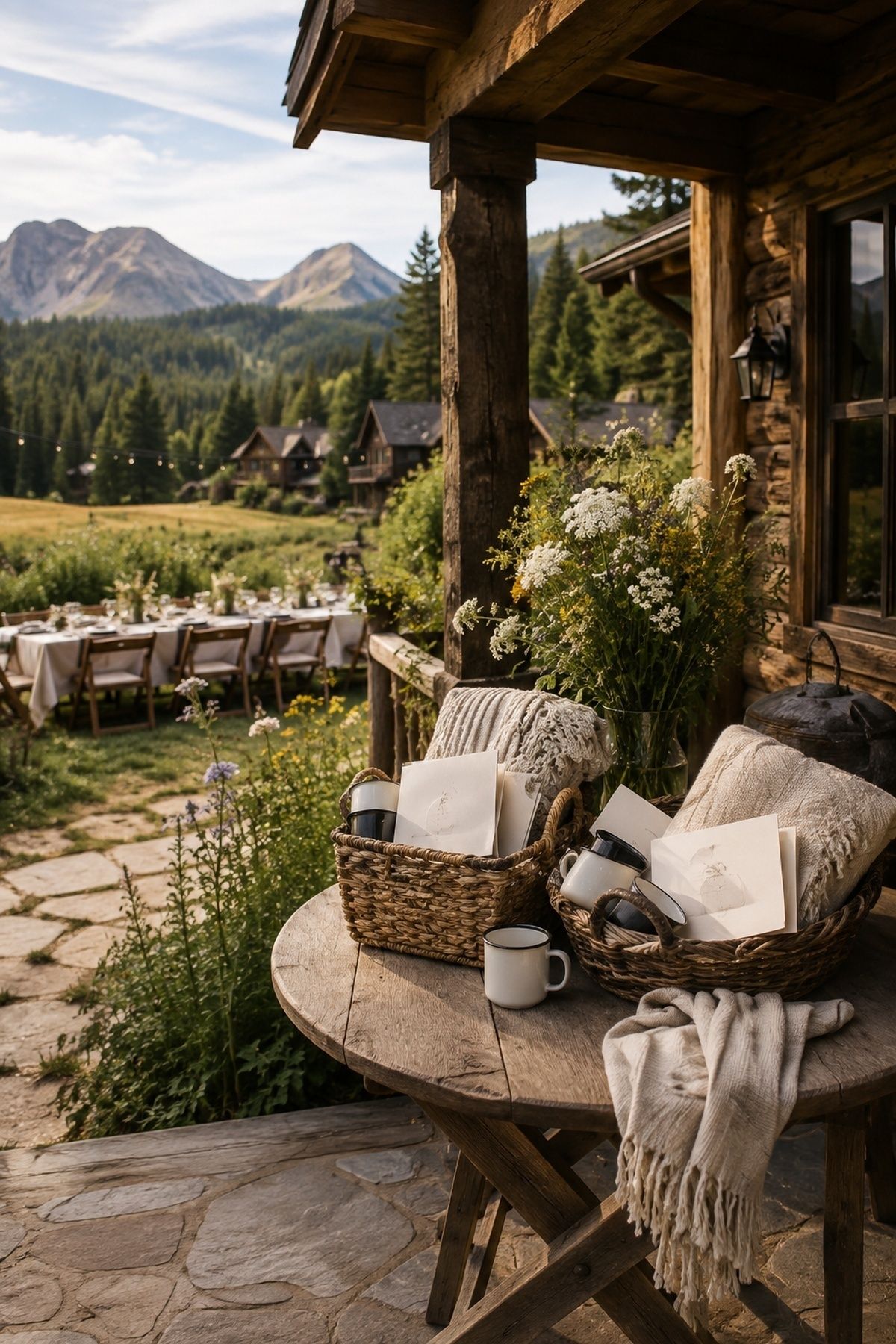
A cabin estate turns the wedding into a long weekend. Guests stay in cabins around a central meadow, mornings start with coffee on a porch, and the long dinner table in the grass is a short walk from everyone’s front door. It’s the slowest format, in the best way, and it suits couples who’d rather spend three days with forty people than one big night with a hundred. Plan who cooks (caterers in remote areas book early), where people gather if it rains and how trash leaves the property, and keep a basket of mugs and blankets on each porch. More cozy ideas live in our cabin wedding ideas guide.
17. Plan a Mountain Restaurant Ceremony and Dinner
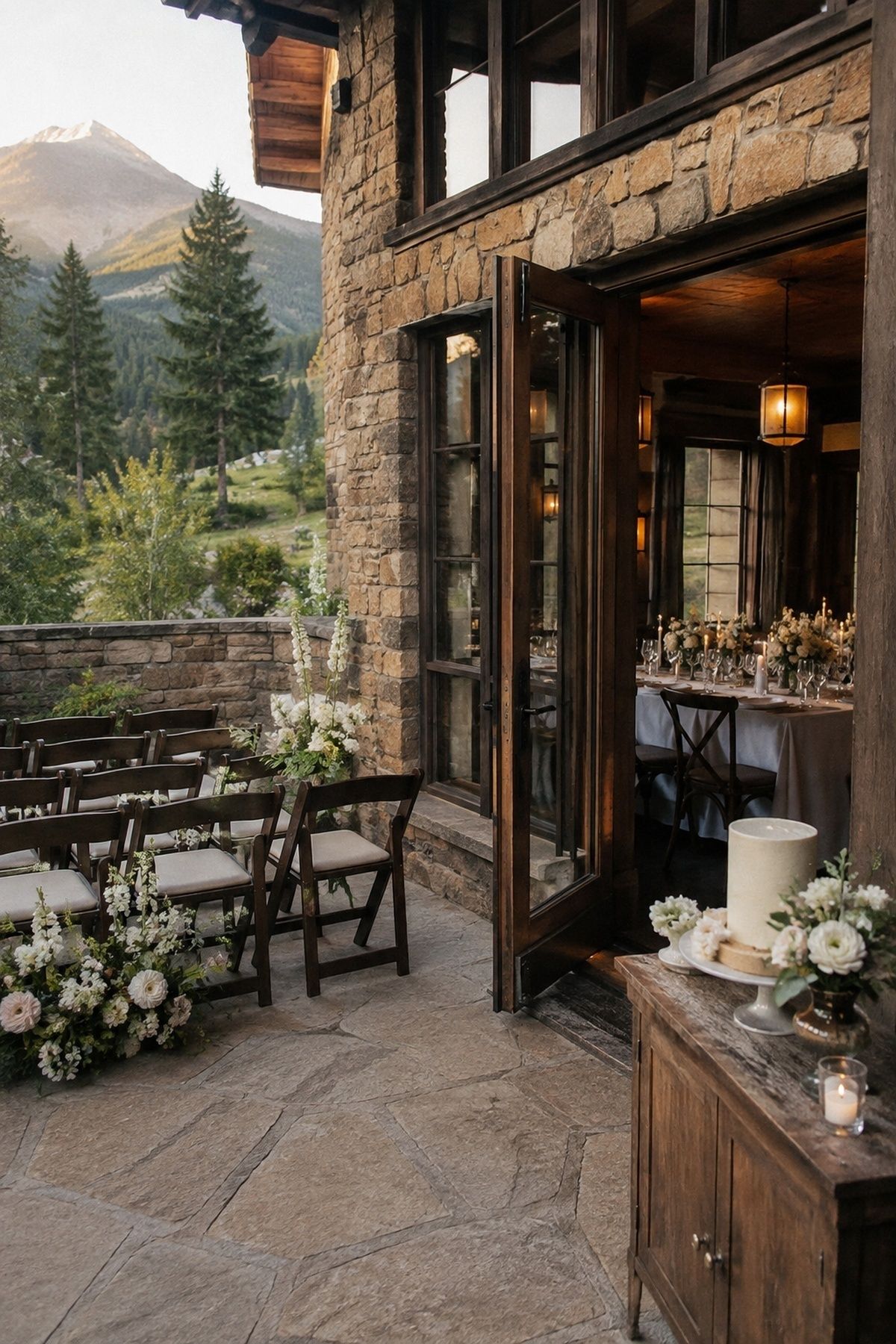
Is this the easiest Rocky Mountain wedding? Pretty much. You hold a short ceremony on the patio, with a few rows of chairs and some white flowers on the aisle, then walk ten steps inside for dinner.
Everything else is already there: tables, heat, restrooms, a kitchen and staff who do this every weekend. As an ex-chef, I’ll admit I’m biased toward any plan where the food is cooked fifty feet from the guests. Ask the restaurant about a private buyout or a room minimum, and confirm what happens to the patio ceremony if it rains.
What Should You Check Before Booking a Mountain Venue?
Ask about rules, access, backups and costs before you sign, and learn the mistakes other couples make so you don’t repeat them.
18. Questions to Ask Before Committing to a Rocky Mountain Wedding Plan
Before any deposit, ask the venue, the land manager or the lodge these questions, and get the answers in writing:
- What’s the maximum group size, and does it include the photographer?
- How long can we use the site, including setup and photos?
- What decor, chairs, music and amplified sound are allowed?
- Where do guests park, and how many vehicles fit?
- What’s the backup location, and who decides when to use it?
- What does the full price include, from fees to cleanup?
If a venue can’t answer these quickly, that tells you something too.
19. Rocky Mountain Wedding Mistakes to Avoid
The same mistakes come up again and again with mountain weddings, and most of them come from planning for the photo instead of the people. A ceremony site guests can’t reach, a dress code that forgets the wind and a reception an hour’s drive away are the big three. Others are smaller but just as annoying: no water at the ceremony, no plan for phones without signal, a timeline that assumes the weather will cooperate and a decor list that the permit doesn’t allow. Read this list once before every major booking, and you’ll catch most of them before they cost you anything.
How Do You Plan Around Mountain Season, Sound and Rules?
Pick the season for your guests’ comfort, add extra time to every part of the schedule and check the rules for sound, food, fire and wildlife. The mountains run on their own clock.
20. Choose the Season for Guest Experience, Not Just Photos
Each mountain season has its own trade-off. Summer means wildflowers and warm days, with afternoon storms and crowded parks. September brings golden aspens and cooler, steadier weather, and it books up fast. Winter is quiet and snowy, with icy roads and short days. Spring is the most unpredictable of all, with snow one week and mud the next.
Inside Rocky Mountain National Park, the summer and fall months fill quickly, and for 2026 the park already listed May, June and August through October as fully booked. So choose the season your guests will enjoy, then book as soon as applications open.
21. Design a Timeline With More Breathing Room Than Usual
Everything takes longer in the mountains. Shuttles crawl up winding roads, guests stop for photos at every turn and walking anywhere at altitude is slower than at home.
Add at least 15 minutes to every move between locations, and plan the ceremony earlier in the day if summer storms are common where you are. Leave a gap after the ceremony for guests to warm up and drink some water before cocktails.
A loose timeline also gives you a better chance at good light. If the clouds roll in at four, you’ll still have room to wait twenty minutes for them to clear, instead of rushing straight to dinner.
22. Give Attire Notes That Feel Thoughtful, Not Bossy
Guests can’t dress for weather they don’t know about, so tell them. A short, friendly note on the website does it: layers, a warm wrap for the evening, shoes they can walk on gravel in and sunglasses for the bright light up high. Skip the long list of rules, though. Nobody wants a packing list that reads like a hiking club email. Something like “We’ll be outside at 9,000 feet, so bring a warm layer and flat shoes” covers almost everything in one line. Have a basket of pashminas at the ceremony for anyone who ignored the note anyway, because someone always will.
23. Plan Sound for Wind, Distance, and Rules
Wind eats voices. An officiant speaking at a normal volume on an open overlook can be hard to hear from the third row, and vows said softly might not reach anyone at all.
Small battery speakers and a clip-on mic can fix that where amplified sound is allowed, but check first, since some protected areas limit it. Where speakers aren’t allowed, put guests close in a tight half circle and ask your officiant to face them, speak slowly and pause between lines. It feels odd in rehearsal and works beautifully on the day.
24. Keep Food and Drink Grounded in the Setting
Mountain food should be warm and generous. Think roasted meats or vegetables, good bread, a soup on a cold evening and something hot to drink after the ceremony, like cider or cocoa.
Here’s what changes in the kitchen at altitude: water boils at a lower temperature, so some dishes take longer, and food cools faster outside. Ask your caterer how they handle that, and keep the outdoor part of the meal short.
Drinks matter too. Pour plenty of water and non-alcoholic options, and let the bar open after people have had something to eat.
25. Respect Fire, Candle, and Wildlife Restrictions
Fire bans are common in the dry season in the West, and many parks and forests ban open flames entirely, so check before you plan candles, fire pits or sparklers. LED candles look surprisingly good at dusk and remove the worry completely.
Wildlife is the other rule people forget. Elk, bears and smaller animals all live where you’re celebrating, so food can’t be left out, trash needs to be sealed and nobody should approach animals for a photo. Assign one person to clean up after the ceremony so nothing stays behind, not even a ribbon.
What Small Details Make a Mountain Wedding Easier?
Local flowers, a welcome table, a realistic budget and vendors who know mountain timing. These quiet details decide how relaxed the day feels.
26. Use Florals That Belong to the Altitude

Flowers that look like they grew nearby fit a mountain wedding better than anything flown in. Loose bunches of blue delphinium, yarrow and wild grasses look right against pines and rock, while a tight dome of roses can look a bit lost.
Local flowers also hold up better at altitude, where the air is dry and the sun is strong. Ask your florist what’s in season near your venue, keep stems in water until the last minute and plan bouquets with sturdy blooms that won’t wilt during a long photo session.
Never pick wildflowers in a national park, by the way. It’s not allowed, and it ruins the meadow for the next couple.
27. Make Family Moments Easier in a Rugged Setting
Family moments need extra care in the mountains. A grandparent can’t stand on a slope for an hour, a parent might struggle with the altitude, and small kids get cold fast. Plan the family photos close to the parking area or the lodge, save chairs for the people who need them and keep a warm room nearby for anyone who wants a break. A short, flat walk to the ceremony spot matters more for your family than any view. And if someone can’t make the trip at all, a simple video call or a recorded message during dinner lets them be part of it without a long flight.
28. Budget for the Unromantic Mountain Details
The costs that surprise couples in the mountains are rarely the pretty ones. They’re things like:
- Shuttles and drivers for the whole day.
- Permit fees and park entrance fees for every car.
- Travel fees for vendors driving up from the city.
- Rental heaters, a backup tent or a second venue hold.
- Extra lodging nights for vendors who can’t drive back late.
Put these in the budget first, and ask each vendor for the travel fee in writing, since it’s easy to miss in a quote. Then spend what’s left on flowers and decor, which the mountains need less of anyway.
29. Create a Welcome Moment That Orients Guests
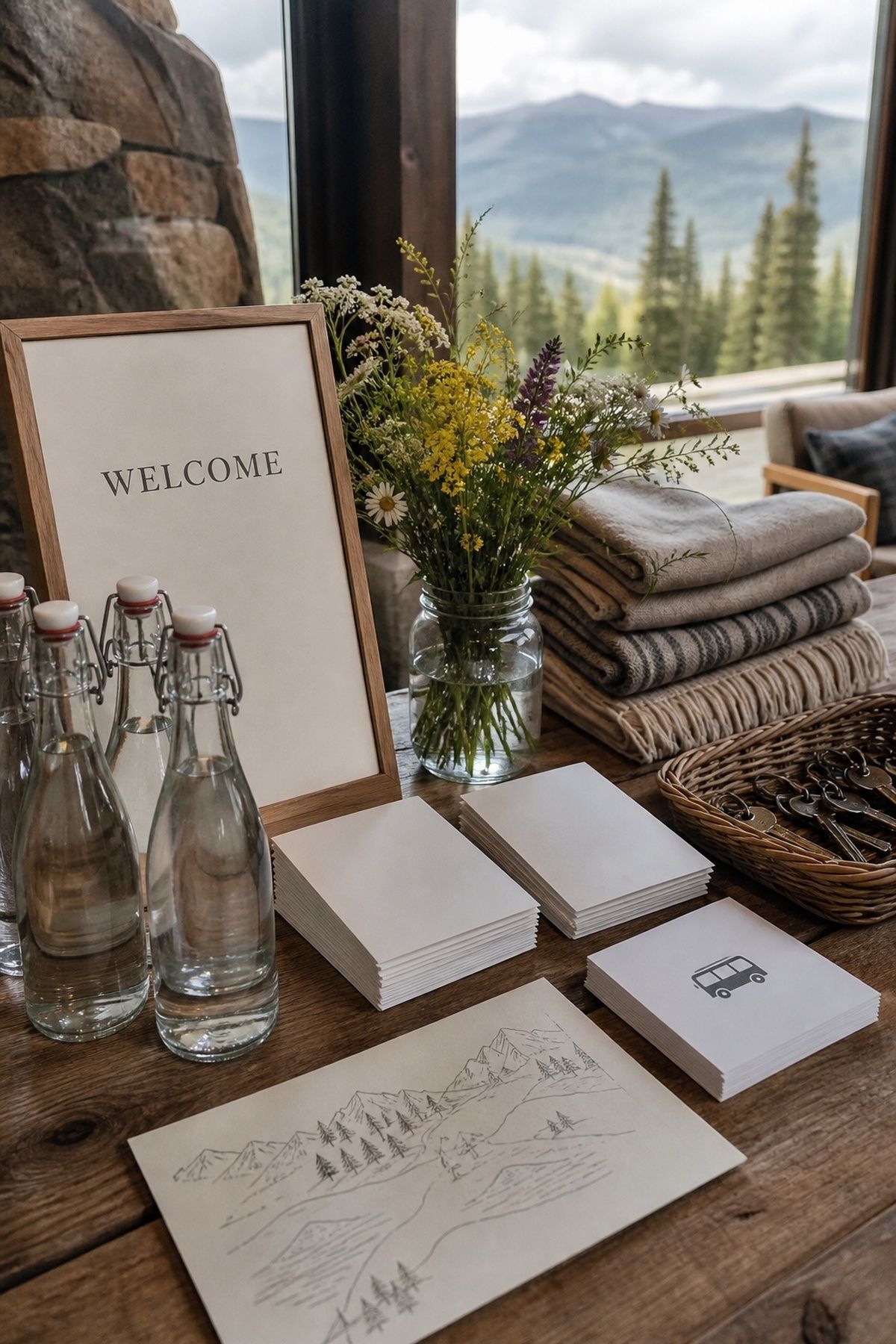
Guests arrive in an unfamiliar place, a bit out of breath and unsure where to go. A welcome table fixes that in one stop, with water to drink and a card that tells them where everything is.
A hand-drawn map like this one is more useful than it looks. Phone signal is patchy in the mountains, so a paper map of the lodge, the ceremony path and the restrooms saves a lot of wandering. Put the table where the shuttle drops people off, and have someone there for the first half hour.
30. Keep the Weekend Light Enough to Enjoy
A destination weekend can easily turn into four days of scheduled events, and that’s exhausting at altitude. Plan one welcome evening, the wedding and maybe a relaxed breakfast, and leave the rest free. Guests who flew in want time to explore, too. Put a short list of nearby walks, coffee shops and scenic drives on the website, and let them choose. You’ll enjoy it more as well, since there’s nothing romantic about checking a schedule every hour in the middle of the mountains you came all this way to see.
31. Match the Format to the Guest Count
Guest count decides the format faster than anything else. Two to fifteen people fit a park permit or a private overlook. Fifteen to forty fit a lodge, a cabin estate or a restaurant patio. Above that, you need a full mountain venue with its own ceremony space and dining room.
Trying to force a big group into a small format is the most common way mountain weddings go wrong. Count first, then choose. If you can’t cut the list, choose the bigger venue and bring the mountain feeling inside with views, wood and a fire.
32. Hire Vendors Who Understand Mountain Pace
Local vendors know things city vendors don’t: how long the drive really takes, where the light goes at 6 pm, which roads close in a storm and how the wind behaves at your site. That knowledge saves you hours of stress.
Ask every vendor whether they’ve worked at your location or at a similar altitude, and how they handle weather changes. A photographer who’s shot at your overlook before knows the best angles and the right time. A caterer who works in the mountains knows how food behaves up there, which for a hot dinner matters a lot.
33. Keep the Ceremony Script Short, Clear, and Heard
Short ceremonies suit the mountains. Guests are standing in wind or sun, sometimes on uneven ground, and twenty minutes feels long outside. Aim for something closer to fifteen. Cut the long readings, keep the vows personal and brief, and ask your officiant to speak slowly and loudly. If the permit gives you two hours in total, a short ceremony also leaves time for photos and packing up without rushing. Print a copy of the script for the officiant in a plastic sleeve, too, since paper and mountain breezes don’t get along.
34. Decide What Should Happen Indoors
Not every part of the day needs to be outside. The ceremony and a few portraits can happen on the mountain, while cocktails, dinner, speeches and dancing move indoors where it’s warm and the sound carries.
Decide this early, because it changes the venue you need. A lodge with a deck and a dining room gives you both. Planning everything outdoors means renting tents, heaters and lights, which costs more and still leaves you exposed to the weather. Keep the outdoor part short and lovely, and let the warm room carry the rest of the night.
35. Use Signage Only Where It Solves a Real Problem
Mountain venues don’t need much signage, and too much of it clutters the view. Use signs where they solve a real problem: the turnoff from the main road, the shuttle pickup, the path to the ceremony and the restrooms. A welcome sign and a small sign at the water table are nice extras. Make them sturdy and weighted, because wind will flip a lightweight easel in seconds. Skip the decorative quote signs, since the mountains already say everything. More ideas live in our Wedding Venues & Destinations collection, and if you’re still choosing a format, this micro wedding vs elopement guide can help.
How Much Does It Cost to Get Married in the Rocky Mountains?
It depends mostly on the format. A national park elopement can cost little more than the $300 permit fee, park entrance fees, an officiant and a photographer, while a lodge or ranch wedding for forty guests costs about the same as any full-service venue wedding, plus travel.
The extra mountain costs are transport, vendor travel fees and lodging, so get those quotes first. Weekday and off-season dates usually cost less, and smaller groups save more in the mountains than almost anywhere else.
Frequently Asked Questions
Do You Need a Permit for a Rocky Mountain Wedding?
Yes, on public land you usually do. Rocky Mountain National Park requires a special use permit with a $300 non-refundable fee, and applications open one year before the wedding month.
How Many Guests Can You Have at a Rocky Mountain National Park Wedding?
Between 10 and 30 people, depending on the site, and the count includes the couple, children, the officiant and the photographer. Each site also has a vehicle limit.
Can You Have Chairs and Decorations at a National Park Wedding?
Mostly no. Inside Rocky Mountain National Park, arches, tents and flower displays aren’t allowed, and seating is limited to a couple of chairs for anyone who needs to sit.
What Should Guests Wear to a Rocky Mountain Wedding?
Layers, a warm wrap and flat or low shoes that can handle gravel or grass. Evenings get cold even in summer, so a jacket is worth packing.
What Is the Best Month for a Rocky Mountain Wedding?
September is a favorite for golden aspens and steadier weather, while July and August bring wildflowers along with afternoon storms. Book early, since the summer and fall months fill first.
Key Takeaways
- Split the day: a short, rule-friendly ceremony outside and the decor and dinner at a warm venue nearby.
- Check permit limits on group size, time and decor before you design anything.
- Plan water, layers, shuttles and a booked weather backup for every guest.
- Choose the format by guest count first and the view second.
If You Only Plan One Thing, Plan the Warm Room
If I could only get one part of a Rocky Mountain wedding right, it would be the warm room waiting after the ceremony. Book the lodge, the restaurant or the cabin with the fireplace first, close to where you’ll say your vows, and the cold wind, the surprise storm and the thin air all become part of a good story instead of the thing everyone remembers.
Last update on 2026-11-29 / Affiliate links / Images from Amazon Product Advertising API