

A micro wedding timeline works best with a calm planning path, a clear final-month checklist, and a day-of flow that protects ceremony, photos, dinner, and breathing room.
A small wedding can seem like it should run itself. There are fewer guests, fewer tables, fewer formalities, and usually fewer people to direct. But intimacy makes timing more visible. When guests do not know where to go after the ceremony, the pause feels bigger. When photos run long, dinner waits in plain sight.
The goal is not to pack the day with activity. It is to give every meaningful moment enough support: the practical decisions before the wedding, the tender handoffs during the celebration, and the quiet spaces where the day can actually be felt.

Recommended Wedding Products
![The Knot Ultimate Wedding Planner [Revised Edition]: Worksheets, Checklists, Etiquette, Timelines, and...](https://meadowandaisle.com/wp-content/plugins/aawp/public/image.php?url=YUhSMGNITTZMeTl0TG0xbFpHbGhMV0Z0WVhwdmJpNWpiMjB2YVcxaFoyVnpMMGt2TlRGRmVVRnBablp0Tmt3dVgxTk1NVFl3WHk1cWNHYz18MTc5MTE3NDkwMg=)


You Might Also Like These Blog Posts
- Small Wedding Timeline: A Simple Flow That Lets The Day Breathe
- Micro Wedding Planning Checklist For A Calm, Close Celebration
- Wedding Timeline Mistakes That Make the Day Feel Rushed
- Micro Wedding Guest List: Who Makes The Tiny Cut?
- Micro Wedding Guest Count: How Small Should It Feel?
- Micro Wedding Ceremony Ideas With Real Heart
A Micro Wedding Timeline That Gives The Day Room To Breathe
The right micro wedding planning timeline has two layers. One layer covers the months before the wedding: date, place, people, food, ceremony, attire, invitations, and confirmations. The other layer covers the wedding day itself: where everyone is, what happens next, and how each transition feels.
In a thoughtful micro wedding planning checklist, dates, deposits, names, and handoffs become the first anchors of the schedule. The timeline decides when that work should happen and how much space the wedding deserves.
Choose The Kind Of Timeline You Actually Need
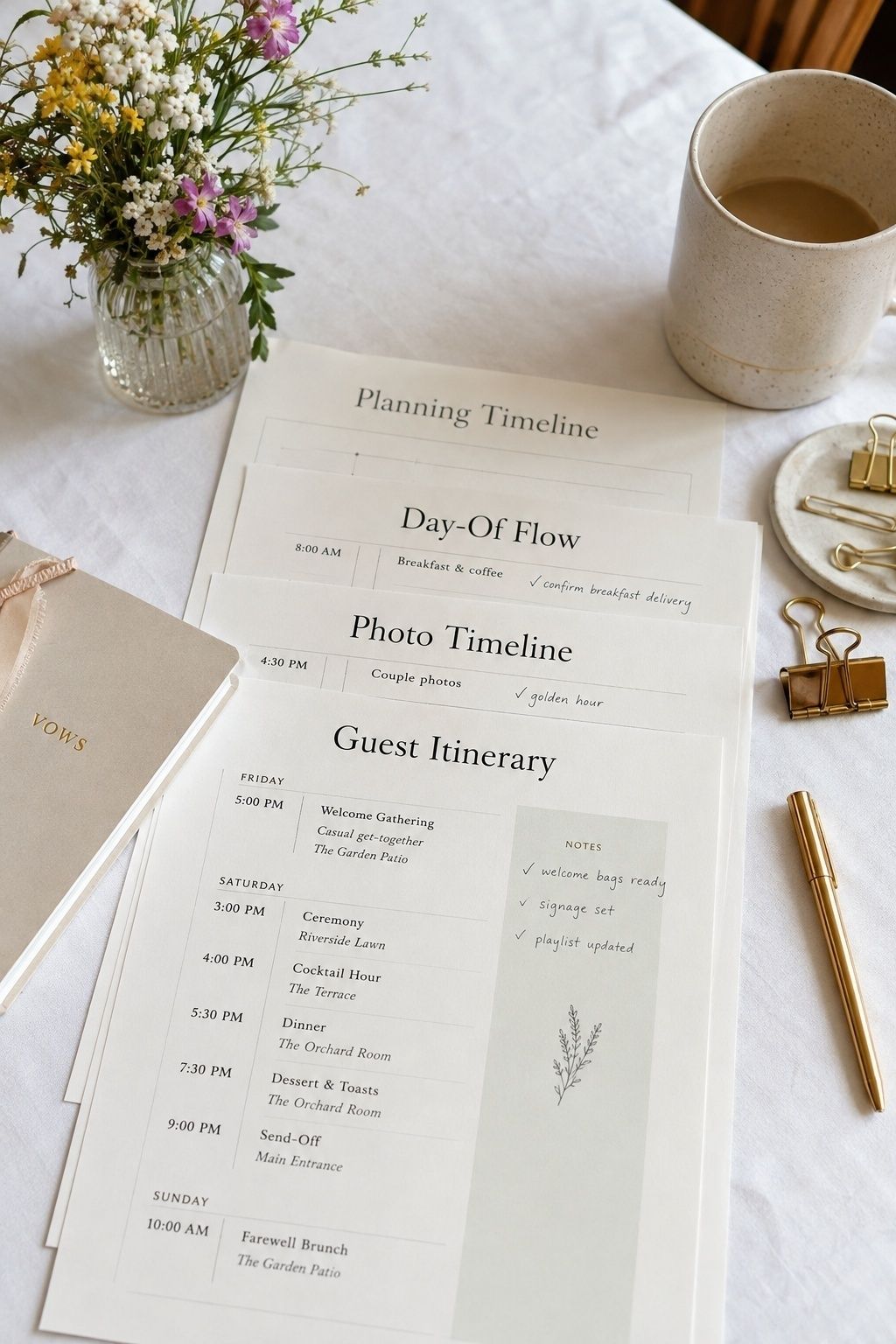
Before assigning months or hours, name the timeline you are building. You may need a 6-to-12-month planning timeline, a 3-to-6-month plan, a final-month confirmation list, a week-of handoff sheet, a guest-facing itinerary, a photo-aware schedule, or a day-of flow. Each one answers a different planning question.
The planning timeline keeps bookings and decisions from piling up. The day-of timeline gives vendors and family a shared order. The photo timeline protects light, portraits, and dinner timing. A guest-facing itinerary should name only what loved ones need: arrival, ceremony, meal, transportation, dress notes, and ending.
A 6-To-12-Month Planning Window
A 6-to-12-month window gives a micro wedding plenty of room, especially if you want a private dining room, garden venue, destination rental, family property, or custom meal. Begin with the guest count, budget, date, ceremony location, and reception style. Those choices decide almost every vendor conversation that follows.
Once the bones are set, book the photographer, officiant, catering or restaurant contact, and any essential rentals. Decide whether you need coordination, flowers, hair and makeup, music, transportation, lodging support, or additional setup. After that, choose attire, send save-the-dates if they make sense, and give micro wedding ceremony ideas enough room when vows, readings, or family blessings carry the emotional weight.
The risk with a longer window is overbuilding. A small wedding can become oddly crowded when every available month turns into another layer of details. Keep returning to three questions: will this make guests more comfortable, make the day more personal, or make the setting more beautiful? If not, it may not need a place on the timeline.
A 3-To-6-Month Planning Window
A 3-to-6-month micro wedding can feel elegant when the order is disciplined. Secure the ceremony location, meal plan, photographer, officiant, attire, and invitations before spending energy on signage, favors, specialty decor, or tiny upgrades. Availability decisions come first because they can block everything else.
In the first two weeks, confirm the venue or restaurant, photography coverage, officiant, food, and lodging needs. By the halfway point, send invitations, choose the menu, settle attire, sketch the ceremony, and decide what the reception will include. In the final six weeks, narrow the day-of timeline, finalize family photo groupings, confirm vendor arrival times, and collect RSVPs.
This shorter path works because micro weddings reward clarity. A gracious ceremony, a beautiful meal, thoughtful guest communication, and a realistic photo plan will do more than a crowded list of extras. Your micro wedding schedule should feel composed, not hurried.
One To Three Months Before
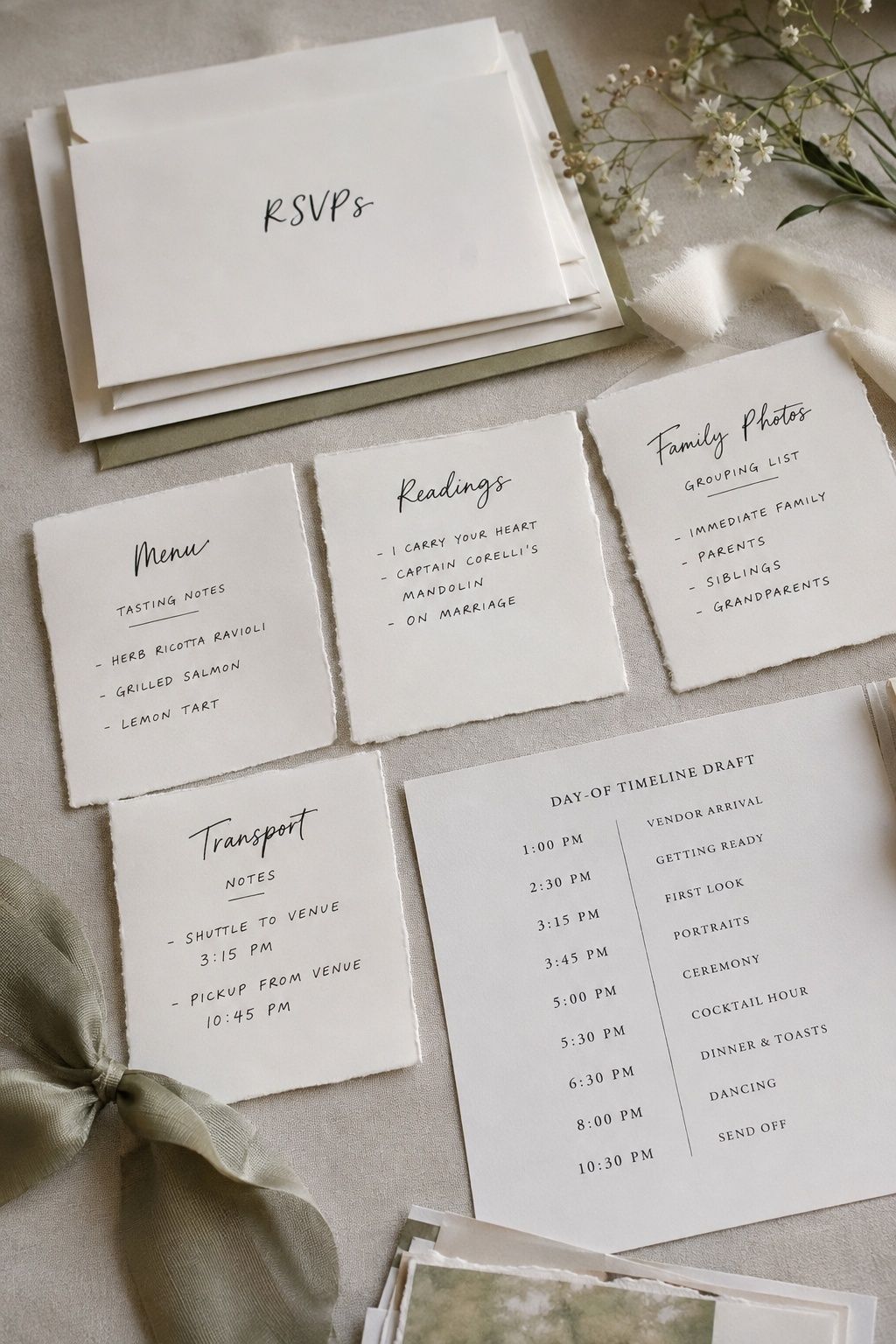
One to three months before the wedding, move from ideas into confirmations. Collect RSVPs, finalize the menu, choose readings or vows, order printed pieces, confirm attire alterations, decide on transportation, and make the first practical version of the day-of timeline.
This is also the right moment to plan your micro wedding photo timeline. Write down family groupings, couple portraits, detail shots, ceremony moments, dinner details, and any people who should be photographed early because of age, mobility, travel, or emotion. Then ask your photographer what is realistic. A small guest list does not automatically make portraits fast if everyone is scattered or the light is changing quickly.
If dinner is part of the celebration, confirm whether you are serving plated courses, family-style food, a tasting menu, brunch, cocktails, or dessert only. The best micro wedding menus match the meal to the length of the day instead of stretching the schedule past its natural energy.
Two To Four Weeks Before
Two to four weeks before the wedding, your timeline should become practical enough for someone else to follow. Share a draft with the photographer, officiant, venue, caterer or restaurant contact, coordinator, hair and makeup team, and anyone helping with transportation or setup. Ask each person to flag timing problems now.
Confirm ceremony arrival, vendor access, getting-ready location, first look choice, family photo order, cocktail-hour plan, dinner start time, speech timing, dessert moment, music needs, and the final exit or soft ending. If you have 25 to 50 guests, this is also when seating, place cards, and table timing start to matter more.
Keep the final-month version plain and useful. Include times, locations, names, phone numbers, and who is responsible for each handoff. Tiny weddings still need someone to know when flowers arrive, where vow books go, and who tells guests to move from ceremony to drinks.
The Week Of

The week-of timeline is mostly about reducing questions. Send guests the arrival address, parking notes, dress code, weather plan, ceremony time, meal timing, and transportation details. Send vendors the final schedule, contact list, access instructions, and photo priorities.
Pack small items by moment: ceremony, photos, dinner, emergency supplies, attire, rings, vows, stationery, decor, and overnight pieces. Give the final timeline to one calm person who is not you. Even if the wedding is small, you should not be the person answering texts about candles, chairs, or where the champagne glasses are hiding.
Build in quiet. Ten extra minutes before the ceremony can be the difference between feeling rushed and feeling ready. A small wedding gives you the rare chance to notice your own day. Protect that.
A Simple Day-Of Flow For 10 To 20 Guests
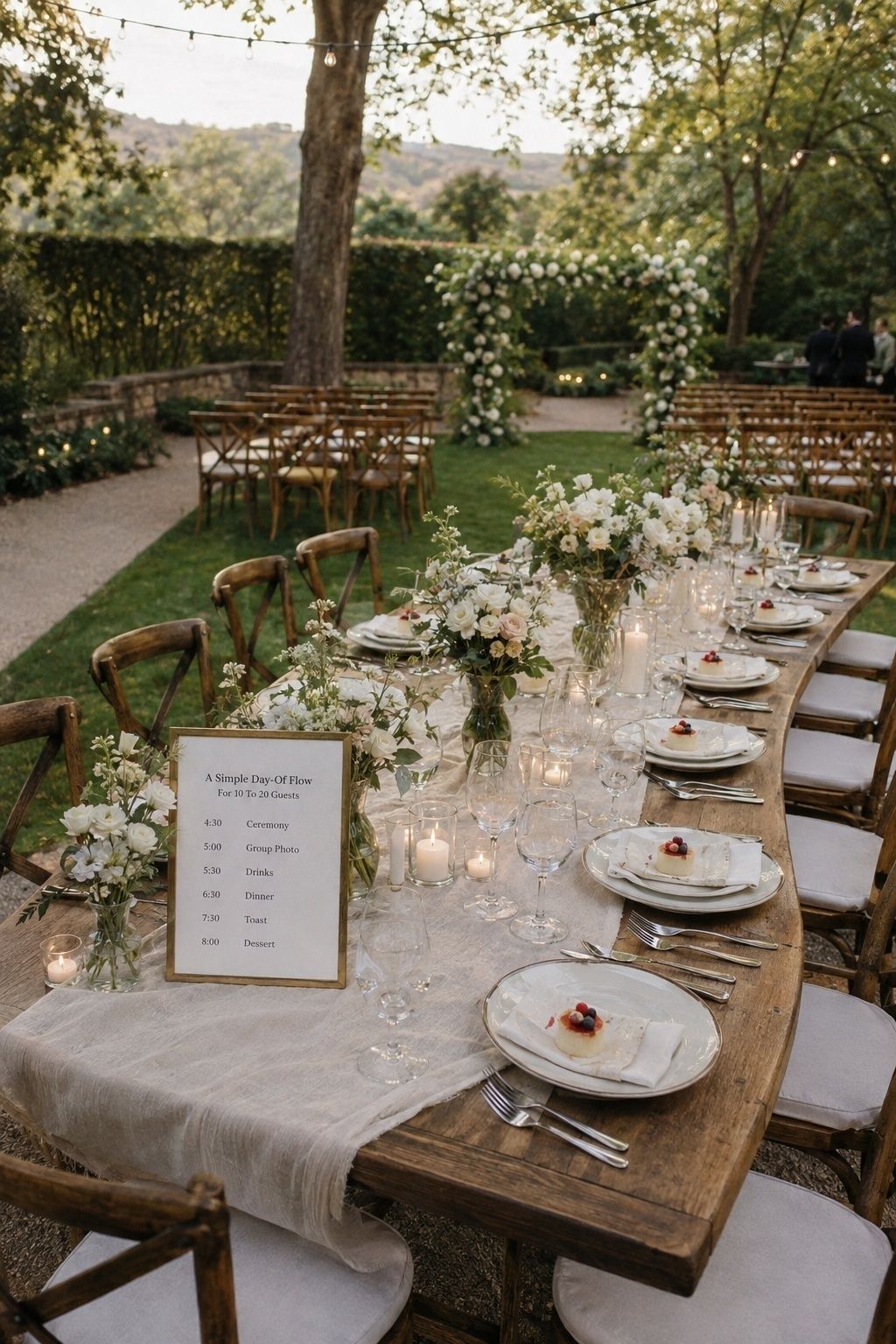
For 10 to 20 guests, a 4-to-5-hour celebration is often enough, especially when the ceremony and meal happen in the same place or nearby. You might include relaxed getting-ready photos, a first look or private moment, immediate-family portraits, a short ceremony, one group photo, drinks, dinner, a toast, dessert, and a natural ending.
This guest count does not need a full reception machine. It needs hospitality. Give guests a drink after the ceremony, tell them where to go, seat them thoughtfully, and begin the meal before the energy dips. A simple micro wedding reception timeline can be ceremony, congratulations, photos, drinks, dinner, toasts, dessert, and goodbye hugs.
Because everyone can feel included, avoid over-segmenting the day. One long table, one or two short toasts, and a shared dessert moment may feel more meaningful than a full lineup of formal reception events.
A Day-Of Flow For 25 To 50 Guests
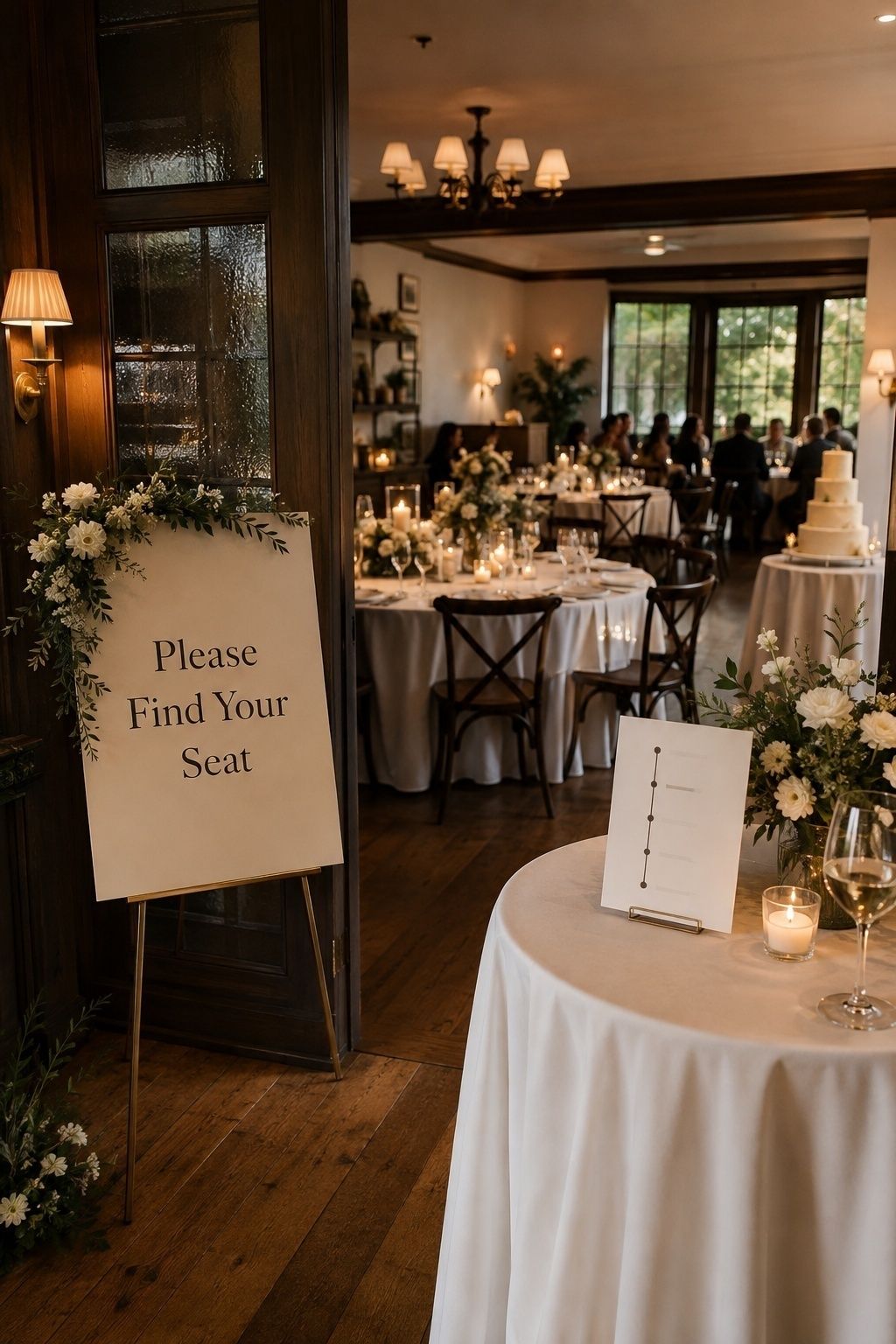
For 25 to 50 guests, plan for a little more structure. A 5-to-7-hour day can hold getting ready, portraits, ceremony, family photos, cocktail hour, seated dinner, speeches, cake, a first dance or shared music moment, and a soft send-off. The celebration is still intimate, but unclear transitions can feel messy with this many people moving at once.
Use a slightly firmer small wedding day-of timeline. Guests should know where to go after the ceremony. The catering team should know when photos end. Speakers should know when they are talking. The photographer should know whether golden-hour portraits happen before dinner, between courses, or near the end of cocktail hour.
If you want the meal to feel like a reception rather than a dinner reservation, add one clear wedding moment: a welcome toast, cake cutting, first dance, or a few songs after dinner. Refined micro wedding reception ideas feel strongest when they fit the room instead of overwhelming it.
Where Photos Belong In The Timeline
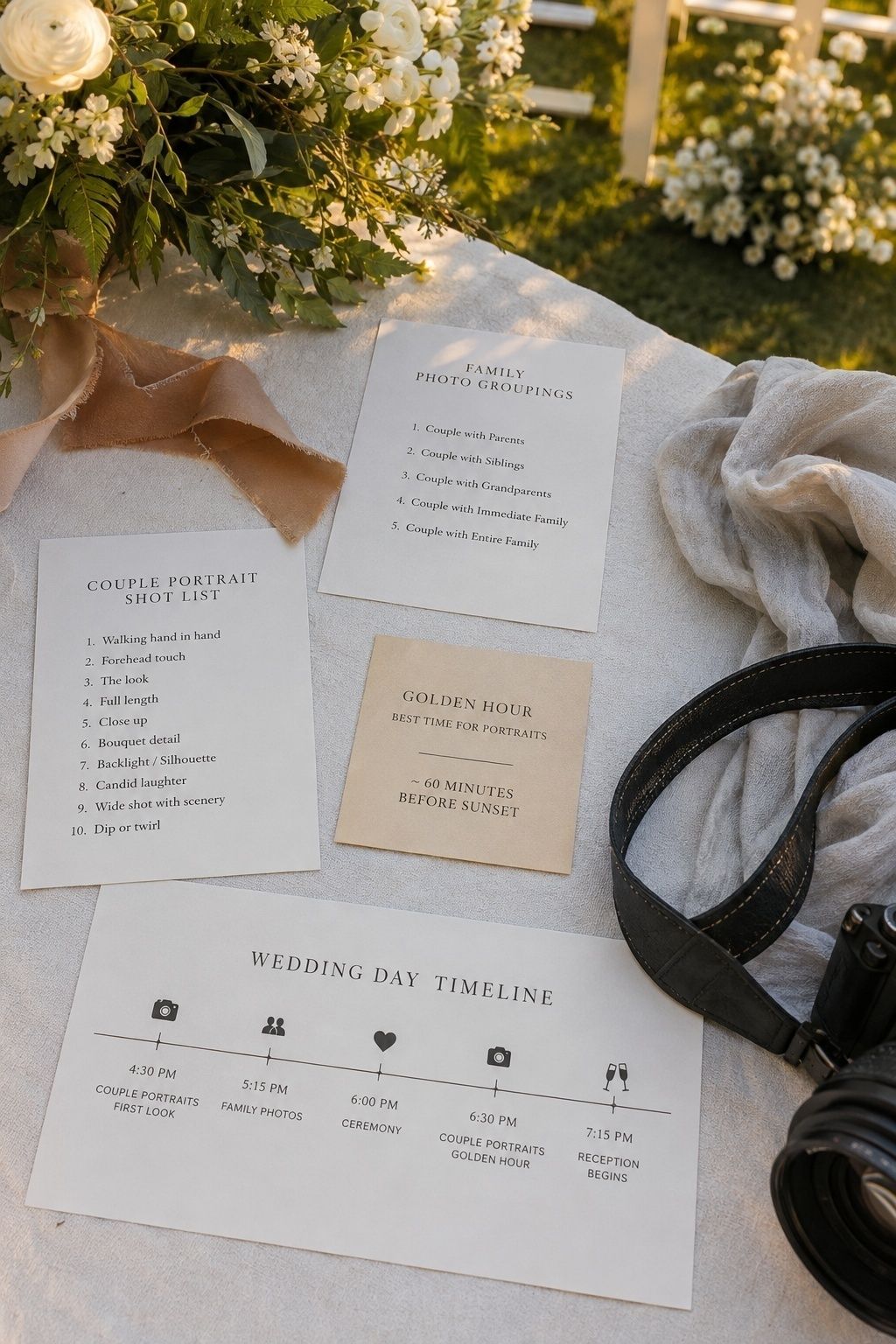
Photos belong wherever they protect both the light and the guest experience. If portraits are very important, consider a first look, couple portraits before the ceremony, and immediate-family photos before guests arrive. Then the post-ceremony stretch can stay short and guests can move toward drinks and dinner without waiting too long.
If you prefer not to see each other before the ceremony, place family photos immediately after the ceremony and give guests something hosted to do: champagne, passed bites, a guest book, a view, music, or a comfortable place to sit. For a very small group, one full-group photo right after the ceremony can be sweet and efficient. For a 50-person micro wedding, group photos need a clearer list and a helper who knows names.
Do not let photos eat the meal. If the restaurant needs dinner to start at a certain time, build portraits around that. If sunset is important, choose a short golden-hour window and tell the caterer before the day. A dedicated photography timeline should account for light, family groupings, travel, and the moment guests are ready to sit down.
How To Move From Ceremony To Meal Smoothly

The ceremony-to-meal transition is one of the most important parts of a micro wedding timeline because small groups do not hide awkward pauses. Decide what happens in the first five minutes after the ceremony. Will guests gather for one group photo, receive drinks, follow a host to the dining room, walk to a restaurant, or stay nearby while family portraits happen?
Give this handoff to a specific person. It could be your officiant, coordinator, photographer, venue manager, or a trusted friend. Ask them to say the next step out loud: where guests should go, whether drinks are waiting, when dinner begins, and whether the couple will join after portraits.
If the ceremony and meal are in different places, add more cushion than you think you need. Parking, hugs, mobility needs, rain, coats, and directions all take time. A tiny guest list does not make transportation instant.
Which Traditions Need Time And Which Can Shrink
Some traditions deserve real time even at a micro wedding. Vows, readings, a family blessing, a first look, portraits with elders, a welcome toast, and a meaningful first dance can feel even more powerful in a small room. Give those moments enough quiet around them so they do not feel rushed.
Other traditions can shrink or disappear. You may not need a long processional, wedding party introductions, a bouquet toss, a large cocktail hour, a full dance-floor block, or a formal send-off. If you do want a first dance, an intimate version might look like one song after dinner, a private dance before guests arrive, or a family-style dance that invites everyone in.
The question is not, “What does a wedding usually include?” The better question is, “What will make this small wedding feel complete?” Let that answer decide what gets time.
Timeline Mistakes To Avoid
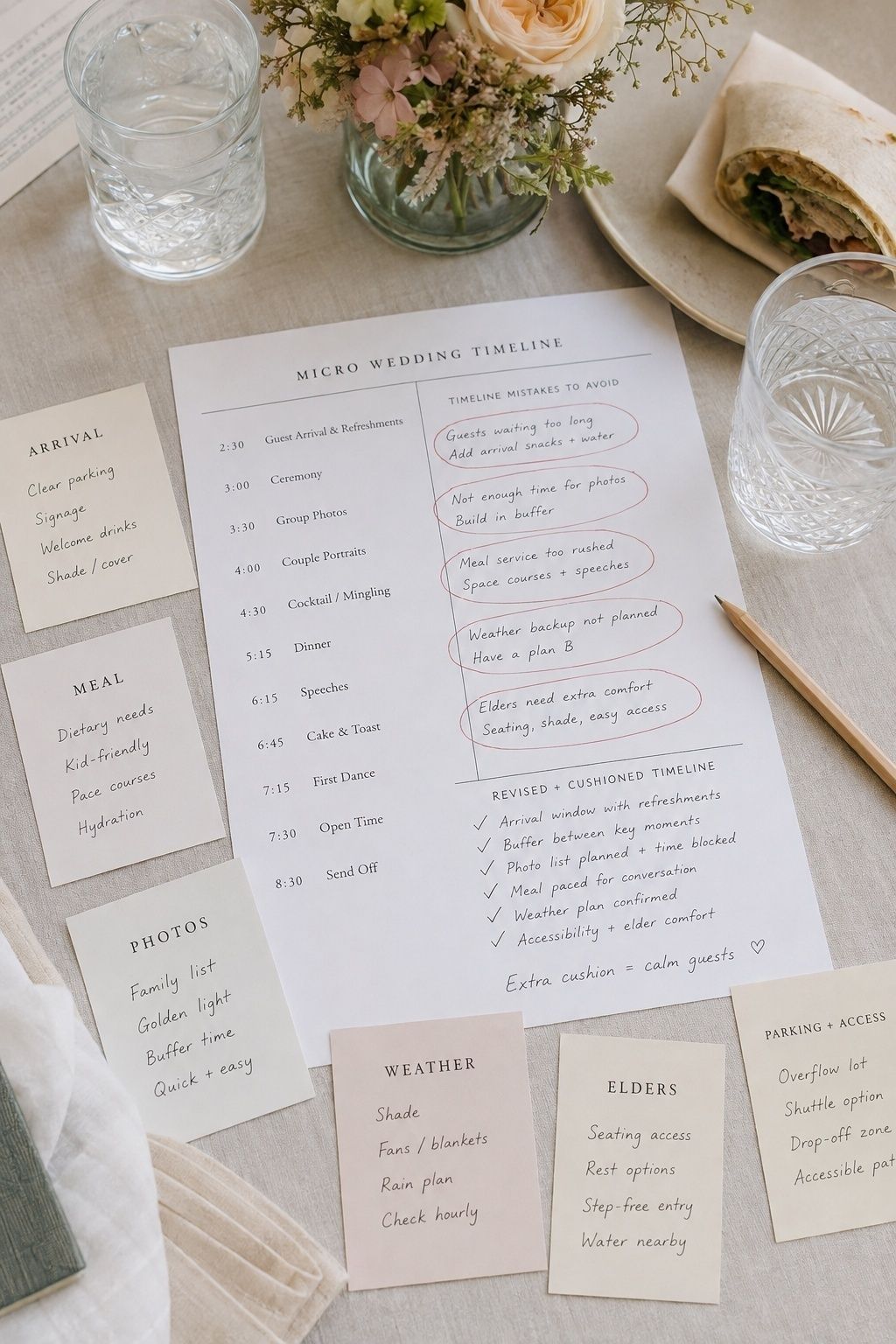
The first mistake is leaving the day too loose. A micro wedding can be relaxed without being vague. Guests still need arrival cues, a place to go after the ceremony, meal timing, restroom access, weather notes, and a sense of when the celebration ends.
The second mistake is copying a large-wedding timeline without editing it. A tiny wedding usually does not need hours of wedding party photos, long introductions, multiple formal dances, or a giant gap between ceremony and dinner. Those pieces can make the day feel inflated instead of intimate.
The third mistake is forgetting the people who move slowly or need extra care. Elders, children, pregnant guests, disabled guests, out-of-town family, and anyone helping with setup may need more cushion. The smallest weddings are often the most personal, so build a timeline that notices the actual people in the room.
FAQ
What Is A Realistic Micro Wedding Timeline?
A realistic micro wedding timeline usually includes 3 to 12 months of planning and a 4-to-7-hour wedding-day flow. The day itself often includes getting ready, ceremony, photos, drinks, dinner, toasts, dessert, and one optional music or dance moment.
How Long Should A Micro Wedding Day Be?
A micro wedding day should usually be 4 to 5 hours for 10 to 20 guests, or 5 to 7 hours for 25 to 50 guests. Add more time if locations are separate, photos are a priority, dinner has multiple courses, or guests are traveling between ceremony and reception spaces.
Can You Plan A Micro Wedding In 3 To 6 Months?
Yes, you can plan a micro wedding in 3 to 6 months if you prioritize the date, venue, officiant, photographer, meal, attire, invitations, and guest communication first. Keep decor simple, choose vendors with availability, and make the timeline practical before adding extras.
What Should Happen First In A Micro Wedding Timeline?
The first thing in a micro wedding timeline should be deciding the guest count, budget, date, ceremony location, and meal plan. Those choices determine vendor needs, photo timing, invitation timing, transportation, and how long the wedding day should be.
How Do You Plan Photos Into A Micro Wedding Timeline?
Plan photos into a micro wedding timeline by choosing whether portraits happen before or after the ceremony, listing family groupings in advance, protecting the best light, and giving guests something hosted to do during any post-ceremony photo time. Keep the list realistic so dinner does not start late.
What Timeline Mistakes Make Small Weddings Feel Awkward?
Small weddings feel awkward when there is no clear ceremony-to-meal transition, photos take too long, guests do not know where to go, dinner starts late, traditions feel oversized, or the ending is unclear. A simple schedule with warm hosting cues prevents most of those problems.
Final Thoughts
A micro wedding timeline should feel like a gracious host: present, calm, and quietly prepared. You do not need to fill every minute. You need the right moments in the right order, with enough space for vows, photographs, a beautiful meal, and the people who came close enough to witness it all.
Build the structure, then let the day breathe. When the ceremony has a clear handoff, the meal begins before guests get restless, and the photo plan respects both light and people, the celebration can feel effortless in the way only a carefully planned small wedding can, especially when wedding-day photography timeline planning is woven into the final version instead of squeezed in after everything else.
Last update on 2026-10-03 / Affiliate links / Images from Amazon Product Advertising API