
Men’s wedding flower bouquet ideas can be elegant, masculine, soft, sculptural, or completely gender neutral when the bouquet is scaled to the suit, the ceremony, and the person carrying it. A groom or partner can carry a slim hand-tied bouquet, a single long-stem bundle, a pocket floral piece, a cuff, or a boutonniere-bouquet hybrid that feels intentional instead of borrowed from someone else’s tradition.
A bouquet in a groom’s hands changes the energy of a ceremony in the loveliest way. It gives the walk down the aisle a focal point, balances two partners in portraits, and makes the flowers feel personal rather than purely decorative.
For a small wedding, that matters even more. Every detail is close enough to be noticed, so the right bouquet can replace a larger floral installation while still making the styling feel complete.

Recommended Wedding Products


You Might Also Like These Blog Posts
- Men’s Wedding Jewellery Aesthetic Ideas With Real Presence
- Men’s Hand Bracelet Wedding Ideas for the Vow Hand Close-Up
- Men’s Silver Wedding Jewellery Ideas With Cool-Toned Confidence
- Embroidery Flower Wedding Bouquet Ideas Stitched With Meaning
- Men’s Chain Necklace Groom Ideas With Subtle Ceremony Swagger
- Wedding Bouquet With No Flowers Ideas for a Personal Aisle Statement
Men’s Wedding Flower Bouquet Ideas for an Intimate Ceremony
The best men’s wedding flower bouquet ideas begin with posture and proportion. A bouquet for a groom, masc partner, or gender-expansive partner does not need to imitate a traditional bridal bouquet. It can be narrower, darker, more textural, more architectural, or softer in a way that still feels grounded beside a tailored suit.
Start by asking what the flowers should do in the ceremony. They might give nervous hands somewhere calm to rest, echo a partner’s bouquet, honor a family garden, or make a suit feel more ceremonial. For an intimate guest count, a wedding bouquet for groom styling can become one of the clearest emotional details in the room.
| Style direction | Best bouquet scale | Suit pairing |
|---|---|---|
| Tailored and understated | Slim hand-tied stems | Black, charcoal, navy, or taupe suit |
| Modern and editorial | Single orchid or branch-led bouquet | Clean tuxedo, collarless shirt, or sharp monochrome suit |
| Romantic and soft | Small garden-style bundle | Linen, velvet, cream, sage, or warm brown suiting |
| Masculine and moody | Dark blooms with olives, herbs, or grasses | Deep green, brown, burgundy, or black suit |
| Gender neutral and balanced | Matching mini bouquets or mixed accessories | Coordinated suits, separates, or one suit and one dress |
Slim Hand-Tied Groom Bouquet

A slim hand-tied groom bouquet is the easiest place to begin because it feels familiar without being oversized. Choose a narrow cluster of ranunculus, hellebores, lisianthus, tulips, or garden roses with firm greenery around the edges. Keep the handle clean, the stems short enough to control, and the overall shape closer to a gathered bundle than a full bridal cascade.
This style works especially well when one partner carries a larger bouquet and the other wants a smaller floral echo. It also looks beautiful in portraits where both partners stand shoulder to shoulder, because the groom flower bouquet adds balance without competing for attention.
Single-Flower Bundle With Long Stems
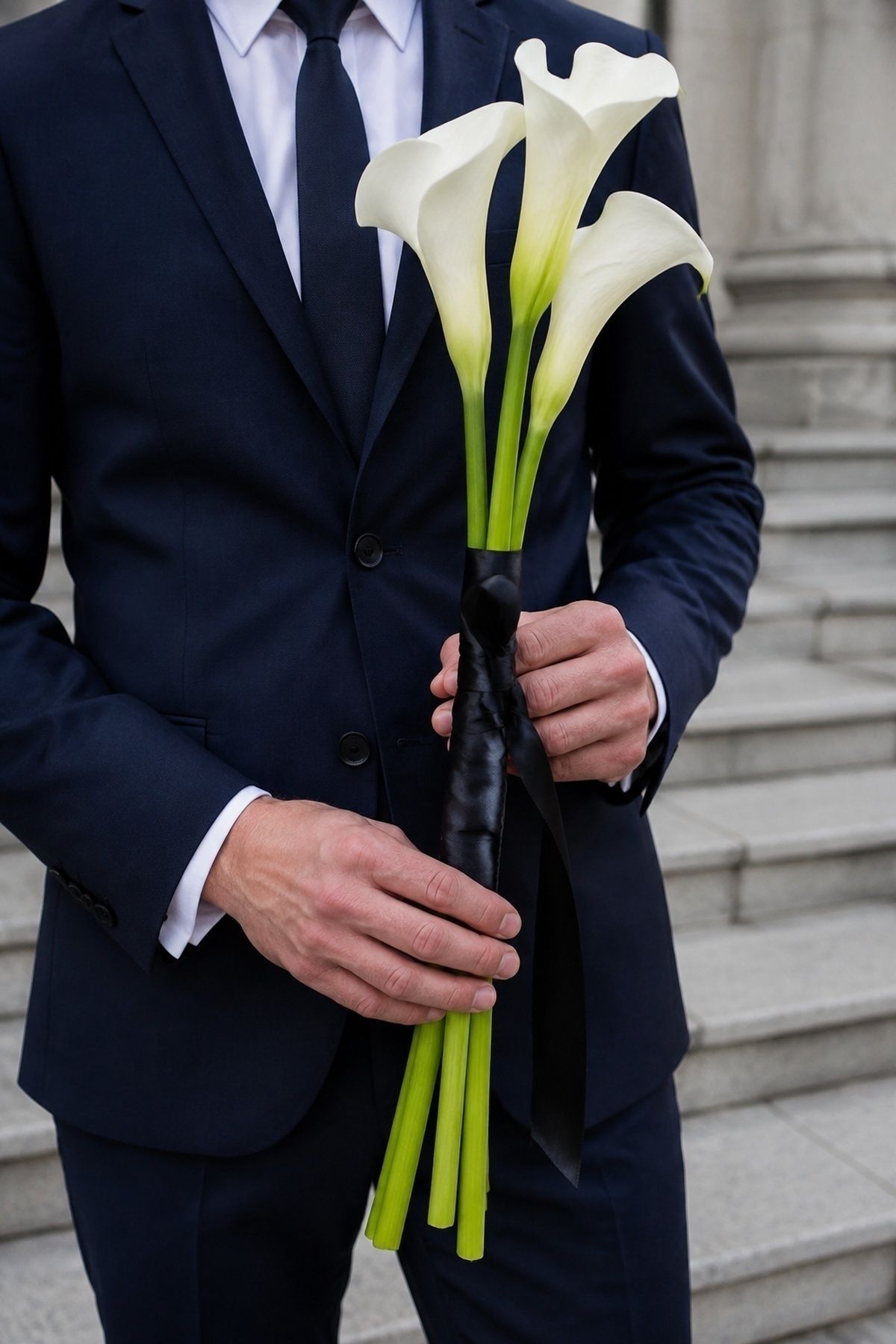
A single-flower bundle can feel quietly confident when the stems are left long and the bloom choice has presence. Calla lilies, anthuriums, tulips, delphinium, or long-stem roses can create a clean vertical line against a suit. The result is less “bouquet” in the traditional sense and more like a floral object carried with intention.
Ask the florist to bind the stems in one slim wrap so they do not shift while walking. A narrow satin or velvet ribbon keeps the look polished, while exposed green stems can feel more relaxed for a garden ceremony or city hall portrait session.
Dried Grass and Herb Bouquet
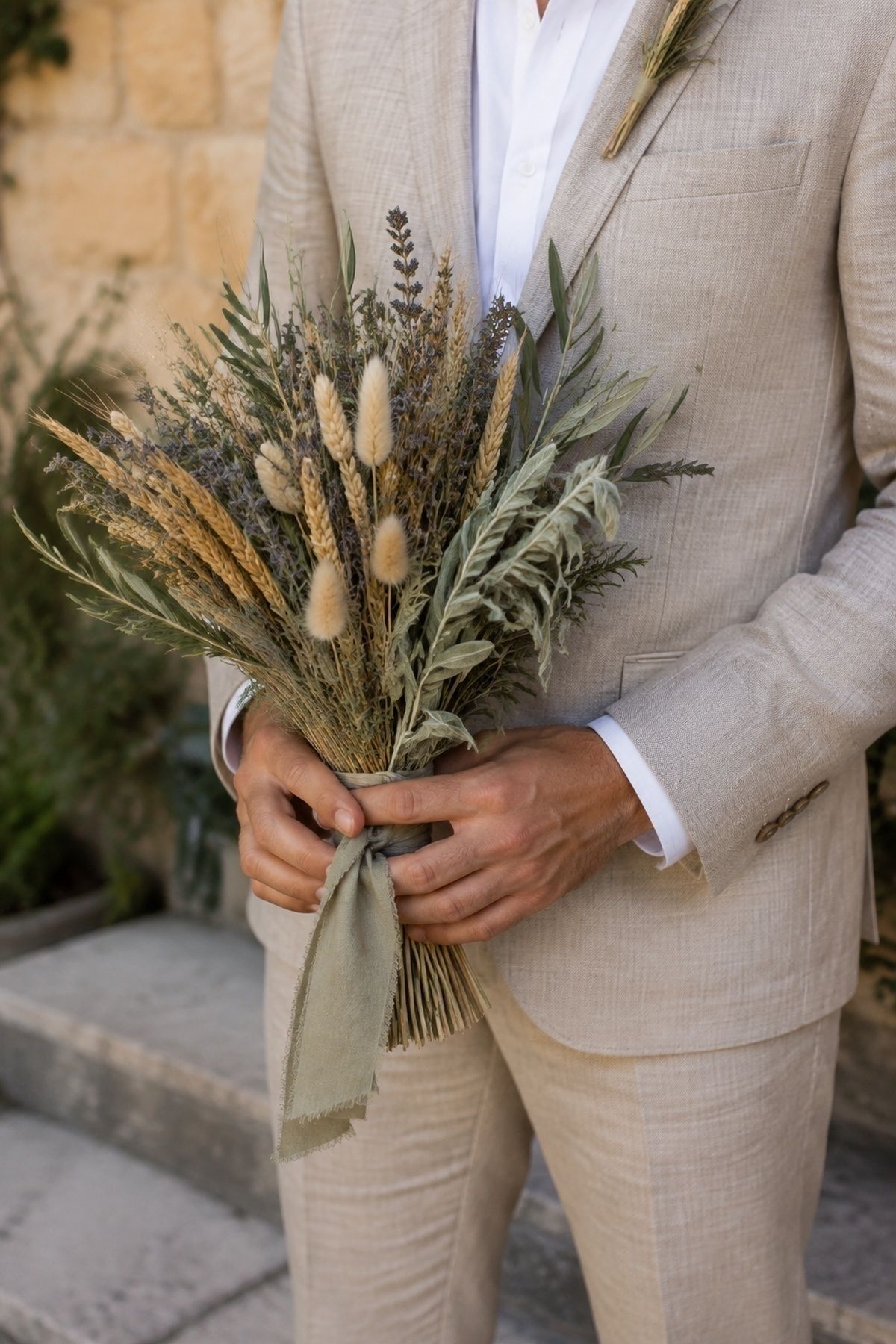
Dried grasses and herbs give a masculine wedding bouquet texture without making it heavy. Think bunny tails, wheat, millet, pampas tips, rosemary, bay, lavender, olive, or sage gathered in a compact shape. The fragrance feels intimate, and the muted colors sit beautifully with tweed, linen, wool, or a simple black suit.
For a small ceremony, this can also become a keepsake. Dried stems are easier to save than fresh flowers, and they connect naturally with a meaningful small wedding when the herbs come from home, a family garden, or a favorite shared place.
Monochrome White Flower Bouquet
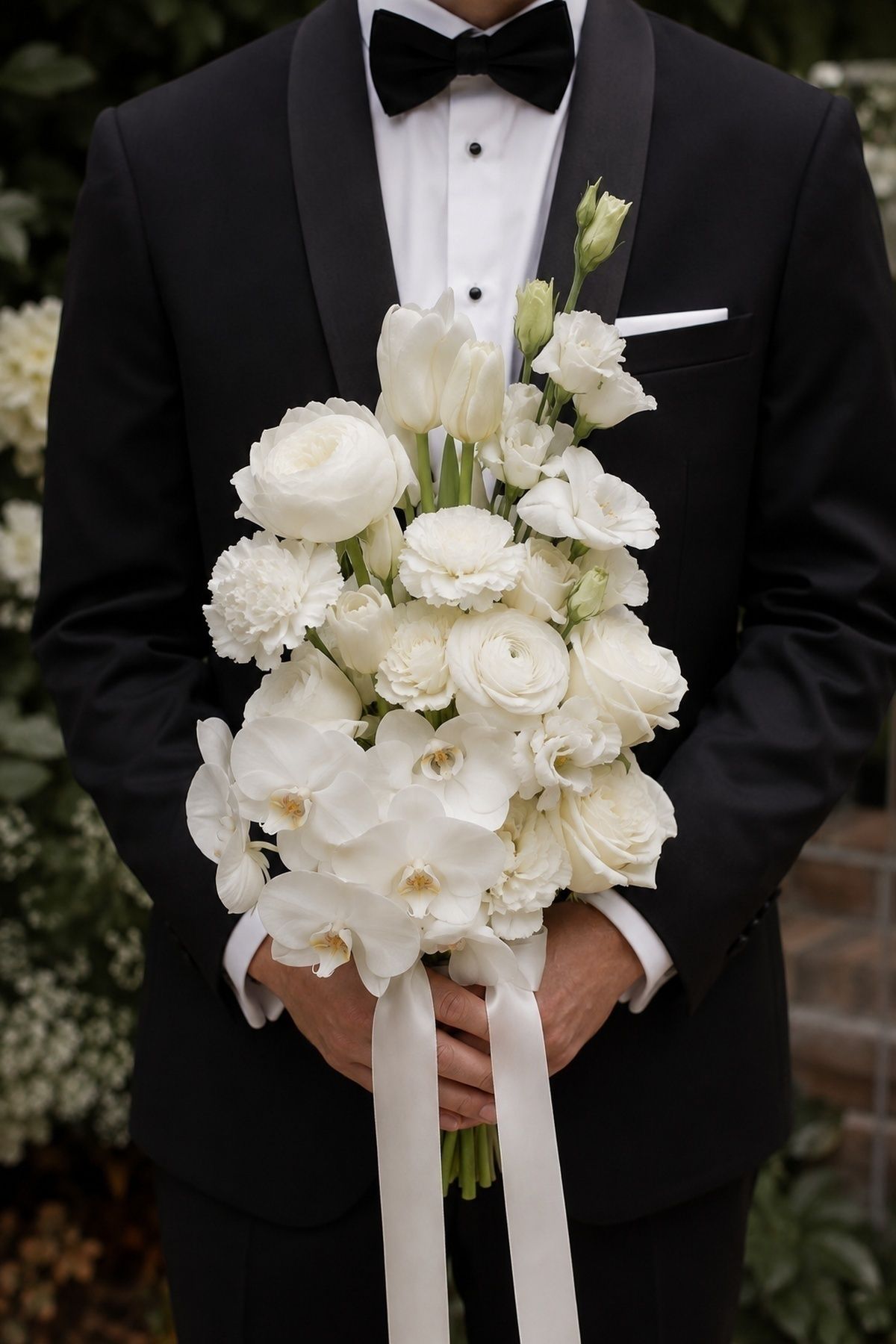
A monochrome white bouquet can look incredibly refined in a groom’s hands, especially when the texture does the work. White orchids, tulips, ranunculus, roses, lisianthus, or carnations can feel crisp rather than overly sweet when they are arranged in a narrow shape with minimal greenery.
This is a strong choice with a black tuxedo, ivory dinner jacket, navy suit, or soft gray tailoring. Keep the ribbon in the same family as the shirt, pocket square, or boutonniere pin so the bouquet feels connected to the outfit rather than floating beside it.
Dark Plum and Olive Groom Bouquet
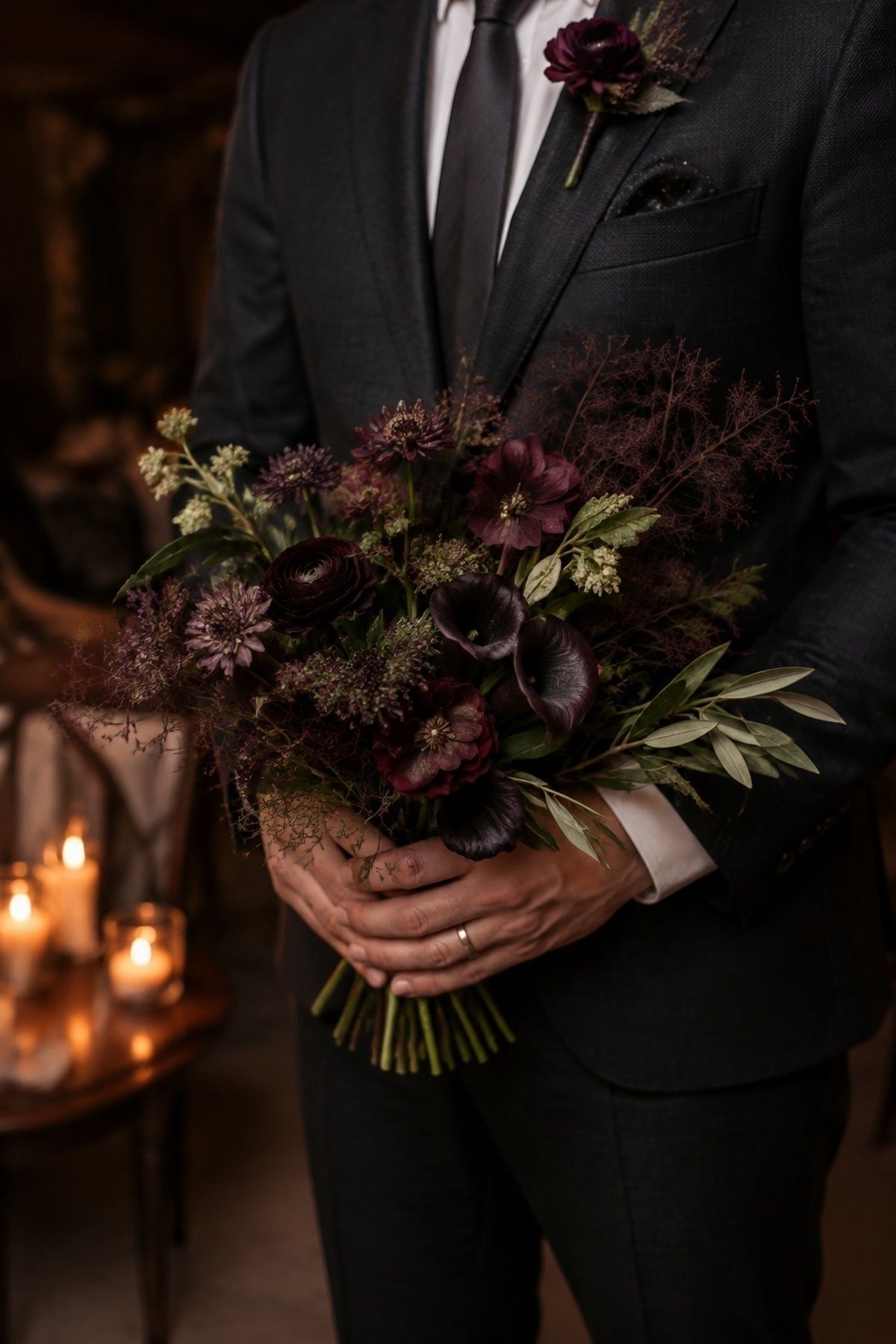
Dark plum, olive, burgundy, chocolate, and moss tones create a bouquet that feels moody without being severe. Use scabiosa, hellebores, dark ranunculus, calla lilies, smoke bush, olive branches, or deep-toned orchids. The palette feels romantic in a grown-up way, particularly for autumn, evening, restaurant, or candlelit ceremonies.
Because these colors can photograph dense, ask for a little negative space between blooms. A few pale stems or silvery leaves can keep the bouquet readable in photos, especially if the suit is also dark.
Sculptural Branch and Bloom Bouquet
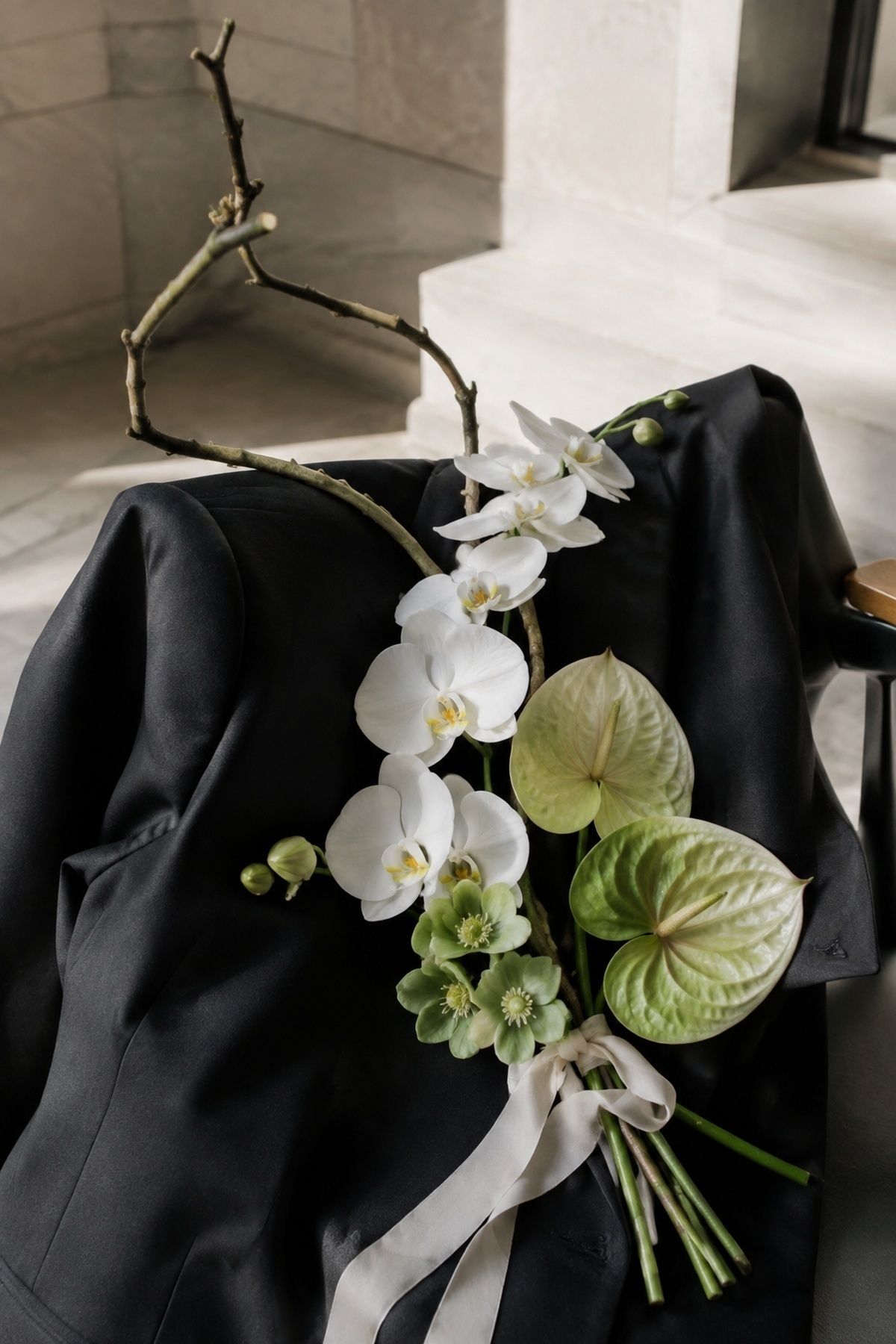
A sculptural branch and bloom bouquet is ideal for someone who wants flowers to feel artistic rather than lush. One curved branch, a few orchids, a line of anthurium, or a handful of hellebores can create movement without bulk. It pairs beautifully with minimalist suits, clean tailoring, and ceremonies in galleries, courthouses, private dining rooms, or modern chapels.
The practical detail is balance. Branches should be lightweight, smooth, and trimmed so they do not catch on sleeves or lapels. A bouquet can look dramatic while still being comfortable enough to carry through vows and portraits.
Matching Partner Mini Bouquets
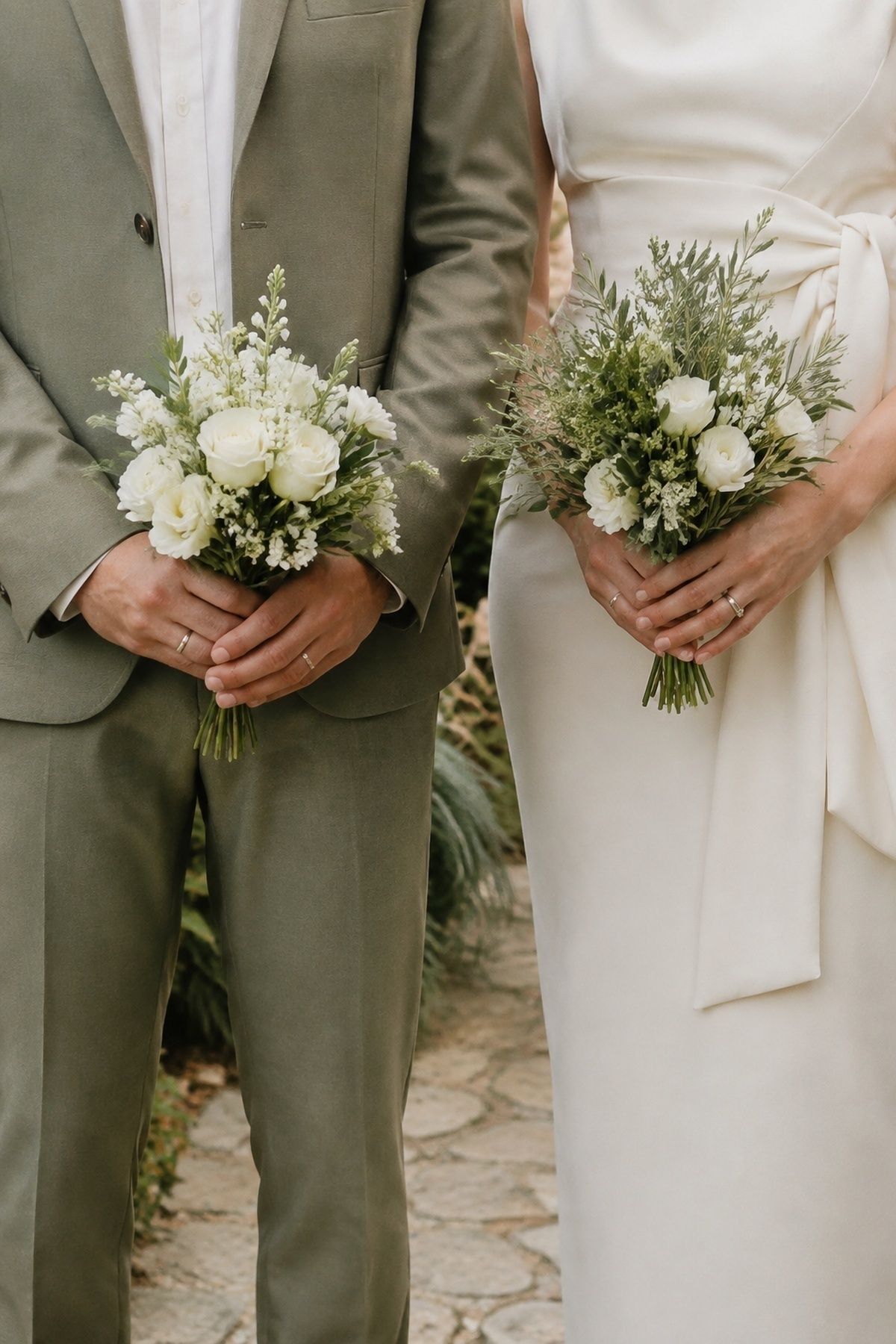
Matching partner mini bouquets are beautiful when both people want equal floral presence. They can be identical, mirrored, or quietly different, such as one cream bouquet with olive and one olive bouquet with cream. This is one of the clearest gender neutral wedding bouquet choices because it focuses on partnership instead of assigning flowers by role.
Keep both bouquets in the same visual language even if the outfits are different. A couple planning around a small wedding color palette can repeat the same two or three tones in flowers, ties, pocket squares, shoes, or ribbons so the portraits feel considered.
Bouquet and Boutonniere Hybrid
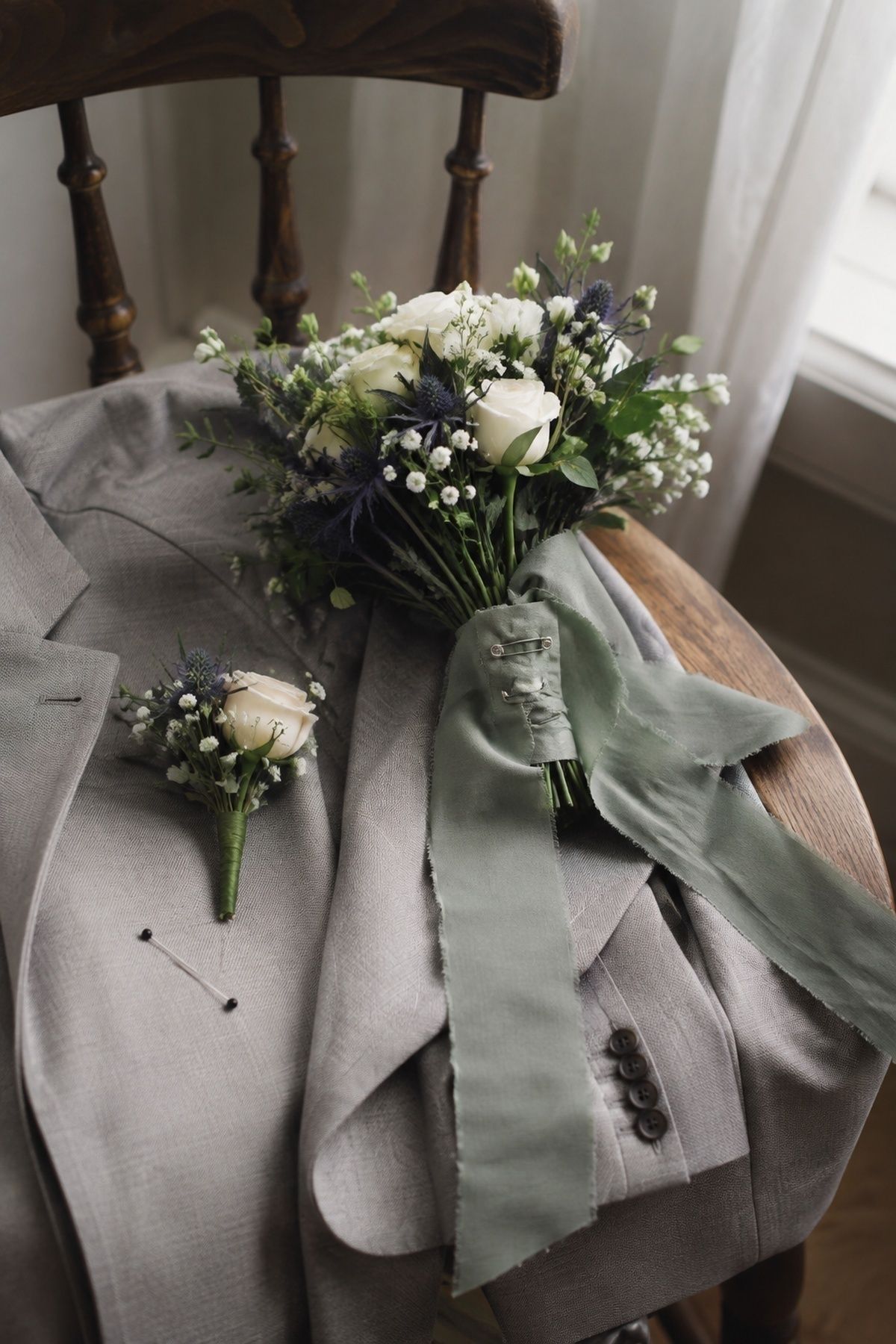
A bouquet and boutonniere hybrid sits between tradition and something more expressive. It might be a small hand-held bundle that can later be pinned near the lapel, a larger boutonniere with trailing ribbon, or a structured floral piece held for the ceremony and then worn for the reception.
This is helpful when the couple likes the symbolism of carrying flowers but does not want to manage a bouquet all night. It is one of the cleanest alternative boutonniere ideas for a partner who wants more presence than a lapel flower, with less handling than a full bouquet. Ask the florist for a clear transition plan, including who will hold the piece after the ceremony and how it will be secured before dinner.
Pocket Bouquet for a Tailored Jacket
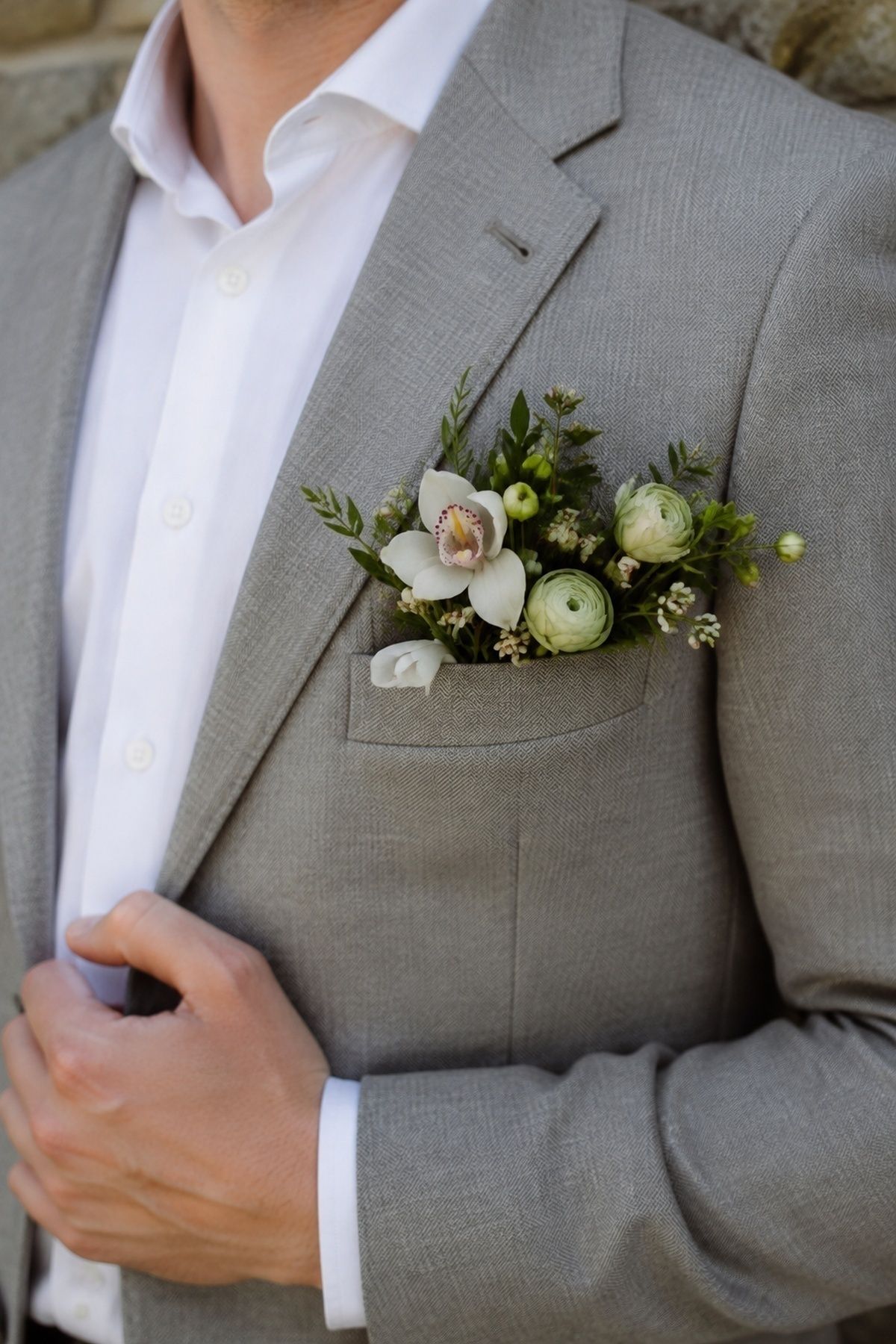
A pocket bouquet turns the jacket itself into the floral moment. Instead of one small boutonniere, flowers spill gently from the breast pocket like a living pocket square. It is one of the most polished groom floral accessories for someone who wants hands free during the ceremony.
The key is construction. The flowers need a flat backing, secure hydration method if fresh, and a pocket square holder or insert that keeps the shape upright. This works best on a jacket with enough structure to support the piece without pulling the fabric forward.
Floral Cuff Carried Like an Accessory
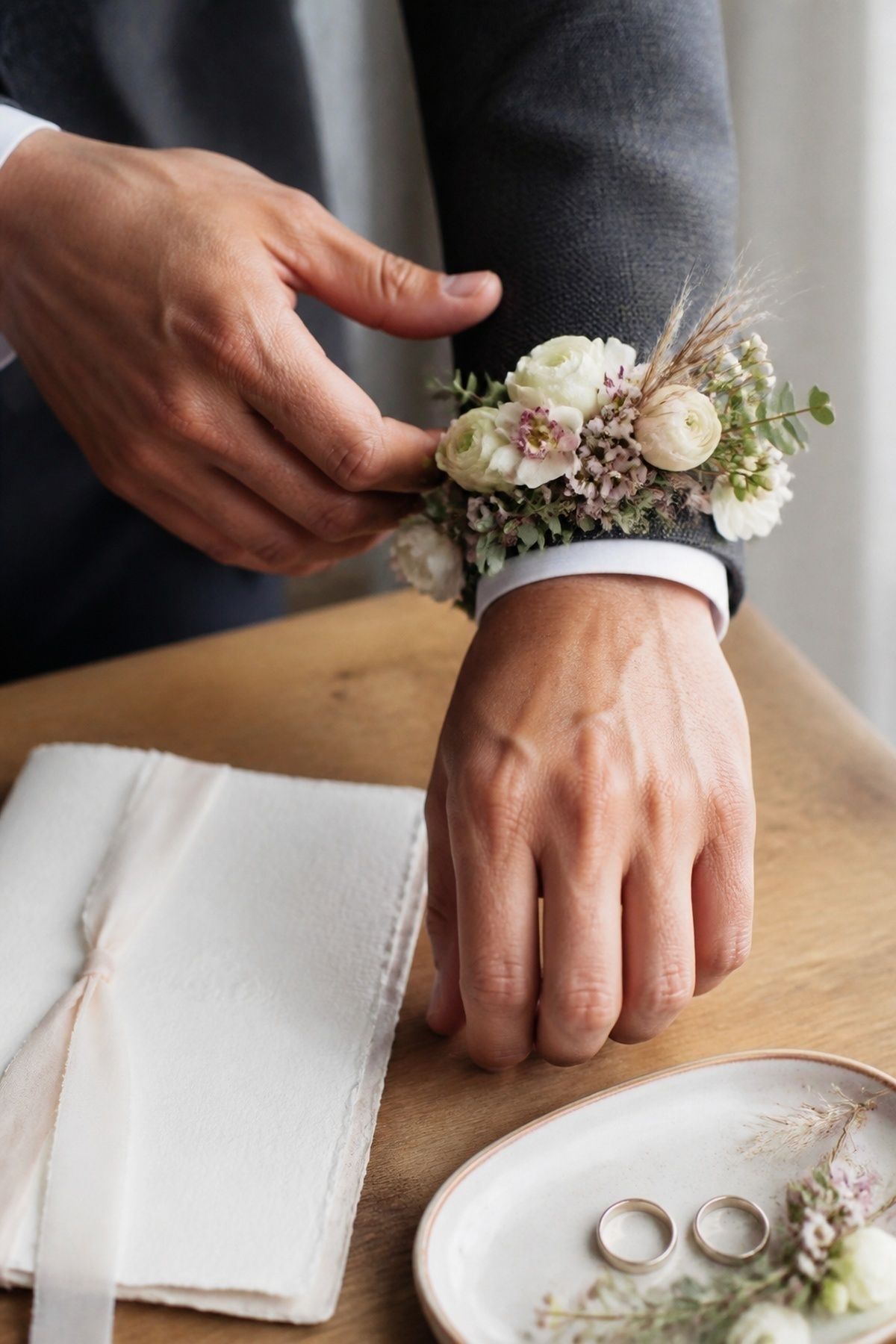
A floral cuff can be worn at the wrist, held in the hand, or slipped off for portraits. It feels a little like jewelry and a little like flowers, which makes it useful for partners who want a softer detail without carrying stems. Orchids, waxflower, ranunculus buds, dried grasses, and small leaves all work well on a cuff base.
Choose this for ceremonies where the person carrying flowers will also exchange rings, read vows, hug family, or hold a partner’s hands. The cuff should sit securely without squeezing and should not shed pollen onto a sleeve.
Wildflower Bundle for an Outdoor Ceremony
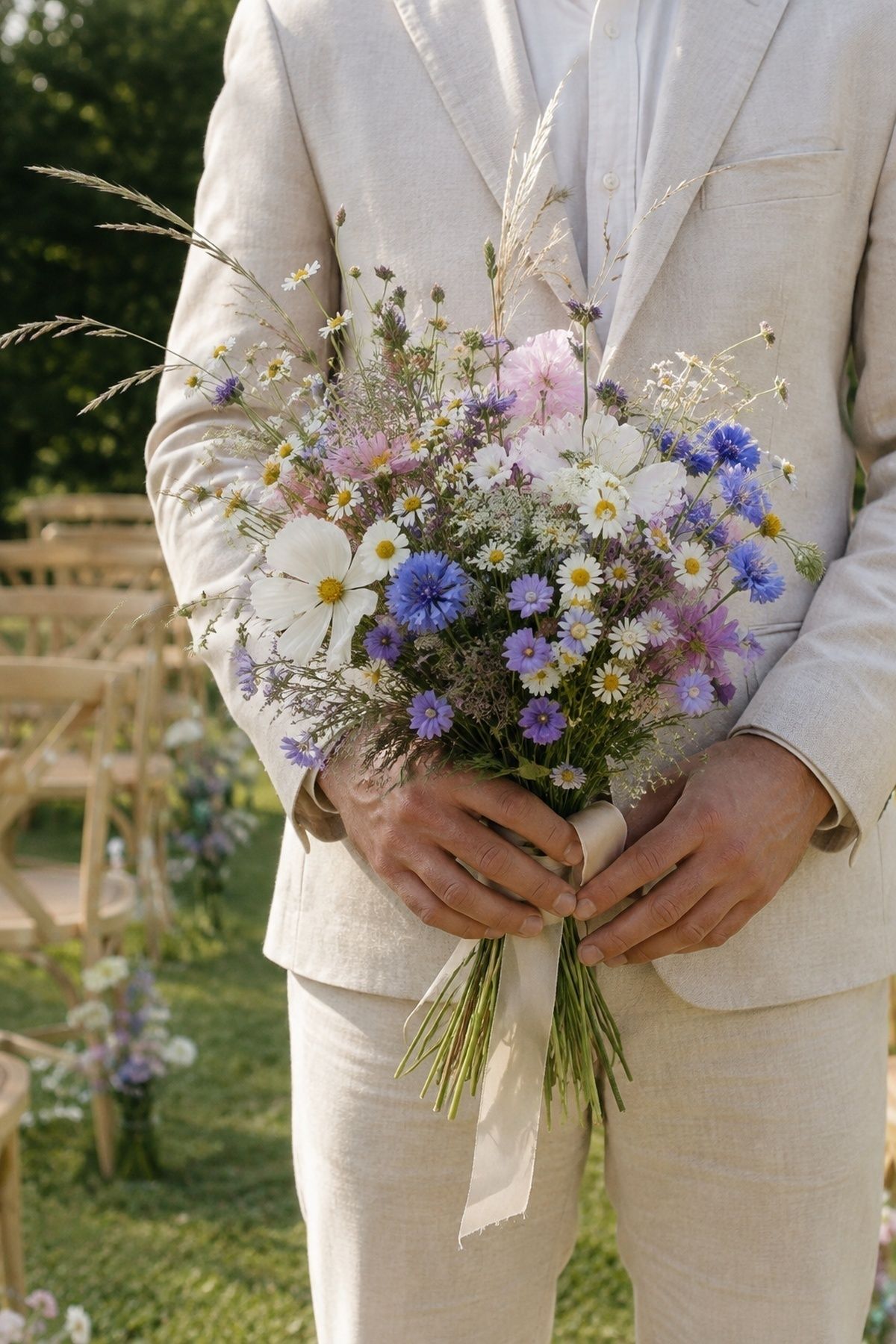
A wildflower bundle feels relaxed, romantic, and quietly personal for a meadow, garden, backyard, or lakeside wedding. Use cosmos, chamomile, scabiosa, bachelor’s buttons, feverfew, sweet peas, grasses, and small herbs in a loose but controlled shape. The bouquet can feel gathered without looking messy if the colors stay edited.
For a small outdoor wedding, wildflowers can connect the ceremony to the landscape. Pair the bouquet with ceremony decor that repeats only a few stems at the aisle or signing table, so the whole setting feels natural instead of overfilled.
Orchid Stem Bouquet for a Modern Suit

An orchid stem bouquet is spare, elegant, and a little unexpected. A few cymbidium, phalaenopsis, or dendrobium stems can look sculptural beside a modern suit, especially with a clean white shirt, open collar, or tonal tie. Orchids also photograph beautifully because each bloom has a clear shape.
Keep the bouquet simple. Too many orchids can become formal in a hotel-ballroom way, while one to three stems with a restrained ribbon feel editorial and intimate. Ask about stem support if the ceremony involves heat, wind, or long portraits before the vows.
Brooch and Flower Groom Bouquet
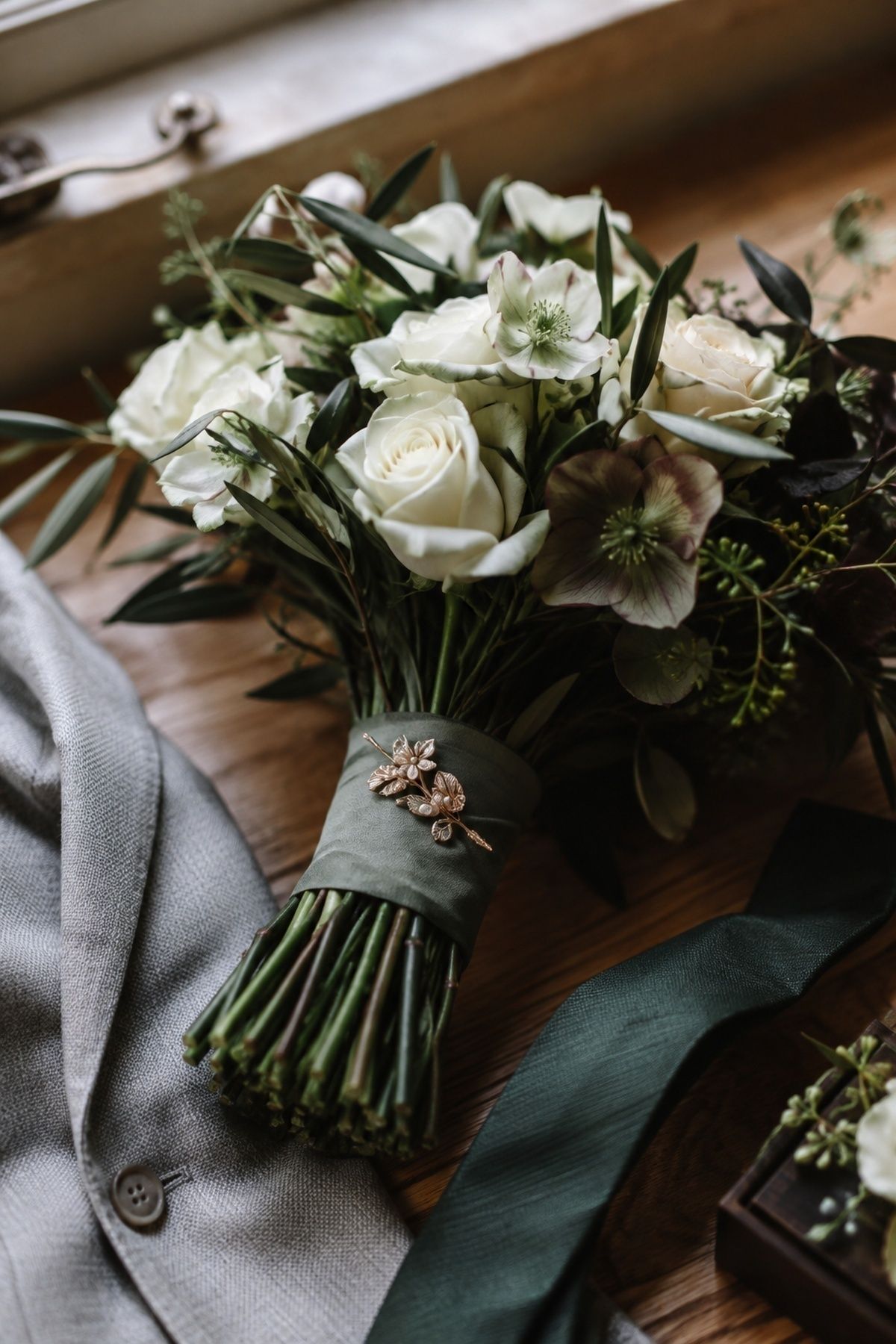
A brooch and flower groom bouquet adds heirloom detail without covering the flowers in sparkle. A single lapel pin, family brooch, vintage tie pin, or small charm can sit on the ribbon wrap or be wired into the front of the bouquet. It feels especially moving when the piece belongs to someone who cannot be there.
Use restraint with shine. One meaningful object is usually more elegant than many scattered embellishments, though you can borrow a softer pearl or crystal detail from bedazzled wedding flower ideas if the wedding already leans glamorous.
Minimal Greenery Bouquet With Ribbon
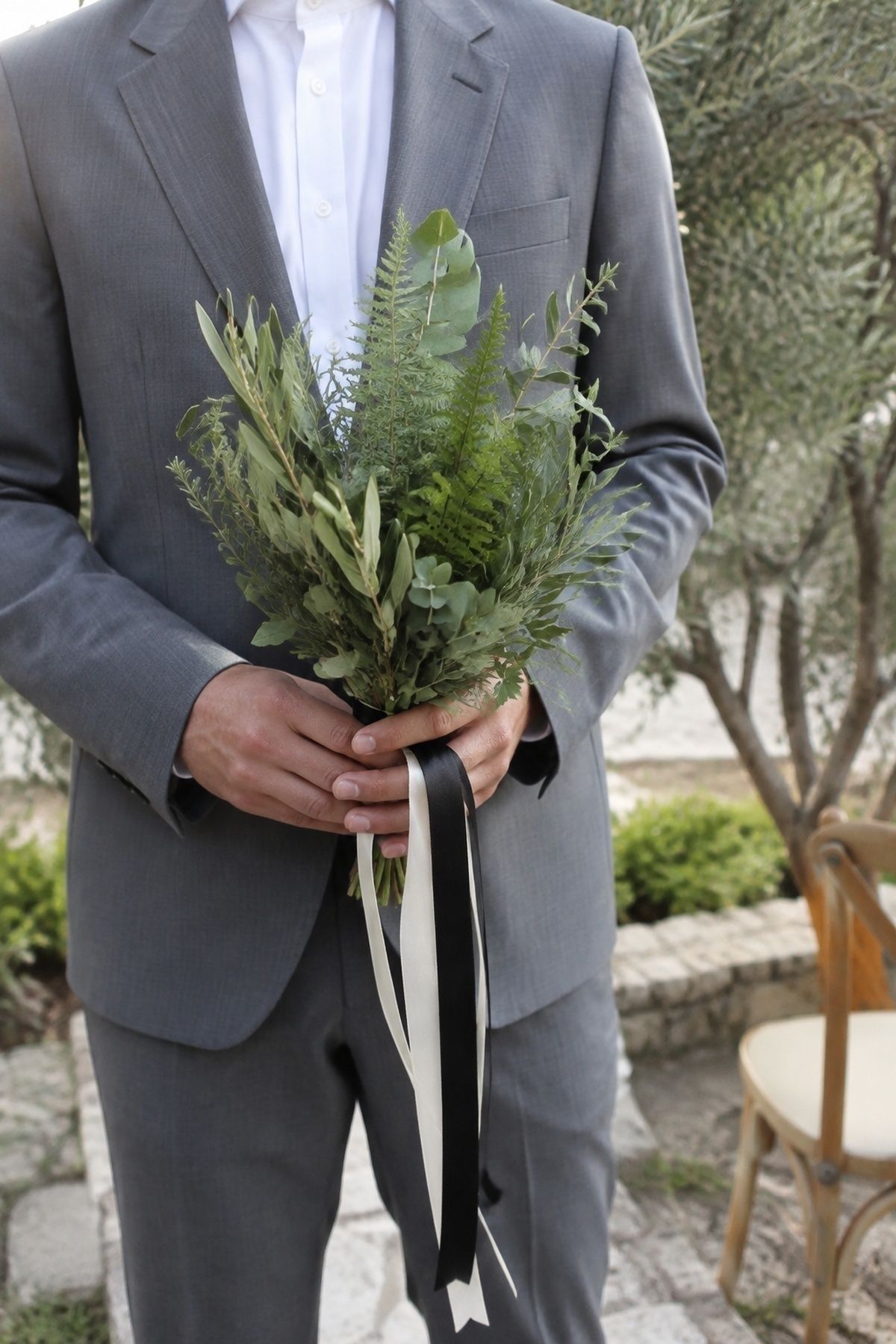
A minimal greenery bouquet is calm, inexpensive, and surprisingly handsome. Use olive, ruscus, eucalyptus, fern, bay, ivy, rosemary, or myrtle in a narrow gathered shape. The ribbon makes the difference: black velvet, ivory silk, moss linen, or a soft brown wrap can make simple greenery feel purposeful.
This is one of the most forgiving small wedding bouquet ideas because greenery lasts well, handles movement, and does not demand a large floral budget. It also works when the couple wants the ceremony to feel intimate and natural rather than heavily styled.
Reception-Ready Dried Keepsake Bouquet
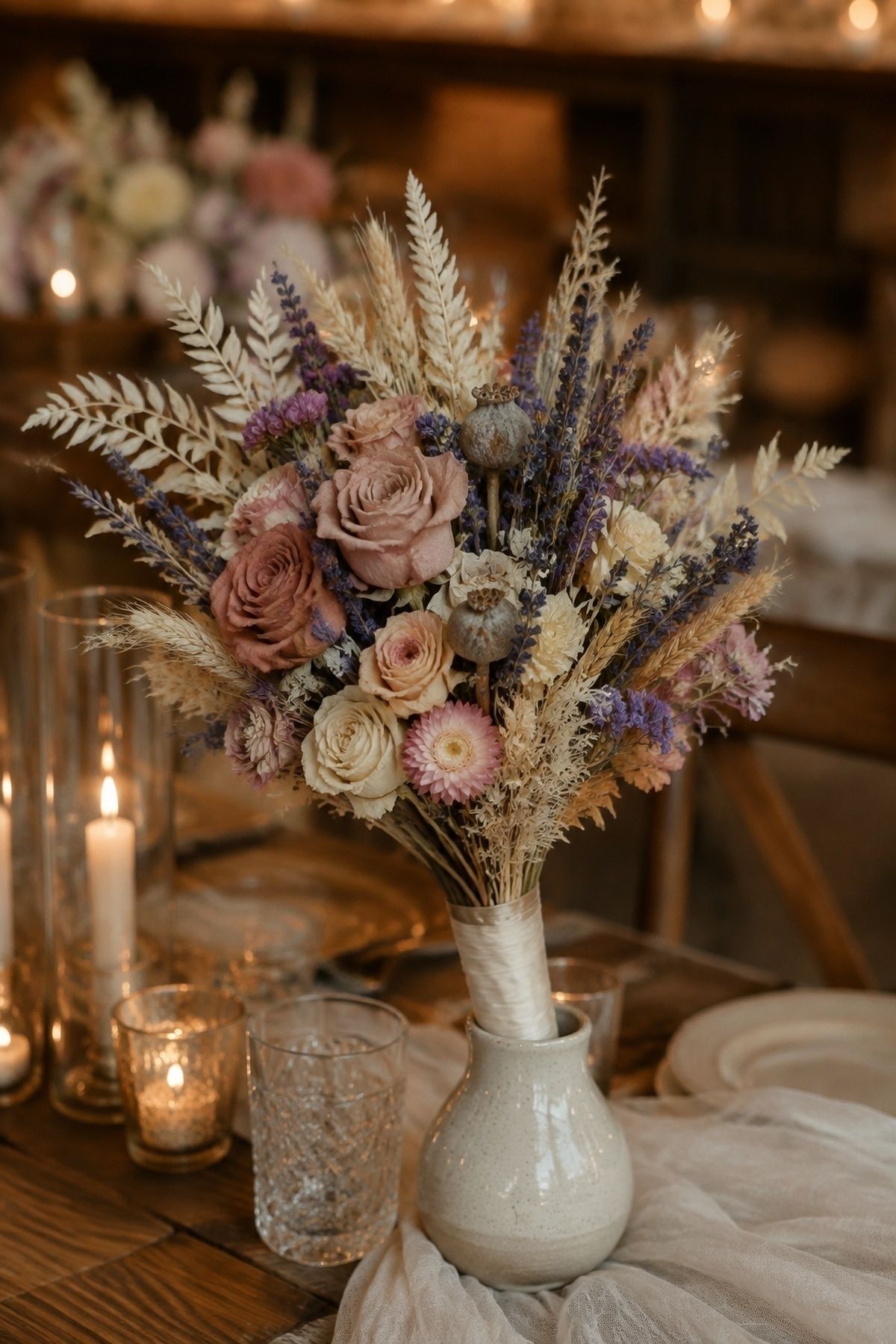
A reception-ready dried keepsake bouquet is designed to survive the whole day. Preserved roses, statice, strawflower, dried fern, wheat, lavender, and seed pods can be arranged tightly enough to travel from ceremony to portraits to dinner. Because it is already dried, the couple can keep it without arranging last-minute preservation.
For comfort, ask for a smooth handle and avoid brittle stems near the hand. If the bouquet will sit on the sweetheart table or bar after the ceremony, add a small vase or stand to the decor plan so it has a deliberate place to rest.
Bouquet, Boutonniere, or Both?
A boutonniere is worn on the jacket, while a bouquet is carried. A male wedding bouquet gives more visual weight and emotion to the ceremony entrance; a boutonniere gives a cleaner, hands-free floral note. Both can work together if one is quieter than the other.
For a formal suit, consider a pocket bouquet or a boutonniere-bouquet hybrid if you want flowers without holding stems. For a highly personal ceremony, a small carried bouquet can feel more expressive and less expected. If both partners carry flowers, use related shapes rather than identical copies unless symmetry is the whole point.
How to Match the Bouquet to a Suit
Let the suit decide the bouquet’s level of structure. A tuxedo can carry a clean orchid stem, white monochrome bundle, or deep plum bouquet. Linen and relaxed tailoring can take herbs, wildflowers, grasses, and softer ribbons. Velvet, tweed, or dark suiting can handle richer textures like seed pods, berries, thistle, or olive.
The bouquet should not hide the jacket line in portraits. Hold it low enough that the lapels, tie, shirt, and hands remain visible. Ask the photographer to plan a few quiet close-ups of both partners’ flowers, especially if your shot list already includes detail shots for the ceremony and portraits.
Flower and Texture Choices That Work Well
Flowers with shape tend to work best for groom bouquet ideas. Calla lilies, orchids, tulips, anthuriums, ranunculus, hellebores, scabiosa, carnations, and roses all offer clear forms. Greenery, herbs, pods, branches, and grasses add texture without making the bouquet feel overly sweet.
For softer styling, use pale flowers with sharper greenery. For masculine styling, try darker blooms with herbs, olive, or dried seed heads. For gender-neutral styling, choose a palette that belongs to the whole wedding rather than one person’s outfit. If you want more unusual materials, ask your florist how a sculptural detail inspired by fuzzy wire wedding bouquet ideas could add shape without relying only on fresh stems.
Ceremony and Photo Logistics
Decide where the bouquet goes before, during, and after the ceremony. Someone should bring it to the getting-ready space, check that the ribbon is dry, hand it over before the aisle entrance, and take it after the vows if the couple needs free hands. These tiny logistics matter more at small weddings because there is usually less staff hiding in the background.
During the ceremony, hold the bouquet around the lower ribcage or waist with the blooms angled slightly forward. That keeps the face, jacket, and flowers visible. Afterward, place it somewhere meaningful: on the dinner table, beside the guest book, near a framed family photo, or next to a floral purse if the styling includes bouquet purse wedding ideas for another partner or attendant.
What to Avoid
Avoid bouquets that are too wide for the torso, too heavy for one hand, or so long that they bump the leg while walking. Avoid loose pollen near dark suits, scratchy wire near the palm, and ribbons that bleed color onto fabric. A bouquet should feel natural to carry, not like a prop that needs constant managing.
Also avoid forcing gender onto the flowers. A masculine wedding bouquet does not have to be dark, and a soft bouquet does not make anyone less masculine. The most refined choice is the one that lets the person carrying it feel more like themselves.
FAQ
Can men carry a wedding flower bouquet?
Yes, men can carry a wedding flower bouquet. A groom, masc partner, or gender-expansive partner can choose a bouquet for style, symbolism, comfort, or balance with another partner’s flowers. The most important choice is scale: keep the bouquet comfortable, intentional, and connected to the outfit.
What flowers work well for a groom’s bouquet?
Calla lilies, orchids, tulips, ranunculus, hellebores, roses, carnations, anthuriums, thistle, olive, herbs, grasses, and seed pods all work well for a groom’s bouquet. Choose flowers with shape and texture, then edit the palette so the bouquet feels suited to the person carrying it.
What is the difference between a groom bouquet and a boutonniere?
A groom bouquet is carried in the hand, while a boutonniere is worn on the lapel. A bouquet creates more ceremony presence and gives the hands something to hold. A boutonniere is smaller, more traditional, and easier to wear through the reception. Some couples use both.
How do you style a men’s wedding flower bouquet with a suit?
Style a men’s wedding flower bouquet with a suit by matching the bouquet’s structure to the tailoring. A sharp suit works with orchids, calla lilies, or a narrow monochrome bundle. A relaxed linen or garden suit works with herbs, wildflowers, and grasses. Keep the bouquet below the lapels in photos.
Can both partners carry bouquets at a wedding?
Yes, both partners can carry bouquets at a wedding. Matching mini bouquets can feel equal and beautifully symbolic, while coordinated bouquets can honor each person’s style. For a small wedding, two related bouquets often make the ceremony feel balanced without needing much additional floral decor.
What men’s wedding flower bouquet ideas work for a small wedding?
The best men’s wedding flower bouquet ideas for a small wedding are usually compact, personal, and easy to carry. Try a slim hand-tied bouquet, dried herb bundle, single orchid stem, pocket bouquet, floral cuff, or matching partner mini bouquets. Each one photographs clearly without overwhelming an intimate ceremony.
Final Thoughts
A groom’s bouquet is not about proving that flowers can belong to anyone; they already can. It is about choosing a floral gesture that makes the ceremony feel more honest, more balanced, and more beautifully held. Whether the final piece is a single orchid, a dark plum bundle, a pocket arrangement, or a soft handful of herbs, let it support the person carrying it first.
As you edit the final flowers, choose the shape, scale, and handling that make the person carrying them feel fully seen, whether that means a quiet cuff, a pocket arrangement, or wedding flowers for masc partners styled in a way that feels completely your own.
Last update on 2026-10-05 / Affiliate links / Images from Amazon Product Advertising API