

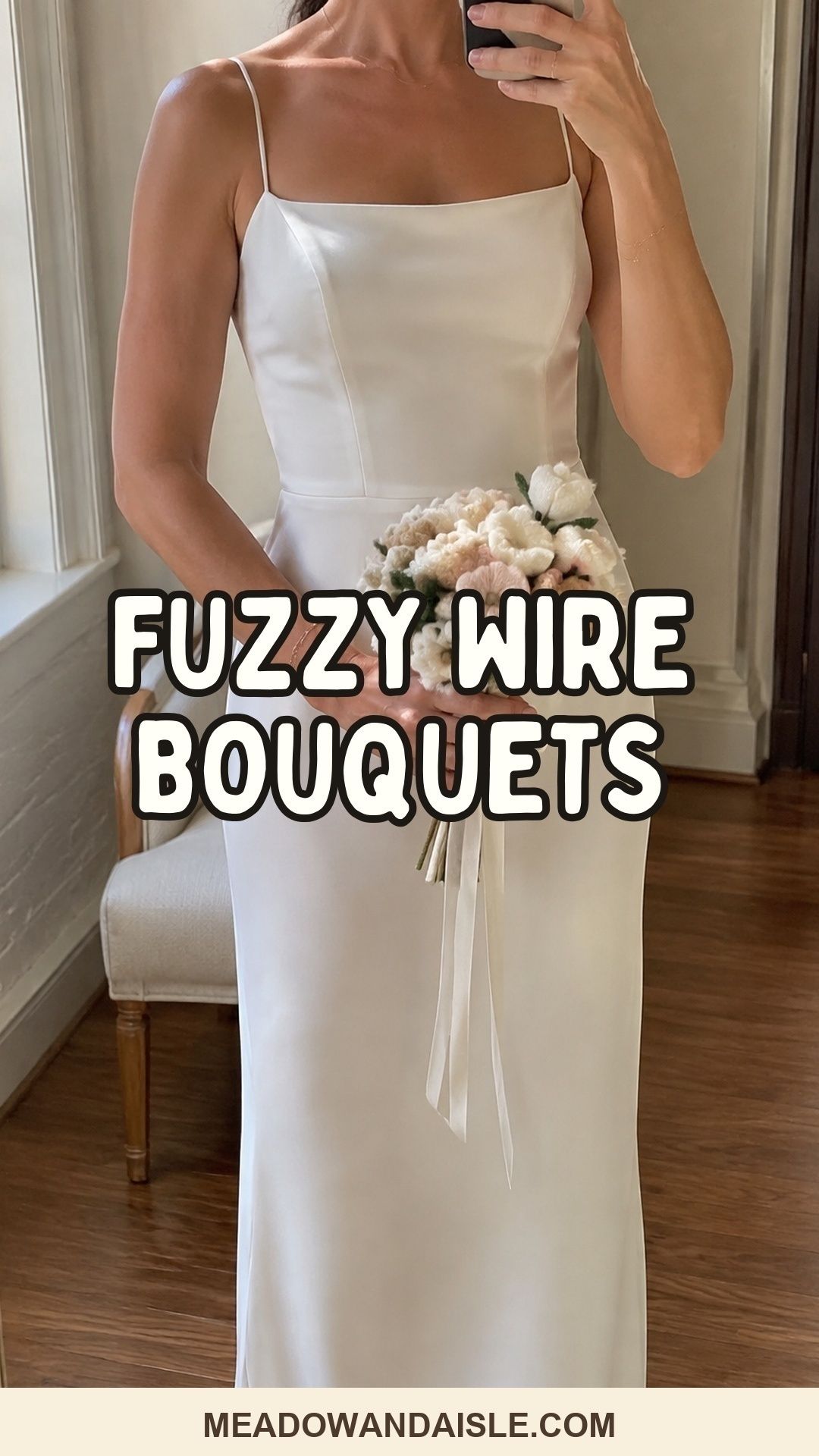
Fuzzy wire wedding bouquet ideas work best when the bouquet is treated like a keepsake floral piece, not a last-minute craft: choose a grown-up palette, reinforce the stems, soften the handle, hide sharp ends, and make each bloom intentional enough to hold in portraits.
A fuzzy wire bouquet can be sweet, odd, nostalgic, and surprisingly beautiful all at once. That is exactly why couples planning smaller weddings are drawn to it. It feels handmade in a way fresh flowers rarely can, and it gives the ceremony bouquet a tiny wink without losing the emotion of the moment.
The key is editing. Chenille stems and pipe cleaners have a soft, playful texture, so the wedding version needs careful color, scale, density, and finishing. With the right choices, the bouquet can look like a love letter made by hand instead of a craft table that wandered into the aisle. The bigger plan, including how to make a cheap wedding feel expensive, is in the main guide.
Recommended Wedding Products


You Might Also Like These Blog Posts
- Beaded Flowers Wedding Bouquet Ideas for a Tiny Heirloom Moment
- Anthurium Wedding Bouquet Ideas for a Modern Bloom With Real Softness
- Hibiscus Wedding Bouquet Ideas That Feel Tropical Without Going Overboard
- Paper Flower Wedding Bouquet Ideas That Look Thoughtful, Not Crafty
- Embroidery Flower Wedding Bouquet Ideas Stitched With Meaning
- Dahlia Wedding Bouquet Ideas With Shape, Drama, and Just Enough Restraint
Fuzzy Wire Wedding Bouquet Ideas For A Handmade Little Heirloom
The most wedding-worthy fuzzy wire wedding bouquet ideas start with a clear mood. Decide whether the bouquet should feel like soft garden roses, tiny wildflowers, retro daisies, candy-colored tulips, or sculptural art flowers. Pipe cleaners can bend into almost anything, but a bridal bouquet needs one point of view so the texture feels charming rather than chaotic.
For intimate weddings, this bouquet can become a deeply personal object. It may include colors from your first apartment, a flower your grandmother grew, a tiny wired heart for a partner who loves sentimental details, or one bloom made by each person in the wedding party. Handmade does not have to mean casual. It can mean known, touched, and remembered.
| Bouquet choice | Wedding effect | Practical note |
|---|---|---|
| Cream, blush, and sage | Soft bridal garden feel | Use different bloom sizes so the bouquet has depth |
| All-white chenille flowers | Modern and textural | Add pearl centers or ivory ribbon for polish |
| Pastel tulips and daisies | Playful spring mood | Keep the handle tailored so it still reads bridal |
| Bright retro blooms | Joyful courthouse or party look | Limit the palette to three main colors |
| Mini bouquet cluster | Best for elopements and small ceremonies | Reinforce every stem before wrapping |
Start With A Wedding Palette, Not A Craft Bin
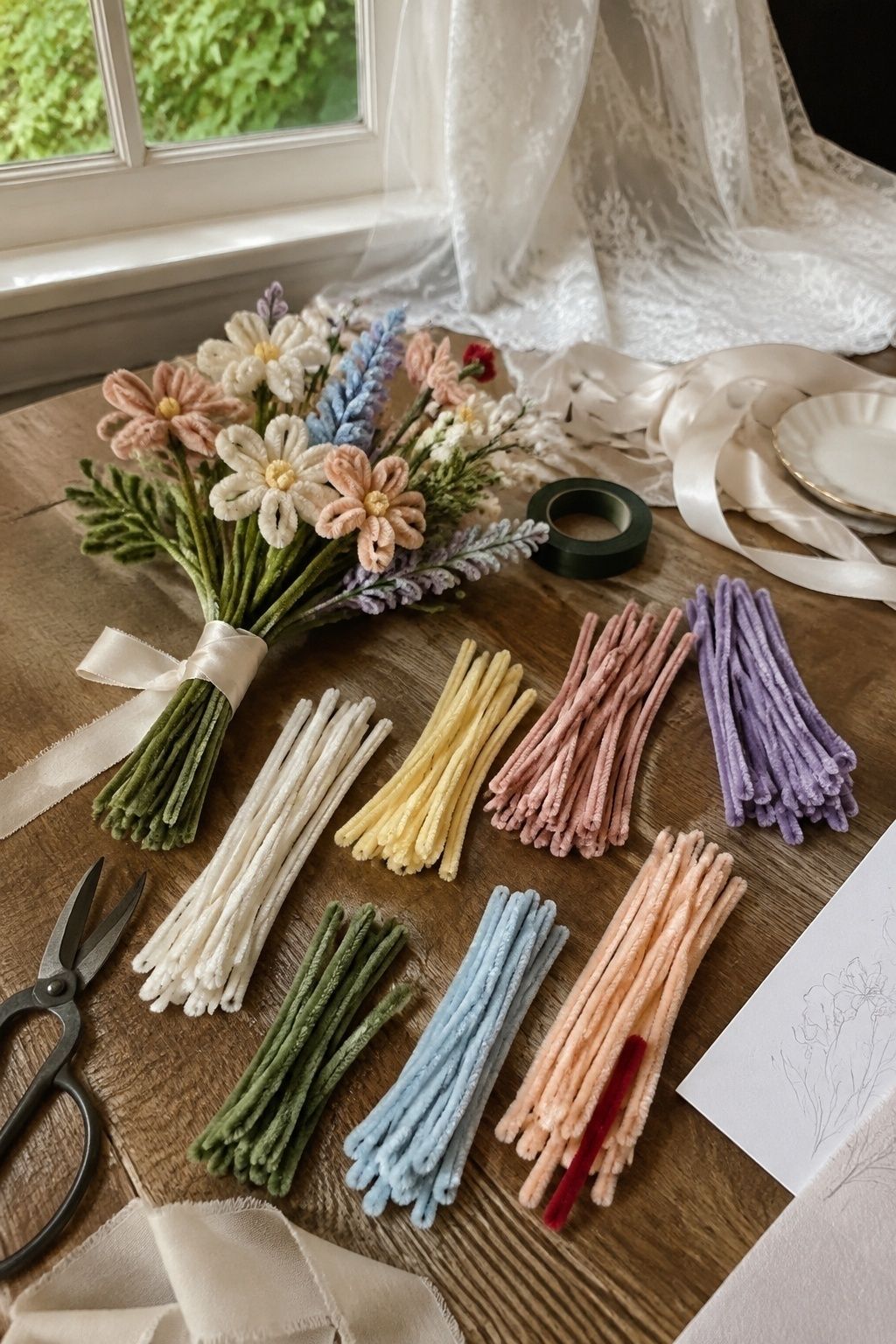
Pipe cleaners come in every color, which is both the joy and the danger. Before twisting a single petal, choose a palette the same way you would choose fresh flowers. Cream, butter yellow, dusty rose, moss, lavender, sky blue, tomato red, and soft peach can all work, but they need boundaries.
A small bouquet usually looks strongest with two flower colors, one stem color, and one tiny accent. For a brighter mix, pull two or three shades from your broader wedding color palette, then test those stems together before adding anything louder. The finished palette should still feel calm in your hands.
Choose Flower Shapes That Read Clearly From A Distance

The flowers do not need botanical perfection, but they do need recognizable shapes. Daisies, tulips, poppies, ranunculus-style spirals, tiny roses, lavender sprigs, and baby’s breath dots are easier to understand than complicated blooms with too many layers. Guests will see the bouquet from several feet away before they ever notice the twist work.
Make one sample bloom, then hold it at arm’s length in front of a mirror. If it still looks like a flower, keep going. If it turns into a soft knot, simplify the shape. Wedding details need to survive distance, movement, and photos, not just close inspection at the kitchen table.
Mix Bloom Sizes For A Real Bouquet Shape
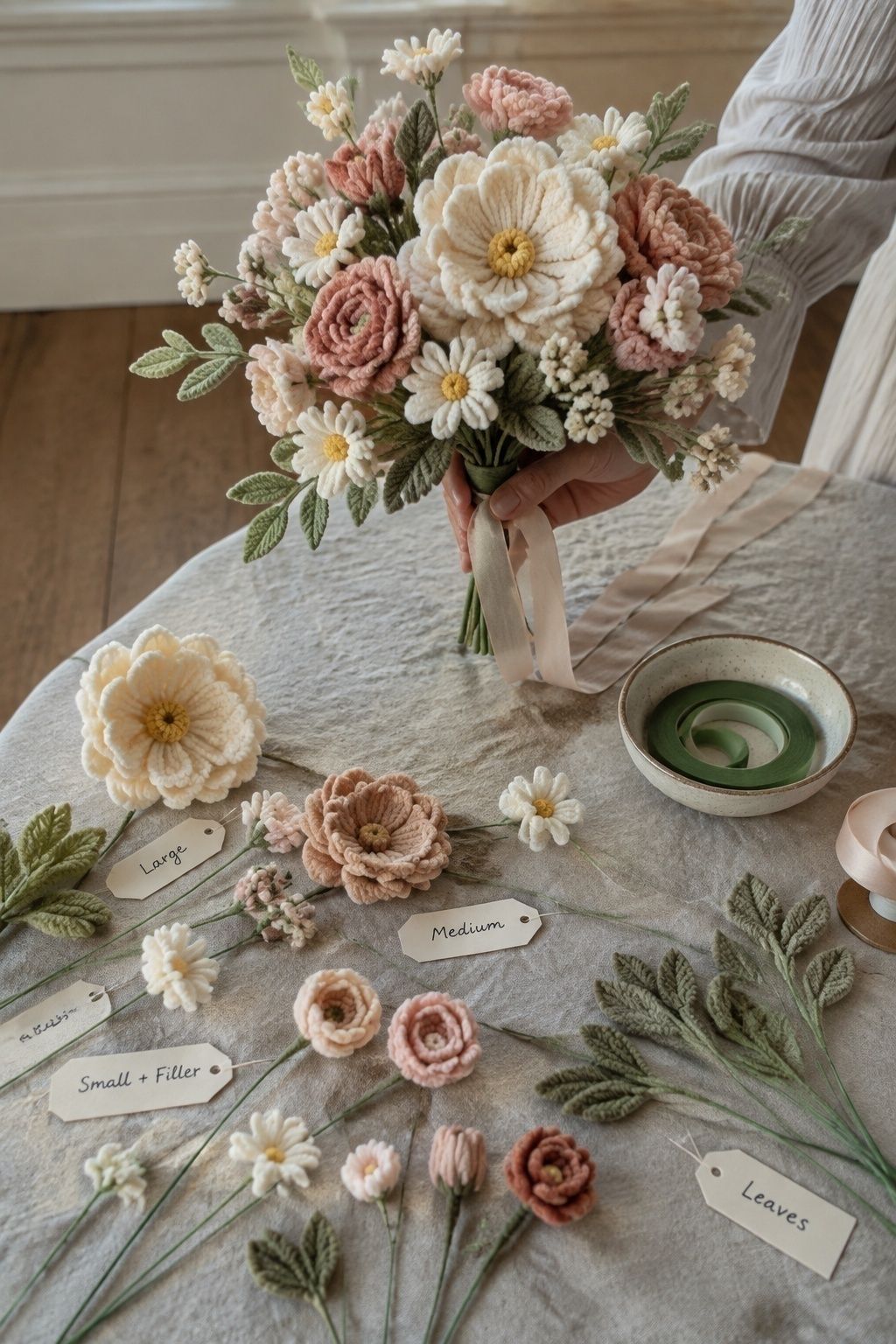
A fuzzy wire bouquet can look flat if every flower is the same size. Build it more like a fresh bouquet: a few larger focal blooms, several medium flowers, and small filler stems tucked between them. The size changes create shadow and shape, which helps the bouquet feel more floral and less like a bundle of identical craft pieces.
For a petite bridal bouquet, try five to seven focal flowers, eight to twelve smaller blooms, and a handful of wired leaves or filler sprigs. For an elopement or courthouse look, three large flowers with soft filler may be enough. The bouquet should suit your frame, dress, and ceremony setting, not just the trend.
Reinforce The Stems Before You Wrap Them
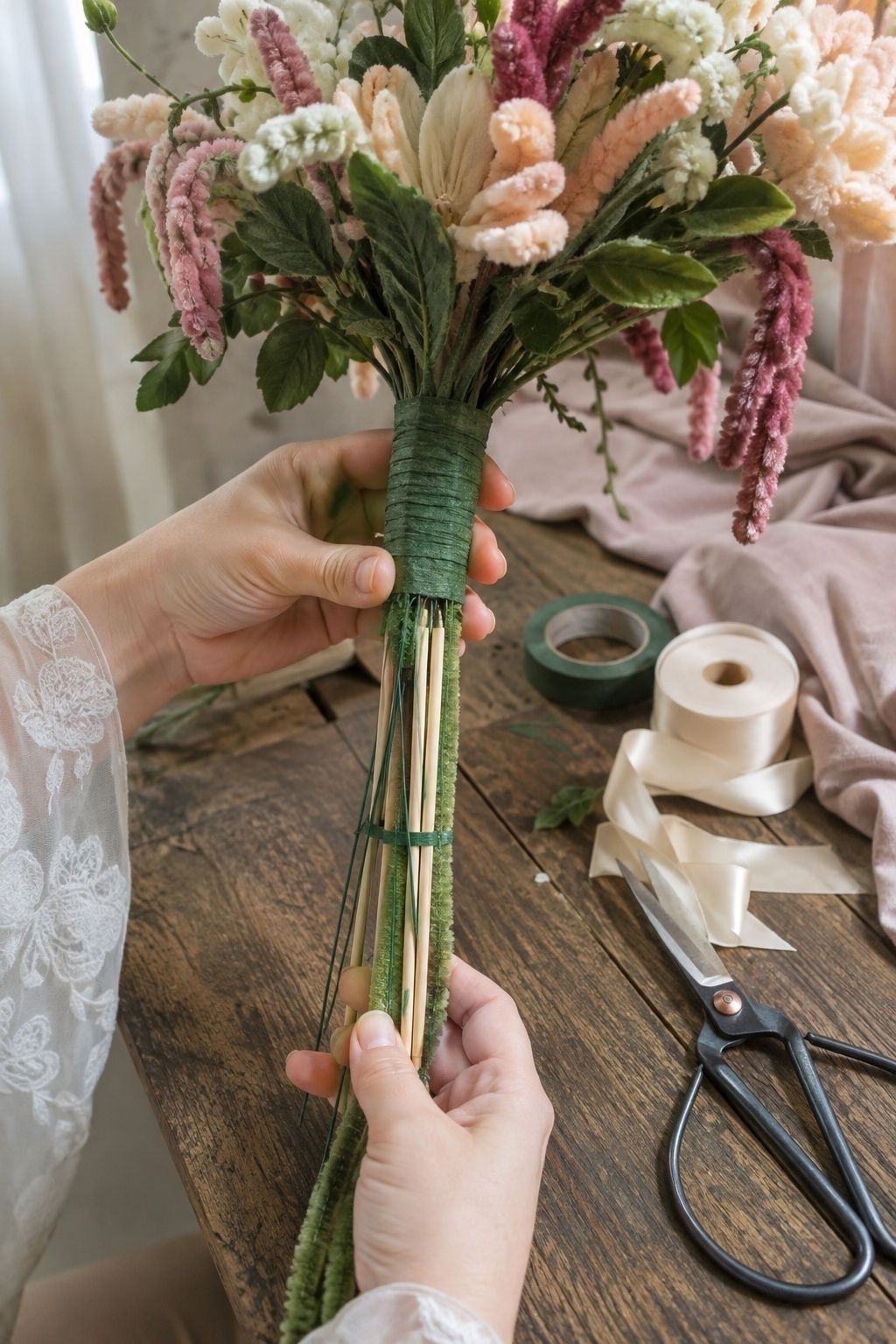
Chenille stems are flexible, which makes them lovely to shape and less lovely to carry all day. Reinforce long bouquet stems with floral wire, bamboo skewers hidden inside the wrap, or doubled pipe cleaners twisted tightly together. The handle should feel stable when you lift it, pass it to someone, or set it down for portraits.
Test the bouquet by holding it at your natural walking angle. If the heads droop, add stronger inner stems. If the handle bends, bind the lower third more firmly before adding ribbon. A handmade bouquet can still have architecture, and that structure is what makes it wedding-ready.
Hide Sharp Ends Like They Matter

Pipe cleaners are soft on the outside and wired on the inside, so cut ends can scratch skin, snag fabric, or catch on lace. Fold every cut end inward, tuck it under another wrap, or cover it with floral tape before the bouquet goes near a dress, veil, suit, or child’s hand.
This is especially important for boutonnieres, corsages, and mini bouquets because they sit close to clothing. Run your fingers gently over the finished piece from every direction. If anything pokes, fix it before the wedding week. Tiny scratches have a way of becoming very noticeable when nerves are already bright.
Wrap The Handle Like A Bridal Bouquet
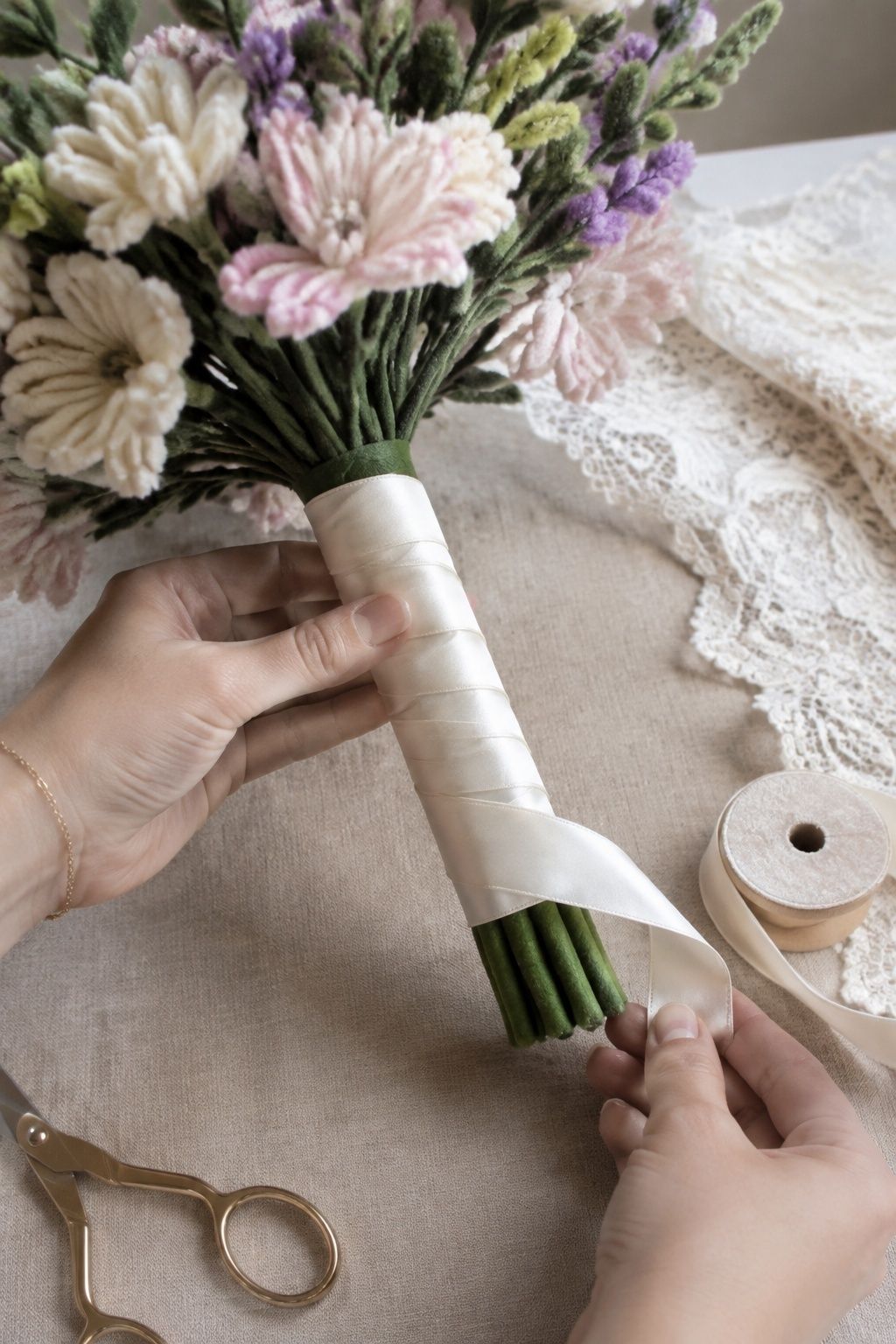
The handle is where a fuzzy wire bouquet becomes a wedding bouquet. After the stems are reinforced, bind them with floral tape, then wrap the handle in satin ribbon, velvet ribbon, silk, linen, lace, or a strip of meaningful fabric. Keep the wrap smooth and tight so the bouquet feels comfortable in your hand.
Leave a short ribbon tail if you want movement in photos, or keep the handle neatly finished for a cleaner courthouse look. If your outfit has lace, beadwork, or embroidery, test the bouquet against the fabric. A soft ribbon barrier protects the clothing and makes the bouquet feel intentionally finished.
Use Leaves And Filler To Calm The Texture

All-flower fuzzy wire bouquets can look busy, especially when the colors are bright. Add leaves, tiny buds, curled tendrils, and filler sprigs to give the eye somewhere to rest. Sage, olive, moss, and muted green stems can make even playful blooms feel softer and more grown-up.
If you want an herbal, garden-made mood, bring in rosemary-like sprigs, lavender stems, or little minty leaves. The gentle shapes from herb wedding ideas pair naturally with chenille flowers because they make the bouquet feel gathered instead of manufactured.
Keep The Bouquet Scale Right For A Small Wedding
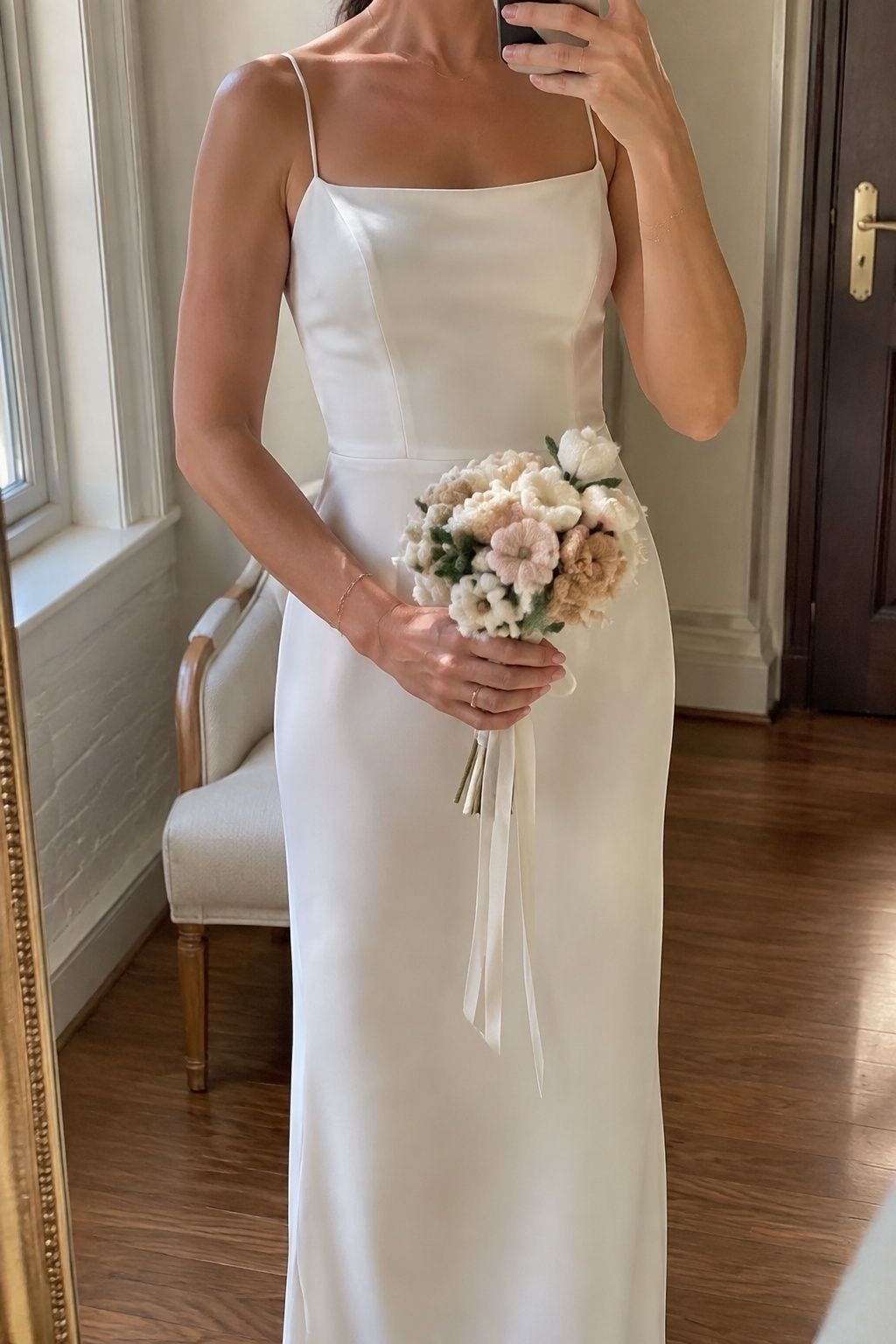
A giant fuzzy wire bouquet can be fun online and overwhelming in a real ceremony. Small weddings usually reward a lighter hand. A bouquet that is eight to ten inches wide may feel plenty expressive when guests are close, the aisle is short, and the couple is photographed in intimate spaces.
Stand in front of a mirror wearing something close to your wedding silhouette. Hold the bouquet low, high, and at your side. If it hides your waist, fights the dress, or takes over your posture, remove a few blooms. Handmade charm lands better when the bouquet still lets you be the focus.
Make A Tiny Toss Bouquet Instead Of Throwing The Keepsake

One of the best parts of a fuzzy wire bridal bouquet is that it can last for years. If you want a bouquet toss, make a smaller toss version instead of throwing the original. Use the same colors, fewer stems, and a simple ribbon wrap so it feels connected without risking the keepsake.
This is also a sweet way to include a younger sibling, cousin, or friend who loves the playful side of the wedding. The toss bouquet can become a little memento for someone else, while your main bouquet stays intact for display after the day.
Plan Matching Boutonnieres And Mini Bouquets

Matching pieces do not need to repeat the whole bouquet. A boutonniere can use one tiny flower, two leaves, and a wrapped pin stem. A mini bouquet for a child, attendant, or courthouse witness can carry three blooms and one ribbon. The smaller the piece, the more carefully the wire ends need to be tucked.
Keep these pieces lighter than fresh florals. Chenille has volume, so one small bloom can look fuller than expected on a lapel. Test each boutonniere on a jacket or dress fabric before the wedding, and make sure the pin or magnet has enough support for the shape.
Give Yourself A Real DIY Timeline
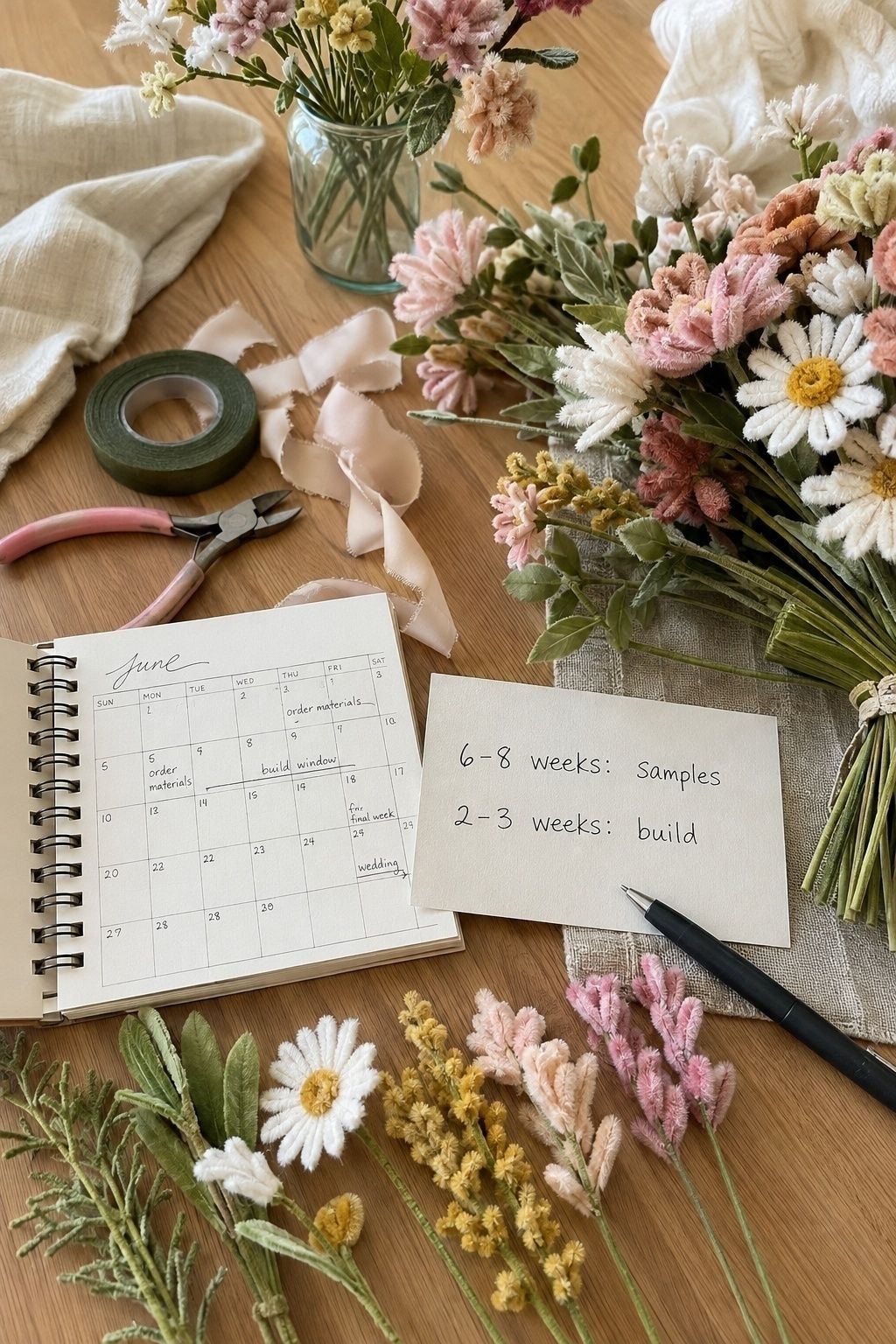
A fuzzy wire bouquet may not wilt, but it still takes time. Start with sample flowers six to eight weeks before the wedding. Choose the final palette four to six weeks out. Build the bouquet two to three weeks out, then spend the final week adjusting the wrap, hiding ends, packing it, and making any matching pieces.
Do not save the main bouquet for the night before. Your hands will get tired, the stems may need reinforcement, and the first few flowers may teach you what not to do. The relaxed timeline is part of the beauty of this trend: you can make, pause, reshape, and refine without worrying about wilting petals.
Photograph The Bouquet Before The Ceremony

Ask your photographer to capture the bouquet in natural light before it has been carried, hugged, packed, and passed around. Chenille texture photographs best when light can skim across the tiny fibers, so window light, open shade, or a bright room usually works better than harsh flash.
Include a few close-ups of the handle, the flower centers, and any sentimental details tucked into the stems. Then make sure the bouquet appears in relaxed portraits too. Quiet small wedding photo framing suits a handmade bouquet because the camera has room to notice texture without turning the craft into the whole story.
Pack It For Travel Like A Fragile Accessory
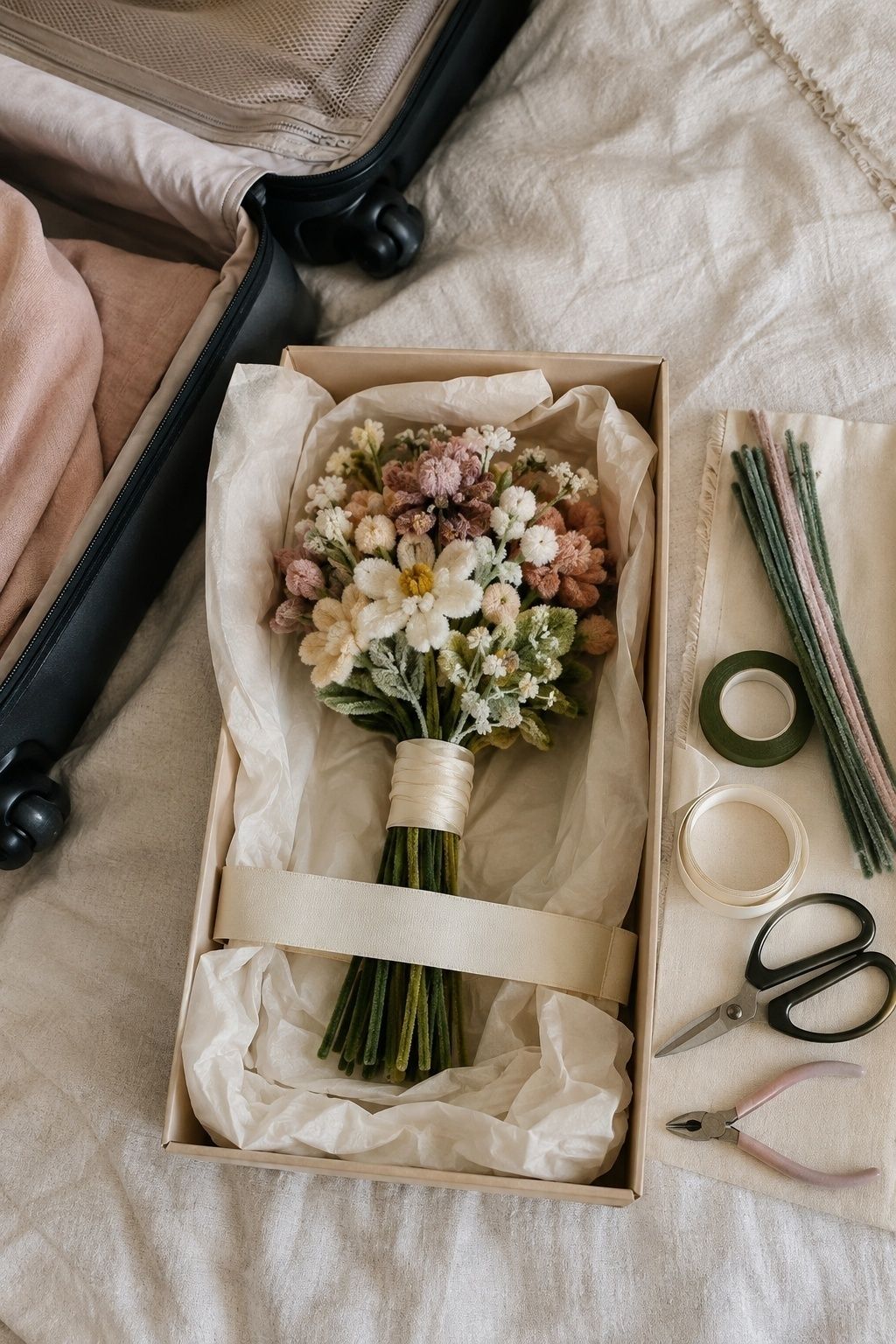
A fuzzy wire bouquet can travel better than fresh flowers, but it still needs protection. Place it in a sturdy box, support the flower heads with tissue, and keep the handle from sliding. Do not crush it under clothing, favors, candles, or welcome-bag supplies.
If you are flying, carry it with you if possible. If you are driving, place it somewhere flat and cool, away from heavy bags. Pack a small repair kit with extra chenille stems, floral tape, ribbon, wire cutters, and scissors. A bent petal is usually easy to reshape, which is one of the quiet advantages of choosing this material.
Turn The Bouquet Into A Keepsake After The Wedding
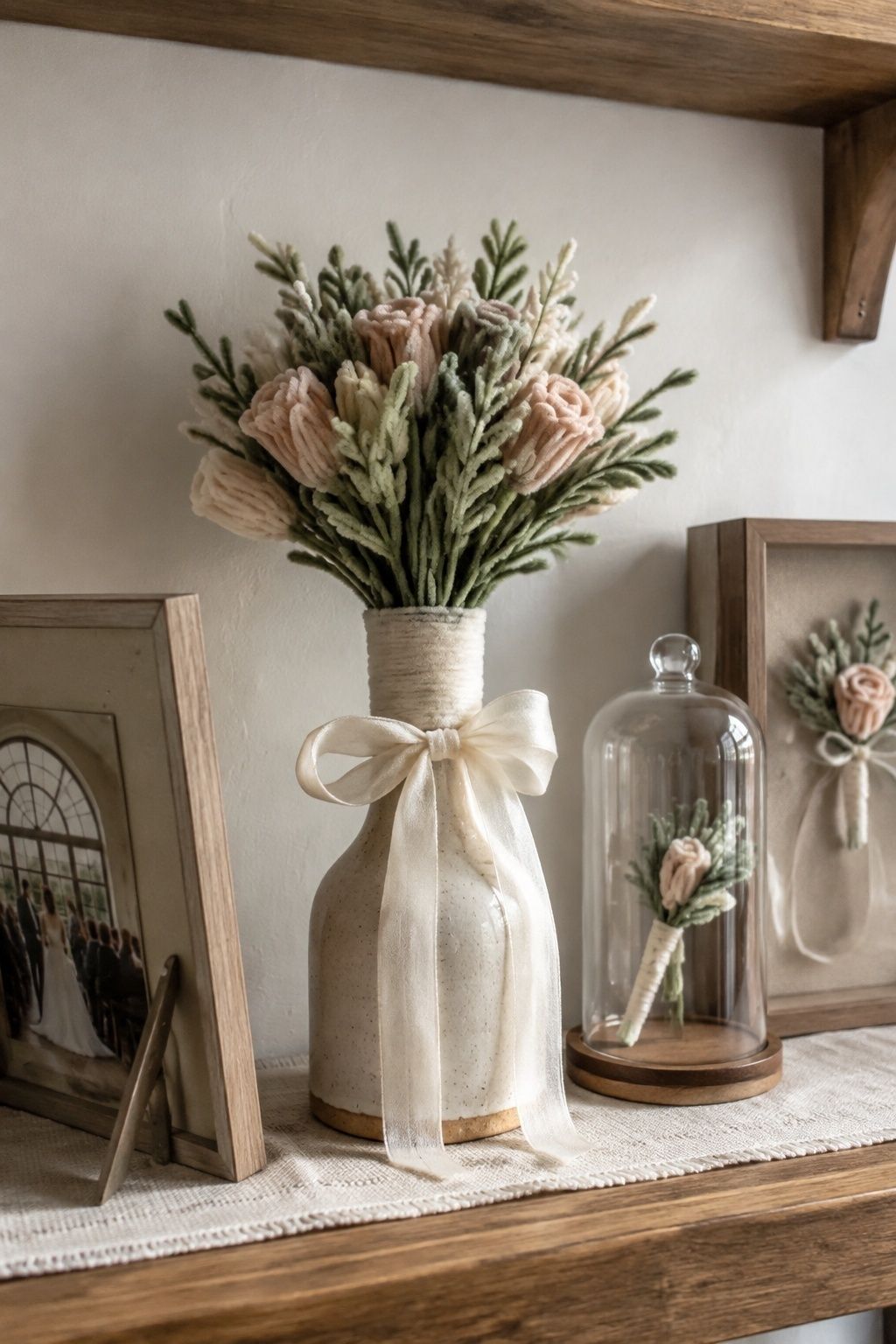
Fresh bouquets often need pressing, drying, or professional preservation. A fuzzy wire bouquet can go straight into a vase, shadow box, shelf, or studio wall after the wedding. That lasting quality is part of its emotional value, especially for couples who want the wedding to live gently in their home.
Choose the post-wedding display before you finish the handle. A long-stemmed bouquet may suit a ceramic vase, while a short posy may look better in a glass cloche or shadow box. If the bouquet will sit on a shelf, make the back tidy too. Keepsakes are handled from all angles eventually.
Use Handmade Details Without Making Everything Handmade
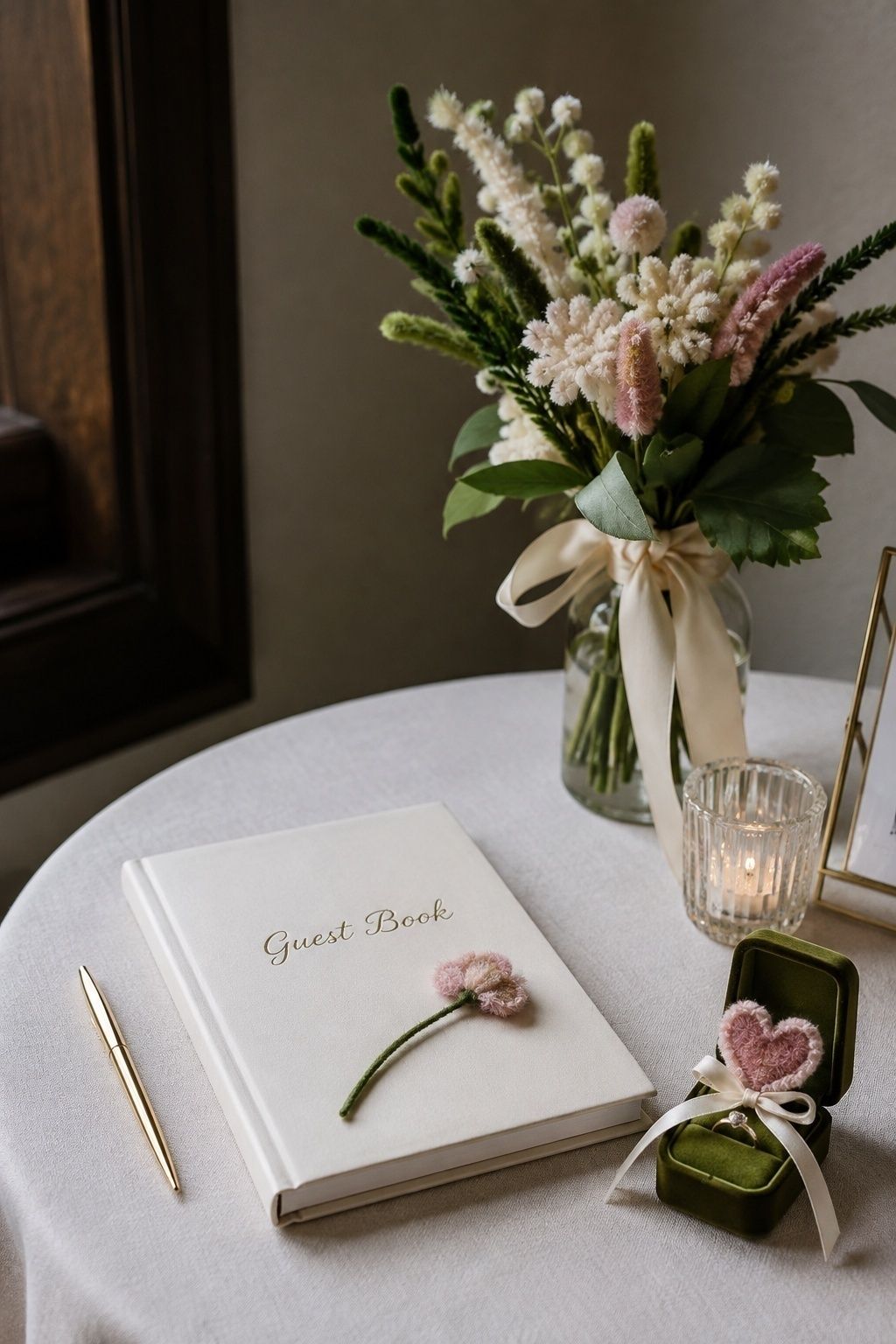
A pipe-cleaner bouquet already carries a strong handmade signature. Let it be the hero instead of repeating fuzzy flowers on every sign, place card, favor, cake table, and invitation. One or two echoes are enough: a mini bloom on the guest book table, a tiny boutonniere, or a little wired heart tied to the ring box.
That restraint makes the bouquet feel intentional. At a small wedding, guests are close enough to understand a personal detail without being surrounded by copies of it. The most meaningful handmade choices usually have breathing room around them. For a related look, see hibiscus wedding bouquet ideas.
Make One Flower Together Before The Wedding

If the bouquet is part of your story, make at least one flower together. It can be hidden near the center, tied into the handle, or used as a tiny charm on the ribbon. The bloom does not have to be perfect. In fact, the slightly uneven one may become the flower you love most. You’ll find more like this in the Wedding Flowers & Bouquets hub.
This is where a trend turns into a memory. A quiet evening of twisting stems, choosing colors, and laughing at the first strange attempts can become part of the wedding instead of separate preparation for it. Handmade heart is not a style label. It is the evidence that your hands were there. Also worth a look: wedding dinner party ideas.
FAQ
What is a fuzzy wire wedding bouquet?
A fuzzy wire wedding bouquet is a bridal or ceremony bouquet made from chenille stems, pipe cleaners, or similar soft wired craft stems. The stems are twisted, looped, and shaped into flowers, leaves, buds, and filler pieces, then gathered and wrapped like a traditional bouquet. For the next step, see beaded flowers wedding bouquet ideas.
Are pipe cleaner bouquets good for weddings?
Pipe cleaner bouquets can be good for weddings when they are designed with care. They work especially well for intimate ceremonies, courthouse weddings, creative elopements, and couples who want a playful keepsake. The bouquet should have a planned palette, reinforced stems, covered wire ends, and a polished handle wrap.
How do you make fuzzy wire flowers look elegant?
Make fuzzy wire flowers look elegant by limiting the colors, using recognizable bloom shapes, mixing flower sizes, adding muted greenery, and finishing the bouquet with floral tape and ribbon. Pearl centers, ivory stems, soft pastels, and a tidy handle can also make the texture feel more bridal.
What flowers can you make with fuzzy wire for a bridal bouquet?
You can make daisies, tulips, roses, poppies, ranunculus-style spirals, lavender sprigs, baby’s breath dots, anemone-inspired blooms, and simple wildflowers with fuzzy wire. For a bridal bouquet, choose shapes that read clearly from a distance and repeat them in a consistent palette.
How long does it take to make a fuzzy wire wedding bouquet?
A small fuzzy wire wedding bouquet may take several evenings once you include sample flowers, shaping, stem reinforcement, wrapping, and final adjustments. Start six to eight weeks before the wedding so you have time to test colors, practice flower shapes, and make matching boutonnieres or mini bouquets.
What fuzzy wire wedding bouquet ideas work for a small wedding?
The best fuzzy wire wedding bouquet ideas for a small wedding include a petite cream-and-sage posy, pastel tulip cluster, retro daisy bouquet, all-white textured bouquet, tiny courthouse bouquet, matching chenille boutonniere, and a keepsake bouquet with one flower made by each partner or loved one.
Final Thoughts
A fuzzy wire bouquet is not trying to imitate fresh flowers perfectly. Its beauty is softer and stranger than that. It says someone took time, chose colors, shaped each petal, wrapped the handle, and made a bouquet that can come home after the wedding instead of fading by morning.
Before you commit to the final bridal palette, practice the looping, twisting, and shaping on a few loose stems with a simple pipe cleaner flower bouquet, then remake the best blooms in the colors you want to carry down the aisle.
Last update on 2026-11-29 / Affiliate links / Images from Amazon Product Advertising API