

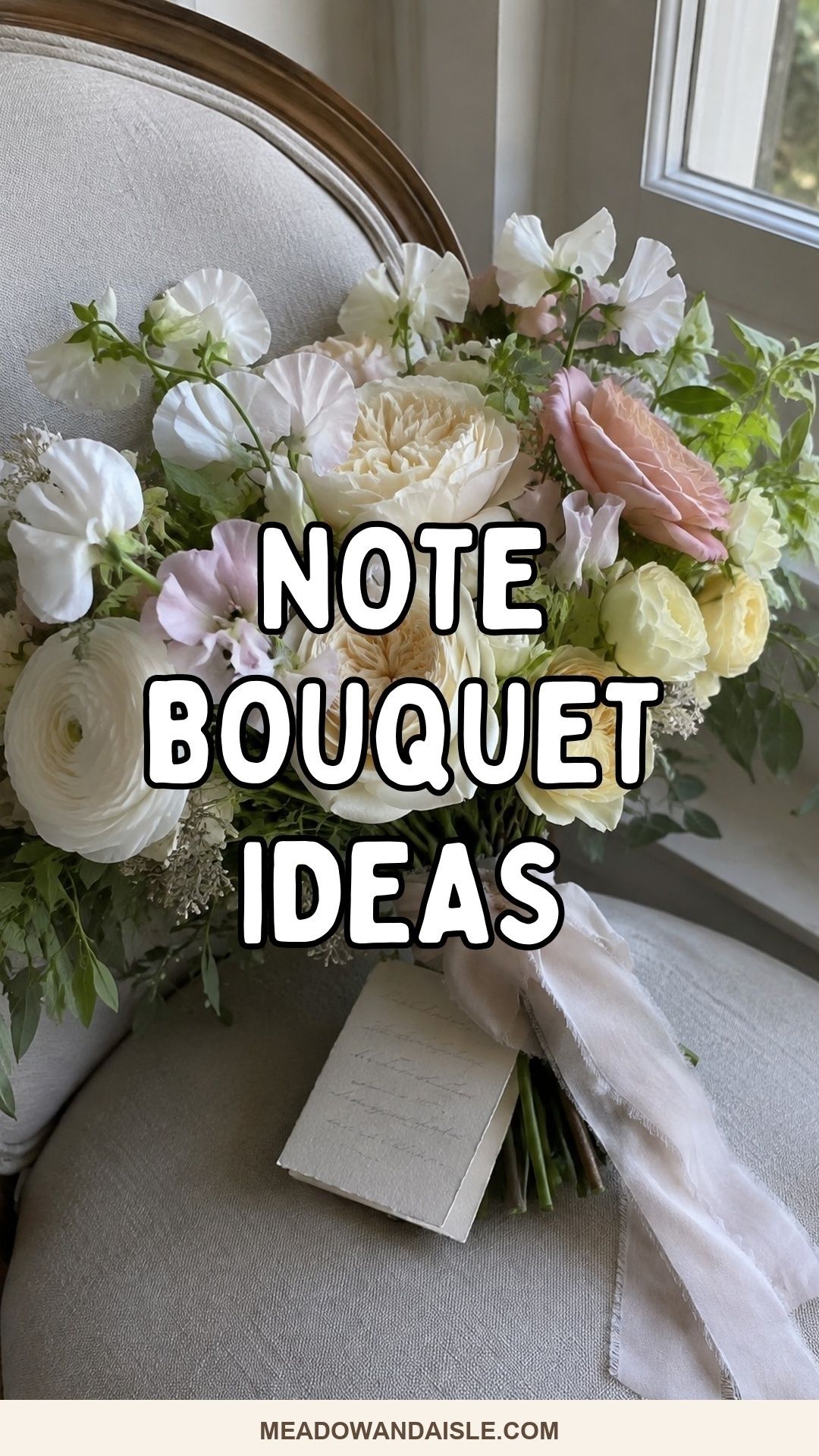
Note bouquet wedding ideas turn vows, love letters, family messages, lyrics, prayers, or tiny keepsake cards into a bouquet detail by tucking them safely into flowers, ribbon wraps, envelopes, paper blooms, or a preserved display. Keep the notes small, sturdy, selectively private, and attached with florist-approved mechanics so the bouquet feels meaningful instead of fragile or cluttered.
A note bouquet is for couples who want the ceremony flowers to carry more than color. It can hold one private sentence from a partner, a grandparent’s handwriting, a line from a song, or a circle of blessings gathered before the aisle walk. The beauty is in restraint: just enough words to make the bouquet feel alive, not so many that it becomes a paper project guests are trying to read from across the room.
Recommended Wedding Products


You Might Also Like These Blog Posts
- Wedding Bouquet With No Flowers Ideas for a Personal Aisle Statement
- Paper Flower Wedding Bouquet Ideas That Look Thoughtful, Not Crafty
- Beaded Flowers Wedding Bouquet Ideas for a Tiny Heirloom Moment
- Embroidery Flower Wedding Bouquet Ideas Stitched With Meaning
- Book Flower Arrangement Wedding Ideas for a Love Story You Can Hold
- Wedding Mailbox Ideas for Notes Worth Saving
Note Bouquet Wedding Ideas That Carry The Words Closest To You
The most beautiful note bouquet wedding ideas begin with one question: who are the words for? Some notes are meant only for the couple. Some are meant to be glimpsed in photos. Some belong close to the handle, where a bride or groom can feel them without displaying them. That choice should come before paper color, ribbon, flowers, or display plans.
For a small wedding, this kind of detail works because the guest list is already intimate. You can ask the right people for a few careful sentences instead of collecting hurried cards from a crowd. You can also protect the private pieces. A bouquet can carry love without asking every vow, prayer, or family memory to become public decor.
| Note bouquet style | Best for | Keep it polished by |
|---|---|---|
| Private vow note bouquet | Partner-only words | Folding notes inside the wrap or one sealed envelope |
| Family message bouquet | Parents, siblings, grandparents, or children | Limiting each person to one small card |
| Tiny envelope bouquet | Hidden messages between flowers | Using light envelopes and secure florist placement |
| Paper flower note bouquet | Love letters or lyric scraps | Choosing a few folded blooms instead of overfilling |
| Stem wrap notes | Lyrics, poetry, prayers, or dates | Wrapping protected strips under silk ribbon |
| Keepsake transfer bouquet | Preserving cards after the wedding | Planning the memory box before the ceremony |
Private Vow Note Bouquet
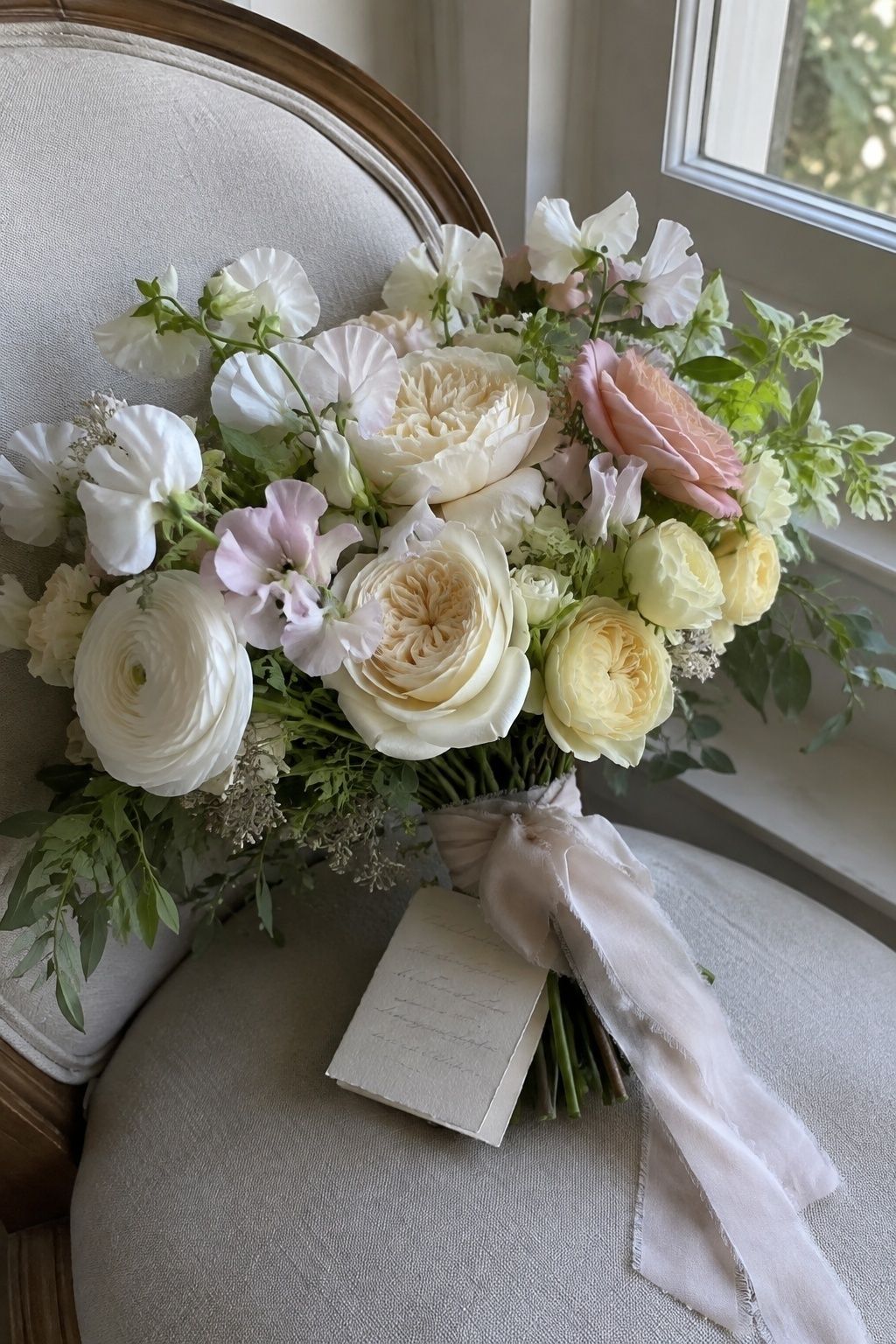
A private vow note bouquet is one of the quietest versions. Each partner writes a few lines before the ceremony, then the note is folded into the bouquet wrap, tucked near the handle, or sealed in a tiny envelope hidden between the stems. The words are present during the aisle walk without turning the vows into something everyone can inspect.
This works especially well for couples who are saying traditional vows publicly but want a more personal promise close by. Keep the note small enough that it does not add bulk to the handle. If the bouquet will be held for a long ceremony, ask the florist to place it where fingers will not rub the paper or loosen the fold.
Family Message Bouquet
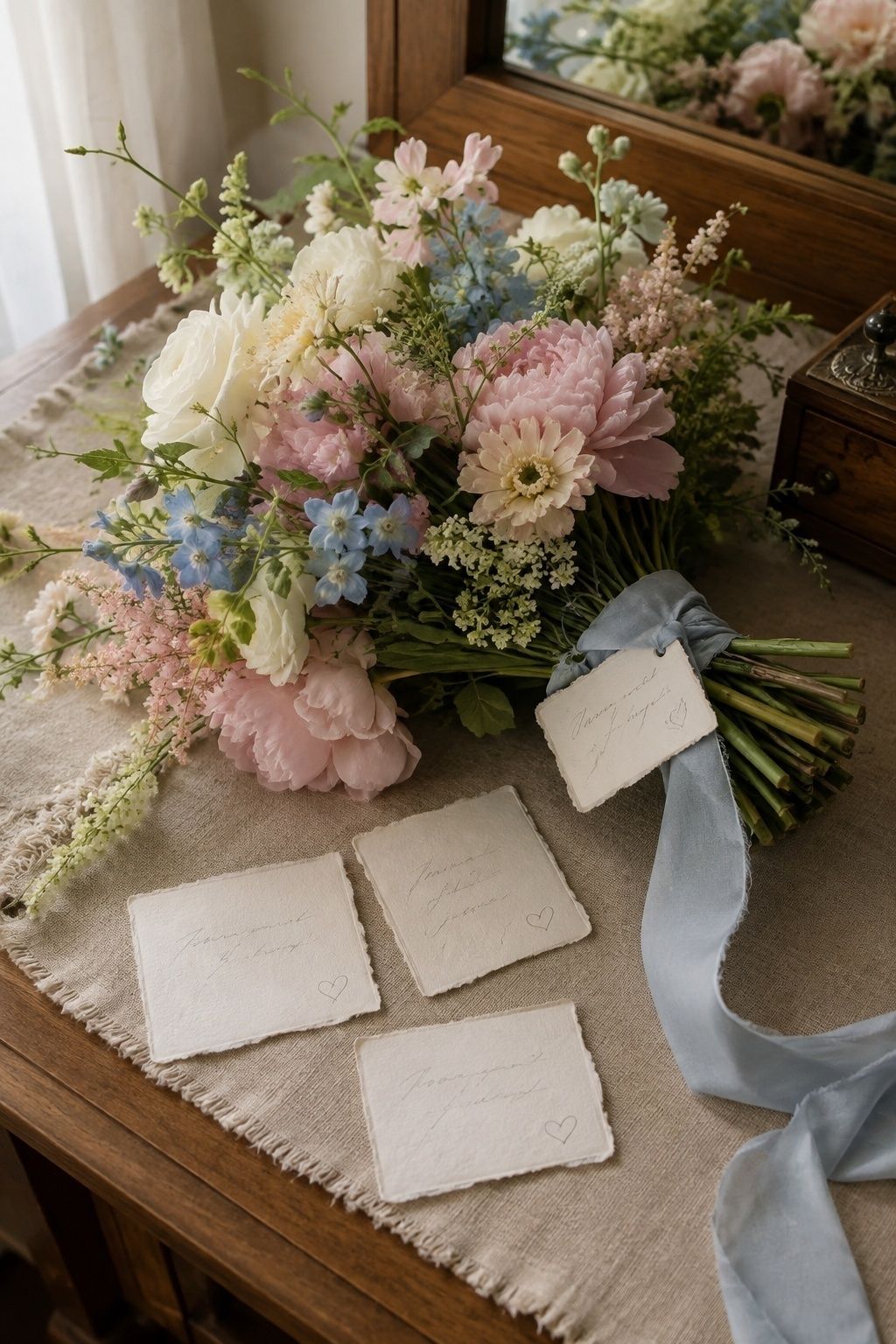
A family message bouquet gathers small written blessings from parents, siblings, grandparents, children, or chosen family. Instead of asking everyone to fill a full card, invite each person to write one sentence, one phrase, or one word they hope the couple carries into marriage. The result feels tender because it is edited.
Small weddings make this manageable. You can collect notes a week or two before the ceremony, choose the few that belong in the bouquet, and save the rest for a guest book table or memory box. When family dynamics are delicate, this approach also lets you include people thoughtfully without making the bouquet a public scoreboard of who contributed.
Tiny Envelope Bouquet Tucked Between Flowers
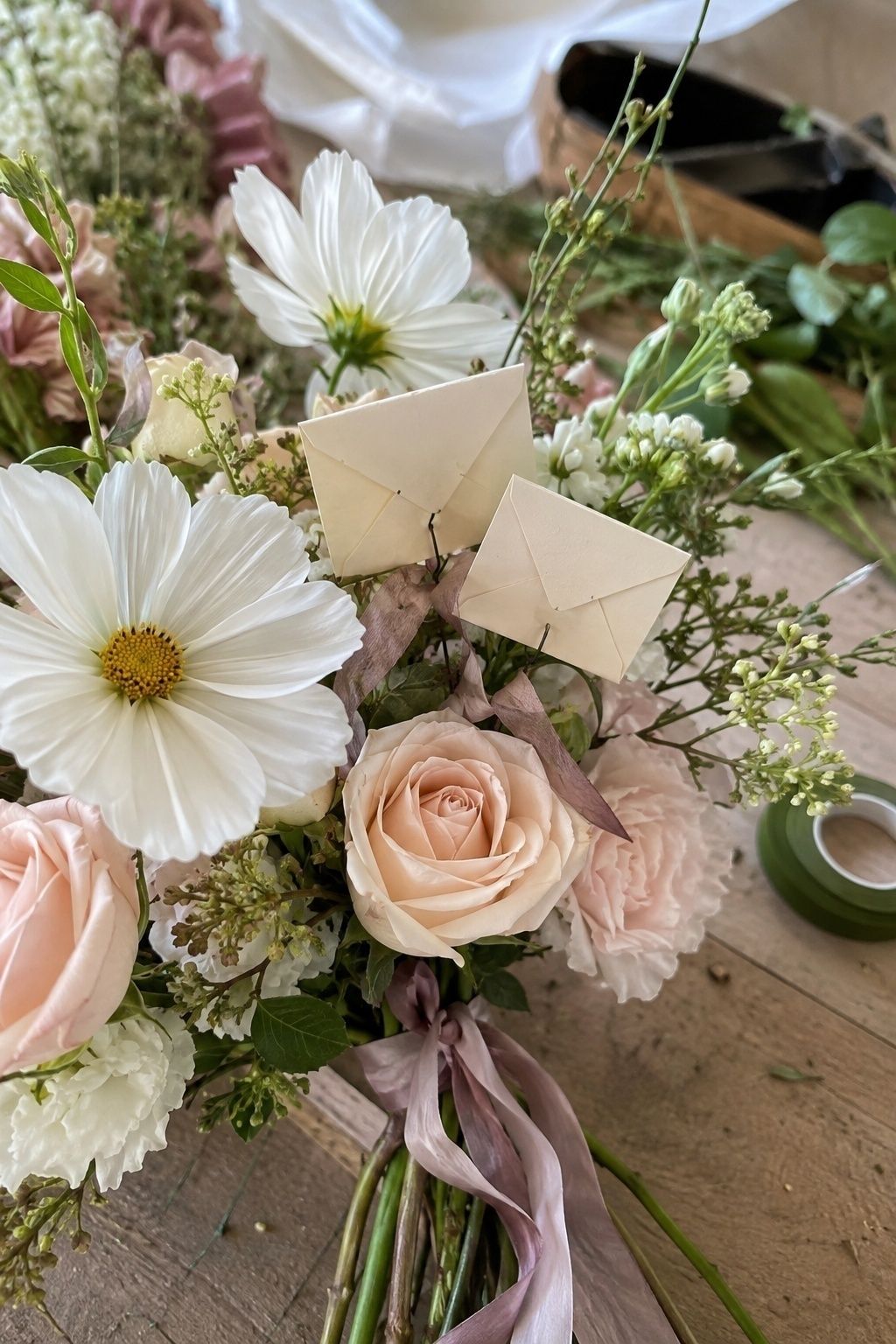
Tiny envelopes give notes a finished look, especially when they are tucked between soft blooms. Choose envelopes that are light, flat, and close to the floral palette: cream, pale blush, soft taupe, vellum, or handmade paper. One envelope can hold a partner letter. Several can hold family messages, prayers, or childhood memories.
The key is placement. Envelopes should nestle into the bouquet rather than perch on top of it. Ask the florist where a flat paper piece can sit without blocking flowers, bending petals, or taking water. A tiny envelope near the outer edge may look lovely in photos, but it needs enough support to survive wind, hugs, and the handoff during vows.
Folded Love-Note Paper Flowers
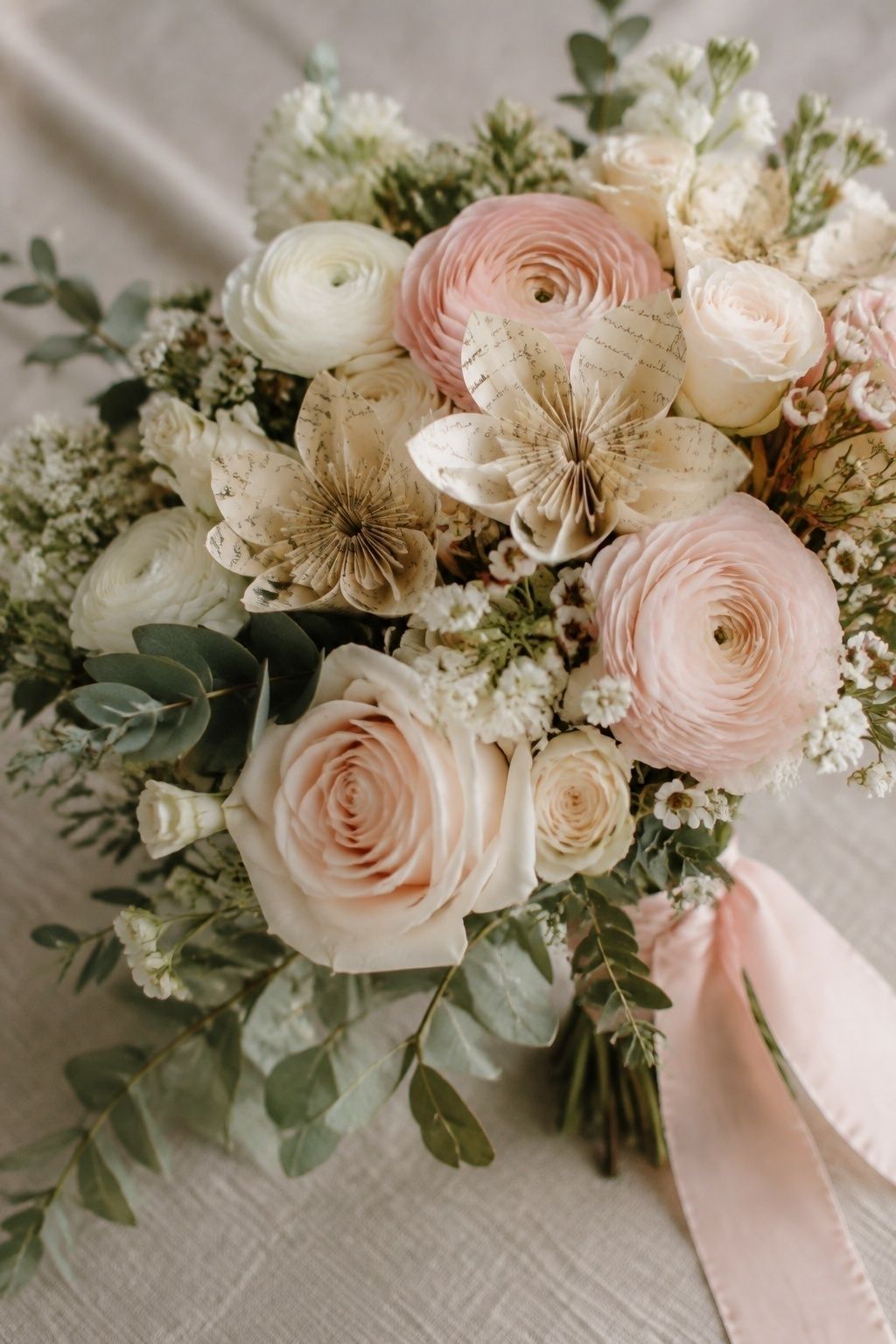
Folded love-note paper flowers turn written words into the bouquet itself. A partner letter, a favorite poem, a page of shared dates, or a few printed lyrics can be folded into rose shapes, petals, or soft paper blooms. This is a natural bridge if you already love book flower arrangement wedding ideas and want the same literary feeling in a smaller bridal detail.
Use this style with restraint. A full bouquet of paper flowers can be beautiful, but it can also feel busy if every petal is covered in text. Consider a mixed bouquet with a few folded note flowers among fresh blooms, dried grasses, or silk stems. The writing then becomes a discovery instead of visual noise.
Lyrics Wrapped Around Bouquet Stems
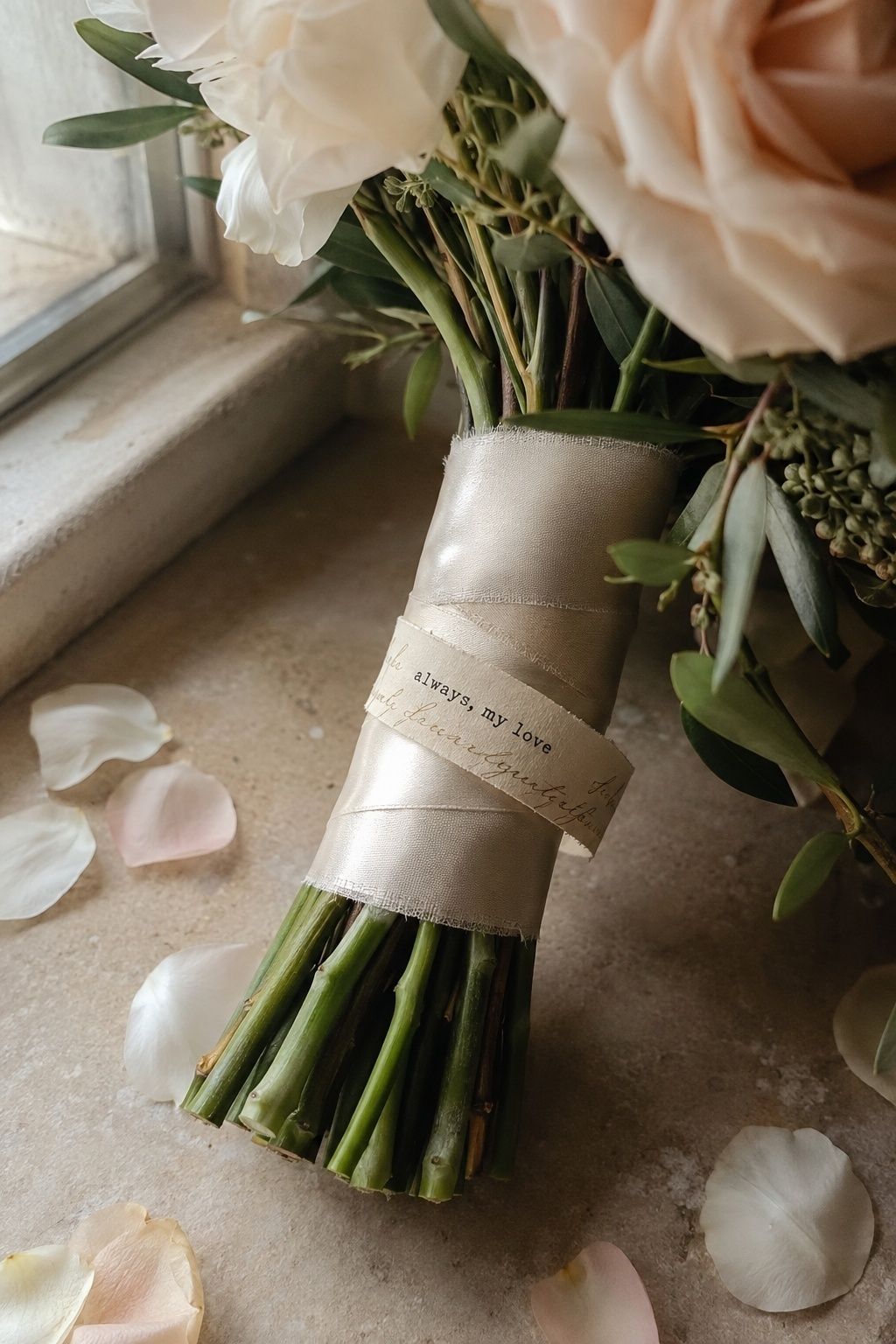
Lyrics can wrap around bouquet stems like a secret ribbon, especially if a song has carried the relationship through long drives, first dances in the kitchen, or the proposal season. Print or handwrite one short excerpt on a narrow strip, then place it beneath or beside silk ribbon so it feels protected rather than loose.
Choose the line carefully. The best lyric is not always the most dramatic one. It may be the phrase that only the two of you understand. If you are still deciding how music should shape the ceremony or reception, weave the bouquet detail into your custom wedding song ideas so the words and sound feel connected instead of randomly matched.
Poetry Strip Bouquet Ribbons
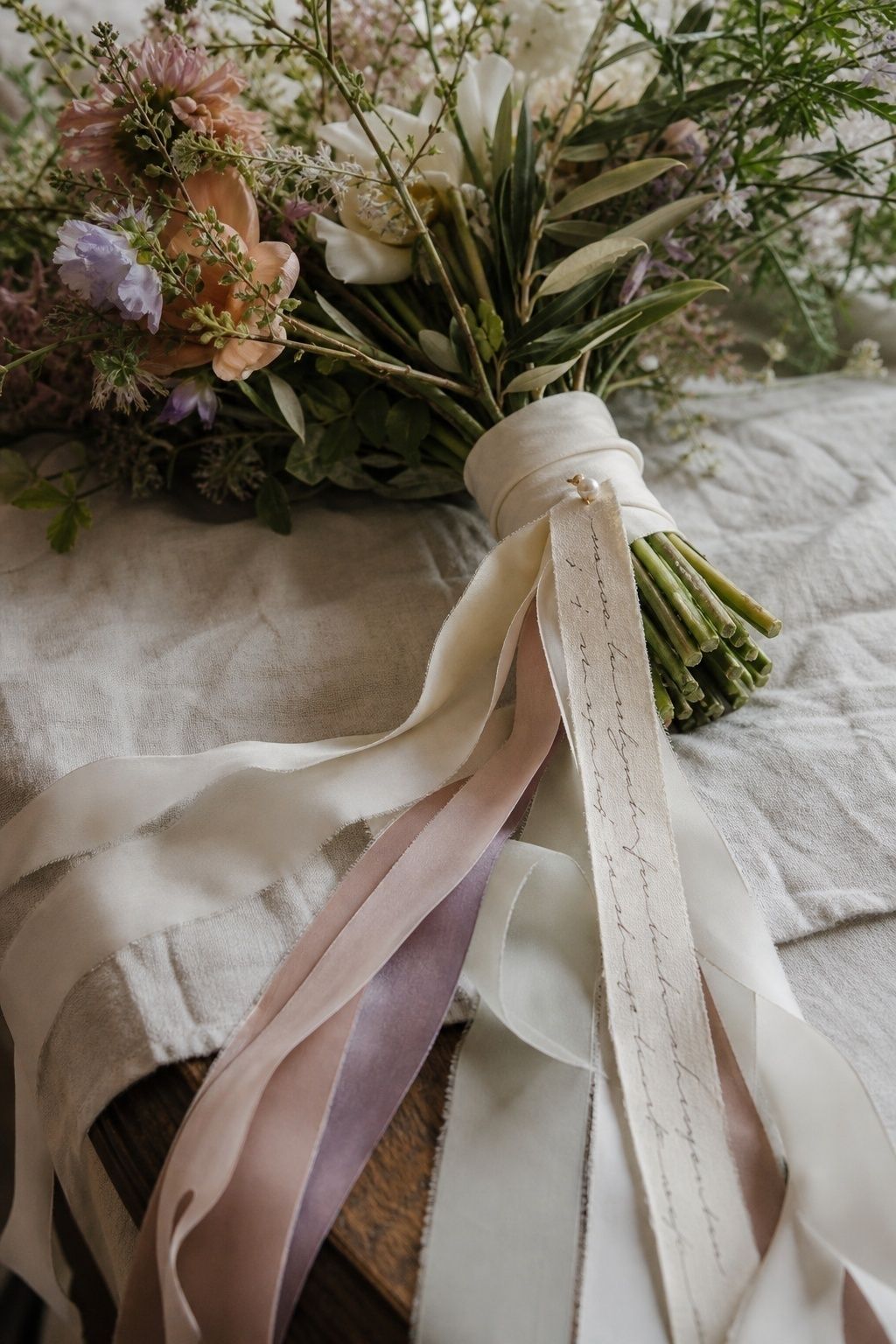
Poetry strips can fall like ribbon tails from the bouquet handle. Use one or two lines on narrow paper, fabric ribbon, or vellum, then let them sit among silk ribbon rather than replacing it completely. This keeps the bouquet romantic and readable in close-up photos without making the paper responsible for all the movement.
Short poems, prayers, family phrases, or handwritten promises all work here. If the words are private, turn the written side inward or layer the strip beneath a plain ribbon. The bouquet can still hold the meaning even when the camera only catches a hint of text.
Memorial Note Tucked Near The Handle
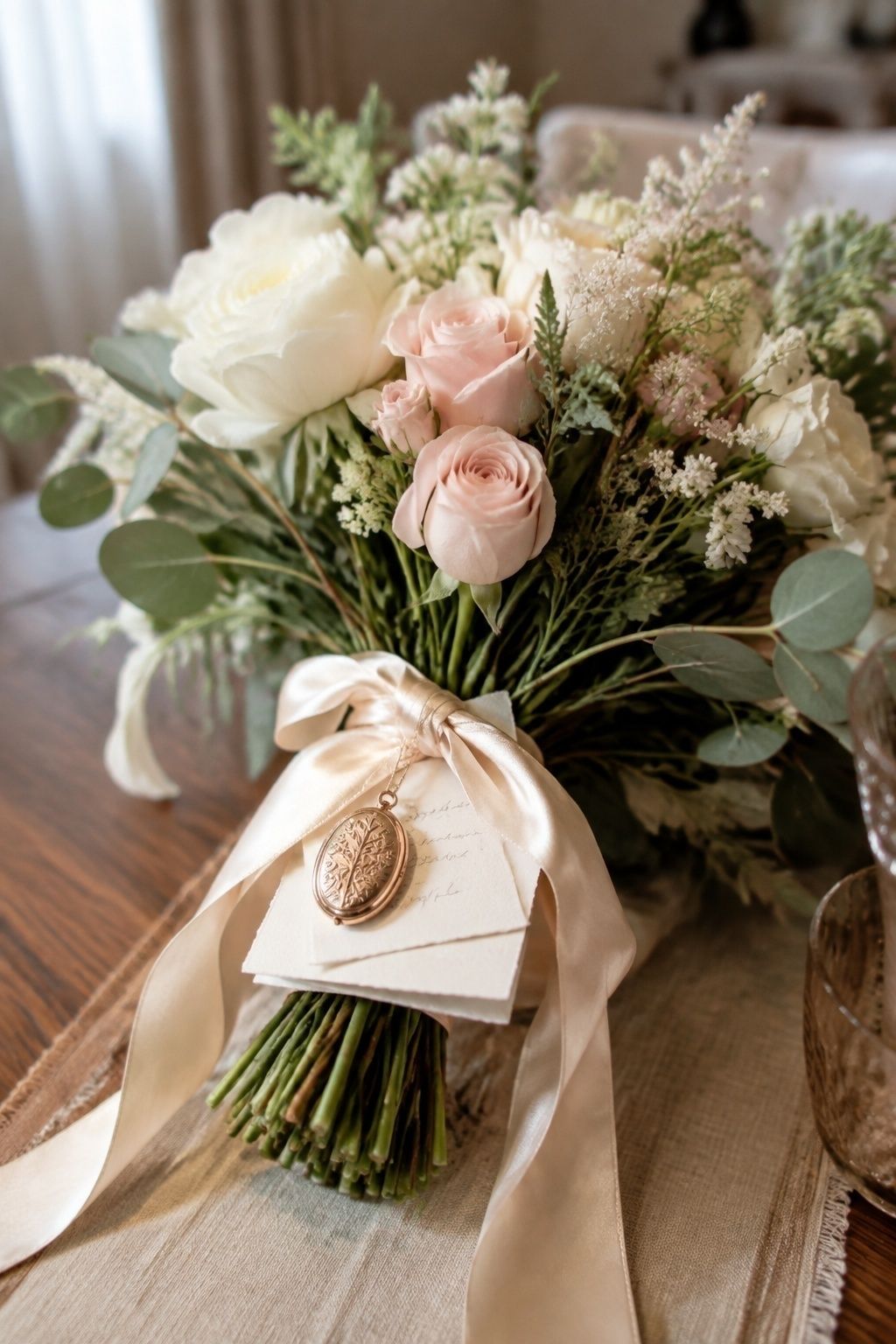
A memorial note near the handle can honor someone without making grief the centerpiece of the bouquet. It might be a grandparent’s handwriting, a copied recipe note, a short blessing, a signature, or a private message written by someone who cannot be there. Place it where the couple can feel it, not necessarily where every guest can read it.
Keep the original safe if it is irreplaceable. Use a scan, a printed copy, or a small facsimile for the bouquet, then preserve the original at home. Moisture, perfume, hand warmth, and outdoor weather can all affect paper. Sentiment does not need to be put at risk to be present.
Guest Blessing Notes Gathered Before The Ceremony
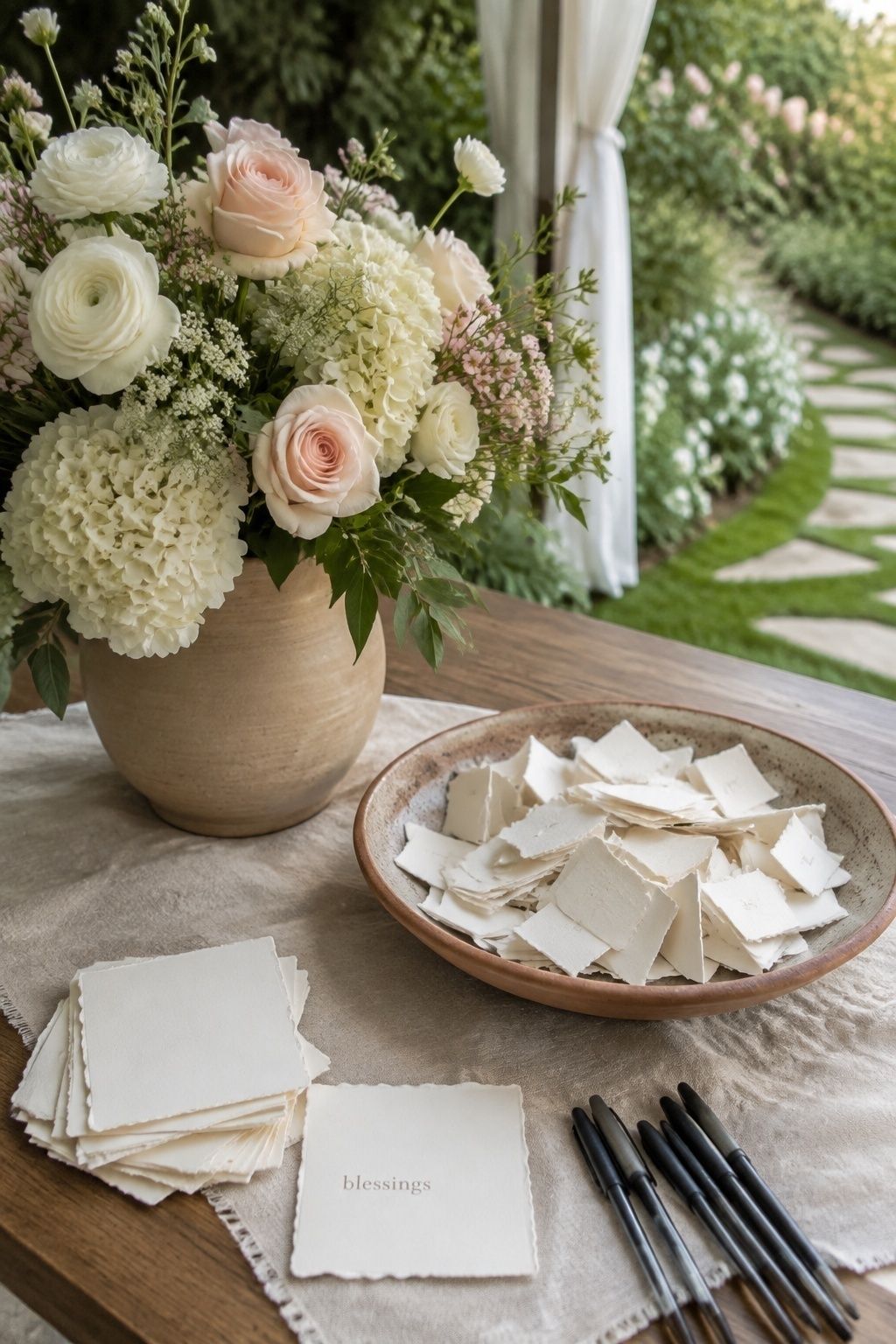
Guest blessing notes feel most graceful when they are gathered before the wedding day. Ask a small circle of guests to send one sentence in advance, then choose a few to include in the bouquet and save the rest for a display or keepsake. This avoids the awkwardness of asking people to write something heartfelt while they are arriving, greeting relatives, or finding their seats.
If you want guests to keep writing during the celebration, separate that into a guest book moment. Set out cards, pens, and a quiet prompt on the guest book table, then let the overflow live there while the bouquet stays light.
Partner Letter Bouquet Reveal
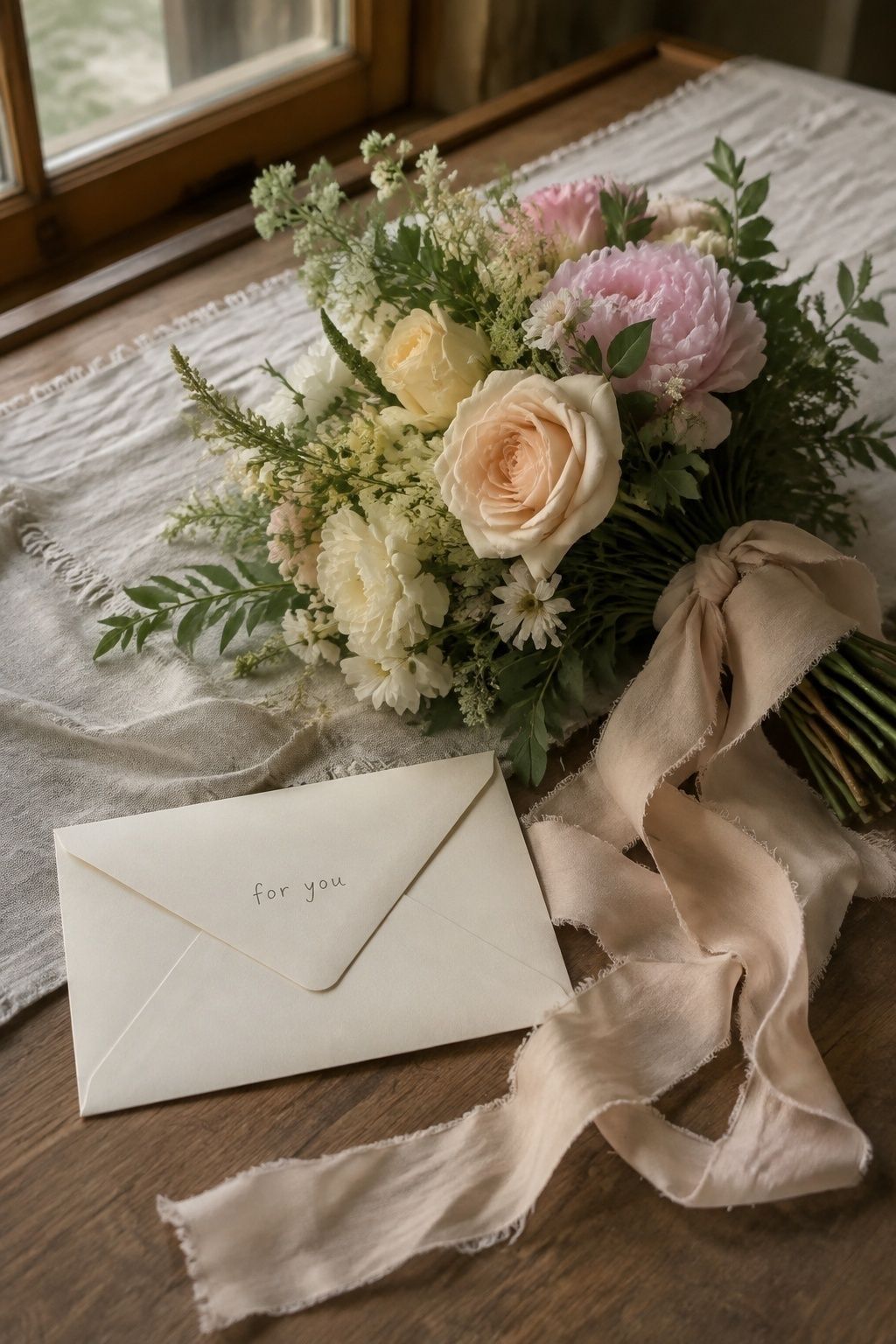
A partner letter bouquet reveal turns one note into a ceremony-weekend ritual. One partner writes a short letter, folds it into the bouquet wrap, and lets the other discover it during a first look, private vow exchange, or quiet moment before portraits. The reveal should feel calm, not staged for a reaction.
Decide whether the letter will be read before the ceremony or kept unopened until after. If makeup, timing, or emotions are a concern, a sealed note can be carried unread and opened later. The bouquet becomes a promise that travels through the day.
Childhood Handwriting Bouquet Detail
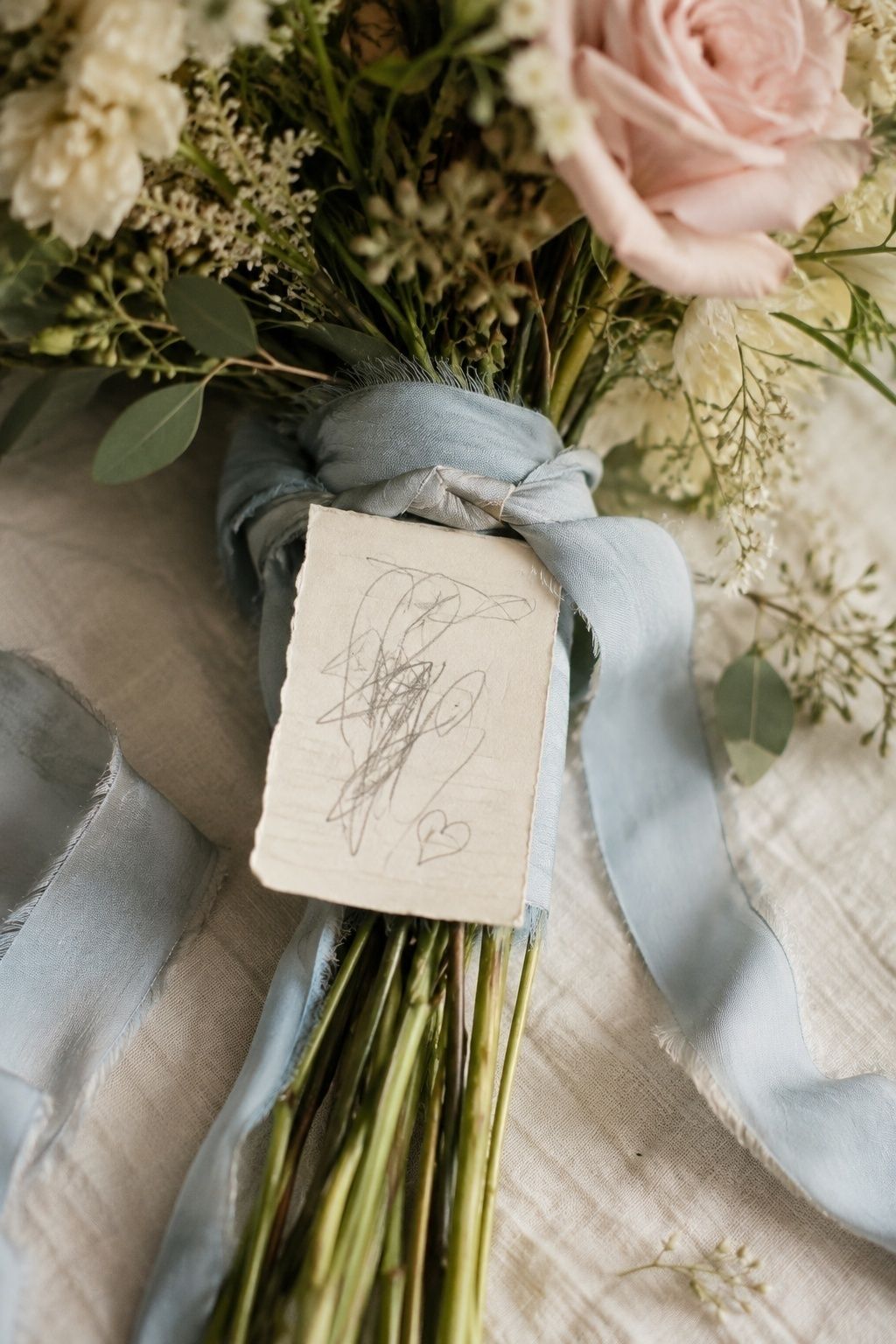
Childhood handwriting can make a bouquet feel startlingly intimate. A copied birthday card, a tiny “I love you” from an old note, or a parent’s preserved label from a school keepsake can be printed onto ribbon, vellum, or a small card. It brings the past into the ceremony without needing a long explanation.
This detail is best kept subtle. One line of handwriting near the handle can be more moving than a visible collage. Ask a stationer or printer to reproduce the writing cleanly if the original is faded, and test the ink on the exact material before the wedding week.
Mini Card Bouquet For A Courthouse Wedding
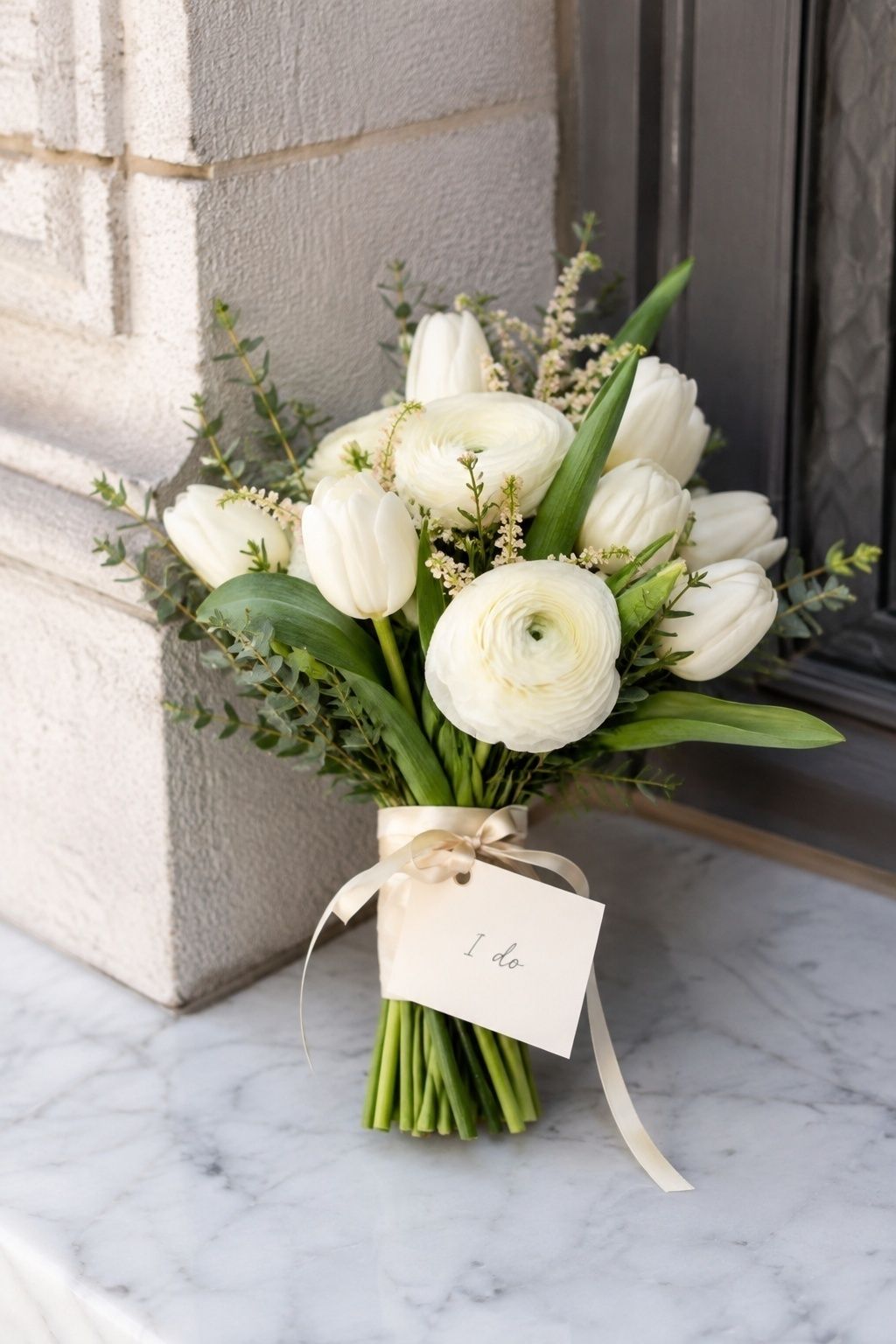
A courthouse wedding often calls for something light, elegant, and easy to carry through security, stairs, photos, and dinner. A mini card bouquet can be as simple as a small posy with one partner note and two family blessings tied into the wrap. It feels personal without creating a fussy object to manage.
Choose cards no larger than a place card, and avoid heavy cardstock if the bouquet is small. The paper should feel like an intentional layer beside the flowers, not a stack of stationery overpowering them. For intimate ceremonies, the mood often pairs naturally with personal small wedding details that focus on presence over production.
Secret Note Hidden In The Bouquet Wrap
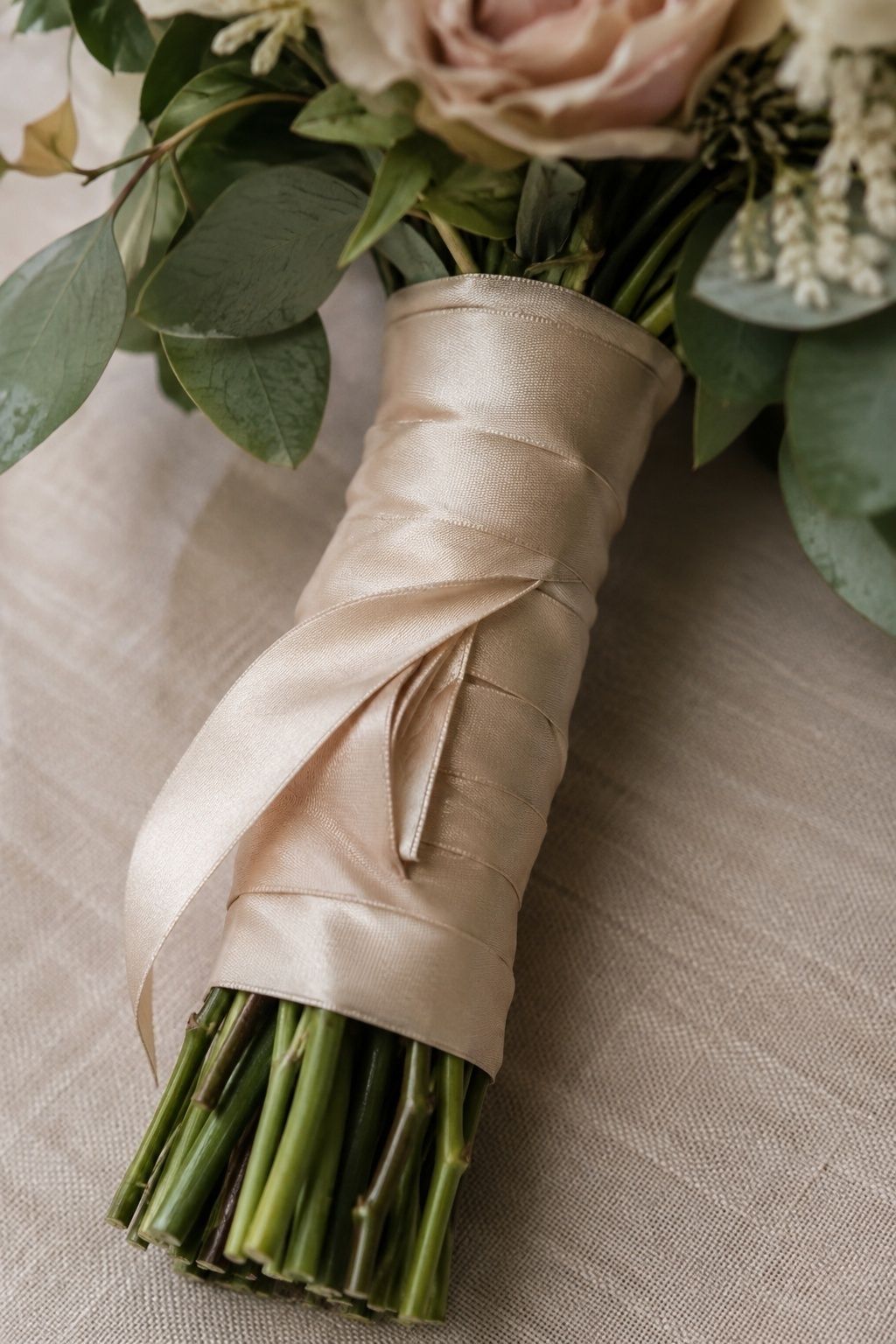
A secret note hidden in the bouquet wrap is ideal when the message is too intimate for guests. Write the note on thin but sturdy paper, fold it flat, and place it beneath the outer ribbon layer or inside a small pocket sewn into the wrap. The bouquet still carries the words, even if nobody else knows they are there.
Tell one trusted person where it is. After the ceremony, someone should know to remove the note before the bouquet goes into water, preservation, refrigeration, or transport. Hidden details are romantic until they are accidentally thrown away with floral packaging.
Book-Page And Note Hybrid Bouquet
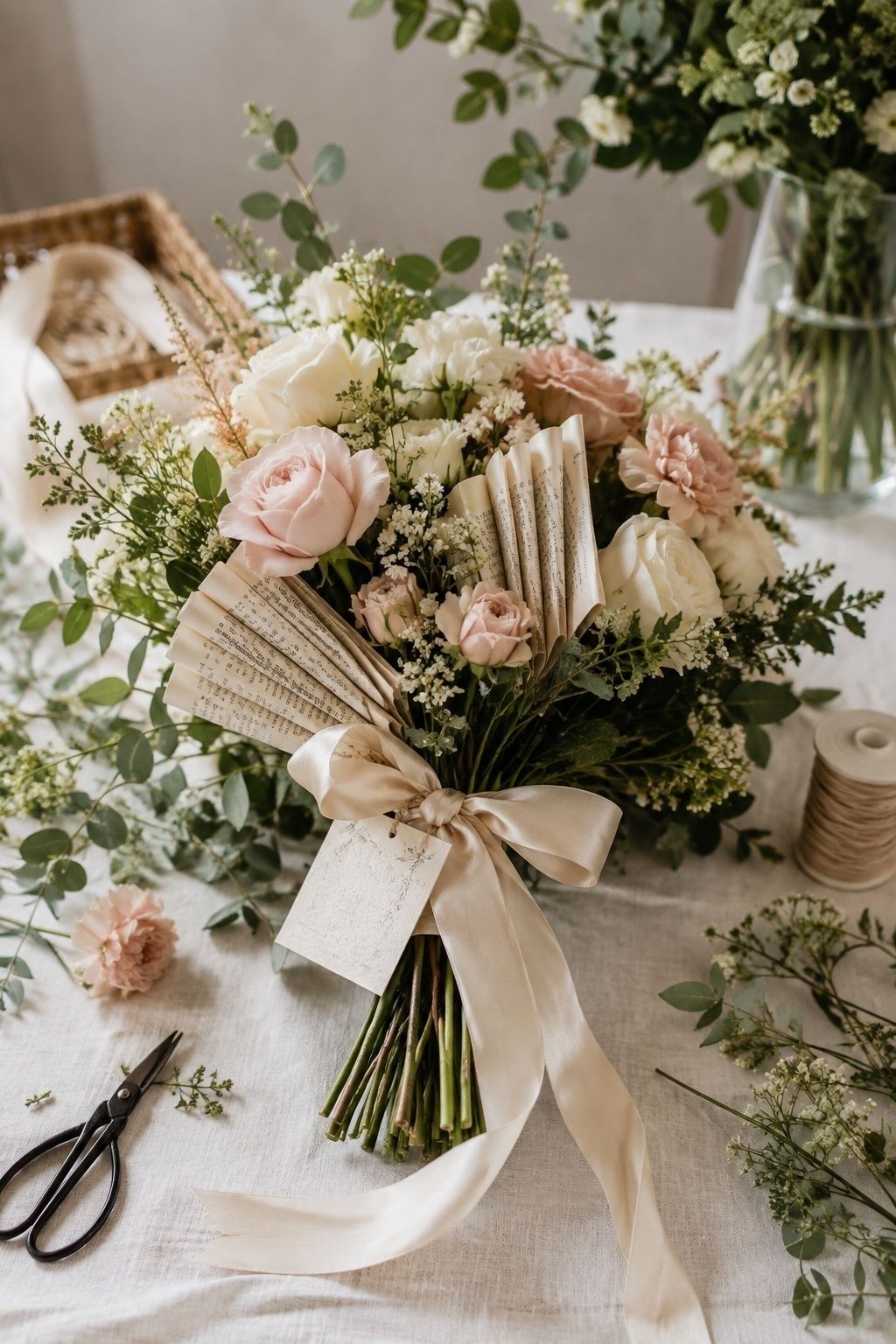
A book-page and note hybrid bouquet mixes printed pages with handwritten pieces. You might use copied pages from a favorite novel, vow fragments, travel memories, or favorite dates folded into a few paper blooms. The literary texture can sit beside fresh roses, sweet peas, ranunculus, dried lavender, or soft greenery.
Keep the source pages meaningful and ethically chosen. Use copies rather than tearing up a sentimental book unless that is truly part of the story. If the bouquet includes prayer text, poetry, or family language, consider which lines should be visible and which should stay folded inside.
Reception Display Bouquet With Readable Notes

A reception display bouquet can make the notes readable after the ceremony. Place the bouquet in a vase, on a welcome table, or beside a memory box so guests can notice the envelopes, ribbons, or paper flowers up close. This is the right place for public-facing messages: blessings, favorite dates, family phrases, and lines the couple is comfortable sharing.
Do not use the reception display for anything that would feel too intimate if a guest leaned in. Private vows, difficult family memories, deeply personal prayers, or inside jokes that require explanation usually belong hidden in the wrap or saved for later. A display can be meaningful without asking the couple to make everything readable.
Keepsake Bouquet Transferred Into A Memory Box
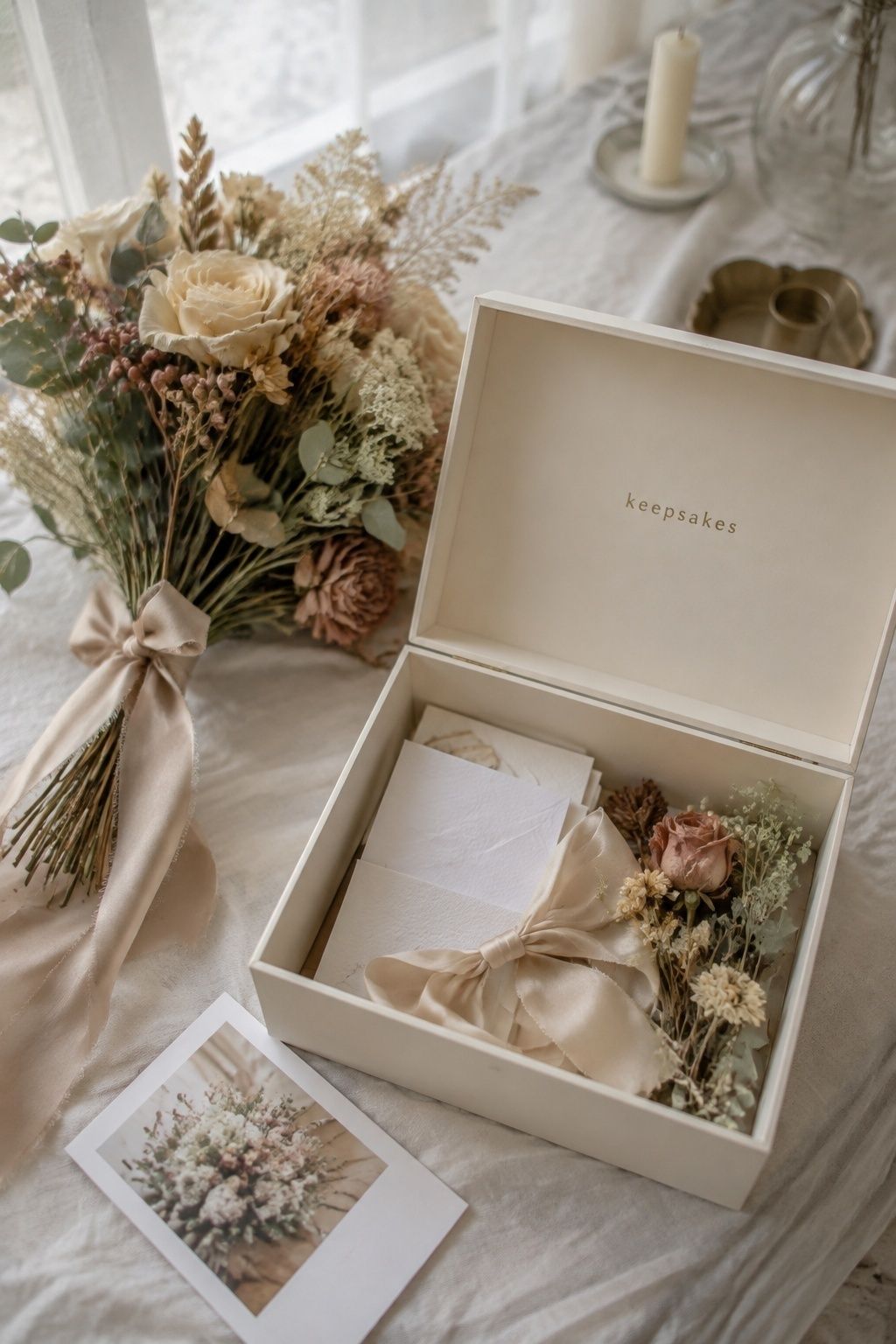
Plan the keepsake before the wedding day. A note bouquet can be transferred into a memory box with the envelopes, ribbon, dried petals, a copy of the ceremony program, and any cards that were not attached to the flowers. This gives the written pieces a home after the bouquet has done its ceremonial work.
If you are preserving the flowers, ask whether the notes should be removed first. Some preservation methods use moisture, pressure, resin, or drying processes that may affect ink. The safest version is often to preserve the paper separately, then display it beside a dried bloom, ribbon scrap, or photo of the bouquet.
What To Write In A Note Bouquet
Write words that can survive being brief. Vows, promises, family phrases, inside jokes, lyrics, prayers, travel memories, favorite dates, and small shared images all work well. “Meet me at the oak tree.” “Always coffee first.” “Your grandmother would have loved this.” “Paris, 2018.” A tiny phrase can hold a whole room of meaning when it belongs to the couple.
Decide what should stay private before anyone starts writing. Partner vows, tender apologies, spiritual language, grief notes, and sensual or very specific inside jokes may be better hidden than displayed. Public notes should feel generous to read. Private notes should feel protected. The bouquet can hold both, as long as they are not treated the same way.
Who Should Contribute Notes
Notes can come from one partner only, both partners, parents, siblings, close friends, grandparents, children, or a few chosen guests. The smaller the wedding, the easier it is to ask thoughtfully. You can give each person a clear word limit, a deadline, and a tone: blessing, memory, promise, prayer, or phrase.
Avoid asking too many people. A bouquet is not a mailbox, and too many cards will make it heavy, visually cluttered, and emotionally noisy. If you want a larger collection of messages, route the extra notes to a table, album, or wedding mailbox ideas moment so the bouquet remains a curated detail.
How To Attach Notes Without Ruining The Bouquet
Attachment is where the romance needs practical help. Keep notes small, lightweight, and folded flat. Use tiny envelopes, ribbon pockets, florist tape, hidden wire clips, or protected stem wraps instead of loose paper. Ask the florist exactly where notes can safely sit, especially near water tubes, damp stems, heavy blooms, or areas that will be handled often.
Think about wind, weight, ink, and water exposure. Outdoor ceremonies need secure folds and clips. Warm hands can soften paper. Fresh stems may leak moisture. Some pens smear when touched or photographed under bright light, so archival or waterproof ink matters. The same restraint that helps small wedding flowers feel elegant also protects the bouquet from becoming overloaded.
Fresh Flowers, Paper Flowers, Or No Flowers
Fresh flowers make the note detail feel soft and ceremonial, especially when paper is tucked between petals or tied into the wrap. Paper flowers put the writing at the center and are easier to keep, but they need careful shaping so they do not feel crafty in the wrong way. Silk flowers can hold notes well and travel beautifully, especially for destination, courthouse, or multi-day weddings.
No-flower versions can be elegant too. A ribbon bundle of letters, a small sheaf of folded notes, a paper-flower posy, or a handle wrapped with handwritten strips can replace fresh blooms entirely. This works best when the silhouette still feels bridal: held at the waist, finished with ribbon, and designed with enough softness to photograph beautifully.
What To Avoid With Note Bouquets
Avoid huge note cards, illegible handwriting, paper that fights the floral shape, and public messages that feel too intimate once guests can read them. Loose paper in wind is another quiet disaster. It can twist, slap against flowers, fall out during the recessional, or distract from the couple in photos.
Also avoid asking guests for notes too late. Wedding-day writing often becomes rushed, generic, or stressful. Give contributors time to think. Test every pen. Keep backup copies. Most of all, let the bouquet stay beautiful. The words should deepen the flowers, not bury them.
FAQ
What is a note bouquet for a wedding?
A note bouquet for a wedding is a bouquet that includes written messages, vows, love letters, lyric strips, family phrases, prayer cards, or tiny envelopes as part of the floral design. The notes may be visible, tucked between flowers, hidden in the wrap, or saved for a keepsake display after the ceremony.
How do you make a wedding bouquet with notes?
Make a wedding bouquet with notes by choosing small paper pieces, deciding which messages are private or visible, using sturdy ink, and asking a florist to attach the notes with ribbon, tiny envelopes, wire clips, or a protected stem wrap. Keep the paper light so it does not bend flowers or make the bouquet hard to hold.
What should you write in a note bouquet?
You can write vows, promises, inside jokes, lyrics, prayers, travel memories, favorite dates, family sayings, childhood phrases, or short blessings in a note bouquet. The best wording is brief, specific, and emotionally clear. Keep very private messages hidden in the wrap or saved for after the ceremony.
Can guests or family contribute notes to a wedding bouquet?
Guests or family can contribute notes to a wedding bouquet, especially at a small wedding where the circle is manageable. Ask selected people in advance, give them a short prompt, and limit each note to one sentence or small card. Save extra messages in a guest book, mailbox, or memory box instead of crowding the bouquet.
How do you keep note bouquets private and sturdy?
Keep note bouquets private and sturdy by folding sensitive notes inward, sealing them in tiny envelopes, hiding them beneath the bouquet wrap, and using florist-approved attachment points. Avoid loose paper, large cards, smear-prone ink, and placements near wet stems. Ask one trusted person to remove keepsake notes before preservation or cleanup.
What note bouquet wedding ideas work for a small wedding?
For a small wedding, the best note bouquet wedding ideas include partner vow notes, family blessing cards, tiny envelopes between flowers, a memorial note near the handle, a courthouse mini card bouquet, handwritten lyric strips, and a keepsake memory box for the notes after the ceremony. Smaller guest lists make the collection more personal and easier to edit.
Final Thoughts
A note bouquet should feel like carrying the words that helped you arrive here. Let it be small enough to hold, sturdy enough to survive the day, and private enough to keep the deepest promises safe. Whether you choose one hidden letter, a handful of family blessings, a lyric wrapped beneath silk ribbon, or paper flowers made from love notes, the goal is not to prove sentiment. The goal is to let it quietly travel with you.
As you edit the final bouquet, choose the notes, ribbon, and flowers that make the written pieces feel personal, textural, and emotionally specific, with bouquet details with a sense of story folded in only where they feel close enough to carry when the ceremony begins.
Last update on 2026-10-04 / Affiliate links / Images from Amazon Product Advertising API