

Jewel tone winter wedding colors are saturated gemstone shades such as emerald, sapphire, burgundy, ruby, amethyst and teal. They work best as two main colors plus one metallic accent, balanced with plenty of cream, white or clear glass so the room glows under candlelight instead of disappearing after sunset. At a small wedding, put the deep color where guests see it up close: napkins, glassware, ribbon, candles and paper.
Picture an emerald velvet napkin on a white plate at 5 pm in January, a taper burning next to it. It looks wonderful. Now picture an emerald tablecloth, emerald chairs and dark green walls in the same light. You can barely see the food.
That’s the whole trick with jewel tone winter wedding colors. The saturated shades are what make them beautiful, and they’re also what make them go muddy in a dim room. Below are the pairings I’d reach for, split into warm and cool, plus where to put the color so it shows and how to test it before you commit.
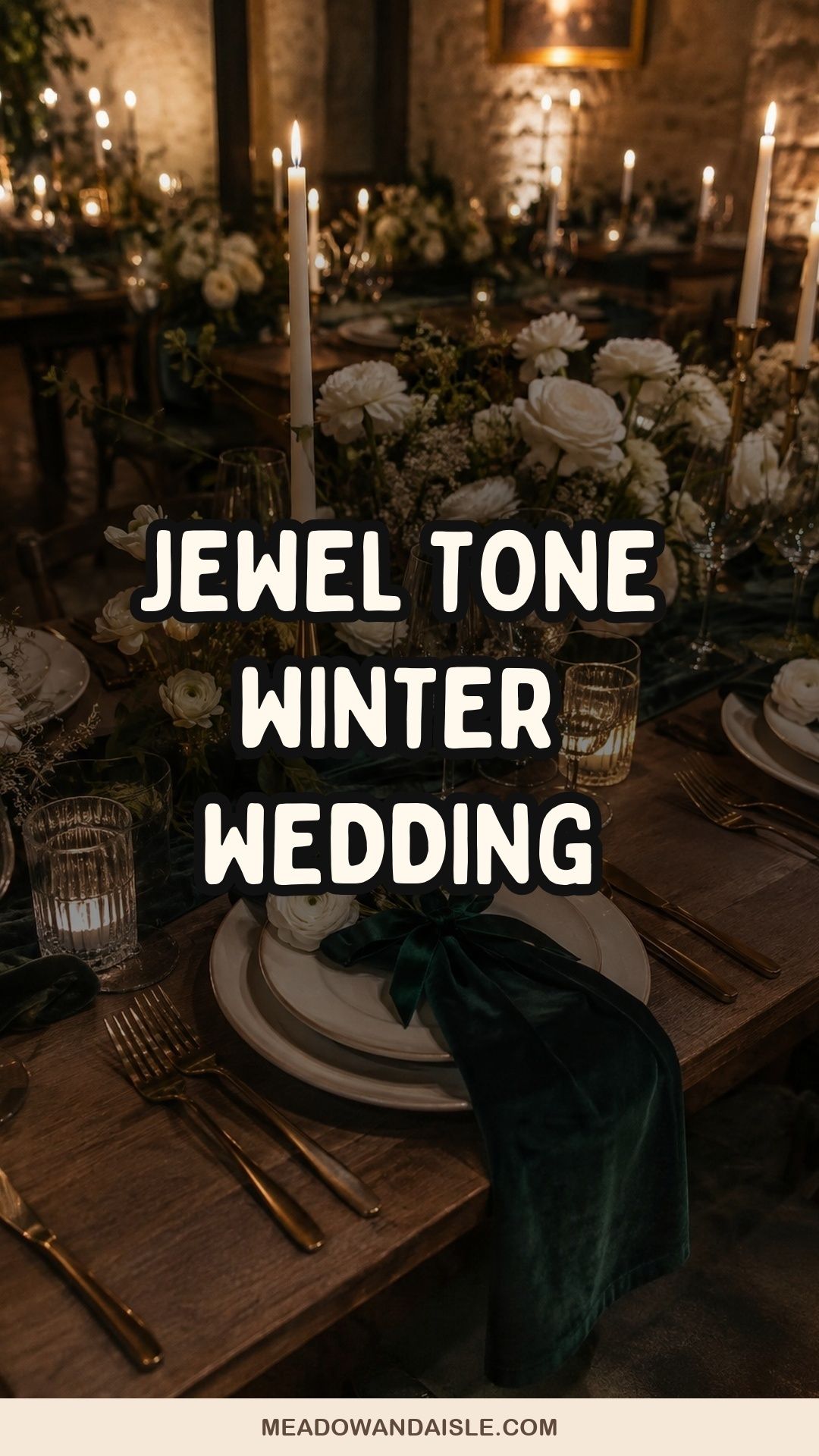
Pieces that carry jewel tones well


Which jewel tones work best for a winter wedding?
Emerald, sapphire, burgundy, ruby, amethyst, teal, garnet and plum all suit winter. The right one depends on your venue’s light and finishes: warm jewel tones like emerald, burgundy and ruby sit best with gold, brass and wood, while cool ones like sapphire, amethyst and teal look sharper with silver, pearl and grey stone.
Here’s a quick way to match a palette to a room:
| Palette | Metallic | Suits venues with | Put the deep color in |
|---|---|---|---|
| Emerald, ivory | Antique gold | Wood, candlelight | Napkins, velvet ribbon |
| Burgundy, blush | Brass | Warm walls, restaurants | Tapers, flowers |
| Sapphire, snow white | Silver | Grey stone, lofts, museums | Glassware, stationery |
| Amethyst, cream | Silver or pearl | Pale walls, daylight | Florals, candles |
| Teal, navy | Soft gold | Libraries, dark wood | Glassware, signage |
| Navy, wine | Copper | Brick, exposed beams | Napkins, flowers |
If you’re set on a January date, the January wedding colors post narrows things down by month. For a wider look at the season, the winter wedding color palette guide covers lighter and neutral options too.
Warm jewel tone palettes
Warm jewel tones read cozy and hosted. They glow in candlelight, which is most of what a winter evening is.
Emerald, ivory and antique gold
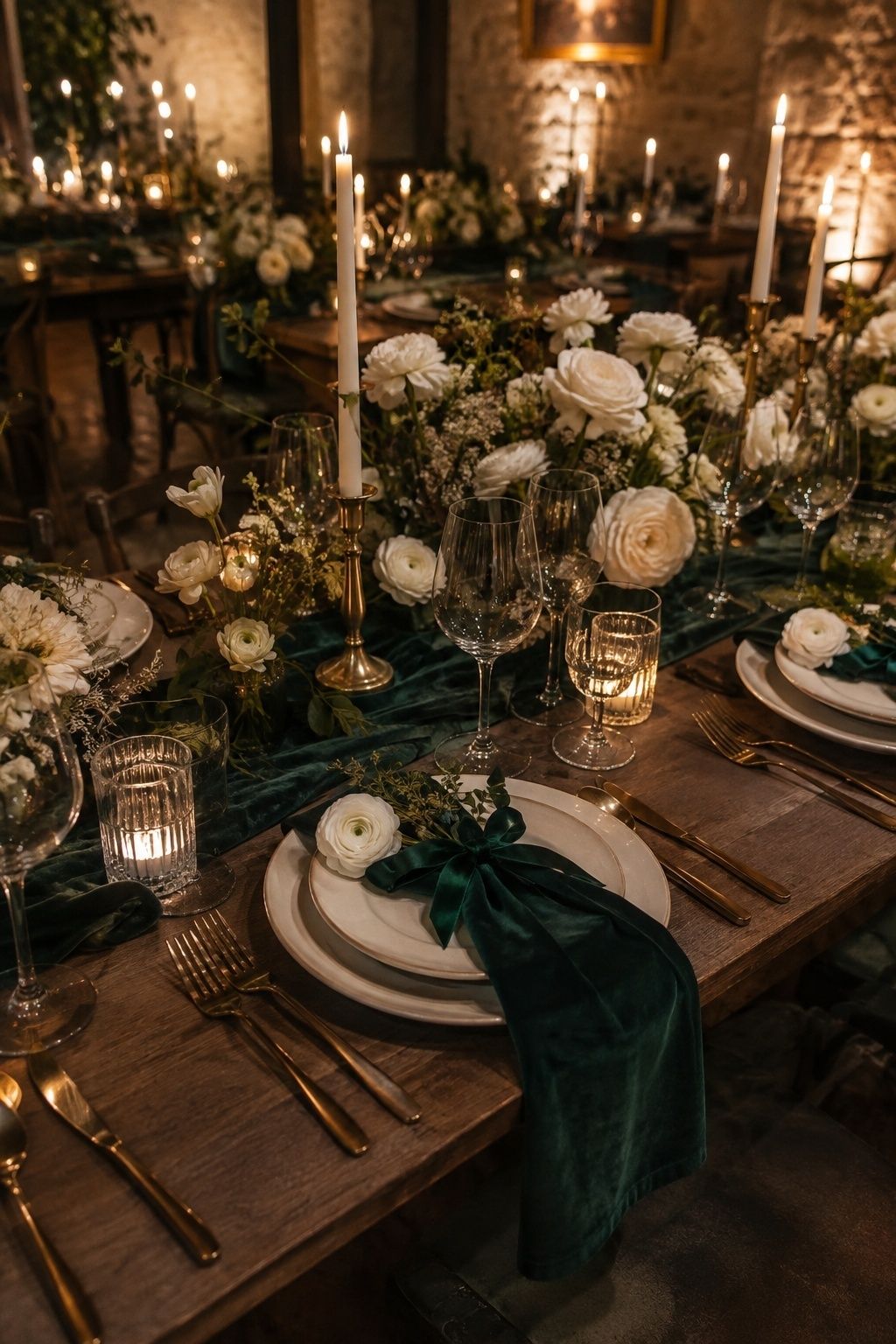
This is the easiest jewel tone combination to get right. Put emerald in napkins, a velvet ribbon or bridesmaid dresses, and keep ivory flowers and tableware generous so the room stays bright. Antique gold is softer than shiny yellow gold under candles; repeat it in two or three places, like chargers, flatware and taper holders, and stop there.
Burgundy, blush and brass
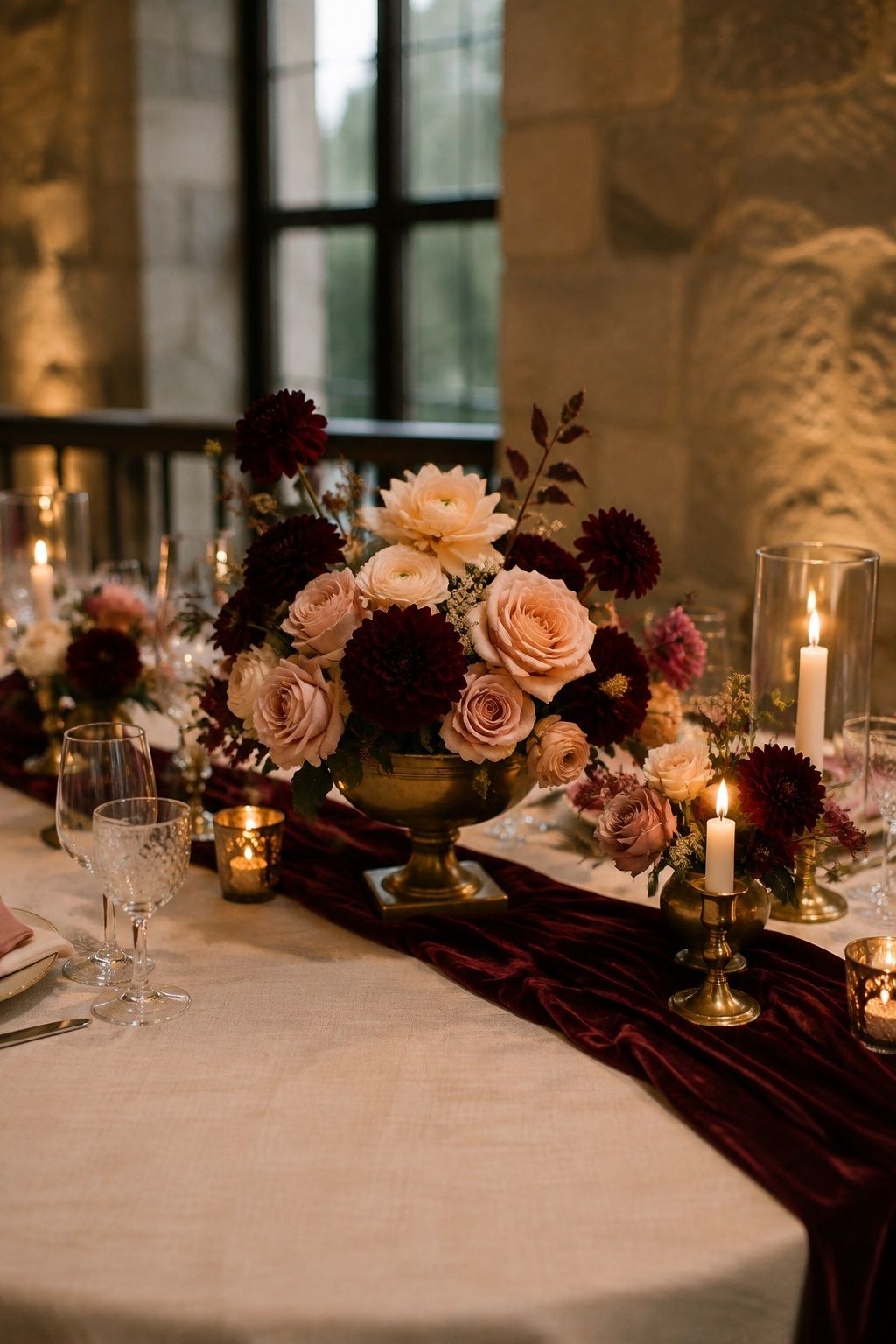
Burgundy on its own can feel heavy. Blush roses, ranunculus or pale linens soften it, and brass candlesticks add warmth. It’s a good choice for a restaurant dinner or a small reception in a room with warm walls.
Ruby, evergreen and warm white
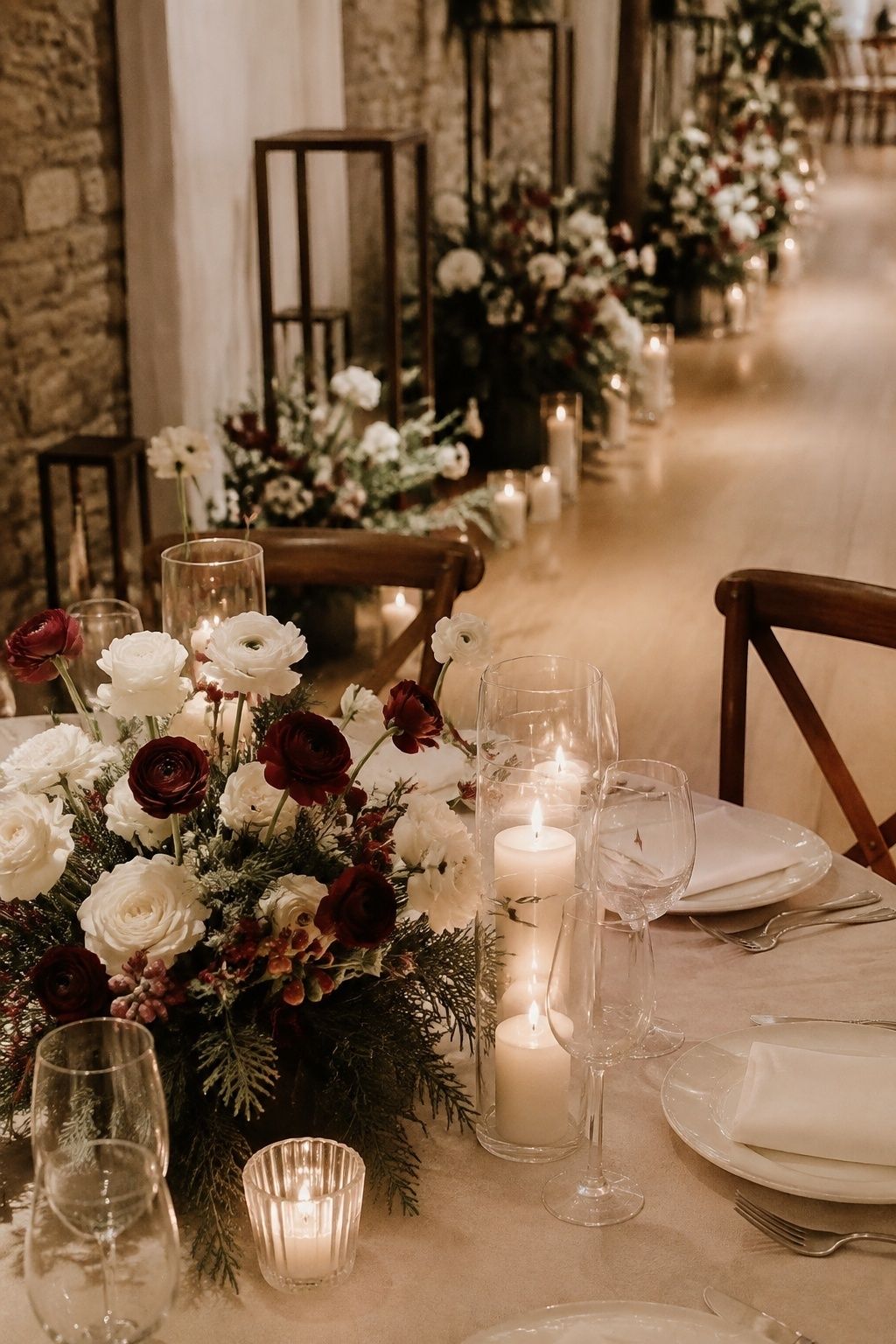
Ruby and evergreen can tip into Christmas fast. Give warm white equal space, keep greenery airy rather than in heavy garlands, and use ruby sparingly: a bouquet ribbon, a few tapers, some berries. If you are getting married in December and want to lean into the holiday, the Christmas wedding tablescape ideas go further.
Garnet, mocha and champagne
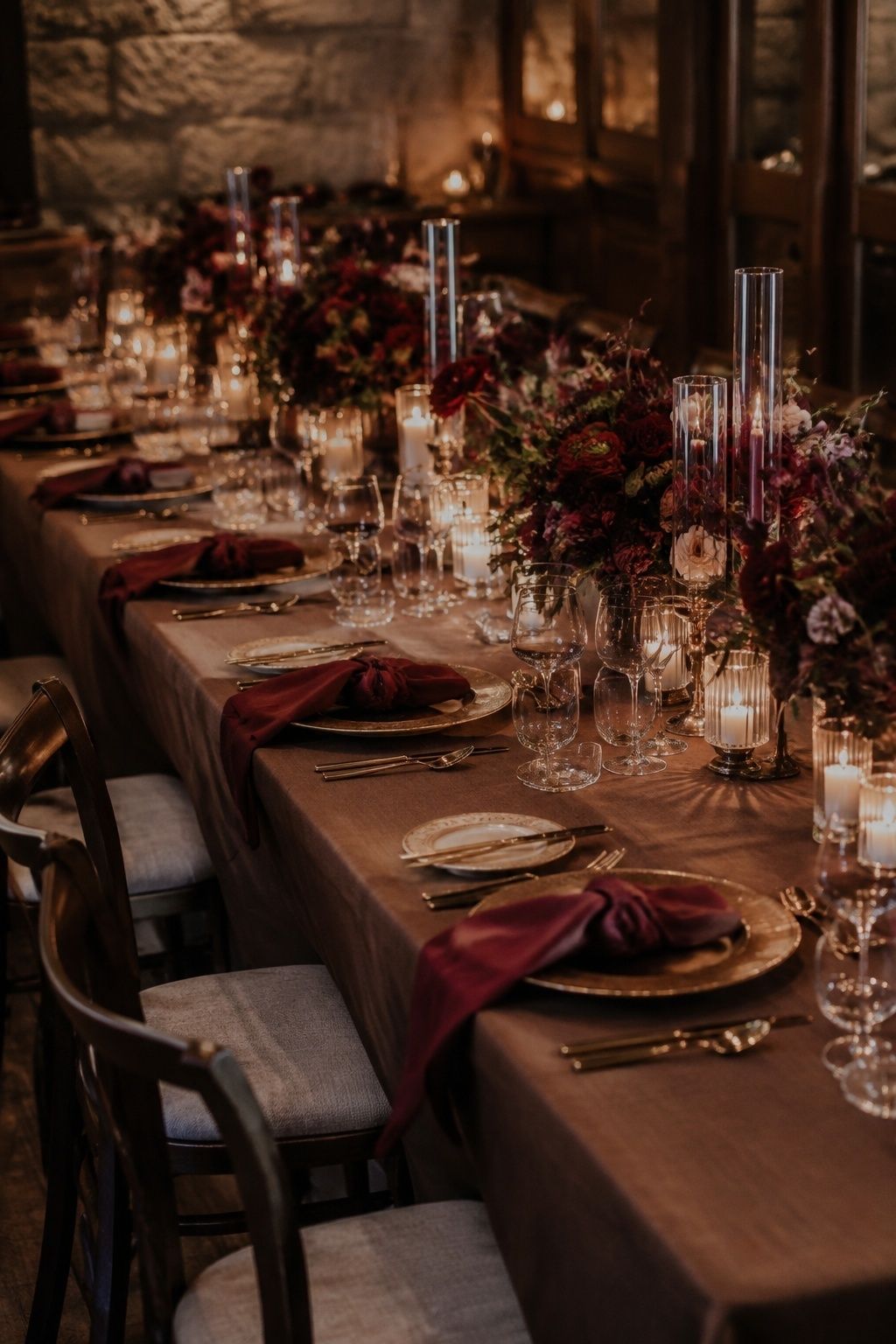
For couples who like jewel tones but want a softer room. Garnet brings the richness, mocha gives it a grounded base and champagne adds a low-key shimmer. It suits wood-heavy venues and candlelit dinners where bright gold would feel too loud.
Deep green and topaz
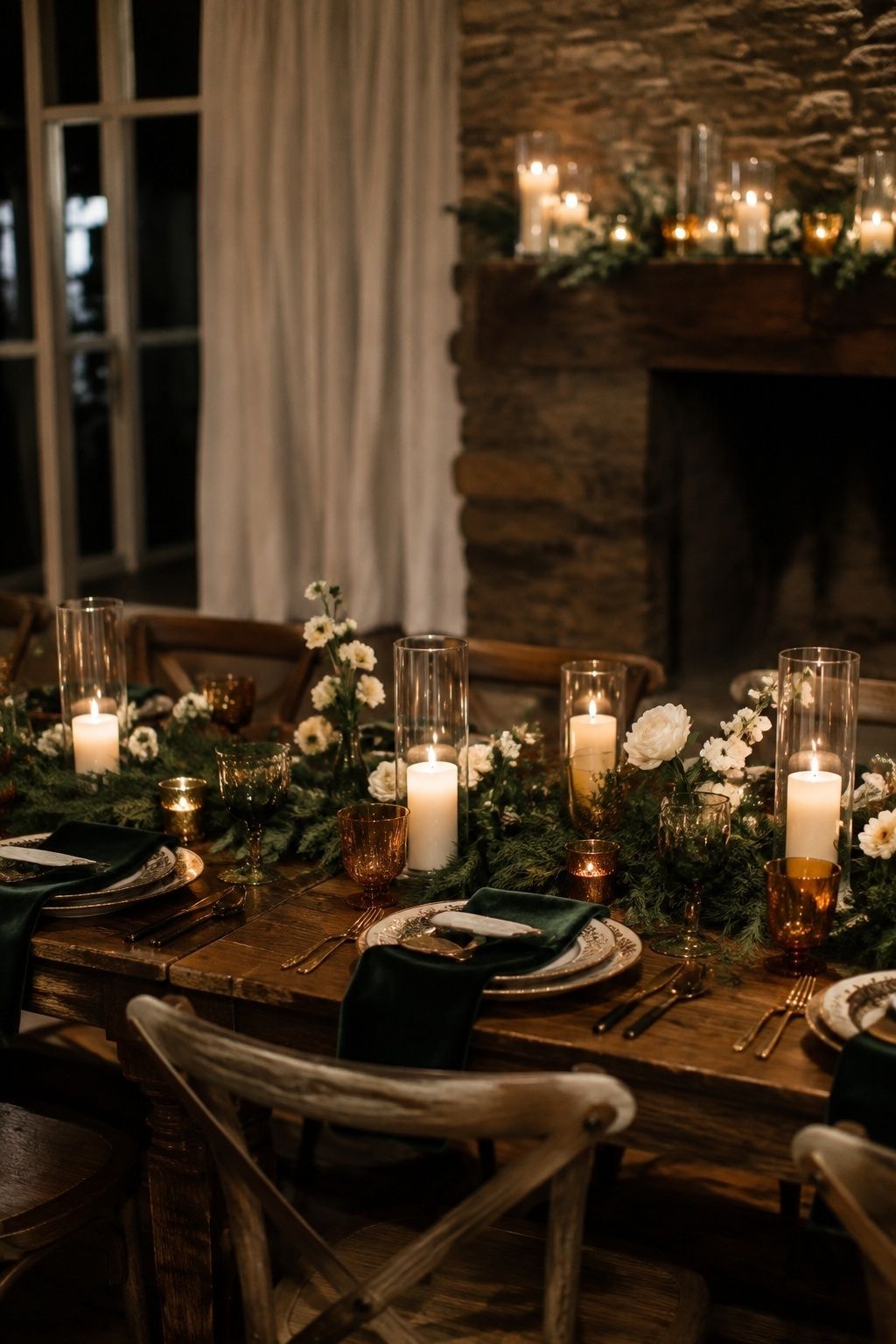
A seasonal look without red. Green comes in through velvet, foliage or napkins, and topaz shows up in amber glassware or candleholders. Keep the topaz muted, more honey than orange, and pair it with cream flowers.
Navy, wine and copper
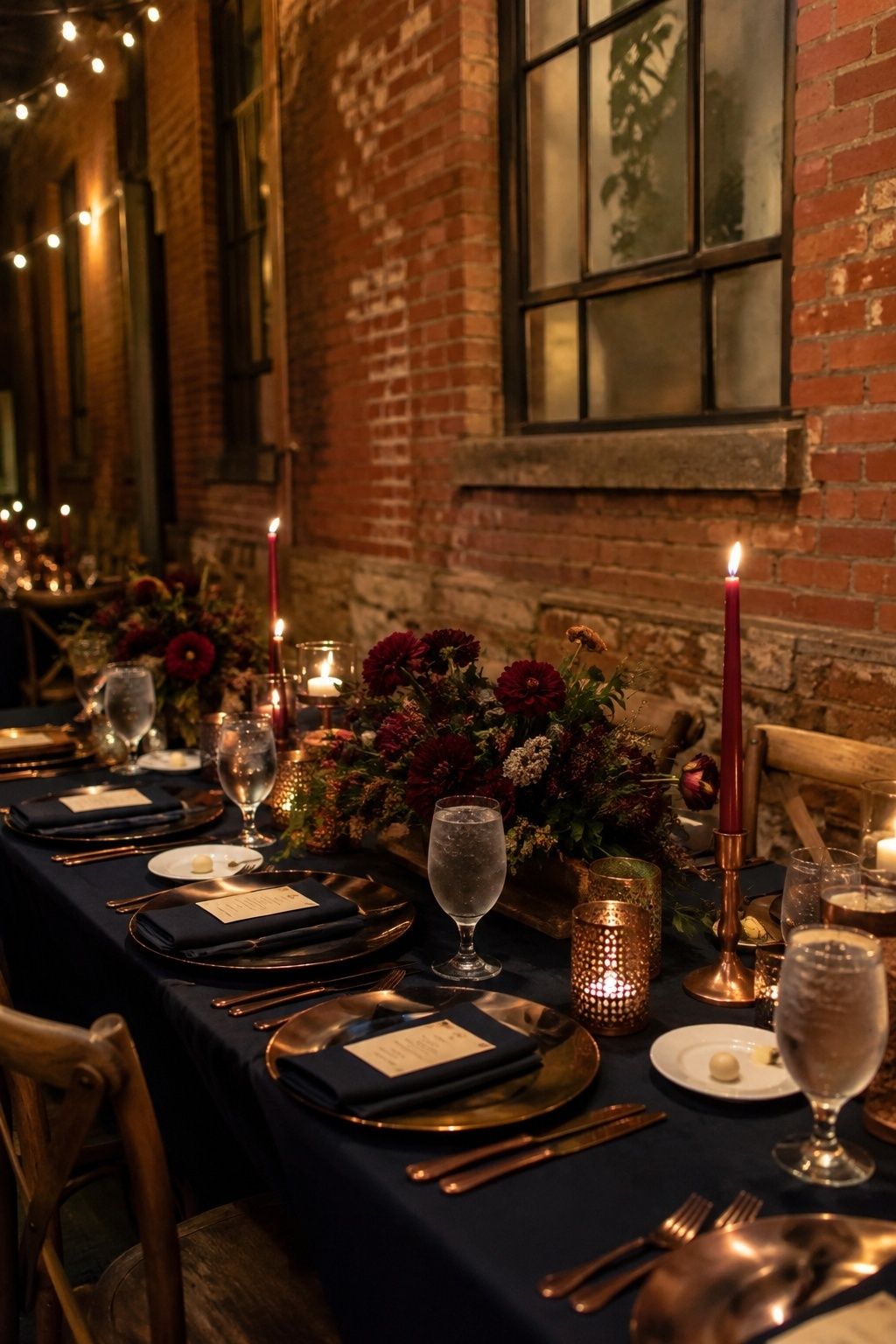
Navy gives structure, wine adds romance and copper brings a burnished glow. Copper is visually strong, so a few candleholders, wax seals or table numbers are enough. This palette looks especially good against brick.
Cool jewel tone palettes
Cool jewel tones look crisp and a little more formal. They need warm candlelight or plenty of white so they don’t feel chilly.
Sapphire, silver and snow white
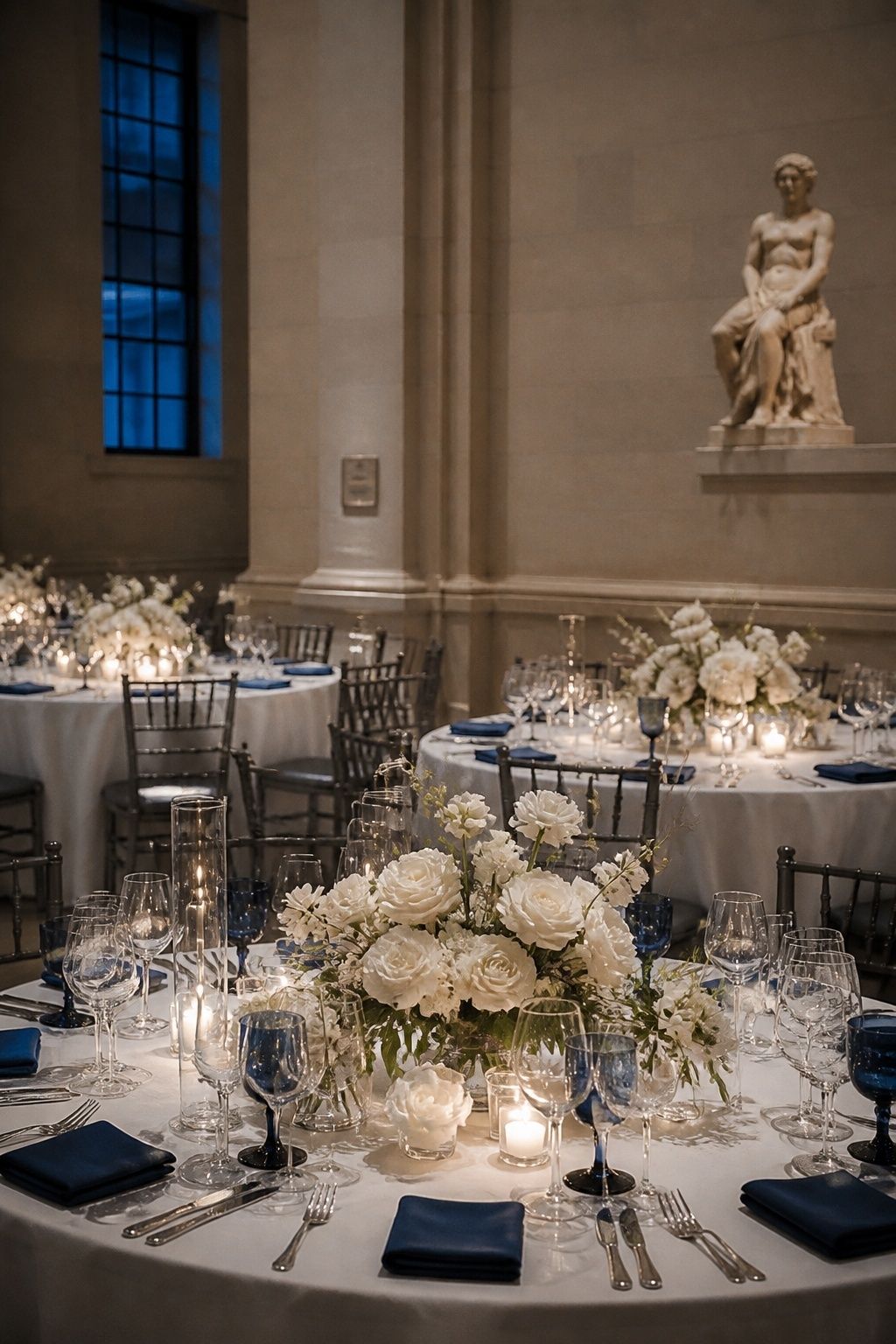
Sapphire in stationery, napkins or glassware, with white flowers, pale linens and clear glass. Silver adds the shimmer. If the venue already has grey stone, chrome or mirrors, this palette looks planned with very little added decor.
Sapphire and dusty blue
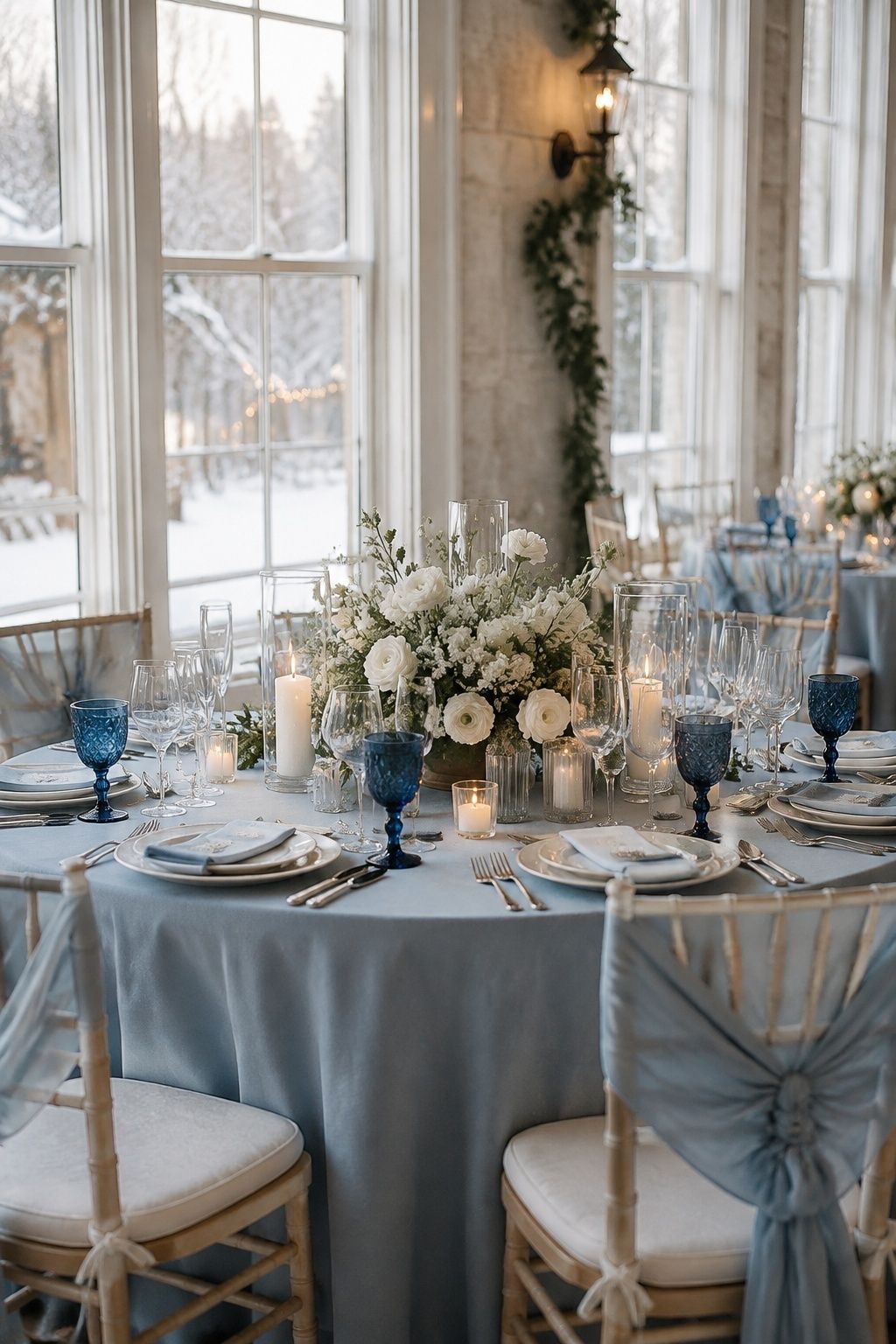
A gentler version. Sapphire anchors the attire, ribbon or menus, and dusty blue softens the linens, tapers and envelopes. It suits daytime winter weddings and snowy portraits better than any of the darker pairings.
Teal, navy and soft gold
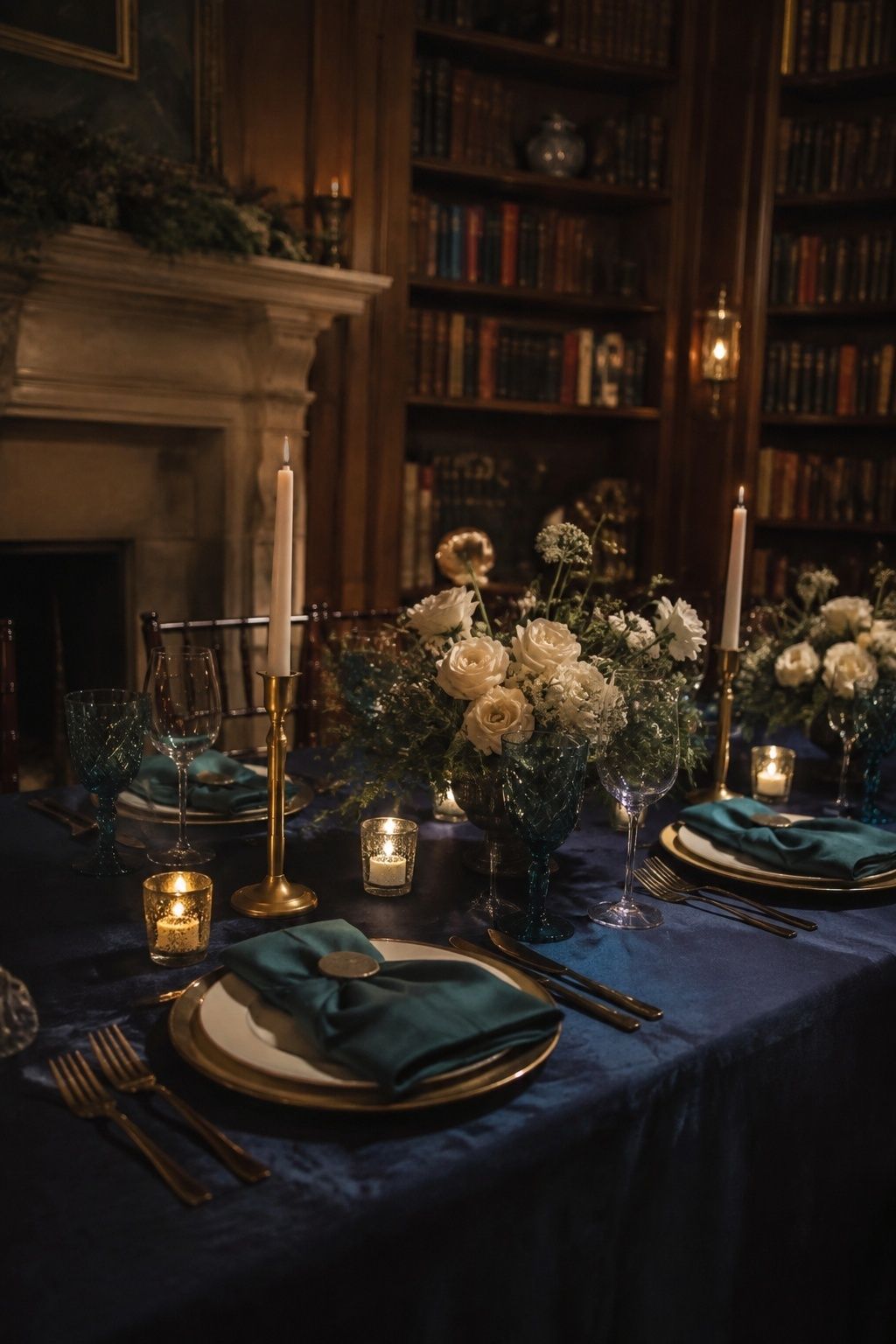
Navy grounds the room and teal brightens the table through glassware or napkins. Soft gold keeps the whole thing from going cold. It’s a strong match for libraries, dark-walled rooms and evening receptions.
Amethyst, cream and candlelight
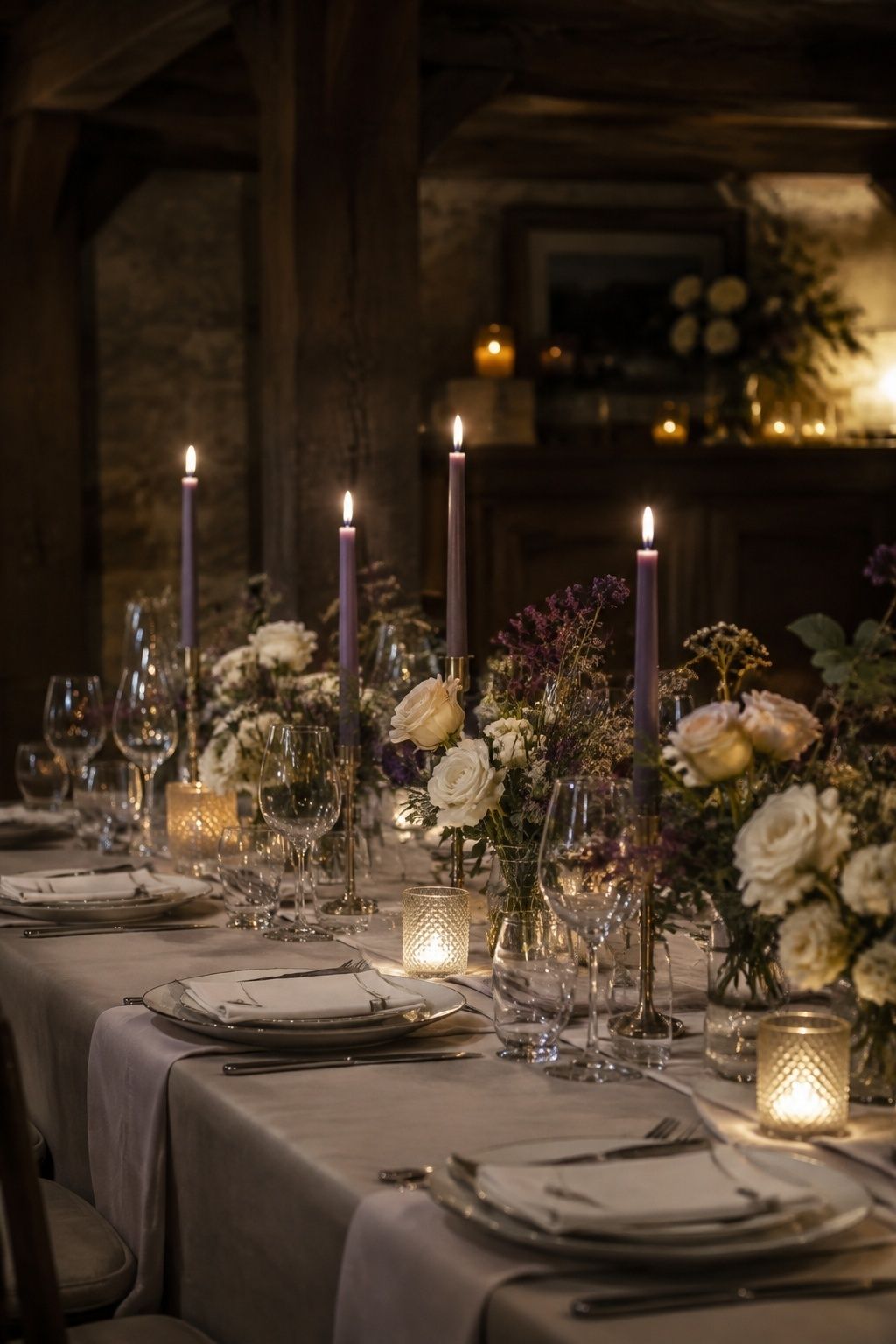
Purple shifts from romantic to dramatic as the light changes, which makes amethyst fun and a little risky. Cream linens and ivory flowers keep it in check. Use it in tapers, menus, velvet bows or one bridesmaid shade rather than on every surface. Couples drawn to the deeper end of purple will find more in these plum wedding theme ideas.
Plum, charcoal and pearl
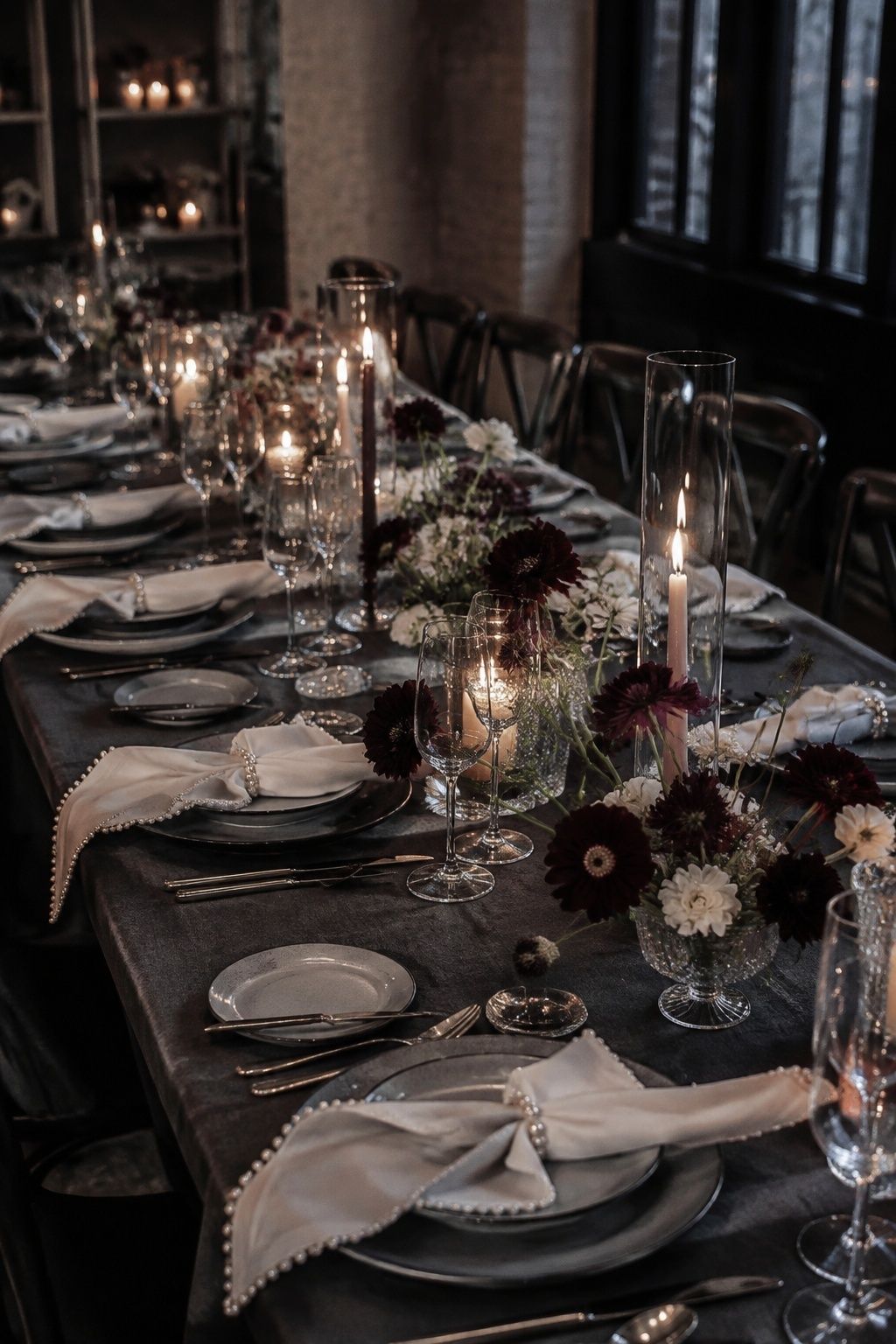
A good option when black feels too stark and pale grey too light. Charcoal suits attire, stationery and table numbers; plum deepens florals and candles; pearl keeps it luminous.
Emerald and black with white florals

Striking, and easy to overdo. Let black make clean outlines (tuxedos, menus, chairs) and let emerald carry the color in fabric or leafy accents. White flowers break up the dark surfaces and keep faces visible in photos. Keep the black matte.
Where to put the color at a small wedding
At a small wedding, guests sit close to everything, so put the jewel tone where they’ll see and touch it. A few rich details at each place setting do more than a big installation across the room. The small winter wedding ideas post covers the rest of the day at that scale.
Velvet at the table, ivory underneath
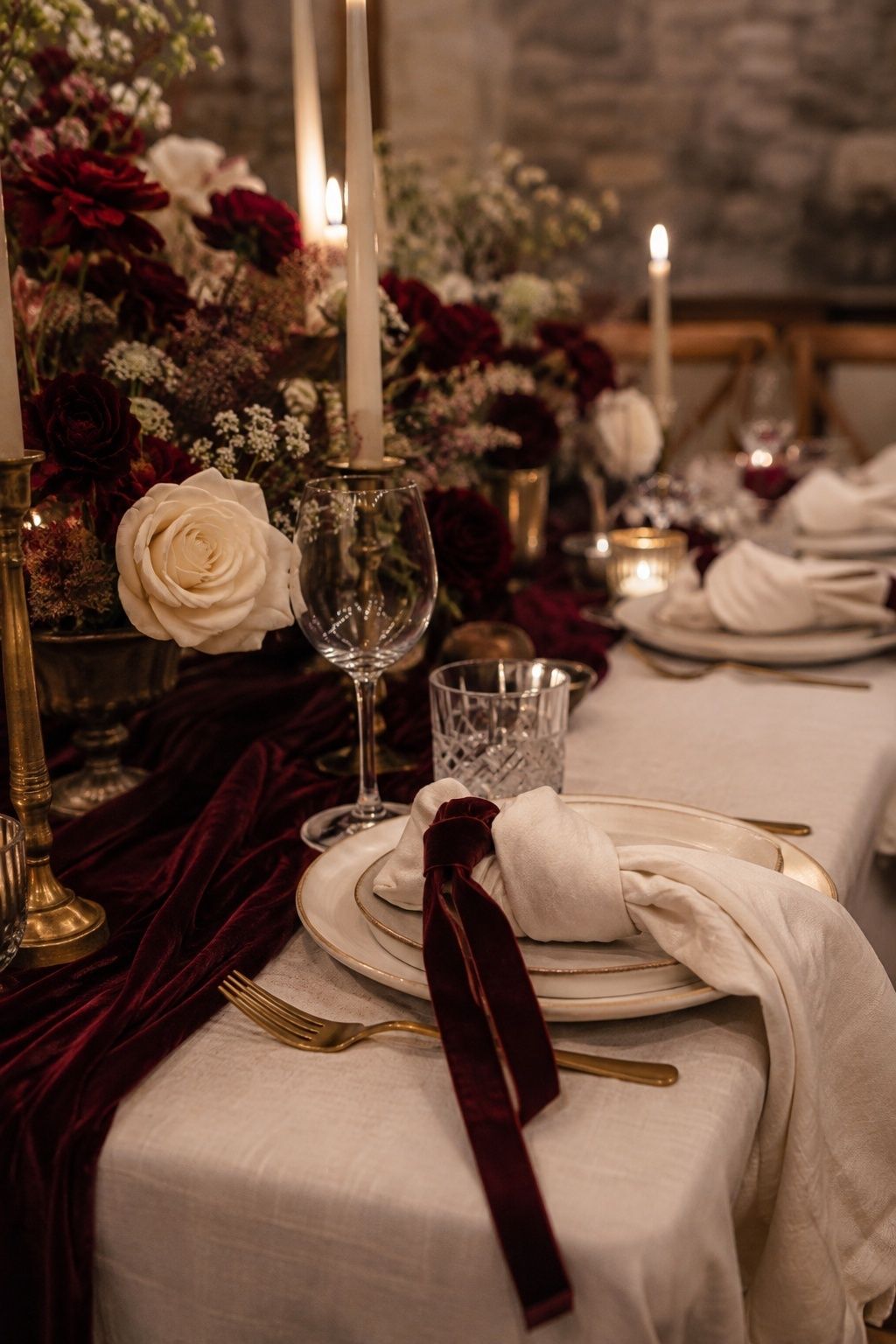
Burgundy or emerald velvet ribbon, napkins or a narrow runner on ivory linen gives you the luxe look without renting colored tablecloths. The light linen keeps place settings easy to read.
Florals with layers, not one flat color
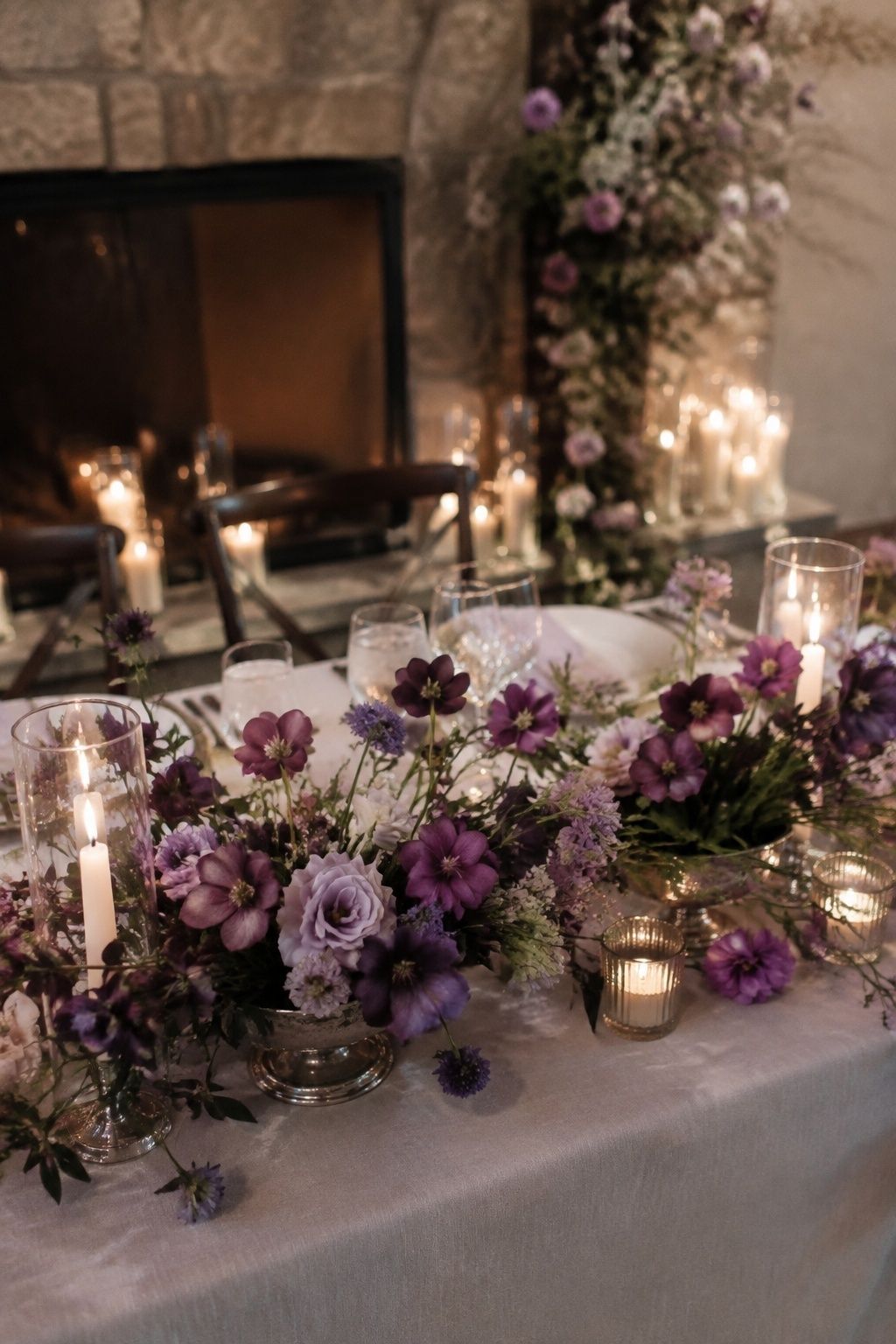
Ask your florist for amethyst, plum or burgundy mixed with cream, mauve and soft lavender so arrangements have depth in winter light. Anemones, ranunculus, hellebores, amaryllis and garden roses all come in jewel shades. Small silver-rimmed votives or flatware add reflection without clutter.
Colored glassware

Teal, emerald or amber glasses put color at every seat without adding more flowers. Pair them with neutral blooms and clear votives. Colored glass also photographs well from a seated angle.
Saturated color only at the table
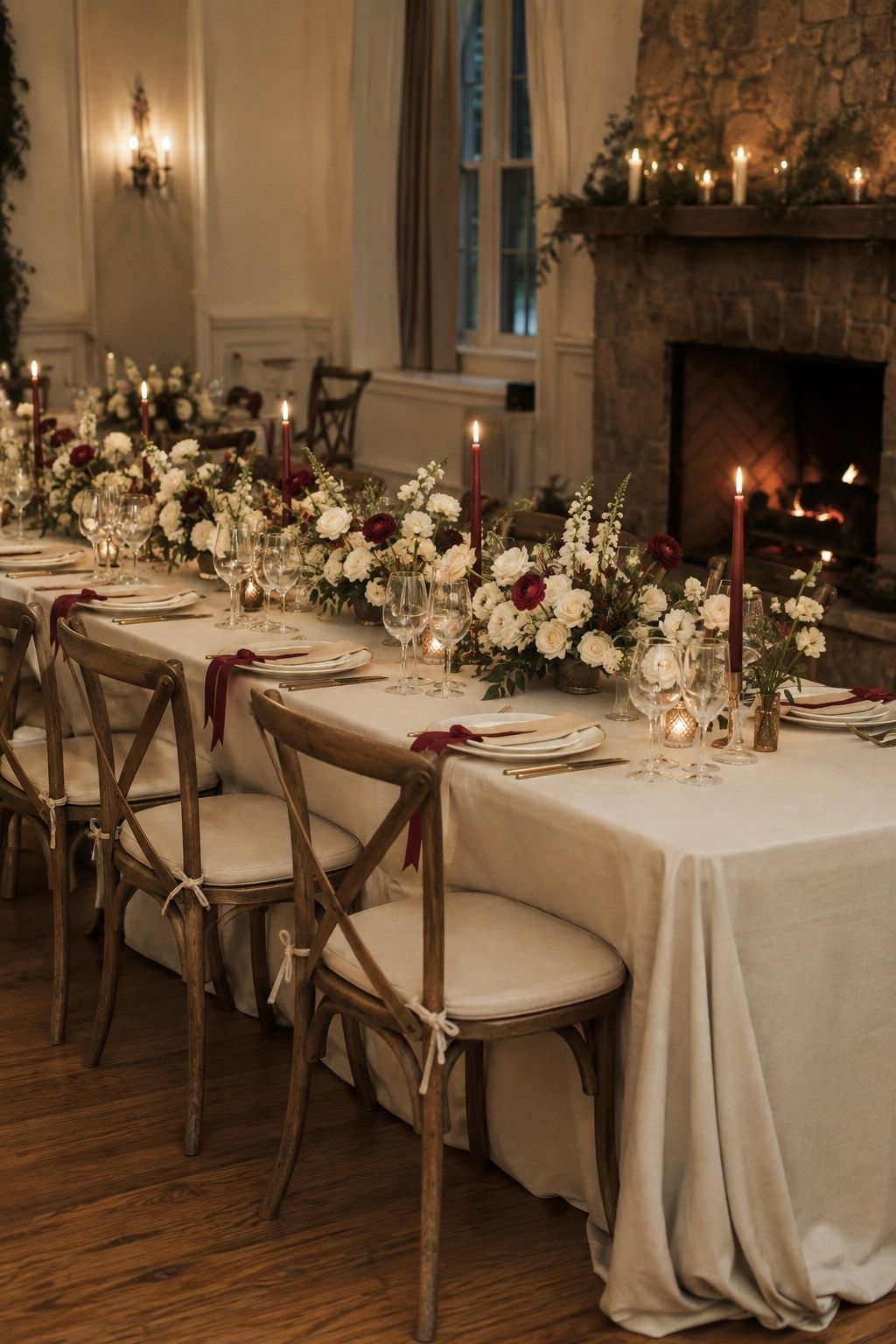
Keep the ceremony neutral and save ruby tapers, wax seals and red blooms for the reception. It stops the palette feeling themed, and guests get a small reveal when they walk into dinner.
Bridesmaid dresses: mix, then anchor
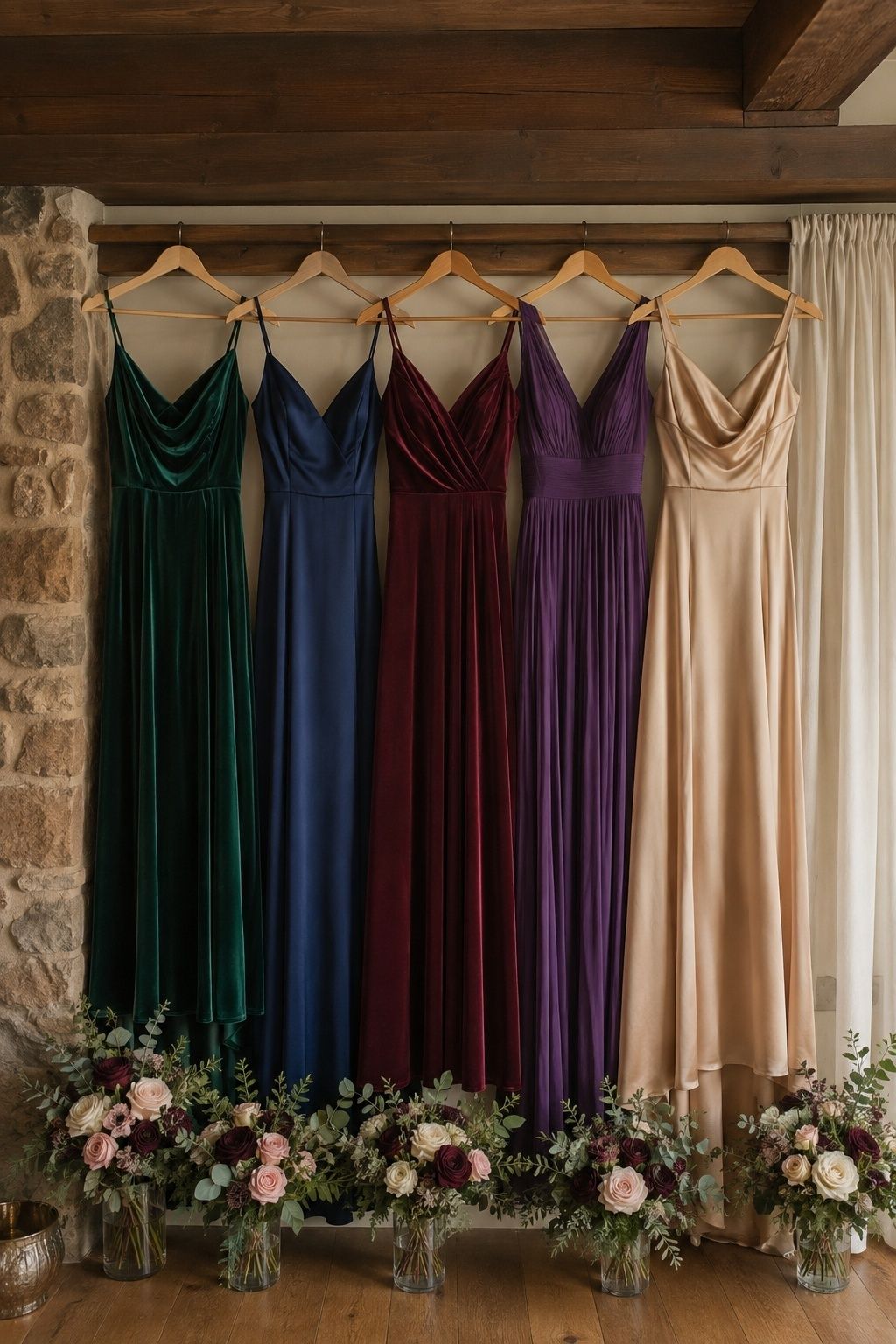
Mixed jewel tone dresses look great in winter if you limit them to two or three colors and anchor them with one neutral, like champagne or cream, plus bouquets in white and greenery. With a small wedding party, every color gets noticed, so edit hard.
Paper goods when the venue is already busy
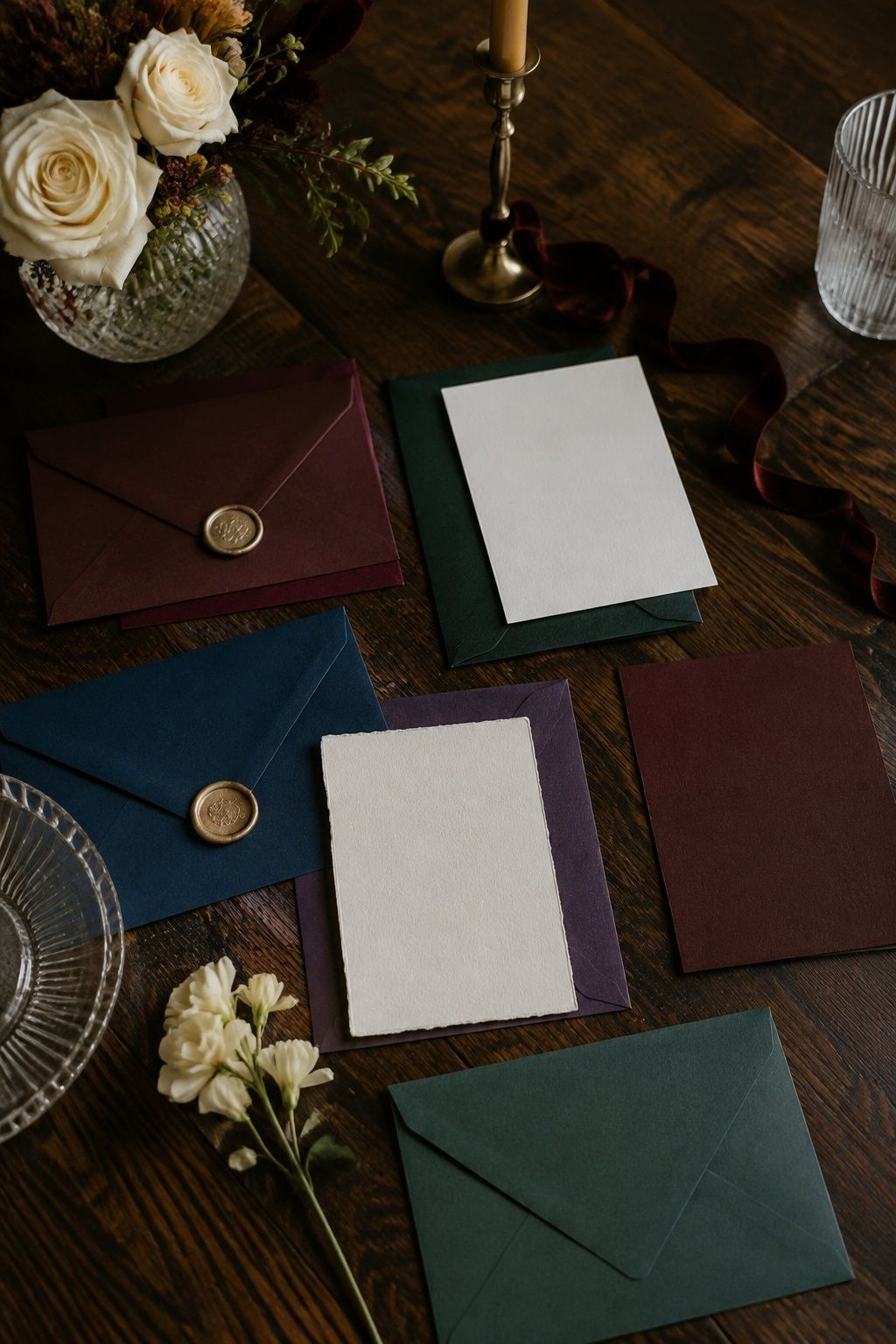
If the room has strong architecture or a lot of pattern, put the color in menus, escort cards, envelopes, wax seals and table numbers, and keep flowers and linens neutral. It’s the lowest-risk, lowest-cost way to bring saturated color in.
How do you use jewel tones without making the wedding too dark?
Limit yourself to two main colors and one accent, then increase the light surfaces before you add anything else. Cream, white and clear glass aren’t filler here; they’re what lets the deep color read as rich.
Two colors, one accent
Pick two main shades and one metallic before buying anything. Emerald and ivory carry the wedding; antique gold appears only in chargers and candleholders. In a small room, tables, flowers, attire and signage all sit close together, so fewer colors look more confident.
Test samples in evening light
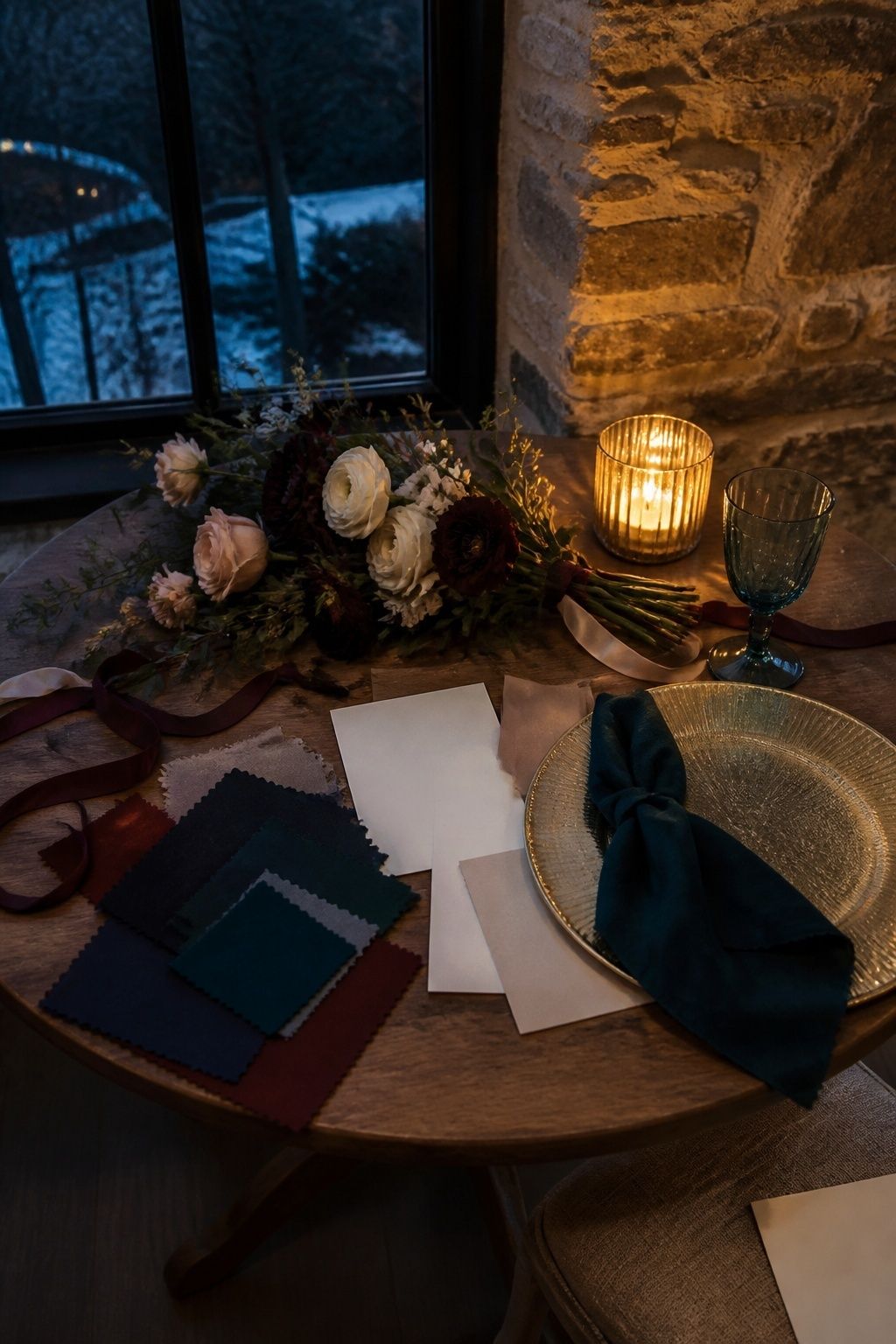
Many jewel tones deepen after sunset. Emerald can look nearly black in a dim room, and burgundy turns brown under the wrong bulbs. Take your napkin, ribbon and candle samples to the venue at the hour of your dinner, with the actual lighting on. If the room uses amber bulbs or uplighting, ask to see that too.
Add texture before more color
When a palette looks flat, reach for velvet, satin ribbon, ribbed glass, matte paper, pearl details or hammered metal before adding another hue. Texture gives depth without making the room busier. For more on how candlelight and texture work together in a small room, the romantic winter wedding decor post is a good companion.
Martha Stewart’s roundup of winter wedding color palettes is useful for seeing more combinations in real weddings, and Minted’s winter wedding colors page shows how they look on paper goods.
Key takeaways
- Choose two jewel tones and one metallic, and match the metal to the venue’s finishes.
- Warm tones (emerald, burgundy, ruby) suit gold and wood; cool tones (sapphire, amethyst, teal) suit silver and stone.
- Balance every deep shade with cream, white or clear glass.
- Put the color where guests sit: napkins, glassware, velvet, candles and paper.
- Test every sample at the venue, at your dinner hour, with the real lighting on.
FAQ
What are jewel tone winter wedding colors?
Jewel tone winter wedding colors are saturated gemstone shades like emerald, sapphire, ruby, burgundy, amethyst, teal, garnet and plum. They’re usually paired with cream or white, candlelight and a metallic accent so the palette looks rich rather than heavy.
What metallics go with jewel tones?
Gold and brass suit warm jewel tones like emerald, burgundy and ruby. Silver and pearl suit cool ones like sapphire, amethyst and navy, and copper pairs well with wine, navy and garnet.
How do you keep a jewel tone wedding from looking too dark?
Use only two main colors and one accent, and keep the deep shades in small places like napkins, ribbon, candles and menus. Then add more light surfaces (white plates, cream linens, clear glass) before adding any more color.
Do jewel tones work for a small winter wedding?
Yes, jewel tones work especially well for small weddings. Guests sit close to the details, so a velvet napkin, a colored glass and a taper at each seat carry the whole palette without big installations.
What flowers match a jewel tone winter palette?
Anemones, ranunculus, hellebores, amaryllis, garden roses and berries come in jewel shades and suit winter. Mix them with cream or white flowers and some greenery so arrangements have depth in low light.
Before you order anything
Get the samples first. A napkin, a ribbon and one candle in each of your two colors, taken to the venue at the hour you’ll eat, will tell you more than any mood board. If they glow, you’ve found your jewel tone winter wedding colors. If they go muddy, add white and try again.
Last update on 2026-10-03 / Affiliate links / Images from Amazon Product Advertising API