
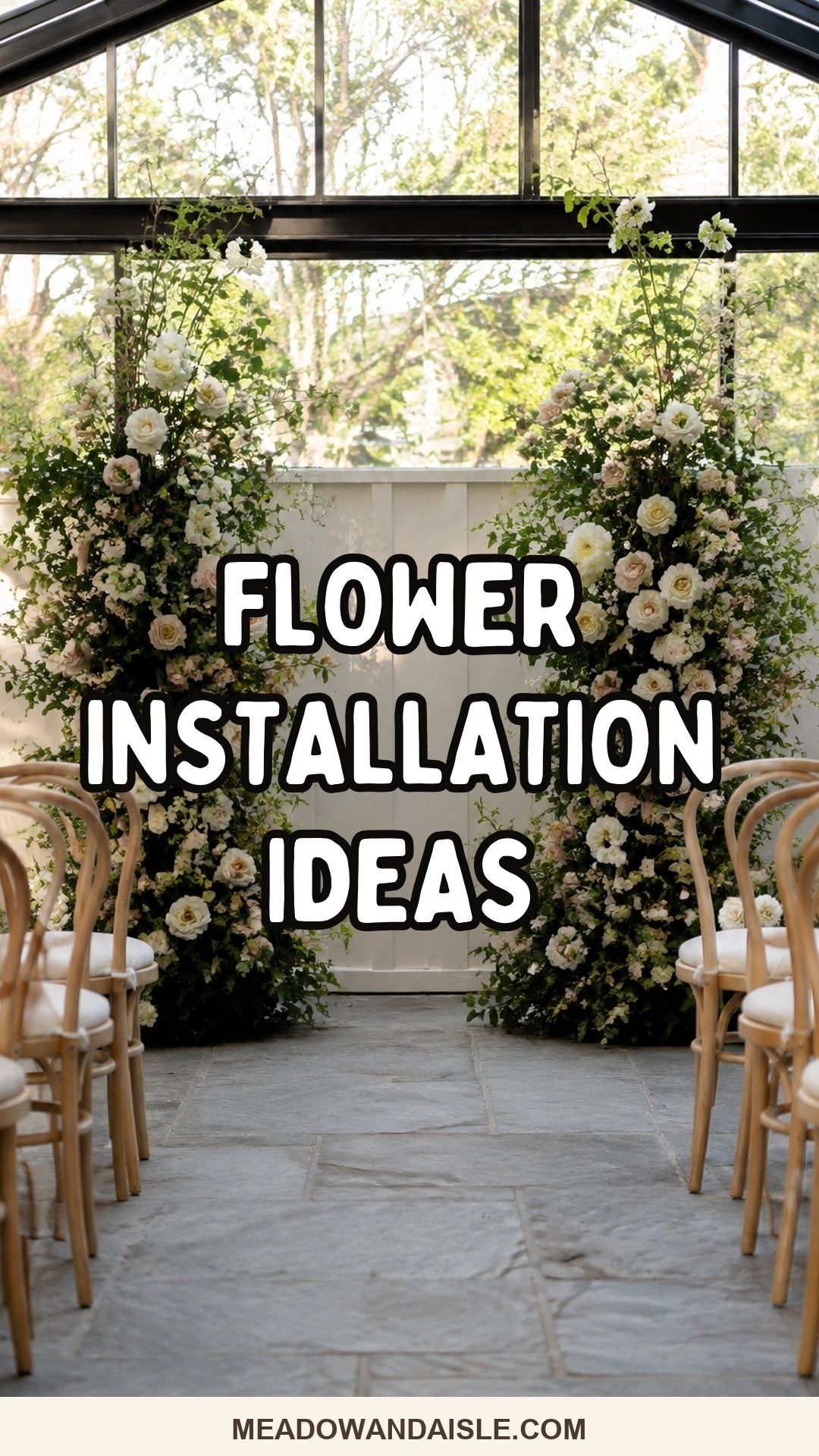
Flower installations wedding decor ideas work best at a small wedding when you choose one intentional focal point, keep it professionally secured, and place it where it frames the day without blocking guests, service, photos, or conversation.
Statement flowers have a way of making a wedding feel held in a single beautiful image. The challenge is that intimate weddings rarely have unlimited space, unlimited budget, or a room that can absorb decor in every direction. A floral installation should earn its place by doing more than looking expensive. It should guide the eye, support the ceremony or reception flow, and give the photographer a setting that feels like the couple, not a prop competing with them.
Recommended Wedding Products


You Might Also Like These Blog Posts
- Floral Hanging Wedding Decor Ideas That Make the Room Feel Enchanted
- Flower Bar Wedding Ideas Guests Will Actually Use
- Flower Animation Wedding Video Ideas for a Soft Moving Memory
- Flower Wedding Makeup Ideas for Petal-Soft Drama
- Spring Wedding Decor Ideas With Fresh-Air Romance
- Winter Wedding Decor Ideas For A Cozy Celebration
Flower Installations Wedding Decor Ideas That Deserve The Center Of The Room
A small wedding does not need small-looking flowers. It needs flowers with a job. One installation can make a ceremony feel complete, turn a private dining room into a reception, soften a hard architectural corner, or give a tiny guest list one memorable place to gather. The trick is choosing the place where flowers will change the feeling of the day most.
Start with a simple priority system. First, choose the moment that will be photographed most often: vows, dinner, cake, portraits, or the entrance. Second, check whether the installation improves the guest experience from every seat, not only from the front camera angle. Third, protect the practical things: sightlines, table service, walkways, heat, candles, ceiling rules, and conversation. If an idea fails one of those checks, it needs to be smaller, lower, moved, or handed fully to a professional florist with venue approval.
Where A Floral Installation Matters Most At A Small Wedding
For intimate weddings, the most valuable floral installation is usually the one guests will experience twice. A ceremony piece that later frames the sweetheart table, cake table, fireplace, or photo corner gives the budget a second life without asking the room to hold two separate statement moments. That is why ceremony focal points, private dining walls, doorways, and long-table designs often outperform a dramatic ceiling idea in a small venue.
If the ceremony is the emotional center, spend there first. If dinner is the longest part of the celebration, spend where the table will feel most alive. If the venue has one beautiful architectural feature, flowers should emphasize it instead of hiding it. Shape the full decor plan around layout, rentals, lighting, guest movement, and the kind of flowers that can carry more than one part of the day.
| Best Floral Moment | Why It Works | Small-Wedding Caution |
|---|---|---|
| Ceremony focal point | Frames vows and portraits | Keep faces, officiant, and aisle views open |
| One long table | Makes dinner feel abundant | Leave space for platters, glassware, and conversation |
| Fireplace or doorway | Uses existing architecture | Confirm heat, flame, hardware, and exit rules |
| Sweetheart or cake table | Concentrates flowers where photos happen | Avoid blocking seated faces or cake access |
| Compact photo corner | Creates a portrait place without styling the whole room | Place it away from service paths and restroom lines |
Ceremony Floral Pillars

Floral pillars are one of the strongest choices for a small ceremony because they frame the couple without creating a full arch overhead. Two grounded columns can sit at the front of an aisle, beside a fireplace, or against a garden wall. They feel formal enough for vows, but they are easier to repurpose than a large built structure.
Ask your florist to keep the base heavy, the mechanics hidden, and the upper shape airy enough that the officiant and couple remain visible. If the pillars will move after the ceremony, the design should be built in transportable sections rather than arranged directly on the floor. That one decision can determine whether repurposing feels graceful or frantic.
Asymmetrical Floral Arch

An asymmetrical arch gives you the romance of a ceremony structure without the heaviness of a fully covered frame. The flowers might climb one side, pool at the base, or stretch across only part of the top. For small weddings, that negative space is useful. It lets the venue breathe and keeps the couple from looking swallowed by decor.
This is a professional-only project if it involves height, weight, wind, uneven ground, or attachment to a venue surface. A florist can choose the right mechanics, water sources, and anchoring system so the arch feels effortless in photos and secure in real life. Pair it with restrained aisle pieces instead of trying to repeat the same drama everywhere.
Doorway Flower Installation

A doorway installation is lovely for restaurant weddings, garden-room entrances, historic homes, and private dining spaces. It greets guests before they see the full celebration, which makes even a modest room feel intentional. Flowers can climb one side of the doorway, gather above the lintel, or sit as two generous urns just outside the entrance.
Doorways also need discipline. Nothing should narrow the entry, brush against clothing, cover required signage, or interfere with accessibility. If doors must close, the flowers need to sit outside the swing path. Keep compact ceremonies polished by letting the entrance and vow area share the same floral palette, the same way thoughtful ceremony decor connects each visible choice.
Fireplace Floral Installation
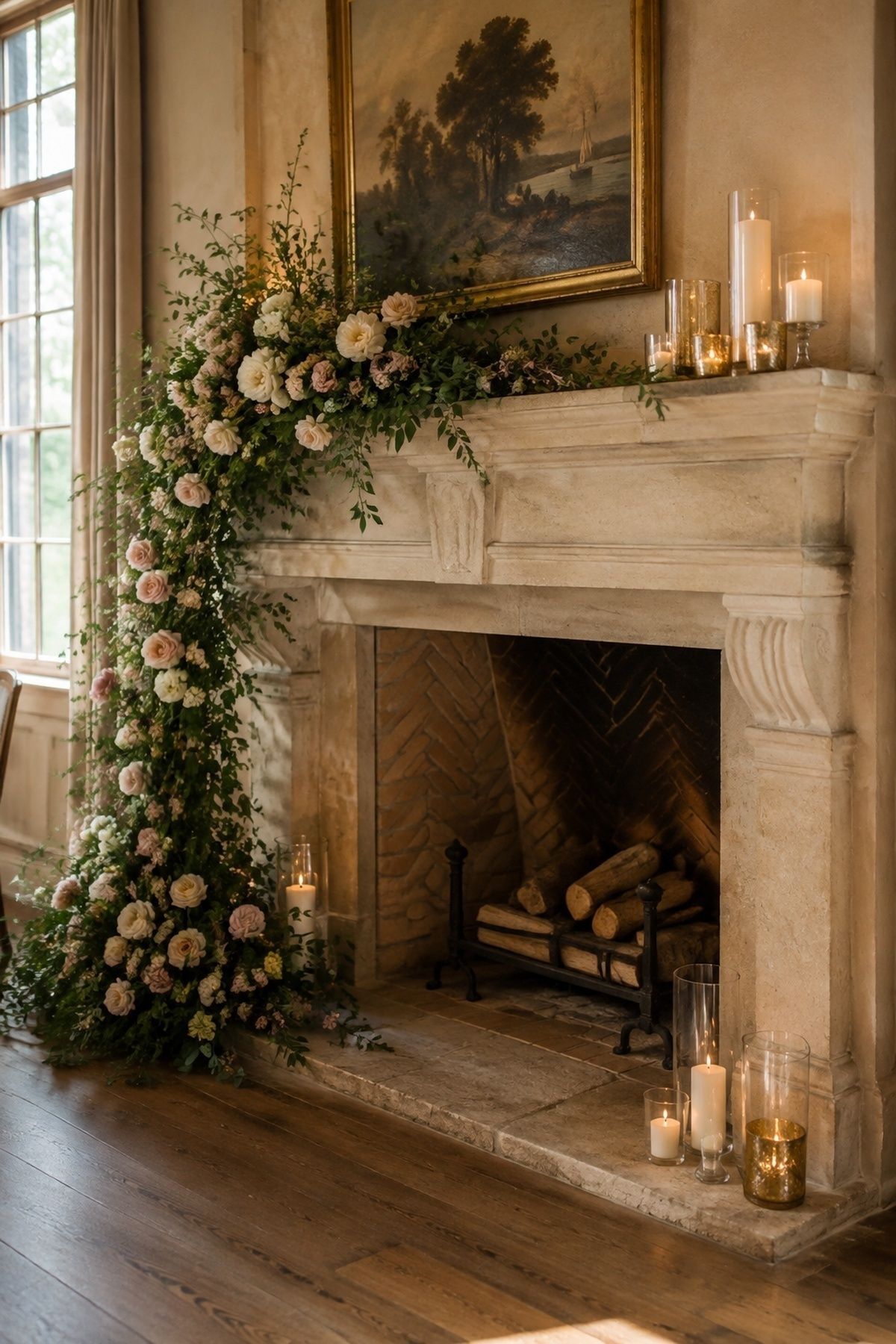
A fireplace can become the natural heart of an intimate wedding. Flowers along the mantel, at one lower corner, or spilling from floor arrangements can make vows, portraits, dinner speeches, or cake cutting feel anchored. The fireplace already gives the room architecture; the flowers only need to soften and celebrate it.
Confirm whether the fireplace will be lit, decorative, or completely off limits. Heat, soot, antique stone, hanging art, and rental restrictions all matter. If candles are nearby, leave more room than seems necessary. A beautiful mantel loses its charm quickly if petals wilt from heat or greenery sits too close to flame.
Low Grounded Aisle Meadow
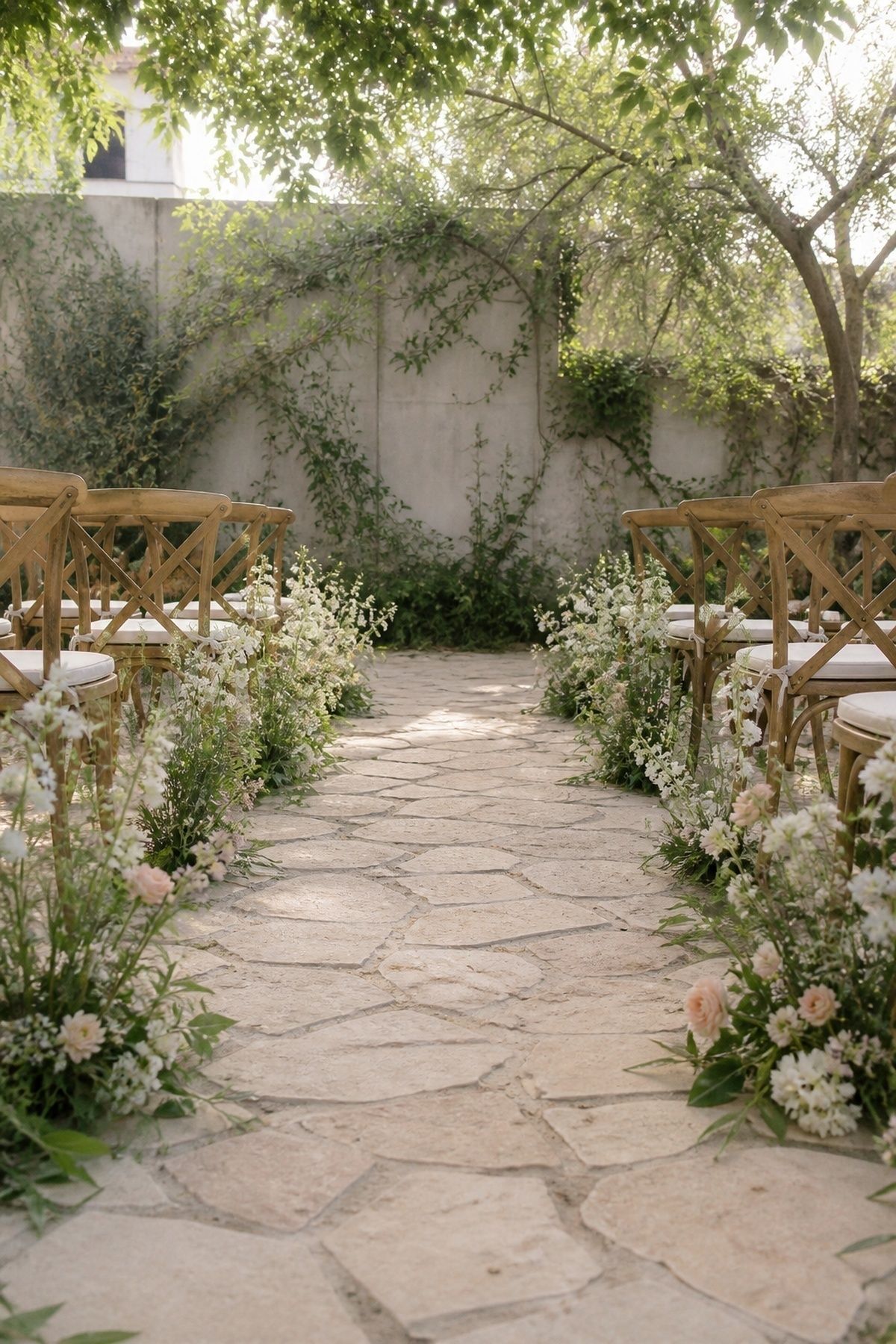
A low grounded aisle meadow creates the feeling of walking through flowers without building anything tall. It is especially good for garden ceremonies, courtyards, galleries, or rooms where an arch would feel too staged. The flowers sit close to the floor in broken clusters, so the aisle looks organic while guests can still see the couple clearly.
Keep the clusters outside the walking path and away from chair legs. Guests should not have to step over stems or wonder where to place their feet. After the ceremony, these pieces can move to the base of a sweetheart table, the bar front, a cake table, or a photo corner. This is one of the easiest ways to make ceremony flowers work harder without looking recycled.
Hanging Floral Moment Over One Table
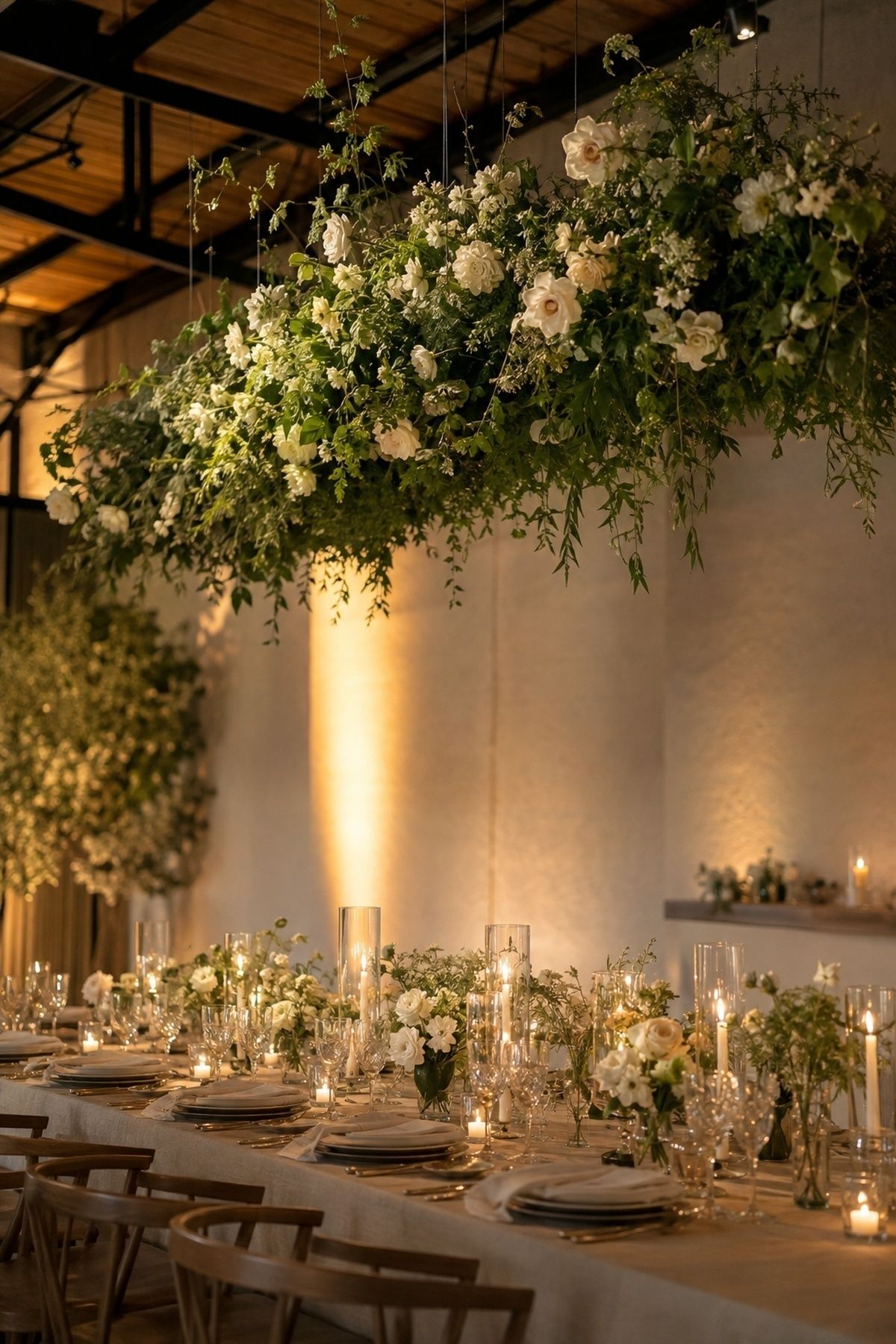
A hanging floral moment over one table can be breathtaking, but it belongs firmly in professional and venue-approved territory. Anything suspended above guests must be engineered, attached to approved rigging points, and designed with weight, water, heat, candles, and service clearance in mind. It should never be improvised from a ceiling, light fixture, sprinkler line, or old hook.
For a small wedding, limit the suspended moment to one table rather than the whole room. Keep it high enough that guests can see each other and servers can move comfortably, but low enough to feel connected to the table. If the venue says no hanging installations, accept that answer and create a low, lush table moment instead.
Sweetheart Table Floral Cloud
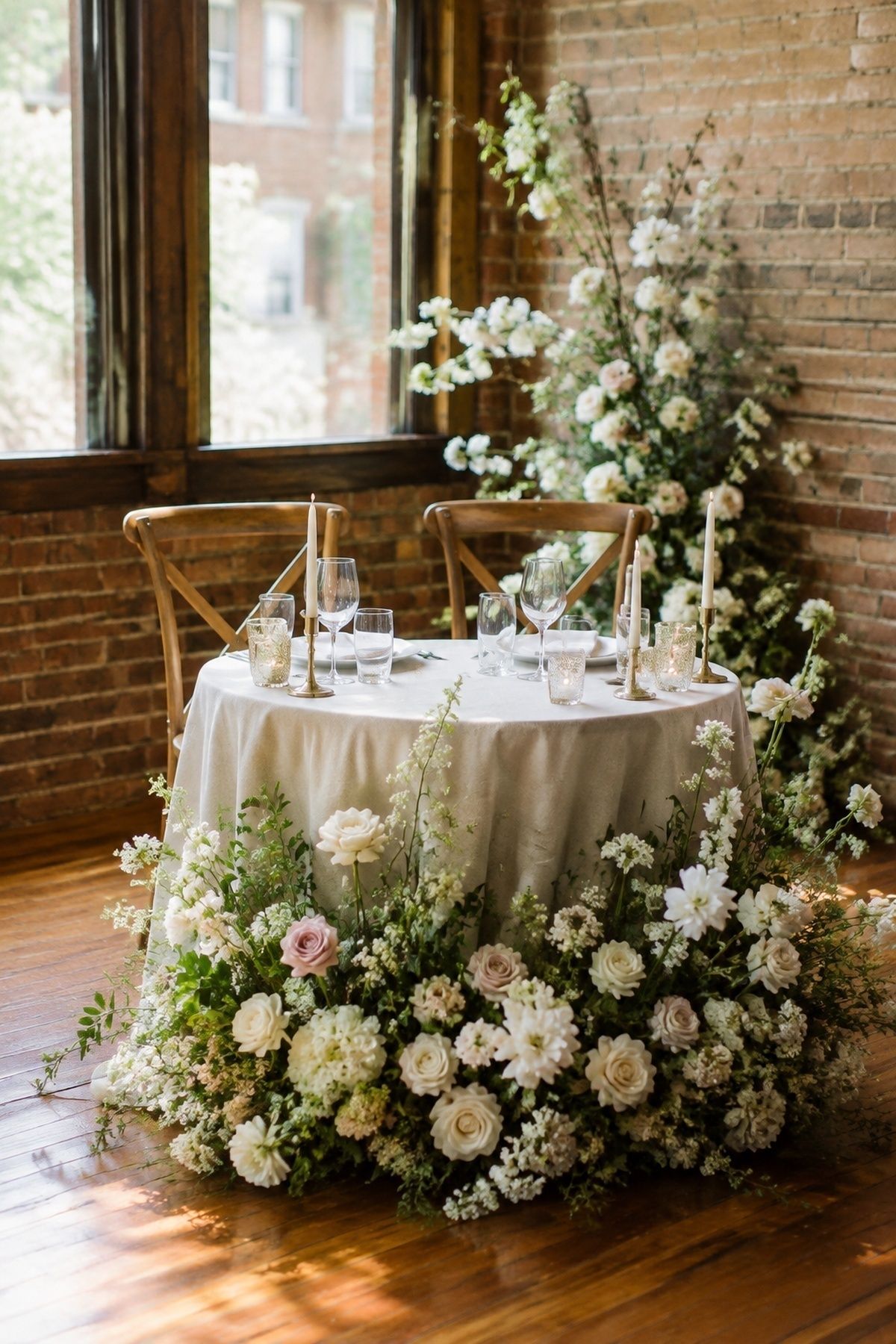
A sweetheart table floral cloud can be soft, romantic, and beautifully focused in photos. It might sit as a low arc at the table base, a floral shelf behind the chairs, or a light overhead design if the venue allows it. At an intimate reception, this is often a better investment than decorating every guest table heavily. If you want those flowers to move on screen, see these flower animation wedding video ideas.
The most important rule is visibility. Guests want to see the couple laugh, eat, toast, and react. Keep flowers below chin height when the couple is seated, or place the larger pieces behind and to the side. Plan the sweetheart table mechanics early if you want to repurpose ceremony flowers for the reception without a rushed room flip.
One Long Table Floral Runner
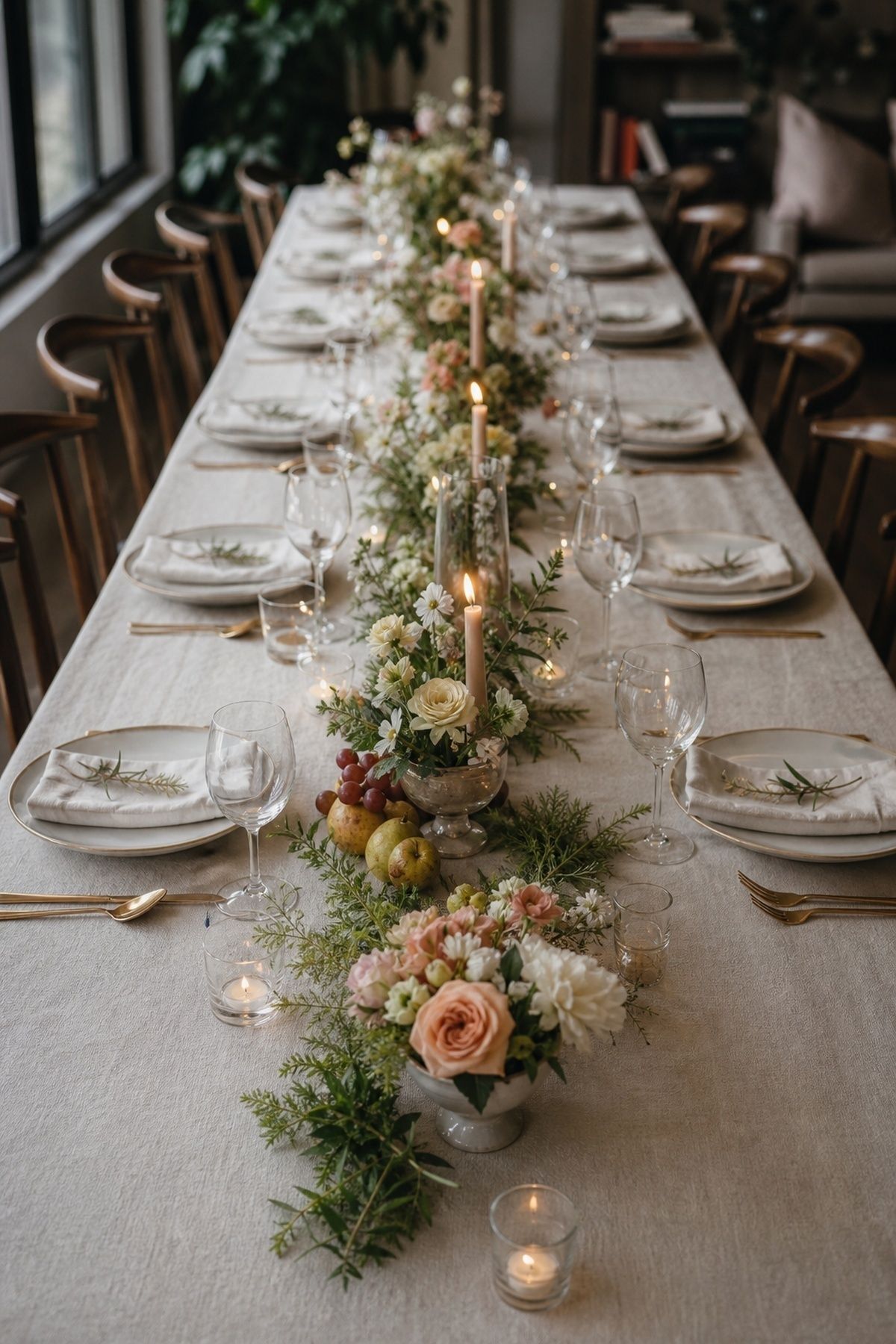
One long table is a gift to a small wedding. It lets everyone feel included, makes dinner look generous, and gives flowers a clear place to belong. A floral runner can be made from compote bowls, bud vases, low foam-free arrangements, fruit, herbs, taper candles, or clusters that leave breathing room between place settings.
Think low, layered, and service-friendly. Guests should be able to pass bread, reach wine, and speak across the table without leaning around roses. A wide runner may photograph well before dinner, but it can frustrate everyone once plates arrive. Leave room for serving pieces, candles, and glassware by treating the table decor as part of the meal experience, not a separate floral display.
Cake Table Flower Installation
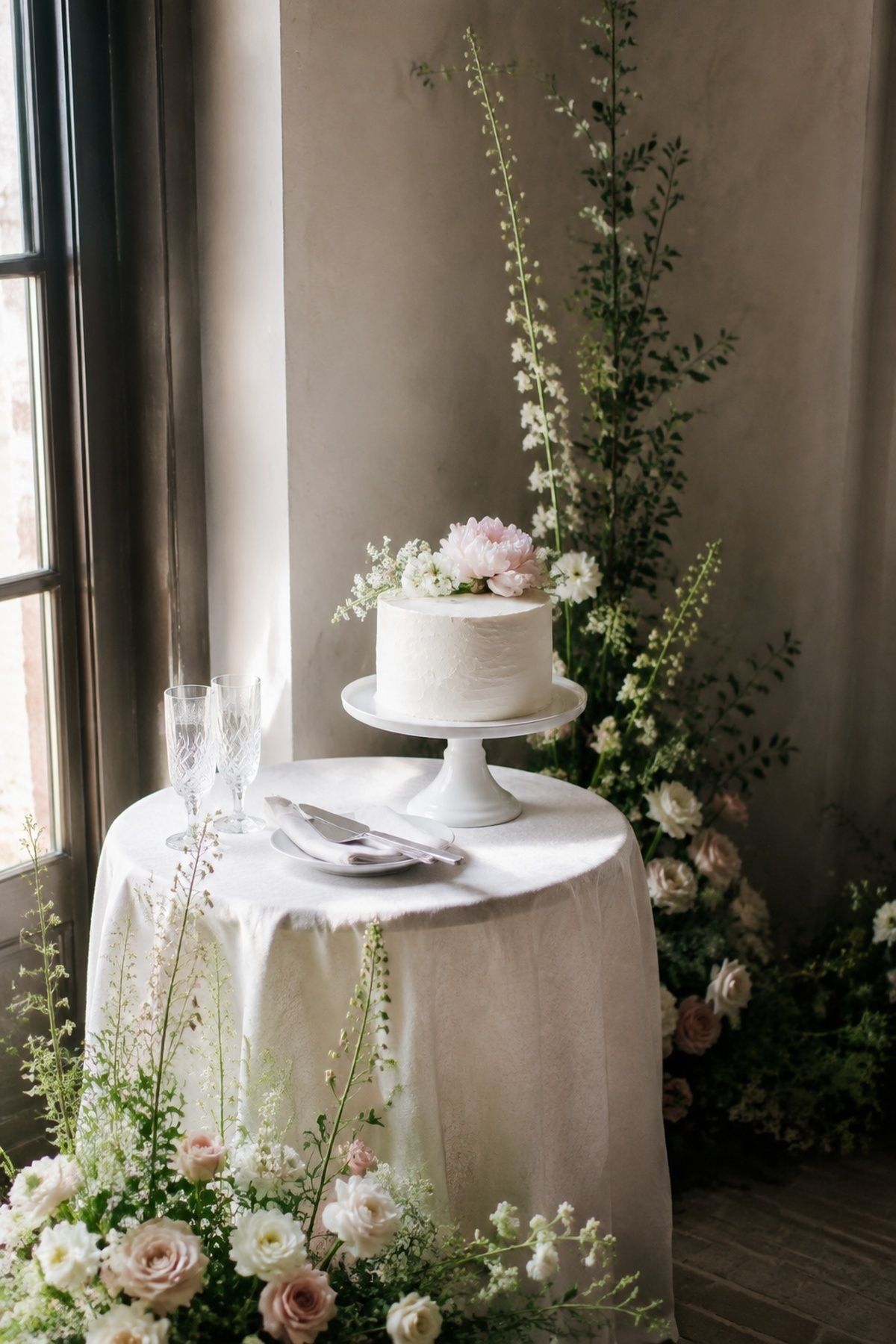
A cake table flower installation gives a small wedding a clear celebratory pause. Even a single-tier cake can feel special when it sits beside a grounded floral arrangement, a narrow backdrop, or a lush pedestal piece. This is a smart place to concentrate flowers if the ceremony and dinner tables are intentionally simple.
Keep blooms away from frosting unless they are food-safe and placed by someone who understands cake handling. Ask whether the cake will be cut on that table or moved to the kitchen first. The installation should frame the cake, not trap it behind flowers that staff need to dismantle before dessert.
Floral Photo Corner

A floral photo corner can replace a full photo booth when the guest list is small. Choose a corner with flattering light, enough distance for full-length portraits, and a background that already has character. Flowers can climb a narrow wall, sit in tall pedestals, or gather around a bench, mirror, or vintage chair.
This idea works especially well when the installation is useful before guests notice it as an activity. It can hold escort cards, frame a guest book, or sit near cocktail hour seating. Avoid placing it where people queue for restrooms, drinks, or the coat check, because a photo corner needs a little privacy to feel inviting.
Bar Or Welcome Table Flower Moment
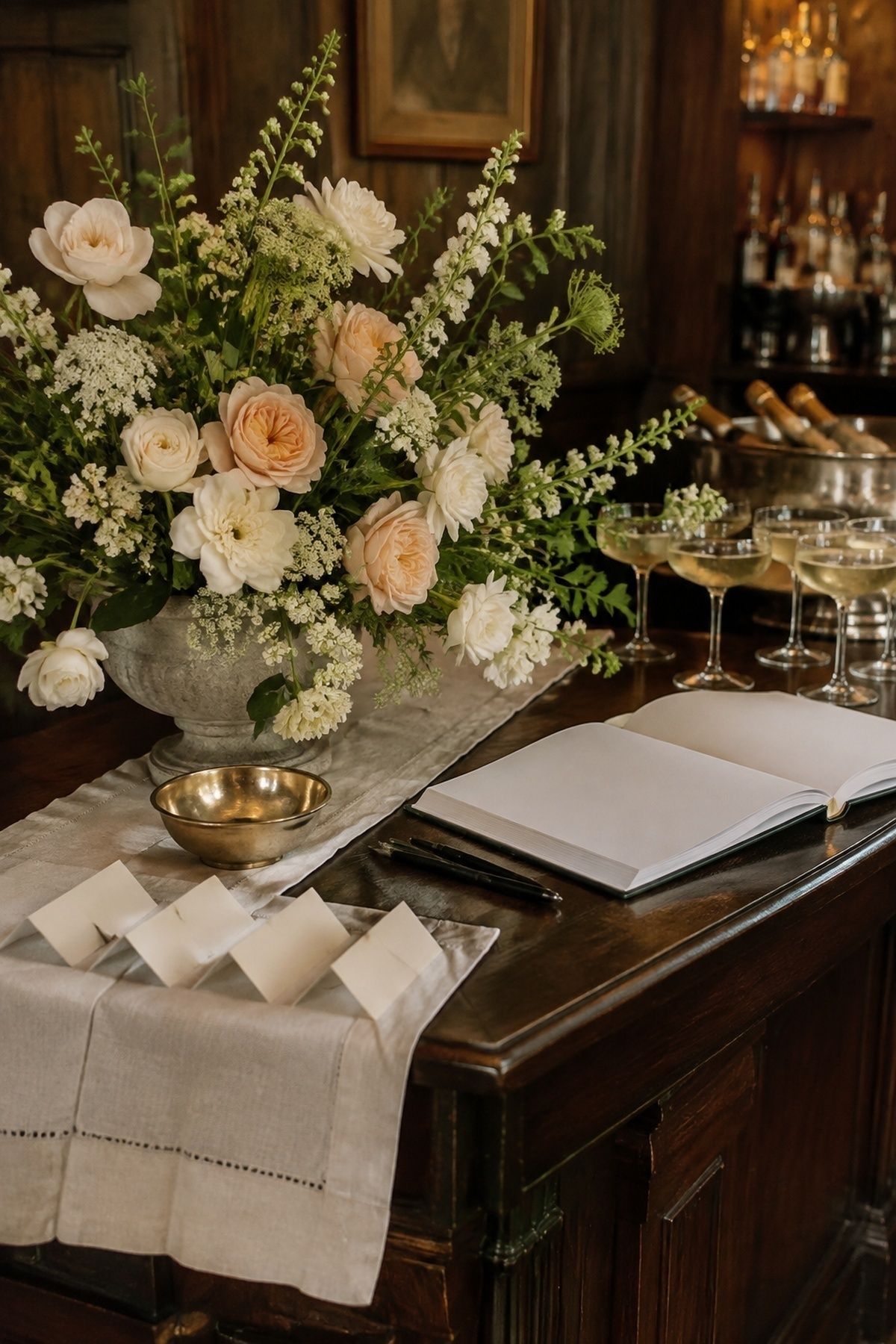
A bar or welcome table flower moment is perfect for couples who want impact without building a large installation. The bar already attracts guests, and the welcome table sets the tone before the ceremony begins. A concentrated floral piece here can make menus, escort cards, champagne coupes, or a guest book feel more intentional.
Keep the work surface clear. Bartenders need room for glassware, bottles, garnishes, and fast hands. Welcome tables need pens, cards, and a dry surface. In a small room, keep flower moments beside the functional surfaces of the reception rather than crowding the bar, welcome table, or guest flow.
Garden-Style Floral Chandelier Alternative
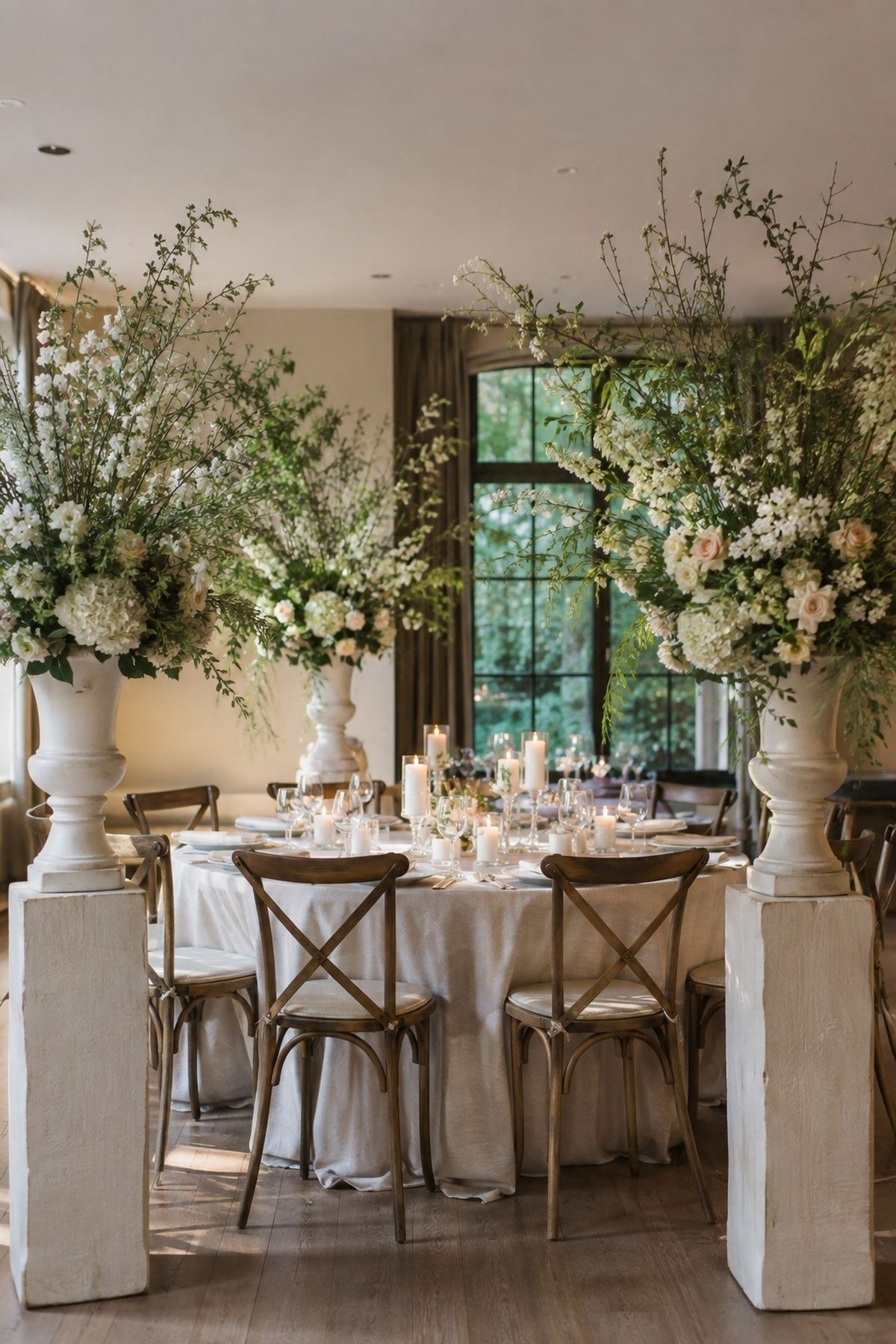
If you love the idea of flowers overhead but the venue cannot support a suspended installation, create the feeling with tall grounded arrangements instead. Four airy pedestals around a dinner table, two tall urns behind the couple, or climbing greenery on an approved freestanding frame can suggest a floral chandelier without attaching anything to the ceiling.
This alternative is often more comfortable for small weddings. Guests get height and atmosphere, but no one worries about what is above their plate. It also gives the florist more control over water sources, weight, and placement. The result can feel garden-like, romantic, and far less complicated.
Flower Installation With Drapery
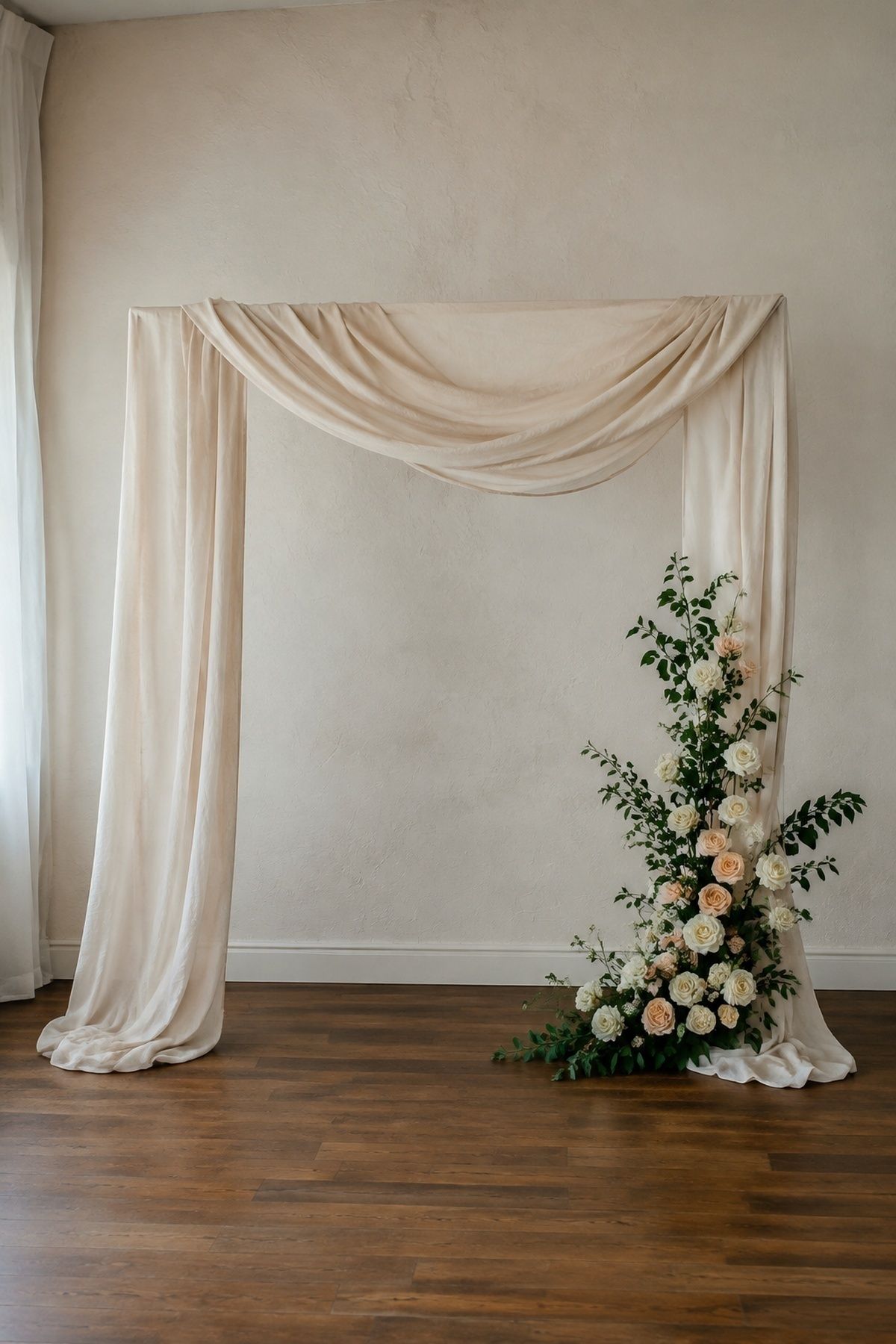
Drapery can stretch a floral budget because fabric creates softness and scale while flowers provide the detail. A small floral cluster on a draped ceremony frame, a doorway swag against linen, or flowers gathered where fabric meets the floor can feel more generous than flowers alone. The combination is especially useful in blank venues, private rooms, and spaces with hard walls.
Fabric needs the same practical review as flowers. It should not cover exits, vents, candles, sprinklers, or venue surfaces without approval. When the room needs softness more than volume, use fabric to give drapery backdrop wedding ideas a natural place for one floral cluster.
Seasonal Flower Installation

A seasonal installation usually feels more expensive than it is because the flowers look at home in the moment. Spring branches, summer garden roses, autumn grasses, winter evergreens, and local foliage can all carry a mood without requiring rare imported blooms. Seasonality also helps a small wedding feel connected to the place and time of year.
Ask the florist which flowers will be abundant, sturdy, and appropriate for the temperature. Fragile blooms may look beautiful in a proposal image and collapse in a warm dining room. Build outdoor floral plans around wind, bugs, shade, and refrigeration time before weaving them into the garden decor for the day.
Repurposed Ceremony Flowers At The Reception
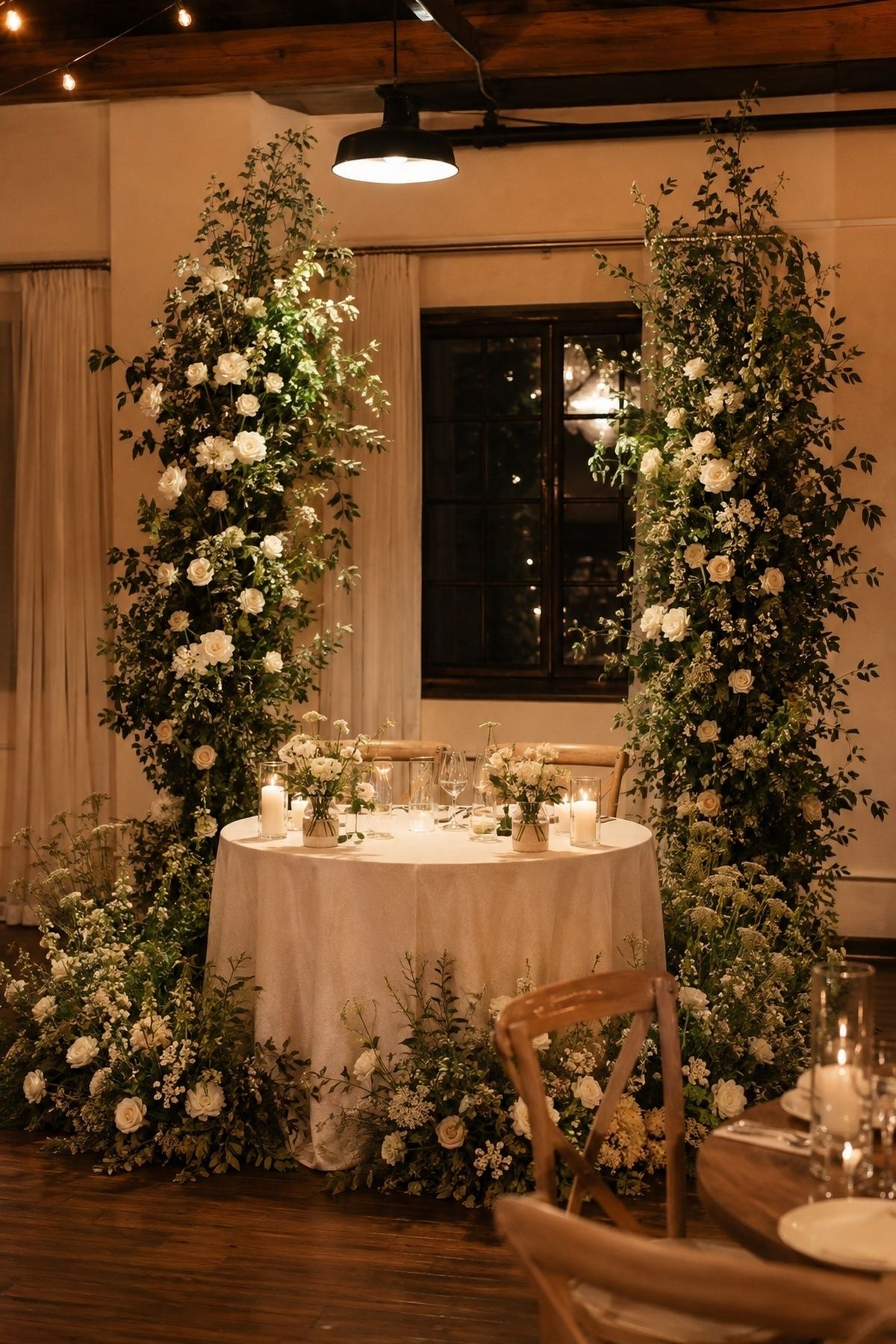
Repurposed ceremony flowers are often the smartest answer for a small wedding. Pillars can frame the sweetheart table. Aisle meadows can gather around the cake. Doorway pieces can become a photo corner. Pedestal arrangements can move behind a bar or beside a lounge. The key is designing them to move before the wedding day arrives.
Build the transfer into the timeline and assign a person who is not the couple. Ask how long the move will take, whether the pieces are too heavy for venue staff, and where they will sit during cocktail hour. Repurposing only saves money when it is planned; otherwise it can create a strange gap between ceremony and dinner.
Professional Setup, Safety, And Venue Rules
Any oversized, suspended, wall-mounted, doorway-mounted, or tall floral installation should be treated as professional-only. Flowers carry more weight than couples expect, especially when wet foam, vessels, cages, branches, water tubes, candles, wind, or guest movement are involved. A florist does more than arrange blooms; they protect the room, the guests, and the venue agreement.
Ask the venue what is allowed before inspiration becomes a plan. Some spaces prohibit ceiling attachments, open flame near greenery, nails, tape, command hooks, confetti-like petals, water on historic floors, or anything blocking exit paths. Outdoor venues may require wind-rated structures, weighted bases, or a rain backup. Put those limits in writing so the florist can design inside the real conditions.
Also consider teardown. A dramatic installation is not finished when the last photo is taken. Someone must remove mechanics, dispose of water, pack rental vessels, protect flooring, and clear the space within the contracted time. If the venue has a tight load-out window, choose a design that can come down cleanly.
Budget Choices That Make One Floral Moment Feel Worth It
The best budget move is not always choosing cheaper flowers. It is choosing fewer places for flowers to work harder. One generous focal point with restrained supporting pieces usually feels more luxurious than five thin arrangements scattered around the room. Put premium blooms where they will be seen closely, then use greenery, branches, seasonal filler, fabric, candles, and venue architecture for scale.
Decide what the installation must do before asking for a quote. If it needs to frame vows, prioritize height, shape, and stability. If it needs to make dinner feel intimate, prioritize low table pieces, candle spacing, and scent control. If it needs to create portraits, prioritize background, light, and body-height framing. Name the floral splurge early and protect it from smaller impulse purchases when planning a small wedding on a budget.
What To Ask Your Florist Before You Book
- Which installation location gives us the most visual return for our guest count and venue?
- Will the design block any faces, aisle views, service paths, doors, windows, or conversation across the table?
- What mechanics will hold the flowers, and are those mechanics allowed by the venue?
- Can the installation be moved, and what does that require for timing, staffing, and transport?
- Which flowers will stay fresh in the expected temperature, light, and timeline?
- What happens if wind, rain, heat, or a venue rule changes the original plan?
- Who handles setup, safety checks, repurposing, teardown, and rental returns?
A good florist will not be offended by practical questions. They will probably be relieved. The answers protect the design and the day itself, especially when the wedding is small enough that every blocked chair, awkward corner, or delayed room flip is noticeable.
What To Avoid With Flower Installations
Avoid installations that ask guests to admire flowers instead of enjoying the wedding. Tall centerpieces that interrupt conversation, aisle pieces that crowd the processional, doorway flowers that narrow the entrance, and ceiling designs that make dinner service nervous all work against the intimacy you are trying to create. Beauty should not make the room harder to use.
Also avoid copying a large wedding design into a small room without editing it. A ballroom-scale arch can overwhelm a restaurant ceremony. A full ceiling of blooms can feel heavy above one table. A dense photo wall can make portraits look less personal than a simple floral corner with good light. The smaller the wedding, the more every design choice needs a reason.
FAQ
What Is A Wedding Flower Installation?
A wedding flower installation is a larger floral design built for a specific place, such as an arch, doorway, fireplace, ceiling area, table, wall, or ceremony aisle. It usually has hidden mechanics, structure, water sources, or weighted bases that help the flowers hold their shape throughout the event.
Are Flower Installations Worth It For A Small Wedding?
Flower installations can be worth it for a small wedding when one floral moment supports the ceremony, improves the reception setting, and appears in many photos. They are less worthwhile when they block guest comfort, cannot be reused, or consume the budget without changing the actual experience of the day.
Where Should You Put A Flower Installation At A Wedding?
The best places for a flower installation are ceremony focal points, one long dinner table, a sweetheart table, a cake table, a fireplace, a doorway, a private dining wall, or a compact photo corner. Choose the place guests will see naturally and the photographer will use often.
How Do You Make A Flower Installation Work On A Smaller Budget?
Make a flower installation work on a smaller budget by choosing one focal point, using seasonal flowers, adding greenery or fabric for scale, and designing the piece so it can move from ceremony to reception. Concentrated flowers usually feel more refined than spreading the same budget thinly across the whole venue.
Can Ceremony Flower Installations Be Reused At The Reception?
Yes, ceremony flower installations can often be reused at the reception if the florist designs them in movable sections and the timeline includes a clear transfer plan. Pillars, aisle meadows, pedestal arrangements, and some freestanding arches are usually easier to repurpose than heavy or attached designs.
What Should You Ask A Florist Before Booking A Hanging Flower Installation?
Before booking a hanging flower installation, ask whether the venue allows suspended decor, what approved rigging points will be used, how much the design will weigh, who installs it, who inspects it, and how it will be removed. Hanging flowers should always be professionally built and venue-approved.
Final Thoughts
Flower installations wedding decor ideas feel most powerful when they are chosen with restraint: one place, one purpose, one beautiful reason for existing. Let the flowers frame the part of the day that matters most, leave guests room to move and talk, and build every ambitious idea around professional mechanics, venue approval, and a clear plan for what happens after the photo is taken. For couples drawn to celebrations that feel personal, sensory, and deeply considered, flower-filled wedding details with a lasting sense of occasion can become the quiet signature of the whole day.
Last update on 2026-10-03 / Affiliate links / Images from Amazon Product Advertising API