

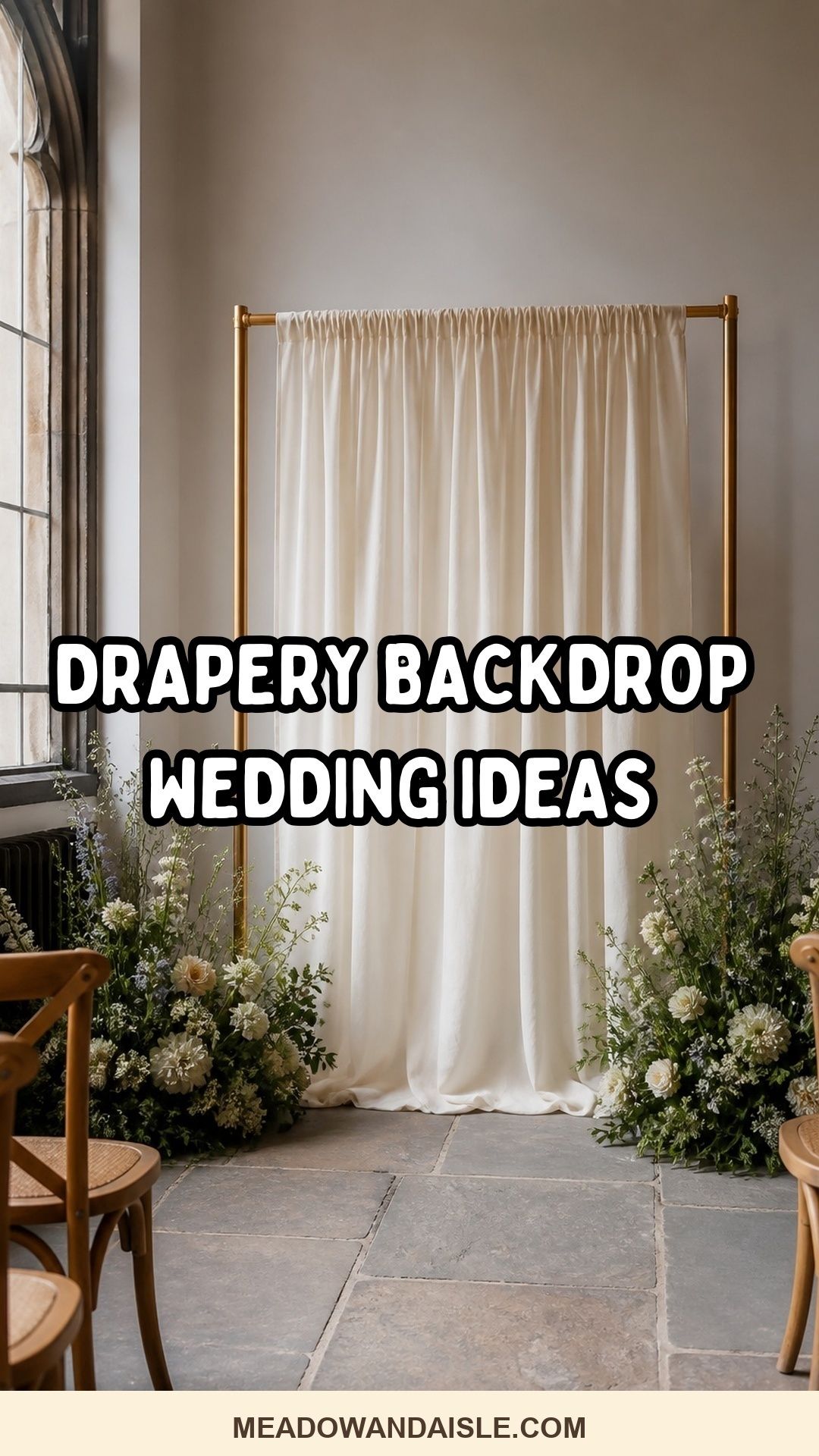
Drapery backdrop wedding ideas work best when the fabric frames the couple, softens the setting, and fits the room’s real scale. For a small wedding, choose one intentional fabric moment with safe support, clean sightlines, and enough texture to make the ceremony feel held without overwhelming the space.
If you love the romance of gathered fabric but worry it might look like a rental stage wall, the right proportions make all the difference. A drapery backdrop can hide an awkward corner, warm up a plain private dining room, turn vows into a photo-worthy focal point, or move into the reception as a sweetheart-table feature. The decisions that matter most are simple but important: where it sits, how heavy the fabric is, what color it brings into the room, how it is anchored, and whether flowers or candlelight are allowed close by.
Recommended Wedding Products


You Might Also Like These Blog Posts
- Book Wall Wedding Backdrop Ideas For Couples With A Story
- Drape Veil Wedding Ideas With Soft Ceremony Drama
- Raspberry Wedding Ideas With A Bright Little Heartbeat
- Flower Installations Wedding Decor Ideas That Earn Their Moment
- February Wedding Tablescape Ideas With Soft Romantic Glow
- Stained Glass Wedding Arch Ideas For A Ceremony That Glows
Drapery Backdrop Wedding Ideas With Soft Romantic Drama
The loveliest fabric wedding backdrop ideas are not always the largest ones. In a close guest list, guests see the folds, the clips, the flowers, the chair rows, and the way the fabric behaves in real light. That intimacy is an advantage. Instead of building a huge wall, you can choose a drapery moment that feels close, romantic, and designed for the exact room you have.
Before choosing a style, stand where your guests will sit and where your photographer will shoot. A backdrop that looks dreamy in a phone mockup may feel too wide behind ten chairs, while a single softened panel might make a tiny ceremony corner feel complete. Build the backdrop into your ceremony decor by letting it frame the vows first and decorate the room second.
Single Soft Panel Behind The Vows
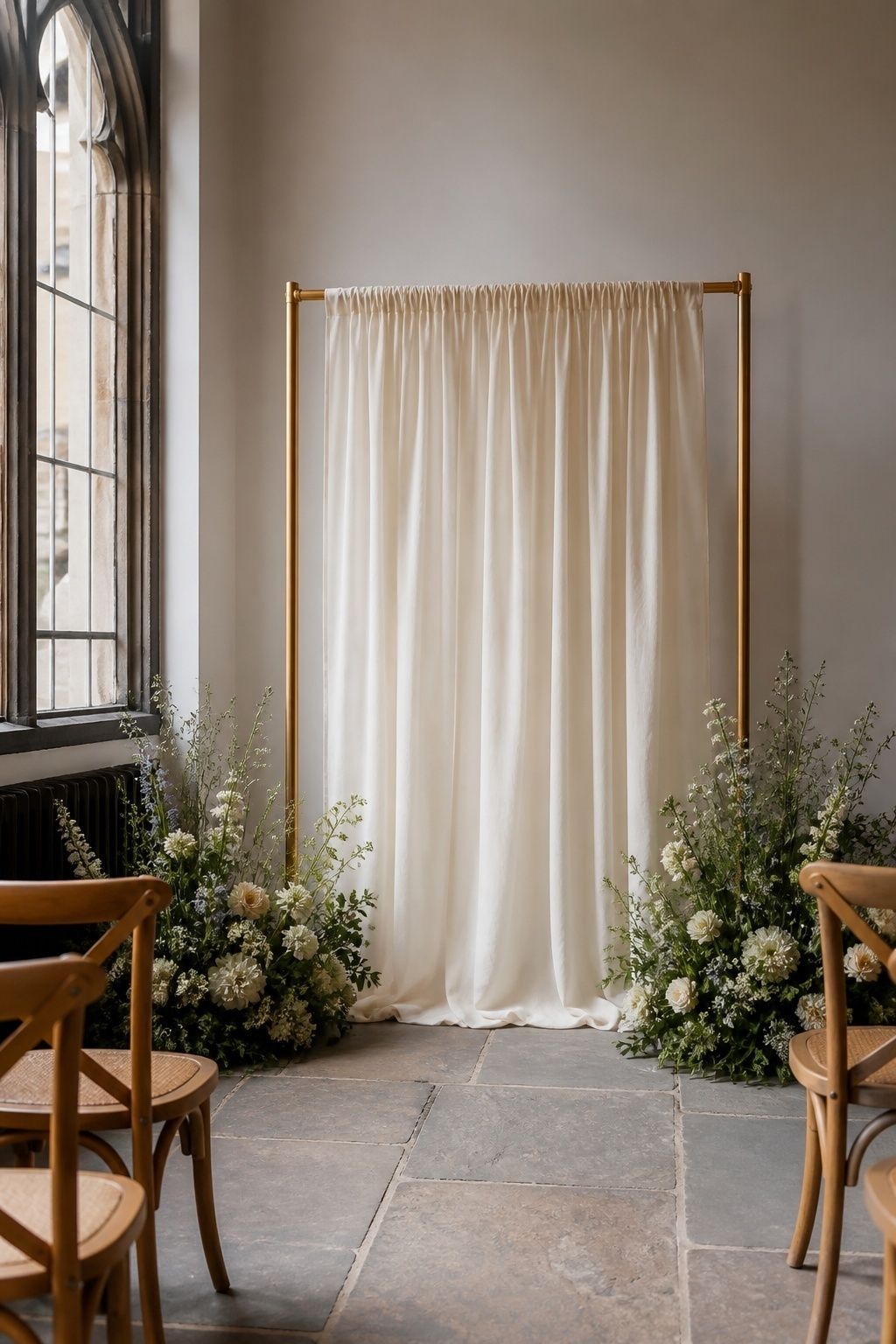
One generous panel is often enough for a small wedding ceremony backdrop. Hang it from a simple frame or existing safe structure, let it fall in relaxed vertical folds, and keep the width just beyond the couple’s shoulders or altar table. This gives photos a finished center without blocking the venue’s character.
Layered Sheer And Opaque Fabric Backdrop
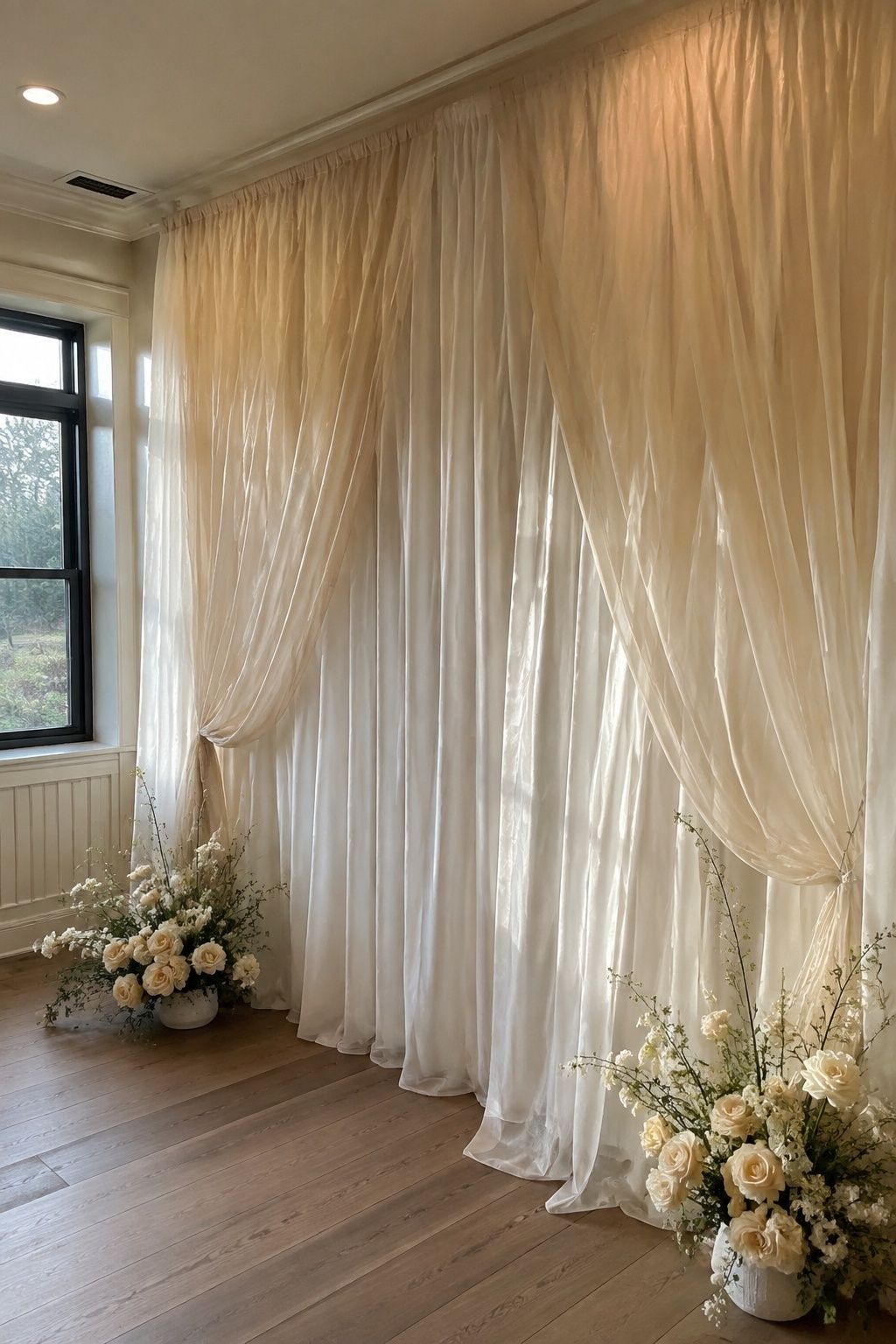
A layered drapery wedding backdrop works beautifully when you need to hide a plain wall. Use an opaque base for coverage, then add chiffon or gauze in front so the surface feels softer on camera. Keep the layers in related tones, such as ivory with champagne or pale blush with warm white, so the result feels dimensional rather than busy.
Draped Arch With Loose Side Tails
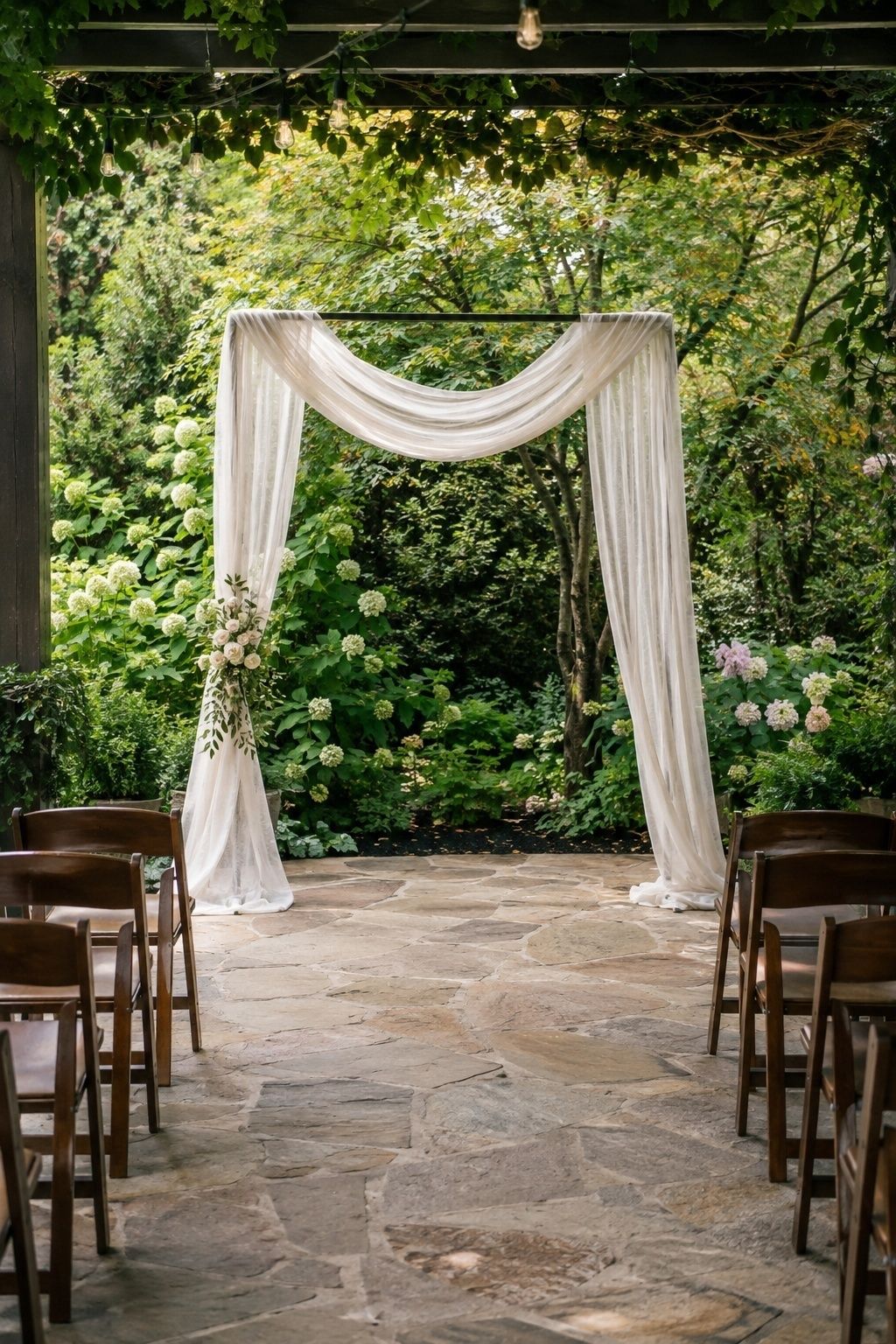
Wedding arch draping ideas are strongest when the fabric respects the structure underneath. Let the arch, doorway, pergola, mantel, or restaurant alcove stay visible, then gather fabric at the upper corners and allow loose tails to fall naturally. The look feels romantic without turning every line into fabric.
Velvet Backdrop For An Evening Ceremony
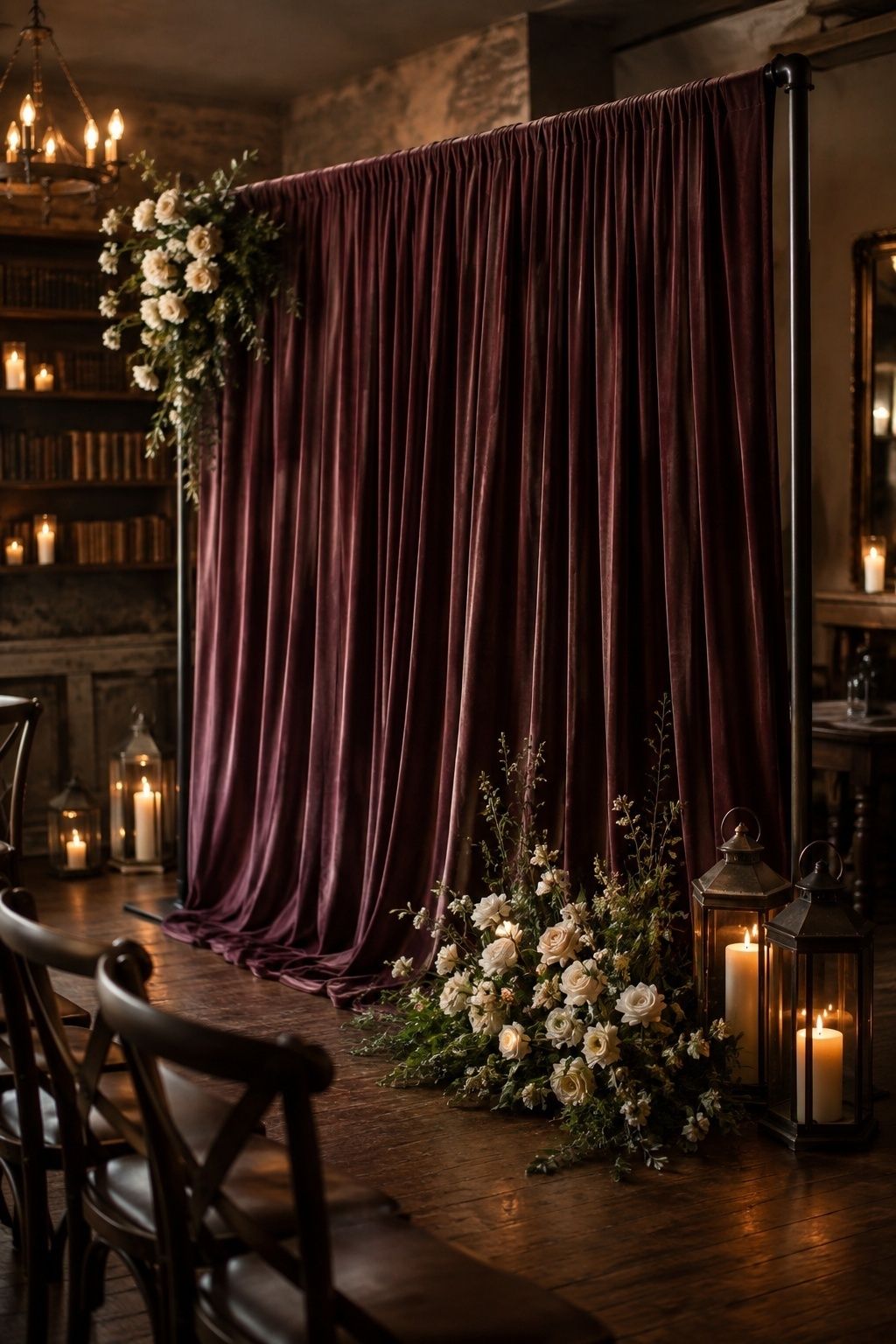
Velvet wedding draping gives an evening ceremony a richer, quieter mood. It suits winter weddings, candlelit restaurants, libraries, music rooms, and moody indoor spaces where movement matters less than depth. Because velvet is heavier than chiffon, keep the support professional or very secure, and use it where wind will not fight the fabric.
Chiffon Backdrop For A Garden Or Patio Wedding
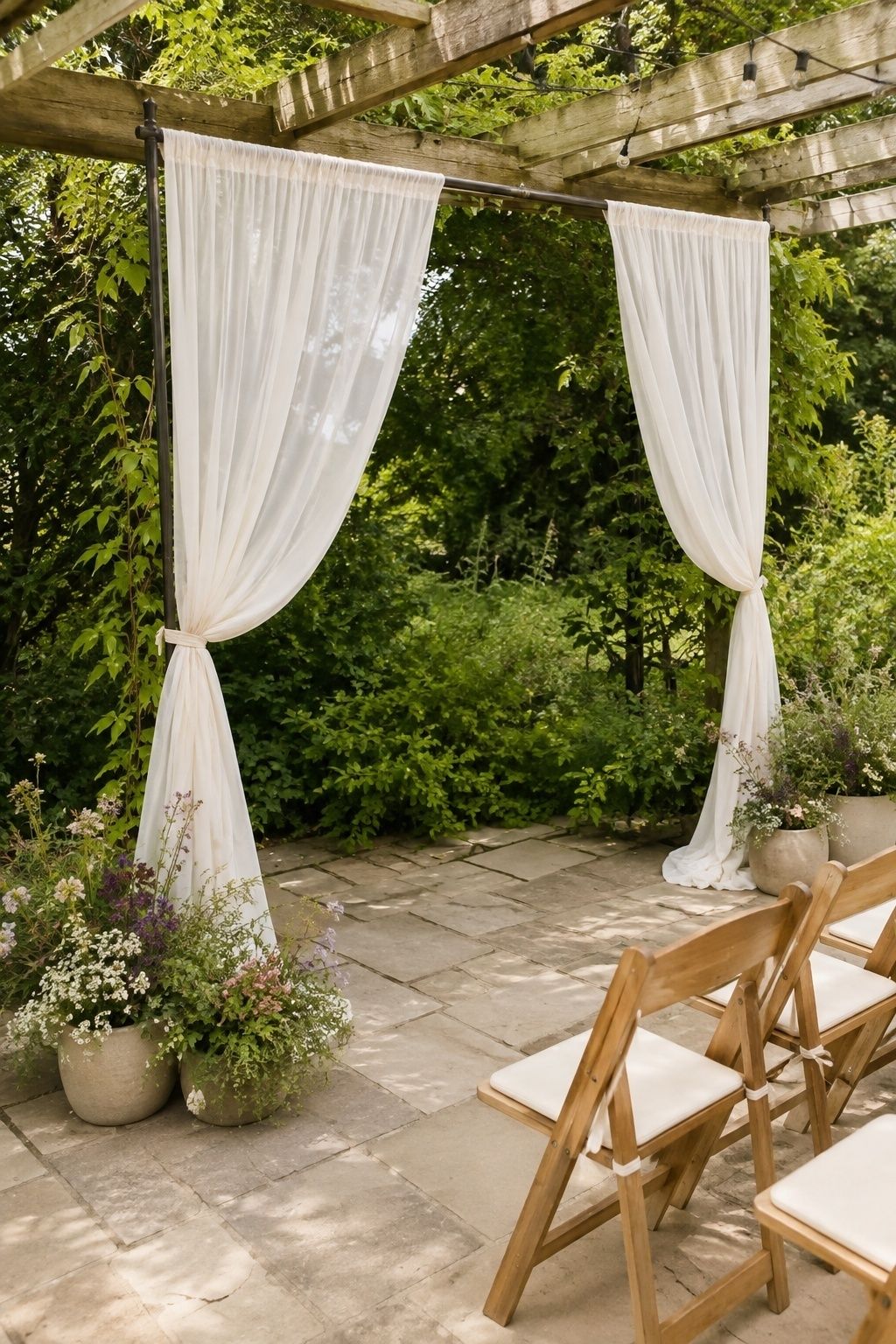
A chiffon wedding backdrop feels light, airy, and graceful outdoors, especially when the ceremony is on a patio, lawn, terrace, or garden path. The softness is lovely, but the setup needs weighted bases and wind-aware placement. If the fabric keeps twisting in a breeze, move it to a sheltered wall or use shorter side swags instead of long loose panels.
Linen Drapery For A Natural Small Wedding
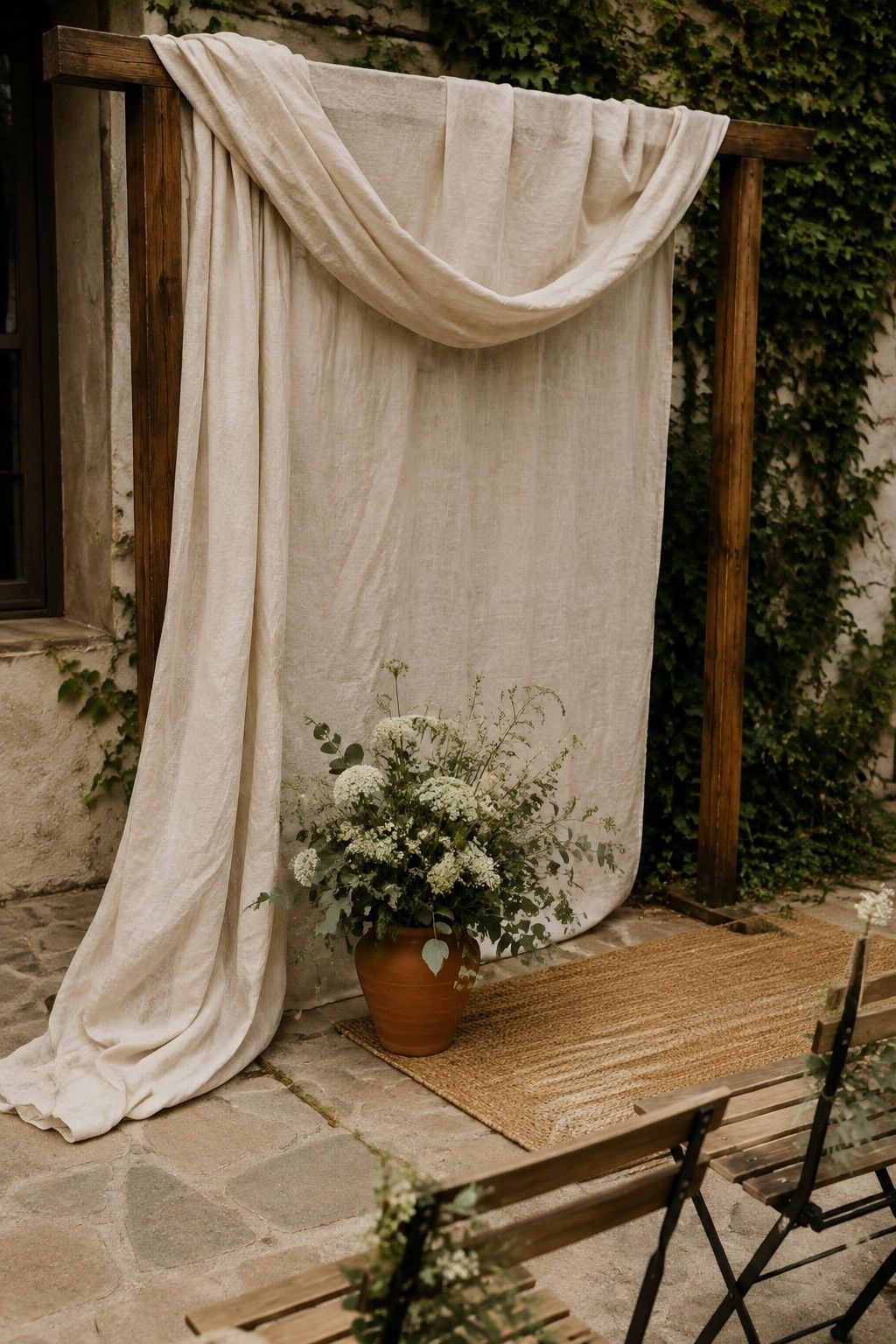
Linen, gauze, and cotton-look panels are ideal when you want texture without shine. They suit garden dinners, barn ceremonies, homes, courtyards, and relaxed restaurant weddings. The folds look a little imperfect in the best way, which makes them especially good for intimate rooms where high-gloss satin might feel too formal.
Drapery Behind The Sweetheart Table
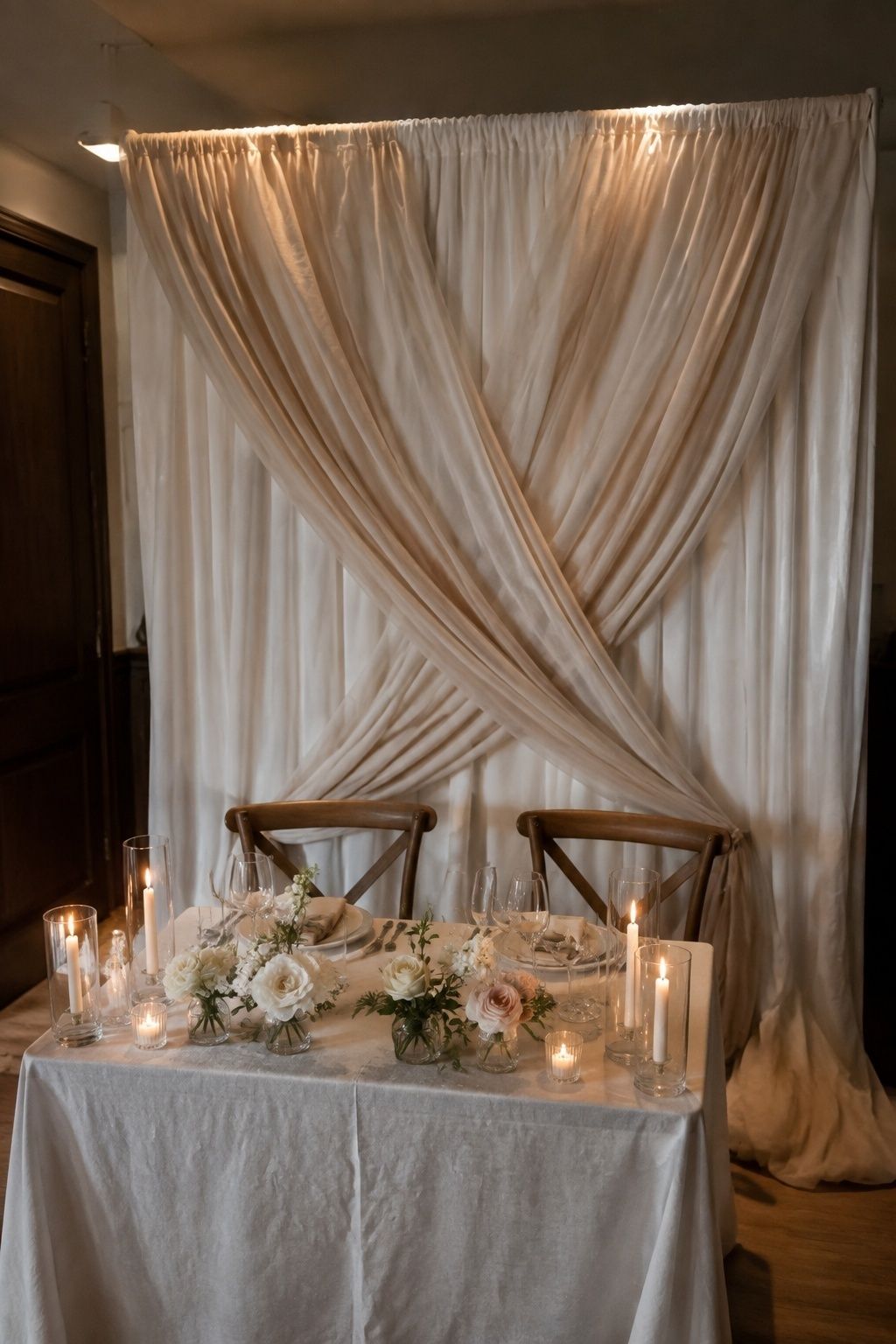
A reception drapery backdrop can create a clear focal point in a tiny dinner room. Place it behind the couple’s table, then keep the table design lower so the fabric, faces, candles, and flowers work together. At dinner, fold the fabric into your reception decor so the couple’s table feels ceremonial without adding a separate stage.
Draped Photo Corner For A Close Guest List
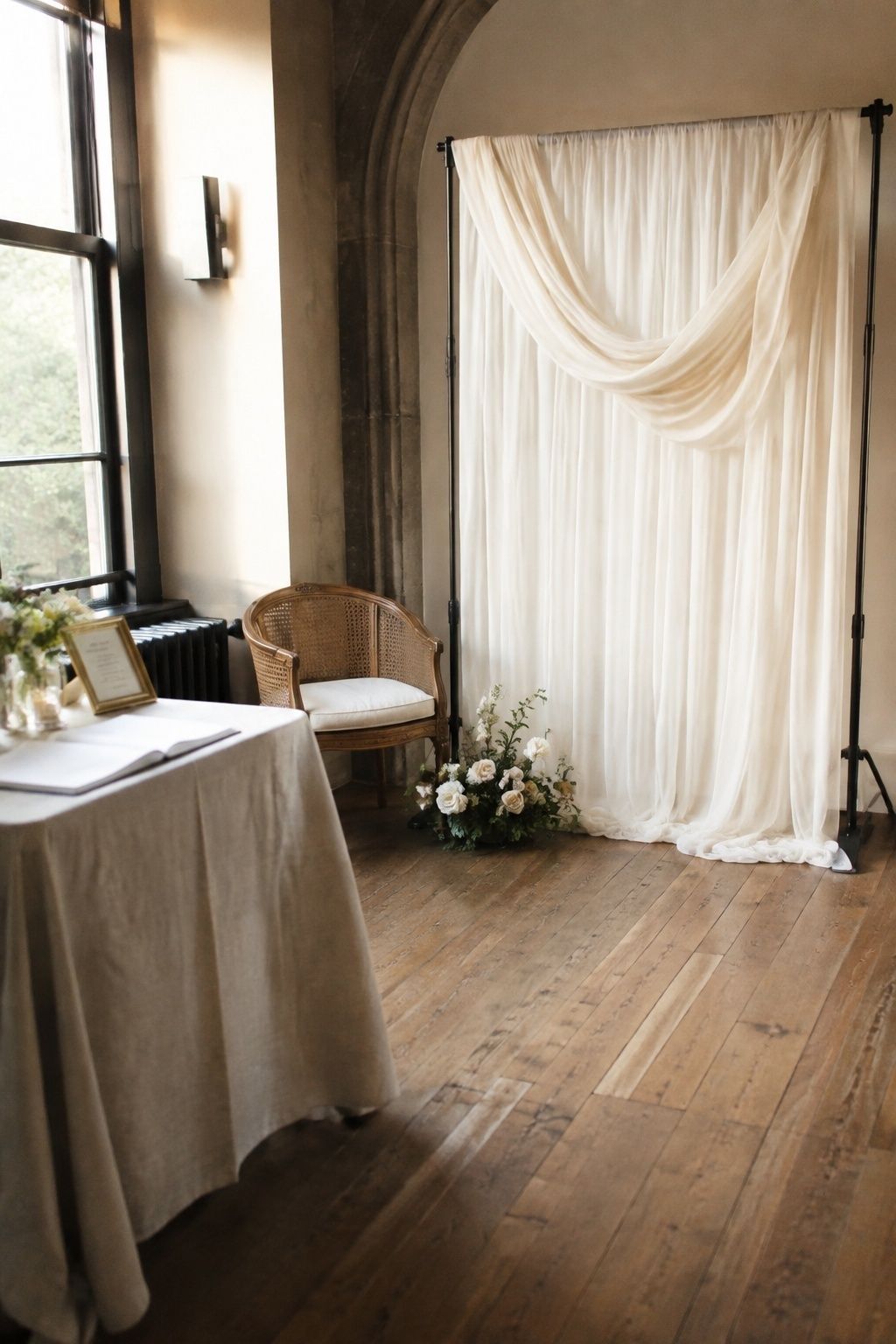
If you do not want a full photo booth, create a small wedding photo backdrop fabric corner near cocktail hour or the guest book. A narrow panel, a chair or settee, and a low arrangement can be enough. Keep it near natural light if possible, and leave room for two or three people to stand comfortably without stepping into traffic.
Fabric Backdrop With Low Flowers
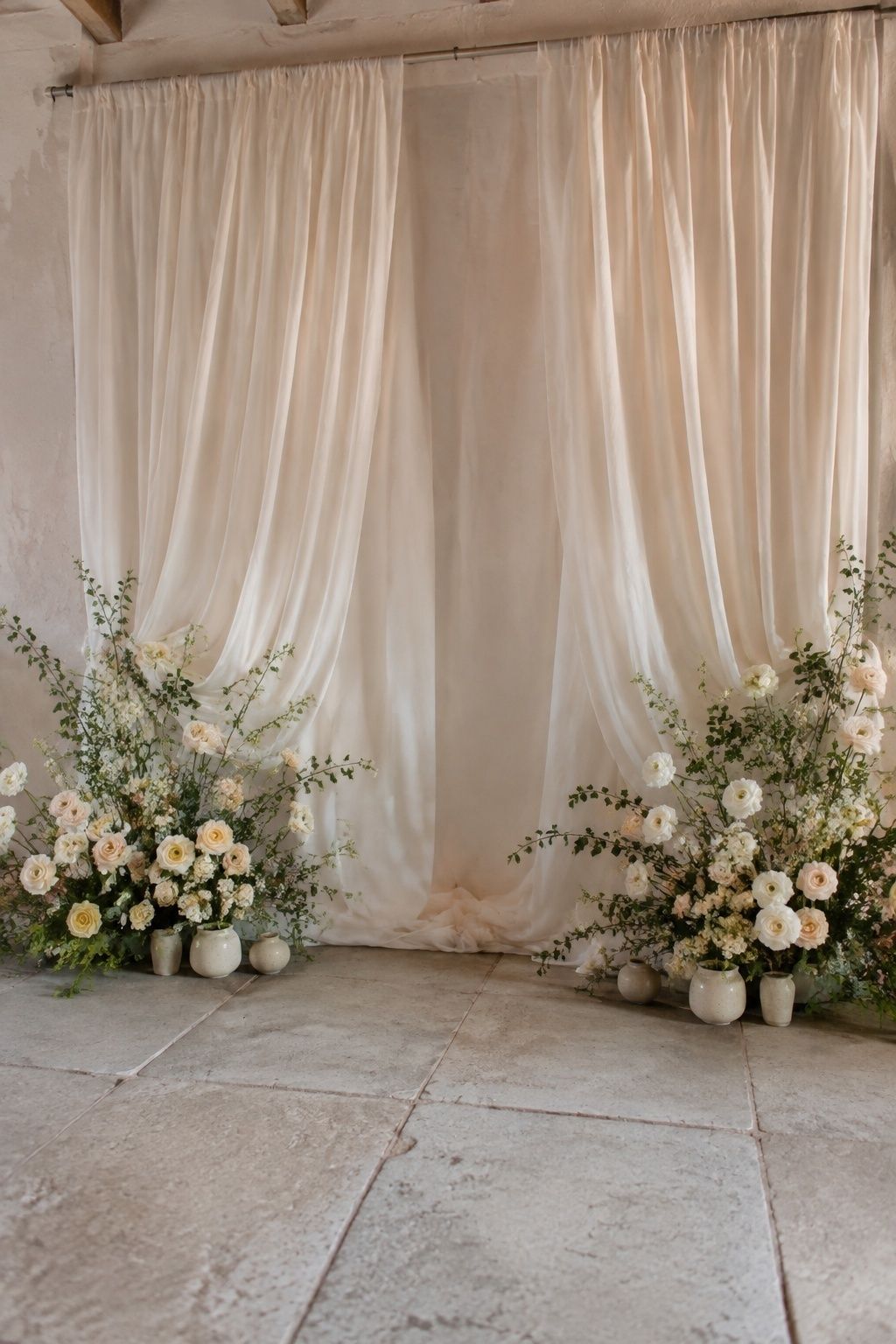
Flowers should enhance the drapery, not hide the couple. Low clusters, asymmetric ground arrangements, or small vessels at the base let the fabric do the softening while the flowers bring scent and shape. If the room already has color, keep the florals low and restrained so the backdrop still feels airy.
Candlelit Drapery Backdrop
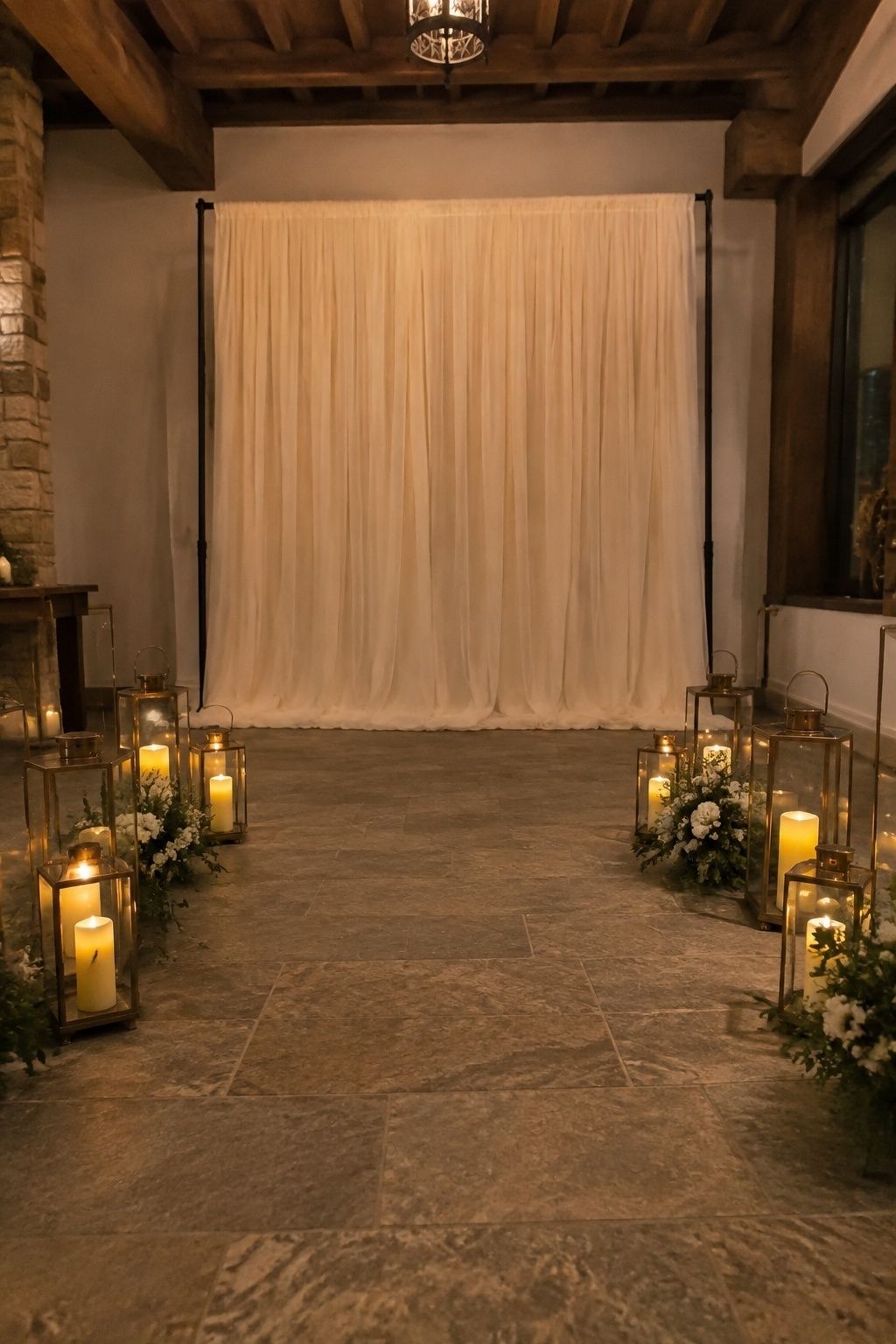
Candlelight in front of fabric is beautiful only when safety leads the design. Use sturdy holders, keep open flames far from any drape, and check venue rules before buying anything. Flameless pillars, lanterns, and enclosed votives create the same glow with less stress, especially in small rooms where guests pass close to the backdrop.
Messy Coquette Drapery With Lace Details

Messy coquette wedding decor is prettiest when it feels collected, not chaotic. Add lace edges, soft bows, gathered fabric, vintage texture, or loosened folds, then stop before every surface becomes styled. A single lace-trimmed panel or bow-tied side gather can nod to the trend while still feeling elegant enough for vows.
Colored Drapery Instead Of All White
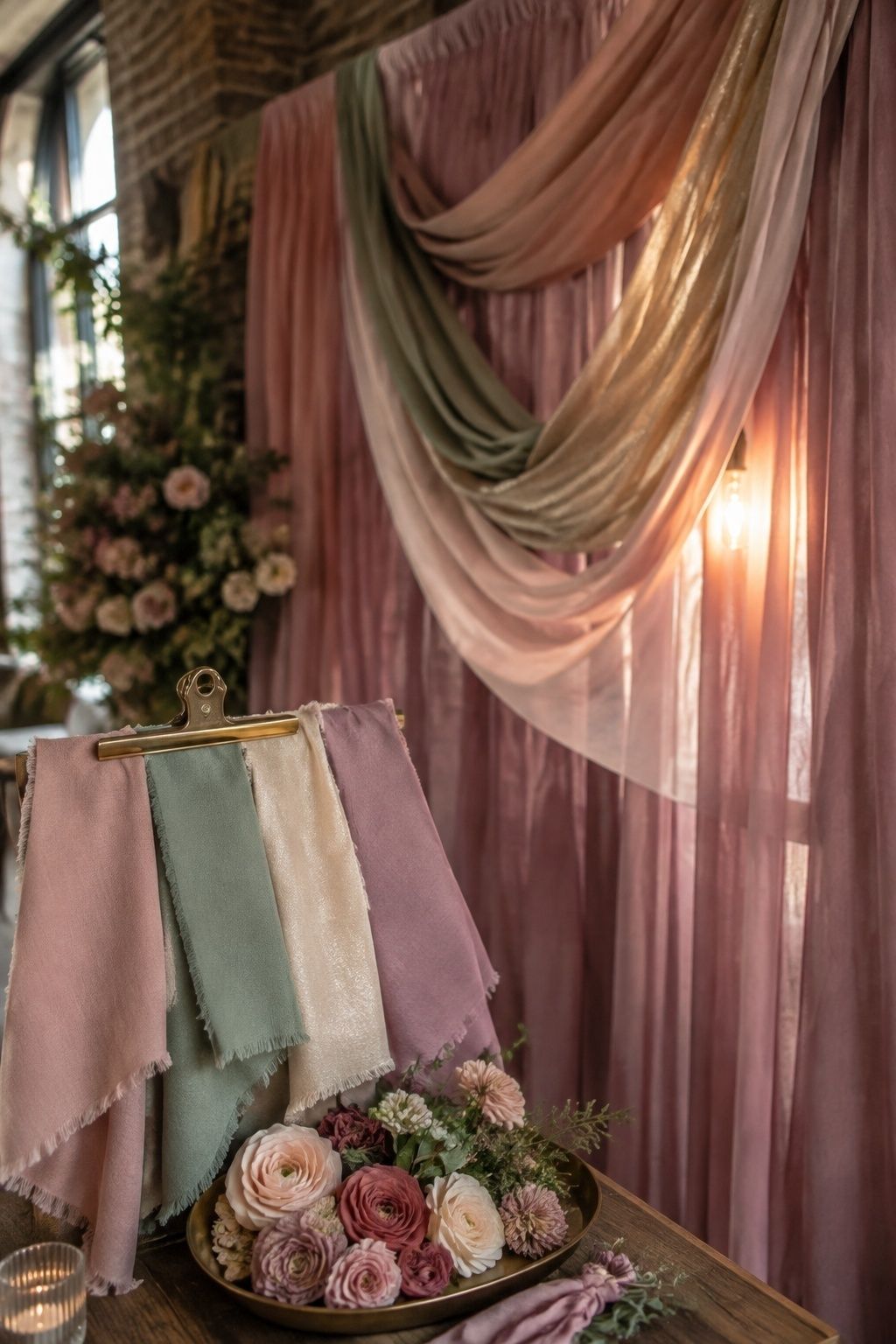
White is not the only romantic choice. Champagne warms candlelit rooms, dusty rose flatters garden florals, sage sits quietly with greenery, mauve feels refined, and deep berry or mocha can make an evening reception feel lush. Test a fabric swatch in the actual venue light if you can; drapery changes dramatically between daylight and amber bulbs.
Drapery To Hide A Plain Wall Or Awkward Feature
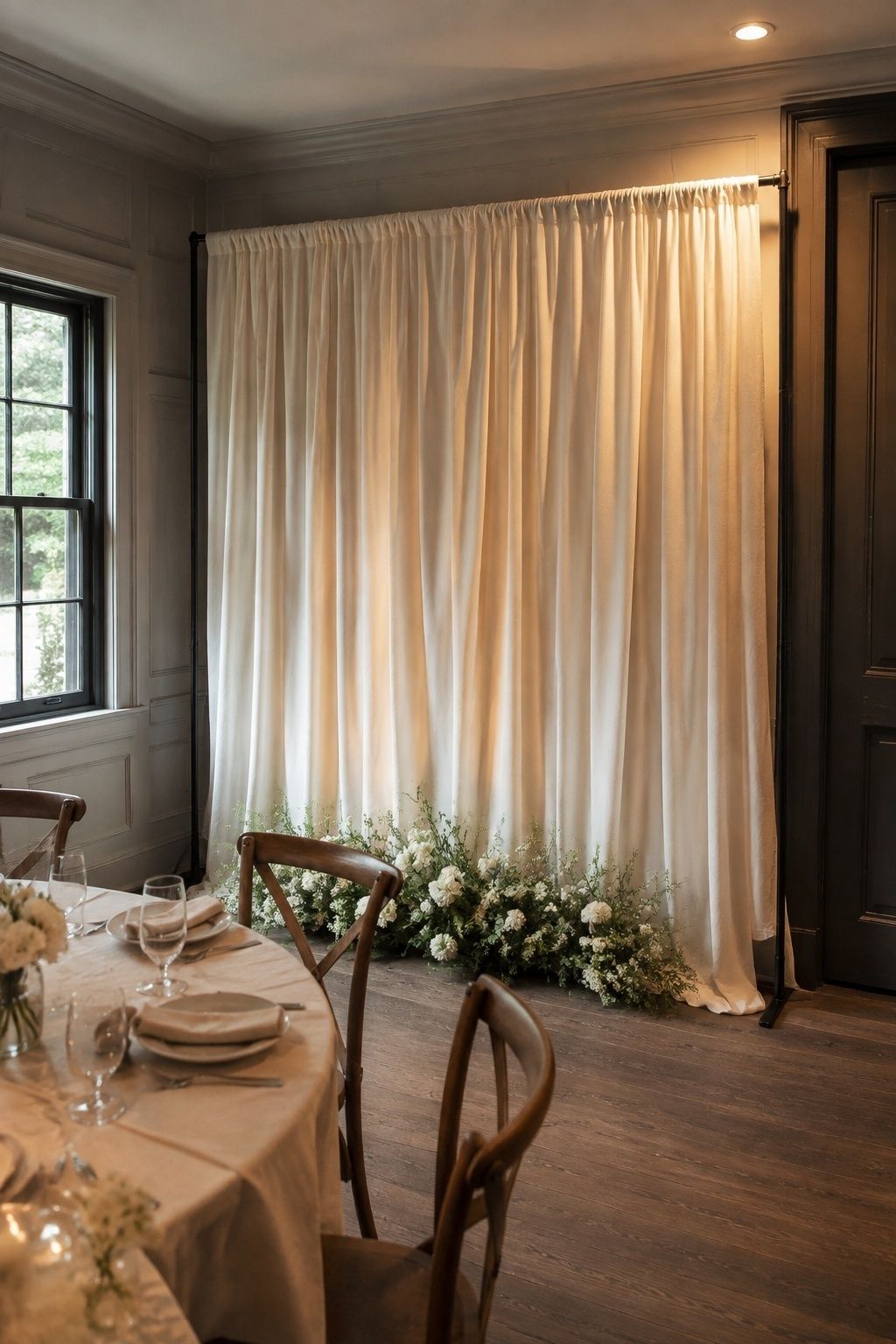
Wedding backdrop ideas for small venues often begin with something unromantic: a blank wall, exit sign, glass partition, rental-hall corner, or private dining room paneling. Fabric can soften those features without pretending the room is something else. Measure the exact area you need to cover, then let the rest of the venue stay honest and visible.
Ceremony Backdrop That Moves To The Cake Table
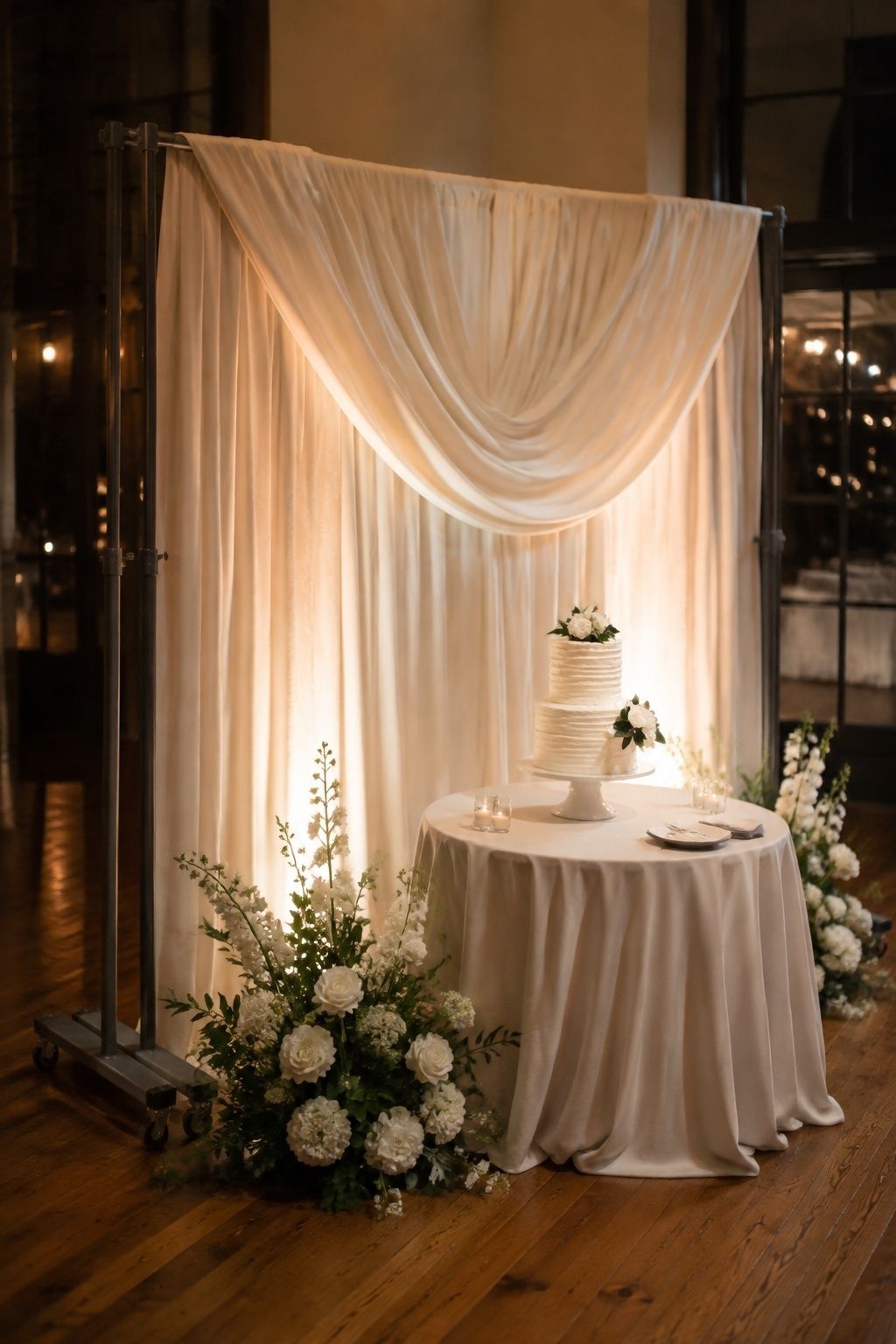
If your venue allows it, design a freestanding ceremony backdrop that can move after portraits. It might reset behind the cake, dessert table, guest book, or a final toast. Keep the build light enough to relocate safely, and assign the move to a planner, florist, or venue team member rather than a guest in formal clothes.
Minimal Drapery For A View You Do Not Want To Cover
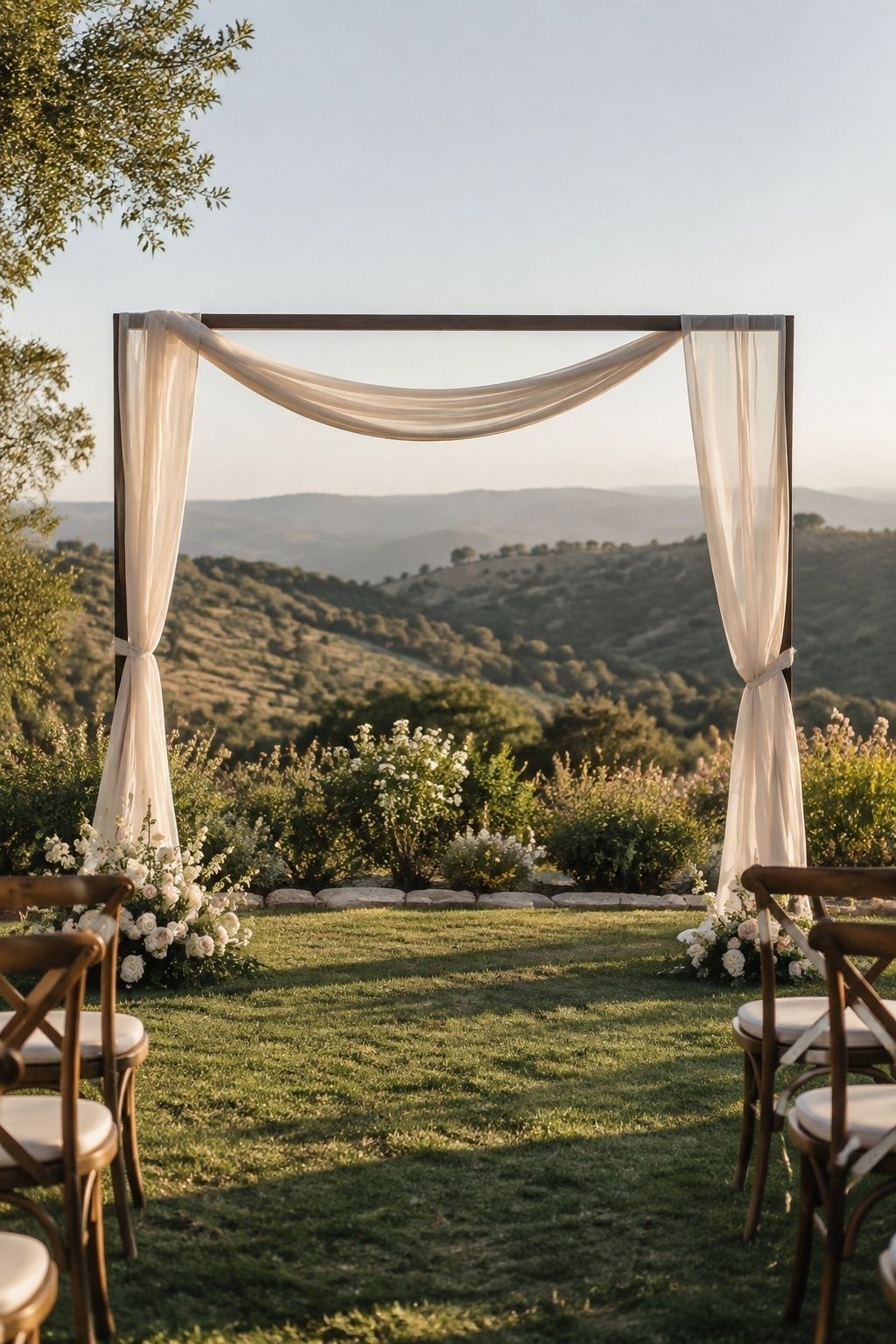
When the view is already beautiful, use drapery as a frame rather than a curtain. Side panels, a half frame, low swags, or fabric tied to one side can soften a garden, mountain, chapel, or window backdrop while leaving the main view open. The restraint often photographs better than a full fabric wall.
Choose The Right Fabric For The Setting
The fabric choice decides the mood before flowers or signage enter the picture. Sheer fabrics bring movement and light; heavier panels bring coverage, sound-softening, and drama. If your backdrop will be photographed close up, think about wrinkles, opacity, and how the material catches shadows.
| Fabric | Best setting | Visual effect | Caution |
|---|---|---|---|
| Chiffon | Gardens, patios, bright ceremony rooms | Soft, airy, romantic movement | Needs careful anchoring outdoors |
| Gauze or linen | Homes, barns, courtyards, relaxed restaurants | Natural texture with gentle folds | Can wrinkle in a casual way, so steam intentionally |
| Silk-look fabric | Modern interiors, editorial ceremony corners | Elegant sheen and fluid drape | May reflect harsh light in photos |
| Satin | Formal indoor ceremonies and reception focal points | Smooth, polished, luminous | Wrinkles and shine are very visible |
| Velvet | Winter, evening, library, restaurant, or jazz-club settings | Rich depth and romantic weight | Requires strong support and careful handling |
| Lace | Vintage, garden, or messy coquette styling | Delicate pattern and nostalgic detail | Looks cluttered if layered too heavily |
When in doubt, choose the fabric that solves the room’s real problem. A transparent chiffon panel will not hide a utility door. Heavy velvet may be too much for a tiny garden arch. A textured linen panel might be exactly right for a home ceremony where the backdrop needs softness, not spectacle.
Size, Safety, And Setup Questions To Ask First
Pretty fabric still needs practical planning. Ask the venue what can be attached, whether freestanding frames are allowed, how high the backdrop may be, and whether anything can sit near candles, sprinklers, vents, exits, or aisle edges. If the backdrop is outdoors, ask what the wind plan is before you choose long loose fabric.
For safe ceremony draping ideas, treat weights and hardware as part of the design. Backdrop stands need stable bases, clips should disappear into folds, and tall frames should be handled by someone who has installed them before. If guests will sit close, leave space for movement, vows, readers, musicians, and anyone helping with the ceremony.
How To Style Drapery For A Small Wedding
Scale the backdrop to the guest count, not to an inspiration photo. For 10 guests, a narrow panel behind two chairs or a standing ceremony can feel beautifully intimate. For 20 or 30 guests, a freestanding frame may need a little more width so the couple, officiant, and florals fit inside the scene. For 50 guests, think about aisle visibility and whether the back rows can still see faces clearly.
The best soft wedding backdrop ideas leave breathing room. Place flowers low, keep the center open for the couple, and avoid fabric that spreads wider than the actual ceremony moment. If the rest of your design is quiet, let texture, glow, and thoughtful color carry the feeling of your romantic decor rather than adding extra props.
DIY Or Hire A Professional
A DIY wedding fabric backdrop can work when the structure is simple, low-risk, and freestanding. Think one backdrop stand, steamed panels, strong clips, light asymmetry, and a setup photo taken before the wedding day. Anything suspended above guests, mounted to a venue surface, built with heavy velvet, or exposed to outdoor wind deserves professional help.
| Setup route | Best for | What to confirm | Small-wedding note |
|---|---|---|---|
| DIY | Single panels, low frames, indoor photo corners | Stand height, weights, clips, steaming, transport | Rehearse the full setup at home or at the venue |
| Rental backdrop | Couples who want clean hardware without custom design | Delivery, assembly, pickup, damage policy | Choose a size that fits the ceremony, not the largest option |
| Florist or planner install | Fabric with flowers, candles, table resets, or ceremony-to-reception moves | Timing, staffing, venue access, reset plan | Best when the backdrop has to move during cocktail hour |
| Professional draping | High frames, heavy materials, ceiling work, outdoor exposure | Rigging permission, insurance, fire rules, structure limits | Worth it when safety or venue rules are complicated |
What To Avoid
A drapery backdrop loses its charm when the practical details are ignored. Avoid wrinkled fabric that was never steamed, visible hardware at eye level, unstable stands, florals that cover the couple’s faces, and candles placed too close to cloth. Also avoid using too much fabric in a tiny room. If the backdrop crowds the chairs or hides the venue, it will feel less romantic, not more.
Plan transport and reset logistics before the wedding morning. Fabric takes up more space than expected, wrinkles easily, and often needs a steamer nearby. If the same backdrop will support vows, portraits, and dinner, make sure someone owns each move. The design should feel effortless to guests because the real effort happened ahead of time.
FAQ
How do you make a drapery backdrop look good for a wedding?
Start with proportion, clean fabric, and safe support. A wedding drapery backdrop looks best when it frames the couple without swallowing the room, falls in intentional folds, and hides clips or stands as much as possible. For small weddings, keep the center open, place flowers low, steam the fabric well, and test the backdrop from the guest and photographer viewpoints.
What fabric is best for a wedding drapery backdrop?
Chiffon is best for airy romance, gauze or linen for natural texture, velvet for evening richness, and opaque curtain-weight panels for hiding a plain wall. The best fabric depends on the venue, light, season, and installation method. If the backdrop is outdoors, choose something that can be anchored securely and will not become difficult in wind.
Can you DIY a drapery backdrop wedding setup safely?
Yes, but only if the design is simple and stable. A freestanding indoor frame with lightweight fabric, hidden clips, and heavy bases is a reasonable DIY project for many couples. Avoid DIY ceiling swags, heavy velvet, tall frames without proper weights, outdoor setups in wind, or anything attached to venue walls without written permission.
How much fabric do you need for a wedding backdrop?
Measure the width and height of the area first, then add extra fabric for folds, pooling, and side tails. A flat panel looks sparse, so most backdrops need more width than the frame itself. For a small ceremony, start with the actual couple-and-officiant footprint, then add enough fabric to frame that moment without blocking sightlines or exits.
How do you make a small wedding backdrop look romantic without overdoing it?
Choose one focal point and make the details quiet. Soft fabric, warm light, low flowers, and a color that flatters the room can feel more romantic than layers of props. In a small wedding, guests are close enough to notice texture and intention, so let the fabric frame the vows and keep the surrounding decor calm.
Can a ceremony drapery backdrop be reused at the reception?
Yes, if you plan the reset before the wedding day. A freestanding ceremony backdrop can move behind the sweetheart table, cake table, guest book, dessert display, or portrait corner. Keep the design light enough to move safely, confirm the route through the venue, and assign the job to staff rather than guests.
Final Thoughts
The best drapery backdrop wedding ideas do not need to take over the room. They make the ceremony feel held, soften the parts of the venue that need softness, and give the couple a romantic place to stand. Choose fabric that suits the light, build only as much scale as the guest count needs, and let the backdrop support the feeling of the day instead of competing with it.
If you are drawn to lace, velvet, soft bows, and gathered fabric, let those details become a romantic texture story for your vows, then edit the final design until it feels personal, safe, and easy for guests to enjoy.
Last update on 2026-10-03 / Affiliate links / Images from Amazon Product Advertising API