

Muted terracotta wedding ideas work best when the clay color feels warm, softened, and edited instead of bright orange. Pair terracotta with cream, sage, taupe, olive, warm white, or soft blush, then use it in close-up details like candles, flowers, paper, pottery, napkins, and small attire accents.
Terracotta is easy to love and surprisingly easy to overdo. In a small wedding, every napkin, candle, menu, and flower is close enough for guests to notice, which means the palette needs softness as much as warmth. The goal is not a pumpkin-colored room or a desert-boho costume. It is a quiet clay thread that makes the celebration feel intimate, tactile, and grounded.

Recommended Wedding Products


You Might Also Like These Blog Posts
- Muted Rose Wedding Ideas With A Softer Kind Of Romance
- Muted Mauve Wedding Ideas For Soft-Spoken Romance
- Dusty Olive Wedding Ideas That Feel Soft, Not Muddy
- Merlot Wedding Ideas For A Wine-Warm Celebration
- Midnight Teal Wedding Ideas With Jewel-Box Calm
- September Wedding Colors for the Beautiful In-Between
Muted Terracotta Wedding Ideas That Stay Soft, Rooted, and Refined
The best muted terracotta wedding ideas begin with restraint. Terracotta already carries emotional warmth: clay pots, sun-baked walls, dried leaves, old tile, candlelight, and dinner outdoors. When it is used everywhere at once, though, that warmth can flatten into orange. For an intimate terracotta wedding, think in layers: one warm clay note, one cooling green or neutral, one natural texture, and enough pale space for flowers, food, faces, and conversation to breathe.
Choose A Soft Terracotta, Not A Bright Orange
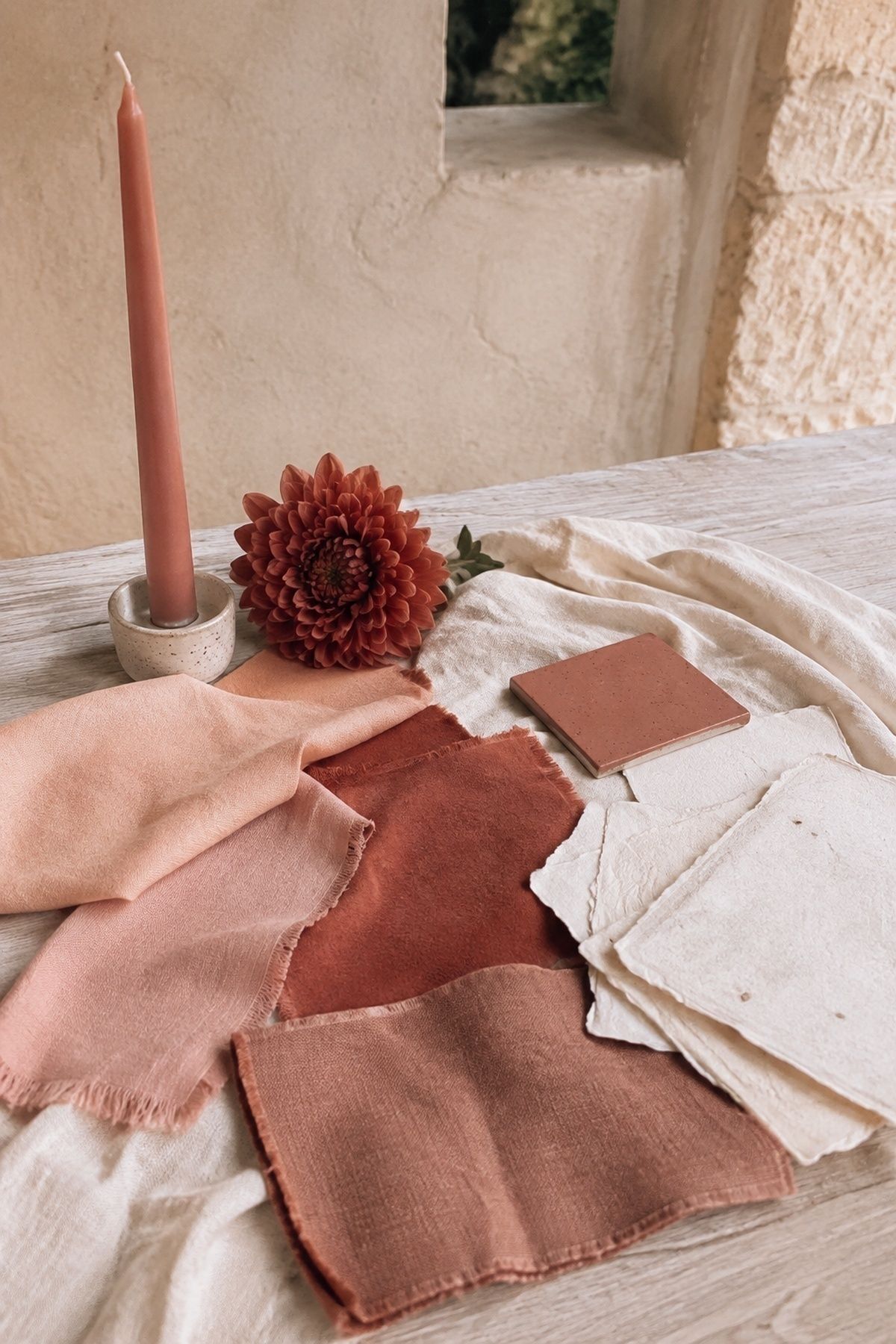
Terracotta can mean clay, rust, copper, peach-brown, cinnamon, burnt orange, or almost pumpkin. Those are not interchangeable once they become linens, dresses, candles, or flowers. A soft terracotta usually has brown, rose, or clay undertones rather than a loud citrus brightness. Before ordering anything in bulk, place the swatch against your venue wall, table surface, and natural light. What looks muted on a screen may turn neon beside cool white paint or glossy dark wood.
Pair Terracotta With Breathing-Room Neutrals

Cream, ivory, oatmeal, warm white, stone, taupe, pale wood, and soft linen are what keep terracotta from taking over the room. Let those quieter colors carry the largest surfaces: tablecloths, plates, paper, walls, chairs, and ceremony fabric. Terracotta can then appear as the glow, not the whole landscape. This is especially important for a neutral small wedding palette, where a single saturated layer can feel much bigger than it would in a ballroom.
Add Green To Ground The Warmth
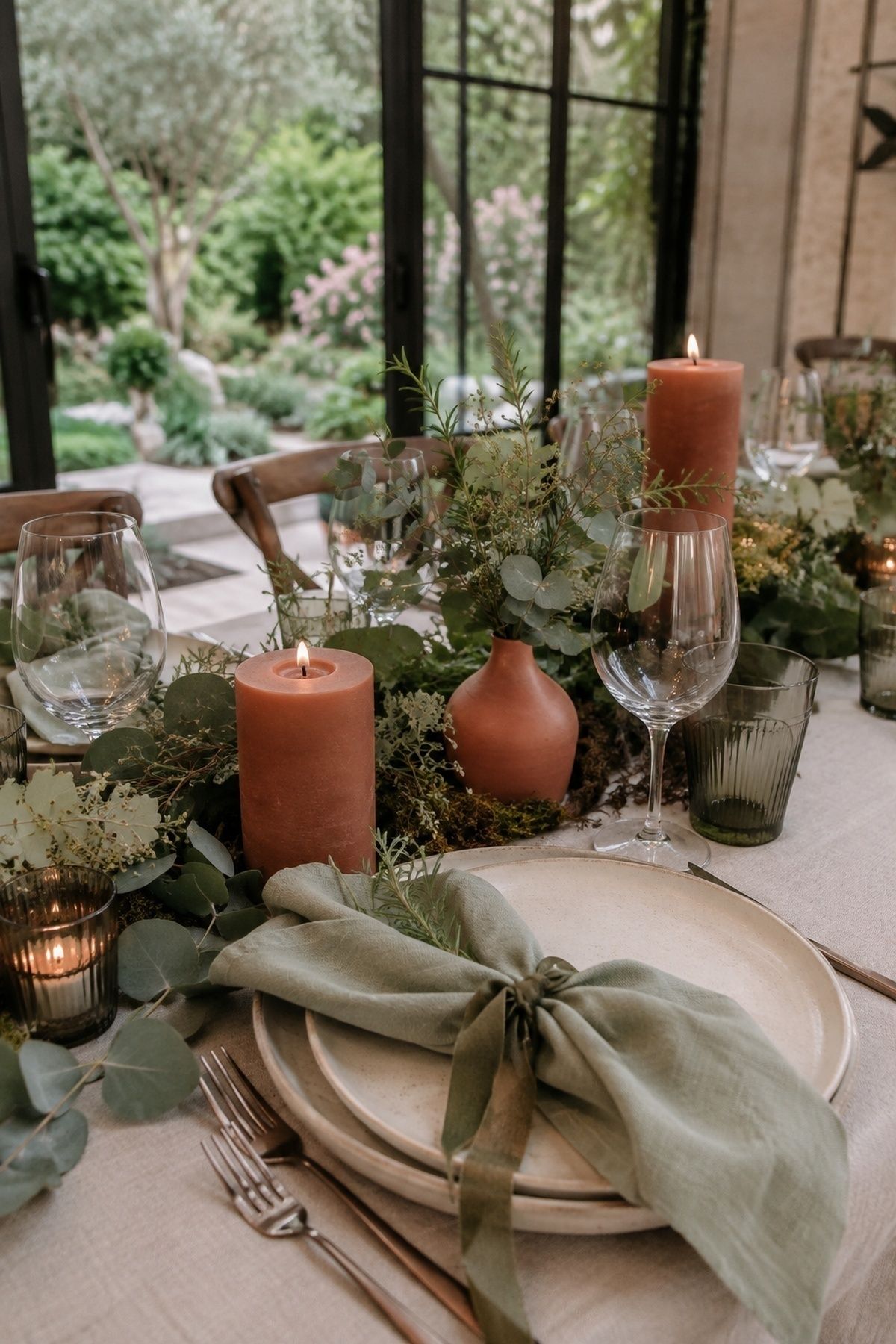
A terracotta sage wedding palette works because sage cools the heat without making the design feel cold. Olive, eucalyptus, rosemary, dusty green, and soft moss can do the same work. Use green in foliage, napkins, ribbon, menus, suits, or herbs on the table. The green should feel natural and slightly muted, not emerald or artificial. When the green is calm, terracotta reads as clay and candlelight instead of orange decor.
Decide Where Terracotta Should Lead
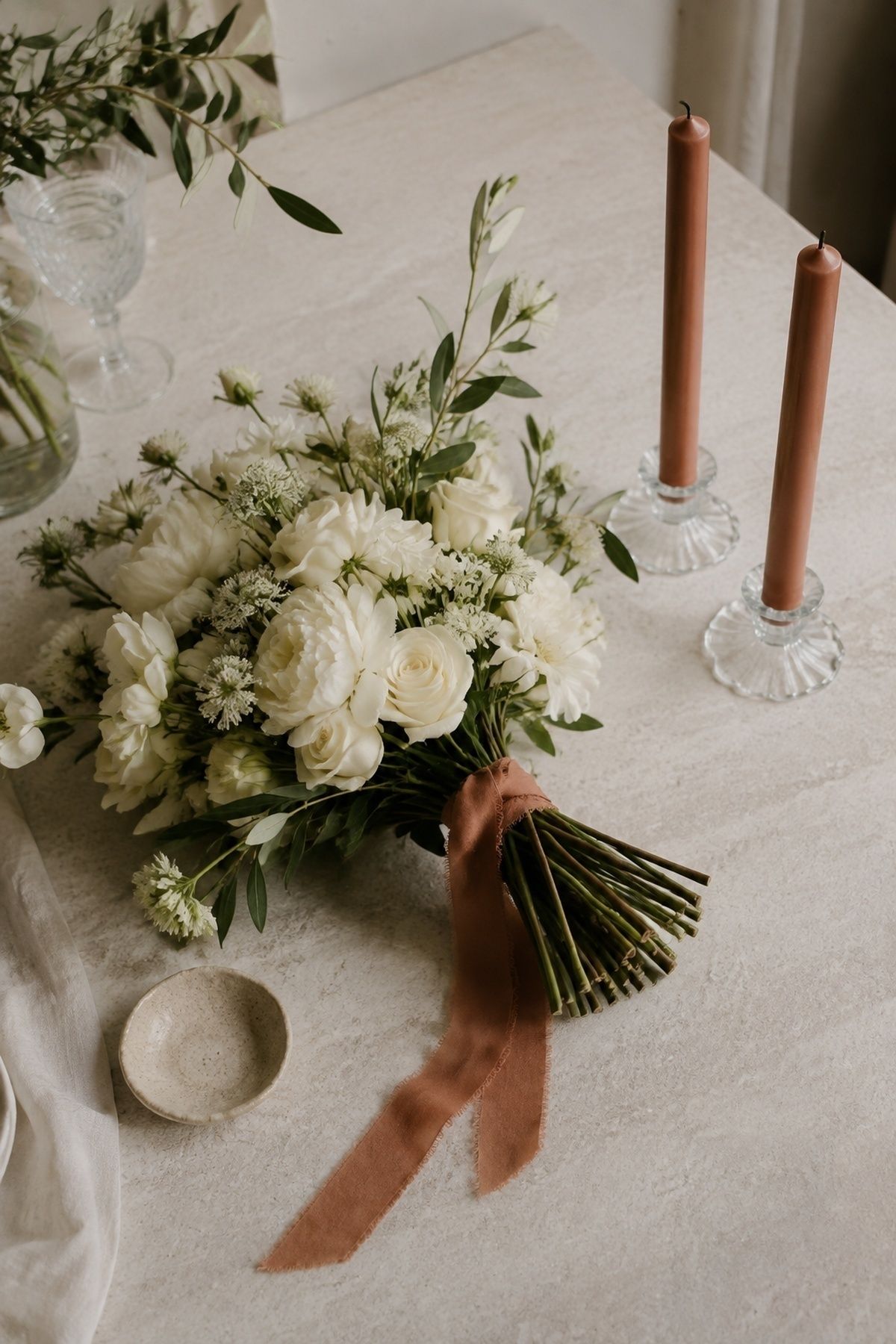
Pick one or two places where terracotta gets to be the lead detail. It might be taper candles and bouquet ribbon, napkins and stationery ink, bridesmaid tones and boutonniere accents, or clay vessels and menu wax seals. If every category is equally terracotta, the eye has nowhere to rest. The most refined palettes give the warm shade a job instead of asking it to decorate the entire wedding.
Keep The Table Warm But Calm
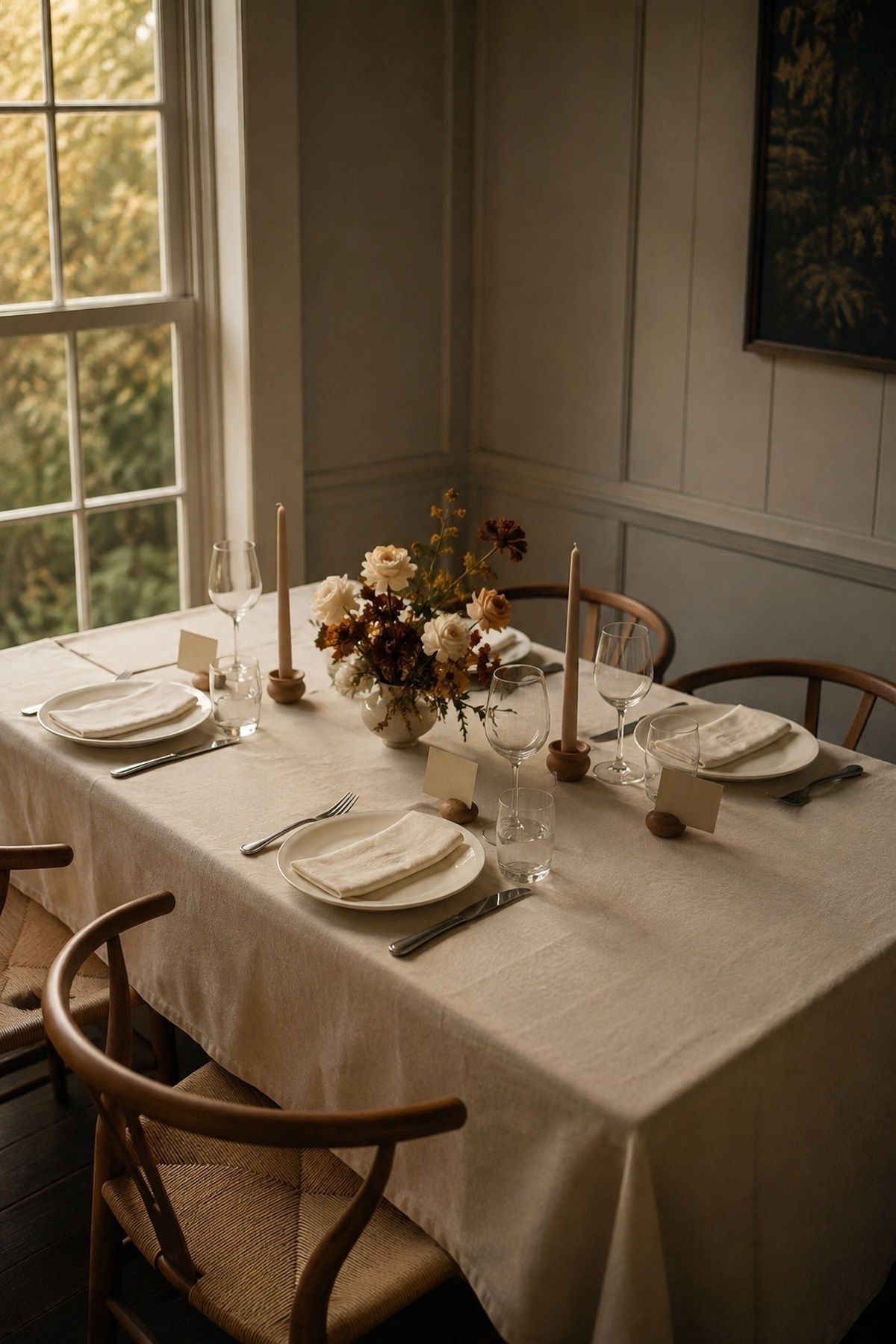
Small guest tables need room for plates, glasses, bread, elbows, and actual conversation. Start with neutral linens, simple glassware, readable menus, and low flowers. Then add terracotta through candles, a few rust-toned blooms, clay place cards, or one linen layer. If the table already has a terracotta runner, skip matching napkins. If the flowers are warm and saturated, keep the candles cream or honey. A table can feel romantic without being crowded.
Use Flowers With Soft Edges
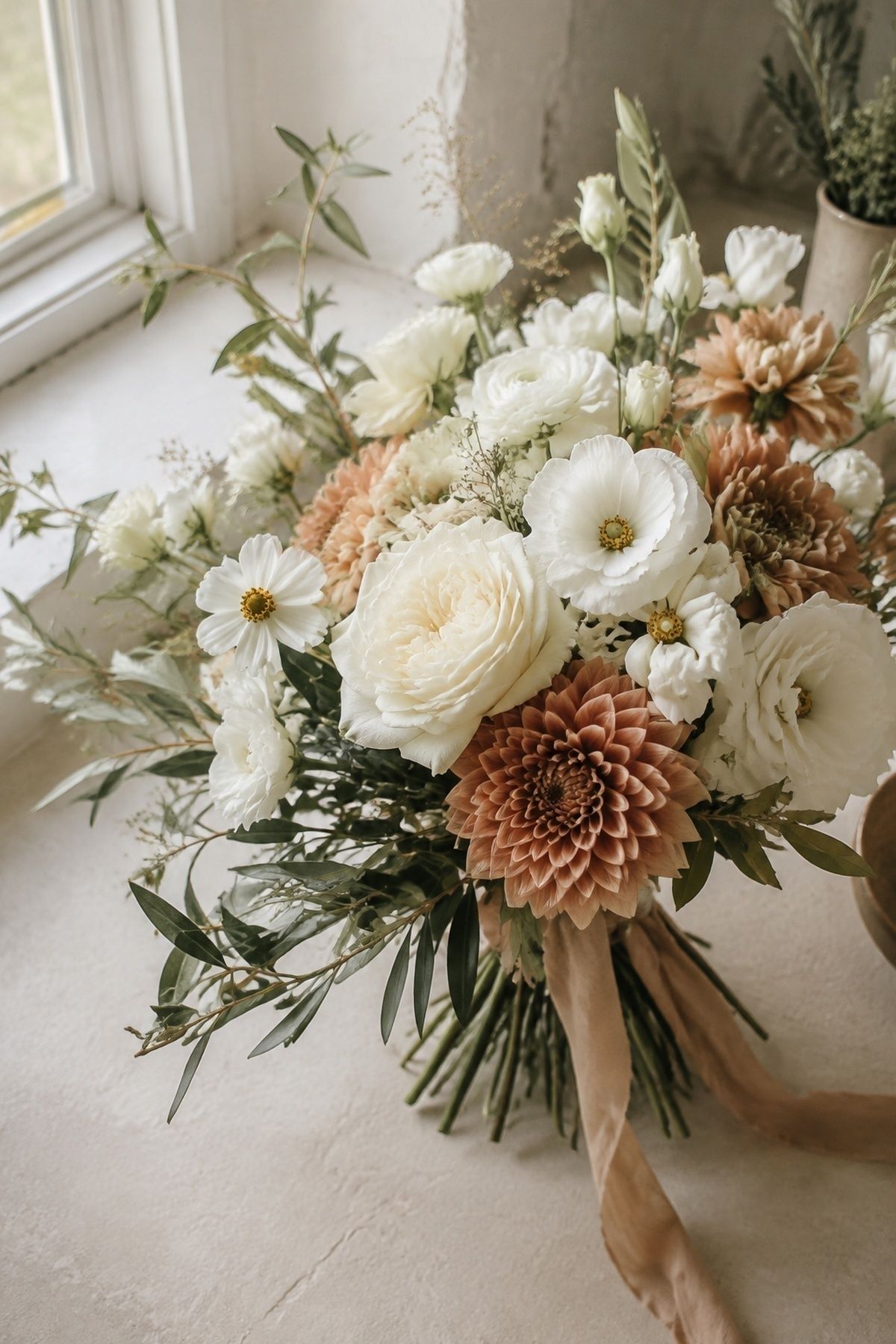
Muted rust wedding flowers look most elegant when they are mixed with cream blooms, airy greenery, and varied shapes. Ask for softness around the terracotta accents: garden roses, ranunculus, dahlias, lisianthus, cosmos, olive branch, ruscus, or delicate dried texture used sparingly. Avoid building the whole arrangement from orange flowers alone. In close-up photos, too much rust can become a block of color; lighter blooms and negative space give the arrangement movement.
Let Materials Carry The Color
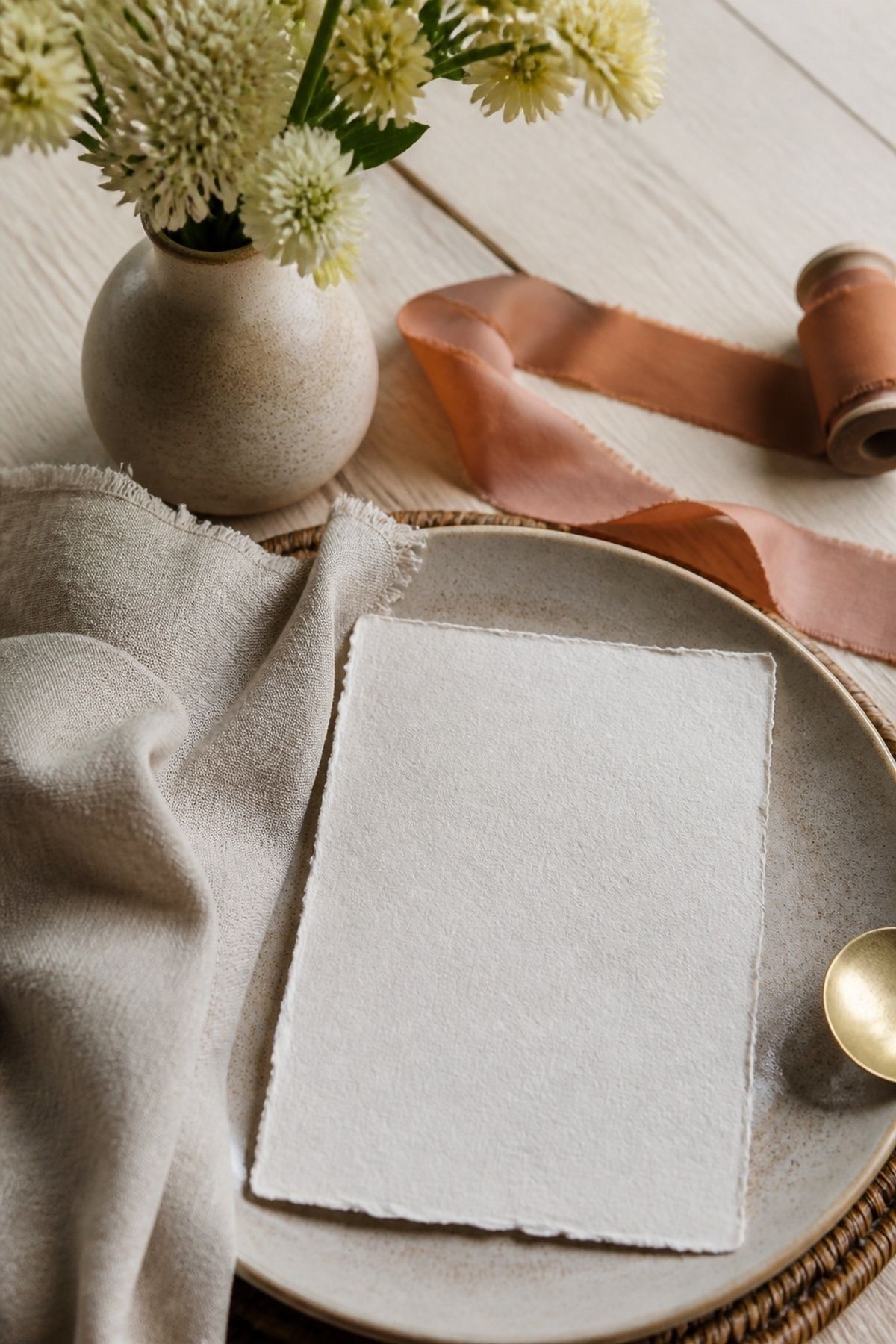
Earthy terracotta wedding decor does not have to rely on color matching. Real clay vessels, linen, handmade paper, pale wood, rattan, stoneware, woven chargers, raw silk ribbon, and warm metal can carry the mood more naturally than printed orange accents. This is where terracotta becomes tactile rather than themed. A clay bud vase with cream flowers may say more than a full terracotta tablecloth ever could.
Match The Palette To The Venue
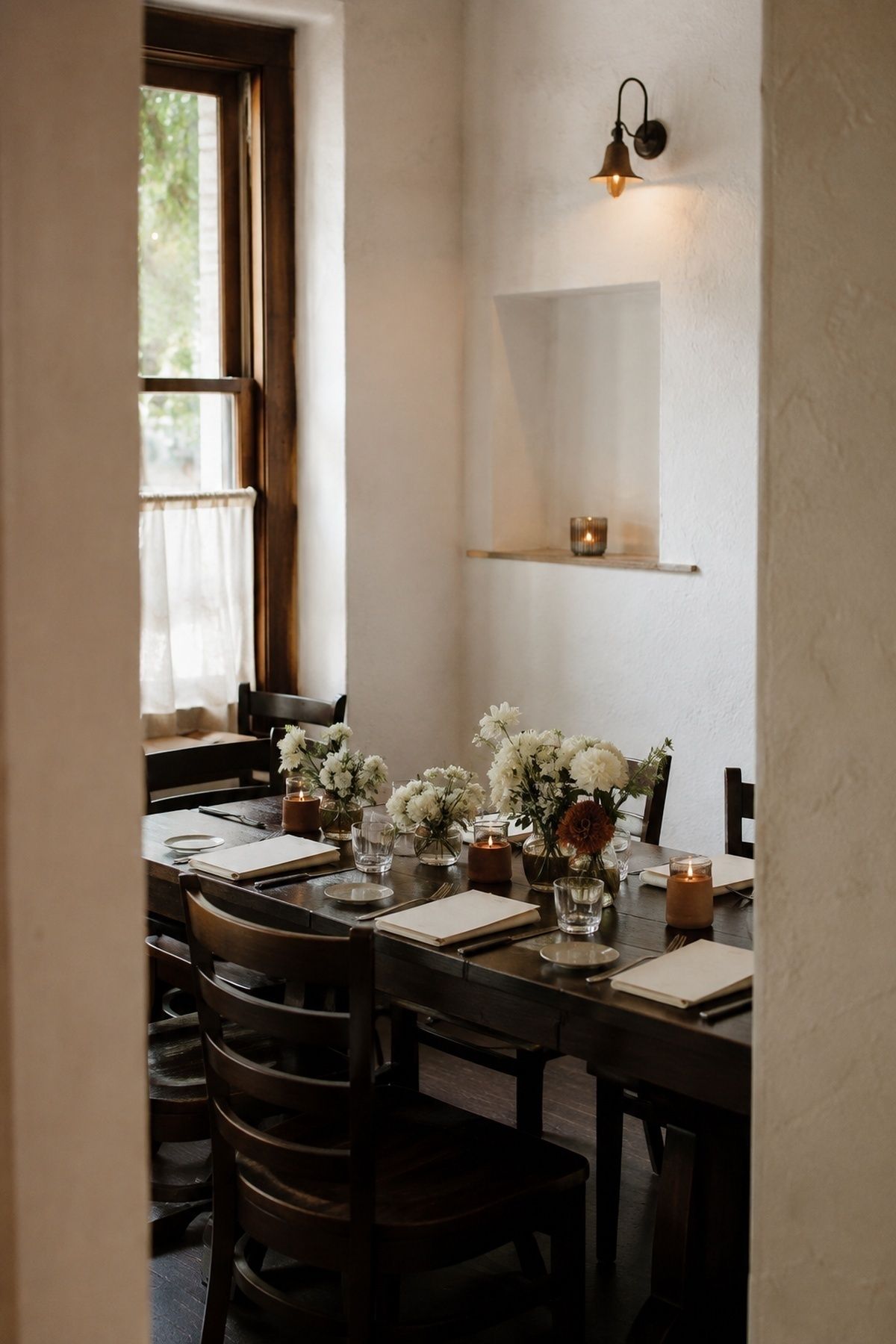
Terracotta behaves differently in every setting. In a garden, it can feel sun-warmed and romantic beside sage and cream. In a barn, it may need fewer rustic textures so it does not become too expected. In a white restaurant, it can add intimacy through candles and paper. In a chapel, rust flowers and ribbon may be enough. In a desert venue, edit carefully so the palette does not become generic. If your setting already has warm brick, tile, wood, or stone, you may need less terracotta than you think.
Use Terracotta In Attire Carefully
Terracotta can be beautiful in bridesmaid dresses, ties, pocket squares, shawls, shoes, or hair ribbon, but it is not equally kind to every skin tone. Softer clay, cinnamon rose, muted rust, coppery taupe, or warm champagne may work better than a true orange dress. Order fabric swatches and photograph them near faces, flowers, and the ceremony backdrop. For a gentler effect, let one person wear terracotta while others wear sage, taupe, champagne, or soft blush. For a cooler dusty tone, these muted mauve wedding ideas offer another softened palette to compare.
Make It Work Beyond Fall
Terracotta is often treated as autumn shorthand, but it can travel. In spring, use lighter clay with blush, cream, and fresh greenery. In summer, pair pale terracotta with warm white linens, olive leaves, and barely-there peach flowers. In fall, deepen the shade with taupe, rust, and candlelight. In winter, use terracotta as a cozy accent beside ivory, walnut, brass, and low amber light. The season should change the supporting cast, not force the palette into one obvious look.
Create A Terracotta Garden Lunch
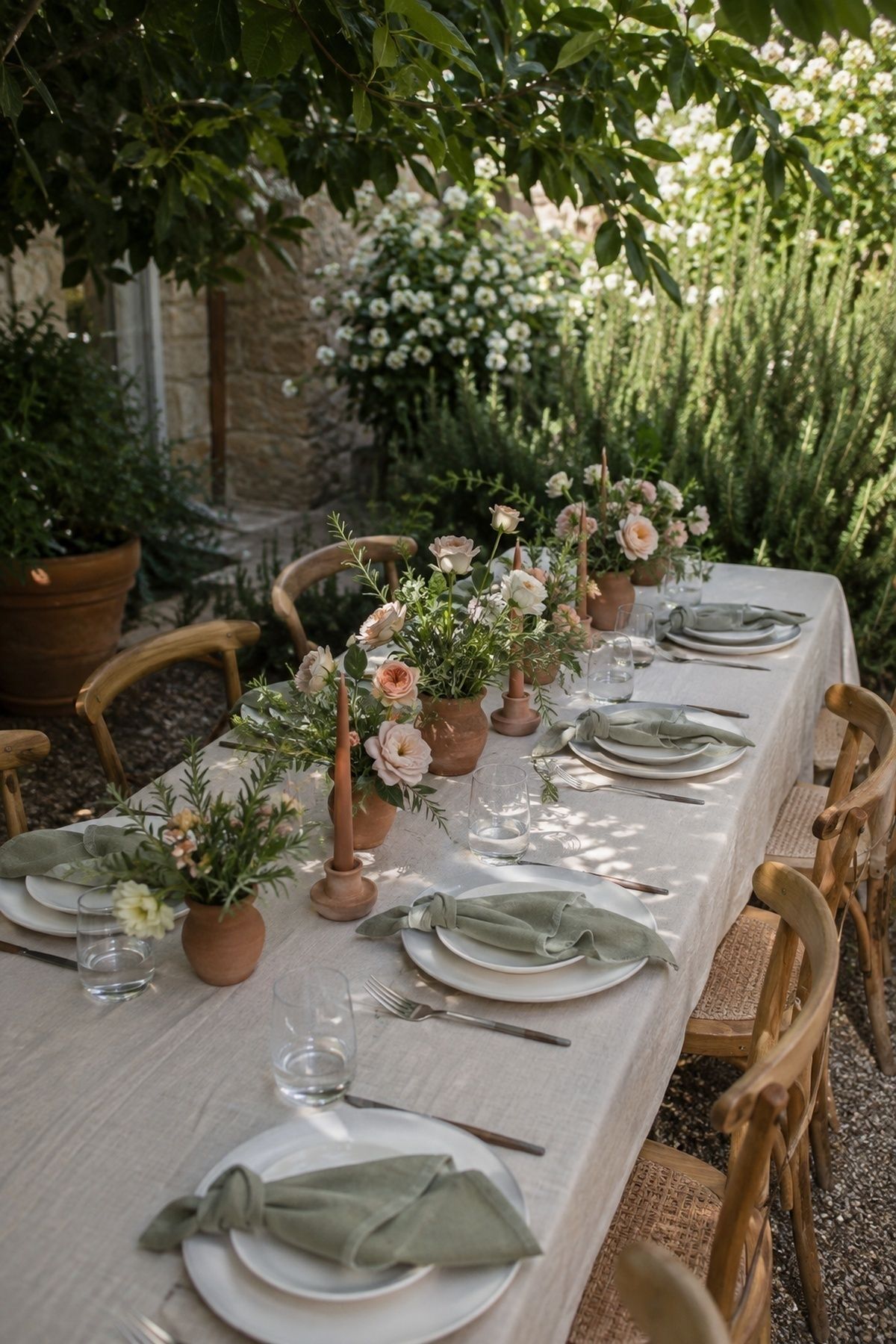
For a daytime garden wedding, keep the palette fresh: cream linens, sage napkins, clay bud vases, garden roses, herbs, and a few terracotta candles if the venue allows them. This version should feel more like lunch under warm light than a fall mood board. It pairs beautifully with garden party wedding ideas that leave room for greenery, white flowers, and natural texture.
Try A Clay-And-Cream Restaurant Dinner
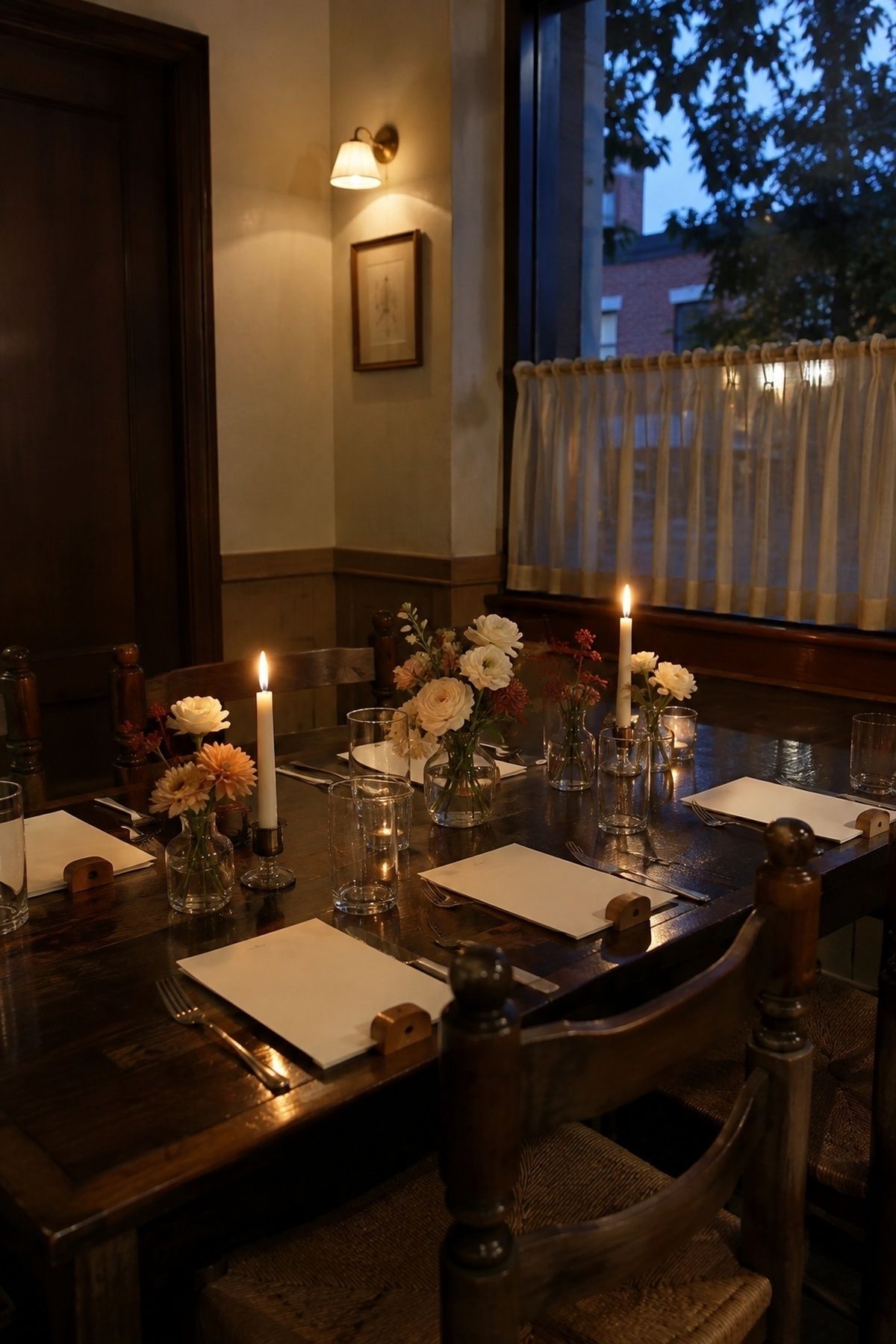
Restaurant weddings usually come with their own chairs, walls, lighting, and table scale, so let the room lead. A cream menu with terracotta type, clay place card holders, warm taper candles, and low flowers may be enough. Avoid tall dried grasses or oversized runners that fight the existing table setting. In a restaurant, the palette should make dinner feel personal, not rented in from a different venue.
Use Sage And Terracotta For A Backyard Supper
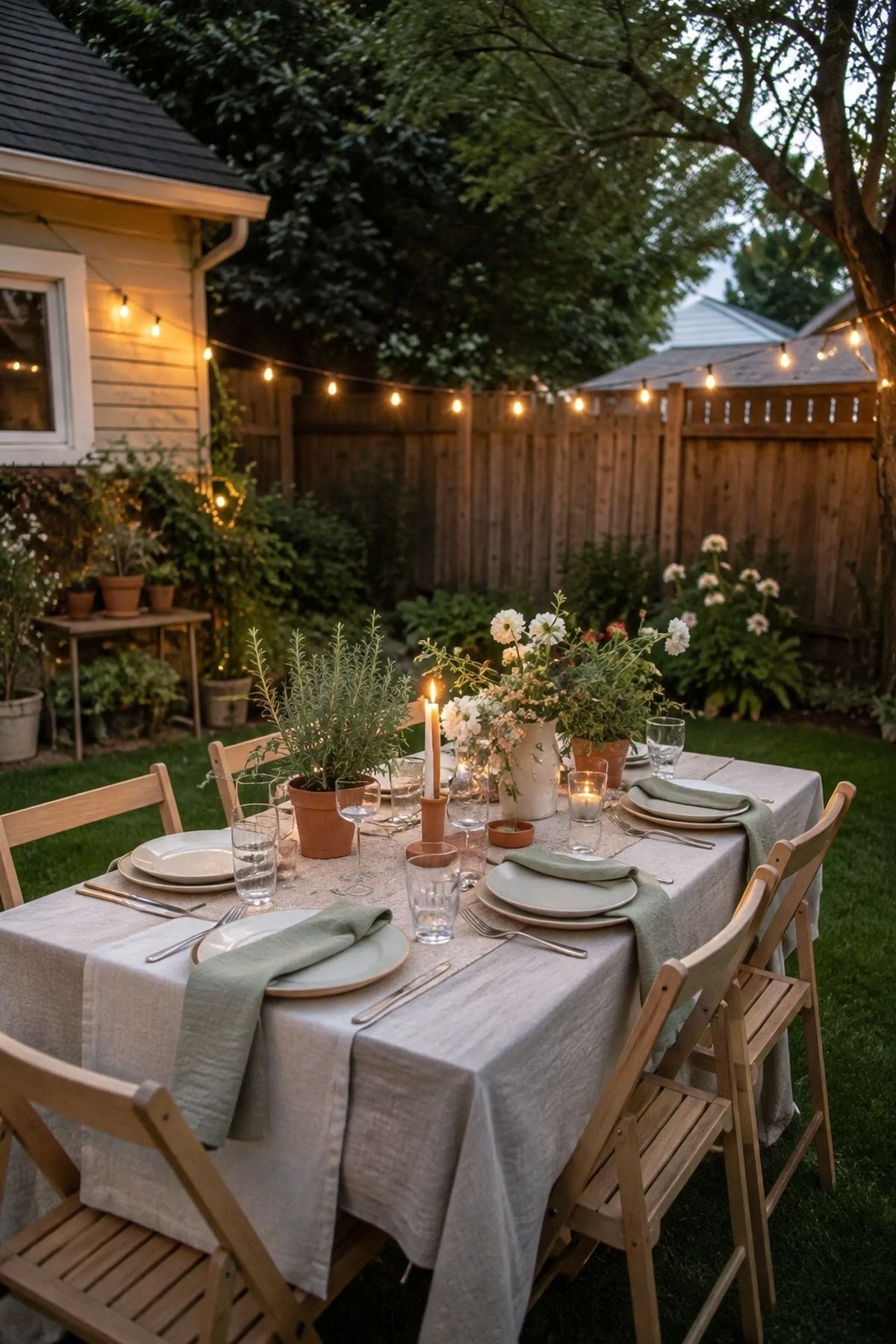
A backyard supper can take terracotta in a softer, more personal direction. Use sage napkins, cream plates, clay pots of herbs, market flowers, and simple wooden or linen textures. Keep the setup loose, but not messy. If you are already working with grass, patio furniture, fencing, and family spaces, the palette needs editing so it feels intentional rather than like a pile of warm-toned props.
Add Rust Flowers To A Chapel Ceremony
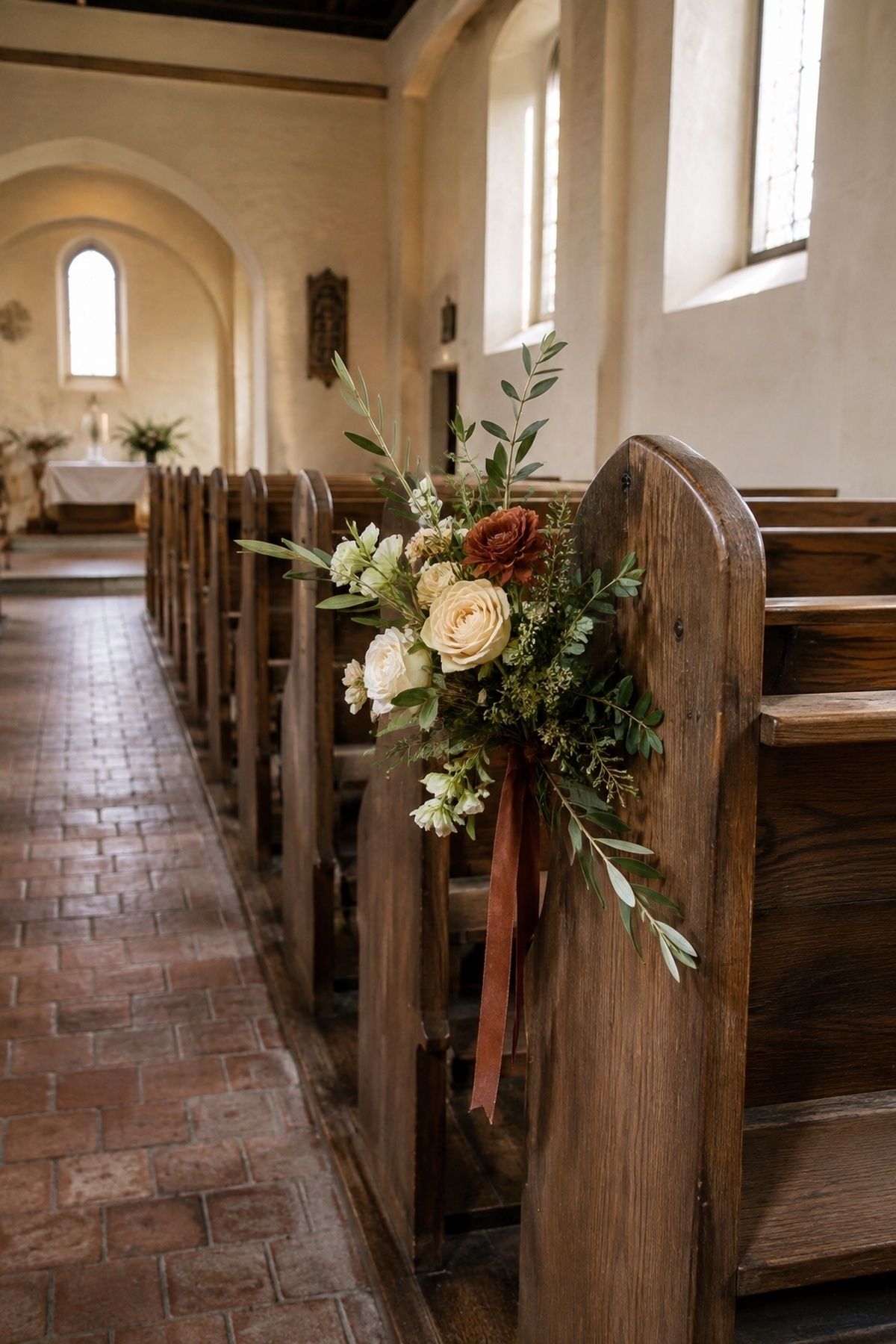
In a chapel, terracotta should usually appear in flowers, ribbon, or small aisle details rather than heavy fabric. Cream blooms, muted rust accents, olive foliage, and a narrow ribbon can warm the ceremony without distracting from the vows. If the walls, pews, or carpet already have strong color, keep the arrangement lighter and let the reception carry more of the palette.
Build A Candlelit Courtyard Meal
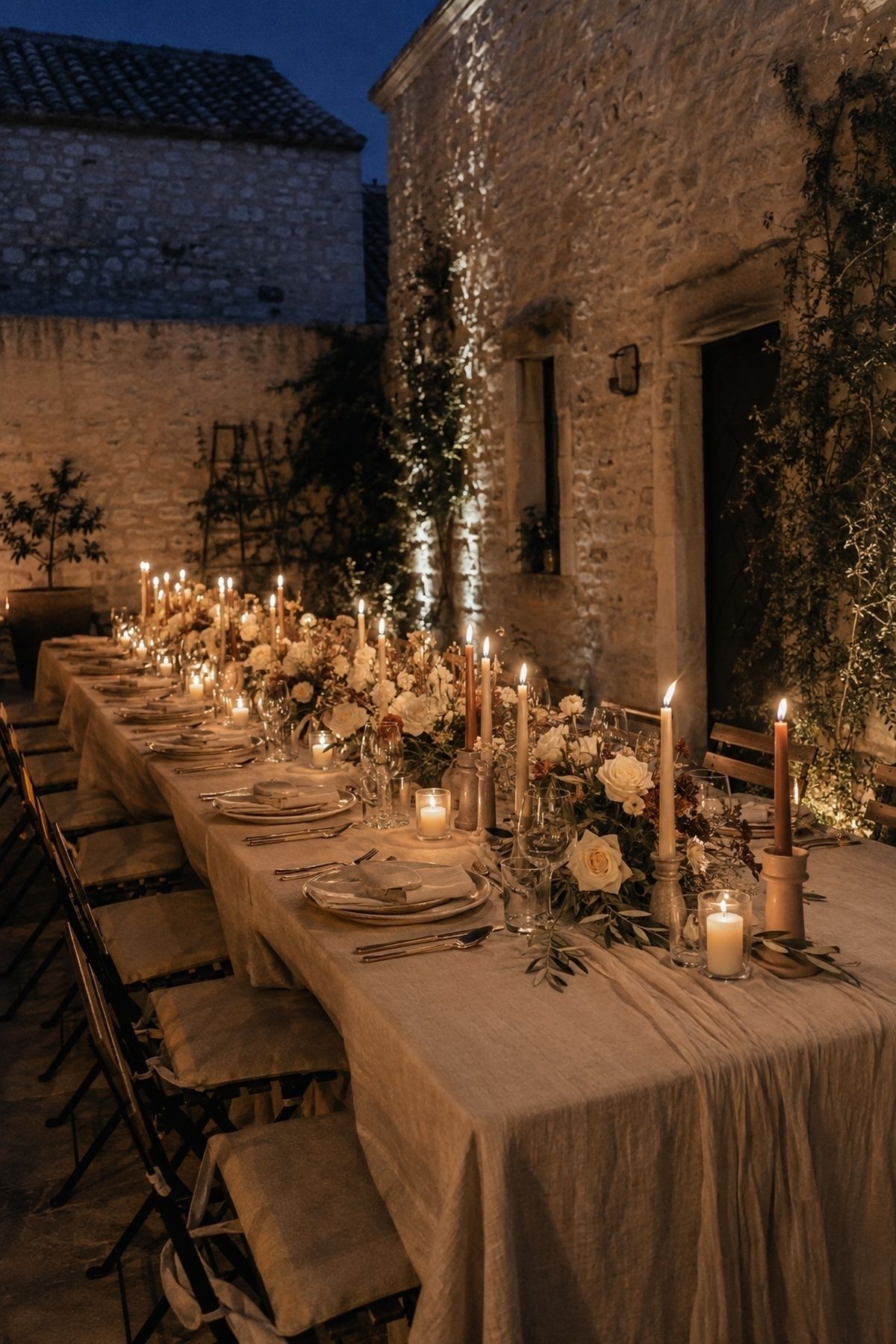
Terracotta loves candlelight, but candlelight also deepens color. Test the exact candle shade after sunset if your reception is outdoors or in a courtyard. Honey, cream, or soft clay tapers may photograph better than saturated rust. Add stoneware, olive branches, textured cream linens, and low florals so the scene feels intimate and rooted. This is a beautiful direction for couples who want warmth without a full boho backyard wedding look.
Keep Stationery Readable

Rust ink on clay paper can look lovely in a flat lay and impossible to read at dinner. For menus, escort cards, and signs, use cream, warm white, or pale taupe paper with terracotta accents. If the background is terracotta, choose high-contrast type and test it in the actual lighting. Guest-facing details should feel beautiful, but they still need to do their job.
Use Dried Texture With Restraint
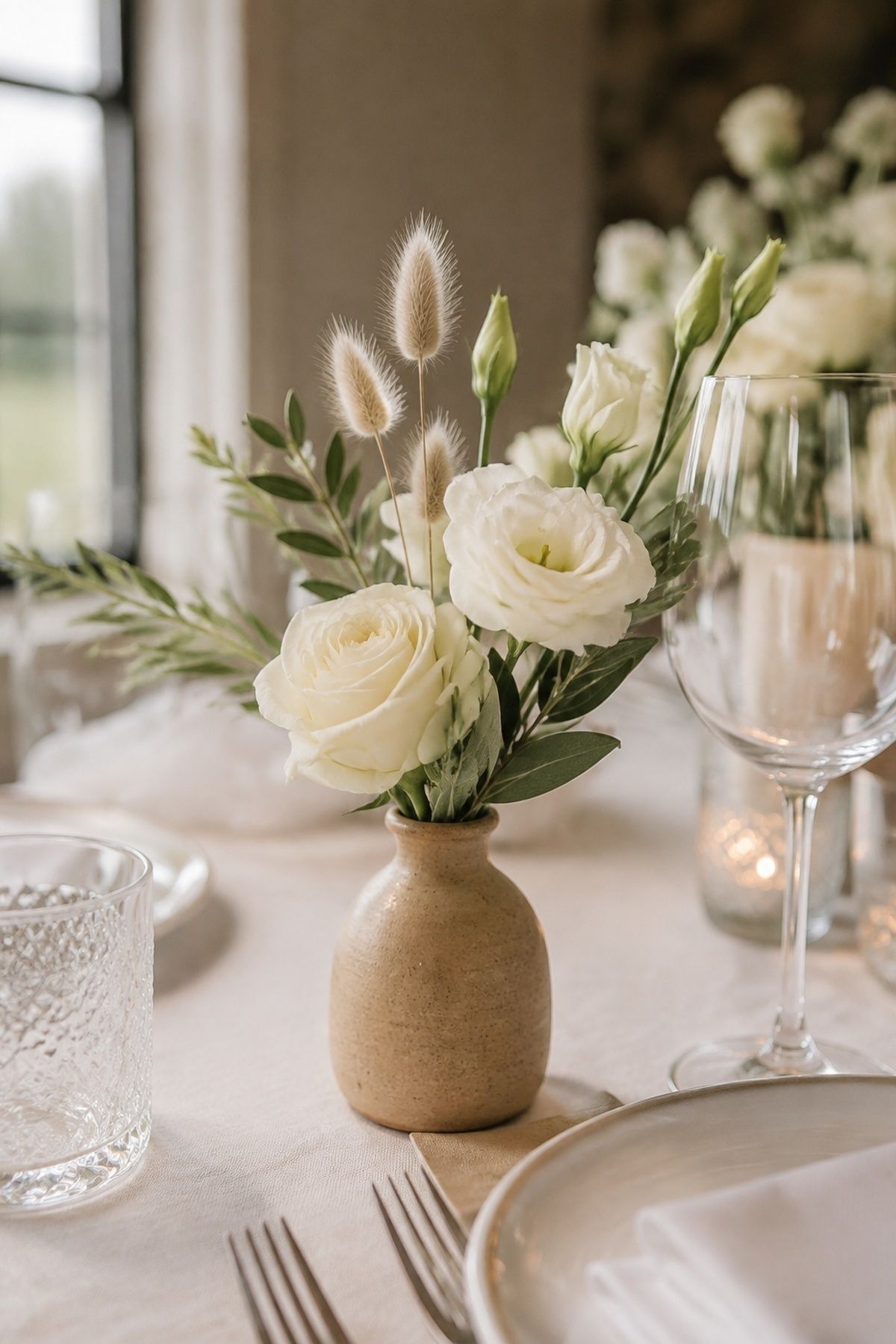
Dried grasses, bunny tails, palm, and seed pods can make terracotta feel grounded, but too much of them pushes the wedding toward a trend board. Mix dried texture with fresh flowers, greenery, and clean linen. Use one dried detail in the bouquet, a few stems in bud vases, or a subtle ceremony accent. When every arrangement is dried and orange-toned, the look can become dusty rather than romantic.
What To Avoid
Avoid bright pumpkin tones, exact-match pressure, rust on every surface, too many dried grasses, heavy dark linens in a small room, unreadable terracotta stationery, and decor that ignores the venue. Also avoid assuming that every terracotta wedding has to be desert, boho, or fall. The softer version comes from undertone, texture, and placement. A little clay color can do a lot.
FAQ
What Colors Go With Muted Terracotta For A Wedding?
Muted terracotta works beautifully with cream, ivory, taupe, oatmeal, sage, olive, blush, clay, pale wood, champagne, and warm white. For a small wedding, use the lighter colors on larger surfaces and keep terracotta as an accent so the room stays soft.
How Do You Make Terracotta Wedding Colors Look Soft?
Choose a clay or rust shade with brown, rose, or peach undertones instead of bright orange. Pair it with cream linens, sage greenery, low flowers, natural materials, and warm candlelight. The softer look comes from restraint, not from adding more terracotta.
Is Terracotta Good For A Small Wedding?
Terracotta is lovely for a small wedding because it feels warm and personal up close. It works best in details guests can notice: candles, napkins, flowers, paper, pottery, ribbon, or attire accents. Keep large surfaces neutral so the space does not feel orange.
What Flowers Work With Muted Terracotta?
Look for cream roses, ranunculus, dahlias, lisianthus, cosmos, toffee or rust-toned blooms, olive branch, eucalyptus, ruscus, and light dried texture. The safest approach is a cream and green base with a few muted rust flowers for warmth.
How Do You Decorate A Muted Terracotta Wedding?
Decorate with terracotta taper candles, clay vessels, cream runners, sage napkins, warm paper goods, low flowers, wood, linen, and stoneware. Choose one or two terracotta hero details per space instead of matching every item to the palette.
How Do You Keep Terracotta From Looking Too Orange?
Test swatches in venue light, avoid pumpkin shades, and surround terracotta with cream, taupe, sage, olive, or blush. Use the color as a warm thread rather than the dominant surface. If it still reads orange, choose a dustier clay or rust-brown shade.
Final Thoughts
A muted terracotta wedding feels best when it warms the day gently. Let clay color appear in the places guests notice most, then give it softness through cream, sage, linen, flowers, candlelight, and natural materials. The result is rooted and romantic without becoming loud, rustic by default, or too orange for the room, giving couples a softer way to use muted terracotta wedding colors.
Last update on 2026-10-03 / Affiliate links / Images from Amazon Product Advertising API