

A fall wedding rain plan is a complete second version of your day: a backup ceremony space you like, a rain call made about 48 hours out by one person, covered or firm routes for guests, and portrait spots chosen in advance. Write the guest message and the rainy floor plan before wedding week so the forecast only flips a switch.
Picture it. It’s 2 pm, the ceremony is at 4, and the rain that was “40% maybe” this morning is now steady and sideways. If your fall wedding rain plan exists, someone says “we’re going inside,” the florist already knows where the arch goes, and you finish your hair. If it doesn’t, you spend the next hour on the phone.
The difference is almost entirely decided months earlier. This guide is the rain-specific half of the job: rooms, tents, floors, umbrellas, portraits and messages. For wind, cold and early sunset, the companion fall wedding weather plan covers the triggers and timings.

What I’d pack for a wet autumn day
Clear umbrellas, mats, towels and lanterns come up again and again below. These are a few to start with.


What does a fall wedding rain plan need?
It needs a backup space you’d be glad to use, a written decision deadline, one person who makes the call, and a rainy layout that every vendor has seen. Everything else hangs off those four.
A backup location you actually like

Tour the indoor room, porch, barn or tent pad with the same attention you gave the lawn. Ask where the ceremony would face, where the musicians stand, how guests come in and whether 30 people in that room look intimate or squashed. If it feels like a storage room, keep looking or put money aside to fix it.
Take photos from the back row and the front row while you’re there. A room that photographs well and has an easy route for older guests beats a prettier lawn with no honest rain option.
A rain call deadline in writing

About 48 hours before the wedding is a sensible point for the main rain call, but ask your rental company and venue. Tents, flooring, generators and sidewalls can need longer. Put the deadline in the vendor timeline and name the person who makes the call.
Then add a smaller day-of checkpoint for things that don’t change the whole setup: drying chairs, opening a sidewall, moving umbrellas to the portrait door. The big decision stays settled; the small ones stay flexible.
Tents, sidewalls and flooring for fall rain
If your venue has no realistic indoor option, reserve a tent early and ask about walls and flooring in the same conversation. A roof alone doesn’t stop autumn rain.
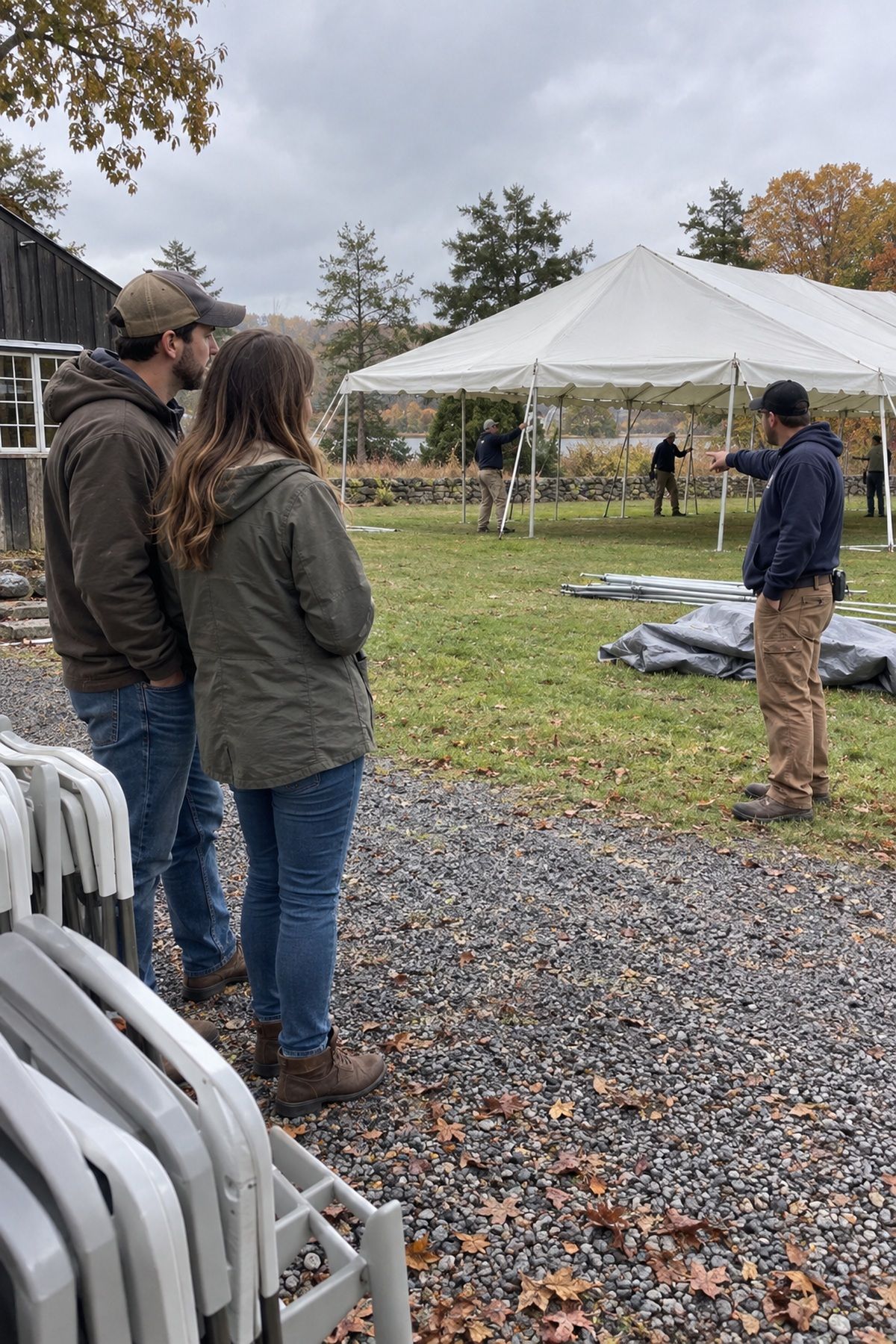
Book before the busy season makes the good options disappear. Ask about tent size, staking rules, permits, delivery access, setup time, power, lighting and where catering works in the rain. Then check the walking distance between tent, bar, coat area and restrooms. A pretty tent loses its charm fast if guests step into rain every time they need a drink. The wedding rental mistakes post covers the layout traps I see most.
Sidewalls

Fall rain rarely falls straight down. Sidewalls protect tables, musicians and candles when wind pushes water under the tent edge. Ask whether they’re clear, solid or roll-up, and mark them on the layout: the bar side, band side, catering side and ceremony side may each want something different.
Flooring and firm paths
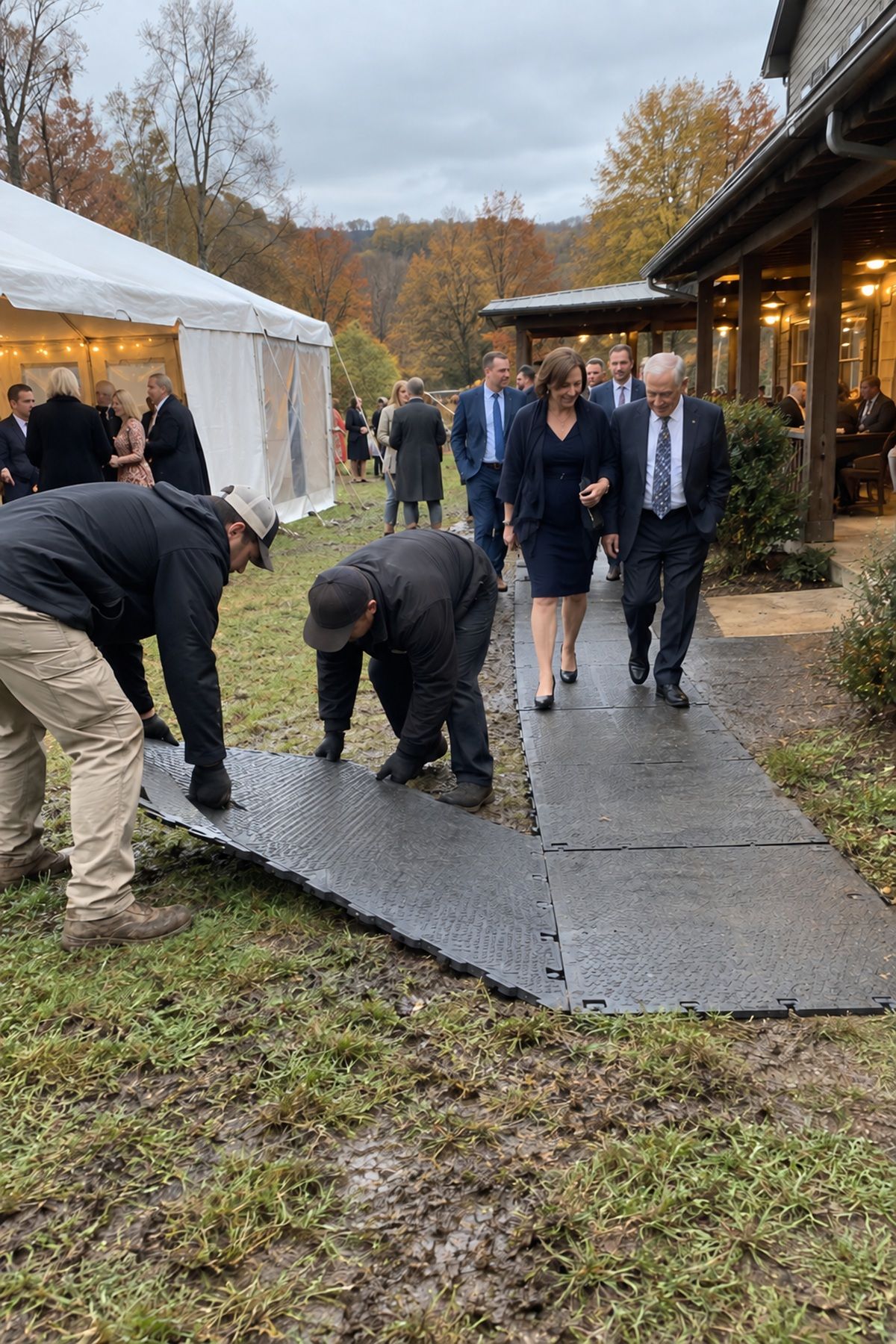
Grass is the first thing to fail in steady fall rain. Temporary flooring, walkways, mats or a hardscape ceremony area keep heels, hems and catering carts out of the mud. If the venue has gravel, stone or a covered terrace, route guests across it. A narrow firm path beats a lovely lawn path that turns to soup after the twentieth pair of shoes.
How do you get guests in dry?
Cover or shorten the walk from car to seat, put umbrellas where people actually enter, and station one person at the door. The first five minutes set the mood for the whole wet day.
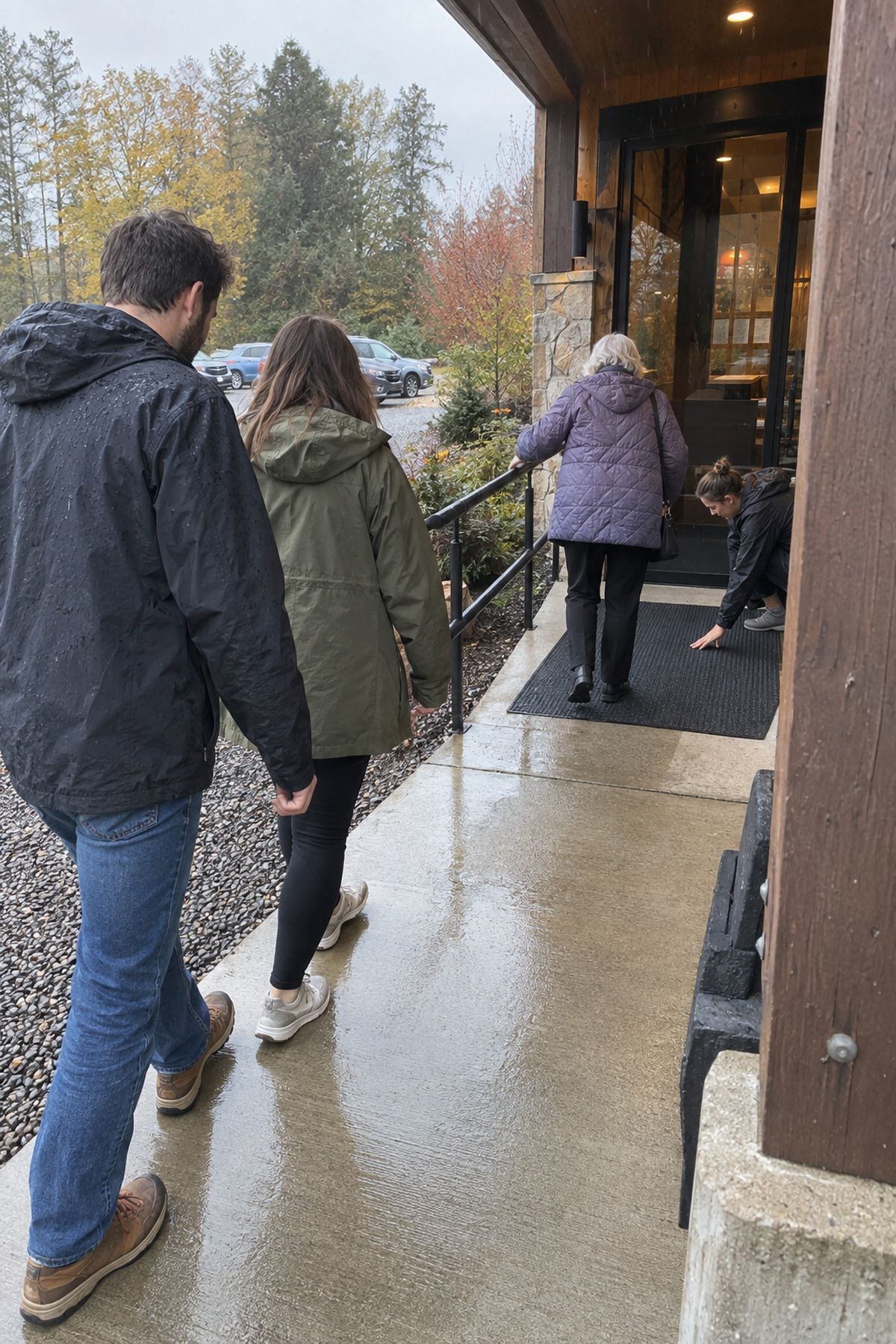
Walk the rainy route yourself before wedding week, ideally with an older relative. Stand where you’ll stand, picture the chairs, check the aisle width, look for cords and notice where wet coats will pile up. Every guest should have a dry seat, a clear view and a way to cocktails that doesn’t cross mud.
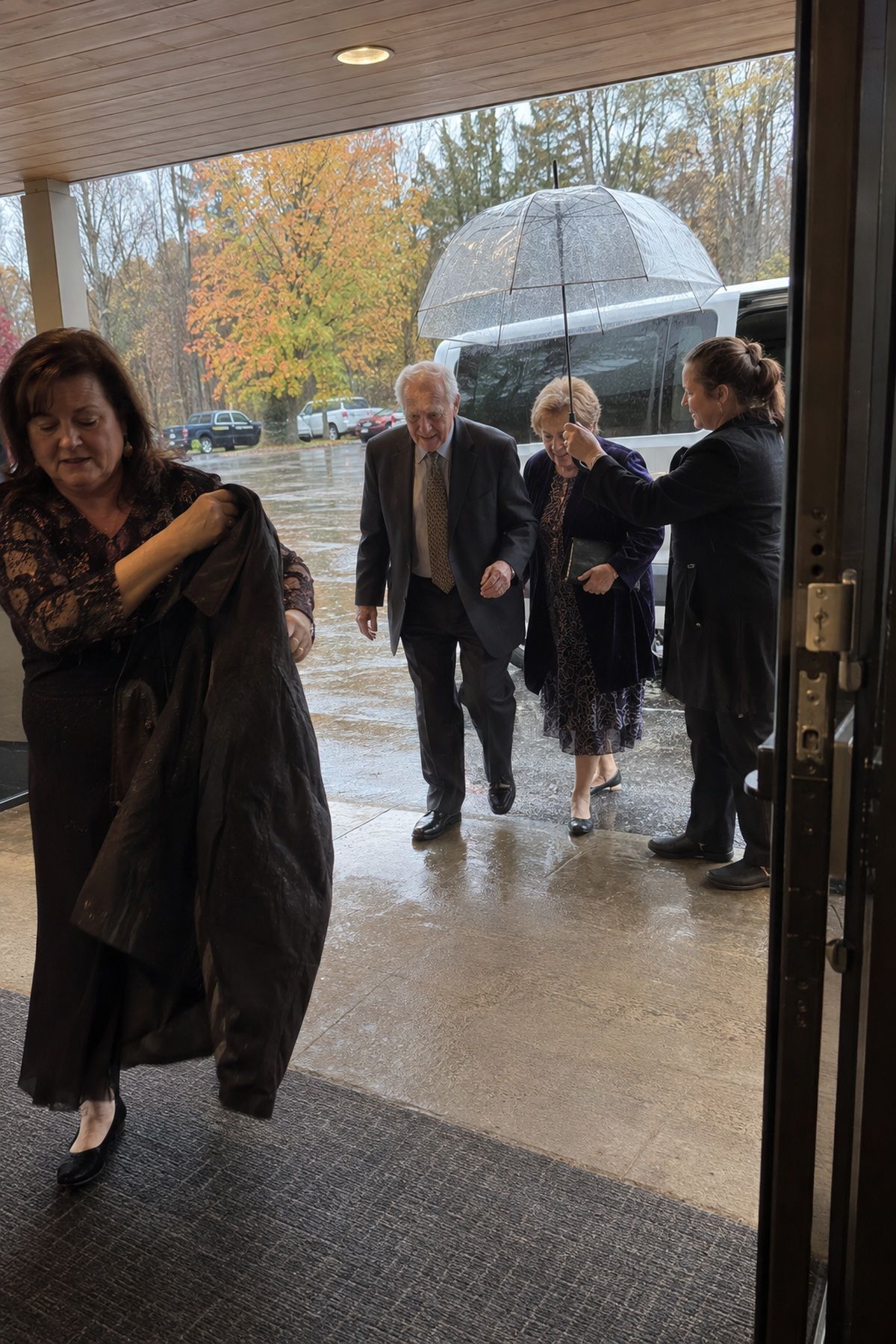
Covered drop-off, clear parking directions, shuttle timing and a dry check-in spot tell people the day is under control. At a small wedding this can be personal: a cousin with umbrellas, cider at the door, a calm sign with the new ceremony location.
Umbrellas at the entrances, not on a styled table

Put clear umbrellas at parking, the shuttle drop-off, the venue doors, the ceremony exit and the portrait spot. Keep a few extra for older guests, the wedding party, speakers and anyone carrying flowers or a toddler. A pretty basket by the exit is nice. A stocked entrance is useful.
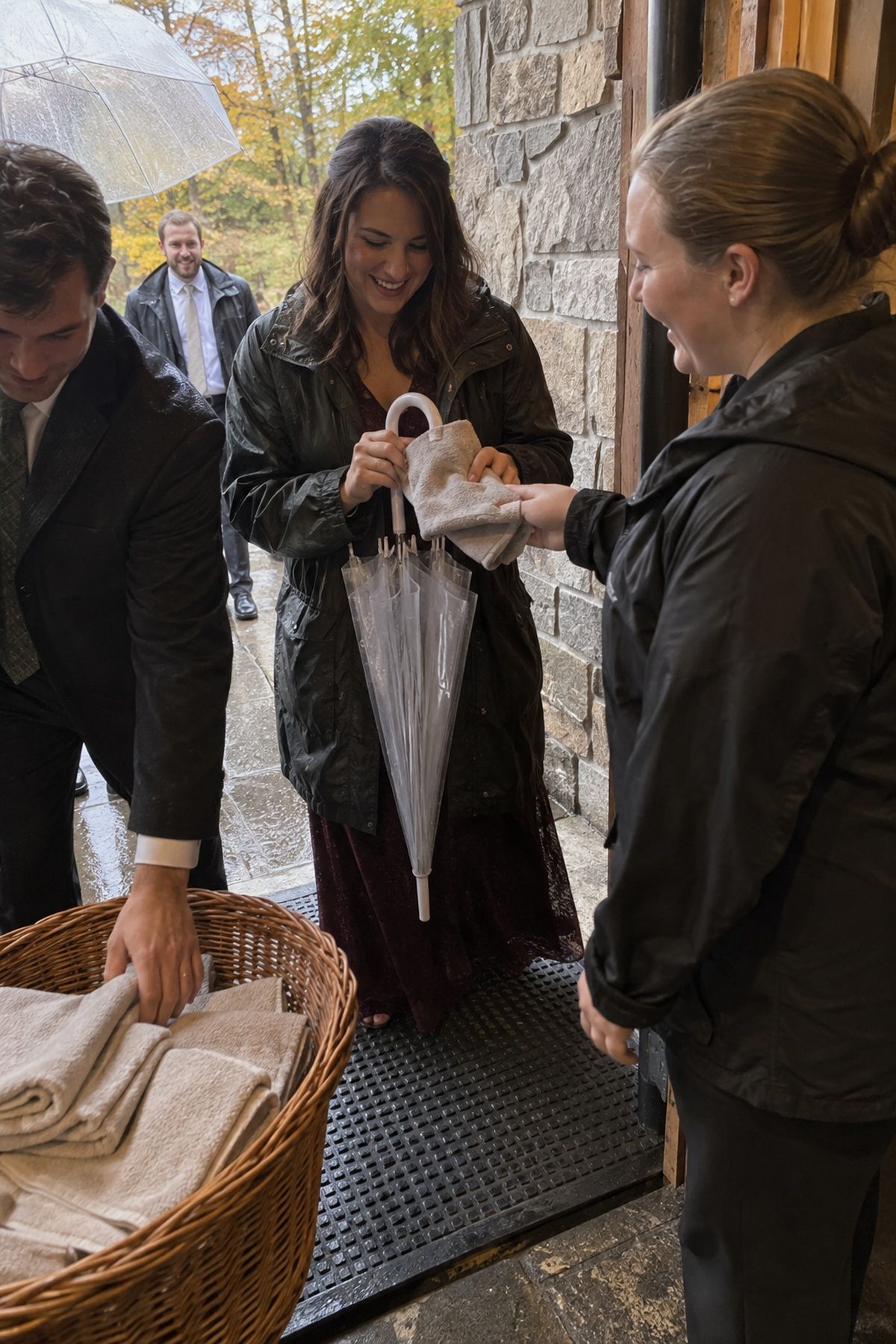
Add a basket of plain towels by the entrance, the restrooms and the coat check. Guests use them for hands, umbrella handles, shoes and wet benches. Not glamorous, always used.
Rain and the ceremony itself
Protect the music, decide the safety rules in advance and keep the ceremony layout as close to the original as you can.

Ask where the sound gear goes if rain blows sideways, where cables run, whether the band platform stays dry and who signs off on the setup if the ceremony moves. Covered power and a cable ramp across the guest path aren’t optional.
Lightning and strong wind mean indoors
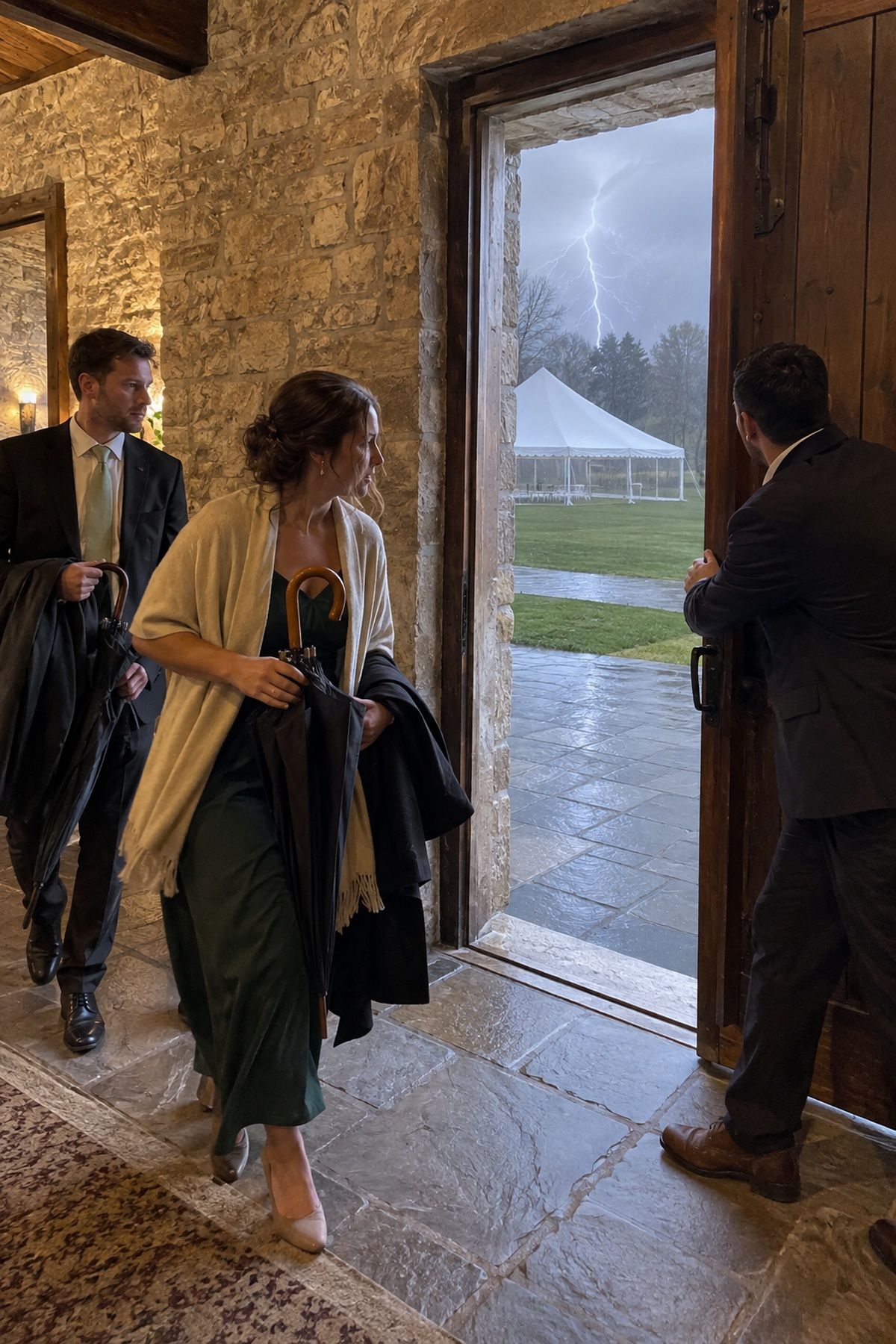
Set this rule now so nobody debates it on the day: lightning, strong wind, pooling water or unsafe flooring move everything inside. When the rule is written down, nobody has to argue romance against safety in the moment.
Rainy day wedding portraits that look planned
Choose indoor and covered photo spots with your photographer before the timeline is final, and buy matching clear umbrellas for the portraits.
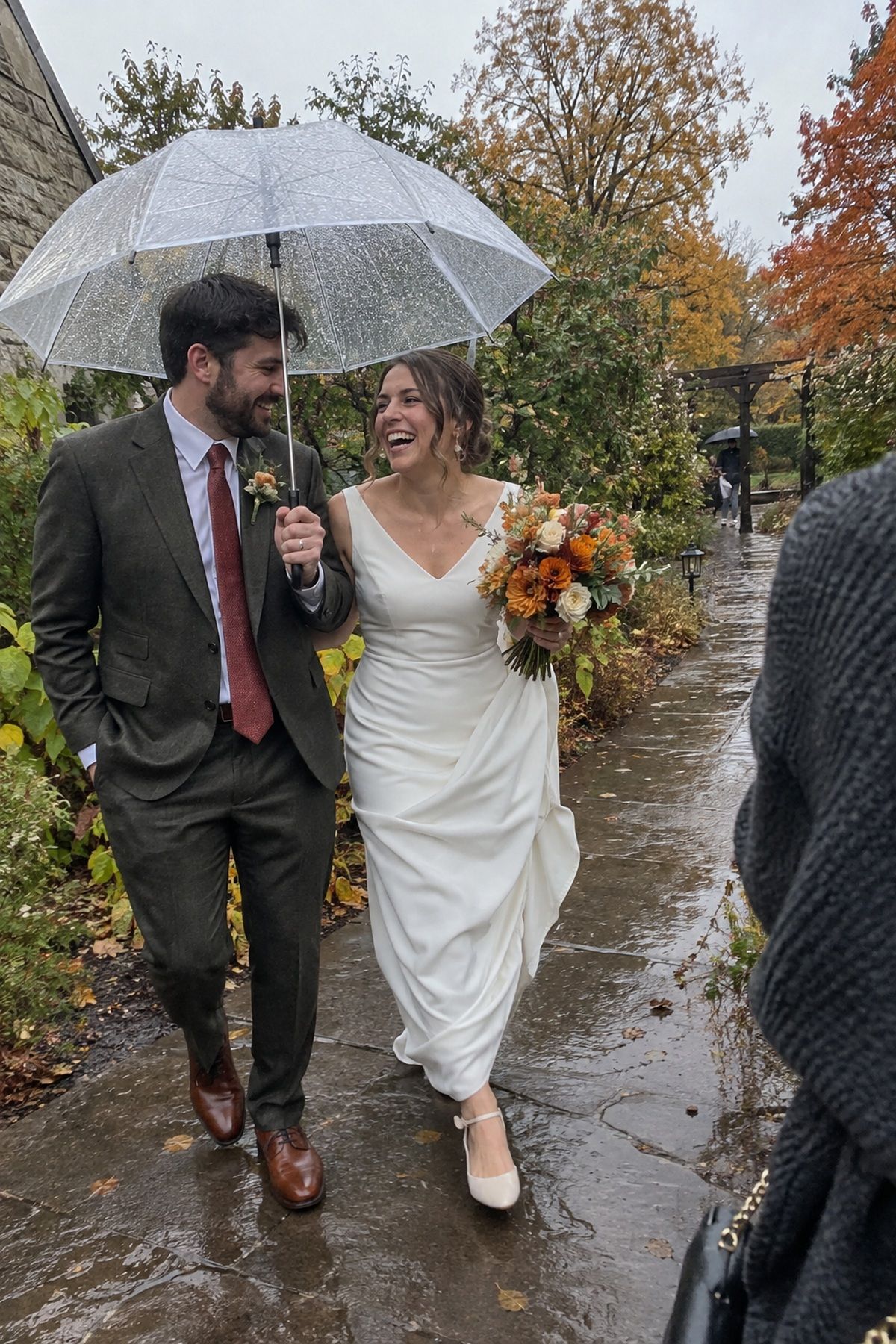
Clear umbrellas keep faces visible and let the fall color stay in the background. Get a few matching ones for the couple, the wedding party and parents. Keep the portrait route short; nobody wants to cross the whole property in a long dress on wet ground.
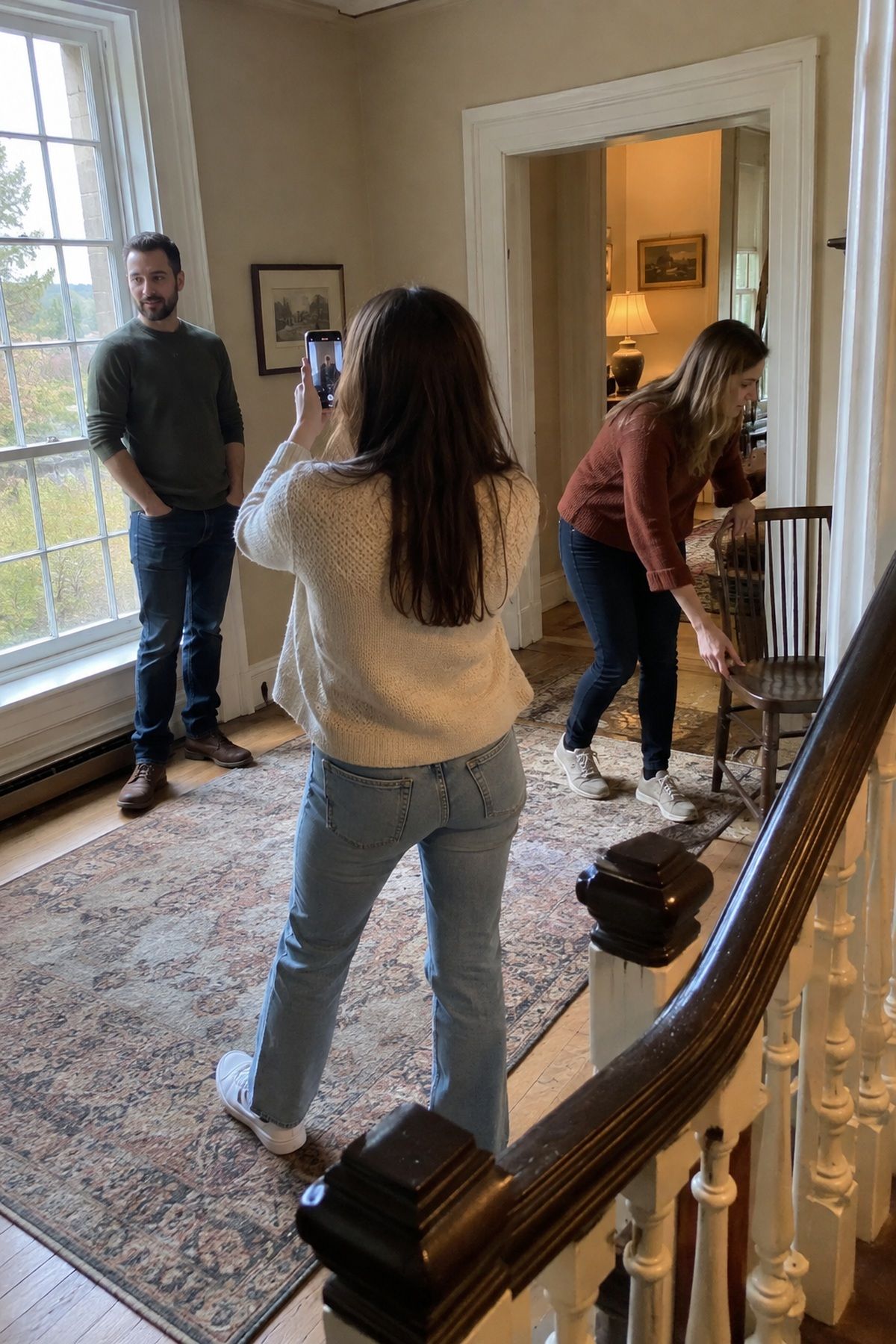
Tour the venue with your photographer and pick window corners, staircases, fireplaces, libraries and covered porches. Move a chair, clear a table, add a candle where allowed and keep one small floral piece back for detail shots. The October wedding photo ideas post has more indoor setups that suit autumn light.
Shoes and hems
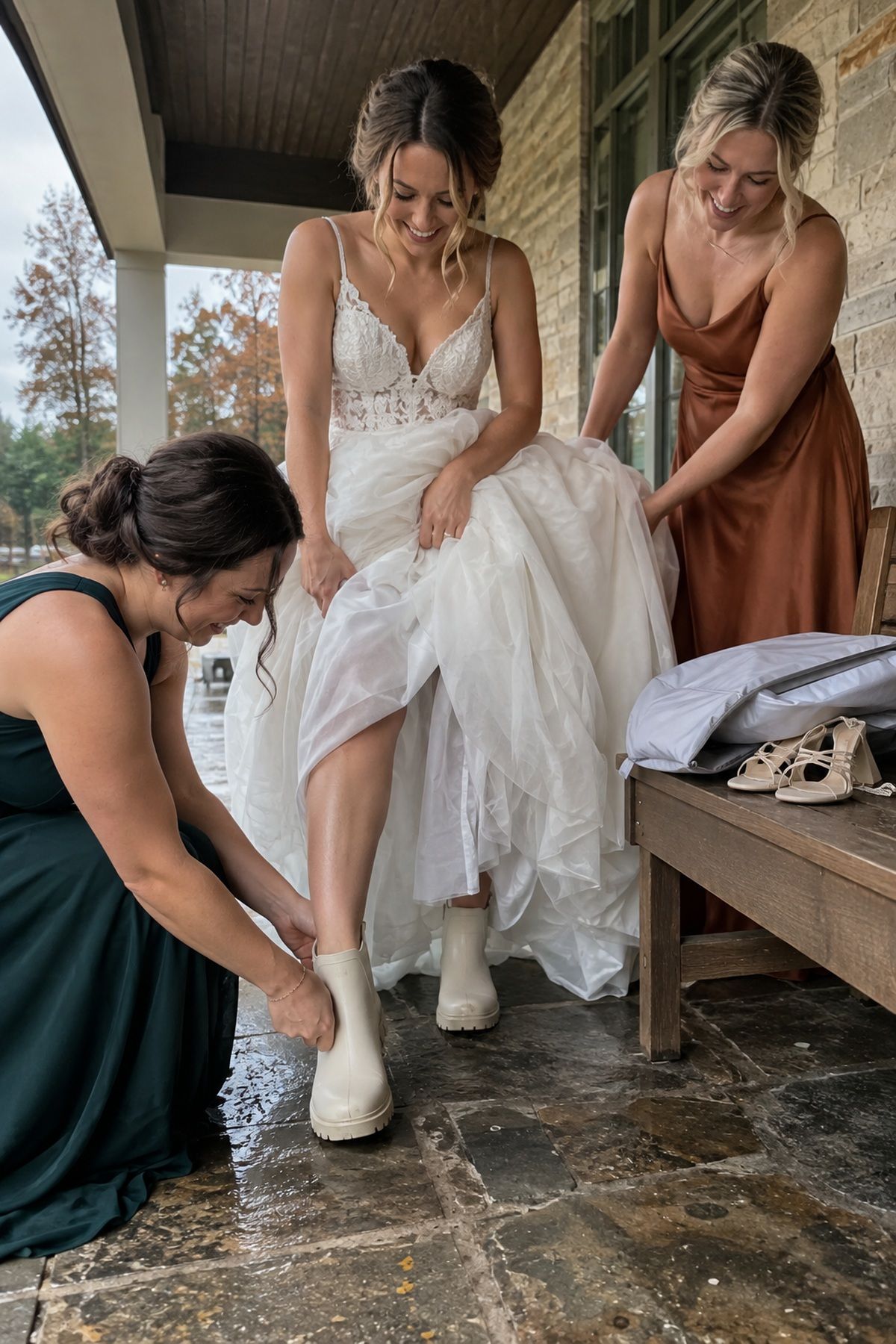
Wet grass and long hems don’t mix. Pack rain boots or heel protectors, a bustle check, safety pins, a small towel kit and somewhere private to reset the dress. Tell the wedding party which shoes to wear for portraits and when the good ones go back on.
How do you tell guests about a wedding rain plan?
Tell them where updates will appear, then send one short message with the location, footwear and any timing change. Write it now and only fill in details later.

Pick the channel before invitations go out: wedding website, a group text, email or the hotel desk. A rain message can be this short: “Rain is forecast, so the ceremony is moving indoors to the lodge at 4 pm. Same start time, flat shoes recommended, shuttles unchanged.” The Knot has more bad-weather wording examples if you want to borrow phrasing.
Vendors get the rainy floor plan first

Send the ceremony and reception layouts, outlet locations, tent notes, portrait plan, delivery route and decision deadline in one document. Caterers, musicians, florists, rentals, transport and hair and makeup are all moving things through wet spaces. One shared thread stops three different versions of the ceremony time from circulating. The Knot’s guide to outdoor wedding backup plans is a useful checklist to compare against.
Cocktail hour and reception once it’s wet
Bring cocktail hour indoors or under cover sooner than you planned, and light the tent brighter than you think you need.

Damp guests get cold quickly in autumn. Shorten the outdoor window, move the bar closer and speed up the passed food. When I ran banquet service, rainy days were the ones where we sent canapés out faster and earlier, because a hungry, damp room turns grumpy faster than any other kind. Decide who watches guest comfort and who tells the venue it’s time to move everyone in.
Lighting a rainy tent
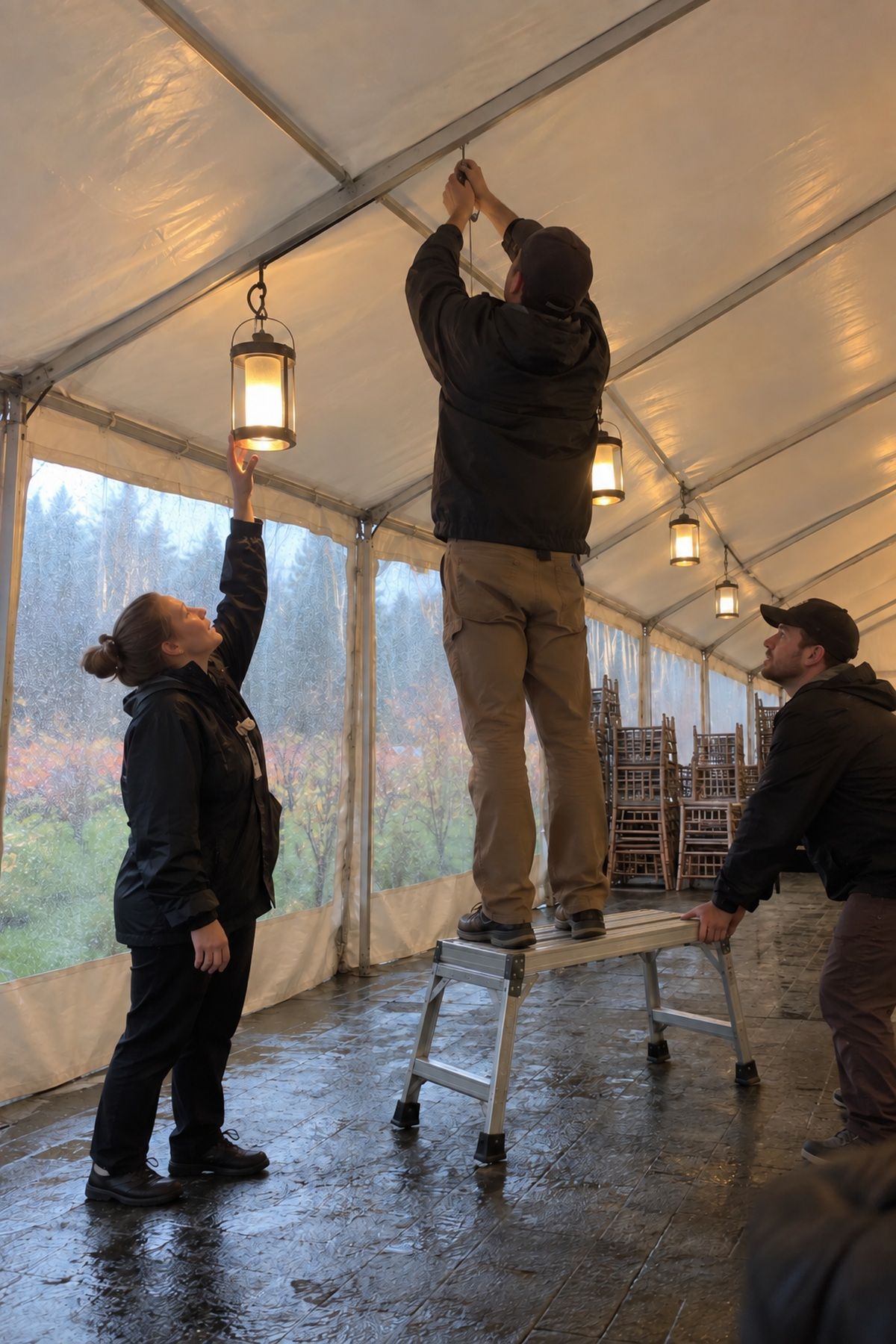
A tent that glows at sunset can look gray during an afternoon storm, especially with the walls down. Battery lanterns, tent-safe lamps, votives and warm uplighting fix it. Test the light at the hour guests will arrive, not at the end of setup.
What gets moved and what gets cut
Decide now which decor travels indoors, which gets reused and which stays home. Otherwise your team redesigns the wedding in the rain.
| Item | Rainy-day plan |
|---|---|
| Ceremony arch or florals | Move indoors to the backup ceremony spot |
| Aisle markers | Cut, or move to the reception tables |
| Welcome sign | Move under cover at the new entrance |
| Lounge furniture | Cut unless the tent has room |
| Outdoor candles | Replace with battery lanterns in the tent |
| Paper programs | Hand out indoors, not left on wet chairs |
If you’re planning around 30 guests, the how to plan a wedding with 30 guests guide covers room sizing that helps here too.
Rain plan in five lines
- Choose a backup space you’d be happy to marry in, and photograph it on the tour.
- Make the rain call about 48 hours out, with one named decision-maker.
- Put umbrellas and towels at entrances, and firm flooring on every guest route.
- Pick indoor portrait spots with your photographer before the day.
- Write the guest message and send vendors one rainy floor plan in advance.
FAQ
When should you make the rain call for a fall wedding?
Make the main rain call about 48 hours before the wedding, then confirm it with your venue, rentals and caterer. Tents, flooring and sidewalls may need an earlier deadline, so ask each vendor what they need.
Do you need a tent for a fall wedding rain plan?
You need a tent if the venue has no indoor space that fits your ceremony, cocktails and dinner. For autumn rain, plan sidewalls, flooring, lighting and short covered routes to the bar and restrooms along with the tent itself.
How do you keep guests comfortable if it rains at a fall wedding?
Keep guests comfortable with covered or firm arrival routes, umbrellas at every entrance, towels by the door, non-slip mats and a warm drink when they arrive. At a small wedding, assign one helper to watch for anyone who needs a closer seat or a lift.
What should you tell guests about a wedding rain plan?
Tell guests where updates will appear, then send one short message with the new location, footwear advice and any timing or shuttle change. Keep it calm and brief so the weather doesn’t become the headline.
Can rainy fall wedding photos look good?
Yes, rainy fall wedding photos can look great with clear umbrellas, window light and candlelit indoor corners chosen in advance. Keep the portrait route short and save one floral piece for indoor detail shots.
If the forecast turns
A good fall wedding rain plan means the bad forecast changes your venue, not your day. Do the tour, write the message, name the decision-maker, and then let it rain. If you’re also comparing seasons, the winter wedding rain plan adds cold to the same checklist.
Last update on 2026-10-04 / Affiliate links / Images from Amazon Product Advertising API