

Pair a bolero with your wedding dress by contrast: a plain gown with a lace, beaded or tulle bolero, or a detailed gown with a simple satin one. Match the undertone in daylight, bring the bolero to every fitting, and decide before the day when it comes off and who handles the snaps.
The most common bolero mistake happens in the bridal shop. The dress gets chosen, fitted and hemmed, and only at the final fitting does someone say, “oh, and maybe a little jacket for the church?” A bolero added that late almost never matches the fabric, the neckline or the way you move, and that’s why so many wedding dress with bolero ideas end up looking like a cardigan someone lent you. The good news is that the fix is mostly timing. If your wedding is at the courthouse, our dress ideas for a courthouse wedding cover the rest of the outfit.
Planned early, a bolero gives you two looks from one dress: covered and polished for the vows, then the original neckline for dinner and dancing. Below are 16 bolero ideas sorted by dress type, season and setting, followed by how to match fabric, what to check at fittings and when to take it off.
Recommended Bridal Bolero Essentials
Lace, satin or faux fur, plus a pack of snap fasteners, which you’ll want even if your seamstress swears she has some.


Recommended blogs to read:
- Wedding Dress Men Ideas for a Ceremony Look That Feels True
- 1980 Wedding Dress Ideas With Drama That Still Breathes
- Dainty Wedding Dress Ideas That Still Feel Like a Moment
- Wedding Cape Dress Ideas for a Cinematic Walk Down the Aisle
- Mermaid Drape Wedding Dress Ideas for Soft Sculpted Drama
- How To Write A Wedding Dress Code Guests Can Actually Use
Which Bolero Goes With a Strapless Gown?
Almost any bolero, as long as it contrasts with the bodice. Lace and tulle soften smooth satin, and a clean satin bolero calms a busy one.
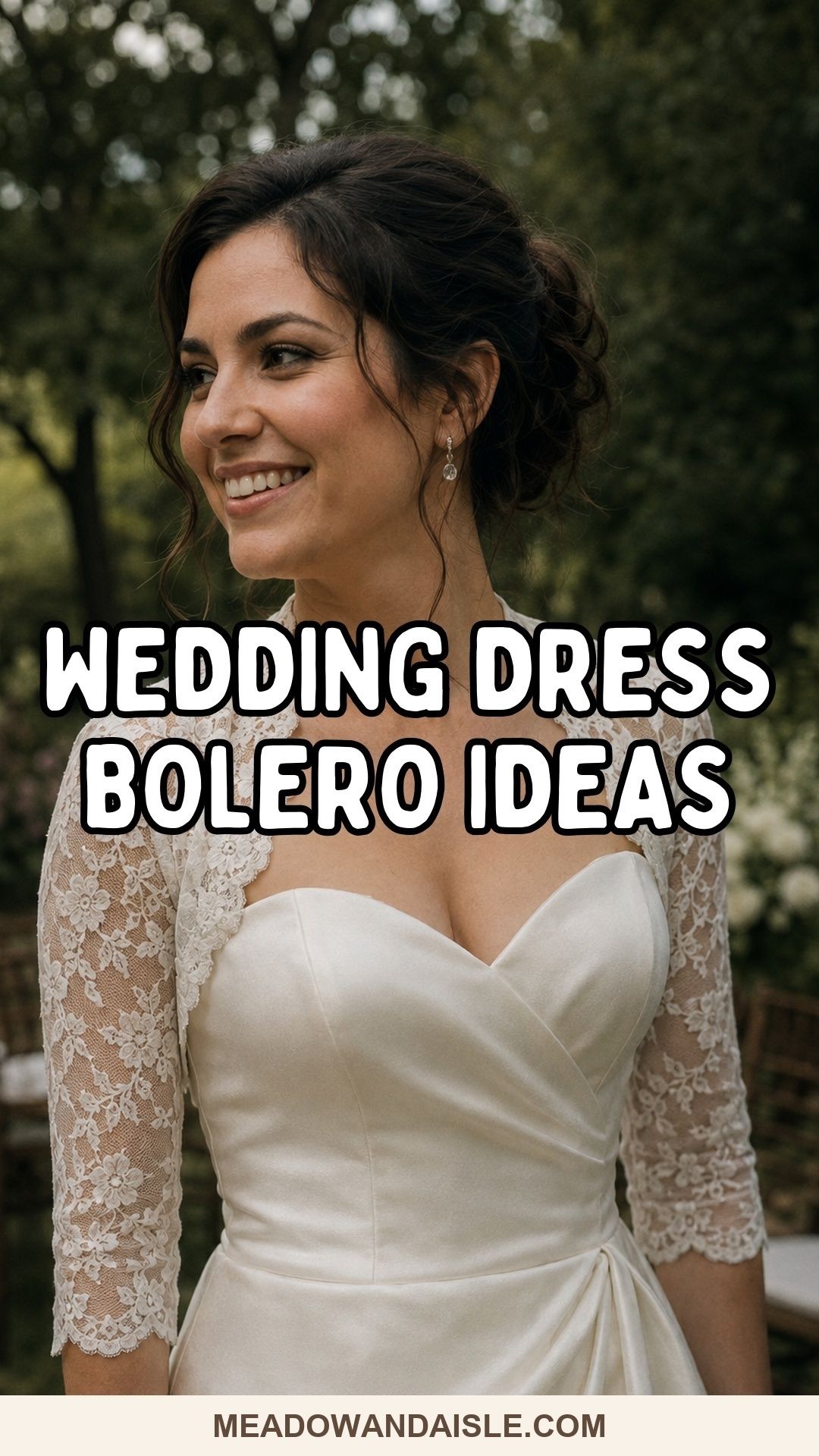
1. Lace Bolero Over a Strapless Satin Gown
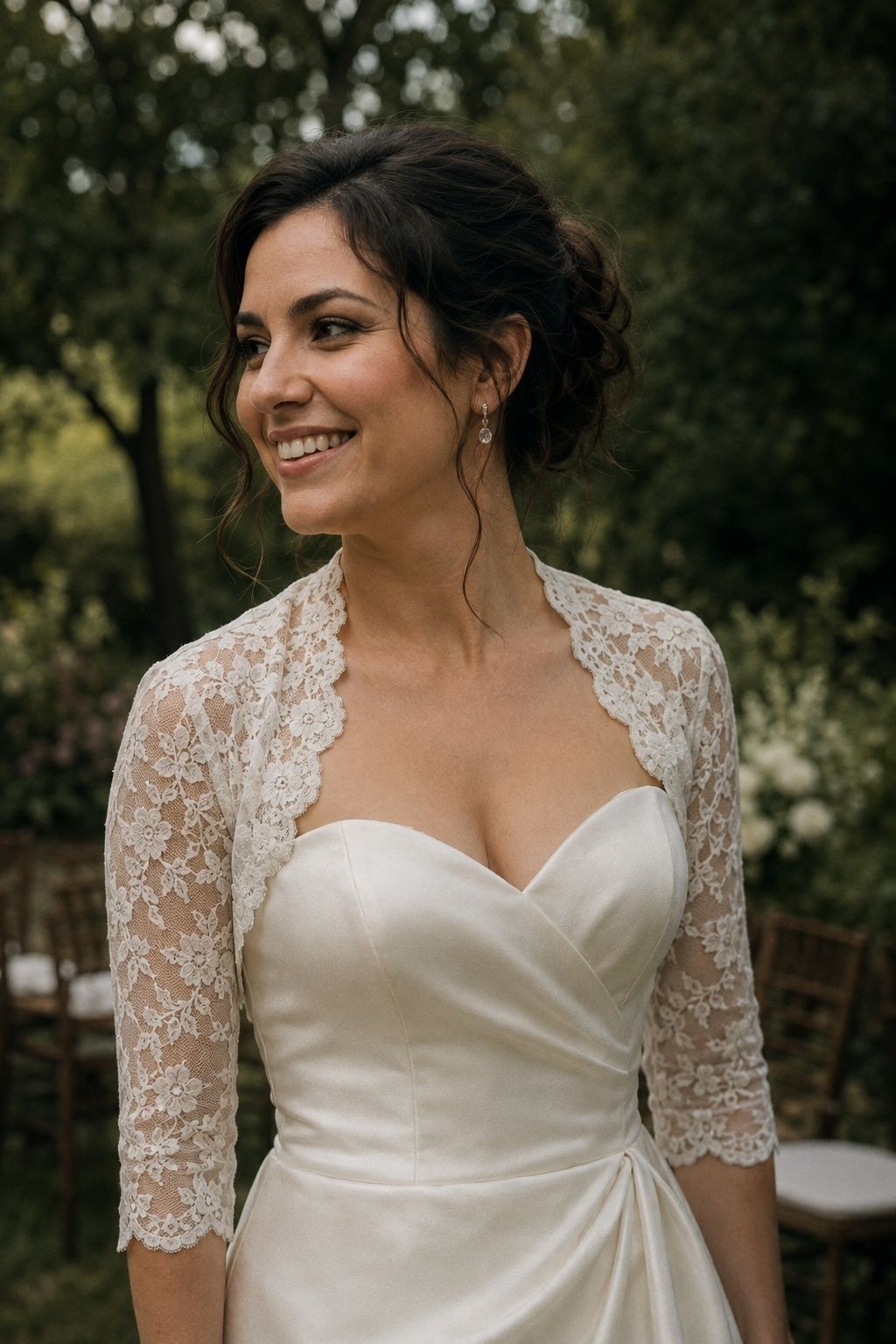
This is the classic pairing for a reason. A strapless satin gown is smooth and a bit formal, and a lace bolero over it adds softness right where people look most, the shoulders, arms and collarbone. Three-quarter sleeves with a scalloped edge, like this one, leave the wrists free for the bouquet and the rings.
Match the lace size to the dress. Small floral lace looks delicate with a slim gown, while heavier corded lace suits a full skirt and a big church. If the bodice already has draping or a sweetheart line, keep the bolero’s neckline open so you don’t cover the best part of the dress. For a garden ceremony, this is probably the easiest bolero look to get right.
2. High-Neck Bolero for Chapel Vows
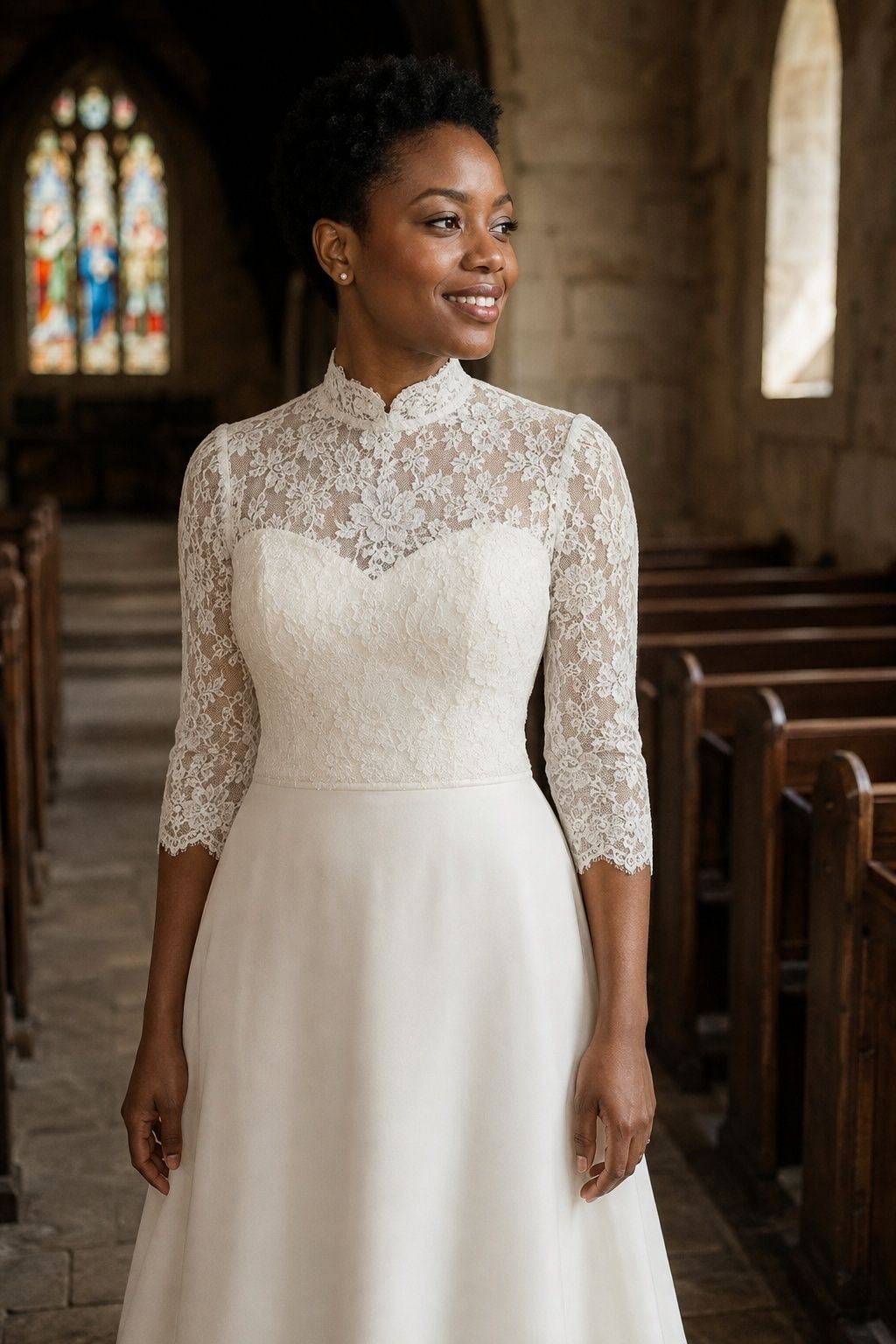
Some churches ask for covered shoulders, and some brides just love how a high neck looks in a chapel. Either way, a high-neck lace bolero over a strapless A-line gown gives instant formality without buying a second dress. It looks right at home between wooden pews and stained glass.
Comfort is the thing to test. A high collar feels lovely in the mirror and less lovely after an hour, so sit down, turn your head, look down at your vows and hug someone during the fitting. If anything pinches at the throat, ask for a slightly lower or more open collar now, before alterations are finished.
Bonus: a high neck means you can skip the necklace and spend that money on earrings.
3. Sheer Tulle Bolero With Pearl Buttons
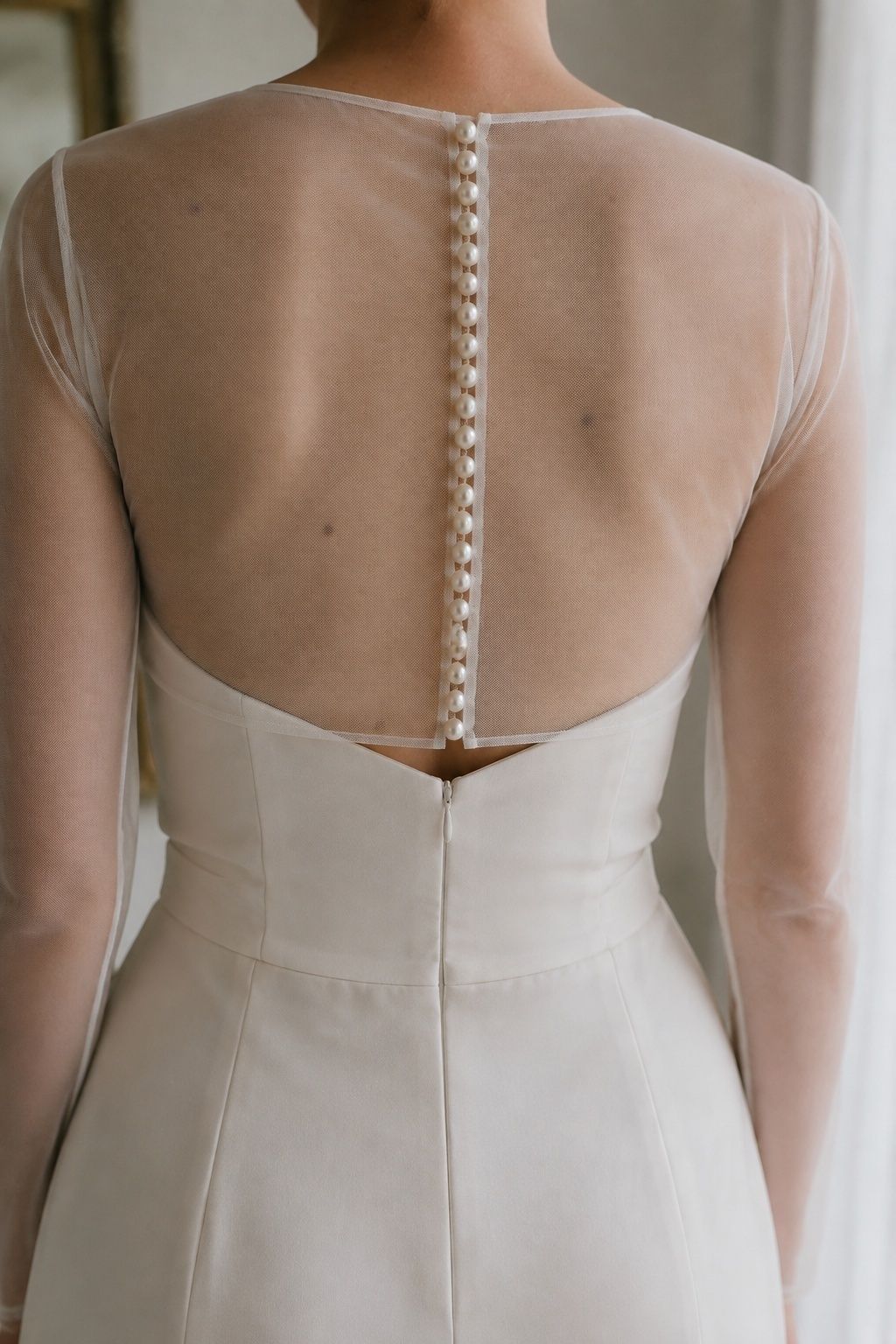
What if you want coverage that barely looks like coverage? Sheer tulle is the answer, especially with pearl buttons running down the spine, which turn the back of the dress into the moment everyone notices during the ceremony. It works best over a gown with a strong shape, like a structured strapless bodice, because the tulle lets that shape show through. Check the button color in daylight. Bright white pearls against ivory tulle can look a bit harsh, while warm ivory or champagne pearls blend in. And plan who does the buttons up, because a long row of tiny ones takes a patient friend about ten minutes.
4. Satin Bolero With a Minimalist Dress
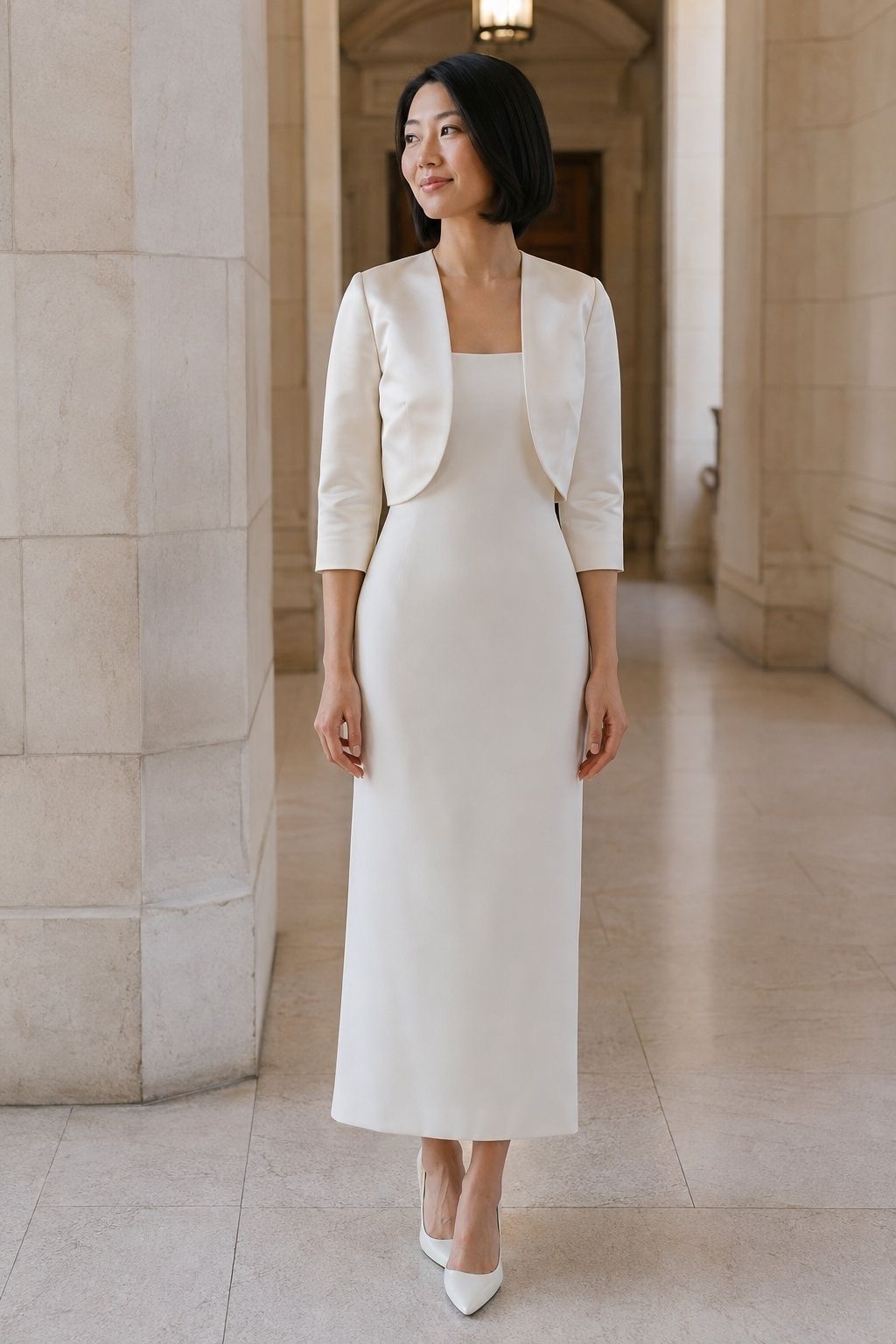
A cropped satin bolero over a clean column dress looks sharp and modern, more city hall or gallery than cathedral. The structure of the satin gives a simple dress some shape at the shoulders, and three-quarter sleeves keep it from feeling like office wear.
Exact fabric matching is hard, so aim for harmony instead. Compare the sheen, weight and color of the two satins side by side by a window. If the bolero comes out a touch warmer than the dress, repeat that warmer tone in your shoes or earrings and it’ll look planned. Pointed white heels and a sleek bob, the way this bride wears them in a stone colonnade, keep the whole look tidy.
Which Bolero Gives Modest or Seasonal Coverage?
Long lace sleeves for modest ceremonies, faux fur or beading for winter evenings and cap sleeves for summer. Pick by the season first, then the fabric.
5. Long-Sleeve Lace Bolero for Modest Coverage

For religious ceremonies, family expectations or simply loving sleeves, a long-sleeve lace bolero gives full coverage while keeping your dress visible underneath. A high round neck and lace down to the wrists covers the arms, shoulders and chest, and the strapless gown still shows its shape below.
Sleeves are where long boleros go wrong. They look perfect on the hanger, then pull tight across the upper arm the moment you lift a bouquet. At the fitting, raise both arms, hold a bouquet at waist height, clasp hands with someone and hug them. If any of that feels tight, ask for more room in the upper sleeve.
You’ll be hugging a lot of aunts, and every one of them will squeeze.
6. Off-Shoulder Bolero With a Corset Dress
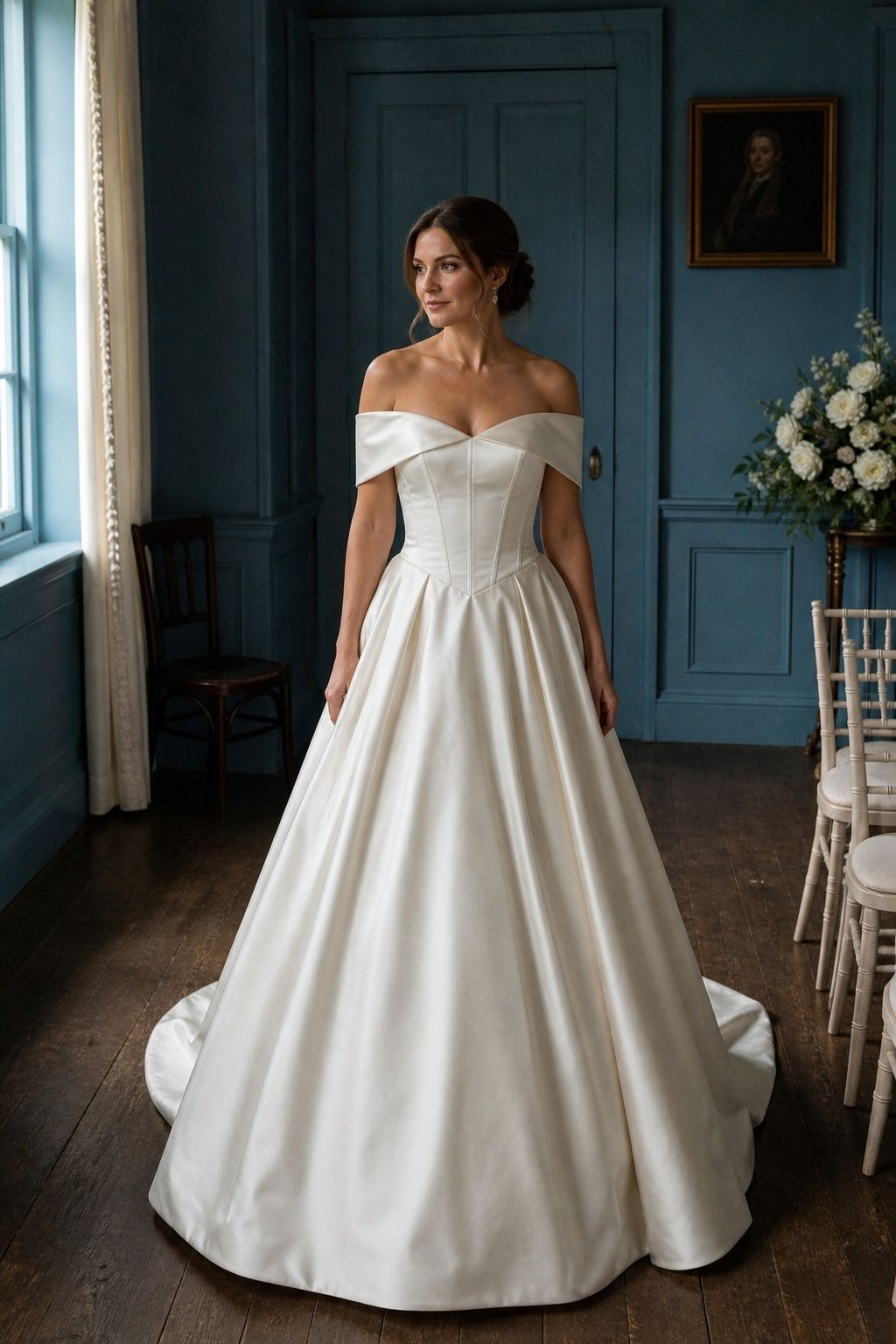
An off-shoulder band of satin framing a corset bodice is old-school glamour, the kind that looks right in a room with paneled walls and fresh white roses. It covers the upper arms without hiding the waist, which is the point of a corset dress in the first place.
Security is the one thing to worry about. Off-shoulder pieces like to slide, especially when you sit, dance or lift a glass for a toast. Hidden snaps or small thread loops on the inside edge keep the band lined up with the bodice. Ask your seamstress to add them during alterations instead of trying to fix it with fashion tape on the morning.
7. Faux Fur Bolero for Winter Portraits
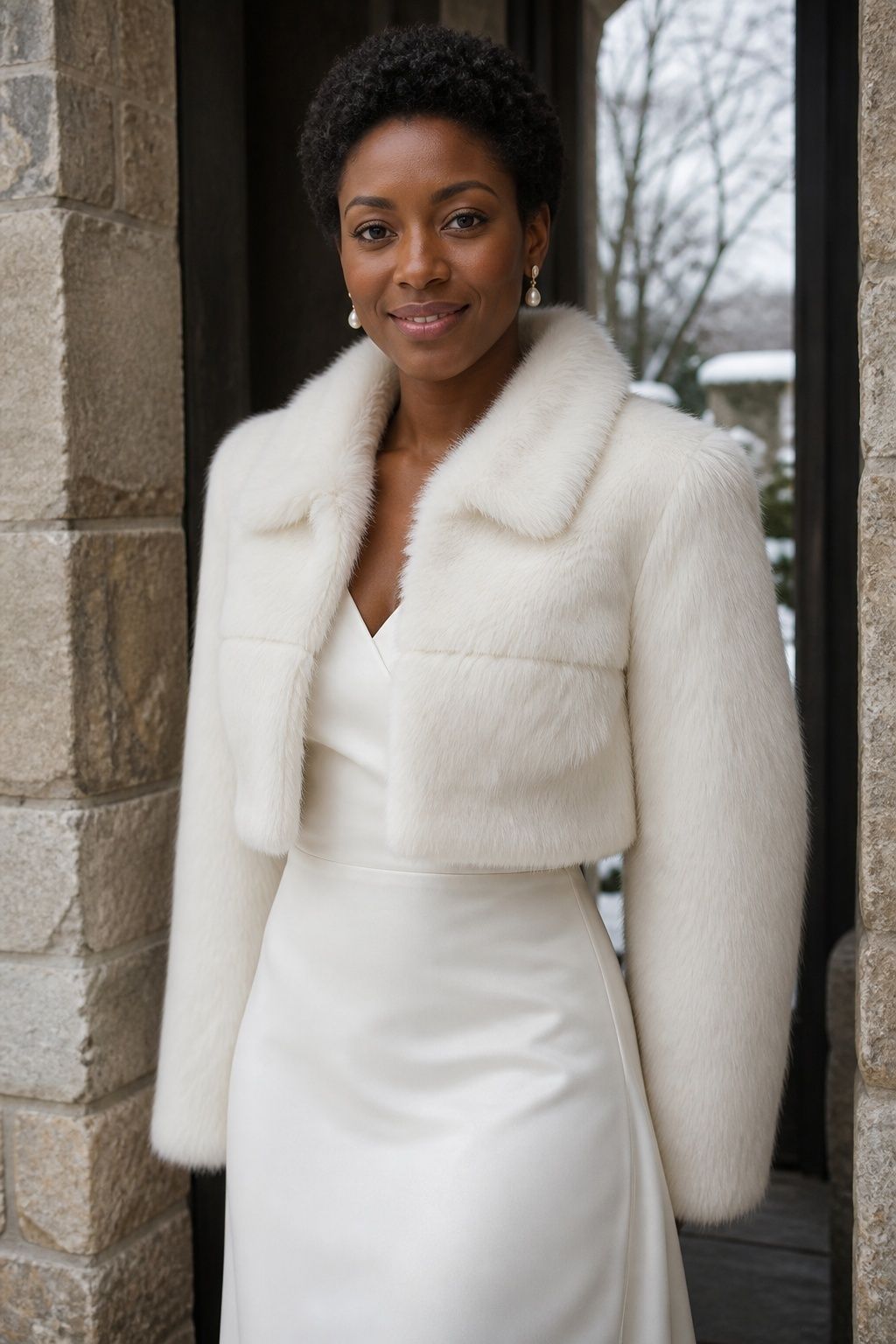
Winter brides, this one is for you. A faux fur bolero keeps you warm for outdoor portraits and gives the photos that soft, old Hollywood feel. I live in Finland, where a December wedding without a warm layer would be a frostbite plan, so I fully support this one. Fur adds width at the shoulders and changes where your arms sit, which also changes how you hold the bouquet. Try them together before the wedding, and go for a smaller bouquet if the sleeves feel bulky. Keep the rest of the look simple, a satin dress, pearl earrings and smooth hair, so the texture of the fur can stand out. And bring a plan for the reception, since fur next to a buffet table or a lit candle is a bad combination, so it usually comes off once you’re inside and warm.
8. Beaded Bolero With a Plain Crepe Gown
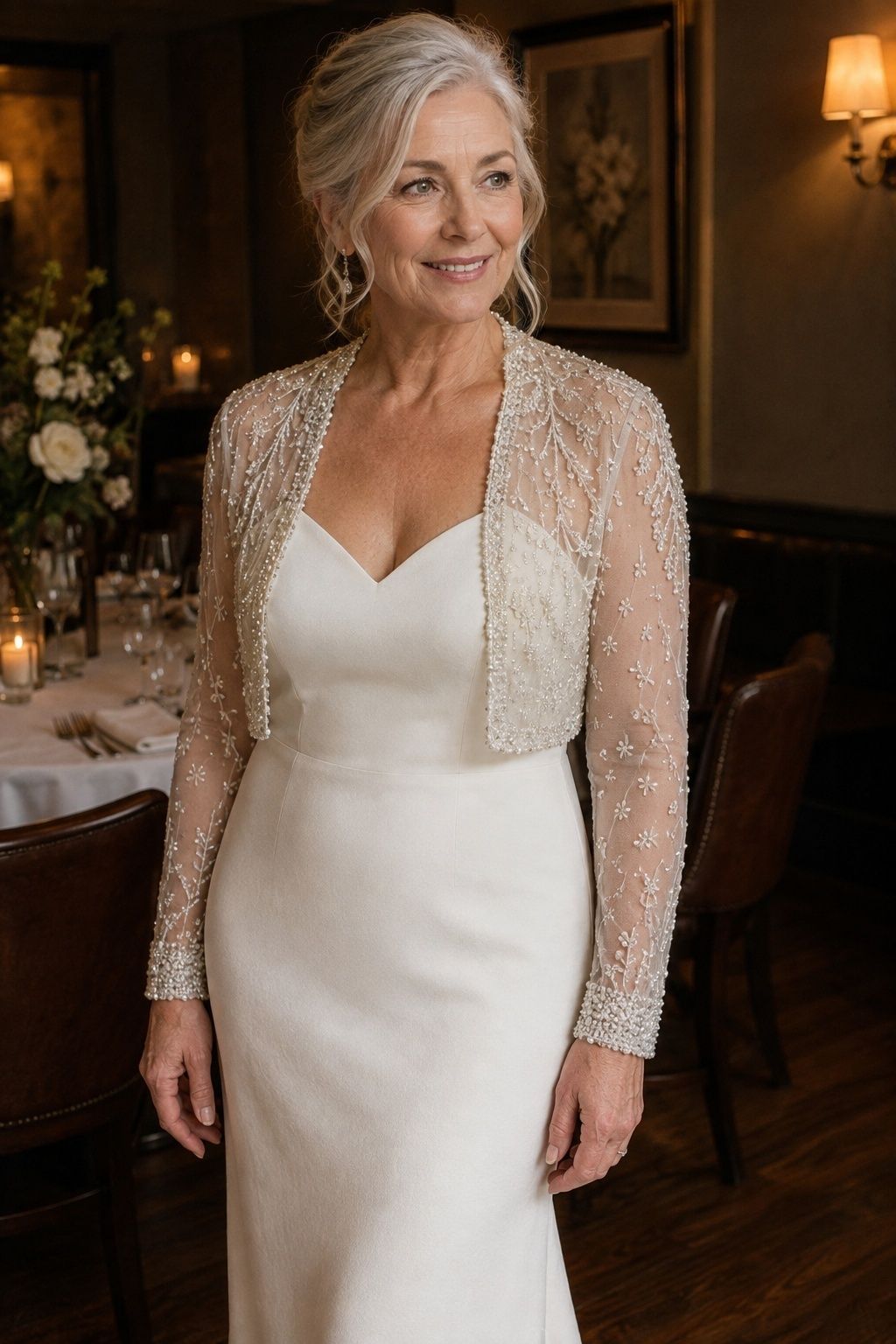
A plain crepe gown is a blank canvas, and a beaded bolero is the easiest way to turn it into an evening look. Sheer sleeves covered in tiny pearls and beads catch candlelight beautifully, which makes this a great choice for a restaurant reception or a winter dinner.
Weight is the catch:
- Heavy beading pulls on the shoulders, so try it on for at least 20 minutes
- It can drag the dress fabric underneath, so check the neckline from the side
- Ask about small hidden anchors if the bolero shifts
- Keep jewelry minimal, since the beads already sparkle
Done well, it gives a simple dress a second life at night.
9. Cap-Sleeve Bolero for Summer Coverage
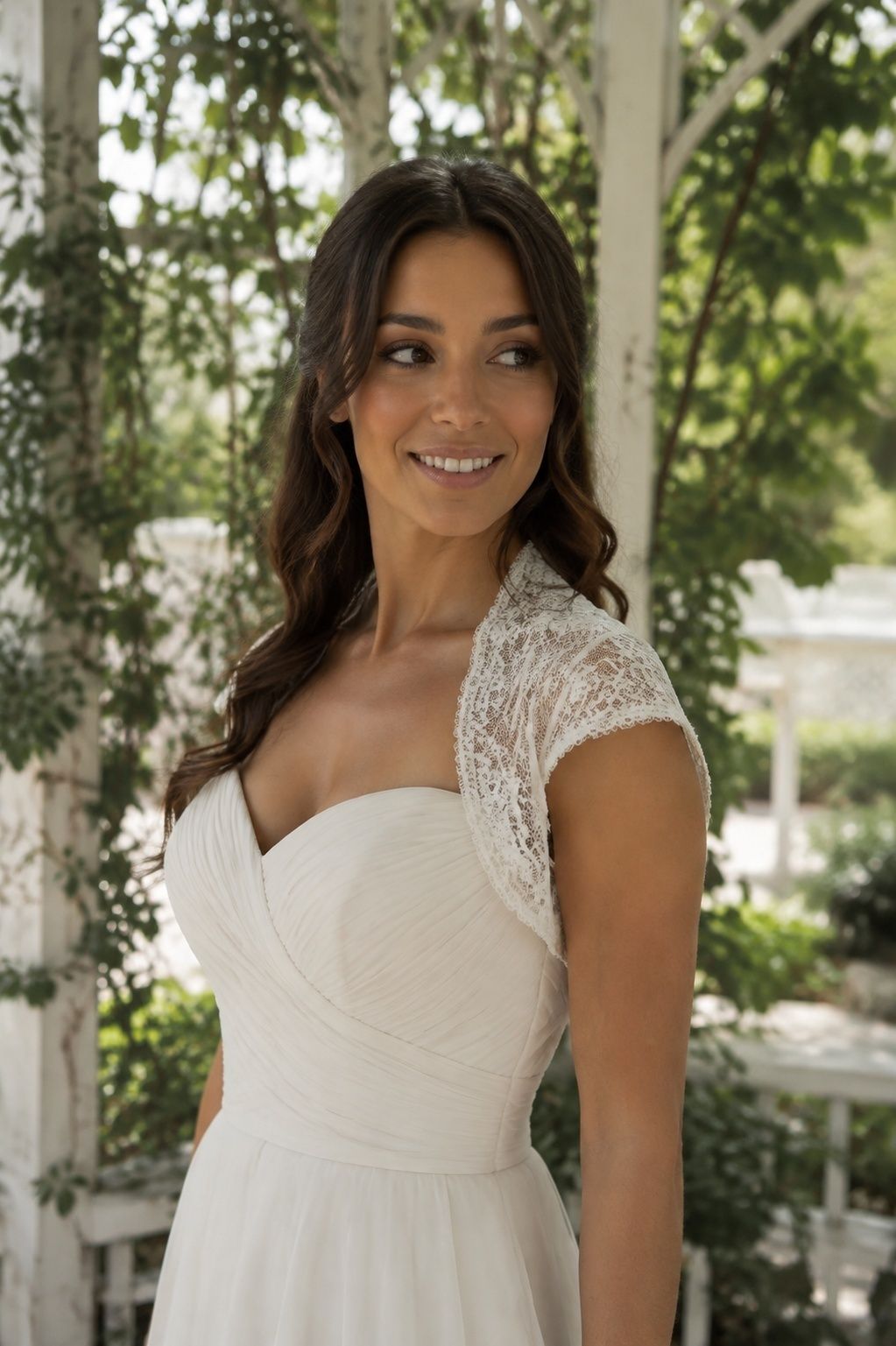
Summer weddings need coverage that doesn’t add heat, and a cap-sleeve lace bolero over a light chiffon gown does exactly that. It softens a strapless neckline for photos and church, covers the tops of the shoulders and lets air reach the rest of your arms. Garden ceremonies, lunch receptions and courthouse appointments all suit it. The tricky spot is the sleeve edge, which sits right where your arm moves most, so look at it from the side in the mirror while you lift and lower your arms. It should lie flat without cutting in or flipping up. If it flips, a tiny weight or a stitch to the bodice fixes it.
Which Bolero Shapes Feel Most Modern?
Puff sleeves in organza and cropped jackets are the most current looks. Both work best with very simple dresses.
10. Organza Bolero With Puff Sleeves
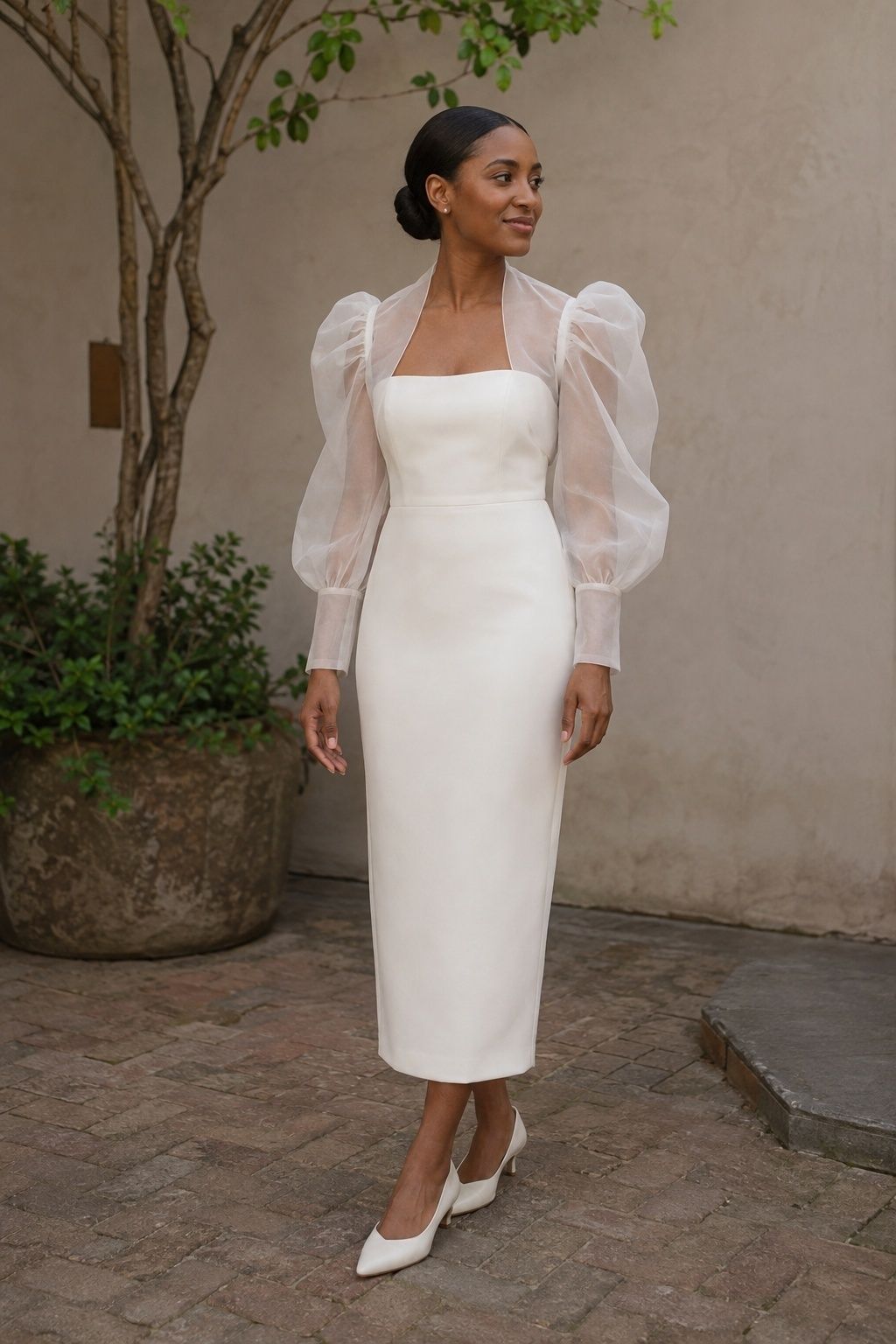
Sheer organza with big puff sleeves turns a plain column dress into something you’d see in a fashion editorial. It’s playful and modern, and it gives a simple dress one strong shape without adding any extra color.
With sleeves this big, everything else should be small. Smooth hair pulled back, simple earrings and a narrow bouquet keep the look crisp instead of crowded. Organza is also stiff and creases easily, so steam it on the morning and don’t pack it in a tight bag. Hang it somewhere high where nobody will sit on it.
11. Courthouse Dress With a Cropped Jacket Bolero
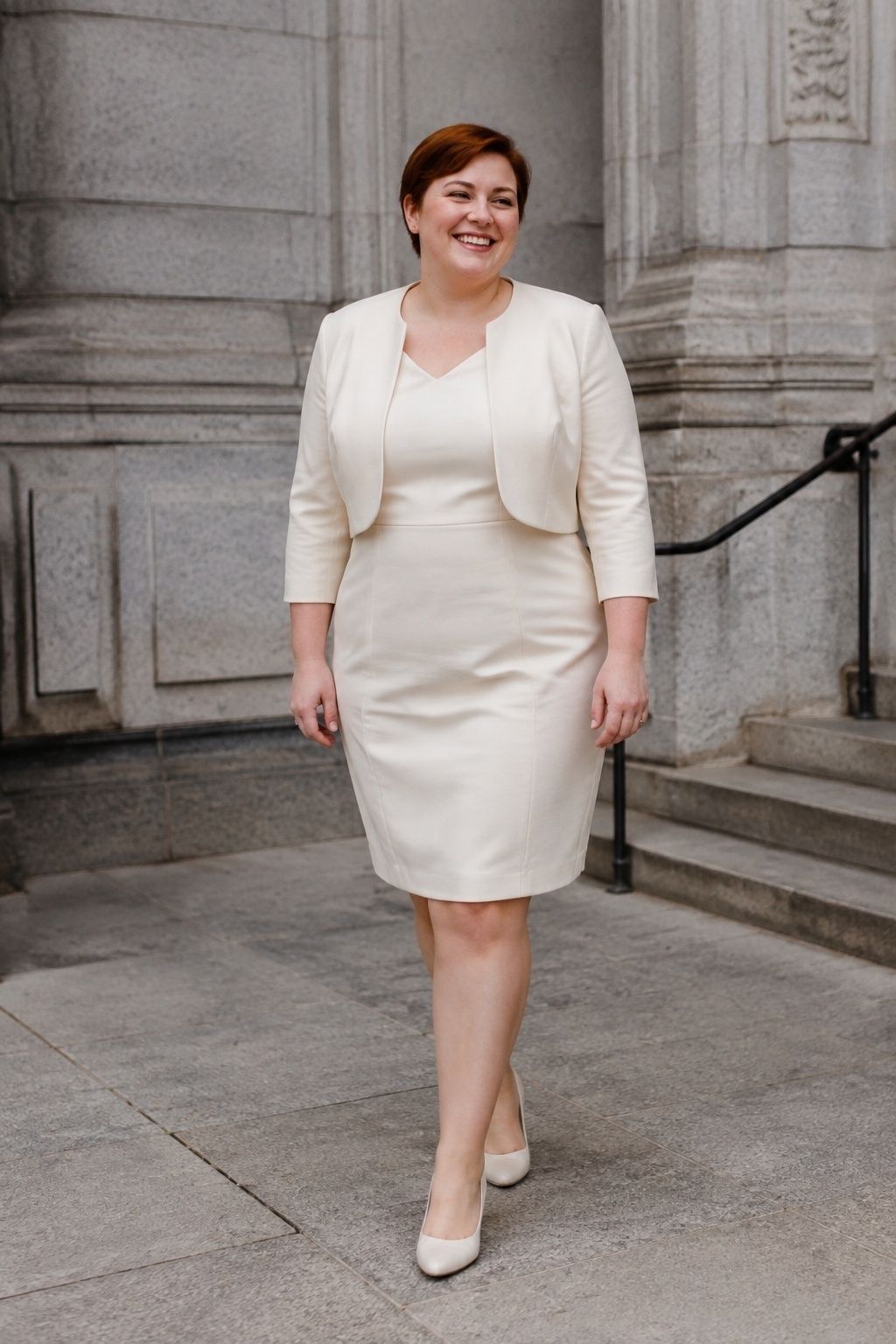
Is a jacket a bolero? When it’s cropped and sits above the waist, close enough. A short ivory jacket over a knee-length sheath is one of the smartest courthouse looks there is. It looks polished on the steps, keeps you warm in air-conditioned offices and works for lunch afterward too.
Because courthouse photos are taken from every angle, fit matters more than fabric. Check the shoulder seams, the back and the sleeve length in a three-way mirror. Bonus: you can wear the jacket again with jeans, which is more than anyone can say about a lace bolero.
Should the Bolero Go Under or Over the Dress?
Under the dress looks like built-in sleeves, while over the dress comes off easily for the reception. Decide at your first fitting, because it changes the alterations.
12. Bolero Under the Dress for a Seamless Look

Tucking a lace layer under a strapless gown makes it look like the dress came with sleeves and a high neck. With a structured bodice over the top, you get the look of a fully covered gown while still owning a strapless one you can wear on its own later.
This only works when both pieces go to the seamstress together. She needs to see the bulk, line up the seams and place the snaps so the bodice closes smoothly over the lace. Fine, thin lace works best, because anything thick will show as a ridge under the bodice.
Plan the swap too, since getting it off means opening the dress.
13. Bolero Over the Dress for Easy Removal
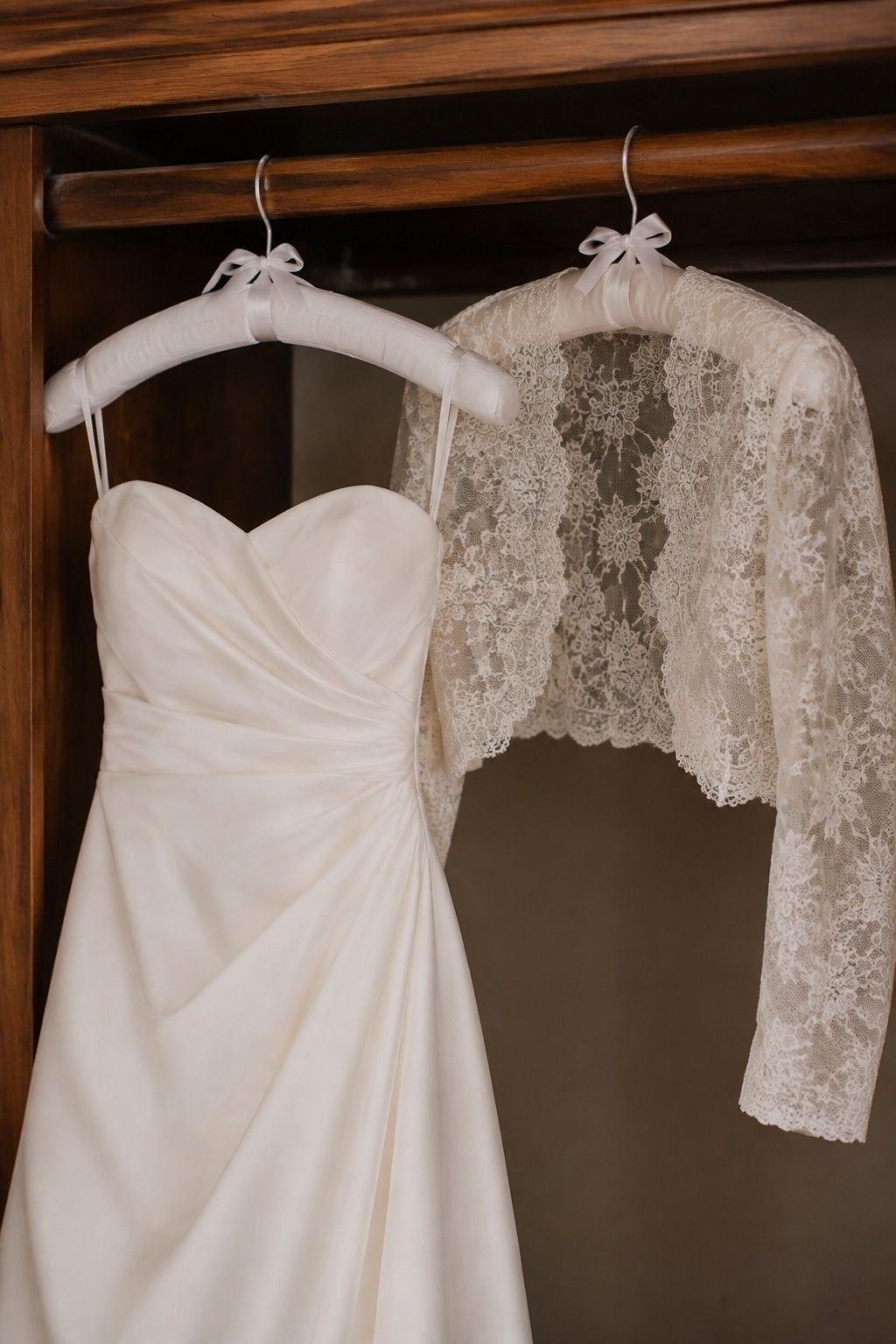
If you want a reveal, wear it over the dress. A bolero on top covers you for the ceremony and portraits, then comes off before dinner, and the original neckline is back in seconds. It’s the most flexible option, and you can take it off whenever you get warm. Practice taking it off with the person who’ll help you, a bridesmaid, your partner or a stylist. Hidden snaps, tiny hooks and covered buttons all look beautiful, but only if someone knows the order. Keep both pieces on padded hangers until the morning, like this pair in the wardrobe, so neither gets creased.
How Do You Plan the Bolero Around the Day?
Think about where you’ll sit, where you’ll walk and what the weather is doing. A restaurant, a windy path and a long day each need something a little different.
14. Restaurant Dinner Bolero With a Slim Dress

At a restaurant wedding, you’ll spend most of the evening sitting, and that’s where a bolero has to perform. Air conditioning makes a layer welcome, but a jacket that bunches at the back or rides up at the shoulders when you lean on the table gets annoying fast.
Sit in the full outfit at your fitting, on a chair with a back, and reach across a table. The bolero should stay smooth at the shoulders while the dress relaxes. A soft crepe or knit jacket is more comfortable for a long dinner than stiff satin, and a closed front keeps you warm next to the window.
15. Outdoor Portrait Bolero for Wind and Chill
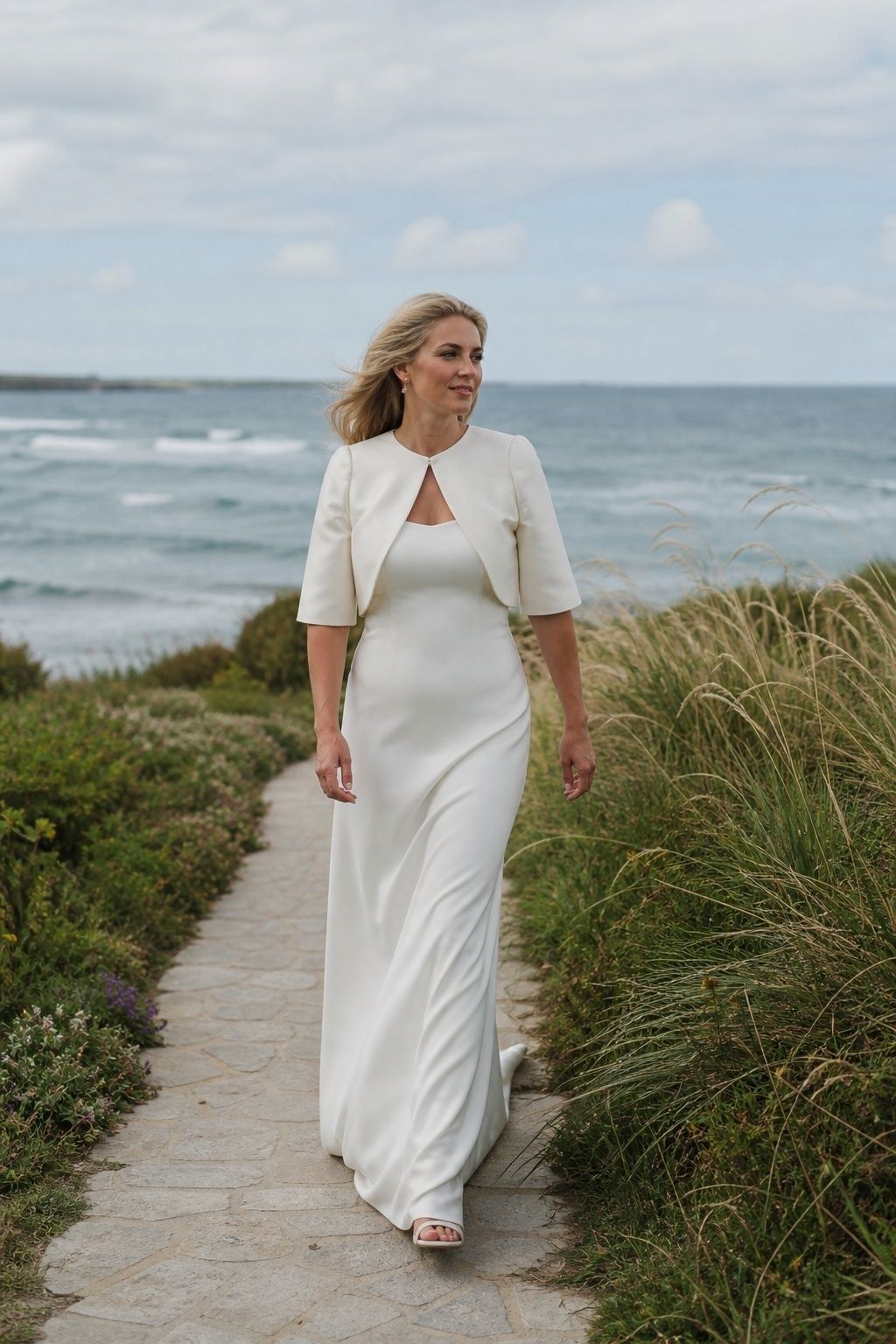
Coastal paths, cliffs and gardens are gorgeous for portraits and almost always windy. An elbow-sleeve bolero over a column gown gives you a bit of warmth and keeps the outline neat when the breeze picks up.
Fabric changes everything outdoors. Sheer lace and tulle catch the wind, satin creases at the elbows, and faux fur shifts when you hold a heavy bouquet.
Do a short test walk outside in the full outfit before the wedding day, ideally somewhere breezy, and you’ll find the angles that work. Your photographer will thank you, and so will your goosebumps.
16. Bolero With Hidden Snaps and Thread Loops

None of the ideas above work if the bolero slides around, and that’s what these little fastenings are for. Snaps and thread loops at the neckline, the back of the shoulders and the upper bodice keep the bolero lined up with the dress all day, through hugs, dancing and every time you sit down.
Ask your seamstress for fastenings that let go without tugging delicate fabric, so the bolero comes off cleanly with no marks or snags. Snaps are quick, loops with covered buttons look nicer, and many brides use both, snaps for strength and buttons for the photos.
How Do You Match Fabric, Undertone and Texture?
Look at the bolero and dress together in daylight, since tiny undertone differences show more in photos than in a fitting room. Then make sure the textures feel like they belong together.
Ivory against ivory, white against white and champagne against champagne is the goal, but even “ivory” varies a lot between designers. Hold the bolero against the dress by a window, not under shop lights. For texture, lace over satin feels romantic, satin over crepe feels tailored, tulle over beading softens sparkle and faux fur over a plain gown feels wintry. They don’t need to match exactly, but they need to share a mood.
What Should You Check at Fittings Before Alterations?
Bring the bolero to every fitting once you’ve chosen it, and test it with everything you’ll do on the day.
That means the ceremony stance, holding the bouquet, sitting at dinner, hugging, climbing stairs, wearing the veil and lifting your arms. A sleeve that looks beautiful but stops you from moving will bother you all day. Check the closures closely too: snaps need backing, hooks need loops and buttons need time and a second pair of hands.
When Should You Remove the Bolero?
Take it off at a natural break: after family portraits, before the grand entrance, before dinner or before the first dance. Pick the moment in advance so nobody improvises with your hair and makeup.
Once it’s off, hang it on a padded hanger or lay it flat. Lace snags, satin creases and faux fur gets crushed when it’s stuffed into a tote bag or thrown over a chair. For a smaller guest list and a simpler outfit, see these registry office wedding outfit ideas.
What Should You Avoid With a Wedding Bolero?
Don’t buy it after final alterations, don’t settle for an almost-right color match, and skip sleeves that are too tight to hug in. Heavy beading over delicate dress fabric is another one to avoid.
A bolero is a real piece of clothing, so treat it like one. Tiny covered buttons look lovely in photos, but they need patience, good light and steady hands before the reception reveal. Practice once, and there’ll be no panic in the bathroom. There’s more inspiration in our Wedding Dresses collection.
What’s the Difference Between a Bolero, a Shrug and a Cape?
A bolero is a short, fitted jacket that ends above the waist and usually has sleeves. A shrug is softer and often knitted or stretchy, covering the arms and upper back with almost no front. A cape or capelet has no sleeves at all and drapes over the shoulders.
Boleros give the most structured coverage and stay put best, shrugs are casual and cozy, and capes look dramatic but leave the arms bare. For chapel ceremonies that ask for covered arms, a bolero with sleeves is the safest pick.
Frequently Asked Questions
What is a bridal bolero?
A bridal bolero is a short, fitted jacket or lace layer worn over or under a wedding dress to cover the shoulders and arms. Planning the other half of the outfit? Take a look at these wedding dress men ideas.
Can you wear a bolero with any wedding dress?
Most dresses work, especially strapless, sleeveless, corset and simple sheath styles. The neckline, fabric weight and how the bolero fastens decide whether it looks right.
Should a wedding bolero match the dress exactly?
No, but the undertone and level of formality should match. Compare them in daylight before alterations.
Is a bolero good for modest wedding coverage?
Yes. Long lace sleeves, a high neck and lined fabric give full coverage while the dress still shows underneath, which makes a bolero a popular choice for religious ceremonies.
When should you take off a wedding bolero?
After the ceremony and portraits, or right before dinner or the first dance, depending on the reveal you want.
Key Takeaways
- Add the bolero at the first fitting, not the last.
- Plain dress, detailed bolero, or detailed dress, plain bolero.
- Compare undertones by a window, not under shop lights.
- Test sleeves by hugging, sitting and lifting a bouquet.
- Snaps and thread loops keep it from sliding all day.
- Decide in advance when it comes off and who helps.
Plan the Bolero With the Dress, Not After It
I’ll say it plainly: a bolero picked at the last fitting will always look like a cover-up, and one picked at the first fitting will look like part of the dress. Buy it early, bring it to every appointment and let your seamstress build the snaps in, and you’ll get two wedding looks for the price of one dress.
Last update on 2026-11-29 / Affiliate links / Images from Amazon Product Advertising API