

Guests should learn the ceremony is private from the invitation itself: invite them to the reception by name and time, add one warm line such as “following a private ceremony,” and leave ceremony details off their card. Put any longer explanation on your wedding website, and tell close family in person before invitations arrive.
So you want small, quiet vows and a big, happy party afterward. Totally fair. The question is how to say it on paper without the reception sounding like the consolation prize.
The short version: be clear about which event each guest is invited to, then make the reception so well hosted that nobody spends the night thinking about what they missed. Below you’ll find where each message goes, ready-to-use scripts for invitations, websites and texts, wording for elopements and courthouse ceremonies, and the mistakes that make guests feel second-tier.
Recommended Private Ceremony Invitation Essentials
Reception-only invitations, a details card template and a simple RSVP tracker make it much easier to send two guest groups the right information.


Recommended blogs to read:
- Family Only Wedding Wording Lines That Feel Gracious
- Do You Invite People To Celebrate After Eloping If The Ceremony Was Private
- How To Plan A Post Elopement Party Without Making It Awkward
- Elopement Announcement Wording That Shares The News With Grace
- Courthouse Wedding Celebration Ideas That Make The Day Feel Complete
- Should You Have A Registry After Eloping?
How To Tell Guests The Ceremony Is Private, Step By Step
To tell guests the ceremony is private, invite them only to the event they’re attending, mention the private vows in one gentle line, and repeat the reception time everywhere they’ll look. Here is where each message belongs.
| Where | What it says | Example line |
|---|---|---|
| Reception invitation | The event, date, time and place | “Following a private ceremony, please join us for dinner and dancing” |
| Details card | Arrival time, meal, dress code | “Reception begins at six o’clock with cocktails, dinner to follow” |
| Wedding website | A short, kind reason | “We’re saying our vows with immediate family and can’t wait to celebrate with you after” |
| Text or email | Clarifies for guests who ask | “The ceremony is just family, and the party is where we’ll see everyone” |
| In person | Close family and VIPs, before invitations | “We wanted you to hear it from us first” |
| Grandparents or elders | A personal call or note | “We’d love you there for the dinner, and we’ll share photos of the vows” |
Invite Guests To The Exact Event
Every invitation should describe only the event that guest is attending. If someone is invited to the reception, their card shouldn’t list a ceremony time, a church address or anything that makes them wonder whether they missed a page.
Use Reception-Only Wording On Invitations
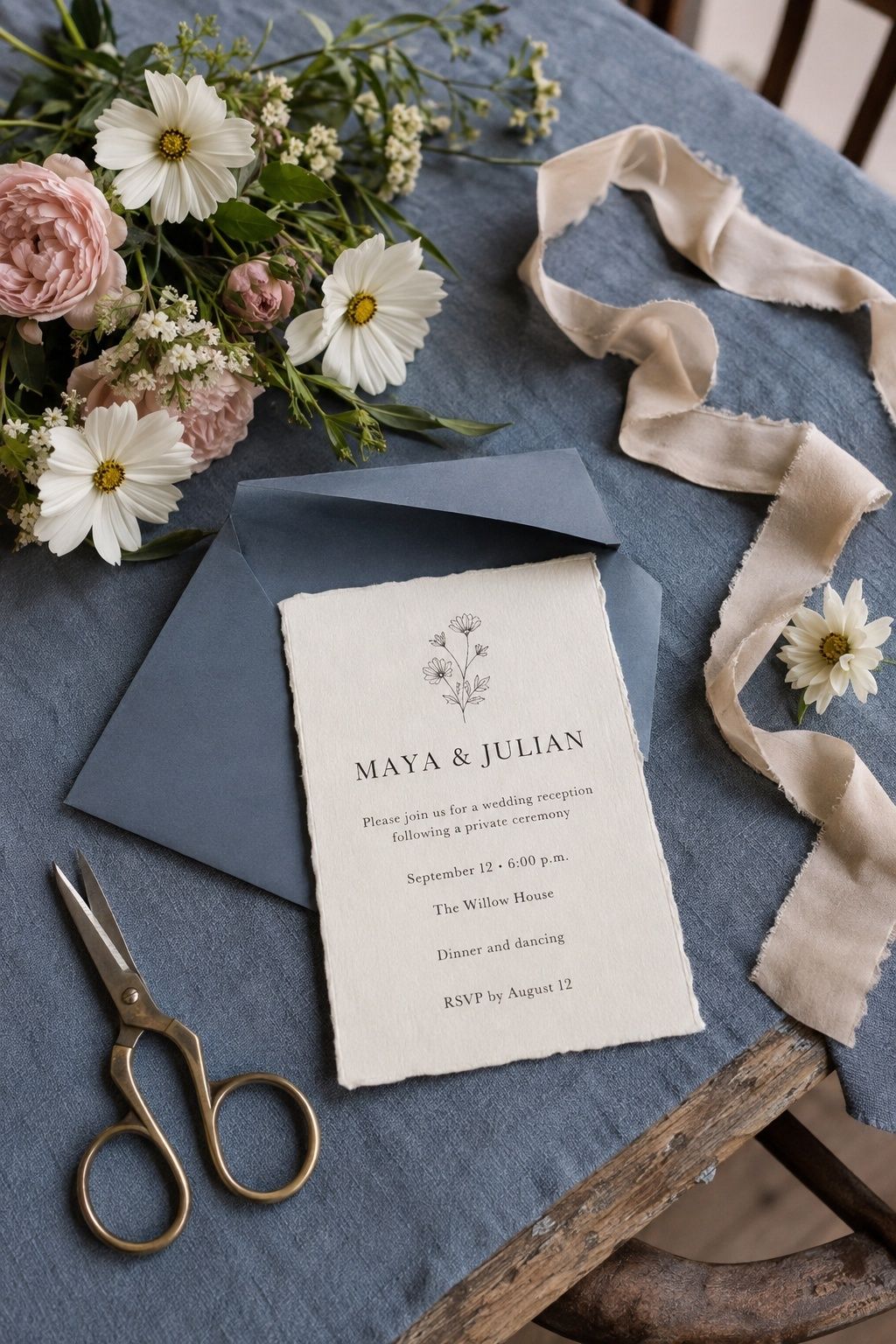
The invitation in the photo is a good model: a deckled ivory card for Maya & Julian on a blue envelope, with garden cosmos, a few pink roses and a loose silk ribbon around it. The wording is all about the party, and the private vows get one line.
Reception-only wording usually opens with “Please join us for a reception celebrating the marriage of…” or “Following a private ceremony, [Name] and [Name] invite you to dinner and dancing.” Either one is clear without apologizing.
Put The Gentle Explanation On The Wedding Website
The website is where a sentence or two of context belongs. Something like “We’re keeping our ceremony small and private with our parents and siblings, and we’re so excited to celebrate with everyone at the reception” answers the question before anyone has to ask it.
Tell Close Family Privately Before Invitations Land

Two women, a bride-to-be and her mother, sit at a sunny kitchen table with coffee mugs, a stack of blue envelopes tied with twine and a small white posy between them. This is the conversation to have before anything goes in the mail.
Anyone who might expect to see the vows (grandparents, siblings, godparents, the aunt who always cries at weddings) should hear it from you first. A phone call or coffee takes ten minutes and saves a lot of hurt.
Keep The Message Warm And Short
One clear sentence beats a paragraph. Tell guests where to be and that you want them there, and leave the backstory for anyone who asks.
Avoid Second-Tier Language
Skip words like “only,” “just” and “unfortunately.” “You’re invited to the reception only” reads like a demotion, while “Please join us to celebrate” reads like a welcome, even though both say the same thing.
Make The Reception Feel Fully Hosted

At the door of this restaurant room, a small wooden table holds a “Welcome to our celebration” sign and a pitcher of lemon water with glasses, and behind it a long wooden table is set with flowers and plates. Guests walk in and know this is the main event.
The reception is where guests decide how they feel about the private ceremony. Greet people at the door, serve a real meal, plan toasts and maybe share a few photos from the vows. Starting dinner service on time matters more than any decor, because nothing feels second-tier faster than a hungry room waiting for a couple who’s still taking photos.
Clarify Arrival Time And Meal Expectations
Say exactly when to arrive and what happens when. “Cocktails at six, dinner at seven” tells guests there’s a full meal, so nobody eats a sandwich in the car “just in case.”
Explain Private Vows Only If It Adds Clarity
If the invitation already says reception, you don’t have to explain the ceremony at all. Add “following a private ceremony” only when guests might otherwise assume they’re coming to both.
Use Separate Invitations For Different Guest Groups
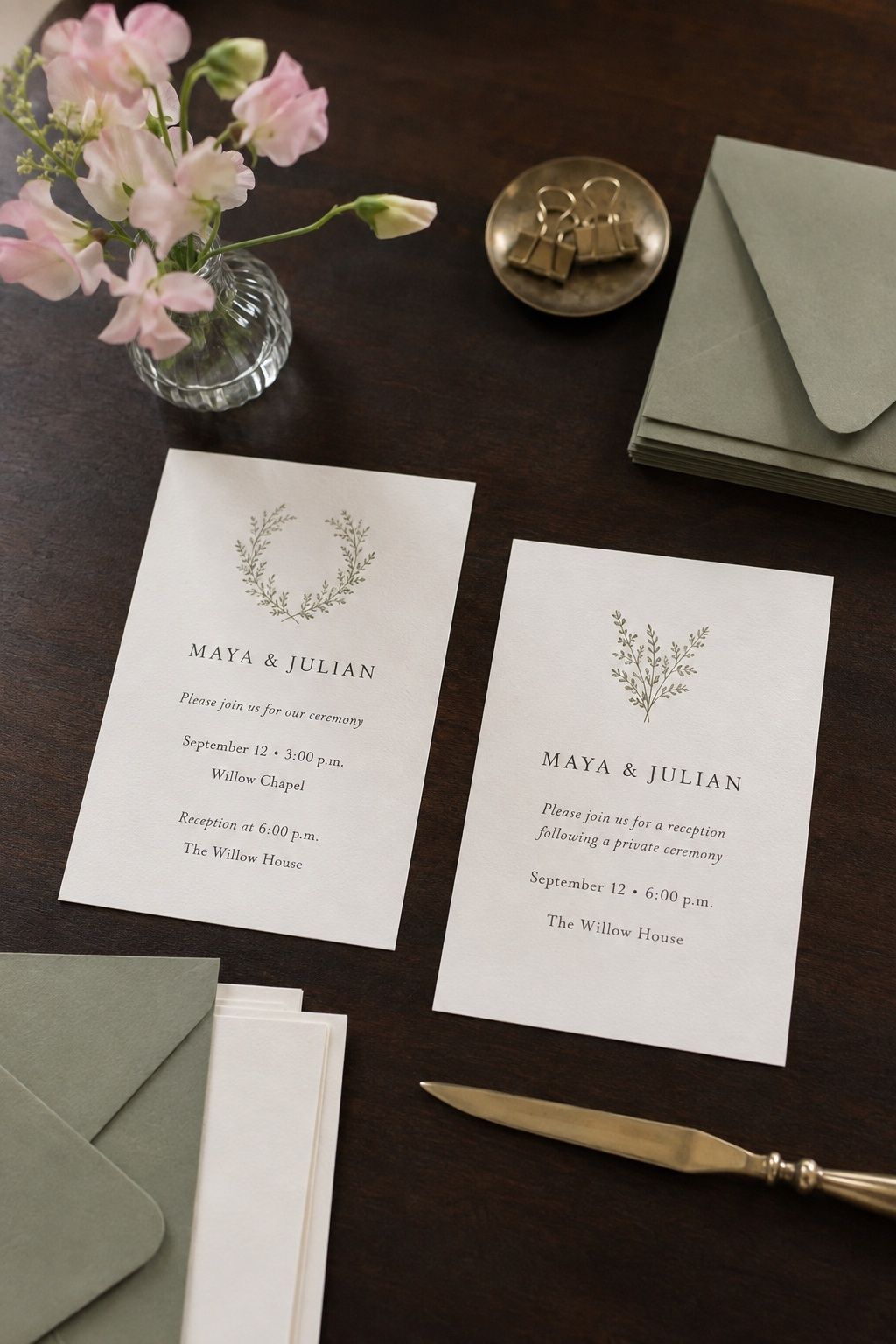
Two versions of the same Maya & Julian invitation sit side by side on a dark table with sage envelopes, a letter opener and a little vase of sweet peas. One includes the ceremony, the other invites guests to the reception after private vows.
If a small group attends both, print two versions and keep them in separate stacks when you address envelopes (mixing them up the night before mailing happens more than you’d think). Online invitations make this easier, since you can tag guest groups.
Handle Questions Without Reopening The Guest List
When someone asks if they can come to the vows, answer kindly and stay put: “We’re keeping the ceremony to immediate family, and we’re so happy you’ll be at the reception.” Don’t start listing who else isn’t invited.
Avoid Vague Wording
“Join us for our wedding celebration” can mean anything. Vague wording is how guests show up at 3 p.m. at the church when you’re getting married privately at noon. Name the event and the time.
Repeat Key Details On RSVP And Website Pages
Use the same event name and start time on the invitation, the RSVP and the website. If they don’t match, guests will trust whichever one they saw last.
Hold Privacy And Hospitality Together
You can protect a private moment and still be a generous host. The vows might take ten minutes, so put your energy into the hours guests actually spend with you.
Read more: Do You Invite People To Celebrate After Eloping If The Ceremony Was Private
Private Ceremony Wording Situations
Different kinds of private ceremonies need slightly different wording. These examples can be adjusted to your names, dates and tone.
Elopement Reception Wording
“[Name] and [Name] eloped this spring and would love to celebrate with you. Please join us for dinner and dancing on Saturday, June 6, at six o’clock.” The post on how to plan a post elopement party covers the party side.
Courthouse Ceremony Wording
“We were married at the courthouse on May 2 and we’re throwing the party now. Join us for drinks, dinner and a lot of toasts.” Courthouse couples often keep it casual, which suits a restaurant or backyard reception.
Family-Only Ceremony Wording
“Following a private ceremony with our families, please join us for a reception in celebration of our marriage.” For more lines, see these family only wedding wording examples.
Destination Ceremony Wording
“We’ll be married in Portugal this summer with our immediate families. We’d love for you to join us at home for a celebration on September 12.”
Reception-Only Wedding Wording
“Please join us for a reception celebrating the marriage of [Name] and [Name]” works for any private ceremony. It’s short, formal enough for printed cards and doesn’t need any explanation.
Private Ceremony Invitation Scripts
Copy, adjust, and keep the tone consistent across every piece.
Formal Invitation Script
“Mr. and Mrs. [Parent Names] request the pleasure of your company at a reception in honor of [Name] and [Name], who will be married privately earlier that day. Saturday, the sixth of June, at six o’clock in the evening.”
Modern Invitation Script
“We’re getting married (quietly) and partying (loudly). Join us for dinner, drinks and dancing on June 6 at 6 p.m.”
Wedding Website Script
“Our ceremony will be a small, private moment with our immediate families. We can’t wait to celebrate with all of you at the reception that evening, where there will be good food, toasts and plenty of dancing.”
Text Or Email Script
“Hi! Just so you know, the ceremony is family only, and the reception at 6 is where the celebrating happens. We’re so glad you’re coming.”
Common Wording Mistakes To Avoid
Most hurt feelings around private ceremonies come from wording, not from the decision itself.
Do Not Apologize On The Invitation
“Sorry we couldn’t include everyone at the ceremony” puts the focus on what guests are missing. Save warmth for the website or a personal note.
Do Not Hide The Reception-Only Detail
Leaving the ceremony out entirely, with no hint that it happened separately, can confuse guests who arrive early expecting vows. One line solves it.
Do Not Over-Explain Family Decisions
You don’t need to explain budget, religion, family drama or venue rules on paper. The more reasons you list, the more reasons relatives find to argue with (and some of them will, at Thanksgiving, for years).
Do Not Make The Reception Sound Optional
“Stop by if you can” makes the party sound like an afterthought. This is your wedding reception, so word it like one.
Read more: Elopement Announcement Wording That Shares The News With Grace
Message Placement
Each piece of stationery has one job. Here’s what goes where.
Invitation
The invitation names the hosts, the event, the date, time and place. It can include one line about the private ceremony, and nothing more.
Details Card
The details card carries the practical stuff: arrival time, parking, dress code, meal and whether there’s dancing. It’s also where you can say “cocktails at six, dinner at seven.”
Wedding Website
The website handles the “why” in one or two warm sentences. Add a short FAQ for the curious ones, because there are always a few.
Family Conversations
Close family hears it from you directly, before invitations go out. Ask them to repeat the same simple message if relatives come asking.
Final Wording Checklist
Before printing or sending, check these:
- The invitation names only the event this guest is attending.
- Ceremony details appear only on invitations for ceremony guests.
- The private ceremony is mentioned once, warmly, without apology.
- Arrival time and meal details match on the invitation, RSVP and website.
- Close family was told personally before invitations arrived.
- Two invitation versions are sorted into separate stacks before addressing.
Frequently Asked Questions
How Do You Tell Guests The Ceremony Is Private?
Tell guests the ceremony is private by sending reception invitations that list only the reception details, adding one gentle line like “following a private ceremony,” and explaining briefly on your wedding website. Tell close family personally before invitations arrive.
Is It Rude To Invite Guests To The Reception But Not The Ceremony?
It isn’t rude when the ceremony is very small, like immediate family only, and the reception is fully hosted. Couples in wedding forums report more hurt feelings when the ceremony is large enough that the split feels like a ranking, so keep private vows to a very small group.
What Do You Write On A Reception-Only Wedding Invitation?
Write the hosts’ names, “invite you to a reception celebrating their marriage,” the date, time and location. You can add “following a private ceremony” if guests might otherwise expect vows, and keep ceremony details off the card.
Should You Explain Why The Ceremony Is Private?
You don’t have to explain why the ceremony is private. A short note on your website is enough for most guests, and close family should hear the reason from you in person if they ask.
How Do You Avoid Hurt Feelings With A Private Ceremony?
Avoid hurt feelings by telling close family first, using warm wording without words like “only,” and making the reception feel like the main event with a full meal, toasts and a proper welcome at the door.
Can Some Guests Attend The Ceremony And Others Only The Reception?
Yes, some guests can attend the ceremony and others only the reception. Send two invitation versions, keep the ceremony group small and clearly defined, such as immediate family, and make sure both groups have matching reception details.
What Is A Private Wedding Ceremony Called?
A private wedding ceremony is usually called an intimate ceremony, a family-only ceremony or, when the couple marries with few or no guests, an elopement. Courthouse and civil ceremonies are often private too.
Can A Wedding Ceremony Be Private?
Yes, a wedding ceremony can be private. You only need what your local marriage law requires, such as an officiant and, in many places, witnesses, so a private ceremony can be as small as you and your partner plus those people.
How Do You Say Invited Guests Only?
Say “invited guests only” by addressing each invitation to named guests and listing those names or a seat count on the RSVP. On the website, a line like “We’ve reserved seats for the guests named on your invitation” is clear and polite.
Key Takeaways
- Invite each guest only to the event they’re attending.
- Mention the private ceremony once, warmly, without apology.
- Tell close family in person before invitations arrive.
- Keep reception details identical on the invitation, RSVP and website.
- Make the reception feel like the main event, starting with dinner on time.
Final Thoughts
When the reception gets the warmest welcome you can give, nobody leaves thinking about the ceremony they didn’t see. Keep the vows small if that’s what you want, say so clearly on the right card, and spend your hosting energy on the party.
Last update on 2026-10-04 / Affiliate links / Images from Amazon Product Advertising API