

A restaurant micro wedding is a small wedding hosted around a private dining experience, usually with vows, cocktails, dinner, toasts, and a simple ending in one warm room. Choose the room and guest count first, confirm the minimum spend, then shape the menu, ceremony flow, decor, music, and timing around the way the restaurant actually serves.
A restaurant gives a micro wedding a full-room feeling without making it feel overproduced. The chairs, tables, glassware, lighting, kitchen, and service rhythm are already there, which gives the day a natural sense of hospitality before you add a single centerpiece.
The planning work is in the fit. A dinner reservation becomes a wedding only when guests know where to arrive, the room protects the important moments, the meal has a graceful pace, and the details feel personal without getting in the restaurant’s way.
Recommended Wedding Products


You Might Also Like These Blog Posts
- Small Wedding At A Restaurant, Done Like You Mean It
- Micro Wedding Guest Count: How Small Should It Feel?
- Micro Wedding Ideas That Feel Anything But Small
- Private Dining Room Wedding Plans That Feel Like A Secret Supper
- Micro Wedding Guest List: Who Makes The Tiny Cut?
- Micro Wedding Venues That Make A Small Guest List Shine
How A Restaurant Micro Wedding Becomes A Full, Warm Room
The charm of a restaurant wedding reception is that the celebration begins with something everyone understands: being welcomed, seated, fed, and cared for. That simplicity can feel deeply romantic when the room fits the guest list and the evening has a little shape. Guests are not wandering through a cavernous venue waiting for the next cue. They are close enough to hear the vows, catch the toast, pass the bread, and feel why the guest list is small.
For couples who want the table to carry the atmosphere, a wedding dinner party approach suits a restaurant beautifully. It gives you permission to build the day around conversation, courses, candlelight, meaningful speeches, and a room that feels hosted instead of staged.
Choose The Room Before You Choose The Decorations
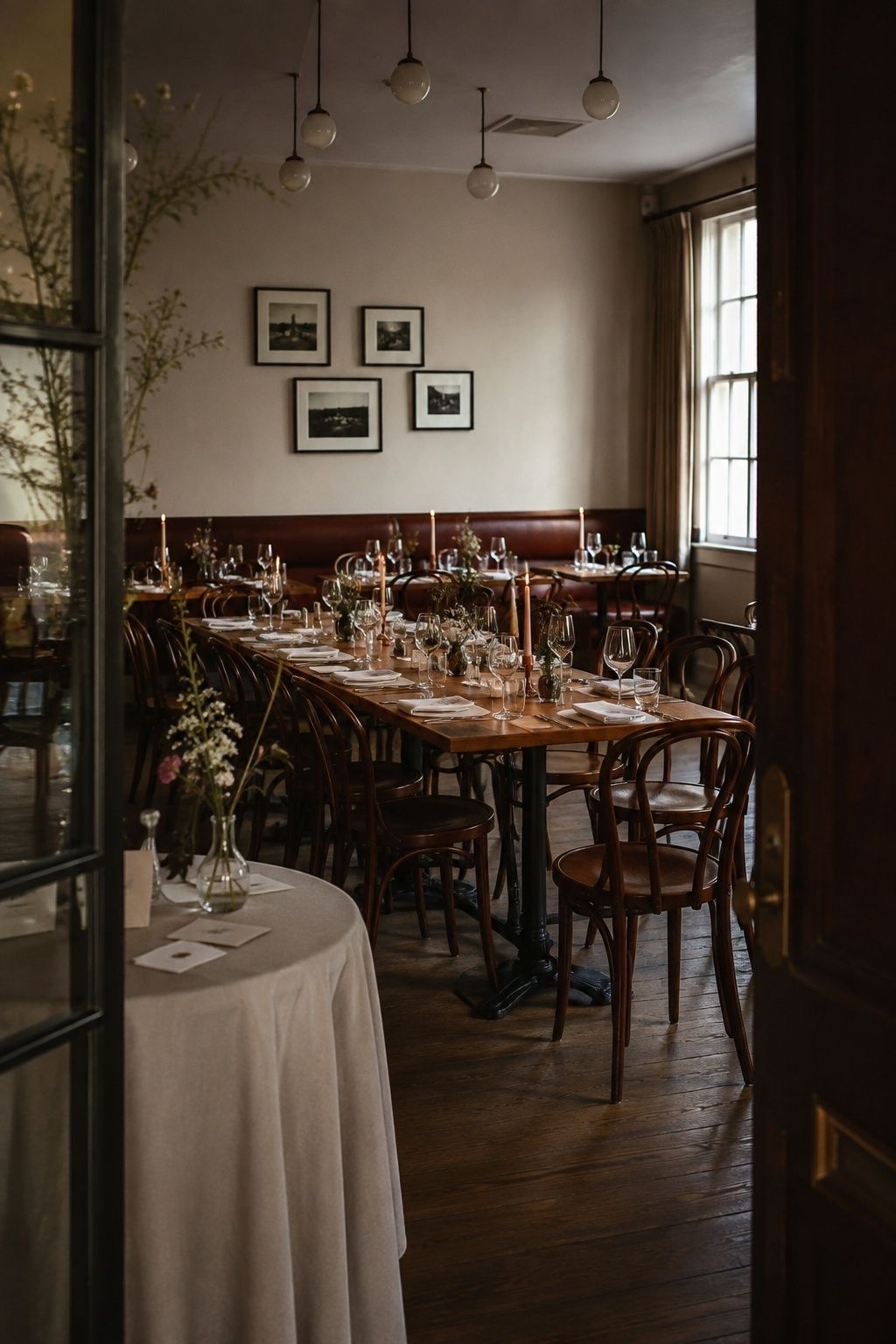
The private room is not just a backdrop. It decides how intimate the vows feel, how easy dinner service becomes, how much decor you need, and whether guests can hear each other. Ask to see the room set for the number of guests you expect, not only empty or dressed for a much larger event.
A private dining room wedding usually works best when the room feels comfortably occupied with space for servers, a welcome table, a cake or dessert moment, and a photographer moving quietly around the edges. A full restaurant buyout wedding can be worth the higher minimum when you want the bar, ceremony, photos, dinner, and music to feel fully private.
Semi-private dining can still be lovely, especially for a low-key lunch or late-afternoon dinner, but be honest about interruptions. If other diners will pass through the space, your ceremony may feel more public than you intended. Privacy matters most during vows, parent moments, toasts, and any emotional conversation you do not want happening beside regular dinner service.
Get Clear On The Minimum Spend Early
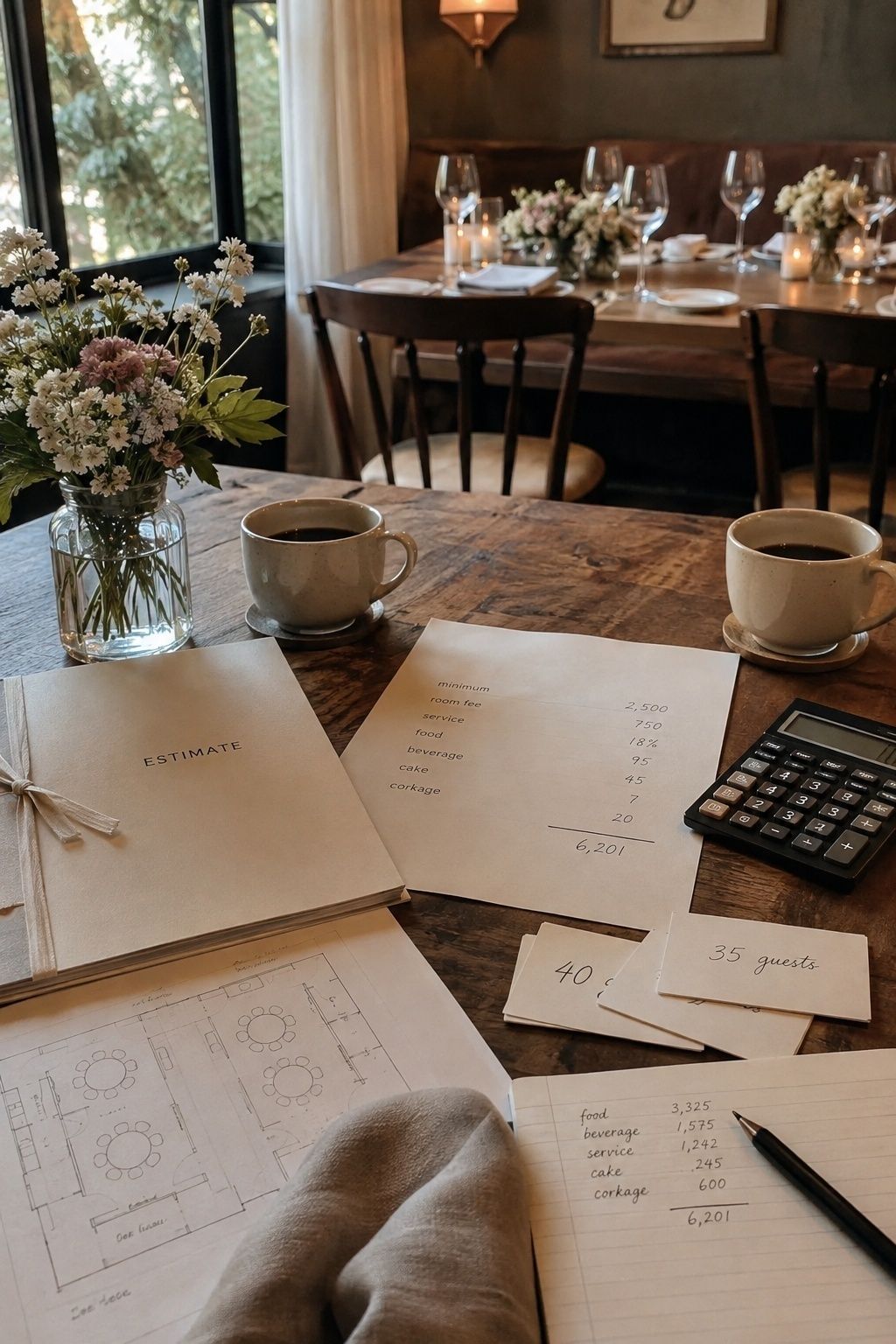
The restaurant wedding minimum spend is often the number that determines whether the plan truly fits. Some restaurants charge a room fee, some require a food-and-beverage minimum, and some include both. Ask what the minimum covers before you compare restaurants, because two quotes that look similar can behave very differently once tax, service charge, gratuity, cake fees, corkage, labor, parking, and overtime are added.
Minimums can also change by day of the week, room, season, start time, and event length. A Sunday brunch may give you more room in the budget than a Saturday dinner, while a full buyout may require a spending level that only makes sense for a larger small wedding. Leave room in the budget breakdown for service charges, gratuity, corkage, cake fees, overtime, and any spending gap between your guest count and the room minimum.
Match The Guest Count To The Room’s Real Comfort
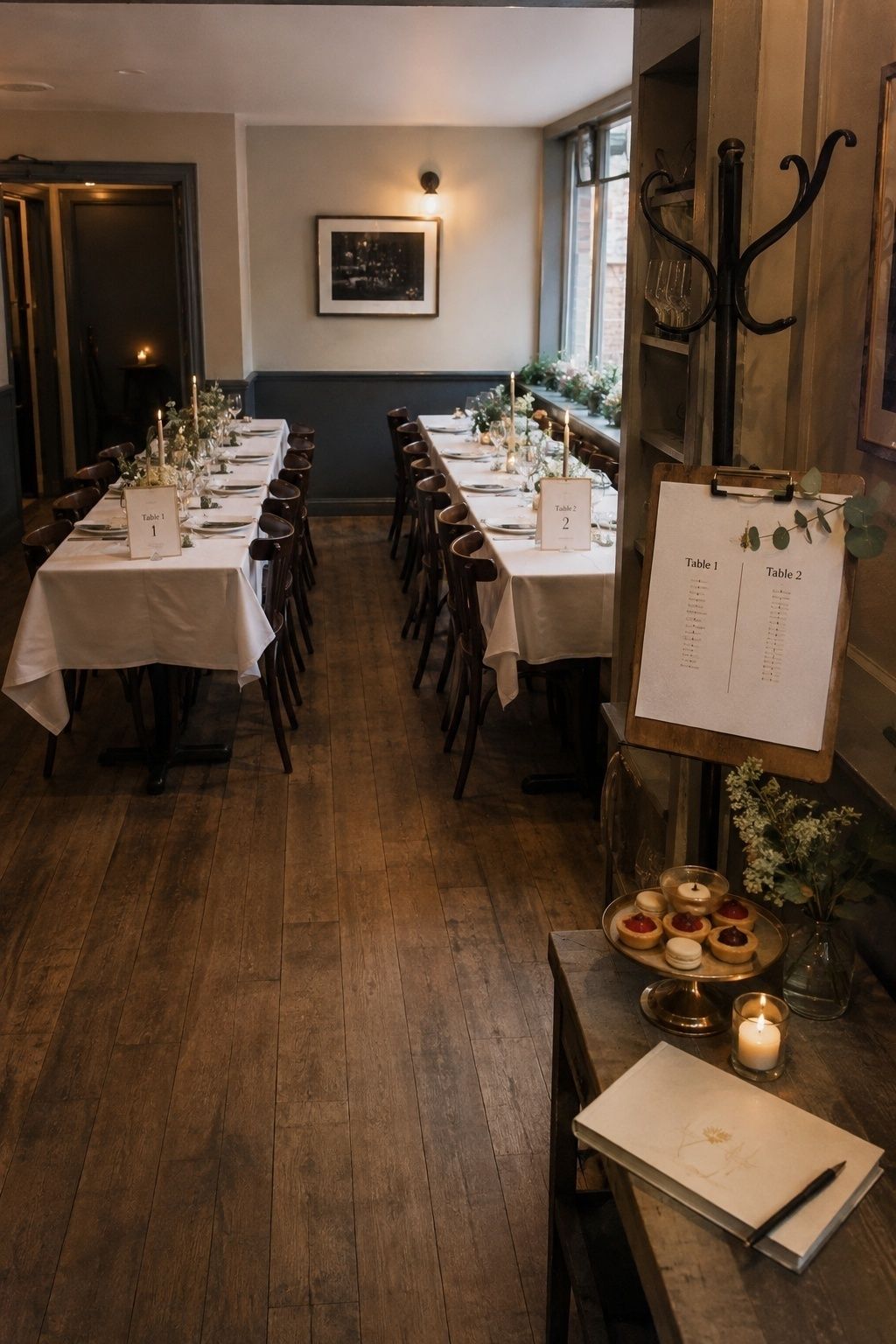
Restaurant capacity can be misleading because cocktail capacity, seated dinner capacity, and wedding comfort are not the same thing. A room that seats 40 may feel tight with 40 guests once you add coats, bags, a guest book, a floral delivery, a photographer, a dessert table, and a small ceremony aisle. A room that seats 70 may feel sparse with 24 guests unless the restaurant can bring the layout inward.
Walk through the evening as if you were a guest. Where do you enter? Where do you put a coat? Can chairs pull out easily? Can servers pass behind each seat? Can an older relative reach the restroom without crossing the ceremony space? Plan around a guest count that leaves the room feeling close and lively, with enough space for service to stay calm.
Ask Whether The Ceremony Can Happen On Site

Some restaurants welcome a ceremony in the private room. Others only host receptions, or they allow vows only before public service begins. Ask where the couple would stand, how chairs would be arranged, whether guests stay seated at dinner tables, and how quickly the room can shift from ceremony to meal.
If the ceremony and dinner share one room, keep the setup graceful and light. Two reserved family seats, a small floral piece, a clear aisle, and a permitted portable speaker may be enough. Write the transition into the timeline, especially if staff need ten quiet minutes to reset chairs, place menus, pour wine, or clear ceremony items before the first course.
Let The Menu Feel Like The Event
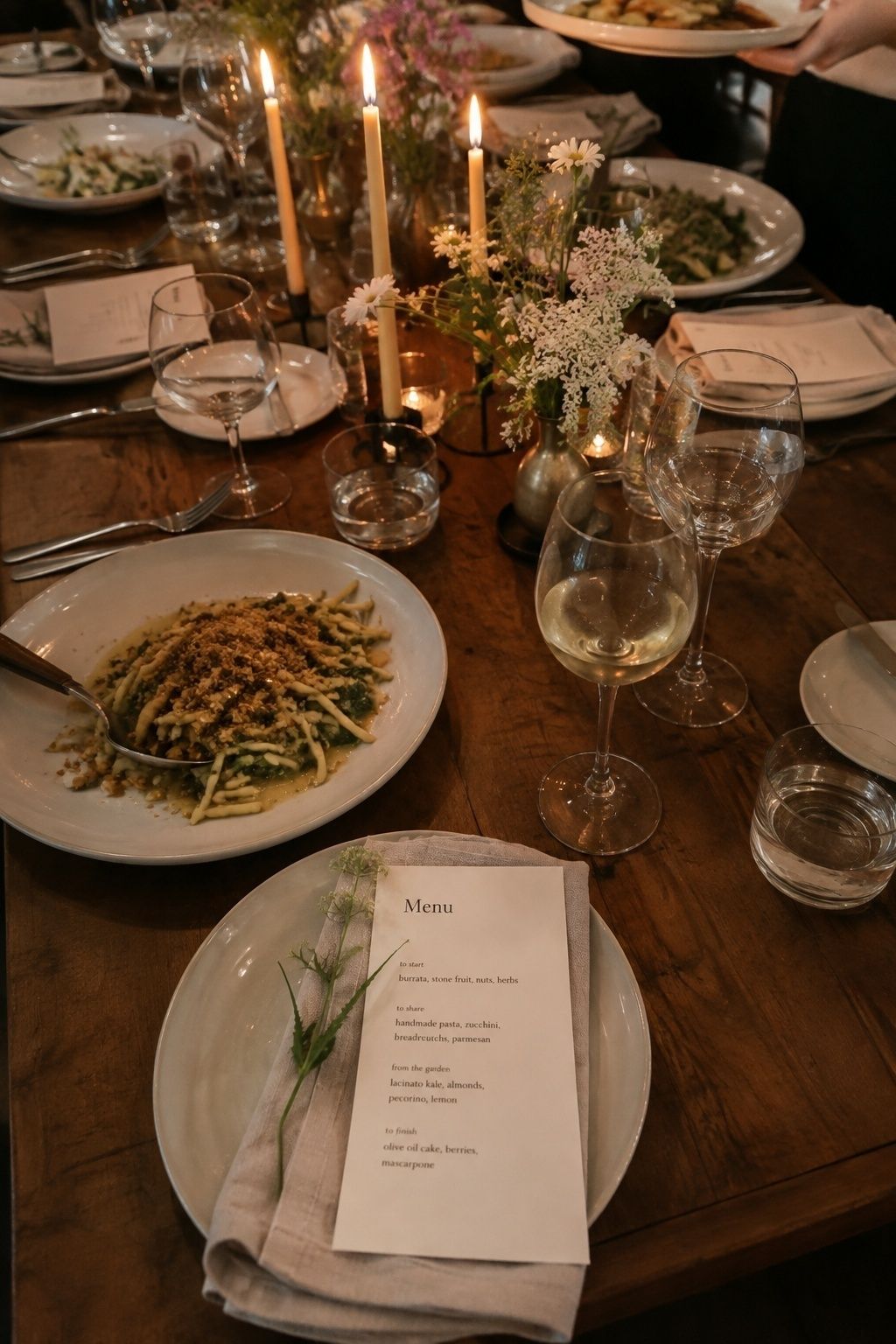
A restaurant micro wedding does not need a complicated entertainment plan when the meal is treated as the center of the celebration. Plated dinners feel polished and easy to pace. Family-style service feels generous and conversational. A tasting menu gives a very small guest list an elevated feeling. Brunch softens the budget and creates a relaxed daytime mood.
Ask how many entree choices guests may have, whether selections are needed in advance, how dietary restrictions are handled, and whether the restaurant can print custom menus. Let the kitchen’s strengths shape the menu, especially if the restaurant is known for a specific pasta, wine pairing, dessert, family-style dish, or seasonal tasting menu.
Clarify Bar, Cake, Decor, And Sound Rules
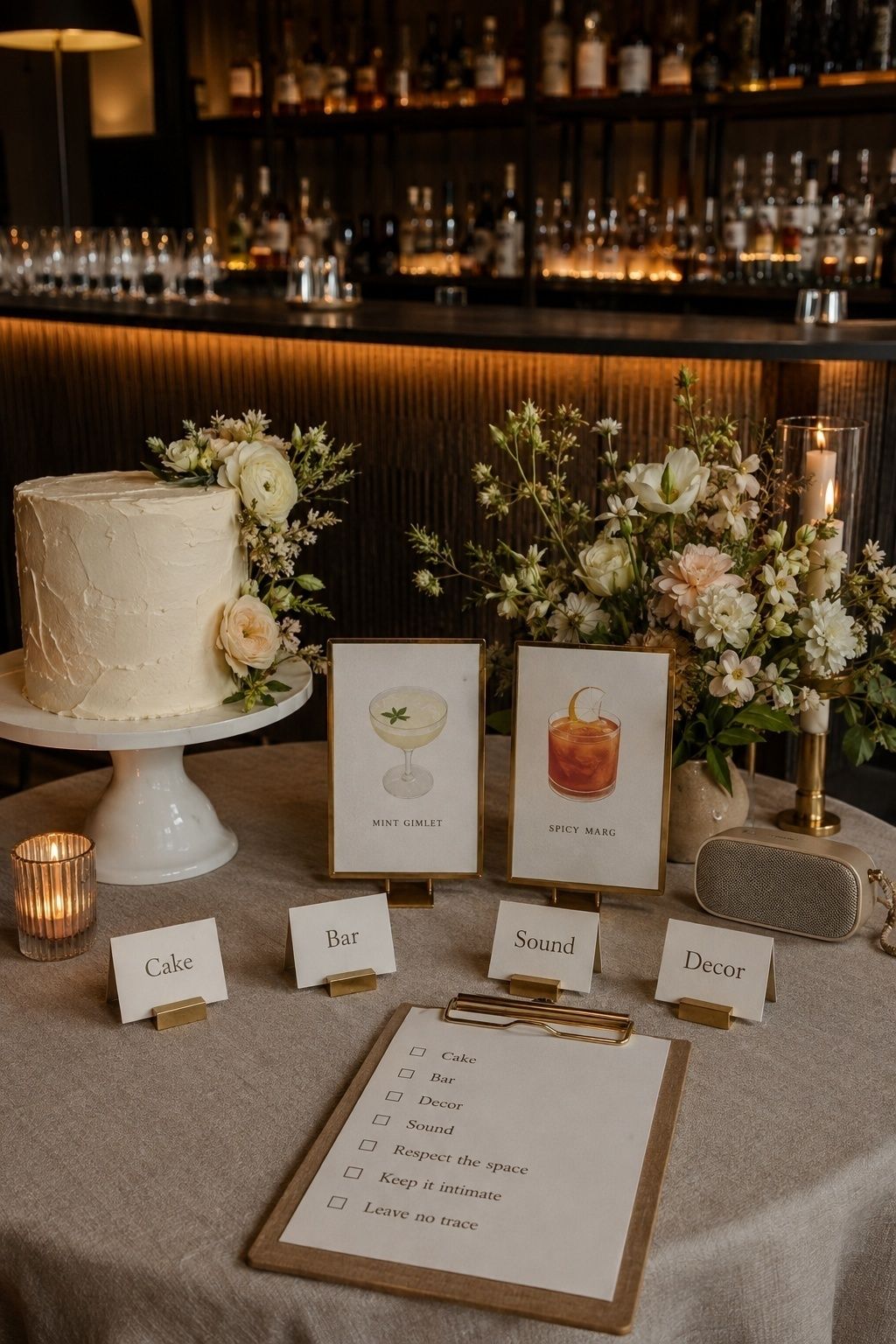
Restaurant rules are rarely personal; they protect licensing, service, fire code, neighbors, and the room itself. Ask whether you can bring a cake, whether there is a cutting fee, whether outside desserts are allowed, and whether florals must arrive fully arranged. For the bar, compare open bar, hosted consumption, wine pairing, signature cocktails, corkage, and nonalcoholic options in the same estimate.
Decor should respect the room. Menus, place cards, low flowers, table numbers, candles if allowed, and a guest book usually create enough wedding presence without making staff work around fragile installations. For music, ask about playlists, microphones, speakers, volume limits, DJs, dancing, and end times. A small restaurant wedding can still have feeling and rhythm even when the sound plan stays modest.
Build The Reception Around A Few Chosen Moments
The intimacy of a restaurant reception means every formal moment lands more clearly. You may not need a grand entrance, a long program, or a crowded dance floor. One welcome toast, a leisurely dinner, two short speeches, dessert, and a final round of hugs can feel more complete than a packed timeline.
If you want the evening to feel more like a reception than a private dinner, choose one or two moments with intention. Keep small reception moments close to the meal: a champagne pour before speeches, a shared cake slice, or a guest book passed between courses. After dessert, one song beside the table may be all the room needs.
Give Someone Else The Day-Of Details
Even a tiny restaurant wedding needs someone watching the moving pieces. Confirm who greets guests, who cues the ceremony, who tells the kitchen when photos are finished, who gathers people for toasts, who places the guest book, and who collects personal items at the end. If the restaurant has an event manager, ask exactly what that person handles on the day itself.
If the restaurant contact is focused on service, ask a trusted friend, planner, or coordinator to own the wedding cues. The couple should not be checking cake delivery, asking for a microphone, answering parking texts, or deciding when the first course begins while trying to be present at their own table.
Keep The Atmosphere Personal, Not Crowded

The best personal details in a restaurant are the ones guests encounter up close. A menu note, a favorite wine, handwritten place cards, a framed family photo, a small dessert story, or a guest book passed before dinner makes the night feel unmistakably yours.
Let the restaurant keep its identity. If you chose it for warm wood, old mirrors, velvet booths, city windows, garden light, or food that already feels memorable, you do not need to cover every surface. Add the wedding layer where it deepens the experience, then let the room breathe.
Avoid The Mistakes That Make A Small Room Feel Hard
The biggest mistake is treating a restaurant like a blank venue. Restaurants have service paths, kitchen timing, table limits, sound restrictions, and financial minimums that deserve early respect. The second mistake is bringing too many large-wedding traditions into a room designed for dinner. Long speeches, a crowded dance setup, bulky decor, and complicated entrances may leave an intimate dinner wedding feeling strained.
The better path is to choose what matters most and give it enough space. If vows are the heart, protect the ceremony. If dinner is the heart, give the menu time. If family connection is the heart, keep the room quiet enough for conversation. A restaurant micro wedding feels luxurious when the choices are edited, not when the room is asked to hold more than it should.
FAQ
Can You Have A Micro Wedding At A Restaurant?
Yes, you can have a micro wedding at a restaurant if the restaurant allows private events, small ceremonies, or full buyouts. Restaurants are often a strong fit for micro weddings because food, service, tables, seating, lighting, and atmosphere are already part of the space.
How Does A Restaurant Micro Wedding Work?
A restaurant micro wedding usually works by reserving a private room, semi-private area, or full restaurant for a small guest list. The couple confirms the minimum spend, chooses a menu and bar plan, decides whether the ceremony can happen on site, adds simple decor, and coordinates the timeline with the restaurant’s event contact.
Is A Private Dining Room Or Restaurant Buyout Better For A Small Wedding?
A private dining room is usually better for a small wedding if you want intimacy, lower complexity, and a dinner-centered event. A restaurant buyout is better if you want full privacy, an on-site ceremony, louder music, more photo space, a bar area, dancing, or a longer wedding flow.
What Should You Ask Before Booking A Restaurant Wedding Reception?
Before booking a restaurant wedding reception, ask about the food-and-beverage minimum, room fee, capacity, ceremony rules, menu format, bar options, cake policy, decor limits, sound restrictions, service charge, gratuity, deposit, cancellation terms, event length, setup time, and what staff support is included.
Can You Have A Ceremony In A Restaurant Private Room?
Yes, some restaurants allow a ceremony in a private room, especially for a small guest count. Confirm the layout, aisle space, chair setup, audio rules, officiant access, photography space, timing, and how the room will be reset for dinner afterward.
How Do Food And Beverage Minimums Work For A Restaurant Micro Wedding?
Food-and-beverage minimums mean you agree to spend a set amount on qualifying food and drink for the event. If your final order is below that amount, you may still owe the minimum. Tax, gratuity, service charges, room fees, cake fees, rentals, and overtime may be separate, so ask for a full estimate before signing.
Final Thoughts
A restaurant micro wedding works when the room, menu, service, and guest count all support the same feeling: a generous dinner with wedding-level care. Choose privacy where it matters, keep the timeline easy to follow, use decor that belongs on the table, and put the private-dining booking considerations that affect timing, service, sound, decor, and final cost in writing before the agreement is signed.
Last update on 2026-10-03 / Affiliate links / Images from Amazon Product Advertising API