

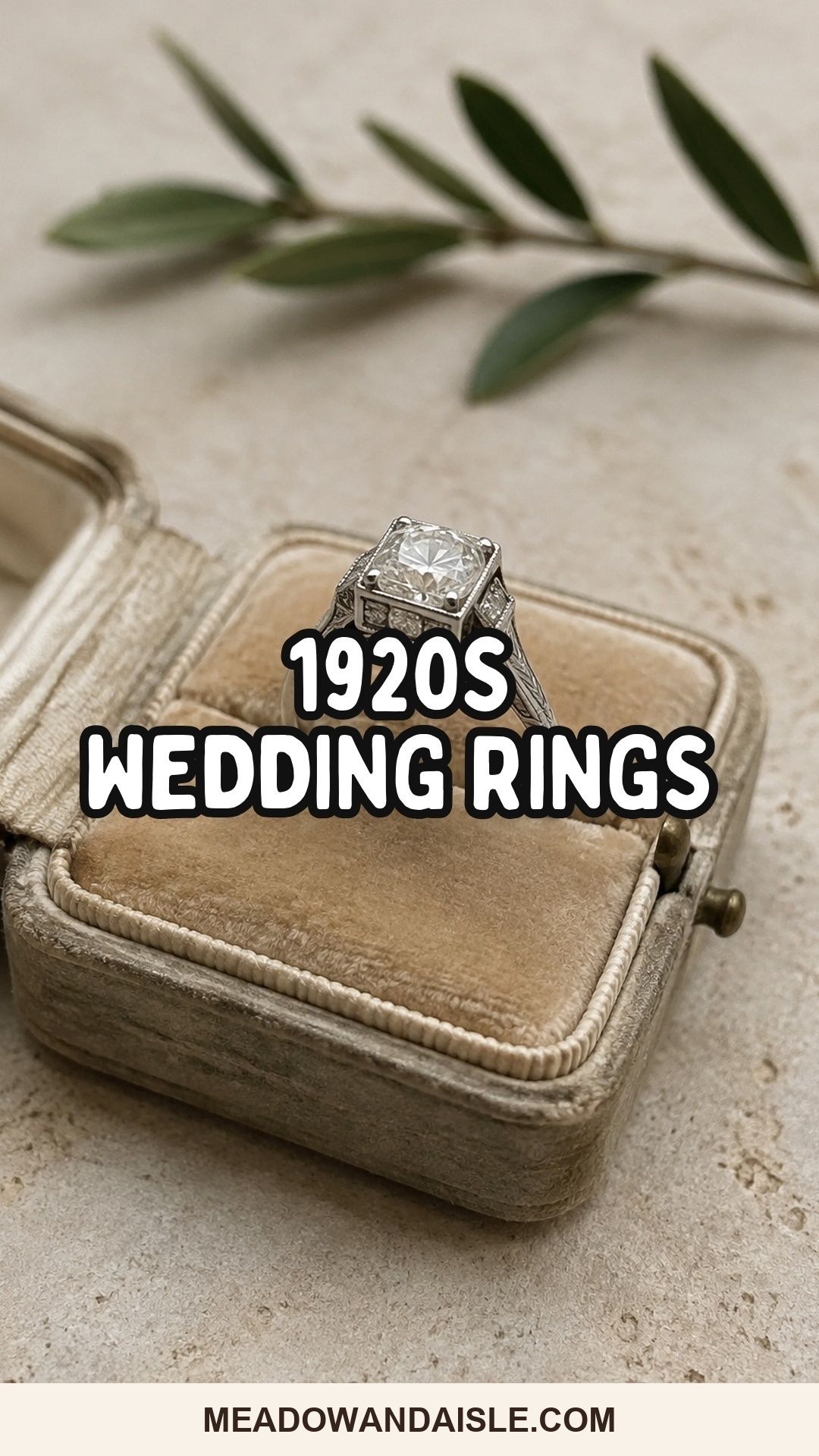
Vintage wedding rings 1920s ideas usually mean Art Deco lines, platinum or white gold, fine milgrain, filigree, step-cut diamonds, and small colored accents, but the best choice is the ring that balances real period character with condition, comfort, and a wedding band that can be worn every day.
A 1920s ring asks for a different kind of attention than a newly made trend piece. It rewards close looking: the tiny beaded edge, the crisp shoulder, the dark flash of onyx, the coolness of platinum, and the way an old stone holds light with a softer, more private glow.
For a small or intimate wedding, that kind of detail can carry real emotional weight. The ring becomes part heirloom, part portrait subject, and part daily promise, so authenticity matters, but so do repair history, insurance, and the quiet pleasure of wearing it long after the close-up photos are taken.
Recommended Wedding Products


You Might Also Like These Blog Posts
- 1920s Beauty Wedding Ideas With Art Deco Glow
- Vintage Cushion Cut Engagement Ring Ideas With Heirloom Energy
- Vintage Wedding Suit Ideas With Real Tailoring Charm
- Alt Wedding Rings Ideas for a Ring That Feels Like Yours
- Cluster Engagement Ring Vintage Ideas With Heirloom Spark
- 1950s Engagement Ring Ideas With Midcentury Romance
Vintage Wedding Rings 1920s Ideas With Real Deco Discipline
The clearest vintage wedding rings 1920s ideas begin with Art Deco structure rather than vague old-world prettiness. Look for symmetry, straight lines, octagonal frames, shield shoulders, baguette or emerald cut accents, pierced galleries, and precise metal edges that make the ring feel architectural on the hand.
Platinum was especially loved in the period because it could hold delicate detail while staying strong. White gold can create a similar cool tone in vintage-inspired designs, but an authentic 1920s estate ring deserves a closer inspection for hallmarks, previous sizing, worn prongs, thinning shanks, and any replaced stones.
| Design feature | 1920s feeling | Practical question |
|---|---|---|
| Platinum or white gold | Cool, crisp, architectural metal tone | Is the shank strong enough for daily wear? |
| Milgrain and filigree | Tiny texture, lace-like detail, hand-finished romance | Is the detail still crisp or worn flat? |
| Step cuts | Emerald, Asscher, baguette, and geometric light | Do the facets show chips or abrasions? |
| Colored accents | Sapphire, onyx, emerald, or black-and-white contrast | Are the accent stones secure and replaceable? |
| Reproduction setting | Period mood with newer construction | Does it feel Deco, or only generically vintage? |
Platinum Art Deco Engagement Ring

A platinum Art Deco engagement ring is the classic 1920s direction because the metal lets fine geometry stay crisp. The ring may have a boxy head, pierced side detail, fine engraving, and small diamonds that create light without turning the piece into a halo-heavy modern ring.
Ask a jeweler to inspect the prongs and shank before you fall too hard. Platinum can be wonderfully durable, but a century of wear still deserves respect, especially if the ring has previously been sized more than once.
Emerald Cut Diamond With Stepped Shoulders
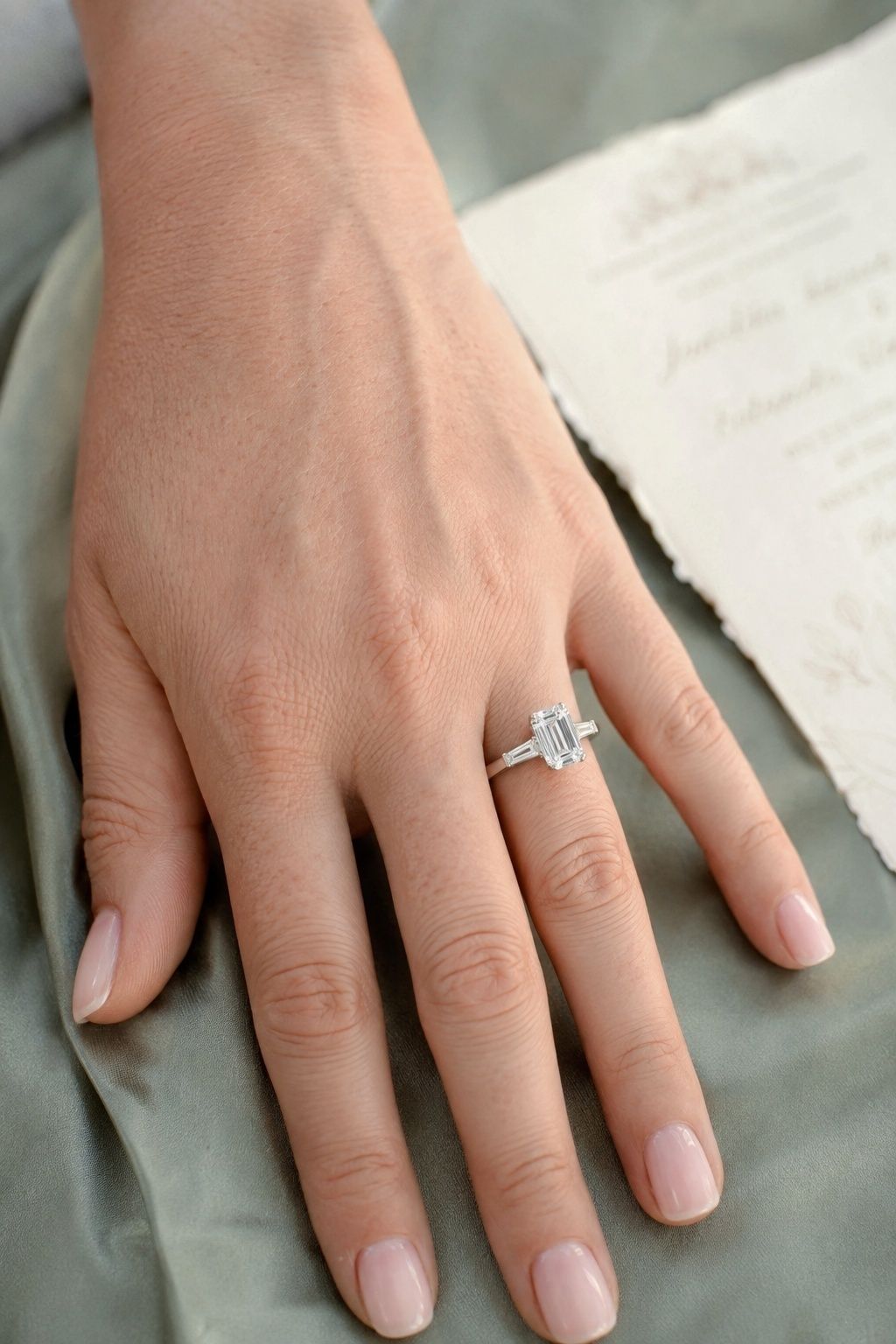
An emerald cut diamond feels deeply at home in 1920s design because the stone’s long steps echo the period’s clean geometry. Baguette shoulders or small calibre-cut accents turn the whole ring intentional instead of simply rectangular.
Choose this shape when you love clarity, proportion, and a quieter kind of sparkle. Step cuts show inclusions and chips more plainly than busy brilliant cuts, so condition reports and clear photos matter before purchase.
Asscher Cut Ring With An Octagonal Frame
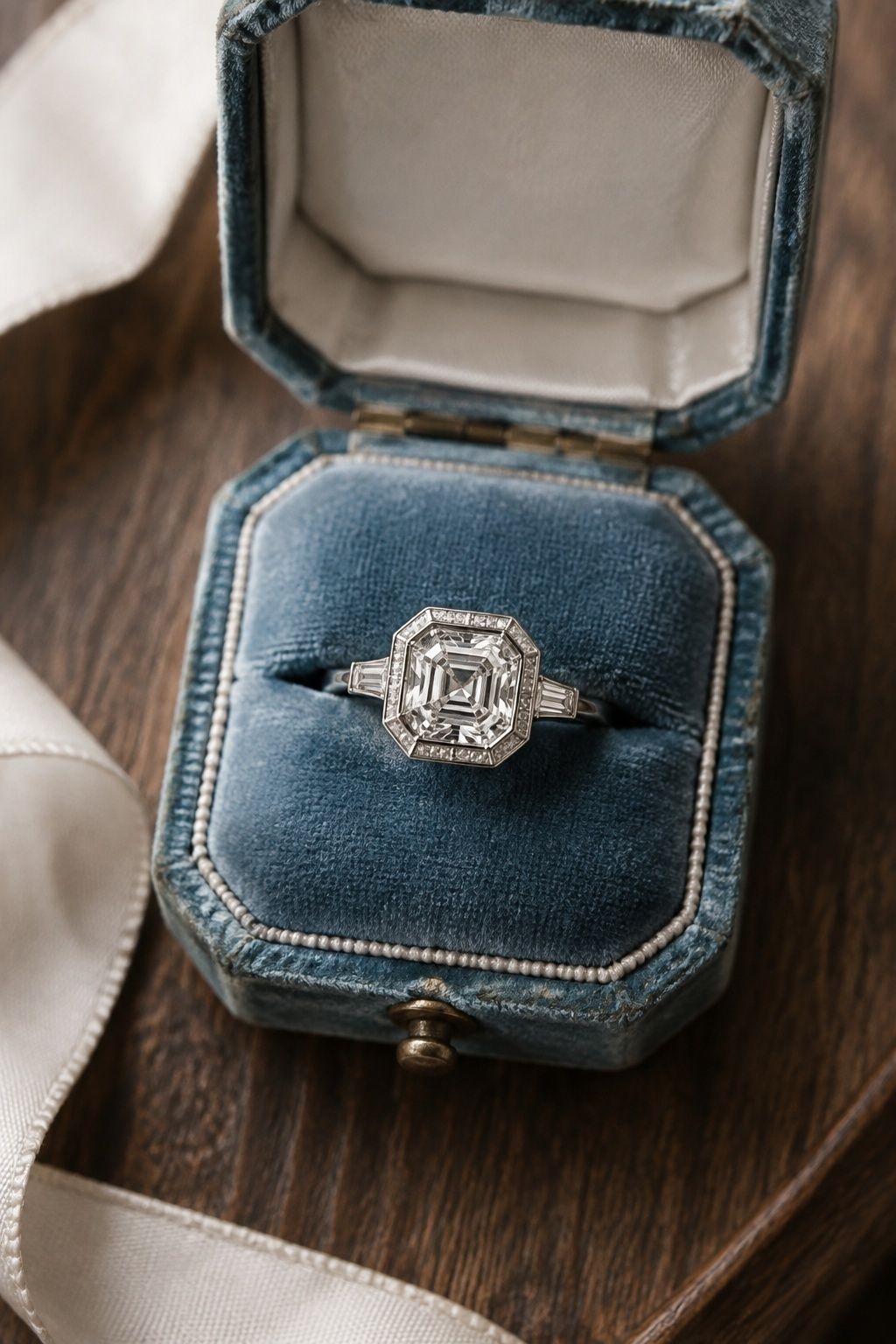
An Asscher cut diamond brings a square, hall-of-mirrors feeling to vintage wedding rings 1920s ideas. An octagonal frame, clipped-corner setting, or small side baguettes can underline that geometry without making the ring feel severe.
Try the ring on before deciding whether the shape suits your hand. A strong square center can look beautifully poised in close-up detail photos, but the scale should still feel comfortable beside your everyday jewelry.
Old European Cut Diamond In A Deco Setting
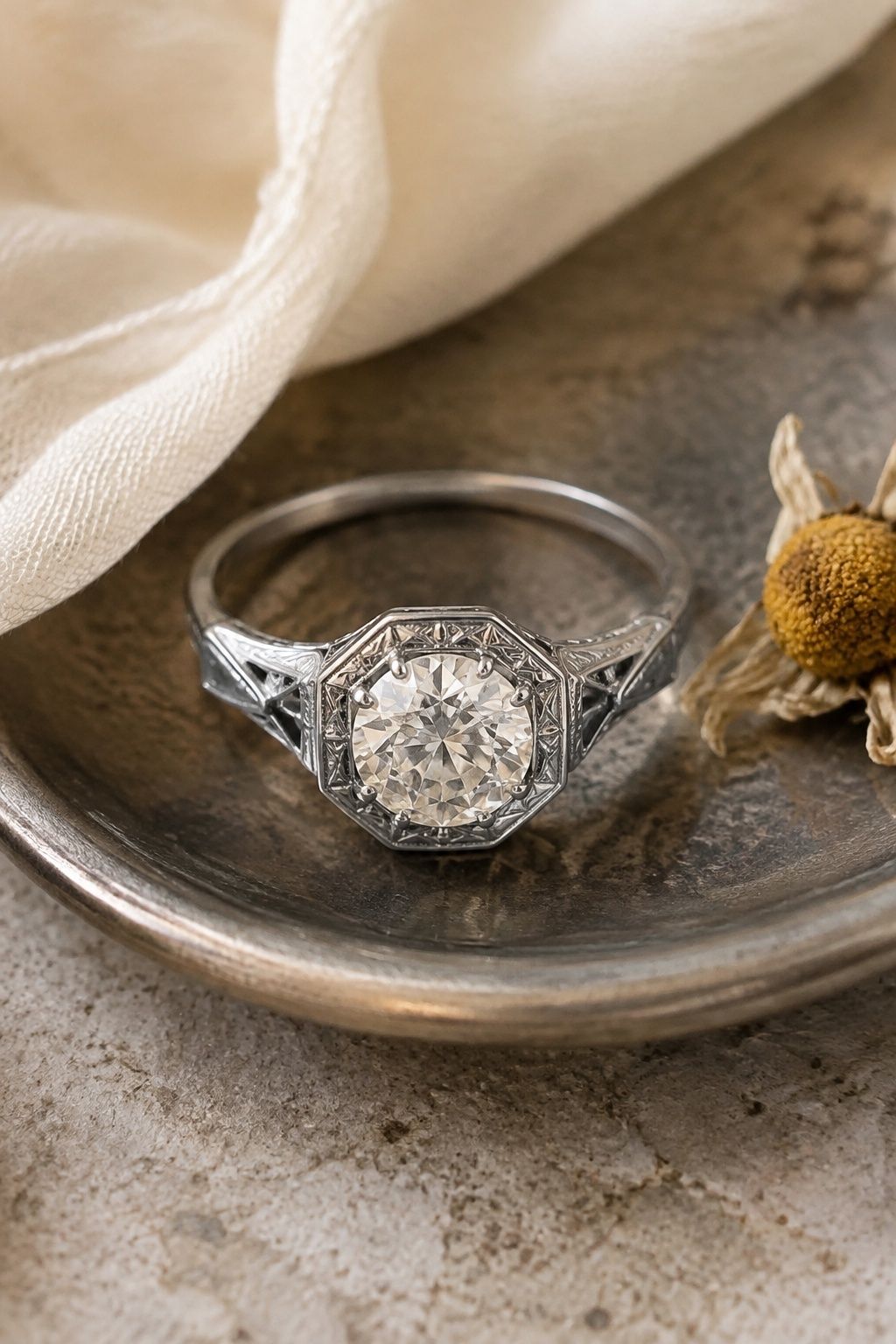
An old European cut diamond can soften a 1920s setting with rounder, chunkier light. The contrast is beautiful when the stone glows warmly and the surrounding metalwork keeps the period line crisp.
Judge a softer center by symmetry, metalwork, and condition first, then treat cushion-shaped romance (vintage cushion cut engagement ring ideas) as a secondary design note.
Sapphire Accent Stones
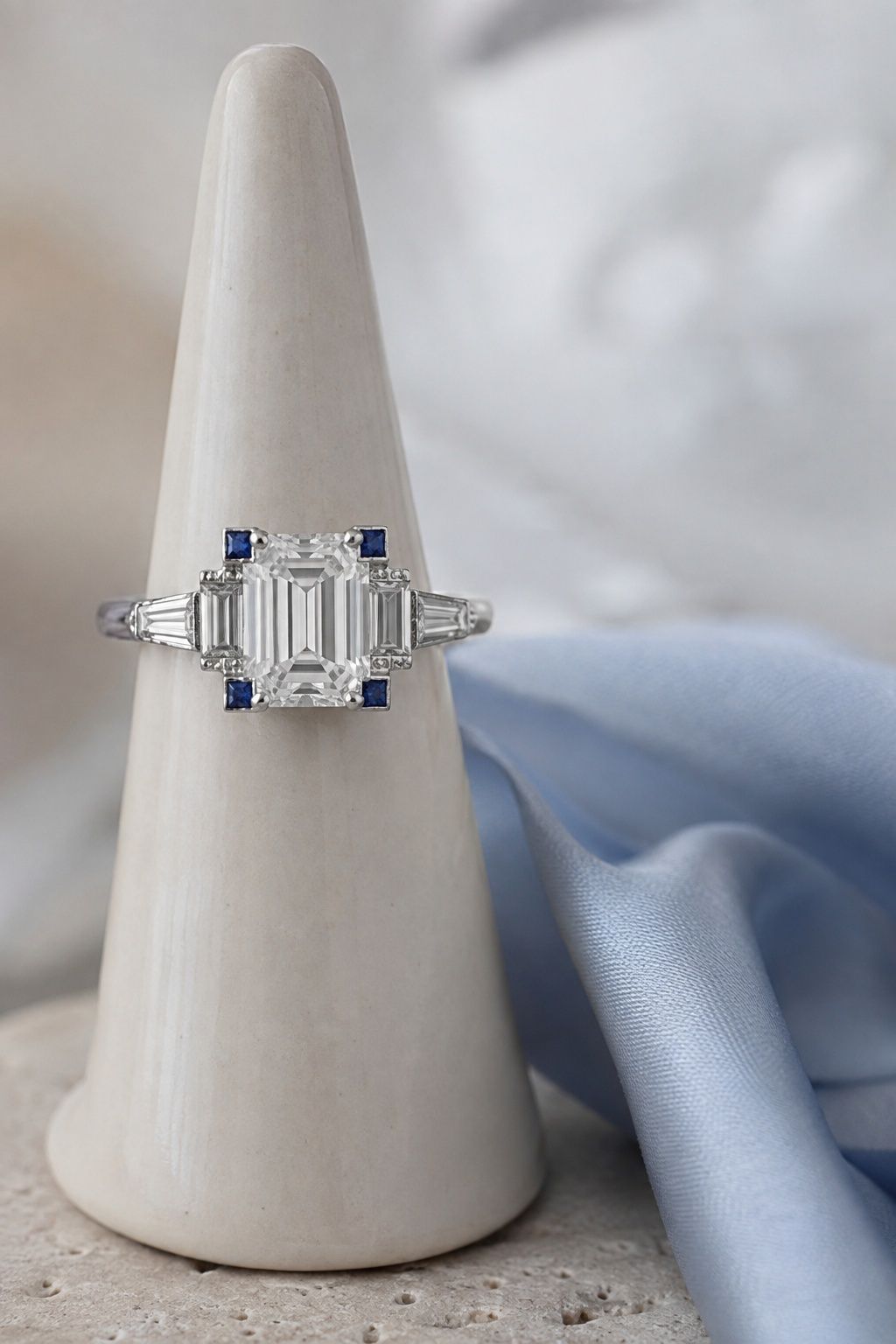
Sapphire accent stones give a 1920s ring a sharp blue flash without overwhelming the center. The color can appear in small side stones, calibre-cut details, or tiny geometric borders that make the ring feel more deliberate.
Ask whether the sapphires are original, replaced, treated, or especially worn at the edges. Small accent stones are easy to romanticize, but they need to be secure if the ring will be worn every day.
Onyx Accent Stones For Black-And-White Contrast
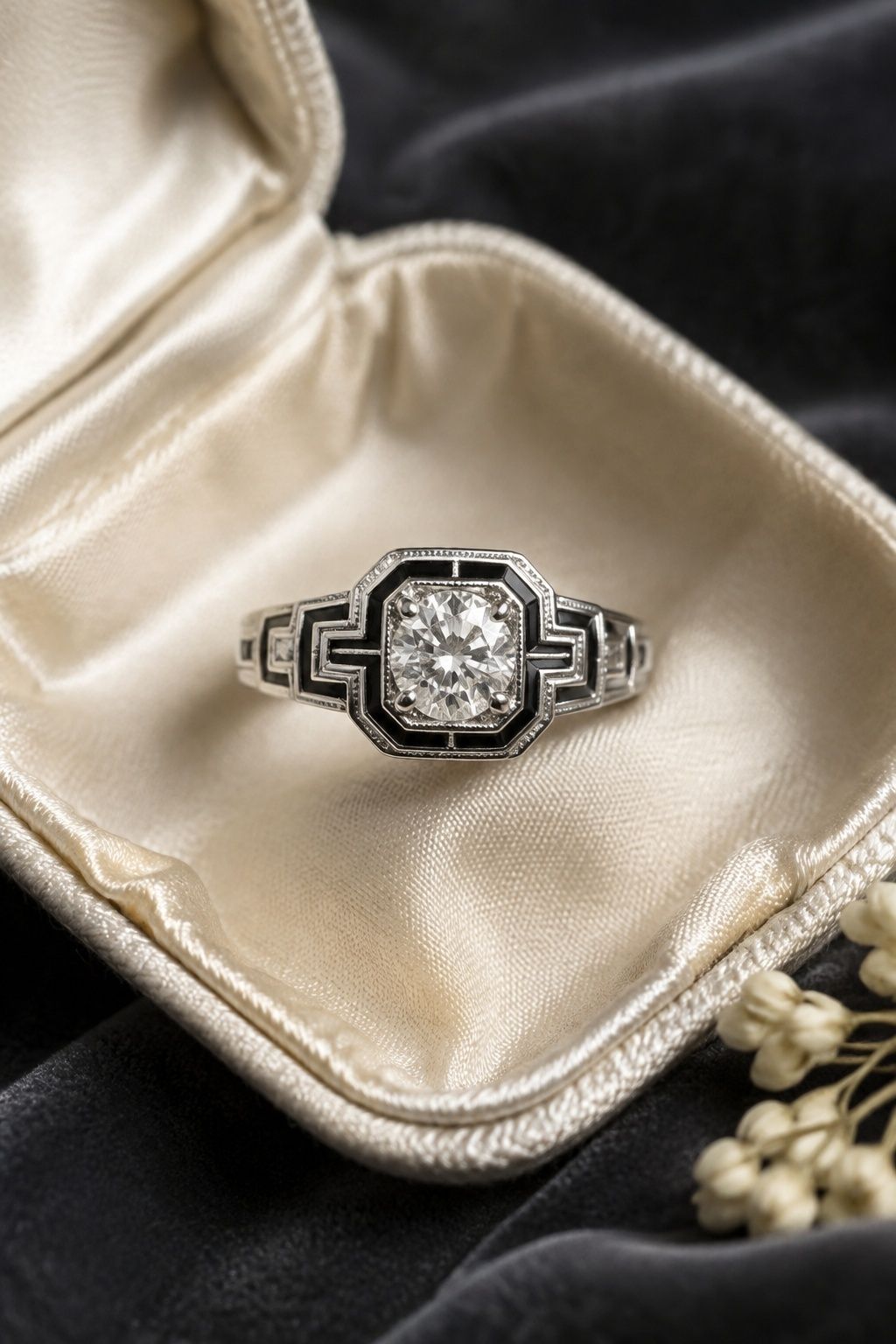
Onyx accent stones create one of the boldest Deco signatures: a crisp black line against white metal and diamond light. The look can feel dramatic, graphic, and wonderfully specific to the period when it is used with restraint.
Check the onyx for chips, replacements, and uneven wear. A tiny dark accent may make the ring unforgettable, but a damaged one may quickly pull attention away from the center stone.
Milgrain Wedding Ring Detail
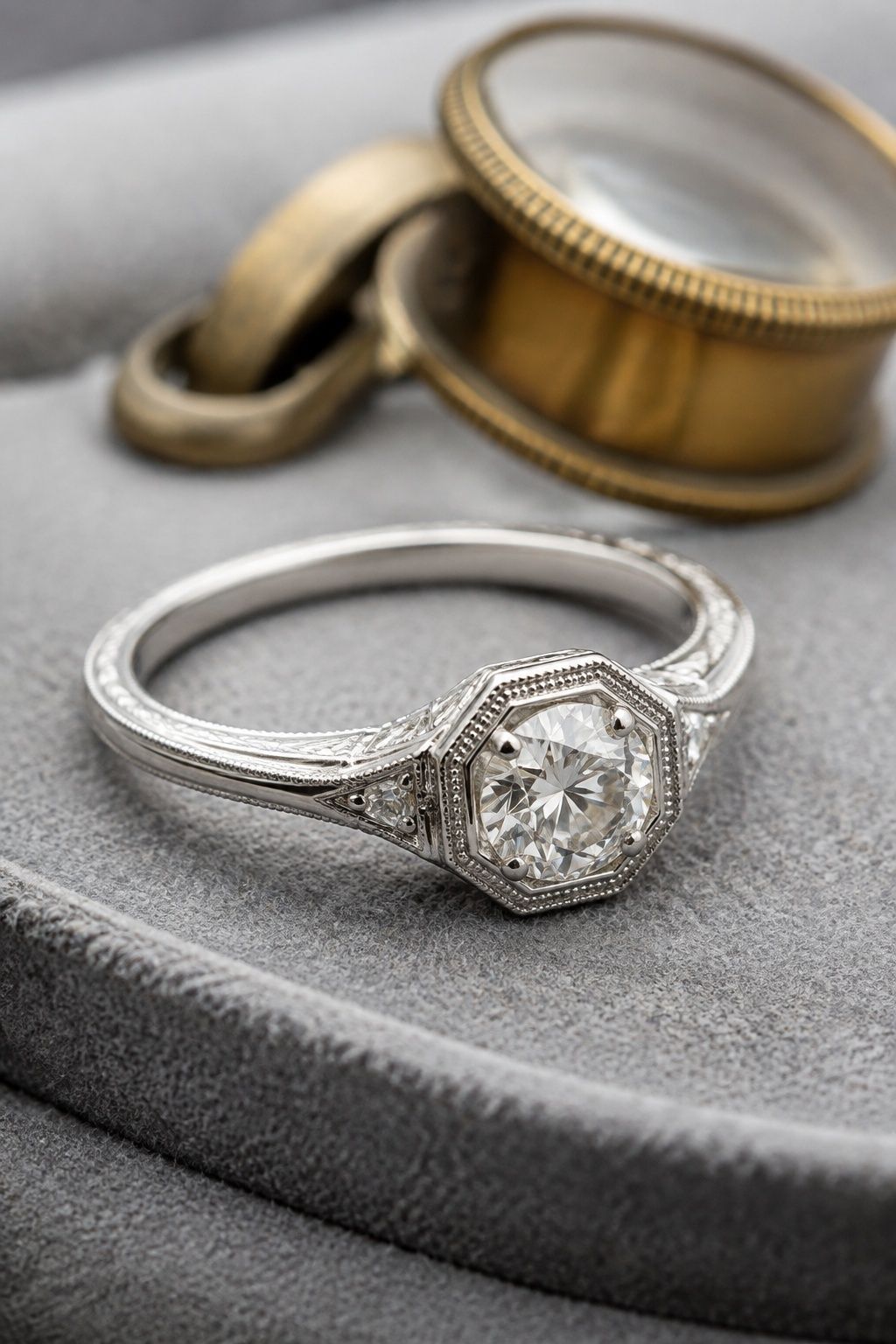
Milgrain is the fine beaded edge that makes many antique rings feel hand-finished. In a 1920s ring, it often outlines the center, traces shoulders, or frames small diamonds with a whisper of texture.
Look for milgrain that still feels clean rather than mushy. If the beading has worn down, a skilled jeweler may be able to refresh it, but the repair should suit the age and value of the ring.
White Gold Filigree Setting
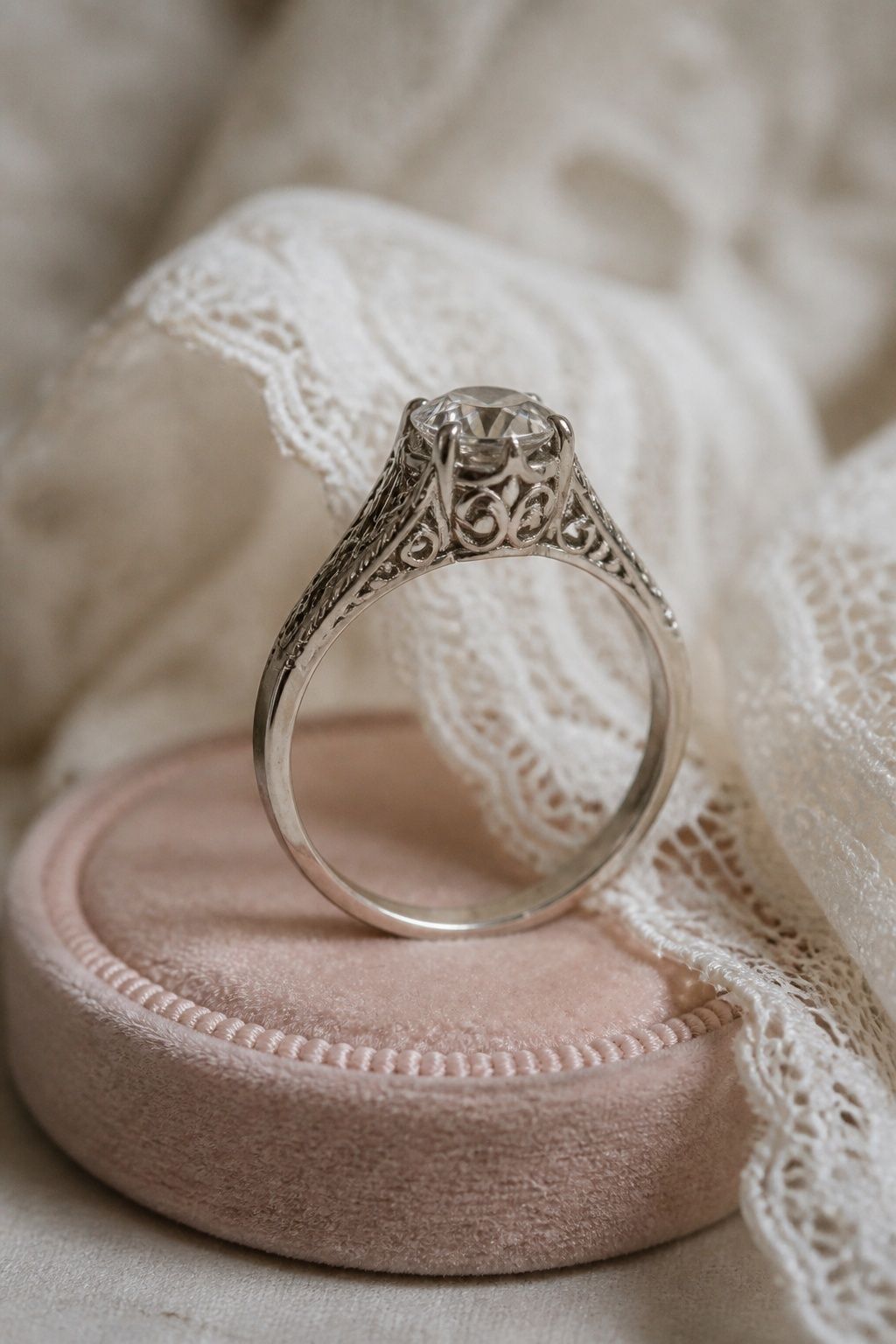
A white gold filigree setting can give vintage-inspired rings an airy, lace-like profile. It is especially lovely from the side, where the gallery can show fine openwork that appears in hand photos and ring-box shots.
Choose open detail only when it is structurally sound. Fragile filigree may look romantic in a tray, then snag, bend, or collect debris if it was made too thin for daily wear.
Clustered Deco Shoulder Stones
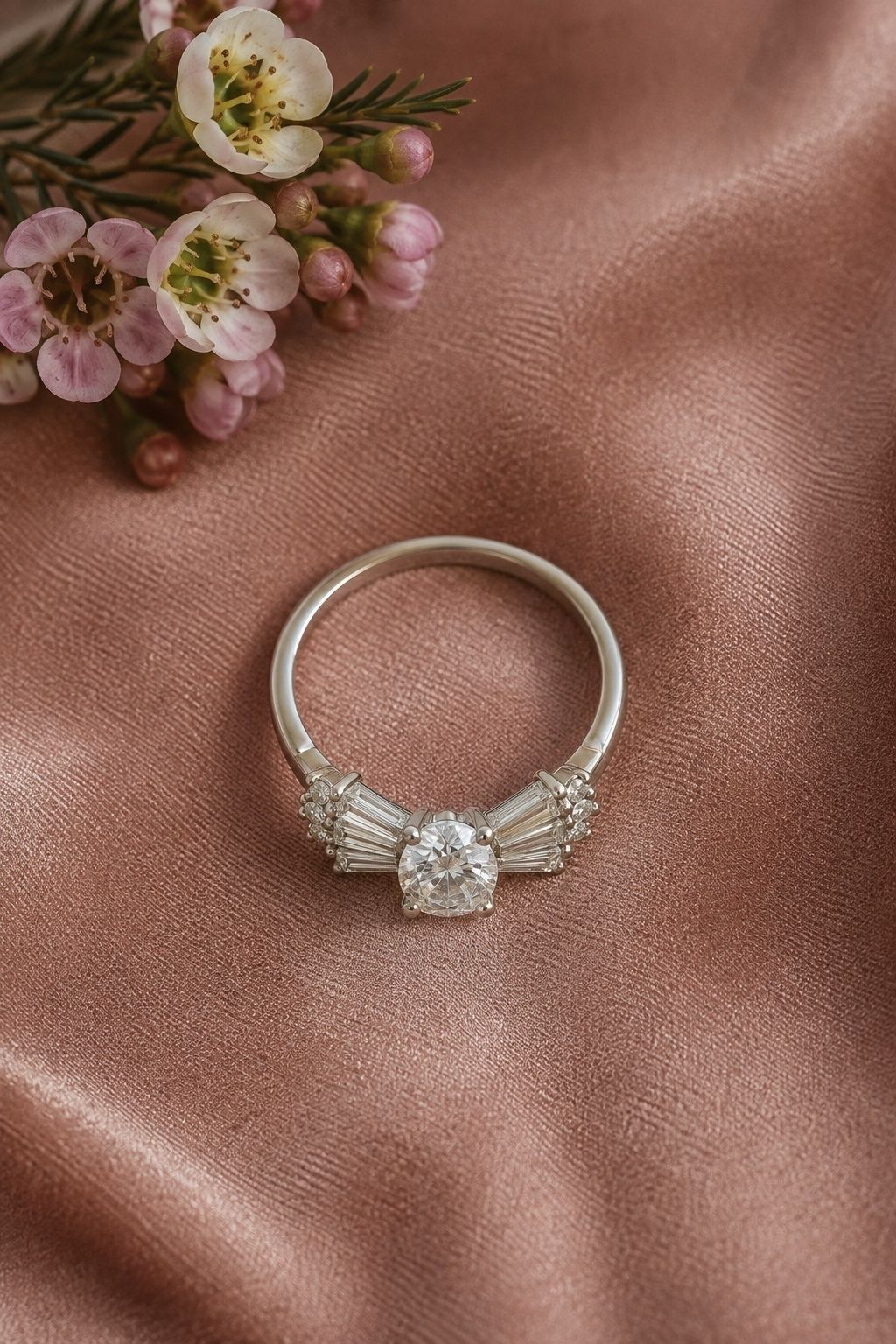
Clustered side stones can frame a center diamond beautifully when they keep a symmetrical Art Deco rhythm. The goal is structure, not clutter, so the shoulders should direct the eye toward the center instead of competing with it.
For clustered shoulders, let protection, crowding, symmetry, and center balance decide the setting; cluster-heavy styling (cluster engagement ring vintage ideas) still needs disciplined spacing.
Authentic 1920s Estate Ring
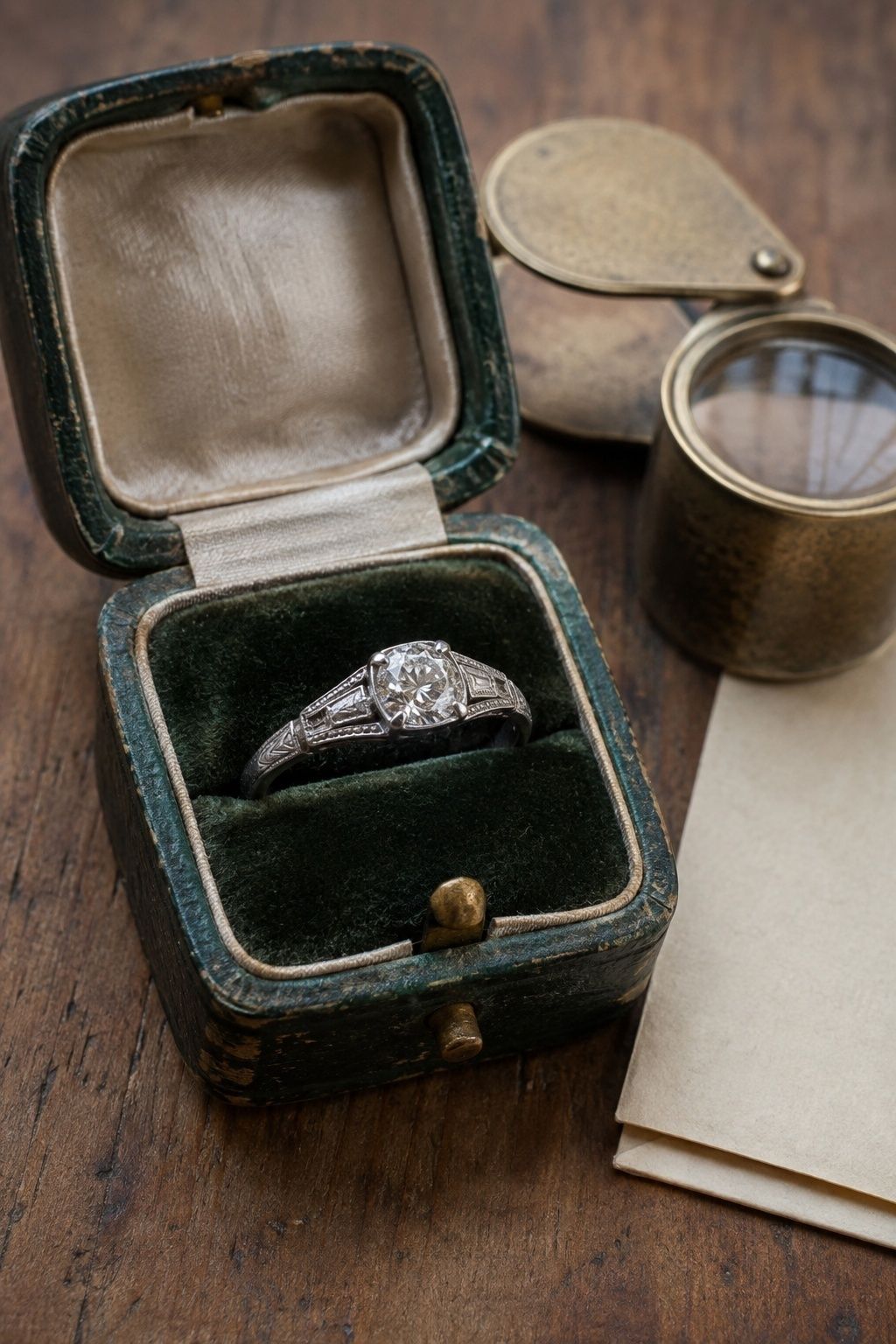
An authentic 1920s estate ring carries the strongest sense of history because the age is part of the piece, not only the style. Look for period-appropriate construction, believable wear, hallmarks when present, and documentation from a reputable seller.
Ask for an appraisal before finalizing the purchase, especially if the ring will become your engagement ring or wedding ring. Insurance, resizing limits, and stone security should be handled before the wedding week, not after a prong catches during travel.
Vintage-Inspired Reproduction Ring
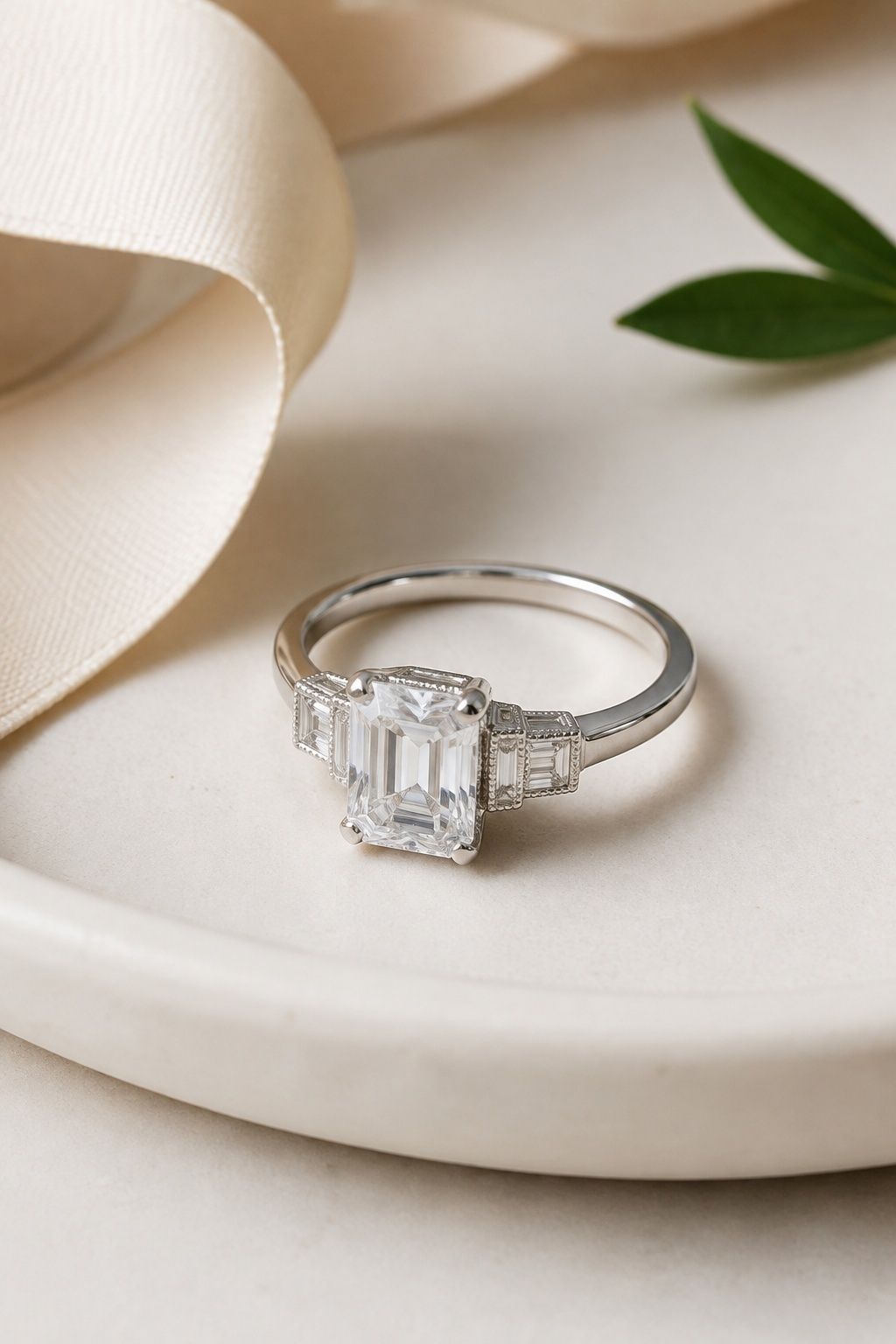
A reproduction ring can be the wisest choice when you love 1920s design but want newer metalwork, a custom size, or a more predictable center stone. The strongest versions use Deco language honestly: symmetry, step cuts, fine edges, and disciplined contrast.
Avoid reproductions that collect every antique detail at once. Milgrain, filigree, colored stones, engraving, and a halo can all be lovely, but the ring needs one clear point of view.
Engraved Wedding Band Pairing
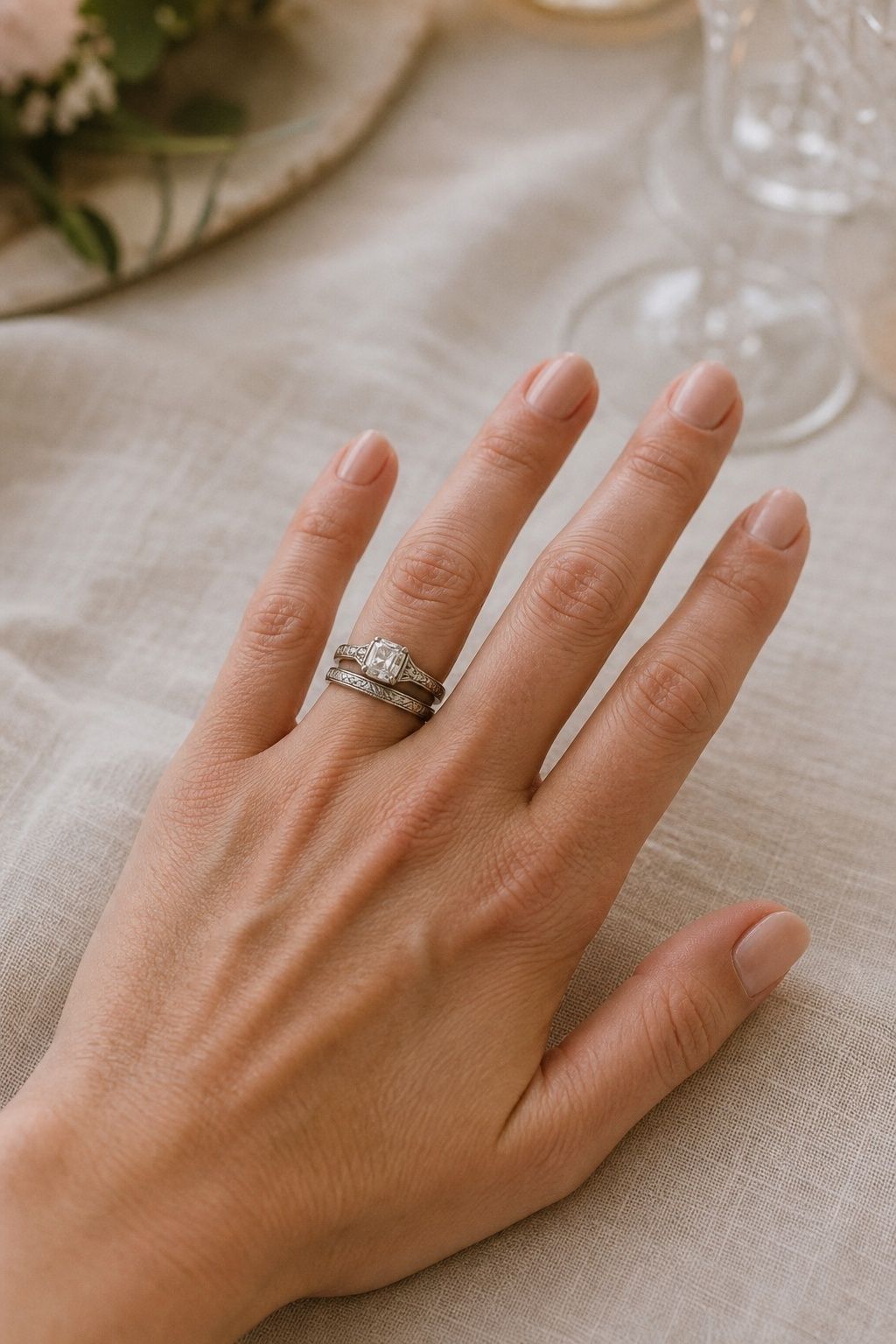
An engraved wedding band often makes a 1920s engagement ring feel complete without adding more stones. Choose a pattern that repeats the ring’s line work gently, such as wheat engraving, tiny geometric cuts, or a slim milgrain edge.
Test the stack from above and from the side before ordering the band, because gap, metal tone, curve, and center-setting clearance matter more than novelty, even when the stack leans bolder (unique wedding ring stack ideas).
East-West Deco Influence
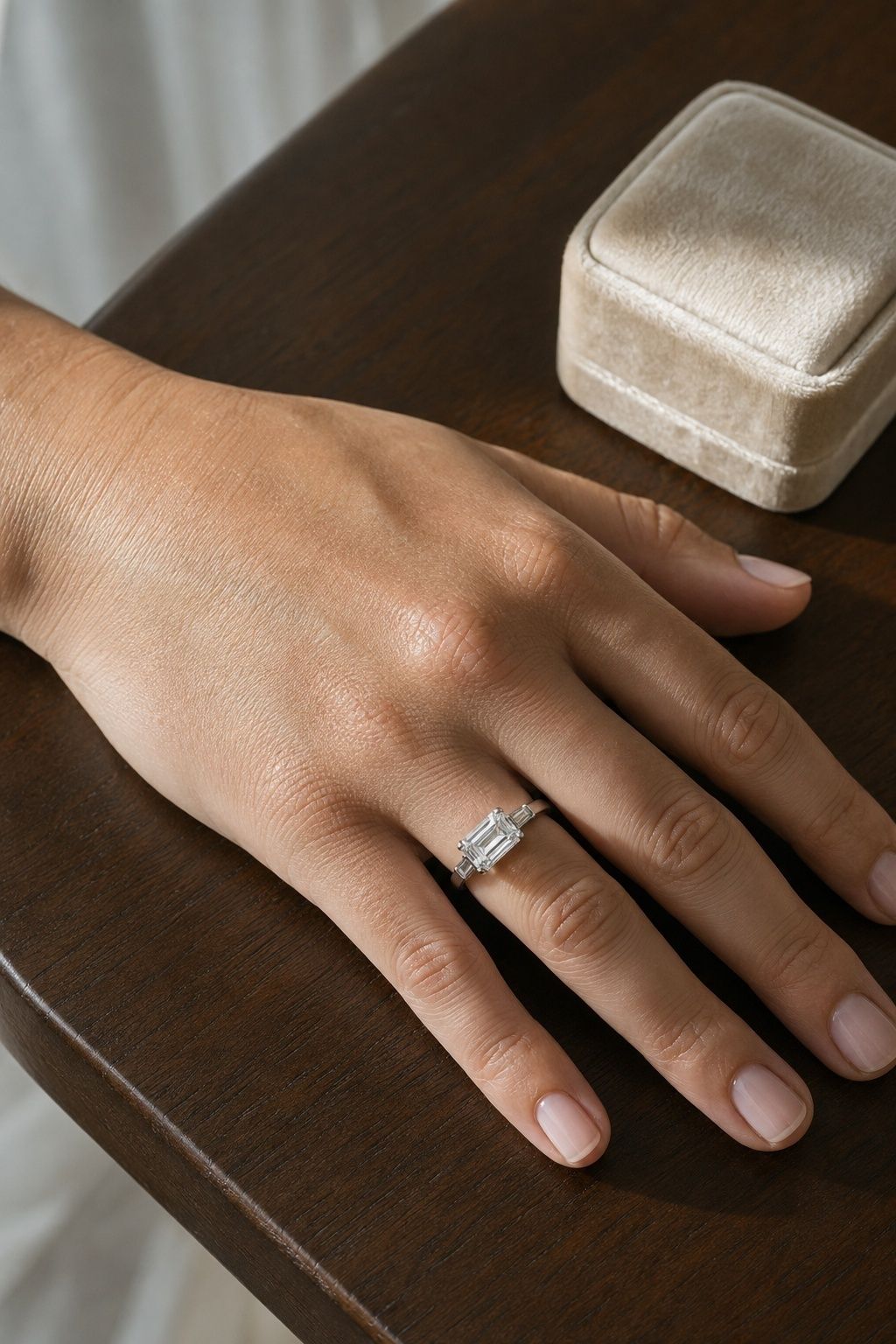
An east-west orientation makes a step-cut stone feel more modern while still honoring the geometry of the 1920s. The horizontal line works especially well for emerald cuts, baguettes, and elongated stones with clean shoulders.
Ask the jeweler whether the horizontal setting still feels Deco rather than simply sideways; east-west orientation (east west engagement ring ideas) should stay secondary to period-appropriate setting language.
Elongated Hexagon Shape With Deco Edges
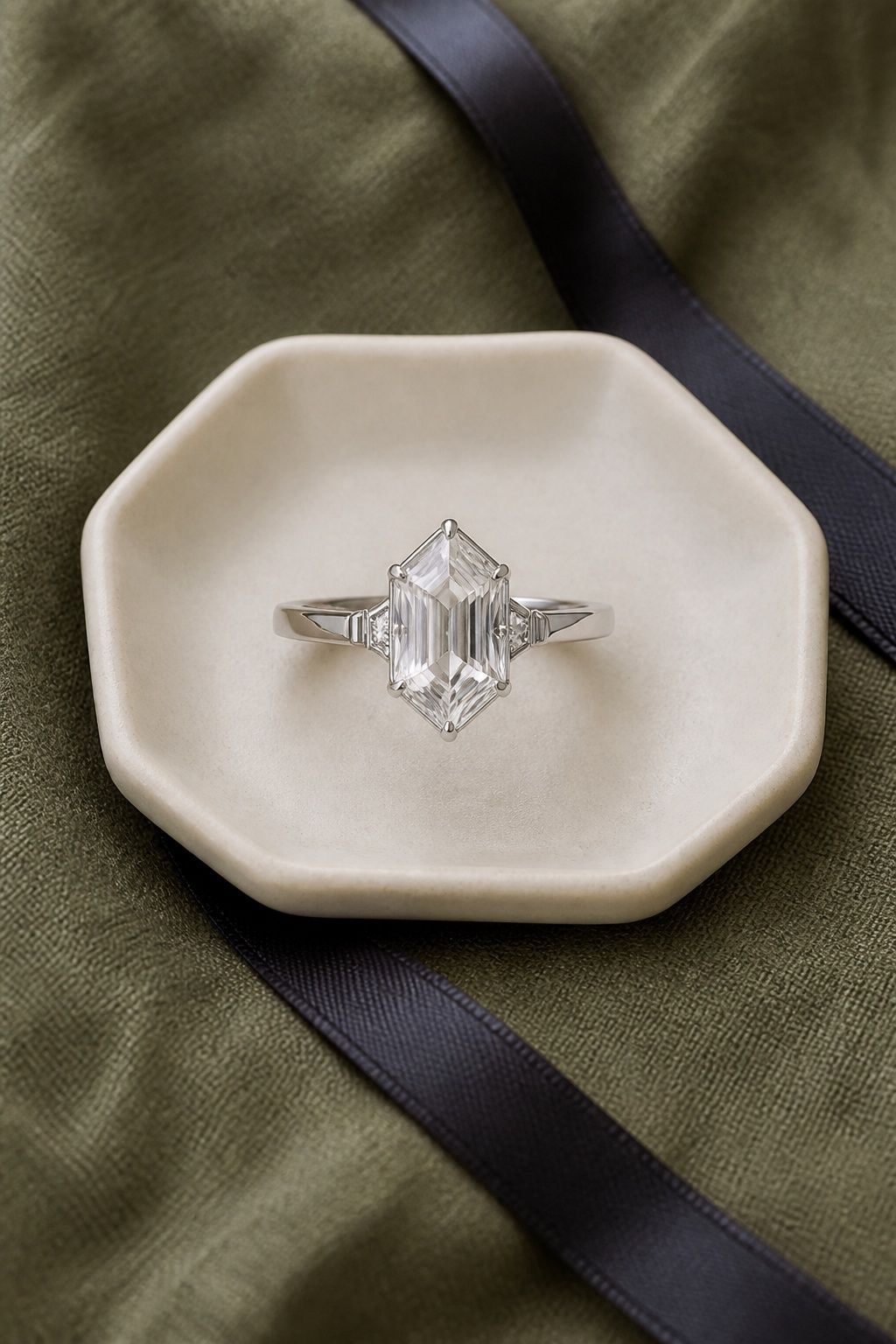
An elongated hexagon is not the default 1920s ring shape, but its clipped edges may echo Art Deco architecture when the setting stays clean. It works best as a vintage-inspired choice rather than a claim of strict period authenticity.
Let the clipped outline earn its place on your hand before any related geometric direction (elongated hexagon engagement ring ideas) outruns metal, setting language, and durability.
1950s Contrast For Couples Who Want Softer Vintage

The 1950s often feels sweeter, rounder, and more mid-century than the 1920s. If you keep choosing warmer yellow gold, simpler solitaires, or fuller classic shapes, you may be responding to vintage romance more than Art Deco precision.
When a ring feels too angular on your hand, choose comfort and warmer proportion first; softer vintage styling (1950s engagement ring ideas) should confirm that instinct, not replace it.
How To Shop, Verify, And Protect A 1920s Ring
Treat the appointment like a tiny architecture review, not a generic antique purchase. A 1920s ring should make visual sense from the top first: the shoulders should line up, the frame should feel intentional, and the milgrain or engraving should sharpen the shape instead of softening it into blur.
Turn the ring slowly in the jeweler’s hand and study the side view the way your photographer will study it on the wedding morning. The gallery should look purposeful from close range, with filigree, pierced metal, or a basket that supports the center rather than floating like a pretty secret no one has checked.
Have the metal conversation in plain language. Ask whether the white tone comes from platinum or white gold, whether any interior marks still make sense, and whether old sizing work has interrupted the pattern. The point is not to turn romance into suspicion; it is to protect the exact detail that made the ring feel chosen.
Ask the stone question by period mood, not carat alone. An old European cut diamond should glow differently from an emerald cut diamond or Asscher cut diamond, while sapphire accent stones or onyx accent stones should feel deliberate enough to survive a lifetime of glances, hand photos, and anniversary dinners.
Do a wedding-band rehearsal before anyone starts engraving. Slide on a plain band, a curved band, and an engraved wedding band, then look for the little problems that only appear in motion: a gap that feels awkward, a curve that pinches, a metal tone that fights the engagement ring, or a setting that asks the band to sit too far away.
For the wedding week, build a small heirloom folder instead of a heavy buying file. Keep the appraisal, jewelry insurance details, a few close photographs, and the jeweler’s care notes together, then pack the antique ring box for the flat lay and a travel ring box for the real movement between rooms, vows, dinner, and home.
FAQ
What do 1920s wedding rings look like?
1920s wedding rings often look geometric, crisp, and finely detailed. Expect platinum or white gold, milgrain edges, filigree, engraved shoulders, step-cut diamonds, old European cut diamonds, sapphire or onyx accents, and symmetrical settings that feel more architectural than soft or floral.
What is the difference between 1920s and Art Deco rings?
A 1920s ring is about age or period, while an Art Deco ring is about design language. Many 1920s rings are Art Deco, but a ring can be Art Deco-inspired and newly made, or antique from the 1920s with design details that are subtler than the bold Deco stereotype.
How can you tell if a 1920s ring is authentic?
You can start by checking hallmarks, construction, stone cuts, metal type, engraving, wear patterns, and seller documentation. A qualified jeweler or appraiser should inspect the ring before purchase, because replaced stones, later repairs, and modern reproductions can look convincing in photos.
What stones were popular in 1920s wedding rings?
Diamonds were central, especially old European cuts, emerald cuts, Asscher cuts, baguettes, and other step-cut shapes. Sapphire accents, onyx accents, emerald details, and small calibre-cut stones also appeared in Art Deco designs, often adding color or graphic contrast around a diamond center.
Are vintage 1920s wedding rings practical to wear?
Vintage 1920s wedding rings can be practical if the structure is sound, the stones are secure, and the setting suits your daily life. Have the ring inspected, ask about resizing limits, repair worn prongs, insure it properly, and consider a lower-profile reproduction if the antique is too delicate.
What wedding band goes with a 1920s engagement ring?
A plain platinum band, slim white gold band, engraved wedding band, curved band, or custom contour band can work with a 1920s engagement ring. The right band should respect the setting height, leave room for filigree or side stones, and avoid competing with the ring’s geometry.
Final Thoughts
Vintage wedding rings 1920s ideas are most beautiful when the romance has structure behind it. Choose the ring for its line, history, condition, and feeling on your own hand, then protect that choice with an appraisal, thoughtful insurance, and a wedding band that lets the original design breathe.
Before you insure the ring, ask the appraiser to document hallmarks, repairs, stone condition, and Art Deco engagement ring features in the same record so your heirloom piece feels loved, understood, and prepared for real married life.
Last update on 2026-10-03 / Affiliate links / Images from Amazon Product Advertising API