

Simple spring wedding decor is an airy, seasonal approach built around fresh flowers, soft linens, light candle glow, and a few intentional focal points instead of heavy themed styling. The look works best when every piece feels useful, breathable, and connected to the season.
Spring weddings already come with a natural sense of renewal, so the prettiest decor plans usually begin by editing rather than adding. Think fewer statement pieces, more open space, and details that let the venue, flowers, and daylight do some of the visual work.
For couples who want a fresh celebration without a room full of props, the strongest choices are usually delicate texture, seasonal color, practical rain planning, and small gestures that make a ceremony or reception feel finished without looking overly designed.
Recommended Wedding Products


You Might Also Like These Blog Posts
- Simple Winter Wedding Decor That Feels Warm Without Trying Too Hard
- Simple Summer Wedding Decor That Feels Airy, Useful, And Beautiful
- Budget Spring Wedding Decor Ideas That Still Feel Romantic And Thoughtful
- Simple Fall Wedding Decor for a Finished, Uncluttered Room
- Romantic Spring Wedding Decor Ideas for a Soft Garden Celebration
- Spring Wedding Decor Ideas With Fresh-Air Romance
Simple Spring Wedding Decor That Feels Fresh Without Trying Too Hard
Begin with the way guests move through the day: arrival, ceremony, cocktail hour, dinner, weather shifts, and the final exit. When those transitions feel considered, the celebration reads as complete even if the styling stays quiet.
A spring wedding can be relaxed and still look polished. The strongest decorative choices are the ones that guide people, solve seasonal problems, suit the venue, and make a small number of meaningful places feel cared for.
Map The Guest Route Before Buying Decor
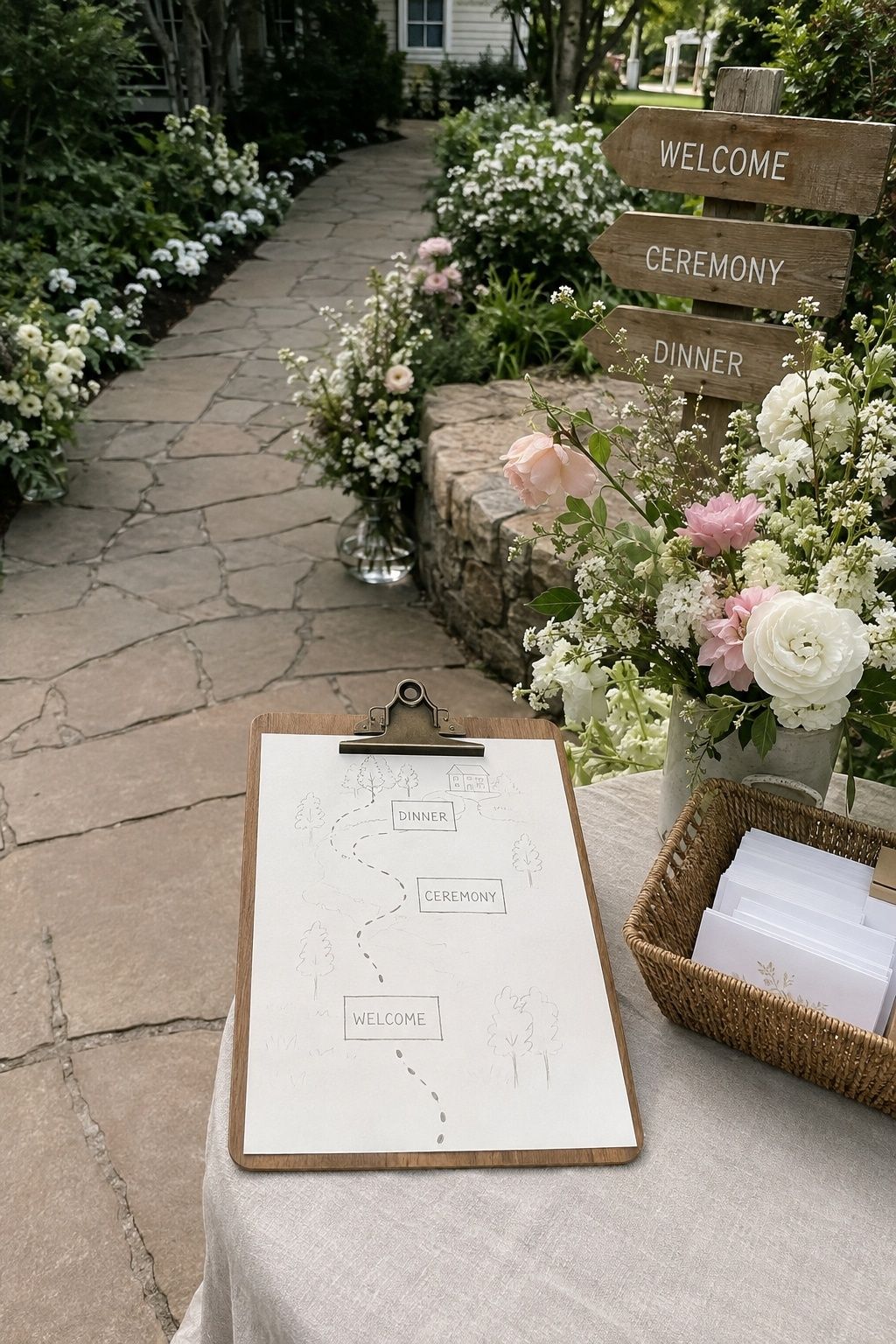
Start with the path guests will take from arrival to ceremony, cocktails, dinner, and departure. A spring wedding feels calmer when the decorative plan follows that route instead of scattering pretty objects across places guests may never visit.
Mark the moments that need orientation: where to park, where to gather, where to leave cards, where to find the bar, and where the evening exit will happen. A few well-placed flowers, lights, and signs along that path can make the whole day feel intentional.
Choose One Focal Point For Each Zone
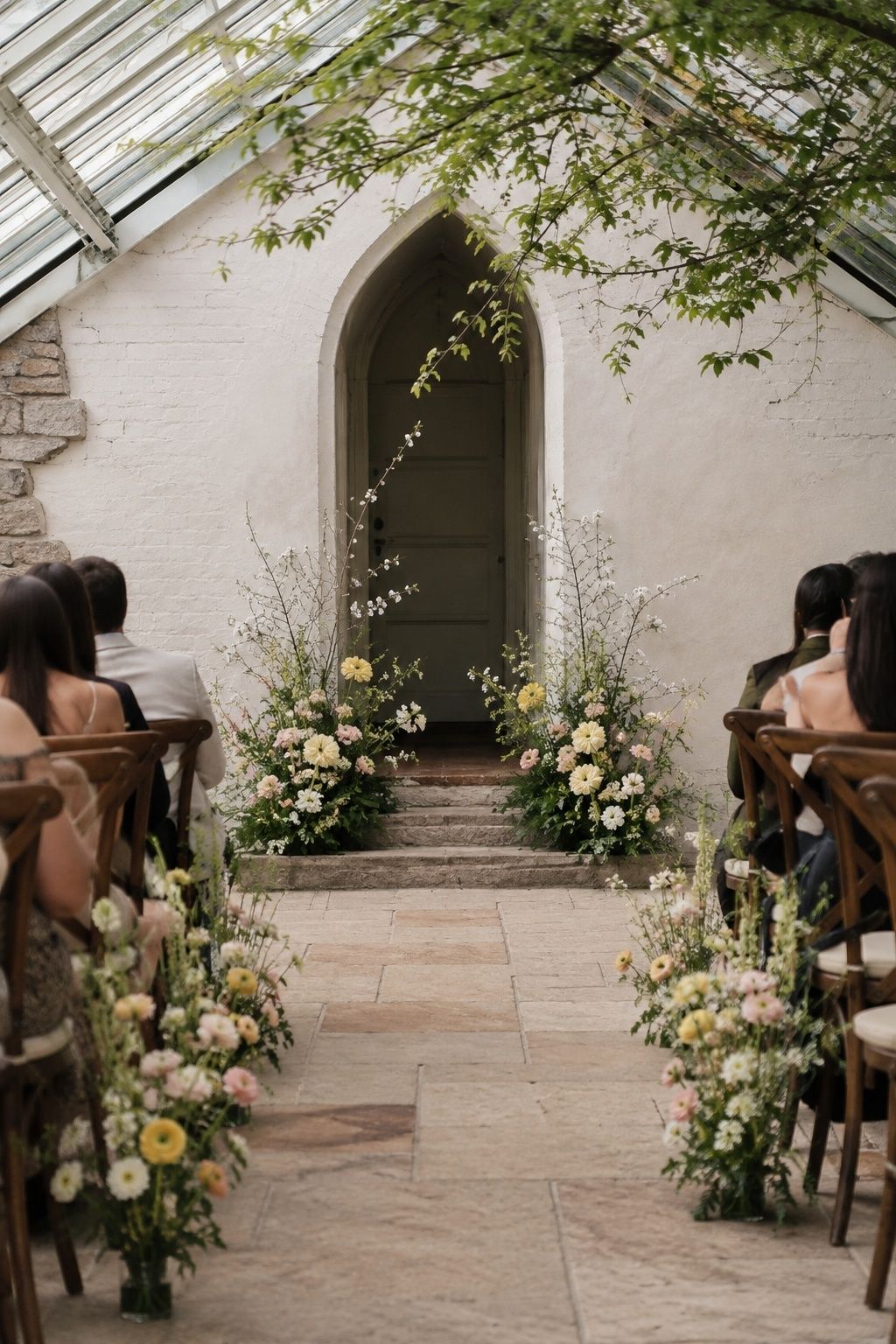
Give every major area one clear visual job. The ceremony might have a doorway, tree, arch, or chapel step. Cocktail hour might have the escort display. Dinner might have the head table or a warmly lit entrance rather than a heavily decorated tabletop.
This zone-by-zone method keeps the wedding from becoming crowded. It also helps the budget because you can spend more attention on the areas that define the day and leave transitional corners simple, clean, and easy to move through.
Let Daylight Decide The Softest Colors
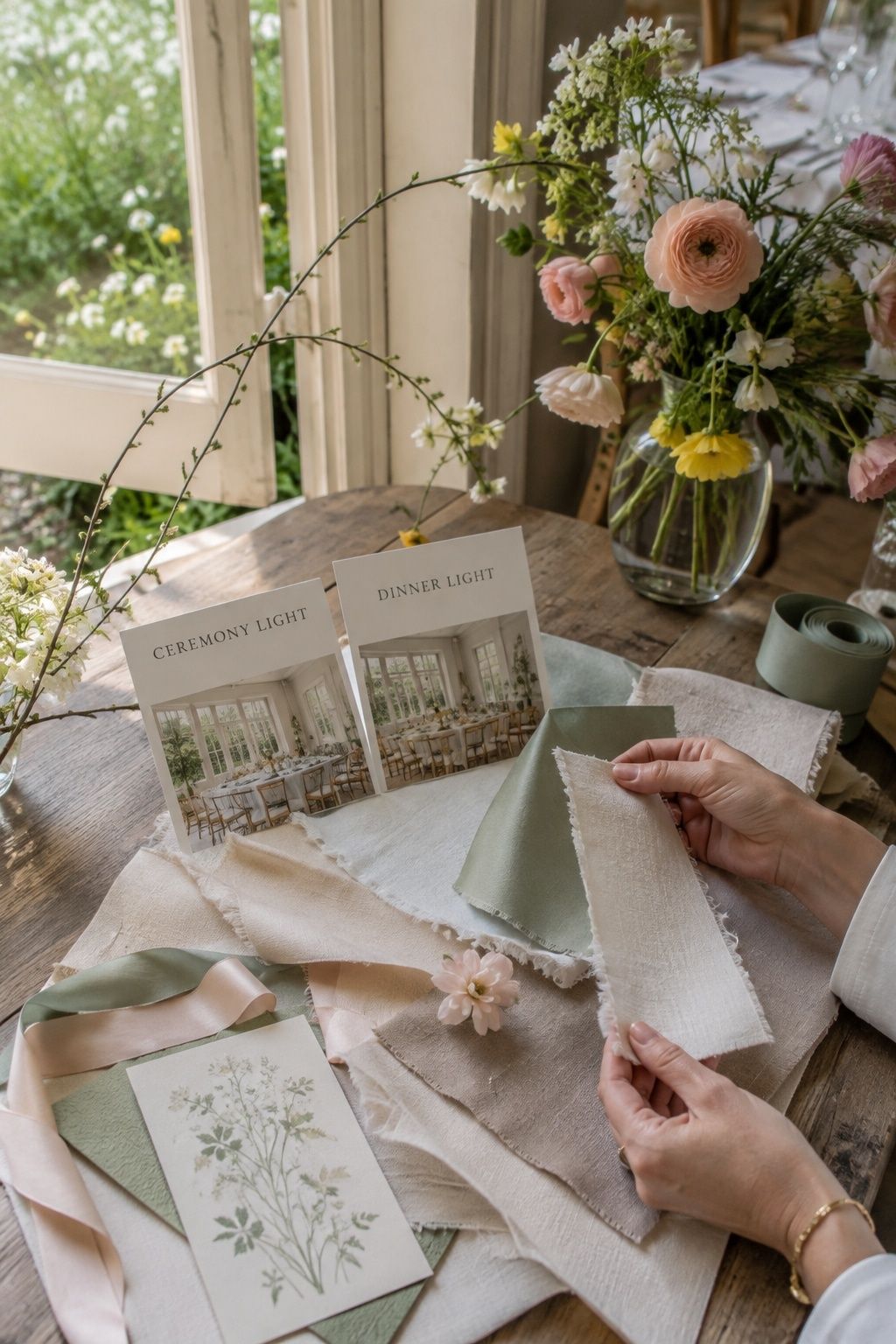
Spring light changes quickly, especially in gardens, tents, glass rooms, and courtyards. Visit the venue near ceremony time and dinner time before locking in color. A shade that looks pale indoors may glow brightly outside, while white linens can turn cool under cloudy skies.
Use the venue’s daylight as a filter. If the room is already bright, choose warmer neutrals and muted greens. If the space is shadowed, bring in gentle contrast through paper, ribbon, and a few brighter blooms near the places guests enter first.
Build A Rain-Safe Welcome Moment
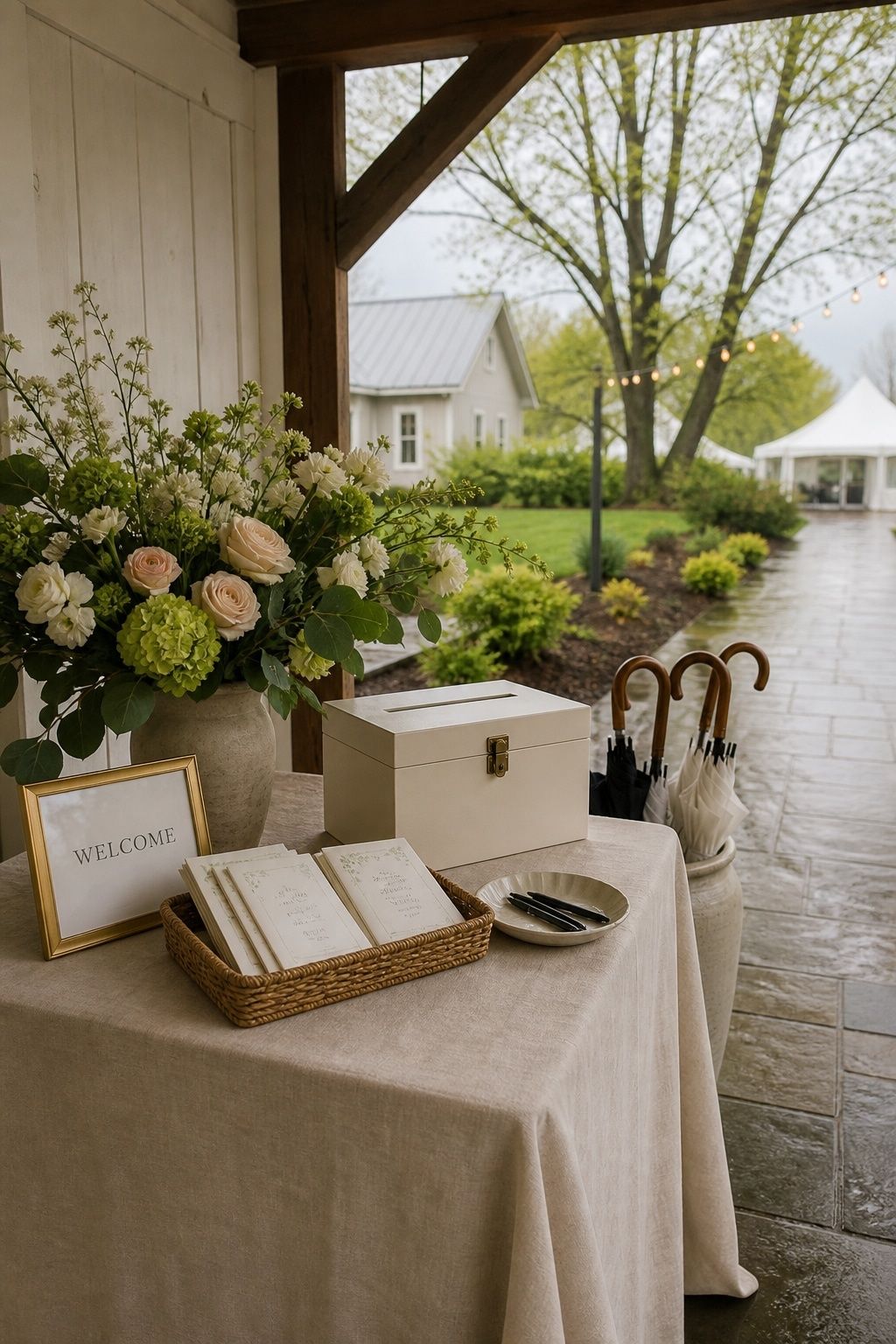
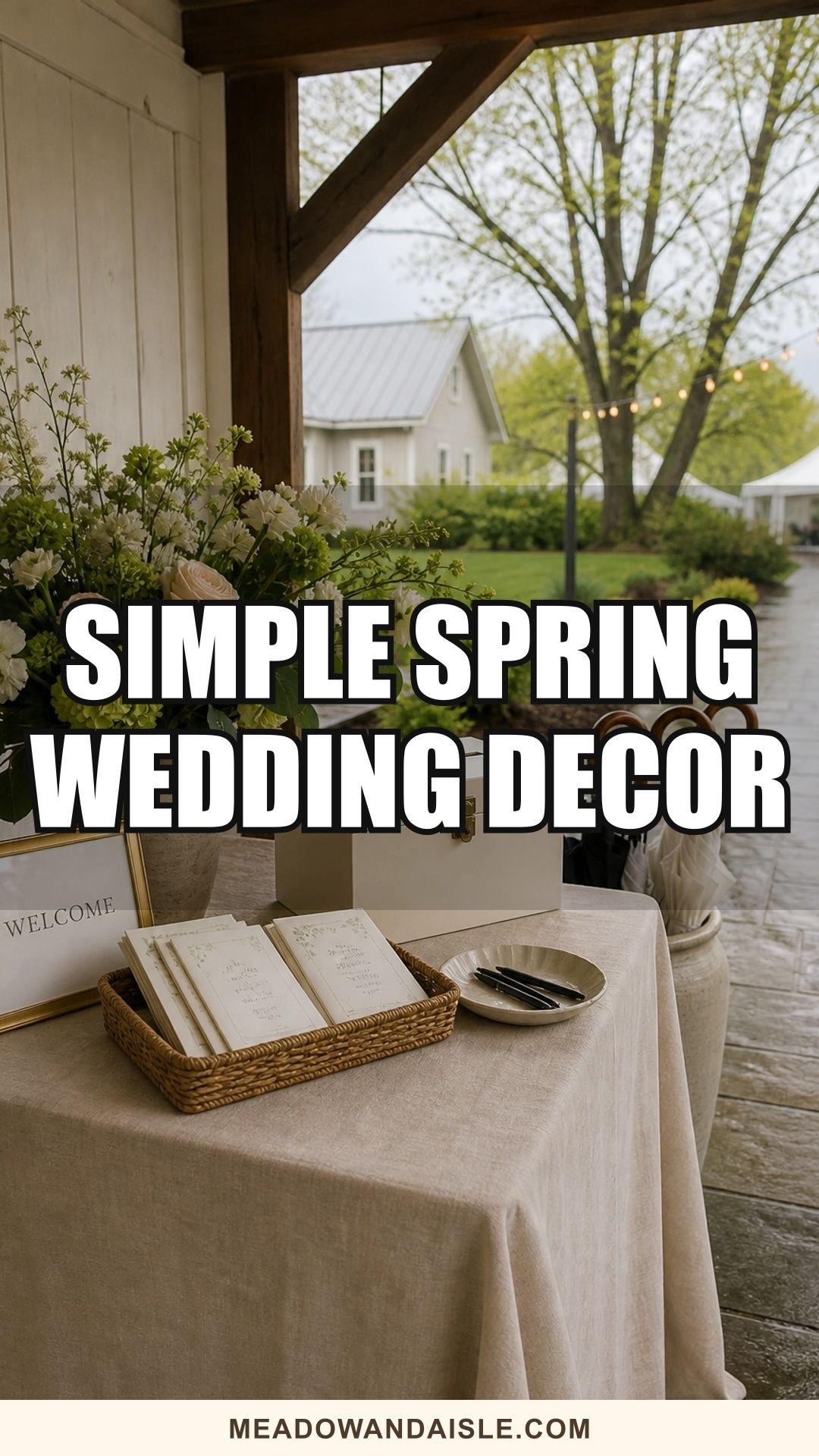
A simple spring plan should assume damp shoes, umbrellas, and a few weather surprises. Place the welcome table under cover, use weighted frames instead of loose cards, and keep the guest book away from any doorway that may collect wind or drizzle.
This does not need to look utilitarian. A lidded card box, a small basket for programs, a ceramic tray for pens, and a floral accent in a sturdy vessel can feel polished while still protecting the pieces that matter.
Keep Ceremony Decor Easy To Move
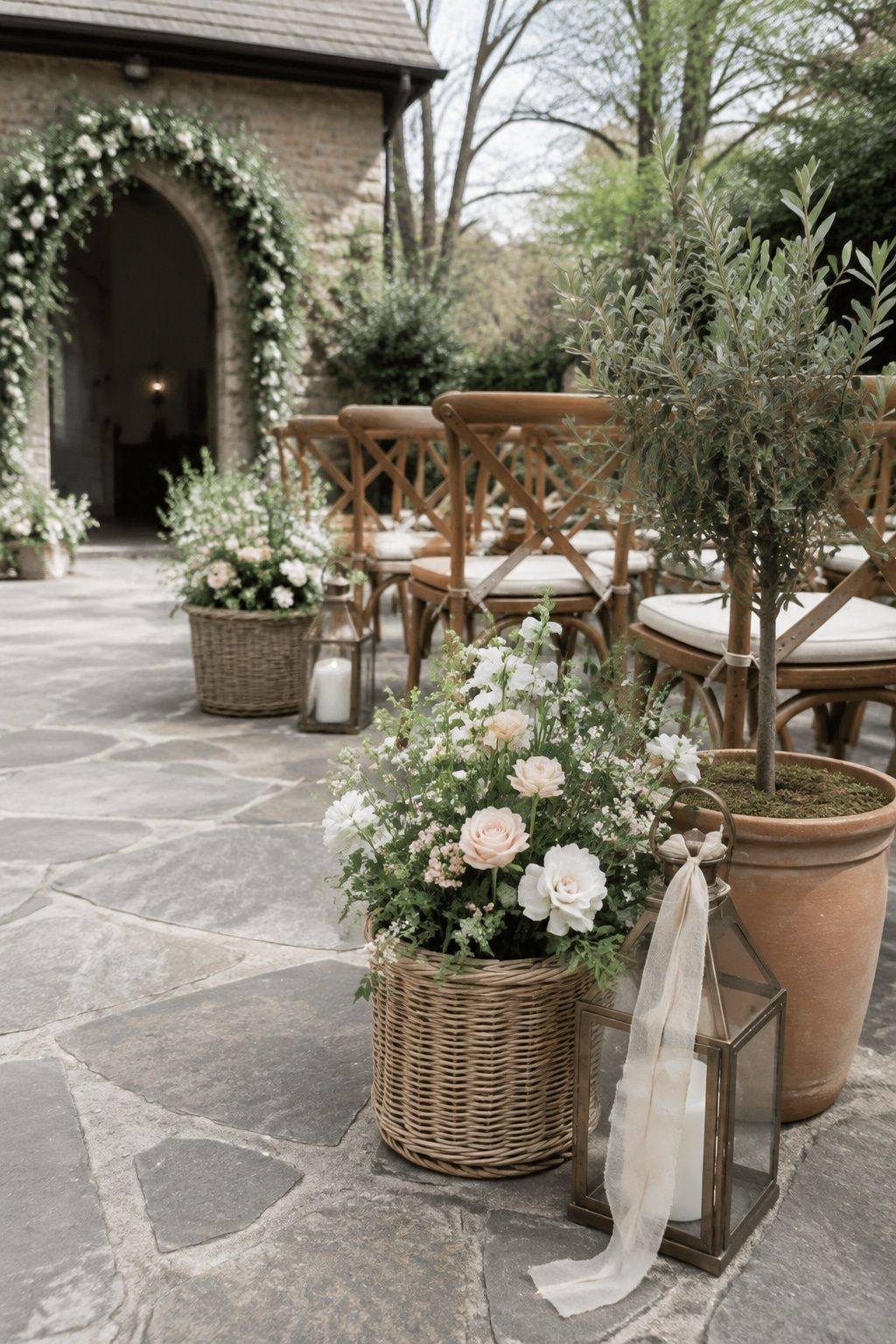
Ceremony pieces should be light enough to shift if the weather changes or the timeline moves indoors. Two grounded floral pieces, lanterns with enclosed lights, fabric ties, or potted plants can be easier to relocate than anything wired permanently to a structure.
Ask the planner or venue who will move each piece after the recessional. When ceremony decor has a second destination, it earns its place twice and keeps the overall design from feeling wasteful.
Use Flowers Where People Pause
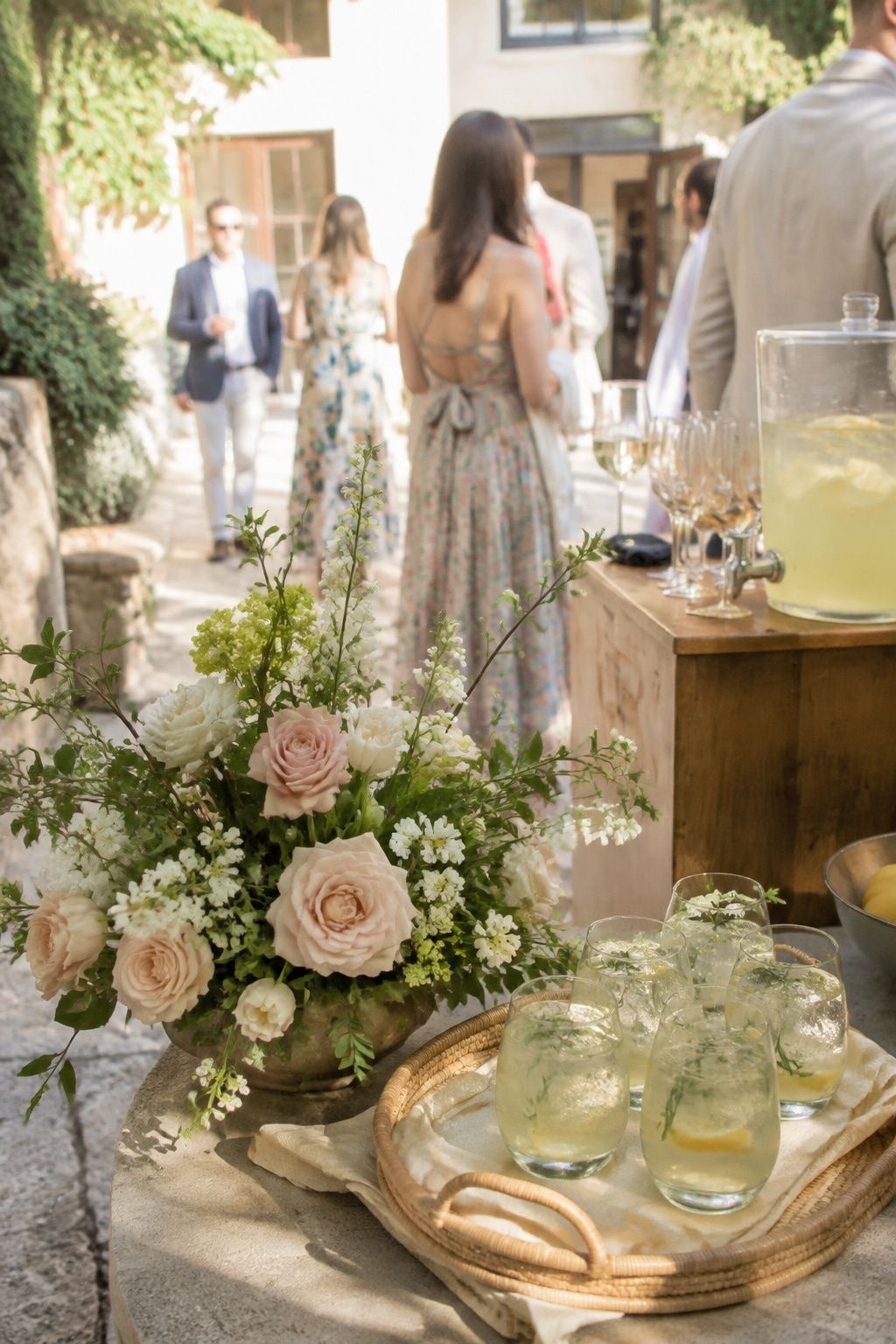
Instead of trying to floral every surface, concentrate seasonal stems at pause points: the welcome table, ceremony entrance, escort display, bar corner, cake table, and any lounge where older guests may sit during cocktail hour.
These placements show up in memories because people stop there. A small arrangement near a signature drink station may be noticed more than extra flowers on a table guests pass only once.
Set Guest Tables With Breathing Room
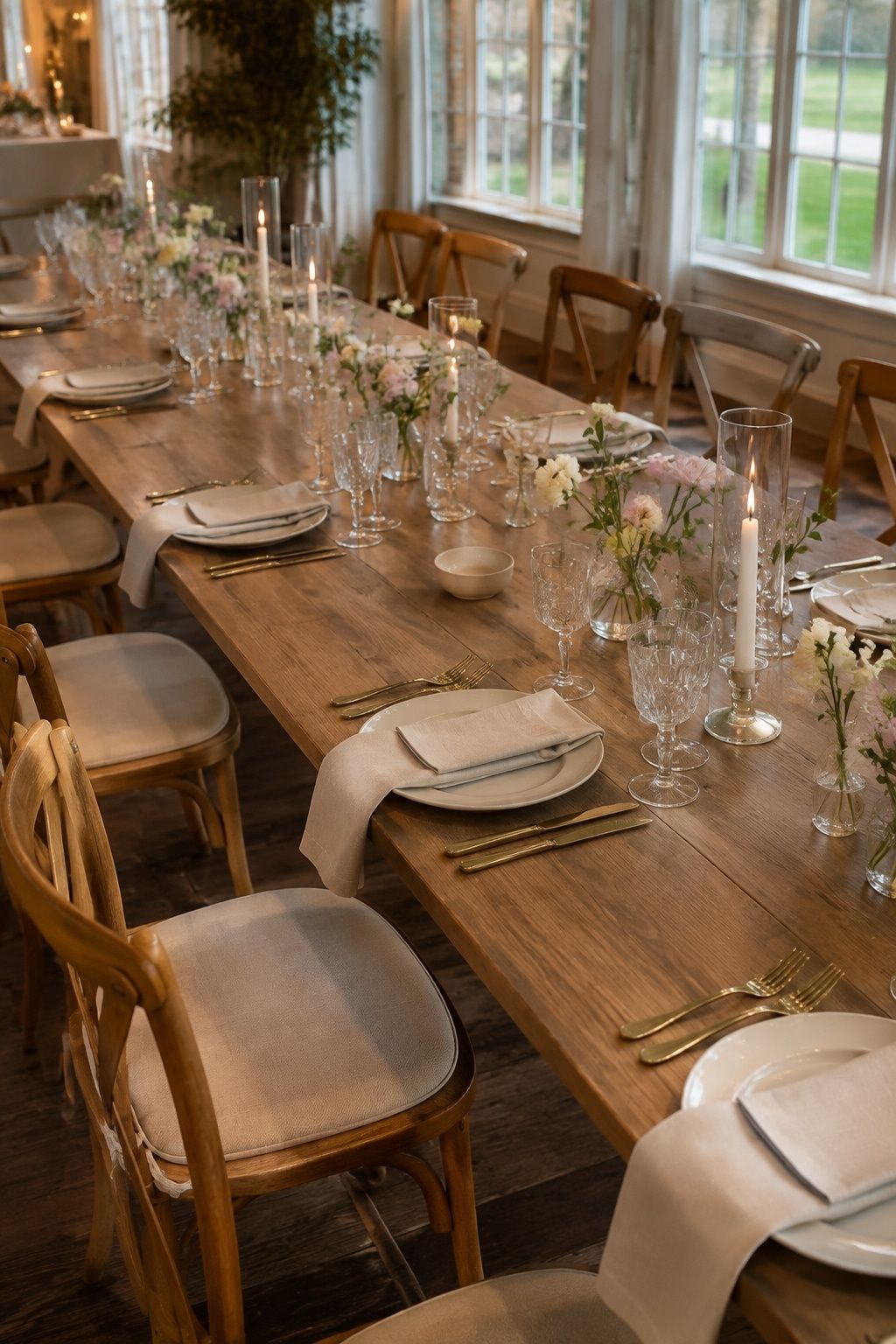
Guest tables still matter, but they do not have to carry the whole design. Keep settings easy to use, avoid fragile pieces near elbows, and choose linens, candles, and flowers that support dinner service instead of interrupting it.
For family-style meals, leave more open table space. For plated service, you can add a little more texture near the center line. The decor should match how food and conversation will actually happen, not just how the table looks before anyone sits down.
Make The Bar Practical Before Pretty
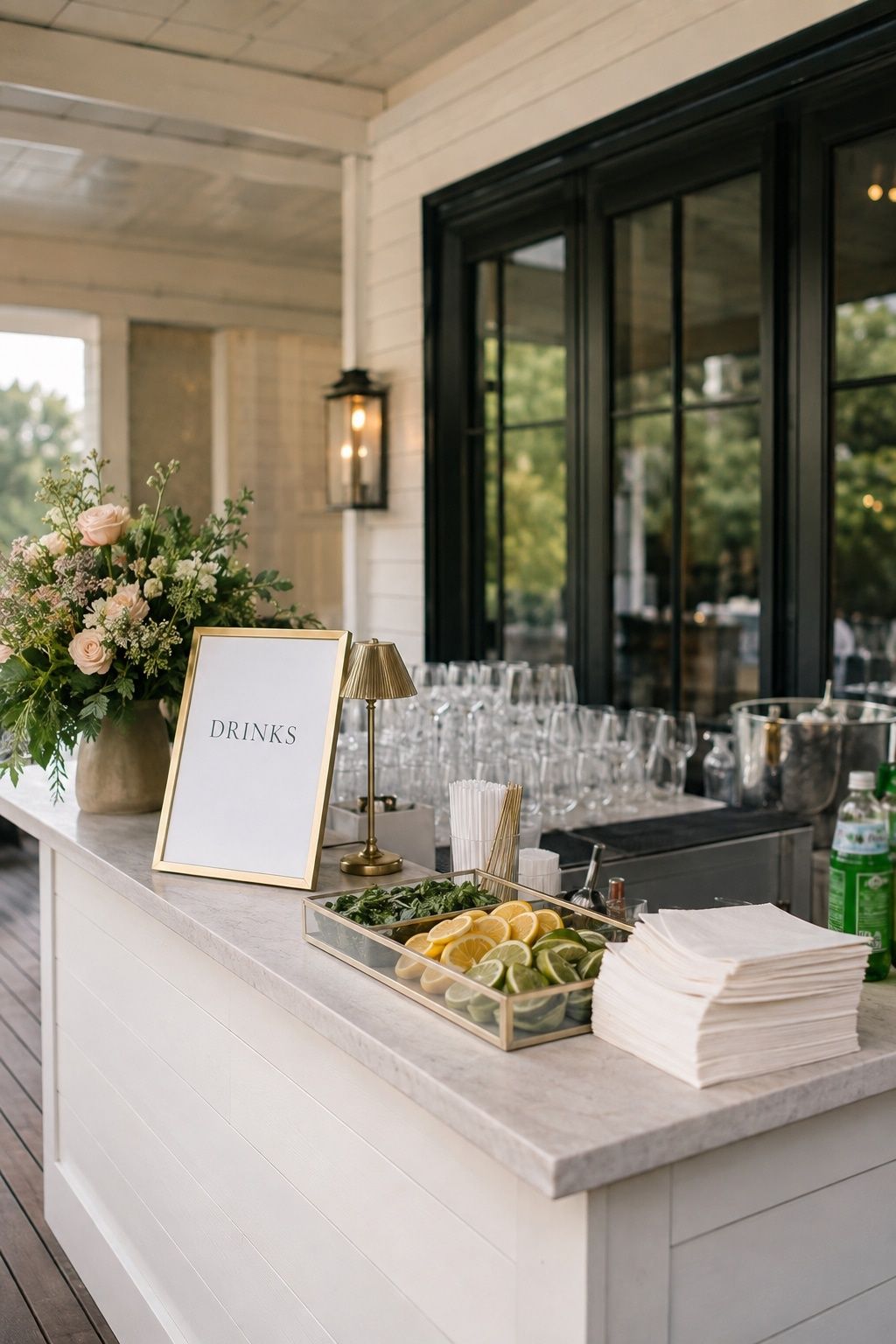
The bar is a working area, so protect the counter from decor creep. Keep flowers to one side, place menus where guests can read them before ordering, and leave open space for glasses, garnish, napkins, and staff movement.
Spring styling can still appear through a small herb garnish tray, a framed drink menu, a pale linen on a side table, or a compact floral piece away from the busiest edge. The best bar decor makes service feel smoother.
Give The Escort Display Weather Backup
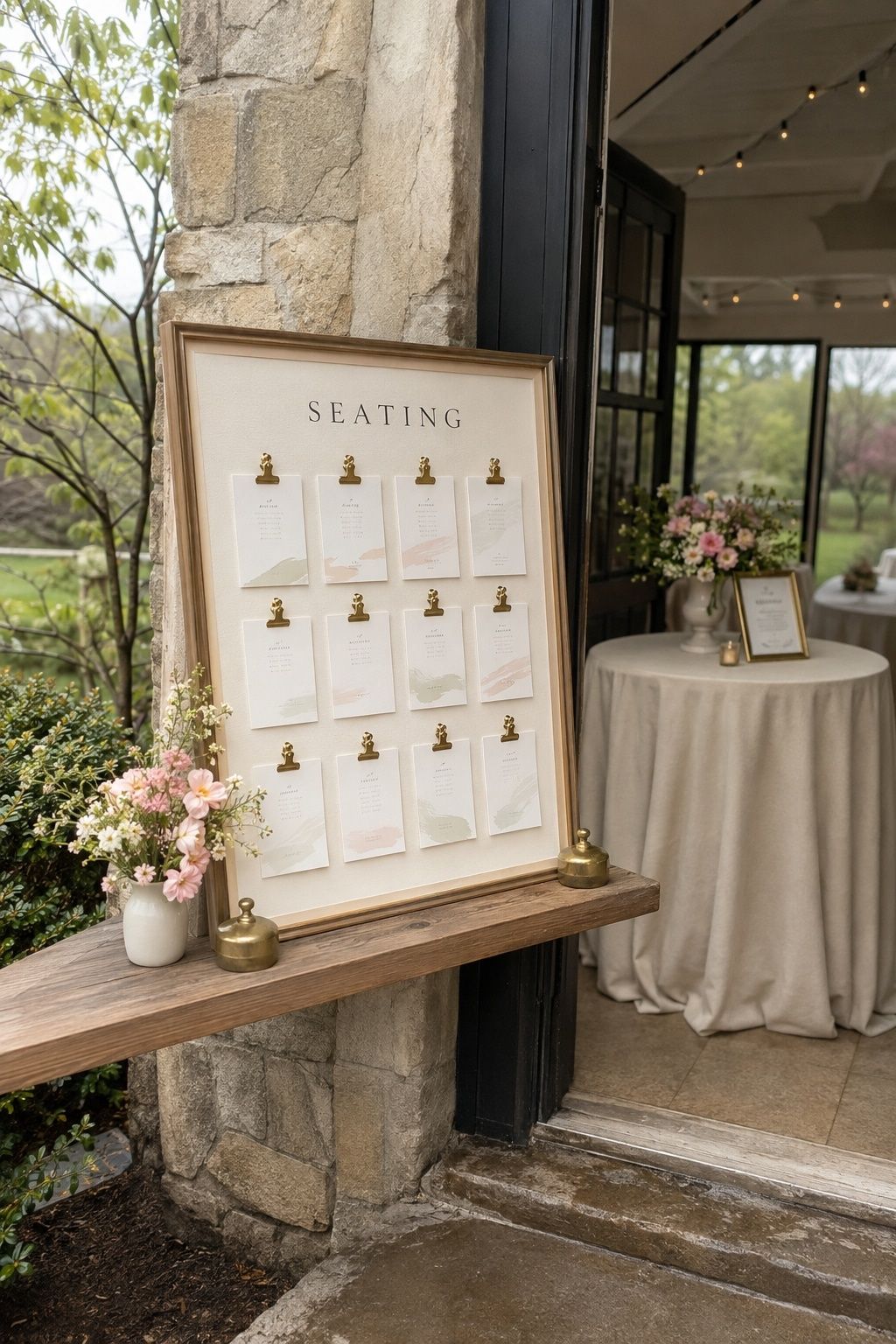
Escort cards and seating charts are vulnerable in spring air. If the display is outside, avoid tiny loose cards that can lift in wind. Use clips, pockets, weighted shelves, framed cards, or an indoor backup spot near the cocktail entrance.
Keep the design easy to scan. Guests should find their names quickly without crowding the table. A tidy escort moment often does more for the reception flow than an elaborate display that slows everyone down.
Let The Venue Supply Some Texture
A barn, garden, greenhouse, restaurant, chapel, or private home already has materials that can guide the decor. Notice stone, wood, plaster, tile, windows, and garden beds before adding rentals or extra floral pieces.
When the venue has character, repeat one of its textures in a small way. A wooden frame, ceramic vessel, linen ribbon, or clear glass accent can make added decor feel connected to the space rather than imported for photos only.
Use Seating To Shape The Mood
A smaller spring wedding can feel more intimate through layout before decor is added. Shorter rows, curved ceremony seating, one long dinner table, or clustered cocktail tables can make the space feel gathered without extra installations.
Decor should support that shape. Add flowers at entrances or endpoints, not every chair. Place candles where they define the table length or lounge edge. Let the seating plan create closeness and the decor quietly underline it.
Plan A Clear Indoor-Outdoor Transition
Many spring weddings move between a ceremony lawn, patio, tent, dining room, or covered porch. Decor the threshold so guests understand the shift. A pair of planters, a small sign, lanterns, or ribbon on the door can guide movement naturally.
This is especially helpful when rain plans are possible. If the backup route looks considered, the day will still feel calm even if guests use a different entrance or gather under cover sooner than expected.
Keep Signage Limited To Decisions
Use signs only where guests need to make a choice: ceremony direction, seating, bar menu, guest book, favors, or transportation. Decorative signs with cute phrases often add clutter without solving anything.
One typeface, one frame style, and one paper color can carry every sign. That consistency is more valuable than clever wording, and it keeps the wedding feeling grown-up, clear, and easy to navigate.
Protect Service Spaces From Fragile Details
Catering stations, coffee setups, dessert tables, and gift areas need room for hands, trays, bags, and staff. Keep breakable glass, loose petals, trailing fabric, and tall vessels away from the parts people will touch most.
If a service table needs beauty, place decor at the back edge or on a nearby pedestal. The space will photograph well without making guests reach around flowers to get a plate, cup, or favor.
Reuse Ceremony Pieces With A Written Plan
Repurposing only works when someone knows exactly what moves and where it lands. Write the plan by item: two aisle baskets to the bar, ceremony lanterns to the lounge, arch greenery to the sweetheart area, welcome flowers to the guest book table.
Give that list to the planner, venue lead, or a reliable helper before the wedding day. A simple transfer plan can make a small floral order look complete across multiple parts of the celebration.
Pack Decor By Moment Instead Of Category
Boxes labeled candles, signs, and ribbons sound organized, but they slow down setup because every station needs pieces from several places. Pack by moment instead: welcome, ceremony, escort, bar, dinner, cake, guest book, and exit.
Add a photo or sketch to each box when placement matters. Spring details are often delicate and small, so visual instructions help helpers set them out quickly without asking the couple a dozen tiny questions.
Let Spring Flowers Stay Seasonal And Sparse
Seasonal flowers can appear in fewer places when the placement is smart. A bouquet, two ceremony accents, a welcome arrangement, and a few reception touches can be enough if the venue has light, greenery, or architectural charm.
Ask for stems that tolerate the specific setting. Outdoor wind, warm tents, and cool chapels all affect flowers differently. Practical stem choices protect the look and reduce the need for last-minute fixes.
Skip Anything That Blocks Movement
The cleanest simple decor test is whether guests can move, sit, eat, read, and talk comfortably around it. If a piece narrows an aisle, crowds a bar, hides a sign, or makes a table harder to use, it probably does not belong.
Spring weddings feel best when the room has air in it. Keep the decorative pieces purposeful, leave circulation paths open, and let the celebration feel like a gathering rather than a display.
How To Keep The Decor Plan Independent
A broader decor plan should begin with the wedding day experience, not with a shopping list. Walk through the ceremony, cocktail hour, dinner, dancing, and departure, then decide where each area needs softness, direction, shelter, or light.
This approach keeps the design personal because the venue and timeline make the decisions. A garden brunch, chapel dinner, backyard tent, and restaurant micro wedding should not all use the same decorative sequence.
Small Wedding Adjustments That Make The Look Personal
For a small guest count, scale the room before styling the room. Pull chairs closer, choose a dinner layout that feels conversational, and decorate the places guests will touch or pass instead of filling distant corners.
A handwritten note, a shared family object at the welcome table, or a floral piece moved from ceremony to dinner can feel more meaningful than a larger order of generic accents. Smaller weddings reward details with a reason.
Spring Decor Worth Skipping For A Cleaner Look
Skip anything that turns the season into a theme park version of itself: artificial garlands that look plastic, oversized pastel props, too many novelty signs, fake petals in windy outdoor spaces, and decorative objects placed where staff need to work.
Also be careful with mixed pastel overload. Spring does not require every soft color at once. A restrained palette, real texture, and open circulation paths will usually feel more elevated than a room crowded with tiny seasonal objects.
A Simple Setup Timeline For Spring Details
Plan the decor in the same order the day unfolds. Start with the ceremony entrance, then the guest arrival table, then cocktail flow, then dinner, then dessert and exit details. This keeps the most practical areas from being rushed at the end.
Ask which pieces can be placed the night before and which need to wait because of weather, candle rules, food service, or fresh flowers. Spring celebrations often involve shifting light and changing air, so a clear setup order helps the whole design stay relaxed.
Pack small items by zone instead of by product type. One labeled box for the welcome table, one for the bar, one for the cake table, and one for the guest book station will save time and prevent delicate accents from being scattered across the venue. Include a printed placement photo for any detail that has a specific arrangement.
How To Adjust The Look For Different Venues
A garden venue usually needs less added greenery and more route clarity. A blank loft may need one soft focal wall, warmer light, and better entry styling. A chapel or historic home may only need flowers that respect what is already beautiful.
Walk the space with your palette in mind before buying anything. If the room has patterned rugs, colored walls, or heavy wood, let those tones influence the flowers and linens. The most successful spring weddings feel like they belong to the venue, not like a decor kit dropped into it.
What To Hand Off Before The Wedding Day
Give vendors one short decor document with the layout, backup weather location, boxed items, repurposing plan, and final pickup details. The goal is not a complicated production binder; it is a shared map that keeps small spring details from becoming day-of questions.
Include notes for wind, damp grass, candle restrictions, and any family pieces that need careful handling. A simple handoff protects the look, lowers stress, and lets the couple spend the day inside the celebration instead of managing every object.
FAQ
What is simple spring wedding decor?
It is a fresh, edited approach to seasonal wedding styling that uses flowers, greenery, linens, candlelight, and useful guest details without crowding the venue. The goal is a wedding that feels soft and intentional, not heavily themed.
How do you decorate a spring wedding without overdoing it?
Choose one clear palette, decorate the ceremony view and dining tables first, then stop before every surface has an accessory. Repeating a few materials well usually looks cleaner than adding many unrelated accents.
What are simple spring wedding centerpiece ideas?
Bud vases, low compote arrangements, taper candles in glass hurricanes, potted herbs, and loose seasonal branches all work well. Keep centerpieces low enough for conversation and airy enough to let the table breathe.
What flowers work for simple spring wedding decor?
Tulips, ranunculus, sweet peas, anemones, hellebores, garden roses, daffodils, lilac, lily of the valley, and flowering branches all suit the season. Choose fewer flower types if you want a cleaner, more minimal look.
How can simple spring wedding decor work for a small wedding?
Use the smaller guest count as a design advantage. Focus on one ceremony focal point, thoughtful place settings, intimate table flowers, and a few personal details guests can actually see up close.
What spring decor should you skip for a cleaner look?
Skip plastic greenery, too many pastel props, unnecessary signs, fake petals in windy spaces, and anything that blocks guest movement or conversation. Clean spring styling depends on restraint as much as beauty.
Final Thoughts
A spring wedding feels most complete when every decorative detail supports the way guests gather, move, and celebrate.
Last update on 2026-10-05 / Affiliate links / Images from Amazon Product Advertising API