

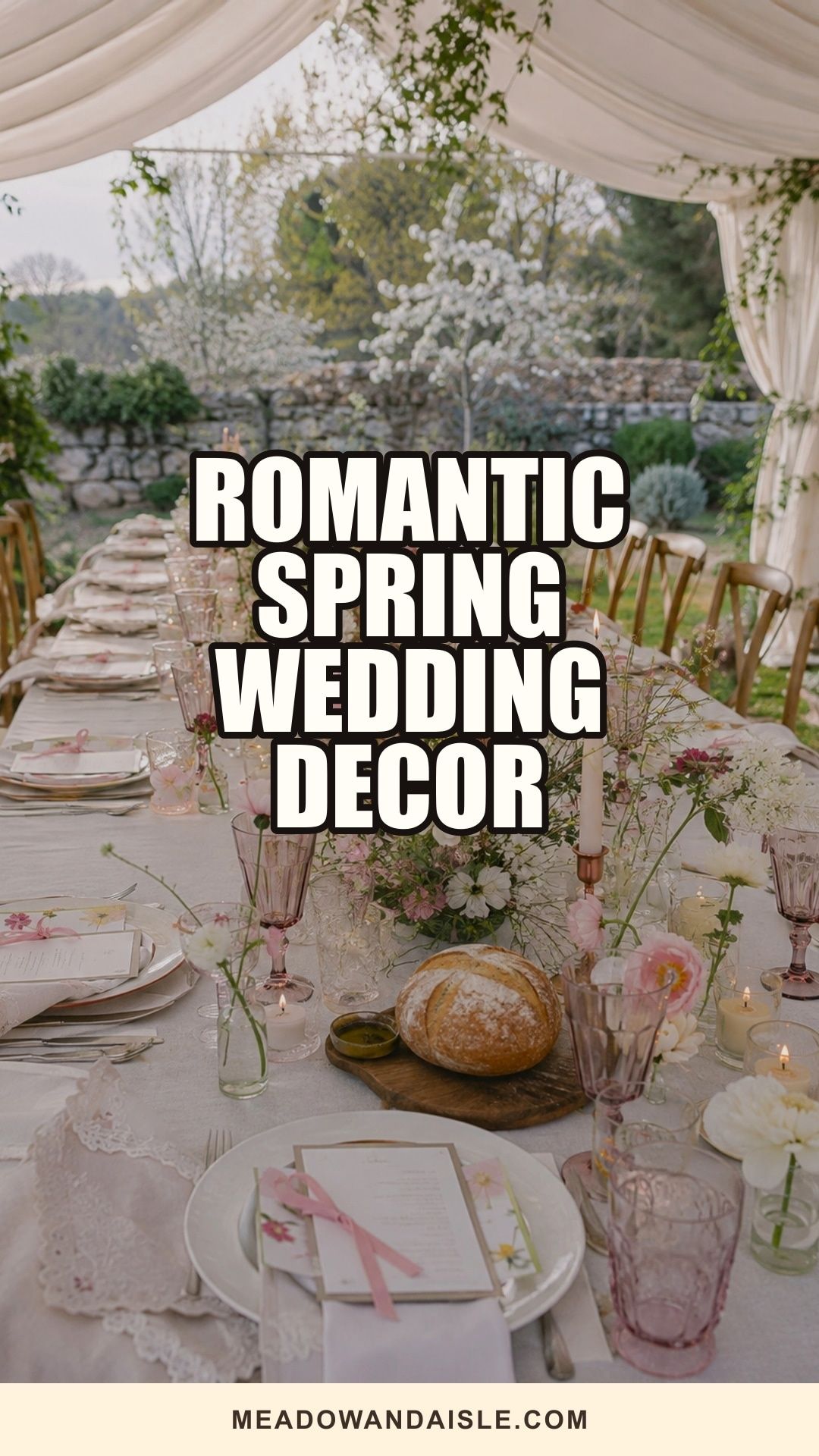
Romantic spring wedding decor works best when soft color, seasonal flowers, candlelight, and airy textures feel connected from the ceremony aisle to the final dinner table.
Spring already brings a sense of tenderness to a wedding day, so the decor does not need to shout. The prettiest celebrations usually feel gathered rather than staged: petals moving in the aisle, linen catching the breeze, glassware glowing after sunset, and small details that make guests feel held.
These spring wedding decor ideas keep the mood soft while still giving every part of the day a purpose. Think of the design as a gentle thread through the ceremony, cocktail hour, dinner, and final sendoff, with each choice helping guests understand the season and the couple’s story. Start with ideas for a spring wedding if you’re planning the whole day.
Recommended Wedding Products


You Might Also Like These Blog Posts
- Romantic Summer Wedding Decor That Feels Soft, Glowing, and Comfortable
- Budget Spring Wedding Decor Ideas That Still Feel Romantic And Thoughtful
- Spring Wedding Decor Ideas With Fresh-Air Romance
- Romantic Fall Wedding Decor for a Candlelit Autumn Love Story
- Simple Spring Wedding Decor That Feels Fresh Without Trying Too Hard
- Romantic Winter Wedding Decor for a Candlelit Room That Feels Close
Outdoor Spring Wedding Ceremony Ideas
Indoor Spring Wedding Reception Ideas
Romantic Spring Wedding Decor That Feels Soft, Fresh, and Intentional
The loveliest spring weddings do not need a theme pasted over the day. They need a mood that carries through the ceremony, dinner, and little in-between moments where guests notice the care.
Start With a Soft Spring Color Story

A romantic spring palette feels most graceful when it has one clear mood instead of every pastel at once. Try blush with butter yellow, lilac with misty blue, or sage with ivory and pale peach so the room feels layered but still calm.
For a smaller celebration, let the strongest color appear in flowers and paper details while the base stays quiet. This keeps the decor from feeling busy and gives your photographer a gentle thread to follow from invitation flat lays to reception close-ups.
When you compare finishes, pair matte textures with one reflective detail. Satin ribbon, clear glass, pearlized menus, or polished flatware can lift pastel spring wedding decor without making it feel glossy or overly formal.
Before you confirm the palette, look at the room in the same light your guests will see it. A blush that feels delicate at noon can turn beige in a candlelit ballroom, while pale blue may feel crisp outdoors and cooler indoors. Bring fabric swatches, ribbon, and paper samples to the venue if you can, then choose the version that still feels warm in the actual setting.
It also helps to decide which color is emotional and which color is structural. The emotional color might be peach, lilac, or rose because it creates the softness guests remember. The structural color might be ivory, sage, taupe, or warm gray because it keeps linens, chairs, and larger rentals from overpowering the smaller romantic details.
Make the Ceremony Feel Like a Garden Moment
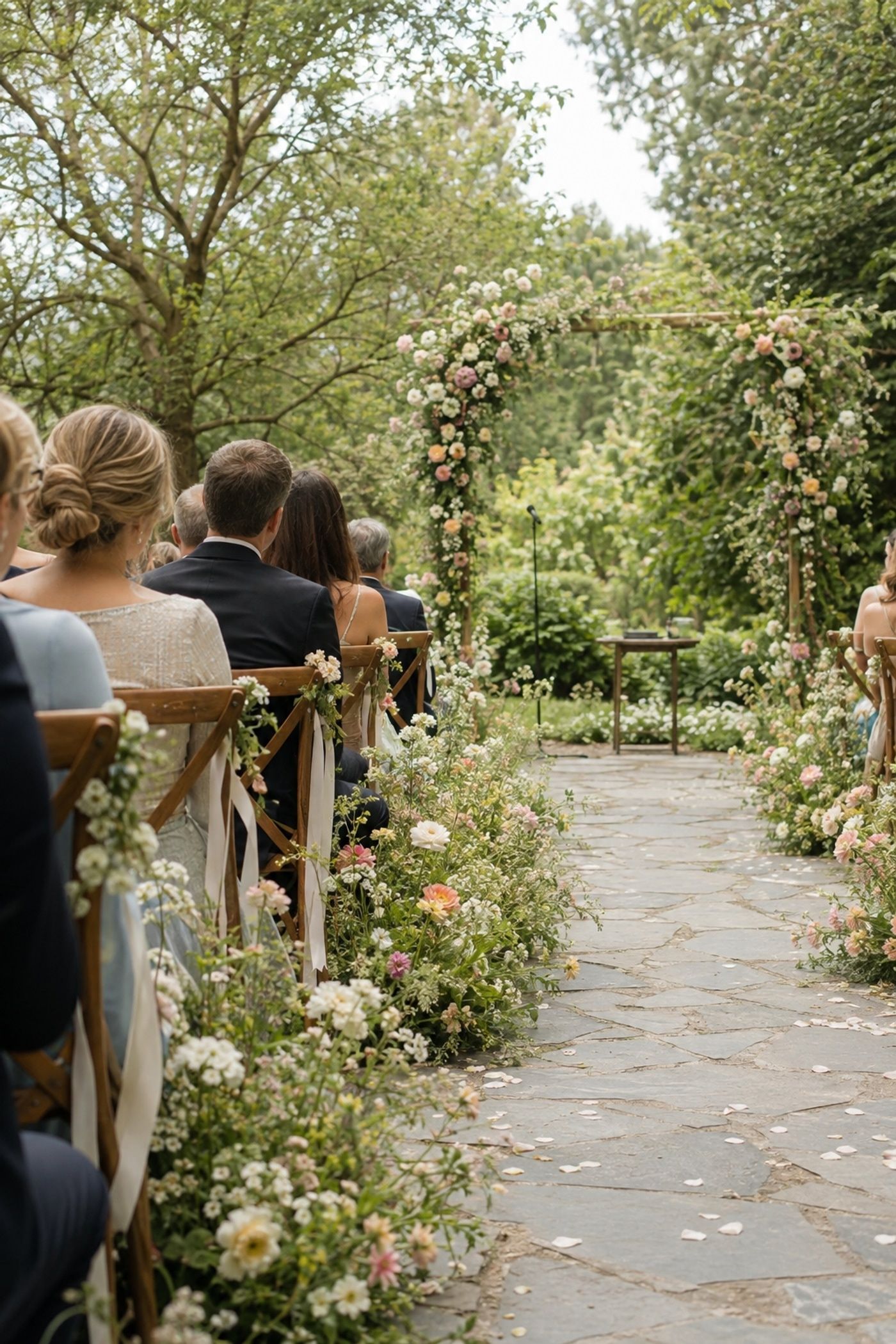
Spring wedding ceremony decor is strongest when the aisle, altar, and guest view feel connected. Low floral pieces along the aisle can look as if they are growing from the ground, while a loose arch or meadow-style installation frames the vows without swallowing the couple.
For spring wedding aisle decor, think in low, garden-like gestures instead of tall markers at every row. A few grounded floral clusters, scattered petals, and ribbon-tied chairs can make the walk feel romantic without narrowing the aisle.
If the ceremony is outdoors, use the landscape as part of the design. Flowering branches, potted herbs, and soft ground florals often feel more romantic than a heavy structure, especially when the setting already has trees, stone, or garden paths.
For indoor vows, bring the season in through scent and silhouette. Lilac, sweet pea, ranunculus, tulips, and garden roses can make a room feel fresh, while gauzy draping softens hard corners without hiding the architecture.
Think about how the ceremony will look once everyone is seated, not only when the aisle is empty. Large arrangements at the back row can disappear behind guests, while low flowers near the front and a generous focal point behind the couple stay visible in every important photo. If the aisle is narrow, skip bulky chair pieces and let ribbon or petals carry the softness instead.
The altar should also feel beautiful from the side, because guests and photographers rarely see it from only one straight-on angle. A floral piece that wraps slightly around the structure, a pair of asymmetric urns, or fabric that moves naturally in the breeze can make the vow space feel more immersive without adding much more material.
Let the Tables Carry the Romance
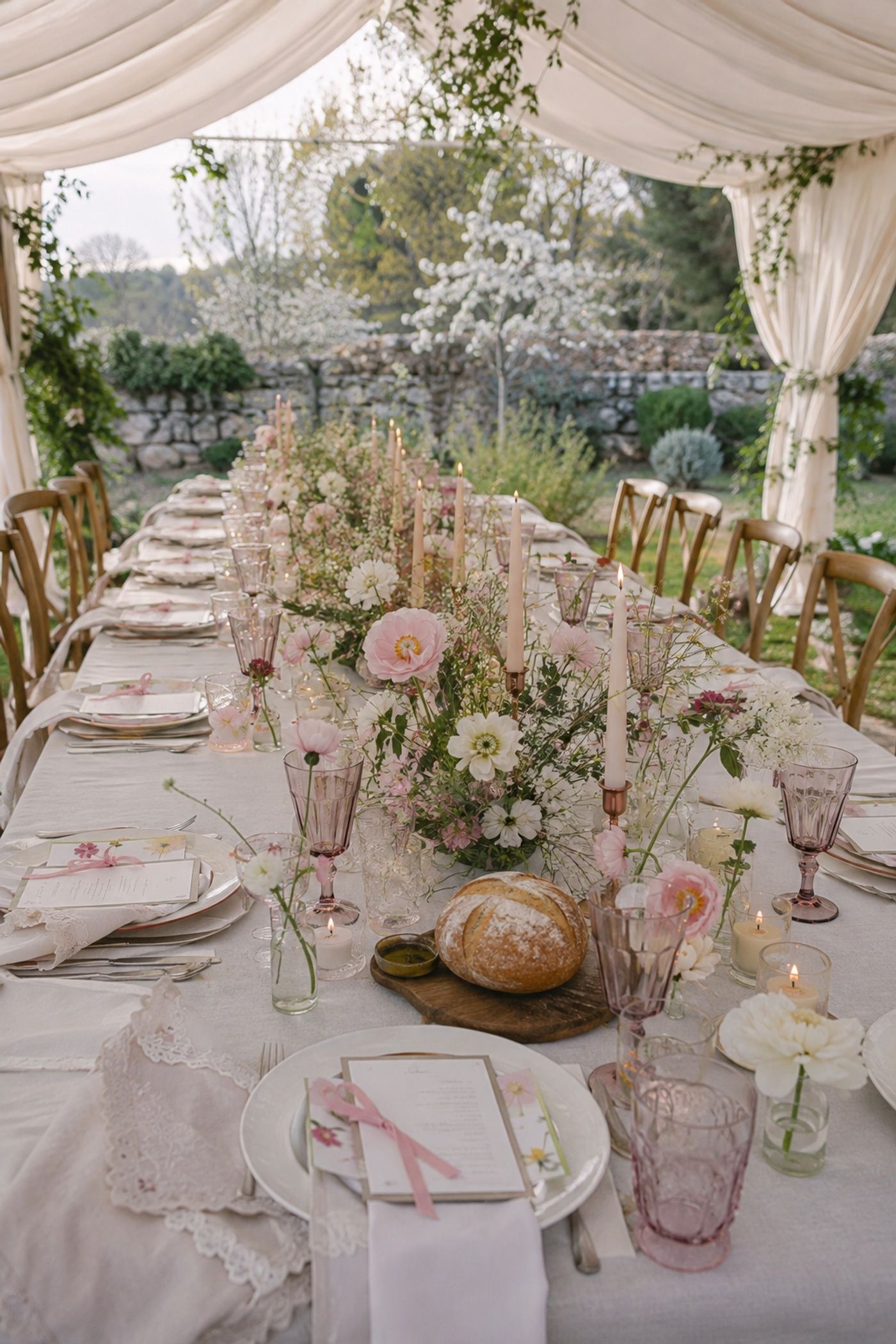
A spring wedding tablescape should feel abundant but easy to sit inside. Keep centerpieces low enough for conversation, then add height through taper candles, delicate bud vases, or a few airy branches placed where they will not block guests.
Spring wedding centerpieces look most romantic when they feel freshly gathered, not overly packed. Mix open blooms with delicate stems and leave enough negative space for candlelight, glassware, and conversation to breathe.
Use linens to create the emotion before you add more flowers. A washed linen table runner, soft napkins, or a pale floral print can make spring wedding reception decor feel intentional even before the first centerpiece lands.
Small spring wedding decor benefits from repetition. If every place setting has a pressed flower card, a ribbon-tied menu, or a tiny bud vase, the whole room feels designed without requiring a huge floral budget.
Round tables usually need one clear centerpiece story, but long tables can carry rhythm. Alternate bud vases, low compotes, fruit, candles, and small negative spaces so the table feels like a garden path rather than one long floral hedge. The empty spaces matter because they give room for bread, wine, shared dishes, and the natural movement of dinner.
If you are renting colored glassware, patterned plates, or statement napkins, let those pieces do real work. A pale pink goblet or embroidered napkin can replace an extra floral accent at every setting, which often saves money while making the table feel more personal. The best tabletop details are useful, beautiful, and easy for catering staff to reset quickly.
Choose Florals That Feel Seasonal, Not Forced
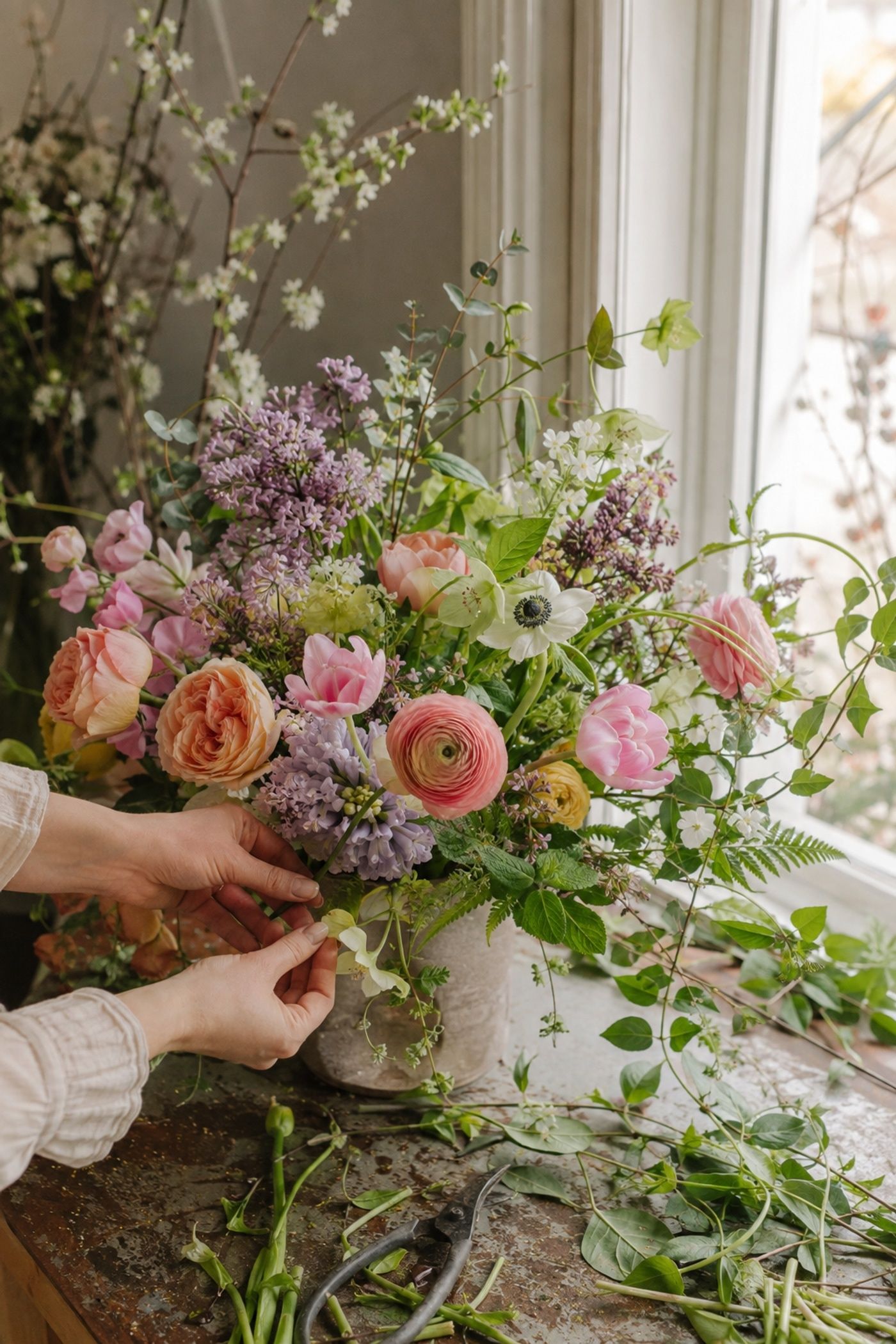
Floral spring wedding decor feels more romantic when the arrangements have movement. Ask for blooms at different stages, trailing greenery, and a few imperfect stems so the flowers look alive rather than packed into perfect domes.
Peonies are beloved, but they are not the only soft spring choice. Ranunculus, tulips, anemones, hellebore, sweet pea, lilac, hyacinth, and garden roses can create the same tender feeling with more texture and flexibility.
If you are trying to stretch the budget, concentrate flowers where guests will pause. The ceremony backdrop, escort table, sweetheart table, and bar usually create more memory than covering every cocktail table with large arrangements.
Ask your florist which flowers will be strongest during your exact wedding week, because spring changes quickly. Early-season arrangements may lean into tulips, hellebore, hyacinth, narcissus, and flowering branches, while late spring can open the door to peonies, garden roses, sweet pea, and more delicate garden-style blooms.
A romantic floral plan also needs a greenery decision. Too much dark greenery can make a spring palette feel heavy, while no greenery at all can make arrangements feel precious. Soft fern, jasmine vine, mint, young eucalyptus, or light seasonal foliage can add movement without pulling the design into a deeper woodland mood.
Add Candlelight Without Making It Feel Heavy
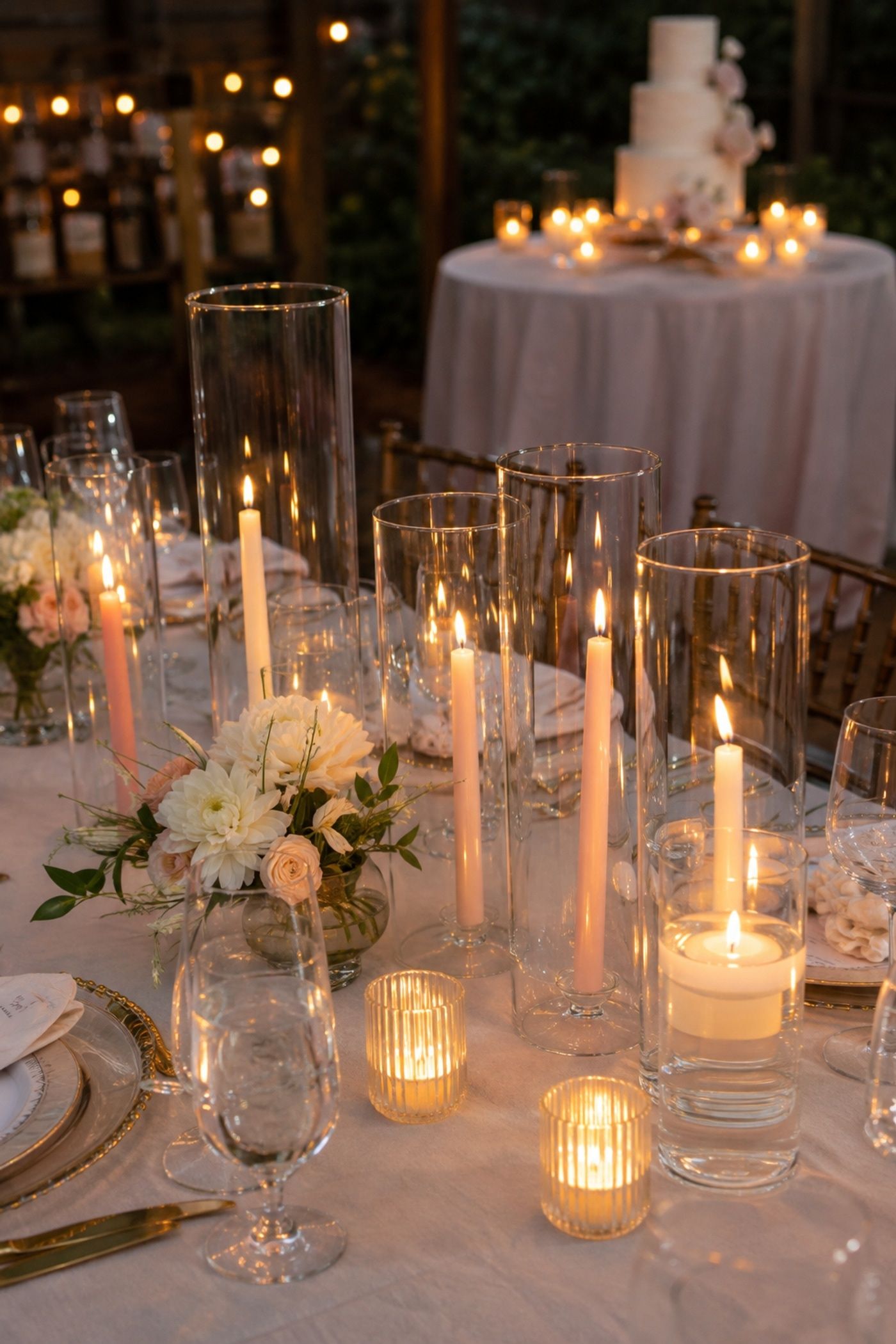
Candlelight gives romantic spring wedding ideas their evening softness, but the styling should stay light. Choose clear glass hurricanes, slim tapers, or floating candles so the glow feels fresh instead of wintery.
Pastel candles can be beautiful when they echo the flowers in a subtle way. Pale pink, soft blue, buttercream, or lavender tapers are enough; mixing too many candle colors can make the tables feel more playful than romantic.
For venues with strict flame rules, layered lamps and warm LED votives still work well. Place them near reflective glass, pale linens, or metallic details so the light has somewhere gentle to land.
Lighting should change with the timeline. Ceremony light can stay bright and natural, cocktail hour can glow around bars and seating areas, and dinner can feel warmer once candles or lamps are lit. If the room has overhead lighting, ask whether it can be dimmed in zones so the dance floor, bar, and tables each feel intentional.
Do not forget the transition spaces. A few lanterns near the escort display, soft light at the guest book, or candles around the cake table can make the celebration feel continuous as guests move through the venue. Those small glowing points help the decor feel romantic even in corners where flowers would be impractical.
Give Guest-Facing Details a Little Poetry
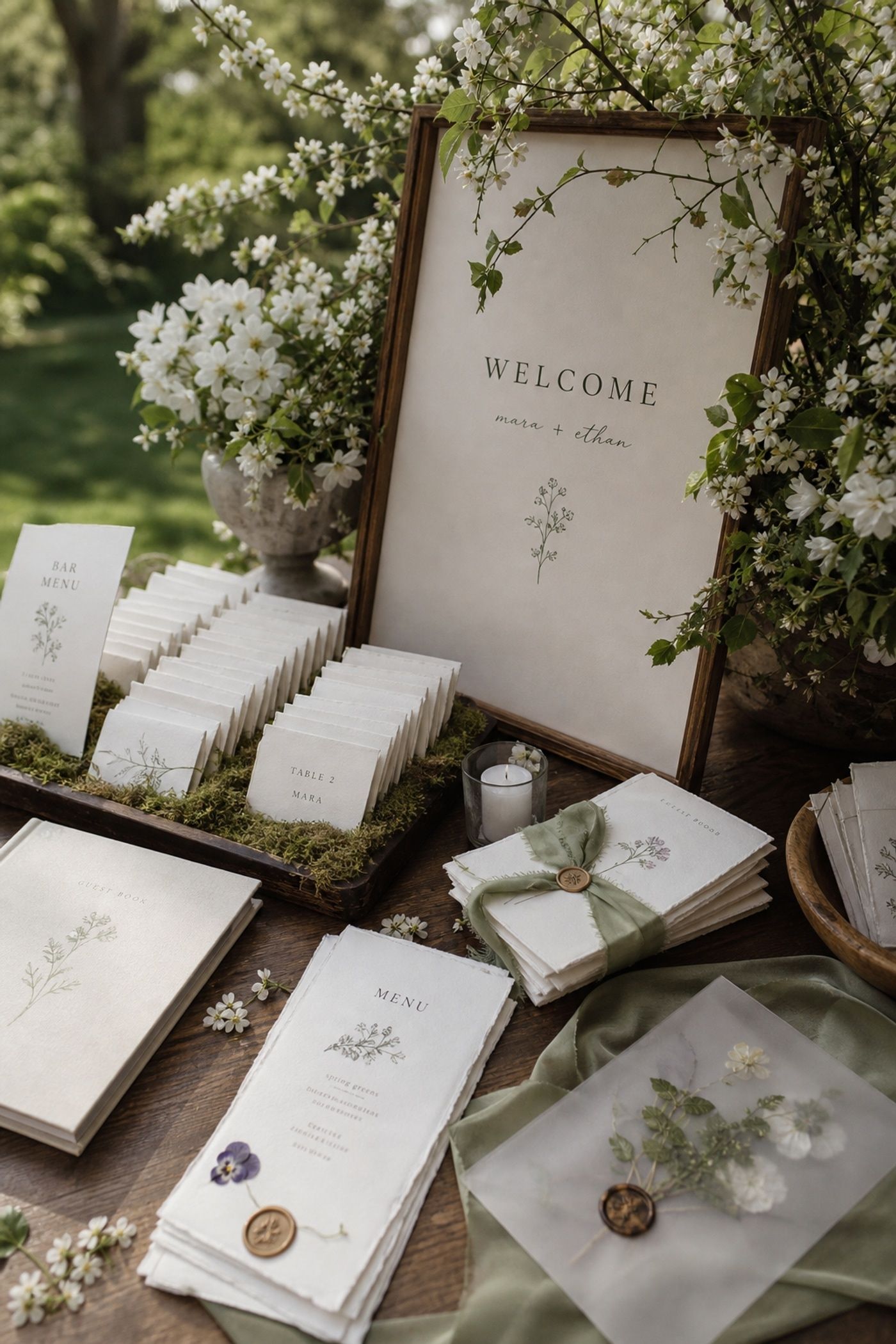
Romance often lives in the pieces guests touch. Escort cards tucked into moss trays, menus printed on deckled paper, ribbon-wrapped programs, or a welcome sign framed with branches can make the day feel personal without adding clutter.
The right spring wedding decoration choices should feel like part of the celebration’s atmosphere, not a list of separate props. Repeat one flower shape, one paper texture, or one ribbon color so each detail feels related.
Keep the wording and materials aligned with the decor. A garden spring wedding decor plan might use handmade paper and botanical sketches, while a more modern spring wedding ideas direction could use clean typography with one floral accent.
For couples keeping things intimate, small details matter even more because guests notice them up close. The smallest surfaces often make the whole celebration feel polished, from the bar menu to the guest book table.
Paper details should answer a practical question while adding beauty. Programs can explain the ceremony flow, escort cards can make seating feel effortless, menus can help guests understand family-style dishes, and small signs can direct people without turning the venue into a set of instructions. When every printed piece has a purpose, the romantic styling feels thoughtful instead of decorative for its own sake.
Texture is especially useful if your palette is very pale. Cotton paper, vellum overlays, silk ribbon, linen menus, wax seals, pressed petals, or embossed details add depth without requiring stronger color. These quiet materials photograph beautifully and keep close-up moments from feeling flat.
Balance Freshness With a Real Weather Plan

Spring weather can be romantic and unruly in the same hour, so the decor plan needs a backup that still feels beautiful. Choose aisle pieces that can move indoors, candles that work under a tent, and signage that will not collapse in damp air.
Clear umbrellas, shawls, and covered walkways can become part of the visual story instead of emergency clutter. If rain is possible, the outdoor ceremony plan needs a version that keeps the same softness under cover.
For a reception that may move inside, preserve the garden mood through branches, window light, pale linens, and clustered florals near the room’s natural focal points.
Guest comfort belongs inside the design conversation. A basket of wraps, a warm drink station, a covered welcome area, or a basket for damp umbrellas can look lovely when it uses the same materials as the rest of the wedding. Practical pieces feel less like backup plans when they are styled with the same care as the tables.
Wind matters as much as rain. Tall taper candles, loose paper menus, lightweight fabric, and bud vases can all become difficult outside if the weather shifts. Choose weighted vessels, secured signage, and heavier napkins for exposed spaces, then reserve the most delicate pieces for sheltered tables or indoor moments.
Keep the Look Romantic Without Overdecorating
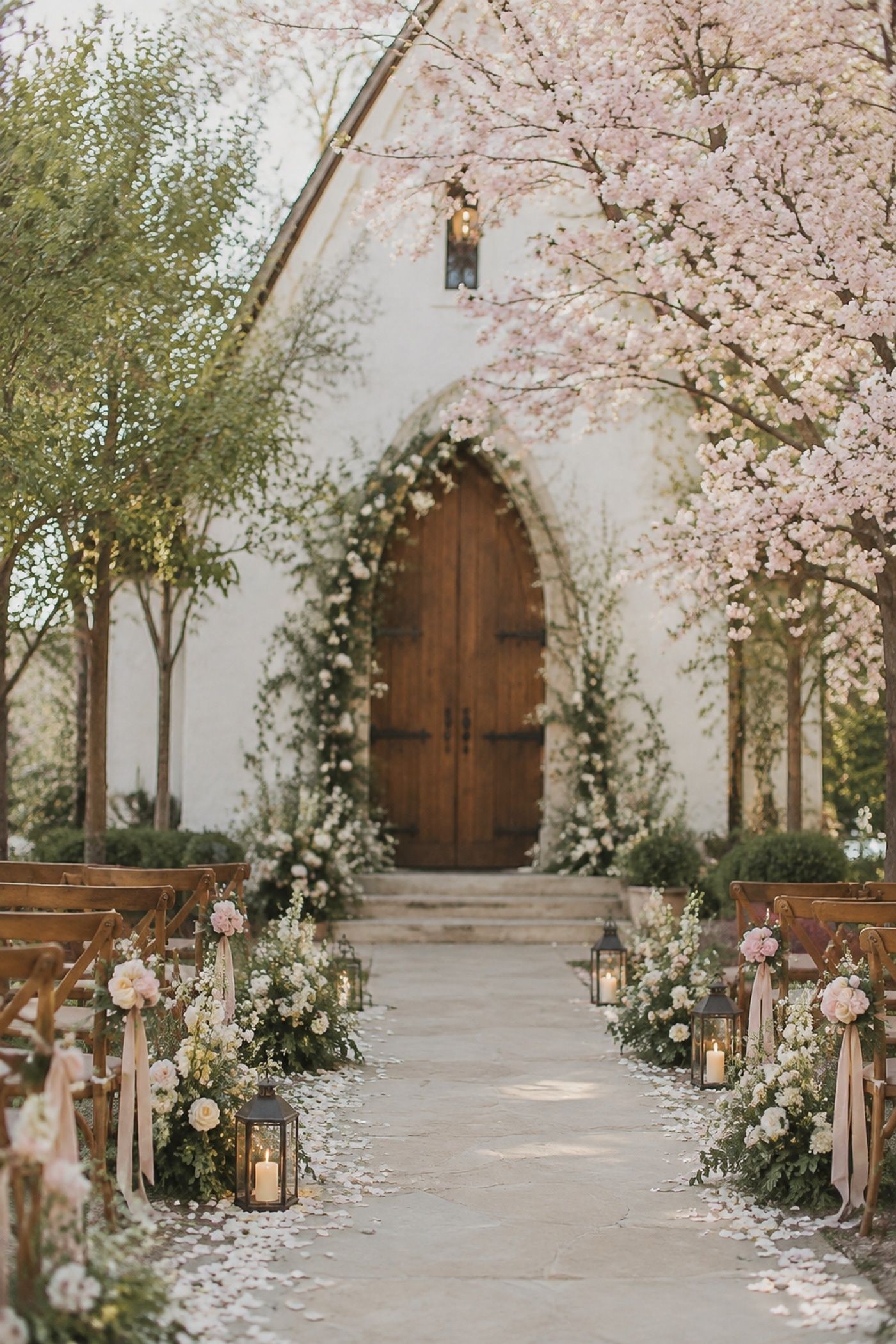
The easiest way to make a romantic spring design feel expensive is to leave breathing room. Let a beautiful table, a flowering tree, or a chapel doorway have its moment instead of layering every surface with props.
If the budget is tight, decide which three scenes matter most in photos and guest memory. A leaner decor plan can still feel refined when ceremony flowers, dining tables, and candlelight get the clearest attention.
For couples who love a cleaner look, keep the day soft through texture, proportion, and restraint rather than more objects.
Editing is not the same as removing personality. It means choosing the few details that say the most about the couple and letting them repeat with confidence. One beautiful floral motif, one meaningful color, and one tactile material can carry more emotion than five unrelated decorative ideas competing for attention.
Walk through the venue in order and ask what guests see, touch, or need in each moment. If a detail does not shape the ceremony, help the meal feel special, make movement easier, or add emotional texture to a photographed moment, it may not need to be there. That kind of editing keeps the final look romantic, not crowded.
Translate the Look Across Different Venue Styles

A garden venue already gives you movement, greenery, and seasonal softness, so the decor can be lighter. Focus on the ceremony frame, dining tables, and a few guest touchpoints instead of trying to decorate every natural corner. The goal is to echo what is blooming around you, not compete with it.
A ballroom needs a little more atmosphere because the room may start formal or neutral. Bring spring in through floral scale, linen color, candlelight, and one softer architectural gesture such as draping, branch arrangements, or a romantic escort display. Keep the color palette warm so the space feels welcoming rather than blank.
A restaurant or private dining room usually benefits from intimacy more than volume. Use flowers where guests enter, sit, and toast, then let menu cards, glassware, and low candlelight carry the rest. In a small room, scent, sound, and table spacing matter just as much as what appears in photos.
Plan Decor Around the Wedding Timeline
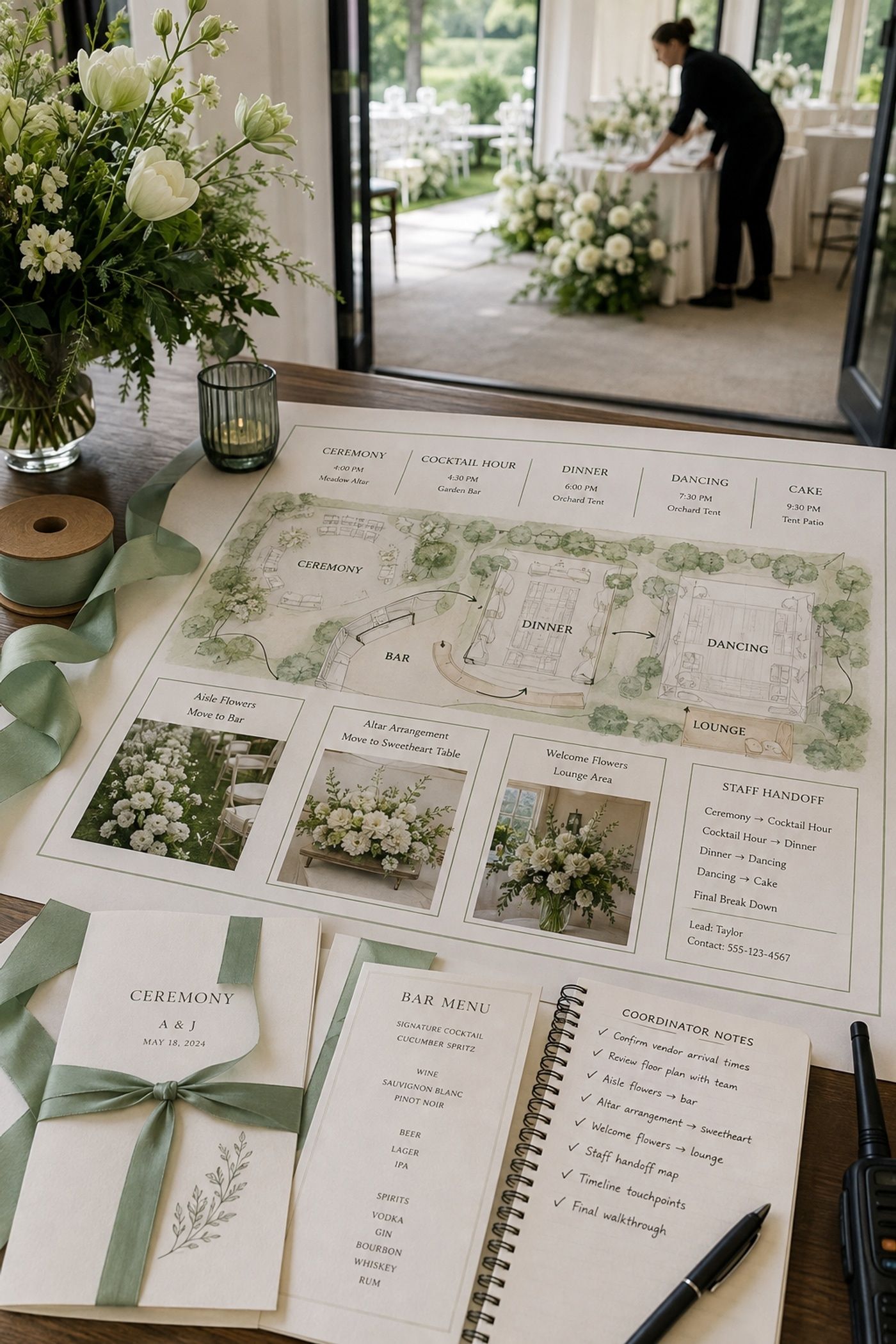
The ceremony, cocktail hour, dinner, and dancing do not need identical decor, but they should feel related. A ribbon color from the program can appear on the bar menu, a floral from the aisle can return on the cake table, or the same candle style can move from dinner to lounge spaces.
Repurposing ceremony flowers can work beautifully when it is planned honestly. Aisle pieces can move to the bar, altar arrangements can frame the sweetheart table, and welcome flowers can become late-night lounge decor. The handoff needs staff, time, and a clear map so nothing looks stranded halfway through the celebration.
Build the prettiest moments where guests naturally pause. The welcome area, ceremony entrance, escort display, bar, dinner tables, cake, and couple’s table usually do more work than side corridors or empty corners. When the timeline leads the decor plan, the day feels generous without requiring endless installations.
Make Rentals Feel Like Part of the Design
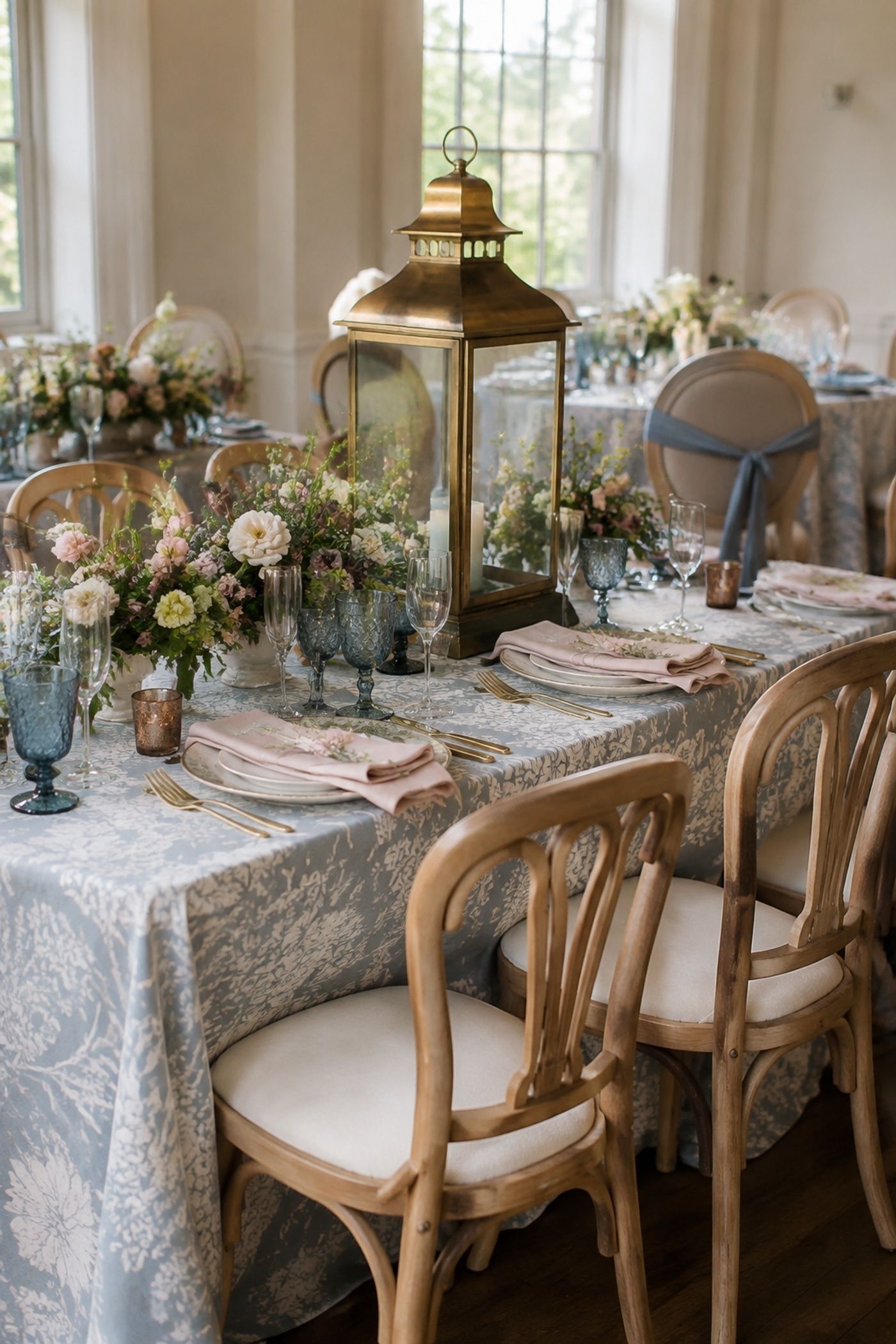
Chairs, linens, flatware, glassware, and napkins are not background details. They create most of what guests see for the longest stretch of the wedding. A romantic spring table can feel complete with simple flowers if the rentals already support the mood.
If upgraded chairs are not possible, look at what the venue provides and decide whether they need softening. A wood chair may only need a pale cushion, while a banquet chair may need a linen cover, a ribbon detail, or enough table softness nearby that the chair fades into the room. For the next step, see decor for a romantic winter wedding.
Choose one rental upgrade with the biggest visual return. For some weddings, that is a patterned linen. For others, it is warm-toned flatware, colored glassware, or a more graceful chair. One confident upgrade usually feels more elegant than several small upgrades that do not quite relate. Browse Spring Weddings for the other posts in this group.
FAQ
What colors feel most romantic for spring wedding decor?
Blush, ivory, pale peach, butter yellow, lavender, misty blue, and soft sage all work beautifully. The most romantic palettes usually combine two gentle colors with warm neutrals so the design feels layered instead of sugary. Keeping it small? See ideas for an intimate spring wedding.
How can spring wedding decor look elegant on a smaller budget?
Focus on the ceremony backdrop, dining tables, and one guest-facing detail such as escort cards or menus. Repeating small pieces, using seasonal blooms, and choosing pretty linens can make the whole celebration feel intentional without covering every surface.
What flowers are best for romantic spring wedding decor?
Ranunculus, tulips, sweet pea, lilac, garden roses, peonies, hellebore, anemones, hyacinth, and flowering branches all suit the season. Ask for movement and mixed bloom sizes so the arrangements feel soft, airy, and natural.
How do you decorate for a spring wedding if rain is possible?
Use pieces that can move easily, choose sturdy signage, keep candles protected, and design an indoor version of the ceremony or cocktail hour. Clear umbrellas, warm lighting, and branches can keep the rainy plan romantic rather than purely practical.
What makes romantic spring wedding decor feel modern?
Modern romance usually comes from restraint: fewer colors, cleaner vessels, sculptural flowers, simple stationery, and candlelight used with intention. The palette and materials can stay warm even when the overall look is clean.
How early should couples finalize spring wedding decor details?
Finalize the main palette, ceremony focal point, rentals, and floral direction once the venue and guest count are stable. Smaller details such as ribbon, menus, candles, and escort displays can follow after the floor plan confirms where guests will pause, sit, and move.
Final Thoughts
Last update on 2026-11-29 / Affiliate links / Images from Amazon Product Advertising API