

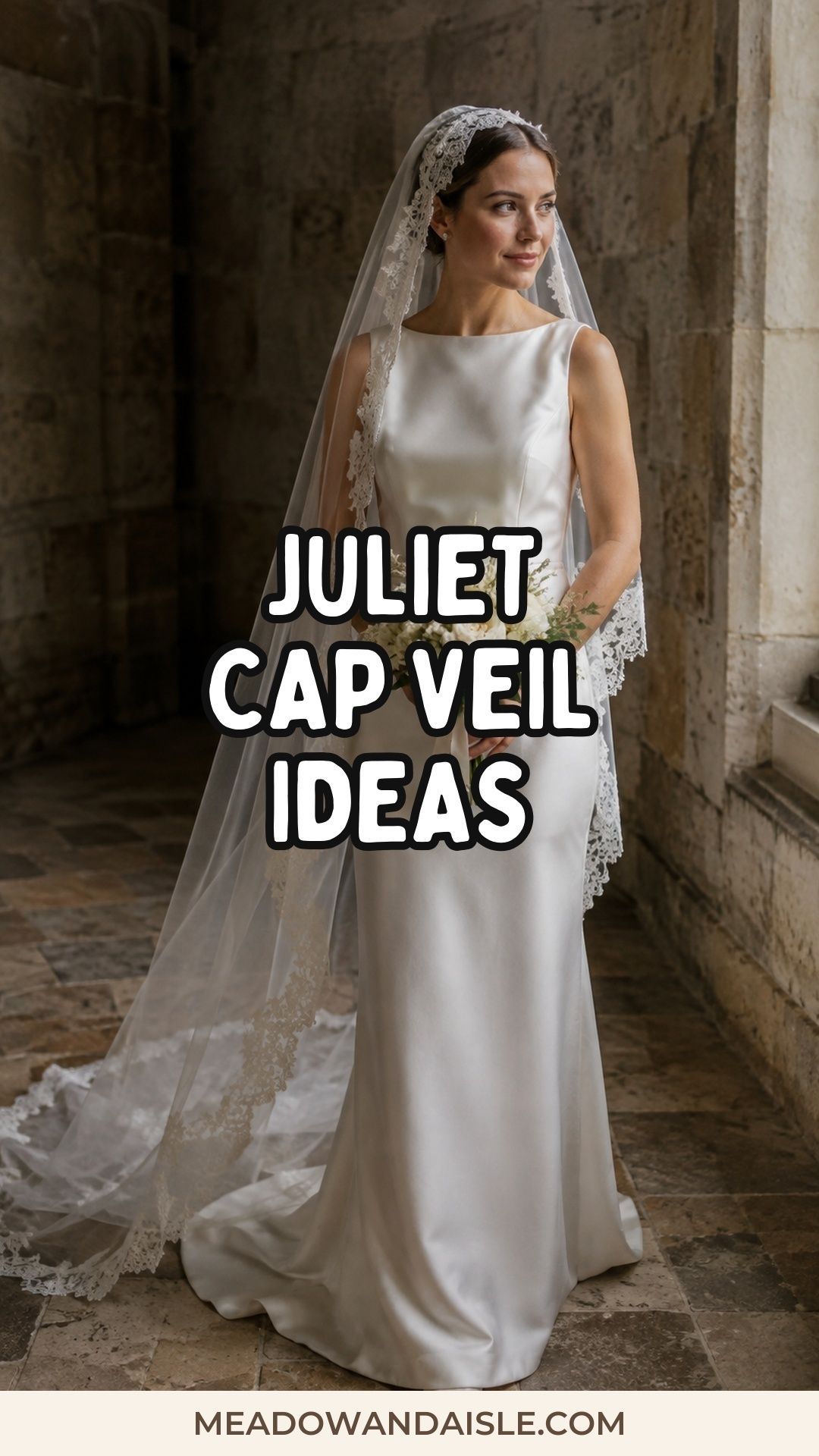
Juliet veil cap wedding ideas work best when the veil feels romantic but balanced: choose a lace, pearl, clean-edge, fingertip, or cathedral cap veil that frames your hair softly, matches the dress detail, and stays light enough for close photos, hugs, vows, and movement.
A Juliet cap veil has a rare kind of presence. It can make a simple dress feel soulful, give a tiny ceremony a sense of occasion, and add one unforgettable close-up detail without asking the whole wedding to become heavily vintage.
The strongest versions are edited. Fabric weight, cap shape, hair texture, dress neckline, and veil length all need to agree, especially at a small wedding where guests and photos are close enough to notice every pin, seam, and pearl.
Recommended Wedding Products


You Might Also Like These Blog Posts
- Drape Veil Wedding Ideas With Soft Ceremony Drama
- Cathedral Veil With Blusher Wedding Ideas for the Soft Reveal
- Statement Veil Wedding Ideas That Make the Entrance
- Red Veil Wedding Ideas for a Little Ceremony Drama
- Mantilla Veil Wedding Spanish Style Ideas With Lace and Grace
- Drop Veil Wedding Ideas for a Quiet Reveal
Juliet Veil Cap Wedding Ideas With Old-Soul Romance
The most wearable Juliet veil cap wedding ideas start with restraint. A cap veil already has history, softness, and a face-framing shape, so it rarely needs a heavily beaded gown, oversized earrings, dramatic gloves, and a complex hairstyle at the same time.
For an intimate wedding, that restraint matters even more. A Juliet cap veil can bring romance and personality when the ceremony has little decor, but close seating and close photography make proportion unforgiving. The veil should feel like part of your face and dress, not a separate costume layer.
What Makes a Juliet Cap Veil Different?
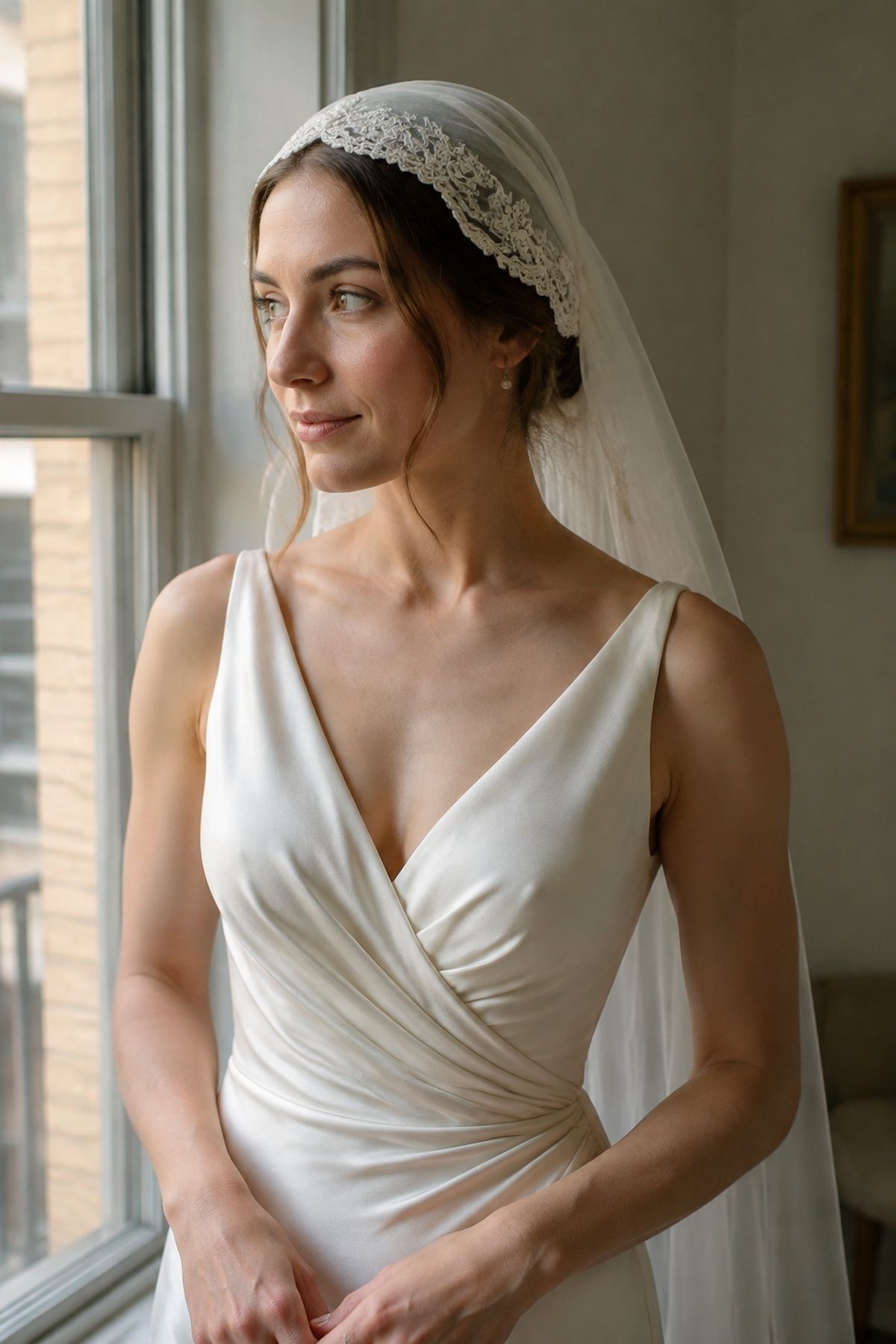
A Juliet cap veil has a fitted or softly gathered cap section that sits over the crown or sides of the head before the veil falls away. Unlike a comb veil placed only at the back, the cap shape is visible from the front, which gives the bride a more vintage, portrait-like silhouette.
The shape can feel 1920s, Renaissance-inspired, bohemian, or quietly heirloom depending on the fabric. A lace Juliet cap veil reads romantic, a pearl Juliet veil cap reads polished, and a plain silk tulle veil feels more modern. Brides who like close-up headwear may also enjoy the smaller scale of bridal fascinator styles ideas, though a Juliet cap veil gives a softer veil line.
Lace Juliet Cap Veil With a Simple Gown
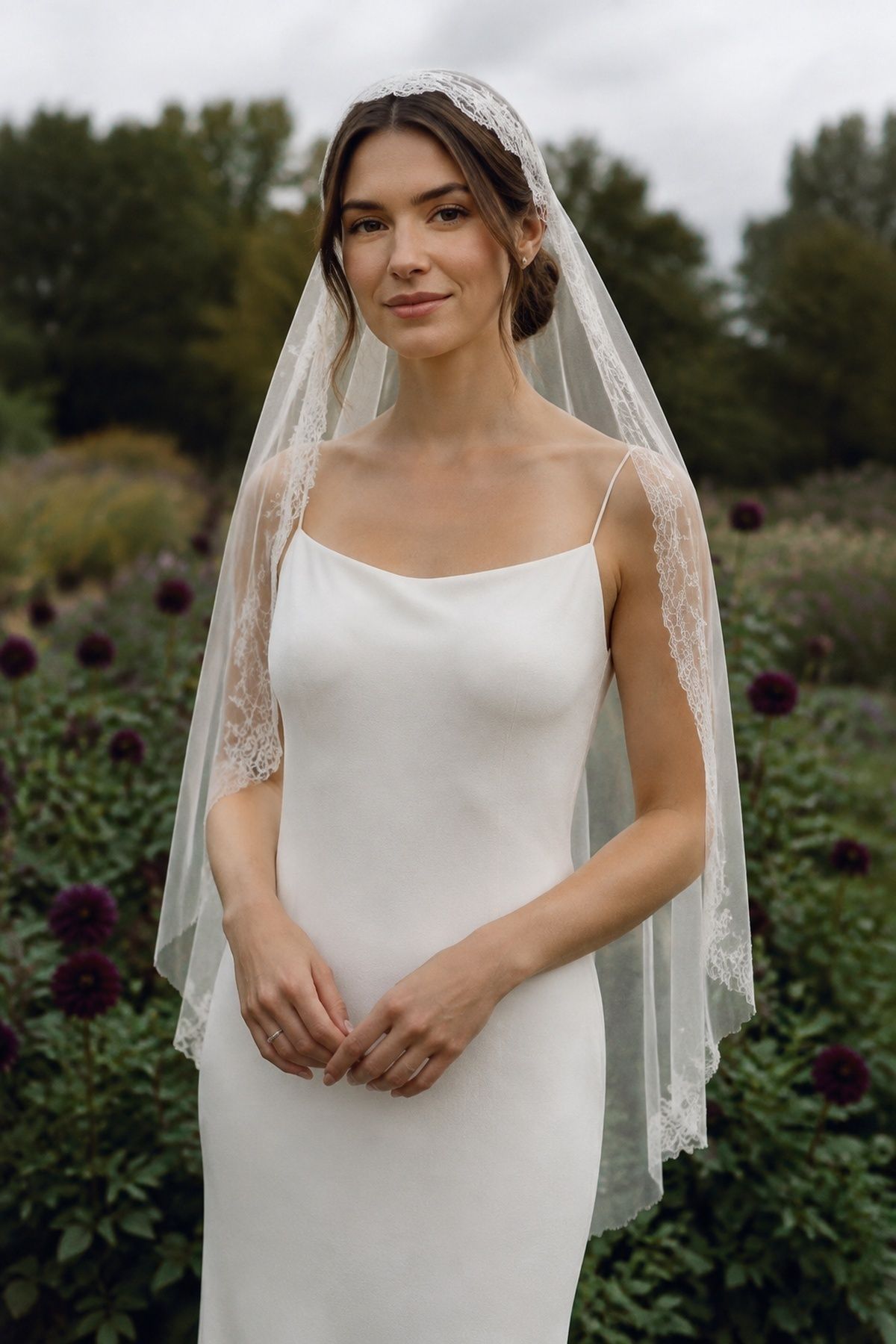
A lace Juliet cap veil is often prettiest with a simple gown because the cap becomes the texture. Crepe, satin, silk faille, matte charmeuse, and plain tulle dresses give lace room to look intentional instead of busy. Choose lace that feels delicate near the face, not heavy or curtain-like.
If the dress has lace already, match the mood rather than forcing an exact pattern. Fine floral lace on the veil can soften geometric lace on the dress, while a tiny eyelash edge can keep a lace gown from feeling over-layered. A bride who likes lace wedding gloves ideas will usually want veil detail that feels similarly close and refined.
Pearl-Trimmed Juliet Veil for Soft Shimmer
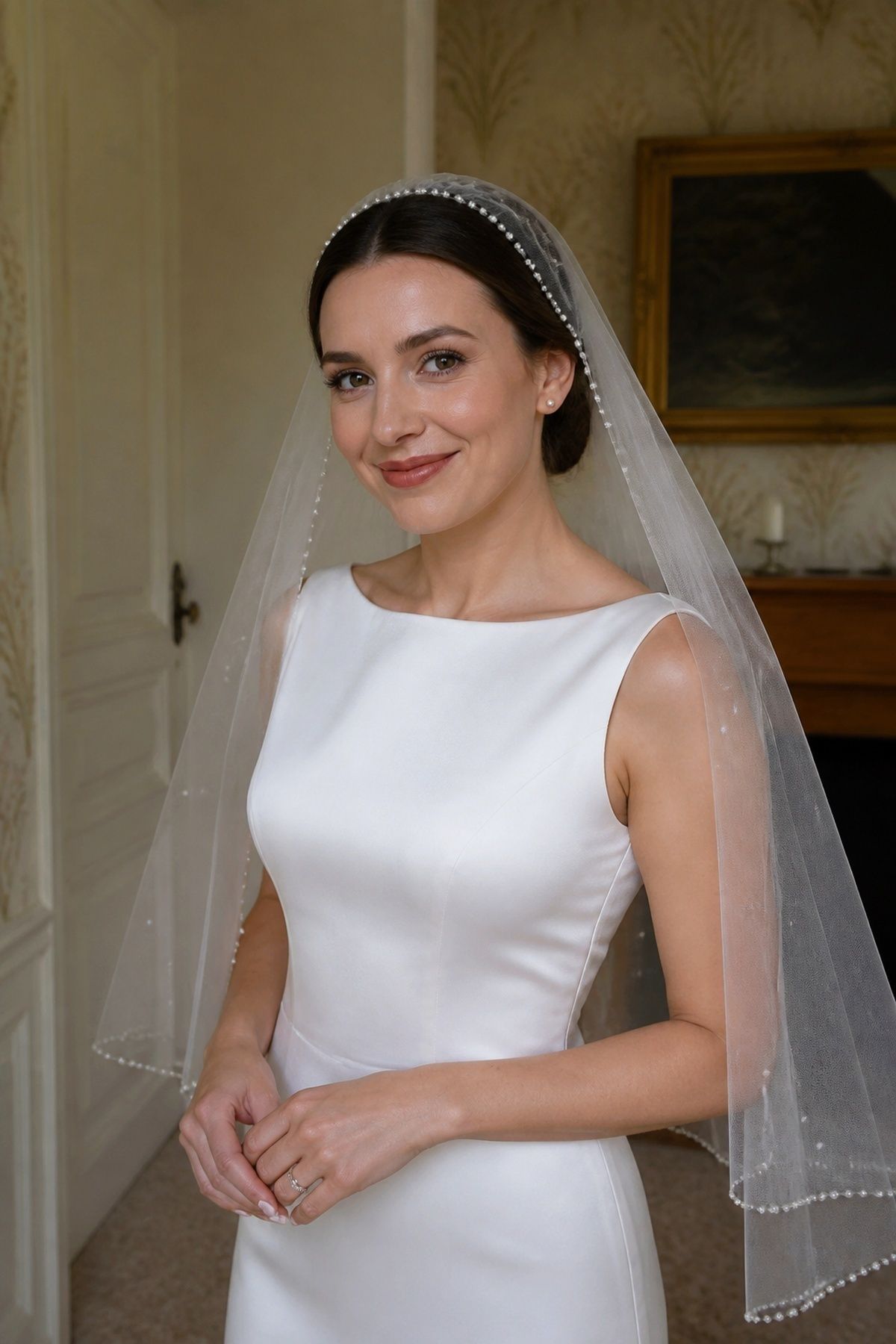
A pearl-trimmed Juliet cap veil suits a bride who wants light near the face without a crown. Scattered pearls feel airy, while a pearl border around the cap creates a clearer vintage shape. Keep the pearls small if the veil sits near your temples, because large beads can look bulky in side portraits.
Pair pearl detail with a smooth dress, tiny pearl studs, or a clean low bun. If your gown is already beaded, use fewer pearls on the veil so the face still feels open. A bride drawn to pearl headdress bridal ideas may only need one pearl note on the veil to keep the look translucent.
Clean-Edge Cap Veil for a Minimalist Dress
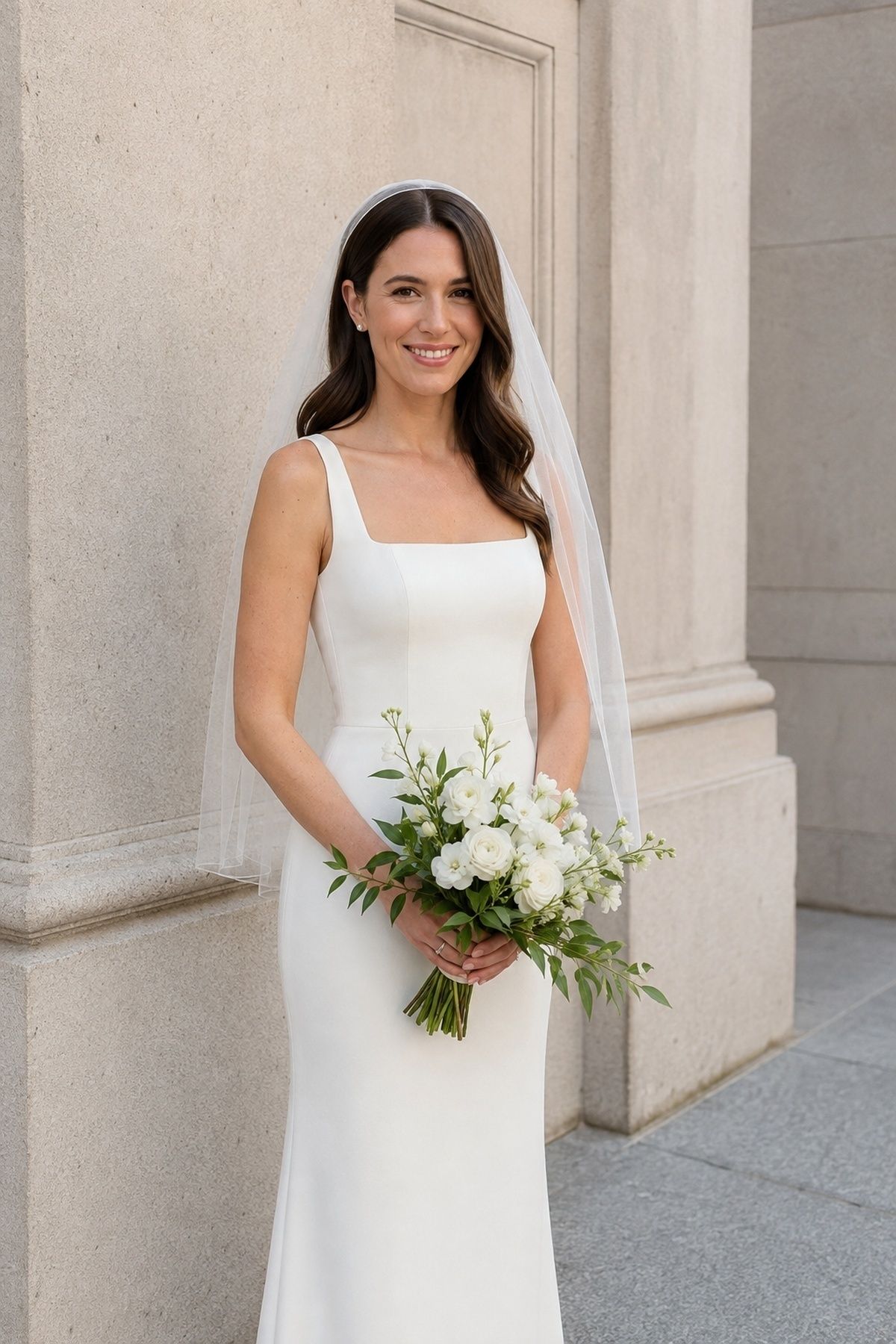
A clean-edge Juliet cap veil is the easiest way to make the look modern. Plain silk tulle, English net, or very soft illusion tulle gives the cap shape without adding obvious vintage decoration. This is beautiful with square necklines, strapless columns, slip dresses, and bridal suits.
Ask for the edge to disappear into the fabric or finish with a whisper-thin rolled hem. A minimalist dress can handle the cap silhouette as long as the veil itself stays light. Smooth hair, tucked waves, or a low knot will keep the line clean.
Cathedral Juliet Cap Veil for Chapel Drama

A cathedral Juliet cap veil creates the most dramatic version of the look. It works best when the venue, aisle, and dress have enough space for the fabric to breathe. In a chapel, historic room, garden aisle, or candlelit hall, the cap gives intimacy at the face while the length gives ceremony scale.
For a small wedding, keep the cathedral veil sheer and soft. Heavy lace borders can drag the look down, especially if guests are seated close. Ask your seamstress or veil maker how the train will spread, where it will attach, and whether the cap can be reinforced without feeling tight.
Fingertip Juliet Cap Veil for Easy Movement

A fingertip Juliet cap veil is a practical middle ground. It gives enough length to feel bridal in portraits, but it will not require constant arranging at a courthouse, restaurant reception, garden dinner, or family home ceremony. The shorter fall also keeps the cap from feeling too serious.
This length works beautifully with fitted gowns, bias-cut dresses, tea-length hems, and simple sleeves. If you plan to hug guests right after vows, walk stairs, or move between indoor and outdoor spaces, fingertip length keeps the romance while reducing fuss.
Boho Juliet Cap Veil With Loose Waves
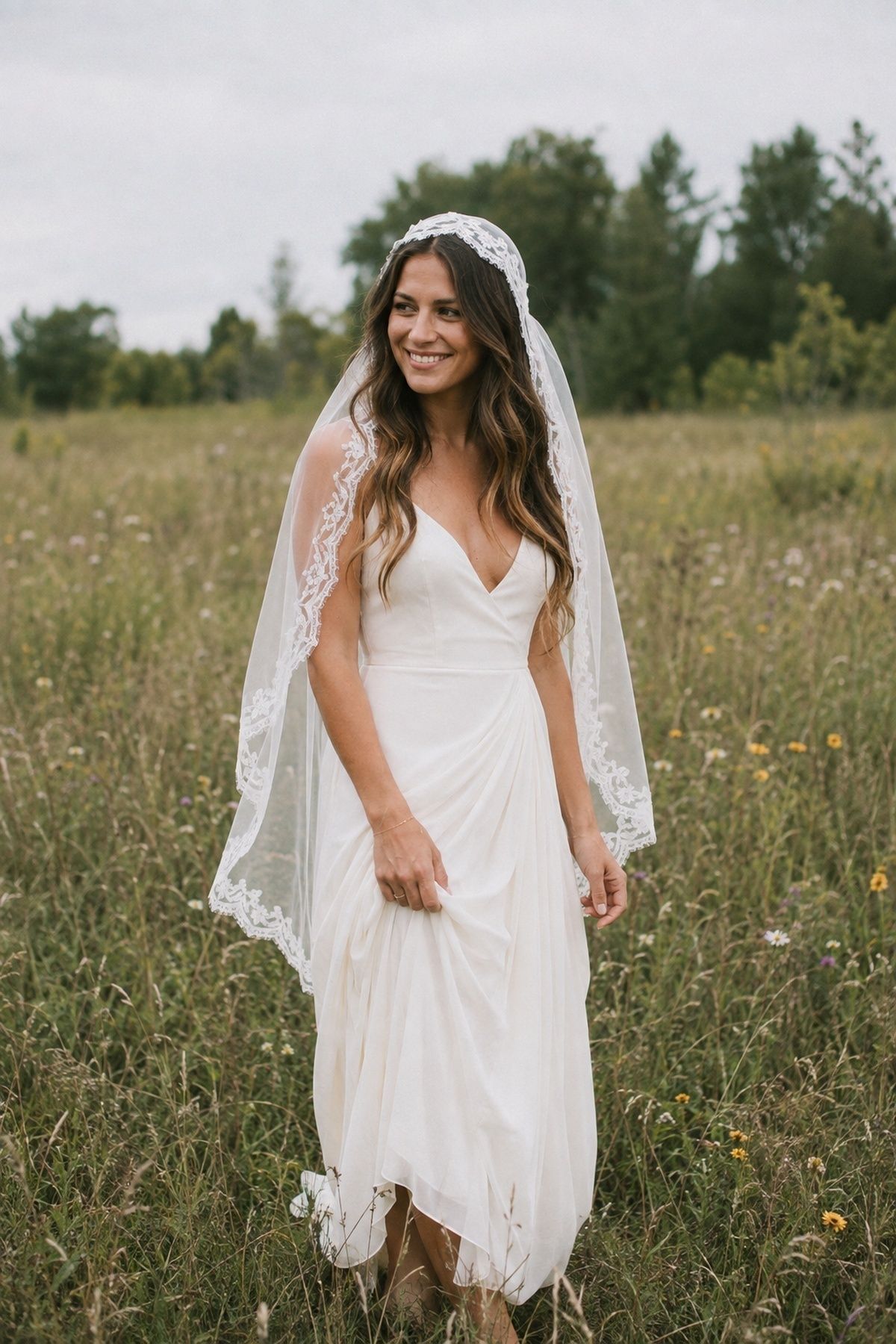
A boho Juliet cap veil usually looks best when the hair has movement. Loose waves, soft bends, brushed-out curls, or a relaxed half-up style can stop the cap from looking too formal. Choose cotton lace, soft net, or a barely gathered cap if the dress has a relaxed shape.
Keep the styling polished enough for a wedding day. Too many flyaways around the cap can make the veil look messy rather than effortless. A few hidden pins, light hair spray, and a careful fitting will preserve the undone mood without letting the veil shift.
Art Deco Juliet Veil With Beaded Detail
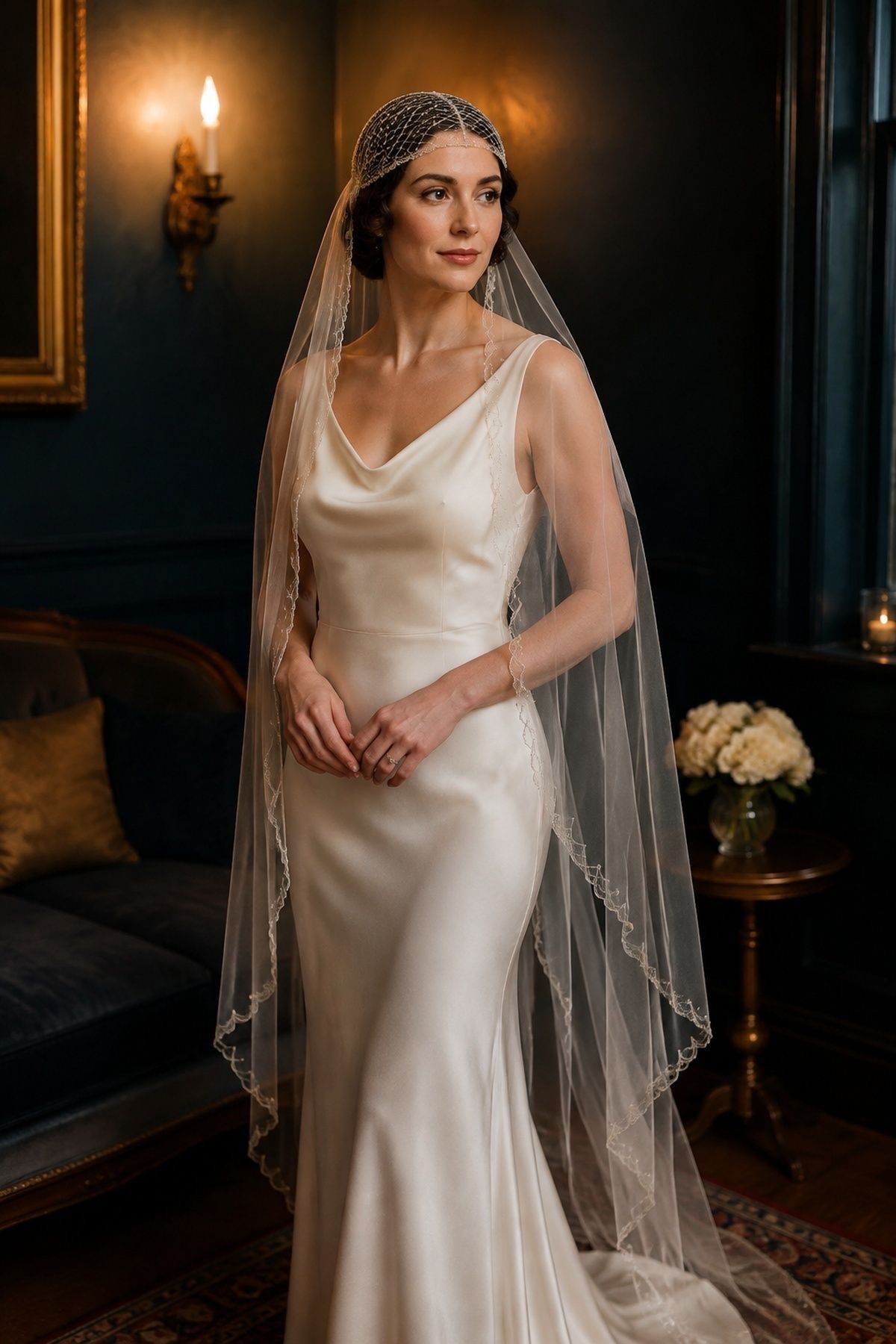
An Art Deco Juliet veil can be stunning with tiny beads, slim lines, scalloped edges, or a subtle geometric cap. The safest approach is one focal detail. Let the cap carry the beading, or let the veil edge carry the beading, but avoid loading both unless the dress is extremely simple.
This is a strong match for satin sheaths, column gowns, dropped waists, and evening receptions. When the beadwork sits low across the forehead, the slim silhouette of forehead tiara wedding ideas can share a similar old-world mood while the veil keeps the finish softer.
Heirloom Lace Cap Veil for Sentimental Styling
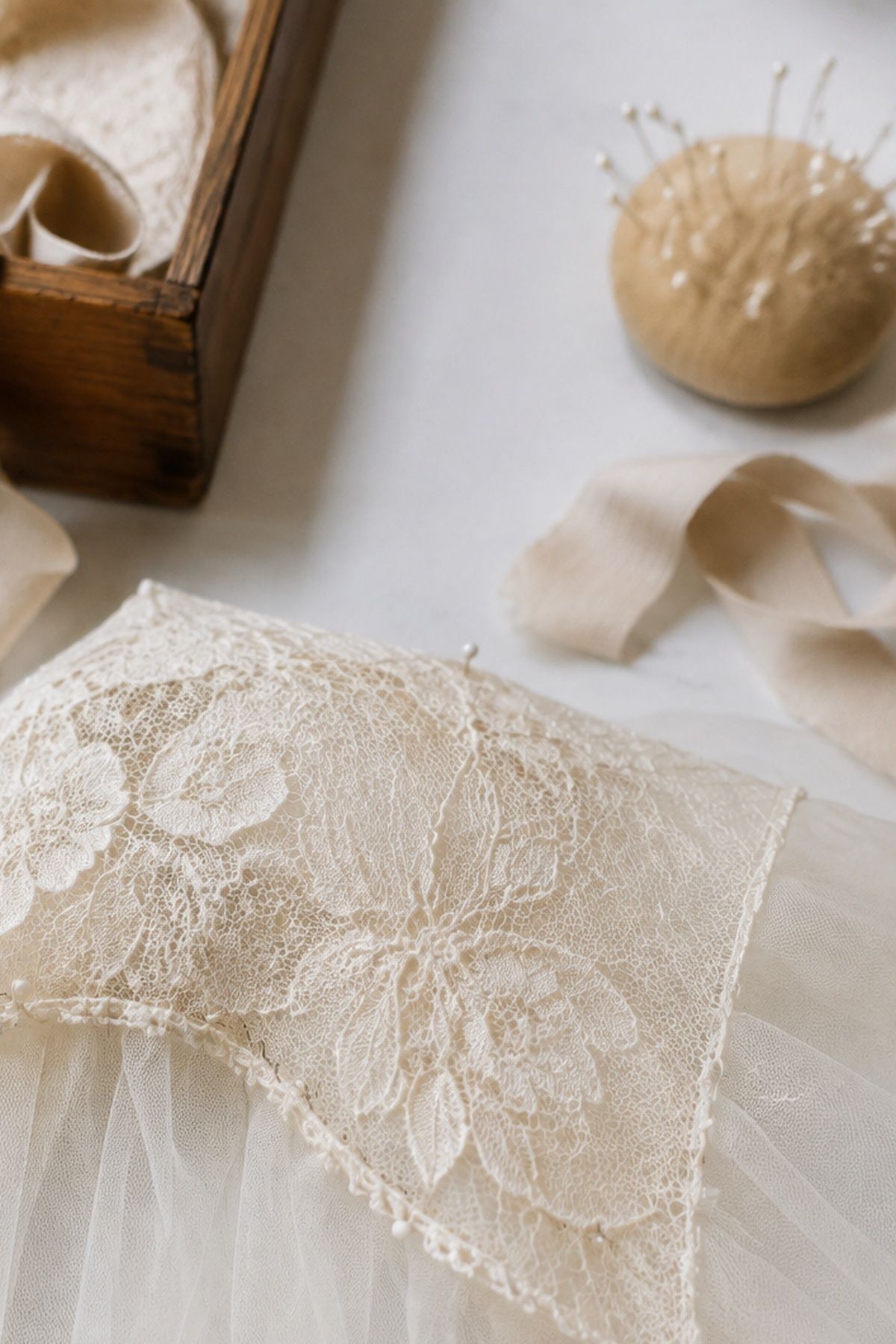
An heirloom lace cap veil can feel deeply personal, especially if it uses family lace, a saved dress panel, or trim from a meaningful garment. The key is preservation and proportion. Old lace may be fragile, yellowed, or heavier than modern veil fabrics, so it should be checked before being placed near the face.
A maker can use heirloom lace only on the cap or edge, then attach it to fresh tulle for a lighter fall. This keeps the memory visible while making the veil easier to wear. A bride who loves custom wedding hats ideas may appreciate the same made-for-you feeling in a quiet veil detail.
Juliet Veil Cap With a Drop-Waist Dress
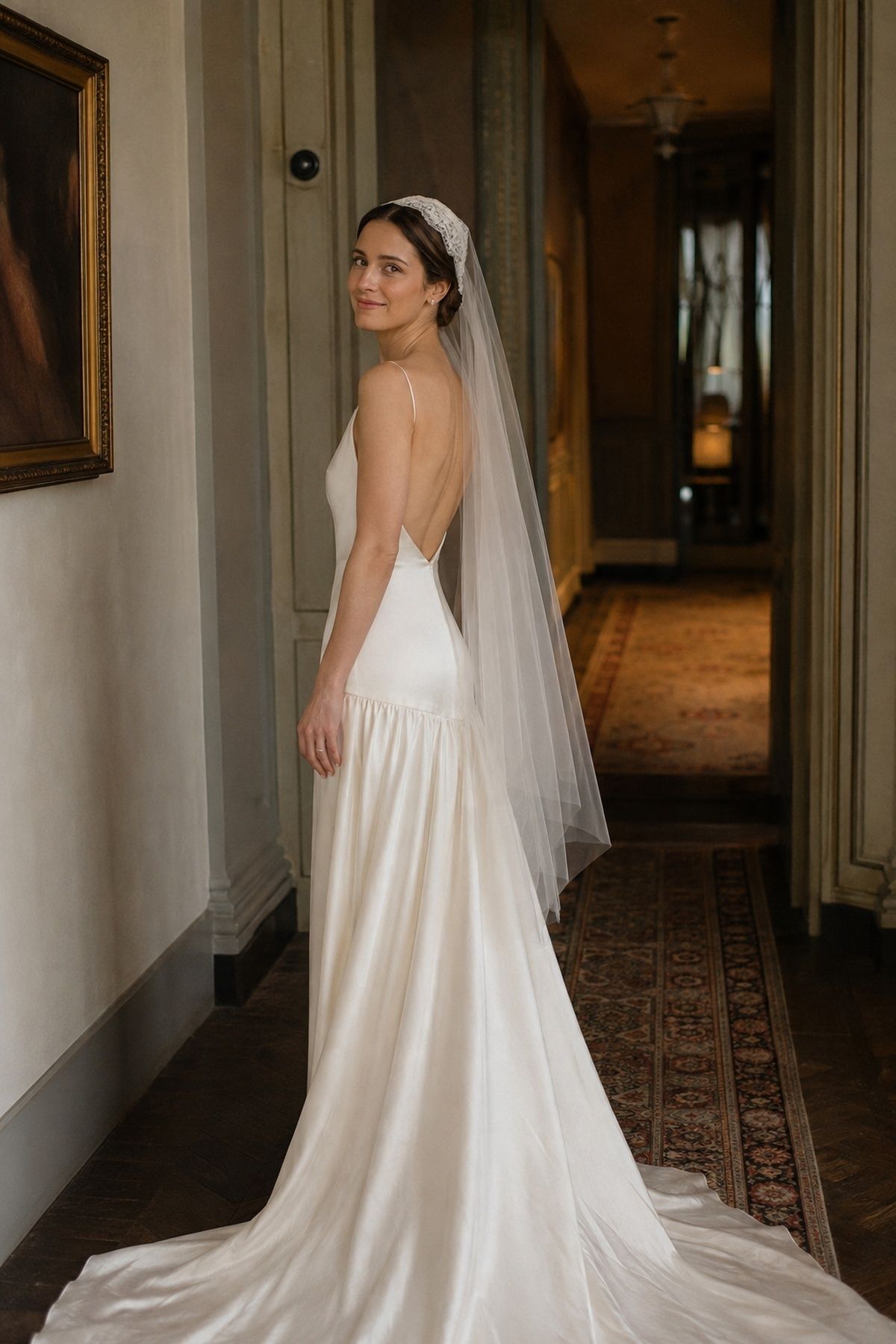
A Juliet cap veil and a drop-waist gown can look beautifully period-inspired, but this pairing needs modern editing. Keep the dress fabric clean, the neckline open, or the veil fabric sheer so the outfit does not feel like a costume. A low-slung silhouette already carries vintage weight.
When the waistline is the dress statement, choose a veil that frames the face without adding a heavy border. A slim lace cap, tiny pearl detail, or plain tulle fall will balance the longer torso line. Brides considering drop waist wedding dress corset ideas usually need a veil that stays light above the shoulders.
Short Juliet Cap Veil for Courthouse Vows

A short Juliet cap veil feels charming for courthouse vows, elopements, civil ceremonies, and restaurant weddings. Shoulder, elbow, or fingertip length can give the face-framing cap moment without bringing a long train into elevators, sidewalks, cars, or tiny ceremony rooms.
This version works with suits, short dresses, tea-length gowns, and sleek midi dresses. If your ceremony is practical but you still want romance, a short veil gives you the old-soul feeling in a scale that suits the day.
Blush-Toned Juliet Cap Veil for Warmth

A blush-toned Juliet cap veil can warm up ivory, champagne, nude, or rose-lined dresses. The color should be subtle enough to read as softness rather than a separate accessory. Try the veil against the dress in daylight, because blush tulle can look peach, pink, or beige depending on the fabric underneath.
Blush is especially lovely for small weddings with candlelight, garden flowers, or antique interiors. Keep the bouquet colors related, not identical. A veil with a quiet blush cast can make skin look luminous in close portraits.
Black Juliet Cap Veil for an Alt Bride
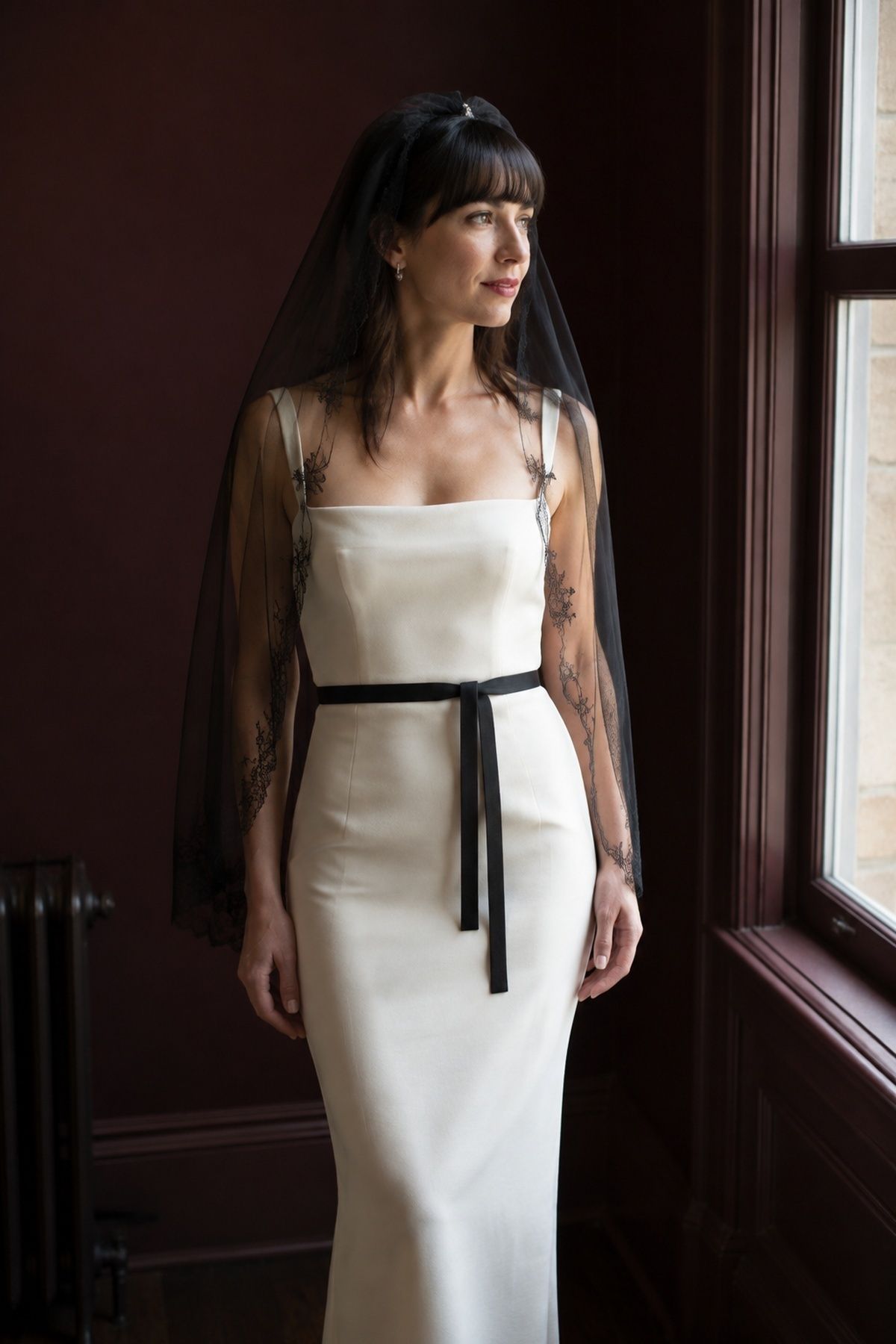
A black Juliet cap veil is bold, moody, and surprisingly elegant when the rest of the outfit is controlled. It can work with a black gown, ivory dress with black accents, structured suit, or dark reception look. Sheer black tulle is usually easier to wear than a heavy black lace cap.
Keep the makeup deliberate and the jewelry simple. Black near the face has real visual strength, so the cap should be fitted beautifully. Brides considering red veil wedding ideas already understand how one saturated veil choice can define the look.
Juliet Cap Veil With Bangs or a Full Fringe
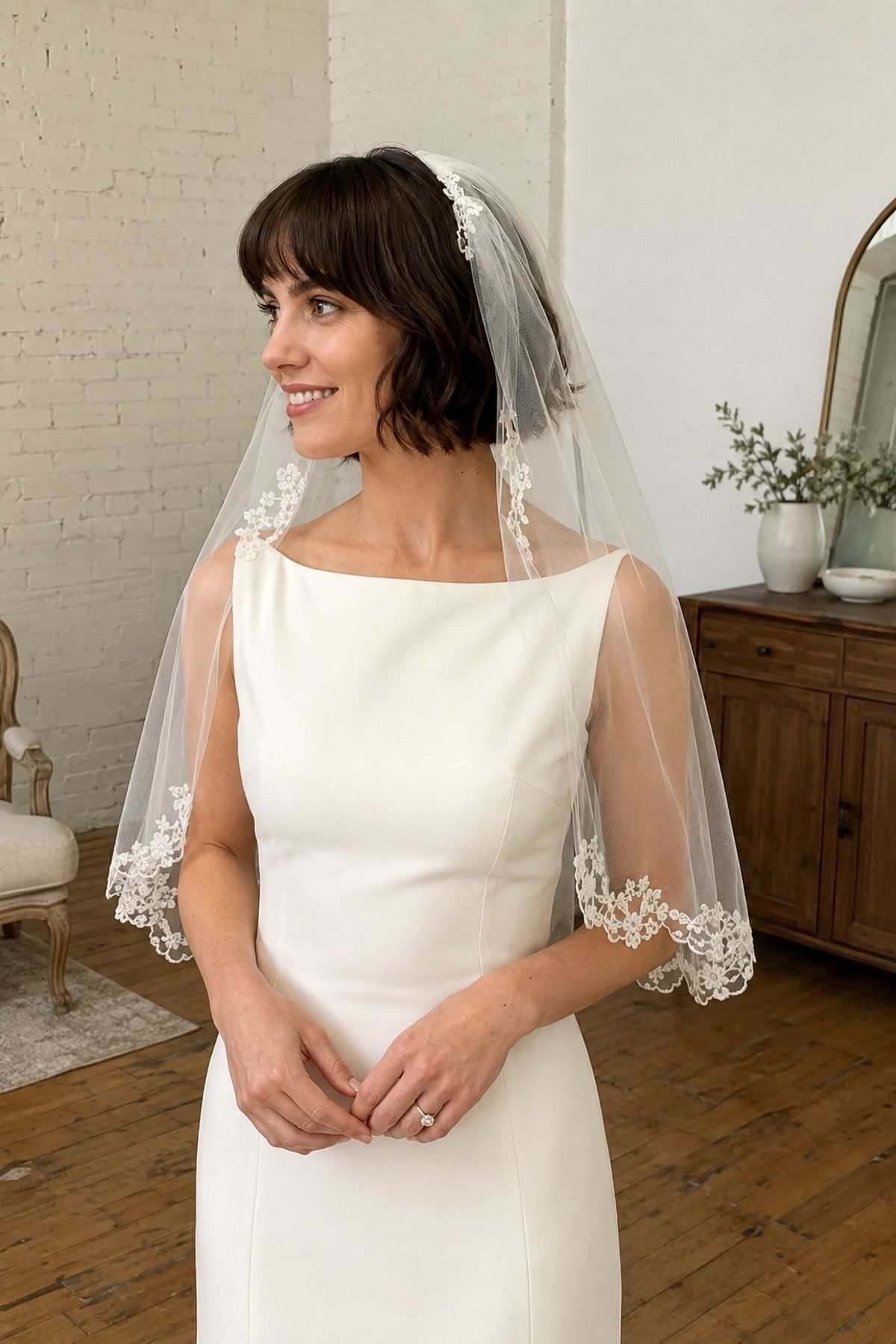
A Juliet cap veil can work with bangs, but the cap edge needs careful placement. The veil should sit behind or just above the fringe rather than crushing it. Full bangs often look best when the cap starts slightly farther back and the sides are secured near the temples.
Bring the veil to a hair trial if you have bangs, short layers, or face-framing pieces. Your stylist can test whether the cap needs hidden combs, snap clips, bobby pins, or a tiny anchor braid. Take photos while smiling and turning your head, not just while standing still.
Reception Photos With the Cap Veil Removed
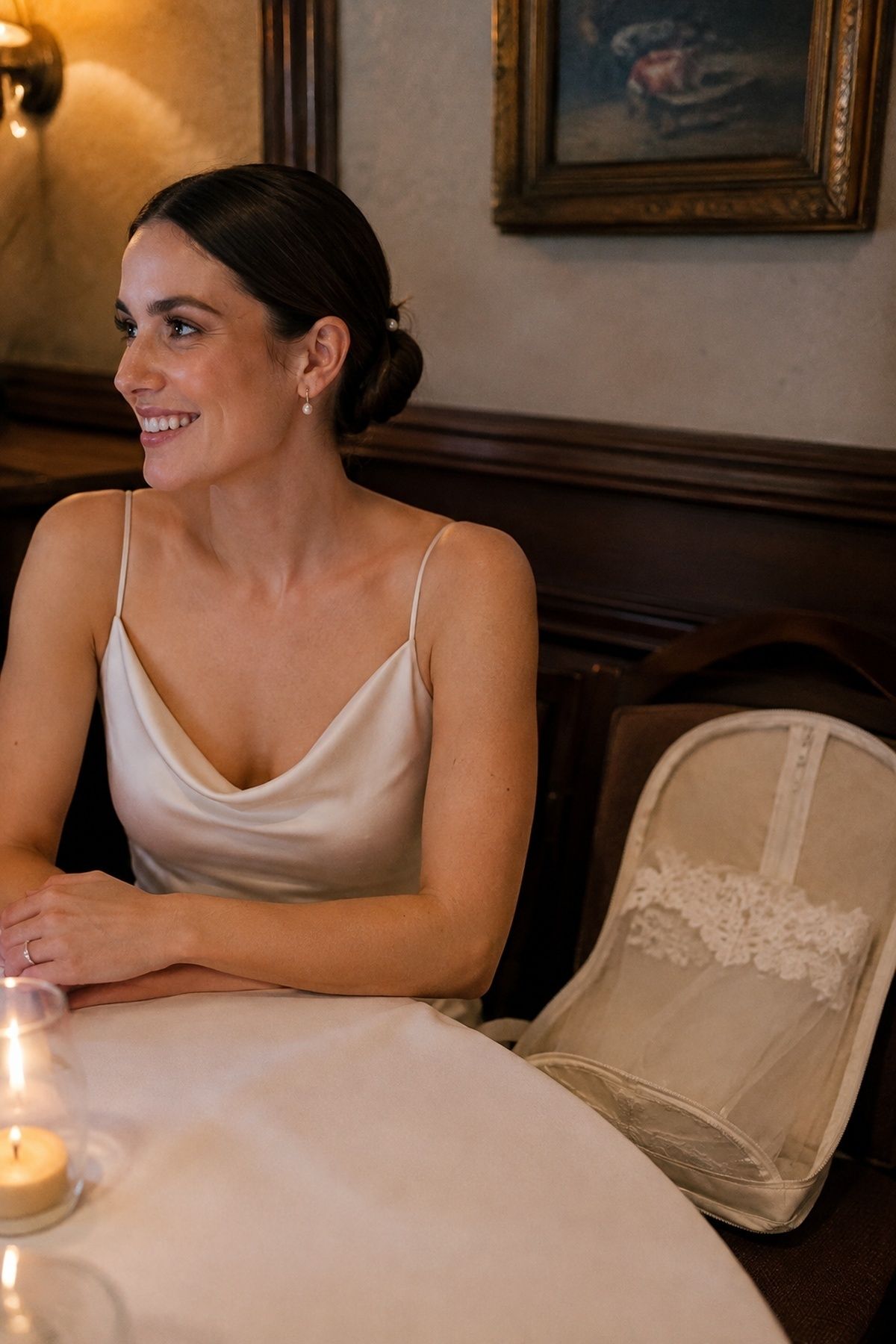
Many brides wear the Juliet cap veil for the ceremony and portraits, then remove it for dinner or dancing. Plan that transition before the wedding day. The hairstyle should still look finished after the veil comes off, and the pins should be easy for a stylist, planner, or trusted friend to remove.
A small comb, pearl pins, low bow, or simple earrings can keep the reception look from feeling unfinished. Store the veil flat or loosely rolled in a garment bag once it comes off so the cap does not crease before any late-night portraits.
Custom Juliet Veil With Meaningful Embroidery
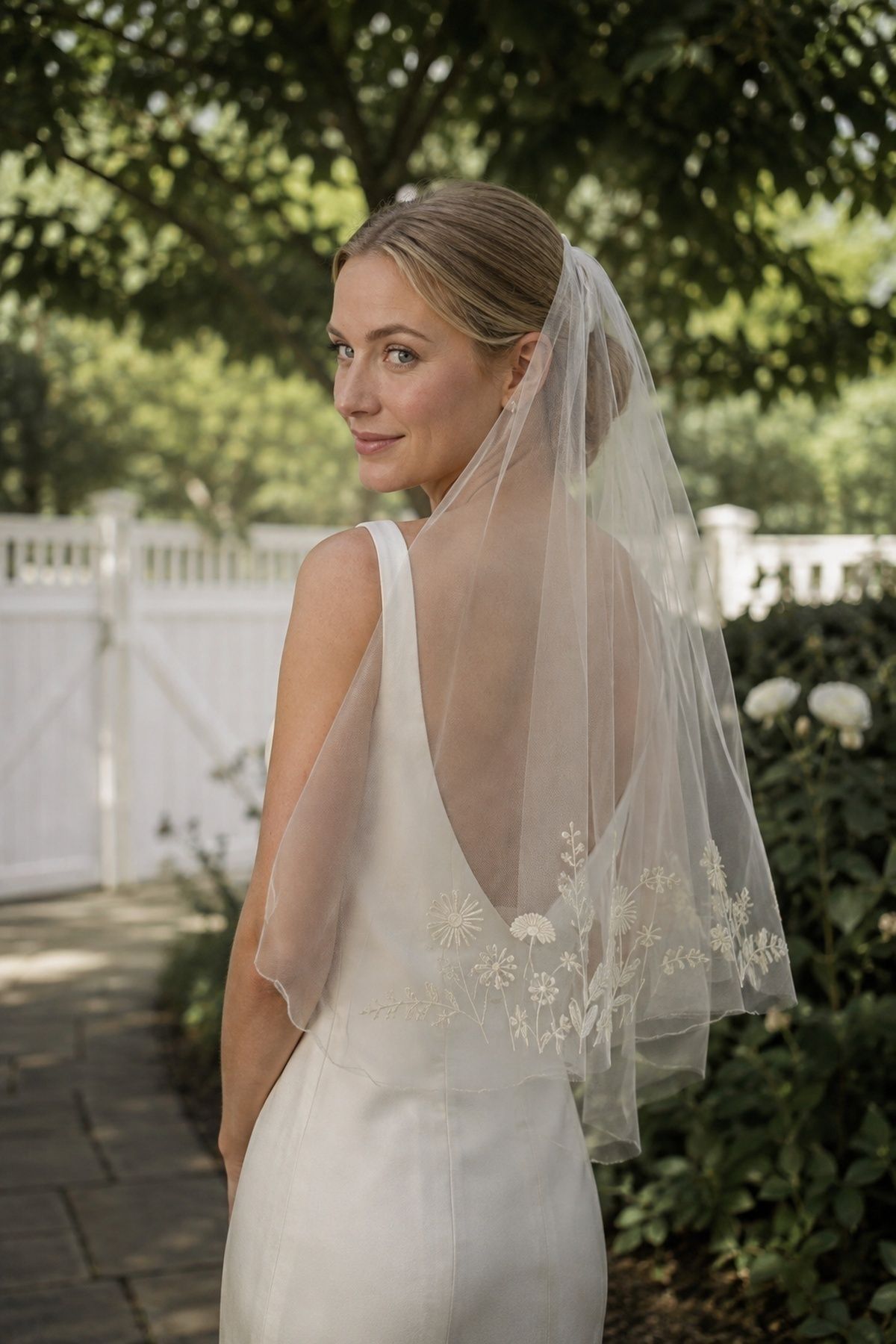
A custom embroidered Juliet veil can carry initials, a wedding date, a private phrase, a flower from the venue, or a small motif from family history. Place embroidery low on the veil, along the edge, or toward the back so it does not crowd the cap around the face.
Ask for a thread color that blends softly with the veil. Ivory-on-ivory, champagne-on-ivory, or pale blush stitching tends to feel more timeless than high contrast. If the embroidery is sentimental, it does not need to shout.
How to Choose the Right Length and Detail
Start with the dress. A simple gown can take lace, pearls, beading, or a longer veil. A detailed gown usually needs a lighter cap, cleaner edge, or shorter length. The veil should repeat one idea from the dress, such as texture, shimmer, softness, or line.
Then consider the room. Cathedral length feels natural in a chapel or grand garden aisle, while fingertip or elbow length feels easier in a courthouse, private dining room, or backyard ceremony. Small wedding veil ideas usually succeed when the detail is memorable but not physically in the way.
Best Dress and Hair Pairings
Juliet cap veils love low buns, brushed waves, soft bobs, tucked short hair, and half-up styles. Very high buns can distort the cap unless the veil is designed around them. Center parts feel period-inspired, while side parts can make the shape softer and less formal.
For dresses, the safest pairings are clean necklines, slip silhouettes, sheath gowns, drop waists, lace sleeves, square necks, and simple strapless shapes. Brides who like bandeau tiara wedding ideas can try a tiny crown feeling above the forehead with a very sheer veil, then test the combined look from every angle.
Comfort, Fit, and Movement Checks
A Juliet cap veil must feel secure without squeezing. During a fitting, turn your head, hug someone, sit down, walk outside, and lean in as if signing a license or greeting a guest. If the cap pulls at your temples or slides backward, it needs better anchors.
Check the veil with earrings, lipstick, and your real hairstyle. Pearl edges can catch on waves, lace can cling to lip gloss, and long tulle can snag on textured shoes or stone paths. A beautiful veil only works if you can forget about it during the day.
What to Avoid
Avoid overly stiff caps, heavy lace that flattens the hair, pearls that sit directly on the forehead, and cap edges that cut across the face in a harsh line. Be careful with dramatic earrings, ornate necklaces, and high collars if the veil already carries a lot of detail.
Also avoid choosing the veil before choosing the dress. A Juliet cap has personality, and it needs the outfit to answer it. When in doubt, make one element quieter: simpler veil, simpler jewelry, softer hair, or a cleaner dress.
FAQ
What is a Juliet cap veil?
A Juliet cap veil is a bridal veil with a fitted, gathered, or lace cap section that frames the crown and sides of the head before the veil falls behind the bride. It creates a soft vintage silhouette and is often worn with lace, pearls, silk tulle, or delicate beading.
Why is it called a Juliet cap veil?
It is called a Juliet cap veil because the close-fitting cap shape is associated with romantic Renaissance-inspired headwear and the visual idea of Shakespeare’s Juliet. Bridal versions became especially recognizable in vintage and 1920s-inspired wedding styling.
What wedding dress looks best with a Juliet veil cap?
A Juliet veil cap usually looks best with a simple slip dress, lace gown, sheath dress, drop-waist gown, square-neck dress, strapless column, or softly vintage silhouette. The key is balance: detailed dresses need lighter veils, while simple dresses can carry more lace, pearl, or beaded detail.
Can a Juliet cap veil work with short hair or bangs?
Yes, a Juliet cap veil can work with short hair or bangs when the cap is placed carefully and secured well. Short hair may need discreet clips or pins, while bangs usually need the cap edge set slightly back so the fringe is not flattened.
How do you keep a Juliet cap veil secure?
Use hidden combs, bobby pins, snap clips, small anchor braids, or sewn-in loops depending on the veil weight and hairstyle. Test the veil at a hair trial, then move, hug, sit, and turn your head to make sure it stays comfortable.
What Juliet veil cap wedding ideas work for a small wedding?
For a small wedding, the best Juliet veil cap wedding ideas are soft lace caps, fingertip lengths, clean-edge silk tulle, tiny pearl details, short courthouse veils, and heirloom lace accents. These choices add romance in close photos without overpowering a small ceremony space.
Final Thoughts
A Juliet cap veil is for the bride who wants softness with a little history, but the best version still belongs to the actual wedding day in front of her. Choose the veil that makes your dress feel more like itself, keeps your face open, and lets you move through the ceremony without fuss.
For couples drawn to old-soul romance, choose the scale, fabric, and dress line with the quiet charm of Juliet cap veils for a bride in mind.
Last update on 2026-10-05 / Affiliate links / Images from Amazon Product Advertising API