

A garden party wedding brunch works for 10 to 50 guests when you start the ceremony around 10:30 or 11 am, keep food in shade within two hours of setting it out, and serve one signature drink instead of a full bar. Plan roughly two cups of coffee and two mimosas per guest, and wrap up by 2 pm.
It’s 9:40 am. The chairs are out on the lawn, the coffee urns are filling, and somebody just discovered that the grass is soaking wet and every chair leg is sinking an inch.
That’s the garden party wedding brunch in one scene. Morning weddings are lighter, cheaper and friendlier than evening receptions, but a garden in daylight has its own rules: dew, moving shade, insects near the fruit and a kitchen that’s often too far from the tables. Solve those first, and the flowers and music barely need effort.
Here’s how I’d plan it for a small group, in the order the problems actually show up.
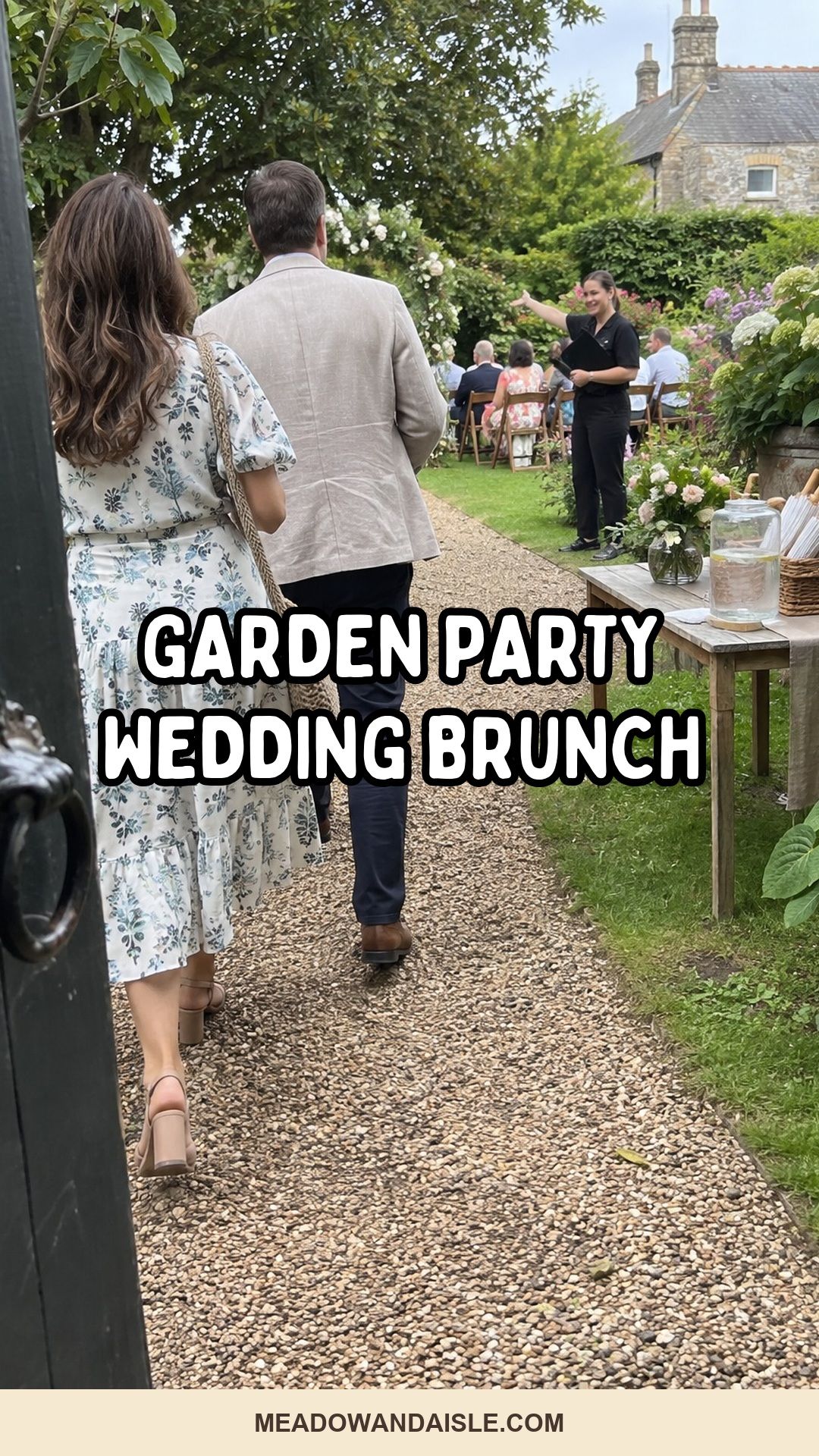
Brunch hosting pieces worth having


Why choose a garden party wedding brunch?
A brunch costs less per head than dinner, ends early enough that guests can drive home in daylight and suits small groups who’d rather talk than dance. For many micro weddings, it’s simply the better format.
For context, The Knot’s 2026 Real Weddings Study puts average catering at $80 per person. Brunch menus usually come in under a dinner menu from the same caterer because eggs, pastries and fruit cost less than a plated protein course, and you’ll often skip the full bar entirely. Ask your caterer for both quotes and compare.
It also changes the shape of the day. There’s no late-night lull, no 11 pm cleanup, and the couple can still do something that afternoon.
What time should a brunch wedding start?
Most garden brunch weddings start the ceremony between 10:30 and 11 am, with food served by noon and the exit around 1:30 to 2 pm. That gives vendors two to three hours of setup and keeps the meal ahead of peak midday heat.
| Time | What happens |
|---|---|
| 7:30 to 10:00 am | Vendor setup, lawn and chair check |
| 10:00 am | Guests arrive, coffee welcome open |
| 10:30 am | Ceremony (20 to 25 minutes) |
| 11:00 am | Drinks and portraits |
| 11:30 am | Brunch service opens |
| 12:30 pm | Toasts and cake |
| 1:30 pm | Exit |
Walk the garden at the exact brunch hour before you set the table map. Morning shade moves fast, and a table in shade at 10 am can be in full sun by noon.

Fix the ground before you style it
Morning lawns are often damp even on a dry day, so test the ground before anything goes down. Wet grass and sinking chairs are the most common garden brunch problem, and the easiest to prevent.
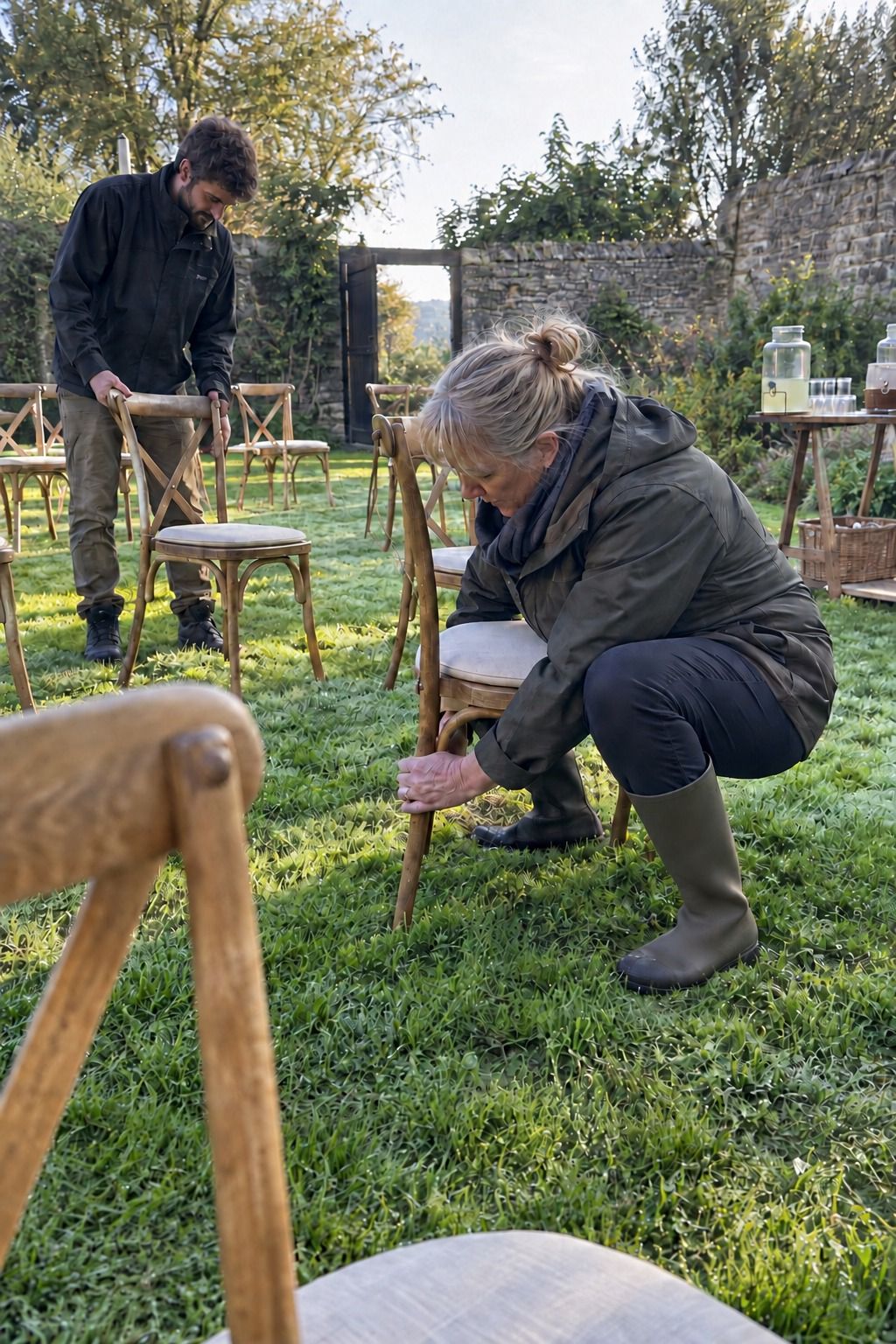
Press a chair into the lawn at setup time. If the legs sink or wobble, switch to wider-foot chairs, slip boards under service tables or move the ceremony to firmer ground like a terrace edge.

Map the arrival path from car or shuttle to the ceremony and keep it short, dry and signed. Put the welcome table beside the path, not in it. A few parasols, chilled water and a basket for cards are plenty.
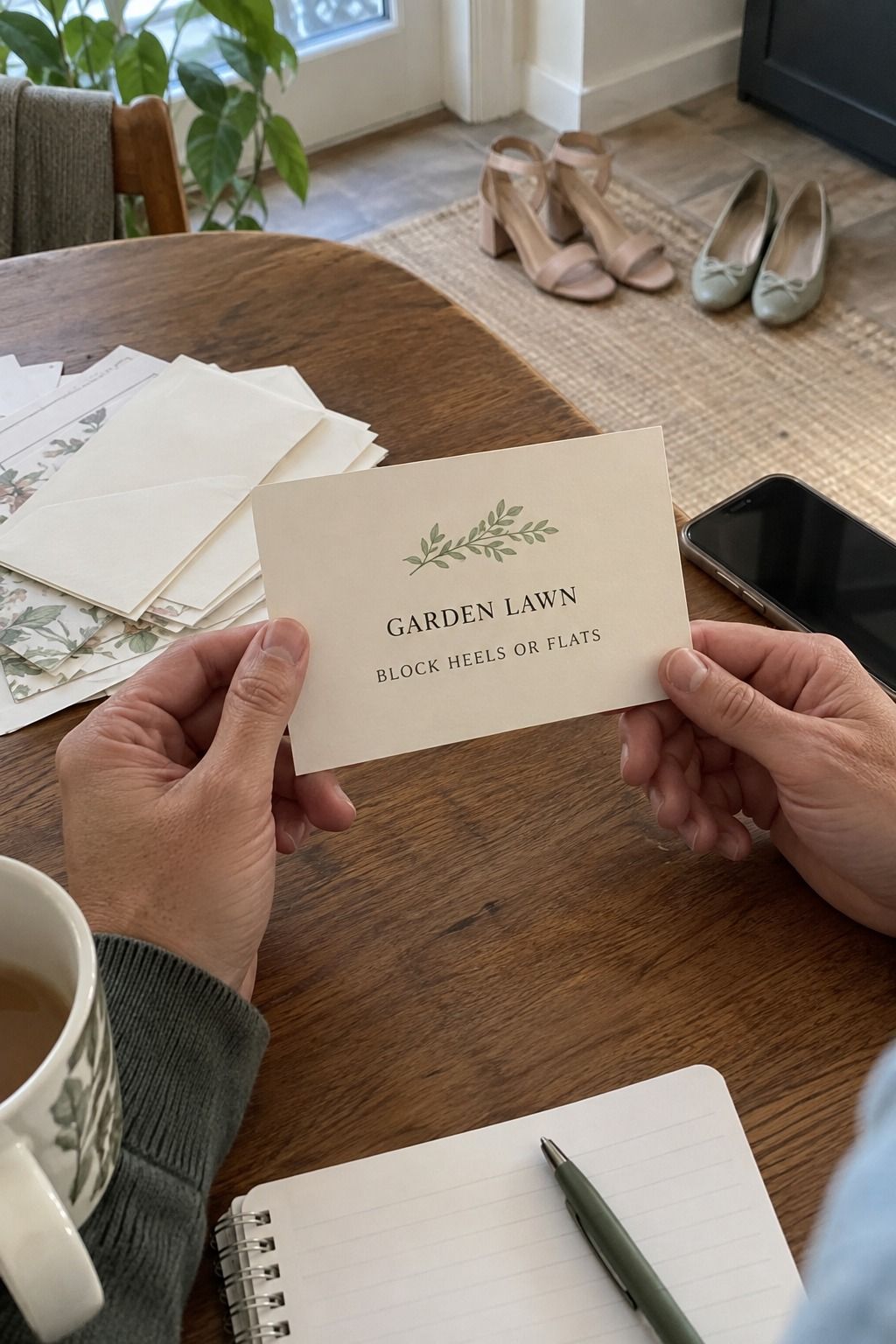
Add one line about footwear to your website or details card: “Ceremony on lawn; block heels or flats recommended.” That single sentence saves a lot of sunk stilettos.
Give accessibility the main route
Seat older guests, pregnant guests and anyone with mobility needs near firm paths, shade, restrooms and the buffet. Make the smoothest route the main route, dressed with flowers, rather than a side path around the party.
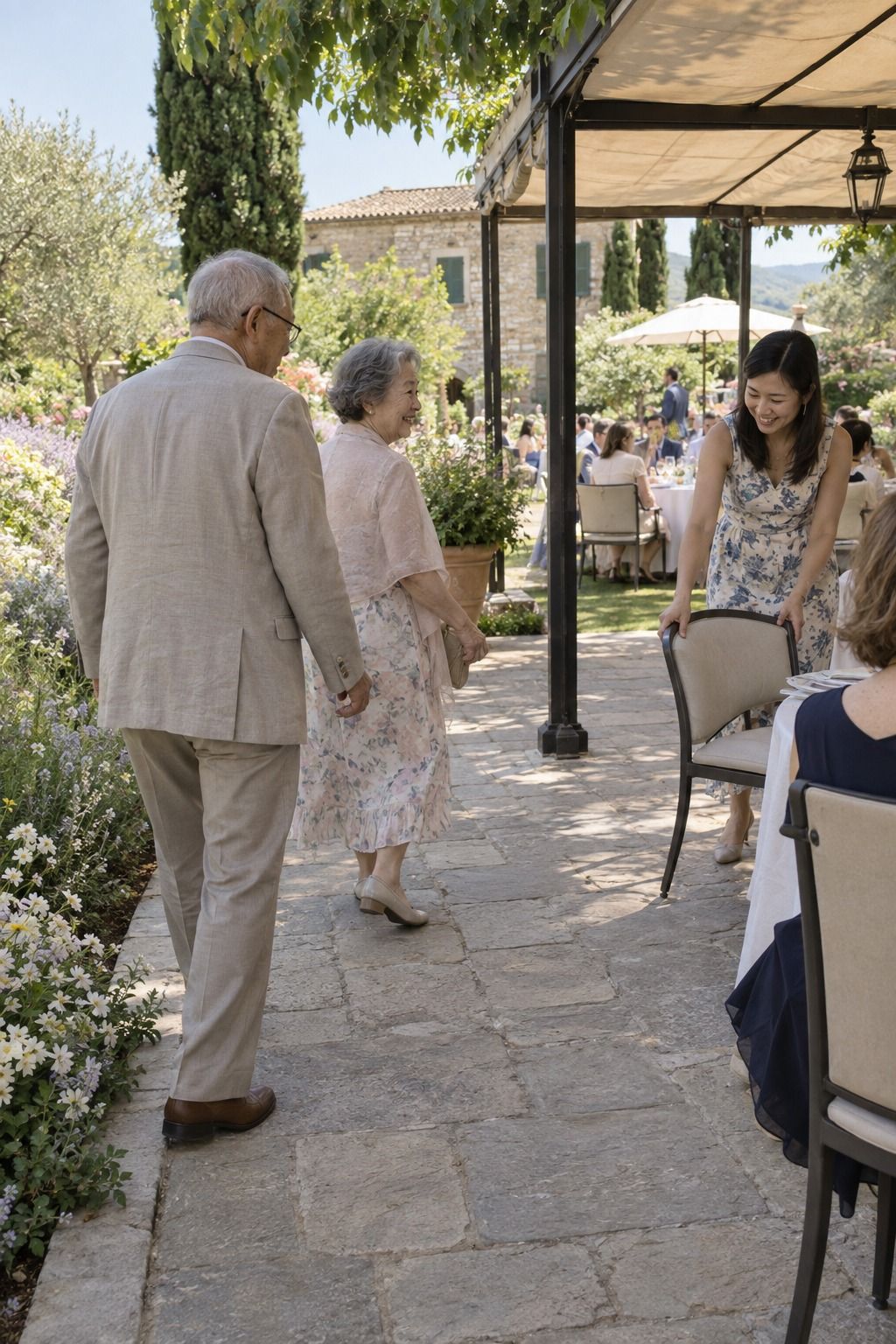
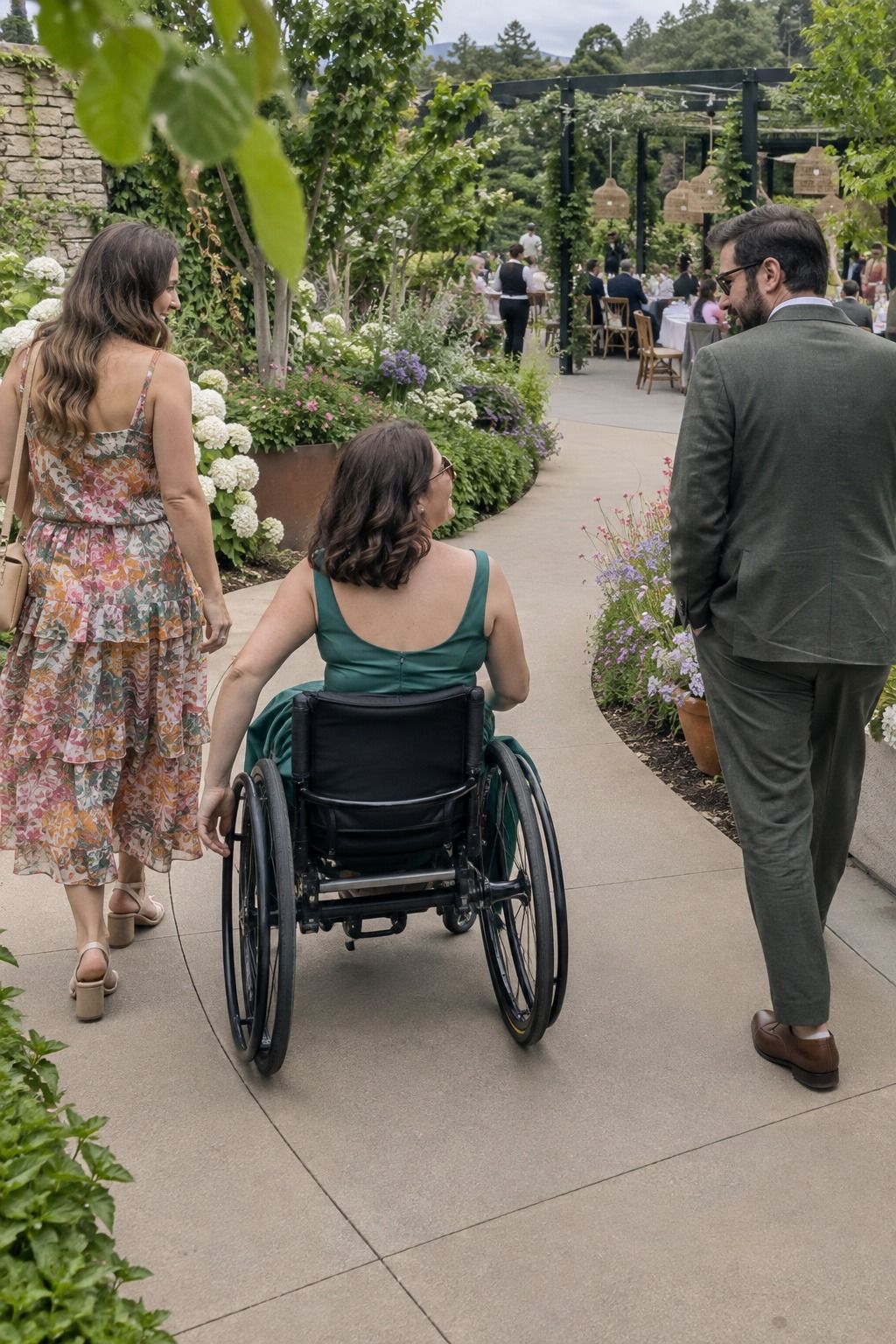
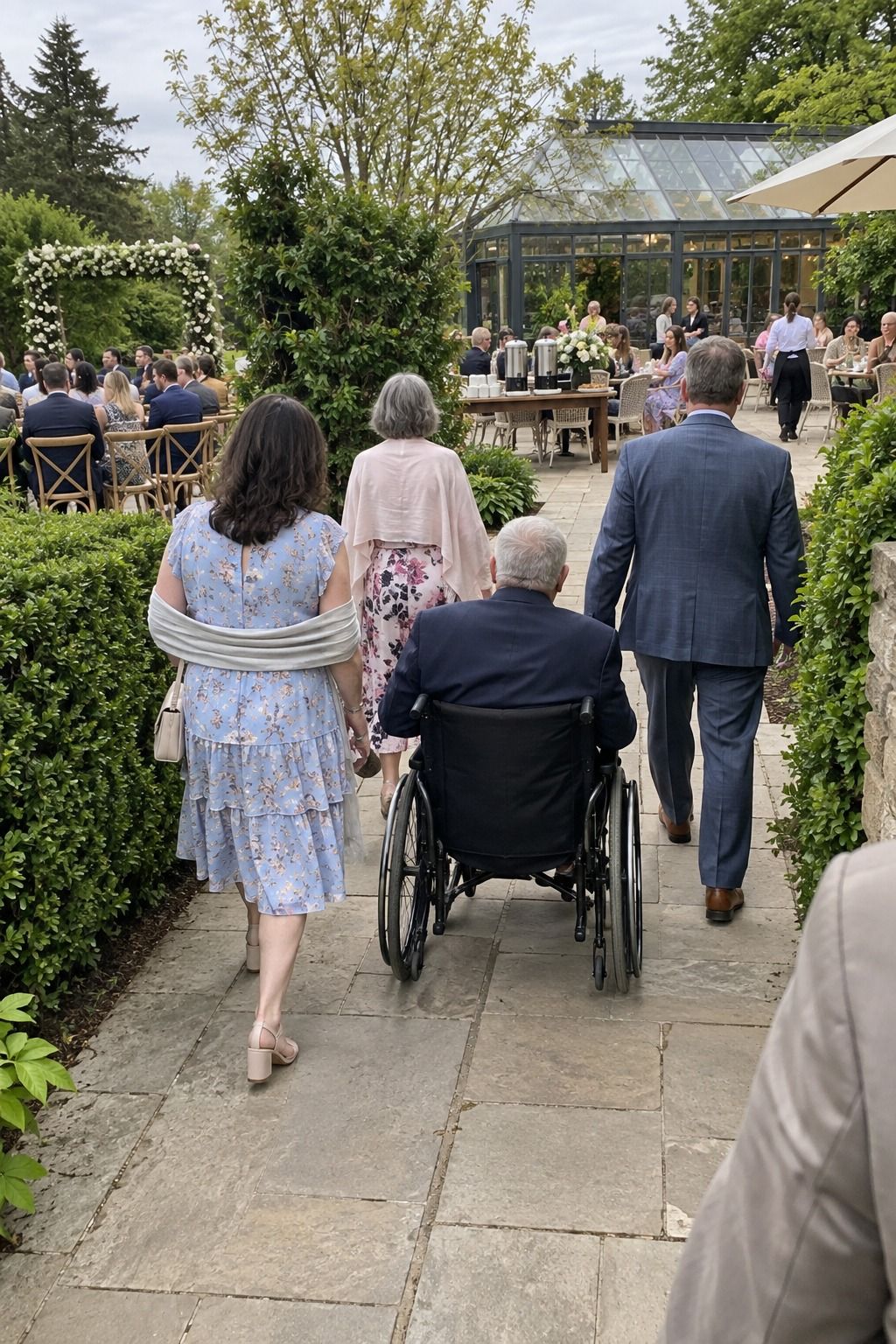
Place the ceremony close to the brunch area so guests can see where to go next. A hedge opening or patio edge that reveals coffee after the recessional is ideal, as long as it’s wide enough for a wheelchair and a photographer walking the other way.
Coffee first: setting up the welcome point
Coffee belongs at the entrance, not tucked next to the buffet. Guests arriving at 10 am want something in hand right away.
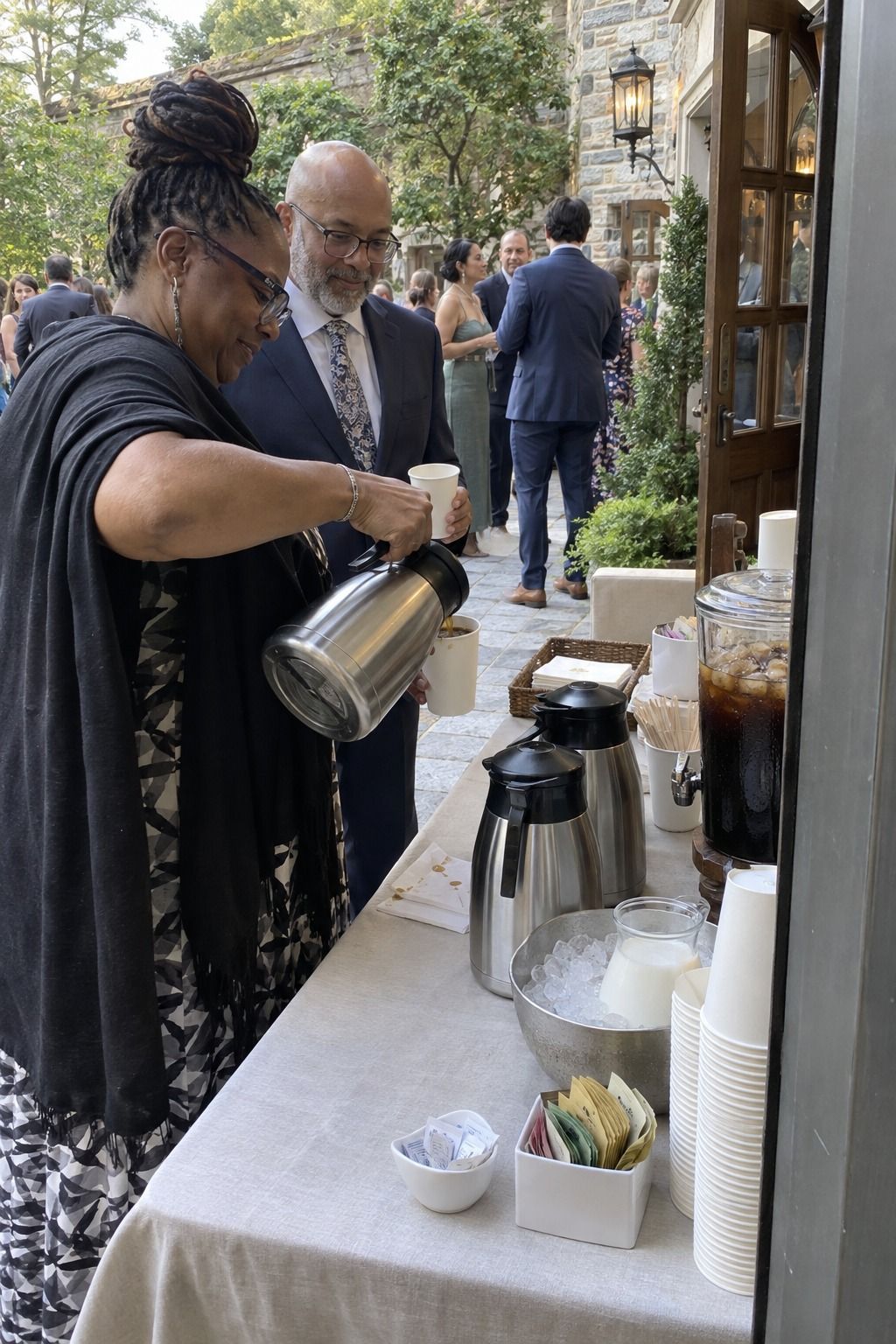
Offer regular, decaf, tea and cold brew. Keep hot coffee in thermal servers, milk on ice and cups out of direct sun. Here’s the quantity math I’d use:
| Guests | Coffee (about 2 cups each) | Mimosas (about 2 each) | Sparkling wine bottles |
|---|---|---|---|
| 20 | 40 cups, about 2.5 gallons | 40 | 5 to 6 |
| 30 | 60 cups, about 4 gallons | 60 | 8 |
| 50 | 100 cups, about 6 gallons | 100 | 13 |
A 750 ml bottle makes roughly 7 to 8 mimosas when you pour half juice and half sparkling. Round up, and keep one bottle of good alcohol-free sparkling on ice for anyone skipping alcohol.
What to serve at a garden party wedding brunch
Serve food that holds at outdoor temperatures and refills from small trays: frittatas, quiche, roasted potatoes, smoked salmon with bagels, salads, pastries and fruit. Skip anything that wilts or separates in heat, like hollandaise or soft whipped cream.

I spent years as a banquet chef, and brunch is harder outdoors than it looks. Eggs and dairy are the risk. The usual food safety guidance is two hours out of the fridge, or one hour above 90°F, so ask your caterer to set out smaller trays and swap them, rather than one big display that sits all morning. It also looks fresher.
Good garden brunch dishes:
- Frittata or quiche, cut to order or in squares
- Roasted potatoes or a potato salad without mayonnaise
- Smoked salmon, bagels, capers and red onion on ice
- A grain or green salad with a vinaigrette
- Pastries and a simple cake
- Fruit in small covered bowls, refilled often
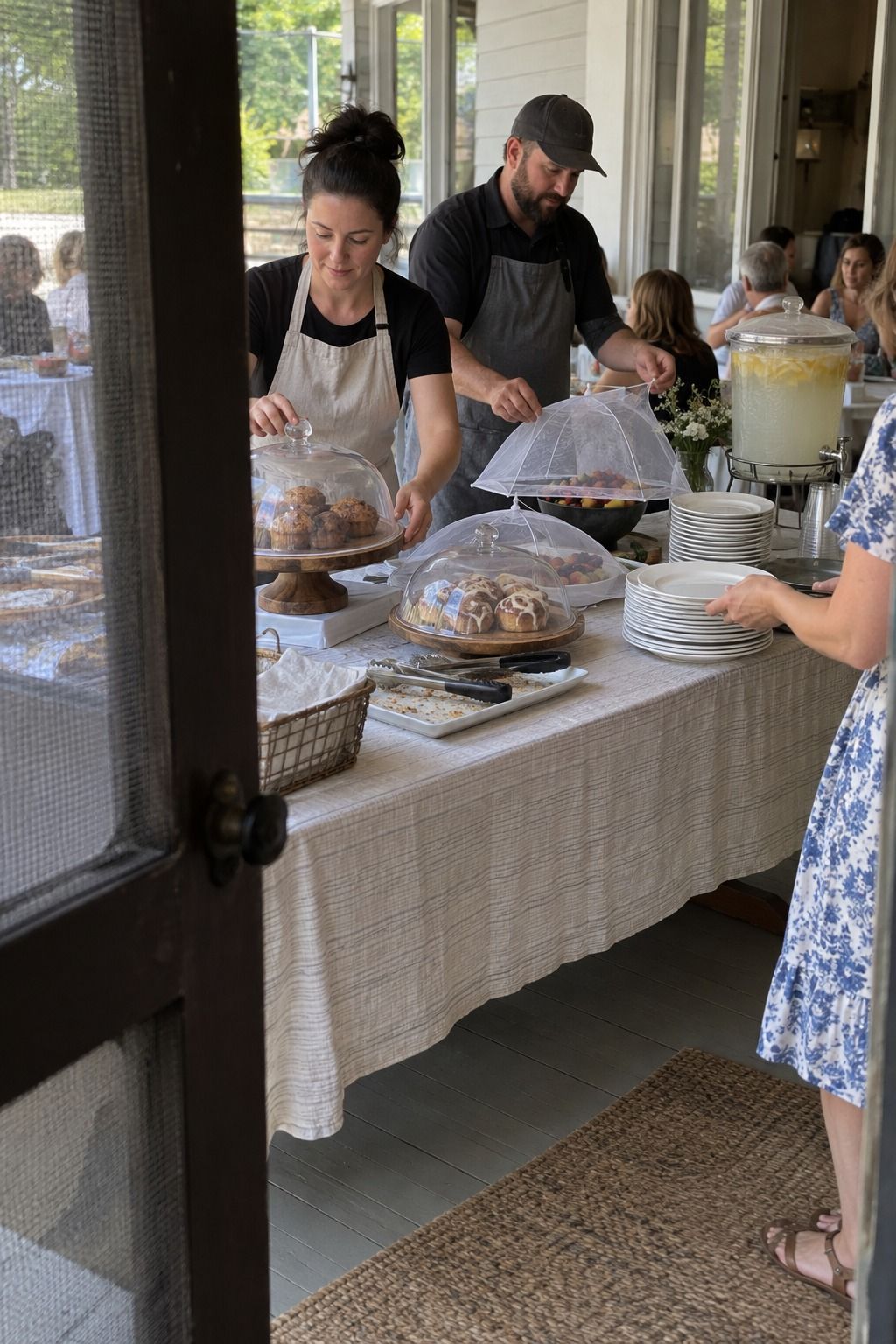
Fruit, jam and sweet drinks draw wasps. Cover trays before service, use lidded drink dispensers and keep the sweetest items away from where people sit.
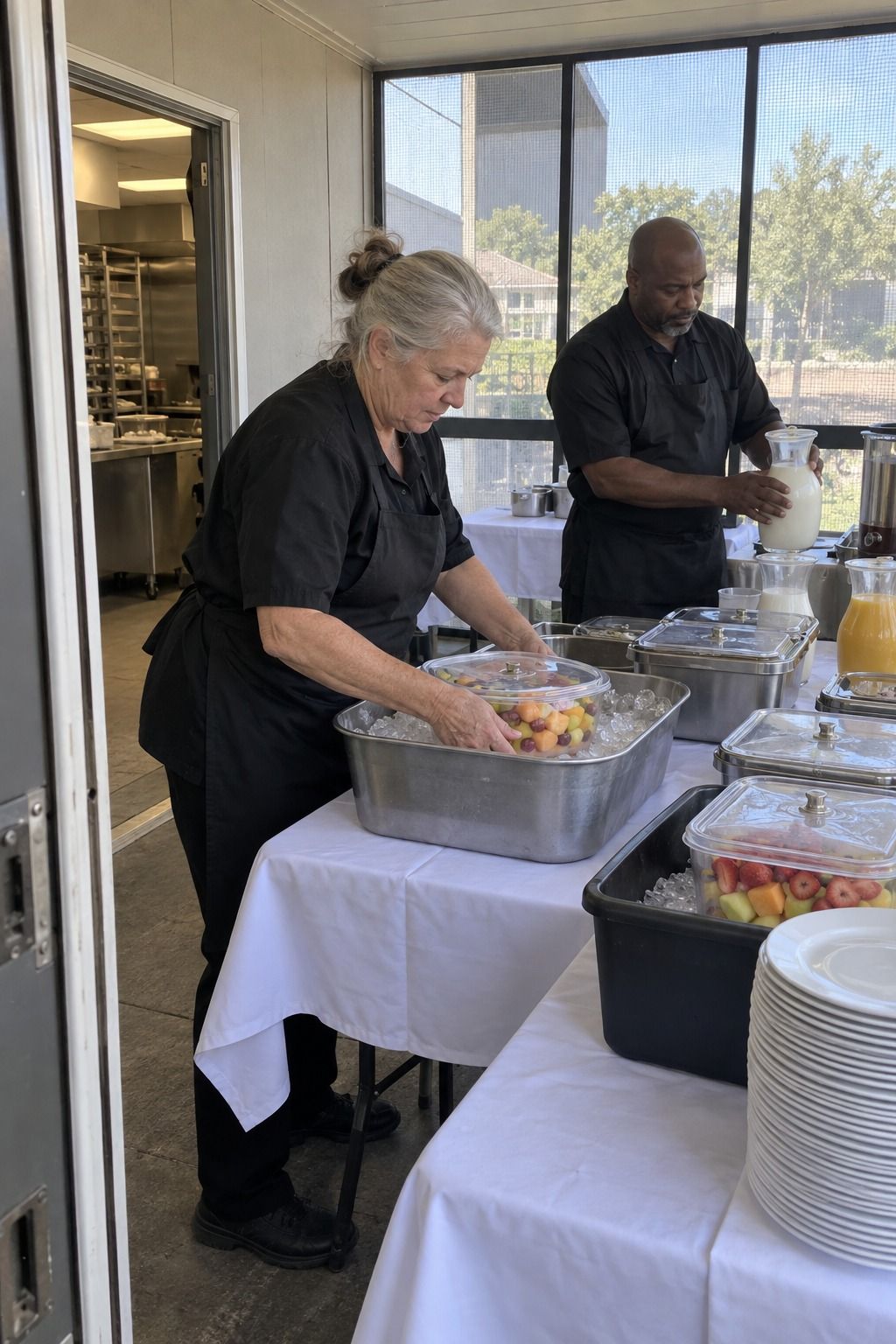
Put the buffet in shade and close to the kitchen or the caterer’s prep area. The prettiest spot in the garden is usually the hottest. Let guests look at the roses from their tables while the food stays under a porch or canopy.
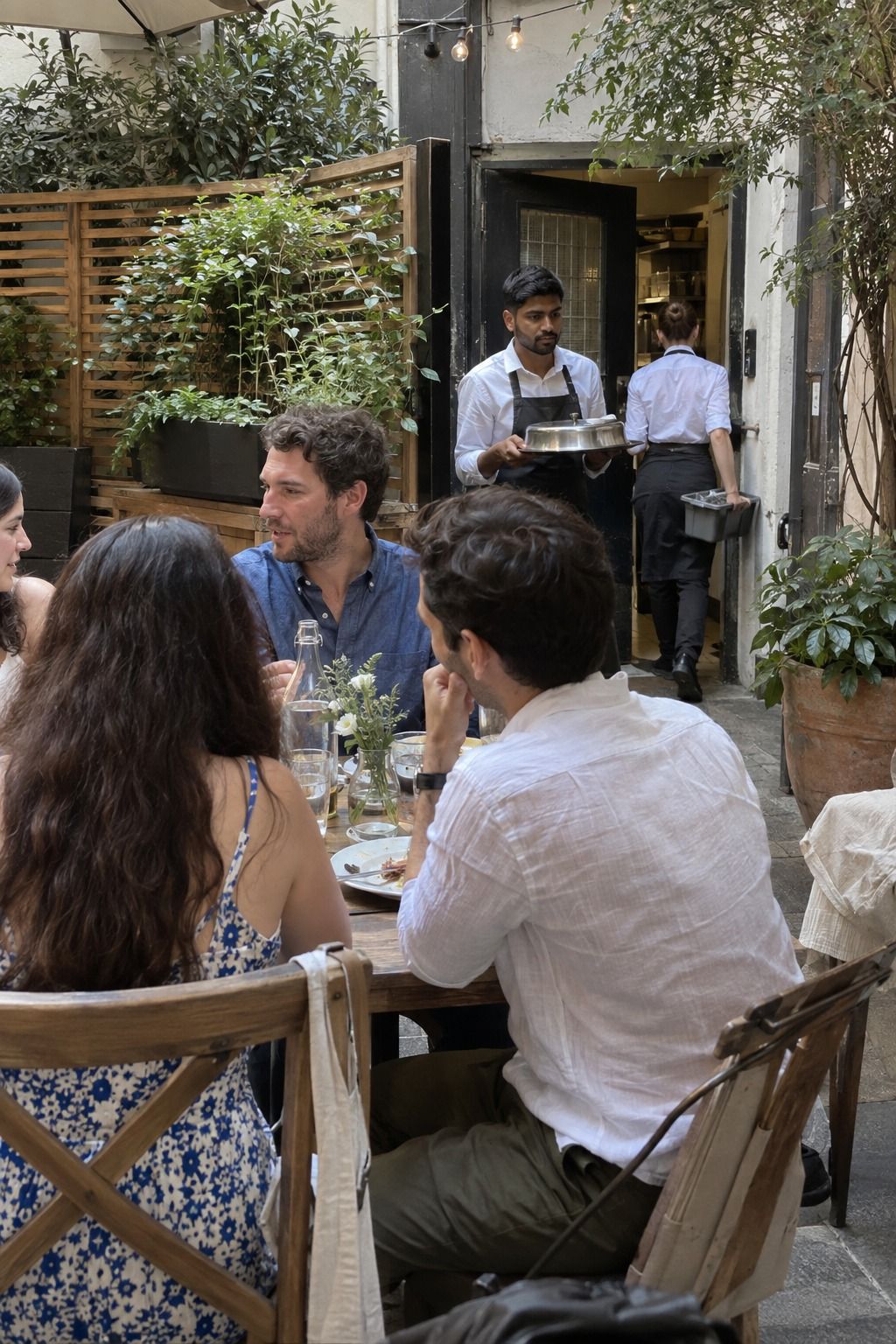
Count the steps from prep to buffet to tables. If trays have to cross the whole lawn, rethink the layout or switch to composed platters that need fewer trips.
One drink, done well
You don’t need a full bar at 11 am. Pick one hosted drink, such as mimosas, a spritz, Bloody Marys or a good lemonade, plus water and an alcohol-free option. Fewer bottles, fewer decisions, less to clean up.
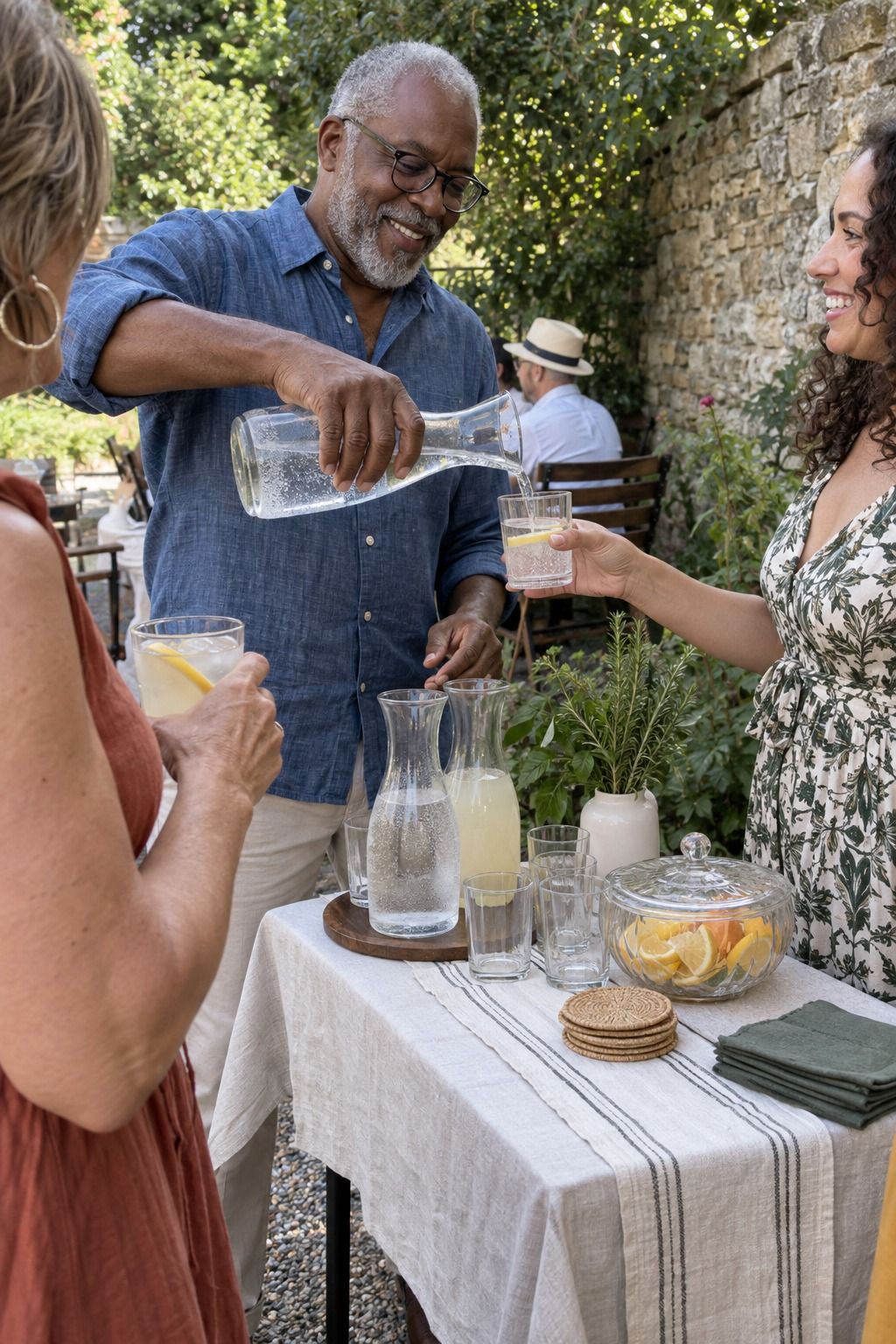
Tables, music and a few things to do
Keep tables low and weighted, music soft and activities limited to one. A brunch is a conversation, so everything else should stay out of its way.
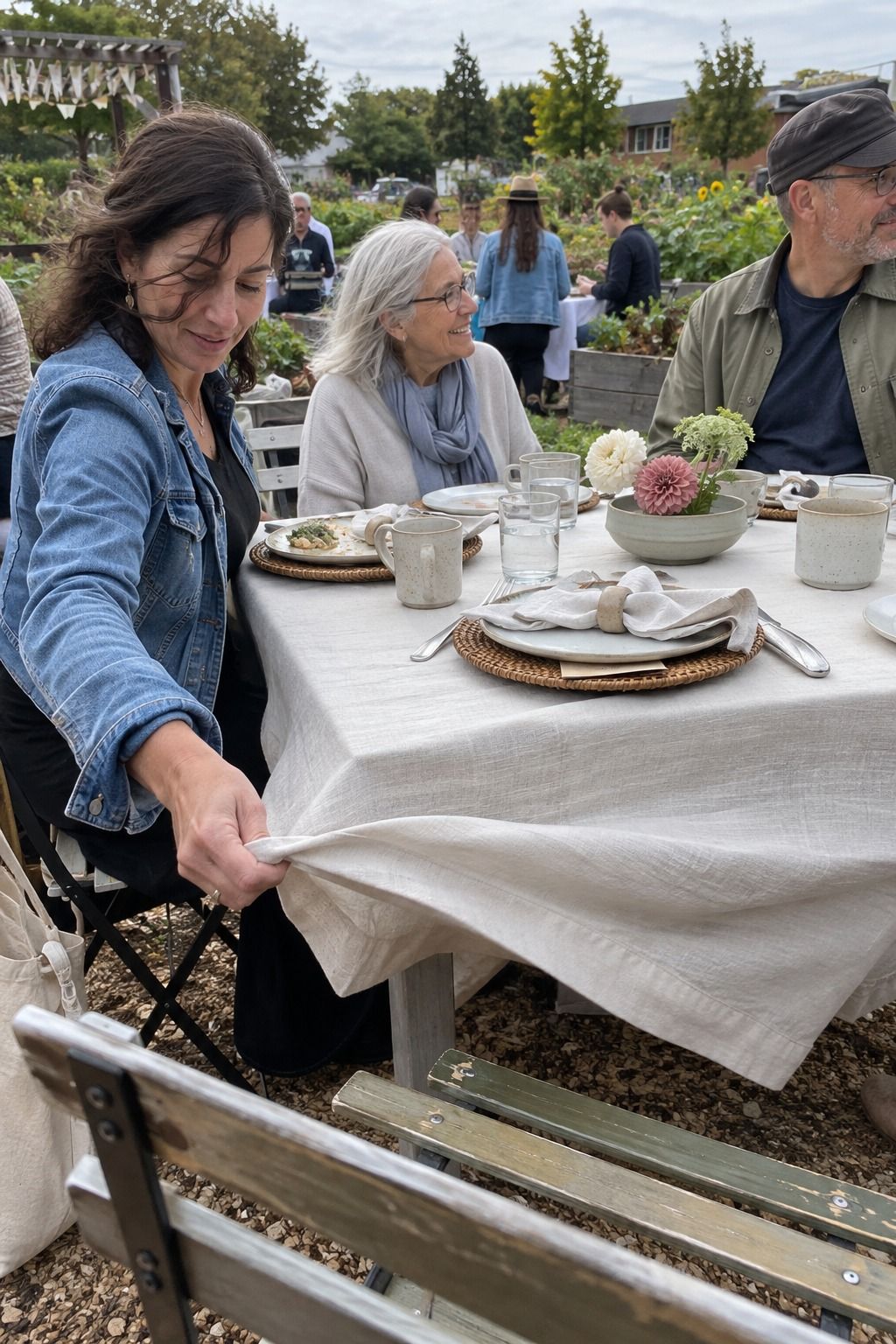
Use low flowers, herbs, linen napkins and small ceramic pieces heavy enough to survive a breeze. Light paper menus and bud vases blow over. For more ideas on garden-season styling, see my May wedding decor post.
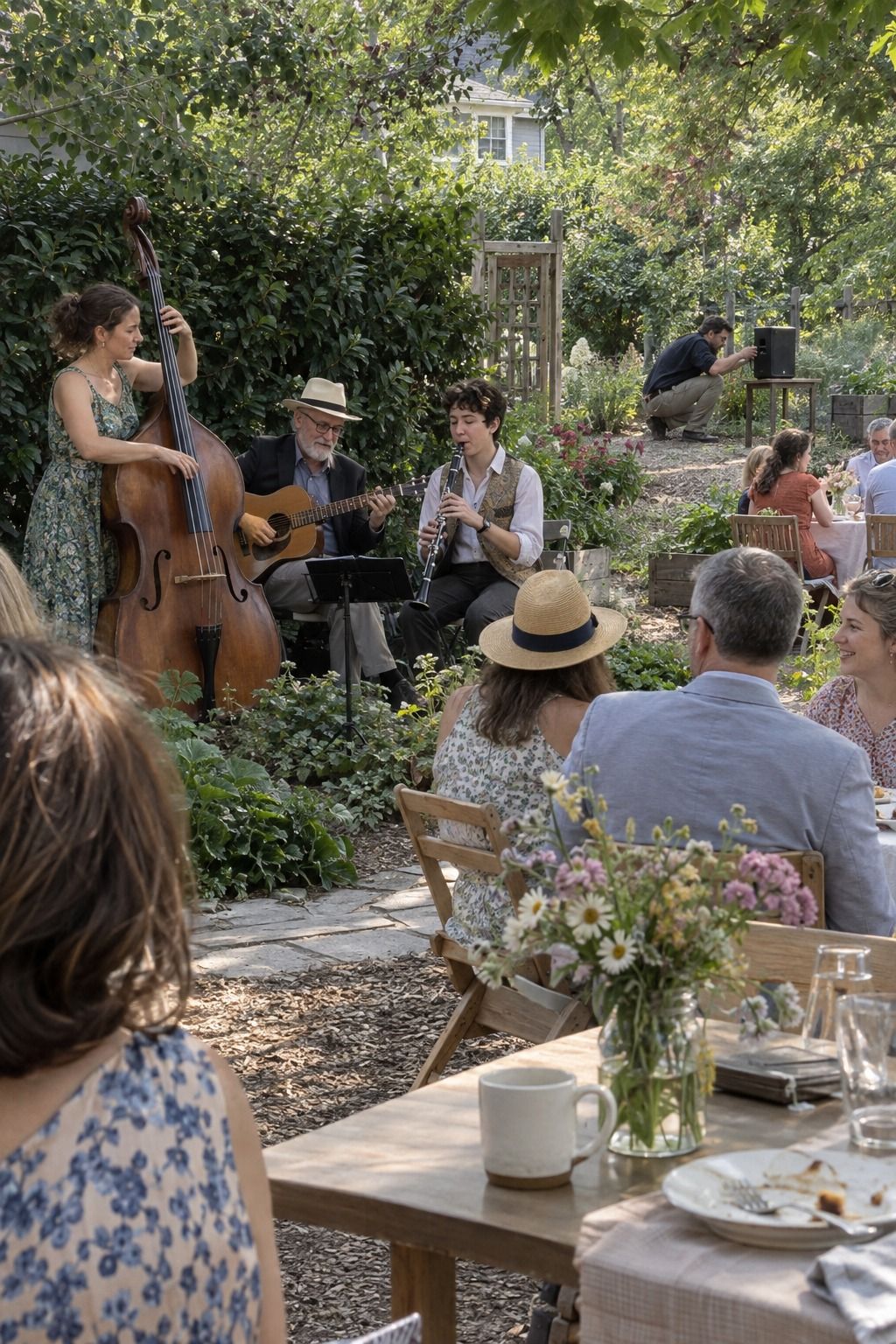
Open air eats sound, so test the music from a guest table, not the musician’s corner. A duo or a low playlist is plenty for 30 people.
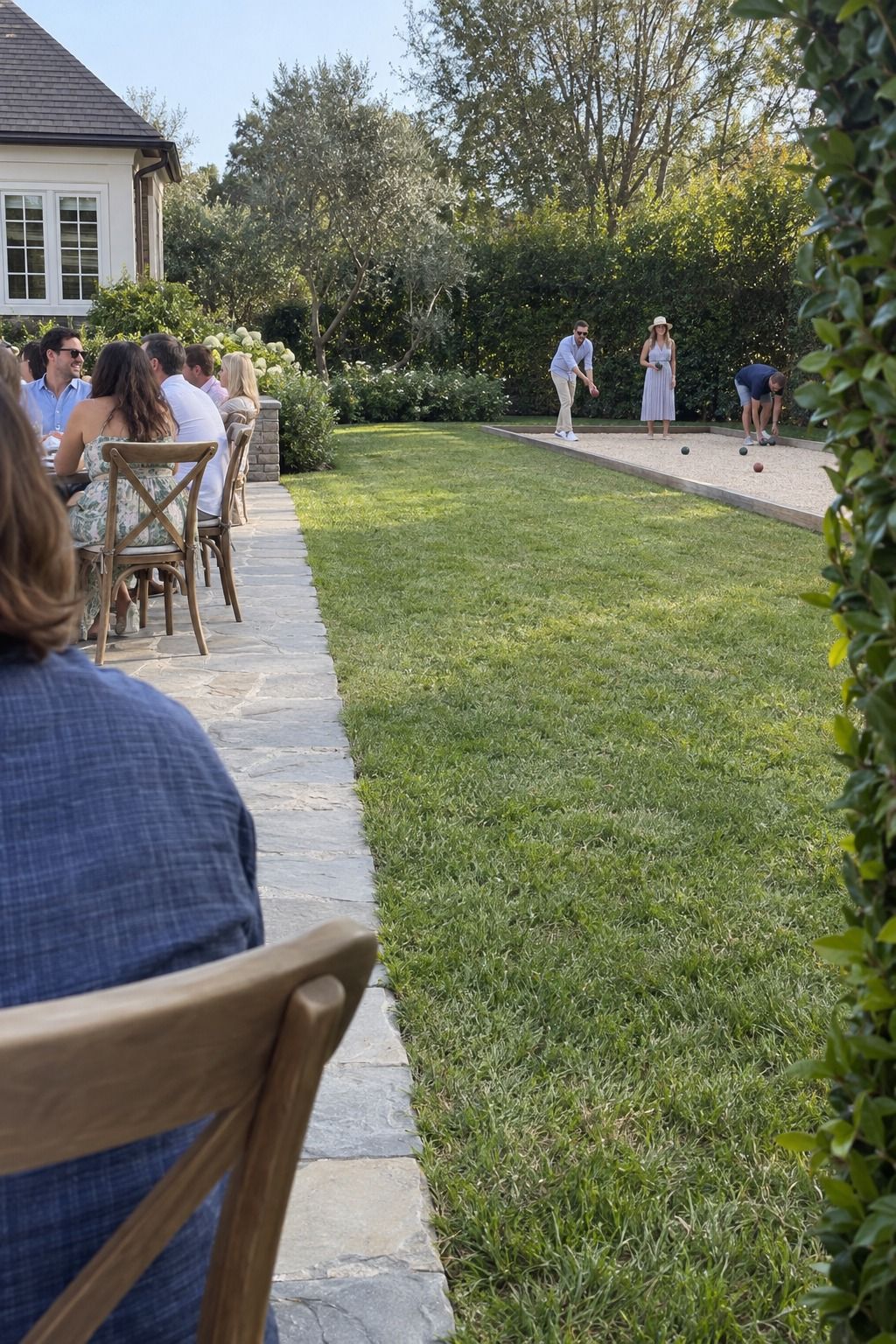
One lawn game, like bocce or croquet, is enough. Put it far enough from the tables that a stray ball doesn’t land in someone’s quiche.

If children are coming, set up a shaded corner near their parents with coloring cards or a simple craft, away from the service route.
What can a small brunch wedding skip?
Skip the dance floor, the grand entrance, the bouquet toss, the full bar and the late-night lighting. A small brunch is better with fewer rituals: vows, the meal, one round of toasts, cake, portraits and a clear goodbye.
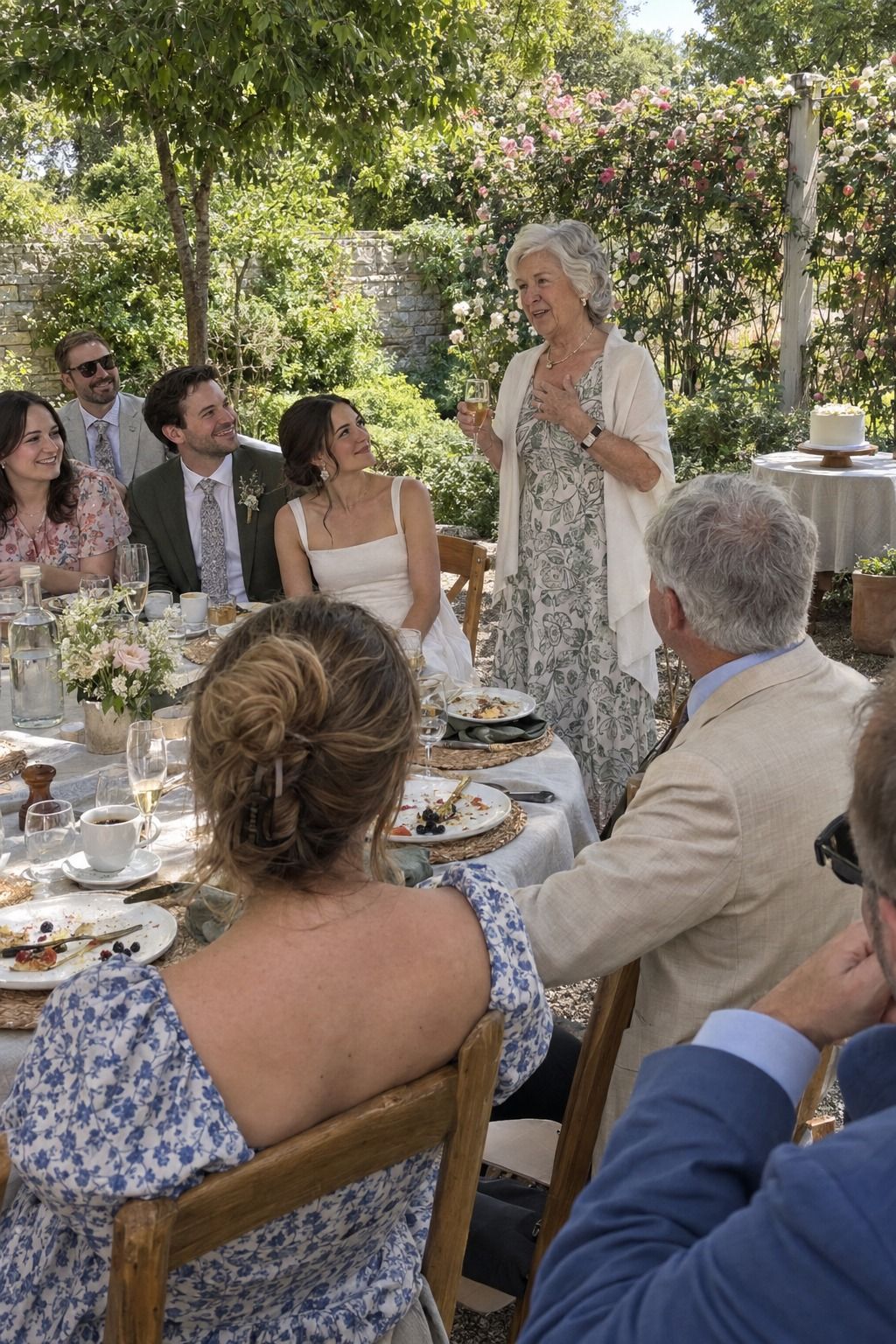
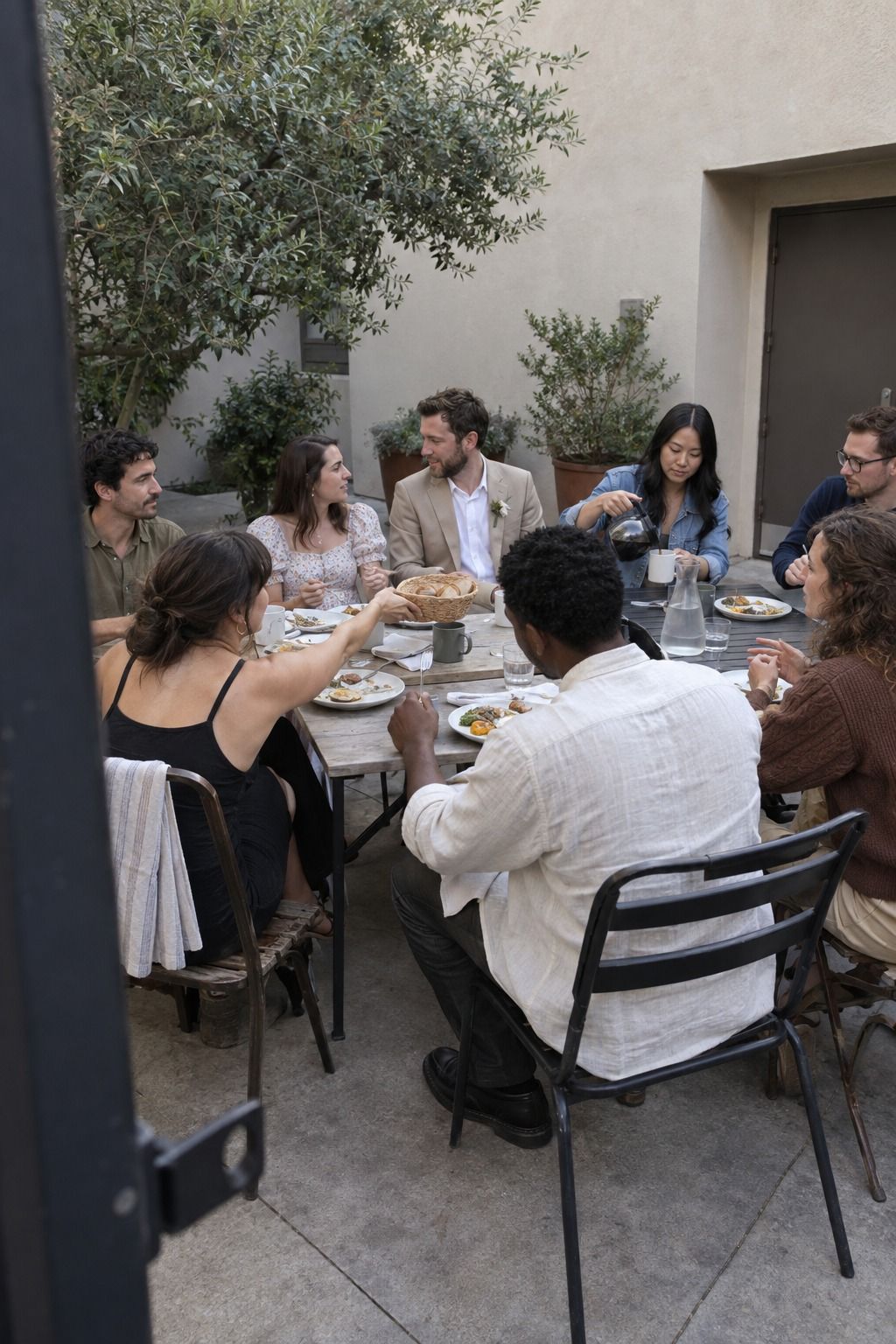
That list is short on purpose. Twelve or twenty people around tables in the sun don’t need a schedule packed with moments. If your plans are even smaller, my notes on an elopement dinner party or a small party after a courthouse wedding follow the same logic.
Weather cover, cleanup and the exit
Cover every spot where guests stand still, including the coffee line and the restroom queue. Then plan cleanup and the exit so the last half hour doesn’t look like a teardown.
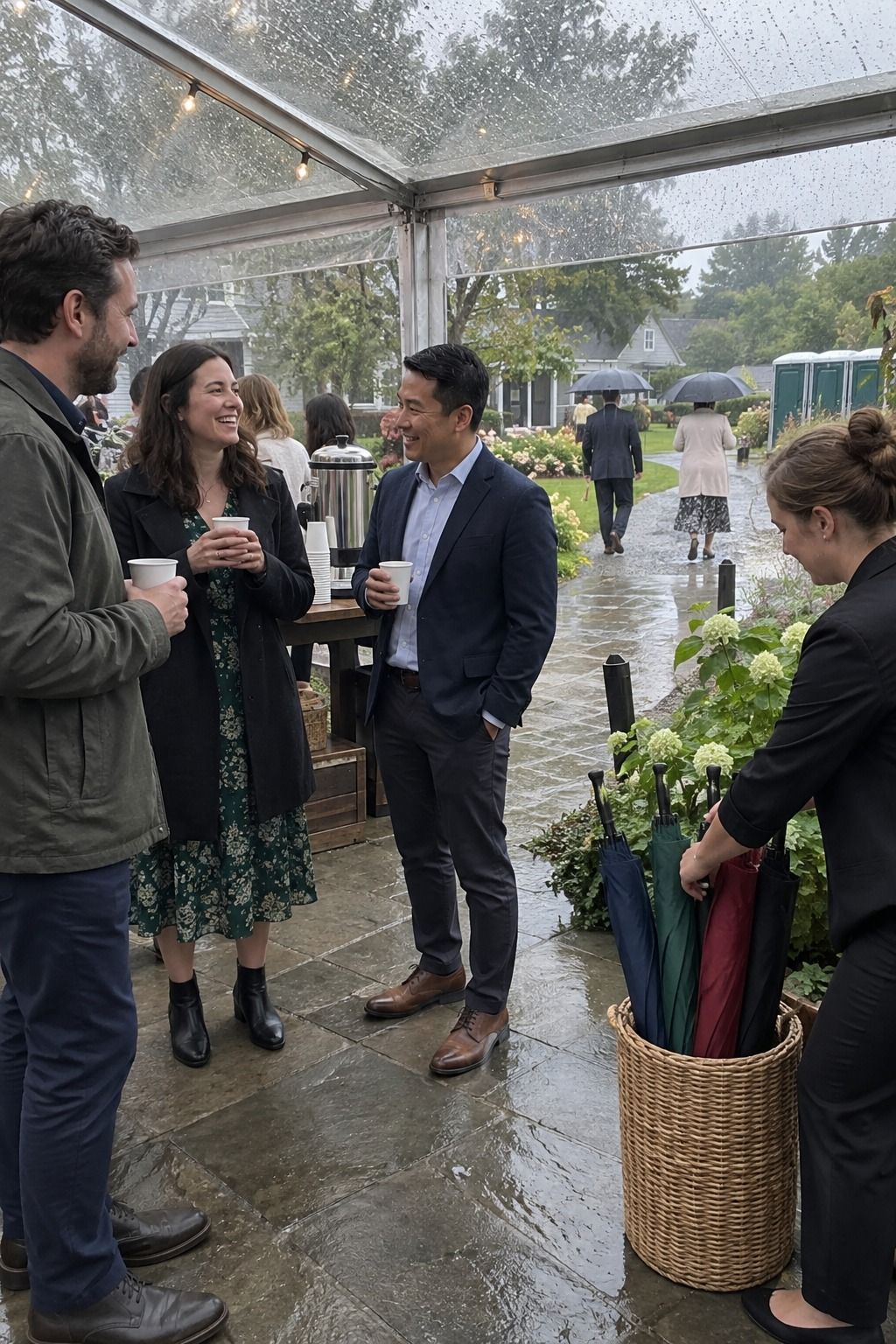
A covered ceremony backup isn’t enough if guests also queue for coffee, the bar or restrooms. Put umbrellas or a tent edge at those pause points too.
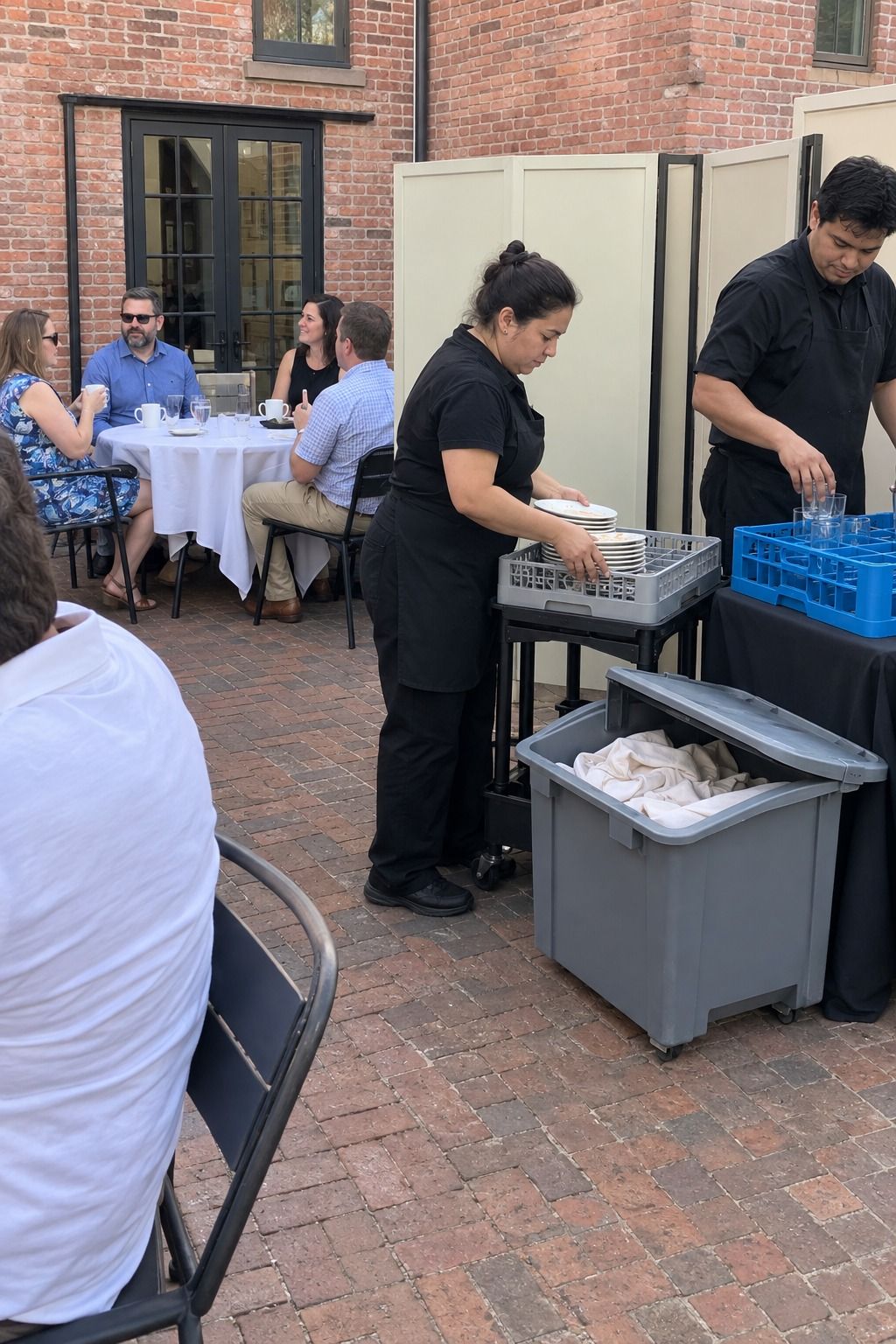
Because brunch ends in daylight, clearing is visible. Decide in advance where dirty plates, glasses and linens go, ideally along a screened side route, and ask staff not to start breaking down tables until the couple has left.

Give the exit a set time on the vendor schedule. Ribbon wands, petals or a simple walk to the car work well. When brunch has a clear end, guests leave happy with the afternoon still ahead of them.
Before you book the caterer
- Start the ceremony around 10:30 or 11 am and plan to finish by about 2 pm.
- Check dew and chair legs at setup; firm ground first, decor second.
- Put coffee at the entrance and plan about two cups per guest.
- Keep eggs and dairy in shade and refill small trays instead of one large display.
- One signature drink beats a full bar for a morning wedding.
- Skip evening rituals like a dance floor and bouquet toss.
FAQ
How do you plan a garden party wedding brunch?
Plan a garden party wedding brunch by walking the garden at the exact event hour, then solving ground, shade and food placement before decor. Once paths are firm and the buffet is in shade near the kitchen, the menu, flowers and music can stay simple.
What do you serve at a wedding brunch?
Serve dishes that hold well outdoors, such as frittata, quiche, roasted potatoes, smoked salmon with bagels, salads, pastries and fruit. Add coffee, tea, juice, water and one signature drink.
What time should a brunch wedding start?
A brunch wedding usually starts between 10:30 and 11 am. That allows two to three hours of vendor setup and gets the meal served before midday heat.
How many mimosas per guest at a wedding brunch?
Plan about two mimosas per guest over a two to three hour brunch. One 750 ml bottle of sparkling wine makes roughly 7 to 8 mimosas, so 30 guests need about 8 bottles.
Is a brunch wedding cheaper than a dinner reception?
A brunch wedding is usually cheaper than dinner because brunch menus cost less per person and you can skip a full bar. Get quotes for both from the same caterer to compare.
Is a brunch wedding good for a small guest list?
Yes, a brunch wedding suits a small guest list because the format is conversational and doesn’t need a dance floor or late-night schedule. Groups of 10 to 50 fit comfortably around a few garden tables.
Final word
Get the ground, the shade and the coffee right, and a garden party wedding brunch mostly runs itself. For more on structuring the reception portion, Paperlust’s brunch reception guide is a useful second read, and my spring garden party wedding post has seasonal flower and color ideas to go with it.
Last update on 2026-10-03 / Affiliate links / Images from Amazon Product Advertising API