

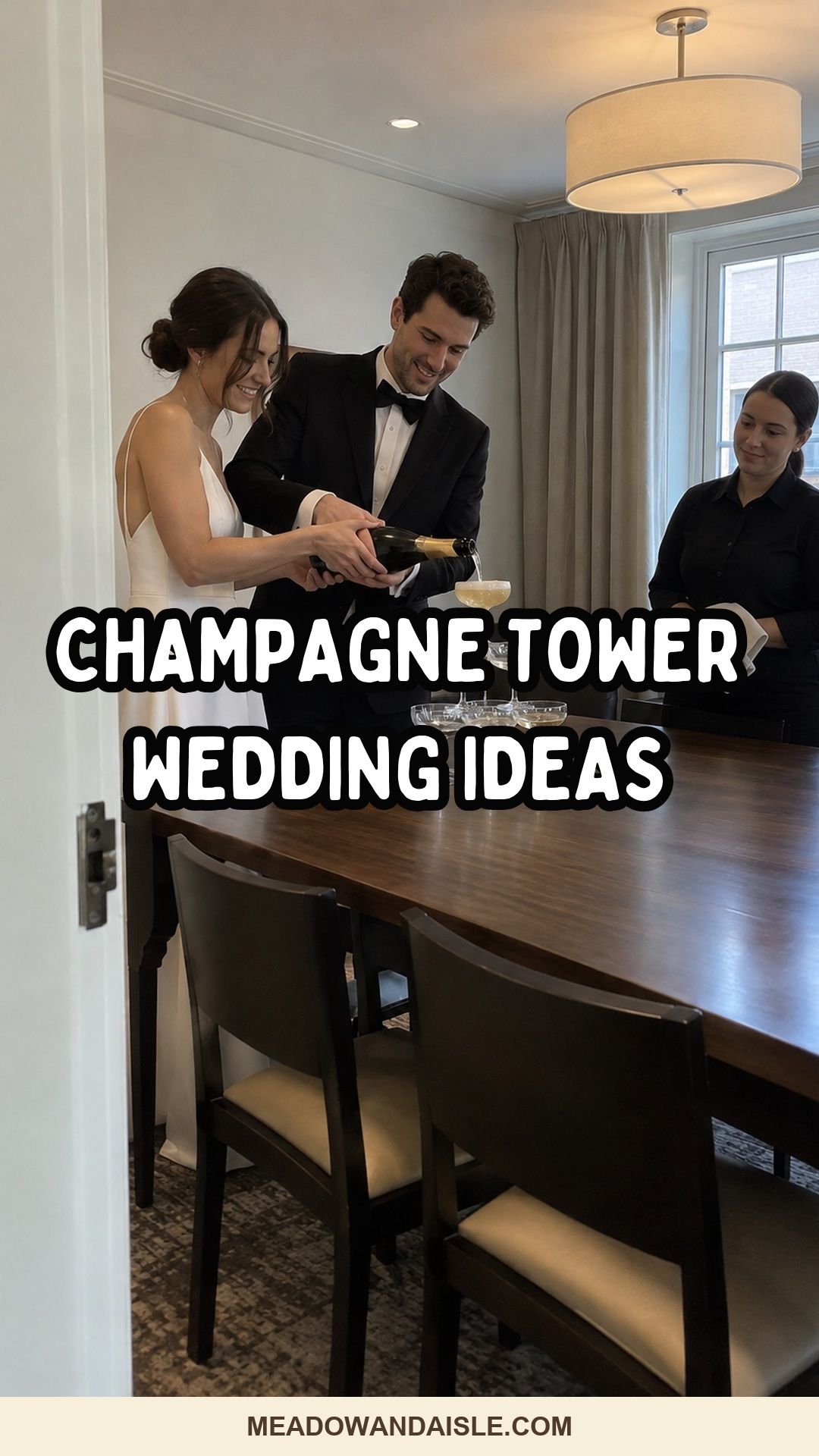
A champagne tower needs four things to work: matching coupe glasses (never flutes), a perfectly level table, one staff member in charge, and a planned moment in the timeline. A three-tier square tower uses 14 coupes and a five-tier tower uses 55, and you can expect roughly five glasses per 750 ml bottle.
A champagne tower wedding looks like pure glamour in photos. In the room, it’s a small engineering project with a bottle on top. I spent years working banquets, and the towers that went wrong almost never failed because of the glass. They failed because nobody owned the table, the floor wasn’t level, or the couple was called over in the middle of speeches.
The good news is that every one of those problems is easy to fix ahead of time. Below is how I’d plan one for a small wedding, from the glasses you rent to the minute you pour. If you’re styling the rest of the room too, these winter wedding centerpieces and a cozy winter reception plan pair well with a candlelit tower.
What I’d rent or buy for the tower
These are the pieces that make setup and cleanup less stressful. Coupes and a sturdy bucket matter most; the towels and liner are the quiet heroes nobody photographs.
Which glasses work best for a champagne tower?
Use low, wide coupes from a single matching set. Flutes can’t stack because their narrow tops give the glass above almost nothing to rest on, and the overflow won’t travel evenly.
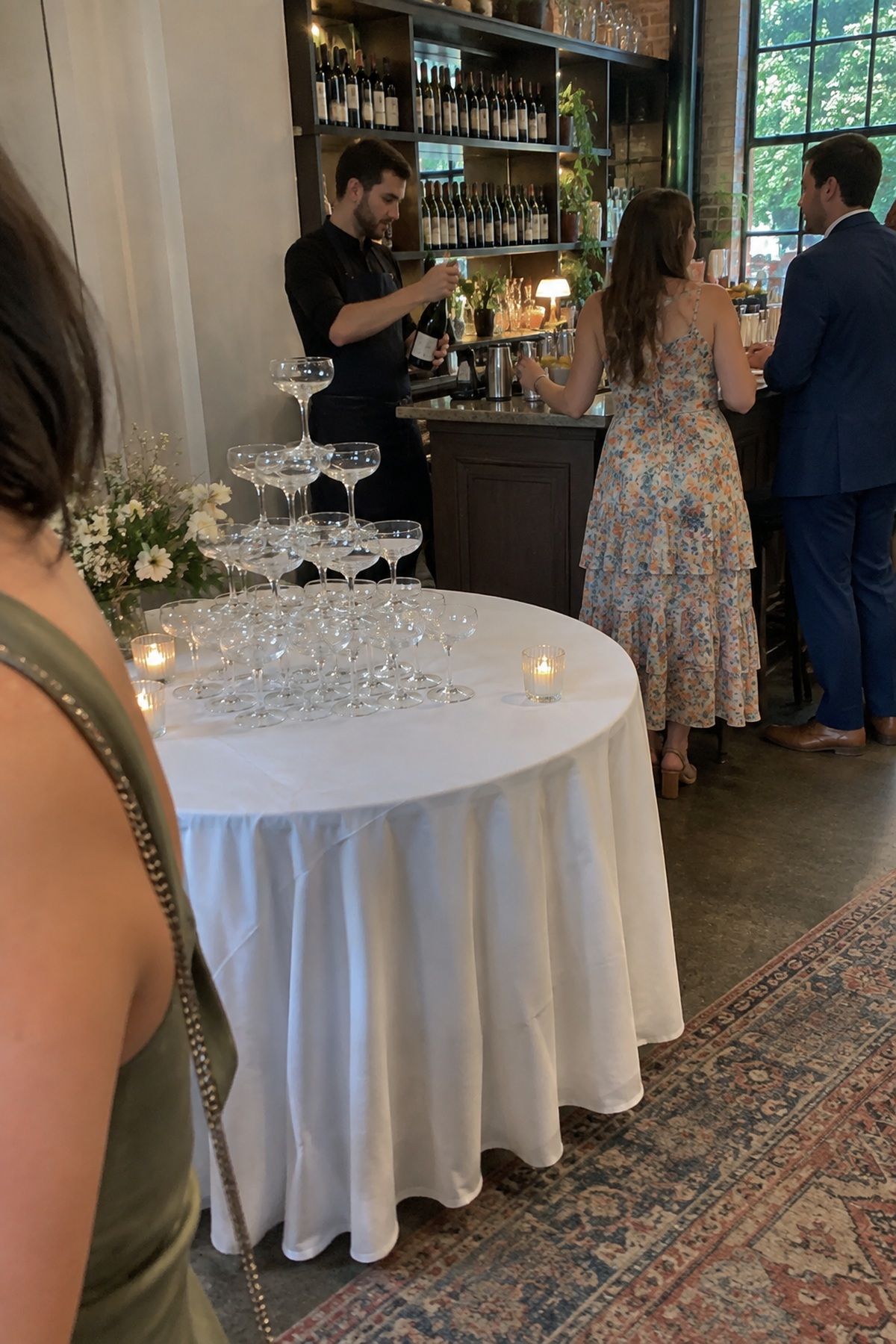
Ask your rental company for one collection, not “whatever coupes are on the shelf.” A rim that’s 2 mm wider than its neighbor is enough to tilt a row. Matching glasses also photograph better, because every rim catches the light at the same height.
Gold rims, etching or vintage-style shapes can add personality, as long as the detail repeats on every glass. Skip handmade glassware with uneven rims unless the rental team has stacked it before.

Keep the glass itself clear. Tinted coupes look striking on a dining table, but in a tower they hide the cascade and make the whole stack look heavy. Bring color in through the linen, flowers or ribbon instead.
How many glasses and bottles do you need?
A square-base tower follows a simple pattern: each tier is the next square number. Here’s the math most caterers work from, assuming a coupe holds about 5 oz and a 750 ml bottle fills around five glasses.
| Tiers | Coupes in the tower | Bottles to fill every glass |
|---|---|---|
| 3 | 14 | 3 |
| 4 | 30 | 6 |
| 5 | 55 | 11 |
| 6 | 91 | 19 |
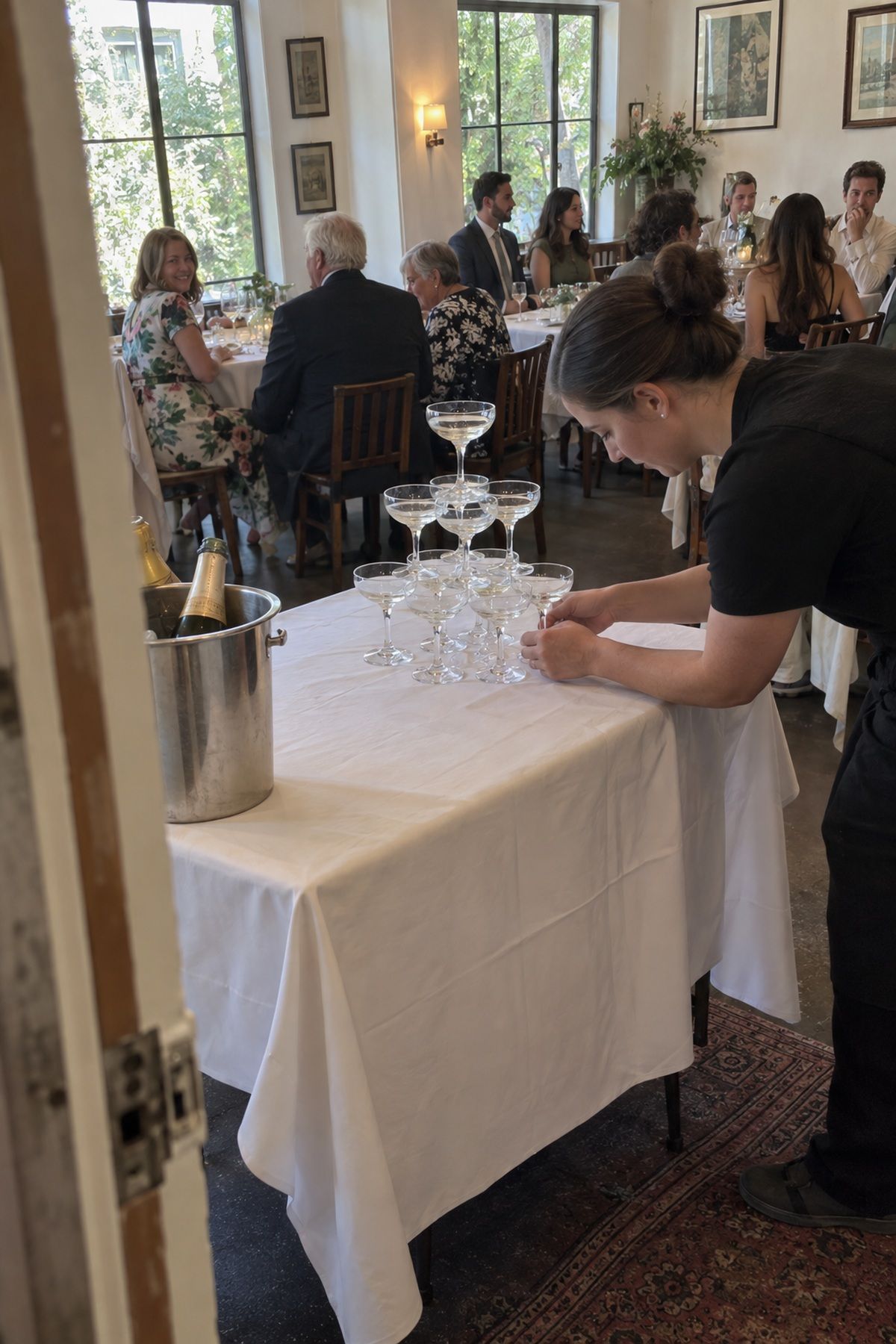
For a small wedding of 20 to 40 guests, three or four tiers is plenty. A tall tower in a restaurant private room tends to swallow the table and block sightlines. Bigger rooms can carry five or six tiers, especially if guests will gather around it before a toast.
You don’t have to fill every glass from the top. Most caterers let the couple pour the ceremonial cascade for photos, then top up the rest from prepared bottles so guests get their drinks quickly. Ask for a written bottle count that splits “visible pour” from “service” bottles.
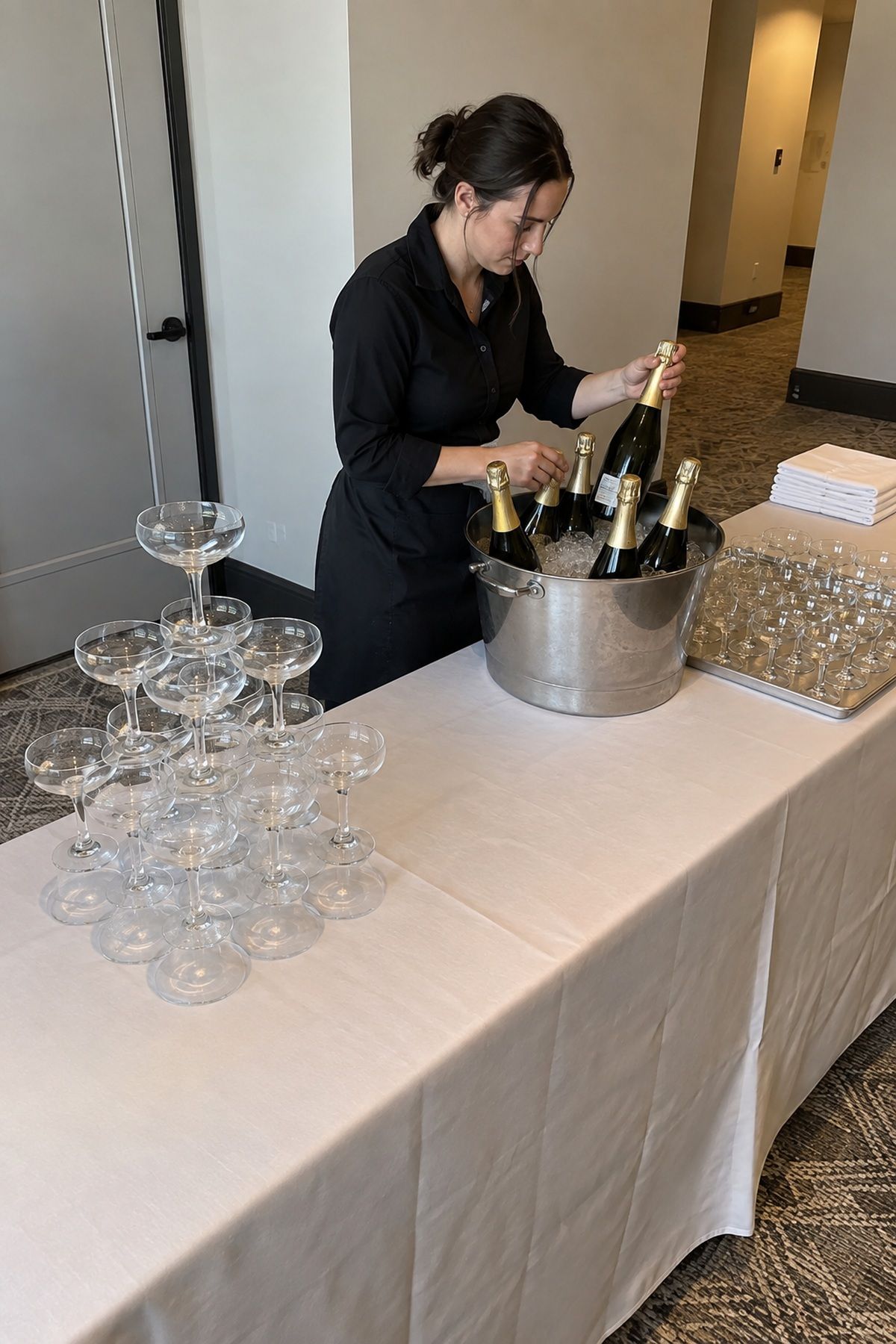
Prosecco, cava and sparkling wine all work. So do nonalcoholic sparkling drinks. The tower depends on the glass shape and the pour, not the label on the bottle.
Where should the champagne tower table go?
Put it on a sturdy, level table near the bar, with a few feet of clear space on every side and away from doorways and server routes.

The table matters as much as the glasses. It needs room for the full base tier plus backup towels, a bottle tray and a spot to set glasses down. Narrow console tables look elegant and leave you no margin. Have the venue check the surface with a level before anyone stacks a single coupe.
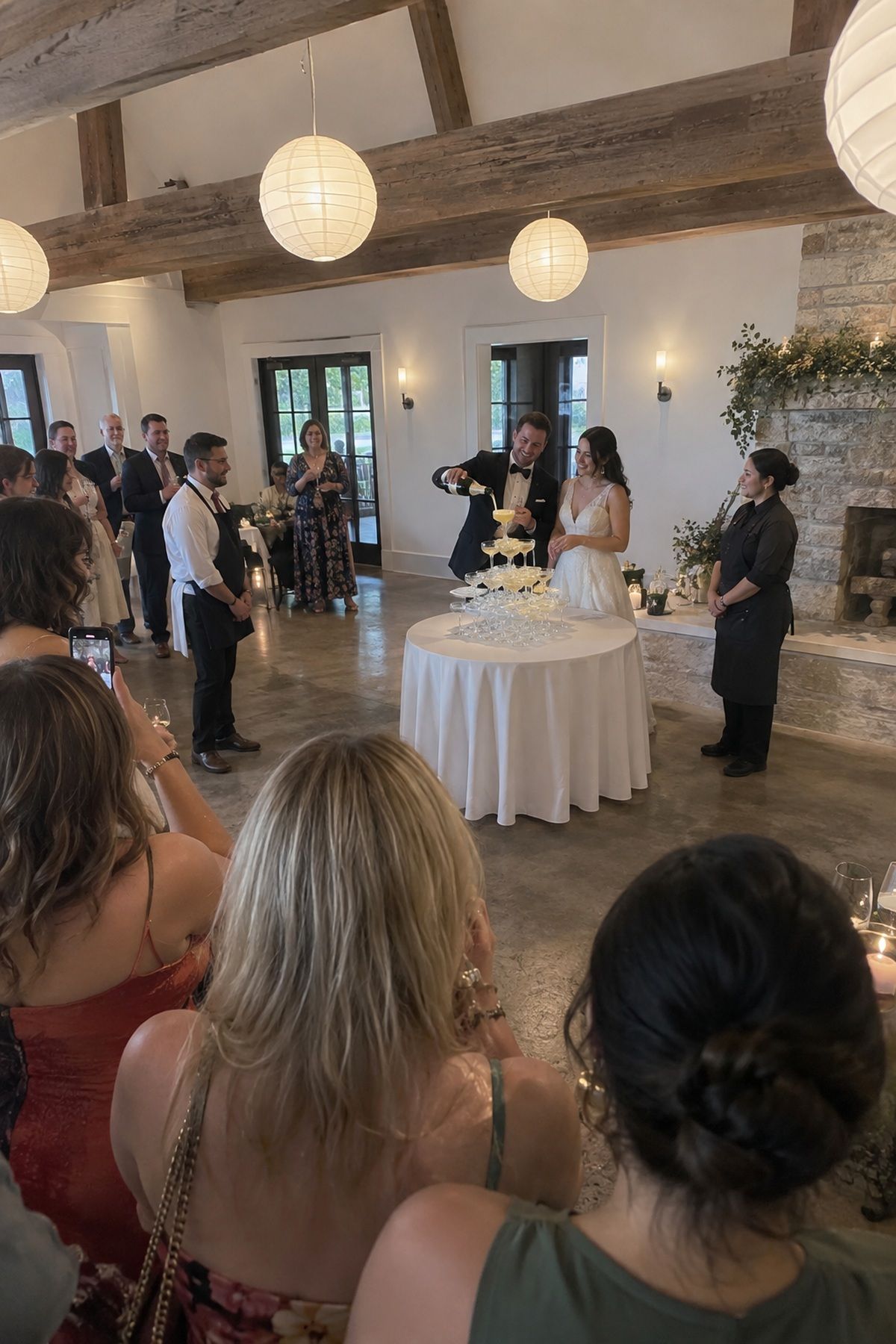
Guests should be able to see the pour without elbows, handbags or chair backs near the glass. A quiet corner beside the bar works well if the sightline is open. The same spacing rule applies to a candy wall or any self-serve station: give it energy, but not the busiest lane in the room.
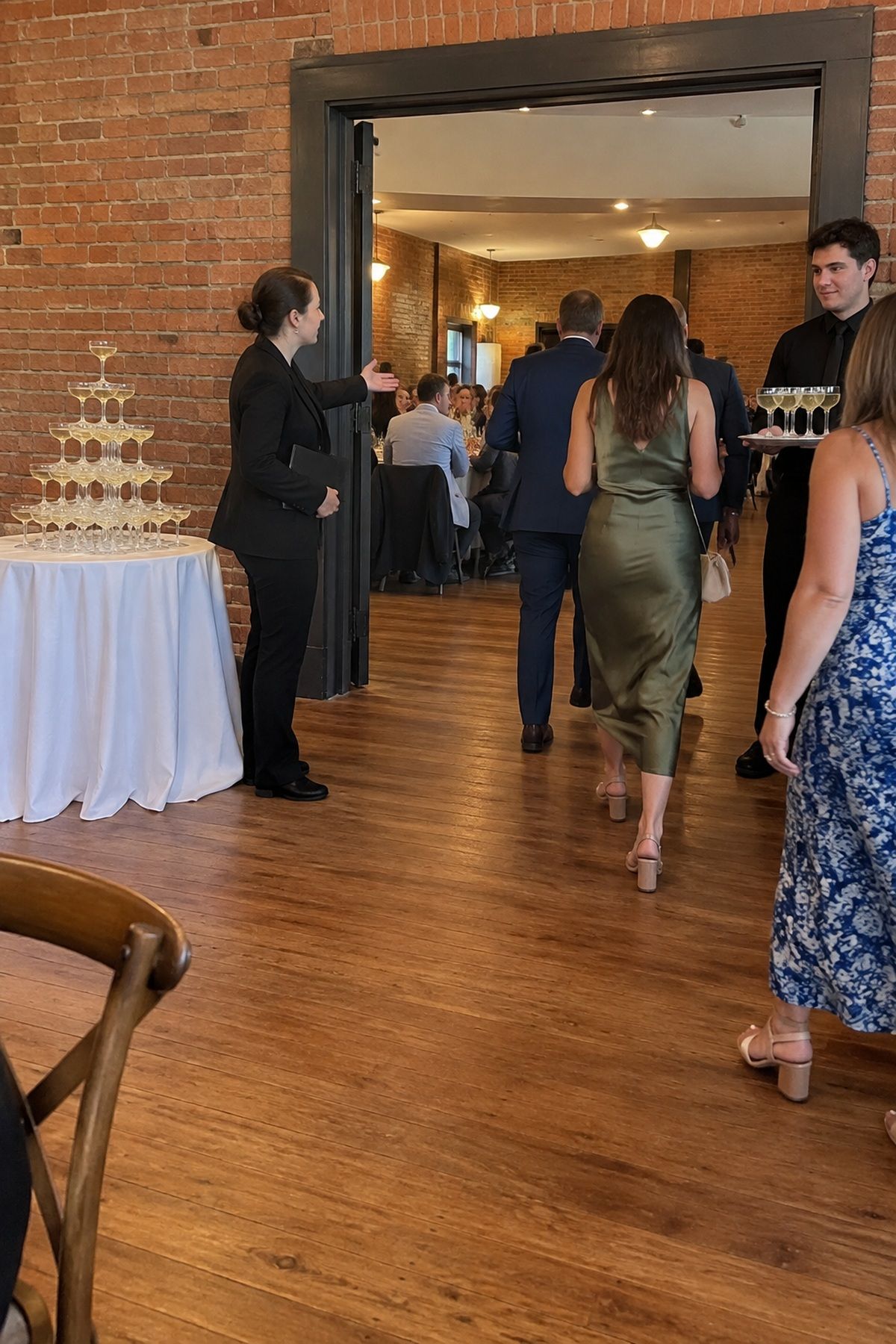
Think about where people go after the toast. The smoothest version lets guests gather, watch, raise a glass and drift toward dinner or the dance floor. A tray station nearby keeps a line from forming around fragile glassware.
How do you light and style the tower for photos?
Give it its own light and a plain background. Glass only sparkles when light passes through it, so a dark corner makes the cascade disappear in pictures.
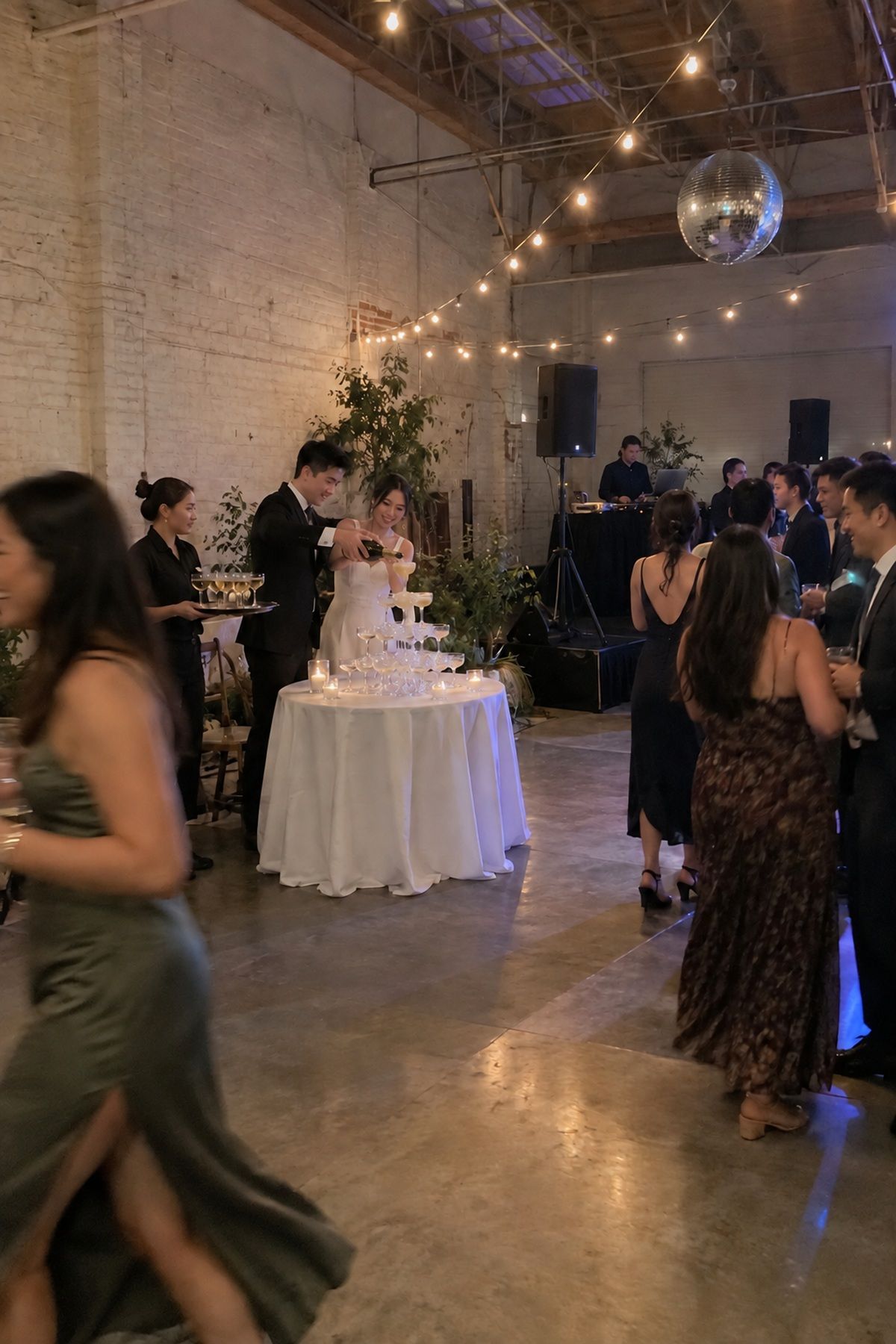
A soft spotlight, candles nearby or reflected bar lighting all work. Ask your photographer to look at the table before guests arrive. Too dark and the pour vanishes; too harsh and the glass throws glare.
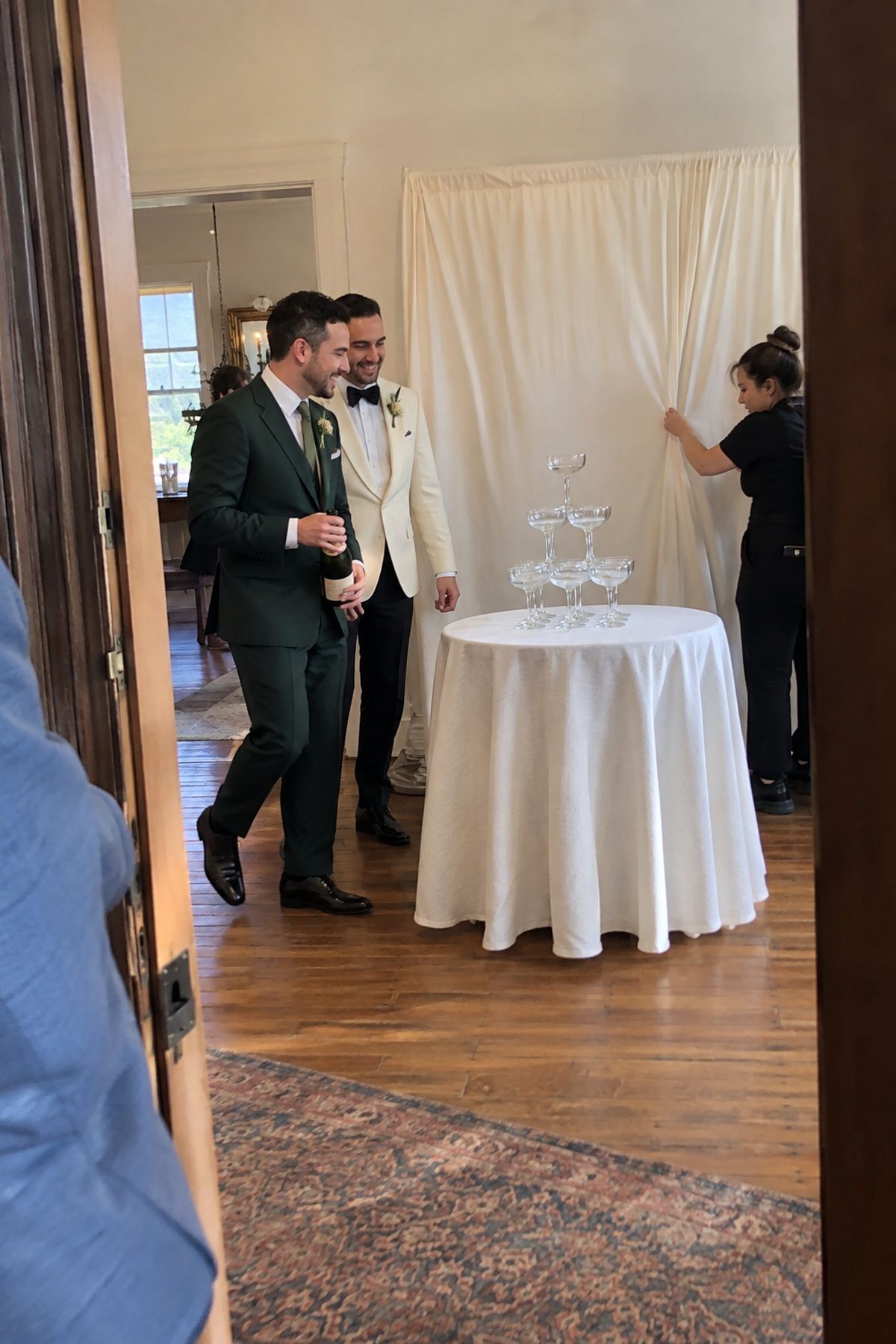
Drapery, a clean wall, greenery or a bar front all make good backdrops. Big floral installations belong beside or behind the tower, never pressed against the base. If the venue has busy wallpaper or shelving, moving the table a few feet often fixes the frame.
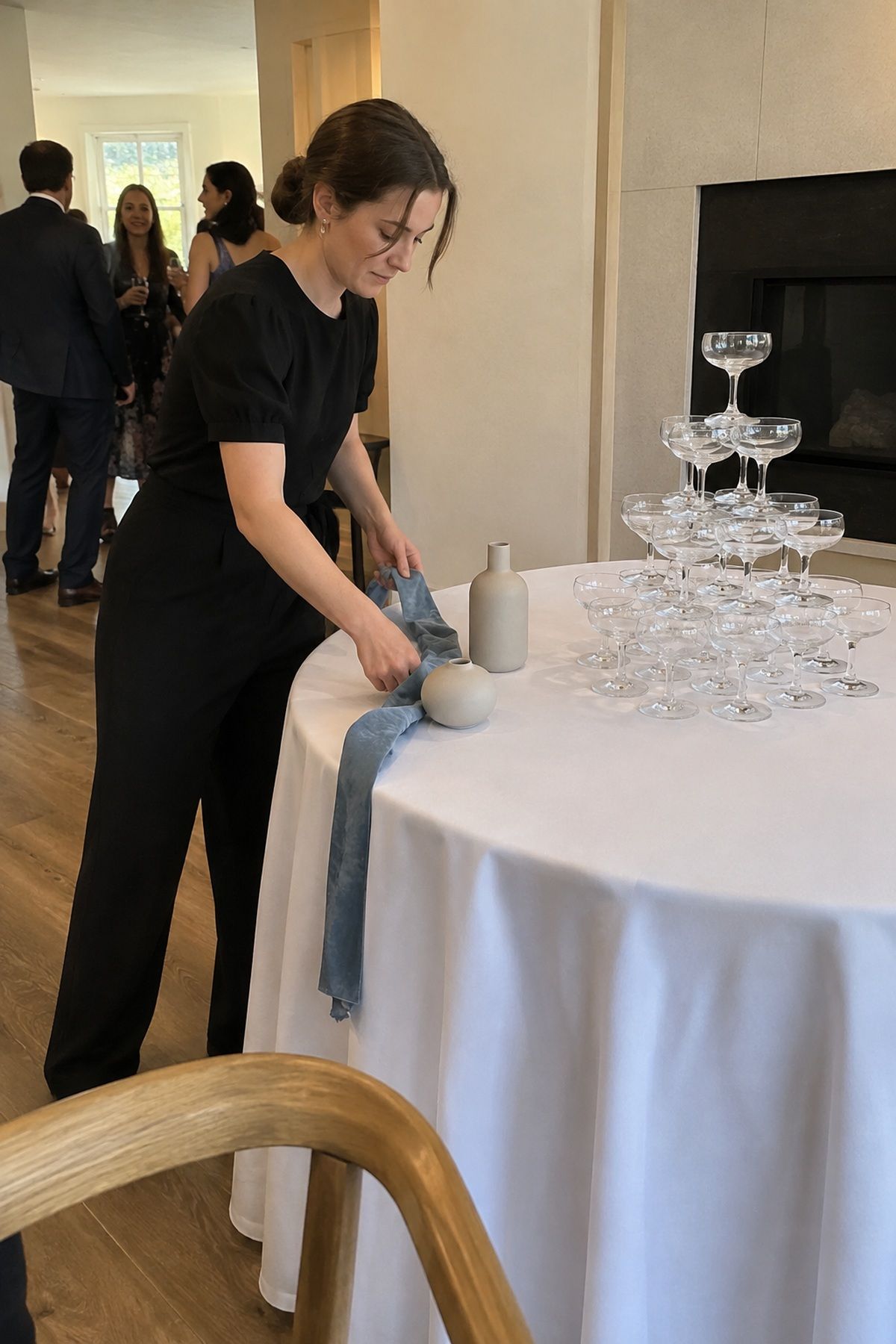
Style the base with restraint: a few candles, low flowers, citrus or ribbon at most. Anything close to the bottom tier makes the staff nervous and breaks the circular shape of the stack. Echo the rest of the reception rather than adding a new theme.
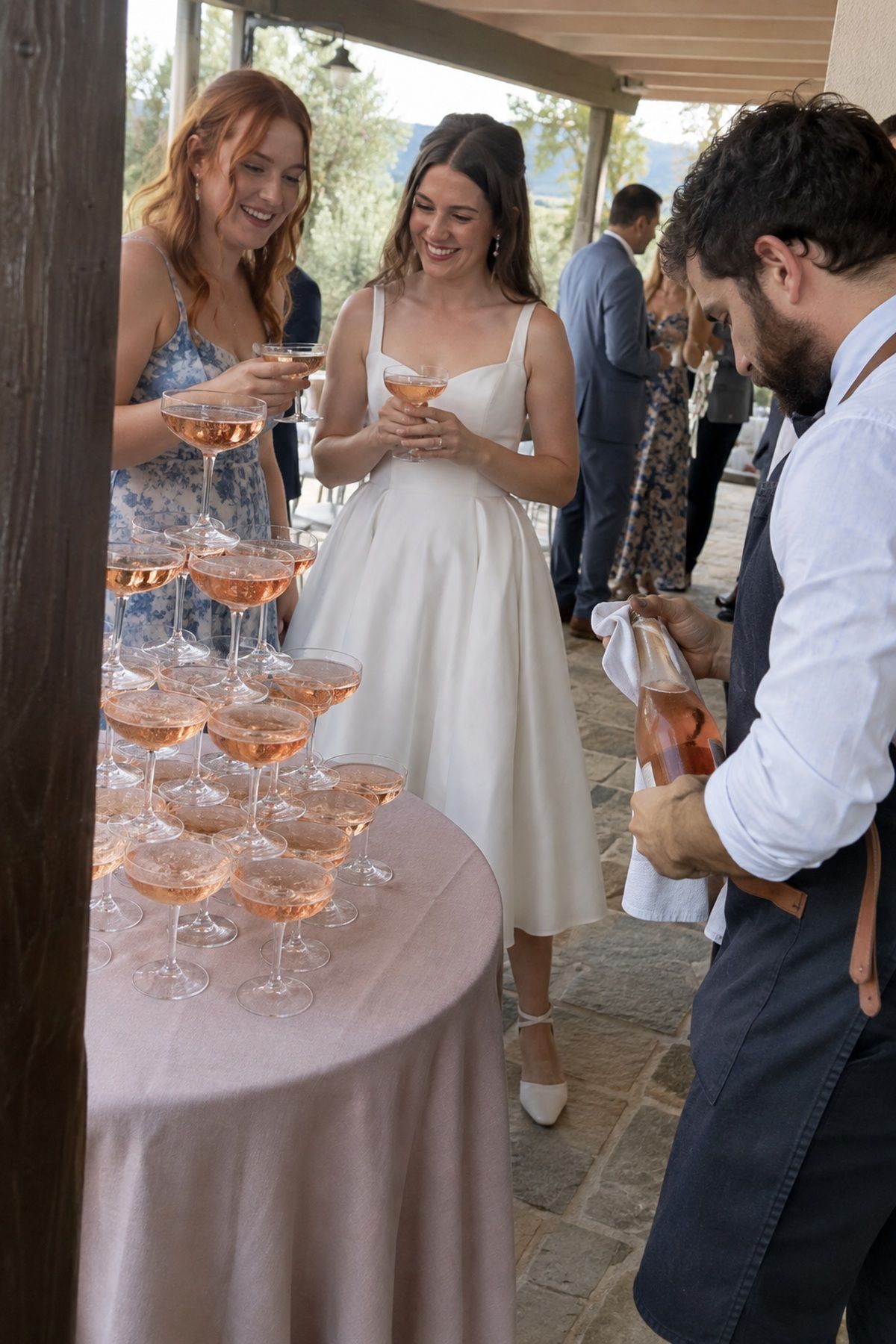
Season can shape the mood. Velvet ribbon and dark linen suit winter, airy flowers and clear glass suit spring, and brass or deep fruit tones suit fall. Keep candles protected and fruit away from the glass in every season.
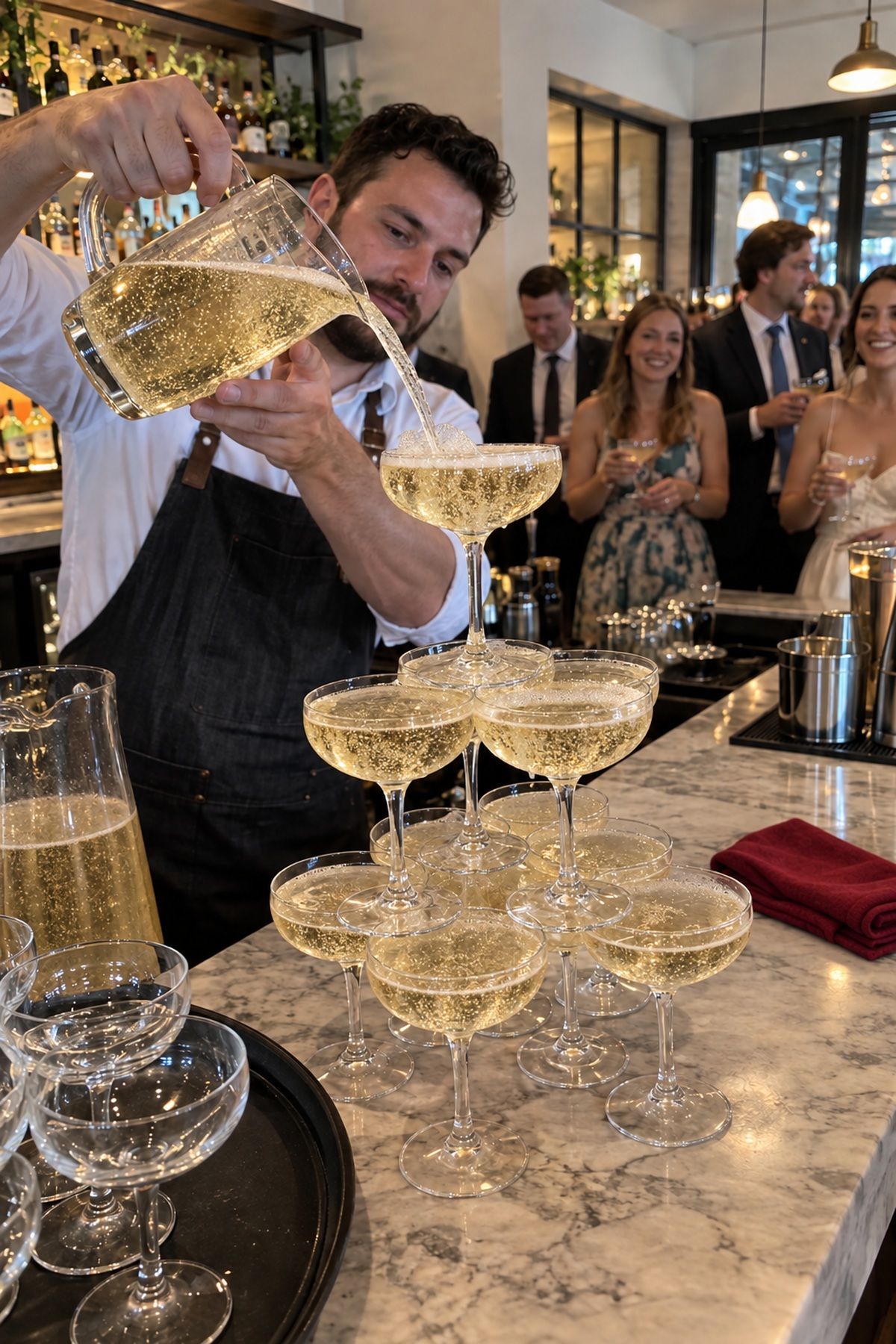
Who should be in charge of the champagne tower?
One person, named in advance. Usually that’s the catering captain or bar lead, and they own setup, timing, spills and the reset afterward.
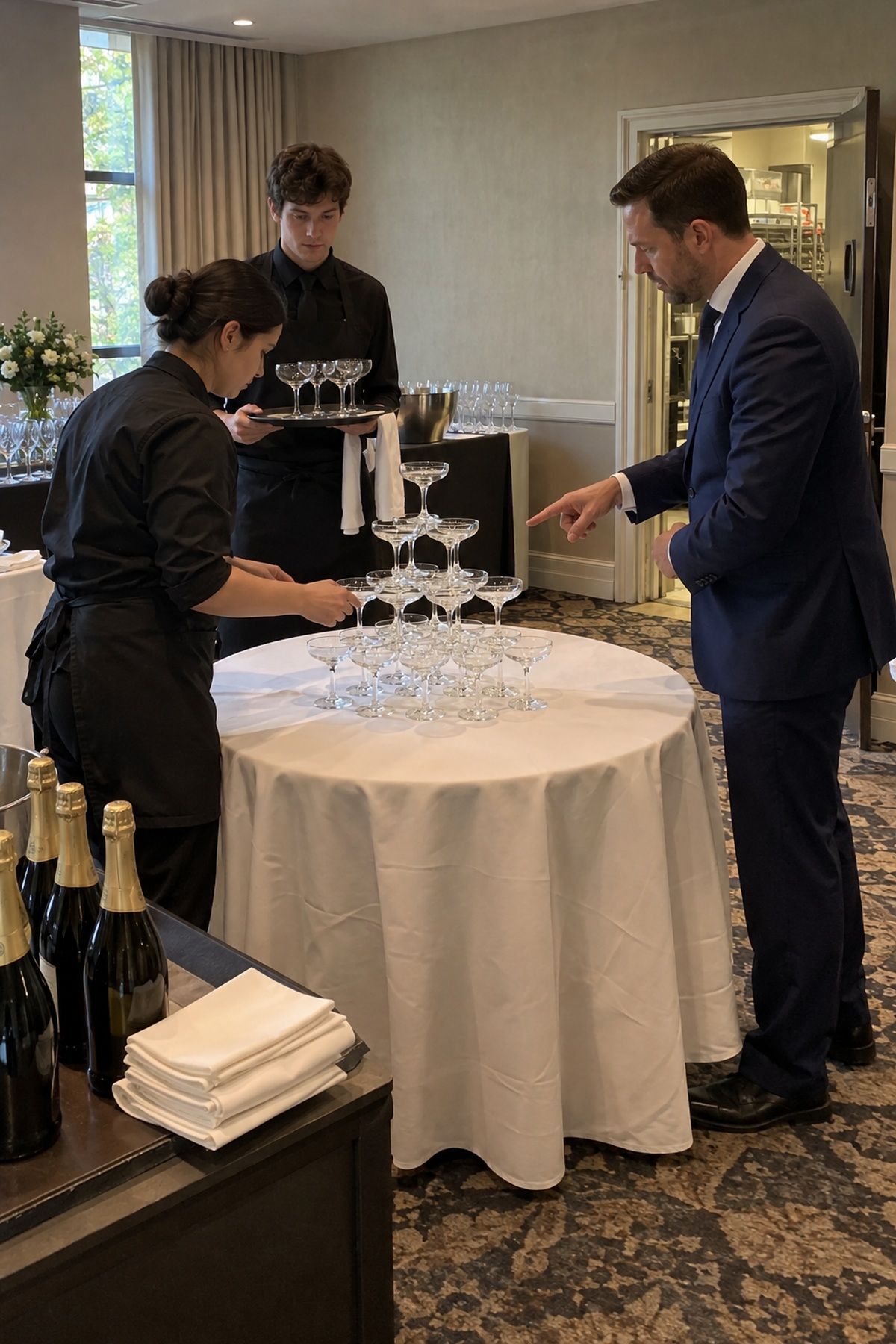
Shared ownership sounds flexible until the couple walks over and three people look at each other. The lead should know which bottle starts the pour, where backups are chilling, who hands the bottle to the couple and who steps in if a glass shifts.

Bring the bar team into the design conversation too. Their trays, uniforms and bottle presentation all end up in the photos. Ask how they prefer to chill and stage bottles, because their answer might change where the table goes.
How do you pour a champagne tower without spilling?
Pour slowly into the top glass with the bottle held a few inches above the rim, and let gravity do the rest. A two-minute rehearsal before guests arrive prevents most wobbles.
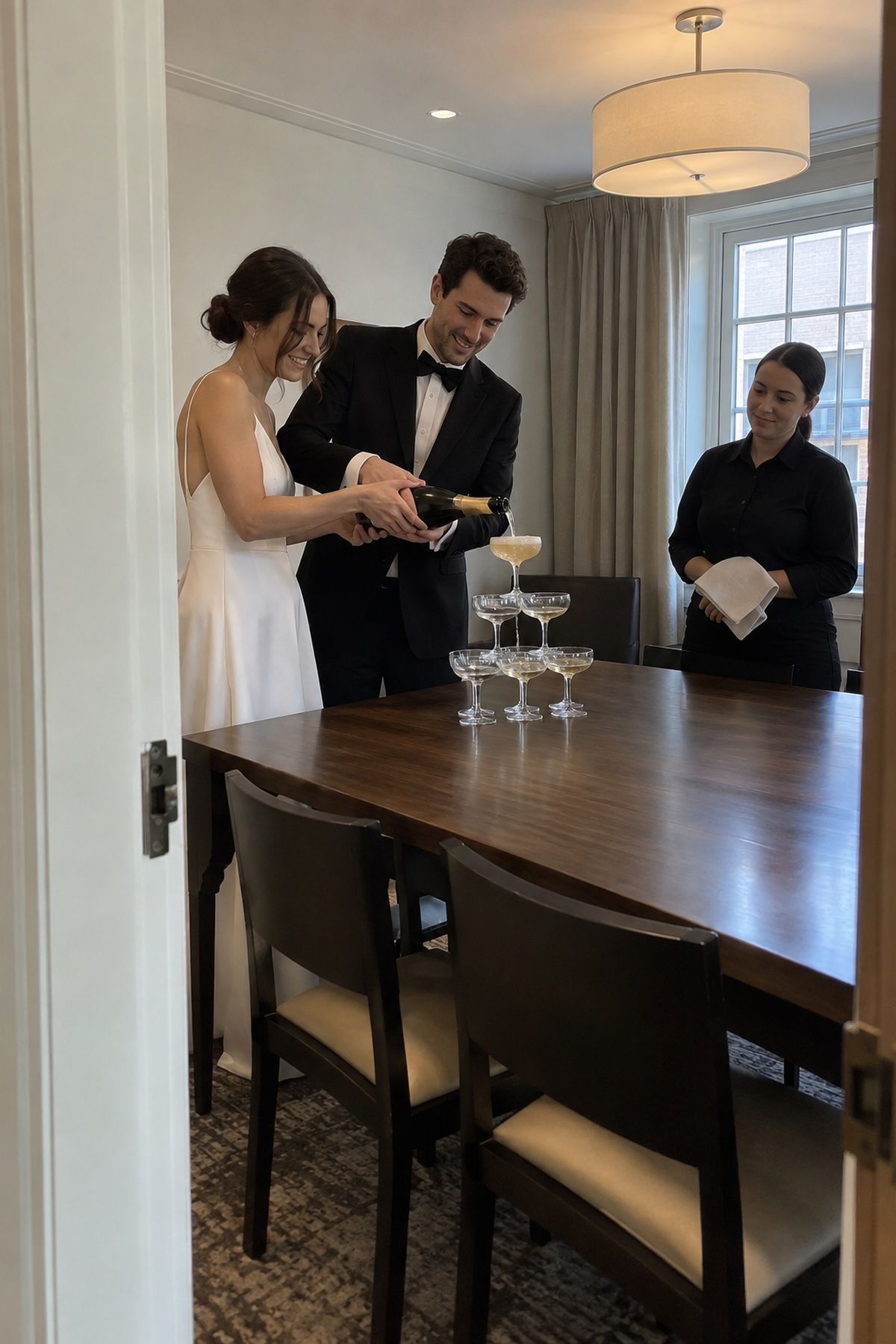
You don’t need the finished tower to practice. Just know the angle, the speed and where the stream should land. Chilled bottles get slippery, so have someone dry the bottle right before you pour. Pouring together, one person supporting the base and one guiding the neck, looks natural and keeps the stream steady.
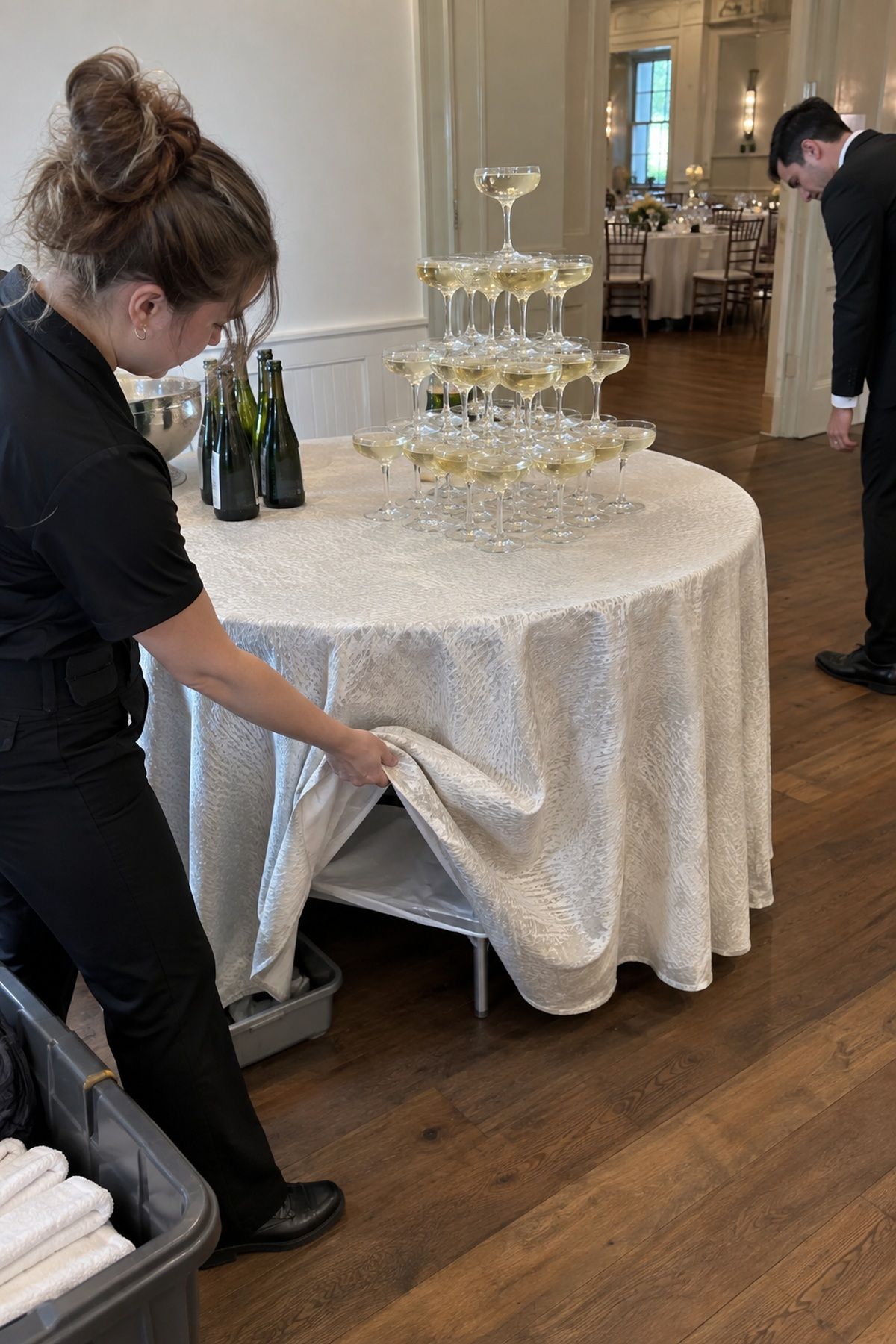
Build spill control into the setup: a waterproof liner under the linen, absorbent towels behind the table and a tray for bottle drips. Choose a linen heavy enough to stay put and textured enough to hide small drops. Thin fabric clings and shows every splash.
When should you do the champagne tower during the reception?
Pick a moment when guests are already gathered and the couple isn’t being pulled in five directions.
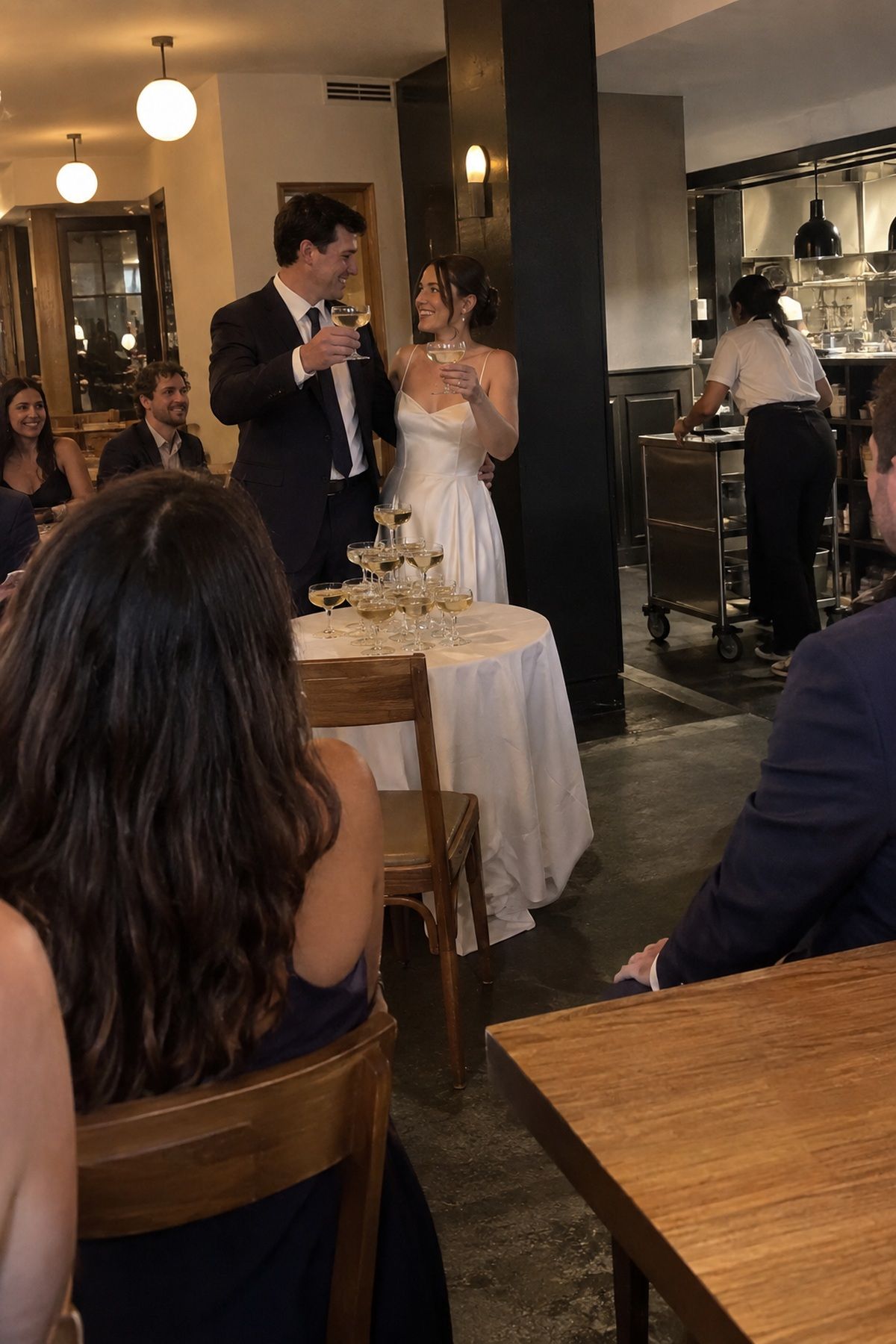
Cocktail hour feels relaxed and social. Right after the grand entrance feels big. After dinner or as the dance floor opens, it becomes a reset that kicks off the party. Whatever you choose, tell the photographer the exact time.
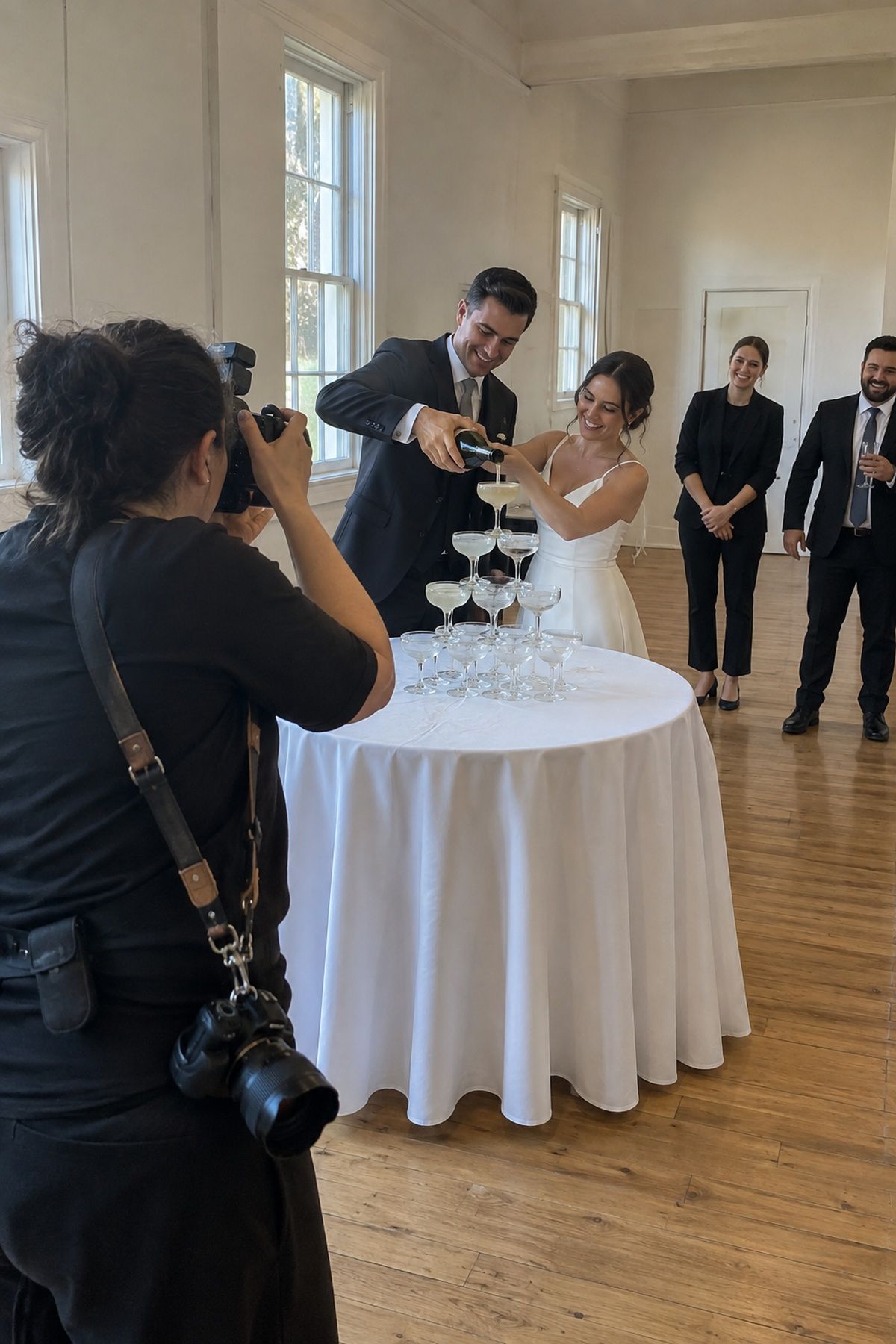
A simple shot list helps: the finished tower before guests arrive, the couple walking up, the bottle tilt, the cascade, guest reactions and one wide shot of the room. If the pour happens in low light, the photographer may want to test exposure early.

Decide early whether guests will drink from the tower. If yes, staff need a top-down plan for lifting glasses off. If it’s mainly for the photo, have a tray of poured glasses waiting nearby so nobody stands around wondering what happens next.
Can you have a champagne tower outdoors?
Yes, if the table sits on a level, sheltered surface and someone checks the stack right before the pour. Wind, heat and soft ground are the three things that topple outdoor towers.
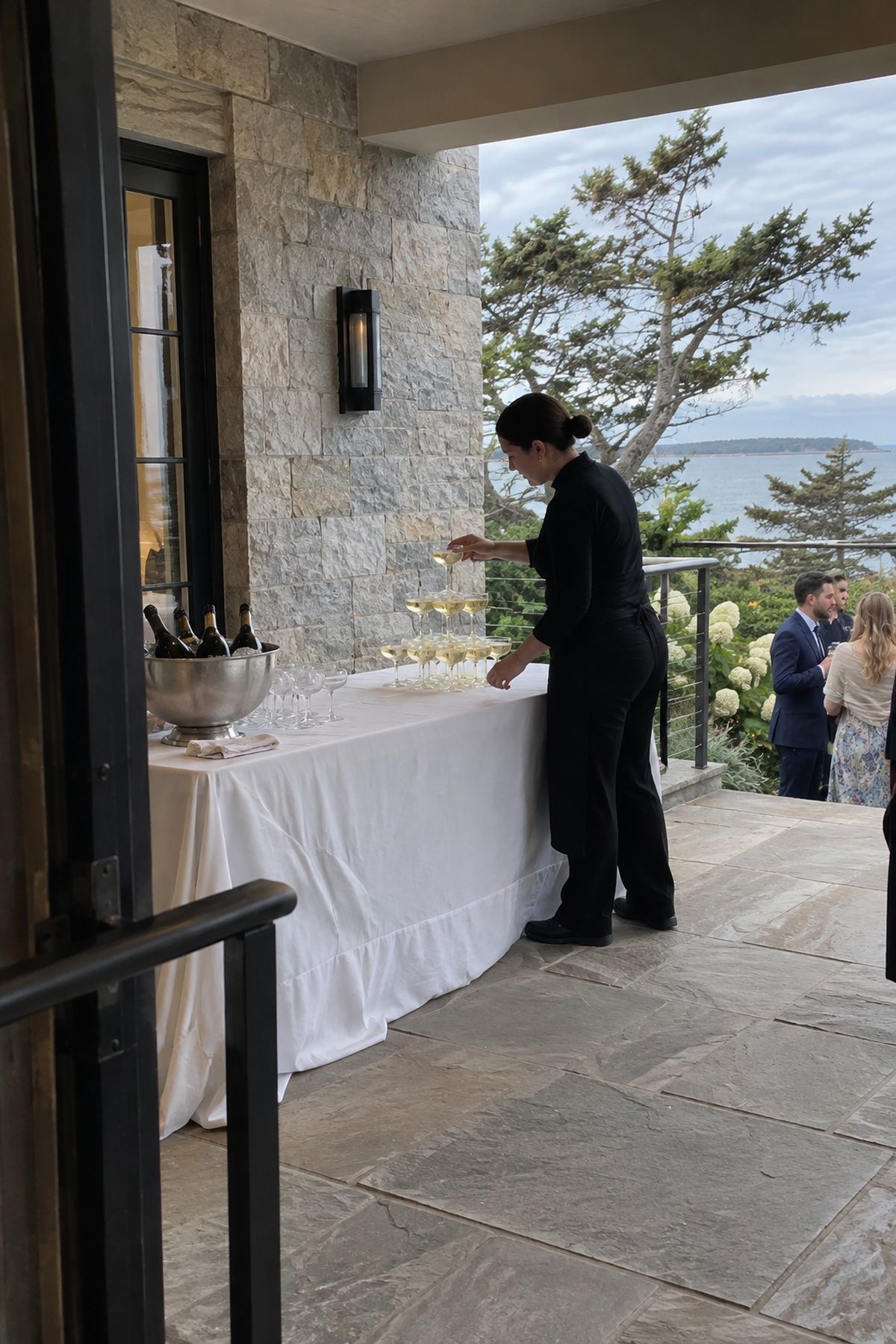
Grass, gravel and decking all shift slightly once people start walking nearby. Keep bottles shaded until the last minute, since heat makes them sweat and hands slip. If it’s a summer outdoor wedding, set the tower under the tent or a covered patio rather than in open sun.
Planning the reset and keeping it personal
The end of the moment needs a plan too. Staff should know when the tower gets cleared, where used glasses go and what the table becomes next, maybe the dessert spot for a donut tower or late-night snacks.
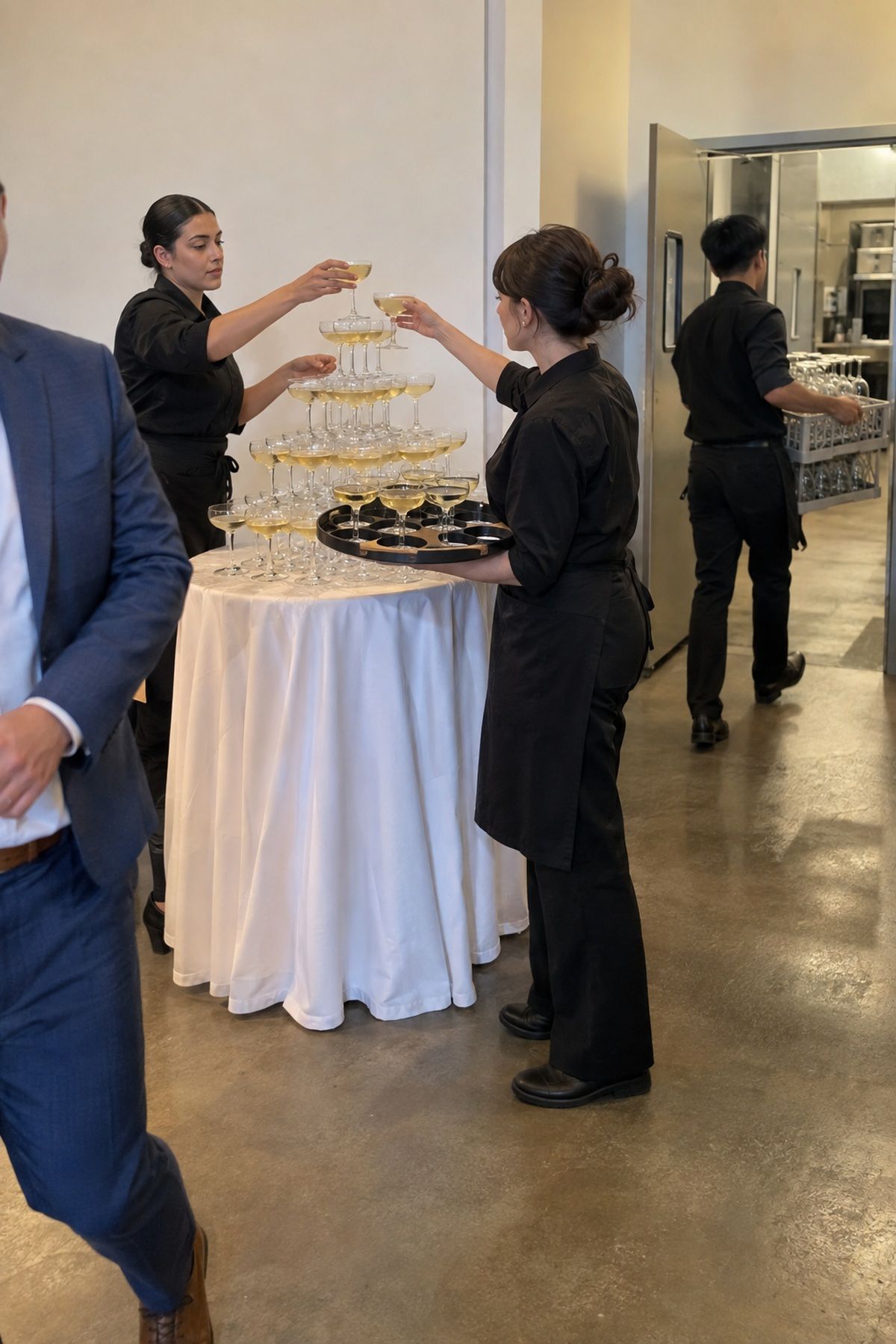
Cleanup should happen quietly once guests move on. With towels, trays and a nearby service path, the display disappears the way it arrived.
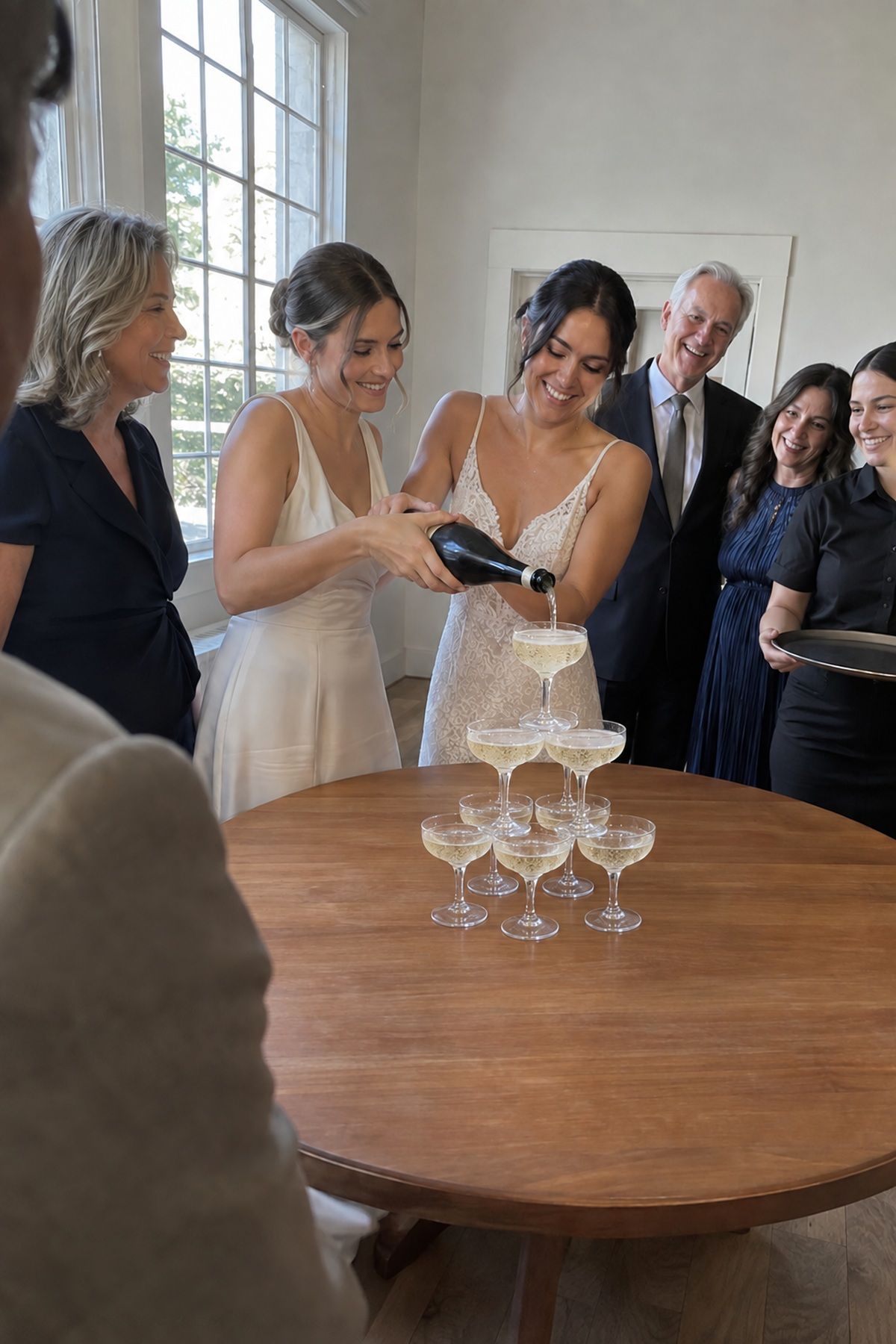
Make it yours. Some couples want a room-wide toast; others want a quiet pour with close family before dinner. A favorite bottle, heirloom coupes on the top tier or a short toast from someone you love says more than extra decor.
Key takeaways
- Rent matching low, wide coupes; flutes don’t stack.
- A three-tier tower is 14 glasses, a five-tier tower is 55, and one bottle fills about five.
- Use a level, sturdy table near the bar with clear space around it.
- Name one staff lead for setup, pouring and cleanup.
- Light the tower on purpose and keep decor away from the base.
- Schedule the pour when guests are already gathered.
FAQ
How many glasses do you need for a champagne tower?
A three-tier square tower uses 14 coupes, four tiers use 30 and five tiers use 55. Order a few extra glasses for breakage and ask your rental company to confirm the count for your base size.
How many bottles of champagne does a tower need?
Plan on about one 750 ml bottle for every five coupes. A five-tier tower needs roughly 11 bottles to fill every glass, though many caterers pour only the top for show and serve the rest from the bar.
Can you use prosecco instead of champagne?
Yes. Prosecco, cava, other sparkling wines and nonalcoholic sparkling drinks all work. The tower depends on the glass shape and a slow pour, not the bottle.
Do guests drink from the champagne tower?
They can, but it’s optional. Some caterers serve glasses straight from the tower after the pour, while others keep it for the photo and hand out glasses from trays. Decide early so staffing and glass counts are right.
Is a champagne tower safe outdoors?
It’s safe when the table is level, the spot is sheltered from wind and a staff member checks the stack just before the pour. Shade the bottles until the last minute so they don’t sweat.
Final thoughts
A champagne tower is one of my favorite reception moments because it gets everyone on their feet at the same time. It only feels easy when the boring parts are handled: matching glasses, a level table and one person in charge. Plan those, and the camera-ready pour takes care of itself.
Last update on 2026-10-03 / Affiliate links / Images from Amazon Product Advertising API