

Analogue photobooth wedding ideas work best when the setup feels slow, tactile, and protected: flattering light, clear print limits, a guest book plan, and a simple backup so imperfect little prints do not become lost memories.
An analogue photo setup can make a small wedding feel beautifully present. Guests step away from their phones, close a curtain, wait for a strip, shake a Polaroid, or pass a disposable camera across the table. The charm is real, but so are the logistics.
The best version is not just “put a camera on a table.” It is a small memory system with good light, obvious instructions, enough film, a place for duplicate prints, and a backup plan for the photos the couple cannot bear to lose. This is one part of wedding dinner party ideas, which covers the rest.
Recommended Wedding Products


You Might Also Like These Blog Posts
- Newspaper Photobooth Wedding Ideas for a Front-Page Memory
- Photobooth Stickers Wedding Ideas for Little Photo-Strip Keepsakes
- Wedding Carousel Ideas For A Nostalgic Little Spin
- Camcorder Wedding Ideas for a Home Movie Kind of Day
- Film Wedding Photos Ideas for the Beautifully Imperfect Stuff
- Winter Wedding Guest Book Ideas Guests Will Actually Pause For
Analogue Photobooth Wedding Ideas For Nostalgic Prints Guests Will Actually Keep
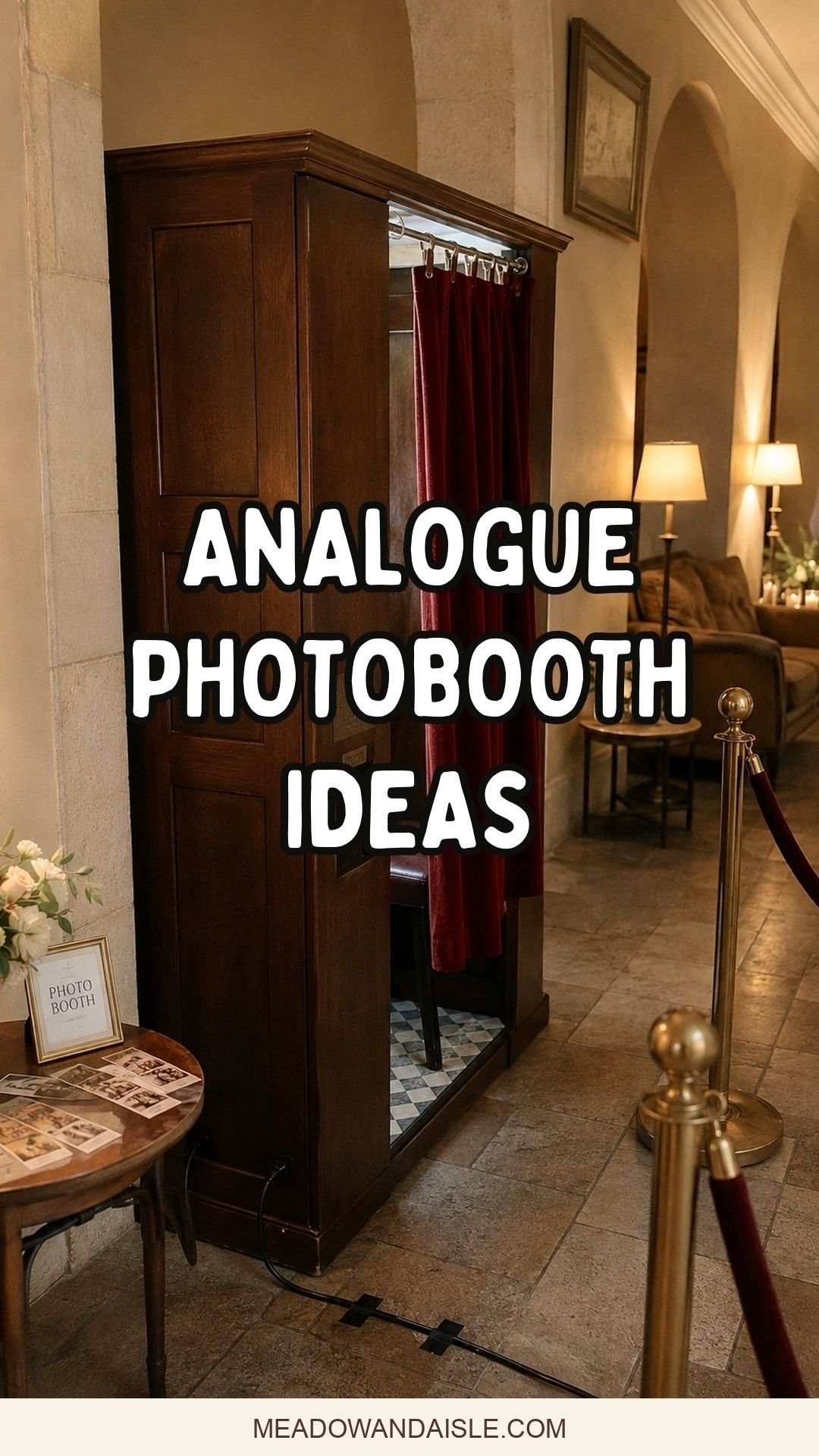
The strongest analogue photobooth wedding ideas begin with one decision: what kind of imperfect print do you want guests to hold? A restored vintage booth gives you four-frame strips and a private curtain. An instant camera station gives you loose square prints. Disposable cameras scatter the memory-making across dinner tables, and camcorder wedding ideas do the same with moving footage. A hybrid setup can use an old-fashioned booth look with modern backup files.
For an intimate reception, choose the format around guest behavior, not just the prettiest sample photo. If most guests are older relatives, a booth with an attendant may feel easier than a table of cameras. If your friends love documenting everything, Polaroids and a shared gallery can feel natural. If the room is tiny, one camera and one guest book may be more elegant than a full booth cabinet.
| Format | Best for | Small-wedding watchout |
|---|---|---|
| Restored vintage booth | Classic strips, curtain privacy, strong nostalgia | Limited availability, slower sessions, heavy equipment |
| Instant camera station | Guest book pages and casual portraits | Film runs out quickly if no one monitors it |
| Disposable cameras | Dinner table candids and dance floor surprises | Many frames will be blurry, dark, or unfinished |
| Digital booth with analog styling | Vintage look plus reliable backup gallery | Needs restraint so filters do not feel gimmicky |
| Photo strip guest book | One keepsake album from the whole night | Requires clear duplicate-print or mounting flow |
Choose The Analogue Feel Before The Equipment
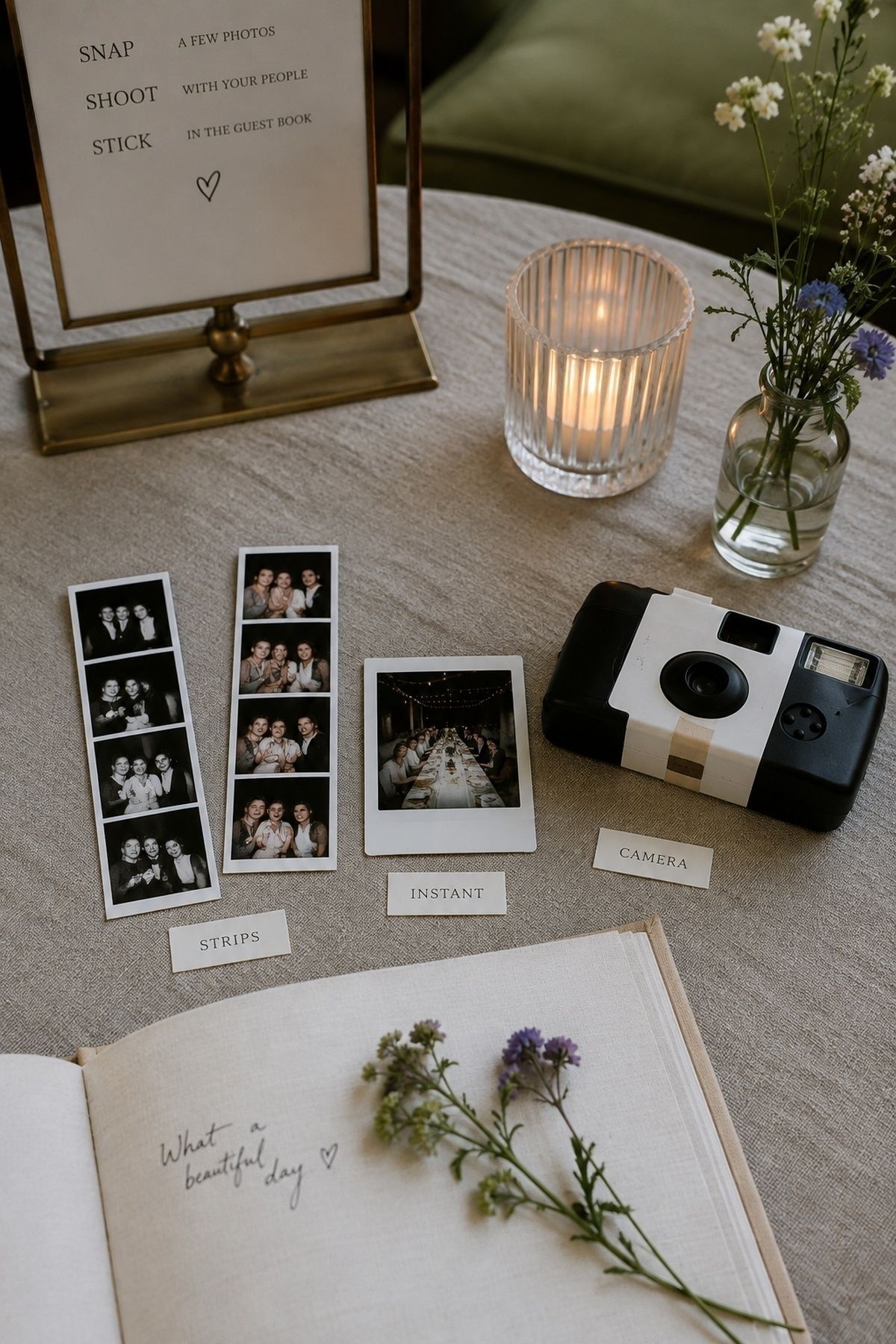
“Analogue” can mean true chemical film, instant prints, disposable camera film, or a digital booth designed to feel tactile. Decide what matters most: real film grain, a photo strip shape, guests waiting for a print, no phone-centered sharing, or a physical guest book. That priority will narrow the choice faster than a vendor list.
A couple who wants an heirloom feel may love a true vintage booth, even with slower print times. A couple who mainly wants guests away from their phones may be happy with instant cameras and a print table. The right choice is the one that matches the mood and the amount of support you can realistically provide.
Rent A Vintage Booth Only If The Venue Can Handle It
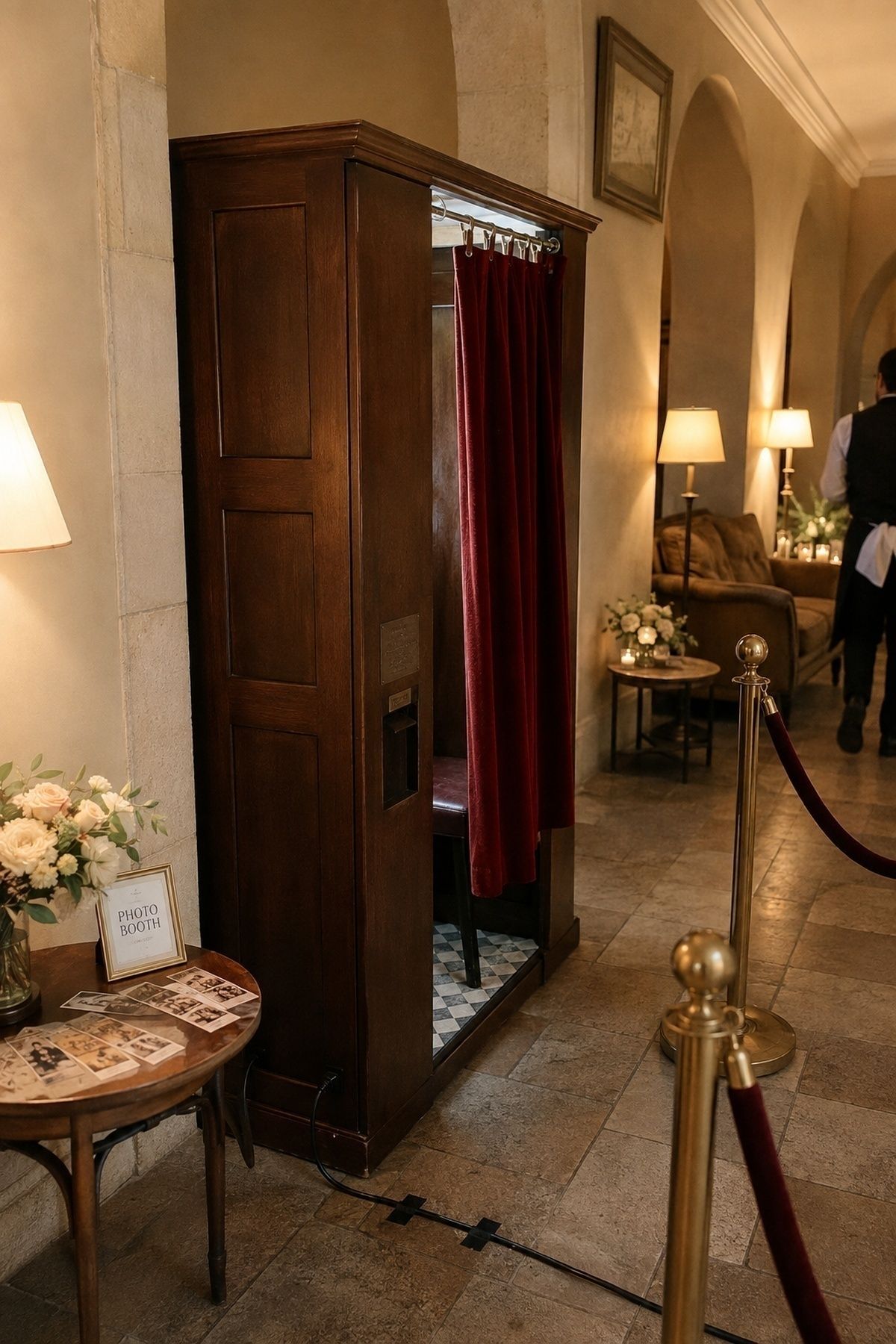
A working vintage booth is romantic, but it is not a light prop. Ask about dimensions, weight, power, delivery access, stairs, weather restrictions, ventilation, and setup time. Some true analogue booths process prints inside the cabinet, which means the vendor may need very specific conditions to keep the machine happy.
Before signing, ask for recent wedding sample strips from the same booth. You want to see face brightness, contrast, strip size, print timing, and whether the booth can handle formalwear without swallowing black suits into shadows. At a small venue, place it where guests can queue without blocking servers, restrooms, or the dance floor.
Use Instant Cameras For A Softer, Looser Mood

Instant cameras work beautifully when you want guests to create the album themselves. Put one or two cameras near the guest book with a sample page, spare film, a small bowl for used cartridges, and a sign that tells guests whether to leave the print, take the print, or make two. The wording should be short enough to read while holding a glass.
Do a test in the actual lighting if possible. Instant film needs more light than people expect, and indoor receptions can make faces muddy unless the camera flash is used correctly. At a small wedding, an attendant is not always necessary, but one reliable friend should know where the extra film lives.
Set Honest Expectations For Disposable Cameras

Disposable cameras are charming because they invite guests to notice the room from their own seats. They are also unpredictable. Some cameras will come back half-used. Some frames will be too dark. Some guests will photograph centerpieces, shoes, and empty plates with the sincerity of documentary artists. That is part of the appeal, as long as you do not make them the only photo record.
Use them as atmosphere, not insurance. Place one camera on every other table, or give cameras to a few guests who naturally take photos. Add a small card with three prompts: a toast, a table selfie, and a dance floor moment. Keep the professional photographer focused on the moments that cannot be recreated.
Make The Guest Book Flow Obvious

The guest book is where tactile photos become more than a pile. Set out a flat album, photo-safe tape or corners, fine-tip pens, duplicate prints if available, and one finished sample page. Guests should know the sequence instantly: take photo, mount photo, write note, leave space for drying if the film needs it.
At a small wedding guest book table, keep the album open to a sample spread with one print and one short message. Put extra tape and film in a closed box nearby rather than scattered across the table, so the station stays calm in photos.
Prevent Long Lines With A Session Limit

Analogue booths are slower by nature. That is part of the romance, but it can frustrate guests if one group takes six rounds while everyone else waits. Use a gentle one-session-per-visit rule during cocktail hour, then reopen for repeats after dinner. An attendant can say this warmly without making the couple feel like traffic managers.
For a reception under fifty guests, a three-hour booth window is usually more comfortable than a short burst. Guests can wander in after dinner, between songs, or before they leave. The booth becomes a quiet thread through the night instead of a single crowded attraction.
Add A QR Backup Without Making Phones The Main Event

A QR backup protects the memories without changing the analogue mood. Use it for guest uploads, vendor galleries, or scans after the wedding. Place the code near the guest book and on a small card by the exit, not across every surface. The print should still feel like the star.
If you want guests to add phone photos too, tuck the code into the same visual world as your paper goods. The most useful photo ideas give guests one clear place for candid pictures after the party, while the reception itself stays rooted in the room.
Plan For Scanning Before The Prints Scatter
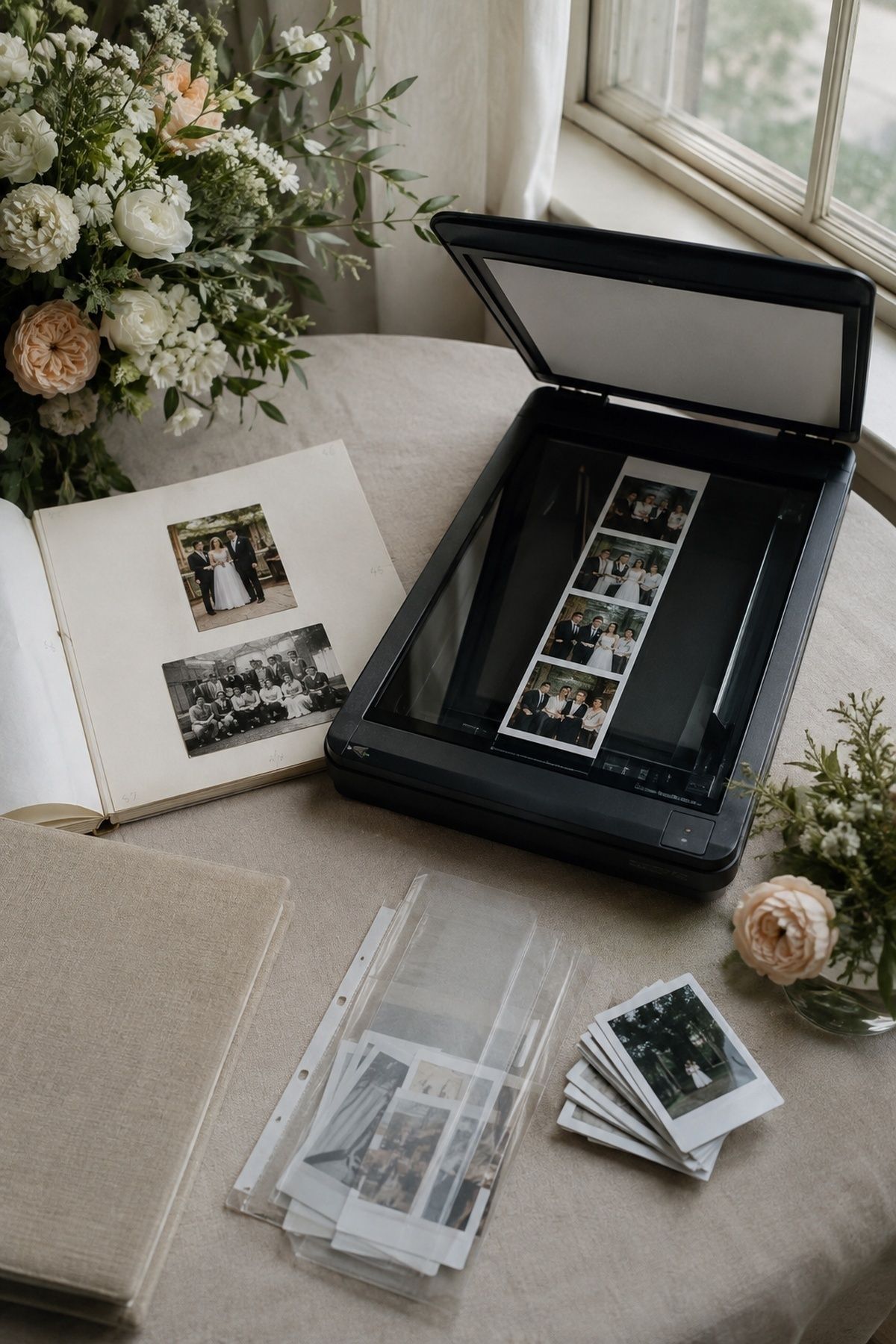
If the booth creates one-of-one strips, decide how they will be copied. Ask the vendor whether scans are included. If not, set aside a post-wedding scanning session before prints go into frames, thank-you cards, or guest pockets. A flatbed scanner gives cleaner results than rushed phone photos, especially for glossy strips.
For instant prints, scan the guest book after the wedding and photograph each page in natural light as a second backup. Number the pages lightly in pencil if you are worried about order. The goal is not perfection; it is making sure the tiny, weird, lovely pictures remain findable.
Use Lighting That Flatters Imperfection
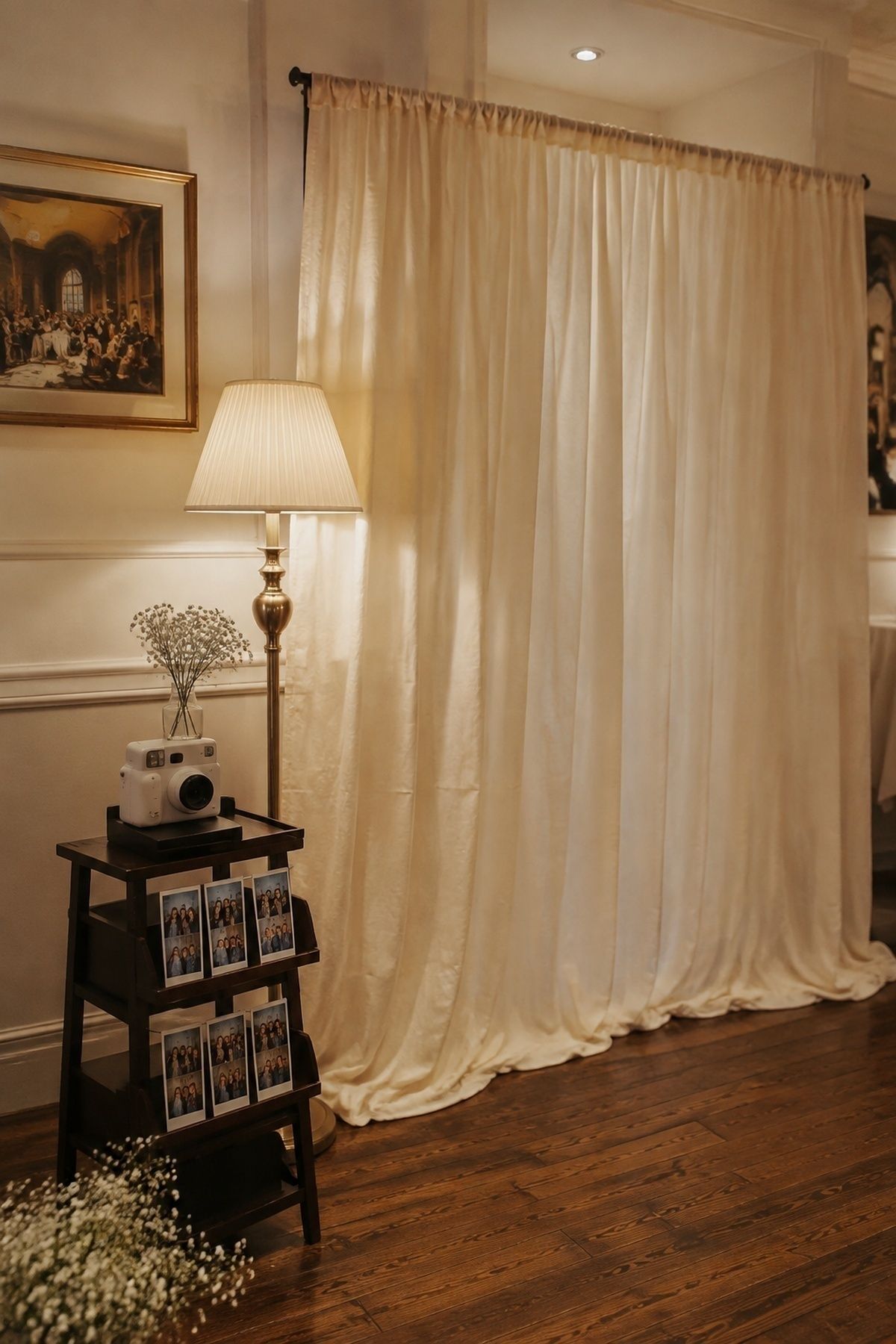
Analogue photos already have blur, grain, flash, and mood. They do not need bad lighting added on top. Place the station away from deep shadows, colored uplighting, and backlit windows. Use warm, even light where guests stand and test the camera from the same distance they will use on the day.
For a vintage booth, ask the vendor what lighting is built in and whether outside light affects the result. For instant cameras, keep guests within the flash range and avoid dark floral walls behind dark suits. A cream curtain, pale wall, or softly patterned backdrop can make simple prints feel intentional.
Keep Props Small, Personal, And Easy To Hold
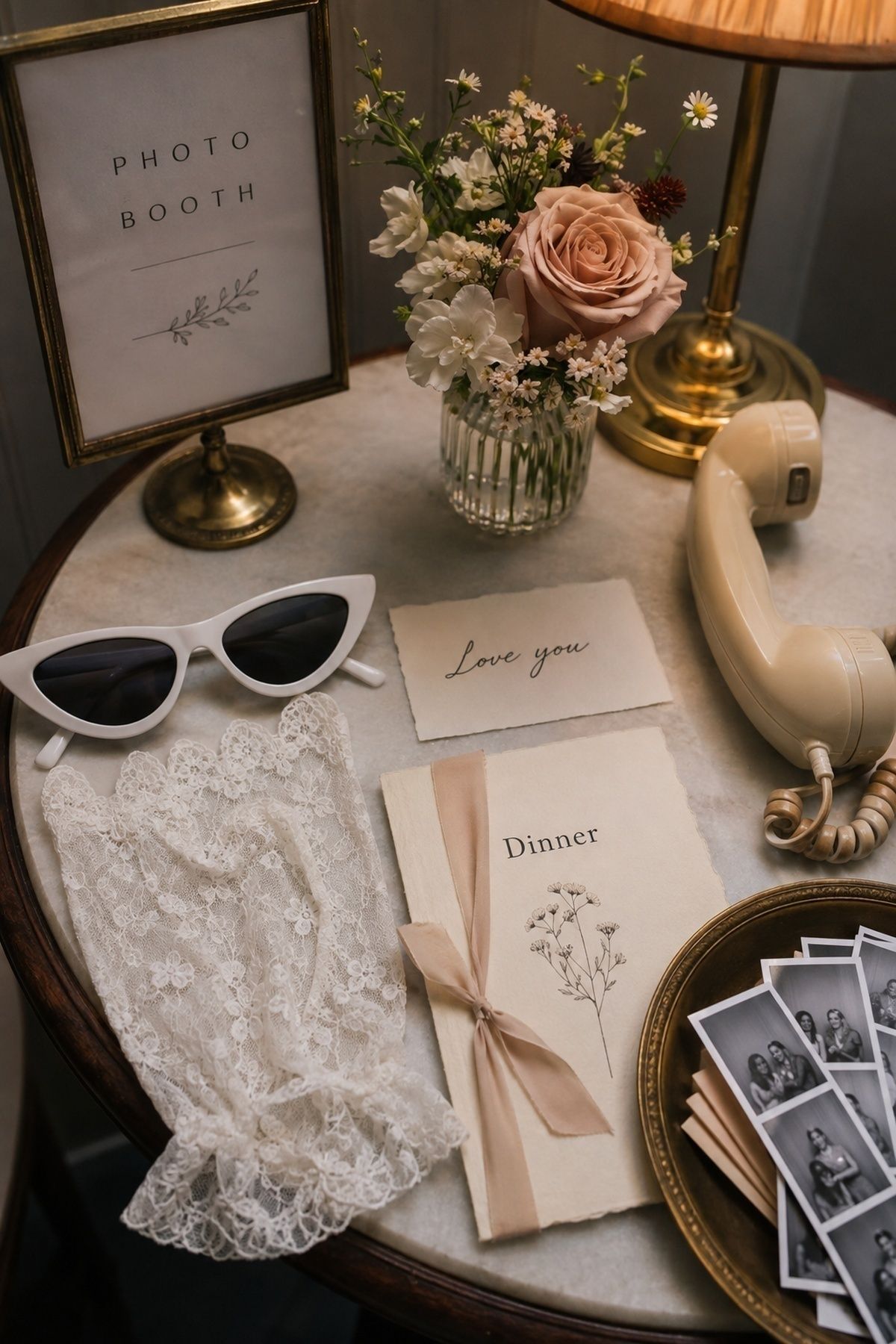
Analogue photos look better when props are edited. Choose a few pieces that make sense for the couple: a handwritten sign, a small bouquet, cat-eye glasses, a vintage phone, a lace glove, or a menu card from the dinner. Too many props slow the line and cover faces in the one print that matters.
If you love sticker-style styling, set it beside the album rather than inside the booth. Borrow the tiny-label mood of photobooth stickers wedding ideas for sleeves, album pages, and duplicate prints so the keepsake gets the decoration without cluttering the camera moment.
Write Signage Like A Host, Not A Manual
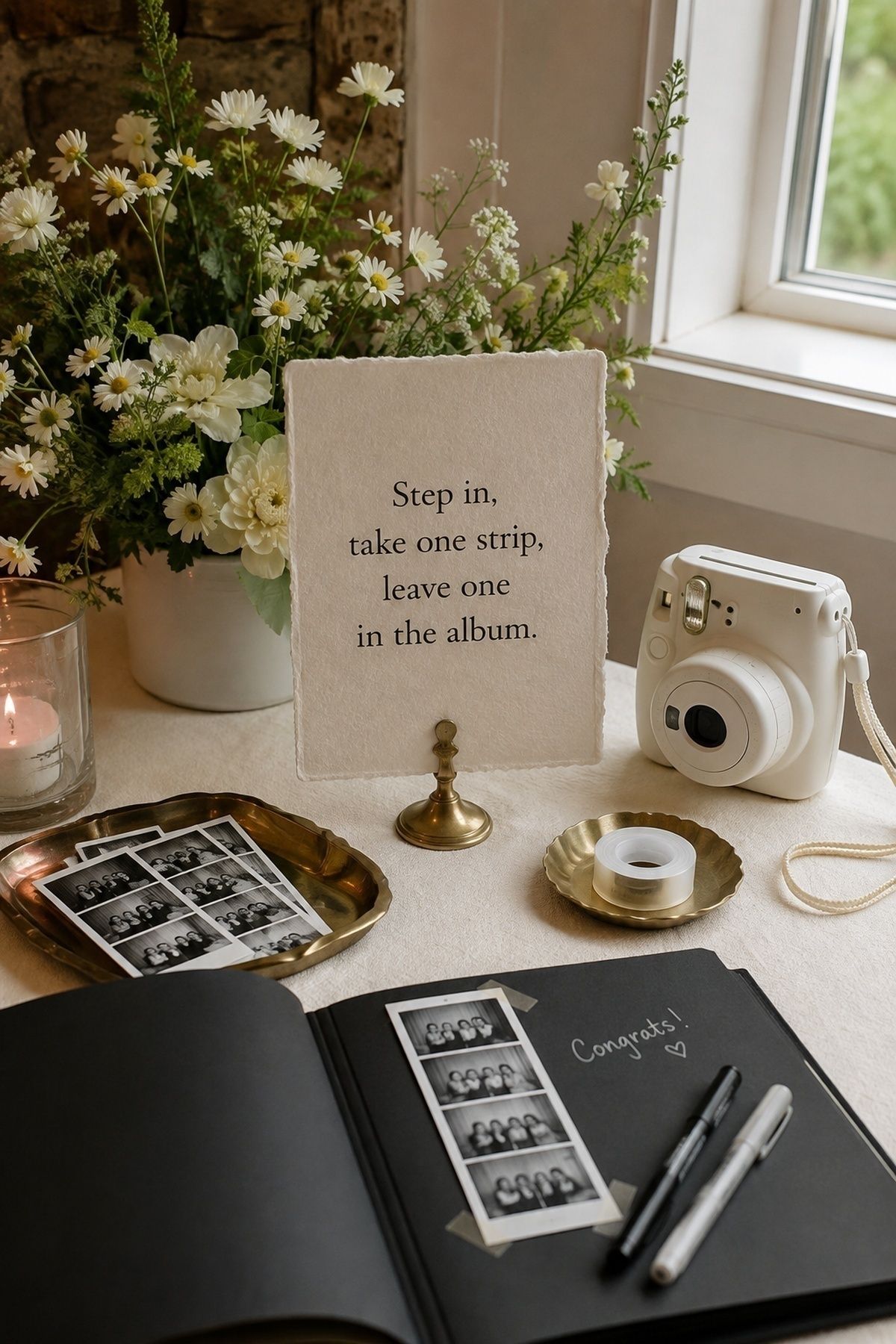
Good signage turns a nostalgic setup into something guests understand immediately. Try: “Step in, take one strip, leave one in the album.” For instant cameras: “Snap a photo, let it develop, tape it here, and write us a note.” For disposable cameras: “One toast, one table photo, one surprise.”
Avoid long instructions, clever wording that hides the action, or signs that explain every possible exception. If the process needs a paragraph, simplify the process. Analogue should feel slower in a romantic way, not confusing in a practical one.
Budget For Film, Prints, Labor, And Loss

The true cost is more than the camera. Include booth rental, delivery, attendant hours, idle time, film packs, extra cartridges, guest book supplies, sleeves, scanning, and developing. Disposable cameras may look inexpensive until film processing and imperfect frames enter the math.
Build in a little waste. Guests will retake blurry photos, children will experiment, and a few prints may disappear into purses before they reach the album. That is normal. A generous but monitored supply feels better than a strict count that makes the station feel fragile.
Pair Analogue Photos With One Other Memory Moment

At a small wedding, the booth can sit beside another quiet memory ritual instead of competing with the dance floor. A voice note corner, written advice cards, a newspaper-style backdrop, or a display of family wedding photos can deepen the nostalgia without adding much noise.
If guests are already leaving recordings, keep the recording corner in the same lounge-area rhythm as video guestbook wedding ideas while the photo table stays physical and low-pressure. Give each activity its own small surface so the album, camera, and recording device do not crowd each other.
Make The Final Collection Someone’s Job
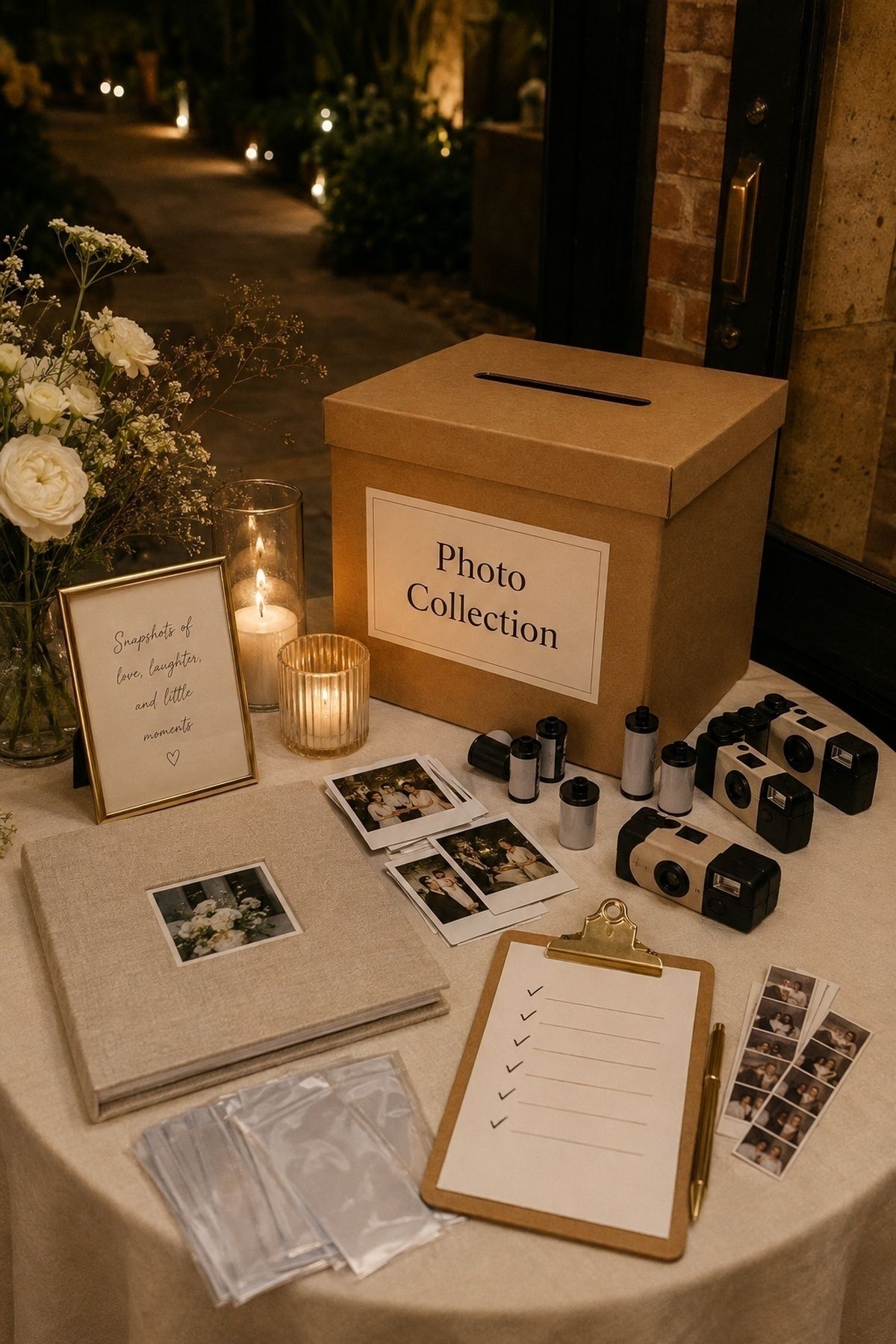
Assign one person to collect the guest book, unused film, loose prints, disposable cameras, and signage at the end of the night. This should not be the couple. It can be a planner, sibling, attendant, or friend who is already staying until cleanup. Give them a labeled box before the reception starts.
The end-of-night sweep matters because analogue photos are physical objects. They can be left on cocktail tables, tucked into menus, dropped near the printer, or carried to the after-party. A simple collection plan protects the very thing that made the setup special. For a smaller guest list, browse micro wedding reception ideas.
Analogue Setup Ideas By Wedding Style
For a courthouse lunch, use one instant camera, cream tape, and a linen guest book on the restaurant table. For a backyard dinner, place disposable cameras in low bowls beside candles and collect them before late-night cleanup. For a vintage hotel reception, rent a booth with a curtain and let guests add duplicate strips to a black-page album.
For a playful cocktail party, a newspaper-inspired photo area can sit near escort cards and give guests something to hold before dinner. For quieter receptions, the booth belongs in a lounge corner with a chair, soft light, and one sign. The smaller the guest list, the more the details should feel personal rather than crowded. The rest of the set lives under Ceremony & Reception.
FAQ
What is an analogue photobooth at a wedding?
An analogue photobooth at a wedding is a photo experience centered on physical prints rather than phone-first sharing. It might be a true vintage film booth, an instant camera station, disposable cameras, or a booth styled around photo strips, flash, paper, and guest book keepsakes. Also worth a look: newspaper photobooth wedding ideas.
Is an analog photo booth better than a digital photo booth?
An analog photo booth is better if you want tactile nostalgia, limited prints, and a slower guest experience. A digital booth is better if you need high volume, instant sharing, easy downloads, and fewer risks around lost photos. Many small weddings use an analogue-feeling setup with a quiet digital backup. Related reading: wedding carousel ideas.
How do you set up an analogue photobooth for a wedding?
Set up an analogue photobooth with flattering light, a clear backdrop, enough film or print supplies, short signage, a guest book table, photo-safe mounting supplies, and one person assigned to check the station. Test the camera, flash, and print flow before guests arrive.
Can you DIY an analogue wedding photo booth?
You can DIY an analogue wedding photo booth with instant cameras, disposable cameras, a simple backdrop, a guest book, and spare film. The key is limiting choices, testing the light, and making one person responsible for refills and collected prints so guests are not guessing all night.
How do you collect photos from an analogue photobooth?
Collect analogue photobooth photos by asking guests to leave one print in a guest book, placing a tray for loose strips, gathering disposable cameras at the end of the night, and scanning the album afterward. If the setup includes a QR gallery, use it as a backup rather than the main experience.
What analogue photobooth wedding ideas work for a small reception?
For a small reception, the best analogue photobooth wedding ideas are a single vintage booth with an attendant, one instant camera guest book table, a few disposable cameras given to trusted guests, or a quiet lounge-corner setup with photo strips, sleeves, and a simple scan plan.
Final Thoughts
Analogue photo booths are charming because they ask everyone to slow down for a real object. The print may be a little blurry, someone may blink, and the timing may be imperfect, but that is exactly why the memory feels human.
Before you book, ask the vendor how a vintage analog photo booth will handle the curtain, four-frame rhythm, real film chemistry, print timing, and keepsake plan for your guest count.
Last update on 2026-11-29 / Affiliate links / Images from Amazon Product Advertising API