

Intimate spring wedding ideas work best when you choose a fresh right-sized setting, keep the flowers and color palette gentle, plan for rain before you style anything, and build the day around comfort, conversation, and the people closest to you.
Spring can make a small wedding feel almost effortless: softer light, fresh branches, new flowers, and that hopeful feeling guests notice the moment they arrive. The trick is not to let the season do all the thinking for you.
A truly small spring celebration needs a clear plan for weather, a space that does not swallow a small guest list, and details that feel alive without becoming a pastel blur. Start with the month, the mood, the guest experience, and the backup plan, then let the flowers and pretty pieces support the day instead of carrying it. That approach keeps the celebration romantic, but it also helps every practical choice feel connected: the venue, table, timeline, menu, ceremony, and rainy-day plan all begin to tell the same quiet story for your closest people.
Recommended Wedding Products


You Might Also Like These Blog Posts
- Small Spring Wedding Ideas for a Fresh, Rain-Ready Celebration
- Spring Wedding Ideas for a Day That Feels Newly Bloomed
- Spring Wedding Color Palette Ideas That Don’t Feel Washed Out
- Intimate Summer Wedding Ideas for a Close, Sunlit Celebration
- Spring Wedding Photo Ideas for Soft Light and Real Moments
- May Wedding Ideas for the Softest Golden-Hour Spring
Intimate Spring Wedding Ideas That Feel Fresh, Personal, And Weather-Ready
Choose The Spring Month Before You Choose The Mood
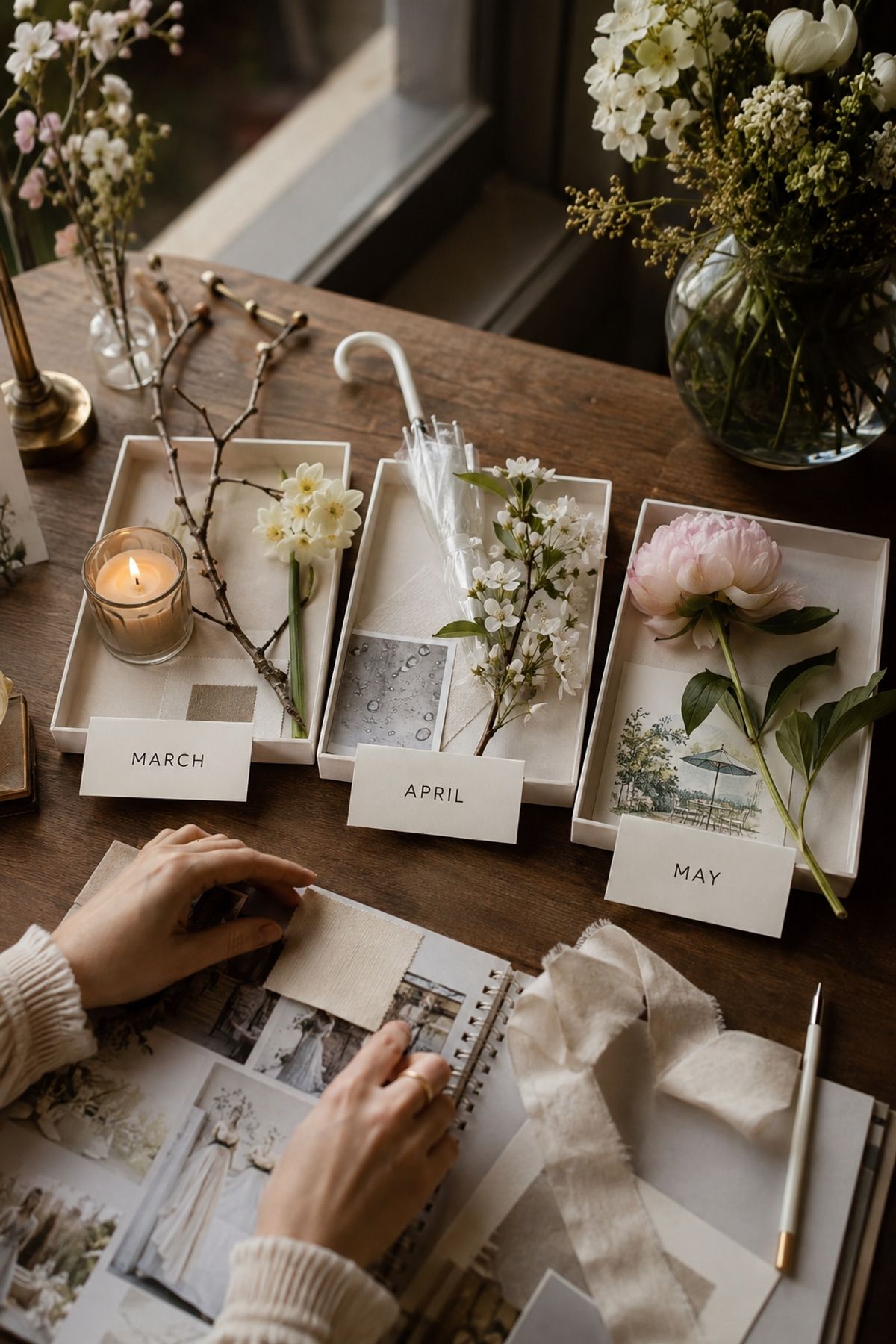
March, April, and May can feel like three different wedding seasons, even when they all sit under the spring umbrella. March is quieter and moodier, with bare branches, early bulbs, candlelight, and a chance of chilly air. April brings rain, blossoms, softer color, and a little more daylight. May often feels fuller and warmer, with garden venues beginning to peak and popular dates becoming more competitive.
For a celebration that actually fits your day, choose the month first and let it guide the rest. A March lunch may need wraps and warm drinks; an April garden ceremony needs dry paths and umbrellas; a May dinner may need shade, allergy awareness, and an earlier florist conversation.
A March wedding can lean into candlelight, forced branches, early narcissus, and a private dinner that feels almost like a supper club. April can hold a greenhouse ceremony, blossom portraits, clear umbrellas, and a menu that moves from warm soup to lemon dessert. May can carry a fuller garden palette, but it may also need earlier vendor holds, more shade, and a stronger plan for pollen. Naming those differences early keeps the wedding from becoming a generic spring board with no real hosting logic.
Pick A Venue That Keeps Everyone Close
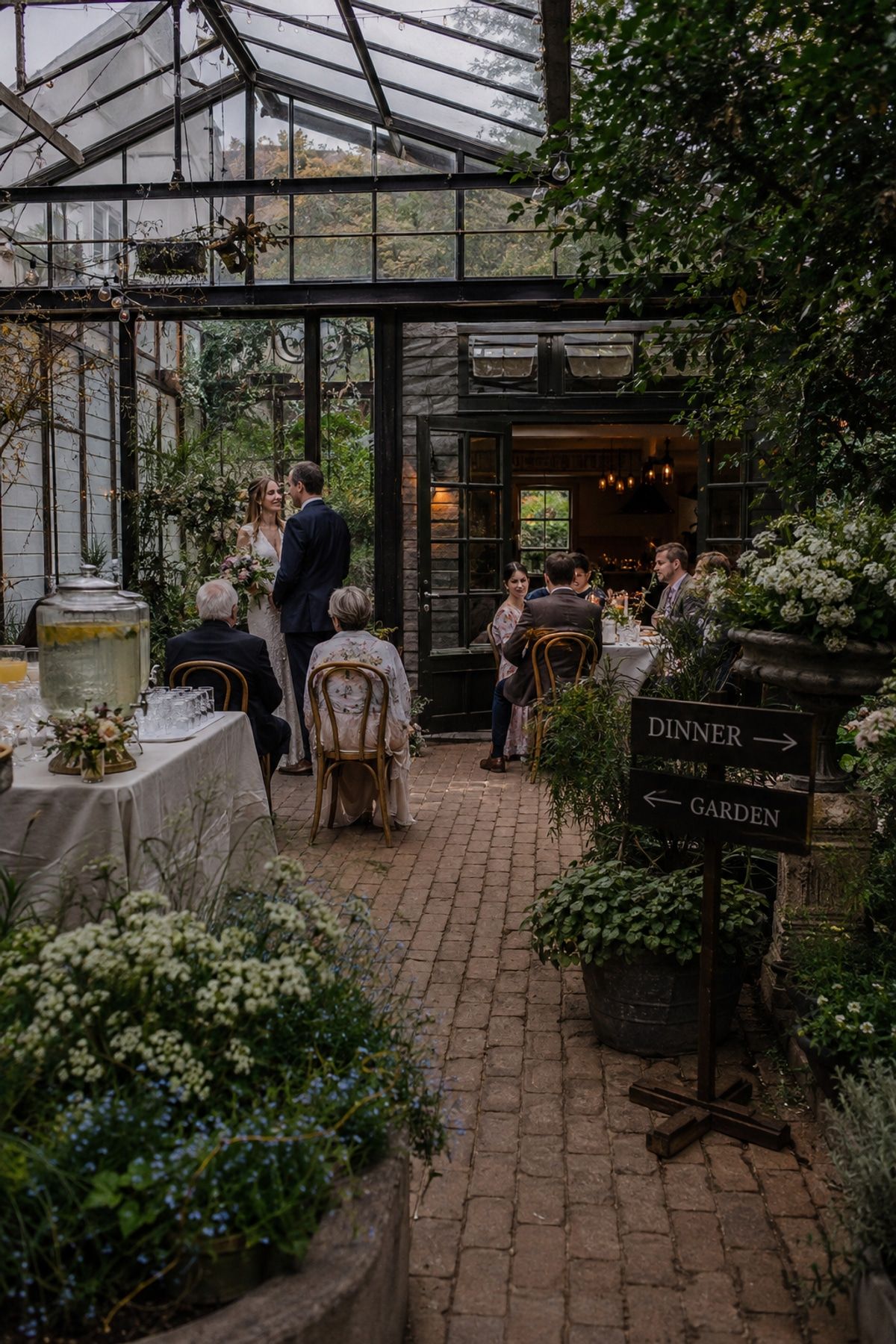
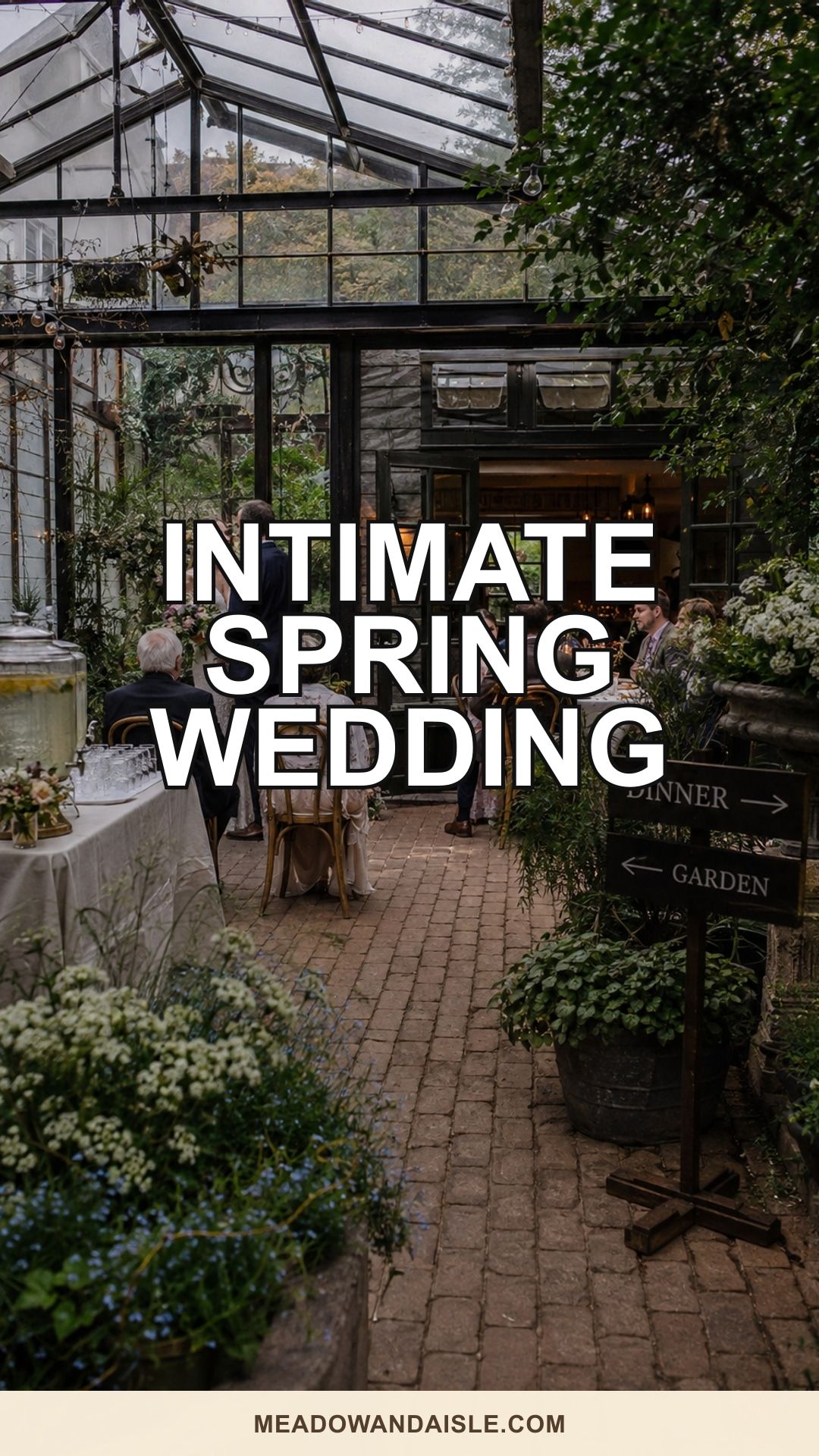
The best spring venue for a small guest list has natural beauty and a comfortable scale. Look at greenhouses, conservatories, restaurant patios, private dining rooms with garden access, historic homes, courtyards, chapel gardens, backyard lawns, and small estates with indoor rooms nearby.
When you tour, ask where guests will stand if it rains, where heels will sink, and whether the dinner table can feel full with your actual count. A small garden can feel more romantic than a large venue with empty corners. If you are deciding between outdoor locations, a compact garden setting usually makes flow, shade, seating, and quiet photo spots easier to solve.
This is where spring garden wedding ideas need a little discipline. A garden does not automatically feel intimate just because it is pretty. Measure the walking distance between ceremony, drinks, dinner, bathrooms, and the backup space, then imagine guests moving through it in damp shoes or light jackets. The more compact the route feels, the more natural the gathering will feel. If you are drawn to palace gardens, these enchanted palace wedding ideas offer a grander take.
Think about sound, too. A tiny ceremony can lose its intimacy if a fountain, road, kitchen door, or windy lawn pulls attention away from the vows. Stand where you would stand for the ceremony and speak at a normal volume. If you cannot hear each other, plan a microphone, choose a protected corner, or move the vows closer to the guests. Small weddings depend on presence, and presence is easier when the space is calm.
Build The Rain Plan Into The Pretty Plan
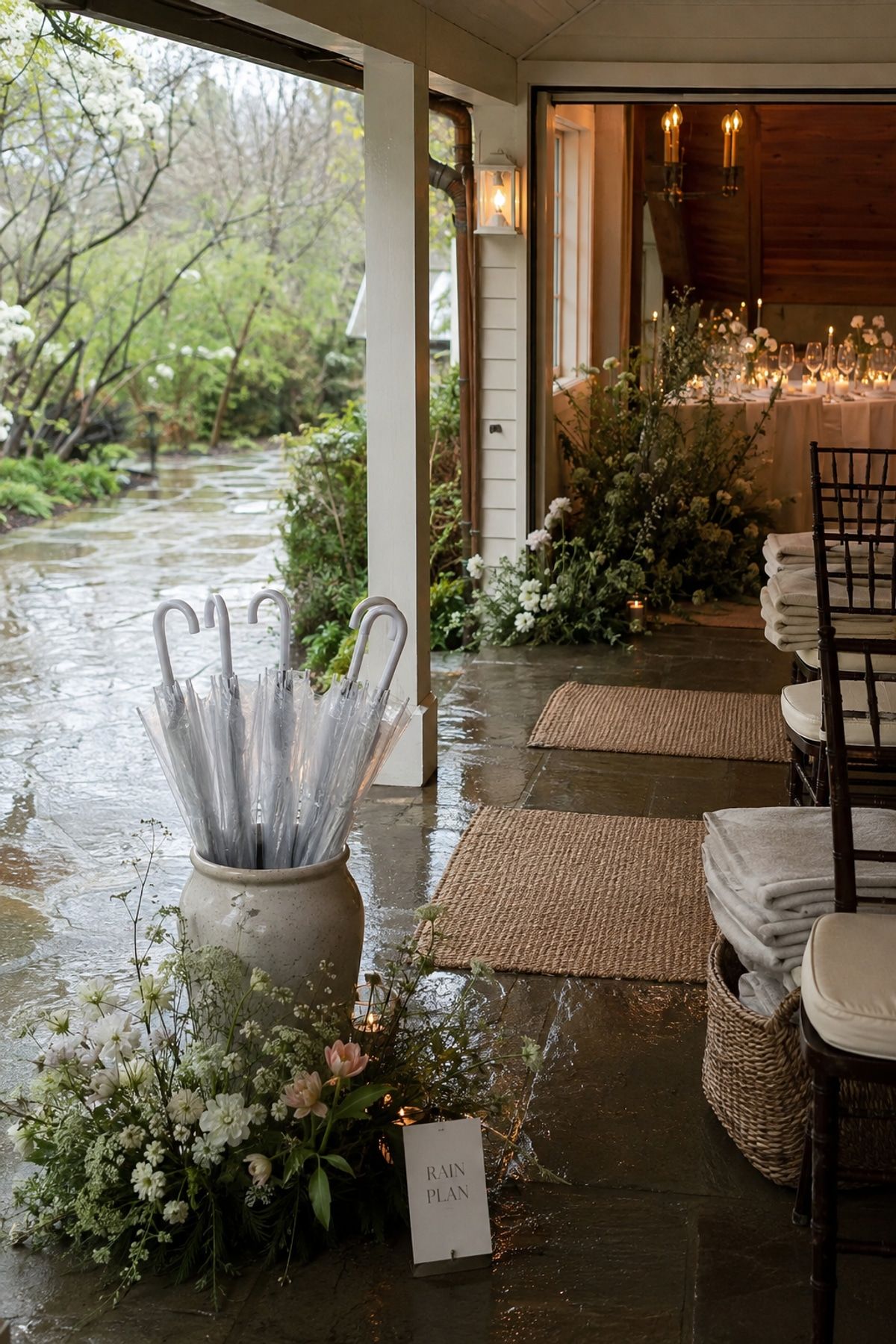
A spring wedding rain plan should never feel like an emergency version of the day. Choose the backup ceremony spot early, decide when the weather call will happen, and style that space with the same care as the outdoor option. A covered porch with low flowers, a greenhouse aisle, or a candlelit dining room can still feel intentional.
Clear umbrellas, floor mats, covered vendor loading, non-slip paths, and a few extra towels for chairs are not glamorous details, but they protect the softness of the day. For a guest list under fifty, the rain plan can even become part of the atmosphere: everyone gathered close, shoes dry, vows audible, and no one wondering where to go next.
Ask each vendor what changes when the rain plan is used. The florist may need sturdier stands, the caterer may need a different service route, the photographer may want covered portrait windows, and musicians may need power protected from damp ground. These questions are practical, but they make the day feel graceful because the backup version has already been rehearsed in everyone else’s mind.
Let The Ceremony Feel Gathered, Not Staged

Small ceremonies are strongest when guests feel included without being put on display. Try a half-circle of chairs, a short flower-lined aisle, two potted trees behind the couple, a garden gate entrance, or vows on porch steps with family seated close enough to hear every word. Keep floral pieces low, sight lines open, and the aisle short enough that guests feel part of the promise instead of spectators at a distance.
If you like the intimacy of spring micro wedding ideas, keep the ceremony language specific to your people. A few handwritten vows, a parent reading, a flower petal recessional, or a private first look can make the day feel personal without adding a long program.
For a small spring wedding ceremony, edit the visual field before you add more decor. Move extra signage away from the altar, keep programs from blowing across the aisle, and avoid tall arrangements that block grandparents or seated guests. The ceremony should feel like a gathered promise, not a display table with vows happening somewhere inside it.
Use Color With A Grown-Up Spring Hand

Spring color does not have to mean every pastel at once. Choose one gentle base, one fresh botanical tone, and one grounding accent. Butter yellow with warm cream and olive feels sunny without becoming childish. Lavender with sage and espresso feels romantic and grown-up. Pale blue with white and fresh green feels clean, especially in a courtyard or greenhouse.
For a very small wedding, repeat color in fewer places with better intent: napkins, ribbon, invitation details, one floral note, and a cake accent. That restraint makes the wider world of spring wedding decor ideas feel edited instead of scattered.
If the palette starts to feel too sweet, add a grown-up counterweight. Soft pink becomes more elegant with tobacco ribbon or walnut chairs. Lilac feels calmer with stone gray. Butter yellow looks less novelty-driven with ivory linens and fresh green stems. That single grounding note is often enough to make a tiny spring wedding look intentional in person and in photos.
Choose Flowers For Season, Scent, And Scale
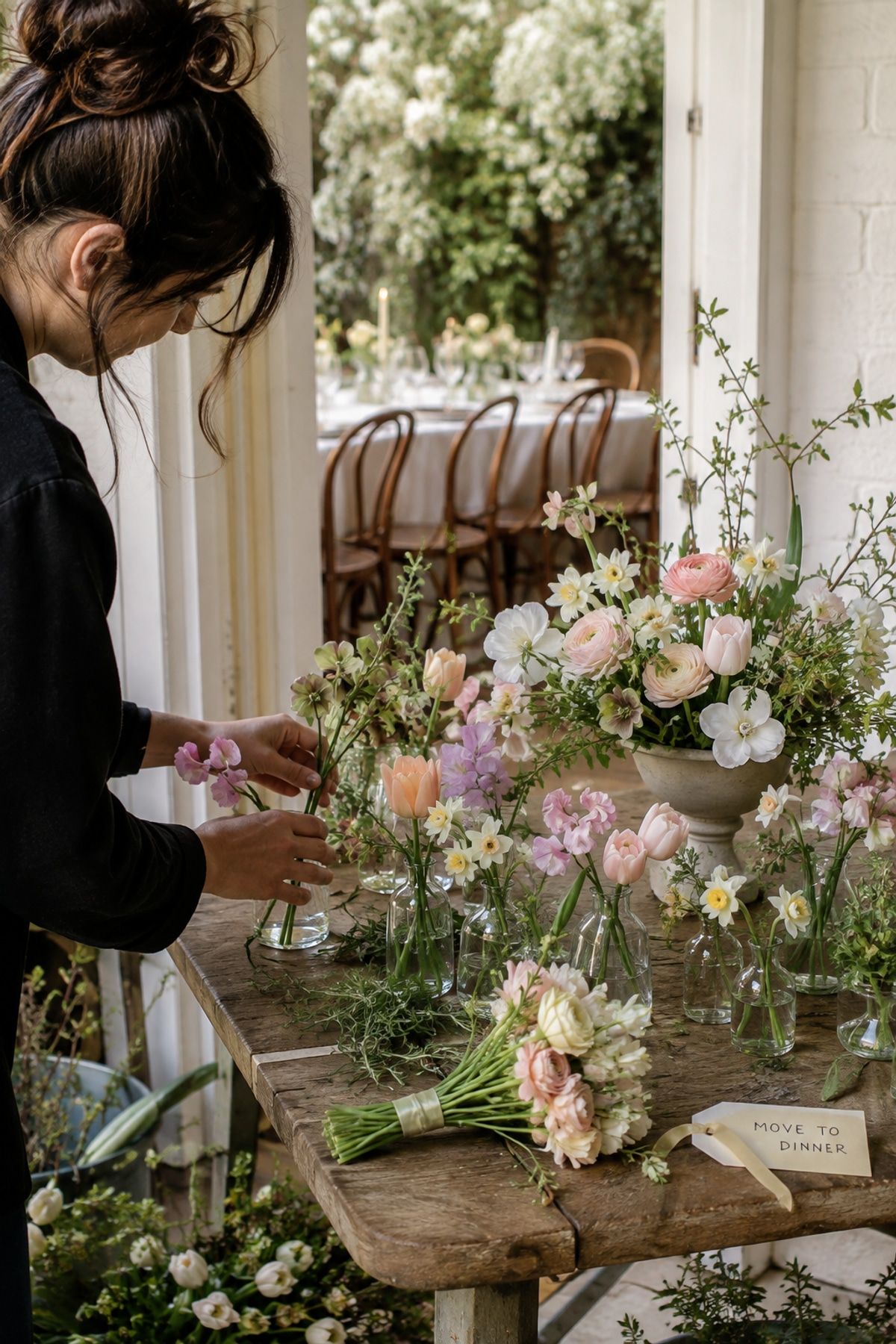
Tulips, ranunculus, sweet peas, daffodils, narcissus, lilac, hellebores, anemones, hyacinths, garden roses, and peonies can all belong in a spring floral conversation, depending on timing and region. Ask your florist what will be local, sturdy, and comfortable near food.
With a smaller guest list, flowers can be more tactile and personal. A few bud vases down one long table, a petite bouquet, potted herbs near the bar, and a low ceremony arrangement you move to dinner can feel richer than oversized installations. When fragrance is strong, keep blooms away from dinner plates so guests can taste the meal.
Treat spring wedding flowers as a texture plan, not only a color plan. Pair delicate blooms with branches, herbs, young greenery, ribbon, fruit, or simple candlelight so the arrangements feel seasonal without becoming one-note. If you want a flower-heavy look, concentrate it where guests will pause: the ceremony threshold, the dinner table, the cake moment, or the place-card display.
Because the guest list is smaller, you can also ask for flowers to move through the day. Ceremony urns can frame the dinner entrance, aisle clusters can become bar flowers, and the bouquet can rest near the cake after portraits. Movement matters in spring because fresh blooms are often the most expensive seasonal signal; using them twice lets the day feel abundant without asking every corner to be floral.
Design Tables For Conversation First
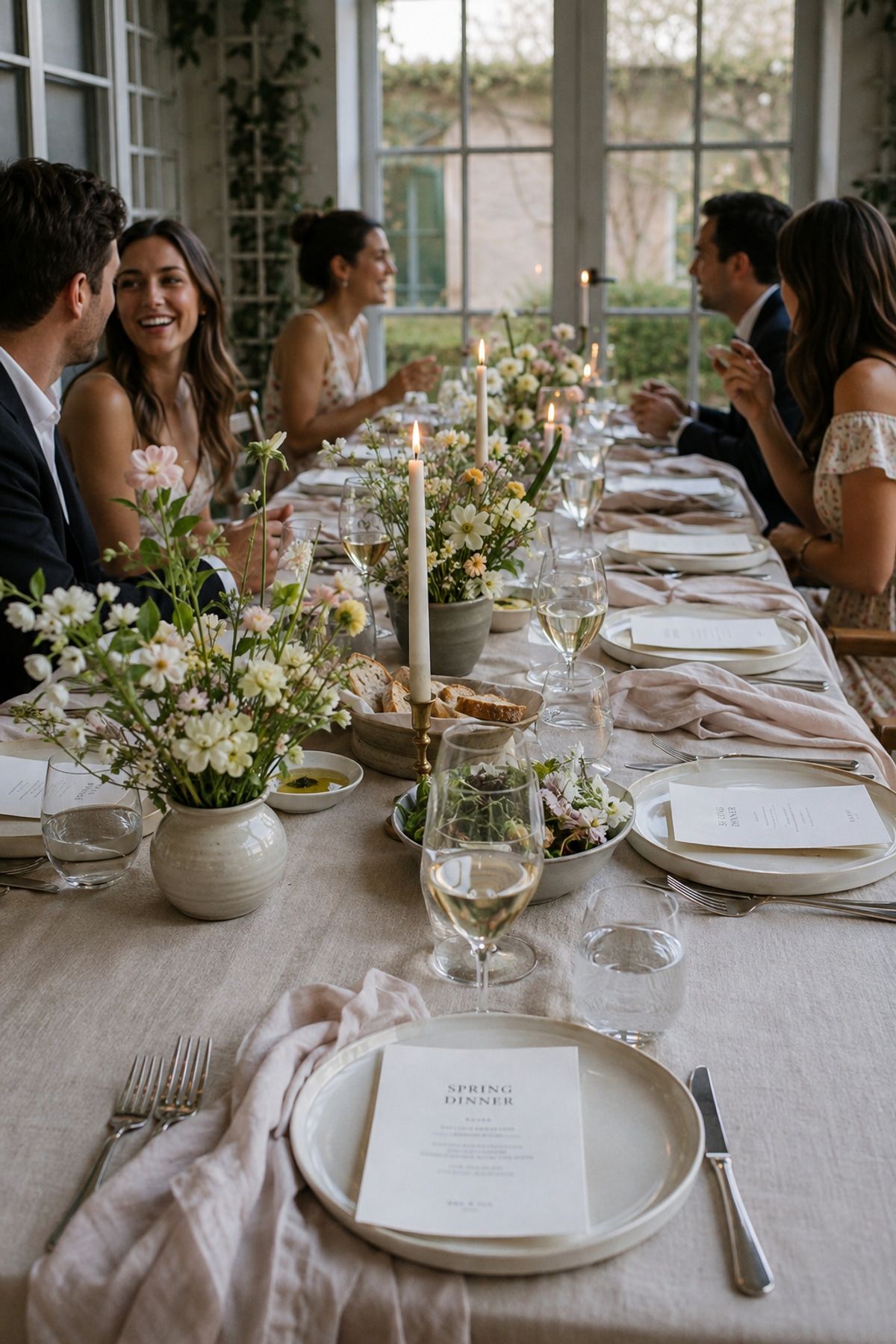
Spring wedding table decor should leave room for elbows, glasses, shared dishes, and conversation. One long table is often the most intimate choice: low bowls, bud vases, slim taper candles, handwritten menus, soft napkins, and a linen runner that can handle a little wind.
Keep tabletop decor layered but small: low flowers, little lamps, glass hurricanes, and repurposed ceremony blooms can carry the season without crowding the plates. If dinner is the heart of the celebration, leave enough room for the shared platters, courses, and glassware that often appear in small wedding menu ideas.
A good test is to set one sample place before you order everything. Add the plate, napkin, menu, water glass, wine glass, favor, candle, and flowers, then imagine bread, salad, and a guest’s phone on the same surface. If the table already feels crowded, choose fewer pieces with better texture. A small table should invite people inward, not make them protect their glass from the centerpiece.
Make Brunch Feel Like A Wedding, Not A Casual Stop

A spring brunch wedding can be beautiful for an intimate guest list because the timing feels light, relaxed, and naturally social. Pair a late-morning ceremony with coffee, mimosas, quiche, pastries, fruit, lemon cake, and a small lounge area where guests can linger after the meal.
The key is to give brunch a little ceremony. Use printed menus, real glassware, flowers on every small table, music that feels dressed, and a clear end moment such as cake, a toast, or a group photo. Couples considering brunch wedding ideas should still plan the same guest comfort details they would for dinner: weather, seating, shade, and a timeline that does not feel rushed.
For spring brunch wedding ideas that still feel celebratory, build the morning around arrival rhythm. Welcome guests with coffee or sparkling water before the vows, move into a proper seated meal, and save one polished moment for the end. A short toast, petite cake cutting, or private last dance keeps the day from drifting into ordinary weekend brunch.
For spring brunch wedding ideas with a more editorial feel, use contrast in the menu. Pair pastries with something savory, coffee with a signature spritz, fruit with a warm main dish, and a small cake with one beautiful floral detail. Guests will remember the meal as a wedding when the pacing, service, and table setting feel cared for.
Plan Guest Comfort Like A Host
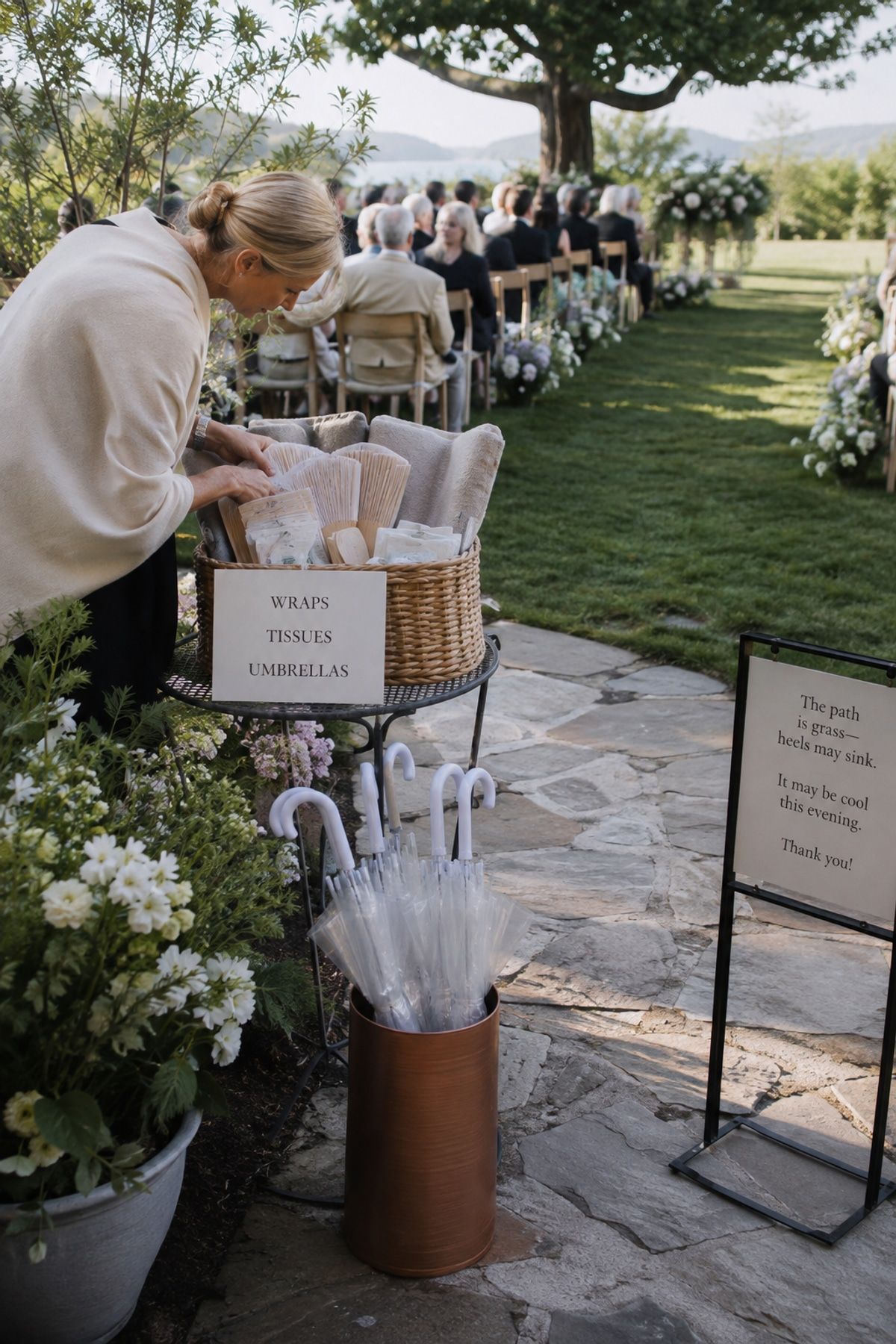
Spring guest comfort is a small-wedding superpower because you can notice details for every person. Offer wraps if the evening may cool down, heel-friendly paths if the grass is soft, tissues during pollen season, water before the ceremony, and a note on the wedding website if guests will walk through garden paths.
For outdoor vows, assign someone to check chairs after rain and keep older guests close to shade or heaters. An intimate wedding feels most luxurious when no one has to guess what to do with a wet coat, a muddy shoe, or a chilly glass of champagne.
Spring wedding guest comfort also means telling people the truth before they arrive. If the ceremony is on grass, say so. If the garden path is uneven, mention block heels or flats. If the air may cool after dinner, note that wraps are welcome. Clear details feel gracious, not fussy, when the guest list is made of people you genuinely want to host well.
Create one small comfort station instead of scattering supplies everywhere. A basket of wraps, tissues, heel protectors, paper fans, and umbrellas near the entrance can solve most spring weather problems without making the design feel busy. Ask a trusted person to reset it after the ceremony so it still looks intentional when guests move to dinner.
Use Photos To Capture The Season Without Chasing It

Spring photos are beautiful because they change quickly. Plan for bloom portraits, umbrella portraits if it rains, a full guest photo, a quiet table detail shot before dinner, and a few images near the entrance where the day first reveals itself.
Ask your photographer for two timing plans: one for dry weather and one for rain. Cloudy spring light can be gentle and flattering, but wet ground slows movement. Build buffer time into the schedule so the day still feels calm.
Do not chase every blooming tree on the property if it pulls you away from the people. Choose two portrait locations, one protected detail spot, and one full-group photo area before the day begins. With fewer guests, the best images often come from closeness: a shared toast, parents under umbrellas, a quiet table before the meal, or everyone gathered around the couple after the ceremony.
Spend Where Intimacy Shows
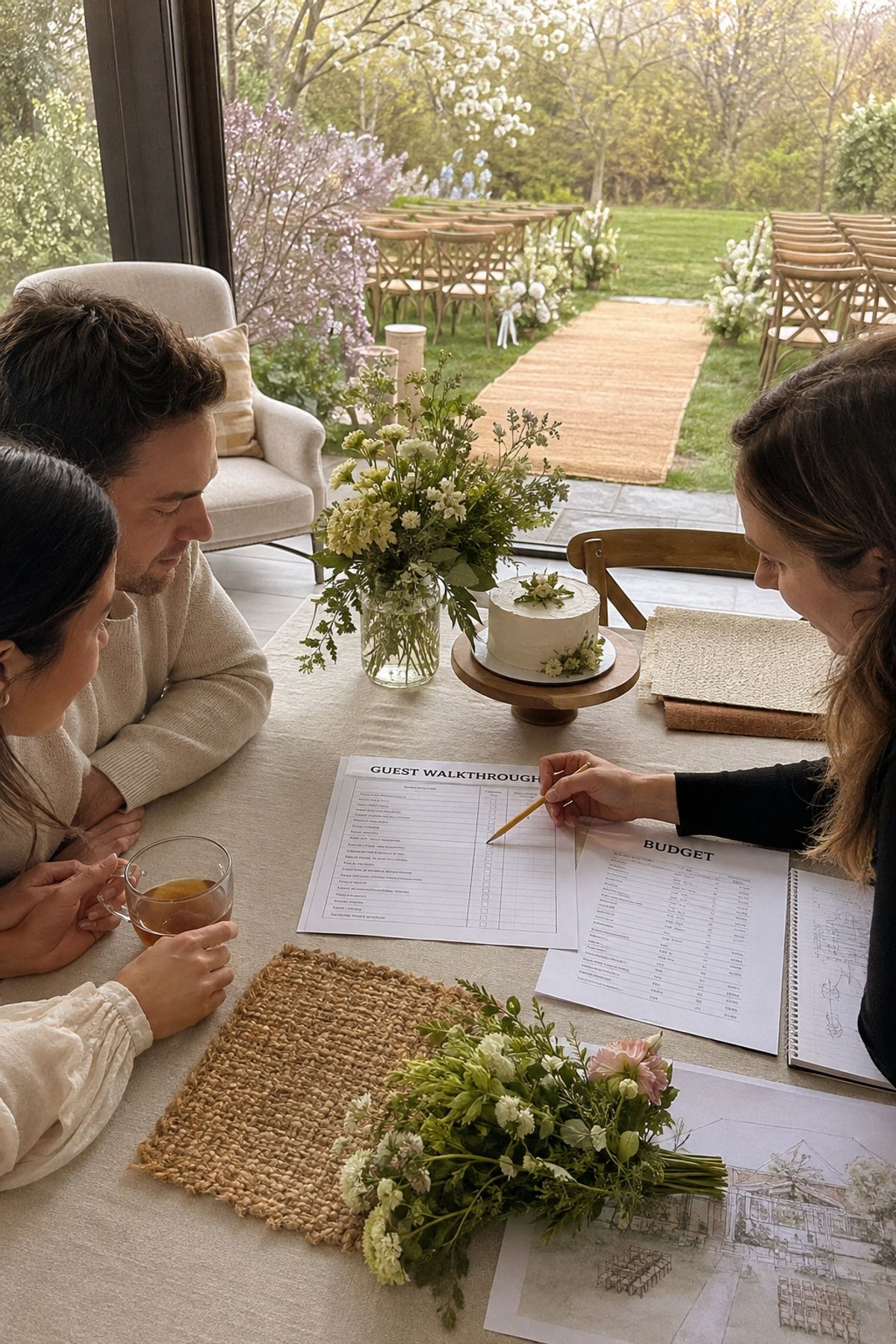
Budget-friendly small spring celebrations do not have to look sparse. Spend on the guest-facing pieces people will actually touch: comfortable seating, a beautiful meal, fresh flowers in small quantities, good lighting, dry paths, and a backup space that feels finished.
Save by choosing a weekday brunch, using seasonal flowers, repurposing ceremony arrangements, hosting in a restaurant garden room, or keeping the cake small and memorable. A tiny guest list makes the budget more visible, so every choice should feel considered rather than simply reduced.
Small spring wedding ideas often become more affordable when the celebration has a clear format. A ceremony plus cake-and-champagne reception needs different rentals than a full dinner. A brunch needs different flowers, music, and lighting than an evening garden party. Once the format is decided, you can stop buying little decorative extras to compensate for uncertainty.
If you are choosing between a beautiful setting and more decoration, choose the setting first. A greenhouse, courtyard, restaurant garden room, or private patio with natural spring texture can reduce the need for rentals and installations. Then spend on the pieces that make guests feel cared for: a better chair, a warmer drink, a dry path, or a meal served at the right pace.
Avoid The Spring Mistakes That Make Small Weddings Feel Unsettled
The most common mistakes are assuming spring means warm, planning an outdoor ceremony without a real backup, using too many pastels without contrast, choosing a venue that is too large, forgetting pollen and soft ground, and placing fragrant flowers too close to the meal.
A thoughtful small wedding rain plan belongs in the first round of decisions, not the week-of panic list. Keep the backup beautiful, choose decor that can move indoors, and give guests clear arrival information. That is what turns spring unpredictability into atmosphere instead of stress.
Before you lock the final design, walk through the day as a guest. Where do they put a coat? What do they see first? How long do they stand before sitting? Can they hear the vows if wind moves through the garden? This simple walkthrough keeps the romance connected to real hosting, which is exactly where a smaller spring celebration can feel most generous.
FAQ
What Are The Best Intimate Spring Wedding Ideas?
The best ideas combine a right-sized venue, seasonal flowers, a soft but edited palette, a comfortable meal, and a weather plan that feels just as beautiful as the outdoor plan. Start with the guest experience, then add spring details where they make the day feel fresher.
What Month Is Best For An Intimate Spring Wedding?
May is often the easiest spring month for warmth and flowers, but April can be lovely if you plan seriously for rain. March works best for couples who like quieter dates, candlelight, early bulbs, and transitional weather. Choose the month based on comfort, venue scale, and floral availability.
How Do You Plan A Spring Wedding Rain Plan For A Small Guest List?
Choose the backup location before booking major decor, confirm the weather decision time, and style the indoor or covered option intentionally. Add clear umbrellas, dry walking paths, chair checks, vendor loading plans, and simple guest communication so rain never feels like a surprise.
What Colors Work For A Small Spring Wedding?
Soft spring colors work best when they have one grounding accent. Try butter yellow with cream and olive, lavender with sage and espresso, pale blue with white and green, or peach with ivory and soft coral. Use the palette in a few meaningful places instead of covering every surface.
What Flowers Are Good For An Intimate Spring Wedding?
Tulips, ranunculus, sweet peas, daffodils, hellebores, anemones, lilac, hyacinth, garden roses, and peonies can all work, depending on timing and location. Ask your florist what is local and sturdy, then use smaller arrangements where guests can appreciate them up close.
How Do You Make A Spring Wedding Feel Intimate?
Keep the space scaled to the guest count, seat people close for the ceremony, use one shared table or clustered tables for dinner, and choose details that invite conversation. Personal vows, a thoughtful meal, soft lighting, and weather-aware hosting often feel more intimate than elaborate decor.
Final Thoughts
Plan the final spring table around low flowers, easy conversation, dry guest paths, and a celebration rhythm that keeps the people closest to you comfortable from arrival through the last toast.
Last update on 2026-10-04 / Affiliate links / Images from Amazon Product Advertising API