

How do you ask guests not to post wedding photos? Tell them in writing weeks ahead, on your website and a details card, with a short reason and a clear end point like “until we share our first photos.” Then repeat it once on the day with a ceremony sign or the officiant, and give guests a private album.
Most no-posting requests fail for a boring reason: they never say when the rule ends. “Please don’t post any photos” sounds like a ban, and people quietly ignore bans, while “please wait until we share our first photos on Sunday” sounds like a favor, and almost everyone is happy to do the couple a favor on their wedding day.
So this guide on how to ask guests not to post wedding photos goes in the order that works: deciding how strict you want to be, telling people early, repeating it in the right places, wording you can copy, and what to do about the cousin who posts the first kiss from the third row anyway. The full picture is in small wedding guest list etiquette.
Recommended Wedding Photo Privacy Essentials
A sign, a shared album and a few paper pieces do most of the work of a no-posting request.


Recommended blogs to read:
- Wedding Social Media Mistakes That Make The Day Feel Less Yours
- How To Tell Guests The Ceremony Is Private Without Making Anyone Feel Secondary
- Small Wedding Website Wording For A Small Guest List
- Editorial Wedding Photos Ideas With Real Wedding Feeling
- Elopement Announcement Wording That Shares The News With Grace
What Steps Make A No-Posting Request Work?
Pick how strict you are being, give the reason before the rule, tell people weeks ahead and repeat the same message wherever guests look.
1. Decide Whether The Rule Is Ceremony-Only Or All-Day
There are three levels, and you need to choose one before you write a single word: phones away during the ceremony only, photos fine but no posting until you share first, or nothing from the day online at all. Each one needs different wording, and mixing them up is how guests end up unsure whether they can even take a selfie at the bar.
2. Put The Reason Before The Rule
People follow a request when they know why it exists. “We want to share our first photos ourselves” or “some of our family keep their lives offline” takes one line and turns a rule into a favor. You don’t owe anybody the full backstory, one honest sentence is plenty.
3. Tell Guests Early Enough To Absorb It

The earlier guests hear it, the less it feels like a scolding.
This little card says it in three lines: “A little request. Please keep wedding photos off social media until we share first. Thank you for celebrating with us.” Deckle-edged cream paper, sage envelopes, a couple of cream roses beside it. Tucked into the invitation, it reaches people six to eight weeks before the wedding, which is plenty of time to get over any mild annoyance.
4. Use The Wedding Website As The Home Base
Put the full explanation in your website FAQ, since that is where guests go to check the dress code and the parking anyway. Every other mention (the card, the sign, the officiant) can then stay short and point back to it. These small wedding website wording examples help if you are writing the rest of that page too.
5. Write A Warm Ceremony Sign

A sign at the start of the aisle catches the guests who never opened the website (you know exactly who they are).
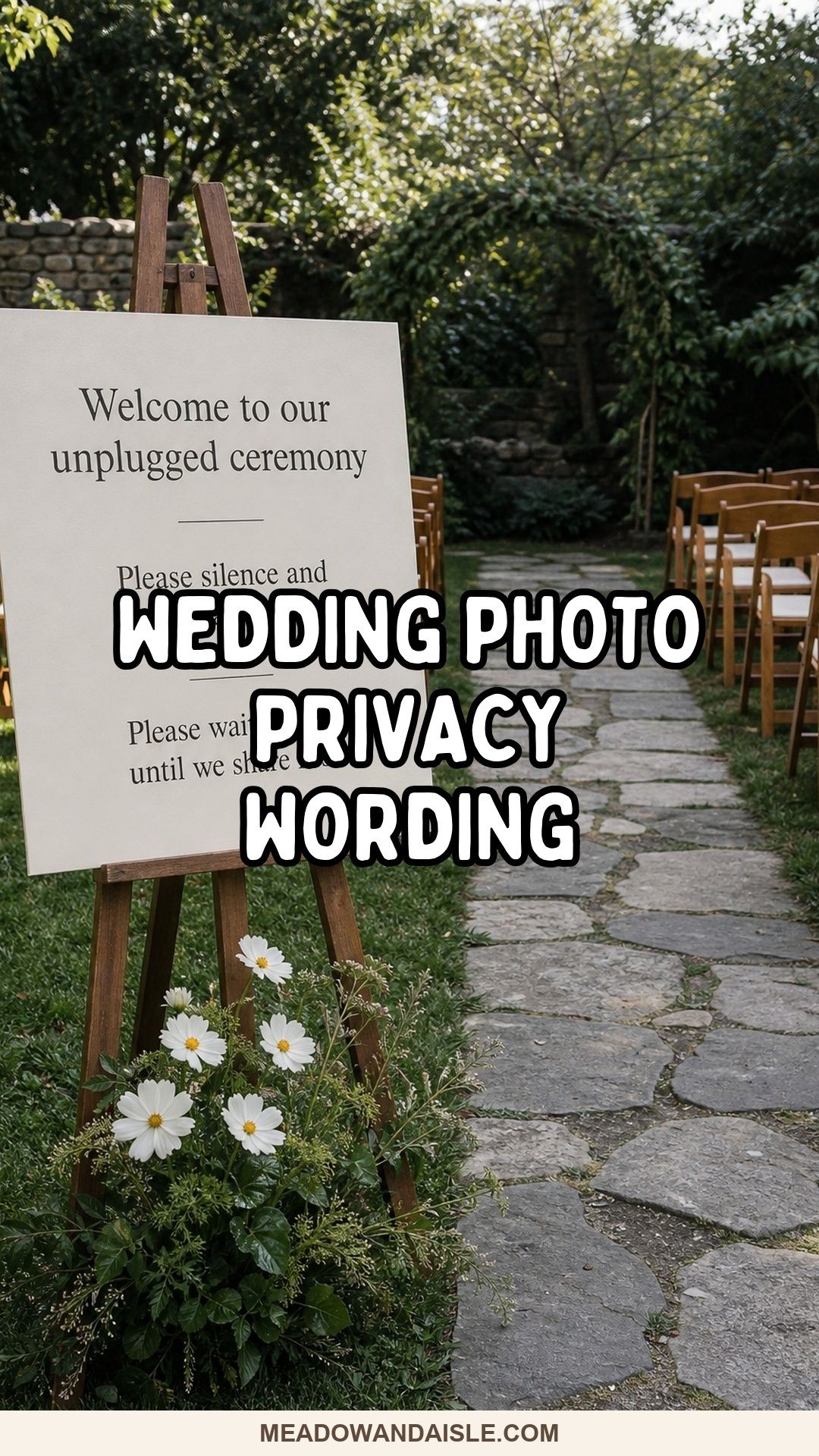
This one stands on a wooden easel next to the flagstone aisle, with white flowers at its feet, and reads “Welcome to our unplugged ceremony. Please silence and tuck away phones. Please wait to post until we share first.” Two polite requests, and the second one is the line most ceremony signs forget.
6. Let The Officiant Say It Out Loud
A spoken reminder right before the processional beats any sign, because everyone is seated and listening. Give your officiant two sentences, something like: “Sam and Alex have a photographer here today, so please put your phones away and watch this with your own eyes. They would love you to wait to post until they have shared their first photos.”
7. Offer A Private Photo Sharing Option
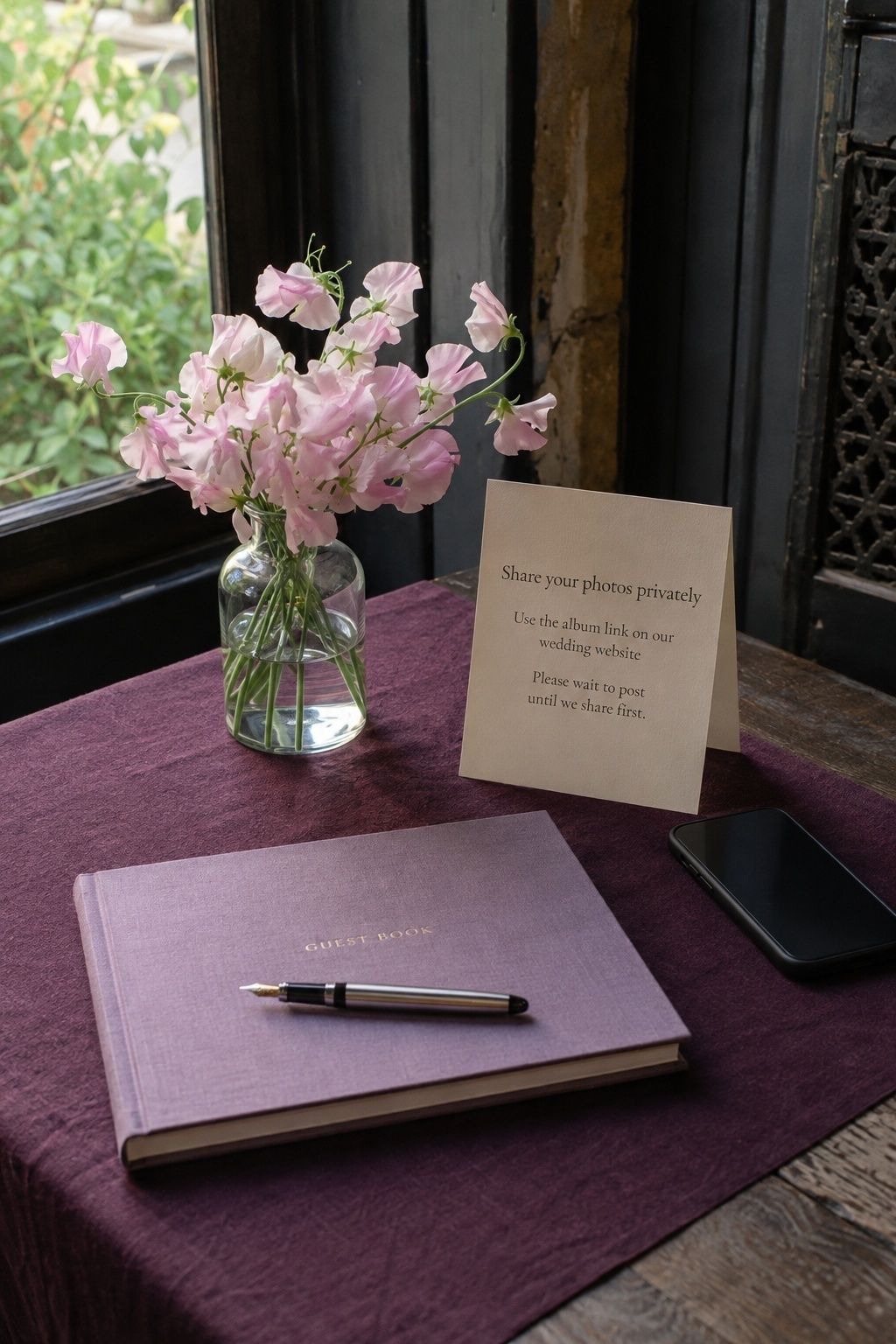
Guests take photos because they love you, so give those photos somewhere to go.
On this table there is a lavender linen guest book with a pen, pink sweet peas in a glass jar and a small tent card asking people to share their photos privately, with a phone lying right next to it. A shared album link or a QR code on a card like that changes “don’t post” into “send them to us,” which is a much nicer thing to hear. (I have been blogging since 2014, so trust me, I understand the itch to share a pretty photo the second you take it.)
8. Tell Guests When Photos Are Welcome
Say plainly where phones are fine, like cocktail hour, the dance floor or the photo booth. Once people know the green-light moments, they stop sneaking shots during the vows.
How Do You Keep The Request Kind When Family Pushes Back?
Talk to the likely posters one on one before the wedding, never correct anyone in public on the day, and keep a calm plan for the post that slips through.
9. Keep The Wording Kind But Direct
Soft is good, vague is not. “We kindly ask” works fine, but “if possible, maybe try to” invites people to decide it isn’t possible. Use “please” once and give a clear time frame.
10. Handle Private Family Situations With Extra Care
Sometimes the reason is serious: someone who must not find out where you are, a guest whose job needs discretion, a family rift. In that case keep the public wording general and tell a few key people the real reason privately, so they can help hold the line without anyone else needing details.
11. Ask Fast-Posting Family Directly
Every family has one person who posts before the cake is cut. Text them a week before: “We’re asking everyone to wait to post until we share on Sunday, and you’re the one I’m counting on to back us up.” Asking for their help usually lands better than a warning.
12. Avoid Public Confrontation On The Day
If you spot someone filming the vows, let it go in the moment. A friend or the coordinator can have a quiet word later, and a scene in the aisle gets remembered a lot longer than a shaky phone video.
13. Have A Plan If Someone Posts Anyway
Send a short, friendly private message: “We’re so happy you came! Could you take that photo down until Sunday? We’d love to share first.” Most people delete it fast and feel a bit sheepish. If it is public and tagged, untag yourself in the meantime.
14. Share Professional Previews Quickly
The quickest way to end the posting itch is to post first. Ask your photographer if they offer sneak peeks within a few days, since a lot of them do, and once your photo is up, everyone else can share theirs. Planning how your own photos will look? These editorial wedding photos ideas are worth a look before you brief them.
15. Make Privacy And Presence Work Together
An unplugged room simply photographs better. Your photographer gets faces in the aisle shot instead of a row of phone screens, and your guests watch you get married with their own eyes, so mention that in the officiant’s line and most people will see the point. For a smaller guest list, read more on planning a small wedding.
Where To Communicate A No-Posting Request
Start with the website FAQ and a details card, then repeat it at the ceremony entrance, in the program and through the officiant, with one gentle reminder at the reception.
Wedding Website FAQ
Write the question guests would ask, “Can we post photos from the wedding?”, and answer it in two lines with the reason and the day you will share.
Details Card Or Invitation Insert
A small insert keeps the request in front of guests who never visit the website. Three lines, no more.
Ceremony Entrance Sign
One sign where people take their seats, readable from a few steps away. A second or third sign starts to feel like a lecture.
Ceremony Program

The program in this photo lies on a lavender napkin on a wooden folding chair, with a little bunch of daisies tied to the side, and lists Welcome, Vows, Rings and Celebration, then a short note underneath about silencing phones and sharing photos privately afterward. Guests read programs while they wait for things to start, so the line gets read.
Officiant Welcome
Put the reminder on the ceremony timeline in writing, so it doesn’t get skipped when everyone is emotional and running five minutes late.
Reception Table Cards And QR Codes
At the reception, swap the reminder for the album. A small card on each table with a QR code and “Share your photos with us here” keeps the pictures flowing to you and off the internet.
Welcome Party Or Rehearsal Dinner
If you host one, mention it in your toast. The rehearsal dinner crowd is usually your closest family and friends, who happen to be the people most likely to post early. For the next step, see post wedding brunch etiquette.
Wedding Social Media Wording To Adapt
Copy one of these and swap in your own details, since each one gives a reason and an end point.
Soft No-Posting Wording
“Take as many photos as you like, we’d only ask that they stay on your phone until [day], when we’ll share our first ones. Thank you for giving us that little head start!”
Firm Privacy Wording
“We’re keeping our wedding off social media completely. Please don’t post photos, videos or location tags from the day. Thank you for respecting this, it means a lot to us.”
Unplugged Ceremony Wording
“Welcome to our unplugged ceremony. Phones and cameras away until we’re married, please, our photographer has the pictures covered.”
Photos Welcome But No Posting Wording
“Snap all you want tonight! Just hold your posts until we share ours on [date], and drop your favorites in our album: [link].”
Family Privacy Wording
“For the privacy of some of our guests, please don’t post or tag photos of anyone at the wedding. Send them to us instead and we’ll happily pass them around.”
How Strict Should Your Photo Policy Be?
As strict as your reason, and not one rule stricter. If you mainly want to post first, an unplugged ceremony plus “wait until we share” is enough, while a full no-posting rule makes sense for serious privacy reasons.
Guest count changes how you enforce it, too. With 20 or 30 guests you can mention it personally to almost everyone, and that personal ask is the most effective version of all. At 120 guests you are relying on paper, signs and your officiant, so keep the rule simple enough to fit on one sign.
How Long Should Guests Wait To Post Wedding Photos?
Ask guests to wait until you have posted, and give them an actual day, because “until we share” with no date can stretch on for weeks. Many couples share a sneak peek from the photographer within a few days, so “until Sunday night” or “until Monday” is a fair ask that people can remember.
Can You Actually Stop Guests From Posting?
Not really, you can only ask, but most guests respect a clear and kind request. Setting social media guidelines is common enough now that the Emily Post Institute mentions it among modern wedding trends, so you are not being difficult by asking. Your job is to make the request easy to follow, and the rest comes down to trust.
Frequently Asked Questions
How Do You Ask Guests Not To Post Wedding Photos?
Ask in writing on your wedding website and a details card, give a short reason and a clear end point, then repeat it once on the day with a sign or the officiant. Offering a private album gives guests somewhere to send their photos instead.
Is It Rude To Ask Guests Not To Post Wedding Photos?
No. It is polite to ask as long as you explain why and say when posting is fine. It only feels rude when the rule appears for the first time on the day or comes with no end date.
What Should You Put On A Wedding Website About No Social Media?
Add an FAQ such as “Can we post photos?” with two lines: what you are asking, why, and the day you will share your own photos. Link your shared album there as well.
How Do You Word An Unplugged Ceremony Sign?
Keep it to two short lines: welcome guests to an unplugged ceremony and ask them to put phones away, then mention that the photographer has the pictures covered. Add “please wait to post until we share first” if posting matters to you.
Can Guests Take Photos But Not Post Them?
Yes, and it is the most popular middle ground. Say that photos are welcome and that posting waits until a set day, then give guests a shared album for their pictures.
What Do You Do If A Guest Posts Anyway?
Send a short, friendly private message asking them to take it down until you have shared, and untag yourself in the meantime. Don’t confront anyone at the wedding itself.
Key Takeaways
- Choose one level: unplugged ceremony, no posting until you share, or no posting at all.
- Give a one-line reason and a specific day guests can post.
- Say it first on the website and a details card, then once more on the day.
- Give guests a shared album so their photos still reach you.
- Handle early posters privately, never in the middle of the wedding.
Write Your No-Posting Sentence Before The Invitations
Before your invitations go to print, write the one sentence you will use everywhere: what you are asking, why, and when people can post. Once that line exists, the card, the sign and the officiant’s welcome are all copies of it, and guests hear the same calm request three times instead of three different rules. You’ll find more like this in the Wedding Guests & Etiquette hub.
Last update on 2026-11-29 / Affiliate links / Images from Amazon Product Advertising API