

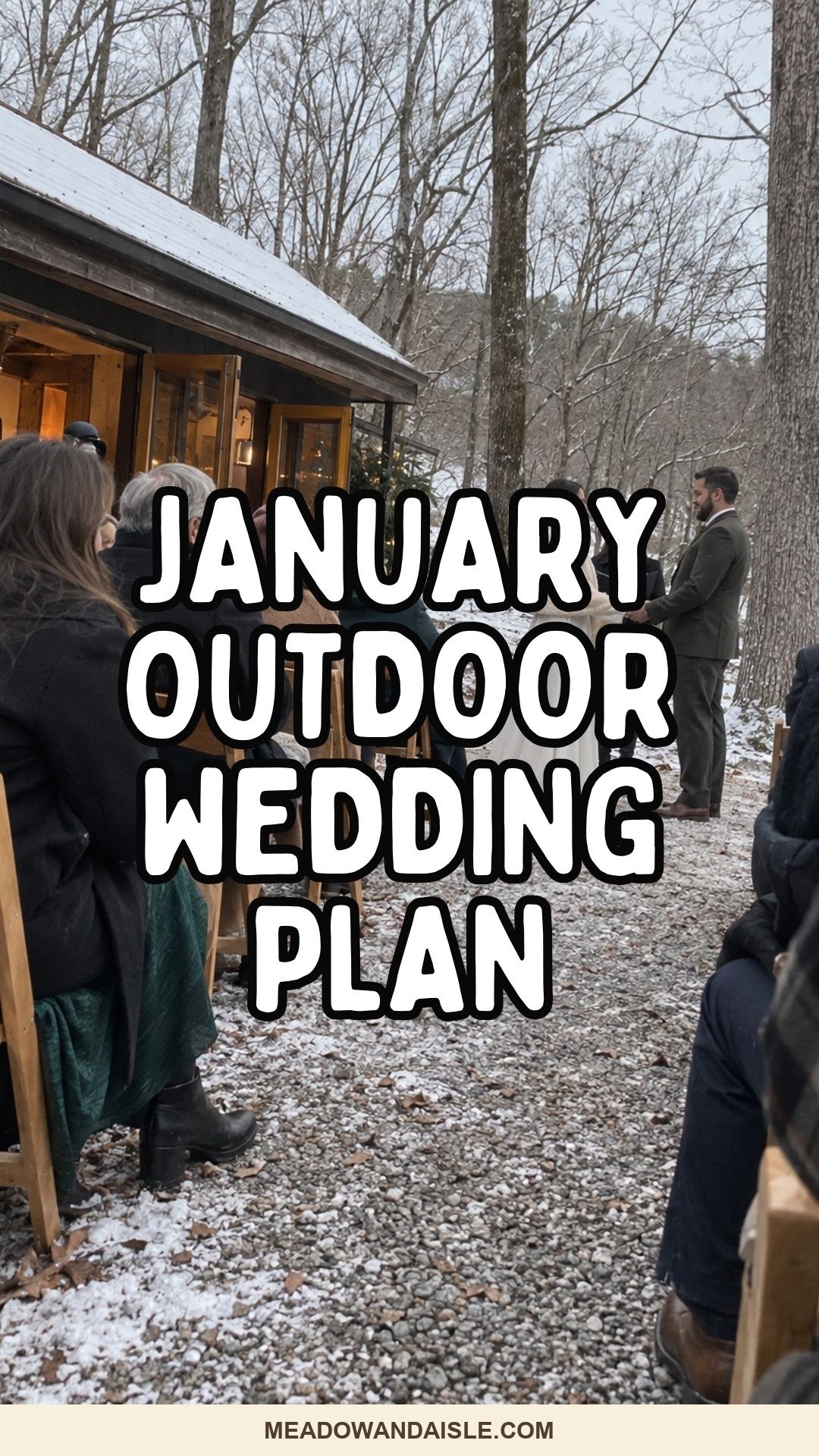
Good January outdoor wedding planning means choosing one short outdoor moment (usually a ceremony under 15 minutes, or portraits) and moving everyone inside for dinner. Support it with heaters where guests stand still, lit and salted paths, a weather call made at a set time, and an indoor backup room you would honestly be happy to use.
Can you get married outside in January? Yes. Should your guests spend the whole afternoon out there? Almost never.
January outdoor wedding planning works when you treat the outdoors as a scene, not a venue. Vows under bare branches, a first look in light snow, ten minutes of portraits on a frosty lawn. Then a warm room, a hot drink and dinner. A small guest list makes this far easier, because you only have to heat one ceremony area, light one path and move 20 or 40 people instead of 150.
Gear worth having for a cold ceremony


Choose one outdoor moment, not an outdoor day
Pick the single outdoor moment that matters most to you and plan everything else indoors. That one decision removes most of the risk.
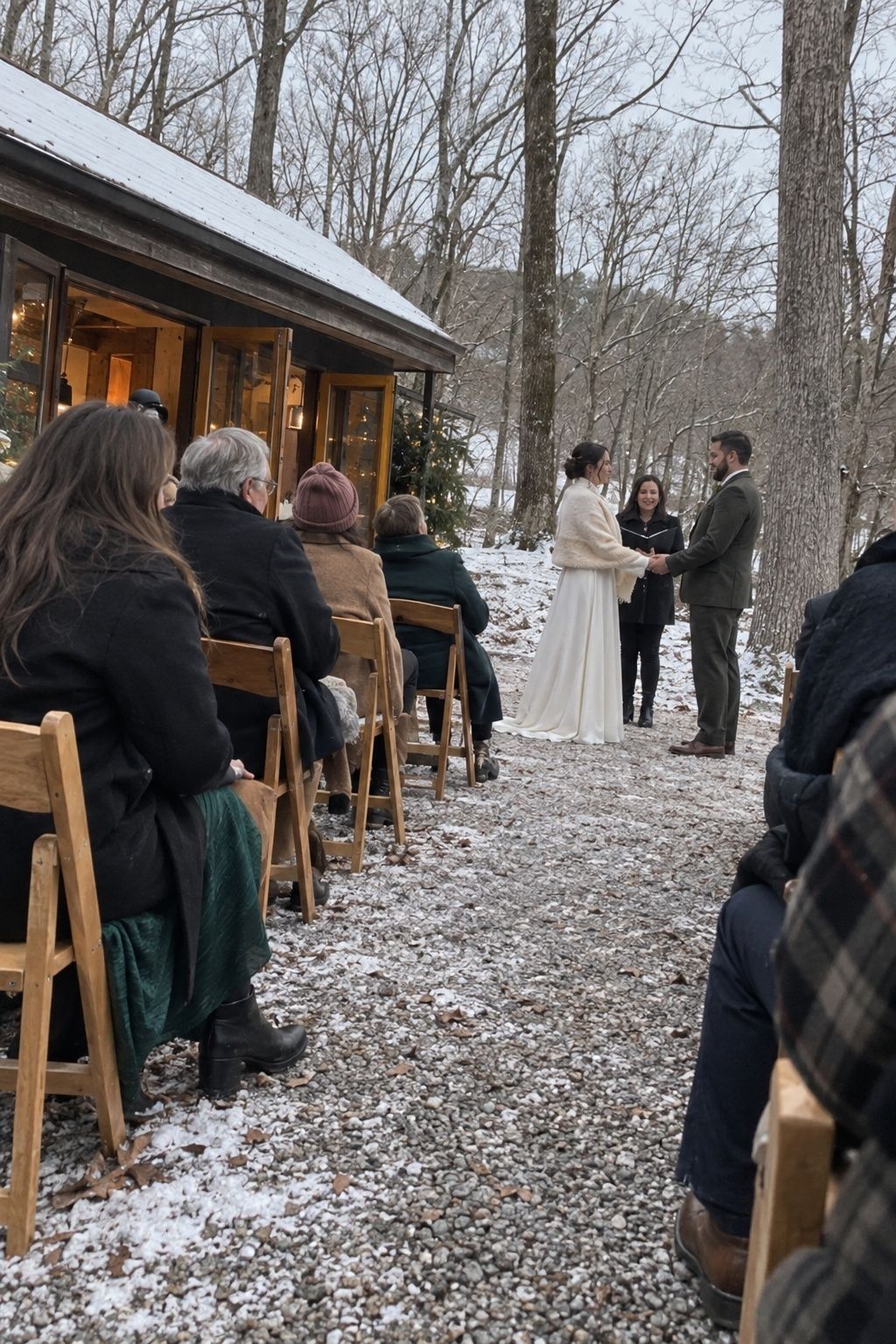
A full outdoor January wedding sounds romantic until people are sitting in wind with damp shoes and dinner going cold on the plate. Choose vows, portraits, a first look or a short heated cocktail hour. One or two winter scenes in the album look memorable. Six hours outside looks like an endurance event.
Here’s how the common formats compare:
| Format | Time outside | Best when |
|---|---|---|
| Outdoor vows, indoor dinner | 15 to 25 minutes | You want guests to see the winter setting |
| Private first look outside | 20 to 30 minutes, couple only | The forecast is cold but pretty |
| Heated patio cocktail hour | 30 to 45 minutes | The patio is sheltered and truly heated |
| Fire pit dessert | Optional, 15 to 30 minutes | Dinner is indoors and the path is lit |
Outdoor vows with indoor dinner
This is the cleanest January structure. Guests arrive, gather for a short ceremony, take a few photos or grab a hot drink, then go inside. The outdoors stays ceremonial and dinner stays comfortable.
Private first look outside
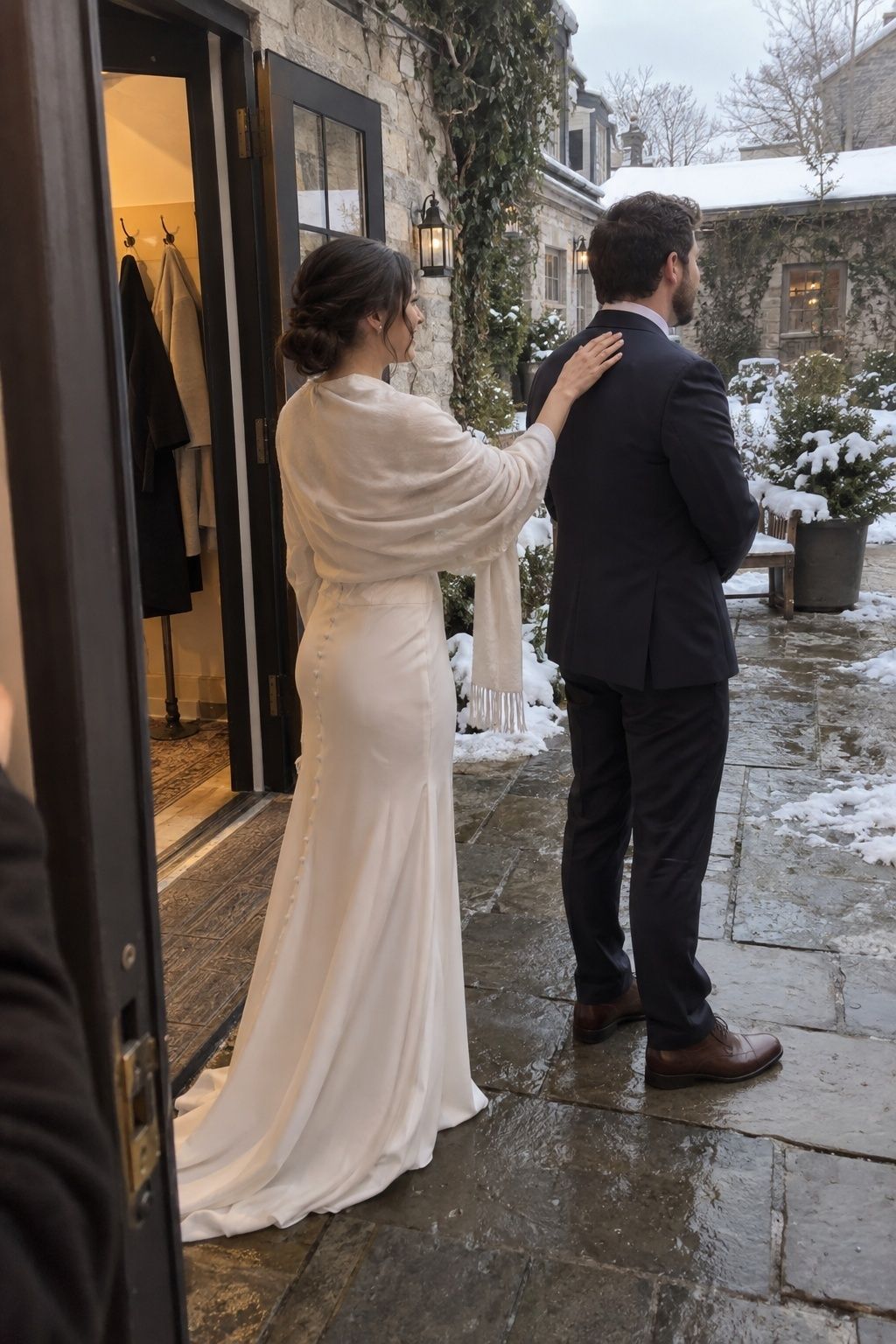
A first look gives you the winter scenery without asking every guest to stand in it. Pick a protected spot close to an indoor room, keep coats within reach and shoot in short rounds.
Heated patio cocktail hour
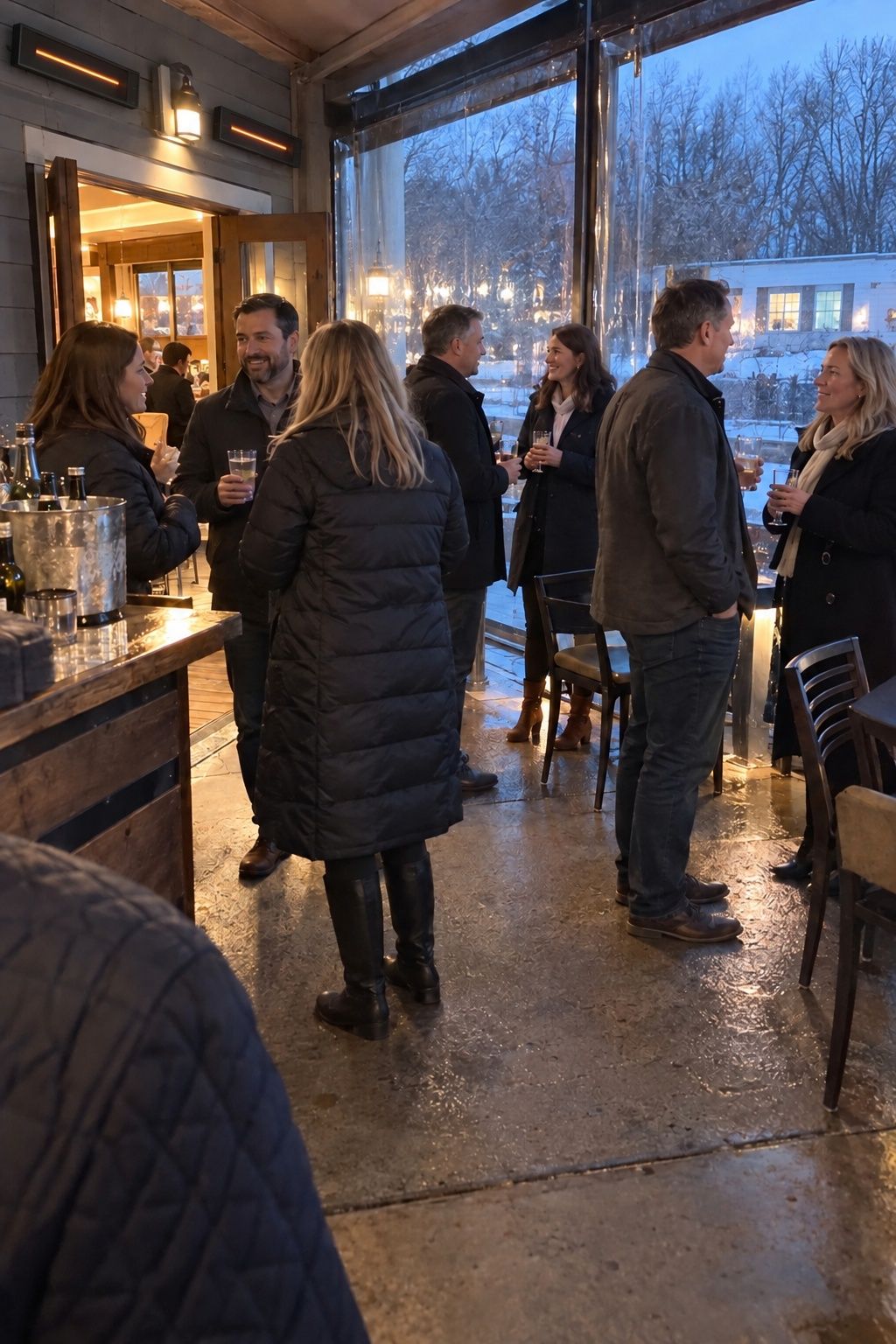
This works only if the patio is properly heated, sheltered from wind and right next to the reception room. Set a clear end time and keep hot drinks moving.
Fire pit dessert

After dinner, an optional fire pit with something simple to eat can be a nice last moment. Keep seating dry, light the path and let people drift back in whenever they want.
Build an indoor backup you’d actually choose
Your backup room should be one you’d be glad to use, because if it feels like a punishment you’ll wait too long to switch.
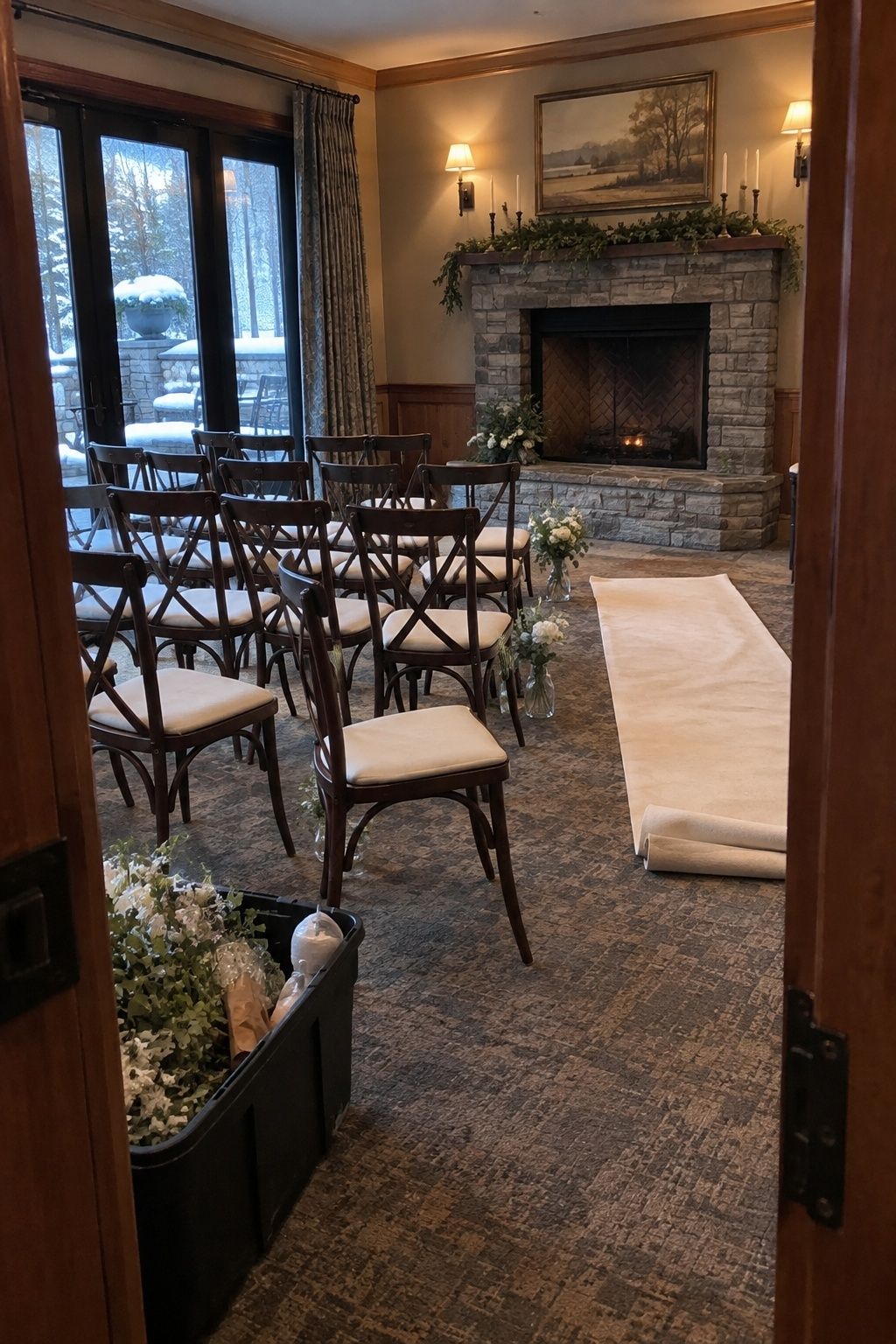
Walk it, measure it and decide how the aisle, chairs, music, flowers and family seating would fit. It should be heated, lit, and styled enough that it looks planned in photos. The Knot has a useful outdoor wedding backup plan checklist if you want to compare notes.
Set a decision time and one decision-maker
Decide in advance when the indoor-or-outdoor call happens and who makes it. Depending on tents, flowers, chairs, musicians and transport, that might be the evening before or four hours before guests arrive. Write the time down and share it with every vendor.
Then hand the job to one person: a planner, venue manager or a calm friend. They watch the forecast, talk to vendors, make the call at the agreed time and run the backup timeline. You should not be refreshing a weather app while someone does your hair.
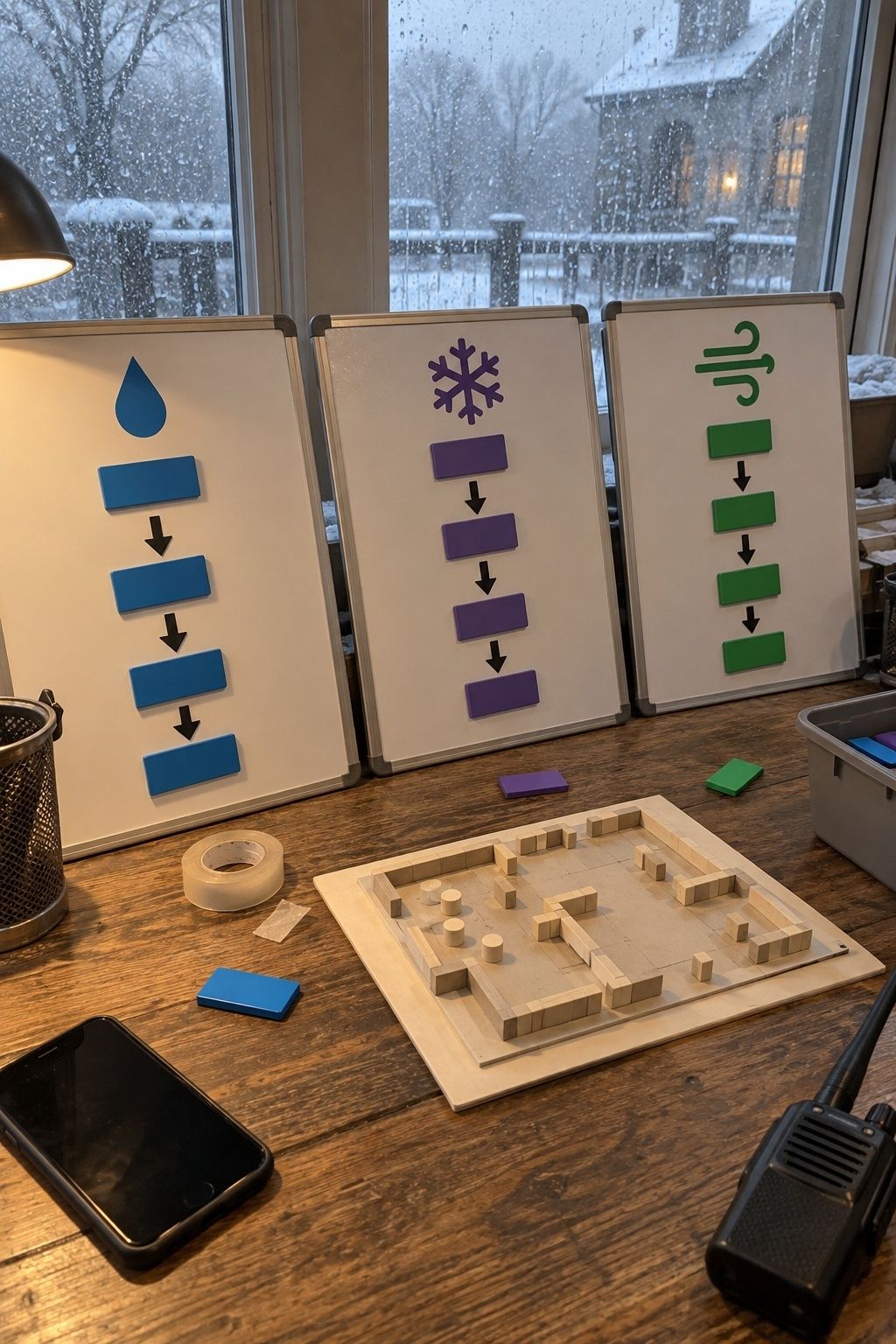
Write rain, snow and wind versions of the timeline
Each kind of bad weather breaks different things, so each needs its own short plan.
| Weather | What it affects | What to plan |
|---|---|---|
| Rain | Paths, paper goods, hems, arrivals | Umbrella station, covered entry, indoor escort table |
| Snow | Parking, timing, shoes, roads | Shoveling and salt, later start buffer, footwear note |
| Wind | Tents, heaters, candles, microphones, hair | Sidewalls down, battery candles, move vows indoors |
| Ice | Every step guests take | Salt, mats, staff at stairs, consider full indoor switch |
For each version, answer the same questions: which door guests use, where family photos happen, where the musicians set up, when chairs move and who calls transport. My winter wedding weather plan walks through it in more detail.
Price heaters and tents early
Heaters and tents belong in the budget from the start, not as a last-minute add. Blankets help, but heaters do the real work.

Ask your rental company about patio heaters versus tent heaters, fuel, electrical load, generator placement, ventilation, delivery, venue rules and whether heaters can run during the ceremony. Ask them to size the heat to the actual space and expected temperature. Then price the boring parts: cords, fuel, an attendant, sidewalls, tent doors and any permits.

Sidewalls hold heat, but they also change airflow, entrances and condensation. Ask which sides should be solid, which clear and which open, and how fast the crew can switch them if the wind turns. In a small tent, guest flow matters most. People in long coats, grandparents, servers and musicians all need room to move without squeezing past a heater.
Keep the ceremony under 15 minutes
A January outdoor ceremony should run 15 minutes or less. Guests stay present when they aren’t counting how long their fingers have been cold.
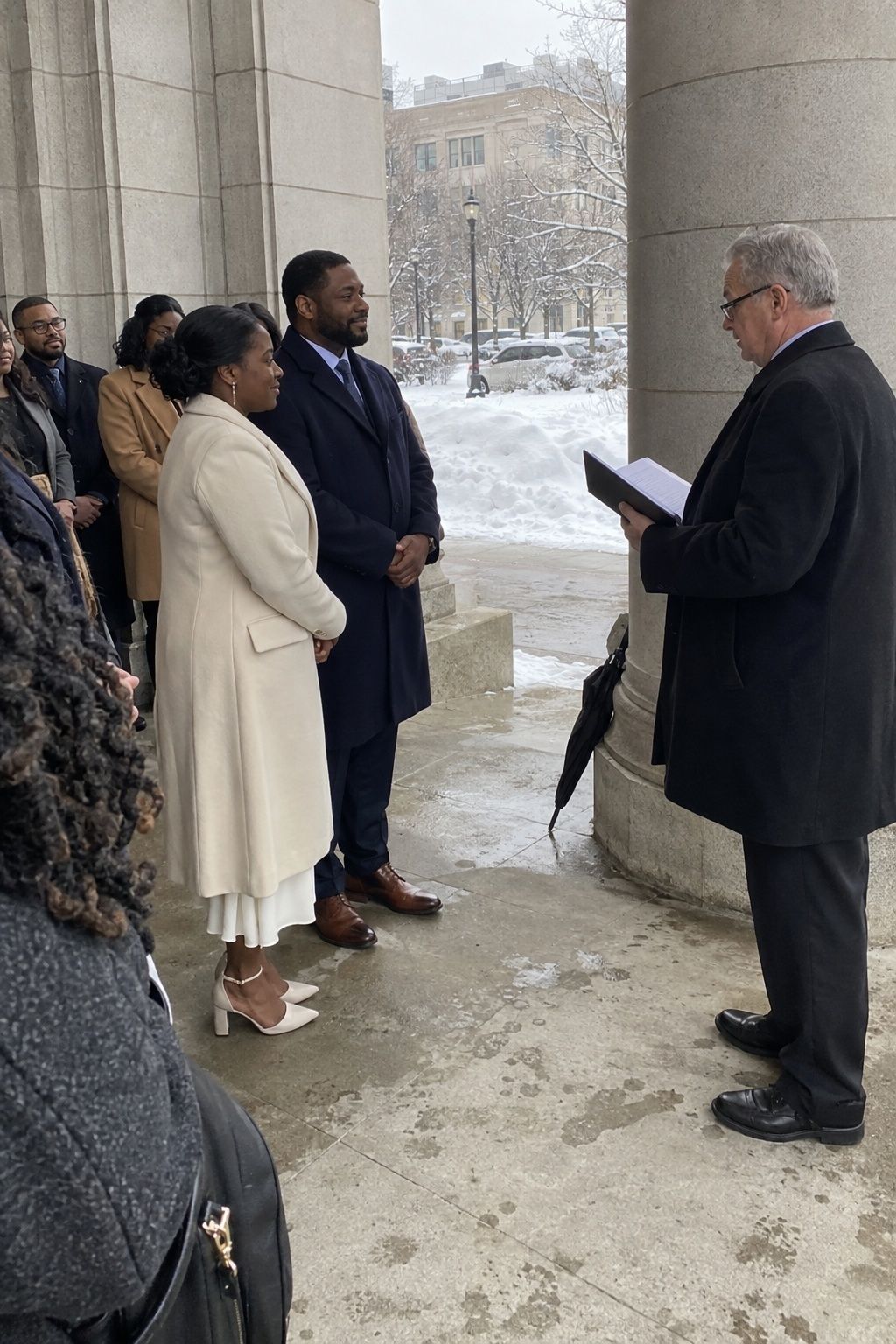
A short processional, one or two readings, a focused officiant script and vows that don’t wander can feel complete in that time. If you want longer vows, a unity ritual or family blessings, move them indoors or say them privately at the first look. More ideas for the vows themselves are in my outdoor winter wedding ceremony ideas.
Make paths dry, lit and obvious
The guest experience starts at the parking lot. Walk every route guests will use, at the time of day they will use it.

Trace the path from cars or shuttle to coat check, restrooms, ceremony seats, cocktail hour and dinner. Look for ice, mud, puddles, loose gravel, stairs, slopes and grass that softens after rain. Fix them with mats, salt, porch entrances, umbrella stations and someone with towels.

Then do it again at dusk. A venue that’s easy at 3 p.m. can be confusing by 5 p.m. in January. Light parking to ceremony, ceremony to cocktails, cocktails to restrooms, and dinner to the exits. Lanterns, low path lights, uplighting, candles in glass and a couple of staff with flashlights all help. Safe footing comes first, pretty second.
Tell guests what to expect, briefly. One line on your wedding website covers it: “Ceremony outside on grass, about 15 minutes, then heated indoor reception.” That sentence saves people from stilettos in thawing ground and coats that are too thin.
Keep guests warm where they stand still
Put warmth where guests pause, not where they’re walking through. That’s the difference between comfort and clutter.
Blankets at the ceremony rows
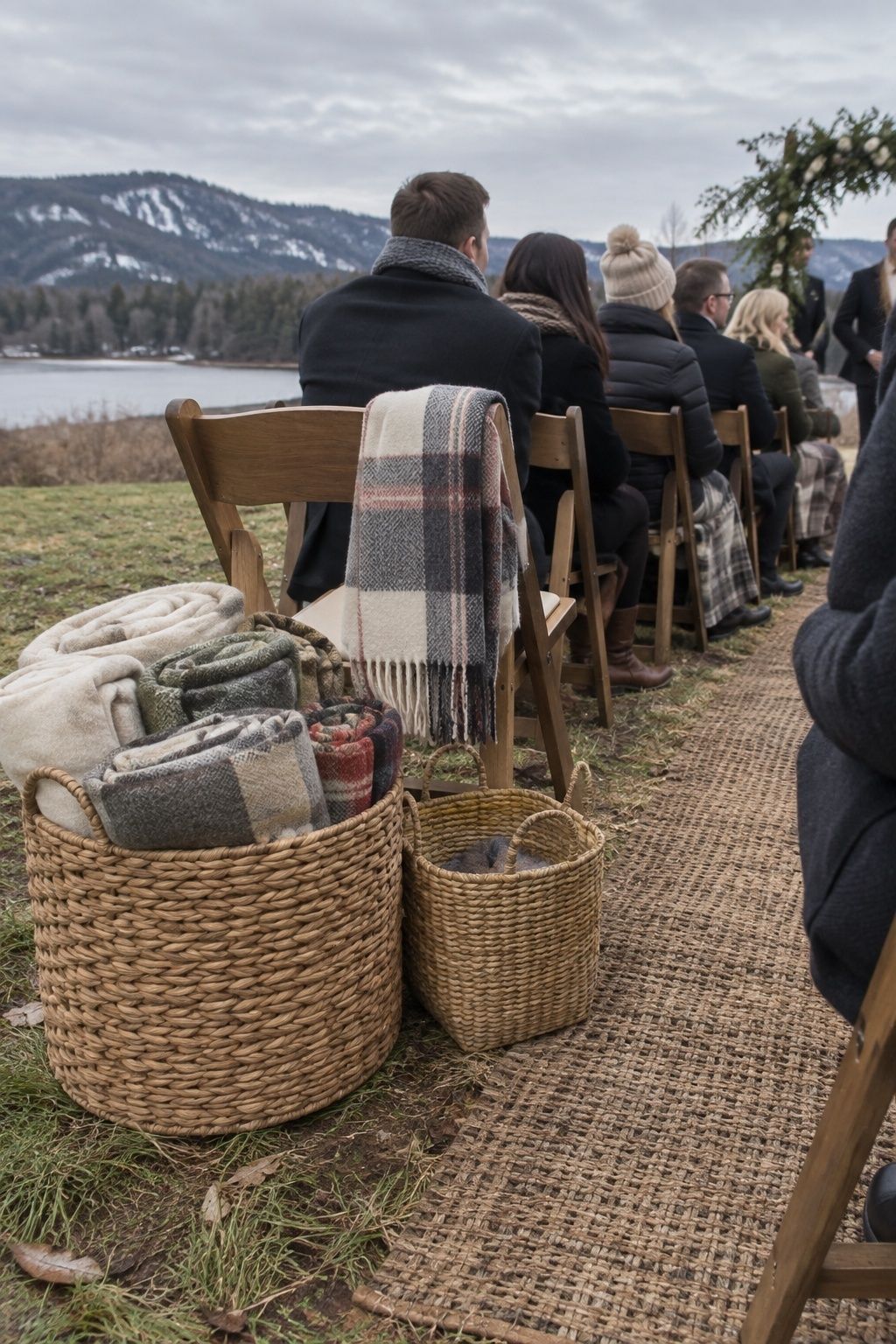
Blankets help where people sit still: ceremony rows, a fire pit bench, a lounge. They’re useless at a bar line where hands are full. Use sturdy baskets, fold them neatly and set a return spot.
Hand warmers at the entrance
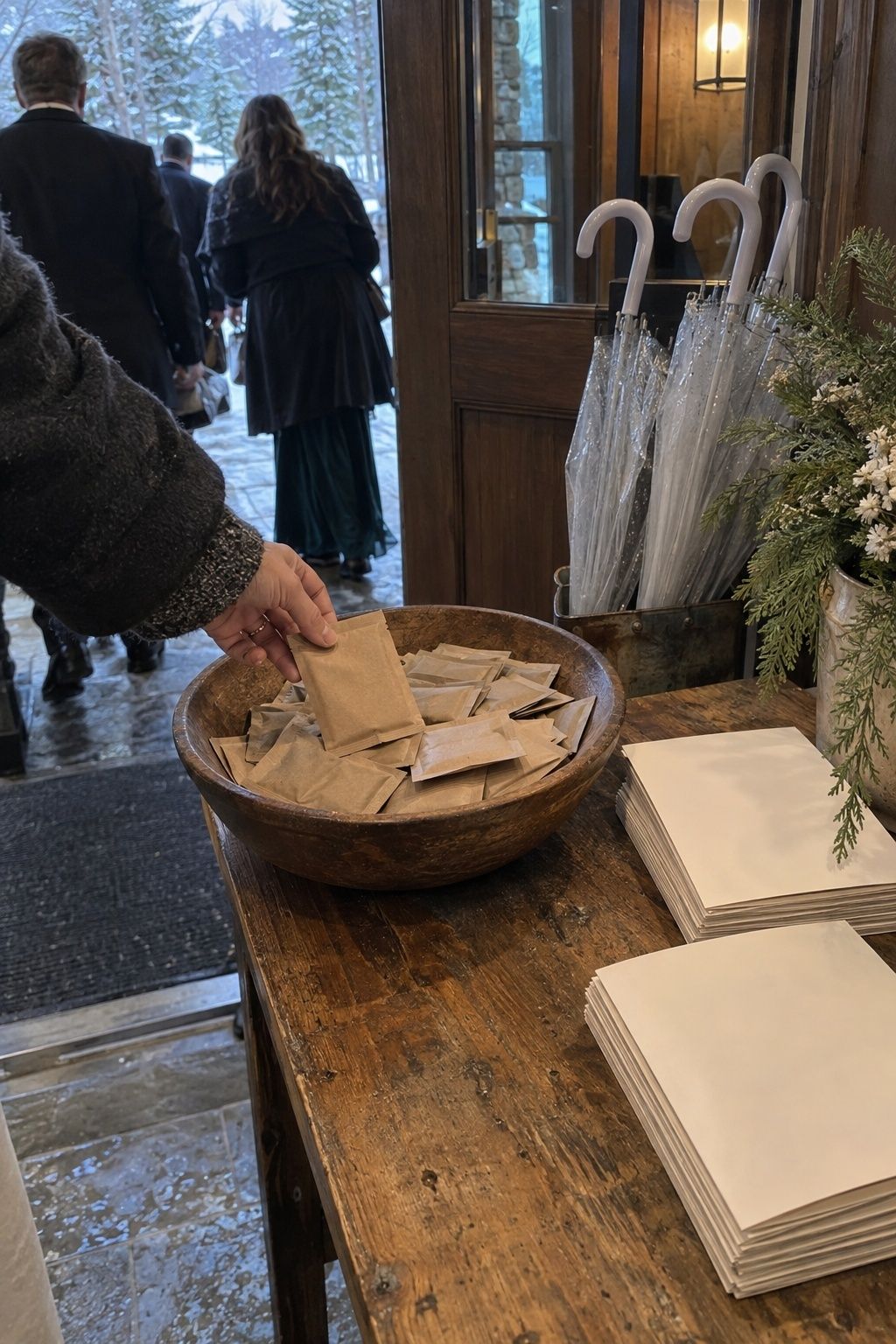
Hand out warmers before people get cold, next to programs or welcome drinks with a small sign. Tuck a few into the wedding party’s pockets and give extras to the photographer. Warm hands make holding bouquets and rings much easier.
Hot drinks before or after the ceremony

Mulled cider, tea, coffee or hot chocolate gives guests something warm to hold. If the ceremony is very short, serve it right after, at a staffed station by the exit, so everyone can reset before going inside.
Coat check where people come in

Put coat check near arrival with tags, racks and a person. Bulky coats over chair backs make a small dining room feel cramped. The winter wedding guest comfort ideas post has a fuller checklist, and Markel’s guide to staying warm at a winter wedding is worth a skim too.
Protect flowers and paper from the weather
Cold, wet and wind are hard on flowers and paper, so ask your florist and stationer about both before the day.
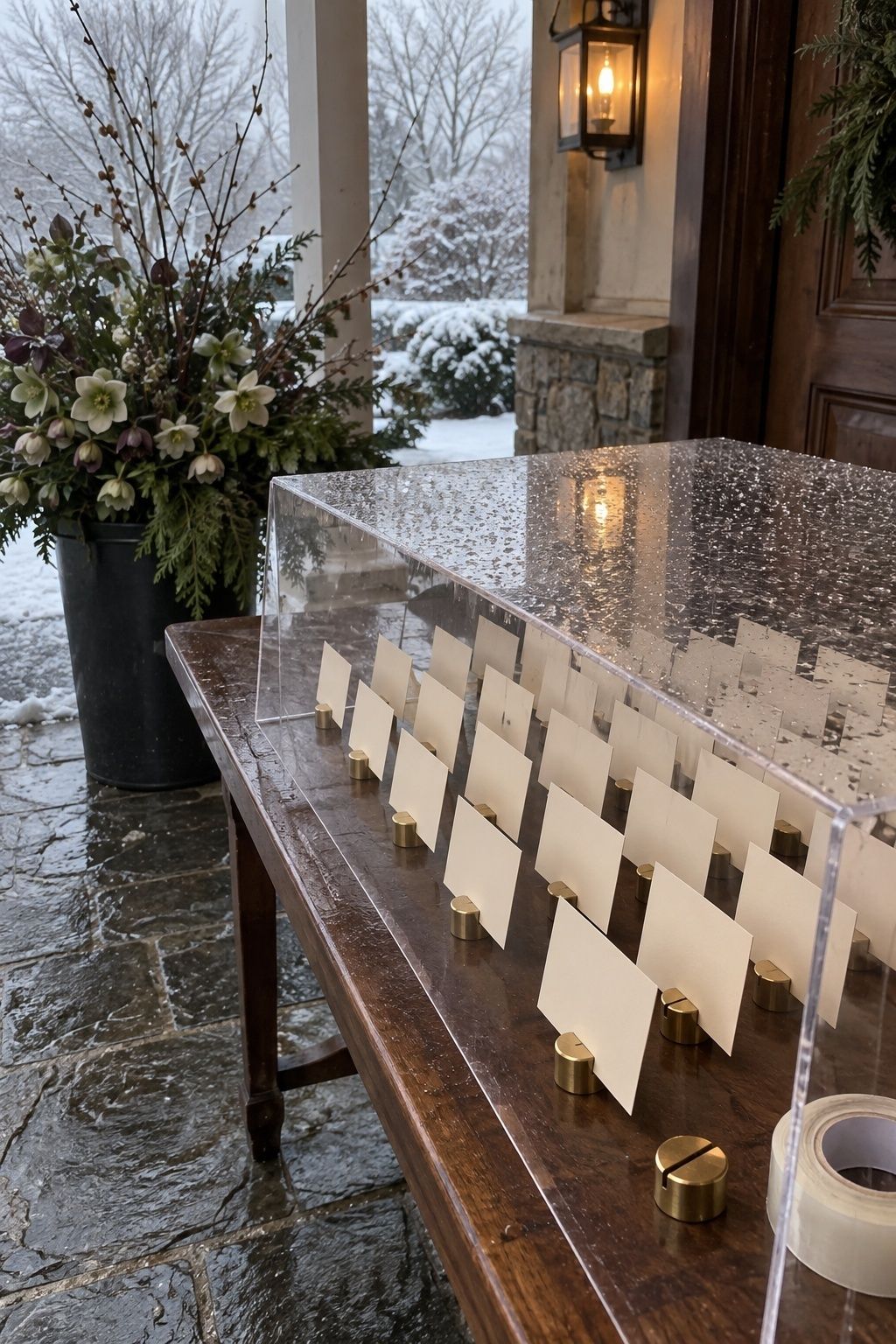
Ask which flowers tolerate low temperatures, when to install them and what happens if the ceremony moves indoors. For paper, use heavier stock, weighted holders or acrylic covers, or move the escort display inside if the day looks damp.
Plan portraits in short sets
Winter portraits look great, but people need time to warm up between them. Plan the recovery, not only the shots.
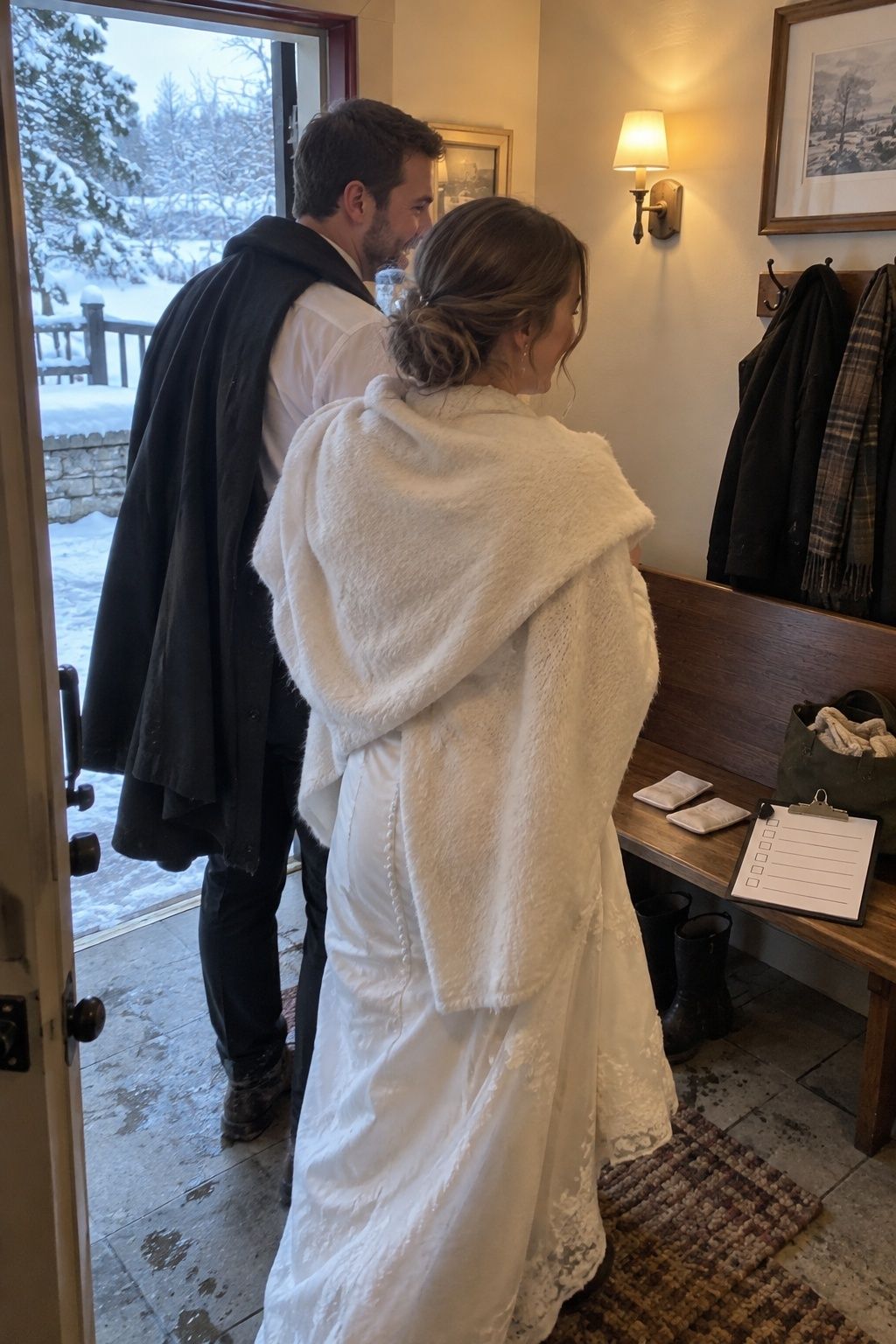
Shoot in sets of five to ten minutes, with coats on between frames, hand warmers in pockets and a heated room close by. Write the family shot list in advance so nobody stands outside while groupings get sorted. My January wedding photo ideas go into locations and timing.
Keep dinner indoors or properly heated
Dinner is the worst moment to gamble on January weather. Guests sit still for an hour or more, food cools fast and service slows in the cold.
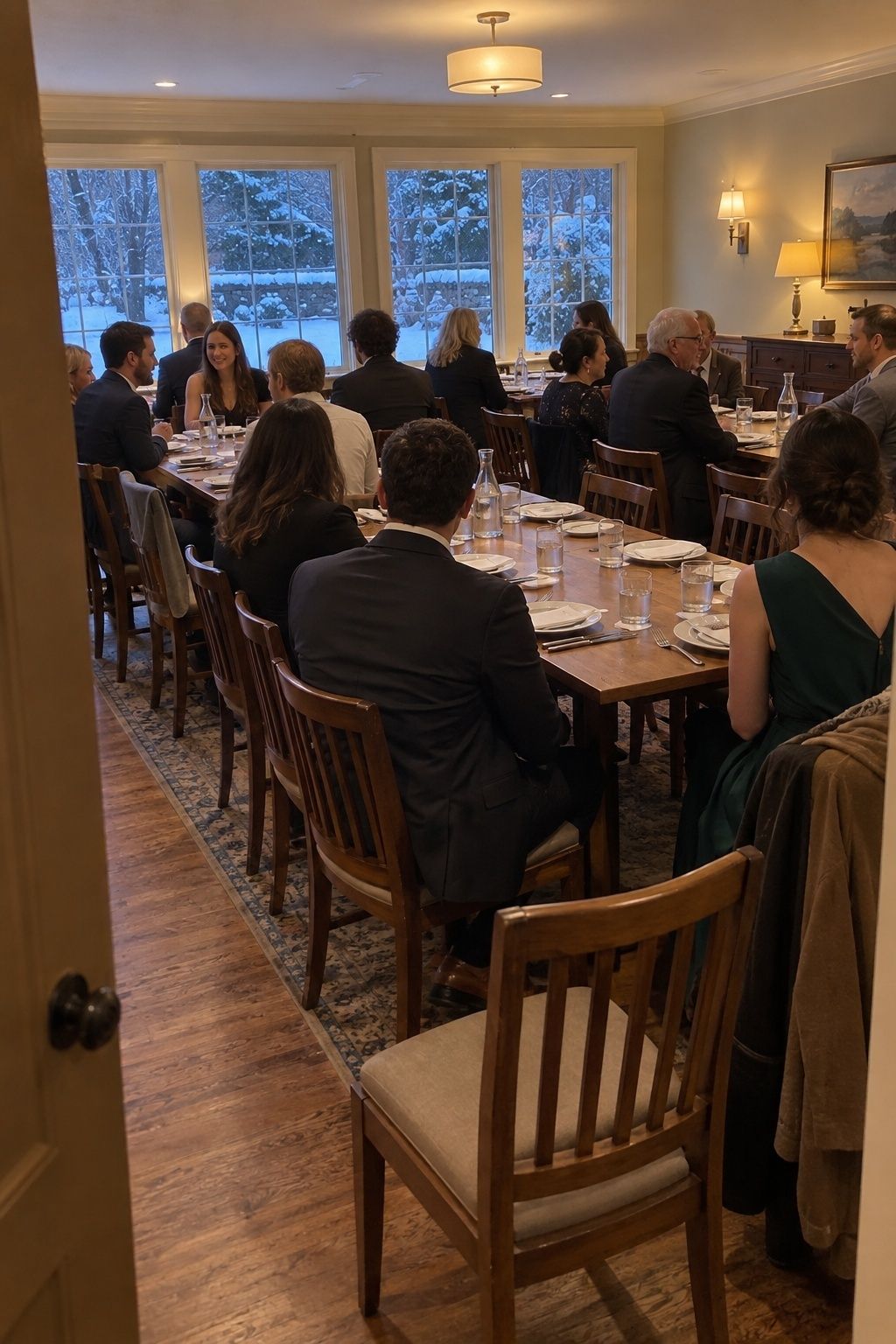
If dinner must be outside, treat heating, flooring, sidewalls, restrooms and server routes as essential, not optional. For most small weddings, an outdoor ceremony followed by an indoor dinner is the kinder choice. For a wider look at the season, see these winter outdoor wedding ideas.
Key takeaways
- Plan one short outdoor moment and move dinner indoors.
- Keep the outdoor ceremony to 15 minutes or less.
- Set a weather decision time, give the call to one person and write rain, snow, wind and ice versions of the timeline.
- Size heaters to the real space and put warmth where guests sit or stand still.
- Walk and light every path at dusk, and tell guests about footwear on the website.
FAQ
Can you have an outdoor wedding in January?
Yes, you can have an outdoor wedding in January if the outdoor part is short and backed by heat, lighting, dry paths and an indoor backup. Most couples keep vows or portraits outside and hold dinner indoors.
How long should a January outdoor ceremony be?
A January outdoor ceremony should be 15 minutes or less. Keep readings short, start on time, and move longer rituals or personal vows indoors if it’s very cold.
Do you need a tent for a January outdoor wedding?
You need either a heated tent or an indoor backup room, and a tent has to be planned as a weather system. Ask about heaters, sidewalls, flooring, wind ratings, generators and exits before you book it.
How do you keep guests warm at a January outdoor wedding?
Keep outdoor time short, seat guests out of the wind and add heaters where they stand still. Blankets at ceremony rows, hand warmers at the entrance and hot drinks right after the vows make the biggest difference.
When should you decide to move a January wedding indoors?
Set the decision time weeks in advance, often the evening before or a few hours before guests arrive. One person should make the call and tell every vendor at once.
What should guests wear to an outdoor January wedding?
Guests should wear warm layers, a real coat and stable shoes that can handle grass, gravel or snow. Say on the website exactly what part is outside and for how long.
Ready for the cold
January outdoor wedding planning comes down to editing: one beautiful scene outside, everything else warm and dry. Plan that scene carefully, then let the indoor part of the day do the hosting. If February is also on your shortlist, compare notes with my February outdoor wedding planning guide, and see the WeddingWire take on cold-weather outdoor wedding logistics.
Last update on 2026-10-05 / Affiliate links / Images from Amazon Product Advertising API