

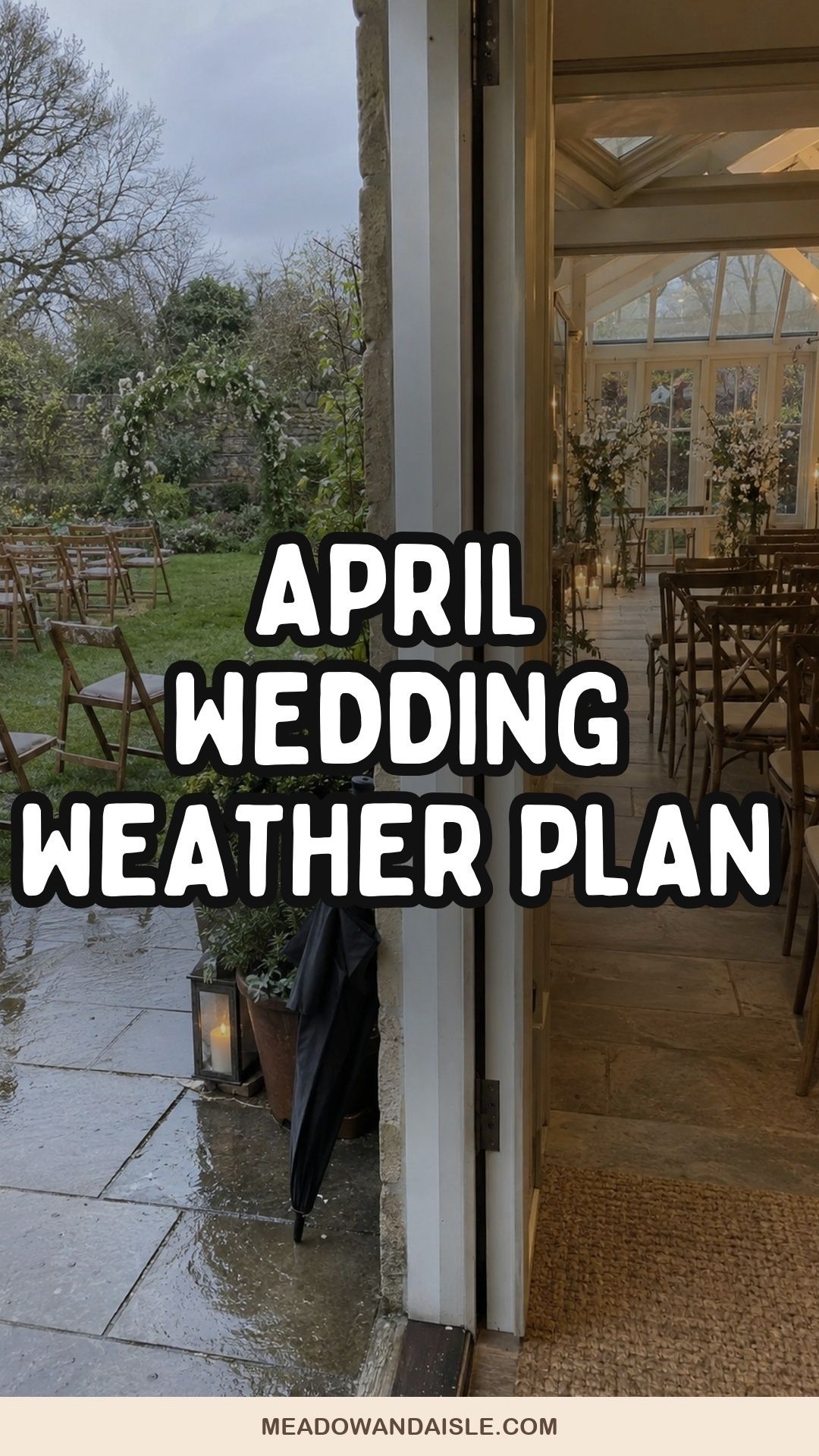
April outdoor wedding planning works best when the beautiful version and the rainy version are designed at the same time. Choose a venue with a real backup, decide your weather call early, protect guests from rain, wind, mud, and chill, and make every covered space feel like part of the celebration.
An April wedding can feel impossibly romantic: tender new greenery, soft flowers, longer light, and that particular spring feeling of everything waking up at once. It can also bring rain before cocktails, wind during portraits, soft grass under ceremony chairs, and a temperature drop the moment dinner begins.
That does not make an outdoor wedding in April a bad idea. It simply means the plan needs to be honest. For small ceremonies and intimate receptions, the advantage is flexibility: fewer guests to move, a smaller tent to warm, an easier covered cocktail hour, and a backup room that can still feel personal instead of like a compromise.
Recommended Wedding Products


You Might Also Like These Blog Posts
- September Outdoor Wedding Planning for Weather With a Mood
- November Outdoor Wedding Planning When the Cold Is Part of the Plot
- October Outdoor Wedding Planning for Crisp Air and Calm Guests
- May Outdoor Wedding Planning for Sun, Showers, and Guests Who Stay Happy
- August Outdoor Wedding Planning Without the Meltdown
- March Outdoor Wedding Planning for Weather With Opinions
April Outdoor Wedding Planning Decisions
April outdoor wedding planning is not about predicting the forecast perfectly. It is about giving every likely forecast a graceful place to go. Rain, wind, cold grass, cloudy light, and damp paths should be discussed before invitations are mailed, contracts are signed, and decor is chosen.
These decisions fit gardens, courtyards, patios, vineyards, restaurant terraces, tents, private estates, and venues with indoor backup rooms. The goal is a celebration that still feels like itself when the sky changes its mind.
Choose a Venue With a Real Indoor Backup
A true April wedding weather backup is more than an empty room mentioned during the tour. Ask where the ceremony, cocktail hour, dinner, music, bar, gifts, and guest belongings go if rain arrives. Then ask how long the venue needs to reset each space.
For a small guest list, the backup can feel charming when it is chosen intentionally. A conservatory, dining room, barn, gallery, porch, or candlelit hall may suit the day better than a soaked lawn and nervous guests.

Set a Rain Decision Deadline Early
Do not wait until everyone is already dressed to decide whether the ceremony stays outside. Set a rain decision deadline with the venue, planner, florist, rental team, photographer, caterer, and musicians, then write it into the timeline.
Many April outdoor wedding ideas only work if people know when to act. A morning call for an afternoon wedding, or a midday call for an evening wedding, gives vendors time to move chairs, protect flowers, dry paths, and update guests without panic.
Ask About Tent Sidewalls Before You Need Them
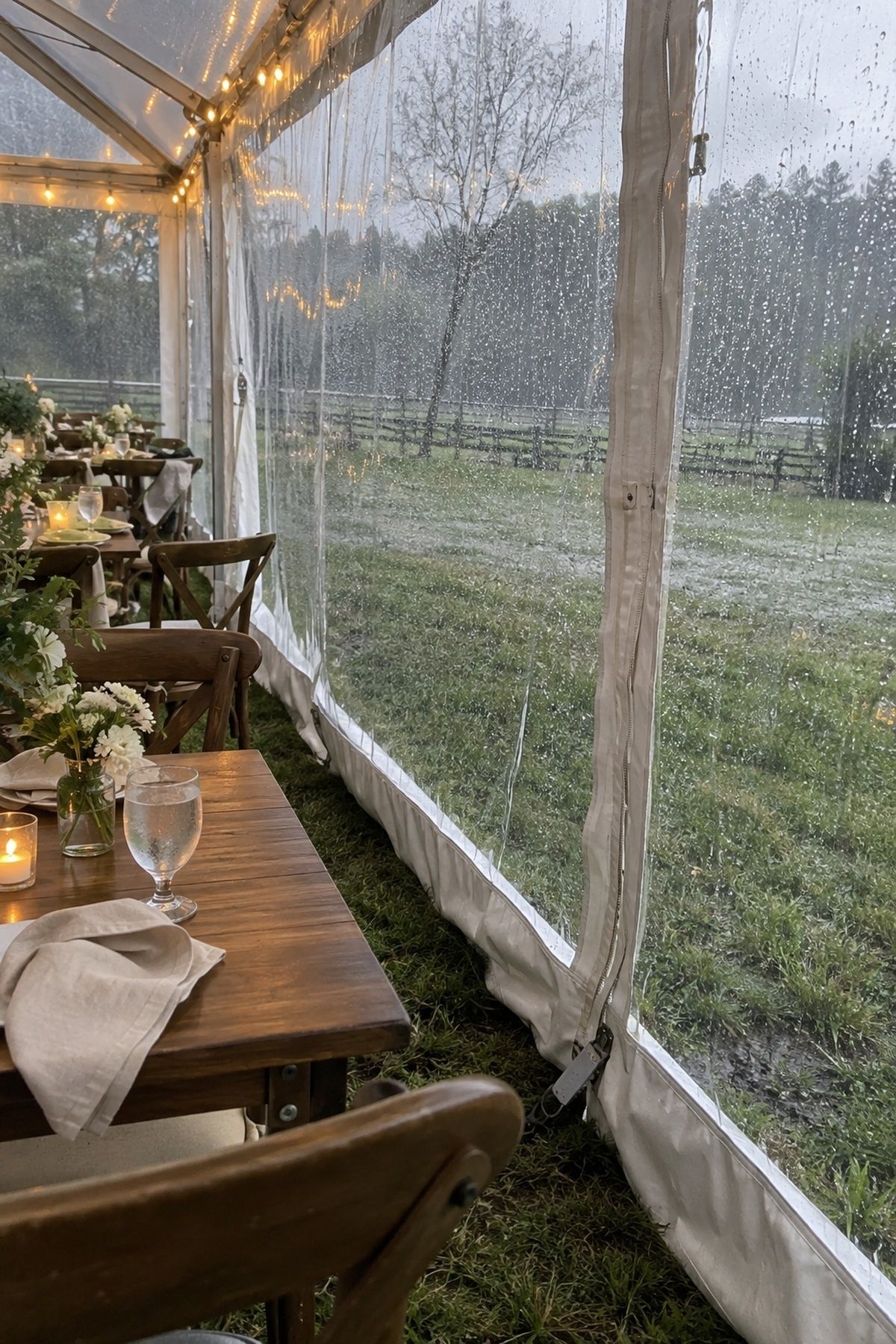
A tent without sidewalls can still let rain blow across tables, chill guests during dinner, and leave linens damp before the meal begins. During spring outdoor wedding planning, ask whether sidewalls are included, optional, clear, solid, zippered, or priced separately.
Also ask about tent permits, setup timing, flooring, lighting, heaters, airflow, and how guests enter without walking through wet grass. April wedding tent planning is not just the roof. It is the whole little weather system around the celebration.
Protect the Ground From Mud
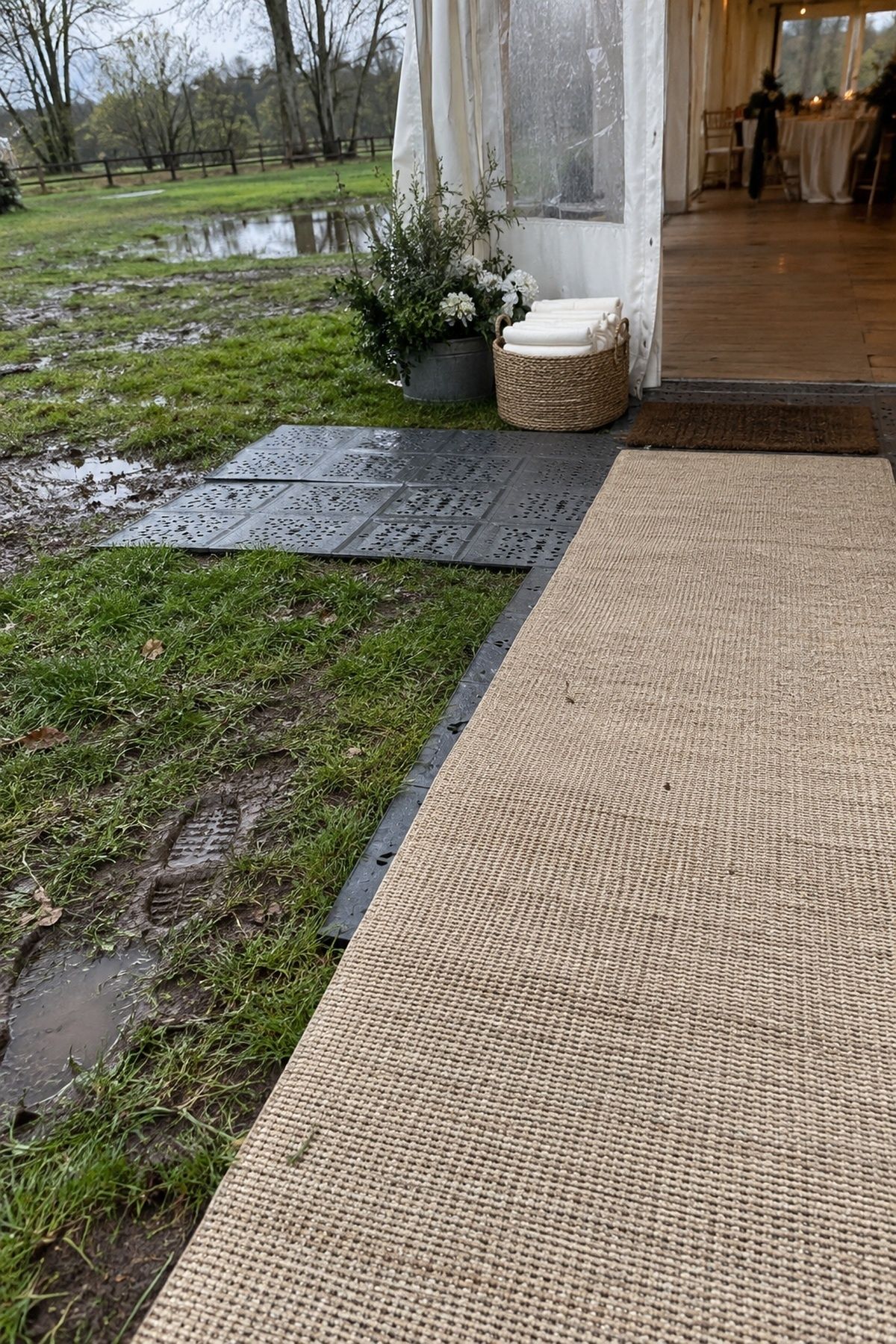
Mud is one of the easiest April details to overlook because it rarely appears in mood boards. Visit the venue after rain if possible, and notice where water gathers near parking, ceremony aisles, tent entrances, garden paths, and restroom routes.
Use aisle mats, temporary flooring, covered walkways, gravel paths, rugs with grip, shoe mats, and towel baskets where guests naturally pause. This kind of ground planning protects dresses, suits, mobility needs, and the mood of the day.
Keep the Ceremony Short if It Is Outside
An outdoor April ceremony can be beautiful, but it should not ask guests to sit in a cold breeze for too long. Keep the processional simple, the readings meaningful, and the vows focused if the ceremony will remain outdoors.
Short does not mean rushed. It means every minute earns its place. For an intimate wedding, guests often feel more present when the ceremony is close, warm, and emotionally clear.
Plan Warm Waiting Areas
April wedding guest comfort often depends on the quiet moments between formal events. Guests may arrive early, wait for family photos, linger near the bar, or move from a sunny ceremony into a cooler evening reception.
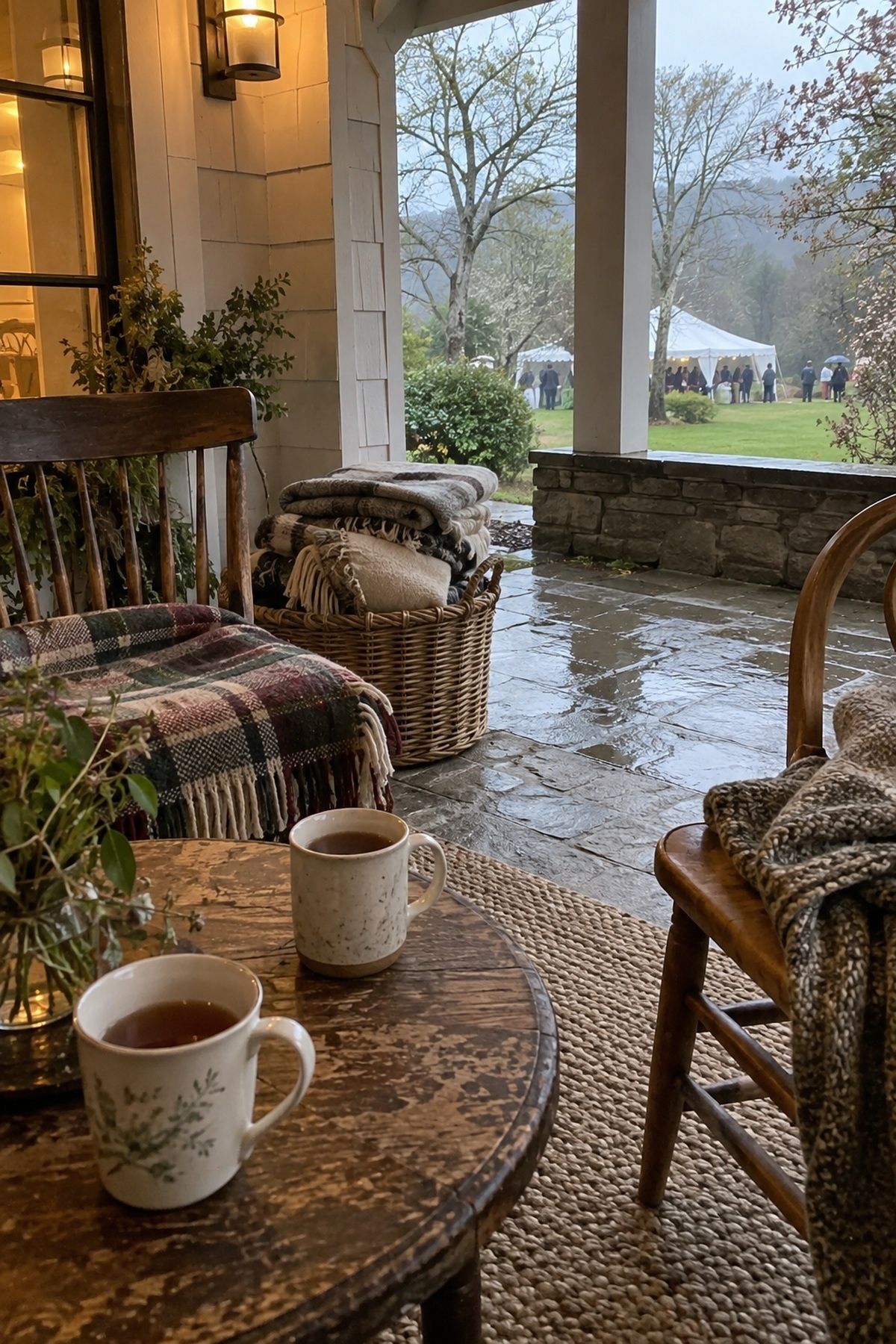
Create warm waiting areas with heaters, lap blankets, hot drinks, wind protection, and seating that is close enough to feel hosted. Smaller weddings make this easier because comfort details can be placed exactly where people gather.
Prepare for Wind, Not Just Rain
Wind can be more disruptive than a light shower. It lifts menus, topples signs, chills exposed ceremony rows, tangles veils, dries out flowers, and makes microphones difficult to hear.
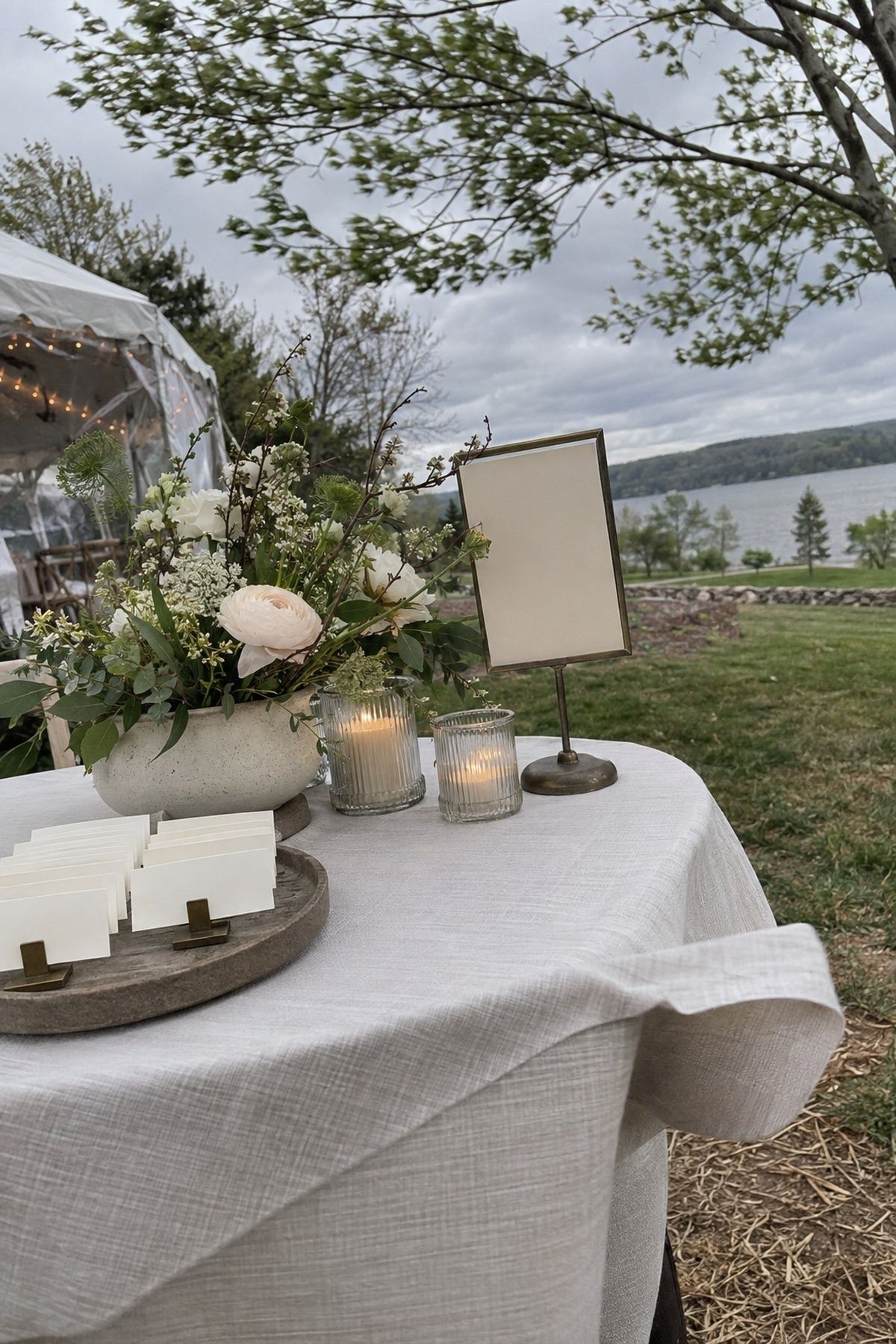
Use weighted sign stands, low floral arrangements, sturdy vessels, clipped place cards, grounded aisle decor, and tested sound. A thoughtful April wedding rain plan should include wind because spring weather rarely keeps its drama in one category.
Cover Guest Arrivals and Transitions
The most stressful weather moments often happen before the ceremony or between spaces. Think through parking, rideshare drop-off, shuttle stops, coat storage, restrooms, cocktail hour, dinner, and the walk from ceremony chairs to the reception.
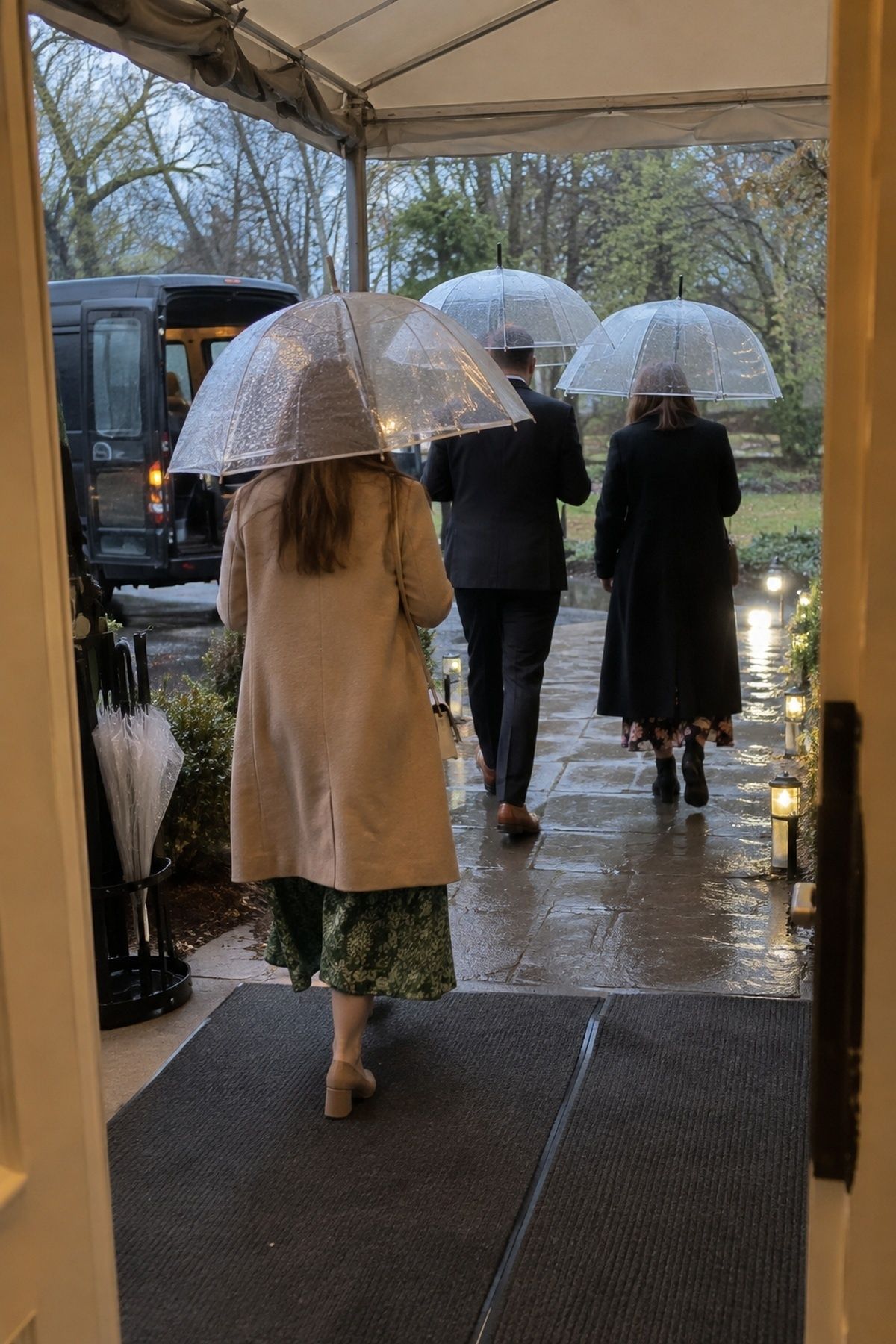
Clear umbrellas, covered entries, mats, pathway lights, and an attendant near the door can make the whole day feel calmer. Guests remember whether they felt guided, especially when the weather is doing a little too much.
Tell Guests About Shoes and Layers
Guest messaging is part of hospitality, not a breach of elegance. If the celebration includes lawn, garden paths, gravel, a tent, or an outdoor ceremony, say so clearly on the wedding website or details card.
Keep the language soft and specific: suggest block heels, wraps, jackets, or shoes that can handle grass. Guests do not need a weather lecture. They need just enough information to arrive comfortable and confident.
Choose Covered Photo Locations
Covered portraits should be scouted before the wedding day, not discovered while everyone is holding bouquets. Look for porches, archways, greenhouses, windowed rooms, covered terraces, hotel lobbies, cloisters, barns, galleries, and tree-lined paths with firm ground.
Share the rain version of the timeline with your photographer. April light after rain can be soft and luminous, but only if the day leaves enough room for calm movement.
Make Decor Easy to Move Indoors
Decor becomes less stressful when it can travel. Choose ceremony flowers, aisle pieces, welcome signs, candle arrangements, and table accents that can move from garden to backup room without looking stranded.
A floral arch may need too much time to relocate, while urns, lanterns, bud vases, potted plants, and freestanding arrangements can shift quickly. Movable decor helps the indoor version feel designed rather than rescued.
Give Vendors the Backup Layout
Every vendor should receive the primary layout and the backup layout. That includes the florist, rental team, caterer, band or DJ, photographer, officiant, transportation provider, hair and makeup team, and anyone helping guests move between spaces.
Ask what each vendor needs if the plan changes: more setup time, covered load-in, extra extension cords, a dry table, a protected outlet, or a different photo order. Clarity keeps the day from becoming a chain of private surprises.
Keep Food and Bar Service Protected
Food and bar service need more protection than a pretty umbrella. Ask where servers stand, where passed appetizers begin, how drinks stay covered, how glassware is staged, and whether the bar can operate safely in wind or rain.
For a small reception, one well-placed bar may work better than multiple exposed stations. Keep service close to shelter so guests are not choosing between a drink and dry shoes.
Light Paths for Cloudy or Evening Weather
April can look bright at invitation time and surprisingly dim by the end of dinner. Plan pathway lights, tent lighting, restroom lighting, parking cues, stair lighting, and covered-entry glow before the final timeline is set.
Lighting should be practical first and romantic second, though it can certainly be both. Lanterns, string lights, low uplights, lamps, and candles make cloudy weather feel atmospheric instead of unfinished.
Make the Indoor Version Feel Designed
The backup room should never feel like a punishment for checking the forecast. Choose linens, candles, flowers, seating, music, and ceremony positioning that work indoors from the beginning.
If the outdoor view is important, bring part of it inside through branches, potted bulbs, soft greenery, garden-inspired place cards, or a window-facing ceremony. The emotional idea of the outdoor wedding can survive even when the vows move under cover.

Build a Communication Plan for Changes
Weather changes feel gentler when everyone knows who speaks. Decide who updates vendors, who tells family, who posts wedding website updates, who speaks to transportation, and who guides guests on-site.
For an intimate celebration, this can be beautifully simple: one planner, one family point person, one venue contact, and one clear message. The couple should not spend the morning translating a forecast into twenty separate conversations.
FAQ
Can you have an outdoor wedding in April?
Yes, you can have an outdoor wedding in April, especially with a smaller guest list and a venue that offers a real covered or indoor backup. The key is planning for rain, wind, mud, and cool evening temperatures from the beginning. Treat the outdoor setting as the first choice, but make the alternate plan just as comfortable and beautiful.
How do you plan an April outdoor wedding around rain?
Plan around rain by choosing covered guest routes, reserving a backup room or tent, setting a weather decision deadline, and giving vendors both layouts in advance. Add umbrellas, mats, towels, heater access, protected sound equipment, and a covered photo plan. The rainy version should be ready before the week-of forecast starts changing.
Do you need a tent for an April outdoor wedding?
You may need a tent if dinner, dancing, bar service, or the ceremony will happen outside without a nearby indoor room. Ask about sidewalls, flooring, heaters, permits, setup timing, power, and entry points. A tent can be helpful, but only when it protects guests from wind, wet ground, and temperature swings too.
How do you keep guests comfortable at an April outdoor wedding?
Keep guests comfortable with clear arrival instructions, warm waiting areas, covered paths, sturdy flooring, heaters, lap blankets, umbrellas, and practical shoe guidance. Serve warm drinks if the ceremony or cocktail hour is outside. For a small wedding, place comfort details where guests naturally gather instead of scattering them where no one notices.
What should an April wedding rain plan include?
An April wedding rain plan should include the backup ceremony location, reception layout, tent rules, sidewalls, flooring, guest routes, photography locations, vendor load-in, protected food and bar service, sound equipment, restrooms, parking, and communication timing. It should also explain who makes the weather call and how guests will hear about changes.
When should you make the weather call for an April wedding?
Make the weather call early enough for vendors to move furniture, install sidewalls, adjust flowers, protect rentals, and update the guest flow. The exact timing depends on the venue and rental contract, but the deadline should be written into the timeline before the wedding week. A calm decision is almost always better than a last-minute scramble.
Final Thoughts
April outdoor wedding planning becomes much easier when the forecast is treated as part of the design, not a threat to it. A garden ceremony, patio dinner, or tented reception can still feel intimate and romantic when the backup space is chosen with care, guest movement is protected, and the tent plan accounts for spring weather alternatives as well as covered reception details.
Last update on 2026-10-03 / Affiliate links / Images from Amazon Product Advertising API