

90s Indian bride wedding ideas feel most meaningful when heirloom textiles, careful tailoring, regional jewelry, and comfortable modern fit create nostalgia with care.
This bridal mood is a conversation between family memory, 1990s glamour, and the bride’s present-day ceremony. The strongest styling keeps culture, movement, and feeling at the center.
Bollywood from the decade offers glossy hair, deep lip color, embroidered dupattas, chokers, naths, bangles, and rich red or jewel-toned fabrics. Indian bridal identity reaches far beyond cinema, so region, faith, family practice, craft, and personal taste shape the final look. For more on choosing a wedding vibe, start with the main guide.
Recommended Wedding Products


You Might Also Like These Blog Posts
- 90s Vintage Wedding Dress Ideas for a One-of-a-Kind Find
- Pammy Updo Wedding Hair Ideas for Effortless 90s Drama
- Cluster Engagement Ring Vintage Ideas With Heirloom Spark
- Trouser Suit Wedding Dress Ideas for the Bride Who Means It
- White Wedding Jumpsuit Ideas for the Bride Who Moves
- Pinky Finger Ring Groom Ideas With Heirloom Attitude
90s Indian Bride Wedding Ideas
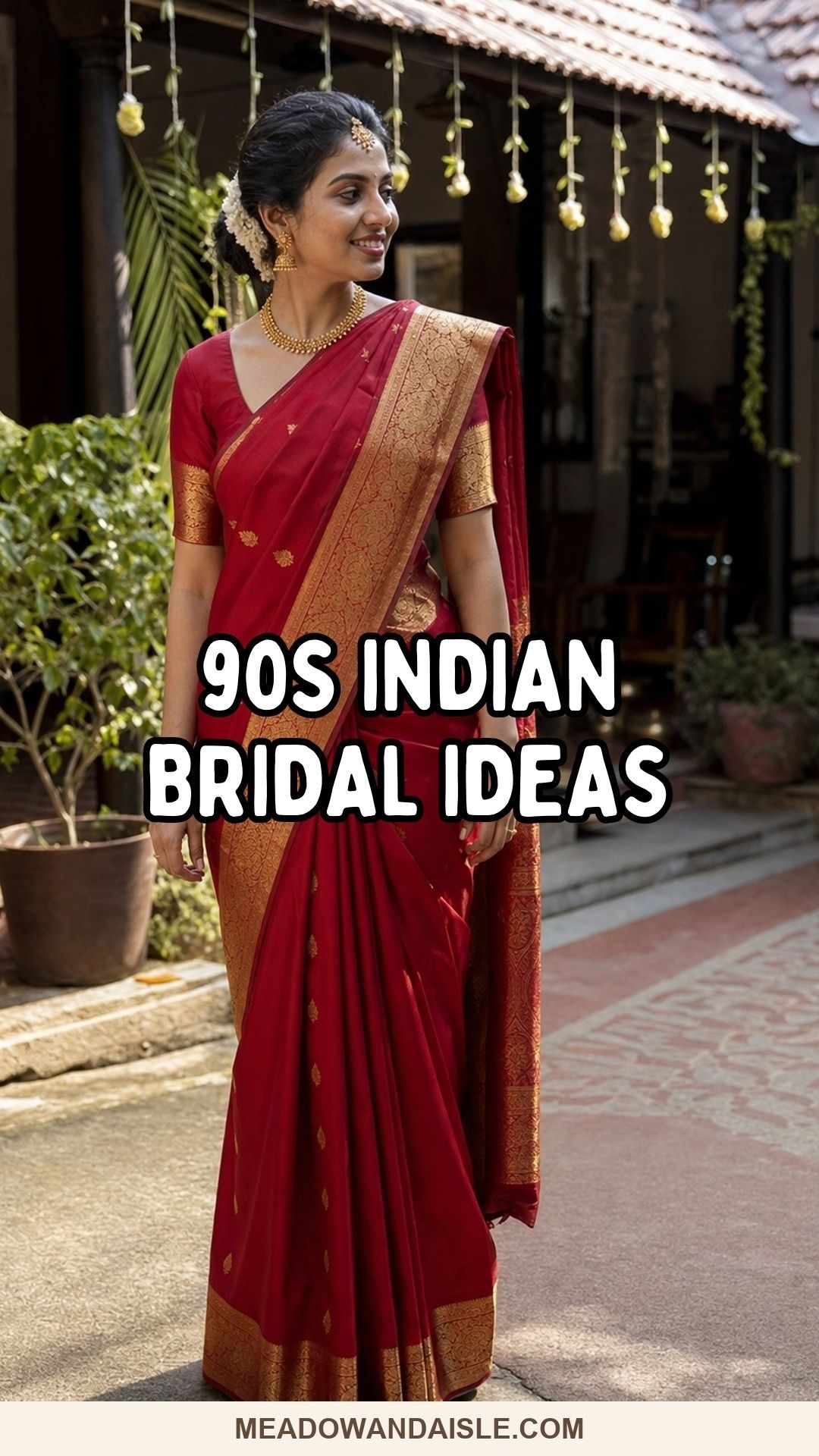
A 1990s Indian bridal look often starts with fabric that carries memory. Heavy silk, brocade, tissue, velvet edging, zari borders, pearl embroidery, mirror detail, or a dupatta from family photographs gives the outfit depth.
Choose the emotional anchor first: a mother’s sari, a grandmother’s bangle set, an old blouse pattern, a veil-like dupatta, or a jewelry shape tied to your region. After that, cleaner tailoring and calmer beauty choices keep the outfit balanced.
Heirloom Sari As A Bridal Drape
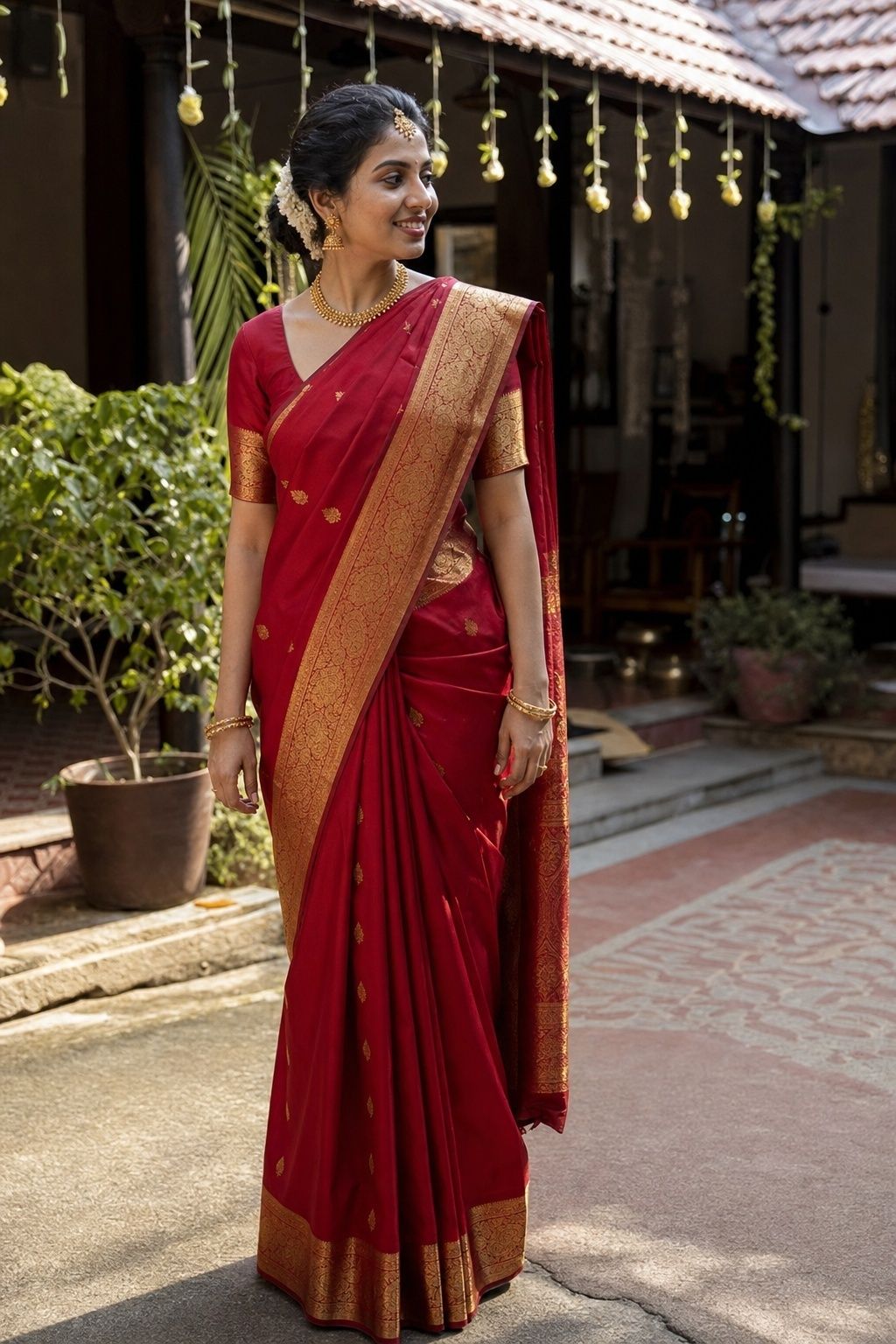
An heirloom sari brings a tender heart to this bridal style. A silk or brocade sari with a rich border already has the depth many newer outfits try to imitate.
Ask a tailor to inspect weak folds, thinning zari, stains, and torn edges. A fragile textile suits a dupatta, blouse panel, portrait wrap, or reception layer better than a long ceremony drape.
Kundan Set With Smooth Hair
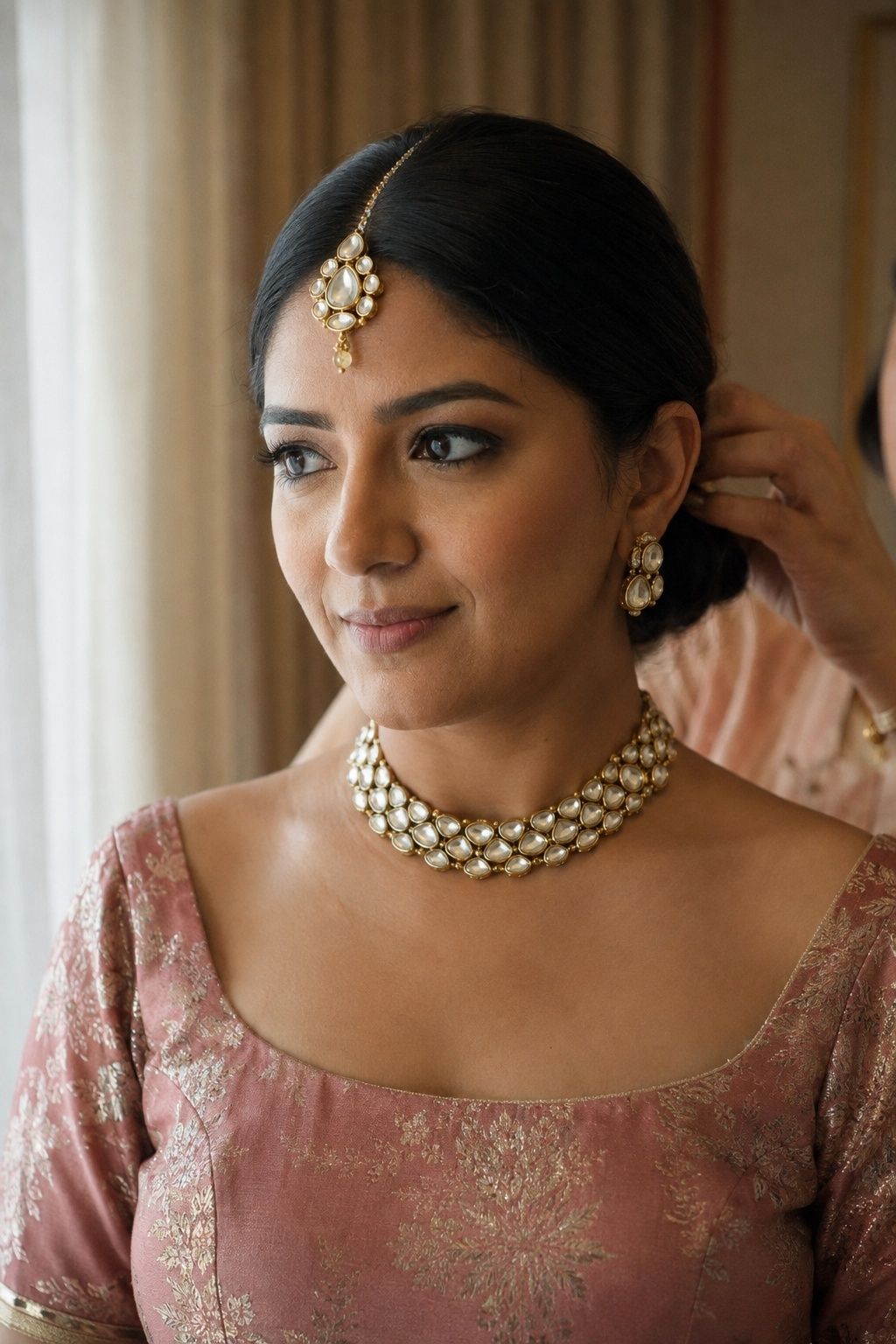
Kundan bridal jewelry brings richness without sharp modern sparkle. A choker, collar necklace, earrings, and maang tikka create the full bridal frame seen in many family albums from the decade.
Keep the hair smooth if the jewelry is ornate. A center part, neat bun, and soft crown volume let the stones and textile borders feel regal.
Temple Jewelry With Regional Meaning
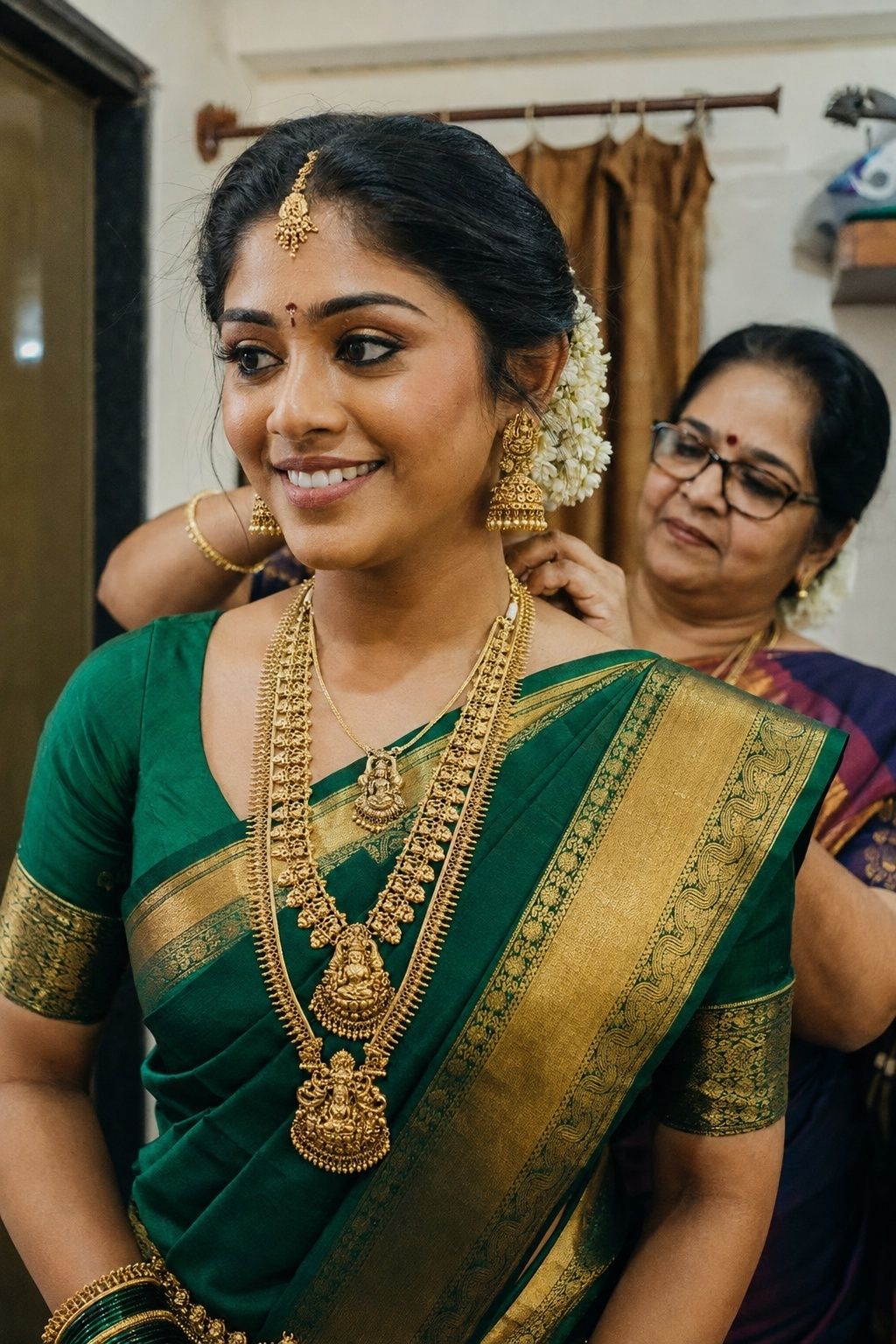
Temple jewelry bridal sets deserve care because they are not just decorative. For many South Indian brides, the motifs, gold tone, and layering carry religious, regional, and family meaning.
If temple jewelry is part of your tradition, pair it with a silk sari, jasmine, a clean braid or bun, and blouse tailoring that lets the necklace sit flat. If it sits outside your background, study the meaning first and choose with humility.
Red Bridal Bangles With An Heirloom Accent
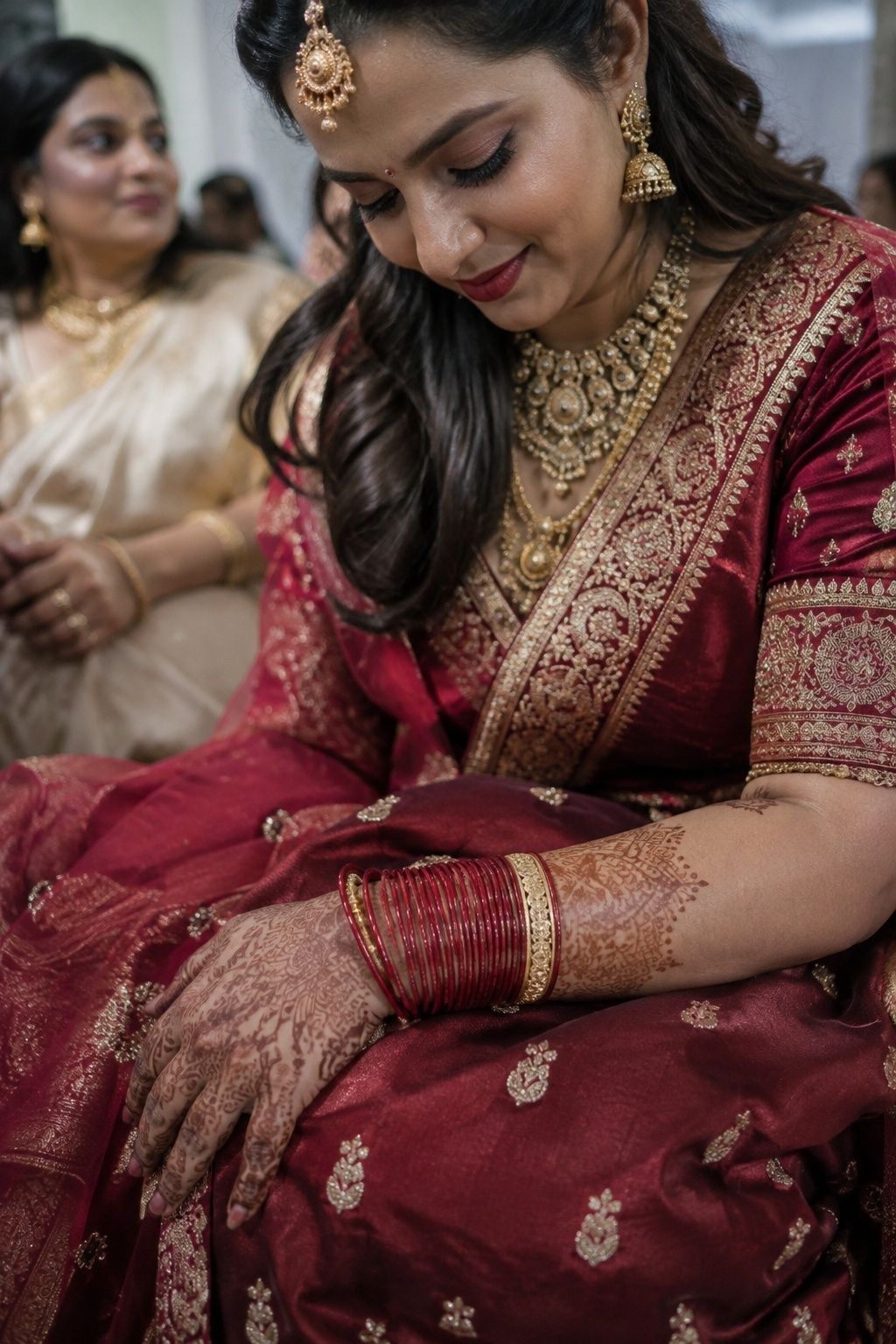
Red bridal bangles bring instant 90s bridal energy with gold accents, maroon fabric, deep mehendi, and a classic red lip. Edit the stack so it feels ceremonial rather than heavy for its own sake.
Add one older bangle, kada, or gold accent from family if available. That single heirloom detail gives the stack a personal rhythm during ring, garland, and blessing moments.
Maang Tikka With A Clean Bridal Bun
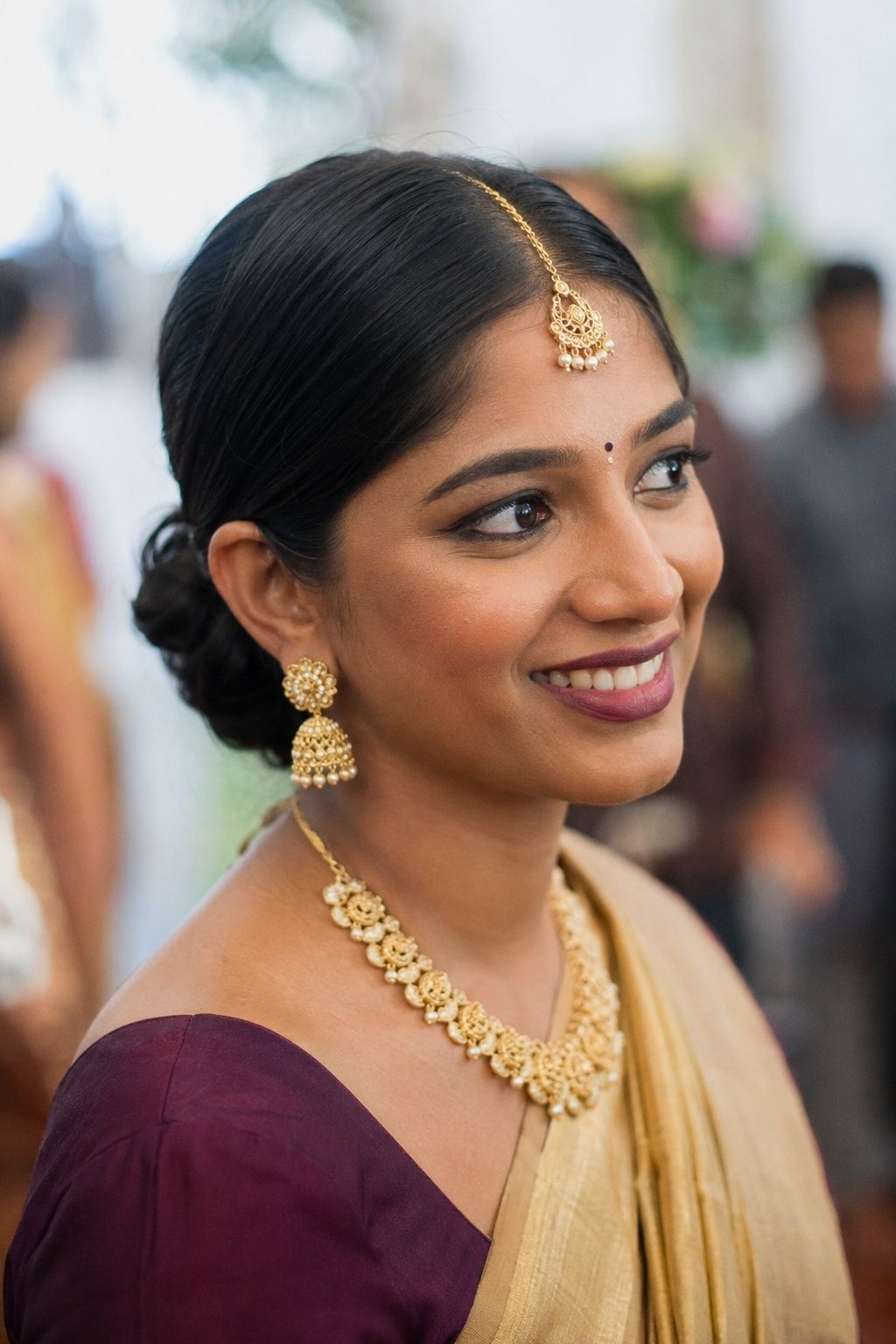
A maang tikka gives the face graceful symmetry in portraits. It also connects the hair, forehead, earrings, and necklace into one finished frame.
Test the weight before the wedding day. The tikka sits best when the chain lies flat, the pinning stays firm, and the bride feels steady through greetings, rituals, dancing, and veil adjustments.
Bridal Nath With Soft Makeup
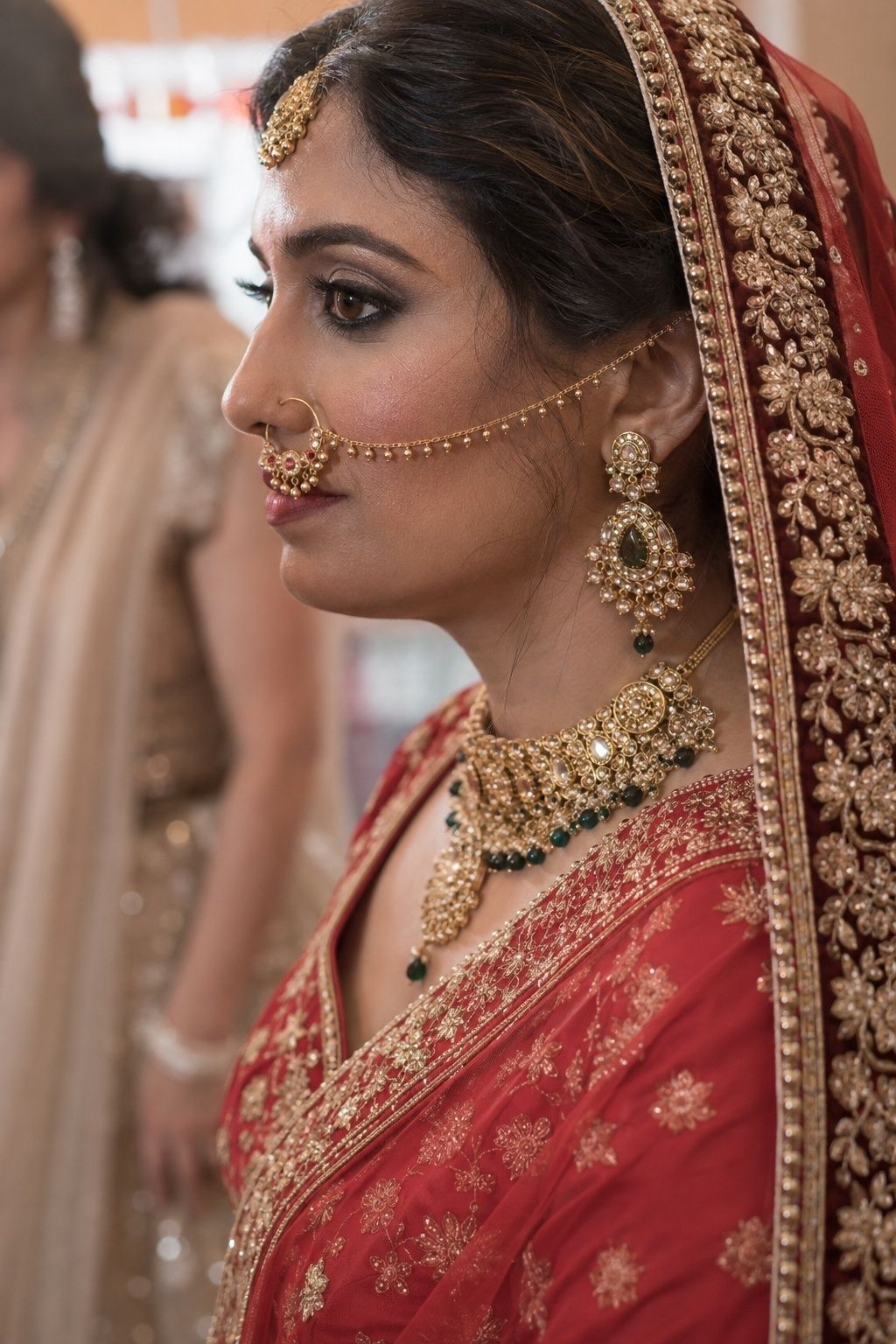
A bridal nath adds unmistakable drama, especially with a red or gold outfit. For a 90s-inspired look, it pairs beautifully with kohl-lined eyes, a defined mouth, and skin that still looks natural.
Choose scale by comfort and custom. A large nath creates a strong portrait moment, while a smaller hoop or stud gives a quieter nod.
Silk Bridal Dupatta Over A Tailored Blouse
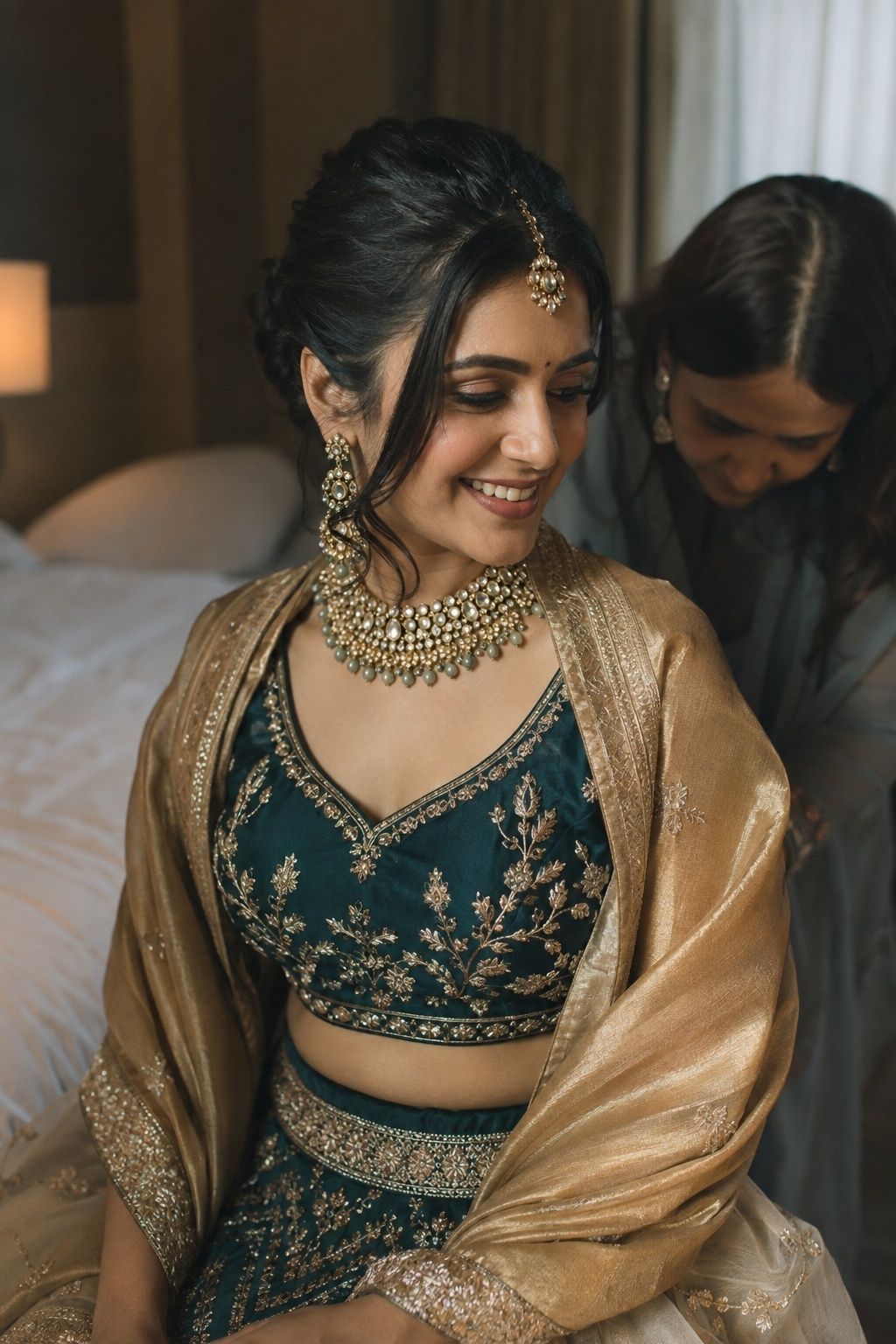
A silk bridal dupatta gives softness and ceremony. Worn over the head, around the shoulders, or across the torso, it creates an heirloom-framed silhouette many 90s brides wore beautifully.
The blouse underneath deserves modern structure. Bridal lehenga blouse tailoring covers bust fit, arm movement, secure hooks, comfortable lining, and a neckline that stays steady under the dupatta.
High Neck Blouse With Old-Photo Elegance

A high neck blouse creates a polished, formal silhouette with brocade, velvet trim, and heavier jewelry. It also gives coverage for brides drawn to a regal profile.
Keep the proportion calm. If the blouse sits high, choose earrings or a tikka as the main face-framing detail and let the necklace sit lower or lighter.
Bollywood-Inspired Red Lip And Glossy Hair

Bollywood inspiration lands best as mood rather than script. A red lip, softly lined eyes, glossy hair, and a neat bun or braid give 90s screen glamour while leaving room for the bride’s own features.
Ask the makeup artist for endurance over heaviness. The face has to last through tears, heat, flash photography, and close family greetings while still feeling like the bride in person.
Mehendi With Family Motifs
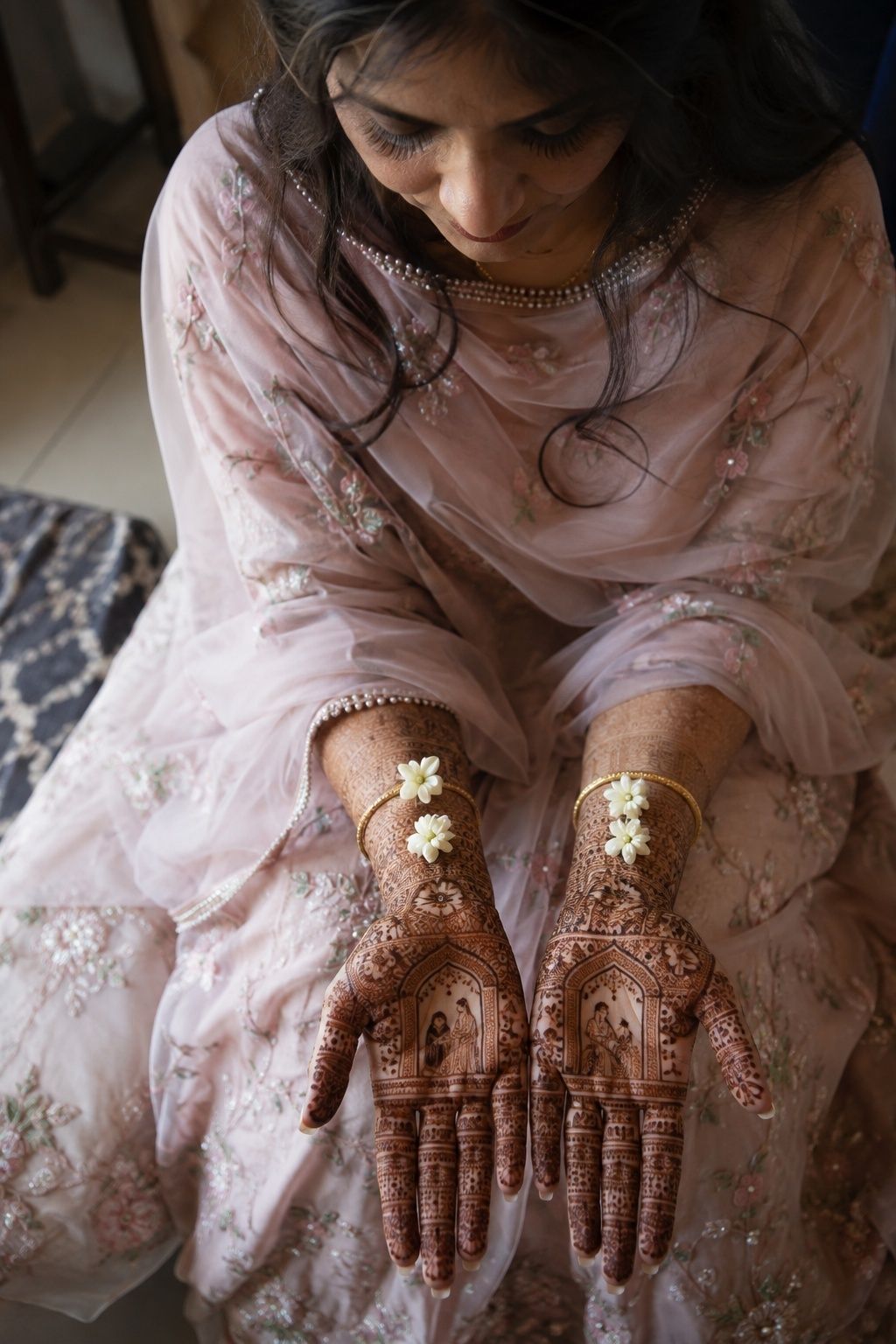
A bridal mehendi artist turns nostalgia into detail. Bring motifs connected to family, place, music, food, flowers, architecture, or the couple’s story instead of a generic dense pattern.
Reserve enough time for drying, stain development, meals, and rest. The romance of the look feels better when the schedule stays calm.
Lehenga Blouse Tailoring For Comfort
Many 90s bridal outfits were substantial: heavier skirts, layered dupattas, structured blouses, and jewelry with real weight. Modern tailoring makes that richness easier to wear.
Schedule a seated fitting, walking fitting, and arm-lift check. The bride deserves to sit for rituals, bend for blessings, hug relatives, dance, eat, and breathe without pinching at the ribs or shoulders.
Sari Shapewear Under A Cleaner Drape
Sari shapewear creates a cleaner base under silk, chiffon, georgette, or tissue, especially when the bride wants a neater 90s drape without bulky petticoat lines. It sits under the outfit quietly.
Test it with the actual sari and shoes. Walking, sitting, bathroom breaks, stairs, and long ceremonies all matter.
Statement Dupatta Moment
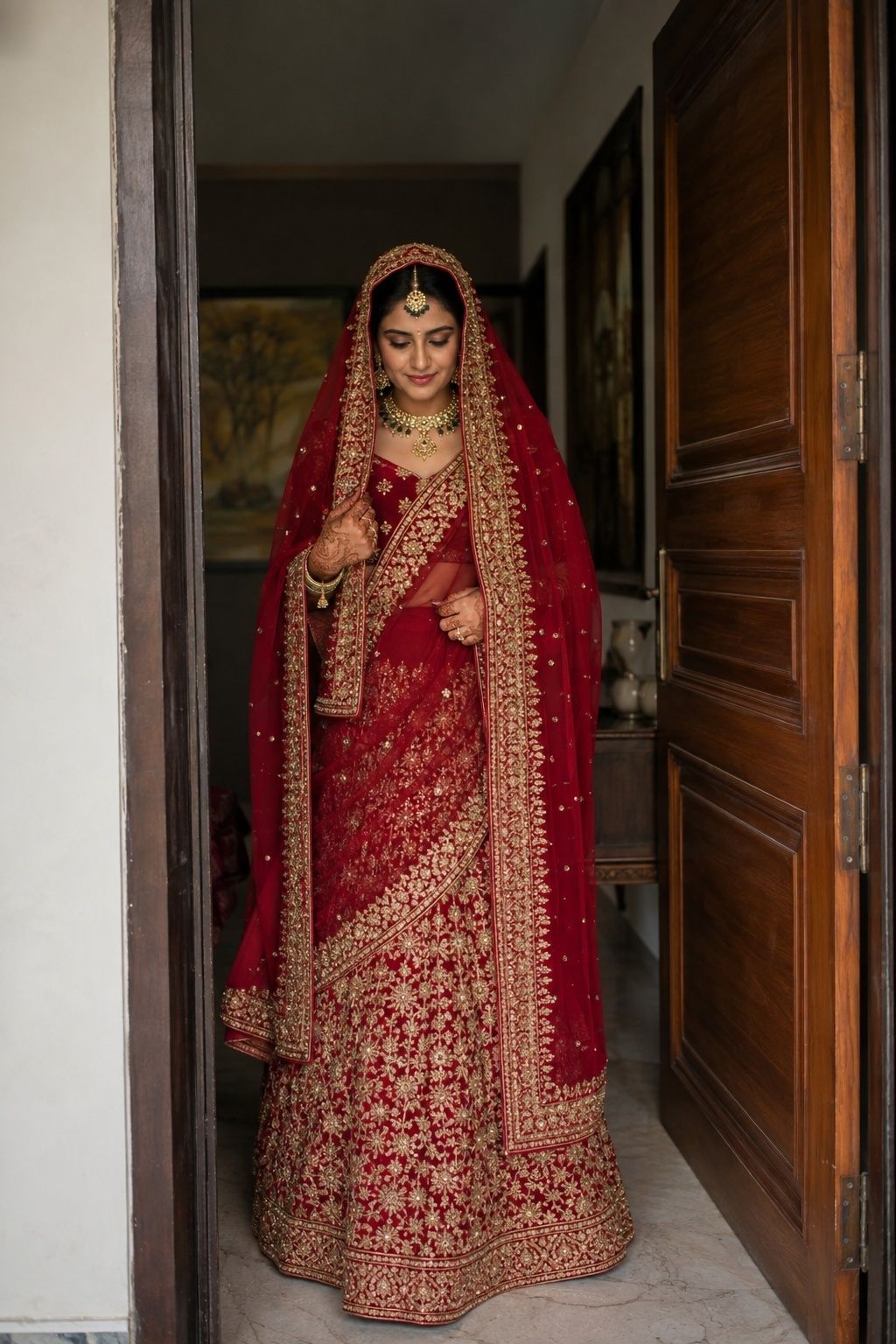
A heavy dupatta over the head gives an Indian bride a dramatic frame. Embroidered borders, scattered stones, and a warm silk sheen create a beautiful ceremony entrance.
Pin the dupatta with respect for hair, jewelry, and fabric. It feels secure when it avoids flattened hair, strained pins, and torn embroidery.
Vintage Suiting For The Partner
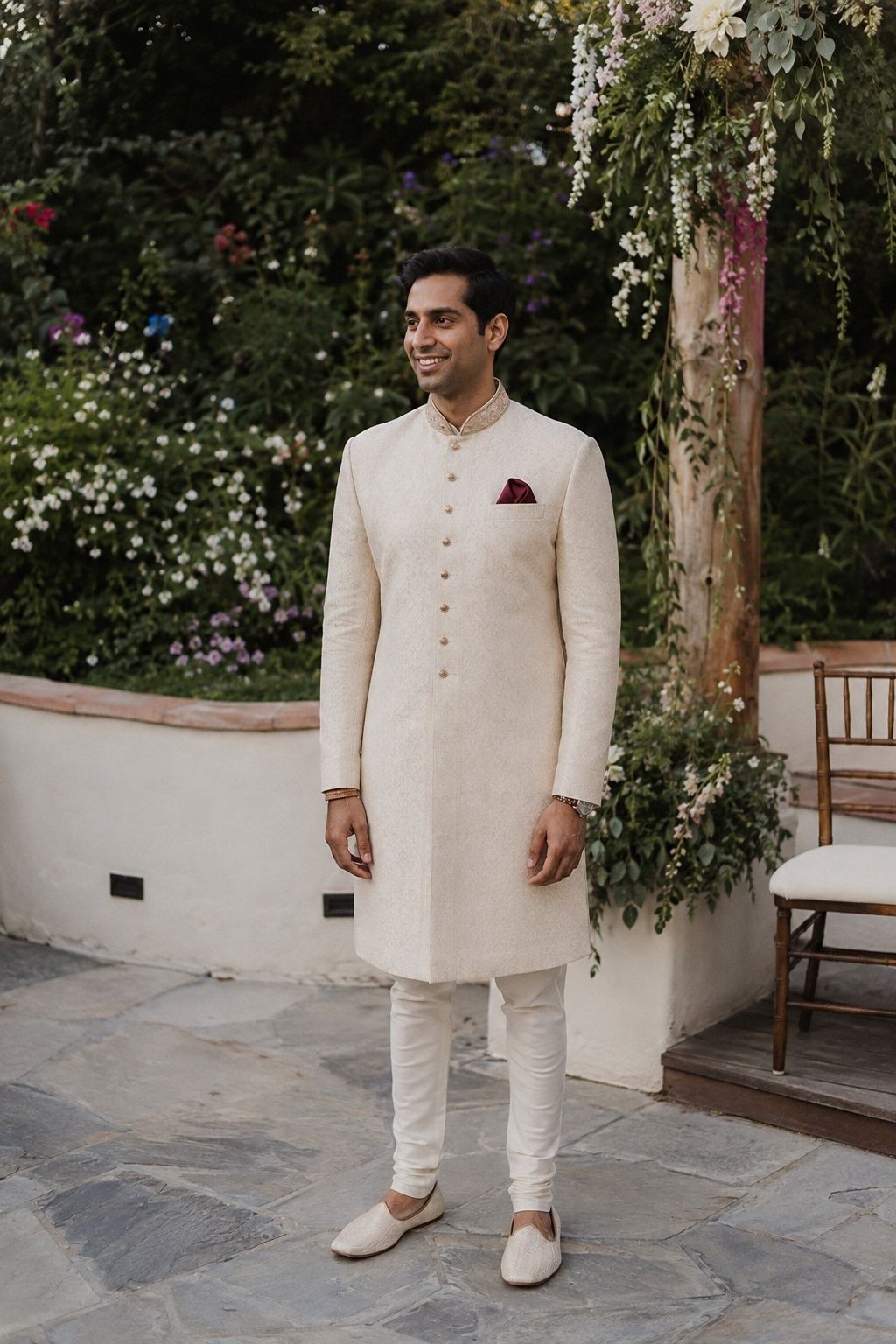
A partner’s outfit sets the right tone when it echoes the bride softly. A cream sherwani, bandhgala, tailored suit, or deep jewel-toned jacket pairs well when the color picks up one thread from her sari, lehenga, dupatta, or jewelry.
Keep the tailoring sharp and accessories restrained. The partner’s proportion has to match the formality of the ceremony without competing with the bride’s heirloom focus.
Reception Change With A 90s Vintage Shape
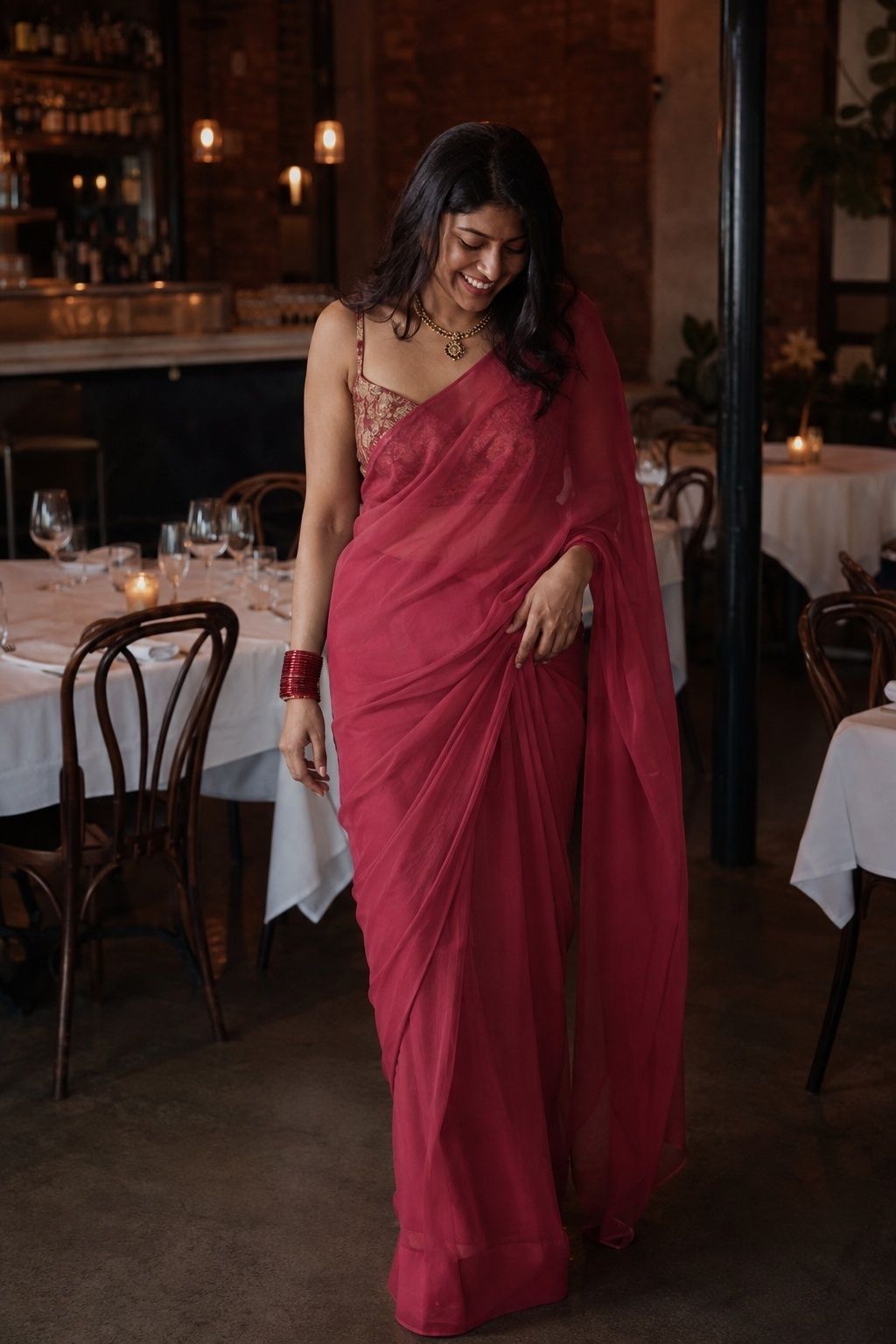
A reception outfit gives room for a lighter 90s silhouette. A chiffon sari, simple lehenga, soft net dupatta, or vintage-inspired blouse brings relief after the ceremony while keeping the emotional thread intact.
Carry one detail from ceremony to reception. The same bangles, tikka, heirloom necklace, or dupatta border keeps the second look connected.
Respectful Styling Notes
Indian bridal dressing is not one look. Punjabi, Gujarati, Bengali, Tamil, Telugu, Malayali, Marathi, Rajasthani, Muslim, Sikh, Christian, Hindu, interfaith, diaspora, and mixed-family weddings all bring different garments, colors, rituals, jewelry, and expectations.
Respect also means understanding what is yours to wear. Your own family’s sari, bangles, nath, tikka, or temple jewelry carries a different meaning than sacred or regional markers chosen only for photographs. If you like this, browse Gen Z 1990s wedding dress ideas next.
Comfort is part of respect, too. Painful jewelry, unsafe pins, difficult shapewear, or fragile heirlooms under strain take the bride away from the day. The most graceful 90s Indian bridal look lets her participate fully in her own wedding. The rest of the set lives under Bride & Groom.
FAQ
What are the best 90s Indian bride wedding ideas?
The strongest ideas include heirloom saris, silk dupattas, kundan jewelry, temple jewelry where culturally appropriate, maang tikkas, bridal naths, red bangles, glossy hair, defined lips, careful blouse tailoring, and mehendi with personal or family motifs. Also worth a look: dainty wedding dress ideas.
How do you make a 90s Indian bridal look modern?
Make it modern through fit, comfort, editing, and proportion. Keep the nostalgic details, then update blouse structure, dupatta pinning, makeup texture, jewelry weight, and reception styling so the bride moves easily.
Is Bollywood a good inspiration for an Indian bridal look?
Bollywood is a beautiful inspiration point for hair, makeup, color, and drama, but it is not the only definition of Indian bridal style. Region, religion, family, craft, community, and personal taste matter more than copying a screen look exactly.
How does a bride wear heirloom jewelry safely?
A jeweler checks heirloom jewelry for loose stones, weak clasps, sharp edges, and weight before the wedding. Fragile items fit portraits or calmer parts of the day better than constant movement.
What gets tailored before wearing an heirloom sari?
The blouse, fall, lining, border reinforcement, hook placement, and drape plan deserve attention before the wedding. A tailor or draper also checks old fabric for weak areas so the sari stays protected.
Which details suit a 90s Indian bridal outfit?
Strong details include kundan bridal jewelry, temple jewelry where meaningful, a maang tikka, bridal nath, red bridal bangles, silk bridal dupatta, sari shapewear, blouse tailoring, mehendi artistry, and heirloom sari alterations.
Final Thoughts
A 90s Indian bridal look feels like memory made wearable: an heirloom kept close, a textile altered with care, jewelry chosen with regional respect, and beauty details softened for the bride’s real day. Let family meaning lead the styling, let tailoring protect comfort, and let nostalgia honor the ceremony.
Before final fittings, photograph the full outfit from the front, side, back, seated position, and walking pace so the sari, lehenga, blouse, dupatta, jewelry, and shoes feel calm together.
Last update on 2026-11-29 / Affiliate links / Images from Amazon Product Advertising API